Call or Text 727-513-9780
  • Shopping Cart Shopping Cart
    0Shopping Cart
Pure Tested Peptides | America's most trusted Peptides for sale online
  • Peptides for sale
    • Oral Peptides for sale
      • Peptide Capsules for sale
      • BPC 157 Capsules 1000mcg
      • SLU-PP-332 Capsules | 1000 mcg
      • 5-Amino-1MQ 50mg Capsules
      • Tesofensine 500mcg
    • All Peptides for sale
    • Peptide Sprays
      • BPC 157 Nasal Spray Kit
      • BPC-157 TB500 Nasal Spray Kit
      • Semax Nasal Spray 10mg
      • Selank – Nasal Spray Kit – 10mg
      • Epithalon 50MG Nasal Spray Kit
      • Ipamorelin 10mg Nasal Spray
      • Klow Nasal Spray (BPC-157 + TB-500 + GHK-Cu + KPV) | 80mg
      • Hulk Nasal Spray Tesa / Ipa Blend 6/3 MG
      • Klow Nasal Spray
      • NAD + 500 mg Nasal Spray
      • PT-141 Nasal Spray Kit
    • GHRH Peptides
      • Ipa Peptides
      • CJC-1295 Peptides
        • CJC-1295 with DAC 5 mg
        • CJC-1295 without DAC 5 mg
        • CJC-1295 Ipa 10mg
      • Tesa Peptides
        • Tesa Peptide
        • Tesa 20 mg
    • GHK-Cu Peptides
      • All GHK-Cu Peptides
      • GHK-Cu 100mg
      • KLOW Peptide Blend – Buy KLOW blend online
    • BPC Peptides
      • All BPC Peptides
      • BPC-157
      • BPC-157 TB-500
      • BPC 157 capsules 1000mcg
    • SLU-PP-332 Peptides
      • All SLU-PP-332 Peptides
      • SLU-PP-332 5mg
    • GLP3 Peptides
    • PT-141 Peptides
      • PT-141 Peptides for sale
      • PT-141 10mg
      • PT-141 Nasal Spray
    • CAG Peptides
      • Lipo-C Peptide Blend
      • CAG 5mg
      • CAG 10mg
    • MOTS-C Peptides
      • MOTS-C Peptides for sale
      • MOTS-c peptide
      • MOTS-c 10mg *6 pack*
    • 5 Amino 1MQ Peptides
      • 5 Amino 1MQ Peptides for sale
      • 5-Amino-1MQ 50mg Capsules
      • 5-Amino-1MQ 5mg
    • Epithalon Peptides
      • Epithalon Peptides for sale
      • Epithalon 10mg
      • Epithalon 50mg
  • Shop
    • GLPs
      • 5-Amino-1MQ 50mg Capsules
      • 5-Amino-1MQ 5mg
      • L-Carnitine 500mg/ml
      • Tesofensine 500mcg
      • SLU-PP-332 5mg
      • MOTS-c 10mg *6 pack*
    • Epithalon & BPC Peptides
      • Epithalon 10mg
      • Epithalon 50mg
      • BPC-157
      • BPC 157 capsules 1000mcg
      • BPC-157 TB-500
      • BPC-157 TB500 Nasal Spray Kit
      • BPC 157 Nasal Spray Kit
    • BPC TB-500 & NAD+ Peptides
      • NAD+ 500 mg
      • KLOW Peptide Blend – Buy KLOW blend online
      • GLOW Peptide Blend
      • TB 500 5mg
      • BPC 157 capsules 1000mcg – Supplement
      • BPC 157 Nasal Spray Kit
      • BPC-157
      • BPC-157 TB500 Nasal Spray Kit
      • BPC-157 TB-500
      • BPC 157 capsules 1000mcg
    • LL-37 Peptide
      • LL-37 10 mg
    • MOTS-C & Selank
      • MOTS-c peptide
      • Selank 10mg
    • GHK Peptides
      • GHK-Cu 100mg
      • GLOW Peptide Blend
      • KLOW Peptide Blend – Buy KLOW blend online
  • COAs
  • Wholesale
    • Wholesale Peptides for sale
  • PTP FAQ
  • Affiliates
    • Selank Peptide: Advanced Pharmacological Mechanisms Underlying Its Anxiolytic and Nootropic Effects in Research
      • 5-Amino-1MQ Peptide: Detailed Mechanisms of NNMT Inhibition and Its Impact on Cellular Metabolism Research
        • MOTS-C Peptide: Unraveling Its Role in Mitochondrial Dynamics and Energy Metabolism Research
          • Epithalon Peptide and Telomerase Regulation: Investigating Its Impact on Cellular Senescence and Lifespan Research Models
            • GLP2-T vs GLP2 Tirz Peptide: Understanding the Naming, Mechanistic Nuances, and Research Implications for Gut Health
      • Peptides and Polypeptides in Modern Pharmacology: What Research on Metoprolol, Prednisone, and Amlodipine Reveals
        • Polypeptide Peptides vs NSAIDs: What Naproxen and Diclofenac Teach Tissue-Repair Researchers About BPC‑157 and TB‑500
          • Peptides and Polypeptides in Endocrine Pharmacology: How GLP-1, GLP-2, and GLP-3 Retatrutide Differ From Classic Drugs Like Prednisone and Amlodipine
          • 5‑Amino‑1MQ Peptide and NNMT Inhibition: How It Compares With Statins Like Atorvastatin in Adipose and Lipid Metabolism Research
      • Enclomiphene, Estrogen Receptor Signaling, and Luteinizing Phase Biology: What Hormone Researchers Should Measure
        • Mesenchymal Stem Cells, BPC‑157, and GHK‑Cu: How Tissue Repair Peptides Compare With Classic NSAIDs Like Naproxen in Injury Models
          • Peptide Calculator Use Cases Beyond Growth Hormone: Working Through GLP‑3 Retatrutide, MOTS‑c, and BPC‑157 Research Dosing
        • Polypeptide Peptides in Endocrine and Metabolic Pharmacology: Lessons From Amlodipine, Prednisone, and Metoprolol
        • Peptides Calculator for Advanced Blends: Worked Examples for Tesamorelin, CJC‑1295, and Ipamorelin Stacks
          • Peptides and Polypeptides in Human Physiology: How Molecular Size Shapes Research Applications
            • Selank Peptide: Advanced Pharmacological Mechanisms Underlying Its Anxiolytic and Nootropic Effects in Research
          • 5-Amino-1MQ Peptide: Detailed Mechanisms of NNMT Inhibition and Its Impact on Cellular Metabolism Research
            • MOTS-C Peptide: Unraveling Its Role in Mitochondrial Dynamics and Energy Metabolism Research
              • Epithalon Peptide and Telomerase Regulation: Investigating Its Impact on Cellular Senescence and Lifespan Research Models
                • GLP2-T vs GLP2 Tirz Peptide: Understanding the Naming, Mechanistic Nuances, and Research Implications for Gut Health
                  • Peptides and Polypeptides in Endocrine Pharmacology: How GLP-1, GLP-2, and GLP-3 Retatrutide Differ From Classic Drugs Like Prednisone and Amlodipine
                    • Polypeptide Peptides vs NSAIDs: What Naproxen and Diclofenac Teach Tissue-Repair Researchers About BPC‑157 and TB‑500
                      • Peptides and Polypeptides in Modern Pharmacology: What Research on Metoprolol, Prednisone, and Amlodipine Reveals
                        • 5‑Amino‑1MQ Peptide and NNMT Inhibition: How It Compares With Statins Like Atorvastatin in Adipose and Lipid Metabolism Research
                        • Enclomiphene, Estrogen Receptor Signaling, and Luteinizing Phase Biology: What Hormone Researchers Should Measure
                        • Mesenchymal Stem Cells, BPC‑157, and GHK‑Cu: How Tissue Repair Peptides Compare With Classic NSAIDs Like Naproxen in Injury Models
                        • Peptide Calculator Use Cases Beyond Growth Hormone: Working Through GLP‑3 Retatrutide, MOTS‑c, and BPC‑157 Research Dosing
                        • Polypeptide Peptides in Endocrine and Metabolic Pharmacology: Lessons From Amlodipine, Prednisone, and Metoprolol
                        • Peptides Calculator for Advanced Blends: Worked Examples for Tesamorelin, CJC‑1295, and Ipamorelin Stacks
                        • Peptides and Polypeptides in Human Physiology: How Molecular Size Shapes Research Applications
                        • Selank Peptide: Advanced Pharmacological Mechanisms Underlying Its Anxiolytic and Nootropic Effects in Research
                        • MOTS-C Peptide: Unraveling Its Role in Mitochondrial Dynamics and Energy Metabolism Research
                        • Peptides and Polypeptides in Modern Pharmacology: What Research on Metoprolol, Prednisone, and Amlodipine Reveals
                        • Peptides and Polypeptides in Endocrine Pharmacology: How GLP-1, GLP-2, and GLP-3 Retatrutide Differ From Classic Drugs Like Prednisone and Amlodipine
                        • 5-Amino-1MQ Peptide: Detailed Mechanisms of NNMT Inhibition and Its Impact on Cellular Metabolism Research
                        • Mesenchymal Stem Cells, BPC‑157, and GHK‑Cu: How Tissue Repair Peptides Compare With Classic NSAIDs Like Naproxen in Injury Models
                        • Peptide Calculator Use Cases Beyond Growth Hormone: Working Through GLP‑3 Retatrutide, MOTS‑c, and BPC‑157 Research Dosing
                        • GLP2-T vs GLP2 Tirz Peptide: Understanding the Naming, Mechanistic Nuances, and Research Implications for Gut Health
                        • Polypeptide Peptides in Endocrine and Metabolic Pharmacology: Lessons From Amlodipine, Prednisone, and Metoprolol
                        • Polypeptide Peptides vs NSAIDs: What Naproxen and Diclofenac Teach Tissue-Repair Researchers About BPC‑157 and TB‑500
                        • Peptides and Polypeptides in Human Physiology: How Molecular Size Shapes Research Applications
                        • Peptides Calculator for Advanced Blends: Worked Examples for Tesamorelin, CJC‑1295, and Ipamorelin Stacks
                        • 5‑Amino‑1MQ Peptide and NNMT Inhibition: How It Compares With Statins Like Atorvastatin in Adipose and Lipid Metabolism Research
                        • Enclomiphene, Estrogen Receptor Signaling, and Luteinizing Phase Biology: What Hormone Researchers Should Measure
                        • Epithalon Peptide and Telomerase Regulation: Investigating Its Impact on Cellular Senescence and Lifespan Research Models
                        • Best research protocol Klow blend
                        • best time to take BPC-157
                        • best time to take DSIP (Delta Sleep Inducing Peptide)
                        • best time to take CJC-1295
                        • best time to take AOD-9604
                        • best time to take Follistatin 344
                        • best time to take Ipamorelin
                        • best time to take MK-677 (Ibutamoren)
                        • best time to take Ligandrol (LGD-4033) — research compound
                        • best time to take Ostarine (MK-2866) — research compound
                        • best time to take GHK-CU
                        • best time to take TB-500
                        • best time to take MOTS-c
                        • best time to take Semax
                        • best time to take RAD-140 (Testolone) — research compound
                        • best time to take Thymosin Alpha-1
                        • best time to take PEG-MGF
                        • Biolife Plasma, Octapharma Plasma, and Research Peptides: How Plasma Donation Labs Differ From Peptide Suppliers
                        • best time to take YK-11 — research compound
                        • best time to take PT-141 (Bremelanotide)
                        • Best research protocol Klow blend
                        • 5-Amino-1MQ and MOTS-C Synergy: Metabolic Signaling, Mitochondria, and Research Design
                        • BPC-157 and TB-500: Investigating Their Combined Effects on Angiogenesis and Cellular Migration in Tissue Repair Models
                        • BPC-157 Peptide: Gut Barrier Function, Inflammation, and Tissue-Recovery Research
                        • 5‑Amino‑1MQ and MOTS‑c Synergy in Metabolic Research: Designing NNMT and Mitochondrial Biogenesis Stacks
                        • CJC-1295 with DAC vs. Without DAC: Half-Life, Release Kinetics, and Research Implications
                        • CJC‑1295 with DAC vs. Without DAC: Expanding on Half‑Life Differences Using Tesamorelin and Ipamorelin Blend Case Studies
                        • Collagen Biology and Copper‑Binding Peptides: How GHK‑Cu, Glow Blend, and Klow Blend Interact with Skin and Connective Tissue
                        • Collagen Biology and Regenerative Peptides: How GHK‑Cu, Glow Blend, and Klow Blend Affect Extracellular Matrix Research
                    • DNA, Telomeres, and Longevity Peptides: Positioning Epithalon and MOTS‑c in Genetic Aging Research
                      • Enclomiphene Citrate: serm Mechanism, Testosterone Research, and Stack Compatibility
                        • Enclomiphene vs Enclomiphene Citrate: Formulation, Bioavailability, and Research Distinctions
                        • Epithalon Peptide Research: Telomerase Activation, Aging, and Pineal Gland Function
                        • Estrogen Receptor Signaling and Enclomiphene: How Selective Modulators Compare with Classic Polypeptide Hormones
                        • GHK-Cu Peptide: Advanced Mechanisms in Extracellular Matrix Remodeling and Wound Healing Research
                        • GHK-Cu Peptide: Collagen Synthesis, Wound Repair, and Skin-Barrier Research Models
                        • GLP-1 vs GLP-3 vs GLP-2: Peptide Classification and Research Applications
                        • GLP-2 Peptide Research Guide: Gut Barrier Function, Nutrient Absorption, and Intestinal Recovery Models
                        • GLP-3 Retatrutide vs. GLP-1 Drugs: What Triple-Agonist Biology Changes in Research Models
                        • Ipamorelin and Tesamorelin Combination: Synergistic GH Secretagogue Research and Dosing Protocols
                        • GLP2 Tirz Peptide: What It Is, Why the Name Exists, and How Researchers Should Interpret It
                        • Klow Blend Peptide Nasal Spray: What the Formulation Is Trying to Do in Cognitive Research
                        • Mitochondria, NNMT Inhibition, and Peptide Modulators: Where MOTS‑c and 5‑Amino‑1MQ Fit in Cellular Energy Research
                        • MOTS-c Peptide: Mitochondrial Function, Energy Metabolism, and What Researchers Measure
                        • MOTS-c vs. 5-Amino-1MQ: Which Metabolic Research Questions Each Compound Actually Answers
                        • Nasal Spray Peptides: Bioavailability, Administration, and Semax/Selank Research Applications
                        • PT-141 Peptide Research: Mechanism of Action and Melanocortin Receptor Signaling
                        • Retatrutide for Research: Mechanism, Structure, and GLP-1/GLP-3 Dual Action
                        • Retatrutide for Obesity and Type 2 Diabetes: What the Latest Trial Data Suggest
                        • Tesofensine Peptide Research: Mechanism, Appetite Suppression, and Neuropeptide Y Pathways
  • Contact
    • Contact Customer Service
    • Text Customer Support
  • About US
  • Shop all peptides
  • Affiliate Program
    • Affiliate Signup
  • Login / Register Login / Register Page Link Login / Register Page Link
  • Click to open the search input field Click to open the search input field Search
  • Menu Menu
Selank and Semax Nasal Spray: Comparative Research on Anxiolytic and Nootropic Effects

Selank and Semax Nasal Spray: Comparative Research on Anxiolytic and Nootropic Effects

June 21, 2026/0 Comments/by Pure Tested

Two peptides developed in Russia now sit at the center of a growing body of preclinical research: one primarily quiets anxiety, the other sharpens cognition — and their mechanisms could not be more different. Understanding the comparative research on Selank and Semax nasal spray: comparative research on anxiolytic and nootropic effects gives researchers and informed readers a clearer picture of how each compound works, where they overlap, and why combining them has attracted scientific interest.

Key Takeaways

  • Selank modulates the GABAergic system to produce rapid anxiolytic effects without sedation or dependence risk.
  • Semax upregulates BDNF and influences dopaminergic and serotonergic pathways, driving cognitive enhancement over time.
  • Both peptides are delivered intranasally, offering high bioavailability and fast central nervous system access.
  • Research suggests the two compounds may complement each other when used together in experimental models.
  • Both have favorable safety profiles in research settings, with minimal reported side effects.
Key Takeaways

Mechanisms of Action: How Each Peptide Works

Selank: GABAergic Modulation and Anxiety Relief

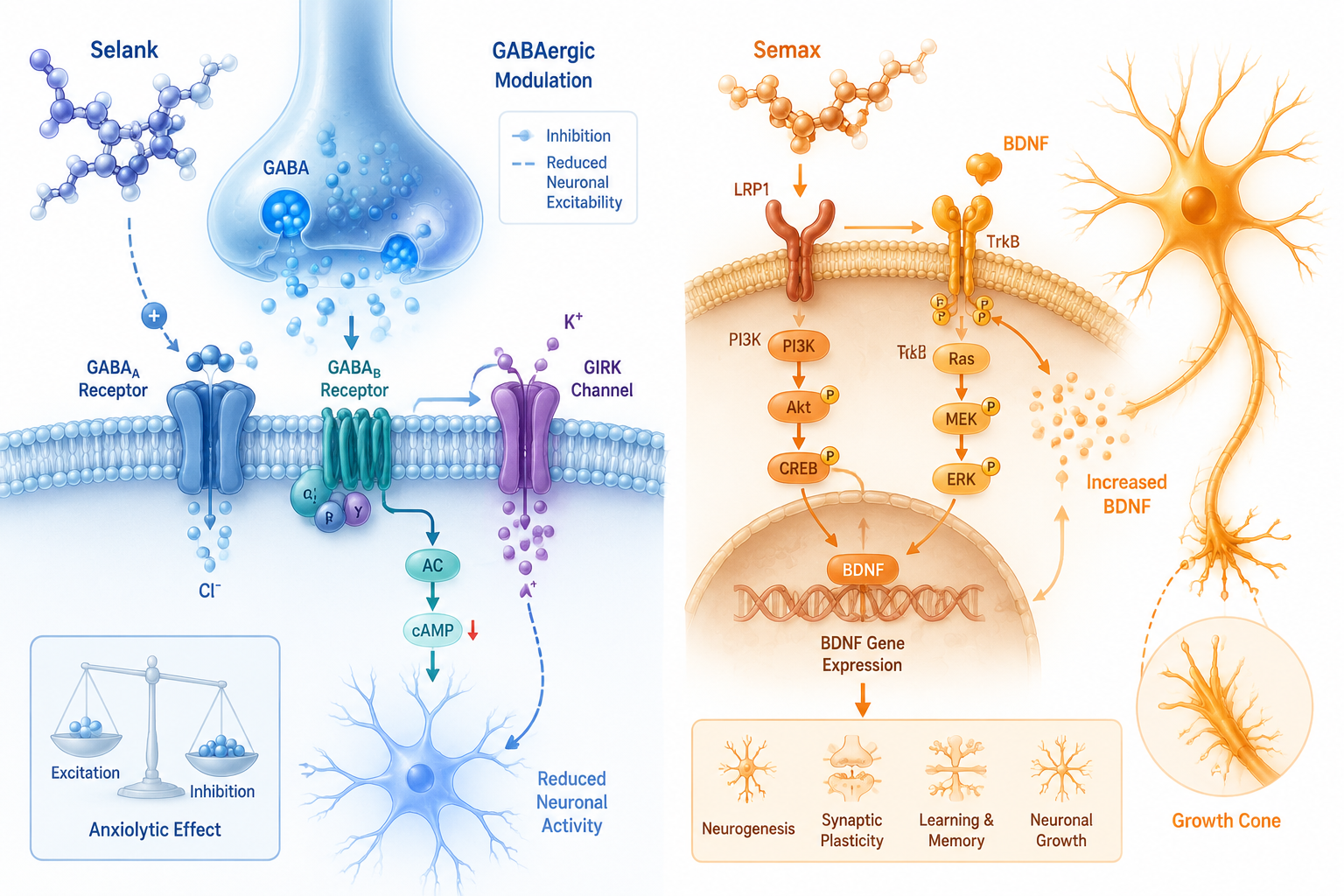
Selank is a synthetic analog of tuftsin, a naturally occurring immunomodulatory tetrapeptide. Its primary mechanism involves modulation of the GABAergic system — the same inhibitory network targeted by benzodiazepines — but without triggering the sedation, tolerance, or withdrawal risks associated with those drugs.

In preclinical models, Selank produces anxiolytic effects within minutes of intranasal administration. It also demonstrates mild immunomodulatory activity and has been shown to stabilize enkephalin levels, which play a role in mood regulation. For researchers exploring peptide-based approaches to anxiety, the Selank peptide benefits overview provides a useful starting point.

Semax: BDNF Upregulation and Cognitive Enhancement

Semax is derived from the ACTH(4–10) fragment of adrenocorticotropic hormone. Its standout feature in research is the upregulation of brain-derived neurotrophic factor (BDNF), a protein critical for neuronal survival, synaptic plasticity, and learning. Semax also modulates dopaminergic and serotonergic pathways, contributing to improved focus, memory consolidation, and neuroprotection.

Unlike Selank's rapid onset, Semax's cognitive benefits tend to build over time as BDNF levels rise and synaptic remodeling occurs. This slower but sustained profile makes it particularly relevant in neuroprotection research, including post-stroke recovery models.

"Selank calms the system quickly; Semax builds the system over time — two distinct timelines serving two distinct research goals."


Comparative Research on Anxiolytic and Nootropic Effects
Comparative Research on Anxiolytic and Nootropic Effects

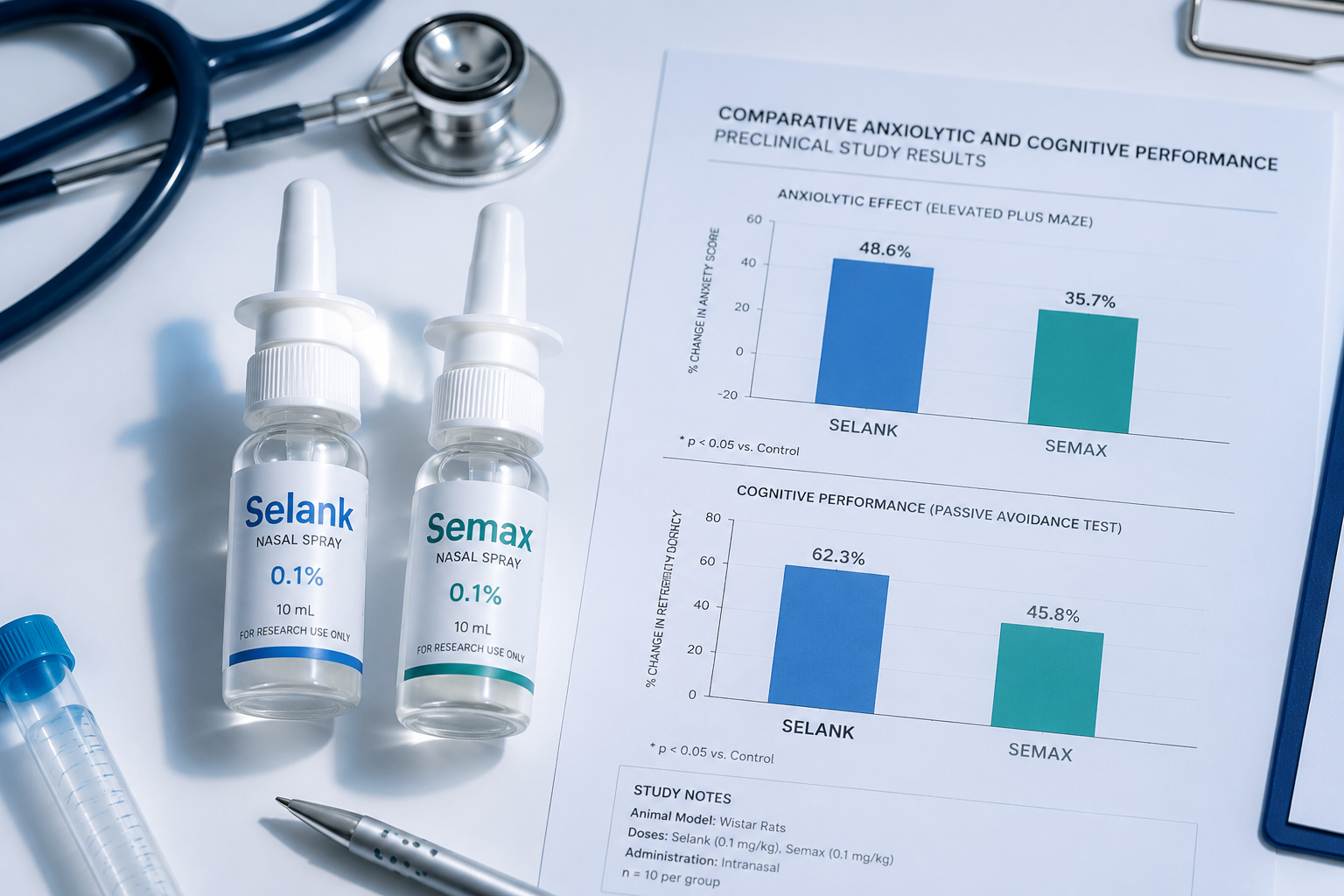
The heart of the Selank and Semax nasal spray: comparative research on anxiolytic and nootropic effects debate lies in how their pharmacological profiles differ — and where they intersect.

Head-to-Head Profile Comparison

Feature Selank Semax
Primary mechanism GABAergic modulation BDNF upregulation
Primary effect Anxiolytic Cognitive enhancement
Onset of action Minutes Days to weeks
Typical research dosage 300–900 mcg/day 200–1,000 mcg/day
Administration route Intranasal Intranasal
Sedation risk None reported None reported
Regulatory status (Russia) Approved for anxiety Approved for cognition/neuroprotection

Both compounds are administered intranasally, which bypasses first-pass metabolism and allows direct transport along olfactory pathways to the brain. This delivery method is a key advantage shared by both peptides and explains their relatively high bioavailability compared to oral alternatives.

Complementary Research Applications

Research has explored whether combining Selank and Semax produces additive or synergistic effects. Early findings suggest the pairing may offer simultaneous anxiety reduction and cognitive enhancement — without the sedation or dependence concerns tied to conventional pharmacological approaches. This is particularly relevant for researchers studying stress-induced cognitive impairment, where anxiety and reduced mental performance co-occur.

Researchers interested in multi-peptide stacking strategies may also find value in reviewing simple peptides research frameworks and broader peptide supplier quality considerations when sourcing compounds for controlled models.

Both peptides show favorable safety profiles in research settings. The most commonly noted side effect is mild nasal irritation at the administration site — a minor and typically transient finding. Neither compound has demonstrated significant toxicity, addiction potential, or withdrawal effects in available preclinical data.


Research Considerations and Practical Notes

Research Considerations and Practical Notes

Dosage Windows in Preclinical Models

Selank research typically operates within a 300–900 mcg/day window, while Semax protocols range from 200–1,000 mcg/day depending on the model and outcome being measured. These ranges reflect the flexibility each compound offers across different experimental designs.

Researchers working with other peptide compounds may draw useful parallels from dosage structuring resources such as the SS-31 research peptide considerations guide or the epithalon peptides research overview, which address similar precision-dosing challenges. For those exploring broader neurological peptide research, NAD scientific evidence reviews also offer relevant context on neuroprotective pathways.

Regulatory and Research Context

In Russia, both peptides hold approved clinical status — Selank for generalized anxiety disorder and Semax for cognitive enhancement and neuroprotection. Outside Russia, both remain research compounds not approved for human therapeutic use in most jurisdictions. Researchers should ensure compliance with applicable regulations and source compounds only from verified, tested suppliers.


Conclusion

The Selank and Semax nasal spray: comparative research on anxiolytic and nootropic effects reveals two peptides with distinct but potentially complementary roles. Selank offers fast-acting GABAergic anxiolysis; Semax delivers sustained cognitive enhancement through BDNF-driven neuroplasticity. Together, they represent a compelling research pairing for models examining the intersection of mood regulation and cognitive performance.

Actionable next steps for researchers:

  • Define the primary endpoint before selecting a compound — anxiety reduction favors Selank; cognitive output favors Semax.
  • Consider combination protocols only in controlled settings with clear outcome metrics.
  • Source compounds with documented purity testing and certificates of analysis.
  • Review current literature on intranasal peptide bioavailability to optimize dosing windows.
  • Monitor for nasal irritation as the primary tolerability variable in any administration protocol.
https://www.puretestedpeptides.com/wp-content/uploads/2026/06/Selank-and-Semax-Nasal-Spray-Comparative-Research-on-Anxiolytic-and-Nootropic-Effects.png 1024 1536 Pure Tested https://www.puretestedpeptides.com/wp-content/uploads/2026/01/buy-peptides-online.jpg Pure Tested2026-06-21 13:05:022026-07-20 15:02:38Selank and Semax Nasal Spray: Comparative Research on Anxiolytic and Nootropic Effects
Best Research Peptides for Mitochondrial Health: A Comparison of MOTS-c, 5-Amino-1MQ, and Emerging Compounds

Best Research Peptides for Mitochondrial Health: A Comparison of MOTS-c, 5-Amino-1MQ, and Emerging Compounds

June 20, 2026/0 Comments/by Pure Tested

Mitochondrial dysfunction now appears in the mechanistic pathway of over 50 human diseases, from type 2 diabetes to neurodegeneration — yet the pharmacological toolkit for directly targeting these organelles remained thin until the last decade. The field of best research peptides for mitochondrial health: a comparison of MOTS-c, 5-Amino-1MQ, and emerging compounds has moved quickly, giving researchers a growing menu of targeted molecules to evaluate. This article breaks down the leading candidates, their mechanisms, and what distinguishes each for preclinical study design in 2026.

Key Takeaways

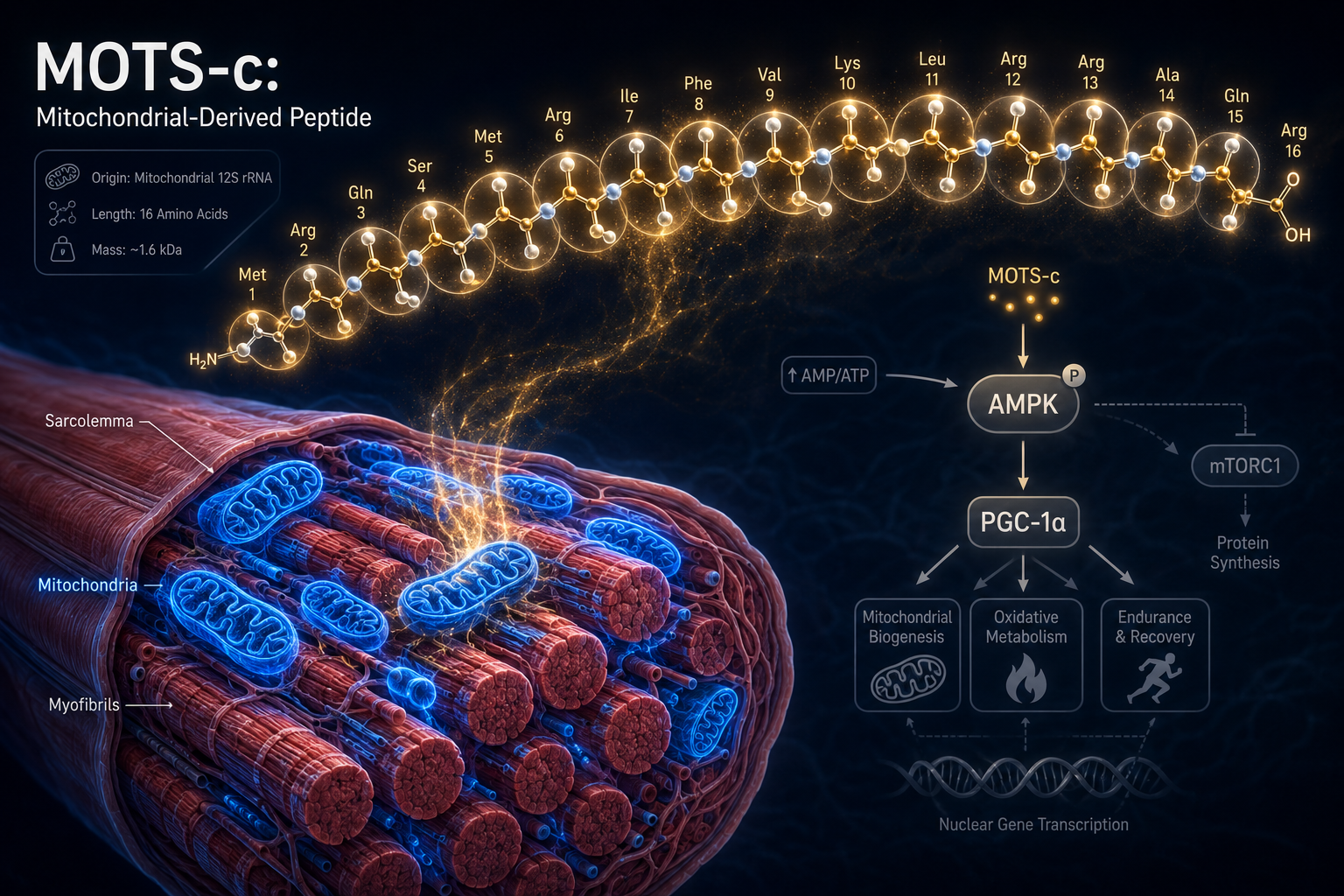
  • MOTS-c is a 16-amino-acid mitochondrial-derived peptide that activates AMPK, reduces oxidative stress, and declines naturally with age.
  • 5-Amino-1MQ targets NNMT enzyme inhibition, influencing NAD+ metabolism and energy expenditure at the cellular level.
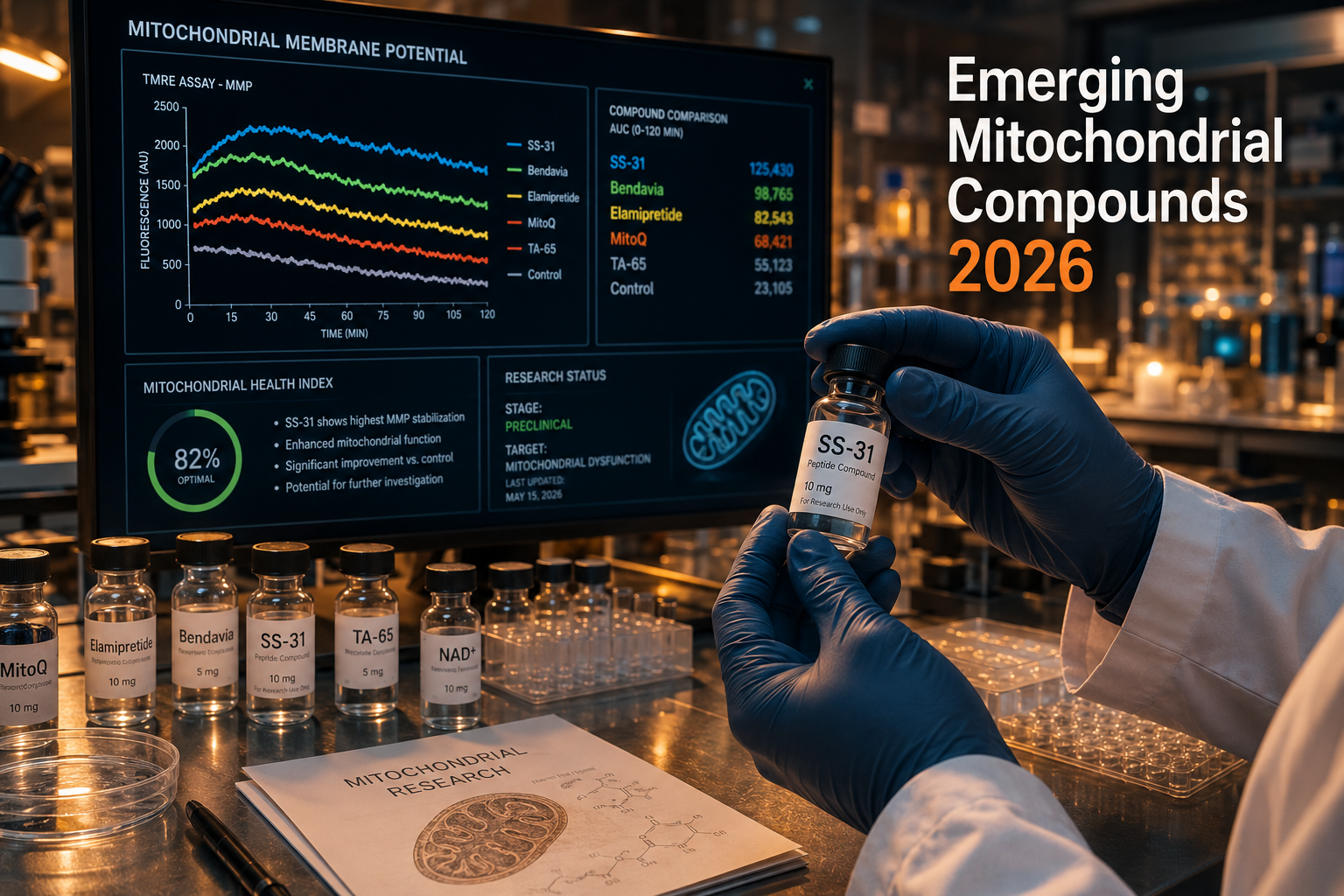
  • SS-31 (elamipretide) protects the inner mitochondrial membrane and is one of the most studied structural mitochondrial peptides.
  • Researchers should evaluate purity, mechanism specificity, and study context when selecting among these compounds.
  • Emerging molecules such as SLU-PP-332 and humanin analogs are expanding the mitochondrial peptide research landscape.

Key Takeaways

MOTS-c: The Mitochondrial-Derived Peptide Redefining Metabolic Research

MOTS-c is encoded within the mitochondrial genome itself — a distinction that separates it from most synthetic research peptides. This 16-amino-acid peptide translocates to the nucleus under metabolic stress and exercise, where it activates antioxidant response elements and regulates stress-adaptation genes.

Key mechanisms of MOTS-c:

  • Inhibits the folate cycle and de novo purine biosynthesis
  • Activates AMPK, the master cellular energy sensor
  • Upregulates PGC-1alpha, promoting mitochondrial biogenesis
  • Reduces reactive oxygen species (ROS) emission and protein oxidative damage

Research shows that MOTS-c levels increase in skeletal muscle, systemic circulation, and the hypothalamus following exercise. Critically, circulating MOTS-c declines with age, which correlates with reduced insulin sensitivity, increased adiposity, and impaired muscle homeostasis. Exogenous MOTS-c administration in animal models has reversed age-dependent and diet-induced insulin resistance.

"MOTS-c acts as a molecular signal linking mitochondrial stress to whole-body metabolic adaptation — a property no synthetic small molecule fully replicates."

For researchers building study frameworks around this peptide, the MOTS-c mitochondrial research themes resource provides a useful orientation to current experimental directions. Those interested in mechanistic depth can also explore MOTS-c and mitochondrial dynamics for pathway-level detail.


MOTS-c: The Mitochondrial-Derived Peptide Redefining Metabolic Research

Comparing the Best Research Peptides for Mitochondrial Health: A Comparison of MOTS-c, 5-Amino-1MQ, and Emerging Compounds

5-Amino-1MQ: NNMT Inhibition and NAD+ Metabolism

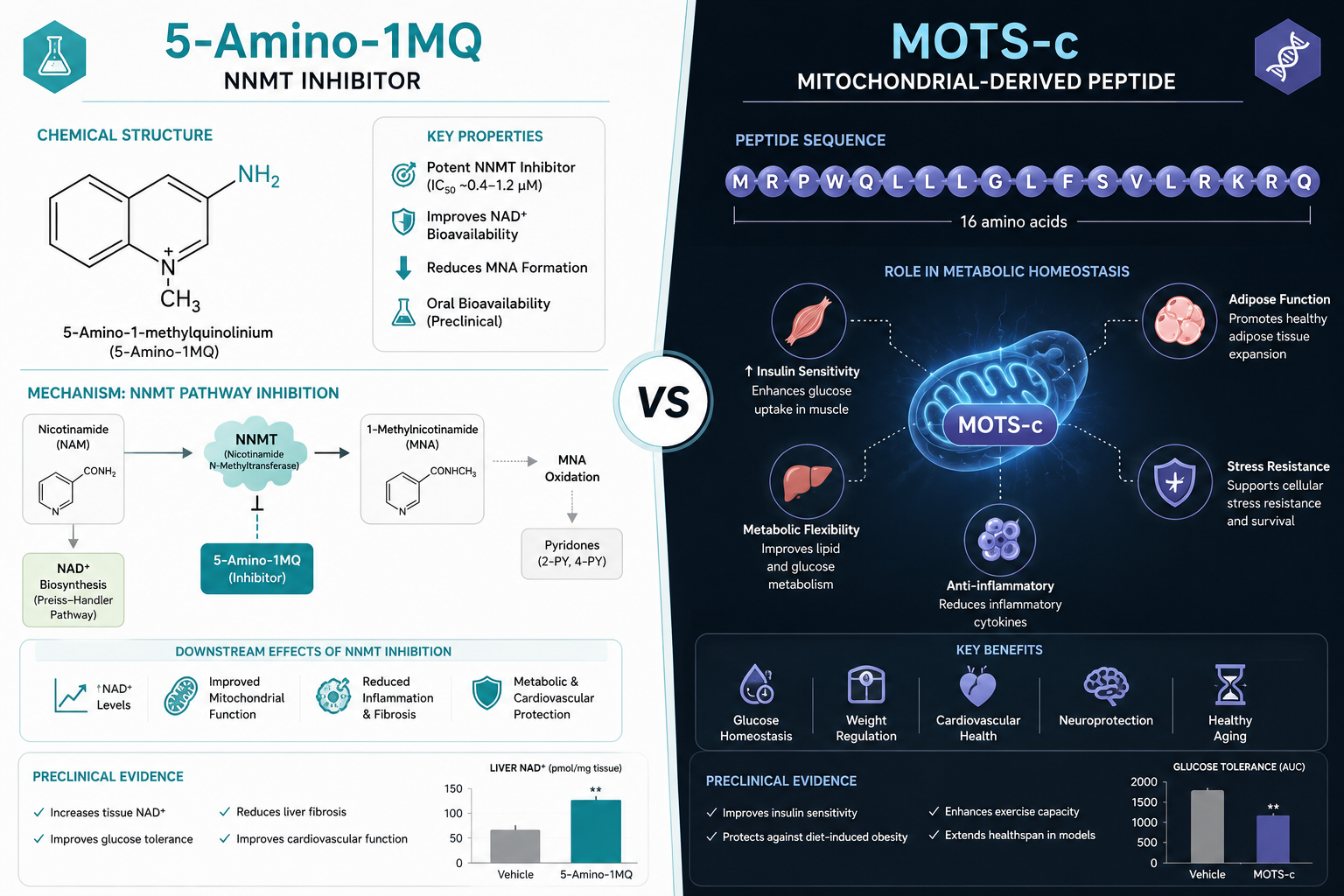
5-Amino-1MQ is a small-molecule NNMT (nicotinamide N-methyltransferase) inhibitor rather than a peptide in the classical sense, but it is routinely grouped with research peptides given its metabolic targeting profile. NNMT consumes SAM (S-adenosylmethionine) and reduces NAD+ precursor availability. By blocking NNMT, 5-Amino-1MQ effectively raises intracellular NAD+ levels, which supports mitochondrial electron transport chain efficiency.

Comparison table: MOTS-c vs. 5-Amino-1MQ

Feature MOTS-c 5-Amino-1MQ
Origin Mitochondrial genome Synthetic small molecule
Primary target AMPK / PGC-1alpha NNMT enzyme
NAD+ effect Indirect (via AMPK) Direct (via NNMT inhibition)
Oxidative stress reduction Demonstrated Under active study
Age-related decline Yes Not applicable

SS-31 (Elamipretide): Structural Mitochondrial Protection

SS-31 targets cardiolipin on the inner mitochondrial membrane, stabilizing cristae architecture and improving ATP synthesis efficiency. Unlike MOTS-c, SS-31 does not rely on nuclear translocation — it acts directly at the membrane. Researchers studying kidney, cardiac, or skeletal muscle models frequently pair SS-31 with MOTS-c to address both structural and signaling dimensions of mitochondrial health. The SS-31 and MOTS-c research tag reflects this growing interest in combinatorial study designs.

For kidney-specific mitochondrial research, the SS-31 kidney health research page offers relevant preclinical context.


SS-31 (Elamipretide): Structural Mitochondrial Protection

Emerging Compounds and Sourcing Considerations

Humanin, SLU-PP-332, and Beyond

The mitochondrial-derived peptide (MDP) family extends beyond MOTS-c. Humanin and SHLP2 (small humanin-like peptides) are encoded in the same mitochondrial 16S rRNA region and show cytoprotective effects in neuronal and cardiomyocyte models. SLU-PP-332 is an ERR-alpha/gamma agonist that mimics exercise-induced mitochondrial gene expression — a distinct but complementary mechanism. Researchers interested in this compound can review the SLU-PP-332 metabolic research overview for study design notes.

Longevity-oriented research programs increasingly stack these compounds. The longevity peptide research framework outlines how multiple mitochondrial targets can be addressed within a single experimental protocol.

Sourcing and Purity Standards

Compound quality is non-negotiable in mitochondrial research. ROS-sensitive assays and AMPK phosphorylation readouts are highly vulnerable to contaminant interference. Researchers should prioritize suppliers with documented certificate of analysis (COA) data and reference standard benchmarking. The Bachem and reference standards guide addresses how to evaluate peptide purity against validated benchmarks.

For researchers building broader metabolic study panels, the MOTS-c and elamipretide comparison page provides a useful side-by-side of two of the field's most studied mitochondrial compounds.


Conclusion

Selecting among the best research peptides for mitochondrial health requires matching mechanism to research question. MOTS-c is the strongest candidate for studies targeting AMPK activation, age-related metabolic decline, and exercise physiology. 5-Amino-1MQ suits protocols focused on NAD+ metabolism and NNMT-driven energy regulation. SS-31 remains the reference compound for inner mitochondrial membrane integrity. Emerging molecules like SLU-PP-332 and humanin analogs are broadening the toolkit further.

Actionable next steps for researchers:

  1. Define the specific mitochondrial pathway under investigation before compound selection.
  2. Obtain COA-verified peptides from suppliers using validated reference standards.
  3. Consider combinatorial designs (e.g., MOTS-c plus SS-31) for multi-target mitochondrial studies.
  4. Monitor the MDP literature actively — this field is advancing rapidly in 2026.
https://www.puretestedpeptides.com/wp-content/uploads/2026/06/Best-Research-Peptides-for-Mitochondrial-Health-A-Comparison-of-MOTS-c-5-Amino-1MQ-and-Emerging-Compounds.png 1024 1536 Pure Tested https://www.puretestedpeptides.com/wp-content/uploads/2026/01/buy-peptides-online.jpg Pure Tested2026-06-20 13:04:512026-07-20 15:02:39Best Research Peptides for Mitochondrial Health: A Comparison of MOTS-c, 5-Amino-1MQ, and Emerging Compounds
BPC-157 and TB-500 Stack: Synergistic Mechanisms for Enhanced Tissue Repair Research

BPC-157 and TB-500 Stack: Synergistic Mechanisms for Enhanced Tissue Repair Research

June 20, 2026/0 Comments/by Pure Tested

}

Professional () hero image with : 'BPC-157 & TB-500 Stack: Synergistic Tissue Repair Research' in extra large white with

Two peptides operating through entirely different biological pathways — yet when combined, preclinical data suggests their effects on tissue repair may be greater than the sum of their parts. The BPC-157 and TB-500 stack: synergistic mechanisms for enhanced tissue repair research has become one of the most studied peptide combinations in regenerative biology, drawing attention from researchers examining musculoskeletal recovery, angiogenesis, and cellular remodeling.

Key Takeaways

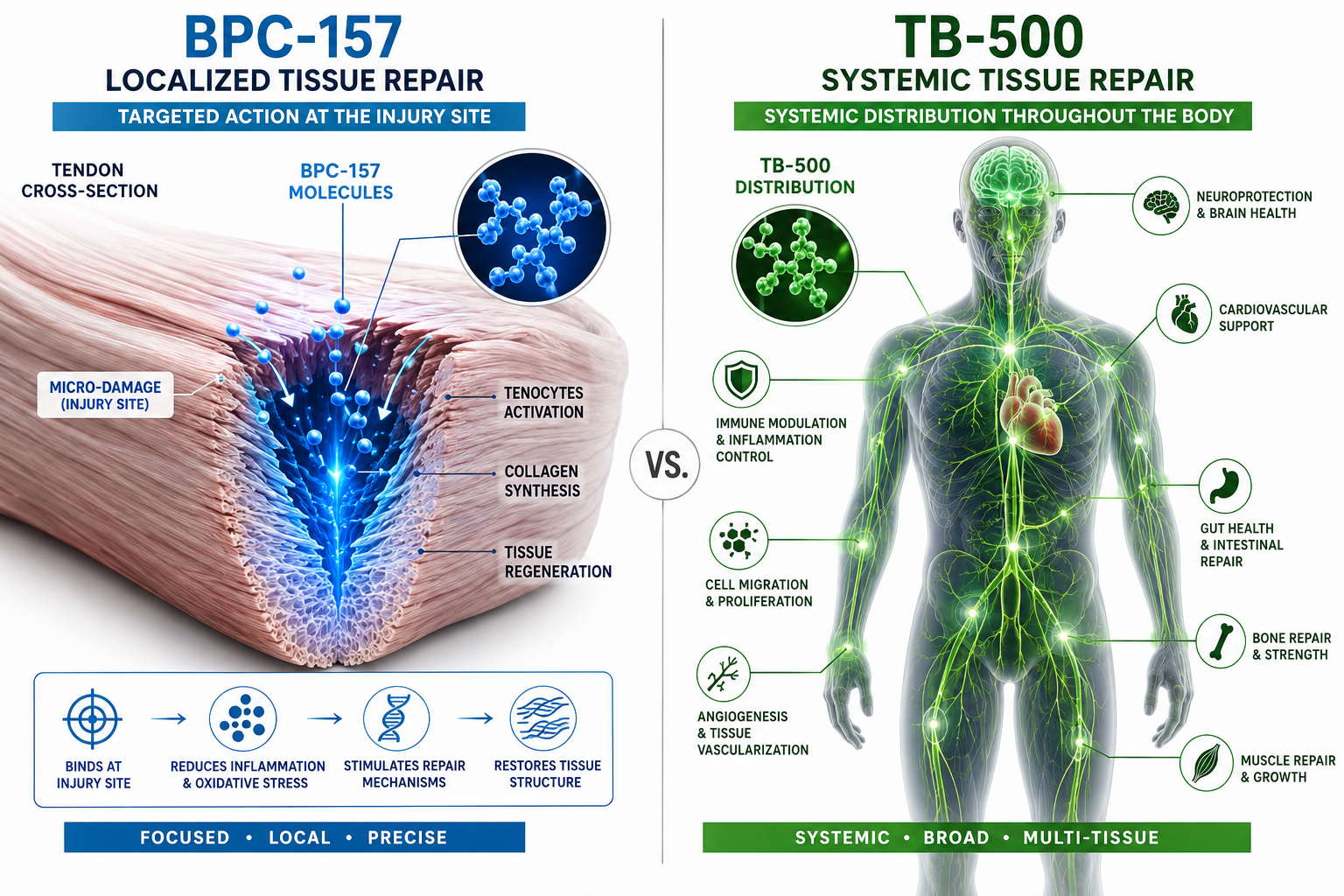
  • BPC-157 drives localized tissue repair through angiogenesis and nitric oxide signaling, while TB-500 promotes systemic cell migration via actin regulation.
  • Preclinical models show the combined stack improves tensile strength, collagen composition, and recovery speed in tendon and ligament injuries.
  • No peer-reviewed human clinical trials currently validate the combination's safety or efficacy.
  • Both peptides are classified as FDA Interim Category 2 substances and are prohibited by WADA under the S0 category.
  • Researchers should source only verified, lab-tested compounds and operate within applicable regulatory frameworks.

Key Takeaways

How BPC-157 and TB-500 Work Together

Understanding the BPC-157 and TB-500 stack: synergistic mechanisms for enhanced tissue repair research begins with each peptide's distinct mechanism.

BPC-157 (Body Protection Compound-157) is a 15-amino-acid peptide derived from a gastric protein. Its primary actions include:

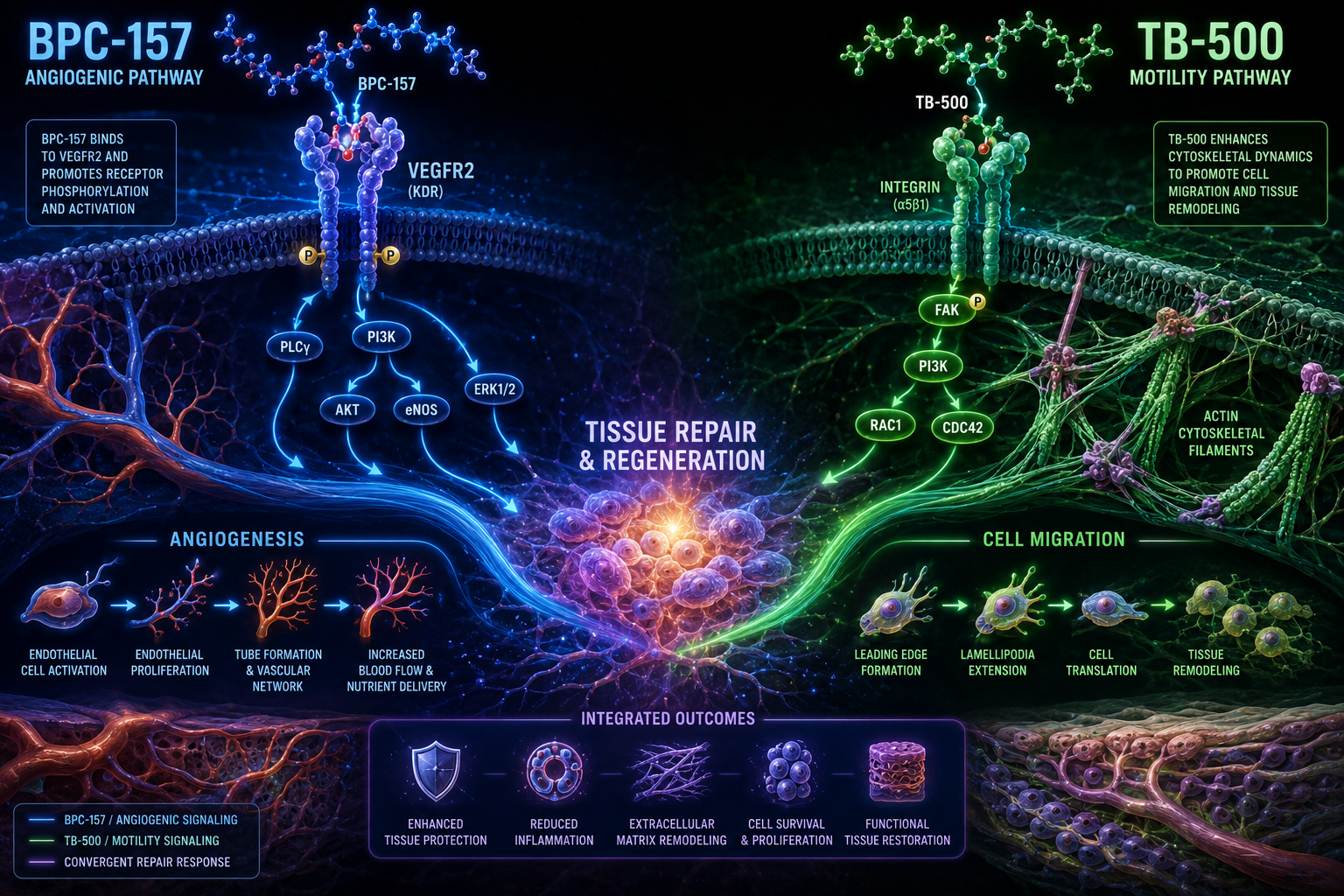
  • Activating VEGFR2 to stimulate new blood vessel formation (angiogenesis)
  • Upregulating the nitric oxide system to improve blood flow to damaged tissue
  • Modulating growth factor signaling to accelerate fibroblast activity

TB-500 (Thymosin Beta-4 fragment) works through a completely separate route. It binds to actin, a key protein in the cytoskeleton, promoting cell migration, differentiation, and tissue remodeling. Its systemic reach makes it particularly effective for whole-body recovery processes.

"BPC-157 builds the vascular infrastructure; TB-500 mobilizes the cellular workforce."

Together, these mechanisms are complementary rather than redundant. BPC-157 creates the blood supply needed to deliver nutrients and immune cells, while TB-500 drives the migration and organization of repair cells into the damaged area. Researchers studying recovery and tissue biology have noted that this dual-pathway approach addresses two critical bottlenecks in natural healing simultaneously.

For a deeper foundation on BPC-157 alone, the BPC-157 core peptides documentation and first research guide provides essential background before exploring stacked protocols.

Preclinical Evidence Supporting the Combined Stack

Preclinical Evidence Supporting the Combined Stack

Animal studies provide the most detailed evidence for the BPC-157 and TB-500 stack: synergistic mechanisms for enhanced tissue repair research. Preclinical models involving Achilles tendon injuries, ligament damage, and cardiac ischemia-reperfusion have demonstrated measurable improvements across several markers:

Outcome Marker Observed Effect in Preclinical Models
Tensile strength Increased in repaired tendons
Collagen composition Improved fiber organization
Recovery timeline Reduced compared to single-peptide groups
Cardiac tissue repair Reduced ischemia-reperfusion damage

BPC-157 showed particular strength in localized tissue applications — tendons, joints, and gut lining — while TB-500 demonstrated advantages in systemic flexibility and broader tissue remodeling. Their combination appears to address both the local and systemic dimensions of complex injuries.

Researchers interested in cytoskeletal remodeling should also review TB-500 cytoskeletal remodeling research themes for mechanistic detail, and those sourcing TB-500 for controlled experiments can reference TB-500 buy: controlled experimental models and QC workflow.

It is worth noting that all current evidence is preclinical. No peer-reviewed human clinical trials have tested this combination, and existing claims rely on extrapolations from individual peptide studies.

Research Protocols, Regulatory Status, and Risk Considerations

Research Protocols, Regulatory Status, and Risk Considerations

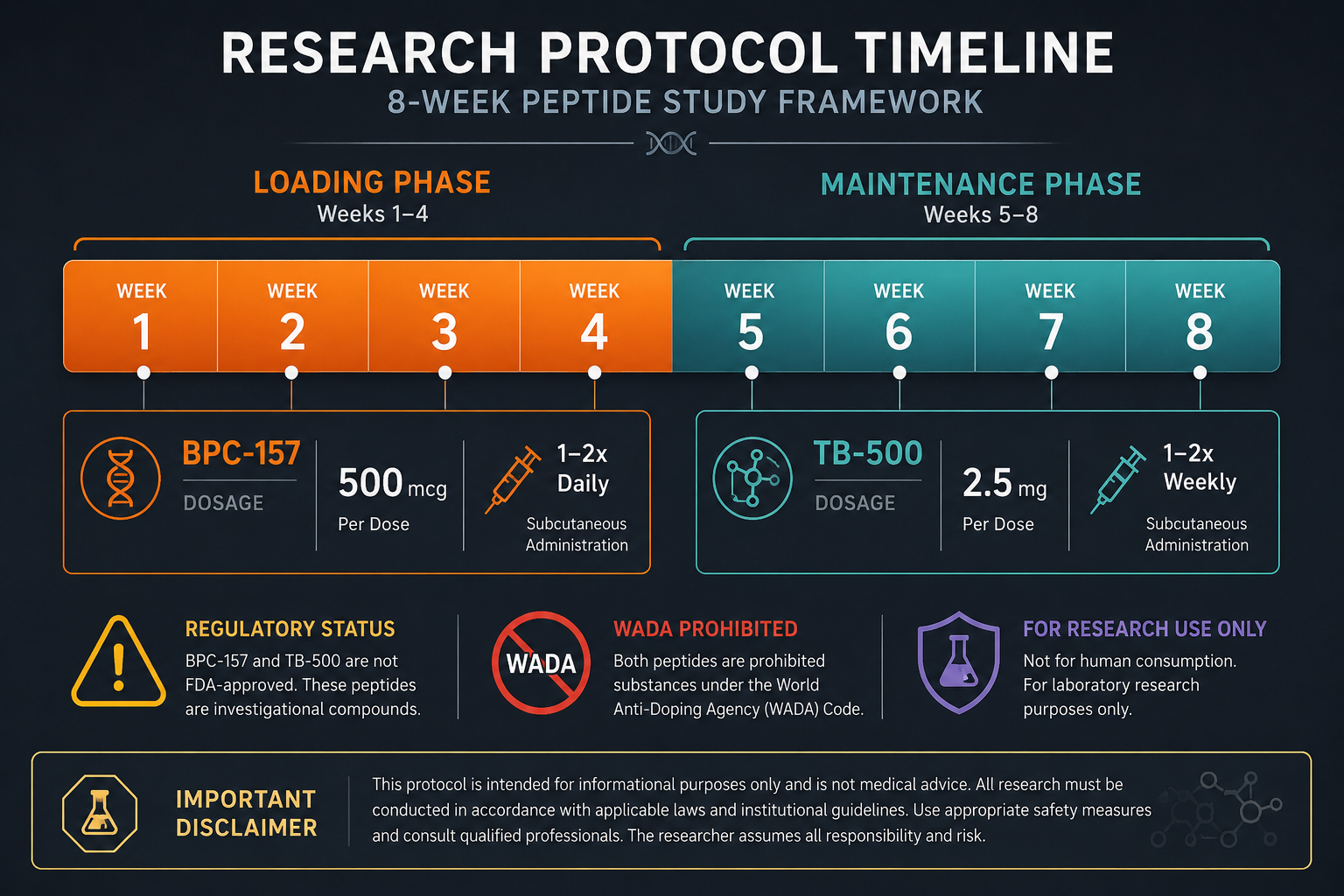
A commonly referenced preclinical research protocol involves an 8-week cycle:

  • BPC-157: 500 mcg administered twice daily, near the target tissue site
  • TB-500 Loading Phase (Weeks 1-4): 2.5 mg twice weekly
  • TB-500 Maintenance Phase (Weeks 5-8): 1.5 mg once weekly

Regulatory context is critical. As of 2026, both BPC-157 and TB-500 are classified as FDA Interim Category 2 substances — meaning they are not approved for human therapeutic use. The World Anti-Doping Agency (WADA) also prohibits both compounds under its S0 category for non-approved substances, making them ineligible for use in competitive sport.

Medical professionals caution that while preclinical data is promising, the absence of robust human trials means safety and efficacy remain unverified. Theoretical concerns include the potential for angiogenesis-promoting peptides to interact with undetected tumor microenvironments, though direct evidence for this risk remains limited.

Researchers exploring complementary peptide mechanisms may also find value in reviewing GHK-Cu longevity research themes and SS-31 mitochondrial research themes, both of which intersect with tissue repair and cellular protection pathways.

For sourcing integrity, only compounds with verified purity documentation should be used. The lab-tested peptides catalog offers a reference point for quality-controlled research compounds.

Conclusion

The BPC-157 and TB-500 stack: synergistic mechanisms for enhanced tissue repair research represents a compelling area of peptide science, with complementary mechanisms that address both vascular and cellular dimensions of tissue repair. Preclinical evidence supports the hypothesis that their combined action outperforms either peptide alone in specific injury models.

Actionable next steps for researchers:

  1. Review the existing preclinical literature on each peptide individually before designing combination protocols.
  2. Consult regulatory guidelines in your jurisdiction — both peptides carry significant legal and compliance considerations.
  3. Source only from suppliers providing third-party purity certificates and documented QC workflows.
  4. Design controlled experimental models with appropriate endpoints to generate reproducible data.
  5. Monitor ongoing clinical research, as human trials may emerge within the next several years.

The science is promising. Rigorous methodology and regulatory awareness are what will move this research forward responsibly.

https://www.puretestedpeptides.com/wp-content/uploads/2026/06/BPC-157-and-TB-500-Stack-Synergistic-Mechanisms-for-Enhanced-Tissue-Repair-Research.png 1024 1536 Pure Tested https://www.puretestedpeptides.com/wp-content/uploads/2026/01/buy-peptides-online.jpg Pure Tested2026-06-20 13:03:542026-07-20 15:02:39BPC-157 and TB-500 Stack: Synergistic Mechanisms for Enhanced Tissue Repair Research
GLP-2 and GLP-2-Tirzepatide: Research into Intestinal Growth Factors and Gut Barrier Function

GLP-2 and GLP-2-Tirzepatide: Research into Intestinal Growth Factors and Gut Barrier Function

June 20, 2026/0 Comments/by Pure Tested

Short bowel syndrome affects roughly 3 in every million people, yet the peptide hormone at the center of emerging gut repair research — GLP-2 — was only identified in the 1980s. Today, research into GLP-2 and GLP-2-Tirzepatide: Research into Intestinal Growth Factors and Gut Barrier Function is reshaping how scientists understand the intestine as a dynamic, hormonally regulated organ.

Detailed () scientific illustration showing GLP-2 hormone molecules being secreted from enteroendocrine L-cells in the

Key Takeaways

  • GLP-2 is an intestinally derived hormone that drives mucosal growth, barrier repair, and nutrient absorption.
  • Its actions are largely indirect, mediated through IGF-1, EGF, and tight junction protein modulation.
  • Dual-receptor agonists combining GLP-1 and GLP-2 activity (such as dapiglutide) show enhanced barrier protection in preclinical models.
  • Tirzepatide's structural relationship to incretin biology opens new research questions about combined gut-metabolic signaling.
  • Age-related gut decline may be a future target for GLP-2-based interventions.

What Is GLP-2 and Why Does It Matter for Gut Health

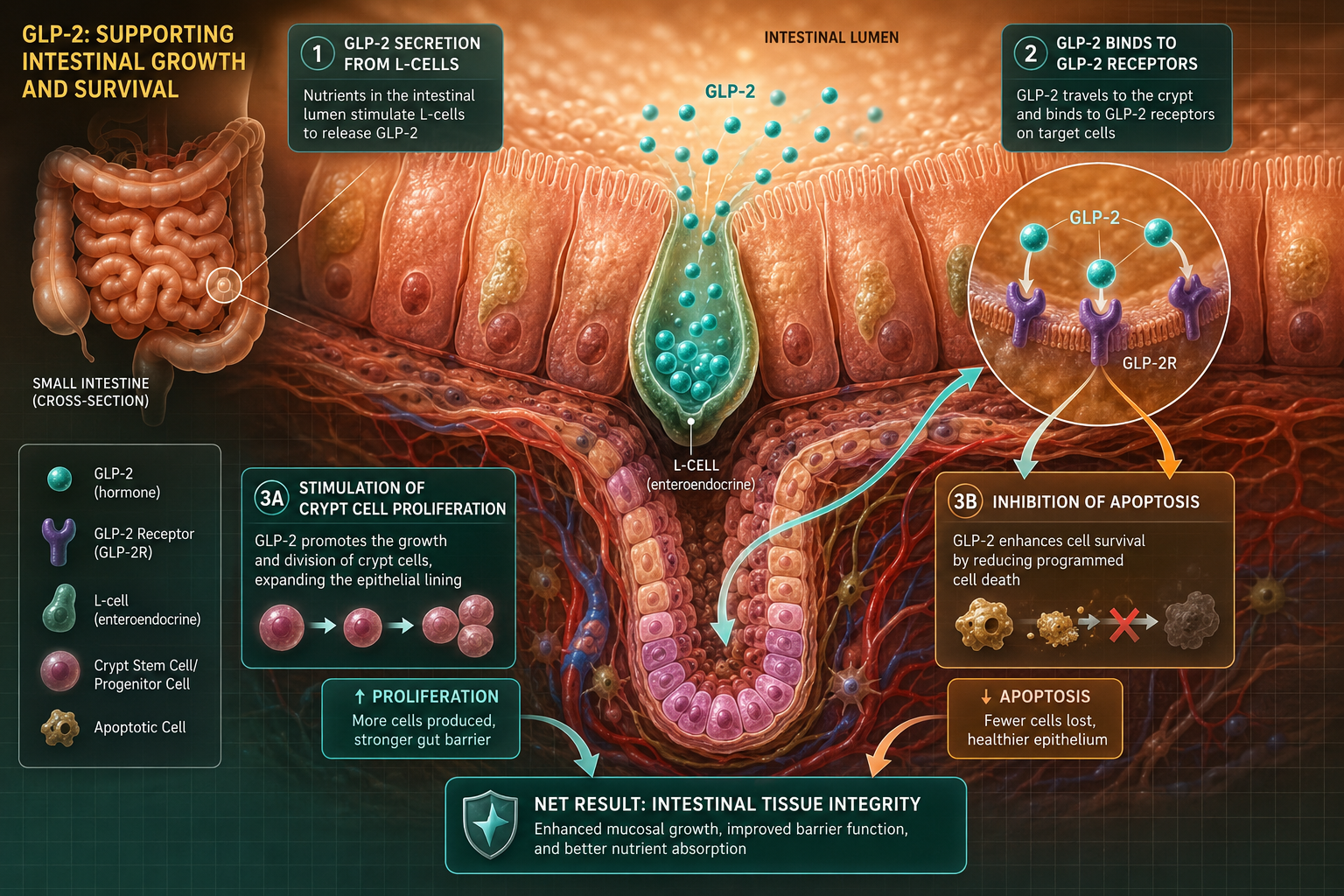
Glucagon-like peptide-2 (GLP-2) is a 33-amino acid hormone secreted by enteroendocrine L-cells lining the small and large intestine. It is released in direct response to nutrient intake, making it a key postprandial signal.

Its primary roles include:

  • Stimulating crypt cell proliferation (intestinal growth)
  • Inhibiting apoptosis and proteolysis in mucosal tissue
  • Enhancing nutrient absorption and reducing mucosal permeability
  • Regulating gastric emptying and acid secretion

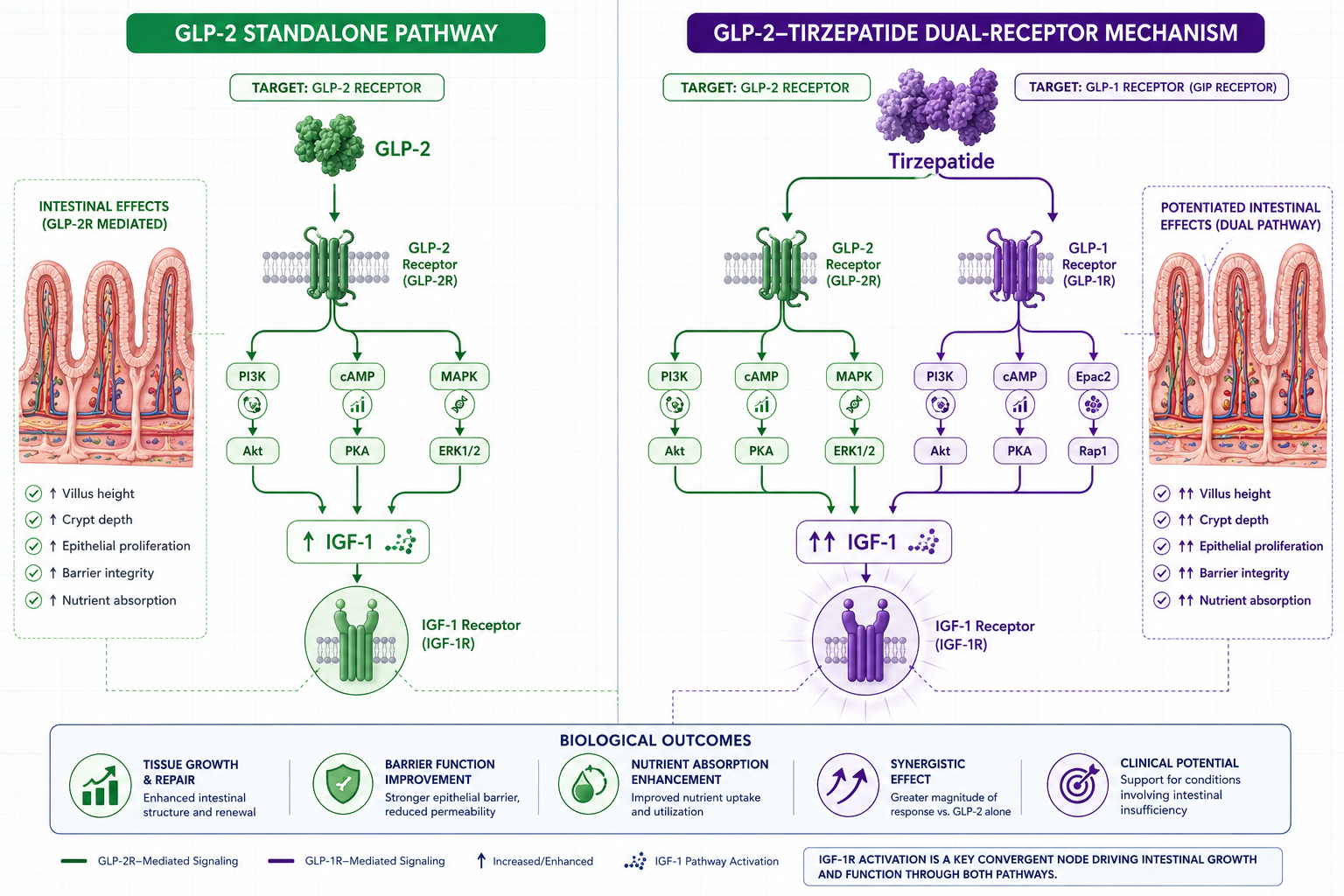
GLP-2 does not act alone. Its intestinotropic effects are mediated through a network of indirect signals, particularly insulin-like growth factor-1 (IGF-1) and epidermal growth factor (EGF). These downstream mediators drive the crypt cell proliferation that gives GLP-2 its reputation as a potent intestinal growth factor.

Researchers studying related metabolic peptides — including those exploring GLP-1 and incretin research themes — have noted that the GLP family shares structural and functional overlap worth investigating in parallel.


GLP-2 and Gut Barrier Function: The Tight Junction Connection

One of the most clinically significant findings in GLP-2 research involves its effect on the intestinal epithelial barrier. A healthy gut barrier depends on tight junction proteins — including claudin and occludin — that seal gaps between epithelial cells and prevent bacterial translocation.

GLP-2 improves both:

Pathway Mechanism
Transcellular Enhanced nutrient transport across epithelial cells
Paracellular Tight junction protein upregulation via IE-IGF-1R signaling

The intestinal epithelial IGF-1 receptor (IE-IGF-1R) appears central to this process. When GLP-2 binds its receptor on subepithelial cells, it triggers IGF-1 release, which then acts on epithelial IGF-1 receptors to reinforce tight junction integrity.

Research in aged animal models found that GLP-2 administration reversed age-associated declines in mucosal barrier function — a finding with significant implications for longevity-focused gastrointestinal research. This connects naturally to broader work on mitochondrial and longevity research themes where cellular resilience is a shared focus.

GLP-2 also appears to orchestrate gut microbiota interactions, supporting immune homeostasis and reducing inflammatory signaling at the mucosal surface.


GLP-2 and GLP-2-Tirzepatide: Research into Intestinal Growth Factors and Gut Barrier Function — The Dual-Receptor Frontier

GLP-2 and GLP-2-Tirzepatide: Research into Intestinal Growth Factors and Gut Barrier Function — The Dual-Receptor Frontier

Tirzepatide is best known as a dual GIP/GLP-1 receptor agonist with metabolic effects. However, emerging structural pharmacology research is exploring whether tirzepatide's incretin backbone can be modified or combined with GLP-2 activity to create multi-target gut-metabolic agents.

A 2022 study on dapiglutide — a dual GLP-1/GLP-2 receptor agonist — demonstrated measurable improvements in intestinal barrier function in a murine short bowel model. This proof-of-concept supports the hypothesis that combining incretin signaling with GLP-2 intestinotrophic activity could offer additive benefits.

Researchers interested in GLP-3 and retatrutide research are also examining how multi-receptor engagement affects gut architecture beyond glycemic control.
GLP-2 and GLP-2-Tirzepatide: Research into Intestinal Growth Factors and Gut Barrier Function — The Dual-Receptor Frontier

Key research questions currently being explored include:

  • Can tirzepatide-adjacent molecules be engineered to also activate GLP-2 receptors?
  • Does combined GLP-1/GLP-2 signaling reduce intestinal permeability more effectively than either alone?
  • What role does the gut microbiome play in modulating these effects?

For researchers exploring metabolic and body composition peptides, AOD9604 metabolic research and TESA body composition research themes offer relevant comparative frameworks for understanding how gut-derived hormones influence systemic metabolism.


Conclusion

Research into GLP-2 and GLP-2-Tirzepatide: Research into Intestinal Growth Factors and Gut Barrier Function represents one of the most promising frontiers in gastrointestinal biology in 2026. GLP-2 is not simply a growth signal — it is a multi-functional regulator of barrier integrity, immune balance, and nutrient homeostasis.

Actionable next steps for researchers:

  1. Review preclinical models using dual GLP-1/GLP-2 agonists to identify translatable endpoints.
  2. Examine IGF-1 receptor signaling as a measurable biomarker for GLP-2 barrier activity.
  3. Explore synergies between GLP-2 pathways and other gut-protective peptides, including those catalogued in the comprehensive peptide research catalog.
  4. Monitor emerging data on tirzepatide-derived multi-receptor molecules for intestinal applications.

The intersection of incretin pharmacology and intestinal growth factor biology is still early-stage — but the mechanistic groundwork laid by GLP-2 research makes it one of the most compelling areas to watch.

https://www.puretestedpeptides.com/wp-content/uploads/2026/06/GLP-2-and-GLP-2-Tirzepatide-Research-into-Intestinal-Growth-Factors-and-Gut-Barrier-Function.png 1024 1536 Pure Tested https://www.puretestedpeptides.com/wp-content/uploads/2026/01/buy-peptides-online.jpg Pure Tested2026-06-20 13:03:322026-07-20 15:02:40GLP-2 and GLP-2-Tirzepatide: Research into Intestinal Growth Factors and Gut Barrier Function
Where to Buy Enclomiphene for Research: A Guide to Trusted Suppliers and Quality Assurance

Where to Buy Enclomiphene for Research: A Guide to Trusted Suppliers and Quality Assurance

June 20, 2026/0 Comments/by Pure Tested

Only a handful of compounds have generated as much research interest as enclomiphene citrate — yet its regulatory path remains one of the most complicated in modern pharmacology. For laboratory researchers navigating this landscape in 2026, finding where to buy enclomiphene for research through trusted suppliers and quality assurance protocols is not straightforward. This guide breaks down the supplier landscape, quality benchmarks, and critical compliance considerations researchers must understand before making any procurement decision.

Key Takeaways

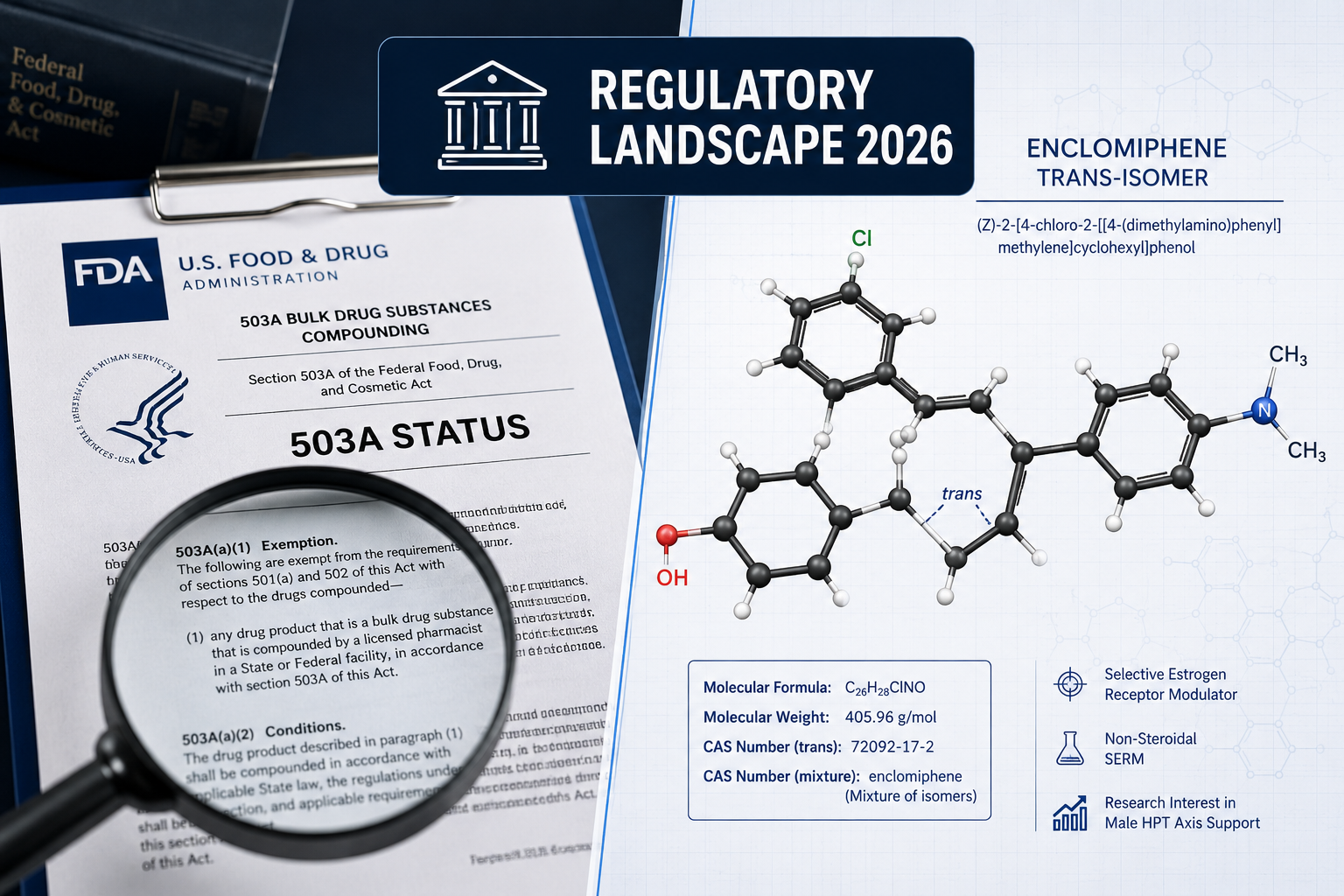
  • Enclomiphene citrate has not received FDA approval and remains in 503A Category 1 (Under Evaluation) as of 2026.
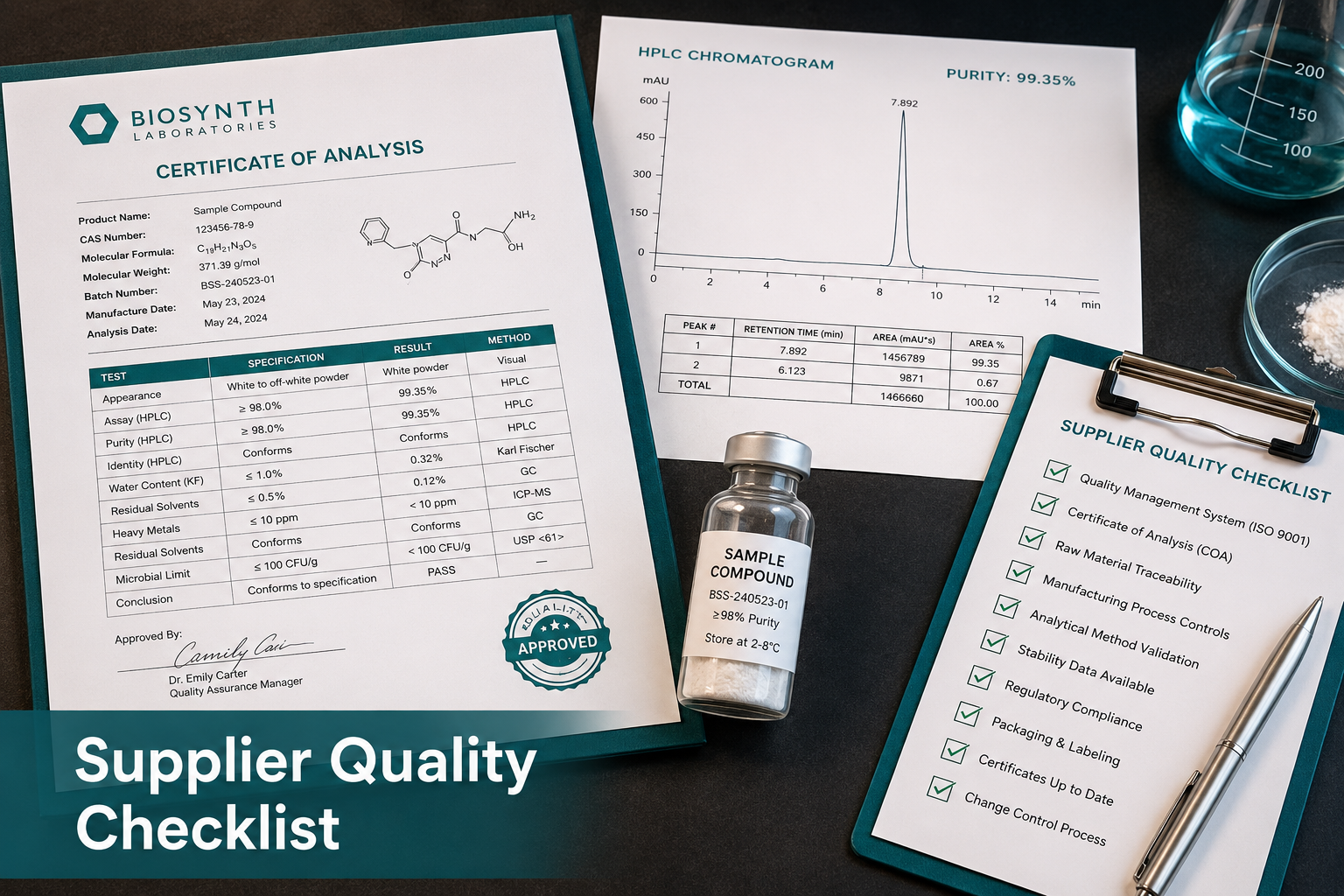
  • Research-grade suppliers must provide batch-specific Certificates of Analysis (COA) and third-party purity verification.
  • Purity benchmarks from reputable suppliers range from 98.88% to 99.0% or higher, verified by RP-HPLC analysis.
  • Global supply chain constraints — particularly stereochemical purification capacity — affect consistent availability.
  • Purchasing enclomiphene without a valid prescription for human use is unregulated and carries significant legal and safety risks.

Key Takeaways

Understanding the Regulatory Landscape Before You Source

Any serious discussion of where to buy enclomiphene for research must begin with its regulatory status. Enclomiphene citrate has never received FDA approval. Its developer pursued approval under the brand name Androxal for secondary hypogonadism, but received a Complete Response Letter in late 2015. The FDA indicated the Phase 3 study design was no longer adequate to demonstrate clinical benefit, and the required additional trials were never completed.
In June 2022, the FDA Pharmacy Compounding Advisory Committee voted against adding enclomiphene citrate to the final 503A Bulks List. As of the FDA's updated list in May 2026, enclomiphene remains in 503A Category 1 (Under Evaluation) — meaning its compounding status is still unsettled.

Despite this, enclomiphene is widely used in clinical settings through compounding pharmacies. Under Section 503A of the Federal Food, Drug, and Cosmetic Act, licensed pharmacies may compound drugs for individual patients who hold valid prescriptions. Researchers should clearly distinguish between:

  • Clinical/compounding use — requires a valid prescription and licensed pharmacy
  • Research chemical procurement — governed by supplier-specific quality standards and intended strictly for laboratory use

"Products sold online without a prescription are unregulated, and their contents, purity, and dosing are not verified by any oversight body."

For context on how regulatory frameworks shape the broader peptide and research compound market, the latest developments in peptide research offer useful background on evolving supplier standards.


Understanding the Regulatory Landscape Before You Source

Evaluating Trusted Suppliers and Quality Assurance Standards

When researching where to buy enclomiphene for research, quality assurance is the single most important criterion. The research chemical market is not uniformly regulated, which means the burden of due diligence falls entirely on the researcher.

What to Look for in a Reputable Supplier

Quality Indicator Minimum Standard
Purity level 98.88% or higher (RP-HPLC verified)
Documentation Batch-specific COA + MSDS
Testing method Third-party or in-house RP-HPLC
Isomer selectivity Trans-isomer above 97%
Labeling Accurate concentration and lot number

Reputable suppliers provide batch-specific Certificates of Analysis that confirm compound identity, purity, and testing methodology. Some suppliers offer enclomiphene at purity levels of 99.0% or higher, accompanied by both COA and Material Safety Data Sheet (MSDS) documentation. Others offer 12.5 mg capsule formats with purity confirmed at 98.88% via RP-HPLC.

Researchers sourcing other compounds from verified suppliers can review lab-tested peptide standards to understand what rigorous quality documentation looks like in practice. Similarly, the COA verification process used by established peptide suppliers sets a useful benchmark for what enclomiphene sourcing documentation should include.


What to Look for in a Reputable Supplier

Supply Chain Risks and Practical Procurement Strategies

The enclomiphene supply chain faces challenges that go beyond simple availability. A significant portion of active pharmaceutical ingredients (APIs) are sourced from manufacturing hubs in China and India. Geopolitical factors and increased FDA oversight of compounded hormone therapies have created procurement bottlenecks.

Industry experts point to a specific constraint: stereochemical purification capacity. Facilities capable of maintaining consistent trans-isomer selectivity above 97% are limited globally. This makes consistent, high-purity supply difficult to guarantee across all vendors.

Practical steps for research procurement:

  • Implement predictive procurement strategies to buffer against supply gaps
  • Request lot-specific documentation before finalizing any order
  • Verify that the supplier tests each batch independently, not just at product launch
  • Cross-reference supplier claims against third-party analytical databases

Researchers working with related compounds — such as those exploring 5-Amino-1MQ for metabolic research or NAD+ scientific evidence — will recognize that these same supply chain diligence principles apply across the research compound category.

For those interested in broader hormonal and body composition research themes, resources on tesa science and sourcing and body composition research themes provide useful comparative context.


Conclusion

Navigating where to buy enclomiphene for research requires a clear-eyed understanding of regulatory status, supplier quality standards, and global supply chain realities. In 2026, the compound remains unapproved by the FDA and sits in an unsettled compounding category — making rigorous supplier vetting non-negotiable.

Actionable next steps for researchers:

  1. Confirm the intended use is strictly laboratory research, not human administration without medical supervision.
  2. Request batch-specific COA and MSDS documentation from any prospective supplier before purchasing.
  3. Verify purity is confirmed via RP-HPLC at 98.88% or above, with trans-isomer selectivity above 97%.
  4. Build procurement buffers into research timelines to account for supply chain volatility.
  5. Consult a licensed healthcare professional if the intended application involves any clinical or compounding context.

Quality assurance is not optional in research compound procurement — it is the foundation of reliable, reproducible science.

https://www.puretestedpeptides.com/wp-content/uploads/2026/06/Where-to-Buy-Enclomiphene-for-Research-A-Guide-to-Trusted-Suppliers-and-Quality-Assurance.png 1024 1536 Pure Tested https://www.puretestedpeptides.com/wp-content/uploads/2026/01/buy-peptides-online.jpg Pure Tested2026-06-20 13:03:322026-07-20 15:02:41Where to Buy Enclomiphene for Research: A Guide to Trusted Suppliers and Quality Assurance
CJC-1295 with Ipamorelin: Optimizing Growth Hormone Release for Research Studies

CJC-1295 with Ipamorelin: Optimizing Growth Hormone Release for Research Studies

June 20, 2026/0 Comments/by Pure Tested

}

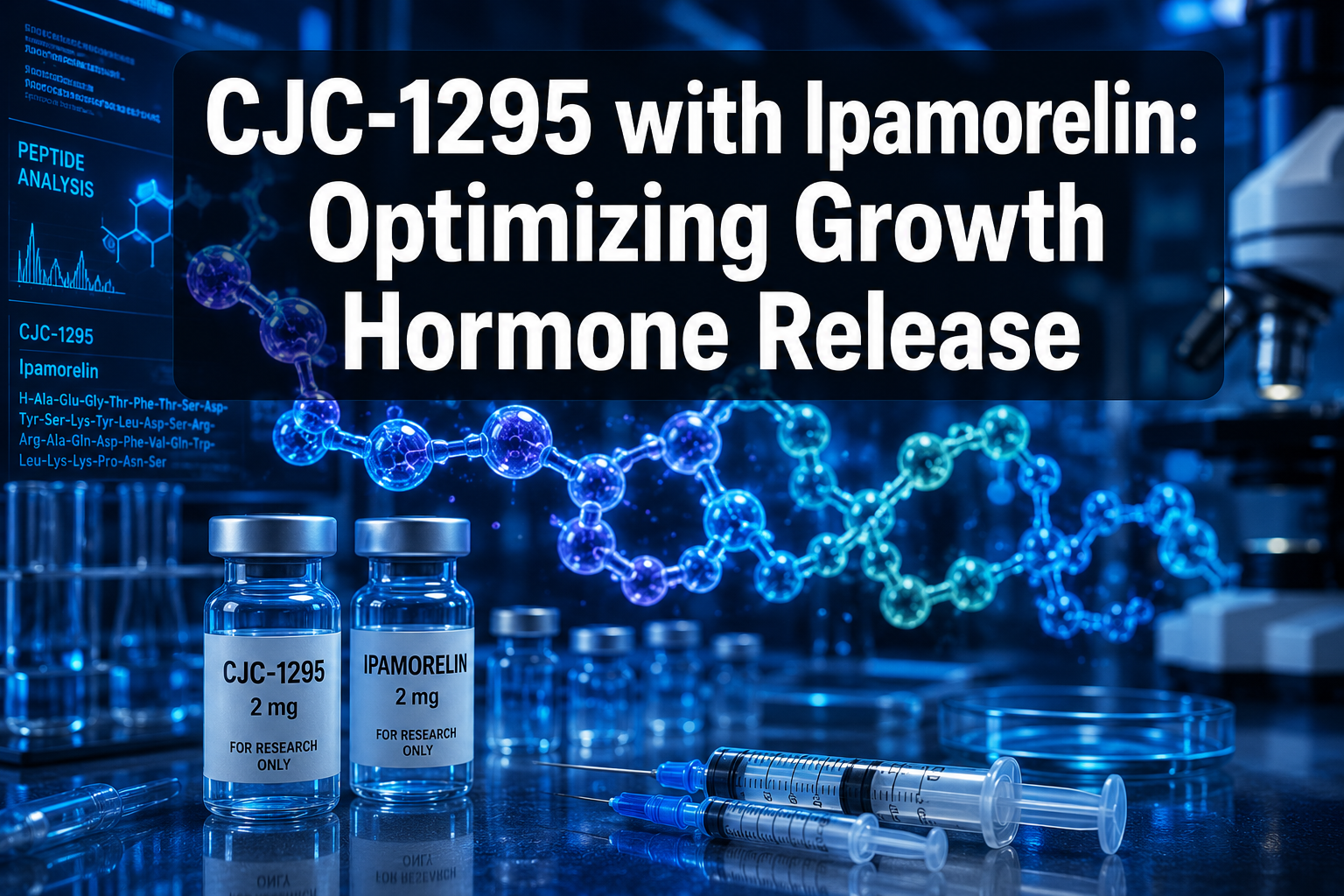
Professional () hero image with : 'CJC-1295 with Ipamorelin: Optimizing Growth Hormone Release' in extra large white with

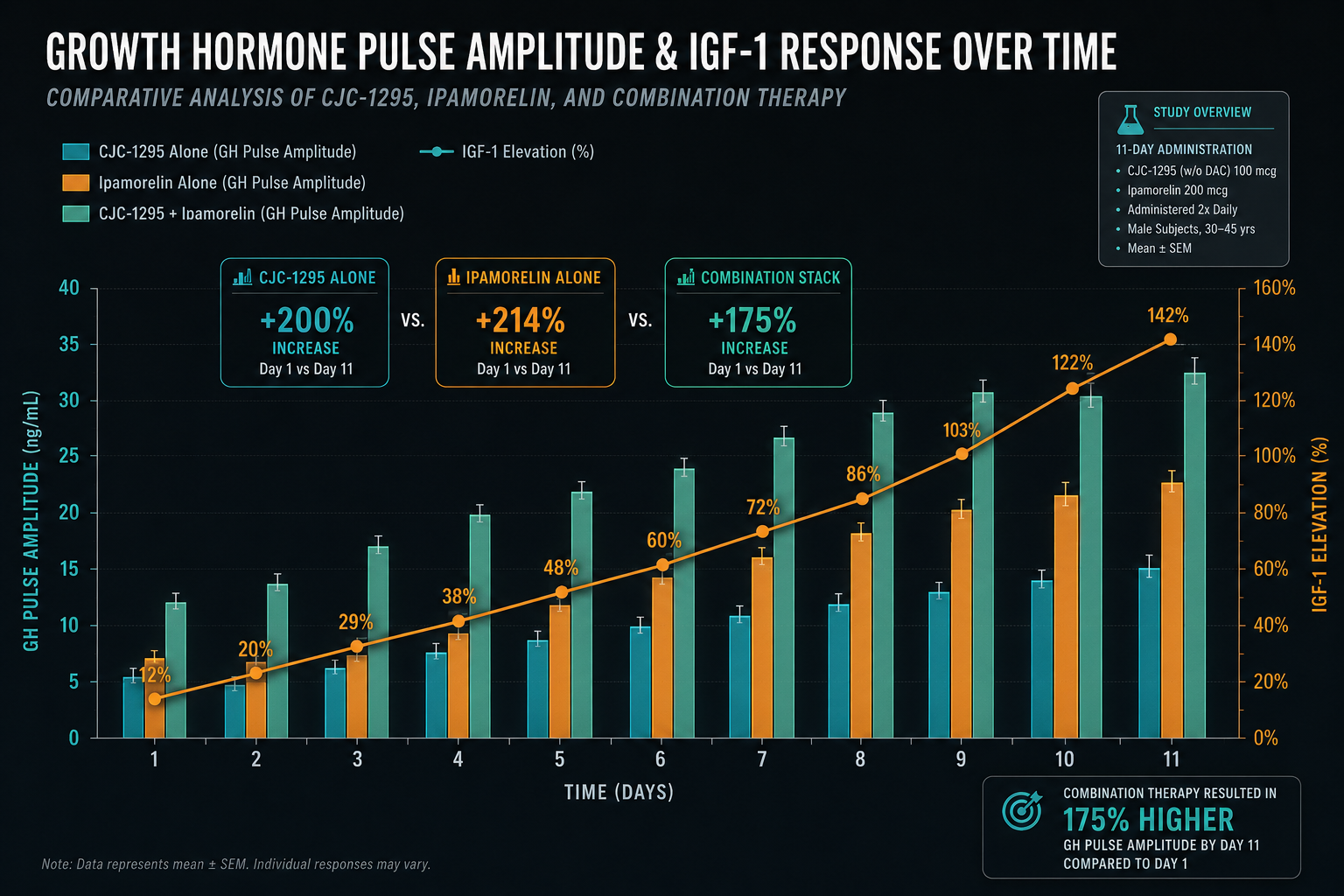
A single subcutaneous injection of CJC-1295 produced a 2- to 10-fold increase in mean plasma growth hormone levels lasting up to six days — a finding that reshaped how researchers think about pulsatile GH stimulation. When paired with Ipamorelin, this effect takes on a new dimension entirely. Understanding the science behind CJC-1295 with Ipamorelin: optimizing growth hormone release for research studies requires examining both peptides at the receptor level and then exploring what happens when their pathways converge.

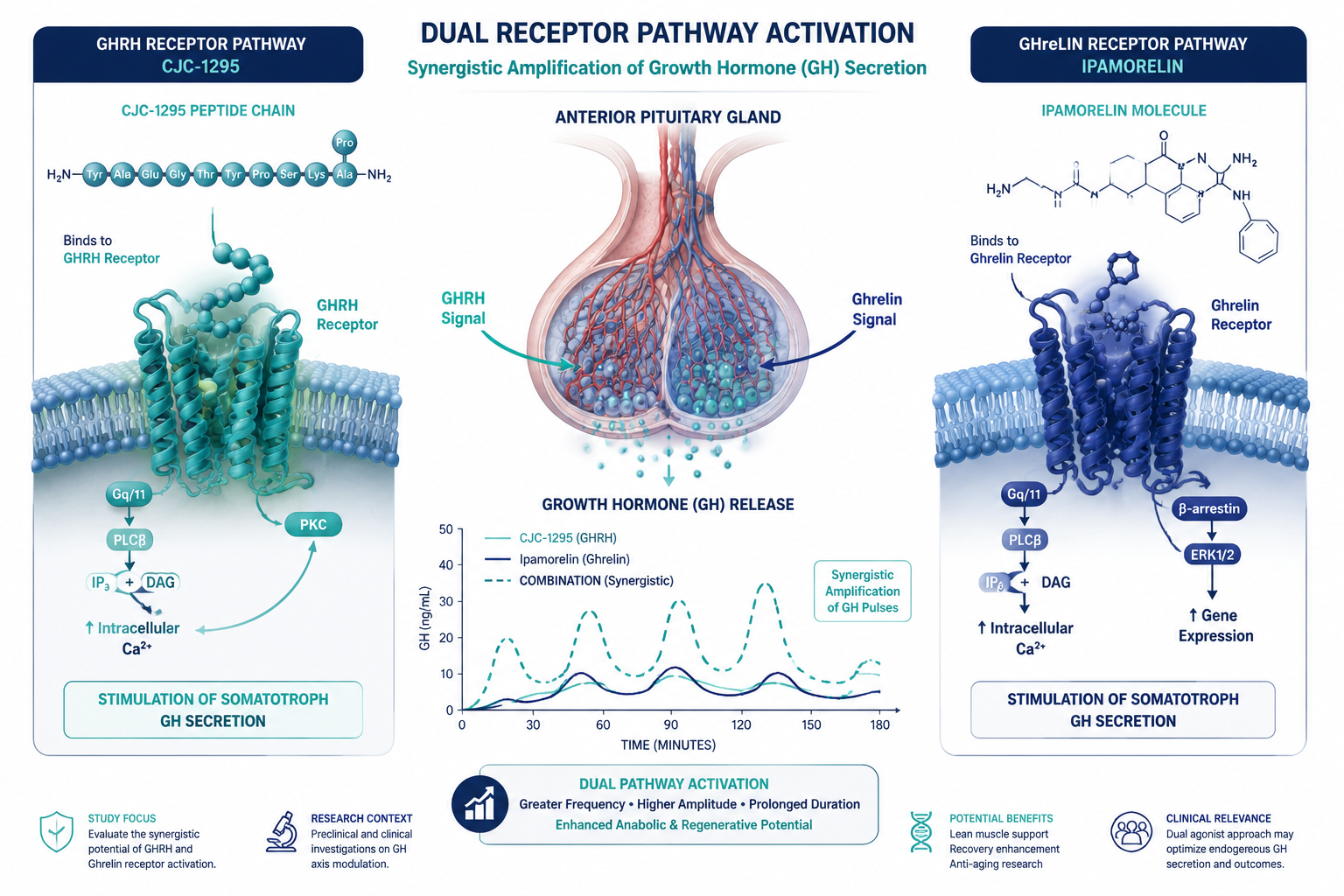
Detailed () scientific diagram illustration showing dual receptor pathway activation: left panel labeled GHRH receptor with

Key Takeaways

  • CJC-1295 is a long-acting GHRH analog; Ipamorelin is a selective ghrelin receptor agonist — they activate distinct GH-release pathways.
  • Combining both peptides produces greater GH pulse amplitude and frequency than either compound alone.
  • A 2006 clinical study confirmed CJC-1295's extended half-life of 5.8 to 8.1 days and elevated IGF-1 for up to 11 days.
  • Neither peptide is FDA-approved; both are classified as research chemicals and appear on the WADA prohibited list.
  • No published randomized controlled trials exist for the combination as of 2026, making rigorous preclinical study design critical.

Mechanisms Behind the Synergy

CJC-1295 is a modified analog of Growth Hormone-Releasing Hormone (GHRH). It binds to GHRH receptors on the anterior pituitary, signaling somatotroph cells to synthesize and release GH. Its key structural modification — Drug Affinity Complex (DAC) technology — allows it to bind albumin in plasma, dramatically extending its half-life to between 5.8 and 8.1 days. This stands in sharp contrast to sermorelin and CJC-1295 comparisons where sermorelin clears the body in roughly 10 to 12 minutes and tesa in approximately 30 minutes.

Ipamorelin operates through an entirely separate mechanism. It mimics ghrelin by binding to the GHS-R1a receptor, a G-protein-coupled receptor found on pituitary somatotrophs and hypothalamic neurons. Critically, Ipamorelin achieves GH stimulation without meaningfully elevating cortisol or prolactin, which distinguishes it from older secretagogues like GHRP-6 or GHRP-2.

When both peptides are used together, the result is a dual-pathway amplification of GH release. GHRH receptor activation raises the ceiling on GH output, while ghrelin receptor stimulation increases the frequency of GH pulses. Research models studying this combination can explore the CJC-1295 no-DAC research themes alongside full DAC variants to isolate half-life variables.


Clinical Evidence and Research Protocols for CJC-1295 with Ipamorelin

The foundational human data for CJC-1295 comes from a pivotal 2006 study published in the Journal of Clinical Endocrinology and Metabolism. Key findings included:

Parameter Observed Outcome
Plasma GH increase 2- to 10-fold above baseline
Duration of GH elevation Up to 6 days post-injection
IGF-1 increase 1.5- to 3-fold above baseline
IGF-1 elevation duration 9 to 11 days
Estimated half-life 5.8 to 8.1 days
Tolerated dose range 30 to 60 mcg/kg

No serious adverse reactions were observed at these doses. However, no additional human RCTs have been published since 2006, and the CJC-1295/Ipamorelin combination has not been formally tested in published human controlled trials as of 2026.

Clinical Evidence and Research Protocols for CJC-1295 with Ipamorelin

For preclinical research, the combination is typically studied using models that track pulsatile GH secretion patterns over 24-hour windows. Researchers interested in multi-peptide blends can also review tesa, CJC-1295, and Ipamorelin blend protocols to understand how additional GHRH analogs interact within the same framework. A related resource on combining tesa with CJC-1295 and Ipamorelin safety considerations addresses stack-level safety questions relevant to protocol design.

"While CJC-1295 and Ipamorelin can synergistically enhance GH release, their long-term safety and efficacy remain under-researched." — Dr. Quinn Stillson, April 2026


Regulatory Status, Risks, and Research Sourcing

As of 2026, neither CJC-1295 nor Ipamorelin holds FDA approval for any indication. Both are classified as research chemicals for laboratory use only and are listed on the World Anti-Doping Agency's prohibited substances list. This regulatory status has direct implications for study design, institutional review, and sourcing standards.

Key risk considerations for research models include:

  • Potential receptor desensitization with prolonged GH secretagogue exposure
  • Difficulty assessing long-term consequences of sustained elevated IGF-1 without longitudinal human data
  • Variability in peptide purity across suppliers, which can confound results

Sourcing peptides with verified purity documentation is non-negotiable for valid research outcomes. Reviewing certificates of analysis before procurement ensures compound integrity. Researchers building broader metabolic panels may also find value in MOTS-c metabolic flexibility research themes or BPC-157 research themes as complementary study arms.

For those sourcing the combination directly, the CJC-1295 with Ipamorelin 10mg research product provides a pre-blended option with documented testing standards.

Regulatory Status, Risks, and Research Sourcing


Conclusion

CJC-1295 with Ipamorelin: optimizing growth hormone release for research studies represents one of the most mechanistically coherent dual-peptide strategies in current GH research. The GHRH/ghrelin receptor co-activation model offers a compelling framework for studying pulsatile GH dynamics, IGF-1 modulation, and downstream metabolic effects.

Actionable next steps for researchers in 2026:

  1. Define your GH endpoint clearly — pulse amplitude, IGF-1 area under the curve, or downstream tissue response.
  2. Source verified, tested peptides with published certificates of analysis to eliminate purity as a confounding variable.
  3. Design time-course sampling protocols that capture the extended half-life profile of CJC-1295 (up to 11 days for IGF-1 elevation).
  4. Consult current regulatory guidance before initiating any study involving WADA-listed compounds.
  5. Review adjacent peptide research — including Ipamorelin and sermorelin stack research — to contextualize your findings within the broader secretagogue literature.

The data foundation exists. Rigorous, well-sourced research design is what transforms that foundation into meaningful scientific contribution.

https://www.puretestedpeptides.com/wp-content/uploads/2026/06/CJC-1295-with-Ipamorelin-Optimizing-Growth-Hormone-Release-for-Research-Studies.png 1024 1536 Pure Tested https://www.puretestedpeptides.com/wp-content/uploads/2026/01/buy-peptides-online.jpg Pure Tested2026-06-20 13:03:202026-07-20 15:02:41CJC-1295 with Ipamorelin: Optimizing Growth Hormone Release for Research Studies
GLP-3 Retatrutide vs. Polypeptide Peptides: A Comparative Research Guide to Metabolic Signaling Pathways

GLP-3 Retatrutide vs. Polypeptide Peptides: A Comparative Research Guide to Metabolic Signaling Pathways

June 19, 2026/0 Comments/by Pure Tested

Metabolic peptide research has shifted dramatically — where single-receptor agents once dominated laboratory inquiry, a new class of multi-target molecules is redefining what researchers expect from incretin-based signaling. This guide to GLP-3 Retatrutide vs. Polypeptide Peptides: A Comparative Research Guide to Metabolic Signaling Pathways examines how retatrutide's triple-receptor mechanism compares to conventional polypeptide agents, giving researchers a clear framework for understanding the underlying biology.

Key Takeaways

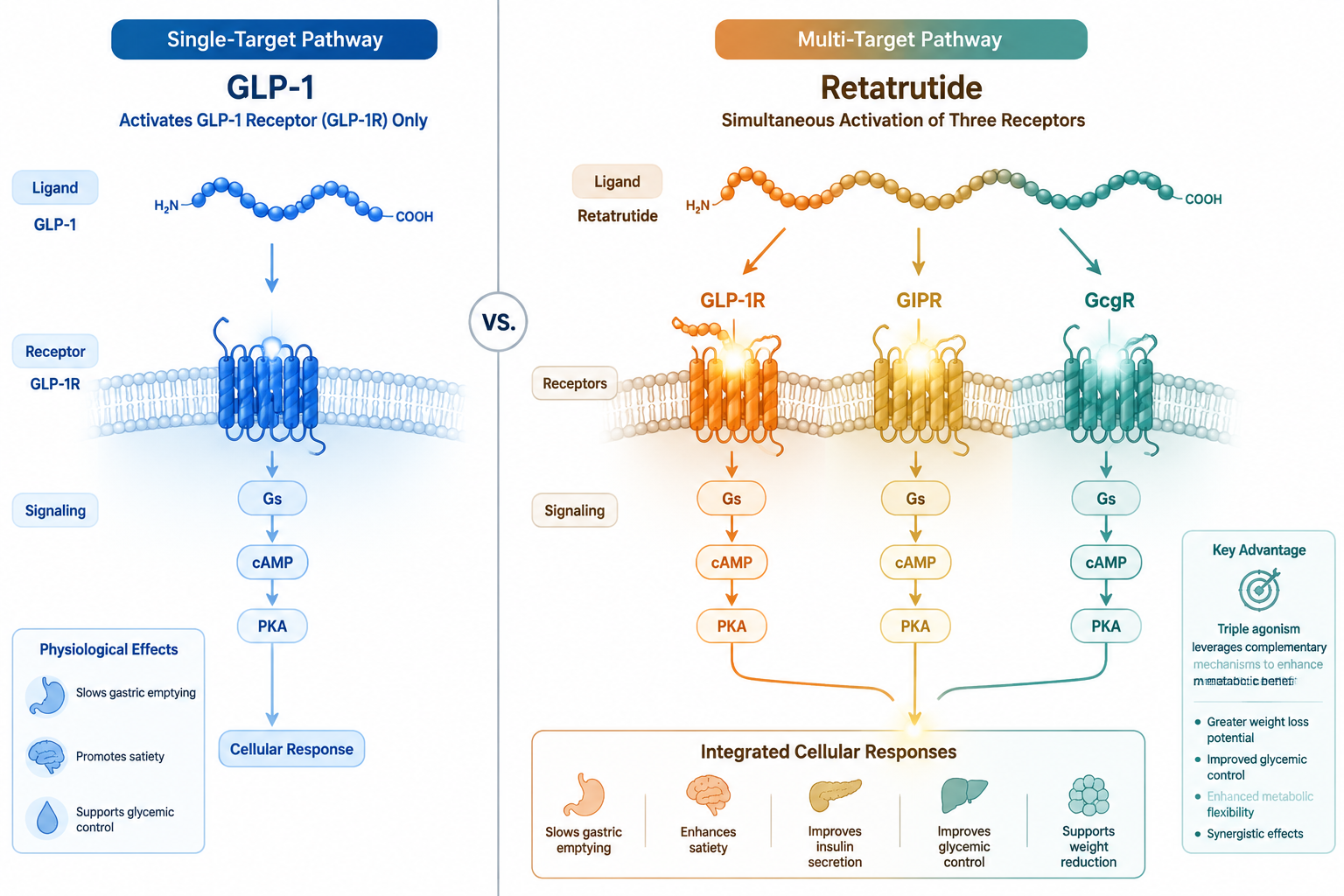
  • Retatrutide simultaneously activates three metabolic receptors: GLP-1R, GIPR, and the glucagon receptor (GcgR).
  • Conventional polypeptide peptides typically act on one or two receptor targets, producing narrower metabolic effects.
  • Triple agonism reshapes energy balance through complementary, overlapping signaling pathways.
  • Understanding receptor-level distinctions helps researchers design more targeted metabolic studies.
  • The term "GLP-3" is an informal research label — retatrutide's formal classification reflects its triple-agonist pharmacology.

Key Takeaways

Understanding the GLP-3 Label and Retatrutide's Classification

The label "GLP-3" circulates in research communities as shorthand for retatrutide, but it requires clarification. Retatrutide is not a third member of the glucagon-like peptide family in the classical sense. It is a synthetic triple agonist engineered to activate three distinct G-protein-coupled receptors simultaneously.

Conventional polypeptide peptides — including native GLP-1, GIP, and glucagon analogs — are typically single-receptor or, at most, dual-receptor agents. Their signaling is more contained. Retatrutide's design deliberately crosses those boundaries, which is why researchers studying GLP-3 Retatrutide incretin research themes often need a broader mechanistic framework than standard incretin models provide.

For context on how incretin generations have evolved, the overview of GLP-1 generations and their differences provides useful background on the progression from first-generation GLP-1 analogs to today's multi-agonist compounds.


Receptor-Level Mechanisms: How Retatrutide Differs from Conventional Polypeptide Peptides

This section of the GLP-3 Retatrutide vs. Polypeptide Peptides: A Comparative Research Guide to Metabolic Signaling Pathways focuses on what happens at the receptor level — the core distinction between retatrutide and standard polypeptide agents.

Receptor-Level Mechanisms: How Retatrutide Differs from Conventional Polypeptide Peptides

GLP-1 Receptor Activation

GLP-1R activation is shared by both retatrutide and conventional GLP-1 analogs. This pathway drives glucose-dependent insulin secretion, slows gastric emptying, and reduces appetite through both central nervous system and vagal nerve signaling. Single-agonist GLP-1 peptides operate primarily through this mechanism alone.

GIP Receptor Activation

GIPR activation adds a second layer. GIP further potentiates insulin release and modulates adipose tissue metabolism. Emerging research also suggests GIPR signaling may influence reward-related feeding behavior. Most traditional polypeptide peptides do not engage this receptor.

Glucagon Receptor Activation

GcgR activation is where retatrutide most clearly separates itself. Glucagon receptor signaling increases hepatic glucose output and, critically for metabolic research, raises resting energy expenditure. This thermogenic component is largely absent from conventional incretin peptides.

Receptor Retatrutide GLP-1 Analogs GIP Analogs
GLP-1R Yes Yes No
GIPR Yes No Yes
GcgR Yes No No
Thermogenic effect Yes Minimal Minimal

Researchers exploring complementary metabolic peptides such as MOTS-C, the mitochondrial peptide, will recognize that energy expenditure modulation is a recurring theme across multiple research-stage compounds — though the mechanisms differ significantly.


Metabolic Signaling Pathways: Triple Agonism vs. Conventional Peptide Approaches

The practical research value of the GLP-3 Retatrutide vs. Polypeptide Peptides: A Comparative Research Guide to Metabolic Signaling Pathways comparison lies in understanding how these mechanisms interact at the systems level.

Metabolic Signaling Pathways: Triple Agonism vs. Conventional Peptide Approaches

Triple agonism creates overlapping, reinforcing signals across three metabolic axes:

  • Insulin axis — amplified through both GLP-1R and GIPR co-activation
  • Appetite axis — suppressed via central GLP-1R pathways and potentially GIPR reward modulation
  • Energy expenditure axis — elevated through GcgR-driven thermogenesis

Conventional polypeptide peptides typically address one or two of these axes. Researchers studying body composition agents like Tesamorelin and its metabolic effects or AOD-9604 research methodology will note that each compound targets a narrower physiological window.

"Multi-receptor engagement is not simply additive — the convergence of three distinct signaling pathways creates metabolic effects that single-agonist models cannot fully replicate."

For researchers building broader metabolic panels, understanding cagrilintide's synergy with GLP-1 pathways also illustrates how combination approaches are increasingly central to advanced metabolic research design.

Those sourcing research-grade material can review GLP-3 Retatrutide product details for specification and traceability information.


Conclusion

The distinction between retatrutide and conventional polypeptide peptides is not merely a matter of degree — it reflects a fundamentally different approach to metabolic receptor engagement. Where single or dual-agonist peptides offer focused, well-characterized signaling, retatrutide's triple-agonist profile introduces a more complex, multi-axis mechanism that researchers must account for in study design.

Actionable next steps for researchers:

  1. Map which receptor pathways are relevant to your specific metabolic research question before selecting a peptide agent.
  2. Review the GLP-1 generations overview to contextualize retatrutide within the broader incretin research landscape.
  3. Cross-reference thermogenic and energy expenditure data when comparing triple-agonist results against single-receptor peptide benchmarks.
  4. Consult available innovative peptide delivery systems research to ensure study protocols reflect current best practices.

Understanding these mechanistic foundations is the starting point for rigorous, reproducible metabolic peptide research in 2026.

https://www.puretestedpeptides.com/wp-content/uploads/2026/06/GLP-3-Retatrutide-vs.-Polypeptide-Peptides-A-Comparative-Research-Guide-to-Metabolic-Signaling-Pathways.png 1024 1024 Pure Tested https://www.puretestedpeptides.com/wp-content/uploads/2026/01/buy-peptides-online.jpg Pure Tested2026-06-19 13:42:052026-07-20 15:02:42GLP-3 Retatrutide vs. Polypeptide Peptides: A Comparative Research Guide to Metabolic Signaling Pathways
Retatrutide (GLP-1/GIP/GCG) Mechanism of Action: A Triple Agonist Research Guide for Metabolic Studies

Retatrutide (GLP-1/GIP/GCG) Mechanism of Action: A Triple Agonist Research Guide for Metabolic Studies

June 19, 2026/0 Comments/by Pure Tested

Obesity affects more than one billion adults worldwide as of 2026, yet most pharmacological tools target only a single metabolic receptor. Retatrutide breaks from that pattern entirely. This investigational peptide simultaneously activates three distinct receptor systems, making the Retatrutide (GLP-1/GIP/GCG) Mechanism of Action: A Triple Agonist Research Guide for Metabolic Studies one of the most pharmacologically rich subjects in current metabolic research.

Detailed () scientific diagram showing Retatrutide peptide structure as a 3D ribbon model binding simultaneously to three

Key Takeaways

  • Retatrutide is a unimolecular triple agonist that activates GLP-1, GIP, and glucagon receptors simultaneously.
  • Each receptor arm contributes a distinct and complementary metabolic effect, including insulin secretion, lipid regulation, and hepatic glucose control.
  • The compound's design allows coordinated signaling that may exceed the efficacy of single or dual agonists in preclinical metabolic models.
  • Peptide purity and sourcing quality are critical variables when using Retatrutide in controlled research settings.
  • Researchers should treat Retatrutide strictly as a laboratory research compound and not for human therapeutic use outside of clinical trials.

Understanding the Triple Agonist Architecture

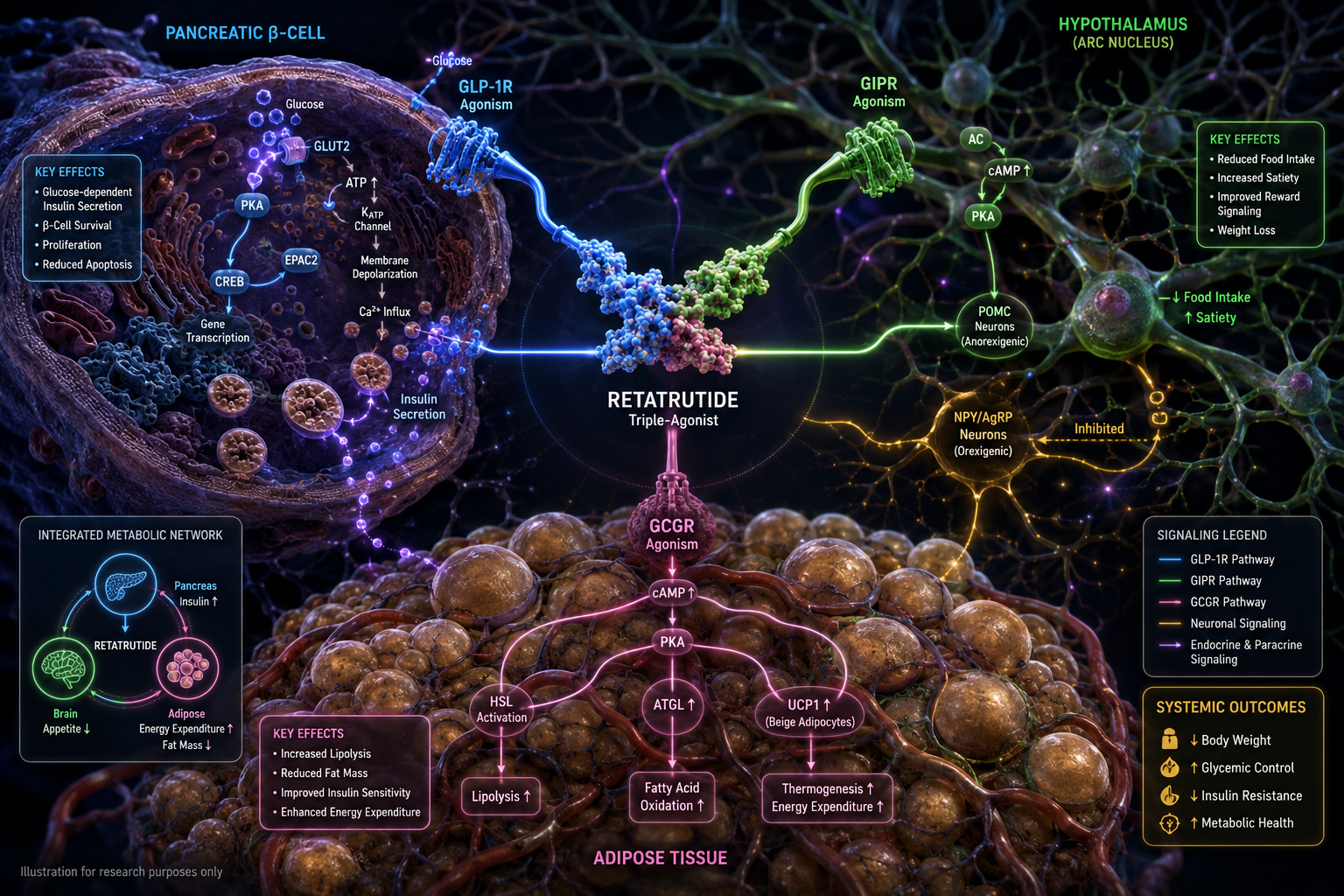
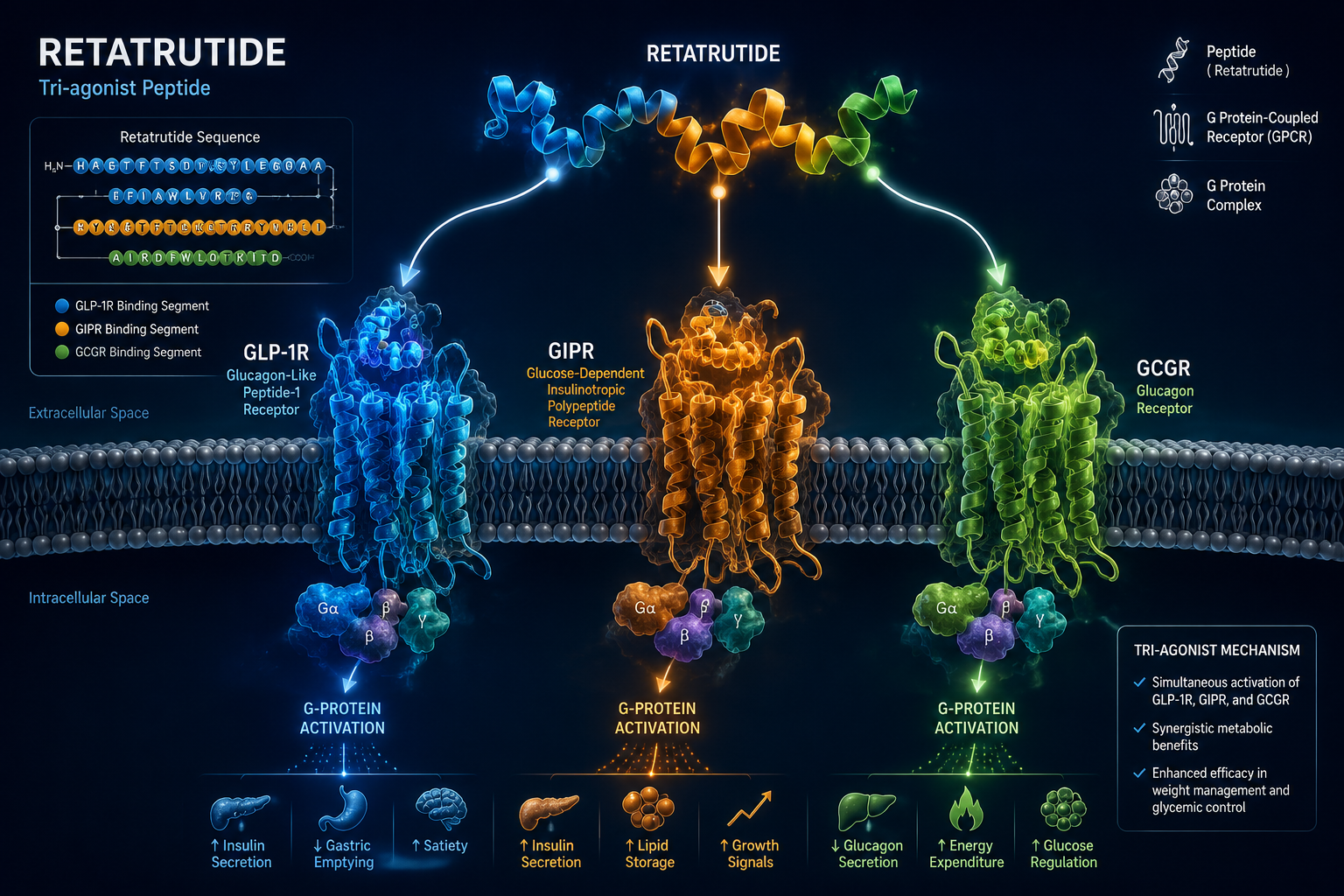
The central innovation behind Retatrutide is its unimolecular design. Rather than combining separate peptides into a mixture, Retatrutide is engineered as a single molecule capable of binding three G-protein coupled receptors: the glucagon-like peptide-1 receptor (GLP-1R), the glucose-dependent insulinotropic polypeptide receptor (GIPR), and the glucagon receptor (GCGR).

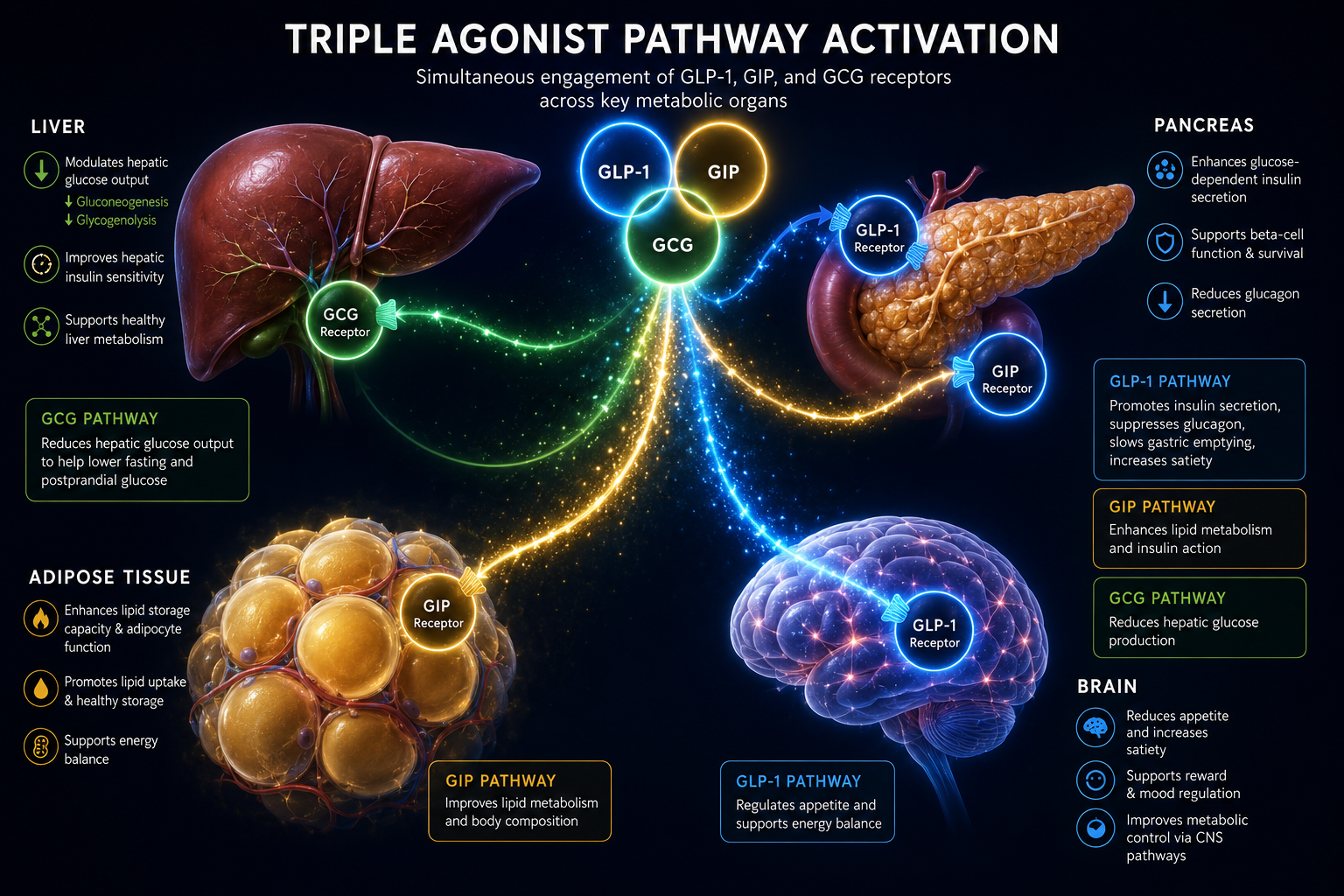
This architecture matters because each receptor sits in a different tissue and drives a different downstream effect. The molecule must balance agonist activity across all three without allowing one arm to dominate and produce undesirable off-target signaling.

GLP-1 Receptor Arm

GLP-1R activation is the most well-characterized component. When stimulated, this receptor:

  • Promotes glucose-dependent insulin secretion from pancreatic beta cells
  • Suppresses glucagon release from alpha cells
  • Slows gastric emptying, which reduces postprandial glucose spikes
  • Acts on hypothalamic satiety centers to reduce caloric intake

GIP Receptor Arm

GIPR activation adds a complementary layer. GIP works synergistically with GLP-1 to amplify insulin secretion and also plays a direct role in adipose tissue metabolism. In preclinical models, GIPR agonism has been associated with improved lipid handling and reduced lipotoxicity in peripheral tissues.

Glucagon Receptor Arm

GCGR activation is the most counterintuitive component. Glucagon is classically associated with raising blood glucose, so why include it? At calibrated activity levels, GCGR stimulation drives hepatic fat oxidation and increases energy expenditure. When balanced against GLP-1R-mediated insulin secretion, the net glycemic effect remains controlled while thermogenic output increases. This balance is the pharmacological core of the triple agonist strategy.


Receptor Interaction Table

Receptor Primary Tissue Key Research Effect
GLP-1R Pancreas, Brain Insulin secretion, satiety signaling
GIPR Pancreas, Adipose Insulin amplification, lipid regulation
GCGR Liver Hepatic fat oxidation, energy expenditure

Retatrutide (GLP-1/GIP/GCG) Mechanism of Action in Metabolic Research Contexts

Researchers studying metabolic flexibility, adiposity, and hepatic lipid accumulation find the triple agonist framework particularly useful. The compound allows simultaneous interrogation of multiple pathways within a single experimental variable, which simplifies study design compared to combining three separate agents.

Retatrutide (GLP-1/GIP/GCG) Mechanism of Action in Metabolic Research Contexts

For labs already exploring mitochondrial and energy metabolism themes, Retatrutide complements research on compounds like MOTS-c and metabolic flexibility and MOTS-c mitochondrial dynamics, where cellular energy regulation is a shared axis of investigation.

Researchers interested in the GH axis and body composition may also find value in comparing Retatrutide's lipid-mobilizing effects to those studied in tesa lipid mobilization research or AOD-9604 fat metabolism studies.

"The value of a triple agonist is not simply additive — it is architecturally synergistic, with each receptor arm modifying the physiological context in which the others operate."

For direct access to Retatrutide research material, labs can review the GLP-3 Retatrutide product page and the GLP-1 Reta research tag for sourcing context.


Research Quality and Sourcing Considerations

The complexity of a triple agonist peptide demands exceptional synthesis quality. Impurities in any segment of the molecule can distort receptor binding ratios and invalidate experimental results. Researchers should prioritize suppliers with documented quality testing protocols and verifiable purity data.

Research Quality and Sourcing Considerations

When evaluating peptide suppliers, key criteria include:

  • High-performance liquid chromatography (HPLC) purity reports above 98%
  • Mass spectrometry confirmation of molecular weight
  • Sterility and endotoxin testing for injectable-grade research use
  • Batch-specific certificates of analysis

Researchers working across multiple metabolic peptide classes can also explore GLP-1 peptides for research to contextualize Retatrutide within the broader incretin research landscape.


Conclusion

The Retatrutide (GLP-1/GIP/GCG) Mechanism of Action: A Triple Agonist Research Guide for Metabolic Studies reveals a compound that operates at the intersection of endocrinology, metabolic biology, and peptide pharmacology. Its three-receptor architecture offers researchers a powerful tool for studying coordinated metabolic signaling in ways that single or dual agonists cannot replicate.

Actionable next steps for research teams:

  1. Review published preclinical data on GLP-1R/GIPR/GCGR co-activation to establish baseline hypotheses.
  2. Source Retatrutide only from suppliers with full analytical documentation and batch-level purity verification.
  3. Design studies that isolate each receptor contribution using selective antagonists as controls.
  4. Cross-reference findings with parallel research in metabolic flexibility peptides to build a broader mechanistic picture.

Retatrutide represents a frontier in metabolic peptide research. Approaching it with rigorous methodology and verified materials will yield the most meaningful data.

https://www.puretestedpeptides.com/wp-content/uploads/2026/06/Retatrutide-GLP-1GIPGCG-Mechanism-of-Action-A-Triple-Agonist-Research-Guide-for-Metabolic-Studies.png 1024 1536 Pure Tested https://www.puretestedpeptides.com/wp-content/uploads/2026/01/buy-peptides-online.jpg Pure Tested2026-06-19 13:07:222026-07-20 15:02:42Retatrutide (GLP-1/GIP/GCG) Mechanism of Action: A Triple Agonist Research Guide for Metabolic Studies
5-Amino-1MQ Peptide: Exploring its Metabolic Pathway and Emerging Research Applications

5-Amino-1MQ Peptide: Exploring its Metabolic Pathway and Emerging Research Applications

June 19, 2026/0 Comments/by Pure Tested

Obesity affects more than one billion people worldwide, yet the enzyme at the center of its cellular machinery — nicotinamide N-methyltransferase (NNMT) — remains largely outside mainstream awareness. Research into 5-Amino-1MQ Peptide: Exploring its Metabolic Pathway and Emerging Research Applications has placed this small molecule at the forefront of metabolic science, offering a targeted approach to fat regulation and cellular energy that differs fundamentally from conventional strategies.

Key Takeaways

  • 5-Amino-1MQ selectively inhibits NNMT, an enzyme overexpressed in the fat tissue of obese individuals, raising intracellular NAD+ levels and activating key metabolic regulators.
  • Preclinical studies in obese mice show significant reductions in body weight and white adipose tissue without changes in food intake.
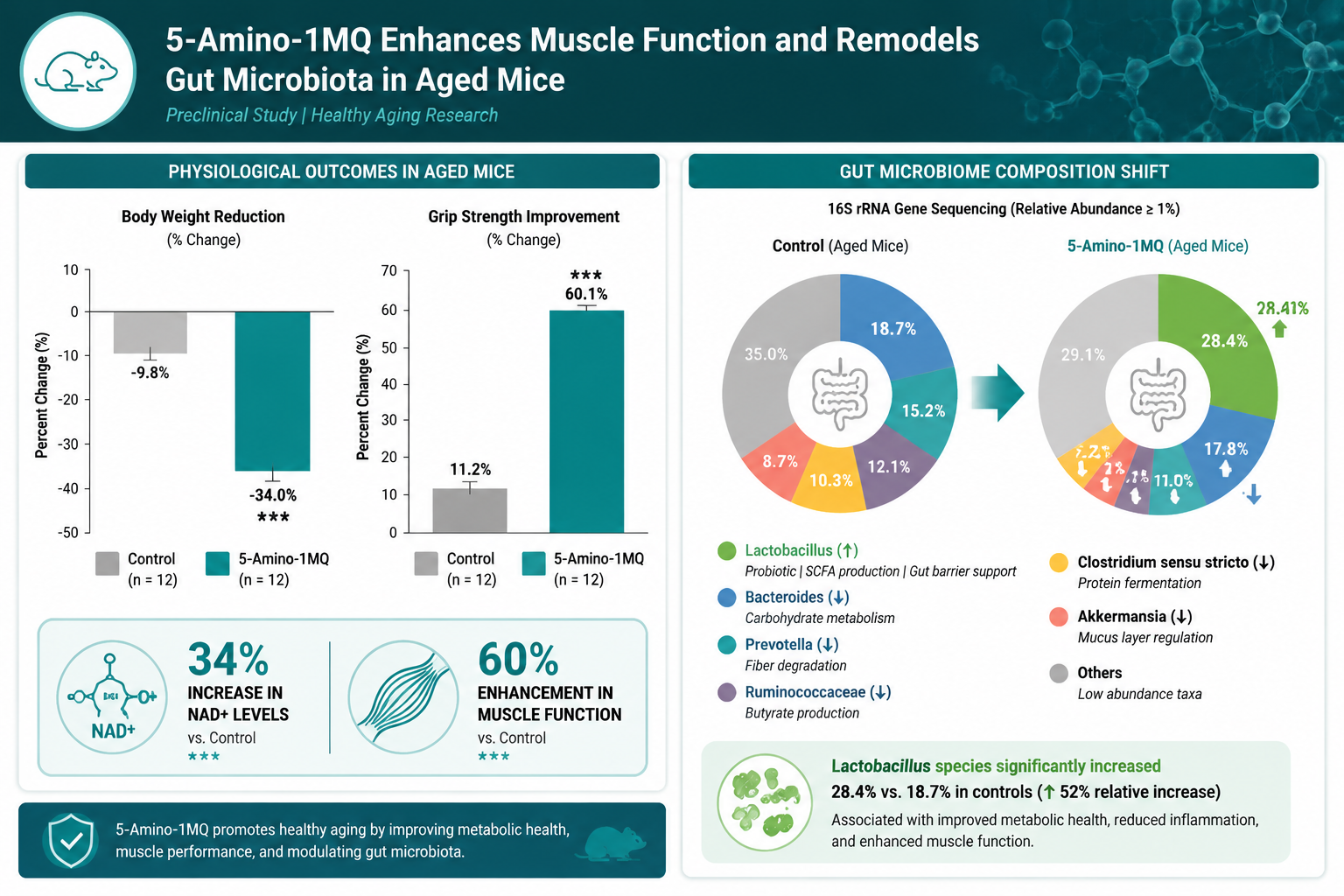
  • Aged mice treated with 5-Amino-1MQ demonstrated up to a 60% improvement in muscle function when combined with exercise, suggesting anti-sarcopenia potential.
  • The compound also appears to alter gut microbiome composition, adding another layer to its metabolic influence.
  • As of 2026, 5-Amino-1MQ remains a research compound with no approved human clinical trials, requiring further validation before any therapeutic conclusions can be drawn.

Key Takeaways

How 5-Amino-1MQ Targets the Metabolic Pathway

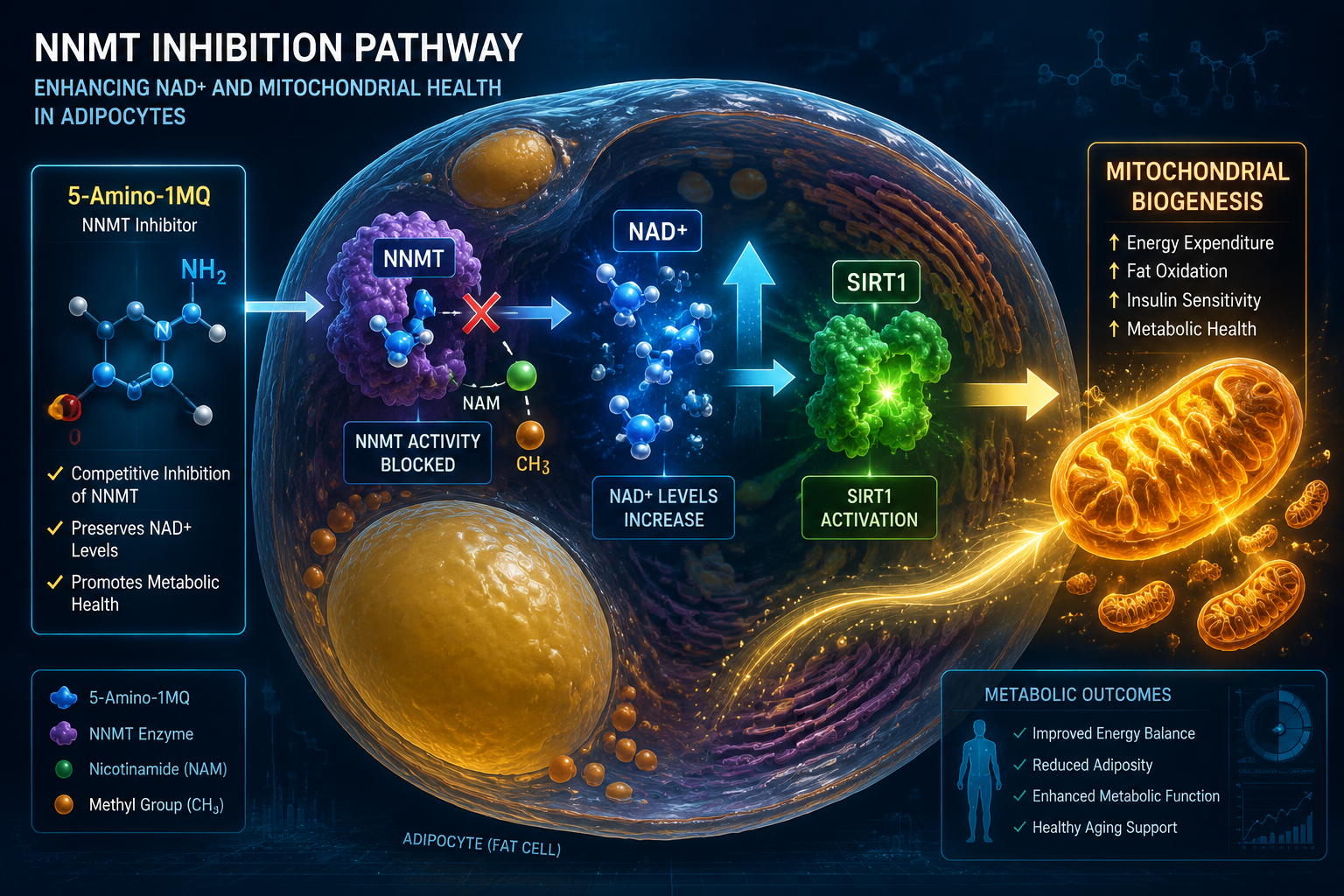
The core mechanism of 5-Amino-1MQ centers on NNMT inhibition. NNMT is an enzyme found at elevated levels in the adipose tissue of obese individuals. It consumes SAM (S-adenosylmethionine) and diverts it away from NAD+ biosynthesis, effectively slowing the cell's energy machinery.

By selectively blocking NNMT, 5-Amino-1MQ redirects metabolic resources. Within 48 hours of administration in diet-induced obese mice, researchers observed a 34% increase in intracellular NAD+ concentrations. This surge in NAD+ then activates sirtuins — particularly SIRT1 — which are proteins that regulate mitochondrial biogenesis, fat oxidation, and energy expenditure.

Key metabolic effects observed in preclinical models:

Effect Observation
NAD+ increase 34% within 48 hours
Body weight reduction Significant vs. control
White adipose tissue mass Measurably reduced
Food intake change None observed
Muscle function (aged mice + exercise) 60% improvement

This cascade — NNMT inhibition leading to NAD+ elevation, sirtuin activation, and mitochondrial enhancement — forms the backbone of 5-Amino-1MQ's proposed metabolic pathway. For researchers interested in related mitochondrial energy research, MOTS-c mitochondrial research themes offer a useful comparative framework.

"Raising NAD+ through NNMT inhibition represents a fundamentally different strategy than caloric restriction — it targets the enzyme machinery directly."

The compound also shows promise for metabolic syndrome components, including insulin resistance and dyslipidemia, in preclinical models. This positions it alongside other metabolically active compounds such as those explored in SLU-PP-332 metabolic research.


How 5-Amino-1MQ Targets the Metabolic Pathway

Emerging Research Applications of 5-Amino-1MQ Peptide

Beyond fat metabolism, 5-Amino-1MQ Peptide: Exploring its Metabolic Pathway and Emerging Research Applications reveals several compelling research directions.

Muscle Function and Aging

A 2024 preclinical study found that aged mice receiving 5-Amino-1MQ showed a 40% improvement in grip strength — double the 20% improvement seen with exercise alone. When treatment was combined with exercise, muscle function improved by 60%. This finding positions 5-Amino-1MQ as a candidate for research into age-related sarcopenia, a field also explored through mitochondrial longevity-focused compounds.

Gut Microbiome Modulation

Research in obese mice indicates that 5-Amino-1MQ treatment increases the abundance of Lactobacillus species — bacteria associated with favorable metabolic outcomes. This gut-metabolism connection adds a systemic dimension to what was initially viewed as a purely cellular mechanism.

Pharmacokinetics

  • Oral half-life: approximately 6.9 hours
  • Typical research dose range: 50–100 mg daily
  • Supports once-daily dosing regimens

This oral bioavailability profile distinguishes 5-Amino-1MQ from many peptide compounds that require injection. Researchers comparing delivery methods may also find value in reviewing NAD+ scientific evidence for related pathway context.

Safety and Regulatory Status

Preclinical studies report no significant adverse effects at therapeutic doses. However, no published human clinical trials exist as of 2026, and the compound remains classified as a research chemical — not approved by the FDA for therapeutic use. Independent replication of existing findings is also limited, which is a meaningful caveat for any research team evaluating this compound.

For those sourcing compounds for research, peptide purity testing and working with a best peptide manufacturer are critical steps in ensuring data integrity.


Emerging Research Applications of 5-Amino-1MQ Peptide

Research Limitations and the Road Ahead

The science behind 5-Amino-1MQ Peptide: Exploring its Metabolic Pathway and Emerging Research Applications is promising, but it carries important caveats. Most studies originate from a small number of research groups, and independent replication remains sparse. All data are preclinical, meaning translation to human physiology is unconfirmed.

Future research directions may include:

  • Muscle regeneration therapy models
  • Synergistic protocols combining 5-Amino-1MQ with structured exercise in aging populations
  • Gut microbiome interaction studies in metabolic syndrome models
  • Long-term safety profiling across diverse preclinical models

Researchers exploring adjacent metabolic pathways may also benefit from reviewing Tesamorelin peptide research and AOD-9604 fat metabolism research for comparative context.


Conclusion

5-Amino-1MQ occupies a genuinely unique space in metabolic research. Its selective inhibition of NNMT, downstream elevation of NAD+, and activation of sirtuin pathways create a multi-layered mechanism that addresses fat storage, energy regulation, and potentially muscle aging from a single molecular target. The gut microbiome findings add further depth to an already compelling preclinical profile.

Actionable next steps for researchers:

  1. Review the existing preclinical literature critically, noting the limited number of independent replication studies.
  2. Ensure any research-grade compound is sourced from verified, purity-tested suppliers and review quality testing protocols before procurement.
  3. Design studies that pair 5-Amino-1MQ with exercise interventions, given the synergistic muscle function data.
  4. Monitor regulatory updates, as the compound's status may evolve as human trial data emerge.
  5. Cross-reference findings with related NAD+ and mitochondrial pathway research to build a more complete metabolic picture.

The compound is not a clinical therapy — it is a research tool with significant potential. Treating it as such, with rigorous methodology and appropriate sourcing standards, is the most responsible path forward.

https://www.puretestedpeptides.com/wp-content/uploads/2026/06/5-Amino-1MQ-Peptide-Exploring-its-Metabolic-Pathway-and-Emerging-Research-Applications.png 1024 1536 Pure Tested https://www.puretestedpeptides.com/wp-content/uploads/2026/01/buy-peptides-online.jpg Pure Tested2026-06-19 13:07:122026-07-20 15:02:435-Amino-1MQ Peptide: Exploring its Metabolic Pathway and Emerging Research Applications
PT-141 Peptide: Melanocortin Receptor Agonist Research and its Mechanism of Action

PT-141 Peptide: Melanocortin Receptor Agonist Research and its Mechanism of Action

June 19, 2026/0 Comments/by Pure Tested

Only one FDA-approved peptide targets sexual desire directly at the level of the brain rather than the body's vascular system — and that peptide is bremelanotide, better known as PT-141. This distinction makes PT-141 peptide: melanocortin receptor agonist research and its mechanism of action one of the most scientifically compelling areas in modern peptide pharmacology. Unlike conventional approaches that work downstream of arousal, PT-141 engages the central nervous system at the motivational level, opening research pathways that extend well beyond its approved indication.

Detailed () scientific diagram illustration showing a cross-sectional view of the human brain hypothalamus with labeled MC3R

Key Takeaways

  • PT-141 is a synthetic cyclic heptapeptide that activates MC3R and MC4R receptors in the hypothalamus and limbic brain regions.
  • Its central mechanism distinguishes it from PDE5 inhibitors, which act peripherally on vascular tissue.
  • PT-141 received FDA approval in 2019 as Vyleesi for hypoactive sexual desire disorder (HSDD) in premenopausal women.
  • Purity standards matter significantly: batches below 97% purity show up to 24% variance in receptor binding affinity.
  • Active research in 2026 continues to map MC4R receptor density in previously uncharted hypothalamic regions.

How PT-141 Engages the Melanocortin System

PT-141 is a cyclic heptapeptide derived from Melanotan II. Its cyclic lactam structure resists enzymatic breakdown, giving it an elimination half-life of approximately 2.7 hours. Importantly, its biological effects persist well beyond plasma clearance, a feature that distinguishes it from linear peptides with similar receptor targets.

The compound functions as a non-selective agonist at melanocortin receptors, with primary activity at MC3R and MC4R. It bypasses MC1R (which governs pigmentation) and MC2R (which regulates cortisol) almost entirely. This selectivity is central to understanding PT-141 peptide: melanocortin receptor agonist research and its mechanism of action, because it means the compound's effects are routed through neural circuits rather than hormonal or pigmentation pathways.

A multi-institution study published in Nature Communications in early 2026 mapped MC4R receptor density across the paraventricular nucleus (PVN) and the lateral hypothalamic area (LHA) — regions previously under-characterized in melanocortin research. These findings provide a more precise anatomical map of where PT-141 exerts its influence, which has significant implications for targeted research design.

Researchers exploring other neuropeptide systems, such as those studying PT-141 neural and metabolic research themes, will find these receptor mapping results directly applicable to experimental design.


Central vs. Peripheral: A Mechanistic Distinction That Matters

Central vs. Peripheral: A Mechanistic Distinction That Matters

Understanding PT-141 peptide: melanocortin receptor agonist research and its mechanism of action requires a clear comparison with existing pharmacological tools.

PDE5 inhibitors such as sildenafil act peripherally. They enhance the vascular nitric oxide response once sexual stimulation has already occurred. They do not influence desire or motivation — they only amplify the downstream vascular response.

PT-141 operates upstream of arousal, working at the level of desire and motivation by modulating dopaminergic pathways within the hypothalamus and limbic system. This makes it effective in cases where vascular drugs fail or are contraindicated.

Feature PT-141 (Bremelanotide) PDE5 Inhibitors
Site of action Central nervous system Peripheral vasculature
Target receptors MC3R, MC4R Phosphodiesterase-5 enzyme
Requires stimulation No Yes
Primary effect Desire and motivation Vascular response
FDA approval Yes (HSDD in women) Yes (erectile dysfunction)

For researchers interested in how other peptides interact with neuroendocrine systems, the article on neuroendocrine and innate immunity offers useful comparative context.


Clinical Research, Purity Standards, and Emerging Applications

Clinical Research, Purity Standards, and Emerging Applications

The FDA approved PT-141 in 2019 under the brand name Vyleesi, based on the RECONNECT trials — two Phase 3 randomized controlled trials enrolling over 1,200 premenopausal women with HSDD. Women receiving 1.75 mg subcutaneous PT-141 reported a mean increase of 0.7 satisfying sexual events per month compared to 0.3 in the placebo group. Common side effects included nausea, flushing, and headache, with approximately 40% of participants discontinuing due to adverse effects or lack of efficacy.

Off-label research in men has also produced notable data. A 2024 observational study of 318 men using compounded bremelanotide found that 52% at 1.75 mg reported a strong response, defined as noticeable increases in spontaneous desire and sustained erectile quality. Another 23% reported mild benefit.

Purity is a critical research variable. Research published in the Journal of Peptide Science in early 2026 demonstrated that PT-141 batches below 97% purity showed 18-24% variance in receptor binding affinity compared to pharmaceutical-grade bremelanotide. This finding has driven stricter synthesis and batch testing protocols across the research supply chain. Researchers sourcing peptides should review quality testing protocols before selecting a supplier.

Those comparing PT-141 to other peptides with central or metabolic activity may also find value in reviewing research on MOTS-c, the mitochondrial peptide, or exploring nasal spray peptide delivery formats as alternative administration routes under investigation.

For researchers seeking PT-141 specifically, the PT-141 for sale research page and the PT-141 central arousal research themes page provide additional sourcing and study context.


Conclusion

PT-141 peptide: melanocortin receptor agonist research and its mechanism of action represents a genuinely distinct class of pharmacological investigation. By targeting MC3R and MC4R centrally rather than acting on peripheral vasculature, PT-141 addresses desire and motivation at their neurological source. The 2026 receptor mapping data from the PVN and LHA adds anatomical precision to existing mechanistic models, while updated purity standards reinforce the importance of sourcing high-quality, rigorously tested material.

Actionable next steps for researchers:

  • Prioritize peptide batches verified at 97% purity or above to ensure consistent receptor binding data.
  • Review the latest MC4R receptor density mapping literature when designing hypothalamic stimulation protocols.
  • Compare PT-141's central mechanism against PDE5 inhibitor data in mixed-population study designs.
  • Monitor regulatory developments, as PT-141's FDA-approved status provides a relatively stable compliance baseline heading into any future reclassification reviews.
https://www.puretestedpeptides.com/wp-content/uploads/2026/06/PT-141-Peptide-Melanocortin-Receptor-Agonist-Research-and-its-Mechanism-of-Action.png 1024 1536 Pure Tested https://www.puretestedpeptides.com/wp-content/uploads/2026/01/buy-peptides-online.jpg Pure Tested2026-06-19 13:07:062026-07-20 15:02:51PT-141 Peptide: Melanocortin Receptor Agonist Research and its Mechanism of Action
Page 57 of 81«‹5556575859›»
×

Helpful Links

  • My account
  • Cart
  • Checkout
  • Refund and Returns Policy
  • Privacy Policy
  • SMS Privacy Policy
  • Login
  • My Account
  • Logout

USA Made Lab Tested Peptides

All products are sold for research, laboratory, or analytical purposes only, and are not for human consumption


Pure Tested Peptides is a chemical supplier. Pure Tested Peptides is not a compounding / chemical compounding facility as defined under 503A of the Federal Food, Drug, and Cosmetic act. Pure Tested Peptides is not an outsourcing facility as defined under 503B of the Federal Food, Drug, and Cosmetic act.

The statements made within this website have not been evaluated by the US Food and Drug Administration. The products we offer are not intended to diagnose, treat, cure or prevent any disease.

Human/Animal Consumption Prohibited. Laboratory/In-Vitro Experimental Use Only

Scroll to top Scroll to top Scroll to top