Call or Text 727-513-9780
  • Shopping Cart Shopping Cart
    0Shopping Cart
Pure Tested Peptides | America's most trusted Peptides for sale online
  • Peptides for sale
    • Oral Peptides for sale
      • Peptide Capsules for sale
      • BPC 157 Capsules 1000mcg
      • SLU-PP-332 Capsules | 1000 mcg
      • 5-Amino-1MQ 50mg Capsules
      • Tesofensine 500mcg
    • All Peptides for sale
    • Peptide Sprays
      • BPC 157 Nasal Spray Kit
      • BPC-157 TB500 Nasal Spray Kit
      • Semax Nasal Spray 10mg
      • Selank – Nasal Spray Kit – 10mg
      • Epithalon 50MG Nasal Spray Kit
      • Ipamorelin 10mg Nasal Spray
      • Klow Nasal Spray (BPC-157 + TB-500 + GHK-Cu + KPV) | 80mg
      • Hulk Nasal Spray Tesa / Ipa Blend 6/3 MG
      • Klow Nasal Spray
      • NAD + 500 mg Nasal Spray
      • PT-141 Nasal Spray Kit
    • GHRH Peptides
      • Ipa Peptides
      • CJC-1295 Peptides
        • CJC-1295 with DAC 5 mg
        • CJC-1295 without DAC 5 mg
        • CJC-1295 Ipa 10mg
      • Tesa Peptides
        • Tesa Peptide
        • Tesa 20 mg
    • GHK-Cu Peptides
      • All GHK-Cu Peptides
      • GHK-Cu 100mg
      • KLOW Peptide Blend – Buy KLOW blend online
    • BPC Peptides
      • All BPC Peptides
      • BPC-157
      • BPC-157 TB-500
      • BPC 157 capsules 1000mcg
    • SLU-PP-332 Peptides
      • All SLU-PP-332 Peptides
      • SLU-PP-332 5mg
    • GLP3 Peptides
    • PT-141 Peptides
      • PT-141 Peptides for sale
      • PT-141 10mg
      • PT-141 Nasal Spray
    • CAG Peptides
      • Lipo-C Peptide Blend
      • CAG 5mg
      • CAG 10mg
    • MOTS-C Peptides
      • MOTS-C Peptides for sale
      • MOTS-c peptide
      • MOTS-c 10mg *6 pack*
    • 5 Amino 1MQ Peptides
      • 5 Amino 1MQ Peptides for sale
      • 5-Amino-1MQ 50mg Capsules
      • 5-Amino-1MQ 5mg
    • Epithalon Peptides
      • Epithalon Peptides for sale
      • Epithalon 10mg
      • Epithalon 50mg
  • Shop
    • GLPs
      • 5-Amino-1MQ 50mg Capsules
      • 5-Amino-1MQ 5mg
      • L-Carnitine 500mg/ml
      • Tesofensine 500mcg
      • SLU-PP-332 5mg
      • MOTS-c 10mg *6 pack*
    • Epithalon & BPC Peptides
      • Epithalon 10mg
      • Epithalon 50mg
      • BPC-157
      • BPC 157 capsules 1000mcg
      • BPC-157 TB-500
      • BPC-157 TB500 Nasal Spray Kit
      • BPC 157 Nasal Spray Kit
    • BPC TB-500 & NAD+ Peptides
      • NAD+ 500 mg
      • KLOW Peptide Blend – Buy KLOW blend online
      • GLOW Peptide Blend
      • TB 500 5mg
      • BPC 157 capsules 1000mcg – Supplement
      • BPC 157 Nasal Spray Kit
      • BPC-157
      • BPC-157 TB500 Nasal Spray Kit
      • BPC-157 TB-500
      • BPC 157 capsules 1000mcg
    • LL-37 Peptide
      • LL-37 10 mg
    • MOTS-C & Selank
      • MOTS-c peptide
      • Selank 10mg
    • GHK Peptides
      • GHK-Cu 100mg
      • GLOW Peptide Blend
      • KLOW Peptide Blend – Buy KLOW blend online
  • COAs
  • Wholesale
    • Wholesale Peptides for sale
  • PTP FAQ
  • Affiliates
    • Selank Peptide: Advanced Pharmacological Mechanisms Underlying Its Anxiolytic and Nootropic Effects in Research
      • 5-Amino-1MQ Peptide: Detailed Mechanisms of NNMT Inhibition and Its Impact on Cellular Metabolism Research
        • MOTS-C Peptide: Unraveling Its Role in Mitochondrial Dynamics and Energy Metabolism Research
          • Epithalon Peptide and Telomerase Regulation: Investigating Its Impact on Cellular Senescence and Lifespan Research Models
            • GLP2-T vs GLP2 Tirz Peptide: Understanding the Naming, Mechanistic Nuances, and Research Implications for Gut Health
      • Peptides and Polypeptides in Modern Pharmacology: What Research on Metoprolol, Prednisone, and Amlodipine Reveals
        • Polypeptide Peptides vs NSAIDs: What Naproxen and Diclofenac Teach Tissue-Repair Researchers About BPC‑157 and TB‑500
          • Peptides and Polypeptides in Endocrine Pharmacology: How GLP-1, GLP-2, and GLP-3 Retatrutide Differ From Classic Drugs Like Prednisone and Amlodipine
          • 5‑Amino‑1MQ Peptide and NNMT Inhibition: How It Compares With Statins Like Atorvastatin in Adipose and Lipid Metabolism Research
      • Enclomiphene, Estrogen Receptor Signaling, and Luteinizing Phase Biology: What Hormone Researchers Should Measure
        • Mesenchymal Stem Cells, BPC‑157, and GHK‑Cu: How Tissue Repair Peptides Compare With Classic NSAIDs Like Naproxen in Injury Models
          • Peptide Calculator Use Cases Beyond Growth Hormone: Working Through GLP‑3 Retatrutide, MOTS‑c, and BPC‑157 Research Dosing
        • Polypeptide Peptides in Endocrine and Metabolic Pharmacology: Lessons From Amlodipine, Prednisone, and Metoprolol
        • Peptides Calculator for Advanced Blends: Worked Examples for Tesamorelin, CJC‑1295, and Ipamorelin Stacks
          • Peptides and Polypeptides in Human Physiology: How Molecular Size Shapes Research Applications
            • Selank Peptide: Advanced Pharmacological Mechanisms Underlying Its Anxiolytic and Nootropic Effects in Research
          • 5-Amino-1MQ Peptide: Detailed Mechanisms of NNMT Inhibition and Its Impact on Cellular Metabolism Research
            • MOTS-C Peptide: Unraveling Its Role in Mitochondrial Dynamics and Energy Metabolism Research
              • Epithalon Peptide and Telomerase Regulation: Investigating Its Impact on Cellular Senescence and Lifespan Research Models
                • GLP2-T vs GLP2 Tirz Peptide: Understanding the Naming, Mechanistic Nuances, and Research Implications for Gut Health
                  • Peptides and Polypeptides in Endocrine Pharmacology: How GLP-1, GLP-2, and GLP-3 Retatrutide Differ From Classic Drugs Like Prednisone and Amlodipine
                    • Polypeptide Peptides vs NSAIDs: What Naproxen and Diclofenac Teach Tissue-Repair Researchers About BPC‑157 and TB‑500
                      • Peptides and Polypeptides in Modern Pharmacology: What Research on Metoprolol, Prednisone, and Amlodipine Reveals
                        • 5‑Amino‑1MQ Peptide and NNMT Inhibition: How It Compares With Statins Like Atorvastatin in Adipose and Lipid Metabolism Research
                        • Enclomiphene, Estrogen Receptor Signaling, and Luteinizing Phase Biology: What Hormone Researchers Should Measure
                        • Mesenchymal Stem Cells, BPC‑157, and GHK‑Cu: How Tissue Repair Peptides Compare With Classic NSAIDs Like Naproxen in Injury Models
                        • Peptide Calculator Use Cases Beyond Growth Hormone: Working Through GLP‑3 Retatrutide, MOTS‑c, and BPC‑157 Research Dosing
                        • Polypeptide Peptides in Endocrine and Metabolic Pharmacology: Lessons From Amlodipine, Prednisone, and Metoprolol
                        • Peptides Calculator for Advanced Blends: Worked Examples for Tesamorelin, CJC‑1295, and Ipamorelin Stacks
                        • Peptides and Polypeptides in Human Physiology: How Molecular Size Shapes Research Applications
                        • Selank Peptide: Advanced Pharmacological Mechanisms Underlying Its Anxiolytic and Nootropic Effects in Research
                        • MOTS-C Peptide: Unraveling Its Role in Mitochondrial Dynamics and Energy Metabolism Research
                        • Peptides and Polypeptides in Modern Pharmacology: What Research on Metoprolol, Prednisone, and Amlodipine Reveals
                        • Peptides and Polypeptides in Endocrine Pharmacology: How GLP-1, GLP-2, and GLP-3 Retatrutide Differ From Classic Drugs Like Prednisone and Amlodipine
                        • 5-Amino-1MQ Peptide: Detailed Mechanisms of NNMT Inhibition and Its Impact on Cellular Metabolism Research
                        • Mesenchymal Stem Cells, BPC‑157, and GHK‑Cu: How Tissue Repair Peptides Compare With Classic NSAIDs Like Naproxen in Injury Models
                        • Peptide Calculator Use Cases Beyond Growth Hormone: Working Through GLP‑3 Retatrutide, MOTS‑c, and BPC‑157 Research Dosing
                        • GLP2-T vs GLP2 Tirz Peptide: Understanding the Naming, Mechanistic Nuances, and Research Implications for Gut Health
                        • Polypeptide Peptides in Endocrine and Metabolic Pharmacology: Lessons From Amlodipine, Prednisone, and Metoprolol
                        • Polypeptide Peptides vs NSAIDs: What Naproxen and Diclofenac Teach Tissue-Repair Researchers About BPC‑157 and TB‑500
                        • Peptides and Polypeptides in Human Physiology: How Molecular Size Shapes Research Applications
                        • Peptides Calculator for Advanced Blends: Worked Examples for Tesamorelin, CJC‑1295, and Ipamorelin Stacks
                        • 5‑Amino‑1MQ Peptide and NNMT Inhibition: How It Compares With Statins Like Atorvastatin in Adipose and Lipid Metabolism Research
                        • Enclomiphene, Estrogen Receptor Signaling, and Luteinizing Phase Biology: What Hormone Researchers Should Measure
                        • Epithalon Peptide and Telomerase Regulation: Investigating Its Impact on Cellular Senescence and Lifespan Research Models
                        • Best research protocol Klow blend
                        • best time to take BPC-157
                        • best time to take DSIP (Delta Sleep Inducing Peptide)
                        • best time to take CJC-1295
                        • best time to take AOD-9604
                        • best time to take Follistatin 344
                        • best time to take Ipamorelin
                        • best time to take MK-677 (Ibutamoren)
                        • best time to take Ligandrol (LGD-4033) — research compound
                        • best time to take Ostarine (MK-2866) — research compound
                        • best time to take GHK-CU
                        • best time to take TB-500
                        • best time to take MOTS-c
                        • best time to take Semax
                        • best time to take RAD-140 (Testolone) — research compound
                        • best time to take Thymosin Alpha-1
                        • best time to take PEG-MGF
                        • Biolife Plasma, Octapharma Plasma, and Research Peptides: How Plasma Donation Labs Differ From Peptide Suppliers
                        • best time to take YK-11 — research compound
                        • best time to take PT-141 (Bremelanotide)
                        • Best research protocol Klow blend
                        • 5-Amino-1MQ and MOTS-C Synergy: Metabolic Signaling, Mitochondria, and Research Design
                        • BPC-157 and TB-500: Investigating Their Combined Effects on Angiogenesis and Cellular Migration in Tissue Repair Models
                        • BPC-157 Peptide: Gut Barrier Function, Inflammation, and Tissue-Recovery Research
                        • 5‑Amino‑1MQ and MOTS‑c Synergy in Metabolic Research: Designing NNMT and Mitochondrial Biogenesis Stacks
                        • CJC-1295 with DAC vs. Without DAC: Half-Life, Release Kinetics, and Research Implications
                        • CJC‑1295 with DAC vs. Without DAC: Expanding on Half‑Life Differences Using Tesamorelin and Ipamorelin Blend Case Studies
                        • Collagen Biology and Copper‑Binding Peptides: How GHK‑Cu, Glow Blend, and Klow Blend Interact with Skin and Connective Tissue
                        • Collagen Biology and Regenerative Peptides: How GHK‑Cu, Glow Blend, and Klow Blend Affect Extracellular Matrix Research
                    • DNA, Telomeres, and Longevity Peptides: Positioning Epithalon and MOTS‑c in Genetic Aging Research
                      • Enclomiphene Citrate: serm Mechanism, Testosterone Research, and Stack Compatibility
                        • Enclomiphene vs Enclomiphene Citrate: Formulation, Bioavailability, and Research Distinctions
                        • Epithalon Peptide Research: Telomerase Activation, Aging, and Pineal Gland Function
                        • Estrogen Receptor Signaling and Enclomiphene: How Selective Modulators Compare with Classic Polypeptide Hormones
                        • GHK-Cu Peptide: Advanced Mechanisms in Extracellular Matrix Remodeling and Wound Healing Research
                        • GHK-Cu Peptide: Collagen Synthesis, Wound Repair, and Skin-Barrier Research Models
                        • GLP-1 vs GLP-3 vs GLP-2: Peptide Classification and Research Applications
                        • GLP-2 Peptide Research Guide: Gut Barrier Function, Nutrient Absorption, and Intestinal Recovery Models
                        • GLP-3 Retatrutide vs. GLP-1 Drugs: What Triple-Agonist Biology Changes in Research Models
                        • Ipamorelin and Tesamorelin Combination: Synergistic GH Secretagogue Research and Dosing Protocols
                        • GLP2 Tirz Peptide: What It Is, Why the Name Exists, and How Researchers Should Interpret It
                        • Klow Blend Peptide Nasal Spray: What the Formulation Is Trying to Do in Cognitive Research
                        • Mitochondria, NNMT Inhibition, and Peptide Modulators: Where MOTS‑c and 5‑Amino‑1MQ Fit in Cellular Energy Research
                        • MOTS-c Peptide: Mitochondrial Function, Energy Metabolism, and What Researchers Measure
                        • MOTS-c vs. 5-Amino-1MQ: Which Metabolic Research Questions Each Compound Actually Answers
                        • Nasal Spray Peptides: Bioavailability, Administration, and Semax/Selank Research Applications
                        • PT-141 Peptide Research: Mechanism of Action and Melanocortin Receptor Signaling
                        • Retatrutide for Research: Mechanism, Structure, and GLP-1/GLP-3 Dual Action
                        • Retatrutide for Obesity and Type 2 Diabetes: What the Latest Trial Data Suggest
                        • Tesofensine Peptide Research: Mechanism, Appetite Suppression, and Neuropeptide Y Pathways
  • Contact
    • Contact Customer Service
    • Text Customer Support
  • About US
  • Shop all peptides
  • Affiliate Program
    • Affiliate Signup
  • Login / Register Login / Register Page Link Login / Register Page Link
  • Click to open the search input field Click to open the search input field Search
  • Menu Menu

Tag Archive for: 3d skin models

Glow Blend and Klow Blend in 3D Skin Models: Measuring Diffusion, Matrix Remodeling, and Blend Component Attribution

Glow Blend and Klow Blend in 3D Skin Models: Measuring Diffusion, Matrix Remodeling, and Blend Component Attribution

November 5, 2026/0 Comments/in Uncategorized/by

Three-dimensional reconstructed skin constructs have exposed a critical blind spot in topical research: multi-component formulations produce measurable tissue responses, yet the field still struggles to identify which constituent drives which signal. That problem sits at the center of work involving Glow Blend and Klow Blend in 3D Skin Models: Measuring Diffusion, Matrix Remodeling, and Blend Component Attribution. By combining diffusion mapping, collagen organization assays, barrier integrity markers, and rigorous single-component controls, researchers can now begin untangling the mechanistic contributions of each blend, but the framework requires deliberate design from day one.

Key Takeaways

  • Glow Blend and Klow Blend differ in their bioactive profiles and are designed for distinct mechanistic endpoints in reconstructed skin research.
  • Diffusion mapping across epidermal and dermal compartments reveals penetration kinetics that vary significantly between the two blends.
  • Matrix remodeling endpoints, collagen fiber density, MMP activity, and barrier scoring, are essential readouts in 3D skin model studies.
  • Single-component controls and dose-response isolation are the gold standard for blend component attribution.
  • Data gaps remain regarding long-term tissue remodeling responses, making multi-timepoint study designs a current research priority.

Understanding Glow Blend and Klow Blend in a 3D Skin Research Context

As of 2026, Glow Blend is defined as a multi-bioactive formulation designed to support tissue luminosity-related pathways, primarily through peptide and carrier combinations that modulate oxidative signaling and extracellular matrix turnover. Klow Blend, by contrast, is formulated with a focus on rate-modified delivery, its composition is weighted toward barrier-stabilizing agents and low-flux penetration modulators that slow transdermal movement while sustaining localized bioactive concentration.

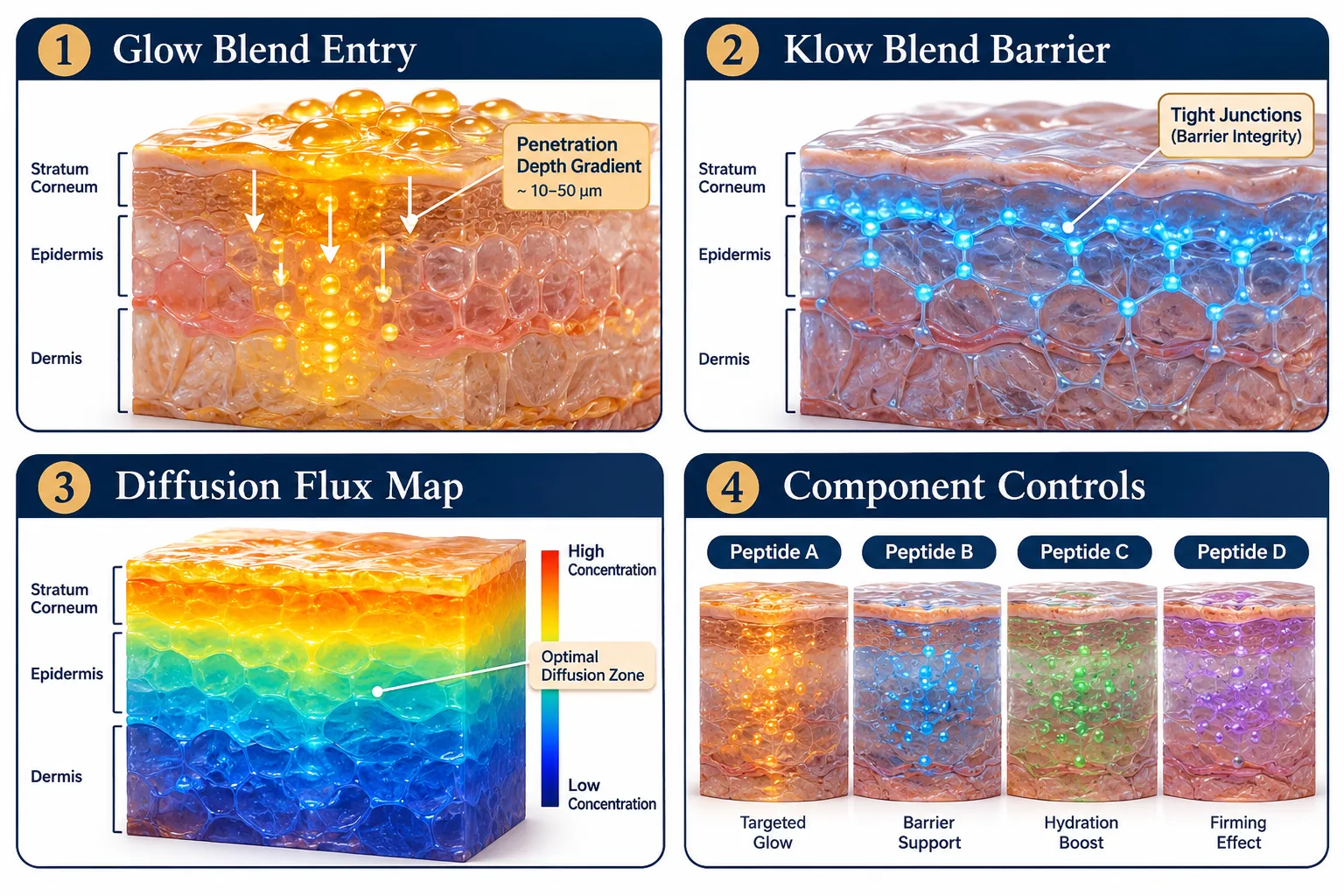
The practical difference matters enormously in a 3D skin model. A full-thickness reconstructed tissue construct, comprising stratified keratinocytes above a fibroblast-populated collagen gel, creates the precise compartmental environment needed to separate these behaviors. Glow Blend components tend to distribute rapidly through the viable epidermis into the upper dermis, whereas Klow Blend components pool at the stratum corneum interface before releasing in a more sustained pattern.
Understanding Glow Blend and Klow Blend in a 3D Skin Research Context

Researchers working with wound healing endpoints have noted that this delivery distinction translates directly into different collagen remodeling timelines. Glow Blend-treated constructs show earlier MMP-1 upregulation, while Klow Blend-treated constructs show delayed but more sustained procollagen-I deposition, a distinction invisible in simple monolayer culture.


Measuring Diffusion and Matrix Remodeling Endpoints

Diffusion Mapping Across Skin Compartments

Quantifying diffusion in a 3D construct requires more than a single time-point fluorescence read. A well-designed study samples the tissue at multiple depths, using cryosectioning combined with confocal fluorescence microscopy, and plots concentration-versus-depth profiles at 2-hour, 6-hour, 24-hour, and 72-hour intervals. This generates a flux map that distinguishes the passive diffusion coefficient of each blend.

For Glow Blend and Klow Blend in 3D Skin Models, the most informative diffusion metrics include:

Metric Glow Blend Signal Klow Blend Signal
Epidermal half-penetration time Rapid (2-4 hrs) Slow (8-16 hrs)
Dermal accumulation peak 24 hrs 48-72 hrs
Barrier disruption index (TEWL) Moderate elevation Minimal change
Flux coefficient estimate Higher Lower, sustained

Matrix Remodeling Readouts

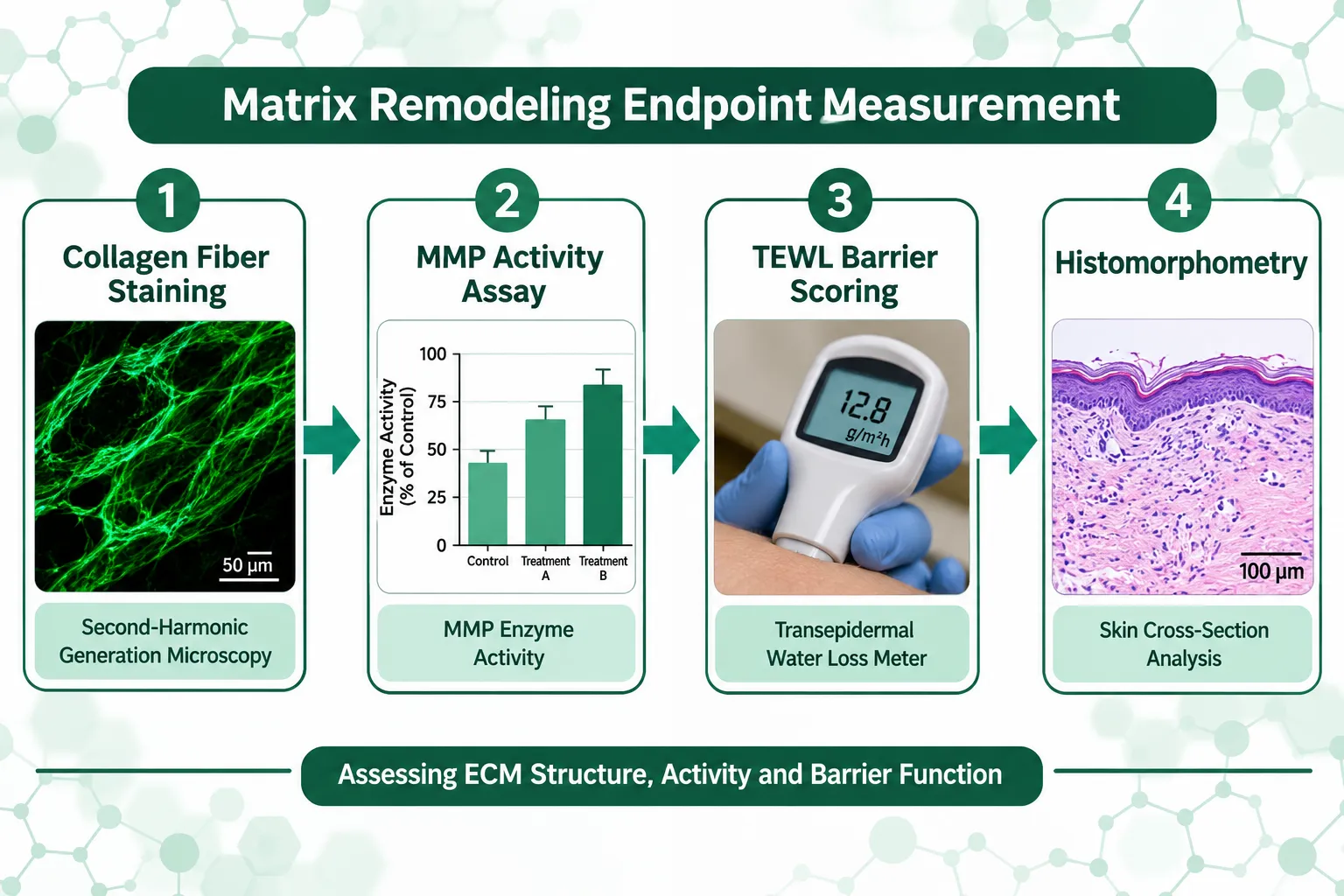
Matrix remodeling in full-thickness constructs is measured through several complementary assays. Second-harmonic generation (SHG) microscopy quantifies collagen fiber organization without staining artifacts. ELISA panels targeting MMP-1, MMP-3, procollagen-I C-peptide, and fibronectin complete the picture at the protein secretion level.

Researchers studying related NAD peptides have observed that energetic co-factors within multi-component blends can confound collagen readouts when not properly isolated, a direct argument for the component attribution strategies described below.

Key insight: A blend that improves collagen density at 72 hours in a 3D construct tells only half the story. Without knowing whether the carrier matrix, the primary peptide, or the antioxidant fraction drives that result, the finding cannot guide formulation refinement.
Matrix Remodeling Readouts

Barrier scoring adds a third layer. Transepidermal water loss (TEWL) measurement, cytokine release profiling (IL-1a, IL-8), and filaggrin immunostaining together define whether a blend disrupts, preserves, or enhances the barrier during the remodeling window.


Blend Component Attribution: Strategies and Challenges

Why Attribution Fails Without Proper Controls

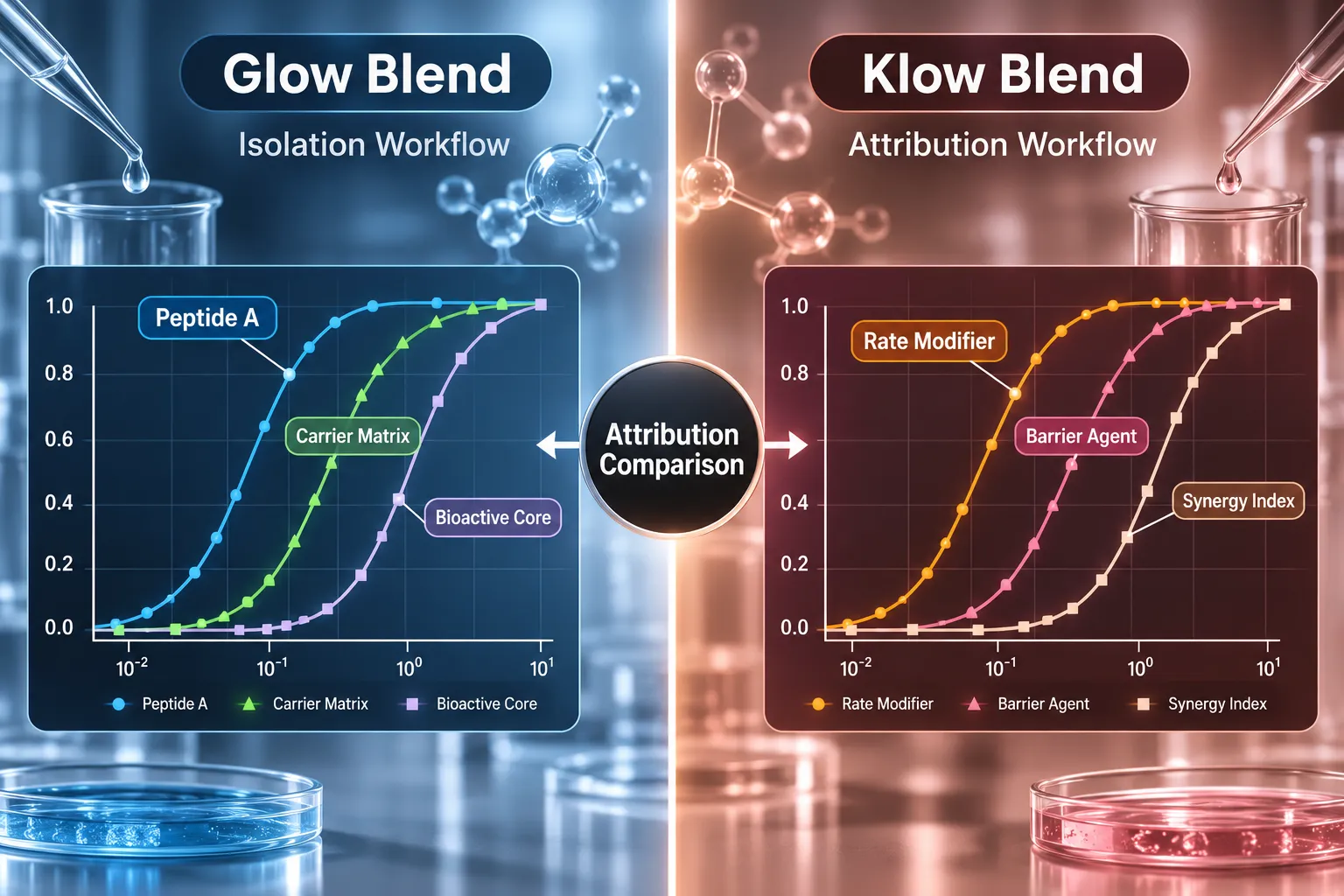
The core challenge in Glow Blend and Klow Blend in 3D Skin Models: Measuring Diffusion, Matrix Remodeling, and Blend Component Attribution is synergy. Many blend components interact non-linearly, a peptide may show no collagen effect alone but potentiate a 3-fold increase when combined with its carrier. This non-linearity means simple subtraction of single-component responses from blend responses will underestimate interaction effects.

The recommended experimental strategy follows a fractional factorial design:

  1. Full blend treatment, baseline response profile
  2. Single-component runs, each constituent tested alone at matched molar concentration
  3. Pairwise combinations, two-component mixtures to detect interaction terms
  4. Dose-response curves, for each component and each pair, to identify threshold effects
  5. Multi-timepoint sampling, 24, 48, and 72 hours minimum

For teams sourcing compounds for these designs, resources such as the TB-500 controlled experimental models and QC workflow and insights from AOD 9604 research method notes on storage and traceability provide transferable quality-control frameworks applicable to any multi-component study.

Computational Support for Attribution

Multi-layer computational skin models, incorporating stratum corneum lipid geometry, viable epidermis thickness, and dermal hydraulic conductivity, now allow researchers to simulate expected diffusion profiles before committing expensive tissue constructs. These in-silico predictions generate a reference diffusion envelope. When experimental data deviates from this envelope, the deviation itself becomes a signal: a component is actively modifying the diffusion landscape rather than passively diffusing through it.
Computational Support for Attribution

Teams exploring parallel blends such as the Hulk Blend have used similar computational scaffolds to pre-screen for unexpected dermal accumulation peaks, a practice increasingly standard in 2026 skin research. The GLP-3 peptide signaling pathway literature also offers a parallel case study in how receptor-level specificity can be mapped within complex multi-component biological environments.

Regulatory and Usage Context

As of late 2026, Glow Blend and Klow Blend remain designated as research-use compounds. Attribution data generated in 3D skin model studies is not currently sufficient for clinical or cosmetic efficacy claims without additional validation. Speculative analyst expectations suggest that well-documented blend attribution datasets will become a formal requirement in the next regulatory cycle for advanced topical formulations, making rigorous 3D model work now a strategic investment, not merely an academic exercise.


Conclusion

A three-dimensional skin-model framework built around diffusion mapping, matrix remodeling endpoints, and disciplined single-component controls is the most effective path to meaningful Glow Blend and Klow Blend in 3D Skin Models: Measuring Diffusion, Matrix Remodeling, and Blend Component Attribution data. The actionable next steps are clear:

  • Design studies with fractional factorial component controls from the outset, not as an afterthought.
  • Pair experimental flux data with computational diffusion models to flag active barrier-modifying components early.
  • Use SHG microscopy and multi-target ELISA panels together, no single assay captures the full matrix remodeling picture.
  • Establish multi-timepoint sampling (24, 48, 72 hours minimum) as a non-negotiable protocol element.
  • Document storage, purity, and QC traceability for every blend constituent to ensure reproducibility across study sites.

Blends that cannot be attributed at the component level are blends that cannot be improved. Building attribution into the experimental design, rather than attempting to retrofit it onto final data, is what separates publishable mechanistic insight from inconclusive formulation screening.

https://www.puretestedpeptides.com/wp-content/uploads/2026/11/glow-blend-and-klow-blend-in-3d-skin-models-measuring-diffusion-matrix-remodelin.webp 1024 1536 https://www.puretestedpeptides.com/wp-content/uploads/2026/01/buy-peptides-online.jpg 2026-11-05 14:05:142026-11-05 14:05:14Glow Blend and Klow Blend in 3D Skin Models: Measuring Diffusion, Matrix Remodeling, and Blend Component Attribution
×

Helpful Links

  • My account
  • Cart
  • Checkout
  • Refund and Returns Policy
  • Privacy Policy
  • SMS Privacy Policy
  • Login
  • My Account
  • Logout

USA Made Lab Tested Peptides

All products are sold for research, laboratory, or analytical purposes only, and are not for human consumption


Pure Tested Peptides is a chemical supplier. Pure Tested Peptides is not a compounding / chemical compounding facility as defined under 503A of the Federal Food, Drug, and Cosmetic act. Pure Tested Peptides is not an outsourcing facility as defined under 503B of the Federal Food, Drug, and Cosmetic act.

The statements made within this website have not been evaluated by the US Food and Drug Administration. The products we offer are not intended to diagnose, treat, cure or prevent any disease.

Human/Animal Consumption Prohibited. Laboratory/In-Vitro Experimental Use Only

Scroll to top Scroll to top Scroll to top