Call or Text 727-513-9780
  • Shopping Cart Shopping Cart
    0Shopping Cart
Pure Tested Peptides | America's most trusted Peptides for sale online
  • Peptides for sale
    • Oral Peptides for sale
      • Peptide Capsules for sale
      • BPC 157 Capsules 1000mcg
      • SLU-PP-332 Capsules | 1000 mcg
      • 5-Amino-1MQ 50mg Capsules
      • Tesofensine 500mcg
    • All Peptides for sale
    • Peptide Sprays
      • BPC 157 Nasal Spray Kit
      • BPC-157 TB500 Nasal Spray Kit
      • Semax Nasal Spray 10mg
      • Selank – Nasal Spray Kit – 10mg
      • Epithalon 50MG Nasal Spray Kit
      • Ipamorelin 10mg Nasal Spray
      • Klow Nasal Spray (BPC-157 + TB-500 + GHK-Cu + KPV) | 80mg
      • Hulk Nasal Spray Tesa / Ipa Blend 6/3 MG
      • Klow Nasal Spray
      • NAD + 500 mg Nasal Spray
      • PT-141 Nasal Spray Kit
    • GHRH Peptides
      • Ipa Peptides
      • CJC-1295 Peptides
        • CJC-1295 with DAC 5 mg
        • CJC-1295 without DAC 5 mg
        • CJC-1295 Ipa 10mg
      • Tesa Peptides
        • Tesa Peptide
        • Tesa 20 mg
    • GHK-Cu Peptides
      • All GHK-Cu Peptides
      • GHK-Cu 100mg
      • KLOW Peptide Blend – Buy KLOW blend online
    • BPC Peptides
      • All BPC Peptides
      • BPC-157
      • BPC-157 TB-500
      • BPC 157 capsules 1000mcg
    • SLU-PP-332 Peptides
      • All SLU-PP-332 Peptides
      • SLU-PP-332 5mg
    • GLP3 Peptides
    • PT-141 Peptides
      • PT-141 Peptides for sale
      • PT-141 10mg
      • PT-141 Nasal Spray
    • CAG Peptides
      • Lipo-C Peptide Blend
      • CAG 5mg
      • CAG 10mg
    • MOTS-C Peptides
      • MOTS-C Peptides for sale
      • MOTS-c peptide
      • MOTS-c 10mg *6 pack*
    • 5 Amino 1MQ Peptides
      • 5 Amino 1MQ Peptides for sale
      • 5-Amino-1MQ 50mg Capsules
      • 5-Amino-1MQ 5mg
    • Epithalon Peptides
      • Epithalon Peptides for sale
      • Epithalon 10mg
      • Epithalon 50mg
  • Shop
    • GLPs
      • 5-Amino-1MQ 50mg Capsules
      • 5-Amino-1MQ 5mg
      • L-Carnitine 500mg/ml
      • Tesofensine 500mcg
      • SLU-PP-332 5mg
      • MOTS-c 10mg *6 pack*
    • Epithalon & BPC Peptides
      • Epithalon 10mg
      • Epithalon 50mg
      • BPC-157
      • BPC 157 capsules 1000mcg
      • BPC-157 TB-500
      • BPC-157 TB500 Nasal Spray Kit
      • BPC 157 Nasal Spray Kit
    • BPC TB-500 & NAD+ Peptides
      • NAD+ 500 mg
      • KLOW Peptide Blend – Buy KLOW blend online
      • GLOW Peptide Blend
      • TB 500 5mg
      • BPC 157 capsules 1000mcg – Supplement
      • BPC 157 Nasal Spray Kit
      • BPC-157
      • BPC-157 TB500 Nasal Spray Kit
      • BPC-157 TB-500
      • BPC 157 capsules 1000mcg
    • LL-37 Peptide
      • LL-37 10 mg
    • MOTS-C & Selank
      • MOTS-c peptide
      • Selank 10mg
    • GHK Peptides
      • GHK-Cu 100mg
      • GLOW Peptide Blend
      • KLOW Peptide Blend – Buy KLOW blend online
  • COAs
  • Wholesale
    • Wholesale Peptides for sale
  • PTP FAQ
  • Affiliates
    • Selank Peptide: Advanced Pharmacological Mechanisms Underlying Its Anxiolytic and Nootropic Effects in Research
      • 5-Amino-1MQ Peptide: Detailed Mechanisms of NNMT Inhibition and Its Impact on Cellular Metabolism Research
        • MOTS-C Peptide: Unraveling Its Role in Mitochondrial Dynamics and Energy Metabolism Research
          • Epithalon Peptide and Telomerase Regulation: Investigating Its Impact on Cellular Senescence and Lifespan Research Models
            • GLP2-T vs GLP2 Tirz Peptide: Understanding the Naming, Mechanistic Nuances, and Research Implications for Gut Health
      • Peptides and Polypeptides in Modern Pharmacology: What Research on Metoprolol, Prednisone, and Amlodipine Reveals
        • Polypeptide Peptides vs NSAIDs: What Naproxen and Diclofenac Teach Tissue-Repair Researchers About BPC‑157 and TB‑500
          • Peptides and Polypeptides in Endocrine Pharmacology: How GLP-1, GLP-2, and GLP-3 Retatrutide Differ From Classic Drugs Like Prednisone and Amlodipine
          • 5‑Amino‑1MQ Peptide and NNMT Inhibition: How It Compares With Statins Like Atorvastatin in Adipose and Lipid Metabolism Research
      • Enclomiphene, Estrogen Receptor Signaling, and Luteinizing Phase Biology: What Hormone Researchers Should Measure
        • Mesenchymal Stem Cells, BPC‑157, and GHK‑Cu: How Tissue Repair Peptides Compare With Classic NSAIDs Like Naproxen in Injury Models
          • Peptide Calculator Use Cases Beyond Growth Hormone: Working Through GLP‑3 Retatrutide, MOTS‑c, and BPC‑157 Research Dosing
        • Polypeptide Peptides in Endocrine and Metabolic Pharmacology: Lessons From Amlodipine, Prednisone, and Metoprolol
        • Peptides Calculator for Advanced Blends: Worked Examples for Tesamorelin, CJC‑1295, and Ipamorelin Stacks
          • Peptides and Polypeptides in Human Physiology: How Molecular Size Shapes Research Applications
            • Selank Peptide: Advanced Pharmacological Mechanisms Underlying Its Anxiolytic and Nootropic Effects in Research
          • 5-Amino-1MQ Peptide: Detailed Mechanisms of NNMT Inhibition and Its Impact on Cellular Metabolism Research
            • MOTS-C Peptide: Unraveling Its Role in Mitochondrial Dynamics and Energy Metabolism Research
              • Epithalon Peptide and Telomerase Regulation: Investigating Its Impact on Cellular Senescence and Lifespan Research Models
                • GLP2-T vs GLP2 Tirz Peptide: Understanding the Naming, Mechanistic Nuances, and Research Implications for Gut Health
                  • Peptides and Polypeptides in Endocrine Pharmacology: How GLP-1, GLP-2, and GLP-3 Retatrutide Differ From Classic Drugs Like Prednisone and Amlodipine
                    • Polypeptide Peptides vs NSAIDs: What Naproxen and Diclofenac Teach Tissue-Repair Researchers About BPC‑157 and TB‑500
                      • Peptides and Polypeptides in Modern Pharmacology: What Research on Metoprolol, Prednisone, and Amlodipine Reveals
                        • 5‑Amino‑1MQ Peptide and NNMT Inhibition: How It Compares With Statins Like Atorvastatin in Adipose and Lipid Metabolism Research
                        • Enclomiphene, Estrogen Receptor Signaling, and Luteinizing Phase Biology: What Hormone Researchers Should Measure
                        • Mesenchymal Stem Cells, BPC‑157, and GHK‑Cu: How Tissue Repair Peptides Compare With Classic NSAIDs Like Naproxen in Injury Models
                        • Peptide Calculator Use Cases Beyond Growth Hormone: Working Through GLP‑3 Retatrutide, MOTS‑c, and BPC‑157 Research Dosing
                        • Polypeptide Peptides in Endocrine and Metabolic Pharmacology: Lessons From Amlodipine, Prednisone, and Metoprolol
                        • Peptides Calculator for Advanced Blends: Worked Examples for Tesamorelin, CJC‑1295, and Ipamorelin Stacks
                        • Peptides and Polypeptides in Human Physiology: How Molecular Size Shapes Research Applications
                        • Selank Peptide: Advanced Pharmacological Mechanisms Underlying Its Anxiolytic and Nootropic Effects in Research
                        • MOTS-C Peptide: Unraveling Its Role in Mitochondrial Dynamics and Energy Metabolism Research
                        • Peptides and Polypeptides in Modern Pharmacology: What Research on Metoprolol, Prednisone, and Amlodipine Reveals
                        • Peptides and Polypeptides in Endocrine Pharmacology: How GLP-1, GLP-2, and GLP-3 Retatrutide Differ From Classic Drugs Like Prednisone and Amlodipine
                        • 5-Amino-1MQ Peptide: Detailed Mechanisms of NNMT Inhibition and Its Impact on Cellular Metabolism Research
                        • Mesenchymal Stem Cells, BPC‑157, and GHK‑Cu: How Tissue Repair Peptides Compare With Classic NSAIDs Like Naproxen in Injury Models
                        • Peptide Calculator Use Cases Beyond Growth Hormone: Working Through GLP‑3 Retatrutide, MOTS‑c, and BPC‑157 Research Dosing
                        • GLP2-T vs GLP2 Tirz Peptide: Understanding the Naming, Mechanistic Nuances, and Research Implications for Gut Health
                        • Polypeptide Peptides in Endocrine and Metabolic Pharmacology: Lessons From Amlodipine, Prednisone, and Metoprolol
                        • Polypeptide Peptides vs NSAIDs: What Naproxen and Diclofenac Teach Tissue-Repair Researchers About BPC‑157 and TB‑500
                        • Peptides and Polypeptides in Human Physiology: How Molecular Size Shapes Research Applications
                        • Peptides Calculator for Advanced Blends: Worked Examples for Tesamorelin, CJC‑1295, and Ipamorelin Stacks
                        • 5‑Amino‑1MQ Peptide and NNMT Inhibition: How It Compares With Statins Like Atorvastatin in Adipose and Lipid Metabolism Research
                        • Enclomiphene, Estrogen Receptor Signaling, and Luteinizing Phase Biology: What Hormone Researchers Should Measure
                        • Epithalon Peptide and Telomerase Regulation: Investigating Its Impact on Cellular Senescence and Lifespan Research Models
                        • Best research protocol Klow blend
                        • best time to take BPC-157
                        • best time to take DSIP (Delta Sleep Inducing Peptide)
                        • best time to take CJC-1295
                        • best time to take AOD-9604
                        • best time to take Follistatin 344
                        • best time to take Ipamorelin
                        • best time to take MK-677 (Ibutamoren)
                        • best time to take Ligandrol (LGD-4033) — research compound
                        • best time to take Ostarine (MK-2866) — research compound
                        • best time to take GHK-CU
                        • best time to take TB-500
                        • best time to take MOTS-c
                        • best time to take Semax
                        • best time to take RAD-140 (Testolone) — research compound
                        • best time to take Thymosin Alpha-1
                        • best time to take PEG-MGF
                        • Biolife Plasma, Octapharma Plasma, and Research Peptides: How Plasma Donation Labs Differ From Peptide Suppliers
                        • best time to take YK-11 — research compound
                        • best time to take PT-141 (Bremelanotide)
                        • Best research protocol Klow blend
                        • 5-Amino-1MQ and MOTS-C Synergy: Metabolic Signaling, Mitochondria, and Research Design
                        • BPC-157 and TB-500: Investigating Their Combined Effects on Angiogenesis and Cellular Migration in Tissue Repair Models
                        • BPC-157 Peptide: Gut Barrier Function, Inflammation, and Tissue-Recovery Research
                        • 5‑Amino‑1MQ and MOTS‑c Synergy in Metabolic Research: Designing NNMT and Mitochondrial Biogenesis Stacks
                        • CJC-1295 with DAC vs. Without DAC: Half-Life, Release Kinetics, and Research Implications
                        • CJC‑1295 with DAC vs. Without DAC: Expanding on Half‑Life Differences Using Tesamorelin and Ipamorelin Blend Case Studies
                        • Collagen Biology and Copper‑Binding Peptides: How GHK‑Cu, Glow Blend, and Klow Blend Interact with Skin and Connective Tissue
                        • Collagen Biology and Regenerative Peptides: How GHK‑Cu, Glow Blend, and Klow Blend Affect Extracellular Matrix Research
                    • DNA, Telomeres, and Longevity Peptides: Positioning Epithalon and MOTS‑c in Genetic Aging Research
                      • Enclomiphene Citrate: serm Mechanism, Testosterone Research, and Stack Compatibility
                        • Enclomiphene vs Enclomiphene Citrate: Formulation, Bioavailability, and Research Distinctions
                        • Epithalon Peptide Research: Telomerase Activation, Aging, and Pineal Gland Function
                        • Estrogen Receptor Signaling and Enclomiphene: How Selective Modulators Compare with Classic Polypeptide Hormones
                        • GHK-Cu Peptide: Advanced Mechanisms in Extracellular Matrix Remodeling and Wound Healing Research
                        • GHK-Cu Peptide: Collagen Synthesis, Wound Repair, and Skin-Barrier Research Models
                        • GLP-1 vs GLP-3 vs GLP-2: Peptide Classification and Research Applications
                        • GLP-2 Peptide Research Guide: Gut Barrier Function, Nutrient Absorption, and Intestinal Recovery Models
                        • GLP-3 Retatrutide vs. GLP-1 Drugs: What Triple-Agonist Biology Changes in Research Models
                        • Ipamorelin and Tesamorelin Combination: Synergistic GH Secretagogue Research and Dosing Protocols
                        • GLP2 Tirz Peptide: What It Is, Why the Name Exists, and How Researchers Should Interpret It
                        • Klow Blend Peptide Nasal Spray: What the Formulation Is Trying to Do in Cognitive Research
                        • Mitochondria, NNMT Inhibition, and Peptide Modulators: Where MOTS‑c and 5‑Amino‑1MQ Fit in Cellular Energy Research
                        • MOTS-c Peptide: Mitochondrial Function, Energy Metabolism, and What Researchers Measure
                        • MOTS-c vs. 5-Amino-1MQ: Which Metabolic Research Questions Each Compound Actually Answers
                        • Nasal Spray Peptides: Bioavailability, Administration, and Semax/Selank Research Applications
                        • PT-141 Peptide Research: Mechanism of Action and Melanocortin Receptor Signaling
                        • Retatrutide for Research: Mechanism, Structure, and GLP-1/GLP-3 Dual Action
                        • Retatrutide for Obesity and Type 2 Diabetes: What the Latest Trial Data Suggest
                        • Tesofensine Peptide Research: Mechanism, Appetite Suppression, and Neuropeptide Y Pathways
  • Contact
    • Contact Customer Service
    • Text Customer Support
  • About US
  • Shop all peptides
  • Affiliate Program
    • Affiliate Signup
  • Login / Register Login / Register Page Link Login / Register Page Link
  • Click to open the search input field Click to open the search input field Search
  • Menu Menu

Tag Archive for: 5-ht3 antagonist appetite

Ondansetron in Peptide Feeding Studies: Separating Antiemetic Effects From Appetite and Gastric-Transit Signals

Ondansetron in Peptide Feeding Studies: Separating Antiemetic Effects From Appetite and Gastric-Transit Signals

November 8, 2026/0 Comments/in Uncategorized/by

A single protocol flaw can invalidate an entire feeding study. When researchers administer ondansetron to manage nausea in peptide feeding experiments, they often face an underappreciated problem: the drug does far more than suppress vomiting. Understanding the full pharmacological profile of ondansetron in peptide feeding studies, specifically, separating antiemetic effects from appetite and gastric-transit signals, is essential for anyone designing experiments around GLP-class peptides such as retatrutide, cagrilinitide, or related receptor agonists.

Key Takeaways

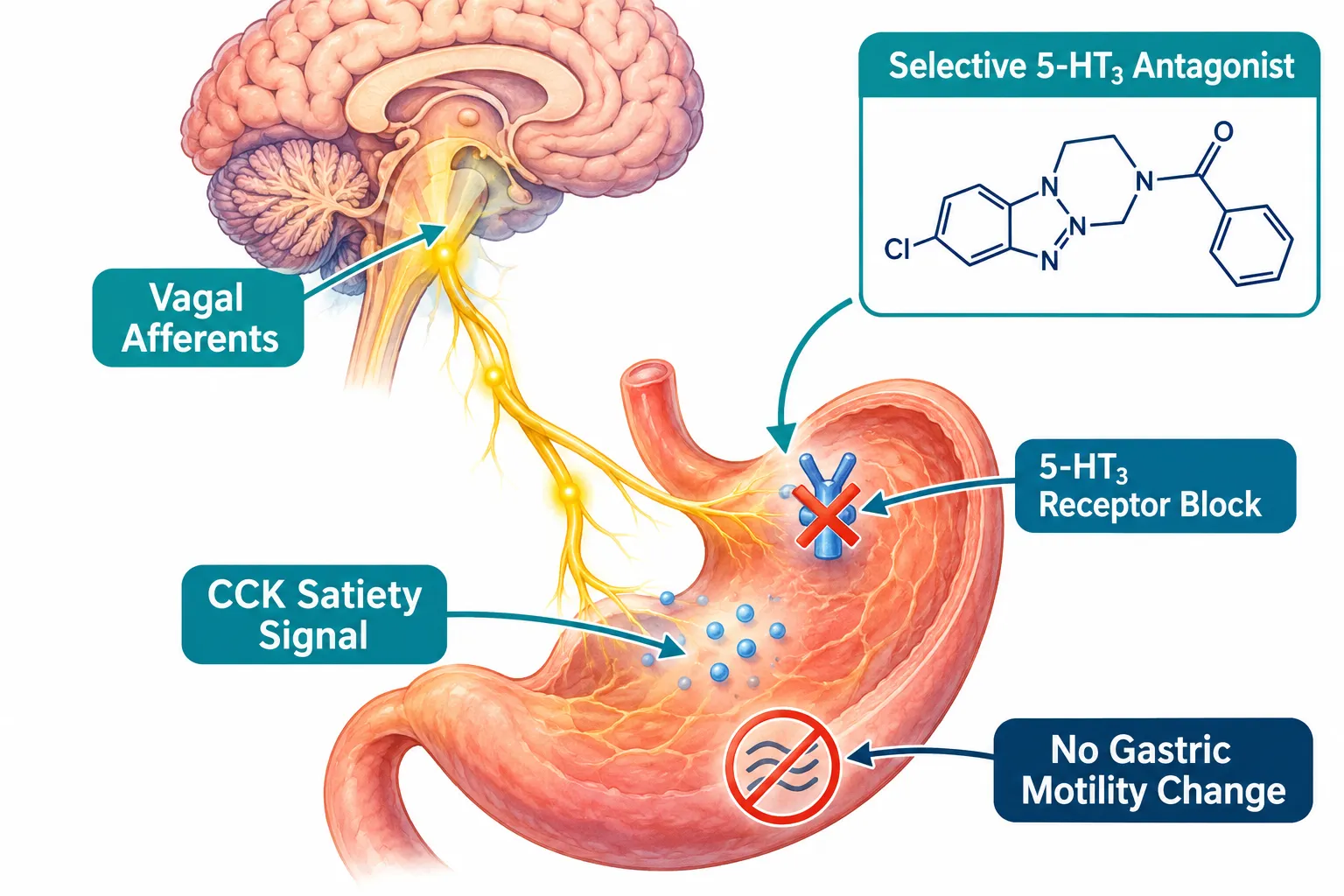
  • Ondansetron is a selective 5-HT3 antagonist; it does not stimulate gastric or intestinal peristalsis and does not alter proximal gastric motility in acute dosing.
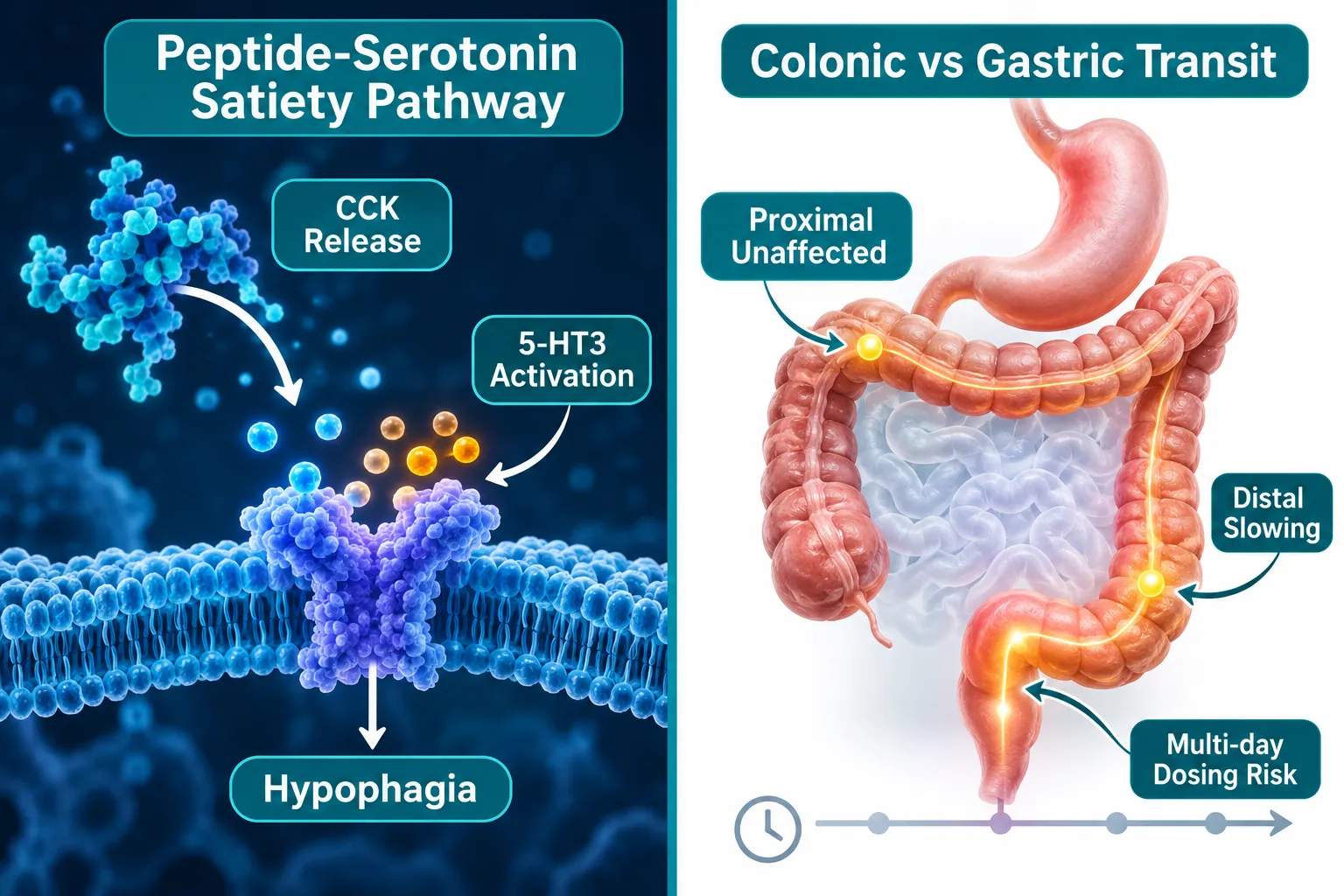
  • Multi-day administration can slow colonic transit, which is a distinct effect from gastric emptying and must be tracked separately.
  • Ondansetron attenuates CCK-mediated satiety and can increase maximum ingested volume at satiation, meaning it actively modifies appetite endpoints in peptide feeding studies.
  • Investigators studying retatrutide or other GLP-class peptides must include receptor-specific controls and separate nausea scores from food intake measurements.
  • High-fat meals significantly slow ondansetron absorption, so diet composition must be tightly controlled to avoid misreading pharmacokinetic timing as a drug-induced motility effect.

Why Protocol Design Matters for Ondansetron in Peptide Feeding Studies
Why Protocol Design Matters for Ondansetron in Peptide Feeding Studies

Peptide feeding studies involving GLP-receptor agonists such as retatrutide routinely encounter a confounding variable that is easy to overlook: nausea itself changes food intake. Administering ondansetron to prevent emesis seems like a straightforward solution, but the drug's action on 5-HT3 receptors places it directly inside the serotonin, peptide satiety circuit that researchers are trying to measure.

Official prescribing information confirms that ondansetron "is not a drug that stimulates gastric or intestinal peristalsis." Single intravenous doses of 0.15 mg/kg do not change esophageal motility, gastric motility, lower esophageal sphincter pressure, or small-intestinal transit in healthy volunteers. That is a critical distinction: ondansetron controls nausea without altering the mechanical gastric transit parameters that many peptide feeding studies need to measure independently.

However, the word "acute" matters here. Multi-day administration has been shown to slow colonic transit, an effect entirely separate from gastric emptying or proximal motility. For longer peptide feeding trials, investigators must therefore monitor stool frequency and consistency as independent endpoints rather than assuming ondansetron has a neutral effect on the entire GI tract.

Practical implication: Nausea scoring and GI transit measurement must be assigned to different outcome tiers in the study design, do not collapse them into a single "tolerability" endpoint.


Separating Antiemetic Effects From Appetite and Gastric-Transit Signals: The CCK Problem
Separating Antiemetic Effects From Appetite and Gastric-Transit Signals: The CCK Problem

The most underappreciated issue in ondansetron use within feeding studies is its interaction with cholecystokinin (CCK)-mediated satiety. Mechanistic research shows that ondansetron attenuates CCK-induced hypophagia and reduces hindbrain activation associated with peptide-driven fullness, without abolishing gastric mechanical feedback.

In one controlled series, ondansetron and a CCK-1 antagonist at individually sub-threshold doses synergistically increased sucrose intake above baseline, suggesting these two pathways converge at the level of food intake regulation. Ondansetron, in other words, is not a passive antiemetic in a peptide feeding context. It actively reduces the satiety signal contributed by serotonergic neurons that are co-activated by gut peptides.

A controlled gastric function study reinforces this point. Gastric compliance and perception thresholds were unchanged by ondansetron, but the volume ingested at maximum satiation increased significantly, from approximately 784 mL to 907 mL (P < 0.05). The researchers concluded that 5-HT3 receptors are not involved in gastric sensorimotor control but do regulate hunger and satiation centrally.

For researchers working with GLP-3 peptides or cagrilinitide, this has direct consequences:

Endpoint Ondansetron Effect Action Required
Nausea/emesis Reduced (desired) Score separately
Meal size at satiation Increased Include vehicle control
CCK-mediated anorexia Attenuated Add CCK-specific arm
Gastric emptying rate Unchanged (acute) No adjustment needed
Colonic transit (multi-day) Slowed Monitor stool endpoints

A Protocol-Oriented Guide for Nausea Scoring, Meal Timing, and Receptor-Specific Controls
A Protocol-Oriented Guide for Nausea Scoring, Meal Timing, and Receptor-Specific Controls

The following protocol framework is designed for studies evaluating retatrutide or related GLP-class peptides where nausea control is required.

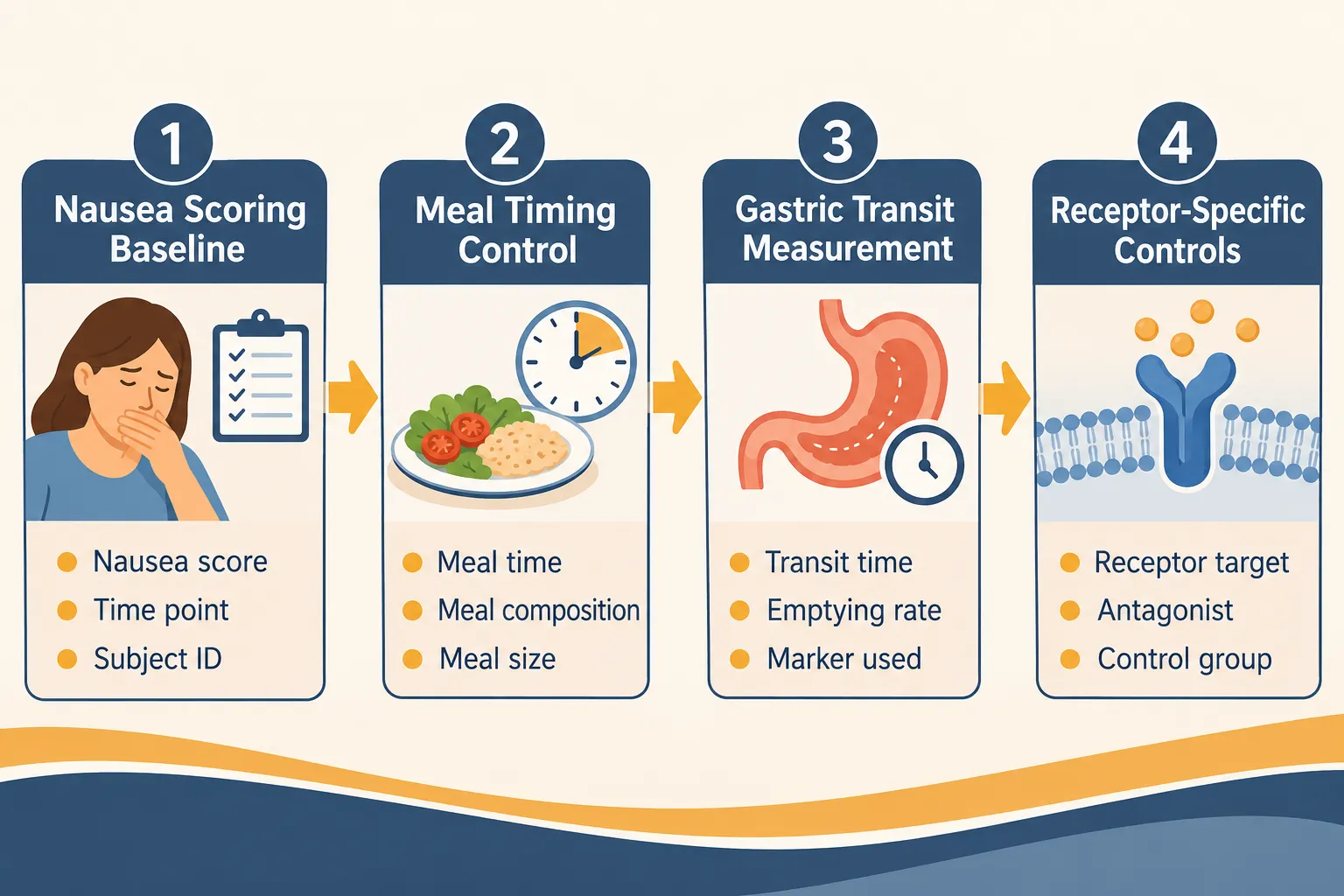
Step 1: Stratify Nausea Scores Before Measuring Food Intake

Collect validated nausea ratings at fixed intervals, before dosing, at peak plasma concentration, and at two hours post-meal. Never combine nausea scores with food intake data into a single composite endpoint. A reduction in nausea that coincidentally increases food intake can be misread as a direct appetite-stimulating effect of the peptide under study.

Step 2: Standardize Diet Composition Across All Arms

A pharmacokinetic study in healthy volunteers found that high-fat meals significantly decrease ondansetron's absorption rate by slowing gastric emptying and prolonging gastric residence time. If diet composition varies between groups, the resulting difference in ondansetron plasma exposure will be misinterpreted as a drug-induced motility effect. Standardize macronutrient ratios and caloric load across all study arms.

Step 3: Include a 5-HT3-Specific Control Arm

Because ondansetron blunts peptide-mediated satiety, include a vehicle-plus-peptide arm with no 5-HT3 blockade. Classic rodent studies with 5-HT3 antagonists such as ICS 205-930 showed restored intake of amino-acid-imbalanced diets, an effect that would be invisible without a matched control. This design allows investigators to separate the peptide's direct anorectic effect from the serotonin-dependent component.

Step 4: Measure Proximal and Distal GI Transit Separately

Gastric emptying (measured by scintigraphy or breath test) and colonic transit (measured by whole-gut transit time or radio-opaque markers) should be treated as independent endpoints. For studies extending beyond 48 hours, track Bristol Stool Scale scores daily. Colonic slowing from multi-day ondansetron dosing is a safety signal, not a desired appetite or motility outcome.

Step 5: Monitor QTc Continuously

Clinical guidance for gastroparesis management recommends ondansetron at 4-8 mg every 8 hours as needed, with explicit monitoring for QTc prolongation and cardiac arrhythmia. For longer peptide feeding trials, integrate electrocardiographic monitoring into the safety endpoint schedule. QTc changes are off-target signals in this context and should not be conflated with the peptide's metabolic or motility profile.

"Ondansetron's clinical value in feeding studies is as a nausea control, not as a window into gastric mechanics."

Researchers sourcing GLP-class agents should also ensure peptide purity, as outlined in resources on evaluating research-grade peptide purity and compatibility. For studies involving cagrilinitide or dual-agonist compounds, the interaction between peptide-driven satiety and 5-HT3 blockade becomes even more complex, because these agents already suppress appetite through multiple receptor pathways simultaneously.

Investigators using growth hormone-releasing peptides such as sermorelin in combination feeding paradigms should apply the same stratification, since growth hormone secretagogues can independently alter gastric motility and appetite through ghrelin receptor pathways, adding another layer of signal to separate.


Conclusion

Ondansetron in peptide feeding studies requires careful interpretation precisely because its antiemetic mechanism overlaps with the serotonin-peptide satiety circuit it is supposed to leave undisturbed. The core protocol steps are clear: score nausea separately from food intake, standardize diet composition to avoid pharmacokinetic confounds, include a 5-HT3-specific control arm, track proximal and distal GI transit as independent endpoints, and monitor cardiac conduction in multi-day designs.

Actionable next steps for investigators in 2026:

  • Audit existing study protocols to confirm nausea and appetite endpoints are separated.
  • Add a vehicle-plus-peptide control arm if one is not already present.
  • Confirm macronutrient standardization across all dietary conditions.
  • Add daily colonic transit monitoring for any trial exceeding 48 hours of ondansetron exposure.
  • Establish QTc baseline before first dosing and repeat at every dose escalation.

As research on GLP-1 peptides and next-generation receptor agonists expands, the signal-separating framework described here will remain foundational. Ondansetron will continue to serve as an antiemetic control, provided investigators treat it as exactly that, and nothing more.

https://www.puretestedpeptides.com/wp-content/uploads/2026/11/ondansetron-in-peptide-feeding-studies-separating-antiemetic-effects-from-appeti.webp 1024 1536 https://www.puretestedpeptides.com/wp-content/uploads/2026/01/buy-peptides-online.jpg 2026-11-08 14:04:422026-11-08 14:04:42Ondansetron in Peptide Feeding Studies: Separating Antiemetic Effects From Appetite and Gastric-Transit Signals
×

Helpful Links

  • My account
  • Cart
  • Checkout
  • Refund and Returns Policy
  • Privacy Policy
  • SMS Privacy Policy
  • Login
  • My Account
  • Logout

USA Made Lab Tested Peptides

All products are sold for research, laboratory, or analytical purposes only, and are not for human consumption


Pure Tested Peptides is a chemical supplier. Pure Tested Peptides is not a compounding / chemical compounding facility as defined under 503A of the Federal Food, Drug, and Cosmetic act. Pure Tested Peptides is not an outsourcing facility as defined under 503B of the Federal Food, Drug, and Cosmetic act.

The statements made within this website have not been evaluated by the US Food and Drug Administration. The products we offer are not intended to diagnose, treat, cure or prevent any disease.

Human/Animal Consumption Prohibited. Laboratory/In-Vitro Experimental Use Only

Scroll to top Scroll to top Scroll to top