

Ondansetron in Peptide Feeding Studies: Separating Antiemetic Effects From Appetite and Gastric-Transit Signals
A single protocol flaw can invalidate an entire feeding study. When researchers administer ondansetron to manage nausea in peptide feeding experiments, they often face an underappreciated problem: the drug does far more than suppress vomiting. Understanding the full pharmacological profile of ondansetron in peptide feeding studies, specifically, separating antiemetic effects from appetite and gastric-transit signals, is essential for anyone designing experiments around GLP-class peptides such as retatrutide, cagrilinitide, or related receptor agonists.
Key Takeaways
- Ondansetron is a selective 5-HT3 antagonist; it does not stimulate gastric or intestinal peristalsis and does not alter proximal gastric motility in acute dosing.
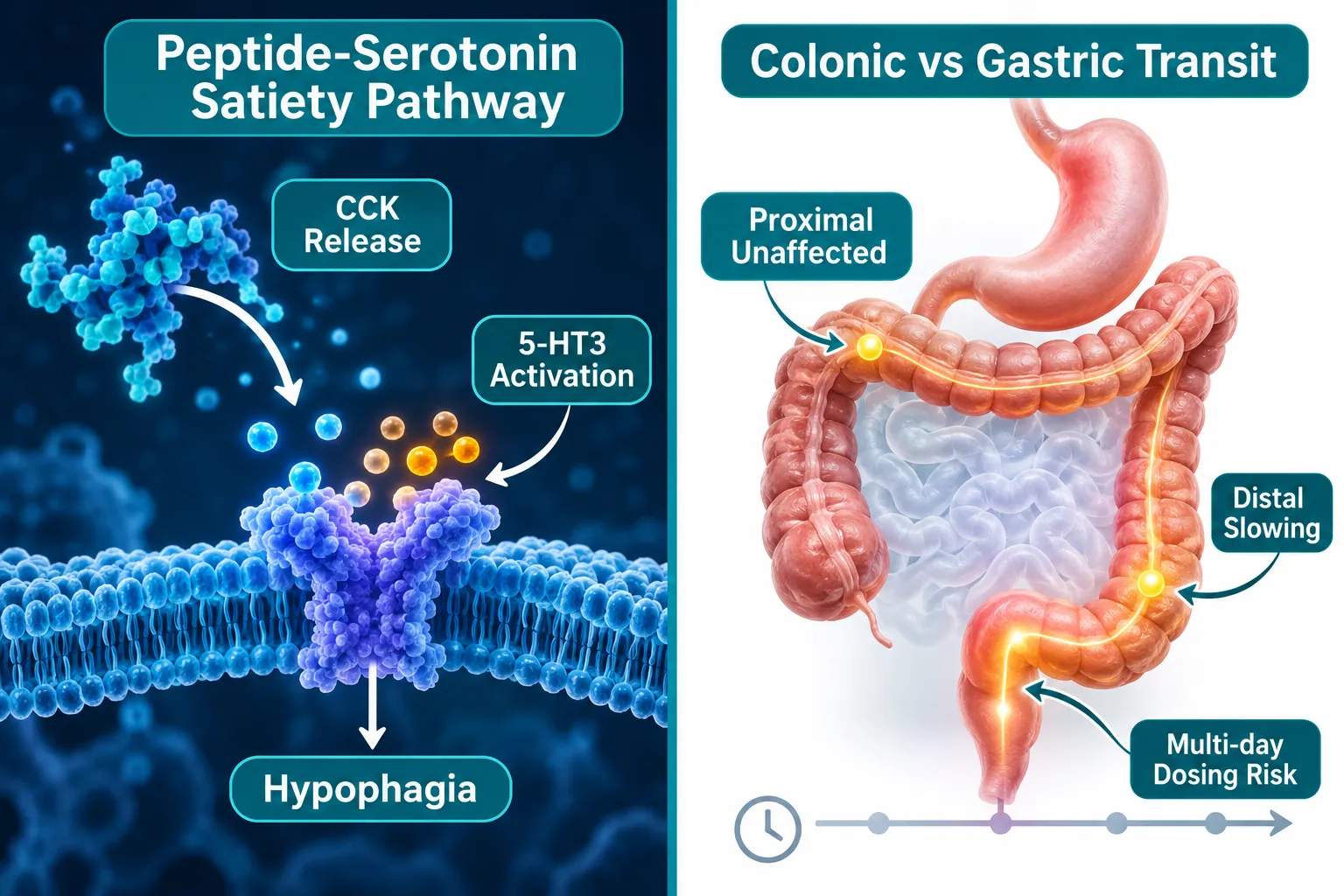
- Multi-day administration can slow colonic transit, which is a distinct effect from gastric emptying and must be tracked separately.
- Ondansetron attenuates CCK-mediated satiety and can increase maximum ingested volume at satiation, meaning it actively modifies appetite endpoints in peptide feeding studies.
- Investigators studying retatrutide or other GLP-class peptides must include receptor-specific controls and separate nausea scores from food intake measurements.
- High-fat meals significantly slow ondansetron absorption, so diet composition must be tightly controlled to avoid misreading pharmacokinetic timing as a drug-induced motility effect.
Why Protocol Design Matters for Ondansetron in Peptide Feeding Studies
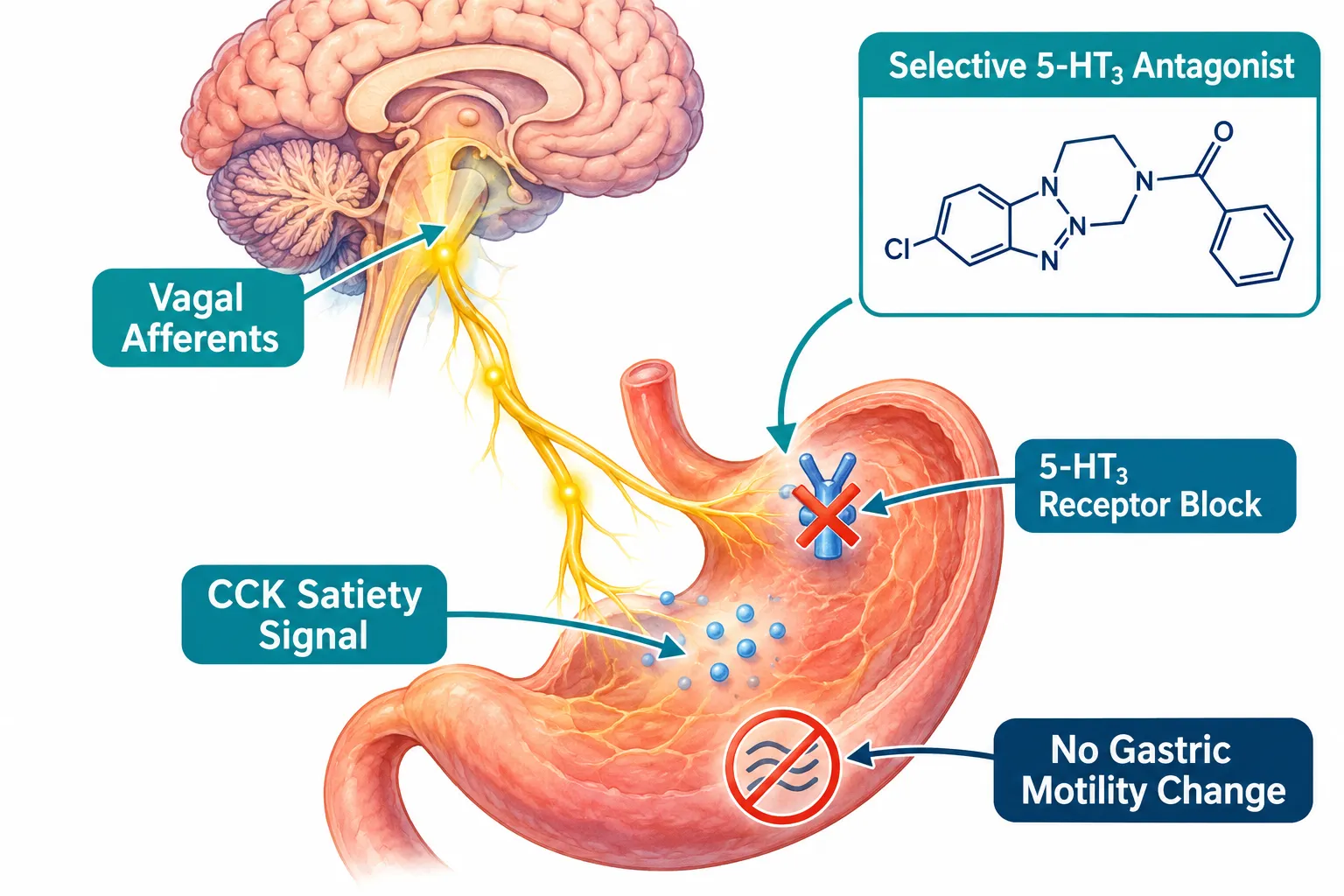
Peptide feeding studies involving GLP-receptor agonists such as retatrutide routinely encounter a confounding variable that is easy to overlook: nausea itself changes food intake. Administering ondansetron to prevent emesis seems like a straightforward solution, but the drug's action on 5-HT3 receptors places it directly inside the serotonin, peptide satiety circuit that researchers are trying to measure.
Official prescribing information confirms that ondansetron "is not a drug that stimulates gastric or intestinal peristalsis." Single intravenous doses of 0.15 mg/kg do not change esophageal motility, gastric motility, lower esophageal sphincter pressure, or small-intestinal transit in healthy volunteers. That is a critical distinction: ondansetron controls nausea without altering the mechanical gastric transit parameters that many peptide feeding studies need to measure independently.
However, the word "acute" matters here. Multi-day administration has been shown to slow colonic transit, an effect entirely separate from gastric emptying or proximal motility. For longer peptide feeding trials, investigators must therefore monitor stool frequency and consistency as independent endpoints rather than assuming ondansetron has a neutral effect on the entire GI tract.
Practical implication: Nausea scoring and GI transit measurement must be assigned to different outcome tiers in the study design, do not collapse them into a single "tolerability" endpoint.
Separating Antiemetic Effects From Appetite and Gastric-Transit Signals: The CCK Problem
The most underappreciated issue in ondansetron use within feeding studies is its interaction with cholecystokinin (CCK)-mediated satiety. Mechanistic research shows that ondansetron attenuates CCK-induced hypophagia and reduces hindbrain activation associated with peptide-driven fullness, without abolishing gastric mechanical feedback.
In one controlled series, ondansetron and a CCK-1 antagonist at individually sub-threshold doses synergistically increased sucrose intake above baseline, suggesting these two pathways converge at the level of food intake regulation. Ondansetron, in other words, is not a passive antiemetic in a peptide feeding context. It actively reduces the satiety signal contributed by serotonergic neurons that are co-activated by gut peptides.
A controlled gastric function study reinforces this point. Gastric compliance and perception thresholds were unchanged by ondansetron, but the volume ingested at maximum satiation increased significantly, from approximately 784 mL to 907 mL (P < 0.05). The researchers concluded that 5-HT3 receptors are not involved in gastric sensorimotor control but do regulate hunger and satiation centrally.
For researchers working with GLP-3 peptides or cagrilinitide, this has direct consequences:
| Endpoint | Ondansetron Effect | Action Required |
|---|---|---|
| Nausea/emesis | Reduced (desired) | Score separately |
| Meal size at satiation | Increased | Include vehicle control |
| CCK-mediated anorexia | Attenuated | Add CCK-specific arm |
| Gastric emptying rate | Unchanged (acute) | No adjustment needed |
| Colonic transit (multi-day) | Slowed | Monitor stool endpoints |
A Protocol-Oriented Guide for Nausea Scoring, Meal Timing, and Receptor-Specific Controls
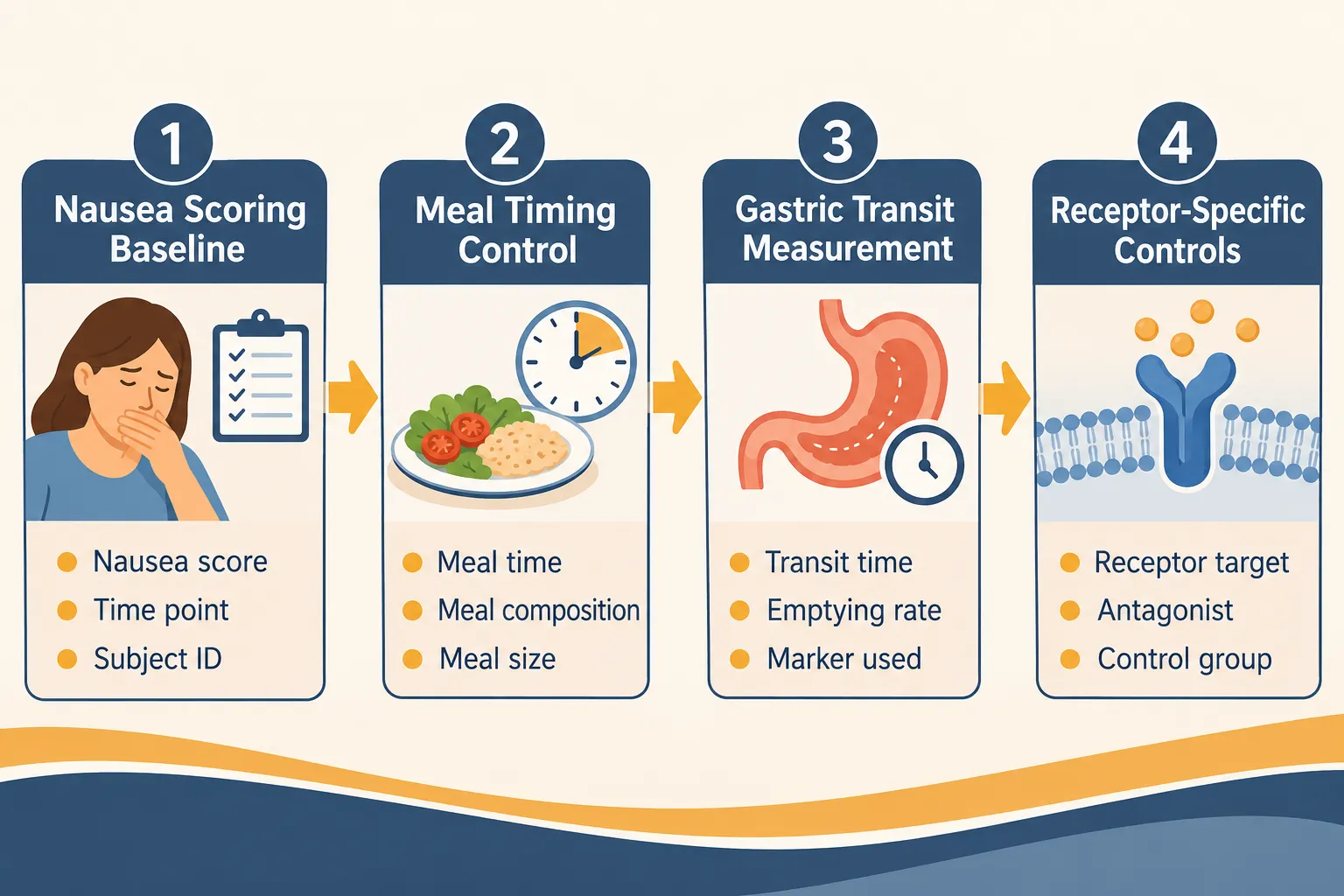
The following protocol framework is designed for studies evaluating retatrutide or related GLP-class peptides where nausea control is required.
Step 1: Stratify Nausea Scores Before Measuring Food Intake
Collect validated nausea ratings at fixed intervals, before dosing, at peak plasma concentration, and at two hours post-meal. Never combine nausea scores with food intake data into a single composite endpoint. A reduction in nausea that coincidentally increases food intake can be misread as a direct appetite-stimulating effect of the peptide under study.
Step 2: Standardize Diet Composition Across All Arms
A pharmacokinetic study in healthy volunteers found that high-fat meals significantly decrease ondansetron's absorption rate by slowing gastric emptying and prolonging gastric residence time. If diet composition varies between groups, the resulting difference in ondansetron plasma exposure will be misinterpreted as a drug-induced motility effect. Standardize macronutrient ratios and caloric load across all study arms.
Step 3: Include a 5-HT3-Specific Control Arm
Because ondansetron blunts peptide-mediated satiety, include a vehicle-plus-peptide arm with no 5-HT3 blockade. Classic rodent studies with 5-HT3 antagonists such as ICS 205-930 showed restored intake of amino-acid-imbalanced diets, an effect that would be invisible without a matched control. This design allows investigators to separate the peptide's direct anorectic effect from the serotonin-dependent component.
Step 4: Measure Proximal and Distal GI Transit Separately
Gastric emptying (measured by scintigraphy or breath test) and colonic transit (measured by whole-gut transit time or radio-opaque markers) should be treated as independent endpoints. For studies extending beyond 48 hours, track Bristol Stool Scale scores daily. Colonic slowing from multi-day ondansetron dosing is a safety signal, not a desired appetite or motility outcome.
Step 5: Monitor QTc Continuously
Clinical guidance for gastroparesis management recommends ondansetron at 4-8 mg every 8 hours as needed, with explicit monitoring for QTc prolongation and cardiac arrhythmia. For longer peptide feeding trials, integrate electrocardiographic monitoring into the safety endpoint schedule. QTc changes are off-target signals in this context and should not be conflated with the peptide's metabolic or motility profile.
"Ondansetron's clinical value in feeding studies is as a nausea control, not as a window into gastric mechanics."
Researchers sourcing GLP-class agents should also ensure peptide purity, as outlined in resources on evaluating research-grade peptide purity and compatibility. For studies involving cagrilinitide or dual-agonist compounds, the interaction between peptide-driven satiety and 5-HT3 blockade becomes even more complex, because these agents already suppress appetite through multiple receptor pathways simultaneously.
Investigators using growth hormone-releasing peptides such as sermorelin in combination feeding paradigms should apply the same stratification, since growth hormone secretagogues can independently alter gastric motility and appetite through ghrelin receptor pathways, adding another layer of signal to separate.
Conclusion
Ondansetron in peptide feeding studies requires careful interpretation precisely because its antiemetic mechanism overlaps with the serotonin-peptide satiety circuit it is supposed to leave undisturbed. The core protocol steps are clear: score nausea separately from food intake, standardize diet composition to avoid pharmacokinetic confounds, include a 5-HT3-specific control arm, track proximal and distal GI transit as independent endpoints, and monitor cardiac conduction in multi-day designs.
Actionable next steps for investigators in 2026:
- Audit existing study protocols to confirm nausea and appetite endpoints are separated.
- Add a vehicle-plus-peptide control arm if one is not already present.
- Confirm macronutrient standardization across all dietary conditions.
- Add daily colonic transit monitoring for any trial exceeding 48 hours of ondansetron exposure.
- Establish QTc baseline before first dosing and repeat at every dose escalation.
As research on GLP-1 peptides and next-generation receptor agonists expands, the signal-separating framework described here will remain foundational. Ondansetron will continue to serve as an antiemetic control, provided investigators treat it as exactly that, and nothing more.


Leave a Reply
Want to join the discussion?Feel free to contribute!