

Lisinopril, ACE Pathways, and Growth Hormone Secretagogues: Designing Safe Peptide Research With Cardiovascular Readouts
Roughly 47% of adults in the United States carry a diagnosis of hypertension, making ACE inhibitors like lisinopril among the most prescribed drugs in modern medicine. That same cardiovascular biology sits at the center of a growing challenge in peptide research: how do labs safely study growth hormone secretagogues (GHS), compounds that measurably alter blood pressure, heart rate, and fluid balance, without losing control of their cardiovascular readouts? Understanding Lisinopril, ACE Pathways, and Growth Hormone Secretagogues: Designing Safe Peptide Research With Cardiovascular Readouts is now a practical necessity for any team working with GHRH analogues, ghrelin mimetics, or related compounds in a controlled setting.
Key Takeaways
- Lisinopril inhibits ACE, reducing angiotensin II production and lowering blood pressure, a mechanism directly relevant when GH secretagogues cause fluid shifts or BP changes.
- Growth hormone secretagogues like CJC-1295, Ipamorelin, and MK-677 each carry distinct cardiovascular risk profiles that must be tracked with specific readouts.
- MK-677 (ibutamoren) has been linked to blood pressure increases and heart failure events in long-term use, prompting FDA warning letters in late 2025.
- A structured monitoring protocol, baseline BP, ACE activity assay, serial cardiac markers, is essential before and during GHS peptide research.
- Mitochondrial-targeted peptides such as SS-31 offer a complementary research angle with a favorable cardiovascular safety profile.
ACE Biology and Lisinopril: The Cardiovascular Foundation
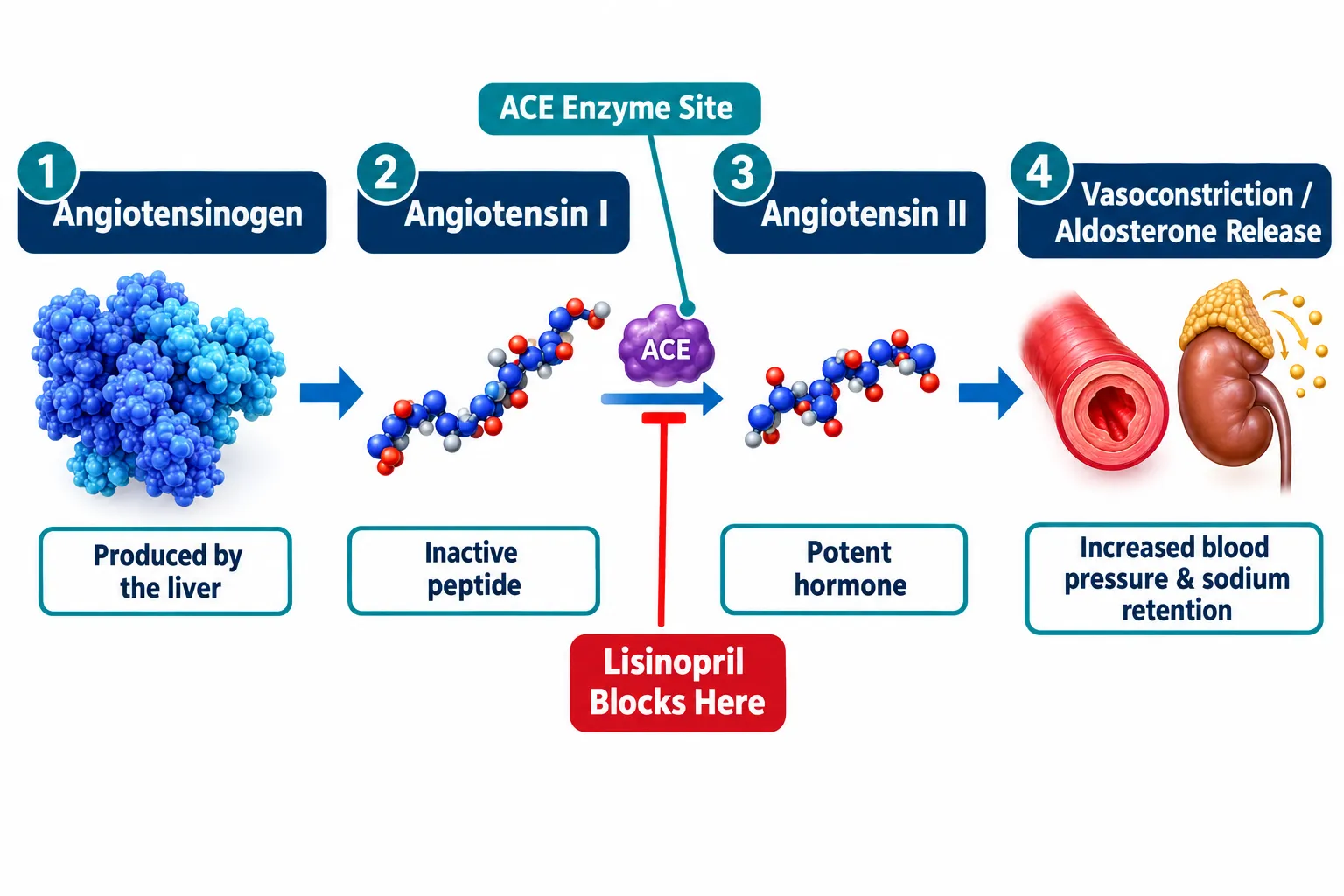
The renin-angiotensin-aldosterone system (RAAS) governs blood pressure, fluid volume, and electrolyte balance. At its core sits angiotensin-converting enzyme (ACE), which converts inactive angiotensin I into angiotensin II, a potent vasoconstrictor that also stimulates aldosterone release. Lisinopril binds competitively to the ACE active site, blocking this conversion and producing a cascade of cardiovascular benefits: reduced peripheral resistance, lower blood pressure, and decreased cardiac workload.
In research settings, this mechanism matters for two reasons. First, any peptide compound that independently shifts fluid balance or vascular tone will interact, directly or indirectly, with the same RAAS axis that lisinopril targets. Second, lisinopril itself accumulates bradykinin, which can cause angioedema; this safety signal must be tracked as a background variable in any multi-compound protocol.
Key ACE pathway markers to monitor in research designs:
| Readout | Why It Matters |
|---|---|
| Plasma ACE activity | Confirms degree of enzymatic inhibition |
| Angiotensin II levels | Tracks downstream vasoconstrictor load |
| Aldosterone | Reflects fluid retention risk |
| Serum potassium | Hyperkalemia risk with ACE inhibition |
| Bradykinin metabolites | Angioedema safety signal |
For researchers new to peptide biology, the Peptides 101 for Research-Use Only Buyers: Structure, Mechanisms, and resource provides a useful primer on how different compound classes interact with physiological systems.
Growth Hormone Secretagogues and Cardiovascular Risk: What the Data Show
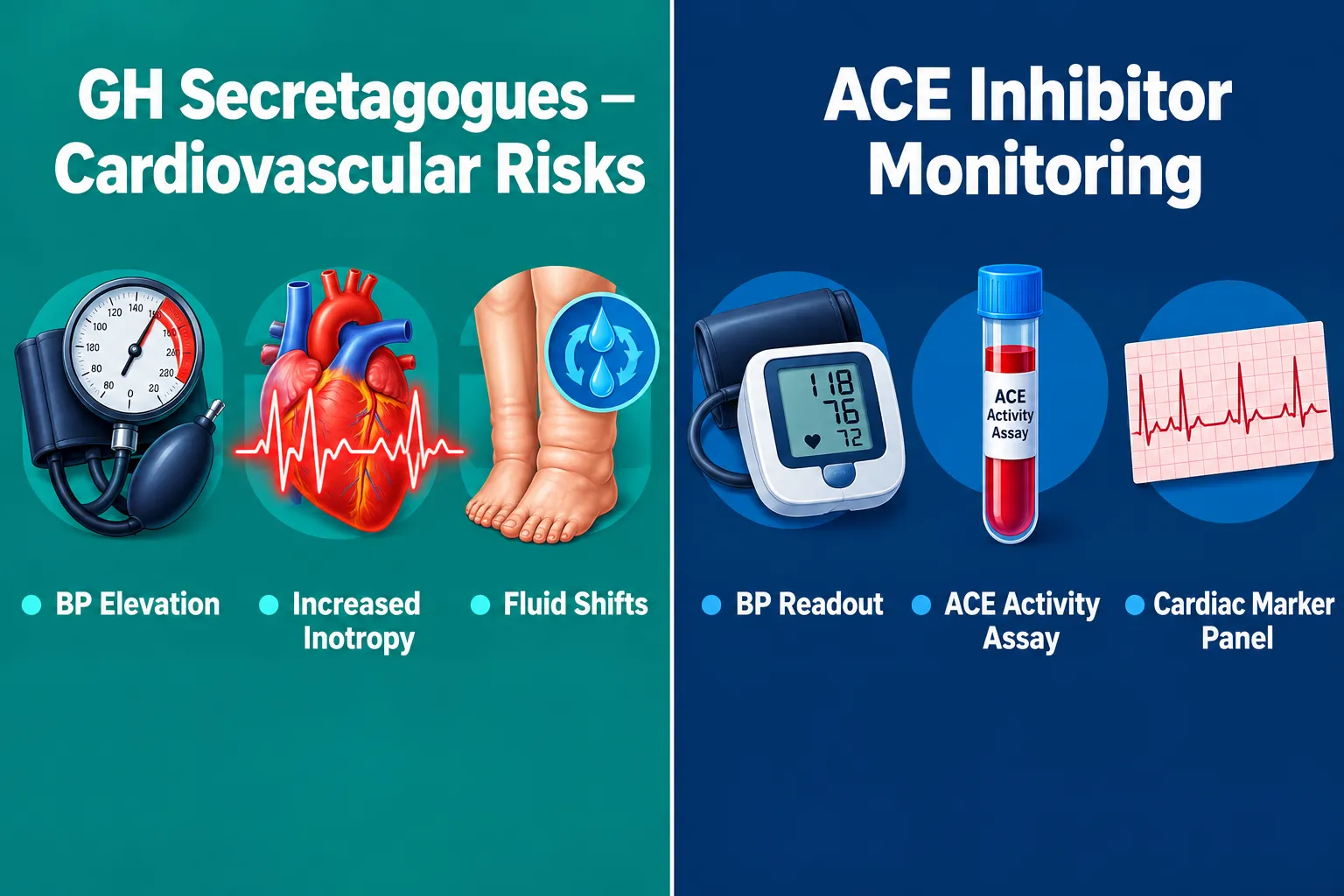
Designing safe peptide research with cardiovascular readouts requires a clear-eyed look at how individual GHS compounds behave in the cardiovascular system. The class is not monolithic, risk profiles differ substantially across agents.
CJC-1295 and GHRH Analogues
CJC-1295 stimulates pulsatile GH release by acting on pituitary GHRH receptors. Elevated GH drives IGF-1 production, and sustained IGF-1 elevation is associated with cardiac hypertrophy and changes in left ventricular geometry in long-term animal studies. Short-term cardiovascular dynamics include modest increases in heart rate and positive inotropic effects. These changes are generally transient but require serial ECG and echocardiographic monitoring in rigorous research designs. A detailed breakdown of pharmacokinetics is available in the CJC-1295 With and Without DAC: A Detailed Mechanism and comparison guide.
Ipamorelin and Ghrelin Mimetics
Ipamorelin is a selective ghrelin receptor agonist with a cleaner selectivity profile than older GHS compounds. Ghrelin itself has demonstrated cardioprotective properties in preclinical models, improving cardiac output and reducing sympathetic tone. However, outcomes data in long-term research remain limited, and the vasodilatory effects of ghrelin-pathway activation can interact unpredictably with ACE inhibitor-induced BP lowering.
MK-677 (Ibutamoren): The Highest-Risk Profile
MK-677 presents the most significant cardiovascular concern in this class. Long-term use has been associated with measurable blood pressure increases, peripheral edema from fluid retention, and, in older research subjects, a higher incidence of heart failure events. FDA warning letters issued in December 2025 specifically flagged ibutamoren-containing products, and 2026 updates reinforced restrictions on its research use. Any protocol using MK-677 alongside an ACE inhibitor must include frequent BP monitoring and renal function panels.
"The interaction between MK-677-driven fluid retention and ACE inhibitor-mediated natriuresis creates a physiologically contested environment that demands close cardiovascular surveillance."
Designing the Protocol: Cardiovascular Readouts for Lisinopril, ACE Pathways, and Growth Hormone Secretagogues Research
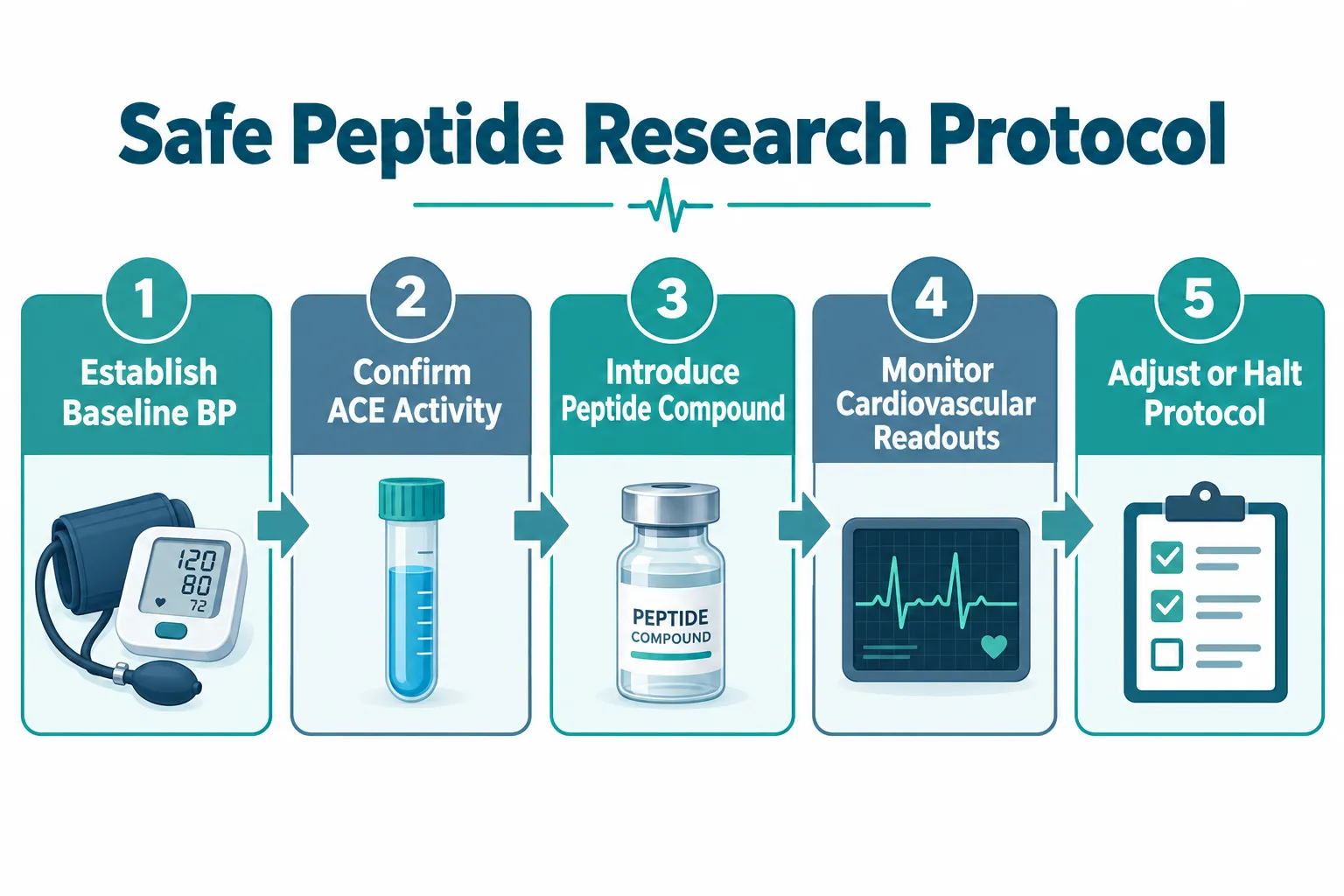
A rigorous approach to Lisinopril, ACE Pathways, and Growth Hormone Secretagogues: Designing Safe Peptide Research With Cardiovascular Readouts starts before the first compound is introduced. The following framework reflects current best practices for preclinical and in-vitro research designs.
Step 1, Establish Cardiovascular Baseline
Record resting blood pressure, heart rate, and weight. Draw baseline panels: ACE activity, angiotensin II, aldosterone, BNP or NT-proBNP, and a complete metabolic panel. This baseline anchors all subsequent comparisons.
Step 2, Confirm ACE Inhibition Status
If lisinopril is part of the background protocol, verify plasma ACE activity is suppressed to target range before introducing any GHS compound. Residual ACE activity confounds interpretation of peptide-driven BP changes.
Step 3, Introduce GHS Compound With Staged Dosing
Begin at the lowest effective research dose. Refer to established peptide dosing frameworks for compound-specific guidance. Avoid simultaneous introduction of multiple new agents.
Step 4, Serial Cardiovascular Monitoring
- Blood pressure: every 24-48 hours during acute phase
- Heart rate and rhythm: ECG at baseline, 72 hours, and weekly
- IGF-1 levels: weekly, to track GH axis activation
- BNP/NT-proBNP: bi-weekly as a cardiac stress marker
- Renal function and electrolytes: weekly (critical with ACE inhibitor co-administration)
Step 5, Integrate Mitochondrial Peptide Data Where Relevant
SS-31, a mitochondria-targeted antioxidant peptide, has shown cardioprotective properties in ischemia-reperfusion models without the BP or fluid-retention liabilities of GHS compounds. Researchers exploring SS-31 mitochondrial research themes may find it a useful comparator arm in cardiovascular peptide studies. Additional mechanistic background is available in the SS-31 mechanism and research overview.
Compounds to avoid combining without extensive monitoring:
- MK-677 + lisinopril (competing fluid dynamics, hyperkalemia risk)
- High-dose CJC-1295 + any ACE inhibitor (IGF-1-driven cardiac remodeling risk)
- Multiple GHS agents simultaneously (additive BP and heart rate effects)
Conclusion
The intersection of lisinopril, ACE pathways, and growth hormone secretagogues is not merely pharmacological, it is a research design challenge with direct safety implications. Labs that approach this space without structured cardiovascular readouts risk misinterpreting compound effects or, worse, missing early signals of cardiac stress.
Actionable next steps for research teams:
- Build a standardized cardiovascular baseline panel into every GHS protocol before dosing begins.
- Confirm ACE inhibition status when lisinopril is a background agent, and track ACE activity throughout the study.
- Treat MK-677 as the highest-risk GHS compound and apply the most rigorous monitoring schedule to any protocol that includes it.
- Consider SS-31 as a mechanistically distinct comparator with a favorable cardiovascular profile for studies focused on cardiac or mitochondrial endpoints.
- Review the latest FDA guidance from late 2025 and 2026 updates on ibutamoren before finalizing any research involving that compound.
Careful protocol architecture, anchored in ACE biology and supported by serial cardiovascular readouts, is what separates rigorous peptide research from guesswork.