Call or Text 727-513-9780
  • Shopping Cart Shopping Cart
    0Shopping Cart
Pure Tested Peptides | America's most trusted Peptides for sale online
  • Peptides for sale
    • Oral Peptides for sale
      • Peptide Capsules for sale
      • BPC 157 Capsules 1000mcg
      • SLU-PP-332 Capsules | 1000 mcg
      • 5-Amino-1MQ 50mg Capsules
      • Tesofensine 500mcg
    • All Peptides for sale
    • Peptide Sprays
      • BPC 157 Nasal Spray Kit
      • BPC-157 TB500 Nasal Spray Kit
      • Semax Nasal Spray 10mg
      • Selank – Nasal Spray Kit – 10mg
      • Epithalon 50MG Nasal Spray Kit
      • Ipamorelin 10mg Nasal Spray
      • Klow Nasal Spray (BPC-157 + TB-500 + GHK-Cu + KPV) | 80mg
      • Hulk Nasal Spray Tesa / Ipa Blend 6/3 MG
      • Klow Nasal Spray
      • NAD + 500 mg Nasal Spray
      • PT-141 Nasal Spray Kit
    • GHRH Peptides
      • Ipa Peptides
      • CJC-1295 Peptides
        • CJC-1295 with DAC 5 mg
        • CJC-1295 without DAC 5 mg
        • CJC-1295 Ipa 10mg
      • Tesa Peptides
        • Tesa Peptide
        • Tesa 20 mg
    • GHK-Cu Peptides
      • All GHK-Cu Peptides
      • GHK-Cu 100mg
      • KLOW Peptide Blend – Buy KLOW blend online
    • BPC Peptides
      • All BPC Peptides
      • BPC-157
      • BPC-157 TB-500
      • BPC 157 capsules 1000mcg
    • SLU-PP-332 Peptides
      • All SLU-PP-332 Peptides
      • SLU-PP-332 5mg
    • GLP3 Peptides
    • PT-141 Peptides
      • PT-141 Peptides for sale
      • PT-141 10mg
      • PT-141 Nasal Spray
    • CAG Peptides
      • Lipo-C Peptide Blend
      • CAG 5mg
      • CAG 10mg
    • MOTS-C Peptides
      • MOTS-C Peptides for sale
      • MOTS-c peptide
      • MOTS-c 10mg *6 pack*
    • 5 Amino 1MQ Peptides
      • 5 Amino 1MQ Peptides for sale
      • 5-Amino-1MQ 50mg Capsules
      • 5-Amino-1MQ 5mg
    • Epithalon Peptides
      • Epithalon Peptides for sale
      • Epithalon 10mg
      • Epithalon 50mg
  • Shop
    • GLPs
      • 5-Amino-1MQ 50mg Capsules
      • 5-Amino-1MQ 5mg
      • L-Carnitine 500mg/ml
      • Tesofensine 500mcg
      • SLU-PP-332 5mg
      • MOTS-c 10mg *6 pack*
    • Epithalon & BPC Peptides
      • Epithalon 10mg
      • Epithalon 50mg
      • BPC-157
      • BPC 157 capsules 1000mcg
      • BPC-157 TB-500
      • BPC-157 TB500 Nasal Spray Kit
      • BPC 157 Nasal Spray Kit
    • BPC TB-500 & NAD+ Peptides
      • NAD+ 500 mg
      • KLOW Peptide Blend – Buy KLOW blend online
      • GLOW Peptide Blend
      • TB 500 5mg
      • BPC 157 capsules 1000mcg – Supplement
      • BPC 157 Nasal Spray Kit
      • BPC-157
      • BPC-157 TB500 Nasal Spray Kit
      • BPC-157 TB-500
      • BPC 157 capsules 1000mcg
    • LL-37 Peptide
      • LL-37 10 mg
    • MOTS-C & Selank
      • MOTS-c peptide
      • Selank 10mg
    • GHK Peptides
      • GHK-Cu 100mg
      • GLOW Peptide Blend
      • KLOW Peptide Blend – Buy KLOW blend online
  • COAs
  • Wholesale
    • Wholesale Peptides for sale
  • PTP FAQ
  • Affiliates
    • Selank Peptide: Advanced Pharmacological Mechanisms Underlying Its Anxiolytic and Nootropic Effects in Research
      • 5-Amino-1MQ Peptide: Detailed Mechanisms of NNMT Inhibition and Its Impact on Cellular Metabolism Research
        • MOTS-C Peptide: Unraveling Its Role in Mitochondrial Dynamics and Energy Metabolism Research
          • Epithalon Peptide and Telomerase Regulation: Investigating Its Impact on Cellular Senescence and Lifespan Research Models
            • GLP2-T vs GLP2 Tirz Peptide: Understanding the Naming, Mechanistic Nuances, and Research Implications for Gut Health
      • Peptides and Polypeptides in Modern Pharmacology: What Research on Metoprolol, Prednisone, and Amlodipine Reveals
        • Polypeptide Peptides vs NSAIDs: What Naproxen and Diclofenac Teach Tissue-Repair Researchers About BPC‑157 and TB‑500
          • Peptides and Polypeptides in Endocrine Pharmacology: How GLP-1, GLP-2, and GLP-3 Retatrutide Differ From Classic Drugs Like Prednisone and Amlodipine
          • 5‑Amino‑1MQ Peptide and NNMT Inhibition: How It Compares With Statins Like Atorvastatin in Adipose and Lipid Metabolism Research
      • Enclomiphene, Estrogen Receptor Signaling, and Luteinizing Phase Biology: What Hormone Researchers Should Measure
        • Mesenchymal Stem Cells, BPC‑157, and GHK‑Cu: How Tissue Repair Peptides Compare With Classic NSAIDs Like Naproxen in Injury Models
          • Peptide Calculator Use Cases Beyond Growth Hormone: Working Through GLP‑3 Retatrutide, MOTS‑c, and BPC‑157 Research Dosing
        • Polypeptide Peptides in Endocrine and Metabolic Pharmacology: Lessons From Amlodipine, Prednisone, and Metoprolol
        • Peptides Calculator for Advanced Blends: Worked Examples for Tesamorelin, CJC‑1295, and Ipamorelin Stacks
          • Peptides and Polypeptides in Human Physiology: How Molecular Size Shapes Research Applications
            • Selank Peptide: Advanced Pharmacological Mechanisms Underlying Its Anxiolytic and Nootropic Effects in Research
          • 5-Amino-1MQ Peptide: Detailed Mechanisms of NNMT Inhibition and Its Impact on Cellular Metabolism Research
            • MOTS-C Peptide: Unraveling Its Role in Mitochondrial Dynamics and Energy Metabolism Research
              • Epithalon Peptide and Telomerase Regulation: Investigating Its Impact on Cellular Senescence and Lifespan Research Models
                • GLP2-T vs GLP2 Tirz Peptide: Understanding the Naming, Mechanistic Nuances, and Research Implications for Gut Health
                  • Peptides and Polypeptides in Endocrine Pharmacology: How GLP-1, GLP-2, and GLP-3 Retatrutide Differ From Classic Drugs Like Prednisone and Amlodipine
                    • Polypeptide Peptides vs NSAIDs: What Naproxen and Diclofenac Teach Tissue-Repair Researchers About BPC‑157 and TB‑500
                      • Peptides and Polypeptides in Modern Pharmacology: What Research on Metoprolol, Prednisone, and Amlodipine Reveals
                        • 5‑Amino‑1MQ Peptide and NNMT Inhibition: How It Compares With Statins Like Atorvastatin in Adipose and Lipid Metabolism Research
                        • Enclomiphene, Estrogen Receptor Signaling, and Luteinizing Phase Biology: What Hormone Researchers Should Measure
                        • Mesenchymal Stem Cells, BPC‑157, and GHK‑Cu: How Tissue Repair Peptides Compare With Classic NSAIDs Like Naproxen in Injury Models
                        • Peptide Calculator Use Cases Beyond Growth Hormone: Working Through GLP‑3 Retatrutide, MOTS‑c, and BPC‑157 Research Dosing
                        • Polypeptide Peptides in Endocrine and Metabolic Pharmacology: Lessons From Amlodipine, Prednisone, and Metoprolol
                        • Peptides Calculator for Advanced Blends: Worked Examples for Tesamorelin, CJC‑1295, and Ipamorelin Stacks
                        • Peptides and Polypeptides in Human Physiology: How Molecular Size Shapes Research Applications
                        • Selank Peptide: Advanced Pharmacological Mechanisms Underlying Its Anxiolytic and Nootropic Effects in Research
                        • MOTS-C Peptide: Unraveling Its Role in Mitochondrial Dynamics and Energy Metabolism Research
                        • Peptides and Polypeptides in Modern Pharmacology: What Research on Metoprolol, Prednisone, and Amlodipine Reveals
                        • Peptides and Polypeptides in Endocrine Pharmacology: How GLP-1, GLP-2, and GLP-3 Retatrutide Differ From Classic Drugs Like Prednisone and Amlodipine
                        • 5-Amino-1MQ Peptide: Detailed Mechanisms of NNMT Inhibition and Its Impact on Cellular Metabolism Research
                        • Mesenchymal Stem Cells, BPC‑157, and GHK‑Cu: How Tissue Repair Peptides Compare With Classic NSAIDs Like Naproxen in Injury Models
                        • Peptide Calculator Use Cases Beyond Growth Hormone: Working Through GLP‑3 Retatrutide, MOTS‑c, and BPC‑157 Research Dosing
                        • GLP2-T vs GLP2 Tirz Peptide: Understanding the Naming, Mechanistic Nuances, and Research Implications for Gut Health
                        • Polypeptide Peptides in Endocrine and Metabolic Pharmacology: Lessons From Amlodipine, Prednisone, and Metoprolol
                        • Polypeptide Peptides vs NSAIDs: What Naproxen and Diclofenac Teach Tissue-Repair Researchers About BPC‑157 and TB‑500
                        • Peptides and Polypeptides in Human Physiology: How Molecular Size Shapes Research Applications
                        • Peptides Calculator for Advanced Blends: Worked Examples for Tesamorelin, CJC‑1295, and Ipamorelin Stacks
                        • 5‑Amino‑1MQ Peptide and NNMT Inhibition: How It Compares With Statins Like Atorvastatin in Adipose and Lipid Metabolism Research
                        • Enclomiphene, Estrogen Receptor Signaling, and Luteinizing Phase Biology: What Hormone Researchers Should Measure
                        • Epithalon Peptide and Telomerase Regulation: Investigating Its Impact on Cellular Senescence and Lifespan Research Models
                        • Best research protocol Klow blend
                        • best time to take BPC-157
                        • best time to take DSIP (Delta Sleep Inducing Peptide)
                        • best time to take CJC-1295
                        • best time to take AOD-9604
                        • best time to take Follistatin 344
                        • best time to take Ipamorelin
                        • best time to take MK-677 (Ibutamoren)
                        • best time to take Ligandrol (LGD-4033) — research compound
                        • best time to take Ostarine (MK-2866) — research compound
                        • best time to take GHK-CU
                        • best time to take TB-500
                        • best time to take MOTS-c
                        • best time to take Semax
                        • best time to take RAD-140 (Testolone) — research compound
                        • best time to take Thymosin Alpha-1
                        • best time to take PEG-MGF
                        • Biolife Plasma, Octapharma Plasma, and Research Peptides: How Plasma Donation Labs Differ From Peptide Suppliers
                        • best time to take YK-11 — research compound
                        • best time to take PT-141 (Bremelanotide)
                        • Best research protocol Klow blend
                        • 5-Amino-1MQ and MOTS-C Synergy: Metabolic Signaling, Mitochondria, and Research Design
                        • BPC-157 and TB-500: Investigating Their Combined Effects on Angiogenesis and Cellular Migration in Tissue Repair Models
                        • BPC-157 Peptide: Gut Barrier Function, Inflammation, and Tissue-Recovery Research
                        • 5‑Amino‑1MQ and MOTS‑c Synergy in Metabolic Research: Designing NNMT and Mitochondrial Biogenesis Stacks
                        • CJC-1295 with DAC vs. Without DAC: Half-Life, Release Kinetics, and Research Implications
                        • CJC‑1295 with DAC vs. Without DAC: Expanding on Half‑Life Differences Using Tesamorelin and Ipamorelin Blend Case Studies
                        • Collagen Biology and Copper‑Binding Peptides: How GHK‑Cu, Glow Blend, and Klow Blend Interact with Skin and Connective Tissue
                        • Collagen Biology and Regenerative Peptides: How GHK‑Cu, Glow Blend, and Klow Blend Affect Extracellular Matrix Research
                    • DNA, Telomeres, and Longevity Peptides: Positioning Epithalon and MOTS‑c in Genetic Aging Research
                      • Enclomiphene Citrate: serm Mechanism, Testosterone Research, and Stack Compatibility
                        • Enclomiphene vs Enclomiphene Citrate: Formulation, Bioavailability, and Research Distinctions
                        • Epithalon Peptide Research: Telomerase Activation, Aging, and Pineal Gland Function
                        • Estrogen Receptor Signaling and Enclomiphene: How Selective Modulators Compare with Classic Polypeptide Hormones
                        • GHK-Cu Peptide: Advanced Mechanisms in Extracellular Matrix Remodeling and Wound Healing Research
                        • GHK-Cu Peptide: Collagen Synthesis, Wound Repair, and Skin-Barrier Research Models
                        • GLP-1 vs GLP-3 vs GLP-2: Peptide Classification and Research Applications
                        • GLP-2 Peptide Research Guide: Gut Barrier Function, Nutrient Absorption, and Intestinal Recovery Models
                        • GLP-3 Retatrutide vs. GLP-1 Drugs: What Triple-Agonist Biology Changes in Research Models
                        • Ipamorelin and Tesamorelin Combination: Synergistic GH Secretagogue Research and Dosing Protocols
                        • GLP2 Tirz Peptide: What It Is, Why the Name Exists, and How Researchers Should Interpret It
                        • Klow Blend Peptide Nasal Spray: What the Formulation Is Trying to Do in Cognitive Research
                        • Mitochondria, NNMT Inhibition, and Peptide Modulators: Where MOTS‑c and 5‑Amino‑1MQ Fit in Cellular Energy Research
                        • MOTS-c Peptide: Mitochondrial Function, Energy Metabolism, and What Researchers Measure
                        • MOTS-c vs. 5-Amino-1MQ: Which Metabolic Research Questions Each Compound Actually Answers
                        • Nasal Spray Peptides: Bioavailability, Administration, and Semax/Selank Research Applications
                        • PT-141 Peptide Research: Mechanism of Action and Melanocortin Receptor Signaling
                        • Retatrutide for Research: Mechanism, Structure, and GLP-1/GLP-3 Dual Action
                        • Retatrutide for Obesity and Type 2 Diabetes: What the Latest Trial Data Suggest
                        • Tesofensine Peptide Research: Mechanism, Appetite Suppression, and Neuropeptide Y Pathways
  • Contact
    • Contact Customer Service
    • Text Customer Support
  • About US
  • Shop all peptides
  • Affiliate Program
    • Affiliate Signup
  • Login / Register Login / Register Page Link Login / Register Page Link
  • Click to open the search input field Click to open the search input field Search
  • Menu Menu

Tag Archive for: aldosterone

Spironolactone and Peptide Research: Interpreting Potassium, Renal, Hormonal, and Fluid-Balance Variables

Spironolactone and Peptide Research: Interpreting Potassium, Renal, Hormonal, and Fluid-Balance Variables

October 7, 2026/0 Comments/in Uncategorized/by

Aldosterone blockade does not simply pull water out of the body, it reshapes the entire hormonal landscape that peptide researchers depend on for clean endpoint interpretation. Understanding Spironolactone and Peptide Research: Interpreting Potassium, Renal, Hormonal, and Fluid-Balance Variables is therefore essential for anyone designing or analyzing studies where mineralocorticoid receptor (MR) antagonism intersects with natriuretic peptides, renal biomarkers, and fluid status. As of 2026, updated pharmacovigilance datasets confirm that hyperkalaemia and renal function shifts remain the most clinically significant safety signals with spironolactone, yet the drug's disease-modifying effects on hormonal and peptide endpoints make it indispensable in cardiovascular and renal research.

Key Takeaways

  • Spironolactone blocks aldosterone at the mineralocorticoid receptor, causing predictable potassium retention and modest sodium excretion that must be tracked as confounders in peptide studies.
  • Natriuretic peptide levels, including BNP and NT-proBNP, fall with spironolactone use even as RAAS feedback drives aldosterone and angiotensin II upward.
  • Creatinine and eGFR shifts are small but consistent; monitoring thresholds in 2026 guidance remain strict, especially in CKD stages 3b, 5.
  • Fluid-balance and volume metrics improve alongside natriuretic peptide normalization in resistant hypertension cohorts.
  • Accurate interpretation of peptide research data requires separating spironolactone's direct MR-antagonist effects from secondary hormonal feedback loops.

How Mineralocorticoid Receptor Antagonism Shapes Peptide Research Variables
How Mineralocorticoid Receptor Antagonism Shapes Peptide Research Variables

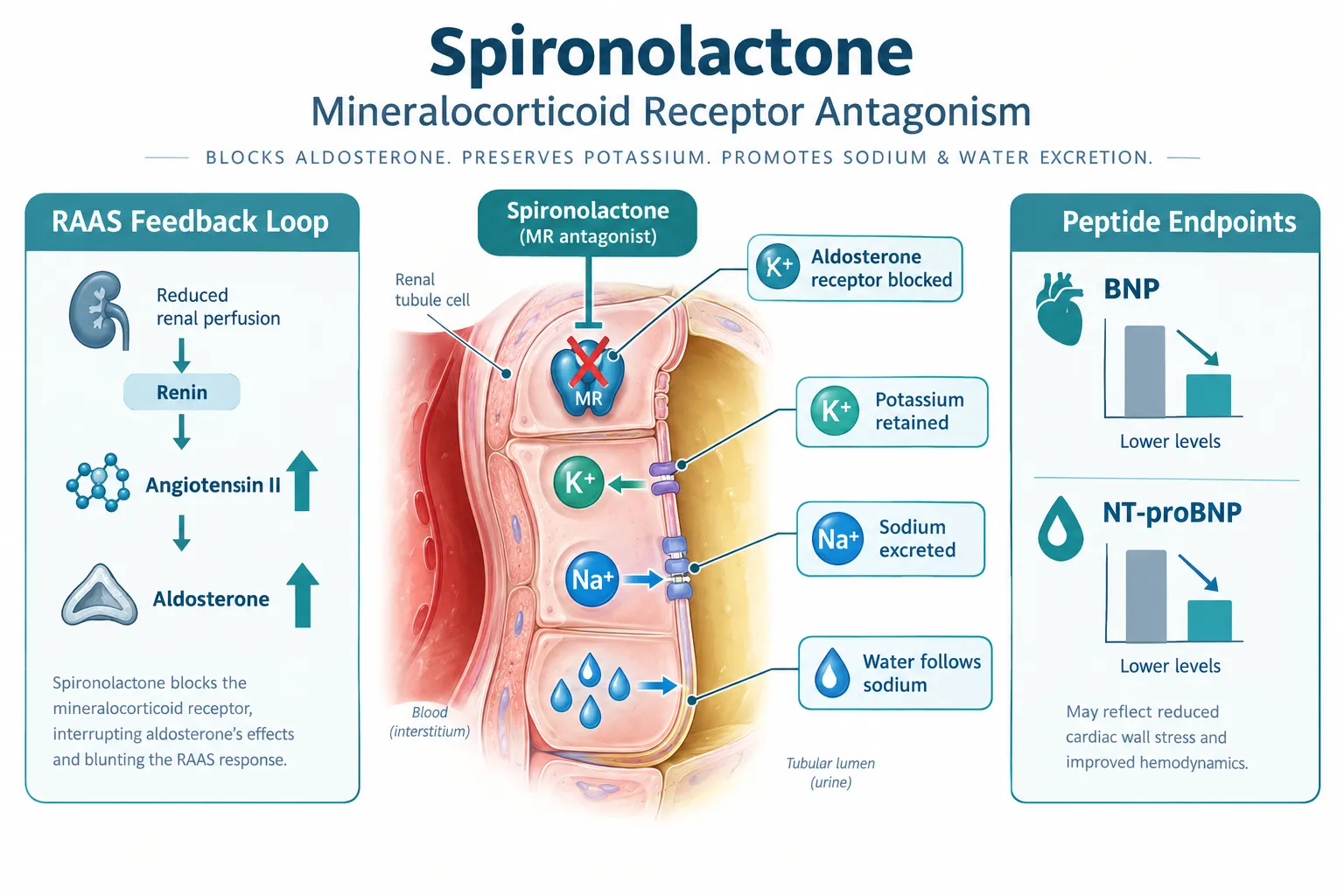
Spironolactone competitively binds the mineralocorticoid receptor in the distal nephron, blocking aldosterone's instruction to retain sodium and excrete potassium. The downstream consequences are not limited to electrolytes. When aldosterone signaling is suppressed at the receptor level, the body compensates through RAAS feedback, aldosterone and angiotensin II levels rise in plasma even as their end-organ effects are blunted. This dual signal creates a confounding environment for any peptide assay that uses aldosterone or angiotensin-related markers as primary endpoints.

Three core variables shift predictably with spironolactone:

Variable Direction of Change Research Implication
Serum potassium Increases Risk of hyperkalaemia; confounds cardiac peptide safety data
Serum creatinine Modest increase Apparent renal function decline; not always true GFR loss
Natriuretic peptides (BNP/NT-proBNP) Decreases Reflects reduced cardiac wall stress, not peptide catabolism

For researchers working with SS-31 peptide or other mitochondria-targeted compounds that influence renal tubular function, spironolactone's effect on tubular sodium transport is a critical baseline variable. Any study failing to account for concurrent MR antagonism risks misattributing renal transporter changes to the investigational peptide.

"Spironolactone is disease-modifying beyond simple diuresis, but potassium and renal markers remain the critical guardrails for peptide-driven research.", 2026 expert consensus


Potassium and Renal Thresholds: The Non-Negotiable Guardrails
Potassium and Renal Thresholds: The Non-Negotiable Guardrails

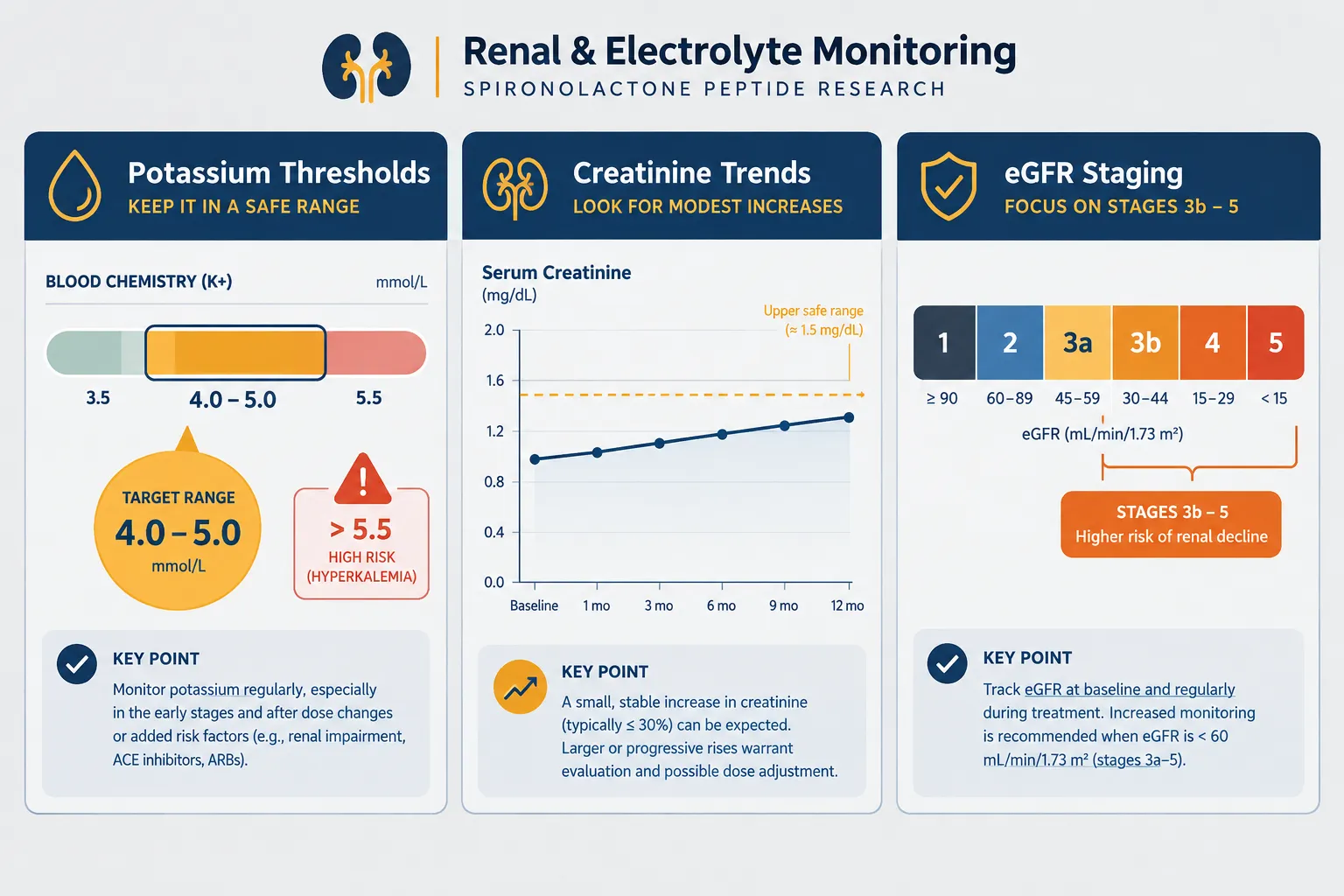
Current 2026 clinical guidance maintains strict thresholds for spironolactone initiation and continuation. Serum potassium above 5.0 mEq/L typically triggers dose reduction or discontinuation, and eGFR below 30 mL/min/1.73m² generally contraindicates use in standard clinical settings. However, emerging 2025 data from advanced CKD cohorts (stages 3b, 5) show that low-dose spironolactone combined with ACE inhibitor or ARB therapy can deliver cardiovascular benefit without excess hyperkalaemia or accelerated renal failure when monitoring is rigorous.

For peptide researchers, these thresholds matter because:

  • Potassium elevation can independently alter cardiac electrophysiology, confounding any peptide study with cardiac safety endpoints.
  • Creatinine rise within the first 2-4 weeks of spironolactone use reflects haemodynamic adjustment, not structural nephron loss, a distinction critical when interpreting renal peptide biomarkers.
  • eGFR staging determines which renal transporter pathways are active, directly affecting the pharmacokinetics of co-administered peptides.

Researchers exploring peptide dosing protocols alongside mineralocorticoid antagonists must pre-specify potassium and creatinine monitoring windows. Multi-year heart failure cohort data confirm that renal and electrolyte shifts with spironolactone are small but consistent, meaning cumulative drift can cross safety thresholds over extended study periods.

Recommended monitoring intervals in research settings:

  1. Baseline potassium and creatinine before spironolactone introduction
  2. Repeat at 1 week and 4 weeks post-initiation
  3. Every 3 months during stable dosing phases
  4. Immediately after any dose change or addition of RAAS-active co-therapy

Hormonal and Fluid-Balance Endpoints in Spironolactone and Peptide Research
Hormonal and Fluid-Balance Endpoints in Spironolactone and Peptide Research

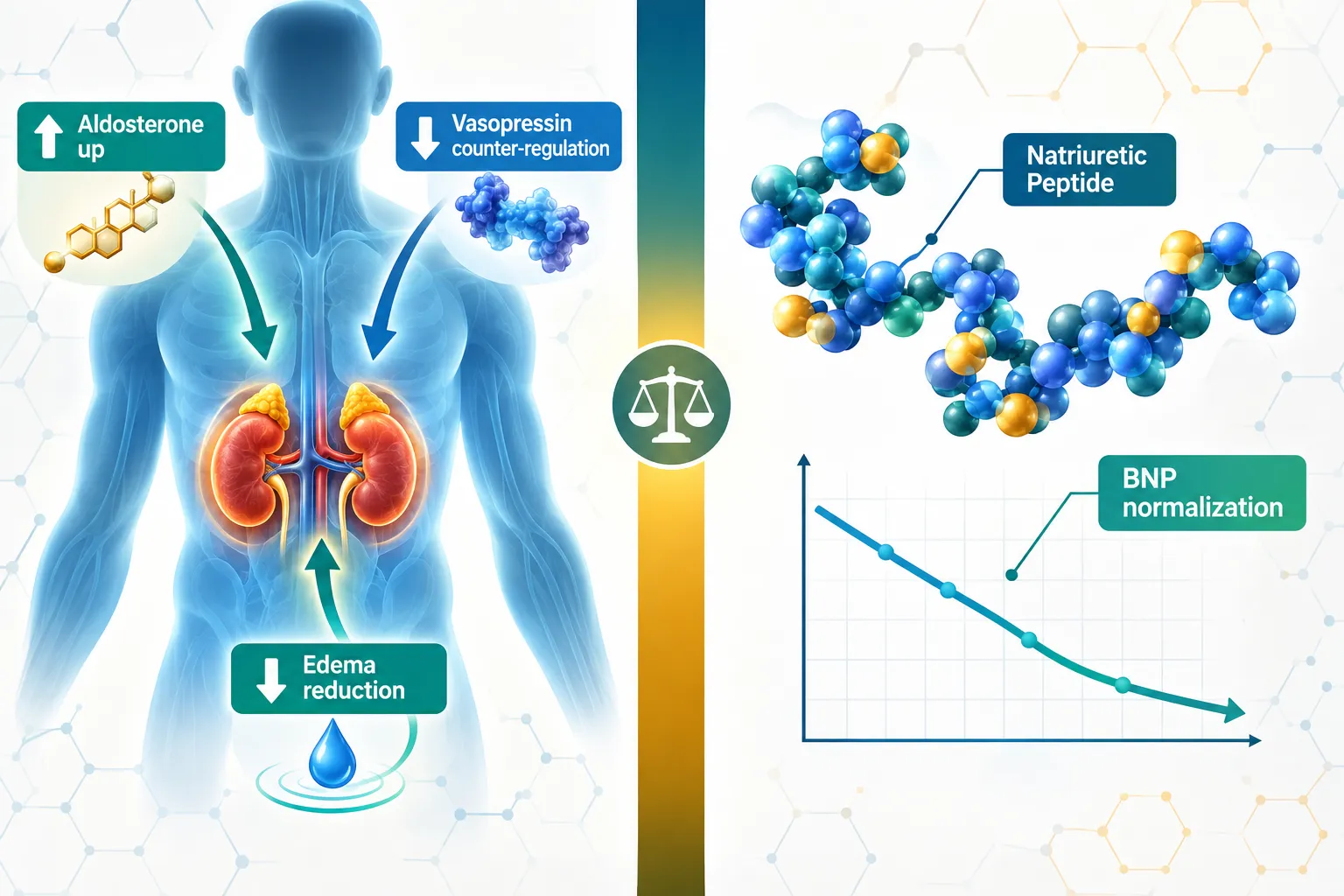
The hormonal picture in Spironolactone and Peptide Research: Interpreting Potassium, Renal, Hormonal, and Fluid-Balance Variables is layered. Aldosterone and vasopressin are the primary counter-regulators of water and sodium balance, and both respond to MR antagonism in ways that directly affect peptide endpoint interpretation.

Natriuretic peptide dynamics are particularly instructive. Spironolactone lowers BNP and NT-proBNP levels in heart failure and resistant hypertension cohorts, reflecting reduced ventricular wall stress as volume overload resolves. This reduction is not caused by peptide degradation or receptor downregulation, it is a genuine haemodynamic improvement. Researchers studying GLP-3 peptide compounds or other metabolic peptides that influence fluid retention must therefore distinguish spironolactone-driven natriuretic peptide changes from those attributable to the investigational agent.

Vasopressin remains an underappreciated variable. As spironolactone reduces volume overload, vasopressin secretion adjusts, altering free water clearance. Studies on peptides with antidiuretic properties, including vasoactive intestinal peptide analogs such as those found in VIP-5 peptide research, need to account for this vasopressin modulation as a confounder.

In primary aldosteronism, meta-analyses position spironolactone as first-line medical therapy, with potassium outcomes comparable to newer selective MRAs. This makes it a relevant background medication in any hormonal peptide study where aldosterone excess is a design variable. Researchers examining peptides and polypeptides in endocrine pharmacology will recognize that RAAS-peptide crosstalk extends well beyond simple sodium balance.

Ongoing trials in 2026 are titrating spironolactone to renin and blood pressure responses in low-renin hypertension, with integrated hormonal endpoints that include natriuretic peptides, aldosterone-to-renin ratios, and plasma angiotensin II. These trials provide a methodological template for any peptide study that incorporates MR antagonism as a background or co-intervention variable.

For researchers also examining mitochondrial or cytoprotective peptides, the SS-31 peptide benefits literature offers a useful parallel: renal tubular protection endpoints in that body of work face similar confounding from background diuretic and RAAS-active therapies.


Conclusion

Spironolactone and Peptide Research: Interpreting Potassium, Renal, Hormonal, and Fluid-Balance Variables demands a structured, mechanistically grounded approach. The drug's MR-antagonist action creates predictable shifts in potassium, creatinine, natriuretic peptides, aldosterone feedback, and vasopressin tone, each of which can masquerade as a peptide-specific effect if not properly controlled.

Actionable next steps for researchers:

  • Pre-specify potassium and eGFR thresholds as stopping rules in any protocol that includes spironolactone.
  • Separate haemodynamic natriuretic peptide changes from direct peptide-receptor effects using time-matched biomarker panels.
  • Account for RAAS feedback elevation (aldosterone, angiotensin II) when interpreting hormonal peptide endpoints.
  • Apply 2026 monitoring intervals, baseline, week 1, week 4, then quarterly, as the minimum standard for renal and electrolyte safety.
  • Cross-reference fluid-balance metrics with vasopressin and osmolality data to isolate volume effects from peptide-specific actions.

Rigorous variable interpretation is what separates publishable peptide research from ambiguous data. Spironolactone's hormonal reach is wide; accounting for it fully is the foundation of credible results.

https://www.puretestedpeptides.com/wp-content/uploads/2026/10/spironolactone-and-peptide-research-interpreting-potassium-renal-hormonal-and-fl.webp 1024 1536 https://www.puretestedpeptides.com/wp-content/uploads/2026/01/buy-peptides-online.jpg 2026-10-07 13:03:532026-10-07 13:03:53Spironolactone and Peptide Research: Interpreting Potassium, Renal, Hormonal, and Fluid-Balance Variables
×

Helpful Links

  • My account
  • Cart
  • Checkout
  • Refund and Returns Policy
  • Privacy Policy
  • SMS Privacy Policy
  • Login
  • My Account
  • Logout

USA Made Lab Tested Peptides

All products are sold for research, laboratory, or analytical purposes only, and are not for human consumption


Pure Tested Peptides is a chemical supplier. Pure Tested Peptides is not a compounding / chemical compounding facility as defined under 503A of the Federal Food, Drug, and Cosmetic act. Pure Tested Peptides is not an outsourcing facility as defined under 503B of the Federal Food, Drug, and Cosmetic act.

The statements made within this website have not been evaluated by the US Food and Drug Administration. The products we offer are not intended to diagnose, treat, cure or prevent any disease.

Human/Animal Consumption Prohibited. Laboratory/In-Vitro Experimental Use Only

Scroll to top Scroll to top Scroll to top