Call or Text 727-513-9780
  • Shopping Cart Shopping Cart
    0Shopping Cart
Pure Tested Peptides | America's most trusted Peptides for sale online
  • Peptides for sale
    • Oral Peptides for sale
      • Peptide Capsules for sale
      • BPC 157 Capsules 1000mcg
      • SLU-PP-332 Capsules | 1000 mcg
      • 5-Amino-1MQ 50mg Capsules
      • Tesofensine 500mcg
    • All Peptides for sale
    • Peptide Sprays
      • BPC 157 Nasal Spray Kit
      • BPC-157 TB500 Nasal Spray Kit
      • Semax Nasal Spray 10mg
      • Selank – Nasal Spray Kit – 10mg
      • Epithalon 50MG Nasal Spray Kit
      • Ipamorelin 10mg Nasal Spray
      • Klow Nasal Spray (BPC-157 + TB-500 + GHK-Cu + KPV) | 80mg
      • Hulk Nasal Spray Tesa / Ipa Blend 6/3 MG
      • Klow Nasal Spray
      • NAD + 500 mg Nasal Spray
      • PT-141 Nasal Spray Kit
    • GHRH Peptides
      • Ipa Peptides
      • CJC-1295 Peptides
        • CJC-1295 with DAC 5 mg
        • CJC-1295 without DAC 5 mg
        • CJC-1295 Ipa 10mg
      • Tesa Peptides
        • Tesa Peptide
        • Tesa 20 mg
    • GHK-Cu Peptides
      • All GHK-Cu Peptides
      • GHK-Cu 100mg
      • KLOW Peptide Blend – Buy KLOW blend online
    • BPC Peptides
      • All BPC Peptides
      • BPC-157
      • BPC-157 TB-500
      • BPC 157 capsules 1000mcg
    • SLU-PP-332 Peptides
      • All SLU-PP-332 Peptides
      • SLU-PP-332 5mg
    • GLP3 Peptides
    • PT-141 Peptides
      • PT-141 Peptides for sale
      • PT-141 10mg
      • PT-141 Nasal Spray
    • CAG Peptides
      • Lipo-C Peptide Blend
      • CAG 5mg
      • CAG 10mg
    • MOTS-C Peptides
      • MOTS-C Peptides for sale
      • MOTS-c peptide
      • MOTS-c 10mg *6 pack*
    • 5 Amino 1MQ Peptides
      • 5 Amino 1MQ Peptides for sale
      • 5-Amino-1MQ 50mg Capsules
      • 5-Amino-1MQ 5mg
    • Epithalon Peptides
      • Epithalon Peptides for sale
      • Epithalon 10mg
      • Epithalon 50mg
  • Shop
    • GLPs
      • 5-Amino-1MQ 50mg Capsules
      • 5-Amino-1MQ 5mg
      • L-Carnitine 500mg/ml
      • Tesofensine 500mcg
      • SLU-PP-332 5mg
      • MOTS-c 10mg *6 pack*
    • Epithalon & BPC Peptides
      • Epithalon 10mg
      • Epithalon 50mg
      • BPC-157
      • BPC 157 capsules 1000mcg
      • BPC-157 TB-500
      • BPC-157 TB500 Nasal Spray Kit
      • BPC 157 Nasal Spray Kit
    • BPC TB-500 & NAD+ Peptides
      • NAD+ 500 mg
      • KLOW Peptide Blend – Buy KLOW blend online
      • GLOW Peptide Blend
      • TB 500 5mg
      • BPC 157 capsules 1000mcg – Supplement
      • BPC 157 Nasal Spray Kit
      • BPC-157
      • BPC-157 TB500 Nasal Spray Kit
      • BPC-157 TB-500
      • BPC 157 capsules 1000mcg
    • LL-37 Peptide
      • LL-37 10 mg
    • MOTS-C & Selank
      • MOTS-c peptide
      • Selank 10mg
    • GHK Peptides
      • GHK-Cu 100mg
      • GLOW Peptide Blend
      • KLOW Peptide Blend – Buy KLOW blend online
  • COAs
  • Wholesale
    • Wholesale Peptides for sale
  • PTP FAQ
  • Affiliates
    • Selank Peptide: Advanced Pharmacological Mechanisms Underlying Its Anxiolytic and Nootropic Effects in Research
      • 5-Amino-1MQ Peptide: Detailed Mechanisms of NNMT Inhibition and Its Impact on Cellular Metabolism Research
        • MOTS-C Peptide: Unraveling Its Role in Mitochondrial Dynamics and Energy Metabolism Research
          • Epithalon Peptide and Telomerase Regulation: Investigating Its Impact on Cellular Senescence and Lifespan Research Models
            • GLP2-T vs GLP2 Tirz Peptide: Understanding the Naming, Mechanistic Nuances, and Research Implications for Gut Health
      • Peptides and Polypeptides in Modern Pharmacology: What Research on Metoprolol, Prednisone, and Amlodipine Reveals
        • Polypeptide Peptides vs NSAIDs: What Naproxen and Diclofenac Teach Tissue-Repair Researchers About BPC‑157 and TB‑500
          • Peptides and Polypeptides in Endocrine Pharmacology: How GLP-1, GLP-2, and GLP-3 Retatrutide Differ From Classic Drugs Like Prednisone and Amlodipine
          • 5‑Amino‑1MQ Peptide and NNMT Inhibition: How It Compares With Statins Like Atorvastatin in Adipose and Lipid Metabolism Research
      • Enclomiphene, Estrogen Receptor Signaling, and Luteinizing Phase Biology: What Hormone Researchers Should Measure
        • Mesenchymal Stem Cells, BPC‑157, and GHK‑Cu: How Tissue Repair Peptides Compare With Classic NSAIDs Like Naproxen in Injury Models
          • Peptide Calculator Use Cases Beyond Growth Hormone: Working Through GLP‑3 Retatrutide, MOTS‑c, and BPC‑157 Research Dosing
        • Polypeptide Peptides in Endocrine and Metabolic Pharmacology: Lessons From Amlodipine, Prednisone, and Metoprolol
        • Peptides Calculator for Advanced Blends: Worked Examples for Tesamorelin, CJC‑1295, and Ipamorelin Stacks
          • Peptides and Polypeptides in Human Physiology: How Molecular Size Shapes Research Applications
            • Selank Peptide: Advanced Pharmacological Mechanisms Underlying Its Anxiolytic and Nootropic Effects in Research
          • 5-Amino-1MQ Peptide: Detailed Mechanisms of NNMT Inhibition and Its Impact on Cellular Metabolism Research
            • MOTS-C Peptide: Unraveling Its Role in Mitochondrial Dynamics and Energy Metabolism Research
              • Epithalon Peptide and Telomerase Regulation: Investigating Its Impact on Cellular Senescence and Lifespan Research Models
                • GLP2-T vs GLP2 Tirz Peptide: Understanding the Naming, Mechanistic Nuances, and Research Implications for Gut Health
                  • Peptides and Polypeptides in Endocrine Pharmacology: How GLP-1, GLP-2, and GLP-3 Retatrutide Differ From Classic Drugs Like Prednisone and Amlodipine
                    • Polypeptide Peptides vs NSAIDs: What Naproxen and Diclofenac Teach Tissue-Repair Researchers About BPC‑157 and TB‑500
                      • Peptides and Polypeptides in Modern Pharmacology: What Research on Metoprolol, Prednisone, and Amlodipine Reveals
                        • 5‑Amino‑1MQ Peptide and NNMT Inhibition: How It Compares With Statins Like Atorvastatin in Adipose and Lipid Metabolism Research
                        • Enclomiphene, Estrogen Receptor Signaling, and Luteinizing Phase Biology: What Hormone Researchers Should Measure
                        • Mesenchymal Stem Cells, BPC‑157, and GHK‑Cu: How Tissue Repair Peptides Compare With Classic NSAIDs Like Naproxen in Injury Models
                        • Peptide Calculator Use Cases Beyond Growth Hormone: Working Through GLP‑3 Retatrutide, MOTS‑c, and BPC‑157 Research Dosing
                        • Polypeptide Peptides in Endocrine and Metabolic Pharmacology: Lessons From Amlodipine, Prednisone, and Metoprolol
                        • Peptides Calculator for Advanced Blends: Worked Examples for Tesamorelin, CJC‑1295, and Ipamorelin Stacks
                        • Peptides and Polypeptides in Human Physiology: How Molecular Size Shapes Research Applications
                        • Selank Peptide: Advanced Pharmacological Mechanisms Underlying Its Anxiolytic and Nootropic Effects in Research
                        • MOTS-C Peptide: Unraveling Its Role in Mitochondrial Dynamics and Energy Metabolism Research
                        • Peptides and Polypeptides in Modern Pharmacology: What Research on Metoprolol, Prednisone, and Amlodipine Reveals
                        • Peptides and Polypeptides in Endocrine Pharmacology: How GLP-1, GLP-2, and GLP-3 Retatrutide Differ From Classic Drugs Like Prednisone and Amlodipine
                        • 5-Amino-1MQ Peptide: Detailed Mechanisms of NNMT Inhibition and Its Impact on Cellular Metabolism Research
                        • Mesenchymal Stem Cells, BPC‑157, and GHK‑Cu: How Tissue Repair Peptides Compare With Classic NSAIDs Like Naproxen in Injury Models
                        • Peptide Calculator Use Cases Beyond Growth Hormone: Working Through GLP‑3 Retatrutide, MOTS‑c, and BPC‑157 Research Dosing
                        • GLP2-T vs GLP2 Tirz Peptide: Understanding the Naming, Mechanistic Nuances, and Research Implications for Gut Health
                        • Polypeptide Peptides in Endocrine and Metabolic Pharmacology: Lessons From Amlodipine, Prednisone, and Metoprolol
                        • Polypeptide Peptides vs NSAIDs: What Naproxen and Diclofenac Teach Tissue-Repair Researchers About BPC‑157 and TB‑500
                        • Peptides and Polypeptides in Human Physiology: How Molecular Size Shapes Research Applications
                        • Peptides Calculator for Advanced Blends: Worked Examples for Tesamorelin, CJC‑1295, and Ipamorelin Stacks
                        • 5‑Amino‑1MQ Peptide and NNMT Inhibition: How It Compares With Statins Like Atorvastatin in Adipose and Lipid Metabolism Research
                        • Enclomiphene, Estrogen Receptor Signaling, and Luteinizing Phase Biology: What Hormone Researchers Should Measure
                        • Epithalon Peptide and Telomerase Regulation: Investigating Its Impact on Cellular Senescence and Lifespan Research Models
                        • Best research protocol Klow blend
                        • best time to take BPC-157
                        • best time to take DSIP (Delta Sleep Inducing Peptide)
                        • best time to take CJC-1295
                        • best time to take AOD-9604
                        • best time to take Follistatin 344
                        • best time to take Ipamorelin
                        • best time to take MK-677 (Ibutamoren)
                        • best time to take Ligandrol (LGD-4033) — research compound
                        • best time to take Ostarine (MK-2866) — research compound
                        • best time to take GHK-CU
                        • best time to take TB-500
                        • best time to take MOTS-c
                        • best time to take Semax
                        • best time to take RAD-140 (Testolone) — research compound
                        • best time to take Thymosin Alpha-1
                        • best time to take PEG-MGF
                        • Biolife Plasma, Octapharma Plasma, and Research Peptides: How Plasma Donation Labs Differ From Peptide Suppliers
                        • best time to take YK-11 — research compound
                        • best time to take PT-141 (Bremelanotide)
                        • Best research protocol Klow blend
                        • 5-Amino-1MQ and MOTS-C Synergy: Metabolic Signaling, Mitochondria, and Research Design
                        • BPC-157 and TB-500: Investigating Their Combined Effects on Angiogenesis and Cellular Migration in Tissue Repair Models
                        • BPC-157 Peptide: Gut Barrier Function, Inflammation, and Tissue-Recovery Research
                        • 5‑Amino‑1MQ and MOTS‑c Synergy in Metabolic Research: Designing NNMT and Mitochondrial Biogenesis Stacks
                        • CJC-1295 with DAC vs. Without DAC: Half-Life, Release Kinetics, and Research Implications
                        • CJC‑1295 with DAC vs. Without DAC: Expanding on Half‑Life Differences Using Tesamorelin and Ipamorelin Blend Case Studies
                        • Collagen Biology and Copper‑Binding Peptides: How GHK‑Cu, Glow Blend, and Klow Blend Interact with Skin and Connective Tissue
                        • Collagen Biology and Regenerative Peptides: How GHK‑Cu, Glow Blend, and Klow Blend Affect Extracellular Matrix Research
                    • DNA, Telomeres, and Longevity Peptides: Positioning Epithalon and MOTS‑c in Genetic Aging Research
                      • Enclomiphene Citrate: serm Mechanism, Testosterone Research, and Stack Compatibility
                        • Enclomiphene vs Enclomiphene Citrate: Formulation, Bioavailability, and Research Distinctions
                        • Epithalon Peptide Research: Telomerase Activation, Aging, and Pineal Gland Function
                        • Estrogen Receptor Signaling and Enclomiphene: How Selective Modulators Compare with Classic Polypeptide Hormones
                        • GHK-Cu Peptide: Advanced Mechanisms in Extracellular Matrix Remodeling and Wound Healing Research
                        • GHK-Cu Peptide: Collagen Synthesis, Wound Repair, and Skin-Barrier Research Models
                        • GLP-1 vs GLP-3 vs GLP-2: Peptide Classification and Research Applications
                        • GLP-2 Peptide Research Guide: Gut Barrier Function, Nutrient Absorption, and Intestinal Recovery Models
                        • GLP-3 Retatrutide vs. GLP-1 Drugs: What Triple-Agonist Biology Changes in Research Models
                        • Ipamorelin and Tesamorelin Combination: Synergistic GH Secretagogue Research and Dosing Protocols
                        • GLP2 Tirz Peptide: What It Is, Why the Name Exists, and How Researchers Should Interpret It
                        • Klow Blend Peptide Nasal Spray: What the Formulation Is Trying to Do in Cognitive Research
                        • Mitochondria, NNMT Inhibition, and Peptide Modulators: Where MOTS‑c and 5‑Amino‑1MQ Fit in Cellular Energy Research
                        • MOTS-c Peptide: Mitochondrial Function, Energy Metabolism, and What Researchers Measure
                        • MOTS-c vs. 5-Amino-1MQ: Which Metabolic Research Questions Each Compound Actually Answers
                        • Nasal Spray Peptides: Bioavailability, Administration, and Semax/Selank Research Applications
                        • PT-141 Peptide Research: Mechanism of Action and Melanocortin Receptor Signaling
                        • Retatrutide for Research: Mechanism, Structure, and GLP-1/GLP-3 Dual Action
                        • Retatrutide for Obesity and Type 2 Diabetes: What the Latest Trial Data Suggest
                        • Tesofensine Peptide Research: Mechanism, Appetite Suppression, and Neuropeptide Y Pathways
  • Contact
    • Contact Customer Service
    • Text Customer Support
  • About US
  • Shop all peptides
  • Affiliate Program
    • Affiliate Signup
  • Login / Register Login / Register Page Link Login / Register Page Link
  • Click to open the search input field Click to open the search input field Search
  • Menu Menu

Tag Archive for: appetite endpoints

How to Design a Research Panel for Tesofensine: Appetite, Locomotion, Reward, Blood Pressure, and Sleep Endpoints

How to Design a Research Panel for Tesofensine: Appetite, Locomotion, Reward, Blood Pressure, and Sleep Endpoints

November 4, 2026/0 Comments/in Uncategorized/by

Separating true appetite suppression from generalized stimulation is one of the hardest methodological problems in obesity pharmacology, and tesofensine makes that problem acute. As a triple monoamine reuptake inhibitor blocking dopamine, norepinephrine, and serotonin transporters, tesofensine produced some of the largest weight-loss effect sizes reported in phase 2 obesity trials, yet its cardiovascular and neuropsychiatric signals demanded careful monitoring. Knowing how to design a research panel for tesofensine, covering appetite, locomotion, reward, blood pressure, and sleep endpoints, determines whether investigators can confidently attribute observed changes to central appetite circuits or to nonspecific stimulant activity.

Key Takeaways

  • Tesofensine's monoamine mechanism means every endpoint domain, appetite, locomotion, reward, blood pressure, and sleep, must be measured in parallel, not sequentially.
  • Weight and caloric intake data become uninterpretable unless locomotion and metabolic rate are co-measured to control for stimulant-driven energy expenditure.
  • Cardiovascular telemetry is not optional; blood pressure and heart rate elevations were documented in both the TIPO-1 trial and later Medix-related data.
  • Sleep architecture assessment (NREM/REM proportions, latency, fragmentation) is essential because insomnia was among the most reported neuropsychiatric adverse signals.
  • Reward and abuse-liability endpoints are a precautionary requirement for any dopaminergic compound entering long-term study protocols.

Building the Conceptual Framework
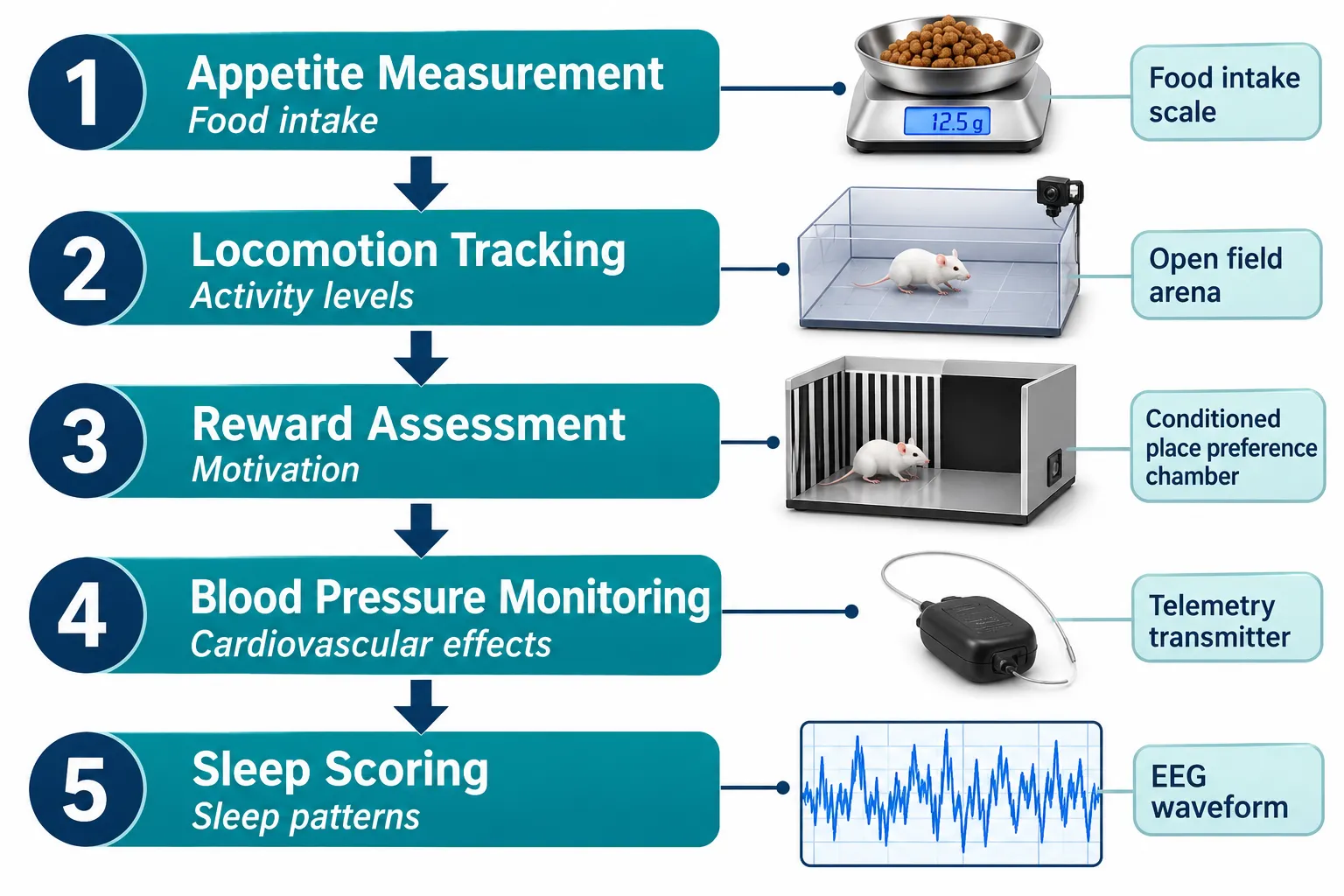
Building the Conceptual Framework

Before selecting any assay, researchers need a clear causal model. Tesofensine reduces body weight through at least two overlapping mechanisms: direct suppression of hypothalamic appetite circuits and an increase in locomotor activity that raises energy expenditure. These two pathways can produce identical weight outcomes but carry very different safety profiles and translational implications.

The study design template recommended here follows the logic established by the Tesomet hypothalamic obesity trial, which bundled multiple endpoint domains into a single protocol. That approach prevents the common error of measuring only body weight and food intake while ignoring downstream signals that may confound interpretation.

Core principle: Every appetite endpoint needs a locomotion control, every locomotion endpoint needs a sleep control, and every cardiovascular endpoint needs a time-of-day anchor.

Researchers sourcing comparison peptides for multi-arm panels may find guidance on vendor quality in the article on Bachem and reference standards for building robust peptide benchmarks, which covers purity documentation relevant to any preclinical design.


Appetite and Food Intake Endpoints

Appetite measurement in a tesofensine panel requires more than a simple food hopper. The following hierarchy of endpoints provides mechanistic resolution:

Endpoint What It Captures Key Confound
24-hour food intake (grams) Total caloric consumption Spillage, activity-driven intake suppression
Meal pattern analysis Meal size vs. meal frequency Circadian timing
Palatable food preference test Hedonic vs. homeostatic eating Reward circuit overlap
Hypothalamic neuropeptide expression NPY, AgRP, POMC at endpoint Terminal measure only

Meal pattern analysis is particularly important because tesofensine appears to reduce meal size more than meal frequency in rodent models, a signature of satiety enhancement rather than nausea-driven avoidance. Separating these two is a core methodological goal.

For comparison with GLP-based appetite mechanisms, the article on GLP-3 peptide signaling pathway provides useful mechanistic contrast when designing multi-arm panels that include incretin-based comparators.


Locomotion, Metabolic Rate, and Activity Endpoints
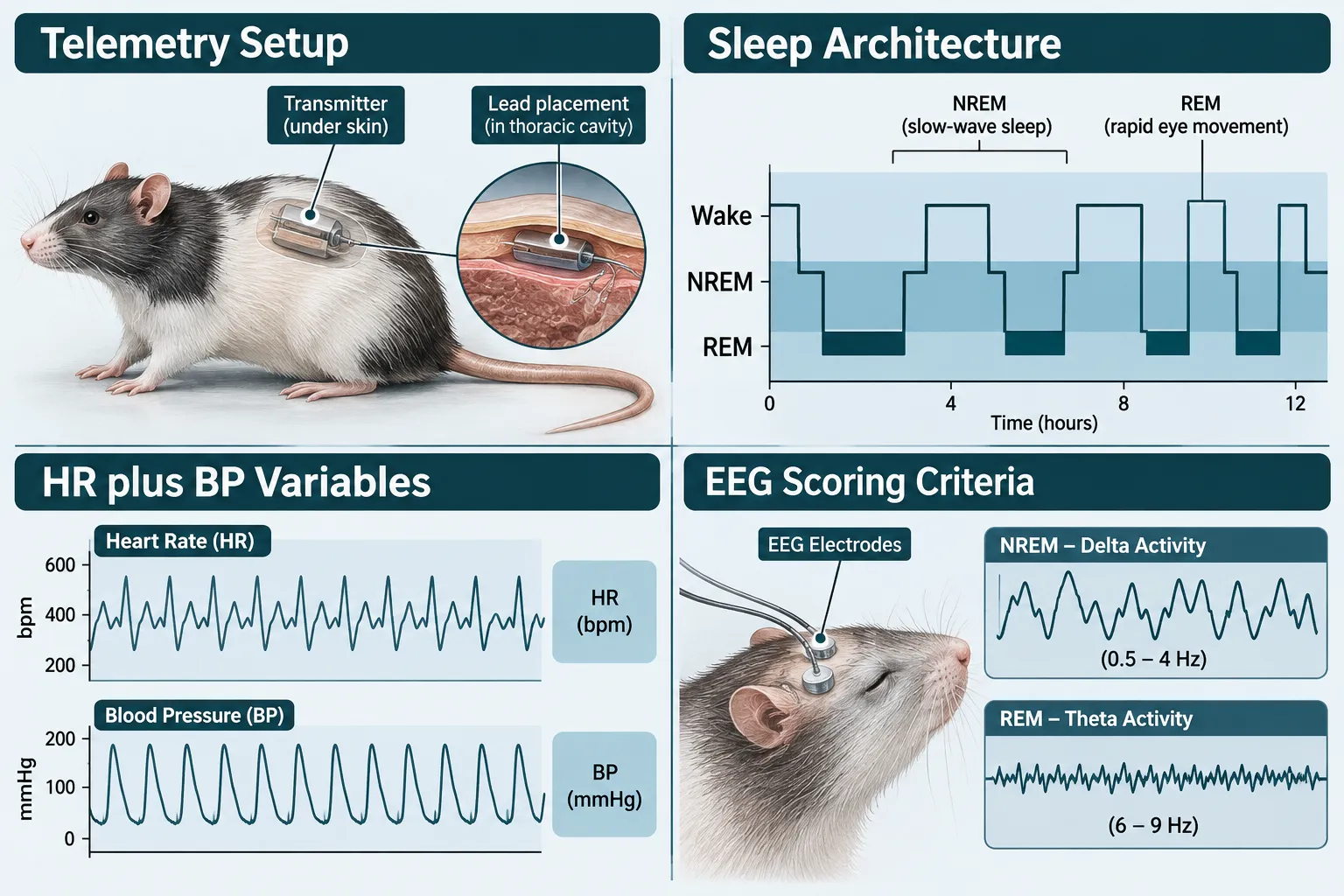
Locomotion, Metabolic Rate, and Activity Endpoints

The stimulant component of tesofensine's pharmacology is real and measurable. Increased locomotor activity inflates total energy expenditure, which means body weight loss data cannot be attributed to appetite suppression alone without co-registered activity data.

Recommended locomotion battery:

  1. Open-field test, Total distance, center-to-periphery ratio, and rearing frequency at 1, 7, and 21 days post-treatment onset.
  2. Indirect calorimetry, Oxygen consumption and respiratory exchange ratio in metabolic cages during both light and dark cycles.
  3. Home-cage activity telemetry, Continuous 24-hour activity counts to detect habituation or sensitization over time.
  4. Rotarod performance, Motor coordination control to rule out nonspecific motor impairment that might suppress measured movement.

Sensitization, the progressive increase in locomotor response to a fixed dose, is a dopaminergic hallmark. If locomotor counts rise across repeated dosing sessions, reward pathway recruitment is likely and should trigger the full reward endpoint battery described below.

For researchers designing panels that include growth-hormone-axis peptides alongside tesofensine, the IPA Sermorelin stack research resource addresses co-administration considerations that affect baseline metabolic endpoints.


Blood Pressure and Cardiovascular Endpoints

The norepinephrine reuptake inhibition component of tesofensine elevates sympathetic tone. In the TIPO-1 trial, heart rate increases were statistically significant even at the lowest effective dose. The Medix program data reinforced cardiovascular monitoring as a non-negotiable component.

Minimum cardiovascular endpoint set:

  • Systolic and diastolic blood pressure via radiotelemetry (implanted transmitter), sampled at 30-second intervals during light and dark cycles
  • Heart rate variability (HRV), low-frequency to high-frequency ratio as a sympathovagal balance index
  • Weekly tail-cuff verification as a secondary non-invasive cross-check
  • Electrocardiographic QTc interval at baseline, week 2, and study endpoint

Telemetry is preferable to tail-cuff alone because handling stress artificially elevates blood pressure in rodents and masks true drug-induced hypertension. Circadian anchoring, always comparing drug versus vehicle at matched zeitgeber times, prevents false conclusions driven by peak norepinephrine cycling.

"Cardiovascular endpoints in tesofensine panels are not safety add-ons, they are primary pharmacodynamic readouts of noradrenergic engagement."


Reward, Abuse Liability, and Sleep Endpoints
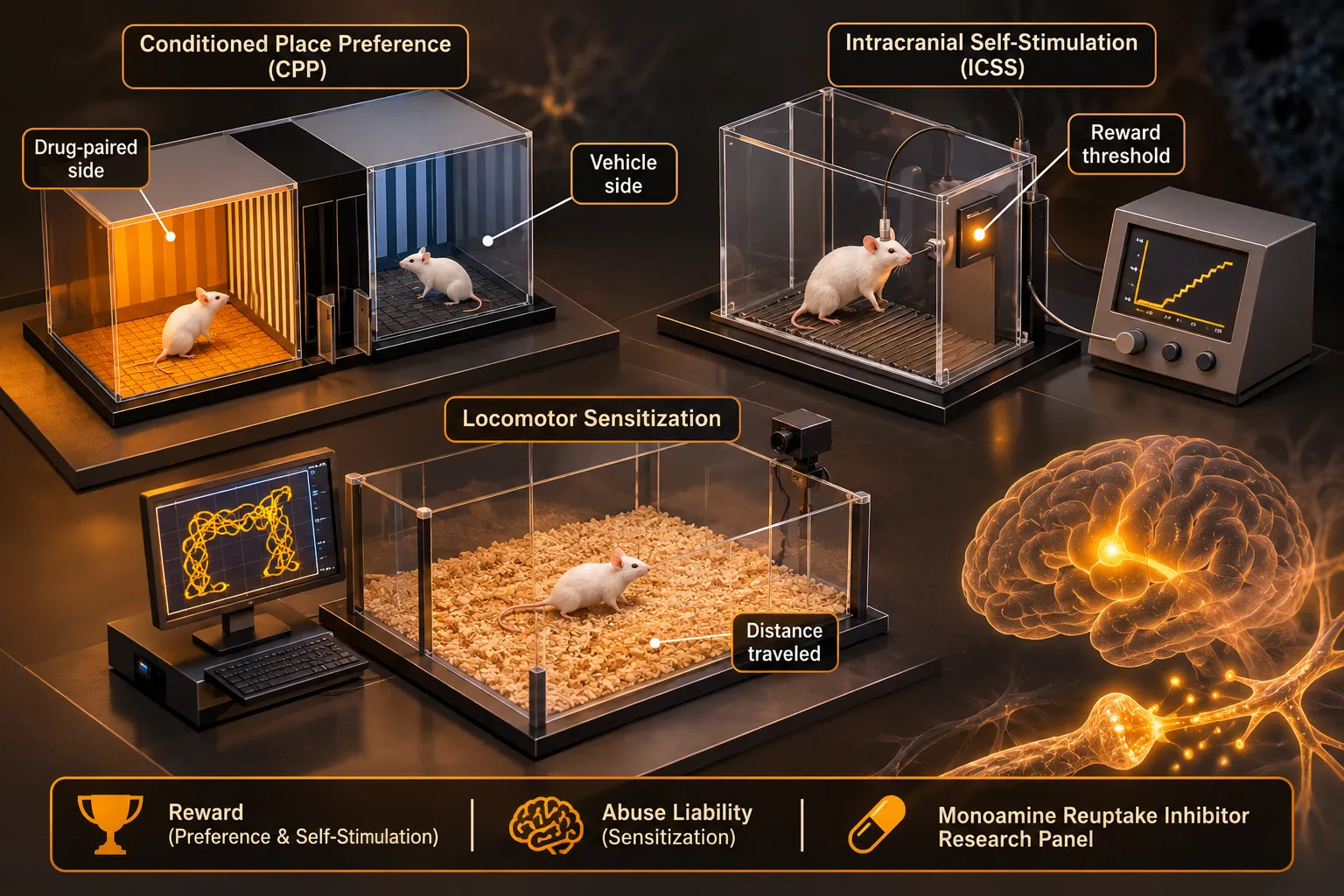
Reward, Abuse Liability, and Sleep Endpoints

Reward and Abuse-Liability Battery

Dopamine transporter blockade places tesofensine in the same mechanistic neighborhood as compounds with known reinforcement potential. Precautionary reward monitoring is therefore a standard expectation in any well-designed panel.

Recommended reward endpoints:

  • Conditioned place preference (CPP), Drug-paired versus vehicle-paired chamber time; a CPP score greater than 20% above vehicle is a positive signal requiring follow-up.
  • Intracranial self-stimulation (ICSS), Reward threshold shifts; lowered thresholds indicate mesolimbic sensitization.
  • Locomotor sensitization across 10-day dosing, Progressive increases in distance are a proxy for dopaminergic neuroadaptation.

For context on how CNS-active research peptides are evaluated for reward-related confounds, the PT-141 peptide research context, QA, and controls article covers analogous monitoring strategies.

Sleep Architecture Endpoints

Insomnia and anxiety were among the most frequently reported adverse effects in human tesofensine trials. Sleep endpoints are therefore both a safety signal and a mechanistic window into serotonin and norepinephrine activity at arousal-regulating circuits.

Sleep endpoint panel:

  • EEG/EMG polysomnography during 48-hour continuous recording after steady-state dosing
  • NREM delta power as a homeostatic sleep pressure index
  • REM latency and total REM duration, serotonergic compounds typically suppress REM
  • Sleep fragmentation index, number of brief arousals per hour
  • Circadian alignment check, compare sleep-bout timing to light-cycle onset

Combining sleep and locomotion data allows researchers to distinguish drug-induced insomnia (fragmented sleep with normal activity) from true hyperactivity (elevated activity during the dark cycle with intact sleep architecture).

For researchers comparing tesofensine's CNS profile to growth-hormone secretagogues that also affect sleep, the article on GHRP-2 peptide vs Sermorelin provides relevant mechanistic contrast.


Integrating the Full Panel: Practical Protocol Notes

A complete how-to design for a research panel covering tesofensine's appetite, locomotion, reward, blood pressure, and sleep endpoints should follow these sequencing rules:

  1. Establish a 7-day vehicle baseline across all domains before any compound administration.
  2. Use within-subject crossover designs where possible to reduce animal numbers and increase statistical power.
  3. Stagger endpoint collection so that blood draws for neuropeptide panels do not acutely stress animals before locomotion or sleep recordings.
  4. Report effect sizes for each domain independently before constructing multi-domain composite scores.
  5. Pre-register the primary endpoint (typically food intake or body weight) and classify all other domains as secondary or exploratory.

Conclusion

Designing a rigorous research panel for tesofensine requires treating appetite, locomotion, reward, blood pressure, and sleep as an integrated system rather than isolated endpoints. The practical next steps are: finalize telemetry implantation protocols before dosing begins, pre-register locomotion and sleep as co-primary endpoints alongside food intake, include at least one reward assay from the CPP or ICSS menu, and anchor all cardiovascular measurements to circadian time. In 2026, with tesofensine's development profile still evolving, well-structured preclinical panels built around these five domains will provide the mechanistic clarity that future phase 3 designs will require. Researchers who invest in multi-domain endpoint architecture early will generate data that remains interpretable regardless of how the regulatory landscape develops.

https://www.puretestedpeptides.com/wp-content/uploads/2026/11/how-to-design-a-research-panel-for-tesofensine-appetite-locomotion-reward-blood.webp 1024 1536 https://www.puretestedpeptides.com/wp-content/uploads/2026/01/buy-peptides-online.jpg 2026-11-04 14:10:352026-11-04 14:10:35How to Design a Research Panel for Tesofensine: Appetite, Locomotion, Reward, Blood Pressure, and Sleep Endpoints
×

Helpful Links

  • My account
  • Cart
  • Checkout
  • Refund and Returns Policy
  • Privacy Policy
  • SMS Privacy Policy
  • Login
  • My Account
  • Logout

USA Made Lab Tested Peptides

All products are sold for research, laboratory, or analytical purposes only, and are not for human consumption


Pure Tested Peptides is a chemical supplier. Pure Tested Peptides is not a compounding / chemical compounding facility as defined under 503A of the Federal Food, Drug, and Cosmetic act. Pure Tested Peptides is not an outsourcing facility as defined under 503B of the Federal Food, Drug, and Cosmetic act.

The statements made within this website have not been evaluated by the US Food and Drug Administration. The products we offer are not intended to diagnose, treat, cure or prevent any disease.

Human/Animal Consumption Prohibited. Laboratory/In-Vitro Experimental Use Only

Scroll to top Scroll to top Scroll to top