Call or Text 727-513-9780
  • Shopping Cart Shopping Cart
    0Shopping Cart
Pure Tested Peptides | America's most trusted Peptides for sale online
  • Peptides for sale
    • Oral Peptides for sale
      • Peptide Capsules for sale
      • BPC 157 Capsules 1000mcg
      • SLU-PP-332 Capsules | 1000 mcg
      • 5-Amino-1MQ 50mg Capsules
      • Tesofensine 500mcg
    • All Peptides for sale
    • Peptide Sprays
      • BPC 157 Nasal Spray Kit
      • BPC-157 TB500 Nasal Spray Kit
      • Semax Nasal Spray 10mg
      • Selank – Nasal Spray Kit – 10mg
      • Epithalon 50MG Nasal Spray Kit
      • Ipamorelin 10mg Nasal Spray
      • Klow Nasal Spray (BPC-157 + TB-500 + GHK-Cu + KPV) | 80mg
      • Hulk Nasal Spray Tesa / Ipa Blend 6/3 MG
      • Klow Nasal Spray
      • NAD + 500 mg Nasal Spray
      • PT-141 Nasal Spray Kit
    • GHRH Peptides
      • Ipa Peptides
      • CJC-1295 Peptides
        • CJC-1295 with DAC 5 mg
        • CJC-1295 without DAC 5 mg
        • CJC-1295 Ipa 10mg
      • Tesa Peptides
        • Tesa Peptide
        • Tesa 20 mg
    • GHK-Cu Peptides
      • All GHK-Cu Peptides
      • GHK-Cu 100mg
      • KLOW Peptide Blend – Buy KLOW blend online
    • BPC Peptides
      • All BPC Peptides
      • BPC-157
      • BPC-157 TB-500
      • BPC 157 capsules 1000mcg
    • SLU-PP-332 Peptides
      • All SLU-PP-332 Peptides
      • SLU-PP-332 5mg
    • GLP3 Peptides
    • PT-141 Peptides
      • PT-141 Peptides for sale
      • PT-141 10mg
      • PT-141 Nasal Spray
    • CAG Peptides
      • Lipo-C Peptide Blend
      • CAG 5mg
      • CAG 10mg
    • MOTS-C Peptides
      • MOTS-C Peptides for sale
      • MOTS-c peptide
      • MOTS-c 10mg *6 pack*
    • 5 Amino 1MQ Peptides
      • 5 Amino 1MQ Peptides for sale
      • 5-Amino-1MQ 50mg Capsules
      • 5-Amino-1MQ 5mg
    • Epithalon Peptides
      • Epithalon Peptides for sale
      • Epithalon 10mg
      • Epithalon 50mg
  • Shop
    • GLPs
      • 5-Amino-1MQ 50mg Capsules
      • 5-Amino-1MQ 5mg
      • L-Carnitine 500mg/ml
      • Tesofensine 500mcg
      • SLU-PP-332 5mg
      • MOTS-c 10mg *6 pack*
    • Epithalon & BPC Peptides
      • Epithalon 10mg
      • Epithalon 50mg
      • BPC-157
      • BPC 157 capsules 1000mcg
      • BPC-157 TB-500
      • BPC-157 TB500 Nasal Spray Kit
      • BPC 157 Nasal Spray Kit
    • BPC TB-500 & NAD+ Peptides
      • NAD+ 500 mg
      • KLOW Peptide Blend – Buy KLOW blend online
      • GLOW Peptide Blend
      • TB 500 5mg
      • BPC 157 capsules 1000mcg – Supplement
      • BPC 157 Nasal Spray Kit
      • BPC-157
      • BPC-157 TB500 Nasal Spray Kit
      • BPC-157 TB-500
      • BPC 157 capsules 1000mcg
    • LL-37 Peptide
      • LL-37 10 mg
    • MOTS-C & Selank
      • MOTS-c peptide
      • Selank 10mg
    • GHK Peptides
      • GHK-Cu 100mg
      • GLOW Peptide Blend
      • KLOW Peptide Blend – Buy KLOW blend online
  • COAs
  • Wholesale
    • Wholesale Peptides for sale
  • PTP FAQ
  • Affiliates
    • Selank Peptide: Advanced Pharmacological Mechanisms Underlying Its Anxiolytic and Nootropic Effects in Research
      • 5-Amino-1MQ Peptide: Detailed Mechanisms of NNMT Inhibition and Its Impact on Cellular Metabolism Research
        • MOTS-C Peptide: Unraveling Its Role in Mitochondrial Dynamics and Energy Metabolism Research
          • Epithalon Peptide and Telomerase Regulation: Investigating Its Impact on Cellular Senescence and Lifespan Research Models
            • GLP2-T vs GLP2 Tirz Peptide: Understanding the Naming, Mechanistic Nuances, and Research Implications for Gut Health
      • Peptides and Polypeptides in Modern Pharmacology: What Research on Metoprolol, Prednisone, and Amlodipine Reveals
        • Polypeptide Peptides vs NSAIDs: What Naproxen and Diclofenac Teach Tissue-Repair Researchers About BPC‑157 and TB‑500
          • Peptides and Polypeptides in Endocrine Pharmacology: How GLP-1, GLP-2, and GLP-3 Retatrutide Differ From Classic Drugs Like Prednisone and Amlodipine
          • 5‑Amino‑1MQ Peptide and NNMT Inhibition: How It Compares With Statins Like Atorvastatin in Adipose and Lipid Metabolism Research
      • Enclomiphene, Estrogen Receptor Signaling, and Luteinizing Phase Biology: What Hormone Researchers Should Measure
        • Mesenchymal Stem Cells, BPC‑157, and GHK‑Cu: How Tissue Repair Peptides Compare With Classic NSAIDs Like Naproxen in Injury Models
          • Peptide Calculator Use Cases Beyond Growth Hormone: Working Through GLP‑3 Retatrutide, MOTS‑c, and BPC‑157 Research Dosing
        • Polypeptide Peptides in Endocrine and Metabolic Pharmacology: Lessons From Amlodipine, Prednisone, and Metoprolol
        • Peptides Calculator for Advanced Blends: Worked Examples for Tesamorelin, CJC‑1295, and Ipamorelin Stacks
          • Peptides and Polypeptides in Human Physiology: How Molecular Size Shapes Research Applications
            • Selank Peptide: Advanced Pharmacological Mechanisms Underlying Its Anxiolytic and Nootropic Effects in Research
          • 5-Amino-1MQ Peptide: Detailed Mechanisms of NNMT Inhibition and Its Impact on Cellular Metabolism Research
            • MOTS-C Peptide: Unraveling Its Role in Mitochondrial Dynamics and Energy Metabolism Research
              • Epithalon Peptide and Telomerase Regulation: Investigating Its Impact on Cellular Senescence and Lifespan Research Models
                • GLP2-T vs GLP2 Tirz Peptide: Understanding the Naming, Mechanistic Nuances, and Research Implications for Gut Health
                  • Peptides and Polypeptides in Endocrine Pharmacology: How GLP-1, GLP-2, and GLP-3 Retatrutide Differ From Classic Drugs Like Prednisone and Amlodipine
                    • Polypeptide Peptides vs NSAIDs: What Naproxen and Diclofenac Teach Tissue-Repair Researchers About BPC‑157 and TB‑500
                      • Peptides and Polypeptides in Modern Pharmacology: What Research on Metoprolol, Prednisone, and Amlodipine Reveals
                        • 5‑Amino‑1MQ Peptide and NNMT Inhibition: How It Compares With Statins Like Atorvastatin in Adipose and Lipid Metabolism Research
                        • Enclomiphene, Estrogen Receptor Signaling, and Luteinizing Phase Biology: What Hormone Researchers Should Measure
                        • Mesenchymal Stem Cells, BPC‑157, and GHK‑Cu: How Tissue Repair Peptides Compare With Classic NSAIDs Like Naproxen in Injury Models
                        • Peptide Calculator Use Cases Beyond Growth Hormone: Working Through GLP‑3 Retatrutide, MOTS‑c, and BPC‑157 Research Dosing
                        • Polypeptide Peptides in Endocrine and Metabolic Pharmacology: Lessons From Amlodipine, Prednisone, and Metoprolol
                        • Peptides Calculator for Advanced Blends: Worked Examples for Tesamorelin, CJC‑1295, and Ipamorelin Stacks
                        • Peptides and Polypeptides in Human Physiology: How Molecular Size Shapes Research Applications
                        • Selank Peptide: Advanced Pharmacological Mechanisms Underlying Its Anxiolytic and Nootropic Effects in Research
                        • MOTS-C Peptide: Unraveling Its Role in Mitochondrial Dynamics and Energy Metabolism Research
                        • Peptides and Polypeptides in Modern Pharmacology: What Research on Metoprolol, Prednisone, and Amlodipine Reveals
                        • Peptides and Polypeptides in Endocrine Pharmacology: How GLP-1, GLP-2, and GLP-3 Retatrutide Differ From Classic Drugs Like Prednisone and Amlodipine
                        • 5-Amino-1MQ Peptide: Detailed Mechanisms of NNMT Inhibition and Its Impact on Cellular Metabolism Research
                        • Mesenchymal Stem Cells, BPC‑157, and GHK‑Cu: How Tissue Repair Peptides Compare With Classic NSAIDs Like Naproxen in Injury Models
                        • Peptide Calculator Use Cases Beyond Growth Hormone: Working Through GLP‑3 Retatrutide, MOTS‑c, and BPC‑157 Research Dosing
                        • GLP2-T vs GLP2 Tirz Peptide: Understanding the Naming, Mechanistic Nuances, and Research Implications for Gut Health
                        • Polypeptide Peptides in Endocrine and Metabolic Pharmacology: Lessons From Amlodipine, Prednisone, and Metoprolol
                        • Polypeptide Peptides vs NSAIDs: What Naproxen and Diclofenac Teach Tissue-Repair Researchers About BPC‑157 and TB‑500
                        • Peptides and Polypeptides in Human Physiology: How Molecular Size Shapes Research Applications
                        • Peptides Calculator for Advanced Blends: Worked Examples for Tesamorelin, CJC‑1295, and Ipamorelin Stacks
                        • 5‑Amino‑1MQ Peptide and NNMT Inhibition: How It Compares With Statins Like Atorvastatin in Adipose and Lipid Metabolism Research
                        • Enclomiphene, Estrogen Receptor Signaling, and Luteinizing Phase Biology: What Hormone Researchers Should Measure
                        • Epithalon Peptide and Telomerase Regulation: Investigating Its Impact on Cellular Senescence and Lifespan Research Models
                        • Best research protocol Klow blend
                        • best time to take BPC-157
                        • best time to take DSIP (Delta Sleep Inducing Peptide)
                        • best time to take CJC-1295
                        • best time to take AOD-9604
                        • best time to take Follistatin 344
                        • best time to take Ipamorelin
                        • best time to take MK-677 (Ibutamoren)
                        • best time to take Ligandrol (LGD-4033) — research compound
                        • best time to take Ostarine (MK-2866) — research compound
                        • best time to take GHK-CU
                        • best time to take TB-500
                        • best time to take MOTS-c
                        • best time to take Semax
                        • best time to take RAD-140 (Testolone) — research compound
                        • best time to take Thymosin Alpha-1
                        • best time to take PEG-MGF
                        • Biolife Plasma, Octapharma Plasma, and Research Peptides: How Plasma Donation Labs Differ From Peptide Suppliers
                        • best time to take YK-11 — research compound
                        • best time to take PT-141 (Bremelanotide)
                        • Best research protocol Klow blend
                        • 5-Amino-1MQ and MOTS-C Synergy: Metabolic Signaling, Mitochondria, and Research Design
                        • BPC-157 and TB-500: Investigating Their Combined Effects on Angiogenesis and Cellular Migration in Tissue Repair Models
                        • BPC-157 Peptide: Gut Barrier Function, Inflammation, and Tissue-Recovery Research
                        • 5‑Amino‑1MQ and MOTS‑c Synergy in Metabolic Research: Designing NNMT and Mitochondrial Biogenesis Stacks
                        • CJC-1295 with DAC vs. Without DAC: Half-Life, Release Kinetics, and Research Implications
                        • CJC‑1295 with DAC vs. Without DAC: Expanding on Half‑Life Differences Using Tesamorelin and Ipamorelin Blend Case Studies
                        • Collagen Biology and Copper‑Binding Peptides: How GHK‑Cu, Glow Blend, and Klow Blend Interact with Skin and Connective Tissue
                        • Collagen Biology and Regenerative Peptides: How GHK‑Cu, Glow Blend, and Klow Blend Affect Extracellular Matrix Research
                    • DNA, Telomeres, and Longevity Peptides: Positioning Epithalon and MOTS‑c in Genetic Aging Research
                      • Enclomiphene Citrate: serm Mechanism, Testosterone Research, and Stack Compatibility
                        • Enclomiphene vs Enclomiphene Citrate: Formulation, Bioavailability, and Research Distinctions
                        • Epithalon Peptide Research: Telomerase Activation, Aging, and Pineal Gland Function
                        • Estrogen Receptor Signaling and Enclomiphene: How Selective Modulators Compare with Classic Polypeptide Hormones
                        • GHK-Cu Peptide: Advanced Mechanisms in Extracellular Matrix Remodeling and Wound Healing Research
                        • GHK-Cu Peptide: Collagen Synthesis, Wound Repair, and Skin-Barrier Research Models
                        • GLP-1 vs GLP-3 vs GLP-2: Peptide Classification and Research Applications
                        • GLP-2 Peptide Research Guide: Gut Barrier Function, Nutrient Absorption, and Intestinal Recovery Models
                        • GLP-3 Retatrutide vs. GLP-1 Drugs: What Triple-Agonist Biology Changes in Research Models
                        • Ipamorelin and Tesamorelin Combination: Synergistic GH Secretagogue Research and Dosing Protocols
                        • GLP2 Tirz Peptide: What It Is, Why the Name Exists, and How Researchers Should Interpret It
                        • Klow Blend Peptide Nasal Spray: What the Formulation Is Trying to Do in Cognitive Research
                        • Mitochondria, NNMT Inhibition, and Peptide Modulators: Where MOTS‑c and 5‑Amino‑1MQ Fit in Cellular Energy Research
                        • MOTS-c Peptide: Mitochondrial Function, Energy Metabolism, and What Researchers Measure
                        • MOTS-c vs. 5-Amino-1MQ: Which Metabolic Research Questions Each Compound Actually Answers
                        • Nasal Spray Peptides: Bioavailability, Administration, and Semax/Selank Research Applications
                        • PT-141 Peptide Research: Mechanism of Action and Melanocortin Receptor Signaling
                        • Retatrutide for Research: Mechanism, Structure, and GLP-1/GLP-3 Dual Action
                        • Retatrutide for Obesity and Type 2 Diabetes: What the Latest Trial Data Suggest
                        • Tesofensine Peptide Research: Mechanism, Appetite Suppression, and Neuropeptide Y Pathways
  • Contact
    • Contact Customer Service
    • Text Customer Support
  • About US
  • Shop all peptides
  • Affiliate Program
    • Affiliate Signup
  • Login / Register Login / Register Page Link Login / Register Page Link
  • Click to open the search input field Click to open the search input field Search
  • Menu Menu

Tag Archive for: bdnf regulation

Selank Peptide Research: Anxiolytic, Stress, and Cognitive Readouts in Animal Models

Selank Peptide Research: Anxiolytic, Stress, and Cognitive Readouts in Animal Models

October 19, 2026/0 Comments/in Uncategorized/by

Fewer than a dozen synthetic peptides have entered government-approved clinical use as anxiolytics, Selank is one of them, yet the bulk of its evidence base remains anchored in rodent behavioral pharmacology. For researchers evaluating preclinical data in 2026, understanding how that evidence was generated matters as much as the results themselves.

This article examines the study-design framework behind Selank peptide research: anxiolytic, stress, and cognitive readouts in animal models, covering assay selection, locomotor controls, stress paradigms, inflammatory markers, and the hard limits of translating intranasal delivery findings from bench to bedside.

Key Takeaways

  • Selank is a synthetic heptapeptide analogue of tuftsin with documented GABAergic and monoaminergic modulation in rodent models.
  • Anxiolytic effects are consistently replicated across elevated plus-maze, open-field, and light-dark box assays, with locomotor controls essential for valid interpretation.
  • Chronic stress paradigms reveal normalization of corticosterone, pro-inflammatory cytokines, and BDNF, providing multi-system readouts beyond simple behavior.
  • Cognitive benefits, including enhanced memory consolidation and protection against ethanol-induced impairment, are strain- and dose-dependent.
  • Translational confidence is limited by intranasal delivery variability, species-specific pharmacokinetics, and a thin clinical trial database.

Behavioral Assay Selection in Selank Peptide Research
Behavioral Assay Selection in Selank Peptide Research

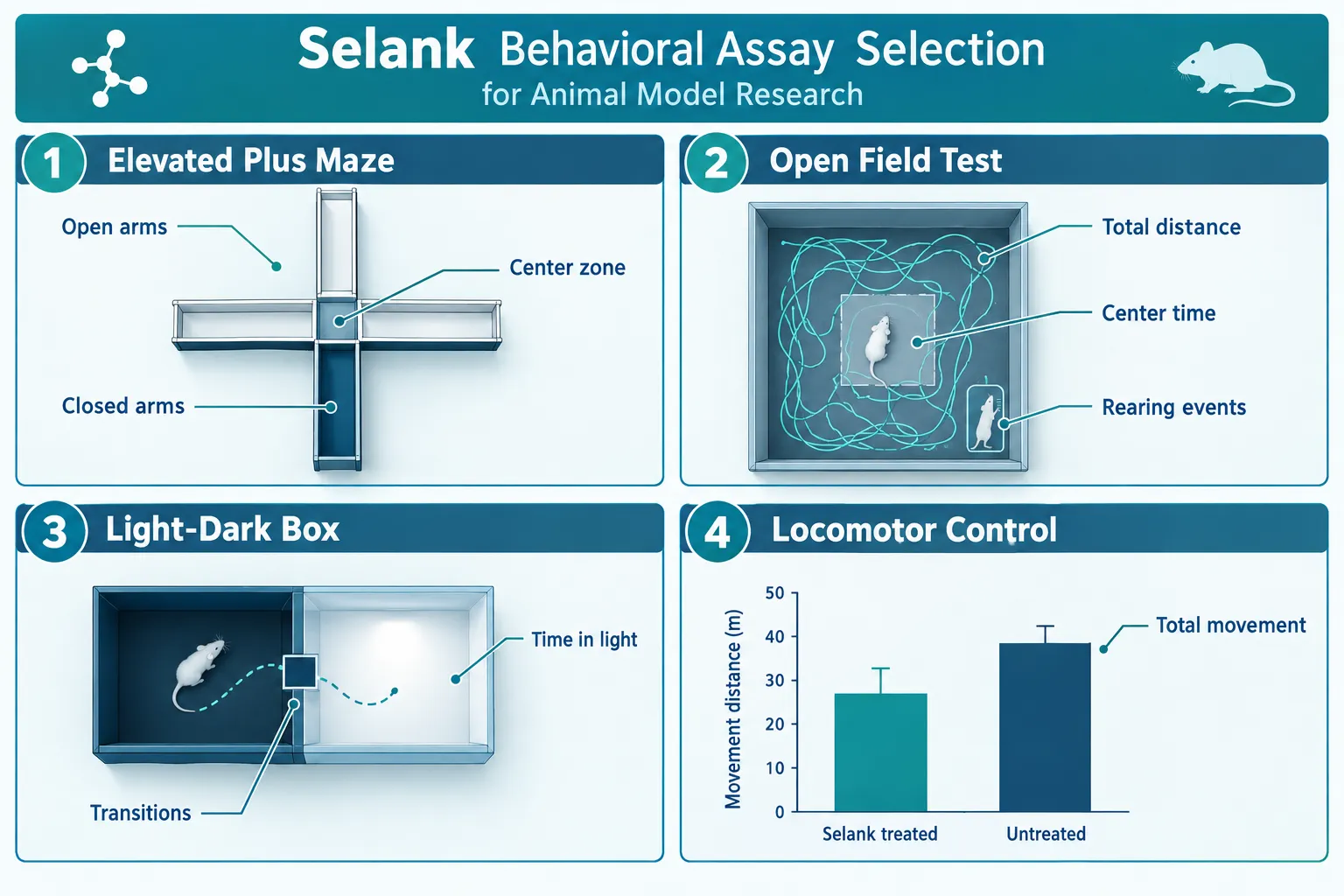
Choosing the right assay is the first methodological decision in any anxiolytic study, and it directly shapes what conclusions can be drawn. In Selank peptide research: anxiolytic, stress, and cognitive readouts in animal models, three assays dominate the published literature.

The Elevated Plus Maze (EPM) remains the gold standard for unconditioned anxiety in rodents. Selank-treated animals consistently spend more time in the open arms compared to vehicle controls, an effect comparable in magnitude to low-dose benzodiazepines in several studies, though without the sedative signature that complicates benzodiazepine data interpretation.

The Open Field Test (OFT) serves a dual purpose: it captures anxiety-related thigmotaxis (wall-hugging behavior) and provides the locomotor baseline every anxiolytic study requires. This point is non-negotiable. An increase in open-arm time on the EPM is meaningless if the compound also increases general locomotion, since hyperactive animals explore more by default. Selank studies that include OFT locomotor distance data consistently show no significant change in total movement, which strengthens the anxiolytic interpretation.

The Light-Dark Box adds a third convergent measure. Transition counts and time spent in the illuminated compartment track closely with EPM findings in Selank-treated cohorts, reinforcing the anxiolytic signal across paradigms.

Assay Primary Readout Locomotor Control Needed
Elevated Plus Maze Open-arm time, entries Yes, OFT distance
Open Field Test Center time, total distance Self-controlling
Light-Dark Box Time in light, transitions Yes, OFT distance
Morris Water Maze Escape latency, probe trial Yes, swim speed

Researchers exploring related neuropeptide compounds, such as those documented in Semax peptide research, will recognize this assay logic, it applies broadly across the nootropic-anxiolytic peptide class.


Stress Paradigms, Hormonal Markers, and Inflammatory Readouts
Stress Paradigms, Hormonal Markers, and Inflammatory Readouts

Single-session anxiety assays capture a snapshot. Chronic stress models reveal whether a compound has durable, physiologically meaningful effects, and this is where Selank's preclinical profile becomes particularly rich.

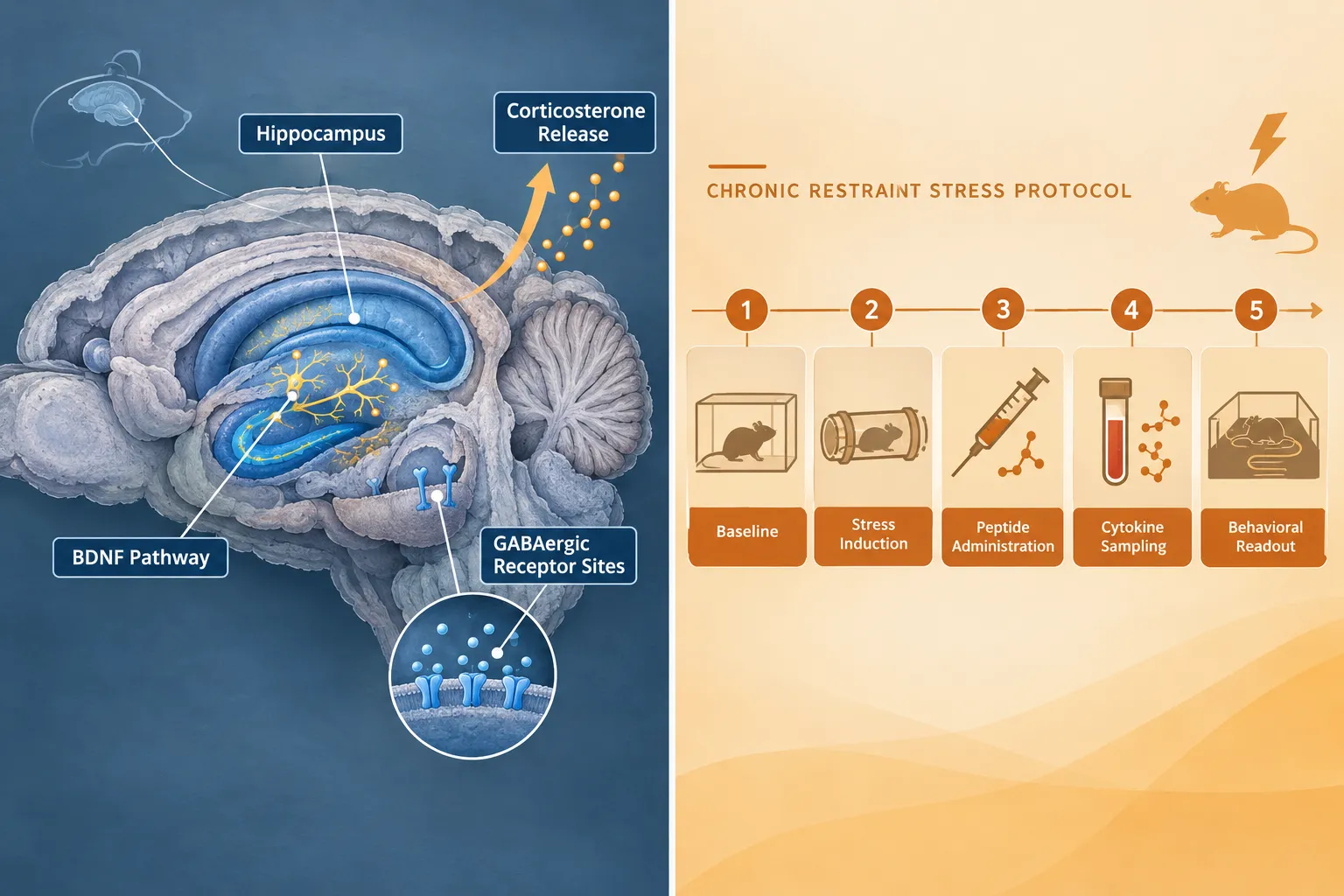
Restraint stress is the most widely used chronic paradigm in Selank research. Animals subjected to repeated restraint show predictable elevations in corticosterone, reduced open-arm exploration, and upregulated pro-inflammatory cytokines including IL-6 and TNF-alpha. Selank administration across multi-week protocols normalizes all three readout categories in a dose-dependent manner. A 2024 restraint-stress study examining hippocampal gene expression found acute stress-linked changes in transcription patterns that were attenuated in Selank-treated subjects, pointing toward a hippocampal mechanism beyond simple receptor binding.

The GABAergic and monoaminergic modulation profile is central here. Selank appears to potentiate GABA-A receptor sensitivity while also modulating serotonin and dopamine turnover in limbic regions. This dual mechanism may explain why its anxiolytic effects persist over multi-week observation periods in rats, a durability that short-acting benzodiazepines do not replicate.

BDNF regulation is an emerging readout of particular interest. Ethanol-induced memory impairment in rodents is associated with suppressed hippocampal BDNF expression. Selank administration partially restores BDNF levels in this model, suggesting a neuroprotective dimension that extends the compound's research relevance beyond pure anxiolysis.

"Normalization of corticosterone, cytokine profiles, and BDNF in chronic stress models positions Selank as a multi-system research tool, not merely a behavioral anxiolytic."

Strain specificity is a critical design variable. Anxiolytic response magnitude varies significantly between Wistar and Sprague-Dawley rats, and between high-anxiety and low-anxiety mouse lines. Enkephalinase inhibition, Selank's partial mechanism for extending endogenous enkephalin activity, appears more pronounced in high-anxiety strains, which may explain inconsistent effect sizes across laboratories. Any research protocol should pre-specify strain and justify the choice.

For researchers building multi-peptide experimental designs, documentation-first approaches used in BPC-157 core peptides research offer a useful methodological template for multi-readout preclinical studies.


Cognitive Readouts and the Limits of Translational Evidence
Cognitive Readouts and the Limits of Translational Evidence

Cognitive enhancement is the second major research domain in Selank peptide research: anxiolytic, stress, and cognitive readouts in animal models. The Morris Water Maze and passive avoidance paradigms are the primary tools.

Selank-treated rodents demonstrate:

  • Faster acquisition of spatial navigation tasks in the Morris Water Maze
  • Improved probe-trial performance, indicating stronger memory consolidation rather than just faster motor learning
  • Better retrieval in aged rodent cohorts, where baseline cognitive performance is degraded
  • Protection against ethanol-induced amnesia, with BDNF restoration as the proposed mechanism

These findings are internally consistent and methodologically sound when swim-speed controls are included. The cognitive signal appears independent of the anxiolytic effect in some studies, animals with normalized anxiety still show memory gains above vehicle controls.

The Translational Ceiling

Here is where scientific caution is essential. Selank's approved clinical use in Russia (as an anxiolytic with reported HAM-A score reductions) is encouraging, but the clinical trial database is small, largely conducted in a single regulatory context, and does not meet the evidentiary standards expected by EMA or FDA frameworks.

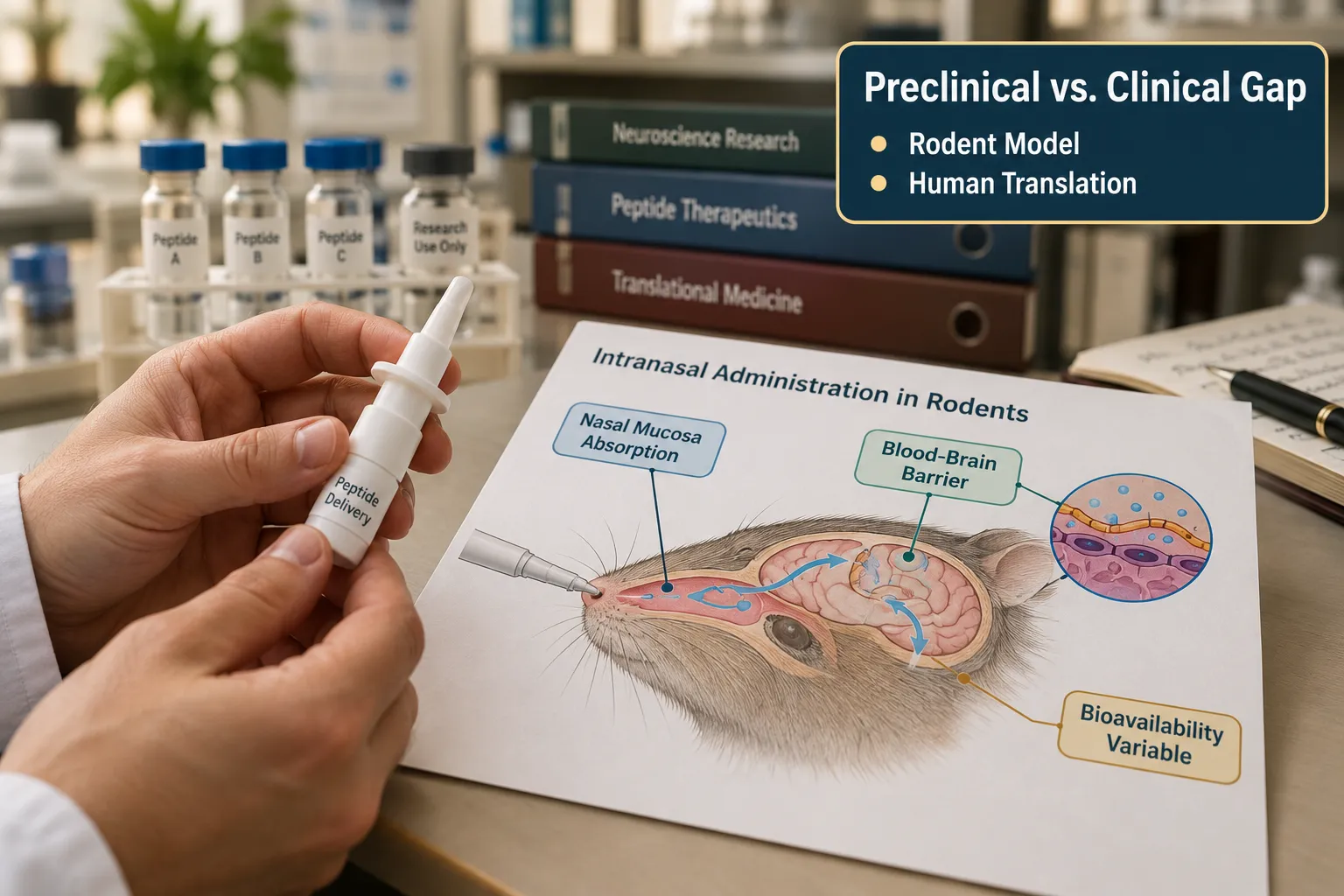
The intranasal delivery route compounds this problem. Rodent nasal anatomy differs substantially from human anatomy in mucosal surface area, olfactory epithelium proportion, and mucociliary clearance rates. Bioavailability data derived from rat intranasal dosing cannot be directly extrapolated to human pharmacokinetics without dedicated bridging studies.

Combination studies, pairing Selank with diazepam, show context-dependent effects: additive in some stress paradigms, non-additive in others. This interaction profile has not been characterized clinically, which limits protocol design for any future human research.

Researchers sourcing peptides for controlled experimental work should review quality-control frameworks such as those outlined in TB-500 controlled experimental models and QC workflow and consult resources on where to buy peptides for research-grade supply standards. Related neuropeptide stacks are also documented in IPA Sermorelin stack research for those designing multi-compound protocols.


Conclusion

Selank's preclinical record is among the most internally consistent in the synthetic anxiolytic peptide class. Behavioral assay convergence, hormonal normalization, cytokine modulation, and BDNF-linked cognitive protection together form a multi-layered evidence base that justifies continued investigation.

Actionable next steps for researchers in 2026:

  1. Always pair EPM or light-dark box protocols with OFT locomotor distance data, without it, anxiolytic claims are not defensible.
  2. Pre-specify rodent strain and justify the choice based on anxiety-phenotype literature before beginning chronic stress protocols.
  3. Include BDNF, corticosterone, and at least one pro-inflammatory cytokine as biomarker readouts alongside behavioral endpoints.
  4. Treat intranasal bioavailability as an independent variable requiring characterization, not an assumed constant.
  5. Consult current regulatory guidance before designing any protocol intended to generate translational data, the gap between Russian clinical approval and Western regulatory standards remains wide.

The compound's research value is real. The translational path, however, demands rigorous study design at every step.

https://www.puretestedpeptides.com/wp-content/uploads/2026/10/selank-peptide-research-anxiolytic-stress-and-cognitive-readouts-in-animal-model.webp 1024 1536 https://www.puretestedpeptides.com/wp-content/uploads/2026/01/buy-peptides-online.jpg 2026-10-19 13:04:022026-10-19 13:04:02Selank Peptide Research: Anxiolytic, Stress, and Cognitive Readouts in Animal Models
×

Helpful Links

  • My account
  • Cart
  • Checkout
  • Refund and Returns Policy
  • Privacy Policy
  • SMS Privacy Policy
  • Login
  • My Account
  • Logout

USA Made Lab Tested Peptides

All products are sold for research, laboratory, or analytical purposes only, and are not for human consumption


Pure Tested Peptides is a chemical supplier. Pure Tested Peptides is not a compounding / chemical compounding facility as defined under 503A of the Federal Food, Drug, and Cosmetic act. Pure Tested Peptides is not an outsourcing facility as defined under 503B of the Federal Food, Drug, and Cosmetic act.

The statements made within this website have not been evaluated by the US Food and Drug Administration. The products we offer are not intended to diagnose, treat, cure or prevent any disease.

Human/Animal Consumption Prohibited. Laboratory/In-Vitro Experimental Use Only

Scroll to top Scroll to top Scroll to top