Call or Text 727-513-9780
  • Shopping Cart Shopping Cart
    0Shopping Cart
Pure Tested Peptides | America's most trusted Peptides for sale online
  • Peptides for sale
    • Oral Peptides for sale
      • Peptide Capsules for sale
      • BPC 157 Capsules 1000mcg
      • SLU-PP-332 Capsules | 1000 mcg
      • 5-Amino-1MQ 50mg Capsules
      • Tesofensine 500mcg
    • All Peptides for sale
    • Peptide Sprays
      • BPC 157 Nasal Spray Kit
      • BPC-157 TB500 Nasal Spray Kit
      • Semax Nasal Spray 10mg
      • Selank – Nasal Spray Kit – 10mg
      • Epithalon 50MG Nasal Spray Kit
      • Ipamorelin 10mg Nasal Spray
      • Klow Nasal Spray (BPC-157 + TB-500 + GHK-Cu + KPV) | 80mg
      • Hulk Nasal Spray Tesa / Ipa Blend 6/3 MG
      • Klow Nasal Spray
      • NAD + 500 mg Nasal Spray
      • PT-141 Nasal Spray Kit
    • GHRH Peptides
      • Ipa Peptides
      • CJC-1295 Peptides
        • CJC-1295 with DAC 5 mg
        • CJC-1295 without DAC 5 mg
        • CJC-1295 Ipa 10mg
      • Tesa Peptides
        • Tesa Peptide
        • Tesa 20 mg
    • GHK-Cu Peptides
      • All GHK-Cu Peptides
      • GHK-Cu 100mg
      • KLOW Peptide Blend – Buy KLOW blend online
    • BPC Peptides
      • All BPC Peptides
      • BPC-157
      • BPC-157 TB-500
      • BPC 157 capsules 1000mcg
    • SLU-PP-332 Peptides
      • All SLU-PP-332 Peptides
      • SLU-PP-332 5mg
    • GLP3 Peptides
    • PT-141 Peptides
      • PT-141 Peptides for sale
      • PT-141 10mg
      • PT-141 Nasal Spray
    • CAG Peptides
      • Lipo-C Peptide Blend
      • CAG 5mg
      • CAG 10mg
    • MOTS-C Peptides
      • MOTS-C Peptides for sale
      • MOTS-c peptide
      • MOTS-c 10mg *6 pack*
    • 5 Amino 1MQ Peptides
      • 5 Amino 1MQ Peptides for sale
      • 5-Amino-1MQ 50mg Capsules
      • 5-Amino-1MQ 5mg
    • Epithalon Peptides
      • Epithalon Peptides for sale
      • Epithalon 10mg
      • Epithalon 50mg
  • Shop
    • GLPs
      • 5-Amino-1MQ 50mg Capsules
      • 5-Amino-1MQ 5mg
      • L-Carnitine 500mg/ml
      • Tesofensine 500mcg
      • SLU-PP-332 5mg
      • MOTS-c 10mg *6 pack*
    • Epithalon & BPC Peptides
      • Epithalon 10mg
      • Epithalon 50mg
      • BPC-157
      • BPC 157 capsules 1000mcg
      • BPC-157 TB-500
      • BPC-157 TB500 Nasal Spray Kit
      • BPC 157 Nasal Spray Kit
    • BPC TB-500 & NAD+ Peptides
      • NAD+ 500 mg
      • KLOW Peptide Blend – Buy KLOW blend online
      • GLOW Peptide Blend
      • TB 500 5mg
      • BPC 157 capsules 1000mcg – Supplement
      • BPC 157 Nasal Spray Kit
      • BPC-157
      • BPC-157 TB500 Nasal Spray Kit
      • BPC-157 TB-500
      • BPC 157 capsules 1000mcg
    • LL-37 Peptide
      • LL-37 10 mg
    • MOTS-C & Selank
      • MOTS-c peptide
      • Selank 10mg
    • GHK Peptides
      • GHK-Cu 100mg
      • GLOW Peptide Blend
      • KLOW Peptide Blend – Buy KLOW blend online
  • COAs
  • Wholesale
    • Wholesale Peptides for sale
  • PTP FAQ
  • Affiliates
    • Selank Peptide: Advanced Pharmacological Mechanisms Underlying Its Anxiolytic and Nootropic Effects in Research
      • 5-Amino-1MQ Peptide: Detailed Mechanisms of NNMT Inhibition and Its Impact on Cellular Metabolism Research
        • MOTS-C Peptide: Unraveling Its Role in Mitochondrial Dynamics and Energy Metabolism Research
          • Epithalon Peptide and Telomerase Regulation: Investigating Its Impact on Cellular Senescence and Lifespan Research Models
            • GLP2-T vs GLP2 Tirz Peptide: Understanding the Naming, Mechanistic Nuances, and Research Implications for Gut Health
      • Peptides and Polypeptides in Modern Pharmacology: What Research on Metoprolol, Prednisone, and Amlodipine Reveals
        • Polypeptide Peptides vs NSAIDs: What Naproxen and Diclofenac Teach Tissue-Repair Researchers About BPC‑157 and TB‑500
          • Peptides and Polypeptides in Endocrine Pharmacology: How GLP-1, GLP-2, and GLP-3 Retatrutide Differ From Classic Drugs Like Prednisone and Amlodipine
          • 5‑Amino‑1MQ Peptide and NNMT Inhibition: How It Compares With Statins Like Atorvastatin in Adipose and Lipid Metabolism Research
      • Enclomiphene, Estrogen Receptor Signaling, and Luteinizing Phase Biology: What Hormone Researchers Should Measure
        • Mesenchymal Stem Cells, BPC‑157, and GHK‑Cu: How Tissue Repair Peptides Compare With Classic NSAIDs Like Naproxen in Injury Models
          • Peptide Calculator Use Cases Beyond Growth Hormone: Working Through GLP‑3 Retatrutide, MOTS‑c, and BPC‑157 Research Dosing
        • Polypeptide Peptides in Endocrine and Metabolic Pharmacology: Lessons From Amlodipine, Prednisone, and Metoprolol
        • Peptides Calculator for Advanced Blends: Worked Examples for Tesamorelin, CJC‑1295, and Ipamorelin Stacks
          • Peptides and Polypeptides in Human Physiology: How Molecular Size Shapes Research Applications
            • Selank Peptide: Advanced Pharmacological Mechanisms Underlying Its Anxiolytic and Nootropic Effects in Research
          • 5-Amino-1MQ Peptide: Detailed Mechanisms of NNMT Inhibition and Its Impact on Cellular Metabolism Research
            • MOTS-C Peptide: Unraveling Its Role in Mitochondrial Dynamics and Energy Metabolism Research
              • Epithalon Peptide and Telomerase Regulation: Investigating Its Impact on Cellular Senescence and Lifespan Research Models
                • GLP2-T vs GLP2 Tirz Peptide: Understanding the Naming, Mechanistic Nuances, and Research Implications for Gut Health
                  • Peptides and Polypeptides in Endocrine Pharmacology: How GLP-1, GLP-2, and GLP-3 Retatrutide Differ From Classic Drugs Like Prednisone and Amlodipine
                    • Polypeptide Peptides vs NSAIDs: What Naproxen and Diclofenac Teach Tissue-Repair Researchers About BPC‑157 and TB‑500
                      • Peptides and Polypeptides in Modern Pharmacology: What Research on Metoprolol, Prednisone, and Amlodipine Reveals
                        • 5‑Amino‑1MQ Peptide and NNMT Inhibition: How It Compares With Statins Like Atorvastatin in Adipose and Lipid Metabolism Research
                        • Enclomiphene, Estrogen Receptor Signaling, and Luteinizing Phase Biology: What Hormone Researchers Should Measure
                        • Mesenchymal Stem Cells, BPC‑157, and GHK‑Cu: How Tissue Repair Peptides Compare With Classic NSAIDs Like Naproxen in Injury Models
                        • Peptide Calculator Use Cases Beyond Growth Hormone: Working Through GLP‑3 Retatrutide, MOTS‑c, and BPC‑157 Research Dosing
                        • Polypeptide Peptides in Endocrine and Metabolic Pharmacology: Lessons From Amlodipine, Prednisone, and Metoprolol
                        • Peptides Calculator for Advanced Blends: Worked Examples for Tesamorelin, CJC‑1295, and Ipamorelin Stacks
                        • Peptides and Polypeptides in Human Physiology: How Molecular Size Shapes Research Applications
                        • Selank Peptide: Advanced Pharmacological Mechanisms Underlying Its Anxiolytic and Nootropic Effects in Research
                        • MOTS-C Peptide: Unraveling Its Role in Mitochondrial Dynamics and Energy Metabolism Research
                        • Peptides and Polypeptides in Modern Pharmacology: What Research on Metoprolol, Prednisone, and Amlodipine Reveals
                        • Peptides and Polypeptides in Endocrine Pharmacology: How GLP-1, GLP-2, and GLP-3 Retatrutide Differ From Classic Drugs Like Prednisone and Amlodipine
                        • 5-Amino-1MQ Peptide: Detailed Mechanisms of NNMT Inhibition and Its Impact on Cellular Metabolism Research
                        • Mesenchymal Stem Cells, BPC‑157, and GHK‑Cu: How Tissue Repair Peptides Compare With Classic NSAIDs Like Naproxen in Injury Models
                        • Peptide Calculator Use Cases Beyond Growth Hormone: Working Through GLP‑3 Retatrutide, MOTS‑c, and BPC‑157 Research Dosing
                        • GLP2-T vs GLP2 Tirz Peptide: Understanding the Naming, Mechanistic Nuances, and Research Implications for Gut Health
                        • Polypeptide Peptides in Endocrine and Metabolic Pharmacology: Lessons From Amlodipine, Prednisone, and Metoprolol
                        • Polypeptide Peptides vs NSAIDs: What Naproxen and Diclofenac Teach Tissue-Repair Researchers About BPC‑157 and TB‑500
                        • Peptides and Polypeptides in Human Physiology: How Molecular Size Shapes Research Applications
                        • Peptides Calculator for Advanced Blends: Worked Examples for Tesamorelin, CJC‑1295, and Ipamorelin Stacks
                        • 5‑Amino‑1MQ Peptide and NNMT Inhibition: How It Compares With Statins Like Atorvastatin in Adipose and Lipid Metabolism Research
                        • Enclomiphene, Estrogen Receptor Signaling, and Luteinizing Phase Biology: What Hormone Researchers Should Measure
                        • Epithalon Peptide and Telomerase Regulation: Investigating Its Impact on Cellular Senescence and Lifespan Research Models
                        • Best research protocol Klow blend
                        • best time to take BPC-157
                        • best time to take DSIP (Delta Sleep Inducing Peptide)
                        • best time to take CJC-1295
                        • best time to take AOD-9604
                        • best time to take Follistatin 344
                        • best time to take Ipamorelin
                        • best time to take MK-677 (Ibutamoren)
                        • best time to take Ligandrol (LGD-4033) — research compound
                        • best time to take Ostarine (MK-2866) — research compound
                        • best time to take GHK-CU
                        • best time to take TB-500
                        • best time to take MOTS-c
                        • best time to take Semax
                        • best time to take RAD-140 (Testolone) — research compound
                        • best time to take Thymosin Alpha-1
                        • best time to take PEG-MGF
                        • Biolife Plasma, Octapharma Plasma, and Research Peptides: How Plasma Donation Labs Differ From Peptide Suppliers
                        • best time to take YK-11 — research compound
                        • best time to take PT-141 (Bremelanotide)
                        • Best research protocol Klow blend
                        • 5-Amino-1MQ and MOTS-C Synergy: Metabolic Signaling, Mitochondria, and Research Design
                        • BPC-157 and TB-500: Investigating Their Combined Effects on Angiogenesis and Cellular Migration in Tissue Repair Models
                        • BPC-157 Peptide: Gut Barrier Function, Inflammation, and Tissue-Recovery Research
                        • 5‑Amino‑1MQ and MOTS‑c Synergy in Metabolic Research: Designing NNMT and Mitochondrial Biogenesis Stacks
                        • CJC-1295 with DAC vs. Without DAC: Half-Life, Release Kinetics, and Research Implications
                        • CJC‑1295 with DAC vs. Without DAC: Expanding on Half‑Life Differences Using Tesamorelin and Ipamorelin Blend Case Studies
                        • Collagen Biology and Copper‑Binding Peptides: How GHK‑Cu, Glow Blend, and Klow Blend Interact with Skin and Connective Tissue
                        • Collagen Biology and Regenerative Peptides: How GHK‑Cu, Glow Blend, and Klow Blend Affect Extracellular Matrix Research
                    • DNA, Telomeres, and Longevity Peptides: Positioning Epithalon and MOTS‑c in Genetic Aging Research
                      • Enclomiphene Citrate: serm Mechanism, Testosterone Research, and Stack Compatibility
                        • Enclomiphene vs Enclomiphene Citrate: Formulation, Bioavailability, and Research Distinctions
                        • Epithalon Peptide Research: Telomerase Activation, Aging, and Pineal Gland Function
                        • Estrogen Receptor Signaling and Enclomiphene: How Selective Modulators Compare with Classic Polypeptide Hormones
                        • GHK-Cu Peptide: Advanced Mechanisms in Extracellular Matrix Remodeling and Wound Healing Research
                        • GHK-Cu Peptide: Collagen Synthesis, Wound Repair, and Skin-Barrier Research Models
                        • GLP-1 vs GLP-3 vs GLP-2: Peptide Classification and Research Applications
                        • GLP-2 Peptide Research Guide: Gut Barrier Function, Nutrient Absorption, and Intestinal Recovery Models
                        • GLP-3 Retatrutide vs. GLP-1 Drugs: What Triple-Agonist Biology Changes in Research Models
                        • Ipamorelin and Tesamorelin Combination: Synergistic GH Secretagogue Research and Dosing Protocols
                        • GLP2 Tirz Peptide: What It Is, Why the Name Exists, and How Researchers Should Interpret It
                        • Klow Blend Peptide Nasal Spray: What the Formulation Is Trying to Do in Cognitive Research
                        • Mitochondria, NNMT Inhibition, and Peptide Modulators: Where MOTS‑c and 5‑Amino‑1MQ Fit in Cellular Energy Research
                        • MOTS-c Peptide: Mitochondrial Function, Energy Metabolism, and What Researchers Measure
                        • MOTS-c vs. 5-Amino-1MQ: Which Metabolic Research Questions Each Compound Actually Answers
                        • Nasal Spray Peptides: Bioavailability, Administration, and Semax/Selank Research Applications
                        • PT-141 Peptide Research: Mechanism of Action and Melanocortin Receptor Signaling
                        • Retatrutide for Research: Mechanism, Structure, and GLP-1/GLP-3 Dual Action
                        • Retatrutide for Obesity and Type 2 Diabetes: What the Latest Trial Data Suggest
                        • Tesofensine Peptide Research: Mechanism, Appetite Suppression, and Neuropeptide Y Pathways
  • Contact
    • Contact Customer Service
    • Text Customer Support
  • About US
  • Shop all peptides
  • Affiliate Program
    • Affiliate Signup
  • Login / Register Login / Register Page Link Login / Register Page Link
  • Click to open the search input field Click to open the search input field Search
  • Menu Menu

Tag Archive for: bdnf research

Semax Nasal Spray in 2026: How to Grade Intranasal Evidence When Pharmacokinetic Data Are Missing

Semax Nasal Spray in 2026: How to Grade Intranasal Evidence When Pharmacokinetic Data Are Missing

October 15, 2026/0 Comments/in Uncategorized/by

Fewer than a dozen randomized controlled trials have ever examined Semax by any route of administration, yet the compound remains one of the most discussed research peptides in nootropic and stroke-recovery communities worldwide. That gap between clinical curiosity and clinical evidence is exactly why grading the available data demands a structured, methodologically honest approach.

This article addresses the core challenge of Semax nasal spray in 2026: how to evaluate intranasal research findings when human pharmacokinetic (PK) data are absent, incomplete, or derived entirely from animal models.

Key Takeaways

  • Semax nasal spray carries no FDA approval in 2026, and the agency has issued a negative effectiveness assessment for the compound.
  • The existing evidence base consists primarily of small, Russian, often unblinded intranasal trials with limited independent replication.
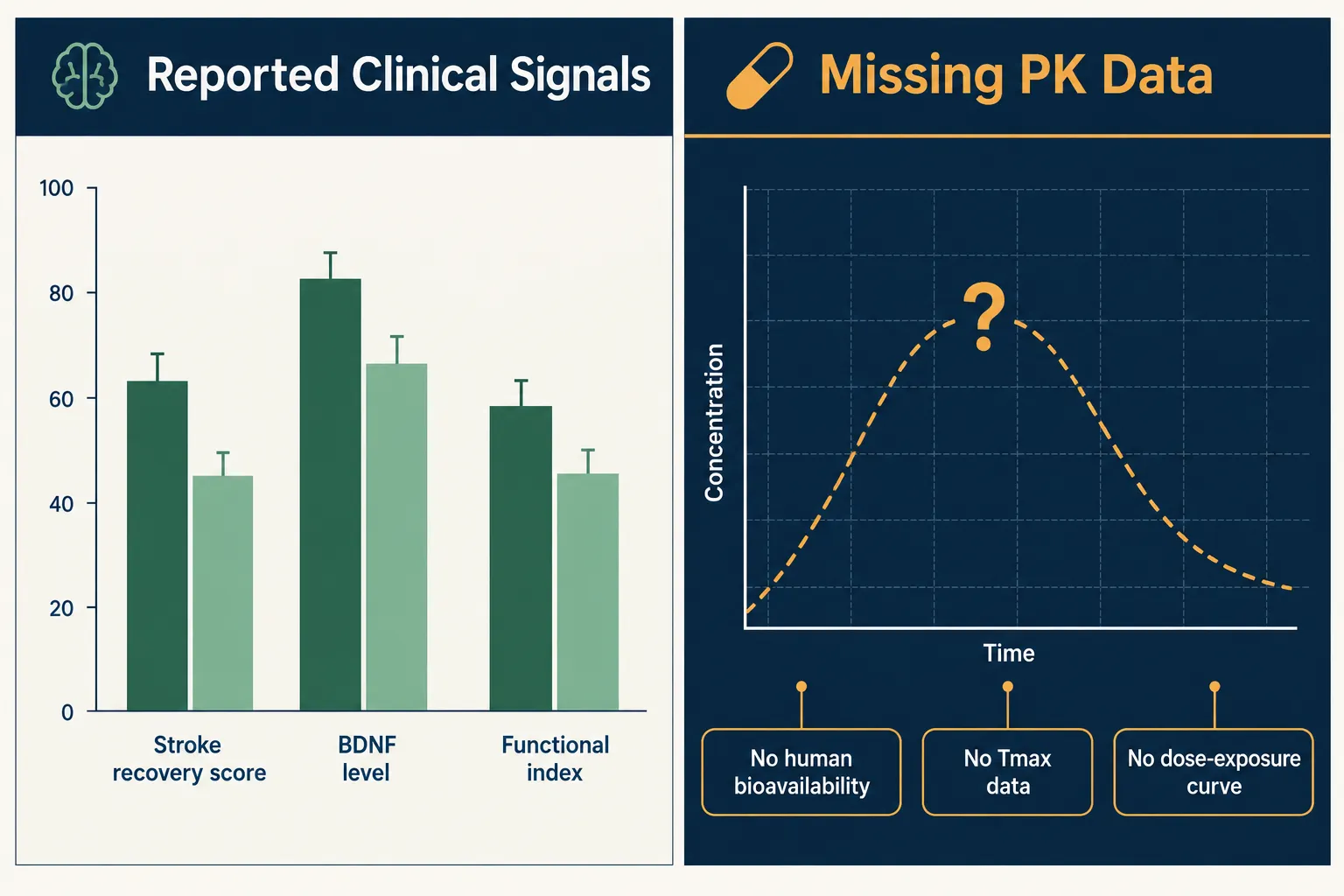
  • Human PK data, bioavailability, Cmax, Tmax, dose-exposure curves, are essentially absent for the intranasal route.
  • Animal models suggest rapid brain entry and equally rapid systemic degradation, but these findings cannot be directly extrapolated to human dosing.
  • Reviewers are increasingly applying route-specific grading criteria that treat missing PK data as a formal evidence gap, not a minor limitation.

Why the Pharmacokinetic Gap Matters for Intranasal Semax Research
Why the Pharmacokinetic Gap Matters for Intranasal Semax Research

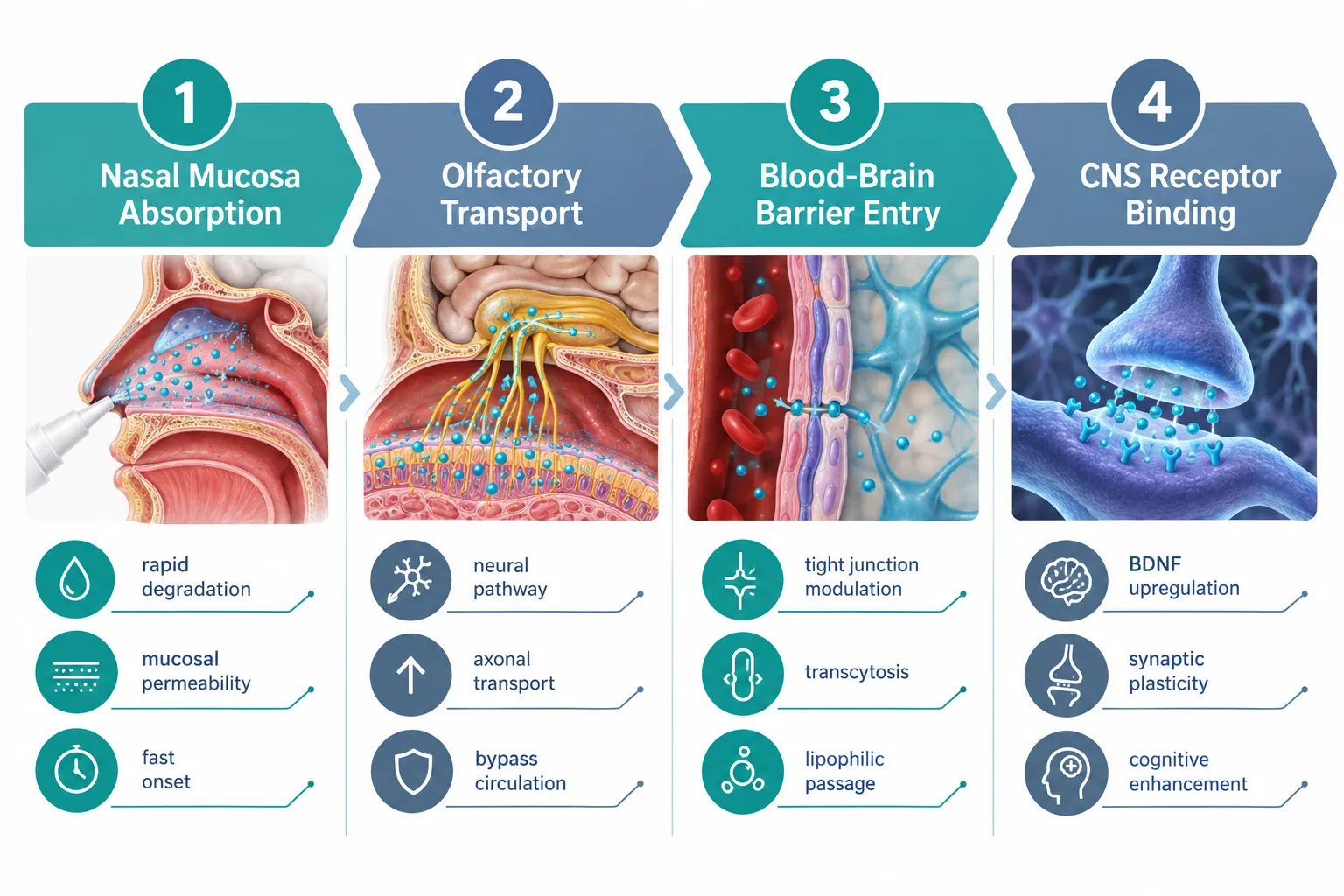
When a compound is administered intranasally, its clinical effects depend entirely on how much of it actually reaches the target tissue and when. Without knowing the bioavailability fraction, the peak plasma or cerebrospinal concentration, or the time-to-peak for the intranasal route in humans, it becomes impossible to confirm that a reported effect was caused by the dose given, or by any dose at all.

For Semax peptide, this is not a minor footnote. The compound is a synthetic heptapeptide derived from ACTH(4-7). Animal studies consistently show rapid olfactory-nerve transport into the brain following intranasal delivery, along with fast enzymatic degradation in systemic circulation. Those findings are promising, but they are not human PK data.

What animal models tell us:

  • Rapid mucosal absorption via olfactory epithelium
  • Short half-life in peripheral blood due to peptidase activity
  • Detectable CNS effects at low doses in rodent models

What they cannot confirm:

  • Human mucosal permeability and inter-individual variability
  • Actual brain concentrations achieved at clinical doses
  • Whether the dose-response curve in humans is linear or threshold-dependent

Without this information, any clinical signal observed in a trial is essentially floating, it cannot be anchored to a confirmed exposure level.


The Current Evidence Landscape for Semax Nasal Spray in 2026
The Current Evidence Landscape for Semax Nasal Spray in 2026

The regulatory picture is unambiguous. As of 2026, Semax nasal spray holds no approval from the FDA, and the agency's effectiveness assessment for the compound is negative. The existing clinical literature originates almost entirely from Russian research institutions, conducted primarily between the 1990s and 2010s.

"The absence of independent replication across different regulatory environments is itself a grading criterion, not just a contextual footnote."

Key characteristics of the existing trial base include:

Feature Typical Finding
Sample size Fewer than 100 participants per trial
Blinding Largely unblinded or single-blind
Control arm Variable; some trials lack placebo
Endpoint type Functional scores, neurological scales
Geographic diversity Predominantly single-country
Independent replication Minimal outside Russia

Clinical signals that do appear in the literature include improvements in stroke recovery scores, increases in BDNF-related markers, and modest gains on functional neurological assessments. These signals are not fabricated, they are simply unanchored to confirmed human exposure data, which limits their interpretive weight.

Use patterns in 2026 span two distinct populations: short-course clinical protocols in research settings, and long-term self-experimentation by nootropic users who are often combining Semax nasal spray with compounds such as Selank nasal spray or IPA nasal spray. The latter group operates entirely outside any monitored research framework.


A Structured Framework for Grading Intranasal Evidence When PK Data Are Missing
A Structured Framework for Grading Intranasal Evidence When PK Data Are Missing

Methodologists reviewing intranasal peptide research in 2026 are increasingly applying a route-specific grading overlay on top of standard tools like GRADE. The core principle: missing PK data must be coded as a formal evidence gap, not absorbed into the general "limitations" section.

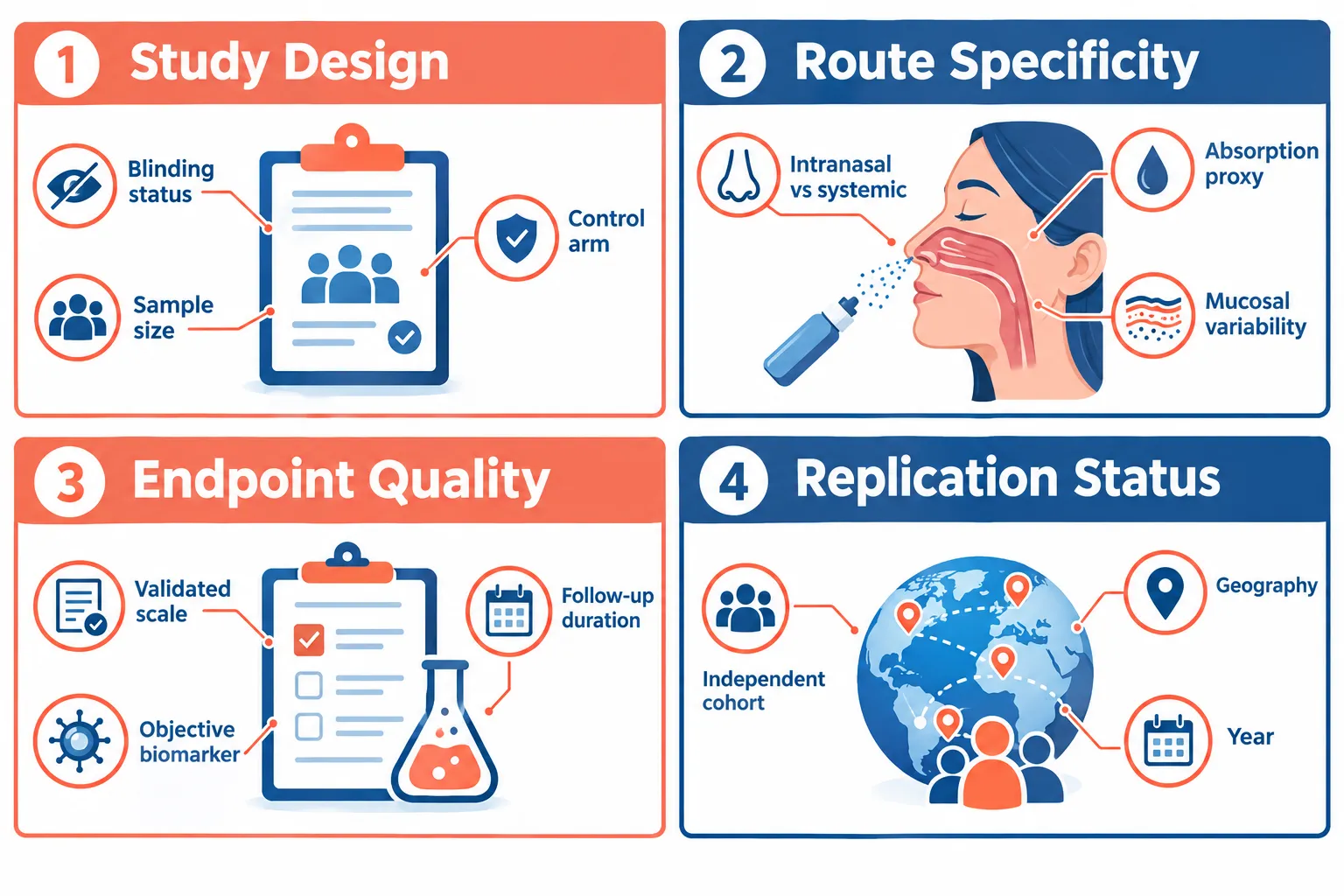
The following four-domain framework reflects emerging reviewer practice for compounds like Semax where intranasal delivery is central to the therapeutic claim.

Domain 1: Study Design Quality

Assess blinding status, randomization method, sample size, and control arm integrity. For Semax trials, most existing studies score poorly here. Single-arm or unblinded designs cannot isolate placebo effects, which are particularly strong in neurological and cognitive endpoints.

Domain 2: Route-Specific Exposure Confidence

This is the domain most commonly underweighted. Ask: does the study confirm that the intranasal dose produced a measurable, consistent exposure? If no human PK data exist, no bioavailability estimate, no Tmax, no Cmax, then exposure confidence must be rated as very low, regardless of the observed effect size.

For researchers also evaluating other intranasal peptide formats, the same logic applies when reviewing products like GLP nasal spray or ipamorelin spray formulations. The route-specific PK question is universal across intranasal peptide research.

Domain 3: Endpoint Quality and Clinical Relevance

Validated scales carry more weight than composite or investigator-defined scores. Objective biomarkers (BDNF assay, imaging) carry more weight than subjective functional ratings. Follow-up duration matters: short follow-up cannot capture delayed or sustained effects.

Domain 4: Replication and Independence

Has the finding been reproduced by an independent group, in a different country, using a different patient population? For Semax, the honest answer in 2026 is: rarely. This domain alone would push the overall evidence grade to low or very low certainty under most established grading systems.

Applying the framework produces a structured output:

  • High certainty: meets all four domains adequately
  • Moderate certainty: one domain with significant weakness
  • Low certainty: two or more domains with significant weakness
  • Very low certainty: PK domain rated as absent plus one additional domain failure

Under this schema, the current Semax intranasal evidence base grades as low to very low certainty, a conclusion consistent with expert consensus in 2026.

For those interested in how similar grading challenges apply to other research-grade peptide formulations, the analysis of research-grade peptide purity and compatibility offers a parallel methodological perspective.


Conclusion

The central challenge of evaluating Semax nasal spray in 2026 is not a shortage of reported effects, it is the absence of the mechanistic foundation needed to interpret those effects with confidence. Human pharmacokinetic data for the intranasal route remain essentially unavailable, and without them, even well-intentioned clinical signals cannot be graded above low certainty.

Actionable next steps for researchers and reviewers:

  1. Apply a route-specific PK domain explicitly when grading intranasal peptide evidence, do not fold it into general limitations.
  2. Treat single-country, unblinded trial data as hypothesis-generating only, not as confirmatory evidence.
  3. Require independent replication across at least two regulatory environments before elevating any intranasal Semax finding above low certainty.
  4. Advocate for prospective human PK studies as a prerequisite for any future regulatory submission, without them, regulatory progress remains unlikely regardless of effect size reported in existing trials.
  5. When reviewing combination-use patterns, assess each compound's intranasal PK gap independently rather than assuming shared route characteristics.

The evidence gap is real, but it is also addressable. Structured grading frameworks make that gap visible, and visibility is the first step toward closing it.

https://www.puretestedpeptides.com/wp-content/uploads/2026/10/semax-nasal-spray-in-2026-how-to-grade-intranasal-evidence-when-pharmacokinetic.webp 1024 1536 https://www.puretestedpeptides.com/wp-content/uploads/2026/01/buy-peptides-online.jpg 2026-10-15 13:06:452026-10-15 13:06:45Semax Nasal Spray in 2026: How to Grade Intranasal Evidence When Pharmacokinetic Data Are Missing
×

Helpful Links

  • My account
  • Cart
  • Checkout
  • Refund and Returns Policy
  • Privacy Policy
  • SMS Privacy Policy
  • Login
  • My Account
  • Logout

USA Made Lab Tested Peptides

All products are sold for research, laboratory, or analytical purposes only, and are not for human consumption


Pure Tested Peptides is a chemical supplier. Pure Tested Peptides is not a compounding / chemical compounding facility as defined under 503A of the Federal Food, Drug, and Cosmetic act. Pure Tested Peptides is not an outsourcing facility as defined under 503B of the Federal Food, Drug, and Cosmetic act.

The statements made within this website have not been evaluated by the US Food and Drug Administration. The products we offer are not intended to diagnose, treat, cure or prevent any disease.

Human/Animal Consumption Prohibited. Laboratory/In-Vitro Experimental Use Only

Scroll to top Scroll to top Scroll to top