Call or Text 727-513-9780
  • Shopping Cart Shopping Cart
    0Shopping Cart
Pure Tested Peptides | America's most trusted Peptides for sale online
  • Peptides for sale
    • Oral Peptides for sale
      • Peptide Capsules for sale
      • BPC 157 Capsules 1000mcg
      • SLU-PP-332 Capsules | 1000 mcg
      • 5-Amino-1MQ 50mg Capsules
      • Tesofensine 500mcg
    • All Peptides for sale
    • Peptide Sprays
      • BPC 157 Nasal Spray Kit
      • BPC-157 TB500 Nasal Spray Kit
      • Semax Nasal Spray 10mg
      • Selank – Nasal Spray Kit – 10mg
      • Epithalon 50MG Nasal Spray Kit
      • Ipamorelin 10mg Nasal Spray
      • Klow Nasal Spray (BPC-157 + TB-500 + GHK-Cu + KPV) | 80mg
      • Hulk Nasal Spray Tesa / Ipa Blend 6/3 MG
      • Klow Nasal Spray
      • NAD + 500 mg Nasal Spray
      • PT-141 Nasal Spray Kit
    • GHRH Peptides
      • Ipa Peptides
      • CJC-1295 Peptides
        • CJC-1295 with DAC 5 mg
        • CJC-1295 without DAC 5 mg
        • CJC-1295 Ipa 10mg
      • Tesa Peptides
        • Tesa Peptide
        • Tesa 20 mg
    • GHK-Cu Peptides
      • All GHK-Cu Peptides
      • GHK-Cu 100mg
      • KLOW Peptide Blend – Buy KLOW blend online
    • BPC Peptides
      • All BPC Peptides
      • BPC-157
      • BPC-157 TB-500
      • BPC 157 capsules 1000mcg
    • SLU-PP-332 Peptides
      • All SLU-PP-332 Peptides
      • SLU-PP-332 5mg
    • GLP3 Peptides
      • GLP3-R
      • GLP3-R CAG 10mg
      • GLP3-R 20mg
    • PT-141 Peptides
      • PT-141 Peptides for sale
      • PT-141 10mg
      • PT-141 Nasal Spray
    • CAG Peptides
      • Lipo-C Peptide Blend
      • CAG 5mg
      • CAG 10mg
    • MOTS-C Peptides
      • MOTS-C Peptides for sale
      • MOTS-c peptide
      • MOTS-c 10mg *6 pack*
    • 5 Amino 1MQ Peptides
      • 5 Amino 1MQ Peptides for sale
      • 5-Amino-1MQ 50mg Capsules
      • 5-Amino-1MQ 5mg
    • Epithalon Peptides
      • Epithalon Peptides for sale
      • Epithalon 10mg
      • Epithalon 50mg
  • Shop
    • GLPs
      • 5-Amino-1MQ 50mg Capsules
      • 5-Amino-1MQ 5mg
      • GLP3-Reta
      • L-Carnitine 500mg/ml
      • Tesofensine 500mcg
      • SLU-PP-332 5mg
      • MOTS-c 10mg *6 pack*
    • Epithalon & BPC Peptides
      • Epithalon 10mg
      • Epithalon 50mg
      • BPC-157
      • BPC 157 capsules 1000mcg
      • BPC-157 TB-500
      • BPC-157 TB500 Nasal Spray Kit
      • BPC 157 Nasal Spray Kit
    • BPC TB-500 & NAD+ Peptides
      • NAD+ 500 mg
      • KLOW Peptide Blend – Buy KLOW blend online
      • GLOW Peptide Blend
      • TB 500 5mg
      • BPC 157 capsules 1000mcg – Supplement
      • BPC 157 Nasal Spray Kit
      • BPC-157
      • BPC-157 TB500 Nasal Spray Kit
      • BPC-157 TB-500
      • BPC 157 capsules 1000mcg
    • LL-37 Peptide
      • LL-37 10 mg
    • MOTS-C & Selank
      • MOTS-c peptide
      • Selank 10mg
    • GHK Peptides
      • GHK-Cu 100mg
      • GLOW Peptide Blend
      • KLOW Peptide Blend – Buy KLOW blend online
  • COAs
  • Wholesale
    • Wholesale Peptides for sale
  • PTP FAQ
  • Affiliates
    • Selank Peptide: Advanced Pharmacological Mechanisms Underlying Its Anxiolytic and Nootropic Effects in Research
      • 5-Amino-1MQ Peptide: Detailed Mechanisms of NNMT Inhibition and Its Impact on Cellular Metabolism Research
        • MOTS-C Peptide: Unraveling Its Role in Mitochondrial Dynamics and Energy Metabolism Research
          • Epithalon Peptide and Telomerase Regulation: Investigating Its Impact on Cellular Senescence and Lifespan Research Models
            • GLP2-T vs GLP2 Tirz Peptide: Understanding the Naming, Mechanistic Nuances, and Research Implications for Gut Health
      • Peptides and Polypeptides in Modern Pharmacology: What Research on Metoprolol, Prednisone, and Amlodipine Reveals
        • Polypeptide Peptides vs NSAIDs: What Naproxen and Diclofenac Teach Tissue-Repair Researchers About BPC‑157 and TB‑500
          • Peptides and Polypeptides in Endocrine Pharmacology: How GLP-1, GLP-2, and GLP-3 Retatrutide Differ From Classic Drugs Like Prednisone and Amlodipine
          • 5‑Amino‑1MQ Peptide and NNMT Inhibition: How It Compares With Statins Like Atorvastatin in Adipose and Lipid Metabolism Research
      • Enclomiphene, Estrogen Receptor Signaling, and Luteinizing Phase Biology: What Hormone Researchers Should Measure
        • Mesenchymal Stem Cells, BPC‑157, and GHK‑Cu: How Tissue Repair Peptides Compare With Classic NSAIDs Like Naproxen in Injury Models
          • Peptide Calculator Use Cases Beyond Growth Hormone: Working Through GLP‑3 Retatrutide, MOTS‑c, and BPC‑157 Research Dosing
        • Polypeptide Peptides in Endocrine and Metabolic Pharmacology: Lessons From Amlodipine, Prednisone, and Metoprolol
        • Peptides Calculator for Advanced Blends: Worked Examples for Tesamorelin, CJC‑1295, and Ipamorelin Stacks
          • Peptides and Polypeptides in Human Physiology: How Molecular Size Shapes Research Applications
            • Selank Peptide: Advanced Pharmacological Mechanisms Underlying Its Anxiolytic and Nootropic Effects in Research
          • 5-Amino-1MQ Peptide: Detailed Mechanisms of NNMT Inhibition and Its Impact on Cellular Metabolism Research
            • MOTS-C Peptide: Unraveling Its Role in Mitochondrial Dynamics and Energy Metabolism Research
              • Epithalon Peptide and Telomerase Regulation: Investigating Its Impact on Cellular Senescence and Lifespan Research Models
                • GLP2-T vs GLP2 Tirz Peptide: Understanding the Naming, Mechanistic Nuances, and Research Implications for Gut Health
                  • Peptides and Polypeptides in Endocrine Pharmacology: How GLP-1, GLP-2, and GLP-3 Retatrutide Differ From Classic Drugs Like Prednisone and Amlodipine
                    • Polypeptide Peptides vs NSAIDs: What Naproxen and Diclofenac Teach Tissue-Repair Researchers About BPC‑157 and TB‑500
                      • Peptides and Polypeptides in Modern Pharmacology: What Research on Metoprolol, Prednisone, and Amlodipine Reveals
                        • 5‑Amino‑1MQ Peptide and NNMT Inhibition: How It Compares With Statins Like Atorvastatin in Adipose and Lipid Metabolism Research
                        • Enclomiphene, Estrogen Receptor Signaling, and Luteinizing Phase Biology: What Hormone Researchers Should Measure
                        • Mesenchymal Stem Cells, BPC‑157, and GHK‑Cu: How Tissue Repair Peptides Compare With Classic NSAIDs Like Naproxen in Injury Models
                        • Peptide Calculator Use Cases Beyond Growth Hormone: Working Through GLP‑3 Retatrutide, MOTS‑c, and BPC‑157 Research Dosing
                        • Polypeptide Peptides in Endocrine and Metabolic Pharmacology: Lessons From Amlodipine, Prednisone, and Metoprolol
                        • Peptides Calculator for Advanced Blends: Worked Examples for Tesamorelin, CJC‑1295, and Ipamorelin Stacks
                        • Peptides and Polypeptides in Human Physiology: How Molecular Size Shapes Research Applications
                        • Selank Peptide: Advanced Pharmacological Mechanisms Underlying Its Anxiolytic and Nootropic Effects in Research
                        • MOTS-C Peptide: Unraveling Its Role in Mitochondrial Dynamics and Energy Metabolism Research
                        • Peptides and Polypeptides in Modern Pharmacology: What Research on Metoprolol, Prednisone, and Amlodipine Reveals
                        • Peptides and Polypeptides in Endocrine Pharmacology: How GLP-1, GLP-2, and GLP-3 Retatrutide Differ From Classic Drugs Like Prednisone and Amlodipine
                        • 5-Amino-1MQ Peptide: Detailed Mechanisms of NNMT Inhibition and Its Impact on Cellular Metabolism Research
                        • Mesenchymal Stem Cells, BPC‑157, and GHK‑Cu: How Tissue Repair Peptides Compare With Classic NSAIDs Like Naproxen in Injury Models
                        • Peptide Calculator Use Cases Beyond Growth Hormone: Working Through GLP‑3 Retatrutide, MOTS‑c, and BPC‑157 Research Dosing
                        • GLP2-T vs GLP2 Tirz Peptide: Understanding the Naming, Mechanistic Nuances, and Research Implications for Gut Health
                        • Polypeptide Peptides in Endocrine and Metabolic Pharmacology: Lessons From Amlodipine, Prednisone, and Metoprolol
                        • Polypeptide Peptides vs NSAIDs: What Naproxen and Diclofenac Teach Tissue-Repair Researchers About BPC‑157 and TB‑500
                        • Peptides and Polypeptides in Human Physiology: How Molecular Size Shapes Research Applications
                        • Peptides Calculator for Advanced Blends: Worked Examples for Tesamorelin, CJC‑1295, and Ipamorelin Stacks
                        • 5‑Amino‑1MQ Peptide and NNMT Inhibition: How It Compares With Statins Like Atorvastatin in Adipose and Lipid Metabolism Research
                        • Enclomiphene, Estrogen Receptor Signaling, and Luteinizing Phase Biology: What Hormone Researchers Should Measure
                        • Epithalon Peptide and Telomerase Regulation: Investigating Its Impact on Cellular Senescence and Lifespan Research Models
                        • Best research protocol Klow blend
                        • best time to take BPC-157
                        • best time to take DSIP (Delta Sleep Inducing Peptide)
                        • best time to take CJC-1295
                        • best time to take AOD-9604
                        • best time to take Follistatin 344
                        • best time to take Ipamorelin
                        • best time to take MK-677 (Ibutamoren)
                        • best time to take Ligandrol (LGD-4033) — research compound
                        • best time to take Ostarine (MK-2866) — research compound
                        • best time to take GHK-CU
                        • best time to take TB-500
                        • best time to take MOTS-c
                        • best time to take Semax
                        • best time to take RAD-140 (Testolone) — research compound
                        • best time to take Thymosin Alpha-1
                        • best time to take PEG-MGF
                        • Biolife Plasma, Octapharma Plasma, and Research Peptides: How Plasma Donation Labs Differ From Peptide Suppliers
                        • best time to take YK-11 — research compound
                        • best time to take PT-141 (Bremelanotide)
                        • Best research protocol Klow blend
                        • 5-Amino-1MQ and MOTS-C Synergy: Metabolic Signaling, Mitochondria, and Research Design
                        • BPC-157 and TB-500: Investigating Their Combined Effects on Angiogenesis and Cellular Migration in Tissue Repair Models
                        • BPC-157 Peptide: Gut Barrier Function, Inflammation, and Tissue-Recovery Research
                        • 5‑Amino‑1MQ and MOTS‑c Synergy in Metabolic Research: Designing NNMT and Mitochondrial Biogenesis Stacks
                        • CJC-1295 with DAC vs. Without DAC: Half-Life, Release Kinetics, and Research Implications
                        • CJC‑1295 with DAC vs. Without DAC: Expanding on Half‑Life Differences Using Tesamorelin and Ipamorelin Blend Case Studies
                        • Collagen Biology and Copper‑Binding Peptides: How GHK‑Cu, Glow Blend, and Klow Blend Interact with Skin and Connective Tissue
                        • Collagen Biology and Regenerative Peptides: How GHK‑Cu, Glow Blend, and Klow Blend Affect Extracellular Matrix Research
                    • DNA, Telomeres, and Longevity Peptides: Positioning Epithalon and MOTS‑c in Genetic Aging Research
                      • Enclomiphene Citrate: serm Mechanism, Testosterone Research, and Stack Compatibility
                        • Enclomiphene vs Enclomiphene Citrate: Formulation, Bioavailability, and Research Distinctions
                        • Epithalon Peptide Research: Telomerase Activation, Aging, and Pineal Gland Function
                        • Estrogen Receptor Signaling and Enclomiphene: How Selective Modulators Compare with Classic Polypeptide Hormones
                        • GHK-Cu Peptide: Advanced Mechanisms in Extracellular Matrix Remodeling and Wound Healing Research
                        • GHK-Cu Peptide: Collagen Synthesis, Wound Repair, and Skin-Barrier Research Models
                        • GLP-1 vs GLP-3 vs GLP-2: Peptide Classification and Research Applications
                        • GLP-2 Peptide Research Guide: Gut Barrier Function, Nutrient Absorption, and Intestinal Recovery Models
                        • GLP-3 Retatrutide vs. GLP-1 Drugs: What Triple-Agonist Biology Changes in Research Models
                        • Ipamorelin and Tesamorelin Combination: Synergistic GH Secretagogue Research and Dosing Protocols
                        • GLP2 Tirz Peptide: What It Is, Why the Name Exists, and How Researchers Should Interpret It
                        • Klow Blend Peptide Nasal Spray: What the Formulation Is Trying to Do in Cognitive Research
                        • Mitochondria, NNMT Inhibition, and Peptide Modulators: Where MOTS‑c and 5‑Amino‑1MQ Fit in Cellular Energy Research
                        • MOTS-c Peptide: Mitochondrial Function, Energy Metabolism, and What Researchers Measure
                        • MOTS-c vs. 5-Amino-1MQ: Which Metabolic Research Questions Each Compound Actually Answers
                        • Nasal Spray Peptides: Bioavailability, Administration, and Semax/Selank Research Applications
                        • PT-141 Peptide Research: Mechanism of Action and Melanocortin Receptor Signaling
                        • Retatrutide for Research: Mechanism, Structure, and GLP-1/GLP-3 Dual Action
                        • Retatrutide for Obesity and Type 2 Diabetes: What the Latest Trial Data Suggest
                        • Tesofensine Peptide Research: Mechanism, Appetite Suppression, and Neuropeptide Y Pathways
  • Contact
    • Contact Customer Service
    • Text Customer Support
  • About US
  • Shop all peptides
  • Affiliate Program
    • Affiliate Signup
  • Login / Register Login / Register Page Link Login / Register Page Link
  • Click to open the search input field Click to open the search input field Search
  • Menu Menu

Tag Archive for: cjc-1295 with ipamorelin

CJC-1295 With Ipamorelin: How Researchers Model GH Pulsatility and Recovery Endpoints

CJC-1295 With Ipamorelin: How Researchers Model GH Pulsatility and Recovery Endpoints

August 13, 2026/0 Comments/in Uncategorized/by

Growth hormone does not flow in a steady stream. It fires in discrete pulses, a physiological rhythm that governs tissue repair, metabolic signaling, and recovery. That single fact explains why CJC-1295 with ipamorelin: how researchers model GH pulsatility and recovery endpoints has become one of the most discussed combination frameworks in peptide research circles in 2026.

The two compounds are not interchangeable. They target different receptors, carry different half-lives, and produce different waveforms. Their value lies precisely in that difference.

Key Takeaways

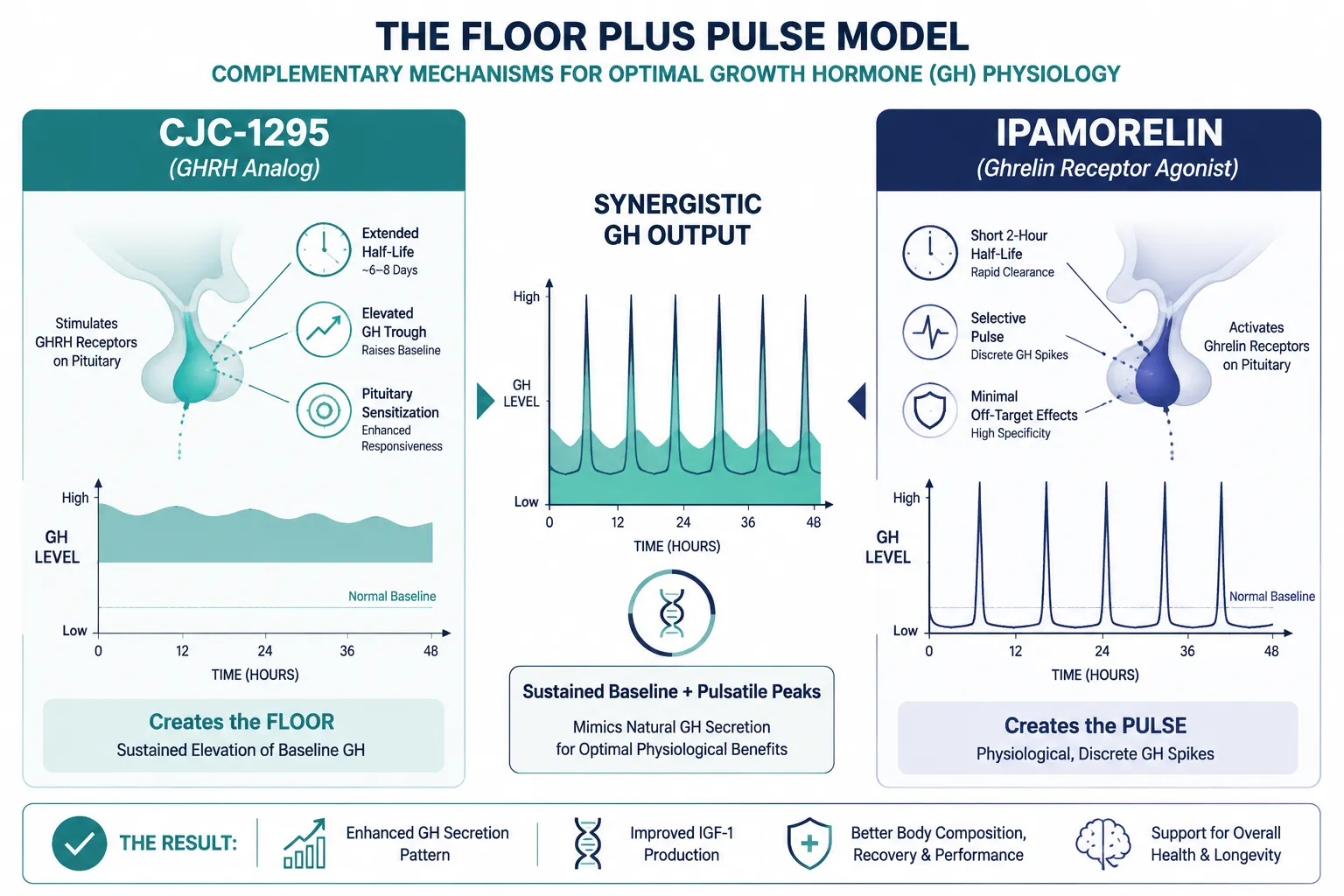
  • CJC-1295 raises the GH baseline ("floor") by acting on GHRH receptors; ipamorelin adds sharp, discrete pulses via ghrelin receptor activation.
  • Together they are modeled as a "floor + pulse" system, with reported 3- to 5-fold increases in modeled GH pulse amplitude.
  • Endpoint selection, trough GH, mean GH, IGF-1, pulse frequency, receptor resensitization time, determines how recovery is quantified in experimental designs.
  • The choice between DAC and non-DAC CJC-1295 is central to whether the resulting GH profile is pulsatile or sustained.
  • As of 2026, evidence for the combination remains largely mechanistic; few formal clinical outcome trials exist.

The Mechanistic Case for Combining CJC-1295 and Ipamorelin

The Mechanistic Case for Combining CJC-1295 and Ipamorelin

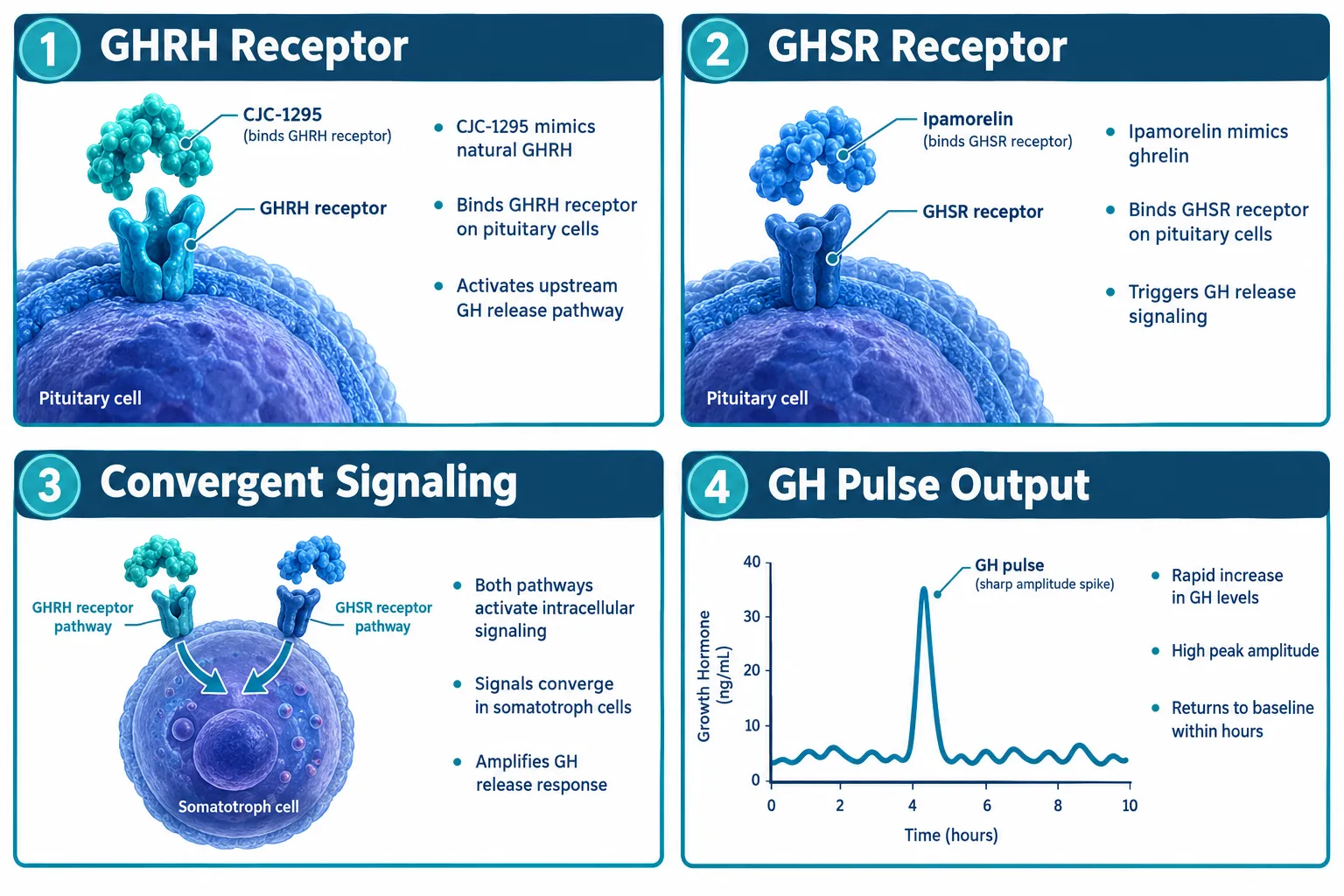
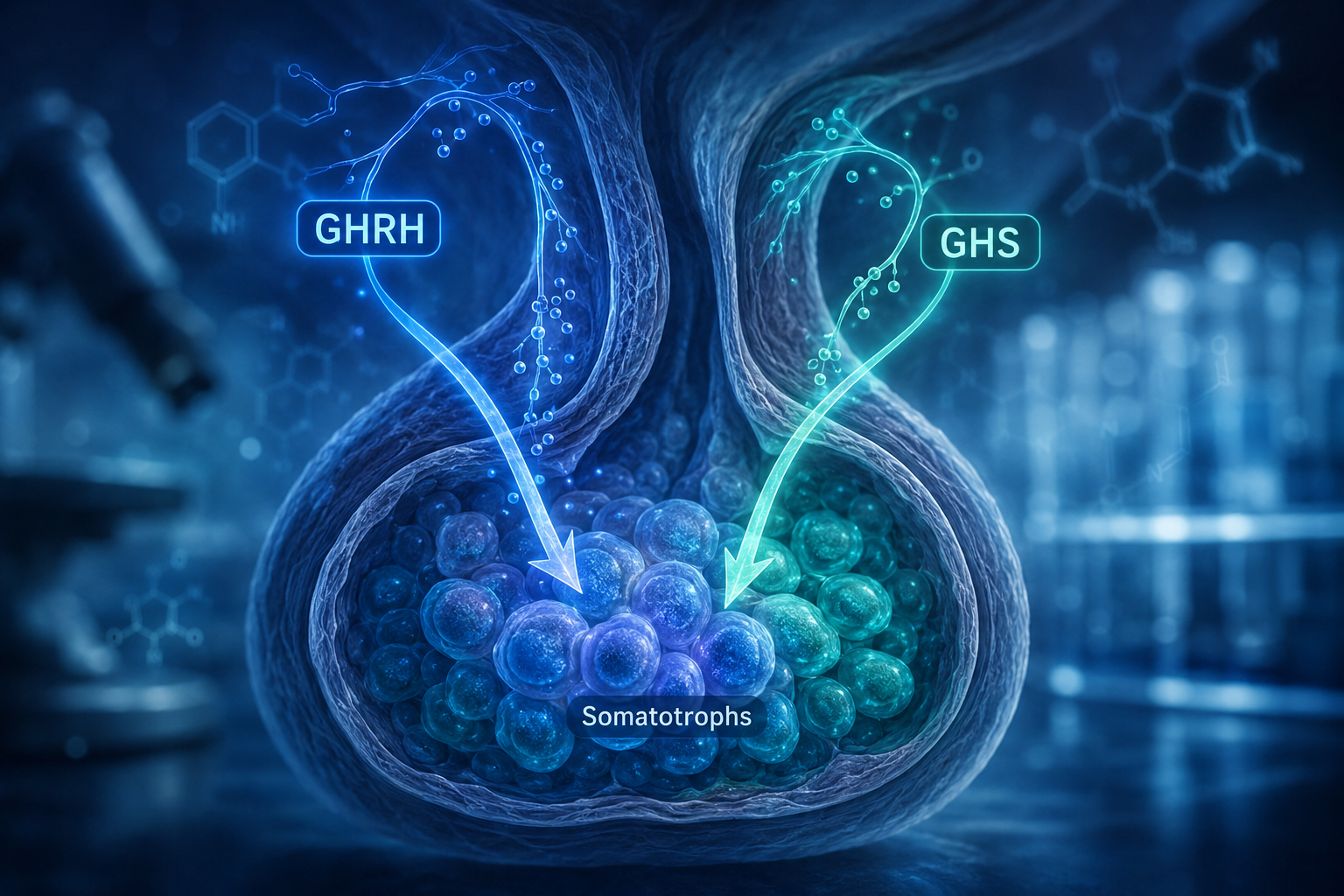
The rationale for pairing these two compounds starts at the receptor level. CJC-1295 is a modified GHRH analog that binds to GHRH receptors on pituitary somatotrophs. It elevates both trough and mean GH concentrations while preserving the natural pulsatile architecture of GH secretion, a feature that distinguishes it from continuous infusion models. Researchers describe this as establishing the GH "floor."

Ipamorelin operates through a completely different pathway. As a highly selective ghrelin receptor (GHS-R1a) agonist, it triggers short, discrete GH pulses. Its plasma half-life of approximately two hours makes it well-suited for time-locked pulse modeling. Critically, ipamorelin shows minimal off-target endocrine effects, it does not meaningfully elevate cortisol or prolactin at research-relevant doses, which simplifies endpoint interpretation.

Why combine them? Each compound amplifies what the other cannot do alone:

Compound Receptor Target Primary Effect Half-Life
CJC-1295 (non-DAC) GHRH receptor Elevated GH trough, sustained sensitization ~30 minutes active window
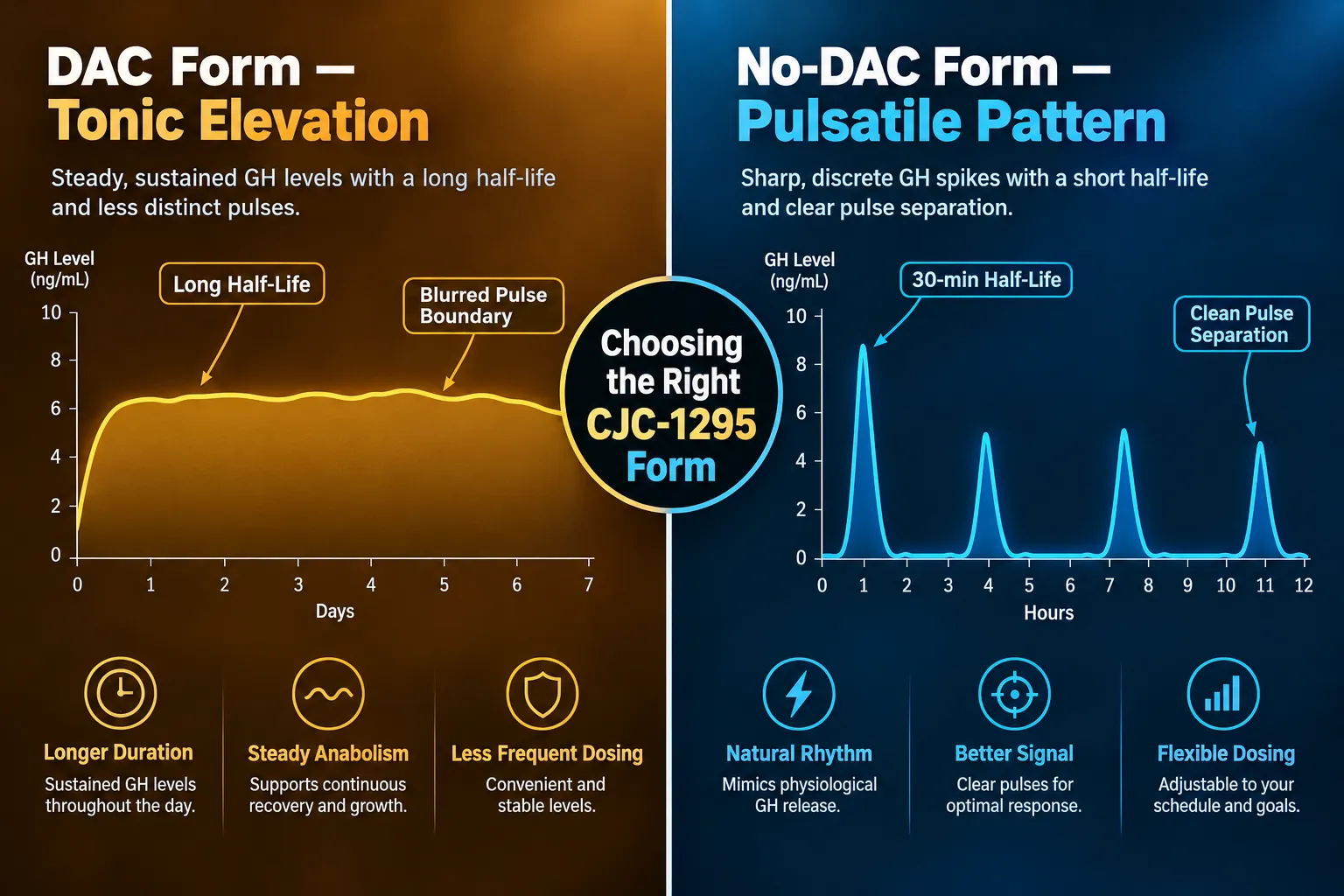
CJC-1295 (with DAC) GHRH receptor Prolonged GH elevation, blunted pulsatility ~8 days
Ipamorelin GHS-R1a (ghrelin receptor) Sharp discrete GH pulses ~2 hours

"The combination is modeled as floor-plus-pulse physiology, CJC-1295 primes the pituitary while ipamorelin triggers the release event."

For researchers interested in how different GHRH-mimetic profiles shape study outcomes, the comparison of tesa, ipamorelin, and CJC-1295 with DAC provides additional mechanistic context.

Modeling GH Pulsatility and Recovery Endpoints: Design Considerations

Modeling GH Pulsatility and Recovery Endpoints: Design Considerations

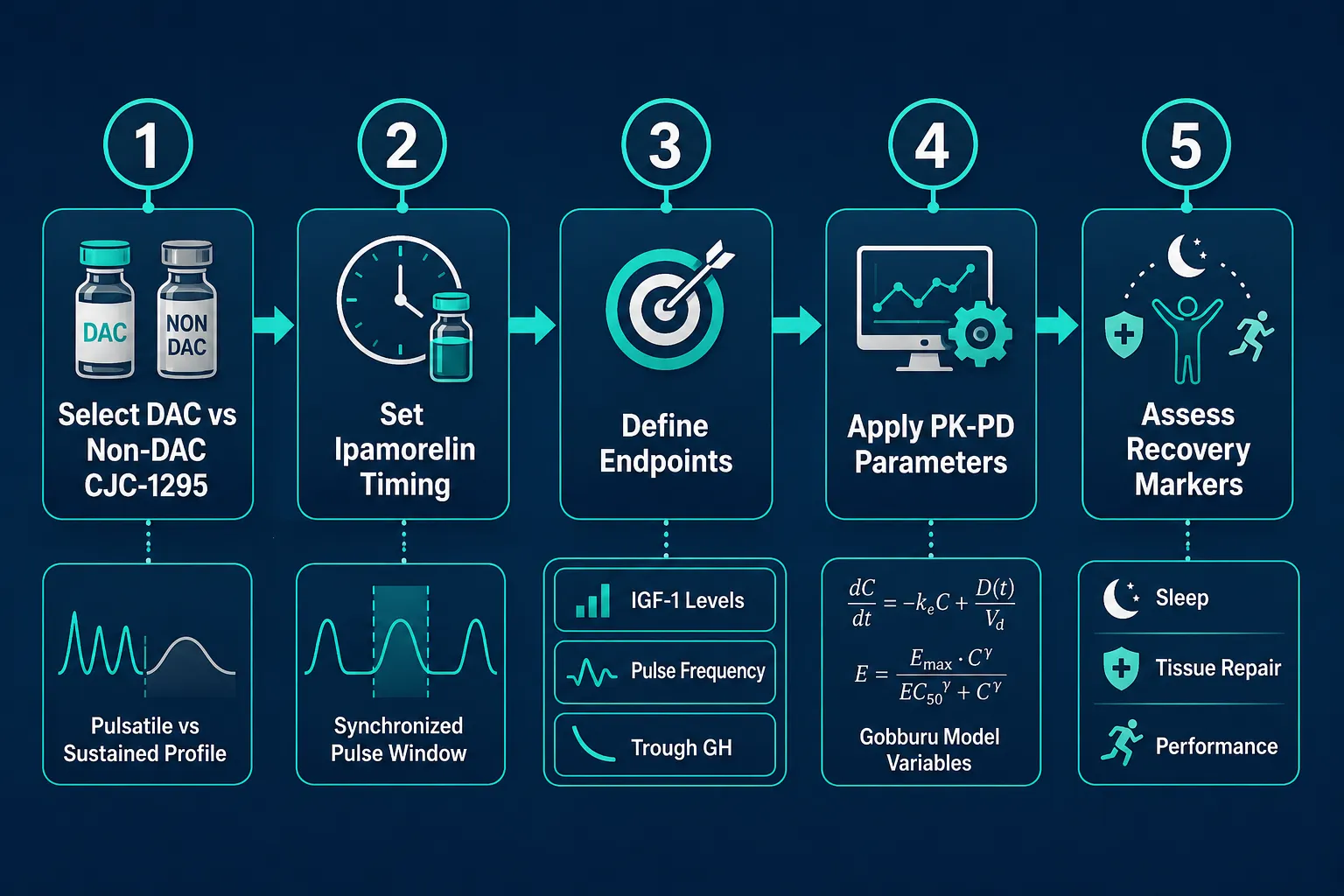
When researchers frame studies around CJC-1295 with ipamorelin: how researchers model GH pulsatility and recovery endpoints, several design variables must be resolved before data collection begins.

DAC vs. Non-DAC: A Critical Fork in Pulsatility Modeling

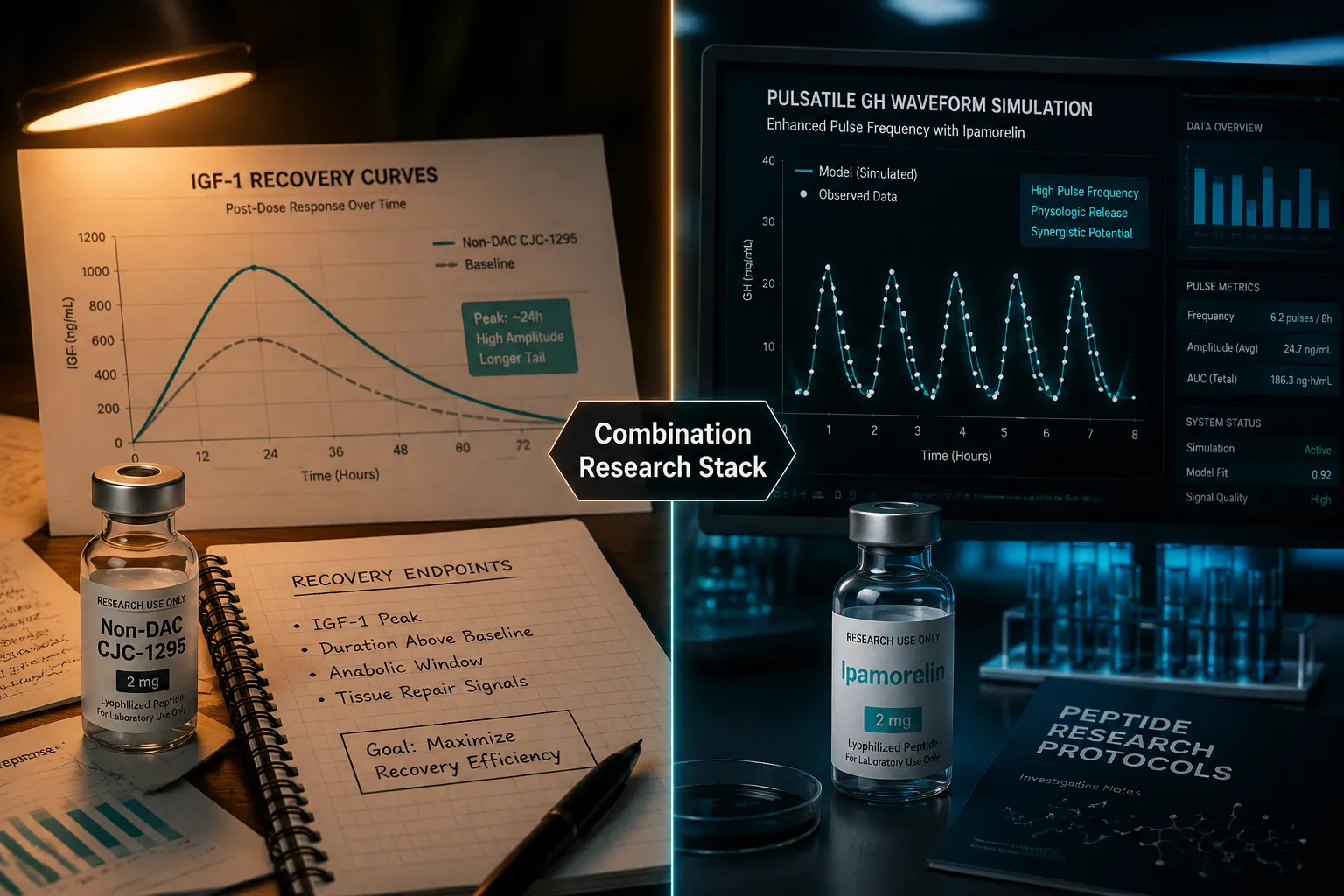
The Drug Affinity Complex (DAC) modification extends CJC-1295's half-life to approximately eight days by binding reversibly to albumin. This creates a sustained GH elevation but flattens the pulsatile profile. When investigators specifically want to study pulsatile GH dynamics, they use non-DAC CJC-1295 (also called Mod GRF 1-29), which produces a shorter, cleaner activation window that pairs more naturally with ipamorelin's pulse timing.

For a deeper look at the DAC variant's pharmacology, the CJC-1295 with DAC deeper dive resource outlines the structural and kinetic distinctions relevant to study design.

Quantitative PK-PD Parameters

Pharmacokinetic-pharmacodynamic (PK-PD) modeling for ipamorelin, grounded in foundational work by Gobburu and colleagues, provides quantitative parameters that researchers now use to simulate GH pulsatility and recovery trajectories. These parameters include:

  • Peak GH concentration following a defined dose
  • Time to peak relative to administration
  • Area under the GH curve (AUC) as a proxy for total GH exposure
  • Receptor resensitization time, the interval before the next pulse can be reliably triggered

When CJC-1295 is added to the model, the pituitary is already sensitized, which means ipamorelin-triggered pulses produce 3- to 5-fold greater amplitude than ipamorelin alone in modeled outputs.

Recovery Endpoints Researchers Track

Recovery-focused experimental designs typically monitor several endpoints in parallel:

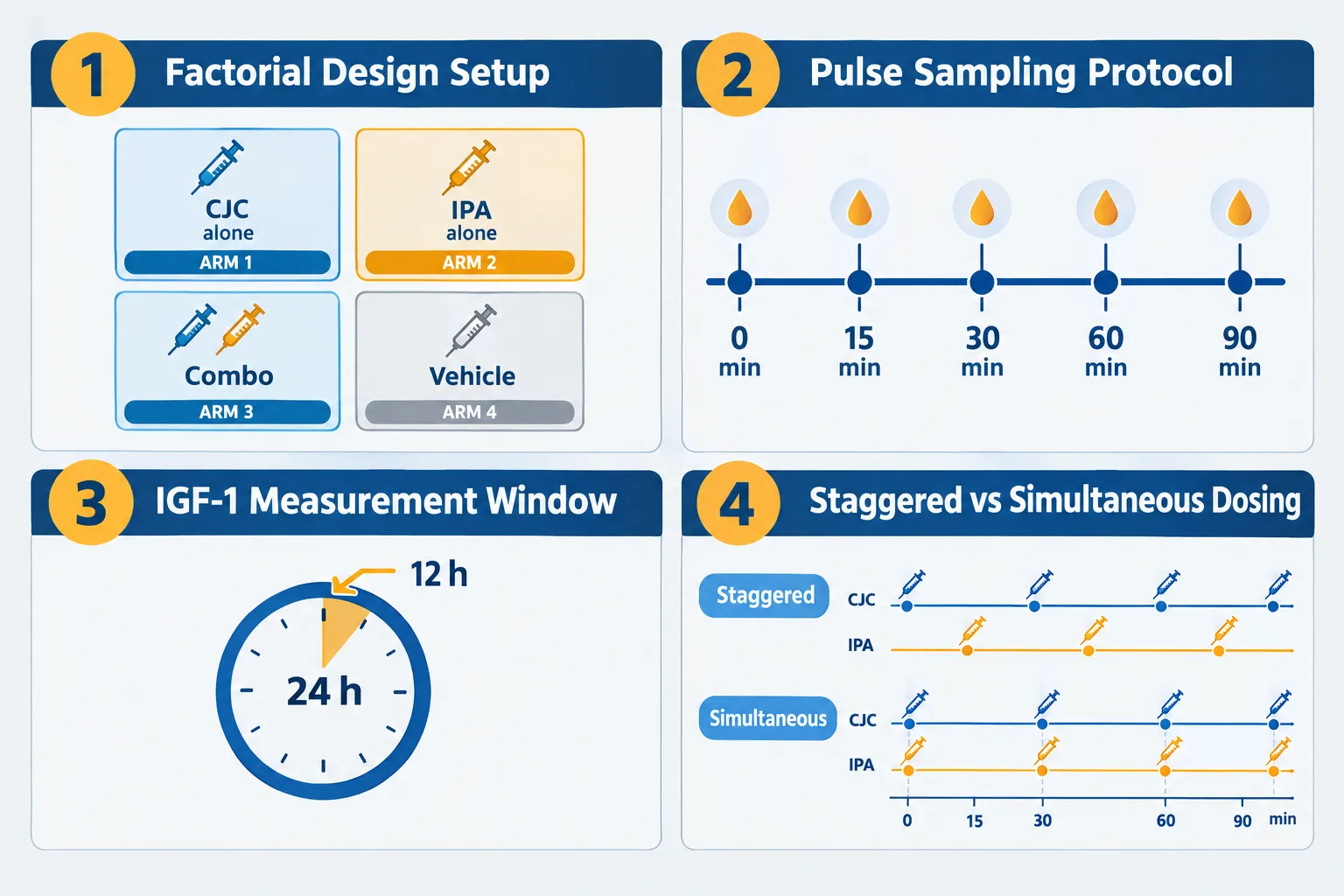
  • IGF-1 levels, the downstream hepatic marker most consistently elevated by sustained GH signaling
  • Trough GH, the baseline between pulses, elevated by CJC-1295
  • Pulse frequency and amplitude, quantified via serial GH sampling
  • Surrogate recovery markers, including sleep architecture, lean tissue preservation, and wound-healing proxies in preclinical models

Researchers exploring CJC-1295 and ipamorelin dosage frameworks will find that timing recommendations in 2026 research guides are explicitly structured around these pulsatility and recovery modeling goals rather than arbitrary schedules.

Current Limitations and the State of Evidence in 2026

Current Limitations and the State of Evidence in 2026

Expert consensus in 2026 is clear: the evidence base for CJC-1295 with ipamorelin: how researchers model GH pulsatility and recovery endpoints remains largely mechanistic and extrapolative. The combination framework draws heavily on classic peer-reviewed GH secretagogue literature, with more recent resources primarily repackaging those data for combination modeling contexts.

Formal clinical outcome trials are sparse. Most published data address single-compound pharmacology, and the "floor + pulse" combination model is largely constructed from:

  1. Individual compound PK-PD studies
  2. Mechanistic inference from GH physiology research
  3. Preclinical and small-sample human secretagogue studies

This does not diminish the research utility of the framework. It does mean that investigators should distinguish between modeled endpoints (simulated from PK-PD parameters) and measured outcomes (from controlled trials). Conflating the two is the most common methodological error in secondary literature on this topic.

Researchers building multi-compound GH-axis protocols may also find value in reviewing tesa and ipamorelin combination protocols for GH-axis modulation, which addresses overlapping design challenges.

For those working with stacked secretagogue approaches, the sermorelin, ipamorelin, and CJC-1295 research stack overview provides a comparative framework across three commonly studied GHRH-pathway compounds.

Conclusion

The pairing of CJC-1295 and ipamorelin in research settings is not arbitrary. It reflects a deliberate attempt to reconstruct physiologically relevant GH pulsatility, elevating the trough with one compound while generating discrete, amplified pulses with the other. The resulting "floor + pulse" model offers a structured framework for studying recovery endpoints including IGF-1 response, pulse amplitude, and tissue-repair surrogates.

Actionable next steps for researchers:

  • Clarify whether DAC or non-DAC CJC-1295 fits the pulsatility profile the study requires before selecting a protocol.
  • Define recovery endpoints precisely, IGF-1, trough GH, pulse frequency, and resensitization time each require different sampling designs.
  • Anchor modeled outputs to published PK-PD parameters rather than anecdotal dosing guides.
  • Distinguish mechanistic models from clinical outcome evidence when interpreting or reporting results.
  • Review multi-compound blend research, such as the tesa, AOD-9604, CJC-1295, and ipamorelin 12mg blend, to understand how researchers extend single-axis models into broader metabolic frameworks.

The science is promising. The rigor with which endpoints are defined will determine whether that promise translates into meaningful data.

https://www.puretestedpeptides.com/wp-content/uploads/2026/08/cjc-1295-with-ipamorelin-how-researchers-model-gh-pulsatility-and-recovery-endpo.webp 1024 1536 https://www.puretestedpeptides.com/wp-content/uploads/2026/01/buy-peptides-online.jpg 2026-08-13 13:04:452026-08-13 13:04:45CJC-1295 With Ipamorelin: How Researchers Model GH Pulsatility and Recovery Endpoints

Tag Archive for: cjc-1295 with ipamorelin

CJC-1295 with Ipamorelin vs. Tesamorelin: Which GHRH Mimetic Stack is Best for Your Research?

CJC-1295 with Ipamorelin vs. Tesamorelin: Which GHRH Mimetic Stack is Best for Your Research?

July 12, 2026/0 Comments/by Pure Tested

Only one growth hormone peptide has ever cleared FDA approval, and it is not the stack that dominates anti-aging clinics worldwide. That contrast sits at the heart of the CJC-1295 with Ipamorelin vs. Tesamorelin debate, and understanding it can sharpen the focus of any serious growth hormone research program in 2026.

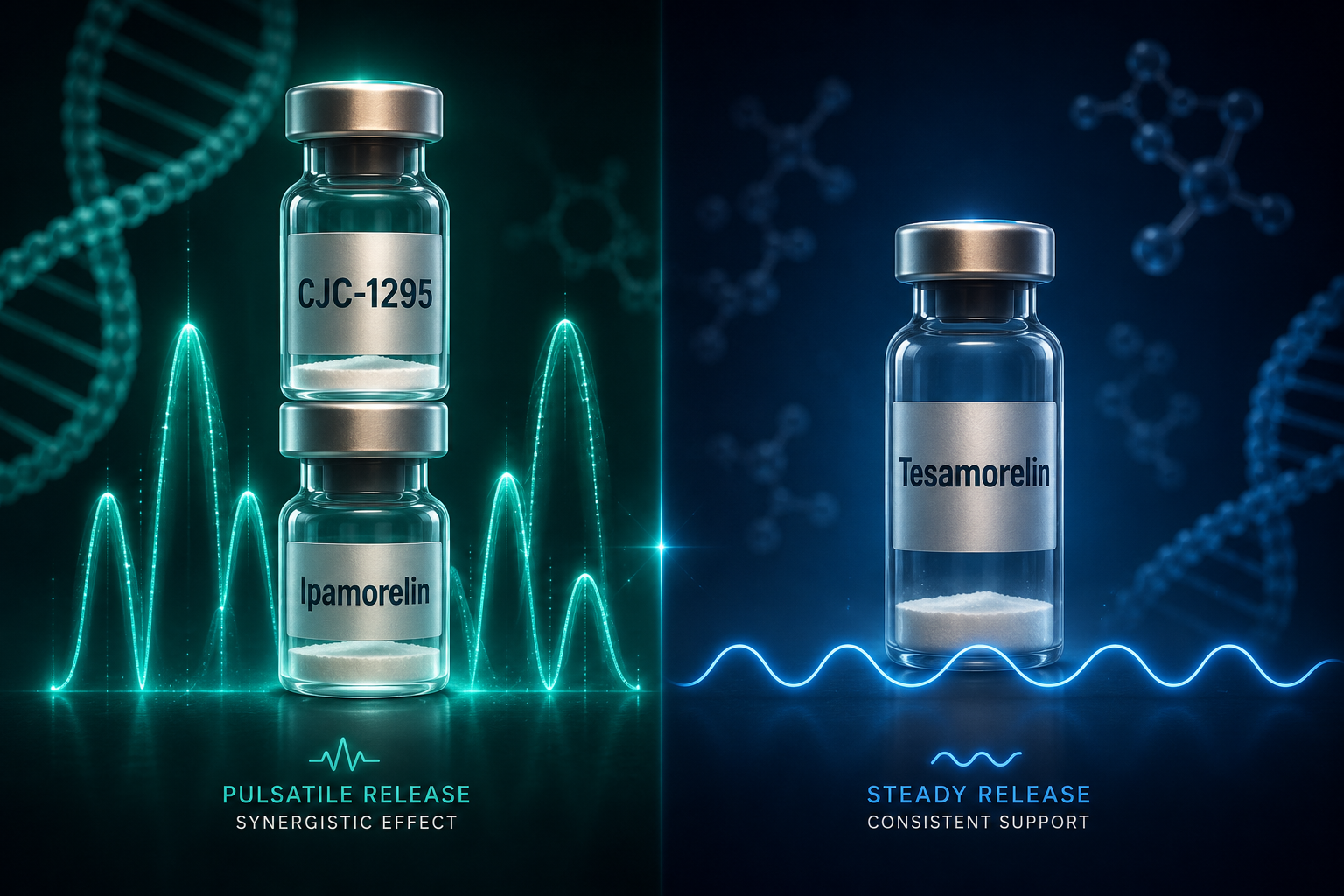
Editorial () split-screen conceptual illustration: left half shows a stylized dual-vial peptide stack labeled 'CJC-1295' and

Key Takeaways

  • CJC-1295 paired with Ipamorelin exploits two distinct pituitary signaling pathways simultaneously, producing a synergistic, pulsatile GH release pattern.
  • Tesamorelin is the only FDA-approved GHRH analog, backed by multiple randomized controlled trials confirming visceral fat reduction.
  • The dual-peptide stack offers more flexible dosing protocols; Tesamorelin follows a fixed, well-validated clinical regimen.
  • Side-effect profiles differ meaningfully: Ipamorelin's selectivity avoids cortisol and prolactin spikes, while Tesamorelin's risks are thoroughly documented from clinical trial data.
  • Choosing between these options depends on the specific research question, dual-pathway GH modulation versus targeted visceral adiposity outcomes.

Mechanisms of Action: How Each Approach Stimulates GH

CJC-1295 is a synthetic GHRH analog that binds GHRH receptors on pituitary somatotroph cells, prompting them to synthesize and release growth hormone. Its standard (non-DAC) form carries a half-life of roughly 30 minutes, closely mimicking the natural GHRH pulse. Researchers interested in CJC-1295 research findings will note that the DAC-modified version extends the half-life dramatically but at the cost of disrupting the pulsatile GH pattern.

Ipamorelin operates through a completely different receptor. Originally developed by Novo Nordisk, it is a selective ghrelin receptor agonist, a Growth Hormone Secretagogue (GHS), with a half-life of approximately two hours. Critically, it does not elevate cortisol or prolactin at research-relevant doses, a selectivity advantage that older GHRPs lack. Explore the Ipamorelin research profile for a deeper look at its receptor pharmacology.

Tesamorelin is a synthetic GHRH analog comprising all 44 amino acids of human GHRH plus a trans-3-hexenoic acid group attached at the N-terminus. This structural modification boosts receptor binding affinity and provides modest resistance to dipeptidyl peptidase-IV (DPP-IV) cleavage. Its half-life ranges from 26 to 38 minutes, similar to native GHRH, yet its clinical performance is meaningfully stronger than unmodified GHRH.

"The synergistic interaction between GHRH-pathway and ghrelin-pathway signaling creates a permissive window that amplifies GH output beyond what either peptide achieves alone."


Synergistic Effects and Research Applications of the CJC-1295 with Ipamorelin vs. Tesamorelin Comparison

Synergistic Effects and Research Applications of the CJC-1295 with Ipamorelin vs. Tesamorelin Comparison

The Dual-Pathway Advantage of the Stack

When CJC-1295 and Ipamorelin are co-administered, they act on two distinct receptor populations on the same somatotroph cell. CJC-1295 activates the GHRH receptor; Ipamorelin activates the ghrelin receptor (GHS-R1a). The result is a synergistic amplification of GH pulse amplitude while preserving the natural pulsatile secretion pattern, a research-relevant feature because pulsatility governs downstream IGF-1 signaling and metabolic effects.

This combination is the most widely used GH peptide stack in anti-aging research settings. Typical research protocols administer 100-300 mcg of each peptide in a single subcutaneous injection, one to three times daily, often timed before sleep to align with endogenous GH peaks. Cycles commonly run 8-12 weeks on a 5-days-on, 2-days-off schedule.

For researchers exploring broader peptide combination strategies, the Sermorelin, Ipamorelin, and CJC-1295 stack overview provides useful context on stacking GHRH analogs with secretagogues.

Tesamorelin's Targeted Research Niche

Tesamorelin's research value is concentrated and well-defined. It received FDA approval in 2010 under the brand name Egrifta for HIV-associated lipodystrophy, making it the only GH-axis peptide with a validated clinical indication. Multiple randomized controlled trials using CT-measured visceral fat as an endpoint confirm its efficacy in reducing abdominal adiposity.

For researchers focused on visceral fat outcomes, the tesa dosage for fat loss resource outlines the validated 2 mg subcutaneous daily protocol with abdominal injection site rotation.

The trade-off is scope: Tesamorelin's evidence base is deep but narrow. The CJC-1295/Ipamorelin stack has broader exploratory application but far less published clinical-trial data supporting body composition outcomes specifically.

Feature CJC-1295 + Ipamorelin Tesamorelin
FDA Approval No Yes (2010, Egrifta)
Half-Life ~30 min / ~2 hr 26-38 min
Mechanism GHRH + GHS dual-pathway GHRH analog only
Primary Research Use Broad GH modulation Visceral fat reduction
Clinical RCT Data Limited Multiple trials

Choosing the Right Option: Practical Guidance for Researchers Comparing CJC-1295 with Ipamorelin vs. Tesamorelin

Choosing the Right Option: Practical Guidance for Researchers Comparing CJC-1295 with Ipamorelin vs. Tesamorelin

Matching Peptide Choice to Research Objectives

Choose the CJC-1295/Ipamorelin stack when:

  • The research question involves broad GH pulse modulation
  • Dual-pathway receptor pharmacology is the focus
  • Flexible dosing frequency is operationally important
  • Cortisol and prolactin neutrality is a study requirement

Choose Tesamorelin when:

  • Visceral adiposity is the primary endpoint
  • Regulatory-grade clinical precedent is required
  • A single-compound, once-daily protocol simplifies the study design
  • Comparison to FDA-approved benchmarks is methodologically necessary

Researchers comparing these agents against other GHRH-related compounds may also find value in the tesa vs. sermorelin comparison and the broader tesa research sourcing guide.

Blend Formulations as a Third Path

A growing area of interest involves pre-formulated blends that combine all three peptides. The Tesamorelin, CJC-1295, and Ipamorelin 12 mg blend consolidates the GHRH analog and GHS mechanisms into a single research compound, reducing preparation complexity. Detailed dosage guidance for the 12 mg blend is available for researchers designing protocols around this formulation.


Conclusion

The CJC-1295 with Ipamorelin vs. Tesamorelin question does not have a single universal answer, it has a research-design answer. The dual-peptide stack delivers synergistic, pulsatile GH stimulation through complementary receptor pathways, making it the more versatile tool for exploratory GH-axis research. Tesamorelin offers something the stack cannot: a validated, FDA-backed clinical record with reproducible visceral fat endpoints.

Actionable next steps for researchers in 2026:

  1. Define the primary endpoint before selecting a compound, body composition, GH pulse amplitude, or receptor pharmacology each favor a different agent.
  2. Review the IPA and Sermorelin stack research overview to benchmark against adjacent peptide combinations.
  3. Consult the tesa daily dosage protocols to ensure any Tesamorelin study arm aligns with established clinical parameters.
  4. Consider pre-blended formulations when protocol simplicity and multi-pathway coverage are both priorities.

Rigorous peptide research begins with matching the compound's mechanism to the study's question, and on that basis, both options have a legitimate, distinct place in the modern growth hormone research toolkit.

https://www.puretestedpeptides.com/wp-content/uploads/2026/07/cjc-1295-with-ipamorelin-vs-tesa-which-ghrh-mimetic-stack-is-best-for-you.png 1024 1536 Pure Tested https://www.puretestedpeptides.com/wp-content/uploads/2026/01/buy-peptides-online.jpg Pure Tested2026-07-12 13:03:352026-07-20 15:00:14CJC-1295 with Ipamorelin vs. Tesamorelin: Which GHRH Mimetic Stack is Best for Your Research?
×

Helpful Links

  • My account
  • Cart
  • Checkout
  • Refund and Returns Policy
  • Privacy Policy
  • SMS Privacy Policy
  • Login
  • My Account
  • Logout

USA Made Lab Tested Peptides

All products are sold for research, laboratory, or analytical purposes only, and are not for human consumption


Pure Tested Peptides is a chemical supplier. Pure Tested Peptides is not a compounding / chemical compounding facility as defined under 503A of the Federal Food, Drug, and Cosmetic act. Pure Tested Peptides is not an outsourcing facility as defined under 503B of the Federal Food, Drug, and Cosmetic act.

The statements made within this website have not been evaluated by the US Food and Drug Administration. The products we offer are not intended to diagnose, treat, cure or prevent any disease.

Human/Animal Consumption Prohibited. Laboratory/In-Vitro Experimental Use Only

Scroll to top Scroll to top Scroll to top