Call or Text 727-513-9780
  • Shopping Cart Shopping Cart
    0Shopping Cart
Pure Tested Peptides | America's most trusted Peptides for sale online
  • Peptides for sale
    • Oral Peptides for sale
      • Peptide Capsules for sale
      • BPC 157 Capsules 1000mcg
      • SLU-PP-332 Capsules | 1000 mcg
      • 5-Amino-1MQ 50mg Capsules
      • Tesofensine 500mcg
    • All Peptides for sale
    • Peptide Sprays
      • BPC 157 Nasal Spray Kit
      • BPC-157 TB500 Nasal Spray Kit
      • Semax Nasal Spray 10mg
      • Selank – Nasal Spray Kit – 10mg
      • Epithalon 50MG Nasal Spray Kit
      • Ipamorelin 10mg Nasal Spray
      • Klow Nasal Spray (BPC-157 + TB-500 + GHK-Cu + KPV) | 80mg
      • Hulk Nasal Spray Tesa / Ipa Blend 6/3 MG
      • Klow Nasal Spray
      • NAD + 500 mg Nasal Spray
      • PT-141 Nasal Spray Kit
    • GHRH Peptides
      • Ipa Peptides
      • CJC-1295 Peptides
        • CJC-1295 with DAC 5 mg
        • CJC-1295 without DAC 5 mg
        • CJC-1295 Ipa 10mg
      • Tesa Peptides
        • Tesa Peptide
        • Tesa 20 mg
    • GHK-Cu Peptides
      • All GHK-Cu Peptides
      • GHK-Cu 100mg
      • KLOW Peptide Blend – Buy KLOW blend online
    • BPC Peptides
      • All BPC Peptides
      • BPC-157
      • BPC-157 TB-500
      • BPC 157 capsules 1000mcg
    • SLU-PP-332 Peptides
      • All SLU-PP-332 Peptides
      • SLU-PP-332 5mg
    • GLP3 Peptides
    • PT-141 Peptides
      • PT-141 Peptides for sale
      • PT-141 10mg
      • PT-141 Nasal Spray
    • CAG Peptides
      • Lipo-C Peptide Blend
      • CAG 5mg
      • CAG 10mg
    • MOTS-C Peptides
      • MOTS-C Peptides for sale
      • MOTS-c peptide
      • MOTS-c 10mg *6 pack*
    • 5 Amino 1MQ Peptides
      • 5 Amino 1MQ Peptides for sale
      • 5-Amino-1MQ 50mg Capsules
      • 5-Amino-1MQ 5mg
    • Epithalon Peptides
      • Epithalon Peptides for sale
      • Epithalon 10mg
      • Epithalon 50mg
  • Shop
    • GLPs
      • 5-Amino-1MQ 50mg Capsules
      • 5-Amino-1MQ 5mg
      • L-Carnitine 500mg/ml
      • Tesofensine 500mcg
      • SLU-PP-332 5mg
      • MOTS-c 10mg *6 pack*
    • Epithalon & BPC Peptides
      • Epithalon 10mg
      • Epithalon 50mg
      • BPC-157
      • BPC 157 capsules 1000mcg
      • BPC-157 TB-500
      • BPC-157 TB500 Nasal Spray Kit
      • BPC 157 Nasal Spray Kit
    • BPC TB-500 & NAD+ Peptides
      • NAD+ 500 mg
      • KLOW Peptide Blend – Buy KLOW blend online
      • GLOW Peptide Blend
      • TB 500 5mg
      • BPC 157 capsules 1000mcg – Supplement
      • BPC 157 Nasal Spray Kit
      • BPC-157
      • BPC-157 TB500 Nasal Spray Kit
      • BPC-157 TB-500
      • BPC 157 capsules 1000mcg
    • LL-37 Peptide
      • LL-37 10 mg
    • MOTS-C & Selank
      • MOTS-c peptide
      • Selank 10mg
    • GHK Peptides
      • GHK-Cu 100mg
      • GLOW Peptide Blend
      • KLOW Peptide Blend – Buy KLOW blend online
  • COAs
  • Wholesale
    • Wholesale Peptides for sale
  • PTP FAQ
  • Affiliates
    • Selank Peptide: Advanced Pharmacological Mechanisms Underlying Its Anxiolytic and Nootropic Effects in Research
      • 5-Amino-1MQ Peptide: Detailed Mechanisms of NNMT Inhibition and Its Impact on Cellular Metabolism Research
        • MOTS-C Peptide: Unraveling Its Role in Mitochondrial Dynamics and Energy Metabolism Research
          • Epithalon Peptide and Telomerase Regulation: Investigating Its Impact on Cellular Senescence and Lifespan Research Models
            • GLP2-T vs GLP2 Tirz Peptide: Understanding the Naming, Mechanistic Nuances, and Research Implications for Gut Health
      • Peptides and Polypeptides in Modern Pharmacology: What Research on Metoprolol, Prednisone, and Amlodipine Reveals
        • Polypeptide Peptides vs NSAIDs: What Naproxen and Diclofenac Teach Tissue-Repair Researchers About BPC‑157 and TB‑500
          • Peptides and Polypeptides in Endocrine Pharmacology: How GLP-1, GLP-2, and GLP-3 Retatrutide Differ From Classic Drugs Like Prednisone and Amlodipine
          • 5‑Amino‑1MQ Peptide and NNMT Inhibition: How It Compares With Statins Like Atorvastatin in Adipose and Lipid Metabolism Research
      • Enclomiphene, Estrogen Receptor Signaling, and Luteinizing Phase Biology: What Hormone Researchers Should Measure
        • Mesenchymal Stem Cells, BPC‑157, and GHK‑Cu: How Tissue Repair Peptides Compare With Classic NSAIDs Like Naproxen in Injury Models
          • Peptide Calculator Use Cases Beyond Growth Hormone: Working Through GLP‑3 Retatrutide, MOTS‑c, and BPC‑157 Research Dosing
        • Polypeptide Peptides in Endocrine and Metabolic Pharmacology: Lessons From Amlodipine, Prednisone, and Metoprolol
        • Peptides Calculator for Advanced Blends: Worked Examples for Tesamorelin, CJC‑1295, and Ipamorelin Stacks
          • Peptides and Polypeptides in Human Physiology: How Molecular Size Shapes Research Applications
            • Selank Peptide: Advanced Pharmacological Mechanisms Underlying Its Anxiolytic and Nootropic Effects in Research
          • 5-Amino-1MQ Peptide: Detailed Mechanisms of NNMT Inhibition and Its Impact on Cellular Metabolism Research
            • MOTS-C Peptide: Unraveling Its Role in Mitochondrial Dynamics and Energy Metabolism Research
              • Epithalon Peptide and Telomerase Regulation: Investigating Its Impact on Cellular Senescence and Lifespan Research Models
                • GLP2-T vs GLP2 Tirz Peptide: Understanding the Naming, Mechanistic Nuances, and Research Implications for Gut Health
                  • Peptides and Polypeptides in Endocrine Pharmacology: How GLP-1, GLP-2, and GLP-3 Retatrutide Differ From Classic Drugs Like Prednisone and Amlodipine
                    • Polypeptide Peptides vs NSAIDs: What Naproxen and Diclofenac Teach Tissue-Repair Researchers About BPC‑157 and TB‑500
                      • Peptides and Polypeptides in Modern Pharmacology: What Research on Metoprolol, Prednisone, and Amlodipine Reveals
                        • 5‑Amino‑1MQ Peptide and NNMT Inhibition: How It Compares With Statins Like Atorvastatin in Adipose and Lipid Metabolism Research
                        • Enclomiphene, Estrogen Receptor Signaling, and Luteinizing Phase Biology: What Hormone Researchers Should Measure
                        • Mesenchymal Stem Cells, BPC‑157, and GHK‑Cu: How Tissue Repair Peptides Compare With Classic NSAIDs Like Naproxen in Injury Models
                        • Peptide Calculator Use Cases Beyond Growth Hormone: Working Through GLP‑3 Retatrutide, MOTS‑c, and BPC‑157 Research Dosing
                        • Polypeptide Peptides in Endocrine and Metabolic Pharmacology: Lessons From Amlodipine, Prednisone, and Metoprolol
                        • Peptides Calculator for Advanced Blends: Worked Examples for Tesamorelin, CJC‑1295, and Ipamorelin Stacks
                        • Peptides and Polypeptides in Human Physiology: How Molecular Size Shapes Research Applications
                        • Selank Peptide: Advanced Pharmacological Mechanisms Underlying Its Anxiolytic and Nootropic Effects in Research
                        • MOTS-C Peptide: Unraveling Its Role in Mitochondrial Dynamics and Energy Metabolism Research
                        • Peptides and Polypeptides in Modern Pharmacology: What Research on Metoprolol, Prednisone, and Amlodipine Reveals
                        • Peptides and Polypeptides in Endocrine Pharmacology: How GLP-1, GLP-2, and GLP-3 Retatrutide Differ From Classic Drugs Like Prednisone and Amlodipine
                        • 5-Amino-1MQ Peptide: Detailed Mechanisms of NNMT Inhibition and Its Impact on Cellular Metabolism Research
                        • Mesenchymal Stem Cells, BPC‑157, and GHK‑Cu: How Tissue Repair Peptides Compare With Classic NSAIDs Like Naproxen in Injury Models
                        • Peptide Calculator Use Cases Beyond Growth Hormone: Working Through GLP‑3 Retatrutide, MOTS‑c, and BPC‑157 Research Dosing
                        • GLP2-T vs GLP2 Tirz Peptide: Understanding the Naming, Mechanistic Nuances, and Research Implications for Gut Health
                        • Polypeptide Peptides in Endocrine and Metabolic Pharmacology: Lessons From Amlodipine, Prednisone, and Metoprolol
                        • Polypeptide Peptides vs NSAIDs: What Naproxen and Diclofenac Teach Tissue-Repair Researchers About BPC‑157 and TB‑500
                        • Peptides and Polypeptides in Human Physiology: How Molecular Size Shapes Research Applications
                        • Peptides Calculator for Advanced Blends: Worked Examples for Tesamorelin, CJC‑1295, and Ipamorelin Stacks
                        • 5‑Amino‑1MQ Peptide and NNMT Inhibition: How It Compares With Statins Like Atorvastatin in Adipose and Lipid Metabolism Research
                        • Enclomiphene, Estrogen Receptor Signaling, and Luteinizing Phase Biology: What Hormone Researchers Should Measure
                        • Epithalon Peptide and Telomerase Regulation: Investigating Its Impact on Cellular Senescence and Lifespan Research Models
                        • Best research protocol Klow blend
                        • best time to take BPC-157
                        • best time to take DSIP (Delta Sleep Inducing Peptide)
                        • best time to take CJC-1295
                        • best time to take AOD-9604
                        • best time to take Follistatin 344
                        • best time to take Ipamorelin
                        • best time to take MK-677 (Ibutamoren)
                        • best time to take Ligandrol (LGD-4033) — research compound
                        • best time to take Ostarine (MK-2866) — research compound
                        • best time to take GHK-CU
                        • best time to take TB-500
                        • best time to take MOTS-c
                        • best time to take Semax
                        • best time to take RAD-140 (Testolone) — research compound
                        • best time to take Thymosin Alpha-1
                        • best time to take PEG-MGF
                        • Biolife Plasma, Octapharma Plasma, and Research Peptides: How Plasma Donation Labs Differ From Peptide Suppliers
                        • best time to take YK-11 — research compound
                        • best time to take PT-141 (Bremelanotide)
                        • Best research protocol Klow blend
                        • 5-Amino-1MQ and MOTS-C Synergy: Metabolic Signaling, Mitochondria, and Research Design
                        • BPC-157 and TB-500: Investigating Their Combined Effects on Angiogenesis and Cellular Migration in Tissue Repair Models
                        • BPC-157 Peptide: Gut Barrier Function, Inflammation, and Tissue-Recovery Research
                        • 5‑Amino‑1MQ and MOTS‑c Synergy in Metabolic Research: Designing NNMT and Mitochondrial Biogenesis Stacks
                        • CJC-1295 with DAC vs. Without DAC: Half-Life, Release Kinetics, and Research Implications
                        • CJC‑1295 with DAC vs. Without DAC: Expanding on Half‑Life Differences Using Tesamorelin and Ipamorelin Blend Case Studies
                        • Collagen Biology and Copper‑Binding Peptides: How GHK‑Cu, Glow Blend, and Klow Blend Interact with Skin and Connective Tissue
                        • Collagen Biology and Regenerative Peptides: How GHK‑Cu, Glow Blend, and Klow Blend Affect Extracellular Matrix Research
                    • DNA, Telomeres, and Longevity Peptides: Positioning Epithalon and MOTS‑c in Genetic Aging Research
                      • Enclomiphene Citrate: serm Mechanism, Testosterone Research, and Stack Compatibility
                        • Enclomiphene vs Enclomiphene Citrate: Formulation, Bioavailability, and Research Distinctions
                        • Epithalon Peptide Research: Telomerase Activation, Aging, and Pineal Gland Function
                        • Estrogen Receptor Signaling and Enclomiphene: How Selective Modulators Compare with Classic Polypeptide Hormones
                        • GHK-Cu Peptide: Advanced Mechanisms in Extracellular Matrix Remodeling and Wound Healing Research
                        • GHK-Cu Peptide: Collagen Synthesis, Wound Repair, and Skin-Barrier Research Models
                        • GLP-1 vs GLP-3 vs GLP-2: Peptide Classification and Research Applications
                        • GLP-2 Peptide Research Guide: Gut Barrier Function, Nutrient Absorption, and Intestinal Recovery Models
                        • GLP-3 Retatrutide vs. GLP-1 Drugs: What Triple-Agonist Biology Changes in Research Models
                        • Ipamorelin and Tesamorelin Combination: Synergistic GH Secretagogue Research and Dosing Protocols
                        • GLP2 Tirz Peptide: What It Is, Why the Name Exists, and How Researchers Should Interpret It
                        • Klow Blend Peptide Nasal Spray: What the Formulation Is Trying to Do in Cognitive Research
                        • Mitochondria, NNMT Inhibition, and Peptide Modulators: Where MOTS‑c and 5‑Amino‑1MQ Fit in Cellular Energy Research
                        • MOTS-c Peptide: Mitochondrial Function, Energy Metabolism, and What Researchers Measure
                        • MOTS-c vs. 5-Amino-1MQ: Which Metabolic Research Questions Each Compound Actually Answers
                        • Nasal Spray Peptides: Bioavailability, Administration, and Semax/Selank Research Applications
                        • PT-141 Peptide Research: Mechanism of Action and Melanocortin Receptor Signaling
                        • Retatrutide for Research: Mechanism, Structure, and GLP-1/GLP-3 Dual Action
                        • Retatrutide for Obesity and Type 2 Diabetes: What the Latest Trial Data Suggest
                        • Tesofensine Peptide Research: Mechanism, Appetite Suppression, and Neuropeptide Y Pathways
  • Contact
    • Contact Customer Service
    • Text Customer Support
  • About US
  • Shop all peptides
  • Affiliate Program
    • Affiliate Signup
  • Login / Register Login / Register Page Link Login / Register Page Link
  • Click to open the search input field Click to open the search input field Search
  • Menu Menu

Tag Archive for: cyclodextrin peptide formulation

Intranasal Peptide Delivery Breakthroughs: Evaluating Klow Nasal Spray Solvent Carrier Matrices and Absorption Rates

Intranasal Peptide Delivery Breakthroughs: Evaluating Klow Nasal Spray Solvent Carrier Matrices and Absorption Rates

September 18, 2026/0 Comments/in Uncategorized/by

Only about 1-2% of orally administered peptides survive the gastrointestinal tract and reach systemic circulation, a figure that has driven researchers toward alternative delivery routes for decades. Among those alternatives, intranasal delivery has quietly matured into one of the most scientifically compelling options available in 2026, particularly for peptides targeting the central nervous system. The field of intranasal peptide delivery breakthroughs: evaluating Klow nasal spray solvent carrier matrices and absorption rates sits at the intersection of formulation chemistry, mucosal biology, and clinical pharmacokinetics, and the pace of innovation is accelerating.

Key Takeaways

  • Small peptides below roughly 1 kDa can achieve intranasal bioavailability of 50-70% relative to injection, while larger unprotected peptides often fall near zero.
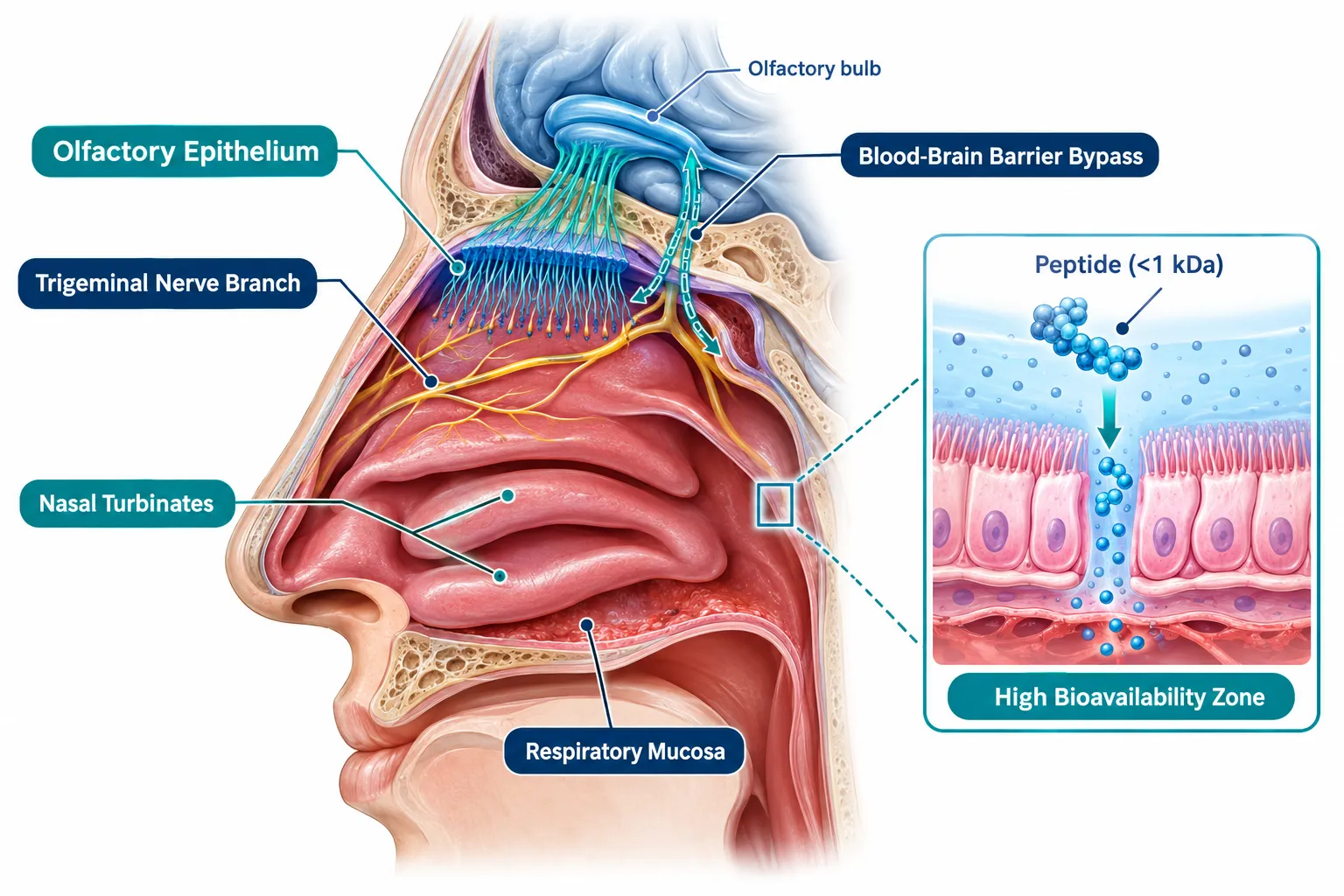
  • The nose-to-brain route via olfactory and trigeminal pathways allows meaningful CNS exposure within 15-30 minutes of dosing, bypassing much of the blood-brain barrier.
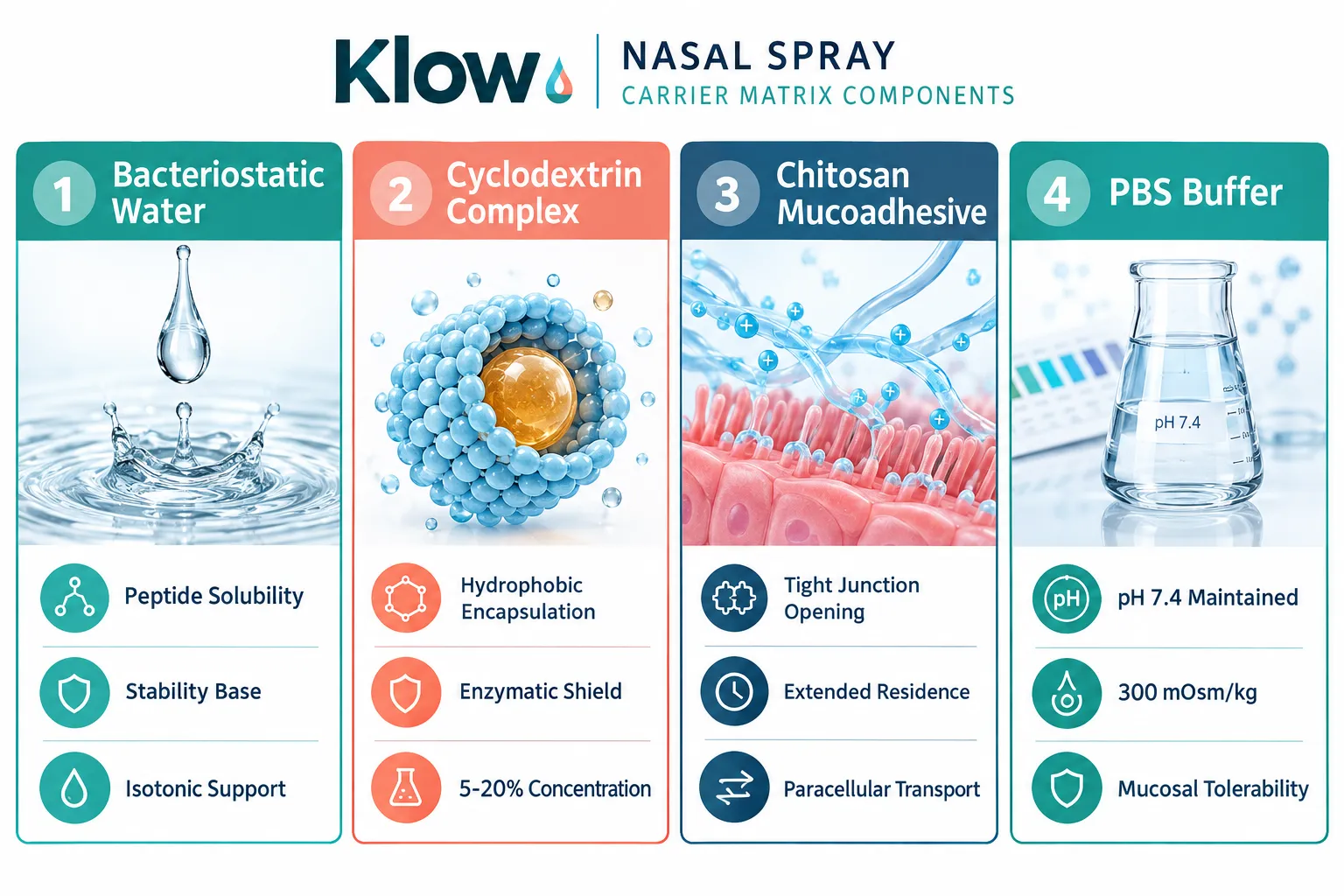
  • Klow nasal spray employs a multi-component carrier matrix, bacteriostatic water, phosphate-buffered saline, cyclodextrin complexes, and chitosan, each targeting a specific absorption barrier.
  • Standout peptides like Selank (92.8% intranasal bioavailability) and Semax (60-70%) demonstrate what optimized nasal formulations can achieve.
  • No peer-reviewed human pharmacokinetic dataset for Klow existed as of mid-2026; it remains a research-stage formulation requiring further clinical validation.

How the Nose-to-Brain Pathway Works
How the Nose-to-Brain Pathway Works

The nasal cavity offers two distinct absorption highways. The first is systemic: peptides cross the respiratory and olfactory mucosa, enter capillary beds, and distribute through the bloodstream. The second, and far more strategically valuable for CNS-active peptides, is direct nose-to-brain transport along the olfactory and trigeminal nerve bundles. This pathway allows molecules to reach brain tissue while partially circumventing the blood-brain barrier, which blocks most large molecules from entering the CNS through conventional routes.

Timing data from neuropeptide research underscores why this matters. A meaningful fraction of an intranasally administered peptide can reach the CNS within approximately 15-30 minutes via these neural pathways, with peak CNS concentrations typically occurring around 60-90 minutes after dosing. For researchers studying peptides with rapid-onset CNS effects, such as sleep modulation or anxiolysis, this kinetic profile is highly relevant.

Bioavailability benchmarks worth knowing:

Peptide Category Intranasal Bioavailability (vs. injection)
Small peptides (<1 kDa), optimized 50-70%
Favorable small peptides (general estimate) 20-50%
Larger peptides, no enhancers 0-10%
Systemic absorption, most marketed peptides 1-10%
Selank (optimized nasal formulation) ~92.8%
Semax (optimized nasal formulation) ~60-70%

The Selank figure, approximately 92.8% relative bioavailability, stands as one of the highest values reported for any peptide in current literature. Semax similarly achieves 60-70%, positioning both as benchmark candidates for nasal spray research. For those exploring GLP nasal spray formulations, these benchmarks provide useful context for evaluating what optimized delivery can realistically achieve.

Klow Nasal Spray Solvent Carrier Matrices: A Technical Breakdown
Klow Nasal Spray Solvent Carrier Matrices: A Technical Breakdown

Understanding the intranasal peptide delivery breakthroughs: evaluating Klow nasal spray solvent carrier matrices and absorption rates requires a close look at the individual components in Klow's formulation toolkit. Each carrier solvent serves a specific function in overcoming the nasal mucosa's natural barriers to peptide absorption.

Bacteriostatic Water and Phosphate-Buffered Saline

Bacteriostatic water provides a clean, preservative-containing base that maintains peptide solubility without introducing reactive excipients. Phosphate-buffered saline (PBS) at approximately 300 mOsm/kg and pH 7.4 maintains isotonicity, a critical factor for mucosal tolerability. Solutions that deviate significantly from physiologic osmolarity can trigger mucociliary clearance, which sweeps peptides away from the absorption surface before they can permeate.

Cyclodextrin Complexes

Hydroxypropyl-beta-cyclodextrin (HPbCD) at concentrations of roughly 5-20% plays a dual role. Its hollow, cage-like structure encapsulates hydrophobic peptide segments, improving aqueous solubility. Simultaneously, the cyclodextrin shell shields peptide bonds from enzymatic degradation by nasal mucosal enzymes, a significant obstacle for peptides with exposed cleavage sites. This protection is particularly relevant for GLP-3 RT 20mg peptide nasal spray formulations and similar compounds where stability during transit is essential.

Chitosan Mucoadhesive Components

Chitosan, a positively charged polysaccharide, addresses two separate absorption barriers simultaneously. First, it adheres to the negatively charged nasal mucosa, extending residence time from the typical 15-20 minutes (driven by mucociliary clearance) to a longer contact window. Second, chitosan transiently opens tight junctions between epithelial cells, enhancing paracellular transport, the route by which larger peptides that cannot cross cell membranes directly can still permeate the mucosa.

"The combination of extended mucosal contact time and transient tight junction modulation is what separates advanced chitosan-based matrices from simple aqueous solutions."

Maintaining solution pH in the 4.5-6.5 range further optimizes mucosal tolerability and ensures that chitosan remains in its protonated, mucoadhesive form. Researchers exploring peptide dosing protocols should note that pH and osmolarity consistency across batches directly affects reproducibility of absorption.

Absorption Rates, Limitations, and What the Evidence Actually Shows
Absorption Rates, Limitations, and What the Evidence Actually Shows

The most important caveat in any honest evaluation of intranasal peptide delivery breakthroughs: evaluating Klow nasal spray solvent carrier matrices and absorption rates is this: as of mid-2026, no publicly available, peer-reviewed pharmacokinetic dataset exists that quantifies Klow's specific intranasal absorption rate, systemic bioavailability percentage, or CNS exposure in humans. Current materials describe theoretical nose-to-brain advantages and general formulation strategies. Klow should therefore be classified as experimental rather than an established therapeutic.

This does not diminish the scientific value of its carrier matrix design. Marketed peptide drugs, desmopressin and calcitonin among them, demonstrate that excipient engineering can push intranasal bioavailability well above the 1-10% baseline typical of unoptimized peptides. Desmopressin formulations, for example, use polysorbate surfactants and citric buffer systems within oil-in-water emulsions to stabilize the peptide and promote consistent nasal uptake.

For peptides like those in the GLP-R nasal category and cagrilinitide peptide research lines, the absence of an approved GLP-1 receptor agonist nasal spray as of 2026 reflects the gap between formulation sophistication and clinical validation. Consumer interest is high, but regulatory approval requires robust pharmacokinetic, safety, and efficacy data.

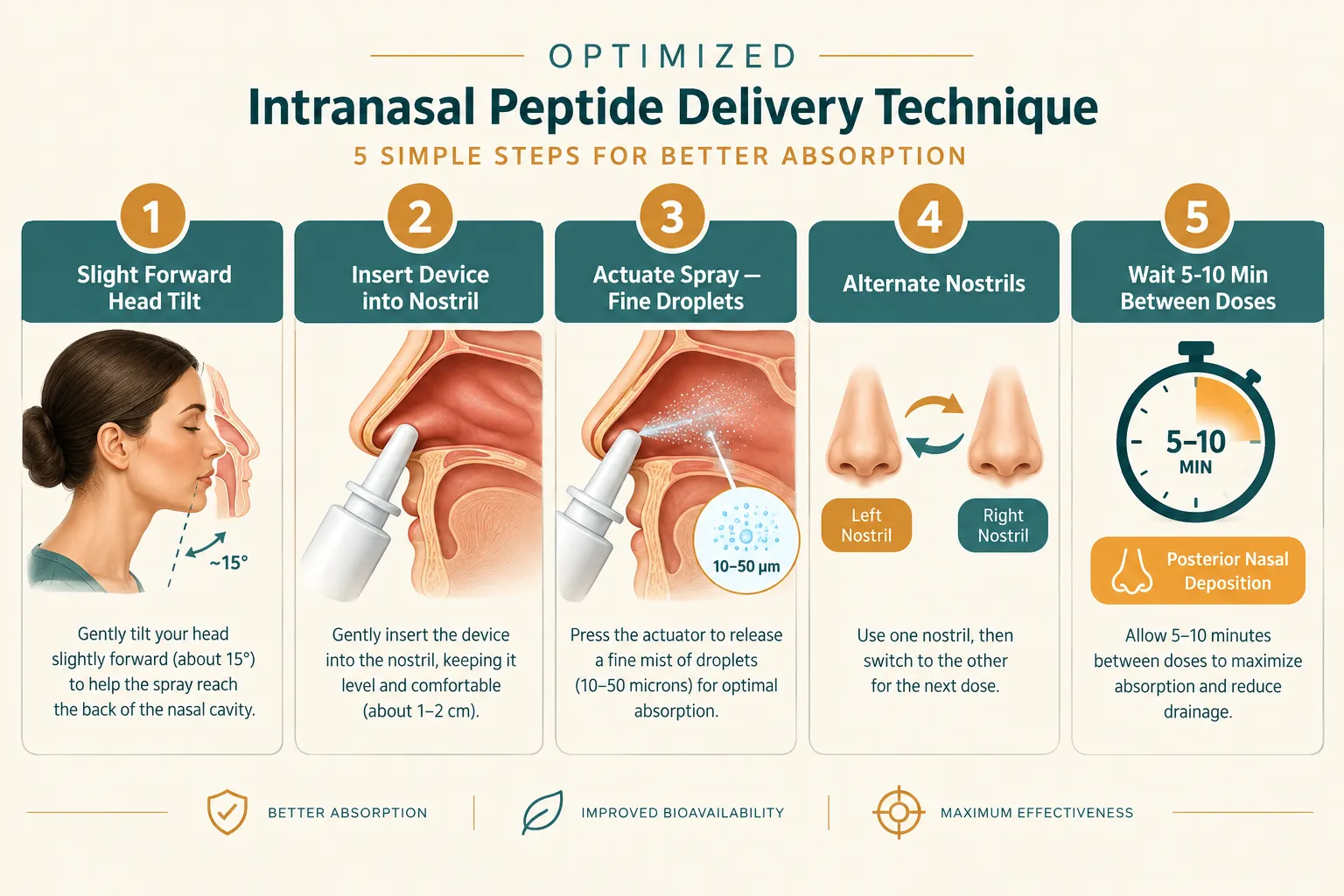
Practical factors that affect absorption consistency:

  • Head position: A slight forward tilt improves posterior nasal deposition, placing the peptide closer to the olfactory epithelium.
  • Nostril alternation: Splitting doses between nostrils reduces local mucosal saturation.
  • Inter-dose interval: Waiting 5-10 minutes between split doses allows initial absorption before the next actuation.
  • Device droplet size: Standardized droplet size from the spray device directly affects where the aerosol deposits in the nasal cavity.
  • Nasal condition: Congestion, inflammation, or recent rhinitis significantly reduces reproducible absorption.

Researchers interested in related peptide categories, including SS31 peptide formulations and Tesamorelin peptide benefits, will find that many of the same formulation principles apply across peptide classes, even when the molecular targets differ substantially.

Conclusion

Intranasal peptide delivery has moved well beyond simple aqueous sprays. The carrier matrix science behind formulations like Klow, combining bacteriostatic water, PBS buffering, cyclodextrin encapsulation, and chitosan mucoadhesion, reflects a sophisticated, multi-barrier approach to a genuinely difficult pharmacokinetic problem. Benchmark data from Selank and Semax demonstrates that intranasal bioavailability above 60% is achievable for optimized small peptides, providing a credible target for next-generation formulations.

Actionable next steps for researchers and informed consumers:

  1. Prioritize formulations with documented pH (4.5-6.5) and osmolarity (~300 mOsm/kg) data, as these parameters directly predict mucosal tolerability.
  2. Treat any intranasal peptide product lacking peer-reviewed human PK data, including Klow, as research-stage only, and apply appropriate institutional or regulatory oversight.
  3. Standardize administration technique (head tilt, nostril alternation, inter-dose interval) before drawing conclusions about a formulation's absorption performance.
  4. Monitor the peer-reviewed literature for emerging human bioavailability studies on cyclodextrin-chitosan matrices, as this is the area most likely to yield validated data in the near term.
  5. Consult resources on GLP peptide for sale categories and related nasal delivery platforms to stay current with formulation developments as the field matures.

The science is compelling. The gap between compelling science and validated clinical data remains real, and closing that gap is the defining challenge for intranasal peptide delivery in 2026 and beyond.

https://www.puretestedpeptides.com/wp-content/uploads/2026/09/intranasal-peptide-delivery-breakthroughs-evaluating-klow-nasal-spray-solvent-ca.webp 1024 1536 https://www.puretestedpeptides.com/wp-content/uploads/2026/01/buy-peptides-online.jpg 2026-09-18 13:07:012026-09-18 13:07:01Intranasal Peptide Delivery Breakthroughs: Evaluating Klow Nasal Spray Solvent Carrier Matrices and Absorption Rates
×

Helpful Links

  • My account
  • Cart
  • Checkout
  • Refund and Returns Policy
  • Privacy Policy
  • SMS Privacy Policy
  • Login
  • My Account
  • Logout

USA Made Lab Tested Peptides

All products are sold for research, laboratory, or analytical purposes only, and are not for human consumption


Pure Tested Peptides is a chemical supplier. Pure Tested Peptides is not a compounding / chemical compounding facility as defined under 503A of the Federal Food, Drug, and Cosmetic act. Pure Tested Peptides is not an outsourcing facility as defined under 503B of the Federal Food, Drug, and Cosmetic act.

The statements made within this website have not been evaluated by the US Food and Drug Administration. The products we offer are not intended to diagnose, treat, cure or prevent any disease.

Human/Animal Consumption Prohibited. Laboratory/In-Vitro Experimental Use Only

Scroll to top Scroll to top Scroll to top