Call or Text 727-513-9780
  • Shopping Cart Shopping Cart
    0Shopping Cart
Pure Tested Peptides | America's most trusted Peptides for sale online
  • Peptides for sale
    • Oral Peptides for sale
      • Peptide Capsules for sale
      • BPC 157 Capsules 1000mcg
      • SLU-PP-332 Capsules | 1000 mcg
      • 5-Amino-1MQ 50mg Capsules
      • Tesofensine 500mcg
    • All Peptides for sale
    • Peptide Sprays
      • BPC 157 Nasal Spray Kit
      • BPC-157 TB500 Nasal Spray Kit
      • Semax Nasal Spray 10mg
      • Selank – Nasal Spray Kit – 10mg
      • Epithalon 50MG Nasal Spray Kit
      • Ipamorelin 10mg Nasal Spray
      • Klow Nasal Spray (BPC-157 + TB-500 + GHK-Cu + KPV) | 80mg
      • Hulk Nasal Spray Tesa / Ipa Blend 6/3 MG
      • Klow Nasal Spray
      • NAD + 500 mg Nasal Spray
      • PT-141 Nasal Spray Kit
    • GHRH Peptides
      • Ipa Peptides
      • CJC-1295 Peptides
        • CJC-1295 with DAC 5 mg
        • CJC-1295 without DAC 5 mg
        • CJC-1295 Ipa 10mg
      • Tesa Peptides
        • Tesa Peptide
        • Tesa 20 mg
    • GHK-Cu Peptides
      • All GHK-Cu Peptides
      • GHK-Cu 100mg
      • KLOW Peptide Blend – Buy KLOW blend online
    • BPC Peptides
      • All BPC Peptides
      • BPC-157
      • BPC-157 TB-500
      • BPC 157 capsules 1000mcg
    • SLU-PP-332 Peptides
      • All SLU-PP-332 Peptides
      • SLU-PP-332 5mg
    • GLP3 Peptides
    • PT-141 Peptides
      • PT-141 Peptides for sale
      • PT-141 10mg
      • PT-141 Nasal Spray
    • CAG Peptides
      • Lipo-C Peptide Blend
      • CAG 5mg
      • CAG 10mg
    • MOTS-C Peptides
      • MOTS-C Peptides for sale
      • MOTS-c peptide
      • MOTS-c 10mg *6 pack*
    • 5 Amino 1MQ Peptides
      • 5 Amino 1MQ Peptides for sale
      • 5-Amino-1MQ 50mg Capsules
      • 5-Amino-1MQ 5mg
    • Epithalon Peptides
      • Epithalon Peptides for sale
      • Epithalon 10mg
      • Epithalon 50mg
  • Shop
    • GLPs
      • 5-Amino-1MQ 50mg Capsules
      • 5-Amino-1MQ 5mg
      • L-Carnitine 500mg/ml
      • Tesofensine 500mcg
      • SLU-PP-332 5mg
      • MOTS-c 10mg *6 pack*
    • Epithalon & BPC Peptides
      • Epithalon 10mg
      • Epithalon 50mg
      • BPC-157
      • BPC 157 capsules 1000mcg
      • BPC-157 TB-500
      • BPC-157 TB500 Nasal Spray Kit
      • BPC 157 Nasal Spray Kit
    • BPC TB-500 & NAD+ Peptides
      • NAD+ 500 mg
      • KLOW Peptide Blend – Buy KLOW blend online
      • GLOW Peptide Blend
      • TB 500 5mg
      • BPC 157 capsules 1000mcg – Supplement
      • BPC 157 Nasal Spray Kit
      • BPC-157
      • BPC-157 TB500 Nasal Spray Kit
      • BPC-157 TB-500
      • BPC 157 capsules 1000mcg
    • LL-37 Peptide
      • LL-37 10 mg
    • MOTS-C & Selank
      • MOTS-c peptide
      • Selank 10mg
    • GHK Peptides
      • GHK-Cu 100mg
      • GLOW Peptide Blend
      • KLOW Peptide Blend – Buy KLOW blend online
  • COAs
  • Wholesale
    • Wholesale Peptides for sale
  • PTP FAQ
  • Affiliates
    • Selank Peptide: Advanced Pharmacological Mechanisms Underlying Its Anxiolytic and Nootropic Effects in Research
      • 5-Amino-1MQ Peptide: Detailed Mechanisms of NNMT Inhibition and Its Impact on Cellular Metabolism Research
        • MOTS-C Peptide: Unraveling Its Role in Mitochondrial Dynamics and Energy Metabolism Research
          • Epithalon Peptide and Telomerase Regulation: Investigating Its Impact on Cellular Senescence and Lifespan Research Models
            • GLP2-T vs GLP2 Tirz Peptide: Understanding the Naming, Mechanistic Nuances, and Research Implications for Gut Health
      • Peptides and Polypeptides in Modern Pharmacology: What Research on Metoprolol, Prednisone, and Amlodipine Reveals
        • Polypeptide Peptides vs NSAIDs: What Naproxen and Diclofenac Teach Tissue-Repair Researchers About BPC‑157 and TB‑500
          • Peptides and Polypeptides in Endocrine Pharmacology: How GLP-1, GLP-2, and GLP-3 Retatrutide Differ From Classic Drugs Like Prednisone and Amlodipine
          • 5‑Amino‑1MQ Peptide and NNMT Inhibition: How It Compares With Statins Like Atorvastatin in Adipose and Lipid Metabolism Research
      • Enclomiphene, Estrogen Receptor Signaling, and Luteinizing Phase Biology: What Hormone Researchers Should Measure
        • Mesenchymal Stem Cells, BPC‑157, and GHK‑Cu: How Tissue Repair Peptides Compare With Classic NSAIDs Like Naproxen in Injury Models
          • Peptide Calculator Use Cases Beyond Growth Hormone: Working Through GLP‑3 Retatrutide, MOTS‑c, and BPC‑157 Research Dosing
        • Polypeptide Peptides in Endocrine and Metabolic Pharmacology: Lessons From Amlodipine, Prednisone, and Metoprolol
        • Peptides Calculator for Advanced Blends: Worked Examples for Tesamorelin, CJC‑1295, and Ipamorelin Stacks
          • Peptides and Polypeptides in Human Physiology: How Molecular Size Shapes Research Applications
            • Selank Peptide: Advanced Pharmacological Mechanisms Underlying Its Anxiolytic and Nootropic Effects in Research
          • 5-Amino-1MQ Peptide: Detailed Mechanisms of NNMT Inhibition and Its Impact on Cellular Metabolism Research
            • MOTS-C Peptide: Unraveling Its Role in Mitochondrial Dynamics and Energy Metabolism Research
              • Epithalon Peptide and Telomerase Regulation: Investigating Its Impact on Cellular Senescence and Lifespan Research Models
                • GLP2-T vs GLP2 Tirz Peptide: Understanding the Naming, Mechanistic Nuances, and Research Implications for Gut Health
                  • Peptides and Polypeptides in Endocrine Pharmacology: How GLP-1, GLP-2, and GLP-3 Retatrutide Differ From Classic Drugs Like Prednisone and Amlodipine
                    • Polypeptide Peptides vs NSAIDs: What Naproxen and Diclofenac Teach Tissue-Repair Researchers About BPC‑157 and TB‑500
                      • Peptides and Polypeptides in Modern Pharmacology: What Research on Metoprolol, Prednisone, and Amlodipine Reveals
                        • 5‑Amino‑1MQ Peptide and NNMT Inhibition: How It Compares With Statins Like Atorvastatin in Adipose and Lipid Metabolism Research
                        • Enclomiphene, Estrogen Receptor Signaling, and Luteinizing Phase Biology: What Hormone Researchers Should Measure
                        • Mesenchymal Stem Cells, BPC‑157, and GHK‑Cu: How Tissue Repair Peptides Compare With Classic NSAIDs Like Naproxen in Injury Models
                        • Peptide Calculator Use Cases Beyond Growth Hormone: Working Through GLP‑3 Retatrutide, MOTS‑c, and BPC‑157 Research Dosing
                        • Polypeptide Peptides in Endocrine and Metabolic Pharmacology: Lessons From Amlodipine, Prednisone, and Metoprolol
                        • Peptides Calculator for Advanced Blends: Worked Examples for Tesamorelin, CJC‑1295, and Ipamorelin Stacks
                        • Peptides and Polypeptides in Human Physiology: How Molecular Size Shapes Research Applications
                        • Selank Peptide: Advanced Pharmacological Mechanisms Underlying Its Anxiolytic and Nootropic Effects in Research
                        • MOTS-C Peptide: Unraveling Its Role in Mitochondrial Dynamics and Energy Metabolism Research
                        • Peptides and Polypeptides in Modern Pharmacology: What Research on Metoprolol, Prednisone, and Amlodipine Reveals
                        • Peptides and Polypeptides in Endocrine Pharmacology: How GLP-1, GLP-2, and GLP-3 Retatrutide Differ From Classic Drugs Like Prednisone and Amlodipine
                        • 5-Amino-1MQ Peptide: Detailed Mechanisms of NNMT Inhibition and Its Impact on Cellular Metabolism Research
                        • Mesenchymal Stem Cells, BPC‑157, and GHK‑Cu: How Tissue Repair Peptides Compare With Classic NSAIDs Like Naproxen in Injury Models
                        • Peptide Calculator Use Cases Beyond Growth Hormone: Working Through GLP‑3 Retatrutide, MOTS‑c, and BPC‑157 Research Dosing
                        • GLP2-T vs GLP2 Tirz Peptide: Understanding the Naming, Mechanistic Nuances, and Research Implications for Gut Health
                        • Polypeptide Peptides in Endocrine and Metabolic Pharmacology: Lessons From Amlodipine, Prednisone, and Metoprolol
                        • Polypeptide Peptides vs NSAIDs: What Naproxen and Diclofenac Teach Tissue-Repair Researchers About BPC‑157 and TB‑500
                        • Peptides and Polypeptides in Human Physiology: How Molecular Size Shapes Research Applications
                        • Peptides Calculator for Advanced Blends: Worked Examples for Tesamorelin, CJC‑1295, and Ipamorelin Stacks
                        • 5‑Amino‑1MQ Peptide and NNMT Inhibition: How It Compares With Statins Like Atorvastatin in Adipose and Lipid Metabolism Research
                        • Enclomiphene, Estrogen Receptor Signaling, and Luteinizing Phase Biology: What Hormone Researchers Should Measure
                        • Epithalon Peptide and Telomerase Regulation: Investigating Its Impact on Cellular Senescence and Lifespan Research Models
                        • Best research protocol Klow blend
                        • best time to take BPC-157
                        • best time to take DSIP (Delta Sleep Inducing Peptide)
                        • best time to take CJC-1295
                        • best time to take AOD-9604
                        • best time to take Follistatin 344
                        • best time to take Ipamorelin
                        • best time to take MK-677 (Ibutamoren)
                        • best time to take Ligandrol (LGD-4033) — research compound
                        • best time to take Ostarine (MK-2866) — research compound
                        • best time to take GHK-CU
                        • best time to take TB-500
                        • best time to take MOTS-c
                        • best time to take Semax
                        • best time to take RAD-140 (Testolone) — research compound
                        • best time to take Thymosin Alpha-1
                        • best time to take PEG-MGF
                        • Biolife Plasma, Octapharma Plasma, and Research Peptides: How Plasma Donation Labs Differ From Peptide Suppliers
                        • best time to take YK-11 — research compound
                        • best time to take PT-141 (Bremelanotide)
                        • Best research protocol Klow blend
                        • 5-Amino-1MQ and MOTS-C Synergy: Metabolic Signaling, Mitochondria, and Research Design
                        • BPC-157 and TB-500: Investigating Their Combined Effects on Angiogenesis and Cellular Migration in Tissue Repair Models
                        • BPC-157 Peptide: Gut Barrier Function, Inflammation, and Tissue-Recovery Research
                        • 5‑Amino‑1MQ and MOTS‑c Synergy in Metabolic Research: Designing NNMT and Mitochondrial Biogenesis Stacks
                        • CJC-1295 with DAC vs. Without DAC: Half-Life, Release Kinetics, and Research Implications
                        • CJC‑1295 with DAC vs. Without DAC: Expanding on Half‑Life Differences Using Tesamorelin and Ipamorelin Blend Case Studies
                        • Collagen Biology and Copper‑Binding Peptides: How GHK‑Cu, Glow Blend, and Klow Blend Interact with Skin and Connective Tissue
                        • Collagen Biology and Regenerative Peptides: How GHK‑Cu, Glow Blend, and Klow Blend Affect Extracellular Matrix Research
                    • DNA, Telomeres, and Longevity Peptides: Positioning Epithalon and MOTS‑c in Genetic Aging Research
                      • Enclomiphene Citrate: serm Mechanism, Testosterone Research, and Stack Compatibility
                        • Enclomiphene vs Enclomiphene Citrate: Formulation, Bioavailability, and Research Distinctions
                        • Epithalon Peptide Research: Telomerase Activation, Aging, and Pineal Gland Function
                        • Estrogen Receptor Signaling and Enclomiphene: How Selective Modulators Compare with Classic Polypeptide Hormones
                        • GHK-Cu Peptide: Advanced Mechanisms in Extracellular Matrix Remodeling and Wound Healing Research
                        • GHK-Cu Peptide: Collagen Synthesis, Wound Repair, and Skin-Barrier Research Models
                        • GLP-1 vs GLP-3 vs GLP-2: Peptide Classification and Research Applications
                        • GLP-2 Peptide Research Guide: Gut Barrier Function, Nutrient Absorption, and Intestinal Recovery Models
                        • GLP-3 Retatrutide vs. GLP-1 Drugs: What Triple-Agonist Biology Changes in Research Models
                        • Ipamorelin and Tesamorelin Combination: Synergistic GH Secretagogue Research and Dosing Protocols
                        • GLP2 Tirz Peptide: What It Is, Why the Name Exists, and How Researchers Should Interpret It
                        • Klow Blend Peptide Nasal Spray: What the Formulation Is Trying to Do in Cognitive Research
                        • Mitochondria, NNMT Inhibition, and Peptide Modulators: Where MOTS‑c and 5‑Amino‑1MQ Fit in Cellular Energy Research
                        • MOTS-c Peptide: Mitochondrial Function, Energy Metabolism, and What Researchers Measure
                        • MOTS-c vs. 5-Amino-1MQ: Which Metabolic Research Questions Each Compound Actually Answers
                        • Nasal Spray Peptides: Bioavailability, Administration, and Semax/Selank Research Applications
                        • PT-141 Peptide Research: Mechanism of Action and Melanocortin Receptor Signaling
                        • Retatrutide for Research: Mechanism, Structure, and GLP-1/GLP-3 Dual Action
                        • Retatrutide for Obesity and Type 2 Diabetes: What the Latest Trial Data Suggest
                        • Tesofensine Peptide Research: Mechanism, Appetite Suppression, and Neuropeptide Y Pathways
  • Contact
    • Contact Customer Service
    • Text Customer Support
  • About US
  • Shop all peptides
  • Affiliate Program
    • Affiliate Signup
  • Login / Register Login / Register Page Link Login / Register Page Link
  • Click to open the search input field Click to open the search input field Search
  • Menu Menu

Tag Archive for: electrolyte management

Liquid IV and Electrolyte Management in Intensive Peptide Studies: How Osmolality Affects GLP-3, MOTS-c, and Growth Hormone Secretagogue Experiments

Liquid IV and Electrolyte Management in Intensive Peptide Studies: How Osmolality Affects GLP-3, MOTS-c, and Growth Hormone Secretagogue Experiments

September 22, 2026/0 Comments/in Uncategorized/by

Osmolality errors in peptide research do not announce themselves, they quietly distort absorption data, inflate variability, and make promising compounds look weaker than they are. As investigators push deeper into metabolic peptide science in 2026, the intersection of Liquid IV and electrolyte management in intensive peptide studies has become a surprisingly practical concern. Understanding how osmolality shapes the behavior of GLP-3, MOTS-c, and growth hormone secretagogue experiments is no longer a footnote, it is a core protocol decision.

Key Takeaways

  • Beverage osmolality directly affects intestinal fluid absorption; hypotonic solutions in the 200-260 mmol/kg range produce the greatest net uptake.
  • Liquid IV functions as a lower-electrolyte, ORS-range hypotonic drink (~46 mmol/L sodium) that supports rapid plasma volume restoration without excessive sodium loading.
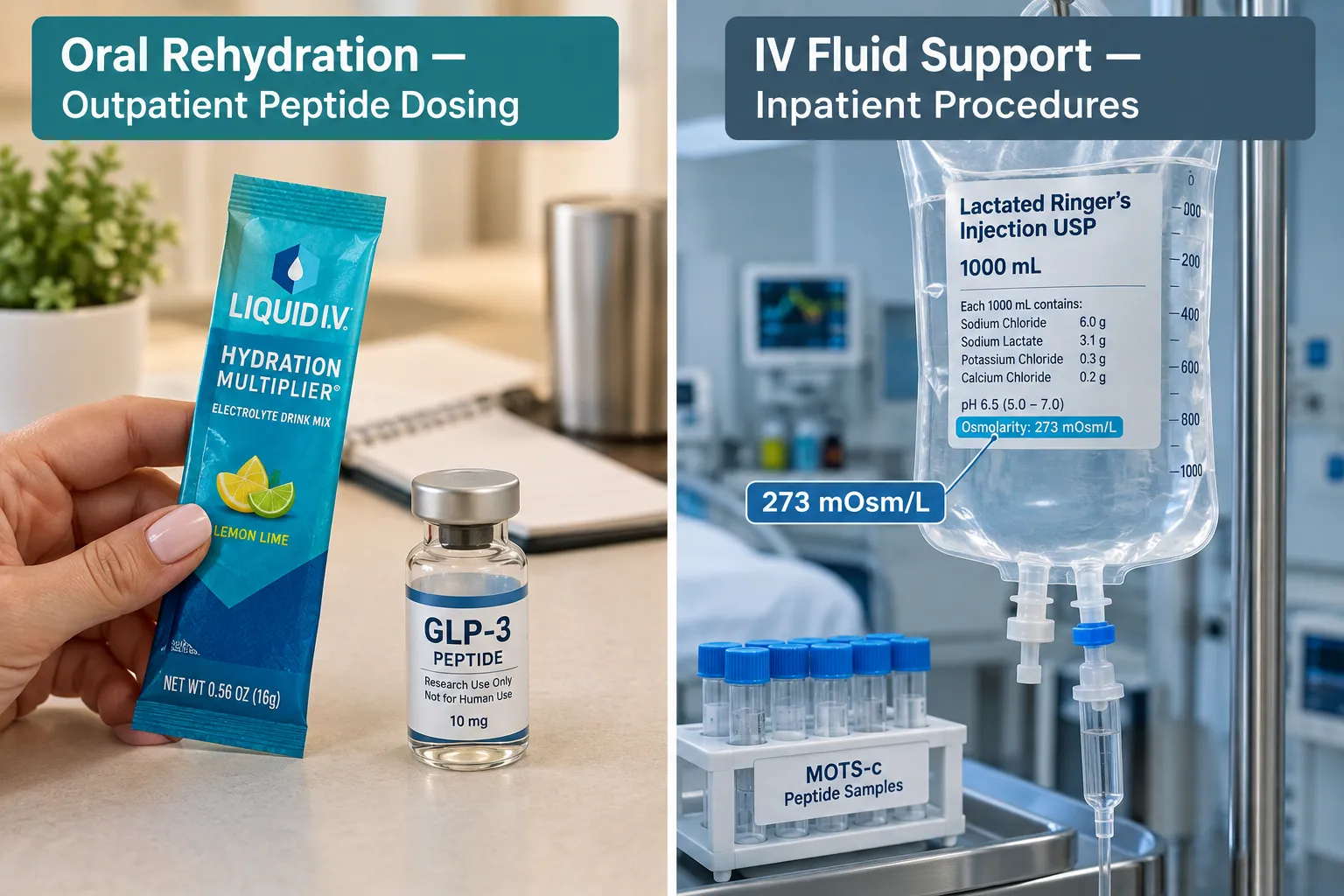
  • For outpatient peptide dosing days, hypotonic ORS-style beverages are preferred; inpatient or invasive procedures call for isotonic IV fluids such as lactated Ringer's (~273 mOsm/L).
  • No published data directly link beverage osmolality to GLP-3, MOTS-c, or GH secretagogue pharmacokinetics, current guidance extrapolates from ORS and sports hydration science.
  • Standardizing pre-dose hydration volume and osmolality is one of the most cost-effective ways to reduce endpoint variability in intensive metabolic peptide trials.

Why Osmolality Is a First-Order Variable in Peptide Research
Why Osmolality Is a First-Order Variable in Peptide Research

Every solution administered to a research subject, oral or intravenous, carries an osmolality value that the gut and vasculature must reconcile. When that value is mismatched with physiological norms, the consequences ripple through absorption kinetics, intravascular volume, and ultimately the endpoints investigators are trying to measure.

Osmolality vs. tonicity: a critical distinction

These terms are often used interchangeably but are not the same:

Term Definition Practical Example
Osmolality Total solute concentration (mmol/kg) Includes all dissolved particles
Tonicity Effective concentration of non-permeant solutes Sodium and potassium drive tonicity
Osmolarity Solute concentration per liter (mmol/L) Used for IV fluid labeling

Normal saline (0.9% NaCl) carries an osmolarity of approximately 308 mOsm/L, while lactated Ringer's sits near 273 mOsm/L. Pairing peptide infusions with markedly hyperosmolar solutions risks rapid fluid shifts and cellular dehydration, outcomes that confound metabolic endpoints.

The intestinal absorption curve

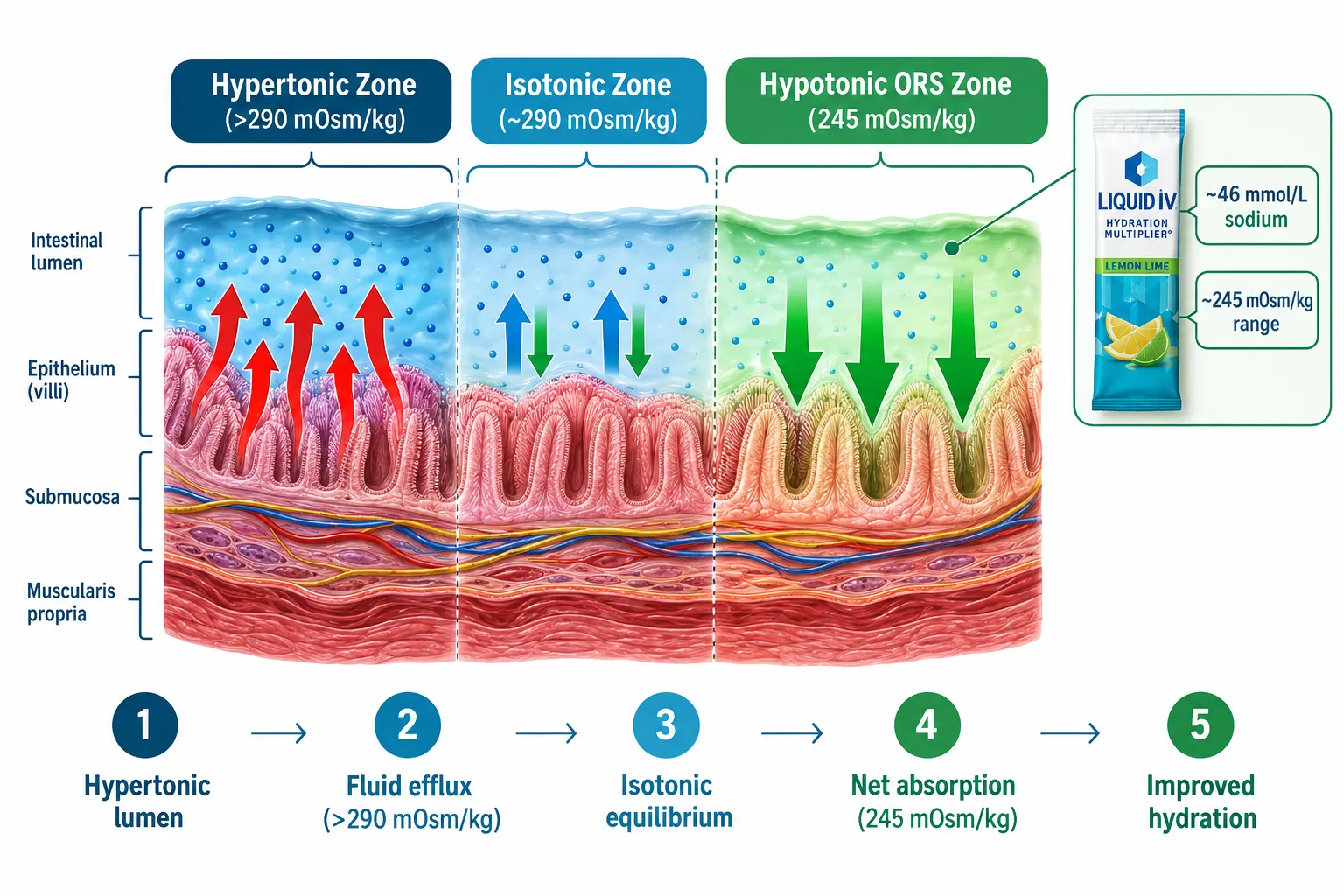
Research on oral rehydration solutions consistently shows that solutions in the 200-260 mmol/kg range produce the greatest net intestinal fluid absorption. The WHO reduced-osmolarity ORS formulation, 245 mmol/kg total, 75 mmol/L sodium, 75 mmol/L glucose, was specifically redesigned from an earlier 311 mmol/kg formula after perfusion studies demonstrated that the lower osmolality reduced stool output and improved safety. The lesson for peptide researchers: the fluid vehicle matters as much as the peptide itself.

"The fluid vehicle matters as much as the peptide itself, osmolality errors quietly distort absorption data before investigators ever reach their primary endpoint."

Higher carbohydrate concentrations increase beverage osmolality, which in turn slows net intestinal fluid uptake. Gastric emptying can proceed at up to approximately 15-20 mL/min when high gastric volume is maintained with water or dilute carbohydrate solutions, but high-osmolality drinks reduce small-intestinal absorption efficiency rather than dramatically slowing gastric transit. This distinction is important when designing pre-dose hydration windows for oral peptide formulations.


Liquid IV and Electrolyte Management in Intensive Peptide Studies: Profiling the ORS Landscape
Liquid IV and Electrolyte Management in Intensive Peptide Studies: Profiling the ORS Landscape

Liquid IV Hydration Multiplier is manufacturer-classified as a hypotonic oral rehydration solution, positioned in the ORS range rather than as a conventional sports drink. A standard Lemon Lime stick in 473 mL delivers approximately 500 mg sodium, corresponding to roughly 46 mmol/L, which is about 61% of the WHO reduced-osmolarity ORS sodium level of 75 mmol/L. Its glucose concentration runs approximately 1.7 times the WHO formulation, which nudges osmolality slightly upward compared with minimal-glucose medical ORS, yet the product remains in a hypotonic range overall.

What this profile means for peptide study design:

  • Sodium load is modest. At 46 mmol/L, Liquid IV contributes less sodium than standard WHO ORS, making it less likely to perturb plasma sodium in subjects undergoing frequent blood sampling.
  • Rapid plasma volume restoration is supported by the hypotonic positioning, which favors net fluid absorption across the gut wall.
  • Gastrointestinal distress risk is lower compared with hypertonic sports drinks, which is relevant during caloric restriction protocols common in GLP-3 and growth hormone secretagogue experiments.

For researchers working with GLP-3 peptide compounds or combination formulations such as the GLP3-Reta-CAG 10mg blend, pre-dose hydration standardization using an ORS-range beverage like Liquid IV is a pragmatic approach to reducing absorption variability, even though direct pharmacokinetic data pairing the two remain unpublished as of 2026.

Comparing hydration vehicle options:

Solution Approx. Osmolality Sodium (mmol/L) Best Use Case
Plain water ~0 mOsm/kg 0 Short, low-intensity sessions
Liquid IV (ORS-range) ~245 mOsm/kg ~46 Outpatient dosing days
WHO reduced ORS 245 mmol/kg 75 Clinical rehydration
Lactated Ringer's (IV) ~273 mOsm/L 130 Inpatient/invasive procedures
Normal saline (IV) ~308 mOsm/L 154 Standard IV maintenance

How Osmolality Affects GLP-3, MOTS-c, and Growth Hormone Secretagogue Experiments
How Osmolality Affects GLP-3, MOTS-c, and Growth Hormone Secretagogue Experiments

The three peptide classes most actively studied in metabolic research in 2026, GLP-family analogs, mitochondrial-derived MOTS-c, and growth hormone secretagogues, each interact with hydration status through distinct but overlapping mechanisms.

GLP-3 and Gut-Acting Peptide Formulations

GLP-3 receptor agonists act at the intestinal level, making luminal osmotic conditions directly relevant. A hypertonic pre-dose environment can reduce mucosal blood flow and alter enterocyte function, potentially blunting receptor engagement. Investigators sourcing GLP-3R 10mg research peptide or the GLP-3R 30mg format should consider specifying both volume and osmolality of pre-dose fluids in their protocols to limit this confounding variable.

MOTS-c and Mitochondrial Metabolic Endpoints

Native MOTS-c is not FDA-approved, and no large-scale completed human safety trial exists for the native peptide as of mid-2026. CohBar's analog CB4211 completed a phase 1a/1b trial in nonalcoholic fatty liver disease and obesity, showing approximately 21% reduction in ALT and 28% reduction in AST, but hydration protocols in that work followed routine clinical standards rather than purpose-designed ORS regimens.

A new randomized, double-blind, placebo-controlled human trial targeting prediabetes and obesity (often referenced as MOTS-MET) began enrollment in 2026 with 120 planned participants. Its primary endpoints, insulin sensitivity and weight-related measures, are precisely the outcomes most sensitive to hydration-driven volume shifts and electrolyte fluctuations. Researchers exploring MOTS-c and elamipretide relationships should note that fluid and electrolyte monitoring will likely become more tightly controlled as human programs expand.

Growth Hormone Secretagogues and Fluid Dynamics

Growth hormone secretagogue experiments frequently involve overnight fasting, timed blood draws, and caloric restriction, conditions that elevate dehydration risk. Plasma volume contraction can independently elevate GH pulse amplitude, creating a confound if hydration is not standardized. Using a hypotonic ORS-range beverage during outpatient dosing windows, and isotonic IV fluids during inpatient procedures, limits this source of variability. For detailed guidance on peptide dosing considerations, protocol-level decisions about solvent osmolality belong alongside dose and timing parameters.

Key protocol recommendations for 2026 intensive peptide studies:

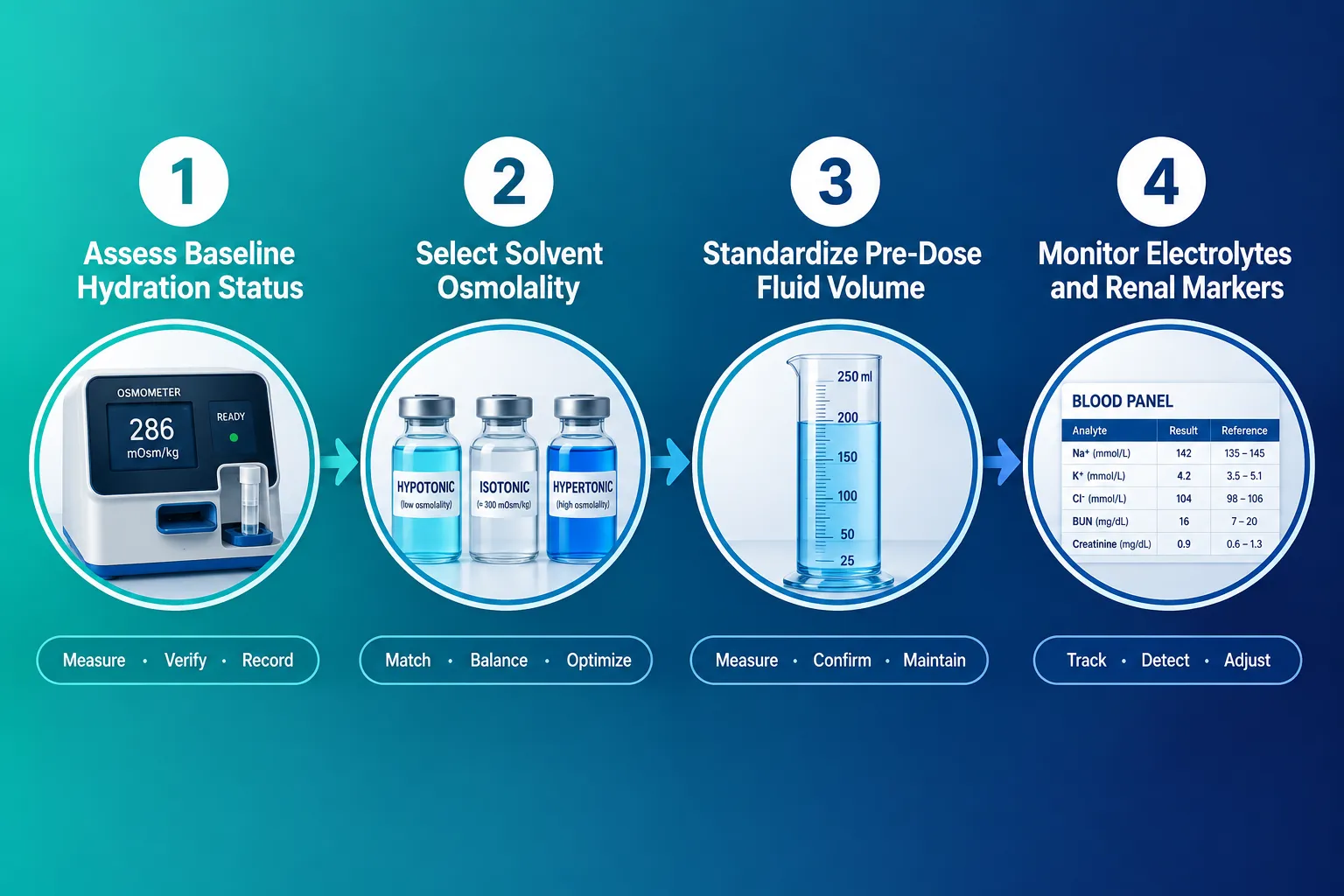
  1. Specify pre-dose hydration volume and osmolality in the written protocol, not just "water ad libitum."
  2. Use hypotonic ORS-range beverages (200-260 mmol/kg) on outpatient dosing days to support absorption and plasma volume.
  3. Switch to isotonic IV fluids (lactated Ringer's or normal saline) during inpatient or invasive procedures.
  4. Monitor serum electrolytes and renal markers at baseline and at each major time point.
  5. Document beverage brand, volume, and timing as a protocol variable, not background noise.

For researchers who want to understand the broader structural context of these peptides before designing hydration protocols, the Peptides 101 for Research-Use Only Buyers resource provides foundational coverage of GLP-3, MOTS-c, and related compounds. Ensuring peptide purity is equally critical, lab tested peptides with verified certificates of analysis reduce the risk of osmolality-independent confounds from impurity loads.


Conclusion

The role of Liquid IV and electrolyte management in intensive peptide studies is not a peripheral concern, it is a protocol-level variable that shapes the reliability of GLP-3, MOTS-c, and growth hormone secretagogue data. Osmolality governs intestinal fluid absorption, intravascular volume, and the stability of metabolic endpoints that these peptides are designed to influence.

Actionable next steps for research teams in 2026:

  • Audit existing protocols for any language that leaves pre-dose hydration unspecified.
  • Adopt a tiered hydration strategy: hypotonic ORS-range beverages for outpatient days, isotonic IV fluids for inpatient or invasive sessions.
  • Treat beverage osmolality as a documented protocol variable alongside dose, route, and timing.
  • Monitor serum sodium, potassium, and creatinine at each major sampling point to detect hydration-driven confounds early.
  • As human MOTS-c and GLP-family trials scale beyond phase 1, advocate for standardized hydration annexes in published protocols to enable cross-study comparisons.

The data directly linking Liquid IV's osmolality profile to peptide pharmacokinetics do not yet exist, but the physiological logic is sound, the ORS science is robust, and the cost of standardizing hydration is far lower than the cost of unexplained endpoint variability.

https://www.puretestedpeptides.com/wp-content/uploads/2026/09/liquid-iv-and-electrolyte-management-in-intensive-peptide-studies-how-osmolality.webp 1024 1536 https://www.puretestedpeptides.com/wp-content/uploads/2026/01/buy-peptides-online.jpg 2026-09-22 13:04:442026-09-22 13:04:44Liquid IV and Electrolyte Management in Intensive Peptide Studies: How Osmolality Affects GLP-3, MOTS-c, and Growth Hormone Secretagogue Experiments
×

Helpful Links

  • My account
  • Cart
  • Checkout
  • Refund and Returns Policy
  • Privacy Policy
  • SMS Privacy Policy
  • Login
  • My Account
  • Logout

USA Made Lab Tested Peptides

All products are sold for research, laboratory, or analytical purposes only, and are not for human consumption


Pure Tested Peptides is a chemical supplier. Pure Tested Peptides is not a compounding / chemical compounding facility as defined under 503A of the Federal Food, Drug, and Cosmetic act. Pure Tested Peptides is not an outsourcing facility as defined under 503B of the Federal Food, Drug, and Cosmetic act.

The statements made within this website have not been evaluated by the US Food and Drug Administration. The products we offer are not intended to diagnose, treat, cure or prevent any disease.

Human/Animal Consumption Prohibited. Laboratory/In-Vitro Experimental Use Only

Scroll to top Scroll to top Scroll to top