Call or Text 727-513-9780
  • Shopping Cart Shopping Cart
    0Shopping Cart
Pure Tested Peptides | America's most trusted Peptides for sale online
  • Peptides for sale
    • Oral Peptides for sale
      • Peptide Capsules for sale
      • BPC 157 Capsules 1000mcg
      • SLU-PP-332 Capsules | 1000 mcg
      • 5-Amino-1MQ 50mg Capsules
      • Tesofensine 500mcg
    • All Peptides for sale
    • Peptide Sprays
      • BPC 157 Nasal Spray Kit
      • BPC-157 TB500 Nasal Spray Kit
      • Semax Nasal Spray 10mg
      • Selank – Nasal Spray Kit – 10mg
      • Epithalon 50MG Nasal Spray Kit
      • Ipamorelin 10mg Nasal Spray
      • Klow Nasal Spray (BPC-157 + TB-500 + GHK-Cu + KPV) | 80mg
      • Hulk Nasal Spray Tesa / Ipa Blend 6/3 MG
      • Klow Nasal Spray
      • NAD + 500 mg Nasal Spray
      • PT-141 Nasal Spray Kit
    • GHRH Peptides
      • Ipa Peptides
      • CJC-1295 Peptides
        • CJC-1295 with DAC 5 mg
        • CJC-1295 without DAC 5 mg
        • CJC-1295 Ipa 10mg
      • Tesa Peptides
        • Tesa Peptide
        • Tesa 20 mg
    • GHK-Cu Peptides
      • All GHK-Cu Peptides
      • GHK-Cu 100mg
      • KLOW Peptide Blend – Buy KLOW blend online
    • BPC Peptides
      • All BPC Peptides
      • BPC-157
      • BPC-157 TB-500
      • BPC 157 capsules 1000mcg
    • SLU-PP-332 Peptides
      • All SLU-PP-332 Peptides
      • SLU-PP-332 5mg
    • GLP3 Peptides
    • PT-141 Peptides
      • PT-141 Peptides for sale
      • PT-141 10mg
      • PT-141 Nasal Spray
    • CAG Peptides
      • Lipo-C Peptide Blend
      • CAG 5mg
      • CAG 10mg
    • MOTS-C Peptides
      • MOTS-C Peptides for sale
      • MOTS-c peptide
      • MOTS-c 10mg *6 pack*
    • 5 Amino 1MQ Peptides
      • 5 Amino 1MQ Peptides for sale
      • 5-Amino-1MQ 50mg Capsules
      • 5-Amino-1MQ 5mg
    • Epithalon Peptides
      • Epithalon Peptides for sale
      • Epithalon 10mg
      • Epithalon 50mg
  • Shop
    • GLPs
      • 5-Amino-1MQ 50mg Capsules
      • 5-Amino-1MQ 5mg
      • L-Carnitine 500mg/ml
      • Tesofensine 500mcg
      • SLU-PP-332 5mg
      • MOTS-c 10mg *6 pack*
    • Epithalon & BPC Peptides
      • Epithalon 10mg
      • Epithalon 50mg
      • BPC-157
      • BPC 157 capsules 1000mcg
      • BPC-157 TB-500
      • BPC-157 TB500 Nasal Spray Kit
      • BPC 157 Nasal Spray Kit
    • BPC TB-500 & NAD+ Peptides
      • NAD+ 500 mg
      • KLOW Peptide Blend – Buy KLOW blend online
      • GLOW Peptide Blend
      • TB 500 5mg
      • BPC 157 capsules 1000mcg – Supplement
      • BPC 157 Nasal Spray Kit
      • BPC-157
      • BPC-157 TB500 Nasal Spray Kit
      • BPC-157 TB-500
      • BPC 157 capsules 1000mcg
    • LL-37 Peptide
      • LL-37 10 mg
    • MOTS-C & Selank
      • MOTS-c peptide
      • Selank 10mg
    • GHK Peptides
      • GHK-Cu 100mg
      • GLOW Peptide Blend
      • KLOW Peptide Blend – Buy KLOW blend online
  • COAs
  • Wholesale
    • Wholesale Peptides for sale
  • PTP FAQ
  • Affiliates
    • Selank Peptide: Advanced Pharmacological Mechanisms Underlying Its Anxiolytic and Nootropic Effects in Research
      • 5-Amino-1MQ Peptide: Detailed Mechanisms of NNMT Inhibition and Its Impact on Cellular Metabolism Research
        • MOTS-C Peptide: Unraveling Its Role in Mitochondrial Dynamics and Energy Metabolism Research
          • Epithalon Peptide and Telomerase Regulation: Investigating Its Impact on Cellular Senescence and Lifespan Research Models
            • GLP2-T vs GLP2 Tirz Peptide: Understanding the Naming, Mechanistic Nuances, and Research Implications for Gut Health
      • Peptides and Polypeptides in Modern Pharmacology: What Research on Metoprolol, Prednisone, and Amlodipine Reveals
        • Polypeptide Peptides vs NSAIDs: What Naproxen and Diclofenac Teach Tissue-Repair Researchers About BPC‑157 and TB‑500
          • Peptides and Polypeptides in Endocrine Pharmacology: How GLP-1, GLP-2, and GLP-3 Retatrutide Differ From Classic Drugs Like Prednisone and Amlodipine
          • 5‑Amino‑1MQ Peptide and NNMT Inhibition: How It Compares With Statins Like Atorvastatin in Adipose and Lipid Metabolism Research
      • Enclomiphene, Estrogen Receptor Signaling, and Luteinizing Phase Biology: What Hormone Researchers Should Measure
        • Mesenchymal Stem Cells, BPC‑157, and GHK‑Cu: How Tissue Repair Peptides Compare With Classic NSAIDs Like Naproxen in Injury Models
          • Peptide Calculator Use Cases Beyond Growth Hormone: Working Through GLP‑3 Retatrutide, MOTS‑c, and BPC‑157 Research Dosing
        • Polypeptide Peptides in Endocrine and Metabolic Pharmacology: Lessons From Amlodipine, Prednisone, and Metoprolol
        • Peptides Calculator for Advanced Blends: Worked Examples for Tesamorelin, CJC‑1295, and Ipamorelin Stacks
          • Peptides and Polypeptides in Human Physiology: How Molecular Size Shapes Research Applications
            • Selank Peptide: Advanced Pharmacological Mechanisms Underlying Its Anxiolytic and Nootropic Effects in Research
          • 5-Amino-1MQ Peptide: Detailed Mechanisms of NNMT Inhibition and Its Impact on Cellular Metabolism Research
            • MOTS-C Peptide: Unraveling Its Role in Mitochondrial Dynamics and Energy Metabolism Research
              • Epithalon Peptide and Telomerase Regulation: Investigating Its Impact on Cellular Senescence and Lifespan Research Models
                • GLP2-T vs GLP2 Tirz Peptide: Understanding the Naming, Mechanistic Nuances, and Research Implications for Gut Health
                  • Peptides and Polypeptides in Endocrine Pharmacology: How GLP-1, GLP-2, and GLP-3 Retatrutide Differ From Classic Drugs Like Prednisone and Amlodipine
                    • Polypeptide Peptides vs NSAIDs: What Naproxen and Diclofenac Teach Tissue-Repair Researchers About BPC‑157 and TB‑500
                      • Peptides and Polypeptides in Modern Pharmacology: What Research on Metoprolol, Prednisone, and Amlodipine Reveals
                        • 5‑Amino‑1MQ Peptide and NNMT Inhibition: How It Compares With Statins Like Atorvastatin in Adipose and Lipid Metabolism Research
                        • Enclomiphene, Estrogen Receptor Signaling, and Luteinizing Phase Biology: What Hormone Researchers Should Measure
                        • Mesenchymal Stem Cells, BPC‑157, and GHK‑Cu: How Tissue Repair Peptides Compare With Classic NSAIDs Like Naproxen in Injury Models
                        • Peptide Calculator Use Cases Beyond Growth Hormone: Working Through GLP‑3 Retatrutide, MOTS‑c, and BPC‑157 Research Dosing
                        • Polypeptide Peptides in Endocrine and Metabolic Pharmacology: Lessons From Amlodipine, Prednisone, and Metoprolol
                        • Peptides Calculator for Advanced Blends: Worked Examples for Tesamorelin, CJC‑1295, and Ipamorelin Stacks
                        • Peptides and Polypeptides in Human Physiology: How Molecular Size Shapes Research Applications
                        • Selank Peptide: Advanced Pharmacological Mechanisms Underlying Its Anxiolytic and Nootropic Effects in Research
                        • MOTS-C Peptide: Unraveling Its Role in Mitochondrial Dynamics and Energy Metabolism Research
                        • Peptides and Polypeptides in Modern Pharmacology: What Research on Metoprolol, Prednisone, and Amlodipine Reveals
                        • Peptides and Polypeptides in Endocrine Pharmacology: How GLP-1, GLP-2, and GLP-3 Retatrutide Differ From Classic Drugs Like Prednisone and Amlodipine
                        • 5-Amino-1MQ Peptide: Detailed Mechanisms of NNMT Inhibition and Its Impact on Cellular Metabolism Research
                        • Mesenchymal Stem Cells, BPC‑157, and GHK‑Cu: How Tissue Repair Peptides Compare With Classic NSAIDs Like Naproxen in Injury Models
                        • Peptide Calculator Use Cases Beyond Growth Hormone: Working Through GLP‑3 Retatrutide, MOTS‑c, and BPC‑157 Research Dosing
                        • GLP2-T vs GLP2 Tirz Peptide: Understanding the Naming, Mechanistic Nuances, and Research Implications for Gut Health
                        • Polypeptide Peptides in Endocrine and Metabolic Pharmacology: Lessons From Amlodipine, Prednisone, and Metoprolol
                        • Polypeptide Peptides vs NSAIDs: What Naproxen and Diclofenac Teach Tissue-Repair Researchers About BPC‑157 and TB‑500
                        • Peptides and Polypeptides in Human Physiology: How Molecular Size Shapes Research Applications
                        • Peptides Calculator for Advanced Blends: Worked Examples for Tesamorelin, CJC‑1295, and Ipamorelin Stacks
                        • 5‑Amino‑1MQ Peptide and NNMT Inhibition: How It Compares With Statins Like Atorvastatin in Adipose and Lipid Metabolism Research
                        • Enclomiphene, Estrogen Receptor Signaling, and Luteinizing Phase Biology: What Hormone Researchers Should Measure
                        • Epithalon Peptide and Telomerase Regulation: Investigating Its Impact on Cellular Senescence and Lifespan Research Models
                        • Best research protocol Klow blend
                        • best time to take BPC-157
                        • best time to take DSIP (Delta Sleep Inducing Peptide)
                        • best time to take CJC-1295
                        • best time to take AOD-9604
                        • best time to take Follistatin 344
                        • best time to take Ipamorelin
                        • best time to take MK-677 (Ibutamoren)
                        • best time to take Ligandrol (LGD-4033) — research compound
                        • best time to take Ostarine (MK-2866) — research compound
                        • best time to take GHK-CU
                        • best time to take TB-500
                        • best time to take MOTS-c
                        • best time to take Semax
                        • best time to take RAD-140 (Testolone) — research compound
                        • best time to take Thymosin Alpha-1
                        • best time to take PEG-MGF
                        • Biolife Plasma, Octapharma Plasma, and Research Peptides: How Plasma Donation Labs Differ From Peptide Suppliers
                        • best time to take YK-11 — research compound
                        • best time to take PT-141 (Bremelanotide)
                        • Best research protocol Klow blend
                        • 5-Amino-1MQ and MOTS-C Synergy: Metabolic Signaling, Mitochondria, and Research Design
                        • BPC-157 and TB-500: Investigating Their Combined Effects on Angiogenesis and Cellular Migration in Tissue Repair Models
                        • BPC-157 Peptide: Gut Barrier Function, Inflammation, and Tissue-Recovery Research
                        • 5‑Amino‑1MQ and MOTS‑c Synergy in Metabolic Research: Designing NNMT and Mitochondrial Biogenesis Stacks
                        • CJC-1295 with DAC vs. Without DAC: Half-Life, Release Kinetics, and Research Implications
                        • CJC‑1295 with DAC vs. Without DAC: Expanding on Half‑Life Differences Using Tesamorelin and Ipamorelin Blend Case Studies
                        • Collagen Biology and Copper‑Binding Peptides: How GHK‑Cu, Glow Blend, and Klow Blend Interact with Skin and Connective Tissue
                        • Collagen Biology and Regenerative Peptides: How GHK‑Cu, Glow Blend, and Klow Blend Affect Extracellular Matrix Research
                    • DNA, Telomeres, and Longevity Peptides: Positioning Epithalon and MOTS‑c in Genetic Aging Research
                      • Enclomiphene Citrate: serm Mechanism, Testosterone Research, and Stack Compatibility
                        • Enclomiphene vs Enclomiphene Citrate: Formulation, Bioavailability, and Research Distinctions
                        • Epithalon Peptide Research: Telomerase Activation, Aging, and Pineal Gland Function
                        • Estrogen Receptor Signaling and Enclomiphene: How Selective Modulators Compare with Classic Polypeptide Hormones
                        • GHK-Cu Peptide: Advanced Mechanisms in Extracellular Matrix Remodeling and Wound Healing Research
                        • GHK-Cu Peptide: Collagen Synthesis, Wound Repair, and Skin-Barrier Research Models
                        • GLP-1 vs GLP-3 vs GLP-2: Peptide Classification and Research Applications
                        • GLP-2 Peptide Research Guide: Gut Barrier Function, Nutrient Absorption, and Intestinal Recovery Models
                        • GLP-3 Retatrutide vs. GLP-1 Drugs: What Triple-Agonist Biology Changes in Research Models
                        • Ipamorelin and Tesamorelin Combination: Synergistic GH Secretagogue Research and Dosing Protocols
                        • GLP2 Tirz Peptide: What It Is, Why the Name Exists, and How Researchers Should Interpret It
                        • Klow Blend Peptide Nasal Spray: What the Formulation Is Trying to Do in Cognitive Research
                        • Mitochondria, NNMT Inhibition, and Peptide Modulators: Where MOTS‑c and 5‑Amino‑1MQ Fit in Cellular Energy Research
                        • MOTS-c Peptide: Mitochondrial Function, Energy Metabolism, and What Researchers Measure
                        • MOTS-c vs. 5-Amino-1MQ: Which Metabolic Research Questions Each Compound Actually Answers
                        • Nasal Spray Peptides: Bioavailability, Administration, and Semax/Selank Research Applications
                        • PT-141 Peptide Research: Mechanism of Action and Melanocortin Receptor Signaling
                        • Retatrutide for Research: Mechanism, Structure, and GLP-1/GLP-3 Dual Action
                        • Retatrutide for Obesity and Type 2 Diabetes: What the Latest Trial Data Suggest
                        • Tesofensine Peptide Research: Mechanism, Appetite Suppression, and Neuropeptide Y Pathways
  • Contact
    • Contact Customer Service
    • Text Customer Support
  • About US
  • Shop all peptides
  • Affiliate Program
    • Affiliate Signup
  • Login / Register Login / Register Page Link Login / Register Page Link
  • Click to open the search input field Click to open the search input field Search
  • Menu Menu

Tag Archive for: electrolyte solutions

Hydration and Osmolality in Intensive Peptide Studies: The Role of Electrolyte Solutions and Liquid IV Protocols

Hydration and Osmolality in Intensive Peptide Studies: The Role of Electrolyte Solutions and Liquid IV Protocols

September 16, 2026/0 Comments/in Uncategorized/by

Fluid balance is rarely the headline variable in peptide research, yet it quietly determines whether a study produces clean, reproducible data or confounded results. When researchers investigate GLP-class metabolic peptides or mitochondria-targeting compounds, shifts in cellular hydration status and plasma osmolality can alter receptor binding, hormone signaling, and tissue distribution in ways that standard protocols often fail to account for. Understanding hydration and osmolality in intensive peptide studies — and the role of electrolyte solutions and liquid IV protocols in managing those variables — is therefore a foundational concern, not an afterthought.

Key Takeaways

  • Plasma osmolality targets near 285 mOsm/kg represent the physiological benchmark that electrolyte solutions in peptide research should support, not disrupt.
  • Current international guidelines converge on hypotonic oral rehydration solutions near 245 mOsm/L as the most effective standard for rapid, efficient rehydration.
  • GLP-class and mitochondrial peptides each carry distinct fluid-shift risks that demand osmolality-aware hydration protocols.
  • Liquid IV-style products show theoretical promise but currently lack peer-reviewed clinical evidence demonstrating superiority over properly formulated electrolyte solutions.
  • Selecting the right electrolyte solution means checking sodium content, carbohydrate load, and total osmolarity before integrating it into any intensive protocol.

Why Osmolality Matters in Intensive Peptide Research
Why Osmolality Matters in Intensive Peptide Research

Osmolality measures the concentration of dissolved particles in a fluid, expressed in milliosmoles per kilogram of water (mOsm/kg). In a living system, plasma osmolality is tightly regulated around 285 to 295 mOsm/kg. Even modest deviations — as little as 10 mOsm/kg above or below that range — trigger compensatory hormonal responses involving vasopressin, aldosterone, and the renin-angiotensin system.

For researchers working with peptides such as SS-31, which targets mitochondrial cardiolipin to reduce oxidative stress, or with GLP-receptor agonists like those explored in GLP-3R peptide formulations, these hormonal cascades are not background noise. They directly interact with the pathways under investigation. A subject or model system that enters a protocol in a mildly hypertonic or hypotonic state introduces a confounding variable that no downstream statistical correction can fully remove.

Three osmolality-related risks in peptide studies:

  • Hypertonic conditions slow gastric emptying, reduce net fluid absorption, and can falsely elevate plasma peptide concentrations by reducing distribution volume.
  • Hypotonic conditions dilute electrolytes, alter membrane potential, and may blunt receptor-mediated responses that depend on sodium-potassium gradients.
  • Fluctuating osmolality across study visits creates inter-session variability that inflates standard deviations and reduces statistical power.

Standardizing hydration inputs is therefore as important as standardizing peptide dose and timing.

Electrolyte Solutions and Osmolality Standards: What the Evidence Supports

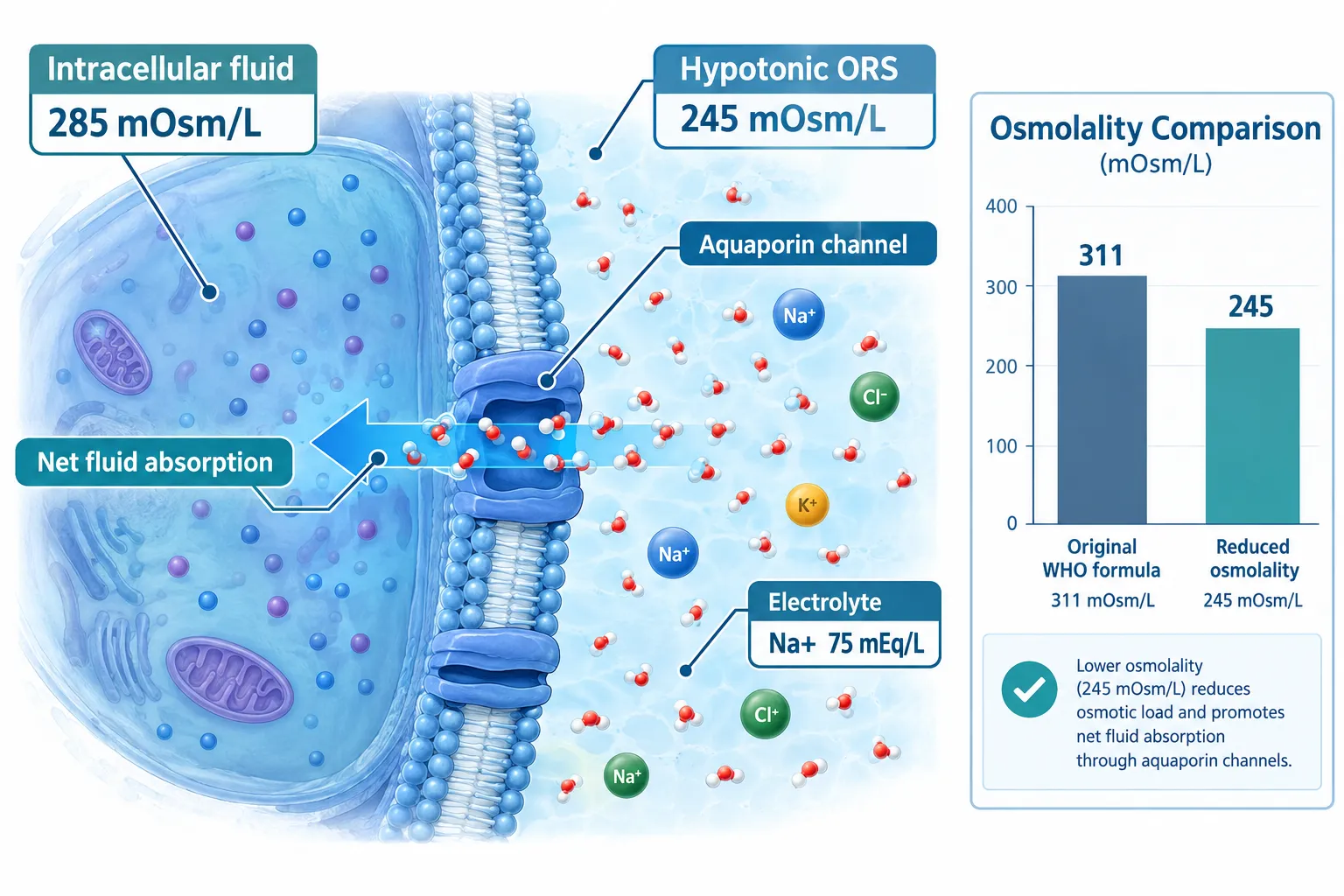
The global benchmark for oral rehydration solution (ORS) osmolality has shifted significantly over the past two decades. The original WHO formula carried an osmolarity of approximately 311 mOsm/L with sodium at 90 mEq/L. Clinical evidence accumulated showing that this formulation, while effective at replacing electrolytes, was not optimal for net fluid absorption. The revised WHO/UNICEF standard specifies a reduced-osmolality ORS with sodium at 75 mEq/L and total osmolarity at 245 mOsm/L — a hypotonic formulation that demonstrably improves net fluid absorption and reduces gastrointestinal side effects compared with its predecessor.

Health Canada's ORS monograph reinforces this direction, specifying that total osmolarity should not exceed 280 mOsm/L and that hypotonic solutions improve clinical outcomes. Peer-reviewed pharmacotechnical analysis supports an optimal absorption window between 200 and 260 mOsm/kg, with 245 mOsm/L representing the current evidence-based sweet spot.

Key benchmark: Solutions in the 200-260 mOsm/kg range yield the greatest net fluid absorption. Hypertonic solutions above this range slow gastric emptying — a critical consideration when pairing electrolyte solutions with intensive peptide regimens.

For intensive peptide studies, this has direct implications. Commercially available ORS products span a carbohydrate content of 13.5 to 40 g/L, sodium of 45 to 75 mEq/L, and osmolarity ranging from roughly 200 to 305 mOsm/L. Selecting a product toward the upper end of that range — or using heavily sweetened sports drinks with osmolarity above 300 mOsm/L — risks slowing gastric emptying and creating transient hypertonicity that interferes with study conditions.

Practical selection criteria for electrolyte solutions in peptide protocols:

Parameter Target Range Rationale
Total osmolarity 225-260 mOsm/L Maximizes net fluid absorption
Sodium 60-75 mEq/L Matches WHO reduced-ORS standard
Glucose/carbohydrate 13.5-20 g/L Supports sodium co-transport without hypertonicity
Potassium 15-25 mEq/L Supports intracellular balance

GLP-Class and Mitochondrial Peptides: Specific Fluid-Shift Considerations
GLP-Class and Mitochondrial Peptides: Specific Fluid-Shift Considerations

Not all peptides interact with fluid balance in the same way. Understanding hydration and osmolality in intensive peptide studies requires mapping the specific fluid-shift risks of each peptide class.

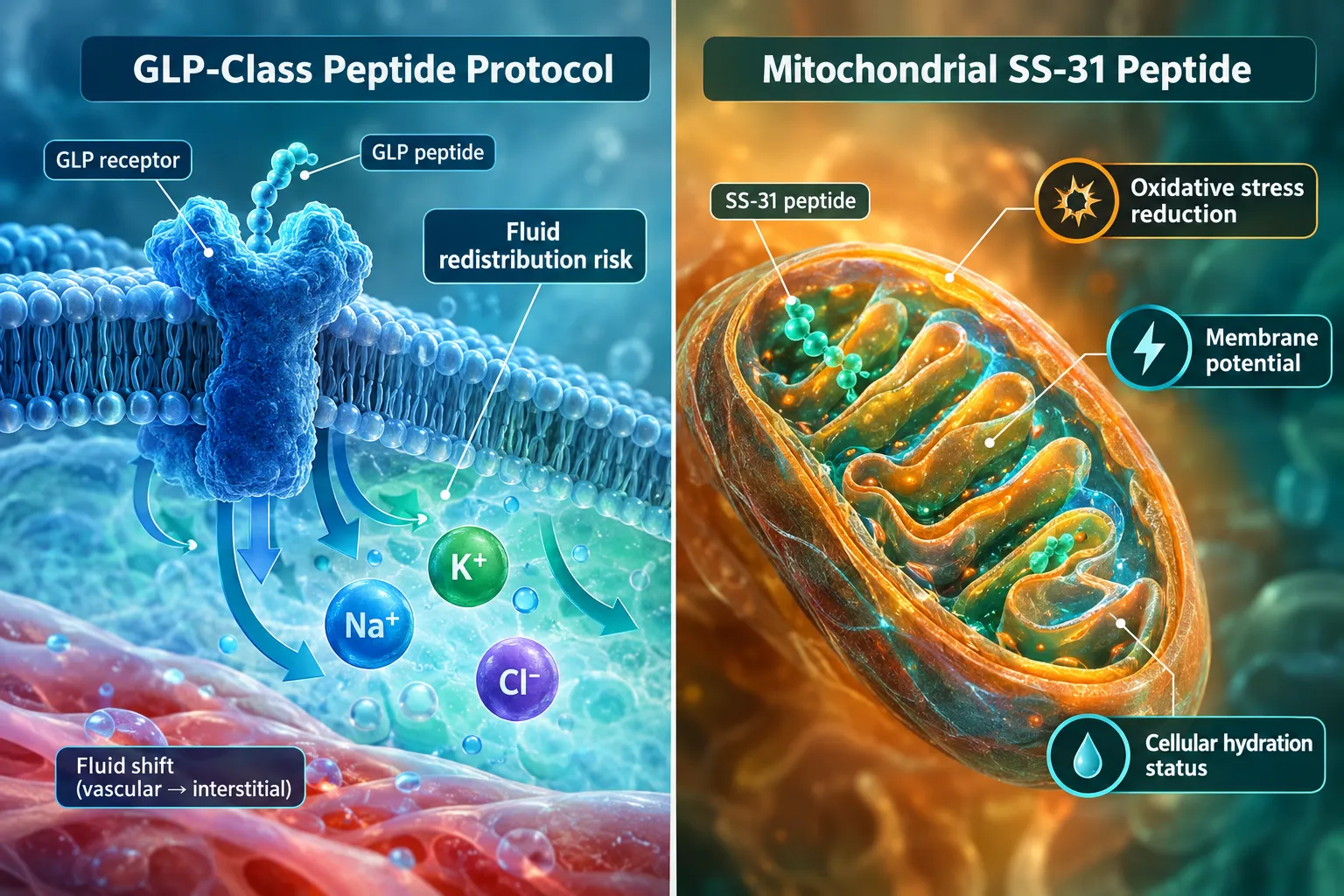
GLP-receptor peptides — including agents studied alongside compounds like GLP-3R 30mg formulations and broader cardiometabolic peptide models — influence gastric emptying rate, gut motility, and fluid secretion in the gastrointestinal tract. These effects mean that subjects in GLP-focused protocols may absorb oral fluids at altered rates, making the osmolality of any co-administered electrolyte solution especially consequential. A hypertonic solution that would merely slow absorption in a resting subject could produce meaningful fluid redistribution in a GLP-stimulated gut.

Mitochondria-targeting peptides such as SS-31 operate at the level of the inner mitochondrial membrane, modulating oxidative phosphorylation and reactive oxygen species. Research on SS-31 peptide benefits and SS-31 research considerations highlights that mitochondrial function is sensitive to cellular hydration status. Dehydration reduces mitochondrial membrane potential and amplifies oxidative stress — the very pathology SS-31 is designed to study. Running an SS-31 protocol without a controlled hydration baseline risks confounding the primary endpoint.

Growth hormone-releasing peptides like tesa influence body composition and fluid compartmentalization through IGF-1-mediated pathways. Sodium and water retention are recognized downstream effects of growth hormone axis activation, meaning that plasma osmolality monitoring should be built into any extended tesa protocol.

Liquid IV Protocols: Promise, Evidence Gaps, and Practical Guidance
Liquid IV Protocols: Promise, Evidence Gaps, and Practical Guidance

Liquid IV-style products — high-sodium, glucose-containing sachets marketed on cellular transport technology — have attracted attention as rapid rehydration tools for intensive protocols. The theoretical basis is sound: sodium-glucose co-transport (SGLT1) in the small intestine can accelerate fluid uptake when the sodium-to-glucose ratio is optimized, and a well-formulated product near 245 mOsm/L could theoretically outperform plain water in restoring plasma osmolality after exercise-induced dehydration.

The clinical evidence, however, remains thin. A registered randomized crossover trial (NCT06063655) is tracking body weight, urine osmolality, plasma osmolality, and blood electrolytes following exercise-induced dehydration with Liquid I.V. rehydration, but as of 2026 no peer-reviewed results have been published. An earlier poster study from Washington State University Vancouver compared plasma osmolarity after plain water versus Liquid I.V. in mildly dehydrated participants and predicted no significant difference between groups — though this remains an undergraduate-level poster rather than a peer-reviewed clinical trial.

For peptide researchers, the practical takeaway is straightforward: any liquid IV protocol should be evaluated on its actual osmolarity value, sodium content, and carbohydrate load against the 245 mOsm/L benchmark before adoption. A product that clusters near that target with sodium around 75 mEq/L is defensible. A heavily sweetened product above 300 mOsm/L is not, regardless of marketing claims.

Conclusion

Hydration and osmolality in intensive peptide studies — and the role of electrolyte solutions and liquid IV protocols — deserve the same methodological rigor applied to dosing, timing, and endpoint selection. The evidence base is clear: hypotonic electrolyte solutions near 245 mOsm/L, with sodium around 75 mEq/L and modest glucose content, provide the most efficient and gastrointestinally tolerable rehydration platform currently available.

Actionable next steps for researchers:

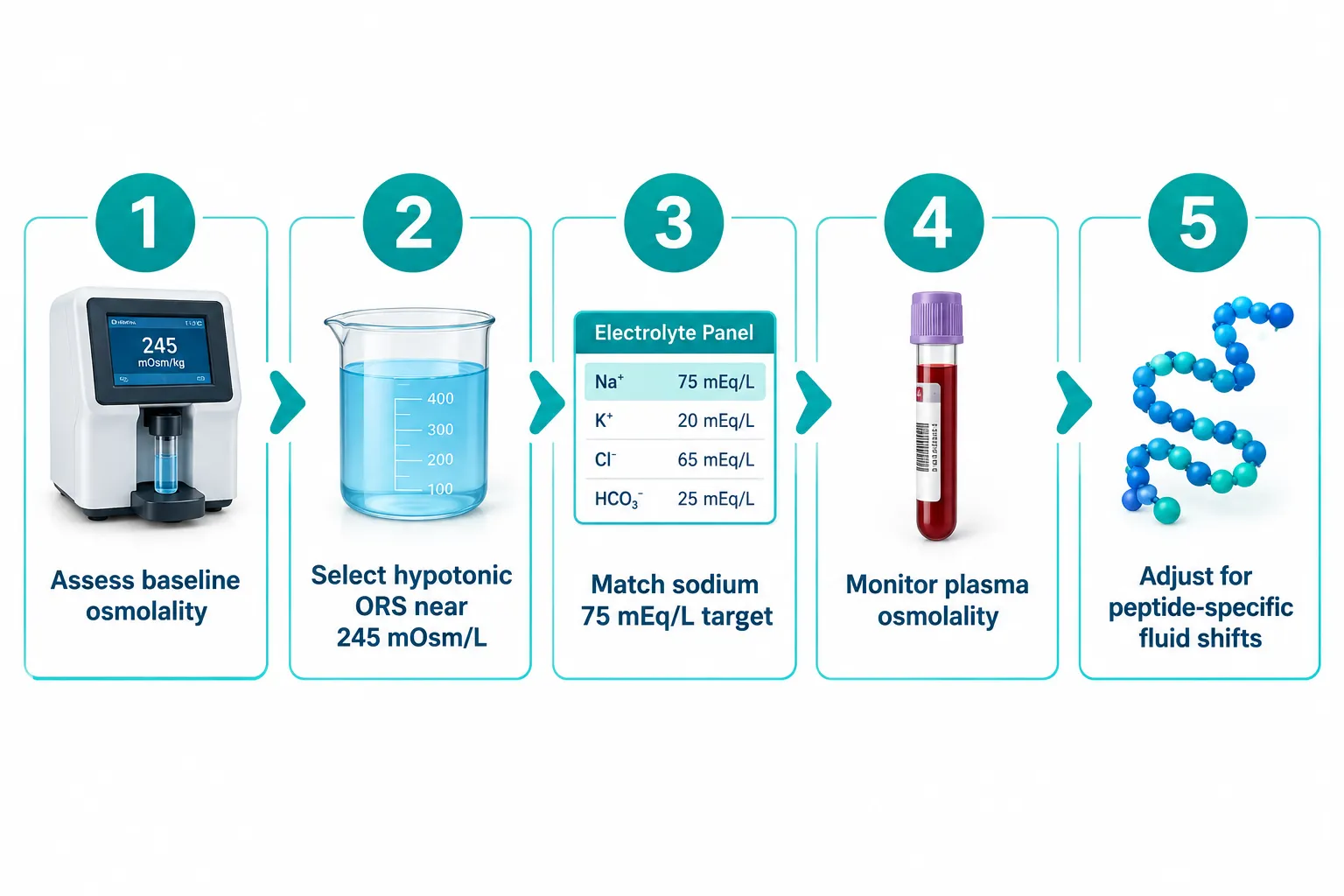
  1. Measure baseline plasma osmolality in all subjects before peptide administration and flag any value outside 280-295 mOsm/kg.
  2. Select an electrolyte solution with documented osmolarity at or below 260 mOsm/L — check the product specification sheet, not just the label claims.
  3. For GLP-class protocols, account for altered gastric emptying when timing oral fluid administration relative to peptide dosing.
  4. For mitochondrial peptide studies, treat cellular hydration status as a primary covariate, not a background variable.
  5. Treat liquid IV-style products as potentially useful tools but require osmolarity data before incorporating them into any standardized protocol.

Fluid balance is not a peripheral concern in peptide research. It is a core experimental variable — and managing it precisely is what separates reproducible science from noise.

https://www.puretestedpeptides.com/wp-content/uploads/2026/09/hydration-and-osmolality-in-intensive-peptide-studies-the-role-of-electrolyte-so.webp 1024 1536 https://www.puretestedpeptides.com/wp-content/uploads/2026/01/buy-peptides-online.jpg 2026-09-16 13:06:542026-09-16 13:06:54Hydration and Osmolality in Intensive Peptide Studies: The Role of Electrolyte Solutions and Liquid IV Protocols
×

Helpful Links

  • My account
  • Cart
  • Checkout
  • Refund and Returns Policy
  • Privacy Policy
  • SMS Privacy Policy
  • Login
  • My Account
  • Logout

USA Made Lab Tested Peptides

All products are sold for research, laboratory, or analytical purposes only, and are not for human consumption


Pure Tested Peptides is a chemical supplier. Pure Tested Peptides is not a compounding / chemical compounding facility as defined under 503A of the Federal Food, Drug, and Cosmetic act. Pure Tested Peptides is not an outsourcing facility as defined under 503B of the Federal Food, Drug, and Cosmetic act.

The statements made within this website have not been evaluated by the US Food and Drug Administration. The products we offer are not intended to diagnose, treat, cure or prevent any disease.

Human/Animal Consumption Prohibited. Laboratory/In-Vitro Experimental Use Only

Scroll to top Scroll to top Scroll to top