

Hydration and Osmolality in Intensive Peptide Studies: The Role of Electrolyte Solutions and Liquid IV Protocols
Fluid balance is rarely the headline variable in peptide research, yet it quietly determines whether a study produces clean, reproducible data or confounded results. When researchers investigate GLP-class metabolic peptides or mitochondria-targeting compounds, shifts in cellular hydration status and plasma osmolality can alter receptor binding, hormone signaling, and tissue distribution in ways that standard protocols often fail to account for. Understanding hydration and osmolality in intensive peptide studies — and the role of electrolyte solutions and liquid IV protocols in managing those variables — is therefore a foundational concern, not an afterthought.
Key Takeaways
- Plasma osmolality targets near 285 mOsm/kg represent the physiological benchmark that electrolyte solutions in peptide research should support, not disrupt.
- Current international guidelines converge on hypotonic oral rehydration solutions near 245 mOsm/L as the most effective standard for rapid, efficient rehydration.
- GLP-class and mitochondrial peptides each carry distinct fluid-shift risks that demand osmolality-aware hydration protocols.
- Liquid IV-style products show theoretical promise but currently lack peer-reviewed clinical evidence demonstrating superiority over properly formulated electrolyte solutions.
- Selecting the right electrolyte solution means checking sodium content, carbohydrate load, and total osmolarity before integrating it into any intensive protocol.
Why Osmolality Matters in Intensive Peptide Research
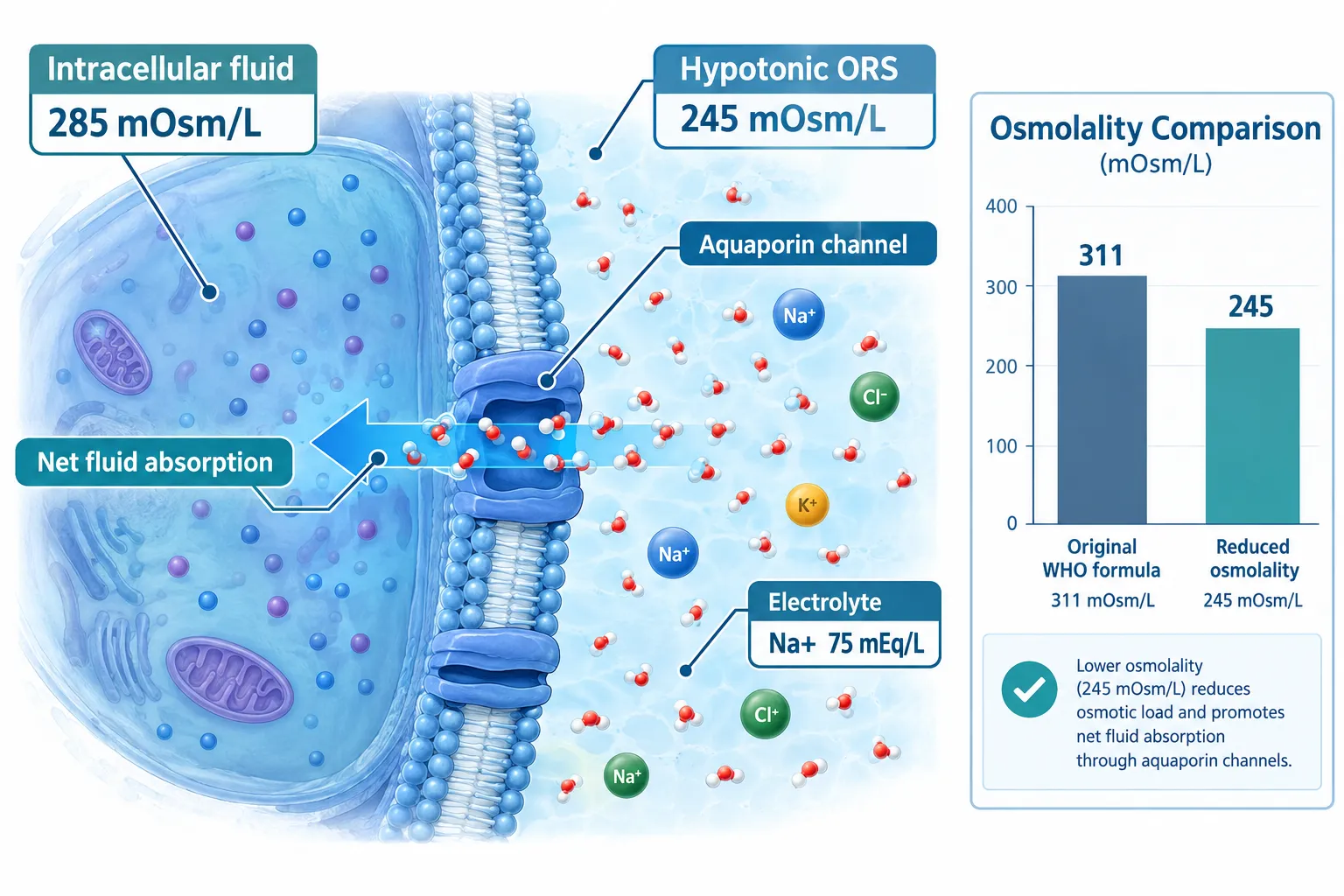
Osmolality measures the concentration of dissolved particles in a fluid, expressed in milliosmoles per kilogram of water (mOsm/kg). In a living system, plasma osmolality is tightly regulated around 285 to 295 mOsm/kg. Even modest deviations — as little as 10 mOsm/kg above or below that range — trigger compensatory hormonal responses involving vasopressin, aldosterone, and the renin-angiotensin system.
For researchers working with peptides such as SS-31, which targets mitochondrial cardiolipin to reduce oxidative stress, or with GLP-receptor agonists like those explored in GLP-3R peptide formulations, these hormonal cascades are not background noise. They directly interact with the pathways under investigation. A subject or model system that enters a protocol in a mildly hypertonic or hypotonic state introduces a confounding variable that no downstream statistical correction can fully remove.
Three osmolality-related risks in peptide studies:
- Hypertonic conditions slow gastric emptying, reduce net fluid absorption, and can falsely elevate plasma peptide concentrations by reducing distribution volume.
- Hypotonic conditions dilute electrolytes, alter membrane potential, and may blunt receptor-mediated responses that depend on sodium-potassium gradients.
- Fluctuating osmolality across study visits creates inter-session variability that inflates standard deviations and reduces statistical power.
Standardizing hydration inputs is therefore as important as standardizing peptide dose and timing.
Electrolyte Solutions and Osmolality Standards: What the Evidence Supports
The global benchmark for oral rehydration solution (ORS) osmolality has shifted significantly over the past two decades. The original WHO formula carried an osmolarity of approximately 311 mOsm/L with sodium at 90 mEq/L. Clinical evidence accumulated showing that this formulation, while effective at replacing electrolytes, was not optimal for net fluid absorption. The revised WHO/UNICEF standard specifies a reduced-osmolality ORS with sodium at 75 mEq/L and total osmolarity at 245 mOsm/L — a hypotonic formulation that demonstrably improves net fluid absorption and reduces gastrointestinal side effects compared with its predecessor.
Health Canada's ORS monograph reinforces this direction, specifying that total osmolarity should not exceed 280 mOsm/L and that hypotonic solutions improve clinical outcomes. Peer-reviewed pharmacotechnical analysis supports an optimal absorption window between 200 and 260 mOsm/kg, with 245 mOsm/L representing the current evidence-based sweet spot.
For intensive peptide studies, this has direct implications. Commercially available ORS products span a carbohydrate content of 13.5 to 40 g/L, sodium of 45 to 75 mEq/L, and osmolarity ranging from roughly 200 to 305 mOsm/L. Selecting a product toward the upper end of that range — or using heavily sweetened sports drinks with osmolarity above 300 mOsm/L — risks slowing gastric emptying and creating transient hypertonicity that interferes with study conditions.
Practical selection criteria for electrolyte solutions in peptide protocols:
| Parameter | Target Range | Rationale |
|---|---|---|
| Total osmolarity | 225-260 mOsm/L | Maximizes net fluid absorption |
| Sodium | 60-75 mEq/L | Matches WHO reduced-ORS standard |
| Glucose/carbohydrate | 13.5-20 g/L | Supports sodium co-transport without hypertonicity |
| Potassium | 15-25 mEq/L | Supports intracellular balance |
GLP-Class and Mitochondrial Peptides: Specific Fluid-Shift Considerations
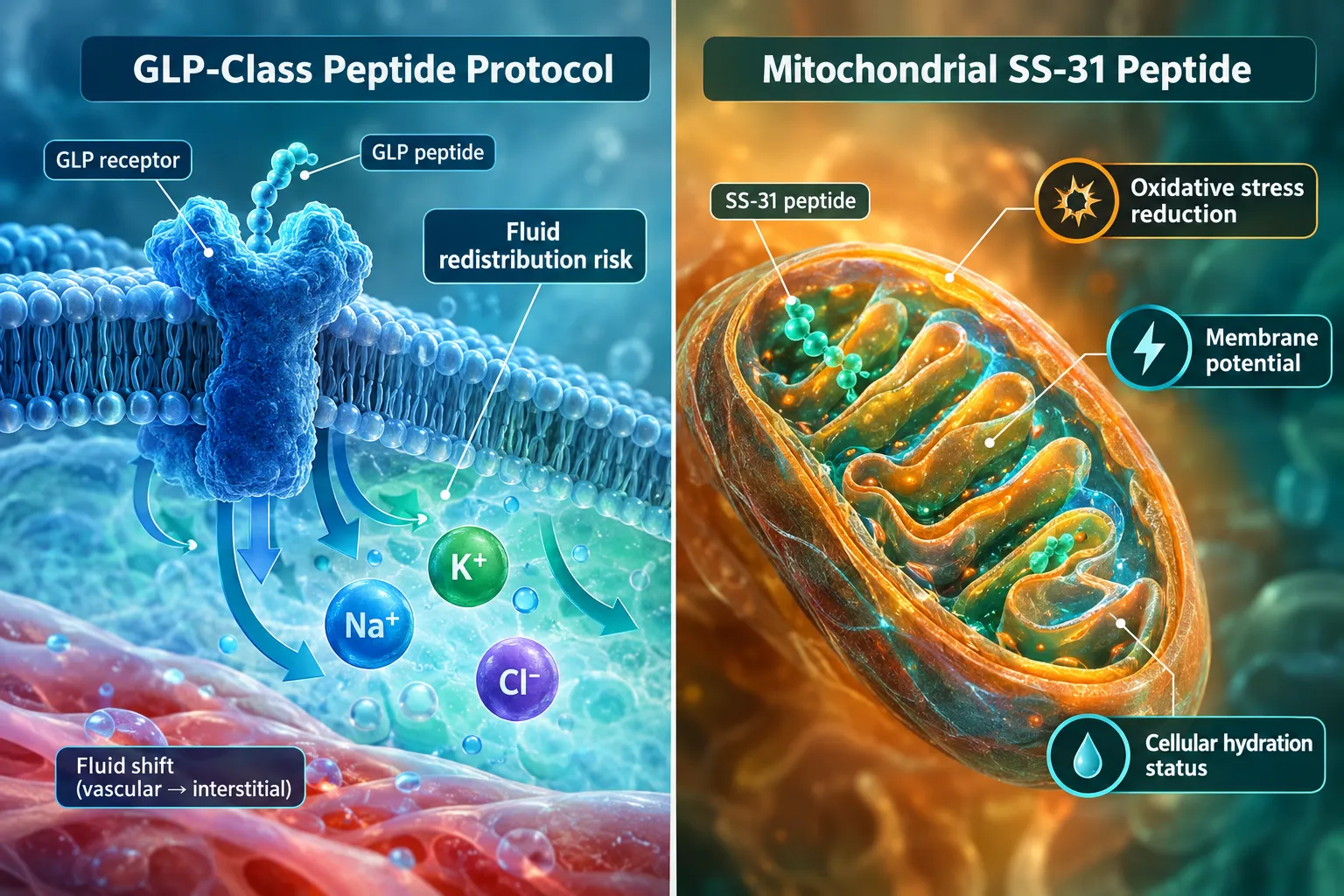
Not all peptides interact with fluid balance in the same way. Understanding hydration and osmolality in intensive peptide studies requires mapping the specific fluid-shift risks of each peptide class.
GLP-receptor peptides — including agents studied alongside compounds like GLP-3R 30mg formulations and broader cardiometabolic peptide models — influence gastric emptying rate, gut motility, and fluid secretion in the gastrointestinal tract. These effects mean that subjects in GLP-focused protocols may absorb oral fluids at altered rates, making the osmolality of any co-administered electrolyte solution especially consequential. A hypertonic solution that would merely slow absorption in a resting subject could produce meaningful fluid redistribution in a GLP-stimulated gut.
Mitochondria-targeting peptides such as SS-31 operate at the level of the inner mitochondrial membrane, modulating oxidative phosphorylation and reactive oxygen species. Research on SS-31 peptide benefits and SS-31 research considerations highlights that mitochondrial function is sensitive to cellular hydration status. Dehydration reduces mitochondrial membrane potential and amplifies oxidative stress — the very pathology SS-31 is designed to study. Running an SS-31 protocol without a controlled hydration baseline risks confounding the primary endpoint.
Growth hormone-releasing peptides like tesa influence body composition and fluid compartmentalization through IGF-1-mediated pathways. Sodium and water retention are recognized downstream effects of growth hormone axis activation, meaning that plasma osmolality monitoring should be built into any extended tesa protocol.
Liquid IV Protocols: Promise, Evidence Gaps, and Practical Guidance
Liquid IV-style products — high-sodium, glucose-containing sachets marketed on cellular transport technology — have attracted attention as rapid rehydration tools for intensive protocols. The theoretical basis is sound: sodium-glucose co-transport (SGLT1) in the small intestine can accelerate fluid uptake when the sodium-to-glucose ratio is optimized, and a well-formulated product near 245 mOsm/L could theoretically outperform plain water in restoring plasma osmolality after exercise-induced dehydration.
The clinical evidence, however, remains thin. A registered randomized crossover trial (NCT06063655) is tracking body weight, urine osmolality, plasma osmolality, and blood electrolytes following exercise-induced dehydration with Liquid I.V. rehydration, but as of 2026 no peer-reviewed results have been published. An earlier poster study from Washington State University Vancouver compared plasma osmolarity after plain water versus Liquid I.V. in mildly dehydrated participants and predicted no significant difference between groups — though this remains an undergraduate-level poster rather than a peer-reviewed clinical trial.
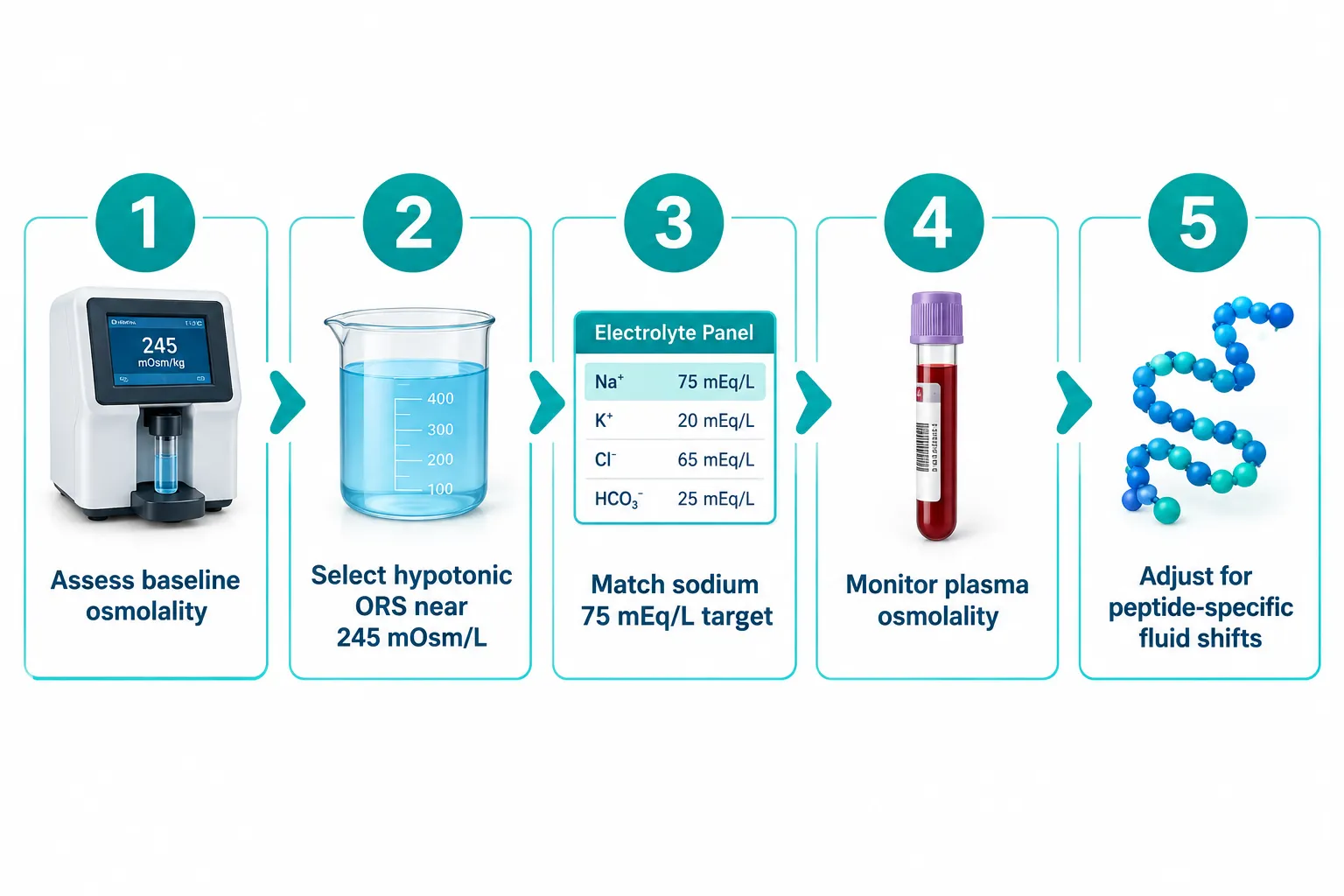
For peptide researchers, the practical takeaway is straightforward: any liquid IV protocol should be evaluated on its actual osmolarity value, sodium content, and carbohydrate load against the 245 mOsm/L benchmark before adoption. A product that clusters near that target with sodium around 75 mEq/L is defensible. A heavily sweetened product above 300 mOsm/L is not, regardless of marketing claims.
Conclusion
Hydration and osmolality in intensive peptide studies — and the role of electrolyte solutions and liquid IV protocols — deserve the same methodological rigor applied to dosing, timing, and endpoint selection. The evidence base is clear: hypotonic electrolyte solutions near 245 mOsm/L, with sodium around 75 mEq/L and modest glucose content, provide the most efficient and gastrointestinally tolerable rehydration platform currently available.
Actionable next steps for researchers:
- Measure baseline plasma osmolality in all subjects before peptide administration and flag any value outside 280-295 mOsm/kg.
- Select an electrolyte solution with documented osmolarity at or below 260 mOsm/L — check the product specification sheet, not just the label claims.
- For GLP-class protocols, account for altered gastric emptying when timing oral fluid administration relative to peptide dosing.
- For mitochondrial peptide studies, treat cellular hydration status as a primary covariate, not a background variable.
- Treat liquid IV-style products as potentially useful tools but require osmolarity data before incorporating them into any standardized protocol.
Fluid balance is not a peripheral concern in peptide research. It is a core experimental variable — and managing it precisely is what separates reproducible science from noise.


Leave a Reply
Want to join the discussion?Feel free to contribute!