

Statin Therapy and Liver Enzymatic Readouts in Metabolic Peptide Models: Atorvastatin vs. MOTS-c and 5-Amino-1MQ
Atorvastatin reduces cardiovascular events in millions of patients worldwide, yet its interaction with mitochondrial lipid oxidation pathways, the same pathways targeted by emerging research peptides, creates a hepatic monitoring challenge that most clinical protocols have not yet addressed. As researchers and clinicians increasingly encounter subjects using both statin therapy and novel metabolic compounds, understanding how liver enzymatic readouts shift across these combined models has become a pressing question in 2026.
This article examines the intersection of statin-driven cholesterol suppression and the mitochondrial and enzymatic mechanisms of two research peptides: MOTS-c and 5-Amino-1MQ. The goal is to give researchers a clear, evidence-grounded framework for interpreting ALT, AST, GGT, and related liver markers in these combined metabolic models.
Key Takeaways
- Atorvastatin at high doses (40-80 mg) carries a recognized risk of transaminase elevation, requiring baseline and interval liver function monitoring.
- MOTS-c analogs have shown early signals of hepatoprotection, with one analog reducing plasma ALT by approximately 25% and AST by 17% versus placebo in early-phase research.
- 5-Amino-1MQ demonstrates no short-term hepatotoxicity signal at standard doses, but high-dose rodent studies show dose-dependent, reversible ALT/AST rises of 2-3 times the upper limit of normal.
- No formal drug-interaction profile exists for MOTS-c or 5-Amino-1MQ combined with statins; monitoring protocols should mirror established statin hepatic surveillance guidelines.
- Human safety data for both peptides remains limited; all liver risk assessments are currently extrapolated from animal models.
How Atorvastatin Affects Liver Enzymatic Readouts
Atorvastatin works by inhibiting HMG-CoA reductase, the rate-limiting enzyme in hepatic cholesterol synthesis. This mechanism is primarily hepatic, meaning the liver bears the greatest pharmacological burden. In most patients, liver enzymes remain stable. However, high-dose regimens, specifically 40 mg and 80 mg daily, are consistently flagged in clinical guidance for a higher risk of transaminase elevation.
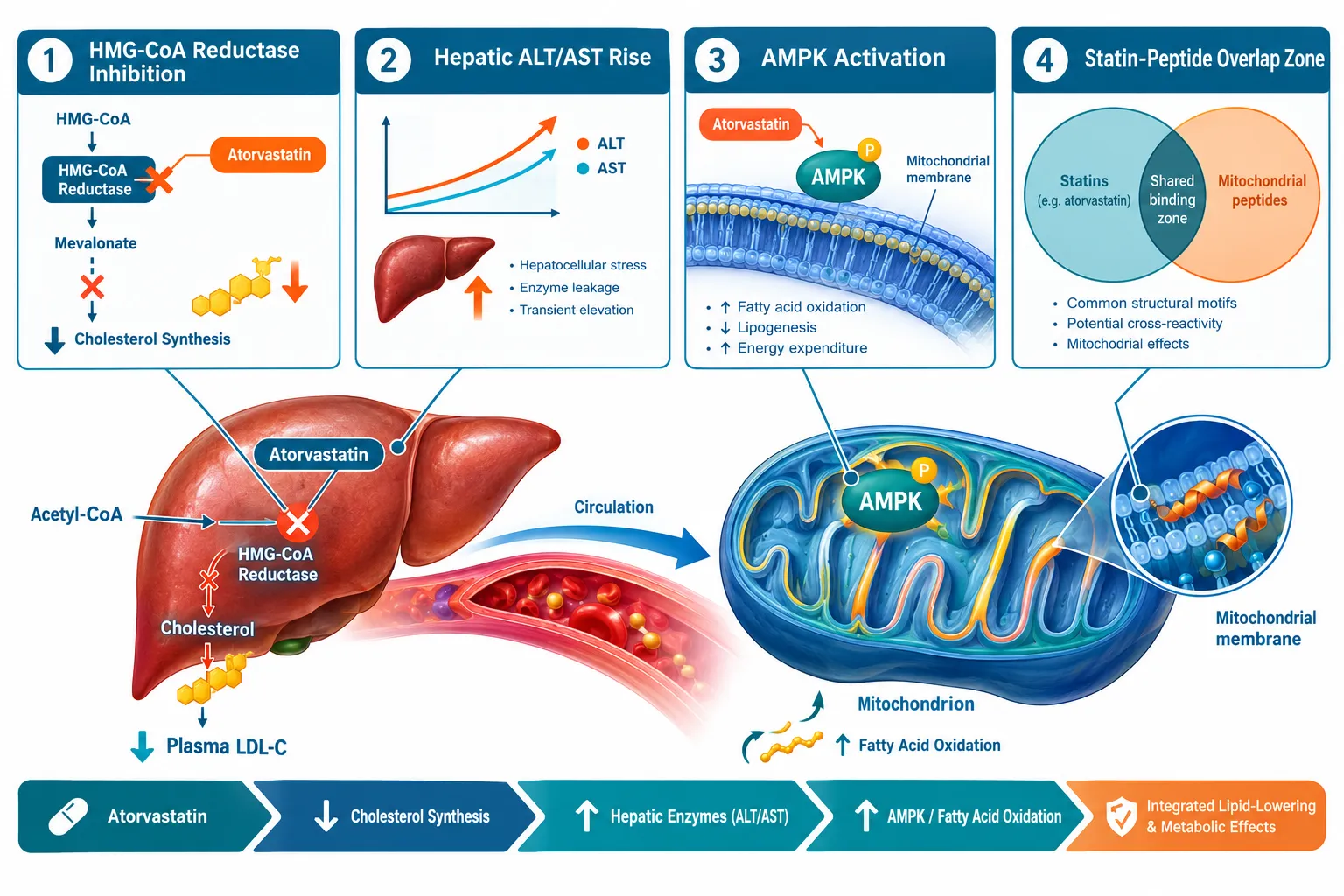
The standard threshold for clinical concern is a rise in ALT or AST exceeding three times the upper limit of normal (ULN). At that point, dose reduction or discontinuation is recommended. Baseline liver panels before starting atorvastatin are considered standard practice, and interval testing is advised when doses increase or when additional hepatically metabolized compounds are introduced.
Key liver markers to track with atorvastatin:
| Marker | Baseline Role | Concern Threshold |
|---|---|---|
| ALT | Hepatocellular injury | >3x ULN |
| AST | Broader hepatic/muscle signal | >3x ULN |
| GGT | Cholestatic marker | Elevated with dose escalation |
| Bilirubin | Hepatic function | Rising with severe injury |
The lipid-lowering mechanism of atorvastatin also indirectly touches mitochondrial function. Statins can reduce coenzyme Q10 synthesis, a downstream consequence of HMG-CoA reductase inhibition, which may mildly impair mitochondrial electron transport. This is relevant because both MOTS-c and 5-Amino-1MQ act on overlapping mitochondrial and metabolic pathways, creating a potential zone of interaction that warrants careful enzyme surveillance.
MOTS-c in the Context of Statin Therapy and Liver Enzymatic Readouts in Metabolic Peptide Models
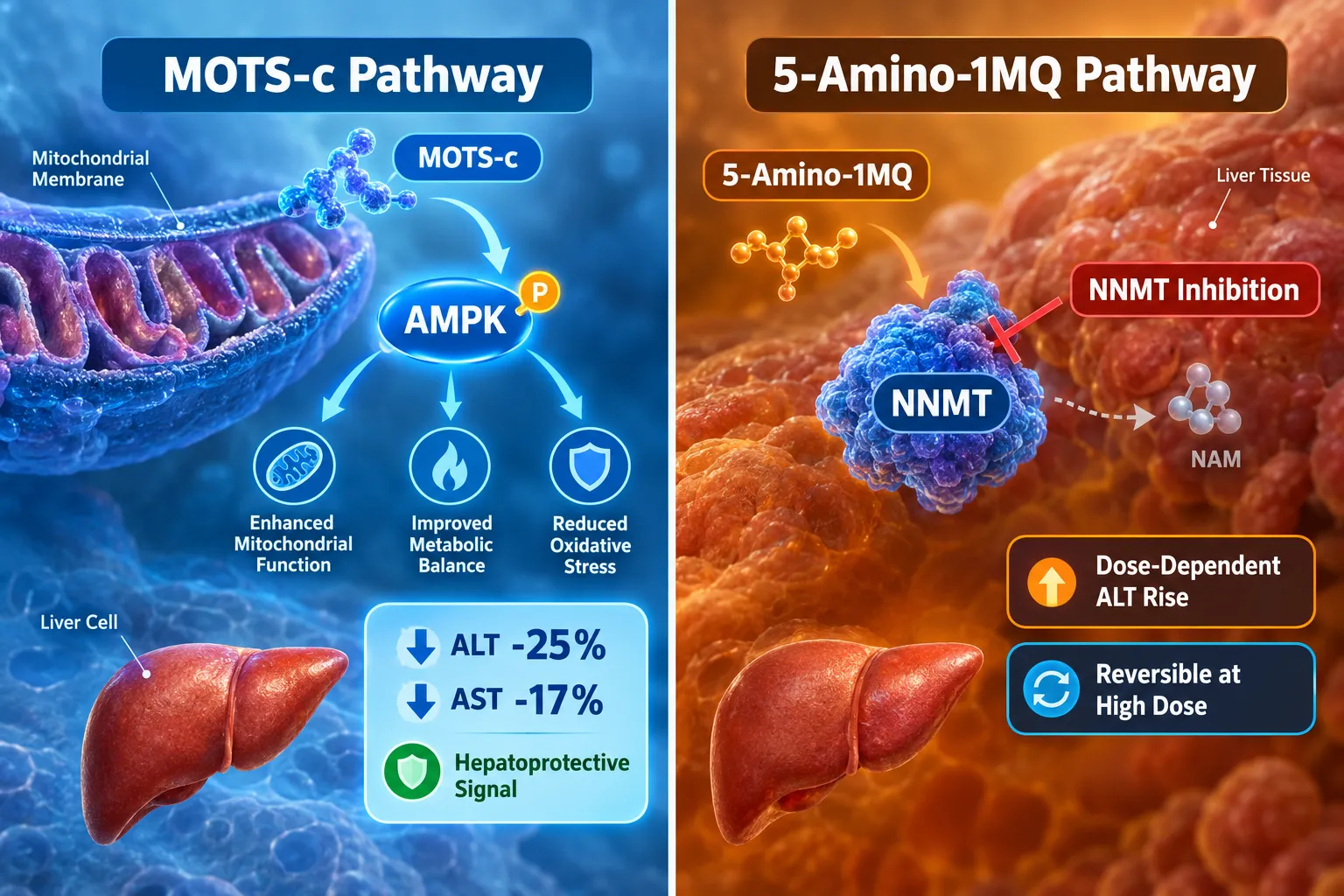
MOTS-c is a mitochondrial-derived peptide that activates AMPK signaling, promoting fatty acid oxidation and glucose uptake. Its mechanism is fundamentally mitochondrial, which places it in direct functional proximity to the mitochondrial stress that high-dose statins can produce.
Early clinical research on a MOTS-c-derived analog (CB4211) reported a reduction in liver triglyceride levels alongside a 25% decrease in plasma ALT and a 17% decrease in AST compared to placebo. These findings suggest a hepatoprotective rather than hepatotoxic profile, at least in subjects with hepatic steatosis. This is a meaningful distinction: while atorvastatin may nudge liver enzymes upward at high doses, MOTS-c analogs appear to exert a counterbalancing effect in fatty liver models.
Researchers exploring MOTS-c and elamipretide combinations should note that no published cases of MOTS-c increasing statin-related hepatotoxicity have been reported. However, the absence of a formal drug-interaction profile means caution is still warranted. MOTS-c is not FDA-approved and is available only as a research-grade MOTS-c peptide within registered trials or research settings.
"MOTS-c's AMPK activation pathway overlaps with the mitochondrial stress zone created by statin-induced CoQ10 suppression, making liver enzyme monitoring essential, not optional."
MOTS-c + Atorvastatin: Current Evidence Summary
- No published adverse interaction cases as of 2026
- Theoretical concern: combined AMPK/mitochondrial pathway activity at high statin doses
- Recommended monitoring: baseline ALT/AST, interval testing at 4-8 weeks
- Human data: limited to early Phase I safety signals only
5-Amino-1MQ Liver Enzymatic Readouts in Metabolic Peptide Models: Atorvastatin Comparison
5-Amino-1MQ inhibits nicotinamide N-methyltransferase (NNMT), an enzyme highly expressed in liver tissue. By blocking NNMT, the compound alters methionine cycle flux and shifts cellular energy metabolism toward fat oxidation. This hepatic expression profile makes liver enzyme monitoring especially relevant for this compound.
Acute animal studies using doses ranging from 50 to 5,000 mg/kg reported no mortality and no observable adverse reactions over 48 hours. A 14-day subacute study found AST and GGT unchanged, with only a transient CRP elevation at the highest intravenous dose. These findings suggest no short-term hepatotoxicity signal at standard research doses.
However, the picture changes at high doses over longer periods. Rodent studies using 5 to 10 times the proposed therapeutic dose found that approximately 8-12% of animals developed ALT rises of 2-3 times the upper limit of normal after 4-6 weeks of daily dosing. Critically, these elevations normalized within 2-3 weeks of discontinuation, indicating dose-dependent but reversible hepatotoxicity.
A 2024 diet-induced obesity mouse study also reported improved liver histology over 28 days with standard dosing, aligning with the hepatoprotective potential seen in MOTS-c models. Yet a 2025 dosing synthesis found that 100 mg/kg doses did not produce proportionally greater fat loss than lower doses but did produce elevated ALT/AST in a subset of subjects, a clear dose ceiling signal.
Those researching 5-Amino-1MQ 60 capsules for metabolic research should also review available 5-Amino-1MQ capsule formulations and ensure sourcing from lab-tested peptide suppliers to maintain research integrity.
5-Amino-1MQ Liver Enzyme Profile at a Glance:
- Standard doses: No hepatotoxicity signal in acute and subacute animal studies
- High doses (5-10x therapeutic): 8-12% of animals show ALT/AST 2-3x ULN
- Recovery: Enzyme normalization within 2-3 weeks post-discontinuation
- Human data: None; all liver risk assessments are extrapolated from animal models
- Chronic toxicology (28-day and 90-day studies): Not publicly reported as of 2026
When combining 5-Amino-1MQ with atorvastatin, the shared hepatic burden is the primary concern. Both compounds are processed in liver tissue, and both can elevate transaminases at high doses. The recommended approach mirrors statin clinical practice: obtain a full baseline hepatic panel (ALT, AST, GGT, bilirubin), monitor at defined intervals, and discontinue with further evaluation if ALT or AST exceeds 2-3 times the upper limit of normal.
Monitoring Protocol for Combined Metabolic Peptide and Statin Models
Researchers working with statin therapy and liver enzymatic readouts in metabolic peptide models need a structured surveillance approach. The following framework integrates guidance from statin clinical practice and available peptide safety data.
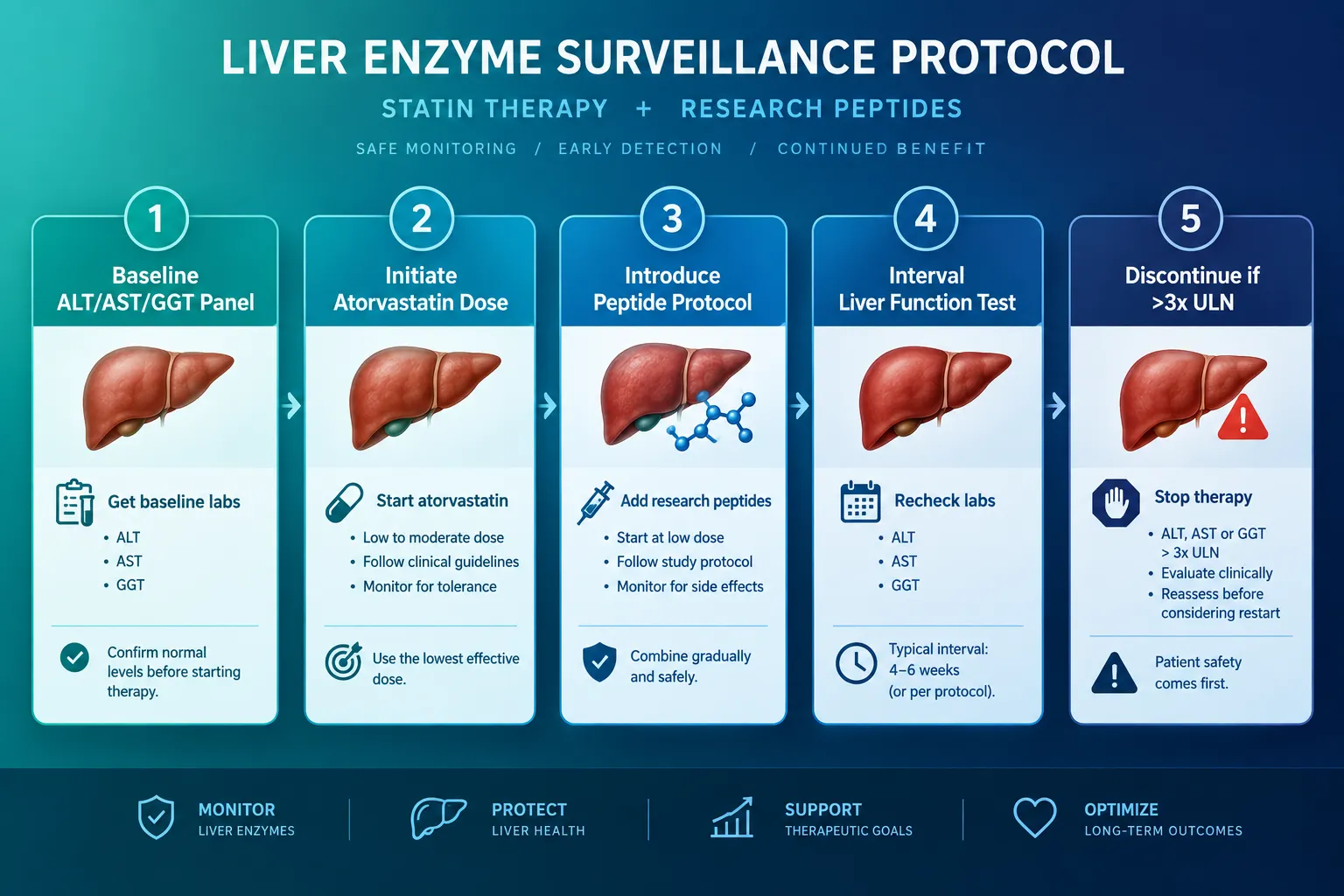
Recommended Monitoring Steps:
- Baseline panel, ALT, AST, GGT, total bilirubin before initiating any compound
- Atorvastatin initiation, Recheck at 6-12 weeks, especially at 40-80 mg doses
- Peptide introduction, Introduce one compound at a time where possible; recheck liver panel at 4 weeks
- Interval surveillance, Every 8-12 weeks during active combined use
- Threshold action, Discontinue the most recently added compound and retest if ALT/AST exceeds 3x ULN; evaluate both compounds if elevation persists
This stepwise approach allows researchers to isolate which compound is driving any enzymatic change, a critical distinction when both atorvastatin and a research peptide are active simultaneously.
Conclusion
The intersection of statin therapy and liver enzymatic readouts in metabolic peptide models represents one of the more nuanced monitoring challenges in current research settings. Atorvastatin's hepatic mechanism creates a baseline enzymatic risk that compounds when combined with peptides acting on overlapping mitochondrial and metabolic pathways.
MOTS-c presents an intriguing counterpoint: early data suggests hepatoprotective rather than hepatotoxic effects, with ALT and AST reductions in fatty liver models. 5-Amino-1MQ shows a clean short-term liver safety profile at standard doses, but dose-dependent and reversible transaminase elevations at high doses demand the same disciplined monitoring applied to statins.
Actionable next steps for researchers:
- Establish a full baseline hepatic panel before combining any statin with MOTS-c or 5-Amino-1MQ
- Use the lowest effective dose of each compound and escalate only with documented enzyme stability
- Apply the 3x ULN discontinuation threshold consistently across all compounds in the model
- Source compounds exclusively from verified, lab-tested peptide suppliers to ensure purity and dose accuracy
- Treat all current liver risk assessments for both peptides as preliminary until formal human clinical trial data is available
The field is advancing rapidly, but the absence of peer-reviewed human trials for both MOTS-c and 5-Amino-1MQ means that rigorous enzymatic monitoring remains the single most important safeguard in these combined metabolic models.


Leave a Reply
Want to join the discussion?Feel free to contribute!