Call or Text 727-513-9780
  • Shopping Cart Shopping Cart
    0Shopping Cart
Pure Tested Peptides | America's most trusted Peptides for sale online
  • Peptides for sale
    • Oral Peptides for sale
      • Peptide Capsules for sale
      • BPC 157 Capsules 1000mcg
      • SLU-PP-332 Capsules | 1000 mcg
      • 5-Amino-1MQ 50mg Capsules
      • Tesofensine 500mcg
    • All Peptides for sale
    • Peptide Sprays
      • BPC 157 Nasal Spray Kit
      • BPC-157 TB500 Nasal Spray Kit
      • Semax Nasal Spray 10mg
      • Selank – Nasal Spray Kit – 10mg
      • Epithalon 50MG Nasal Spray Kit
      • Ipamorelin 10mg Nasal Spray
      • Klow Nasal Spray (BPC-157 + TB-500 + GHK-Cu + KPV) | 80mg
      • Hulk Nasal Spray Tesa / Ipa Blend 6/3 MG
      • Klow Nasal Spray
      • NAD + 500 mg Nasal Spray
      • PT-141 Nasal Spray Kit
    • GHRH Peptides
      • Ipa Peptides
      • CJC-1295 Peptides
        • CJC-1295 with DAC 5 mg
        • CJC-1295 without DAC 5 mg
        • CJC-1295 Ipa 10mg
      • Tesa Peptides
        • Tesa Peptide
        • Tesa 20 mg
    • GHK-Cu Peptides
      • All GHK-Cu Peptides
      • GHK-Cu 100mg
      • KLOW Peptide Blend – Buy KLOW blend online
    • BPC Peptides
      • All BPC Peptides
      • BPC-157
      • BPC-157 TB-500
      • BPC 157 capsules 1000mcg
    • SLU-PP-332 Peptides
      • All SLU-PP-332 Peptides
      • SLU-PP-332 5mg
    • GLP3 Peptides
    • PT-141 Peptides
      • PT-141 Peptides for sale
      • PT-141 10mg
      • PT-141 Nasal Spray
    • CAG Peptides
      • Lipo-C Peptide Blend
      • CAG 5mg
      • CAG 10mg
    • MOTS-C Peptides
      • MOTS-C Peptides for sale
      • MOTS-c peptide
      • MOTS-c 10mg *6 pack*
    • 5 Amino 1MQ Peptides
      • 5 Amino 1MQ Peptides for sale
      • 5-Amino-1MQ 50mg Capsules
      • 5-Amino-1MQ 5mg
    • Epithalon Peptides
      • Epithalon Peptides for sale
      • Epithalon 10mg
      • Epithalon 50mg
  • Shop
    • GLPs
      • 5-Amino-1MQ 50mg Capsules
      • 5-Amino-1MQ 5mg
      • L-Carnitine 500mg/ml
      • Tesofensine 500mcg
      • SLU-PP-332 5mg
      • MOTS-c 10mg *6 pack*
    • Epithalon & BPC Peptides
      • Epithalon 10mg
      • Epithalon 50mg
      • BPC-157
      • BPC 157 capsules 1000mcg
      • BPC-157 TB-500
      • BPC-157 TB500 Nasal Spray Kit
      • BPC 157 Nasal Spray Kit
    • BPC TB-500 & NAD+ Peptides
      • NAD+ 500 mg
      • KLOW Peptide Blend – Buy KLOW blend online
      • GLOW Peptide Blend
      • TB 500 5mg
      • BPC 157 capsules 1000mcg – Supplement
      • BPC 157 Nasal Spray Kit
      • BPC-157
      • BPC-157 TB500 Nasal Spray Kit
      • BPC-157 TB-500
      • BPC 157 capsules 1000mcg
    • LL-37 Peptide
      • LL-37 10 mg
    • MOTS-C & Selank
      • MOTS-c peptide
      • Selank 10mg
    • GHK Peptides
      • GHK-Cu 100mg
      • GLOW Peptide Blend
      • KLOW Peptide Blend – Buy KLOW blend online
  • COAs
  • Wholesale
    • Wholesale Peptides for sale
  • PTP FAQ
  • Affiliates
    • Selank Peptide: Advanced Pharmacological Mechanisms Underlying Its Anxiolytic and Nootropic Effects in Research
      • 5-Amino-1MQ Peptide: Detailed Mechanisms of NNMT Inhibition and Its Impact on Cellular Metabolism Research
        • MOTS-C Peptide: Unraveling Its Role in Mitochondrial Dynamics and Energy Metabolism Research
          • Epithalon Peptide and Telomerase Regulation: Investigating Its Impact on Cellular Senescence and Lifespan Research Models
            • GLP2-T vs GLP2 Tirz Peptide: Understanding the Naming, Mechanistic Nuances, and Research Implications for Gut Health
      • Peptides and Polypeptides in Modern Pharmacology: What Research on Metoprolol, Prednisone, and Amlodipine Reveals
        • Polypeptide Peptides vs NSAIDs: What Naproxen and Diclofenac Teach Tissue-Repair Researchers About BPC‑157 and TB‑500
          • Peptides and Polypeptides in Endocrine Pharmacology: How GLP-1, GLP-2, and GLP-3 Retatrutide Differ From Classic Drugs Like Prednisone and Amlodipine
          • 5‑Amino‑1MQ Peptide and NNMT Inhibition: How It Compares With Statins Like Atorvastatin in Adipose and Lipid Metabolism Research
      • Enclomiphene, Estrogen Receptor Signaling, and Luteinizing Phase Biology: What Hormone Researchers Should Measure
        • Mesenchymal Stem Cells, BPC‑157, and GHK‑Cu: How Tissue Repair Peptides Compare With Classic NSAIDs Like Naproxen in Injury Models
          • Peptide Calculator Use Cases Beyond Growth Hormone: Working Through GLP‑3 Retatrutide, MOTS‑c, and BPC‑157 Research Dosing
        • Polypeptide Peptides in Endocrine and Metabolic Pharmacology: Lessons From Amlodipine, Prednisone, and Metoprolol
        • Peptides Calculator for Advanced Blends: Worked Examples for Tesamorelin, CJC‑1295, and Ipamorelin Stacks
          • Peptides and Polypeptides in Human Physiology: How Molecular Size Shapes Research Applications
            • Selank Peptide: Advanced Pharmacological Mechanisms Underlying Its Anxiolytic and Nootropic Effects in Research
          • 5-Amino-1MQ Peptide: Detailed Mechanisms of NNMT Inhibition and Its Impact on Cellular Metabolism Research
            • MOTS-C Peptide: Unraveling Its Role in Mitochondrial Dynamics and Energy Metabolism Research
              • Epithalon Peptide and Telomerase Regulation: Investigating Its Impact on Cellular Senescence and Lifespan Research Models
                • GLP2-T vs GLP2 Tirz Peptide: Understanding the Naming, Mechanistic Nuances, and Research Implications for Gut Health
                  • Peptides and Polypeptides in Endocrine Pharmacology: How GLP-1, GLP-2, and GLP-3 Retatrutide Differ From Classic Drugs Like Prednisone and Amlodipine
                    • Polypeptide Peptides vs NSAIDs: What Naproxen and Diclofenac Teach Tissue-Repair Researchers About BPC‑157 and TB‑500
                      • Peptides and Polypeptides in Modern Pharmacology: What Research on Metoprolol, Prednisone, and Amlodipine Reveals
                        • 5‑Amino‑1MQ Peptide and NNMT Inhibition: How It Compares With Statins Like Atorvastatin in Adipose and Lipid Metabolism Research
                        • Enclomiphene, Estrogen Receptor Signaling, and Luteinizing Phase Biology: What Hormone Researchers Should Measure
                        • Mesenchymal Stem Cells, BPC‑157, and GHK‑Cu: How Tissue Repair Peptides Compare With Classic NSAIDs Like Naproxen in Injury Models
                        • Peptide Calculator Use Cases Beyond Growth Hormone: Working Through GLP‑3 Retatrutide, MOTS‑c, and BPC‑157 Research Dosing
                        • Polypeptide Peptides in Endocrine and Metabolic Pharmacology: Lessons From Amlodipine, Prednisone, and Metoprolol
                        • Peptides Calculator for Advanced Blends: Worked Examples for Tesamorelin, CJC‑1295, and Ipamorelin Stacks
                        • Peptides and Polypeptides in Human Physiology: How Molecular Size Shapes Research Applications
                        • Selank Peptide: Advanced Pharmacological Mechanisms Underlying Its Anxiolytic and Nootropic Effects in Research
                        • MOTS-C Peptide: Unraveling Its Role in Mitochondrial Dynamics and Energy Metabolism Research
                        • Peptides and Polypeptides in Modern Pharmacology: What Research on Metoprolol, Prednisone, and Amlodipine Reveals
                        • Peptides and Polypeptides in Endocrine Pharmacology: How GLP-1, GLP-2, and GLP-3 Retatrutide Differ From Classic Drugs Like Prednisone and Amlodipine
                        • 5-Amino-1MQ Peptide: Detailed Mechanisms of NNMT Inhibition and Its Impact on Cellular Metabolism Research
                        • Mesenchymal Stem Cells, BPC‑157, and GHK‑Cu: How Tissue Repair Peptides Compare With Classic NSAIDs Like Naproxen in Injury Models
                        • Peptide Calculator Use Cases Beyond Growth Hormone: Working Through GLP‑3 Retatrutide, MOTS‑c, and BPC‑157 Research Dosing
                        • GLP2-T vs GLP2 Tirz Peptide: Understanding the Naming, Mechanistic Nuances, and Research Implications for Gut Health
                        • Polypeptide Peptides in Endocrine and Metabolic Pharmacology: Lessons From Amlodipine, Prednisone, and Metoprolol
                        • Polypeptide Peptides vs NSAIDs: What Naproxen and Diclofenac Teach Tissue-Repair Researchers About BPC‑157 and TB‑500
                        • Peptides and Polypeptides in Human Physiology: How Molecular Size Shapes Research Applications
                        • Peptides Calculator for Advanced Blends: Worked Examples for Tesamorelin, CJC‑1295, and Ipamorelin Stacks
                        • 5‑Amino‑1MQ Peptide and NNMT Inhibition: How It Compares With Statins Like Atorvastatin in Adipose and Lipid Metabolism Research
                        • Enclomiphene, Estrogen Receptor Signaling, and Luteinizing Phase Biology: What Hormone Researchers Should Measure
                        • Epithalon Peptide and Telomerase Regulation: Investigating Its Impact on Cellular Senescence and Lifespan Research Models
                        • Best research protocol Klow blend
                        • best time to take BPC-157
                        • best time to take DSIP (Delta Sleep Inducing Peptide)
                        • best time to take CJC-1295
                        • best time to take AOD-9604
                        • best time to take Follistatin 344
                        • best time to take Ipamorelin
                        • best time to take MK-677 (Ibutamoren)
                        • best time to take Ligandrol (LGD-4033) — research compound
                        • best time to take Ostarine (MK-2866) — research compound
                        • best time to take GHK-CU
                        • best time to take TB-500
                        • best time to take MOTS-c
                        • best time to take Semax
                        • best time to take RAD-140 (Testolone) — research compound
                        • best time to take Thymosin Alpha-1
                        • best time to take PEG-MGF
                        • Biolife Plasma, Octapharma Plasma, and Research Peptides: How Plasma Donation Labs Differ From Peptide Suppliers
                        • best time to take YK-11 — research compound
                        • best time to take PT-141 (Bremelanotide)
                        • Best research protocol Klow blend
                        • 5-Amino-1MQ and MOTS-C Synergy: Metabolic Signaling, Mitochondria, and Research Design
                        • BPC-157 and TB-500: Investigating Their Combined Effects on Angiogenesis and Cellular Migration in Tissue Repair Models
                        • BPC-157 Peptide: Gut Barrier Function, Inflammation, and Tissue-Recovery Research
                        • 5‑Amino‑1MQ and MOTS‑c Synergy in Metabolic Research: Designing NNMT and Mitochondrial Biogenesis Stacks
                        • CJC-1295 with DAC vs. Without DAC: Half-Life, Release Kinetics, and Research Implications
                        • CJC‑1295 with DAC vs. Without DAC: Expanding on Half‑Life Differences Using Tesamorelin and Ipamorelin Blend Case Studies
                        • Collagen Biology and Copper‑Binding Peptides: How GHK‑Cu, Glow Blend, and Klow Blend Interact with Skin and Connective Tissue
                        • Collagen Biology and Regenerative Peptides: How GHK‑Cu, Glow Blend, and Klow Blend Affect Extracellular Matrix Research
                    • DNA, Telomeres, and Longevity Peptides: Positioning Epithalon and MOTS‑c in Genetic Aging Research
                      • Enclomiphene Citrate: serm Mechanism, Testosterone Research, and Stack Compatibility
                        • Enclomiphene vs Enclomiphene Citrate: Formulation, Bioavailability, and Research Distinctions
                        • Epithalon Peptide Research: Telomerase Activation, Aging, and Pineal Gland Function
                        • Estrogen Receptor Signaling and Enclomiphene: How Selective Modulators Compare with Classic Polypeptide Hormones
                        • GHK-Cu Peptide: Advanced Mechanisms in Extracellular Matrix Remodeling and Wound Healing Research
                        • GHK-Cu Peptide: Collagen Synthesis, Wound Repair, and Skin-Barrier Research Models
                        • GLP-1 vs GLP-3 vs GLP-2: Peptide Classification and Research Applications
                        • GLP-2 Peptide Research Guide: Gut Barrier Function, Nutrient Absorption, and Intestinal Recovery Models
                        • GLP-3 Retatrutide vs. GLP-1 Drugs: What Triple-Agonist Biology Changes in Research Models
                        • Ipamorelin and Tesamorelin Combination: Synergistic GH Secretagogue Research and Dosing Protocols
                        • GLP2 Tirz Peptide: What It Is, Why the Name Exists, and How Researchers Should Interpret It
                        • Klow Blend Peptide Nasal Spray: What the Formulation Is Trying to Do in Cognitive Research
                        • Mitochondria, NNMT Inhibition, and Peptide Modulators: Where MOTS‑c and 5‑Amino‑1MQ Fit in Cellular Energy Research
                        • MOTS-c Peptide: Mitochondrial Function, Energy Metabolism, and What Researchers Measure
                        • MOTS-c vs. 5-Amino-1MQ: Which Metabolic Research Questions Each Compound Actually Answers
                        • Nasal Spray Peptides: Bioavailability, Administration, and Semax/Selank Research Applications
                        • PT-141 Peptide Research: Mechanism of Action and Melanocortin Receptor Signaling
                        • Retatrutide for Research: Mechanism, Structure, and GLP-1/GLP-3 Dual Action
                        • Retatrutide for Obesity and Type 2 Diabetes: What the Latest Trial Data Suggest
                        • Tesofensine Peptide Research: Mechanism, Appetite Suppression, and Neuropeptide Y Pathways
  • Contact
    • Contact Customer Service
    • Text Customer Support
  • About US
  • Shop all peptides
  • Affiliate Program
    • Affiliate Signup
  • Login / Register Login / Register Page Link Login / Register Page Link
  • Click to open the search input field Click to open the search input field Search
  • Menu Menu

Tag Archive for: atorvastatin

Atorvastatin in Metabolic Peptide Experiments: Controlling Lipid-Lowering Effects in Retatrutide and Mitochondrial Models

Atorvastatin in Metabolic Peptide Experiments: Controlling Lipid-Lowering Effects in Retatrutide and Mitochondrial Models

October 4, 2026/0 Comments/in Uncategorized/by

Fewer than 10% of metabolic peptide experiments pre-specify how concurrent statin therapy will be handled, yet that omission can quietly invalidate a study's entire lipid endpoint. When the compound under investigation is a triple agonist as potent as retatrutide, and when mitochondrial probes such as MOTS-c or 5-Amino-1MQ are added to the design, the presence or absence of atorvastatin in the background becomes a variable that can dwarf the signal researchers are actually trying to measure. Understanding how to account for atorvastatin in metabolic peptide experiments, controlling lipid-lowering effects in retatrutide and mitochondrial models, is therefore not a minor procedural detail. It is a core element of experimental validity.

Key Takeaways

  • Atorvastatin's HMG-CoA reductase inhibition and pleiotropic effects can confound lipid endpoints in retatrutide and mitochondrial peptide studies if not systematically controlled.
  • Baseline lipid matching and pre-specified washout windows are the two most critical design decisions when atorvastatin is present in a study population.
  • Retatrutide's triple agonism (GLP-1, GIP, glucagon) independently lowers LDL, triglycerides, and hepatic lipids, making statin co-exposure a genuine confound rather than a neutral background variable.
  • Mitochondrial peptides such as MOTS-c and 5-Amino-1MQ interact with pathways that atorvastatin also touches, requiring careful arm construction to isolate each compound's contribution.
  • No completed published trial as of 2026 has formally used atorvastatin as a deliberate modulator of retatrutide's lipid effects; current guidance is therefore grounded in pharmacological principles and experimental design logic.

Why Atorvastatin Demands Attention in Metabolic Peptide Research
Why Atorvastatin Demands Attention in Metabolic Peptide Research

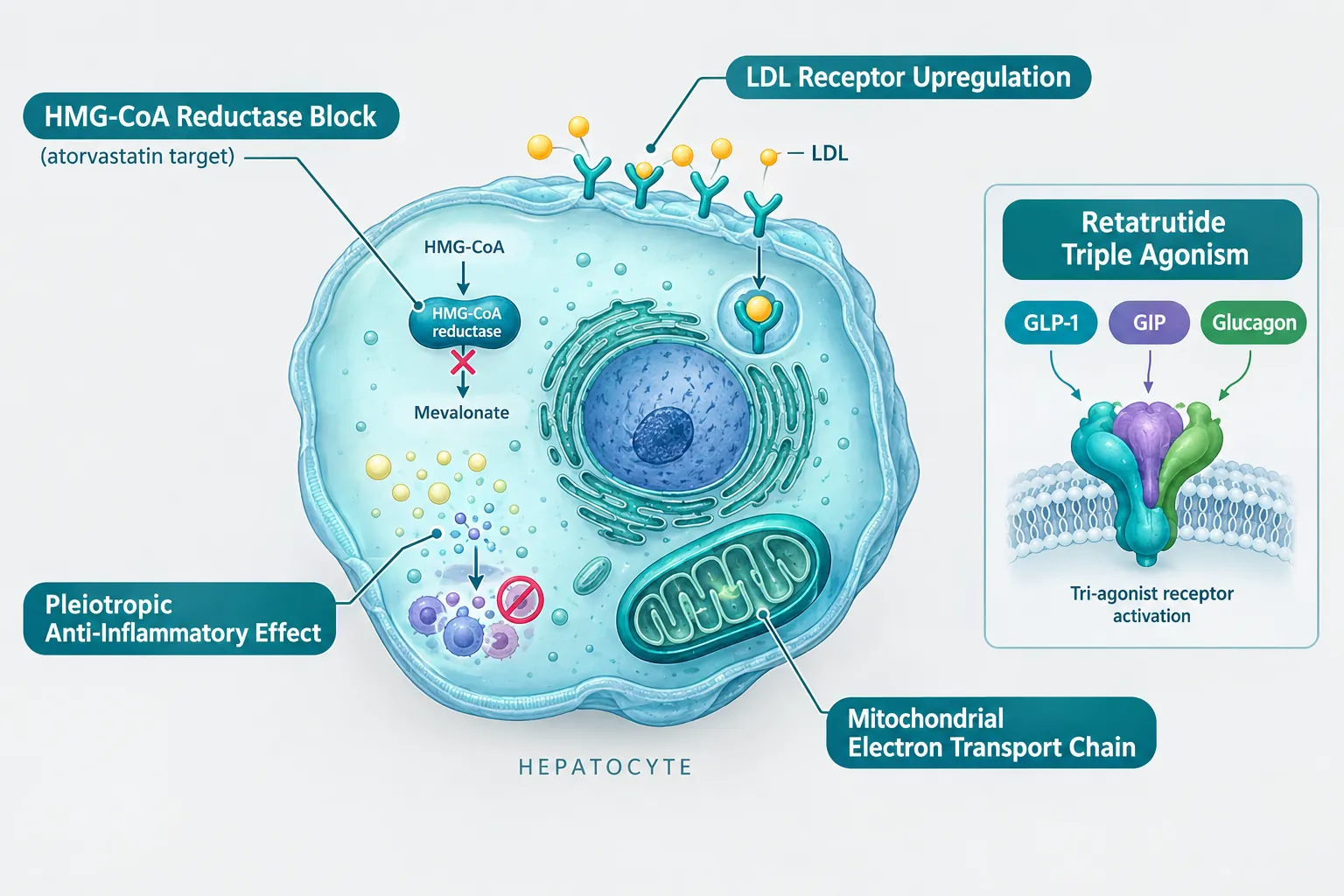
Atorvastatin is the world's most prescribed lipid-lowering drug. It blocks HMG-CoA reductase, the rate-limiting enzyme in hepatic cholesterol synthesis, and upregulates LDL receptors on liver cells. Beyond these primary actions, it exerts well-documented pleiotropic effects: reducing vascular inflammation, modulating endothelial nitric oxide, and influencing mitochondrial coenzyme Q10 levels. Each of these secondary actions intersects with pathways that metabolic peptides are designed to probe.

Retatrutide (LY3437943) activates GLP-1, GIP, and glucagon receptors simultaneously. Phase 2 trial data show mean weight reductions of approximately 22-24% over 48 weeks, accompanied by meaningful improvements in triglycerides, LDL cholesterol, and hepatic lipid content. Crucially, these lipid improvements arise from the peptide's own pharmacology, glucagon receptor agonism increases lipolysis and reduces lipogenesis, while GLP-1 and GIP components improve insulin sensitivity and reduce ectopic fat. When a participant is also taking atorvastatin, separating the statin's LDL effect from the peptide's LDL effect becomes statistically and mechanistically complex.

"The question is not whether atorvastatin matters, it clearly does. The question is whether the experimental design treats it as a known variable or an invisible confounder."

Researchers sourcing retatrutide peptide for preclinical work or reviewing GLP-3/retatrutide combination products should build statin status into their protocol from day one.


Experimental Design Principles for Atorvastatin in Metabolic Peptide Experiments
Experimental Design Principles for Atorvastatin in Metabolic Peptide Experiments

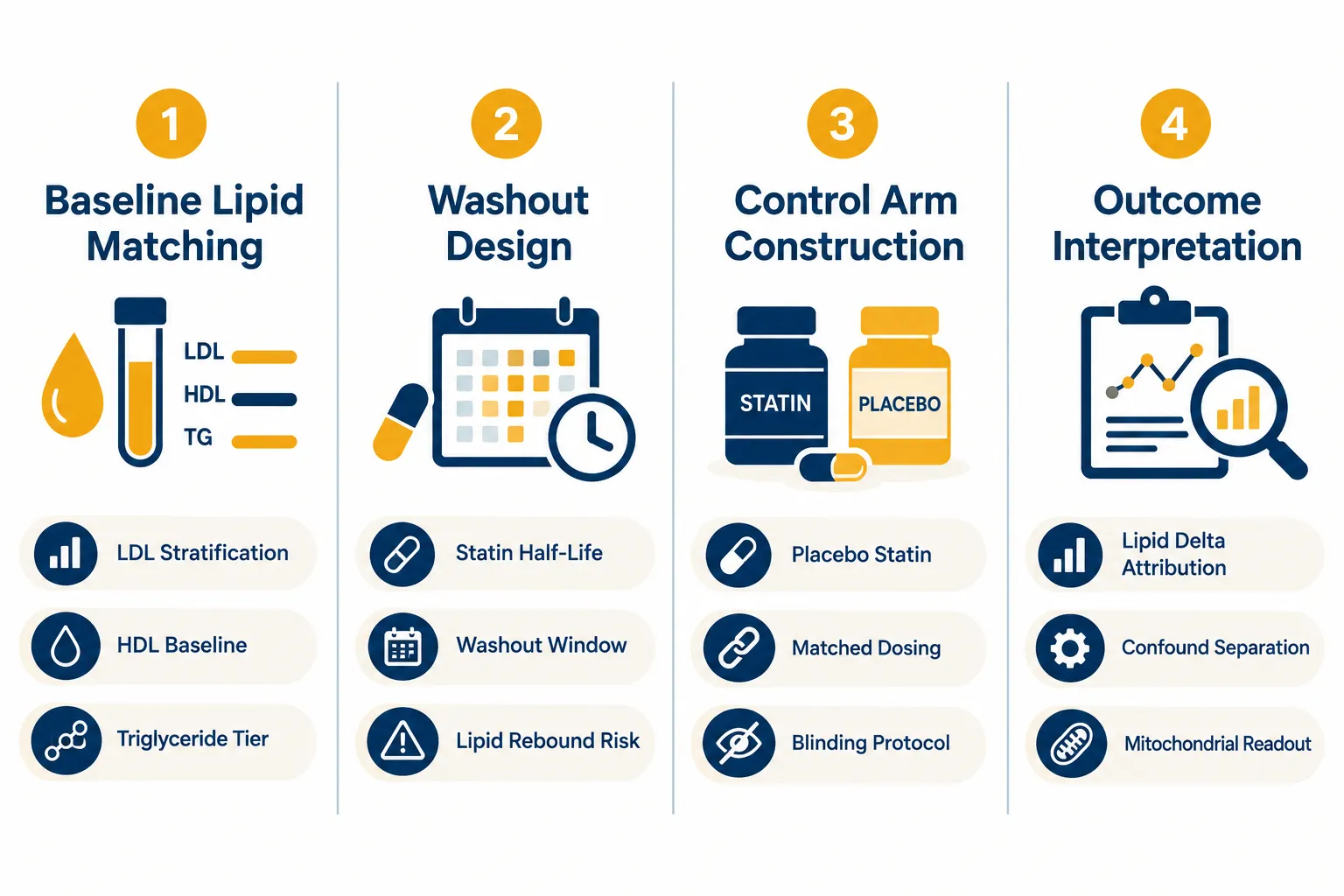
Rigorous control of atorvastatin's influence requires four interlocking design decisions.

Baseline Lipid Matching

Before randomization, participants or cell-line models should be stratified by:

  • LDL-C tier (optimal, borderline, elevated)
  • Triglyceride level (normal vs. elevated)
  • HDL-C baseline
  • Current statin dose (low, moderate, high intensity per ACC/AHA criteria)

Failure to match on these variables means that any observed lipid change could reflect pre-existing statin intensity differences rather than the peptide intervention. In retatrutide studies, where triglyceride reductions can exceed 30%, an unmatched high-intensity statin arm will produce misleading comparisons.

Washout Considerations

Atorvastatin has a plasma half-life of roughly 14 hours, but its pharmacodynamic effects on LDL receptor expression persist for several days after the last dose. A minimum two-week washout is generally recommended before lipid baseline measurements are taken in studies where statin use must be paused. However, washout carries its own risk: LDL rebound can occur within days, which may introduce a time-dependent confound if baseline measurements are taken at different points post-washout across participants.

Practical options:

Design Choice Advantage Risk
Full washout before baseline Clean lipid baseline LDL rebound, ethical concern in high-risk subjects
Stable dose maintained throughout Ethically safer Statin effect folded into all arms equally
Stratified by statin status (no washout) Preserves safety, enables subgroup analysis Requires larger sample size

Control Arm Construction

When atorvastatin cannot be washed out, as is often the case in cardiovascular-risk populations, the cleanest approach is to stratify randomization by statin use and ensure each treatment arm contains an equal proportion of statin users. This transforms atorvastatin from a confounder into a pre-specified effect modifier, allowing subgroup analyses to test whether the peptide's lipid effects differ by statin background.

Interpreting Outcomes Under Dual Therapy

In a dual-therapy scenario, the observed LDL reduction is a composite of atorvastatin's HMG-CoA blockade and retatrutide's glucagon-driven lipolysis and reduced hepatic lipogenesis. Statistical models should include statin dose as a covariate. Researchers interested in the GLP-3 peptide signaling pathway will recognize that receptor-level effects on lipid metabolism are distinct from enzyme-level inhibition, making additive versus synergistic modeling a meaningful analytical choice.


Mitochondrial Models: Where MOTS-c, 5-Amino-1MQ, and Atorvastatin Intersect
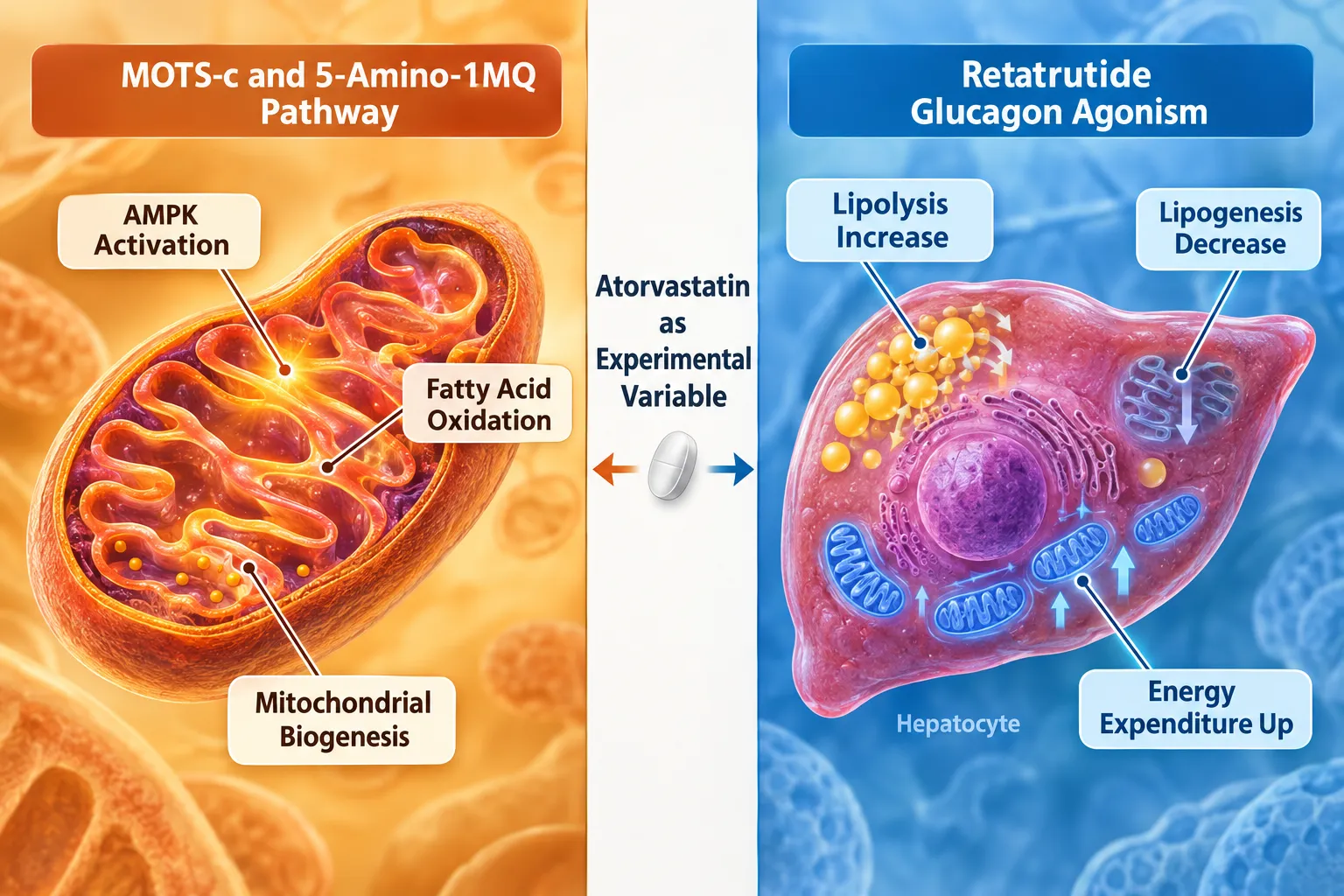
Mitochondrial Models: Where MOTS-c, 5-Amino-1MQ, and Atorvastatin Intersect

The complexity deepens considerably when mitochondrial peptides enter the experimental frame. MOTS-c is a mitochondria-derived peptide that activates AMPK, promotes fatty acid oxidation, and enhances mitochondrial biogenesis. 5-Amino-1MQ is a small-molecule inhibitor of NNMT (nicotinamide N-methyltransferase) that shifts cellular metabolism toward oxidative phosphorylation and reduces lipid accumulation. Both compounds operate on pathways that atorvastatin also touches, particularly through the coenzyme Q10 axis and mitochondrial electron transport chain dynamics.

Atorvastatin reduces endogenous coenzyme Q10 synthesis as a downstream consequence of HMG-CoA reductase inhibition. This can subtly impair mitochondrial respiratory chain efficiency, which is precisely the readout that MOTS-c and 5-Amino-1MQ experiments are designed to measure. An experiment that does not account for atorvastatin's CoQ10 effect may attribute impaired mitochondrial respiration to the peptide when the statin is the actual driver.

Key mitochondrial confounds introduced by atorvastatin:

  • Reduced CoQ10 availability in Complex I/III of the electron transport chain
  • Altered mitochondrial membrane potential in hepatocytes and myocytes
  • Possible upregulation of mitochondrial biogenesis as a compensatory response

For researchers working with SS-31 mitochondrial research models or reviewing SS-31 10mg research peptide considerations, the same logic applies: any statin in the background must be pre-specified, dose-recorded, and statistically controlled. Those exploring MOTS-c peptide for sale for metabolic research should document statin co-exposure in their experimental logs as a standard practice.

When retatrutide is layered on top of this mitochondrial model, the glucagon receptor agonism adds a third metabolic signal, increased hepatic fatty acid oxidation and energy expenditure, that further overlaps with both the peptide probes and the statin background. Isolating each compound's contribution requires:

  1. Pre-specified factorial or stratified designs
  2. Mitochondrial respiration assays (Seahorse XF or equivalent) run in statin-exposed versus statin-naive conditions
  3. CoQ10 plasma levels measured as a mechanistic covariate
  4. AMPK phosphorylation status as a shared downstream readout for MOTS-c, 5-Amino-1MQ, and glucagon agonism

Conclusion

Atorvastatin in metabolic peptide experiments, controlling lipid-lowering effects in retatrutide and mitochondrial models, is not a pharmacological afterthought. It is a design variable that, if ignored, can corrupt lipid endpoints, misattribute mitochondrial readouts, and produce irreproducible results. The actionable steps are clear:

  • Stratify by statin status at randomization, or pre-specify washout windows with lipid rebound monitoring.
  • Record atorvastatin dose intensity and include it as a covariate in all lipid and mitochondrial outcome models.
  • Measure CoQ10 levels when mitochondrial peptides such as MOTS-c, SS-31, or 5-Amino-1MQ are in the experimental design.
  • Use factorial subgroup analyses to test whether retatrutide's lipid effects differ by statin background, rather than assuming homogeneity.
  • Consult current phase 3 trial protocols as they become available; as of 2026, no completed study has formally used atorvastatin as a deliberate modulator of retatrutide's lipid effects, but the mechanistic rationale for doing so is strong.

Researchers who build these controls into their protocols from the outset will produce data that is interpretable, reproducible, and genuinely informative about the independent and combined contributions of each compound. Those who do not will spend far more time explaining away confounds than advancing the science.

https://www.puretestedpeptides.com/wp-content/uploads/2026/10/atorvastatin-in-metabolic-peptide-experiments-controlling-lipid-lowering-effects.webp 1024 1536 https://www.puretestedpeptides.com/wp-content/uploads/2026/01/buy-peptides-online.jpg 2026-10-04 13:04:572026-10-04 13:04:57Atorvastatin in Metabolic Peptide Experiments: Controlling Lipid-Lowering Effects in Retatrutide and Mitochondrial Models
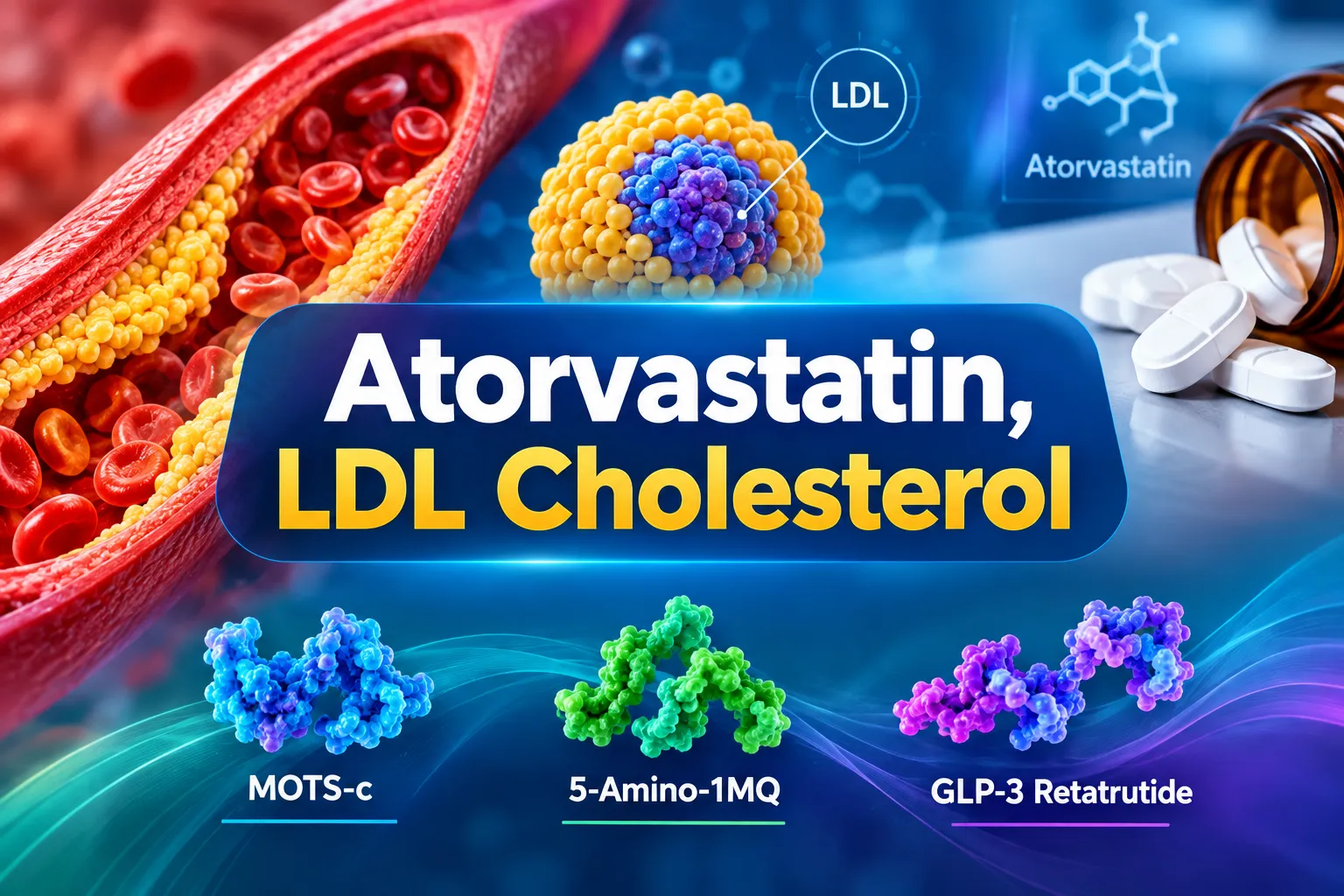
Atorvastatin, LDL Cholesterol, and Metabolic Peptides: Where MOTS-c, 5-Amino-1MQ, and GLP-3 Retatrutide Fit in Lipid Research

Atorvastatin, LDL Cholesterol, and Metabolic Peptides: Where MOTS-c, 5-Amino-1MQ, and GLP-3 Retatrutide Fit in Lipid Research

September 20, 2026/0 Comments/in Uncategorized/by

{"cover":"Professional landscape format (1536×1024) hero image with bold text overlay 'Atorvastatin, LDL Cholesterol' in crisp white modern sans-serif on a deep navy semi-transparent overlay panel, centered with 8% safe margins from every edge, no character touches the edge, two balanced lines. Background: high-resolution editorial medical illustration of a cross-section of a human artery with visible LDL cholesterol plaques, surrounded by floating molecular structures of statin compounds and peptide chains in teal and gold tones, clinical yet visually striking, magazine-cover aesthetic, sharp editorial lighting, professional 2-color palette of navy and teal with white typography.","content":["Annotated mechanism-of-action diagram (1536×1024 landscape) showing atorvastatin's HMG-CoA reductase inhibition pathway in a clean white-background infographic style. Four labeled stages arranged left to right: Stage 1 callout 'HMG-CoA Reductase Blocked' pointing to liver cell diagram, Stage 2 callout 'LDL Receptors Upregulated' with arrow to hepatocyte surface, Stage 3 callout 'LDL Cleared from Blood' showing artery cross-section, Stage 4 callout 'Target: <55 mg/dL ASCVD' with a bold threshold bar. Thin callout lines, teal-and-navy palette, numbered stages, editorial medical-guide polish, no pricing or dollar amounts.","Three-panel side-by-side comparison infographic (1536×1024 landscape) contrasting retatrutide, MOTS-c, and 5-Amino-1MQ as metabolic research agents. Left panel heading 'Retatrutide GLP-1/GIP/Glucagon' with bullet labels: Triple receptor agonist, LDL down ~15-20 percent, TG down ~40 mg/dL, Phase 3 trials. Center panel heading 'MOTS-c Mitochondrial Peptide' with bullet labels: NAD+ regulation, AMPK activation, Lipid oxidation, Preclinical stage. Right panel heading '5-Amino-1MQ NNMT Inhibitor' with bullet labels: NAD+ preservation, Lipogenesis suppressed, Fat oxidation shift, Animal models only. Clean white background, warm amber and teal accent colors, thin dividing lines, editorial infographic polish, callout lines to molecular icons per panel.","Split-screen editorial landscape image (1536×1024) illustrating layered cardiometabolic therapy concept. Left half: warm-lit clinical laboratory bench with statin pill bottles, a cholesterol panel blood report showing LDL values, and a molecular model of atorvastatin in amber studio lighting. Right half: cool-toned scientific research setting with peptide vials labeled MOTS-c and retatrutide, a digital screen showing triglyceride and metabolic pathway data, blue-white laboratory lighting. A bold center divider line with short label 'Established vs Investigational' separating the two halves. High-contrast magazine composition, deep focus, editorial quality."]

Professional landscape hero image () with a reading "Atorvastatin, LDL Cholesterol". CRITICAL TYPOGRAPHY RULES: render the

Cardiovascular disease remains the leading cause of death globally, yet only about half of high-risk patients reach their LDL-cholesterol targets even with statin therapy. That gap has driven intense research into metabolic peptides, molecules that act on mitochondrial signaling, NAD+ biology, and incretin receptors, as potential complements to classic lipid-lowering drugs. Understanding atorvastatin, LDL cholesterol, and metabolic peptides: where MOTS-c, 5-Amino-1MQ, and GLP-3 Retatrutide fit in lipid research requires a clear look at what each agent does, how the mechanisms compare, and what the current evidence actually supports.

Key Takeaways

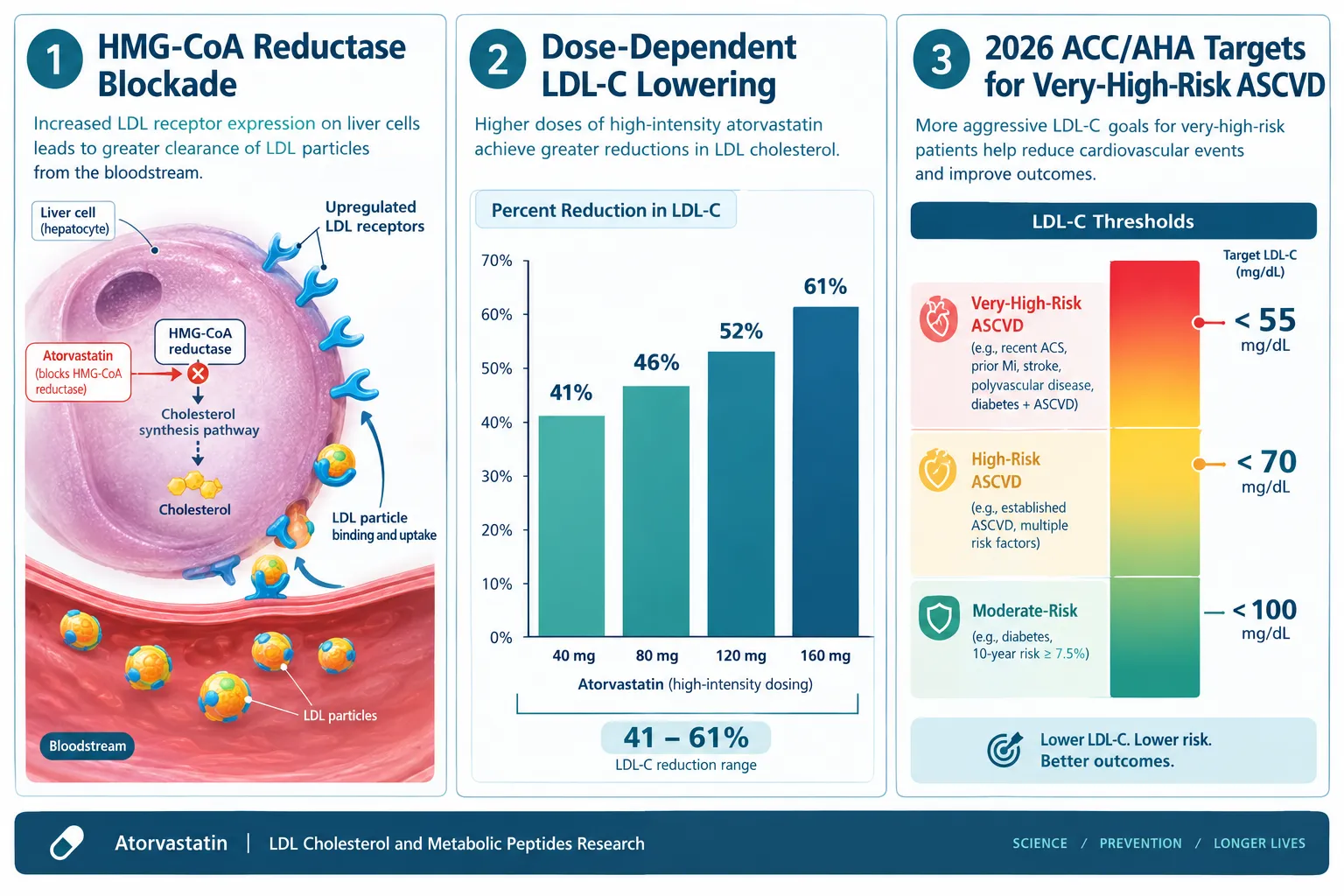
  • Atorvastatin remains the primary pharmacological tool for reaching stringent LDL-C targets, with high-intensity dosing producing LDL reductions of 41-61%.
  • The 2026 ACC/AHA dyslipidemia guidelines set explicit LDL-C thresholds as low as less than 55 mg/dL for very-high-risk ASCVD patients.
  • Retatrutide, a triple receptor agonist targeting GLP-1, GIP, and glucagon pathways, shows meaningful lipid improvements in clinical trials but remains investigational with no regulatory approval as of 2026.
  • MOTS-c and 5-Amino-1MQ operate through mitochondrial and NAD+ pathways that influence lipid metabolism, but both remain in preclinical research stages.
  • Expert analysis increasingly frames future lipid management as layered therapy: statins for LDL targets plus metabolic peptides for residual cardiometabolic risk.

How Atorvastatin Shapes LDL-C Management in 2026

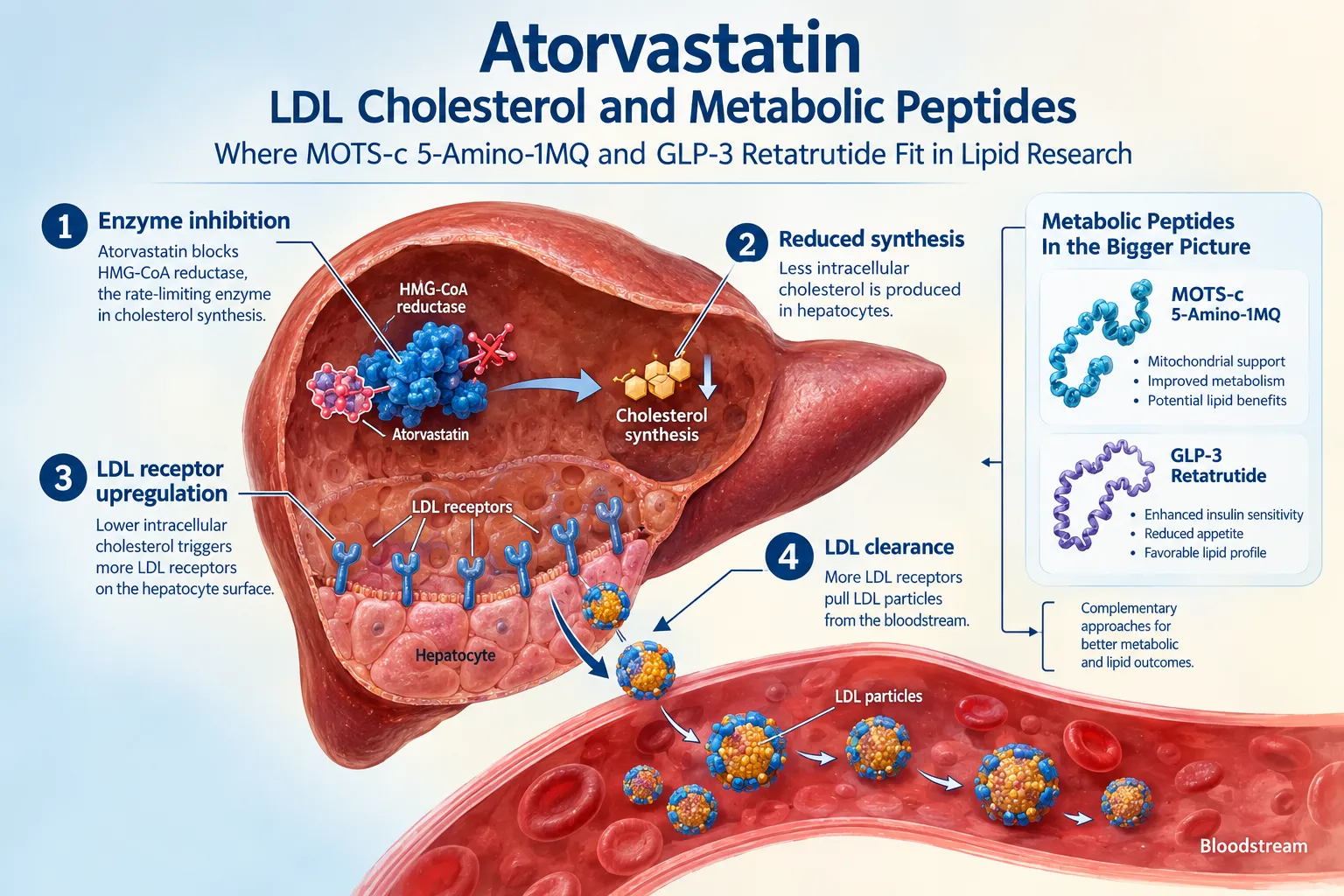
Atorvastatin works by blocking HMG-CoA reductase, the rate-limiting enzyme in hepatic cholesterol synthesis. When the liver produces less cholesterol internally, it upregulates LDL receptors on its surface, pulling more LDL particles out of circulation. The result is a dose-dependent and clinically significant reduction in atherogenic lipoproteins.

How Atorvastatin Shapes LDL-C Management in 2026

Dose, response data are well established. Depending on the dose and the patient's baseline risk profile, atorvastatin produces:

Lipid Marker Typical Reduction Range
Total Cholesterol 30-46%
LDL-C 41-61%
Triglycerides 14-33%
HDL-C Modest increase

The 2026 ACC/AHA multisociety dyslipidemia guideline has reintroduced explicit numeric LDL-C targets for the first time in over a decade. Very-high-risk ASCVD patients now have a target of less than 55 mg/dL, high-risk patients less than 70 mg/dL, and borderline-to-intermediate risk patients less than 100 mg/dL. High-intensity statins like atorvastatin are confirmed as the primary agents to reach these thresholds.

The core limitation: statins address LDL-C powerfully but leave residual risk from elevated triglycerides, visceral adiposity, insulin resistance, and inflammation. This is precisely where metabolic peptide research becomes relevant.

Retatrutide and GLP-Class Peptides: Lipid Effects Beyond Weight Loss

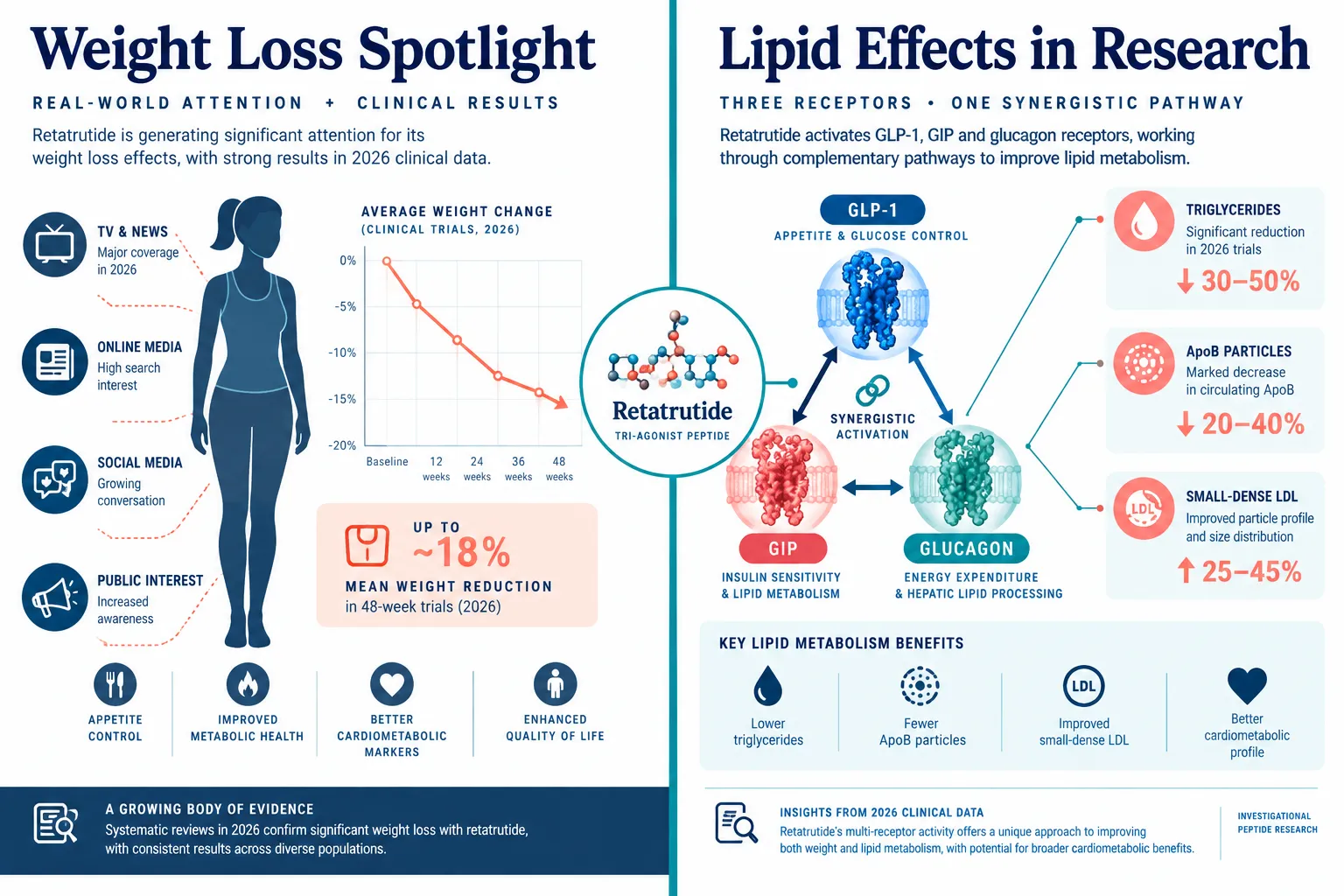
Retatrutide is a first-in-class investigational triple receptor agonist that activates GLP-1, GIP, and glucagon receptors simultaneously. While most public attention has focused on its dramatic weight loss results, its lipid effects are clinically noteworthy in their own right.

A 2026 systematic review and meta-analysis of randomized retatrutide trials found statistically significant improvements across multiple lipid markers. Total cholesterol fell by a weighted mean of approximately 21.88 mg/dL, LDL-C dropped by roughly 13.10 mg/dL, and triglycerides declined by about 40.90 mg/dL, all with p-values below 0.0001. HDL-C showed no meaningful change.

Phase 2 obesity trial data add further context. Non-HDL cholesterol fell approximately 15-17%, LDL declined around 15-20% in higher-dose regimens, and triglycerides dropped by roughly 32-44% across datasets. The mechanism appears to involve glucagon receptor agonism reducing circulating ANGPTL3 and ANGPTL8 concentrations, which in turn enhances lipoprotein lipase activity and alters hepatic lipoprotein production.

Important context: As of mid-2026, retatrutide has no approval from the FDA, EMA, or any other major regulator. Phase 3 TRIUMPH trial data are generating significant scientific interest, but retatrutide remains strictly investigational.

For researchers exploring the GLP peptide landscape, the GLP-3 peptides for sale category and retatrutide clinical trial resources provide useful context on current research-grade availability and trial status. Those interested in the broader incretin class can also review GLP-1 peptides research context for comparison.

MOTS-c and 5-Amino-1MQ: Mitochondrial Pathways in Lipid Research

This is where the science of atorvastatin, LDL cholesterol, and metabolic peptides diverges most sharply from conventional cardiology. MOTS-c and 5-Amino-1MQ do not lower LDL-C through receptor upregulation or incretin signaling. Instead, they act on the metabolic machinery inside cells.

MOTS-c and 5-Amino-1MQ: Mitochondrial Pathways in Lipid Research

MOTS-c is a mitochondria-derived peptide encoded within the 12S rRNA region of mitochondrial DNA. Research models show it activates AMPK, regulates NAD+ metabolism, and promotes fatty acid oxidation over lipid storage. In preclinical settings, MOTS-c treatment is associated with improved insulin sensitivity and reduced lipid accumulation in metabolic tissues. For researchers, MOTS-c 10mg is available as a research-grade compound, and the broader MOTS-c peptide category provides additional options.

5-Amino-1MQ is a selective nicotinamide N-methyltransferase (NNMT) inhibitor. By blocking NNMT, it preserves intracellular NAD+ levels, decreases N1-methylnicotinamide, suppresses lipogenesis, and shifts adipocytes toward fat oxidation. In diet-induced obese mouse models, these effects translate to reduced fat mass and improved metabolic markers, with triglycerides often the most sensitive lipid marker to change.

Critical regulatory note: Neither MOTS-c nor 5-Amino-1MQ has an FDA-approved indication. 5-Amino-1MQ has no publicly documented IND or registered Phase 1-3 human trial as of 2026. All efficacy and safety data remain confined to cell culture and animal models.

No major 2025-2026 guideline integrates MOTS-c or 5-Amino-1MQ into formal LDL-cholesterol management pathways. Their role in lipid research is mechanistic and exploratory, not clinical.

For a broader grounding in how these peptide classes relate to each other mechanistically, the Peptides 101 for research-use only buyers guide covers structure, mechanisms, and classification in accessible detail.

Layered Therapy: How These Agents Complement Each Other in Research Models

The emerging framework in expert and industry analysis is one of layered cardiometabolic management:

  1. High-intensity statins (atorvastatin) address the primary LDL-C target mandated by guidelines.
  2. GLP-class investigational agents (retatrutide) tackle residual risk from weight, blood pressure, triglycerides, and glycemic status.
  3. Mitochondrial and NAD+ pathway agents (MOTS-c, 5-Amino-1MQ) represent a third layer focused on cellular metabolic efficiency, still preclinical, but scientifically compelling.

Layered Therapy: How These Agents Complement Each Other in Research Models

This layered model does not imply clinical equivalence. Atorvastatin has decades of randomized controlled trial data and guideline endorsement. Retatrutide has Phase 2 and emerging Phase 3 data. MOTS-c and 5-Amino-1MQ have preclinical data only. Researchers and clinicians must weigh evidence tiers carefully.

The intersection of atorvastatin, LDL cholesterol, and metabolic peptides: where MOTS-c, 5-Amino-1MQ, and GLP-3 Retatrutide fit in lipid research is ultimately a question about mechanism, evidence quality, and therapeutic stage, not a single unified treatment protocol.

For those exploring adjacent peptide research areas, resources on peptides and polypeptides in endocrine pharmacology provide useful mechanistic context on how different peptide classes interface with metabolic signaling systems.

Conclusion

Atorvastatin remains the cornerstone of LDL-C reduction in 2026, backed by robust dose-response data and explicit guideline targets that demand aggressive lipid lowering in high-risk patients. Retatrutide adds a meaningful investigational layer with documented lipid improvements, particularly for triglycerides, through a distinct incretin and glucagon receptor mechanism. MOTS-c and 5-Amino-1MQ represent the frontier of mitochondrial and NAD+ biology in lipid research, with scientifically interesting preclinical profiles but no clinical validation yet.

Actionable next steps for researchers:

  • Use current ACC/AHA LDL-C targets as the benchmark when designing lipid-focused research protocols.
  • Distinguish clearly between agents with clinical trial data (retatrutide) and those with only preclinical data (MOTS-c, 5-Amino-1MQ) when framing research questions.
  • Monitor Phase 3 TRIUMPH retatrutide data and ADA presentations for updated lipid endpoints.
  • Ensure all peptide compounds used in research settings are sourced from verified, high-purity suppliers with documented testing.
  • Consult regulatory guidance before any translational or human-adjacent research involving investigational peptides.

The science connecting statins, incretin-class peptides, and mitochondrial signaling molecules is evolving rapidly. Staying current with both guideline updates and preclinical mechanistic literature is essential for anyone working at this intersection.

https://www.puretestedpeptides.com/wp-content/uploads/2026/09/atorvastatin-ldl-cholesterol-and-metabolic-peptides-where-mots-c-5-amino-1mq-and.webp 1024 1536 https://www.puretestedpeptides.com/wp-content/uploads/2026/01/buy-peptides-online.jpg 2026-09-20 13:06:502026-09-20 13:06:50Atorvastatin, LDL Cholesterol, and Metabolic Peptides: Where MOTS-c, 5-Amino-1MQ, and GLP-3 Retatrutide Fit in Lipid Research
Statin Therapy and Liver Enzymatic Readouts in Metabolic Peptide Models: Atorvastatin vs. MOTS-c and 5-Amino-1MQ

Statin Therapy and Liver Enzymatic Readouts in Metabolic Peptide Models: Atorvastatin vs. MOTS-c and 5-Amino-1MQ

September 16, 2026/0 Comments/in Uncategorized/by

Atorvastatin reduces cardiovascular events in millions of patients worldwide, yet its interaction with mitochondrial lipid oxidation pathways, the same pathways targeted by emerging research peptides, creates a hepatic monitoring challenge that most clinical protocols have not yet addressed. As researchers and clinicians increasingly encounter subjects using both statin therapy and novel metabolic compounds, understanding how liver enzymatic readouts shift across these combined models has become a pressing question in 2026.

This article examines the intersection of statin-driven cholesterol suppression and the mitochondrial and enzymatic mechanisms of two research peptides: MOTS-c and 5-Amino-1MQ. The goal is to give researchers a clear, evidence-grounded framework for interpreting ALT, AST, GGT, and related liver markers in these combined metabolic models.

Key Takeaways

  • Atorvastatin at high doses (40-80 mg) carries a recognized risk of transaminase elevation, requiring baseline and interval liver function monitoring.
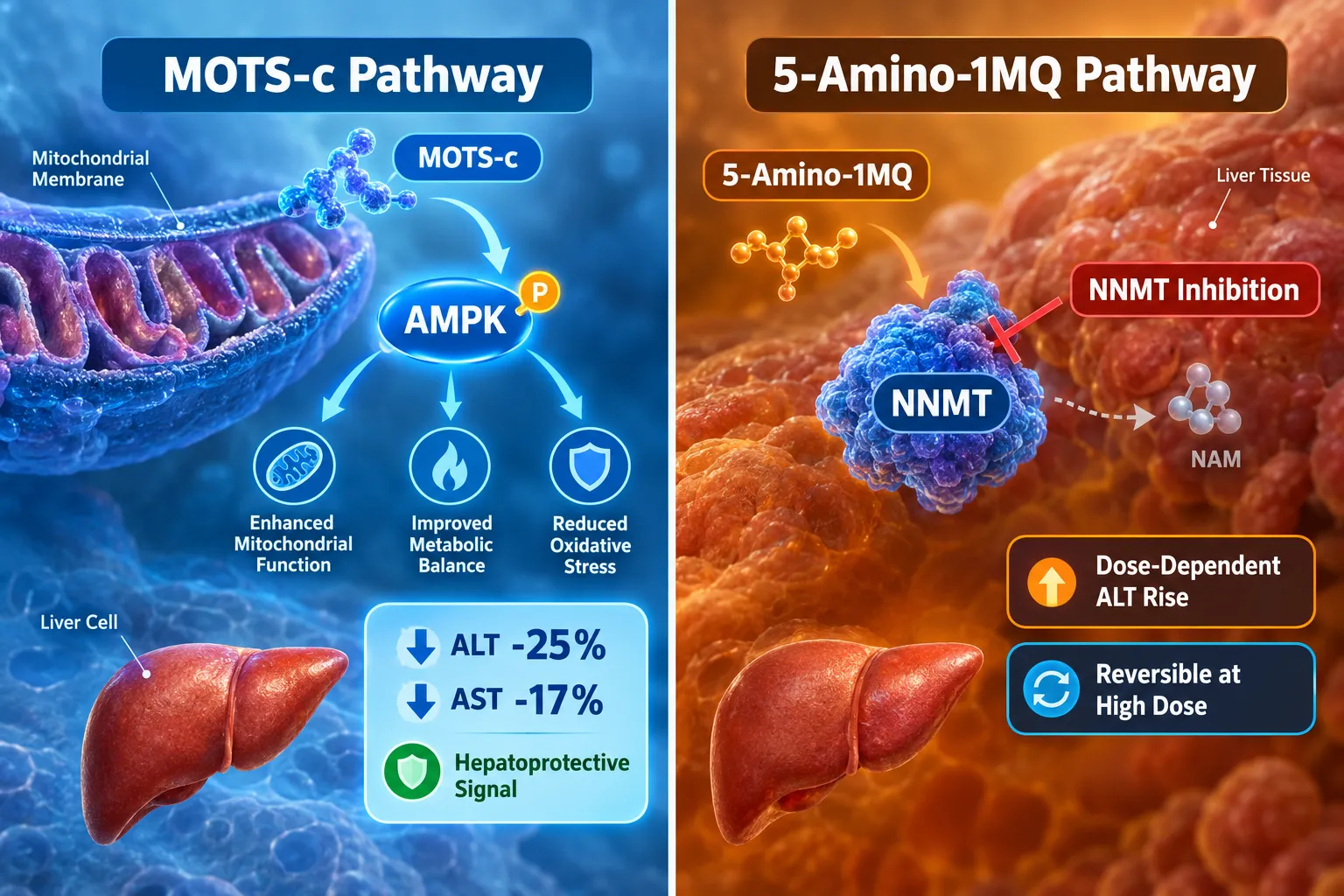
  • MOTS-c analogs have shown early signals of hepatoprotection, with one analog reducing plasma ALT by approximately 25% and AST by 17% versus placebo in early-phase research.
  • 5-Amino-1MQ demonstrates no short-term hepatotoxicity signal at standard doses, but high-dose rodent studies show dose-dependent, reversible ALT/AST rises of 2-3 times the upper limit of normal.
  • No formal drug-interaction profile exists for MOTS-c or 5-Amino-1MQ combined with statins; monitoring protocols should mirror established statin hepatic surveillance guidelines.
  • Human safety data for both peptides remains limited; all liver risk assessments are currently extrapolated from animal models.

How Atorvastatin Affects Liver Enzymatic Readouts

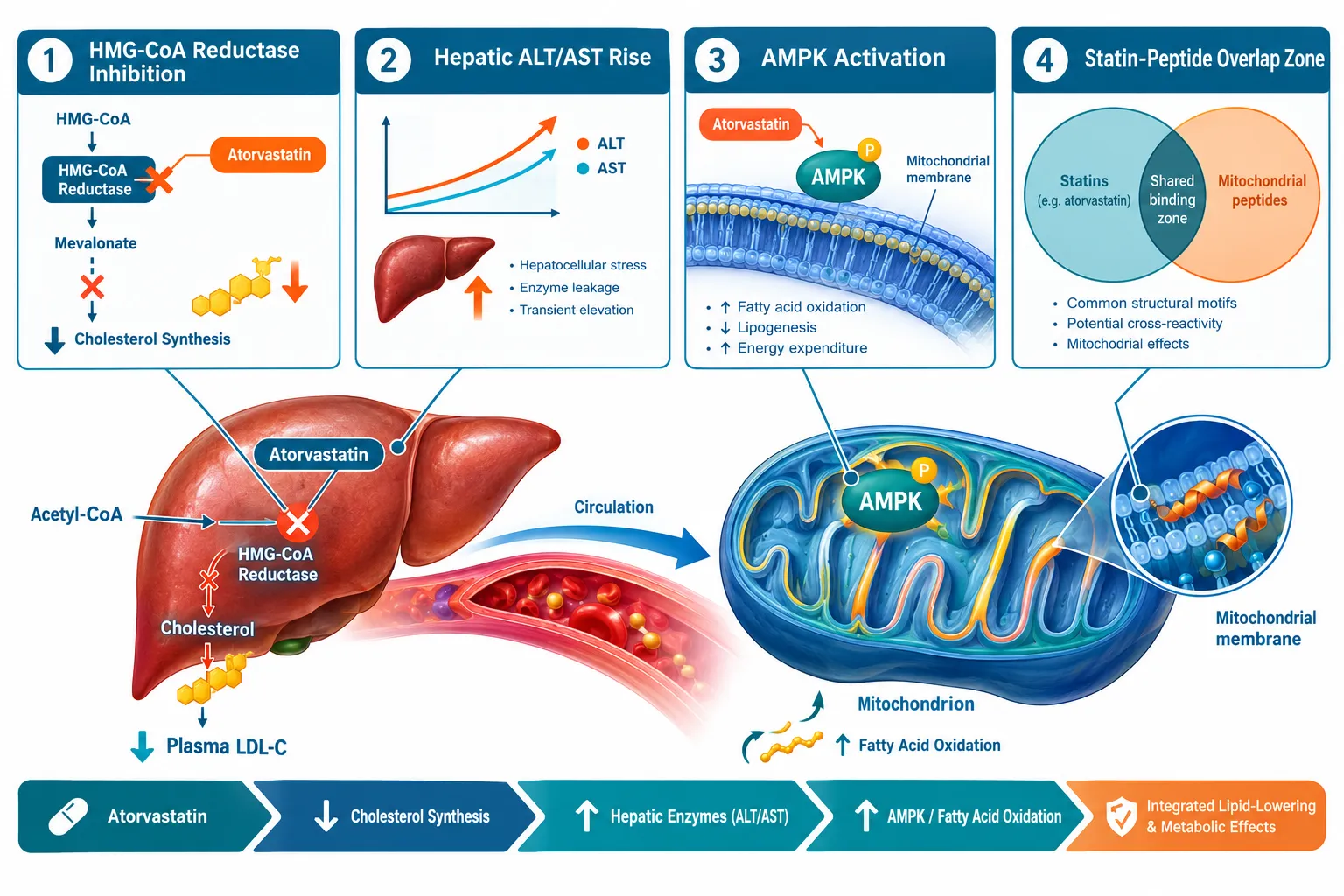
Atorvastatin works by inhibiting HMG-CoA reductase, the rate-limiting enzyme in hepatic cholesterol synthesis. This mechanism is primarily hepatic, meaning the liver bears the greatest pharmacological burden. In most patients, liver enzymes remain stable. However, high-dose regimens, specifically 40 mg and 80 mg daily, are consistently flagged in clinical guidance for a higher risk of transaminase elevation.

How Atorvastatin Affects Liver Enzymatic Readouts

The standard threshold for clinical concern is a rise in ALT or AST exceeding three times the upper limit of normal (ULN). At that point, dose reduction or discontinuation is recommended. Baseline liver panels before starting atorvastatin are considered standard practice, and interval testing is advised when doses increase or when additional hepatically metabolized compounds are introduced.

Key liver markers to track with atorvastatin:

Marker Baseline Role Concern Threshold
ALT Hepatocellular injury >3x ULN
AST Broader hepatic/muscle signal >3x ULN
GGT Cholestatic marker Elevated with dose escalation
Bilirubin Hepatic function Rising with severe injury

The lipid-lowering mechanism of atorvastatin also indirectly touches mitochondrial function. Statins can reduce coenzyme Q10 synthesis, a downstream consequence of HMG-CoA reductase inhibition, which may mildly impair mitochondrial electron transport. This is relevant because both MOTS-c and 5-Amino-1MQ act on overlapping mitochondrial and metabolic pathways, creating a potential zone of interaction that warrants careful enzyme surveillance.

MOTS-c in the Context of Statin Therapy and Liver Enzymatic Readouts in Metabolic Peptide Models

MOTS-c is a mitochondrial-derived peptide that activates AMPK signaling, promoting fatty acid oxidation and glucose uptake. Its mechanism is fundamentally mitochondrial, which places it in direct functional proximity to the mitochondrial stress that high-dose statins can produce.

Early clinical research on a MOTS-c-derived analog (CB4211) reported a reduction in liver triglyceride levels alongside a 25% decrease in plasma ALT and a 17% decrease in AST compared to placebo. These findings suggest a hepatoprotective rather than hepatotoxic profile, at least in subjects with hepatic steatosis. This is a meaningful distinction: while atorvastatin may nudge liver enzymes upward at high doses, MOTS-c analogs appear to exert a counterbalancing effect in fatty liver models.

Researchers exploring MOTS-c and elamipretide combinations should note that no published cases of MOTS-c increasing statin-related hepatotoxicity have been reported. However, the absence of a formal drug-interaction profile means caution is still warranted. MOTS-c is not FDA-approved and is available only as a research-grade MOTS-c peptide within registered trials or research settings.

"MOTS-c's AMPK activation pathway overlaps with the mitochondrial stress zone created by statin-induced CoQ10 suppression, making liver enzyme monitoring essential, not optional."

MOTS-c + Atorvastatin: Current Evidence Summary

  • No published adverse interaction cases as of 2026
  • Theoretical concern: combined AMPK/mitochondrial pathway activity at high statin doses
  • Recommended monitoring: baseline ALT/AST, interval testing at 4-8 weeks
  • Human data: limited to early Phase I safety signals only

5-Amino-1MQ Liver Enzymatic Readouts in Metabolic Peptide Models: Atorvastatin Comparison

5-Amino-1MQ inhibits nicotinamide N-methyltransferase (NNMT), an enzyme highly expressed in liver tissue. By blocking NNMT, the compound alters methionine cycle flux and shifts cellular energy metabolism toward fat oxidation. This hepatic expression profile makes liver enzyme monitoring especially relevant for this compound.

5-Amino-1MQ Liver Enzymatic Readouts in Metabolic Peptide Models: Atorvastatin Comparison

Acute animal studies using doses ranging from 50 to 5,000 mg/kg reported no mortality and no observable adverse reactions over 48 hours. A 14-day subacute study found AST and GGT unchanged, with only a transient CRP elevation at the highest intravenous dose. These findings suggest no short-term hepatotoxicity signal at standard research doses.

However, the picture changes at high doses over longer periods. Rodent studies using 5 to 10 times the proposed therapeutic dose found that approximately 8-12% of animals developed ALT rises of 2-3 times the upper limit of normal after 4-6 weeks of daily dosing. Critically, these elevations normalized within 2-3 weeks of discontinuation, indicating dose-dependent but reversible hepatotoxicity.

A 2024 diet-induced obesity mouse study also reported improved liver histology over 28 days with standard dosing, aligning with the hepatoprotective potential seen in MOTS-c models. Yet a 2025 dosing synthesis found that 100 mg/kg doses did not produce proportionally greater fat loss than lower doses but did produce elevated ALT/AST in a subset of subjects, a clear dose ceiling signal.

Those researching 5-Amino-1MQ 60 capsules for metabolic research should also review available 5-Amino-1MQ capsule formulations and ensure sourcing from lab-tested peptide suppliers to maintain research integrity.

5-Amino-1MQ Liver Enzyme Profile at a Glance:

  • Standard doses: No hepatotoxicity signal in acute and subacute animal studies
  • High doses (5-10x therapeutic): 8-12% of animals show ALT/AST 2-3x ULN
  • Recovery: Enzyme normalization within 2-3 weeks post-discontinuation
  • Human data: None; all liver risk assessments are extrapolated from animal models
  • Chronic toxicology (28-day and 90-day studies): Not publicly reported as of 2026

When combining 5-Amino-1MQ with atorvastatin, the shared hepatic burden is the primary concern. Both compounds are processed in liver tissue, and both can elevate transaminases at high doses. The recommended approach mirrors statin clinical practice: obtain a full baseline hepatic panel (ALT, AST, GGT, bilirubin), monitor at defined intervals, and discontinue with further evaluation if ALT or AST exceeds 2-3 times the upper limit of normal.

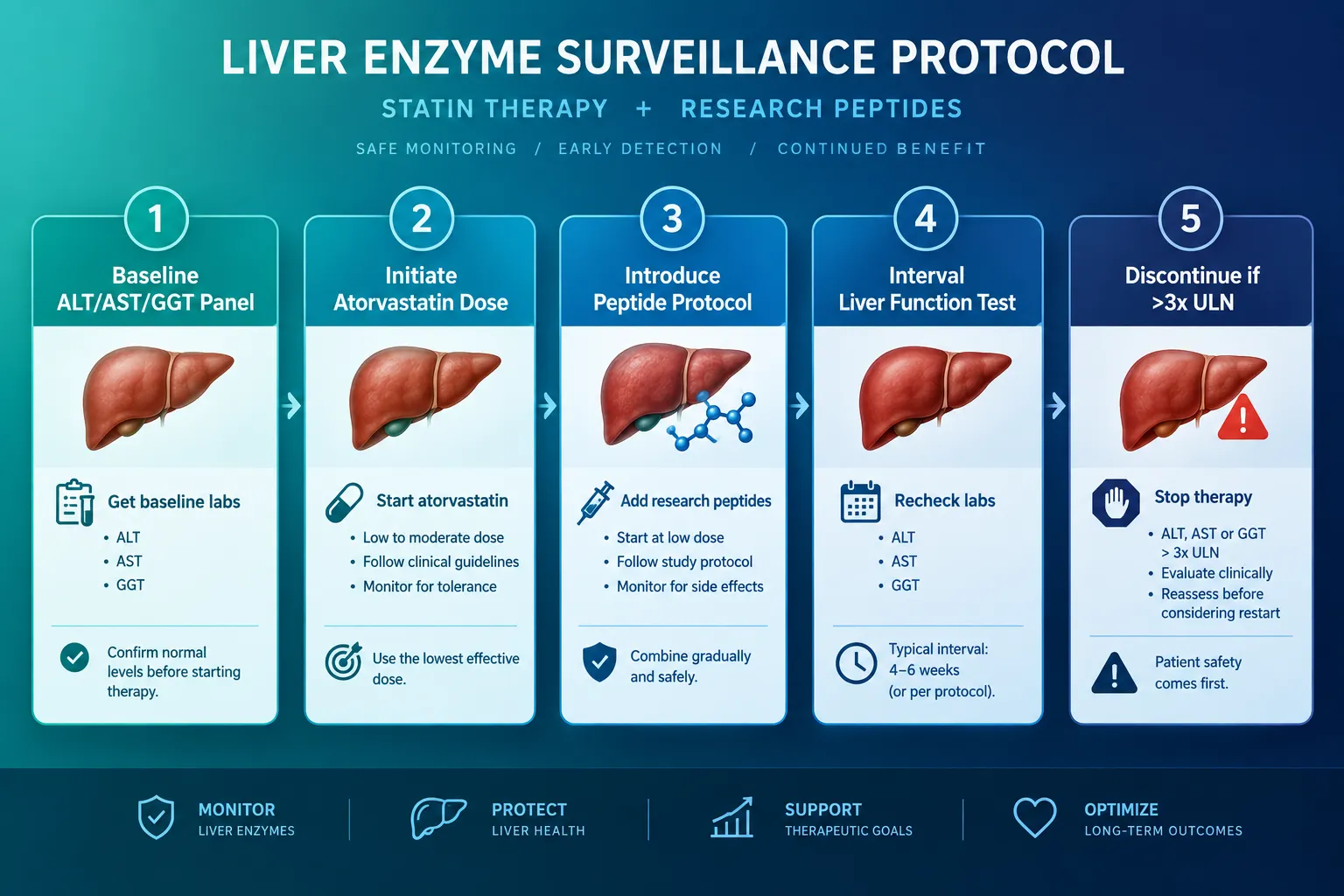
Monitoring Protocol for Combined Metabolic Peptide and Statin Models

Researchers working with statin therapy and liver enzymatic readouts in metabolic peptide models need a structured surveillance approach. The following framework integrates guidance from statin clinical practice and available peptide safety data.

Monitoring Protocol for Combined Metabolic Peptide and Statin Models

Recommended Monitoring Steps:

  1. Baseline panel, ALT, AST, GGT, total bilirubin before initiating any compound
  2. Atorvastatin initiation, Recheck at 6-12 weeks, especially at 40-80 mg doses
  3. Peptide introduction, Introduce one compound at a time where possible; recheck liver panel at 4 weeks
  4. Interval surveillance, Every 8-12 weeks during active combined use
  5. Threshold action, Discontinue the most recently added compound and retest if ALT/AST exceeds 3x ULN; evaluate both compounds if elevation persists

This stepwise approach allows researchers to isolate which compound is driving any enzymatic change, a critical distinction when both atorvastatin and a research peptide are active simultaneously.

Conclusion

The intersection of statin therapy and liver enzymatic readouts in metabolic peptide models represents one of the more nuanced monitoring challenges in current research settings. Atorvastatin's hepatic mechanism creates a baseline enzymatic risk that compounds when combined with peptides acting on overlapping mitochondrial and metabolic pathways.

MOTS-c presents an intriguing counterpoint: early data suggests hepatoprotective rather than hepatotoxic effects, with ALT and AST reductions in fatty liver models. 5-Amino-1MQ shows a clean short-term liver safety profile at standard doses, but dose-dependent and reversible transaminase elevations at high doses demand the same disciplined monitoring applied to statins.

Actionable next steps for researchers:

  • Establish a full baseline hepatic panel before combining any statin with MOTS-c or 5-Amino-1MQ
  • Use the lowest effective dose of each compound and escalate only with documented enzyme stability
  • Apply the 3x ULN discontinuation threshold consistently across all compounds in the model
  • Source compounds exclusively from verified, lab-tested peptide suppliers to ensure purity and dose accuracy
  • Treat all current liver risk assessments for both peptides as preliminary until formal human clinical trial data is available

The field is advancing rapidly, but the absence of peer-reviewed human trials for both MOTS-c and 5-Amino-1MQ means that rigorous enzymatic monitoring remains the single most important safeguard in these combined metabolic models.

https://www.puretestedpeptides.com/wp-content/uploads/2026/09/statin-therapy-and-liver-enzymatic-readouts-in-metabolic-peptide-models-atorvast.webp 1024 1536 https://www.puretestedpeptides.com/wp-content/uploads/2026/01/buy-peptides-online.jpg 2026-09-16 13:07:052026-09-16 13:07:05Statin Therapy and Liver Enzymatic Readouts in Metabolic Peptide Models: Atorvastatin vs. MOTS-c and 5-Amino-1MQ
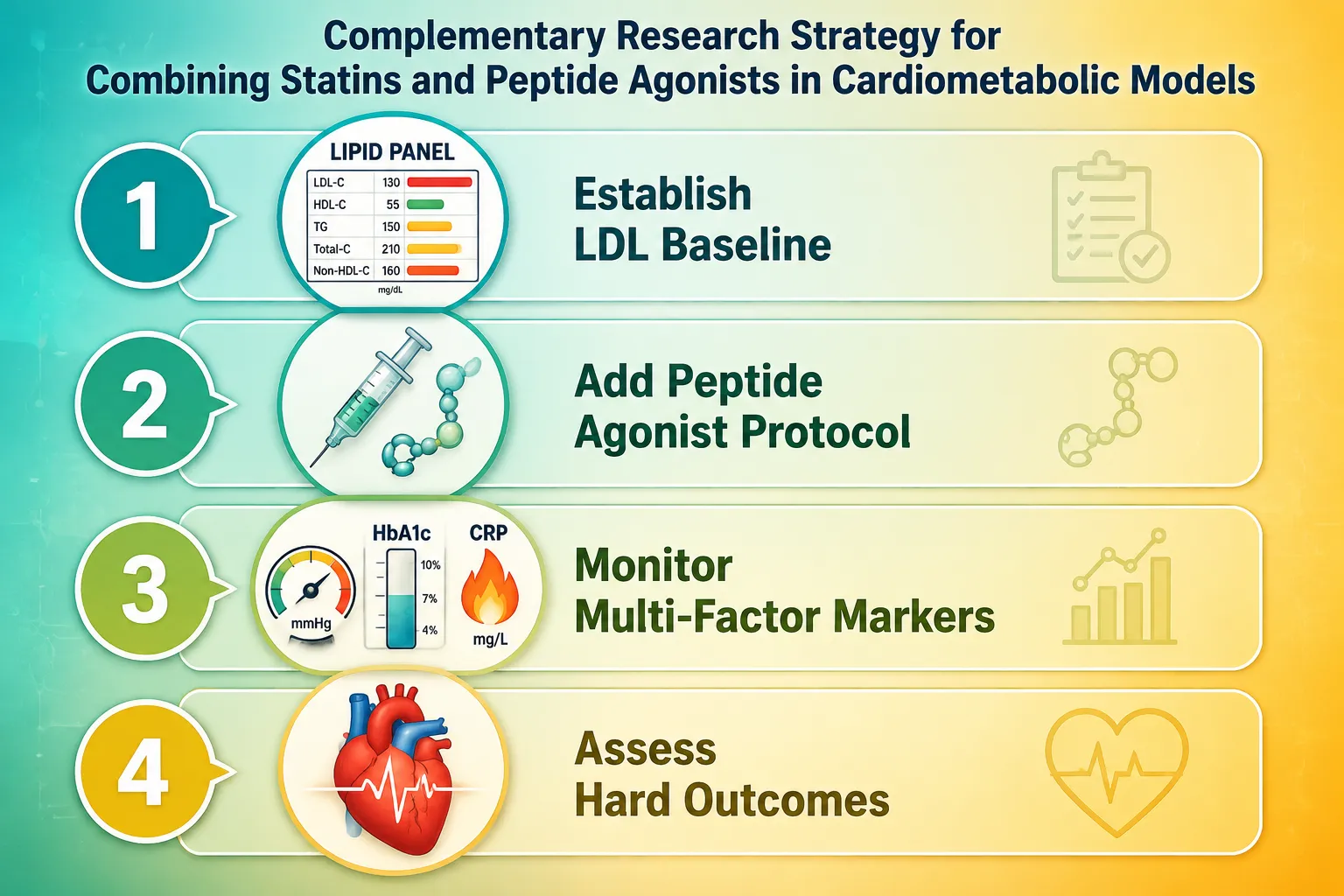
Peptides and Polypeptides in Cardiometabolic Research: How Atorvastatin and GLP-3 Retatrutide Answer Different Questions

Peptides and Polypeptides in Cardiometabolic Research: How Atorvastatin and GLP-3 Retatrutide Answer Different Questions

August 25, 2026/0 Comments/in Uncategorized/by

Cardiovascular disease still accounts for roughly one in three deaths worldwide, yet the research tools available to study it have never been more mechanistically diverse. Peptides and polypeptides in cardiometabolic research, alongside small-molecule agents like atorvastatin, now occupy distinct but complementary niches, and understanding those niches is essential for any researcher designing a rigorous cardiometabolic model in 2026. Retatrutide, Lilly's triple hormone receptor agonist, and atorvastatin, a well-characterized HMG-CoA reductase inhibitor, are not rivals. They answer fundamentally different scientific questions.

Key Takeaways

  • Atorvastatin targets LDL cholesterol through hepatic enzyme inhibition and has decades of hard cardiovascular endpoint data behind it.
  • Retatrutide is a large polypeptide triple agonist (GLP-1, GIP, and glucagon receptors) that produces simultaneous weight loss, glycemic improvement, and multi-factor lipid and inflammatory marker changes.
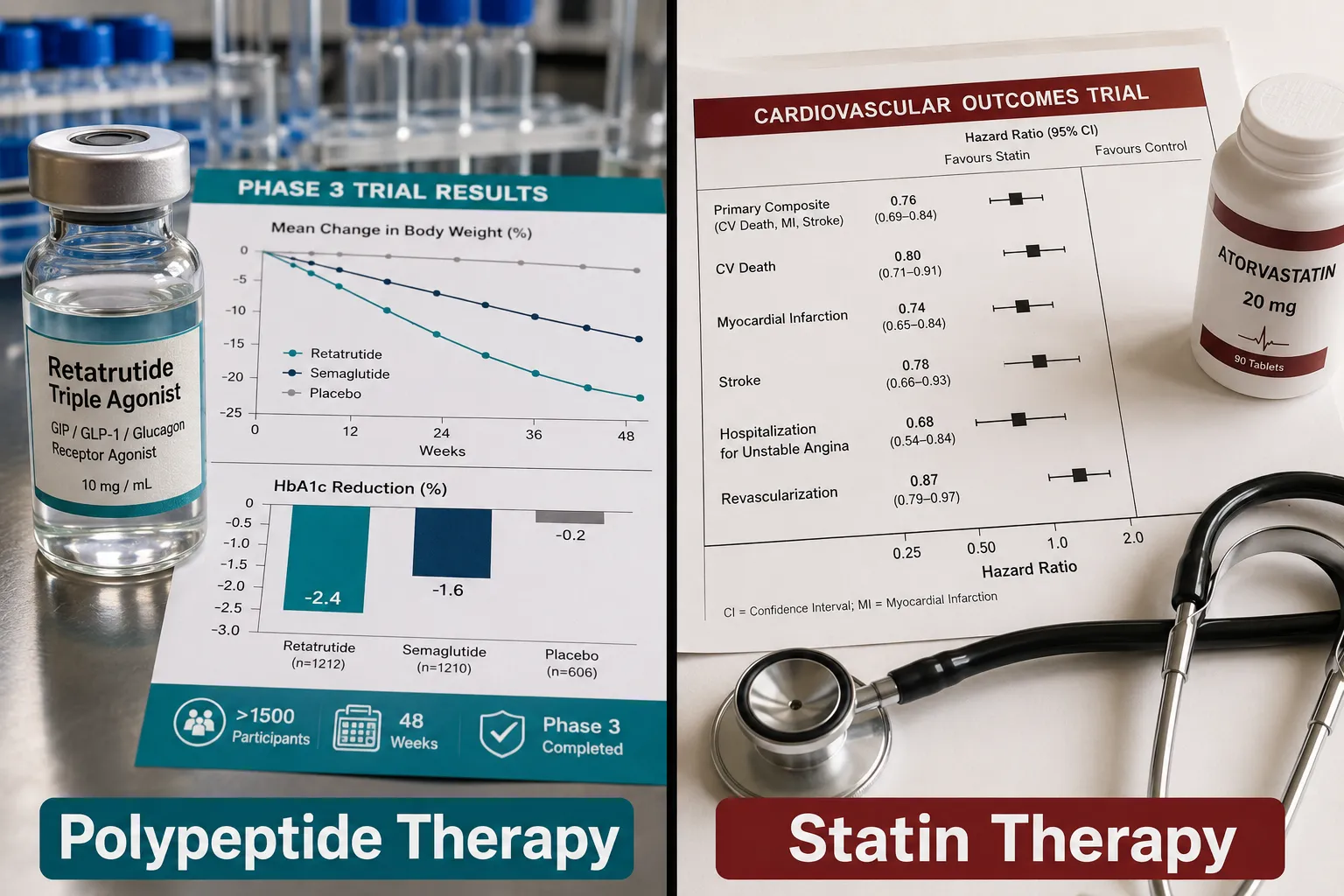
  • Phase 3 TRIUMPH data from 2026 show retatrutide delivering roughly 20.8% body-weight loss and a 1.6-point HbA1c reduction in people with type 2 diabetes and obesity.
  • Hard cardiovascular outcomes data for retatrutide are still prospective; atorvastatin remains the benchmark for proven event reduction.
  • Future cardiometabolic research protocols are likely to combine both classes rather than substitute one for the other.

Two Mechanistic Niches, One Research Field

Two Mechanistic Niches, One Research Field

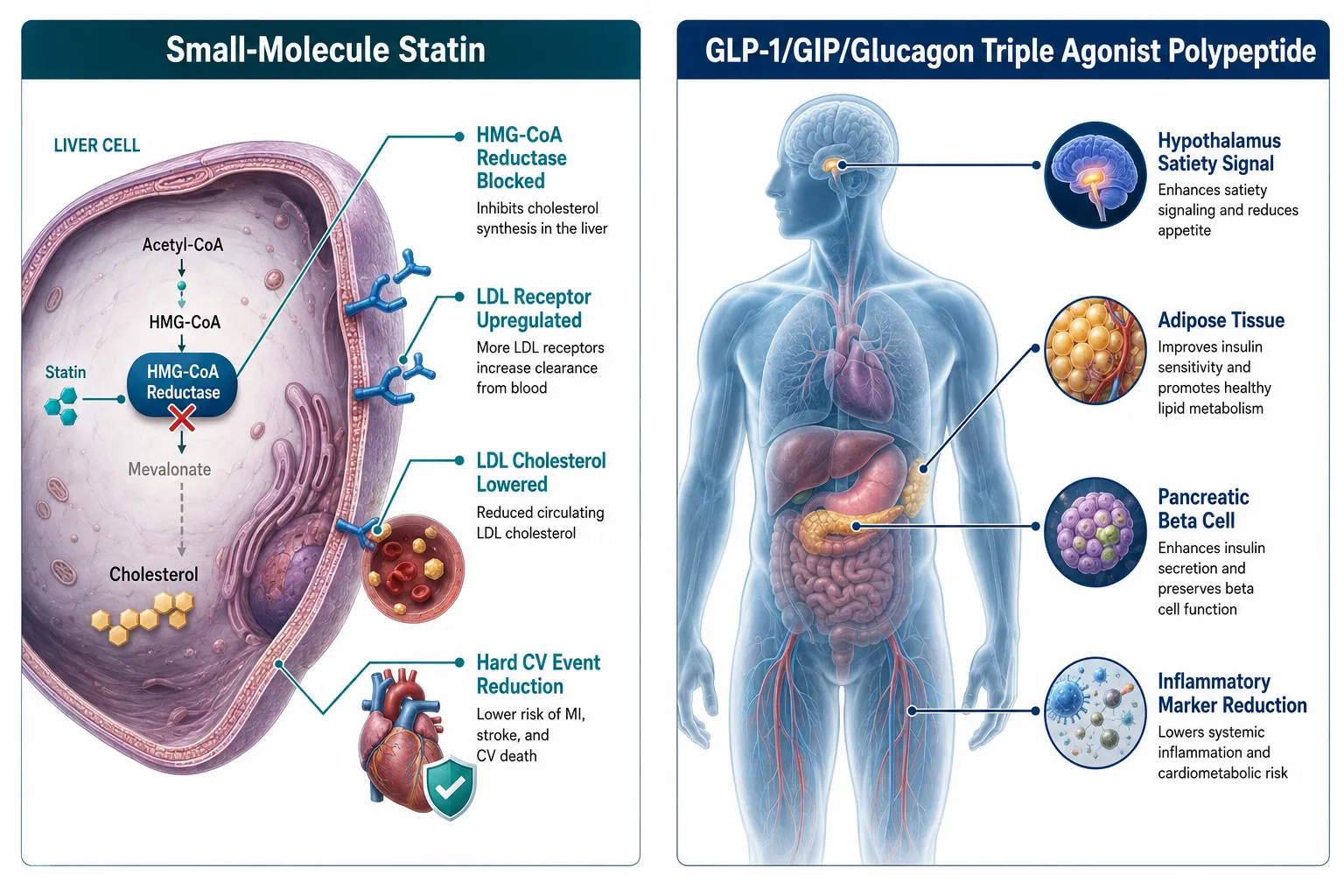
The clearest way to understand peptides and polypeptides in cardiometabolic research is to start with mechanism. Atorvastatin is a small molecule, it diffuses into hepatocytes and competitively inhibits HMG-CoA reductase, the rate-limiting enzyme in cholesterol synthesis. The liver responds by upregulating LDL receptors, pulling LDL particles out of circulation. The result is a focused, well-quantified reduction in a single atherogenic driver. Extended follow-up of atorvastatin trials shows a hazard ratio of 0.81 for nonfatal myocardial infarction plus fatal coronary heart disease, 0.88 for total coronary events, and 0.86 for cardiovascular mortality versus placebo. These are hard endpoints, not surrogate markers.

Retatrutide works at an entirely different level of biological complexity. As a polypeptide agonist, it simultaneously activates three hormone receptors:

  • GLP-1 receptor, suppresses appetite, slows gastric emptying, improves insulin secretion
  • GIP receptor, enhances insulin sensitivity and modulates fat storage
  • Glucagon receptor, drives hepatic fat oxidation and energy expenditure

This triple-receptor engagement produces a cascade of downstream effects that no small molecule currently replicates. Researchers exploring the broader GLP-3, GLP-1, and GLP-2 peptide family will recognize that incretin-class polypeptides are structurally and functionally distinct from statins at every level of analysis.

Key distinction: Atorvastatin answers the question "How do we lower LDL and prevent myocardial infarction?" Retatrutide answers the question "How do we simultaneously reduce body weight, improve glycemia, and shift multiple cardiometabolic risk factors in obesity?"

What Phase 3 Retatrutide Data Reveal in 2026

What Phase 3 Retatrutide Data Reveal in 2026

The TRIUMPH phase 3 program has produced some of the most discussed cardiometabolic data of 2026. In an 80-week trial in adults with type 2 diabetes and obesity or overweight, the highest retatrutide dose delivered approximately 20.8% body-weight loss and a 1.6-point HbA1c reduction. Separate 40-week data from the TRANSCEND-T2D program showed roughly a 1.9-percentage-point HbA1c reduction versus 0.8 points with placebo, alongside 15.3% body-weight loss versus 2.6% with placebo.

Beyond weight and glycemia, post-hoc analysis of two phase 2 trials documented striking changes in atherogenic lipoproteins and inflammatory markers:

Biomarker Change with Retatrutide
Non-HDL cholesterol (no diabetes) Down ~26.9%
Apolipoprotein B Down ~21-24%
Large triglyceride-rich particles Down ~76-84%
Small LDL particles Down ~32%
High-sensitivity CRP Down ~54.8%
Interleukin-6 Down ~29.6%

These numbers explain why researchers sourcing GLP-3 triple agonist research compounds are designing multi-endpoint protocols rather than single-biomarker studies.

However, one critical caveat applies. Safety data presented in June 2026 identified seven arrhythmia events and three major cardiovascular complications among 403 retatrutide participants, compared with none in the placebo group. Formal cardiovascular outcomes trials are underway, but the evidence base as of mid-2026 remains dominated by surrogate endpoints. Researchers following hormone research protocols should account for this distinction when designing study endpoints.

How Peptide and Statin Research Protocols Complement Each Other

How Peptide and Statin Research Protocols Complement Each Other

The practical implication for cardiometabolic researchers is that these two compound classes are additive, not interchangeable. A well-designed protocol might use atorvastatin as the LDL-lowering backbone, where decades of outcomes data provide a reliable comparator, while layering a polypeptide agonist like retatrutide to interrogate weight-dependent, inflammation-dependent, and glycemia-dependent pathways simultaneously.

Three research design principles follow from this:

  1. Define the primary endpoint clearly. If the question is "Does this intervention reduce hard cardiovascular events?", atorvastatin-class data remain the gold standard comparator. If the question involves weight loss, metabolic syndrome reversal, or multi-factor risk reduction, polypeptide agonists open new model territory.

  2. Use purity-verified compounds. Both small-molecule and peptide research depends on compound integrity. Resources on peptide COA verification and high purity peptide sourcing are essential starting points before any protocol is finalized.

  3. Track complementary biomarker panels. Retatrutide's lipid effects (non-HDL, ApoB, triglycerides) overlap with but do not duplicate statin effects (LDL-C, coronary event risk). Running both panels in parallel captures the full mechanistic picture.

Researchers working on metabolic comorbidities, particularly sarcopenia alongside obesity, may also find value in reviewing sarcopenia research resources, since muscle-mass preservation is an emerging consideration in aggressive weight-loss peptide protocols.

For those building broader incretin-focused models, GLP-1 peptide research compounds provide a useful baseline comparator against the triple-agonist profile of retatrutide.

Conclusion

Peptides and polypeptides in cardiometabolic research occupy a mechanistic space that small-molecule statins were never designed to fill, and the reverse is equally true. Atorvastatin remains the benchmark for durable LDL reduction and hard cardiovascular event prevention. Retatrutide, as a polypeptide triple agonist, is redefining what simultaneous weight loss, glycemic control, and multi-factor risk reduction can look like in a single compound. The TRIUMPH phase 3 data of 2026 make the case for retatrutide's surrogate-marker efficacy compellingly; the hard outcomes question is the next frontier.

Actionable next steps for researchers:

  • Audit current protocols to identify whether the primary question is LDL-centric (statin-appropriate) or multi-factor metabolic (polypeptide-appropriate), then design accordingly.
  • Verify compound purity through COA documentation before initiating any peptide-based cardiometabolic model.
  • Monitor the TRIUMPH cardiovascular outcomes arm as data mature toward Lilly's anticipated regulatory submission around Q1 2027.
  • Consider combination protocols that use both compound classes to capture the full breadth of cardiometabolic biology.

The field is not moving away from statins. It is building a more complete picture around them, one polypeptide at a time.

https://www.puretestedpeptides.com/wp-content/uploads/2026/08/peptides-and-polypeptides-in-cardiometabolic-research-how-atorvastatin-and-glp-3.webp 1024 1536 https://www.puretestedpeptides.com/wp-content/uploads/2026/01/buy-peptides-online.jpg 2026-08-25 13:05:402026-08-25 13:05:40Peptides and Polypeptides in Cardiometabolic Research: How Atorvastatin and GLP-3 Retatrutide Answer Different Questions

Tag Archive for: atorvastatin

5‑Amino‑1MQ Peptide and NNMT Inhibition: How It Compares With Statins Like Atorvastatin in Adipose and Lipid Metabolism Research

5‑Amino‑1MQ Peptide and NNMT Inhibition: How It Compares With Statins Like Atorvastatin in Adipose and Lipid Metabolism Research

July 18, 2026/0 Comments/by Pure Tested

Nicotinamide N-methyltransferase (NNMT) activity is elevated in the fat tissue of obese individuals by as much as 100-fold compared to lean controls, a striking figure that has pushed NNMT inhibition to the forefront of metabolic research. The compound 5-Amino-1MQ has emerged as a targeted tool in this space, and understanding 5-Amino-1MQ Peptide and NNMT Inhibition: How It Compares With Statins Like Atorvastatin in Adipose and Lipid Metabolism Research helps clarify why researchers are paying close attention to its distinct mechanism versus conventional lipid-lowering agents.

Bright editorial infographic-style landscape (): a vivid flat-vector illustration of the NNMT enzyme pathway inside a

Key Takeaways

  • 5-Amino-1MQ is a small-molecule NNMT inhibitor, not technically a peptide, though it is frequently grouped with research peptides in the literature.
  • NNMT inhibition raises intracellular NAD+ and SAM levels, promoting fat cell energy expenditure and reducing lipid storage.
  • Statins like atorvastatin target the mevalonate pathway to lower LDL cholesterol, a fundamentally different mechanism from NNMT inhibition.
  • The two approaches are not interchangeable in research models; each addresses a separate node in metabolic dysfunction.
  • Researchers studying body composition changes may find 5-Amino-1MQ more directly relevant to adipose tissue remodeling than statin-based models.

What Is 5-Amino-1MQ and How Does NNMT Inhibition Work

Clarifying the "Peptide" Label

A common point of confusion: 5-Amino-1MQ is not a peptide in the strict biochemical sense. It is a small-molecule methylquinolinium derivative, specifically, 5-amino-1-methylquinolinium. It carries no amino acid chain. The "peptide" label appears in research vendor catalogs because it is studied alongside peptide compounds in metabolic and longevity research contexts. Researchers exploring longevity peptide research will encounter 5-Amino-1MQ frequently within that broader category.

The NNMT Enzyme and Its Role in Fat Tissue

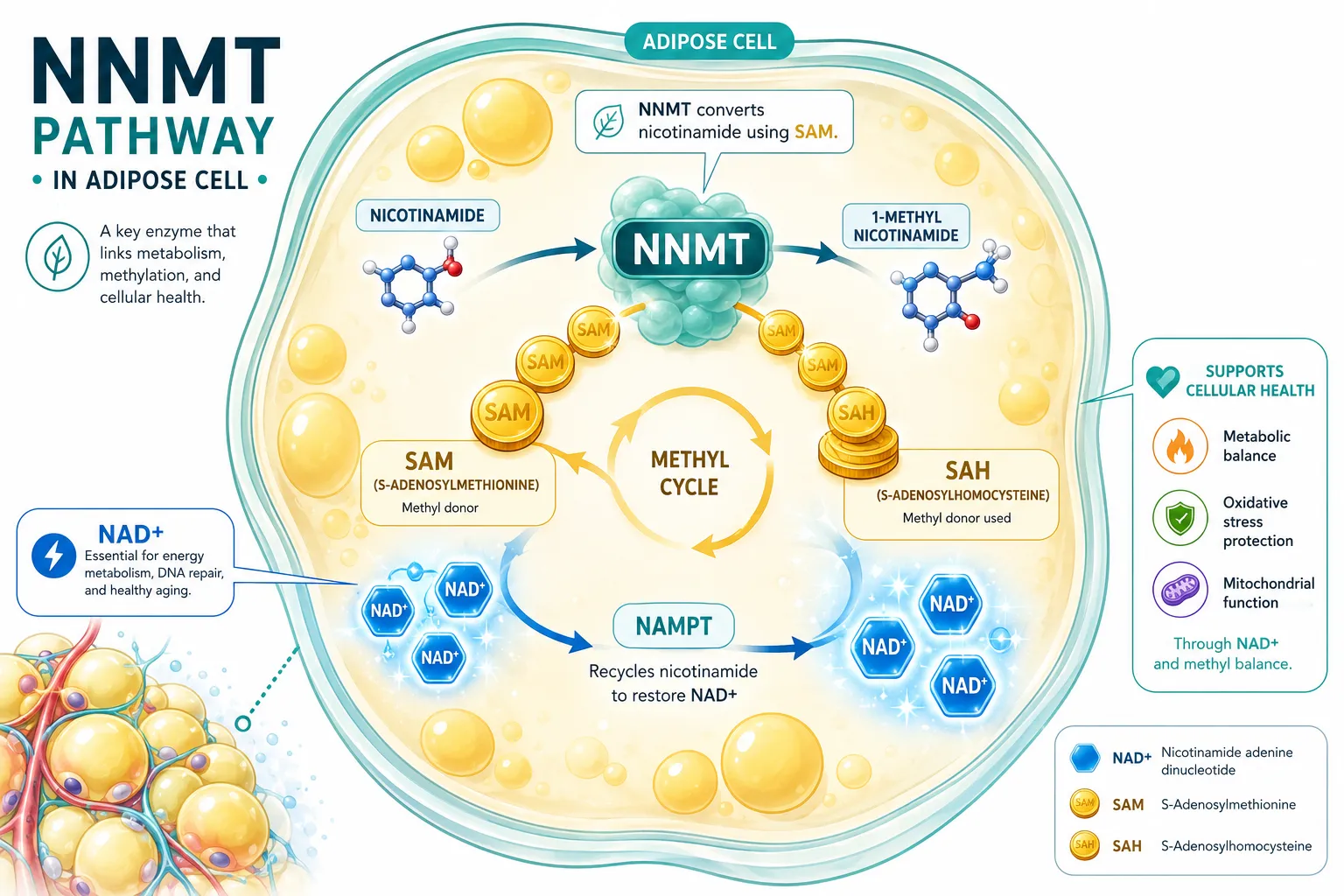
NNMT catalyzes the methylation of nicotinamide using S-adenosylmethionine (SAM) as the methyl donor. When NNMT is highly active, it consumes SAM and produces 1-methylnicotinamide, which drains the cell of two critical resources:

  • SAM, the primary methyl donor for epigenetic regulation and metabolic signaling
  • NAD+ precursors, molecules that feed mitochondrial energy production

In adipose tissue, this drain creates a low-energy, pro-storage environment. Fat cells become more efficient at storing lipids and less efficient at burning them. By blocking NNMT, 5-Amino-1MQ restores SAM and NAD+ availability, effectively shifting the metabolic balance toward energy expenditure. This connects directly to research themes explored in NAD+ energetics and longevity research.


5-Amino-1MQ Peptide and NNMT Inhibition: How It Compares With Statins Like Atorvastatin in Adipose and Lipid Metabolism Research

5-Amino-1MQ Peptide and NNMT Inhibition: How It Compares With Statins Like Atorvastatin in Adipose and Lipid Metabolism Resea

The Statin Mechanism: A Different Metabolic Target

Atorvastatin, one of the most prescribed statins globally, works by inhibiting HMG-CoA reductase, the rate-limiting enzyme in the mevalonate pathway. This reduces endogenous cholesterol synthesis in the liver, which lowers circulating LDL-cholesterol. Statins are highly effective for cardiovascular risk reduction, but their primary action is hepatic and cholesterol-focused.

Feature 5-Amino-1MQ (NNMT Inhibitor) Atorvastatin (Statin)
Primary target NNMT enzyme in adipose tissue HMG-CoA reductase in liver
Key metabolic effect Raises NAD+/SAM; increases fat oxidation Reduces LDL cholesterol synthesis
Primary tissue site Adipose, muscle Hepatic
Lipid storage impact Reduces triglyceride accumulation Indirect; minimal direct fat-cell effect

Where the Two Pathways Diverge

Statins do not meaningfully alter NNMT activity, and 5-Amino-1MQ does not inhibit cholesterol synthesis. This means the two compounds address entirely separate nodes of metabolic dysfunction:

  • Atorvastatin is most relevant in research models focused on cardiovascular lipid profiles and hepatic cholesterol output.
  • 5-Amino-1MQ is most relevant in models studying adipose tissue remodeling, visceral fat reduction, and NAD+ biology.

Researchers studying fat-cell metabolism may also find relevant parallels in IPA muscle and fat research themes and AOD-9604 research, both of which engage adipose biology through distinct mechanisms.


Research Implications and When Each Model Applies

Research Implications and When Each Model Applies

Choosing the Right Model for Adipose vs. Lipid Research

The distinction between adipose metabolism and lipid metabolism is often blurred in popular science writing, but it matters enormously in research design. Adipose metabolism refers to how fat cells store, mobilize, and oxidize lipids. Lipid metabolism refers to how lipids circulate in the bloodstream and are processed by the liver.

Researchers should consider the following when selecting a model:

  • For visceral fat reduction studies: 5-Amino-1MQ's NNMT inhibition offers a direct adipose-tissue mechanism, making it a stronger model candidate.
  • For cardiovascular lipid profiling: Atorvastatin remains the gold-standard reference compound.
  • For combined metabolic syndrome models: Both compounds may be relevant in separate experimental arms, not as direct substitutes.

Compounds like Adipotide and MOTS-c also engage adipose and mitochondrial pathways and may serve as useful comparators in multi-arm metabolic studies.

Downstream Research Considerations

Because 5-Amino-1MQ elevates NAD+ levels, it intersects with research on mitochondrial function, cellular aging, and energy sensing. This positions it alongside compounds studied in MOTS-c mitochondrial research and broader longevity peptide research. Statins, by contrast, have been studied for pleiotropic anti-inflammatory effects, but these do not overlap with the NAD+/SAM axis that makes 5-Amino-1MQ unique.

Key insight: Conflating NNMT inhibition with statin-like activity misrepresents both mechanisms and can lead to poorly designed research protocols.


Conclusion

The comparison between 5-Amino-1MQ Peptide and NNMT Inhibition: How It Compares With Statins Like Atorvastatin in Adipose and Lipid Metabolism Research reveals two non-competing, mechanistically distinct research tools. 5-Amino-1MQ targets NNMT in adipose tissue to restore NAD+ and SAM availability, shifting fat cells toward energy expenditure. Atorvastatin targets hepatic cholesterol synthesis to reduce circulating LDL. Neither replaces the other.

Actionable next steps for researchers:

  1. Define whether the study question centers on adipose remodeling or circulating lipid profiles before selecting a compound.
  2. Use 5-Amino-1MQ in models where NNMT overexpression or NAD+ depletion is a documented variable.
  3. Reserve statin models for cardiovascular-focused endpoints where LDL reduction is the primary outcome measure.
  4. Consider multi-pathway designs that include NNMT inhibitors alongside mitochondrial or GLP-1-axis compounds for broader metabolic coverage.

Understanding these distinctions ensures cleaner experimental design and more interpretable results across adipose and lipid metabolism research.

https://www.puretestedpeptides.com/wp-content/uploads/2026/07/5-amino-1mq-peptide-and-nnmt-inhibition-how-it-compares-with-statins-like-atorva-1.webp 1024 1536 Pure Tested https://www.puretestedpeptides.com/wp-content/uploads/2026/01/buy-peptides-online.jpg Pure Tested2026-07-18 13:05:322026-07-20 14:59:475‑Amino‑1MQ Peptide and NNMT Inhibition: How It Compares With Statins Like Atorvastatin in Adipose and Lipid Metabolism Research
×

Helpful Links

  • My account
  • Cart
  • Checkout
  • Refund and Returns Policy
  • Privacy Policy
  • SMS Privacy Policy
  • Login
  • My Account
  • Logout

USA Made Lab Tested Peptides

All products are sold for research, laboratory, or analytical purposes only, and are not for human consumption


Pure Tested Peptides is a chemical supplier. Pure Tested Peptides is not a compounding / chemical compounding facility as defined under 503A of the Federal Food, Drug, and Cosmetic act. Pure Tested Peptides is not an outsourcing facility as defined under 503B of the Federal Food, Drug, and Cosmetic act.

The statements made within this website have not been evaluated by the US Food and Drug Administration. The products we offer are not intended to diagnose, treat, cure or prevent any disease.

Human/Animal Consumption Prohibited. Laboratory/In-Vitro Experimental Use Only

Scroll to top Scroll to top Scroll to top