Call or Text 727-513-9780
  • Shopping Cart Shopping Cart
    0Shopping Cart
Pure Tested Peptides | America's most trusted Peptides for sale online
  • Peptides for sale
    • Oral Peptides for sale
      • Peptide Capsules for sale
      • BPC 157 Capsules 1000mcg
      • SLU-PP-332 Capsules | 1000 mcg
      • 5-Amino-1MQ 50mg Capsules
      • Tesofensine 500mcg
    • All Peptides for sale
    • Peptide Sprays
      • BPC 157 Nasal Spray Kit
      • BPC-157 TB500 Nasal Spray Kit
      • Semax Nasal Spray 10mg
      • Selank – Nasal Spray Kit – 10mg
      • Epithalon 50MG Nasal Spray Kit
      • Ipamorelin 10mg Nasal Spray
      • Klow Nasal Spray (BPC-157 + TB-500 + GHK-Cu + KPV) | 80mg
      • Hulk Nasal Spray Tesa / Ipa Blend 6/3 MG
      • Klow Nasal Spray
      • NAD + 500 mg Nasal Spray
      • PT-141 Nasal Spray Kit
    • GHRH Peptides
      • Ipa Peptides
      • CJC-1295 Peptides
        • CJC-1295 with DAC 5 mg
        • CJC-1295 without DAC 5 mg
        • CJC-1295 Ipa 10mg
      • Tesa Peptides
        • Tesa Peptide
        • Tesa 20 mg
    • GHK-Cu Peptides
      • All GHK-Cu Peptides
      • GHK-Cu 100mg
      • KLOW Peptide Blend – Buy KLOW blend online
    • BPC Peptides
      • All BPC Peptides
      • BPC-157
      • BPC-157 TB-500
      • BPC 157 capsules 1000mcg
    • SLU-PP-332 Peptides
      • All SLU-PP-332 Peptides
      • SLU-PP-332 5mg
    • GLP3 Peptides
    • PT-141 Peptides
      • PT-141 Peptides for sale
      • PT-141 10mg
      • PT-141 Nasal Spray
    • CAG Peptides
      • Lipo-C Peptide Blend
      • CAG 5mg
      • CAG 10mg
    • MOTS-C Peptides
      • MOTS-C Peptides for sale
      • MOTS-c peptide
      • MOTS-c 10mg *6 pack*
    • 5 Amino 1MQ Peptides
      • 5 Amino 1MQ Peptides for sale
      • 5-Amino-1MQ 50mg Capsules
      • 5-Amino-1MQ 5mg
    • Epithalon Peptides
      • Epithalon Peptides for sale
      • Epithalon 10mg
      • Epithalon 50mg
  • Shop
    • GLPs
      • 5-Amino-1MQ 50mg Capsules
      • 5-Amino-1MQ 5mg
      • L-Carnitine 500mg/ml
      • Tesofensine 500mcg
      • SLU-PP-332 5mg
      • MOTS-c 10mg *6 pack*
    • Epithalon & BPC Peptides
      • Epithalon 10mg
      • Epithalon 50mg
      • BPC-157
      • BPC 157 capsules 1000mcg
      • BPC-157 TB-500
      • BPC-157 TB500 Nasal Spray Kit
      • BPC 157 Nasal Spray Kit
    • BPC TB-500 & NAD+ Peptides
      • NAD+ 500 mg
      • KLOW Peptide Blend – Buy KLOW blend online
      • GLOW Peptide Blend
      • TB 500 5mg
      • BPC 157 capsules 1000mcg – Supplement
      • BPC 157 Nasal Spray Kit
      • BPC-157
      • BPC-157 TB500 Nasal Spray Kit
      • BPC-157 TB-500
      • BPC 157 capsules 1000mcg
    • LL-37 Peptide
      • LL-37 10 mg
    • MOTS-C & Selank
      • MOTS-c peptide
      • Selank 10mg
    • GHK Peptides
      • GHK-Cu 100mg
      • GLOW Peptide Blend
      • KLOW Peptide Blend – Buy KLOW blend online
  • COAs
  • Wholesale
    • Wholesale Peptides for sale
  • PTP FAQ
  • Affiliates
    • Selank Peptide: Advanced Pharmacological Mechanisms Underlying Its Anxiolytic and Nootropic Effects in Research
      • 5-Amino-1MQ Peptide: Detailed Mechanisms of NNMT Inhibition and Its Impact on Cellular Metabolism Research
        • MOTS-C Peptide: Unraveling Its Role in Mitochondrial Dynamics and Energy Metabolism Research
          • Epithalon Peptide and Telomerase Regulation: Investigating Its Impact on Cellular Senescence and Lifespan Research Models
            • GLP2-T vs GLP2 Tirz Peptide: Understanding the Naming, Mechanistic Nuances, and Research Implications for Gut Health
      • Peptides and Polypeptides in Modern Pharmacology: What Research on Metoprolol, Prednisone, and Amlodipine Reveals
        • Polypeptide Peptides vs NSAIDs: What Naproxen and Diclofenac Teach Tissue-Repair Researchers About BPC‑157 and TB‑500
          • Peptides and Polypeptides in Endocrine Pharmacology: How GLP-1, GLP-2, and GLP-3 Retatrutide Differ From Classic Drugs Like Prednisone and Amlodipine
          • 5‑Amino‑1MQ Peptide and NNMT Inhibition: How It Compares With Statins Like Atorvastatin in Adipose and Lipid Metabolism Research
      • Enclomiphene, Estrogen Receptor Signaling, and Luteinizing Phase Biology: What Hormone Researchers Should Measure
        • Mesenchymal Stem Cells, BPC‑157, and GHK‑Cu: How Tissue Repair Peptides Compare With Classic NSAIDs Like Naproxen in Injury Models
          • Peptide Calculator Use Cases Beyond Growth Hormone: Working Through GLP‑3 Retatrutide, MOTS‑c, and BPC‑157 Research Dosing
        • Polypeptide Peptides in Endocrine and Metabolic Pharmacology: Lessons From Amlodipine, Prednisone, and Metoprolol
        • Peptides Calculator for Advanced Blends: Worked Examples for Tesamorelin, CJC‑1295, and Ipamorelin Stacks
          • Peptides and Polypeptides in Human Physiology: How Molecular Size Shapes Research Applications
            • Selank Peptide: Advanced Pharmacological Mechanisms Underlying Its Anxiolytic and Nootropic Effects in Research
          • 5-Amino-1MQ Peptide: Detailed Mechanisms of NNMT Inhibition and Its Impact on Cellular Metabolism Research
            • MOTS-C Peptide: Unraveling Its Role in Mitochondrial Dynamics and Energy Metabolism Research
              • Epithalon Peptide and Telomerase Regulation: Investigating Its Impact on Cellular Senescence and Lifespan Research Models
                • GLP2-T vs GLP2 Tirz Peptide: Understanding the Naming, Mechanistic Nuances, and Research Implications for Gut Health
                  • Peptides and Polypeptides in Endocrine Pharmacology: How GLP-1, GLP-2, and GLP-3 Retatrutide Differ From Classic Drugs Like Prednisone and Amlodipine
                    • Polypeptide Peptides vs NSAIDs: What Naproxen and Diclofenac Teach Tissue-Repair Researchers About BPC‑157 and TB‑500
                      • Peptides and Polypeptides in Modern Pharmacology: What Research on Metoprolol, Prednisone, and Amlodipine Reveals
                        • 5‑Amino‑1MQ Peptide and NNMT Inhibition: How It Compares With Statins Like Atorvastatin in Adipose and Lipid Metabolism Research
                        • Enclomiphene, Estrogen Receptor Signaling, and Luteinizing Phase Biology: What Hormone Researchers Should Measure
                        • Mesenchymal Stem Cells, BPC‑157, and GHK‑Cu: How Tissue Repair Peptides Compare With Classic NSAIDs Like Naproxen in Injury Models
                        • Peptide Calculator Use Cases Beyond Growth Hormone: Working Through GLP‑3 Retatrutide, MOTS‑c, and BPC‑157 Research Dosing
                        • Polypeptide Peptides in Endocrine and Metabolic Pharmacology: Lessons From Amlodipine, Prednisone, and Metoprolol
                        • Peptides Calculator for Advanced Blends: Worked Examples for Tesamorelin, CJC‑1295, and Ipamorelin Stacks
                        • Peptides and Polypeptides in Human Physiology: How Molecular Size Shapes Research Applications
                        • Selank Peptide: Advanced Pharmacological Mechanisms Underlying Its Anxiolytic and Nootropic Effects in Research
                        • MOTS-C Peptide: Unraveling Its Role in Mitochondrial Dynamics and Energy Metabolism Research
                        • Peptides and Polypeptides in Modern Pharmacology: What Research on Metoprolol, Prednisone, and Amlodipine Reveals
                        • Peptides and Polypeptides in Endocrine Pharmacology: How GLP-1, GLP-2, and GLP-3 Retatrutide Differ From Classic Drugs Like Prednisone and Amlodipine
                        • 5-Amino-1MQ Peptide: Detailed Mechanisms of NNMT Inhibition and Its Impact on Cellular Metabolism Research
                        • Mesenchymal Stem Cells, BPC‑157, and GHK‑Cu: How Tissue Repair Peptides Compare With Classic NSAIDs Like Naproxen in Injury Models
                        • Peptide Calculator Use Cases Beyond Growth Hormone: Working Through GLP‑3 Retatrutide, MOTS‑c, and BPC‑157 Research Dosing
                        • GLP2-T vs GLP2 Tirz Peptide: Understanding the Naming, Mechanistic Nuances, and Research Implications for Gut Health
                        • Polypeptide Peptides in Endocrine and Metabolic Pharmacology: Lessons From Amlodipine, Prednisone, and Metoprolol
                        • Polypeptide Peptides vs NSAIDs: What Naproxen and Diclofenac Teach Tissue-Repair Researchers About BPC‑157 and TB‑500
                        • Peptides and Polypeptides in Human Physiology: How Molecular Size Shapes Research Applications
                        • Peptides Calculator for Advanced Blends: Worked Examples for Tesamorelin, CJC‑1295, and Ipamorelin Stacks
                        • 5‑Amino‑1MQ Peptide and NNMT Inhibition: How It Compares With Statins Like Atorvastatin in Adipose and Lipid Metabolism Research
                        • Enclomiphene, Estrogen Receptor Signaling, and Luteinizing Phase Biology: What Hormone Researchers Should Measure
                        • Epithalon Peptide and Telomerase Regulation: Investigating Its Impact on Cellular Senescence and Lifespan Research Models
                        • Best research protocol Klow blend
                        • best time to take BPC-157
                        • best time to take DSIP (Delta Sleep Inducing Peptide)
                        • best time to take CJC-1295
                        • best time to take AOD-9604
                        • best time to take Follistatin 344
                        • best time to take Ipamorelin
                        • best time to take MK-677 (Ibutamoren)
                        • best time to take Ligandrol (LGD-4033) — research compound
                        • best time to take Ostarine (MK-2866) — research compound
                        • best time to take GHK-CU
                        • best time to take TB-500
                        • best time to take MOTS-c
                        • best time to take Semax
                        • best time to take RAD-140 (Testolone) — research compound
                        • best time to take Thymosin Alpha-1
                        • best time to take PEG-MGF
                        • Biolife Plasma, Octapharma Plasma, and Research Peptides: How Plasma Donation Labs Differ From Peptide Suppliers
                        • best time to take YK-11 — research compound
                        • best time to take PT-141 (Bremelanotide)
                        • Best research protocol Klow blend
                        • 5-Amino-1MQ and MOTS-C Synergy: Metabolic Signaling, Mitochondria, and Research Design
                        • BPC-157 and TB-500: Investigating Their Combined Effects on Angiogenesis and Cellular Migration in Tissue Repair Models
                        • BPC-157 Peptide: Gut Barrier Function, Inflammation, and Tissue-Recovery Research
                        • 5‑Amino‑1MQ and MOTS‑c Synergy in Metabolic Research: Designing NNMT and Mitochondrial Biogenesis Stacks
                        • CJC-1295 with DAC vs. Without DAC: Half-Life, Release Kinetics, and Research Implications
                        • CJC‑1295 with DAC vs. Without DAC: Expanding on Half‑Life Differences Using Tesamorelin and Ipamorelin Blend Case Studies
                        • Collagen Biology and Copper‑Binding Peptides: How GHK‑Cu, Glow Blend, and Klow Blend Interact with Skin and Connective Tissue
                        • Collagen Biology and Regenerative Peptides: How GHK‑Cu, Glow Blend, and Klow Blend Affect Extracellular Matrix Research
                    • DNA, Telomeres, and Longevity Peptides: Positioning Epithalon and MOTS‑c in Genetic Aging Research
                      • Enclomiphene Citrate: serm Mechanism, Testosterone Research, and Stack Compatibility
                        • Enclomiphene vs Enclomiphene Citrate: Formulation, Bioavailability, and Research Distinctions
                        • Epithalon Peptide Research: Telomerase Activation, Aging, and Pineal Gland Function
                        • Estrogen Receptor Signaling and Enclomiphene: How Selective Modulators Compare with Classic Polypeptide Hormones
                        • GHK-Cu Peptide: Advanced Mechanisms in Extracellular Matrix Remodeling and Wound Healing Research
                        • GHK-Cu Peptide: Collagen Synthesis, Wound Repair, and Skin-Barrier Research Models
                        • GLP-1 vs GLP-3 vs GLP-2: Peptide Classification and Research Applications
                        • GLP-2 Peptide Research Guide: Gut Barrier Function, Nutrient Absorption, and Intestinal Recovery Models
                        • GLP-3 Retatrutide vs. GLP-1 Drugs: What Triple-Agonist Biology Changes in Research Models
                        • Ipamorelin and Tesamorelin Combination: Synergistic GH Secretagogue Research and Dosing Protocols
                        • GLP2 Tirz Peptide: What It Is, Why the Name Exists, and How Researchers Should Interpret It
                        • Klow Blend Peptide Nasal Spray: What the Formulation Is Trying to Do in Cognitive Research
                        • Mitochondria, NNMT Inhibition, and Peptide Modulators: Where MOTS‑c and 5‑Amino‑1MQ Fit in Cellular Energy Research
                        • MOTS-c Peptide: Mitochondrial Function, Energy Metabolism, and What Researchers Measure
                        • MOTS-c vs. 5-Amino-1MQ: Which Metabolic Research Questions Each Compound Actually Answers
                        • Nasal Spray Peptides: Bioavailability, Administration, and Semax/Selank Research Applications
                        • PT-141 Peptide Research: Mechanism of Action and Melanocortin Receptor Signaling
                        • Retatrutide for Research: Mechanism, Structure, and GLP-1/GLP-3 Dual Action
                        • Retatrutide for Obesity and Type 2 Diabetes: What the Latest Trial Data Suggest
                        • Tesofensine Peptide Research: Mechanism, Appetite Suppression, and Neuropeptide Y Pathways
  • Contact
    • Contact Customer Service
    • Text Customer Support
  • About US
  • Shop all peptides
  • Affiliate Program
    • Affiliate Signup
  • Login / Register Login / Register Page Link Login / Register Page Link
  • Click to open the search input field Click to open the search input field Search
  • Menu Menu

Tag Archive for: metabolic peptide models

Statin Therapy and Liver Enzymatic Readouts in Metabolic Peptide Models: Atorvastatin vs. MOTS-c and 5-Amino-1MQ

Statin Therapy and Liver Enzymatic Readouts in Metabolic Peptide Models: Atorvastatin vs. MOTS-c and 5-Amino-1MQ

September 16, 2026/0 Comments/in Uncategorized/by

Atorvastatin reduces cardiovascular events in millions of patients worldwide, yet its interaction with mitochondrial lipid oxidation pathways, the same pathways targeted by emerging research peptides, creates a hepatic monitoring challenge that most clinical protocols have not yet addressed. As researchers and clinicians increasingly encounter subjects using both statin therapy and novel metabolic compounds, understanding how liver enzymatic readouts shift across these combined models has become a pressing question in 2026.

This article examines the intersection of statin-driven cholesterol suppression and the mitochondrial and enzymatic mechanisms of two research peptides: MOTS-c and 5-Amino-1MQ. The goal is to give researchers a clear, evidence-grounded framework for interpreting ALT, AST, GGT, and related liver markers in these combined metabolic models.

Key Takeaways

  • Atorvastatin at high doses (40-80 mg) carries a recognized risk of transaminase elevation, requiring baseline and interval liver function monitoring.
  • MOTS-c analogs have shown early signals of hepatoprotection, with one analog reducing plasma ALT by approximately 25% and AST by 17% versus placebo in early-phase research.
  • 5-Amino-1MQ demonstrates no short-term hepatotoxicity signal at standard doses, but high-dose rodent studies show dose-dependent, reversible ALT/AST rises of 2-3 times the upper limit of normal.
  • No formal drug-interaction profile exists for MOTS-c or 5-Amino-1MQ combined with statins; monitoring protocols should mirror established statin hepatic surveillance guidelines.
  • Human safety data for both peptides remains limited; all liver risk assessments are currently extrapolated from animal models.

How Atorvastatin Affects Liver Enzymatic Readouts

Atorvastatin works by inhibiting HMG-CoA reductase, the rate-limiting enzyme in hepatic cholesterol synthesis. This mechanism is primarily hepatic, meaning the liver bears the greatest pharmacological burden. In most patients, liver enzymes remain stable. However, high-dose regimens, specifically 40 mg and 80 mg daily, are consistently flagged in clinical guidance for a higher risk of transaminase elevation.
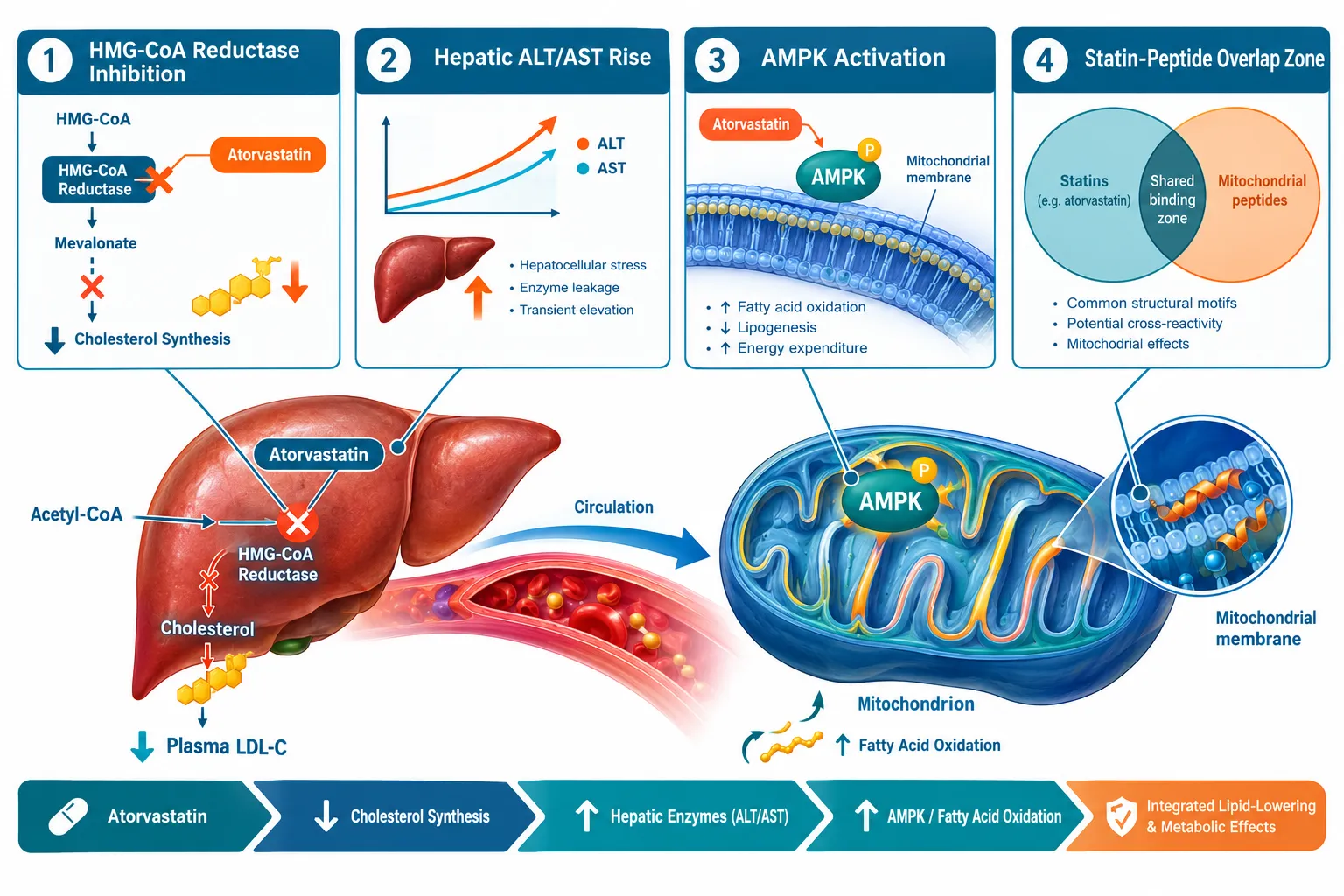
How Atorvastatin Affects Liver Enzymatic Readouts

The standard threshold for clinical concern is a rise in ALT or AST exceeding three times the upper limit of normal (ULN). At that point, dose reduction or discontinuation is recommended. Baseline liver panels before starting atorvastatin are considered standard practice, and interval testing is advised when doses increase or when additional hepatically metabolized compounds are introduced.

Key liver markers to track with atorvastatin:

Marker Baseline Role Concern Threshold
ALT Hepatocellular injury >3x ULN
AST Broader hepatic/muscle signal >3x ULN
GGT Cholestatic marker Elevated with dose escalation
Bilirubin Hepatic function Rising with severe injury

The lipid-lowering mechanism of atorvastatin also indirectly touches mitochondrial function. Statins can reduce coenzyme Q10 synthesis, a downstream consequence of HMG-CoA reductase inhibition, which may mildly impair mitochondrial electron transport. This is relevant because both MOTS-c and 5-Amino-1MQ act on overlapping mitochondrial and metabolic pathways, creating a potential zone of interaction that warrants careful enzyme surveillance.

MOTS-c in the Context of Statin Therapy and Liver Enzymatic Readouts in Metabolic Peptide Models

MOTS-c is a mitochondrial-derived peptide that activates AMPK signaling, promoting fatty acid oxidation and glucose uptake. Its mechanism is fundamentally mitochondrial, which places it in direct functional proximity to the mitochondrial stress that high-dose statins can produce.

Early clinical research on a MOTS-c-derived analog (CB4211) reported a reduction in liver triglyceride levels alongside a 25% decrease in plasma ALT and a 17% decrease in AST compared to placebo. These findings suggest a hepatoprotective rather than hepatotoxic profile, at least in subjects with hepatic steatosis. This is a meaningful distinction: while atorvastatin may nudge liver enzymes upward at high doses, MOTS-c analogs appear to exert a counterbalancing effect in fatty liver models.

Researchers exploring MOTS-c and elamipretide combinations should note that no published cases of MOTS-c increasing statin-related hepatotoxicity have been reported. However, the absence of a formal drug-interaction profile means caution is still warranted. MOTS-c is not FDA-approved and is available only as a research-grade MOTS-c peptide within registered trials or research settings.

"MOTS-c's AMPK activation pathway overlaps with the mitochondrial stress zone created by statin-induced CoQ10 suppression, making liver enzyme monitoring essential, not optional."

MOTS-c + Atorvastatin: Current Evidence Summary

  • No published adverse interaction cases as of 2026
  • Theoretical concern: combined AMPK/mitochondrial pathway activity at high statin doses
  • Recommended monitoring: baseline ALT/AST, interval testing at 4-8 weeks
  • Human data: limited to early Phase I safety signals only

5-Amino-1MQ Liver Enzymatic Readouts in Metabolic Peptide Models: Atorvastatin Comparison

5-Amino-1MQ inhibits nicotinamide N-methyltransferase (NNMT), an enzyme highly expressed in liver tissue. By blocking NNMT, the compound alters methionine cycle flux and shifts cellular energy metabolism toward fat oxidation. This hepatic expression profile makes liver enzyme monitoring especially relevant for this compound.
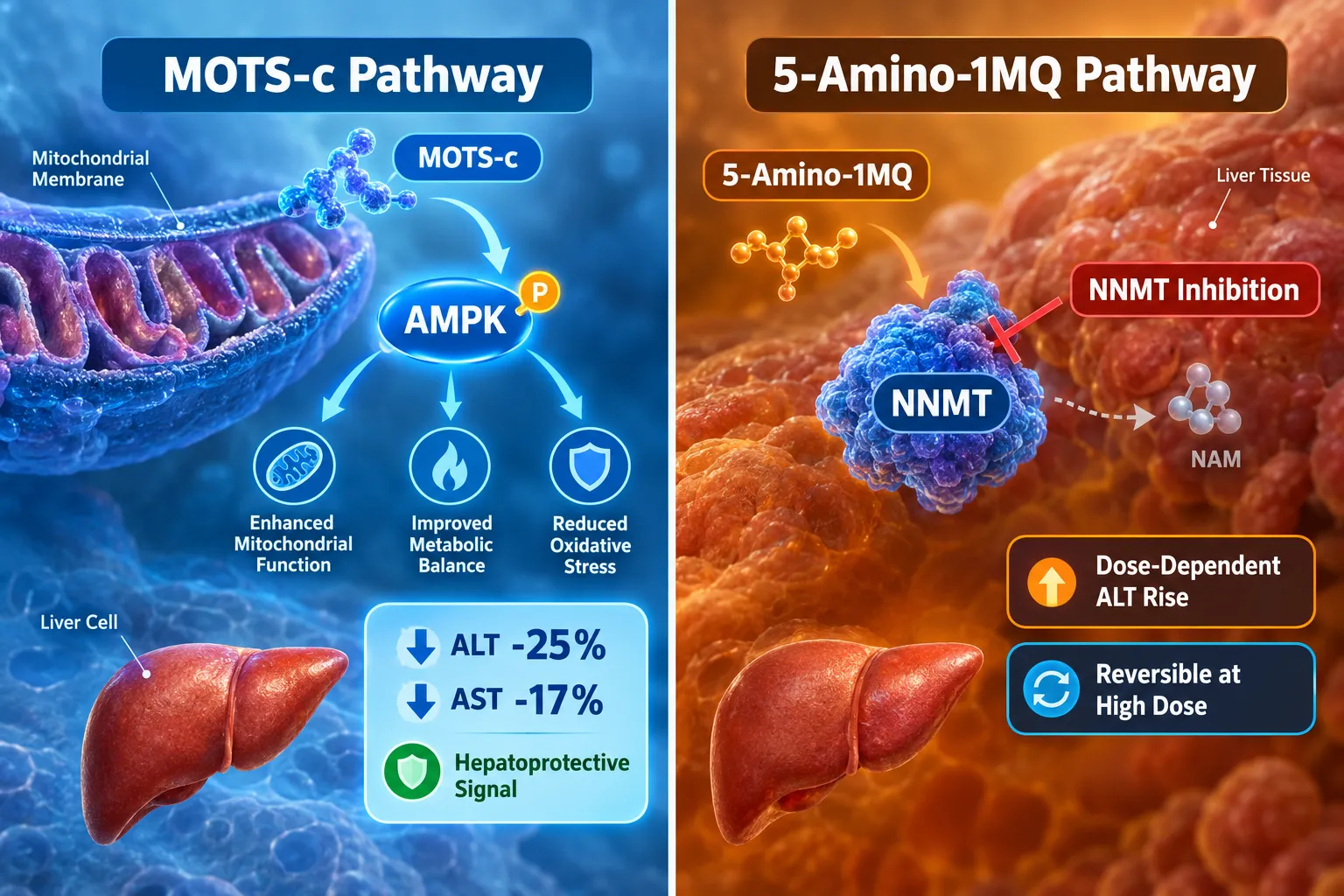
5-Amino-1MQ Liver Enzymatic Readouts in Metabolic Peptide Models: Atorvastatin Comparison

Acute animal studies using doses ranging from 50 to 5,000 mg/kg reported no mortality and no observable adverse reactions over 48 hours. A 14-day subacute study found AST and GGT unchanged, with only a transient CRP elevation at the highest intravenous dose. These findings suggest no short-term hepatotoxicity signal at standard research doses.

However, the picture changes at high doses over longer periods. Rodent studies using 5 to 10 times the proposed therapeutic dose found that approximately 8-12% of animals developed ALT rises of 2-3 times the upper limit of normal after 4-6 weeks of daily dosing. Critically, these elevations normalized within 2-3 weeks of discontinuation, indicating dose-dependent but reversible hepatotoxicity.

A 2024 diet-induced obesity mouse study also reported improved liver histology over 28 days with standard dosing, aligning with the hepatoprotective potential seen in MOTS-c models. Yet a 2025 dosing synthesis found that 100 mg/kg doses did not produce proportionally greater fat loss than lower doses but did produce elevated ALT/AST in a subset of subjects, a clear dose ceiling signal.

Those researching 5-Amino-1MQ 60 capsules for metabolic research should also review available 5-Amino-1MQ capsule formulations and ensure sourcing from lab-tested peptide suppliers to maintain research integrity.

5-Amino-1MQ Liver Enzyme Profile at a Glance:

  • Standard doses: No hepatotoxicity signal in acute and subacute animal studies
  • High doses (5-10x therapeutic): 8-12% of animals show ALT/AST 2-3x ULN
  • Recovery: Enzyme normalization within 2-3 weeks post-discontinuation
  • Human data: None; all liver risk assessments are extrapolated from animal models
  • Chronic toxicology (28-day and 90-day studies): Not publicly reported as of 2026

When combining 5-Amino-1MQ with atorvastatin, the shared hepatic burden is the primary concern. Both compounds are processed in liver tissue, and both can elevate transaminases at high doses. The recommended approach mirrors statin clinical practice: obtain a full baseline hepatic panel (ALT, AST, GGT, bilirubin), monitor at defined intervals, and discontinue with further evaluation if ALT or AST exceeds 2-3 times the upper limit of normal.

Monitoring Protocol for Combined Metabolic Peptide and Statin Models

Researchers working with statin therapy and liver enzymatic readouts in metabolic peptide models need a structured surveillance approach. The following framework integrates guidance from statin clinical practice and available peptide safety data.
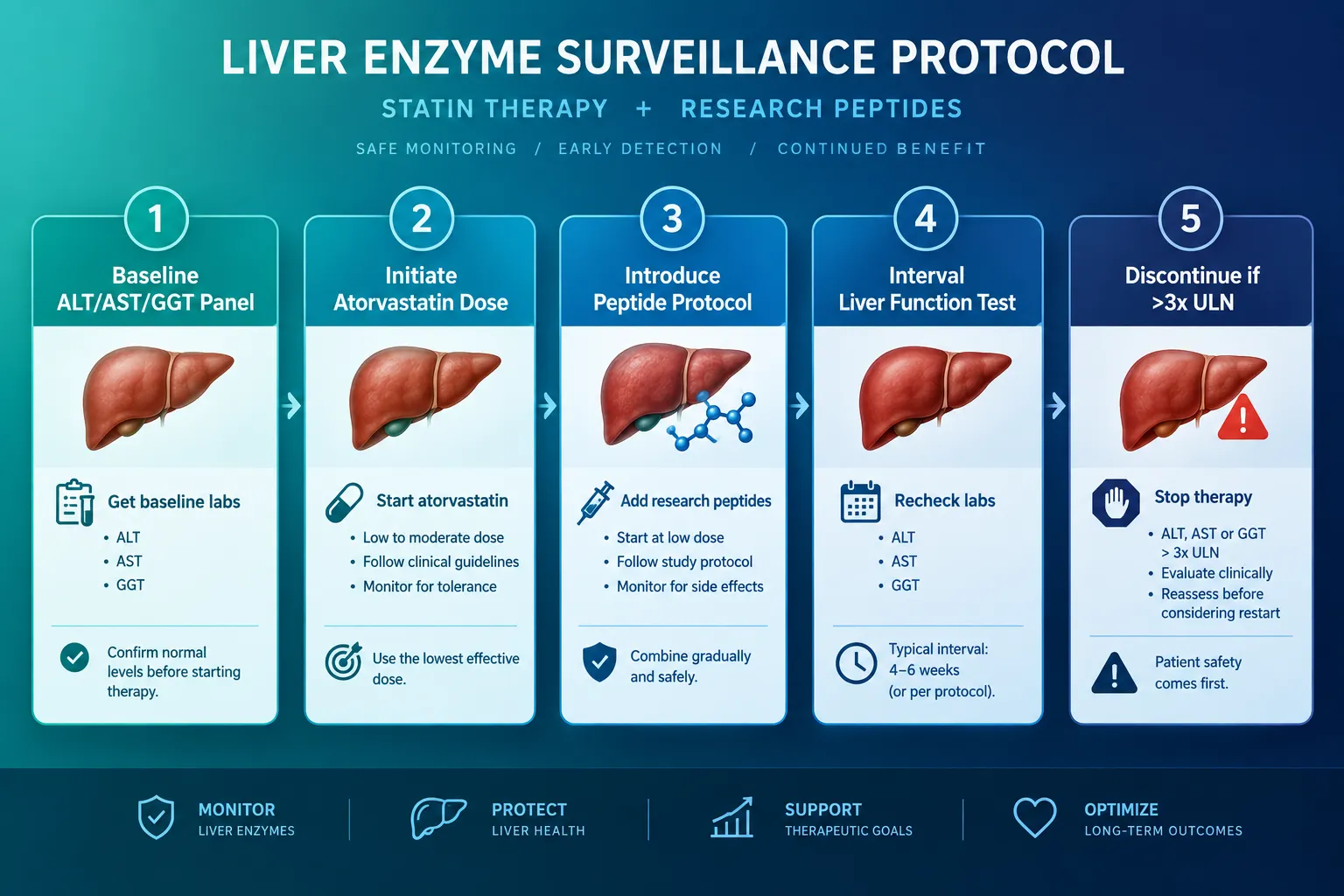
Monitoring Protocol for Combined Metabolic Peptide and Statin Models

Recommended Monitoring Steps:

  1. Baseline panel, ALT, AST, GGT, total bilirubin before initiating any compound
  2. Atorvastatin initiation, Recheck at 6-12 weeks, especially at 40-80 mg doses
  3. Peptide introduction, Introduce one compound at a time where possible; recheck liver panel at 4 weeks
  4. Interval surveillance, Every 8-12 weeks during active combined use
  5. Threshold action, Discontinue the most recently added compound and retest if ALT/AST exceeds 3x ULN; evaluate both compounds if elevation persists

This stepwise approach allows researchers to isolate which compound is driving any enzymatic change, a critical distinction when both atorvastatin and a research peptide are active simultaneously.

Conclusion

The intersection of statin therapy and liver enzymatic readouts in metabolic peptide models represents one of the more nuanced monitoring challenges in current research settings. Atorvastatin's hepatic mechanism creates a baseline enzymatic risk that compounds when combined with peptides acting on overlapping mitochondrial and metabolic pathways.

MOTS-c presents an intriguing counterpoint: early data suggests hepatoprotective rather than hepatotoxic effects, with ALT and AST reductions in fatty liver models. 5-Amino-1MQ shows a clean short-term liver safety profile at standard doses, but dose-dependent and reversible transaminase elevations at high doses demand the same disciplined monitoring applied to statins.

Actionable next steps for researchers:

  • Establish a full baseline hepatic panel before combining any statin with MOTS-c or 5-Amino-1MQ
  • Use the lowest effective dose of each compound and escalate only with documented enzyme stability
  • Apply the 3x ULN discontinuation threshold consistently across all compounds in the model
  • Source compounds exclusively from verified, lab-tested peptide suppliers to ensure purity and dose accuracy
  • Treat all current liver risk assessments for both peptides as preliminary until formal human clinical trial data is available

The field is advancing rapidly, but the absence of peer-reviewed human trials for both MOTS-c and 5-Amino-1MQ means that rigorous enzymatic monitoring remains the single most important safeguard in these combined metabolic models.

https://www.puretestedpeptides.com/wp-content/uploads/2026/09/statin-therapy-and-liver-enzymatic-readouts-in-metabolic-peptide-models-atorvast.webp 1024 1536 https://www.puretestedpeptides.com/wp-content/uploads/2026/01/buy-peptides-online.jpg 2026-09-16 13:07:052026-09-16 13:07:05Statin Therapy and Liver Enzymatic Readouts in Metabolic Peptide Models: Atorvastatin vs. MOTS-c and 5-Amino-1MQ

Tag Archive for: metabolic peptide models

Carbohydrate Antigens, GLP Peptides, and Gut Hormone Biology: How GLP‑2‑T and GLP‑3 Retatrutide Are Used in Laboratory Metabolic Models

Carbohydrate Antigens, GLP Peptides, and Gut Hormone Biology: How GLP‑2‑T and GLP‑3 Retatrutide Are Used in Laboratory Metabolic Models

June 8, 2026/0 Comments/by Pure Tested

Researchers searching for carbohydrate antigens often arrive at a broader and more complex story than they expected — one that connects gut-surface glycoproteins, enteroendocrine signaling, and next-generation incretin peptides into a single field of immunometabolic inquiry. Understanding Carbohydrate Antigens, GLP Peptides, and Gut Hormone Biology: How GLP‑2‑T and GLP‑3 Retatrutide Are Used in Laboratory Metabolic Models requires tracing how the intestinal epithelium functions simultaneously as an immune interface and a hormone-secreting organ.

Key Takeaways

  • Carbohydrate antigens on gut epithelial surfaces are structurally linked to the same L cells that secrete GLP-1 and GLP-2 peptides
  • GLP-2 (sometimes labeled GLP-2-T in research contexts) is a short-lived postprandial hormone with a half-life of roughly seven minutes, primarily driving intestinal growth
  • Retatrutide, informally called GLP-3 in research communities, is a triple agonist targeting GLP-1, GIP, and glucagon receptors simultaneously
  • The gut microbiome modulates incretin secretion through short-chain fatty acid (SCFA) production, linking microbial ecology to metabolic peptide biology
  • Laboratory metabolic models use these peptides to study obesity, glucose homeostasis, liver fat, and intestinal barrier function

Key Takeaways

The Gut Epithelium as Both Antigen Display and Hormone Factory

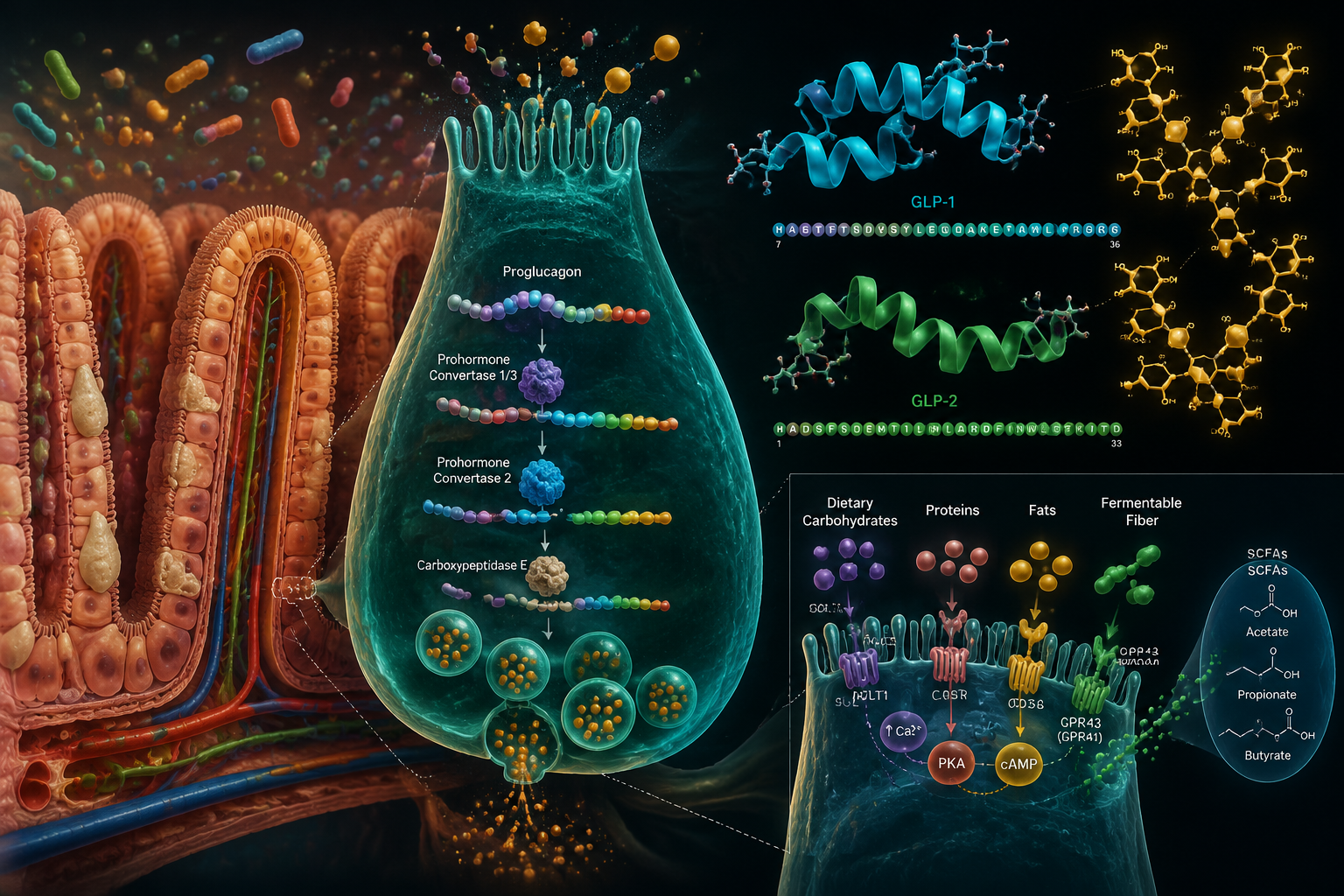
The intestinal lining does two jobs at once. Its surface is decorated with carbohydrate antigens — complex sugar chains attached to glycoproteins and glycolipids — that interact with immune cells, pathogens, and the gut microbiome. At the same time, specialized enteroendocrine L cells embedded in that same epithelium sense luminal nutrients and release proglucagon-derived peptides (PGDPs), including GLP-1 and GLP-2.

This dual role is not coincidental. The same nutrient-sensing machinery that triggers incretin release also modulates surface antigen expression. Short-chain fatty acids produced by gut bacteria bind to free fatty acid receptors on L cells, stimulating GLP-1 and peptide YY (PYY) secretion. Disruptions in this axis — whether from dysbiosis, inflammation, or altered glycan expression — impair glucose homeostasis at a fundamental level.

GLP-2, released alongside GLP-1 from the same L cells, has a distinct role: it promotes intestinal mucosal growth, enhances barrier integrity, and reduces gut permeability. Its half-life is approximately seven minutes in native form, which is why research models use stabilized analogs (sometimes designated GLP-2-T) to study its effects over longer windows. For researchers exploring generations of GLP-1 analogs and their differences, understanding GLP-2's parallel biology adds important context.

"The intestinal epithelium is not a passive barrier — it is an active endocrine and immunological organ whose carbohydrate surface determines how both pathogens and peptide hormones interact with the host."

GLP‑2‑T and GLP‑3 Retatrutide in Laboratory Metabolic Models

GLP‑2‑T and GLP‑3 Retatrutide in Laboratory Metabolic Models

This is where Carbohydrate Antigens, GLP Peptides, and Gut Hormone Biology: How GLP‑2‑T and GLP‑3 Retatrutide Are Used in Laboratory Metabolic Models becomes directly actionable for research design.

Retatrutide (LY3437943), informally called GLP-3 to emphasize its triple mechanism, is a 39-amino-acid synthetic peptide. It simultaneously activates GLP-1, GIP, and glucagon receptors — a profile that distinguishes it sharply from semaglutide (GLP-1 only) and tirzepatide (GLP-1 plus GIP). Its structure includes 2-aminoisobutyric acid (Aib) substitutions and a C20 fatty-diacid moiety, synthesized via solid-phase peptide synthesis for research-grade precision.

Phase 2 data showed dose-dependent reductions in body weight, liver fat content, and fasting glucose, alongside improvements in body composition. The glucagon receptor component adds a metabolic dimension absent in earlier incretin therapies — driving hepatic glucose output modulation and energy expenditure in ways that pure GLP-1 agonism cannot replicate. Researchers can explore the GLP-3 triple agonist research overview for deeper mechanistic detail.

Comparing Key Metabolic Peptides Used in Research Models

Peptide Receptor Targets Primary Research Focus
GLP-2 / GLP-2-T GLP-2R Intestinal growth, barrier integrity
Tirzepatide GLP-1R + GIPR Glycemic control, weight loss
Retatrutide (GLP-3) GLP-1R + GIPR + GCGR Weight, liver fat, energy expenditure
MOTS-C AMPK via AICAR Mitochondrial metabolism

For researchers also studying mitochondrial metabolic pathways, MOTS-C as a mitochondrial-derived peptide represents a complementary but mechanistically distinct tool. Similarly, the cagrilintide and GLP-1 synergy research illustrates how combination approaches are reshaping metabolic model design in 2026.

Applying This Framework to Advanced Immunometabolic Research

Applying This Framework to Advanced Immunometabolic Research

The convergence of Carbohydrate Antigens, GLP Peptides, and Gut Hormone Biology: How GLP‑2‑T and GLP‑3 Retatrutide Are Used in Laboratory Metabolic Models opens specific experimental opportunities.

First, carbohydrate antigen panels (such as CA 19-9 or Lewis antigen variants) are increasingly used alongside incretin assays to characterize gut epithelial status in metabolic disease models. Altered glycan expression correlates with L-cell density changes, which directly affects GLP-1 and GLP-2 output.

Second, receptor distribution matters. GLP-1R, GLP-2R, and GIPR are expressed in distinct cell populations within the gastrointestinal tract, each with unique downstream signaling circuits. Designing a model that conflates these receptors produces unreliable data. Researchers using lab-tested peptides for metabolic studies should verify receptor specificity before drawing mechanistic conclusions.

Third, the gut microbiome variable cannot be ignored. SCFA-driven incretin secretion means that germ-free versus colonized animal models will produce meaningfully different GLP peptide profiles, even when the same compound is administered.

For researchers sourcing compounds, reviewing peptide supplier comparisons and ensuring purity documentation is essential before beginning any gut hormone biology protocol.

Conclusion

The bridge between carbohydrate antigen biology and GLP peptide research is not theoretical — it is structural. The same intestinal epithelium that displays immunologically active glycan antigens is the tissue that secretes GLP-1, GLP-2, and the hormones that next-generation compounds like Retatrutide are designed to engage. For researchers building metabolic models in 2026, the actionable steps are clear: characterize epithelial antigen status alongside incretin output, distinguish receptor targets precisely when selecting GLP-2-T versus GLP-3 analogs, and account for microbiome-driven SCFA variability in experimental design. Sourcing research-grade peptides with verified purity and cross-referencing mechanistic data from the GLP-1 dual receptor agonism research breakdown will strengthen the validity of any gut hormone biology protocol.

https://www.puretestedpeptides.com/wp-content/uploads/2026/06/Carbohydrate-Antigens-GLP-Peptides-and-Gut-Hormone-Biology-How-GLP‑2‑T-and-GLP‑3-Retatrutide-Are-Used-in-Laboratory-Metabolic-Models.png 1024 1536 Pure Tested https://www.puretestedpeptides.com/wp-content/uploads/2026/01/buy-peptides-online.jpg Pure Tested2026-06-08 13:03:242026-07-20 15:03:47Carbohydrate Antigens, GLP Peptides, and Gut Hormone Biology: How GLP‑2‑T and GLP‑3 Retatrutide Are Used in Laboratory Metabolic Models
×

Helpful Links

  • My account
  • Cart
  • Checkout
  • Refund and Returns Policy
  • Privacy Policy
  • SMS Privacy Policy
  • Login
  • My Account
  • Logout

USA Made Lab Tested Peptides

All products are sold for research, laboratory, or analytical purposes only, and are not for human consumption


Pure Tested Peptides is a chemical supplier. Pure Tested Peptides is not a compounding / chemical compounding facility as defined under 503A of the Federal Food, Drug, and Cosmetic act. Pure Tested Peptides is not an outsourcing facility as defined under 503B of the Federal Food, Drug, and Cosmetic act.

The statements made within this website have not been evaluated by the US Food and Drug Administration. The products we offer are not intended to diagnose, treat, cure or prevent any disease.

Human/Animal Consumption Prohibited. Laboratory/In-Vitro Experimental Use Only

Scroll to top Scroll to top Scroll to top