Call or Text 727-513-9780
  • Shopping Cart Shopping Cart
    0Shopping Cart
Pure Tested Peptides | America's most trusted Peptides for sale online
  • Peptides for sale
    • Oral Peptides for sale
      • Peptide Capsules for sale
      • BPC 157 Capsules 1000mcg
      • SLU-PP-332 Capsules | 1000 mcg
      • 5-Amino-1MQ 50mg Capsules
      • Tesofensine 500mcg
    • All Peptides for sale
    • Peptide Sprays
      • BPC 157 Nasal Spray Kit
      • BPC-157 TB500 Nasal Spray Kit
      • Semax Nasal Spray 10mg
      • Selank – Nasal Spray Kit – 10mg
      • Epithalon 50MG Nasal Spray Kit
      • Ipamorelin 10mg Nasal Spray
      • Klow Nasal Spray (BPC-157 + TB-500 + GHK-Cu + KPV) | 80mg
      • Hulk Nasal Spray Tesa / Ipa Blend 6/3 MG
      • Klow Nasal Spray
      • NAD + 500 mg Nasal Spray
      • PT-141 Nasal Spray Kit
    • GHRH Peptides
      • Ipa Peptides
      • CJC-1295 Peptides
        • CJC-1295 with DAC 5 mg
        • CJC-1295 without DAC 5 mg
        • CJC-1295 Ipa 10mg
      • Tesa Peptides
        • Tesa Peptide
        • Tesa 20 mg
    • GHK-Cu Peptides
      • All GHK-Cu Peptides
      • GHK-Cu 100mg
      • KLOW Peptide Blend – Buy KLOW blend online
    • BPC Peptides
      • All BPC Peptides
      • BPC-157
      • BPC-157 TB-500
      • BPC 157 capsules 1000mcg
    • SLU-PP-332 Peptides
      • All SLU-PP-332 Peptides
      • SLU-PP-332 5mg
    • GLP3 Peptides
      • GLP3-R
      • GLP3-R CAG 10mg
      • GLP3-R 20mg
    • PT-141 Peptides
      • PT-141 Peptides for sale
      • PT-141 10mg
      • PT-141 Nasal Spray
    • CAG Peptides
      • Lipo-C Peptide Blend
      • CAG 5mg
      • CAG 10mg
    • MOTS-C Peptides
      • MOTS-C Peptides for sale
      • MOTS-c peptide
      • MOTS-c 10mg *6 pack*
    • 5 Amino 1MQ Peptides
      • 5 Amino 1MQ Peptides for sale
      • 5-Amino-1MQ 50mg Capsules
      • 5-Amino-1MQ 5mg
    • Epithalon Peptides
      • Epithalon Peptides for sale
      • Epithalon 10mg
      • Epithalon 50mg
  • Shop
    • GLPs
      • 5-Amino-1MQ 50mg Capsules
      • 5-Amino-1MQ 5mg
      • GLP3-Reta
      • L-Carnitine 500mg/ml
      • Tesofensine 500mcg
      • SLU-PP-332 5mg
      • MOTS-c 10mg *6 pack*
    • Epithalon & BPC Peptides
      • Epithalon 10mg
      • Epithalon 50mg
      • BPC-157
      • BPC 157 capsules 1000mcg
      • BPC-157 TB-500
      • BPC-157 TB500 Nasal Spray Kit
      • BPC 157 Nasal Spray Kit
    • BPC TB-500 & NAD+ Peptides
      • NAD+ 500 mg
      • KLOW Peptide Blend – Buy KLOW blend online
      • GLOW Peptide Blend
      • TB 500 5mg
      • BPC 157 capsules 1000mcg – Supplement
      • BPC 157 Nasal Spray Kit
      • BPC-157
      • BPC-157 TB500 Nasal Spray Kit
      • BPC-157 TB-500
      • BPC 157 capsules 1000mcg
    • LL-37 Peptide
      • LL-37 10 mg
    • MOTS-C & Selank
      • MOTS-c peptide
      • Selank 10mg
    • GHK Peptides
      • GHK-Cu 100mg
      • GLOW Peptide Blend
      • KLOW Peptide Blend – Buy KLOW blend online
  • COAs
  • Wholesale
    • Wholesale Peptides for sale
  • PTP FAQ
  • Affiliates
    • Selank Peptide: Advanced Pharmacological Mechanisms Underlying Its Anxiolytic and Nootropic Effects in Research
      • 5-Amino-1MQ Peptide: Detailed Mechanisms of NNMT Inhibition and Its Impact on Cellular Metabolism Research
        • MOTS-C Peptide: Unraveling Its Role in Mitochondrial Dynamics and Energy Metabolism Research
          • Epithalon Peptide and Telomerase Regulation: Investigating Its Impact on Cellular Senescence and Lifespan Research Models
            • GLP2-T vs GLP2 Tirz Peptide: Understanding the Naming, Mechanistic Nuances, and Research Implications for Gut Health
      • Peptides and Polypeptides in Modern Pharmacology: What Research on Metoprolol, Prednisone, and Amlodipine Reveals
        • Polypeptide Peptides vs NSAIDs: What Naproxen and Diclofenac Teach Tissue-Repair Researchers About BPC‑157 and TB‑500
          • Peptides and Polypeptides in Endocrine Pharmacology: How GLP-1, GLP-2, and GLP-3 Retatrutide Differ From Classic Drugs Like Prednisone and Amlodipine
          • 5‑Amino‑1MQ Peptide and NNMT Inhibition: How It Compares With Statins Like Atorvastatin in Adipose and Lipid Metabolism Research
      • Enclomiphene, Estrogen Receptor Signaling, and Luteinizing Phase Biology: What Hormone Researchers Should Measure
        • Mesenchymal Stem Cells, BPC‑157, and GHK‑Cu: How Tissue Repair Peptides Compare With Classic NSAIDs Like Naproxen in Injury Models
          • Peptide Calculator Use Cases Beyond Growth Hormone: Working Through GLP‑3 Retatrutide, MOTS‑c, and BPC‑157 Research Dosing
        • Polypeptide Peptides in Endocrine and Metabolic Pharmacology: Lessons From Amlodipine, Prednisone, and Metoprolol
        • Peptides Calculator for Advanced Blends: Worked Examples for Tesamorelin, CJC‑1295, and Ipamorelin Stacks
          • Peptides and Polypeptides in Human Physiology: How Molecular Size Shapes Research Applications
            • Selank Peptide: Advanced Pharmacological Mechanisms Underlying Its Anxiolytic and Nootropic Effects in Research
          • 5-Amino-1MQ Peptide: Detailed Mechanisms of NNMT Inhibition and Its Impact on Cellular Metabolism Research
            • MOTS-C Peptide: Unraveling Its Role in Mitochondrial Dynamics and Energy Metabolism Research
              • Epithalon Peptide and Telomerase Regulation: Investigating Its Impact on Cellular Senescence and Lifespan Research Models
                • GLP2-T vs GLP2 Tirz Peptide: Understanding the Naming, Mechanistic Nuances, and Research Implications for Gut Health
                  • Peptides and Polypeptides in Endocrine Pharmacology: How GLP-1, GLP-2, and GLP-3 Retatrutide Differ From Classic Drugs Like Prednisone and Amlodipine
                    • Polypeptide Peptides vs NSAIDs: What Naproxen and Diclofenac Teach Tissue-Repair Researchers About BPC‑157 and TB‑500
                      • Peptides and Polypeptides in Modern Pharmacology: What Research on Metoprolol, Prednisone, and Amlodipine Reveals
                        • 5‑Amino‑1MQ Peptide and NNMT Inhibition: How It Compares With Statins Like Atorvastatin in Adipose and Lipid Metabolism Research
                        • Enclomiphene, Estrogen Receptor Signaling, and Luteinizing Phase Biology: What Hormone Researchers Should Measure
                        • Mesenchymal Stem Cells, BPC‑157, and GHK‑Cu: How Tissue Repair Peptides Compare With Classic NSAIDs Like Naproxen in Injury Models
                        • Peptide Calculator Use Cases Beyond Growth Hormone: Working Through GLP‑3 Retatrutide, MOTS‑c, and BPC‑157 Research Dosing
                        • Polypeptide Peptides in Endocrine and Metabolic Pharmacology: Lessons From Amlodipine, Prednisone, and Metoprolol
                        • Peptides Calculator for Advanced Blends: Worked Examples for Tesamorelin, CJC‑1295, and Ipamorelin Stacks
                        • Peptides and Polypeptides in Human Physiology: How Molecular Size Shapes Research Applications
                        • Selank Peptide: Advanced Pharmacological Mechanisms Underlying Its Anxiolytic and Nootropic Effects in Research
                        • MOTS-C Peptide: Unraveling Its Role in Mitochondrial Dynamics and Energy Metabolism Research
                        • Peptides and Polypeptides in Modern Pharmacology: What Research on Metoprolol, Prednisone, and Amlodipine Reveals
                        • Peptides and Polypeptides in Endocrine Pharmacology: How GLP-1, GLP-2, and GLP-3 Retatrutide Differ From Classic Drugs Like Prednisone and Amlodipine
                        • 5-Amino-1MQ Peptide: Detailed Mechanisms of NNMT Inhibition and Its Impact on Cellular Metabolism Research
                        • Mesenchymal Stem Cells, BPC‑157, and GHK‑Cu: How Tissue Repair Peptides Compare With Classic NSAIDs Like Naproxen in Injury Models
                        • Peptide Calculator Use Cases Beyond Growth Hormone: Working Through GLP‑3 Retatrutide, MOTS‑c, and BPC‑157 Research Dosing
                        • GLP2-T vs GLP2 Tirz Peptide: Understanding the Naming, Mechanistic Nuances, and Research Implications for Gut Health
                        • Polypeptide Peptides in Endocrine and Metabolic Pharmacology: Lessons From Amlodipine, Prednisone, and Metoprolol
                        • Polypeptide Peptides vs NSAIDs: What Naproxen and Diclofenac Teach Tissue-Repair Researchers About BPC‑157 and TB‑500
                        • Peptides and Polypeptides in Human Physiology: How Molecular Size Shapes Research Applications
                        • Peptides Calculator for Advanced Blends: Worked Examples for Tesamorelin, CJC‑1295, and Ipamorelin Stacks
                        • 5‑Amino‑1MQ Peptide and NNMT Inhibition: How It Compares With Statins Like Atorvastatin in Adipose and Lipid Metabolism Research
                        • Enclomiphene, Estrogen Receptor Signaling, and Luteinizing Phase Biology: What Hormone Researchers Should Measure
                        • Epithalon Peptide and Telomerase Regulation: Investigating Its Impact on Cellular Senescence and Lifespan Research Models
                        • Best research protocol Klow blend
                        • best time to take BPC-157
                        • best time to take DSIP (Delta Sleep Inducing Peptide)
                        • best time to take CJC-1295
                        • best time to take AOD-9604
                        • best time to take Follistatin 344
                        • best time to take Ipamorelin
                        • best time to take MK-677 (Ibutamoren)
                        • best time to take Ligandrol (LGD-4033) — research compound
                        • best time to take Ostarine (MK-2866) — research compound
                        • best time to take GHK-CU
                        • best time to take TB-500
                        • best time to take MOTS-c
                        • best time to take Semax
                        • best time to take RAD-140 (Testolone) — research compound
                        • best time to take Thymosin Alpha-1
                        • best time to take PEG-MGF
                        • Biolife Plasma, Octapharma Plasma, and Research Peptides: How Plasma Donation Labs Differ From Peptide Suppliers
                        • best time to take YK-11 — research compound
                        • best time to take PT-141 (Bremelanotide)
                        • Best research protocol Klow blend
                        • 5-Amino-1MQ and MOTS-C Synergy: Metabolic Signaling, Mitochondria, and Research Design
                        • BPC-157 and TB-500: Investigating Their Combined Effects on Angiogenesis and Cellular Migration in Tissue Repair Models
                        • BPC-157 Peptide: Gut Barrier Function, Inflammation, and Tissue-Recovery Research
                        • 5‑Amino‑1MQ and MOTS‑c Synergy in Metabolic Research: Designing NNMT and Mitochondrial Biogenesis Stacks
                        • CJC-1295 with DAC vs. Without DAC: Half-Life, Release Kinetics, and Research Implications
                        • CJC‑1295 with DAC vs. Without DAC: Expanding on Half‑Life Differences Using Tesamorelin and Ipamorelin Blend Case Studies
                        • Collagen Biology and Copper‑Binding Peptides: How GHK‑Cu, Glow Blend, and Klow Blend Interact with Skin and Connective Tissue
                        • Collagen Biology and Regenerative Peptides: How GHK‑Cu, Glow Blend, and Klow Blend Affect Extracellular Matrix Research
                    • DNA, Telomeres, and Longevity Peptides: Positioning Epithalon and MOTS‑c in Genetic Aging Research
                      • Enclomiphene Citrate: serm Mechanism, Testosterone Research, and Stack Compatibility
                        • Enclomiphene vs Enclomiphene Citrate: Formulation, Bioavailability, and Research Distinctions
                        • Epithalon Peptide Research: Telomerase Activation, Aging, and Pineal Gland Function
                        • Estrogen Receptor Signaling and Enclomiphene: How Selective Modulators Compare with Classic Polypeptide Hormones
                        • GHK-Cu Peptide: Advanced Mechanisms in Extracellular Matrix Remodeling and Wound Healing Research
                        • GHK-Cu Peptide: Collagen Synthesis, Wound Repair, and Skin-Barrier Research Models
                        • GLP-1 vs GLP-3 vs GLP-2: Peptide Classification and Research Applications
                        • GLP-2 Peptide Research Guide: Gut Barrier Function, Nutrient Absorption, and Intestinal Recovery Models
                        • GLP-3 Retatrutide vs. GLP-1 Drugs: What Triple-Agonist Biology Changes in Research Models
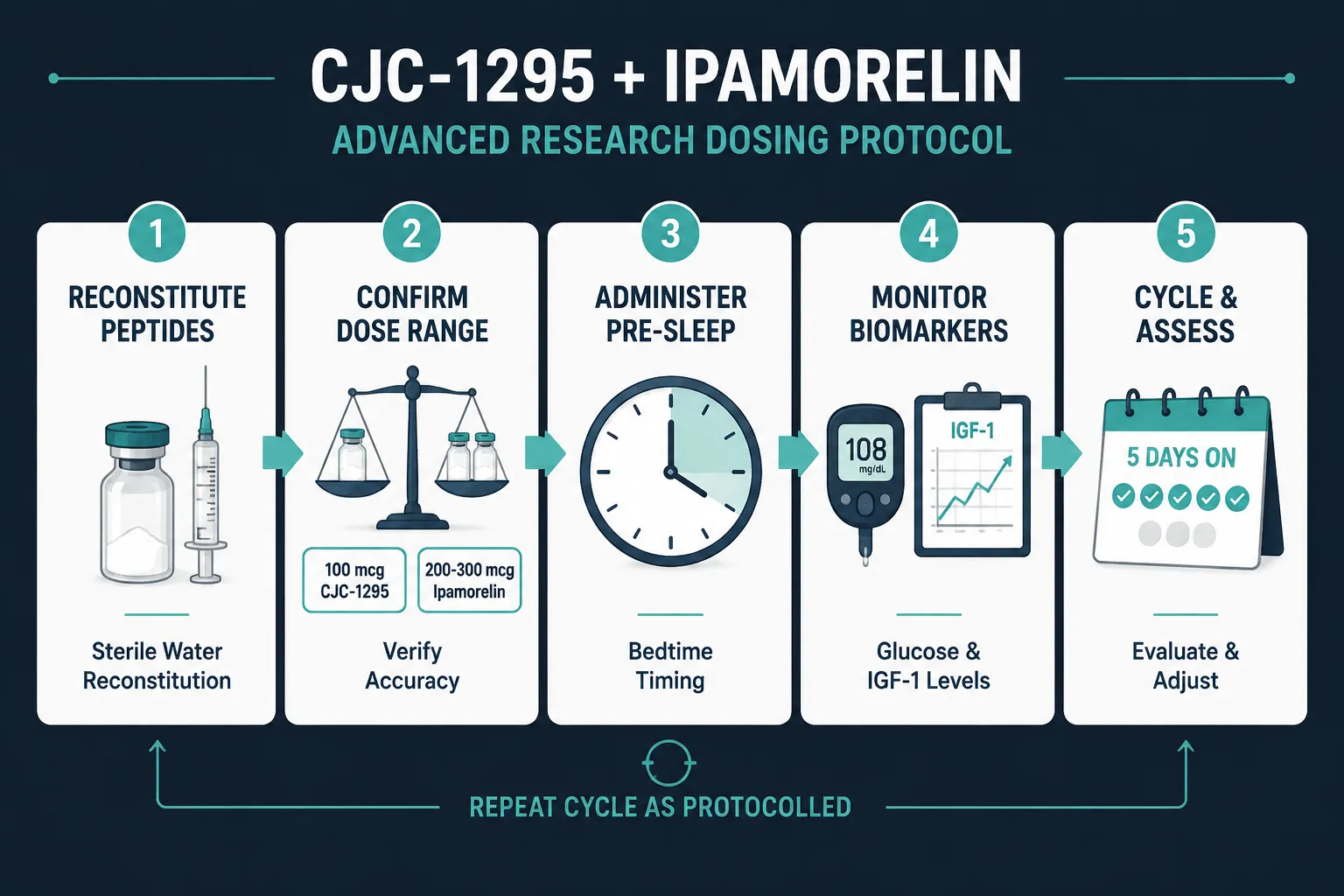
                        • Ipamorelin and Tesamorelin Combination: Synergistic GH Secretagogue Research and Dosing Protocols
                        • GLP2 Tirz Peptide: What It Is, Why the Name Exists, and How Researchers Should Interpret It
                        • Klow Blend Peptide Nasal Spray: What the Formulation Is Trying to Do in Cognitive Research
                        • Mitochondria, NNMT Inhibition, and Peptide Modulators: Where MOTS‑c and 5‑Amino‑1MQ Fit in Cellular Energy Research
                        • MOTS-c Peptide: Mitochondrial Function, Energy Metabolism, and What Researchers Measure
                        • MOTS-c vs. 5-Amino-1MQ: Which Metabolic Research Questions Each Compound Actually Answers
                        • Nasal Spray Peptides: Bioavailability, Administration, and Semax/Selank Research Applications
                        • PT-141 Peptide Research: Mechanism of Action and Melanocortin Receptor Signaling
                        • Retatrutide for Research: Mechanism, Structure, and GLP-1/GLP-3 Dual Action
                        • Retatrutide for Obesity and Type 2 Diabetes: What the Latest Trial Data Suggest
                        • Tesofensine Peptide Research: Mechanism, Appetite Suppression, and Neuropeptide Y Pathways
  • Contact
    • Contact Customer Service
    • Text Customer Support
  • About US
  • Shop all peptides
  • Affiliate Program
    • Affiliate Signup
  • Login / Register Login / Register Page Link Login / Register Page Link
  • Click to open the search input field Click to open the search input field Search
  • Menu Menu

Tag Archive for: peptide research protocols

CJC-1295 with Ipamorelin: What the Combination Means for Growth Hormone Research Models

CJC-1295 with Ipamorelin: What the Combination Means for Growth Hormone Research Models

August 9, 2026/0 Comments/in Uncategorized/by

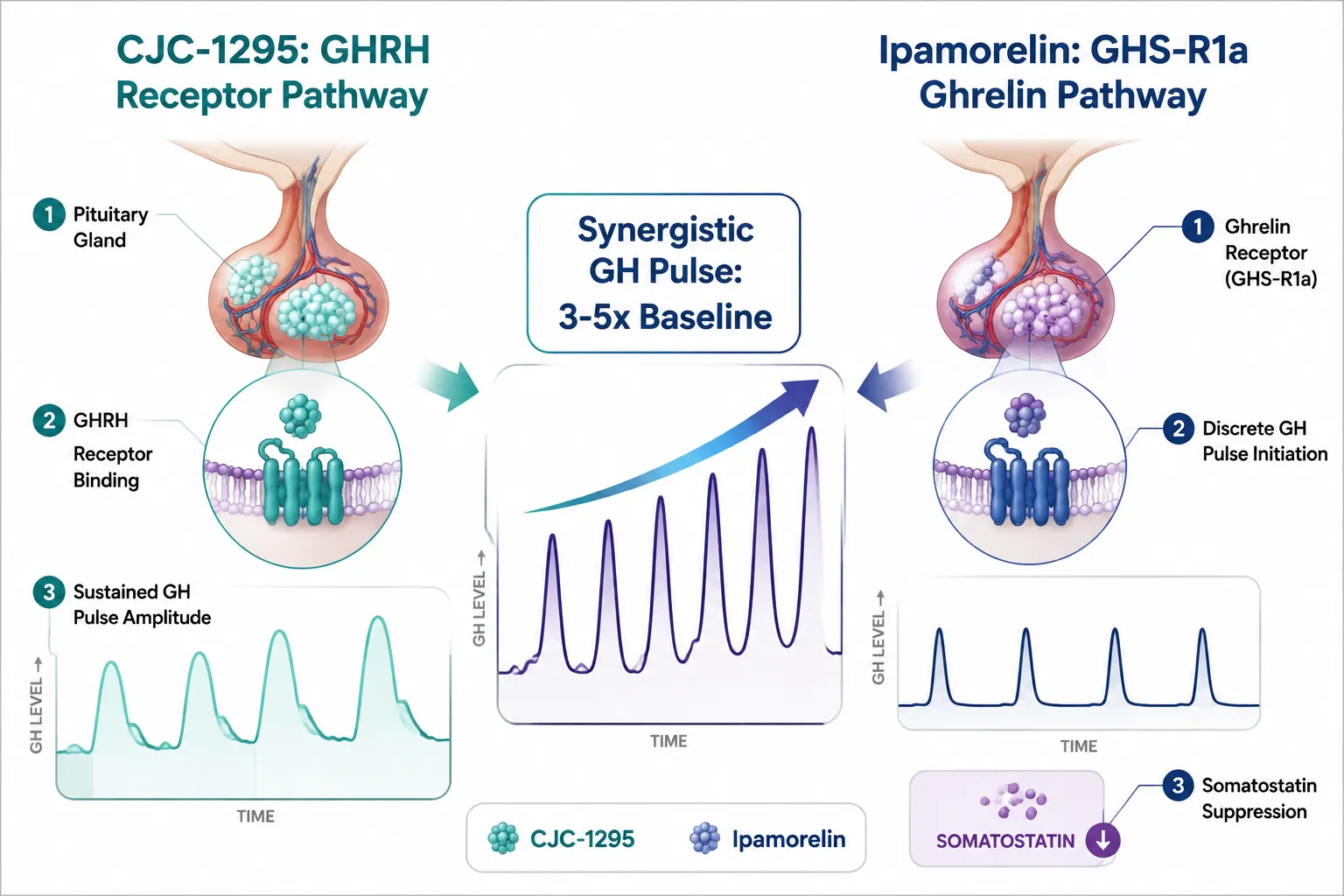
Growth hormone secretion is not a steady stream, it is a series of discrete pulses, and the architecture of those pulses determines downstream IGF-1 output, receptor sensitivity, and metabolic signaling. Understanding that architecture is exactly why researchers studying CJC-1295 with Ipamorelin: What the Combination Means for Growth Hormone Research Models have moved away from single-agent designs toward dual-pathway protocols. The two peptides act on different receptors, and that difference is the entire point.

Isometric scientific illustration in bright, teal and orange color accents, flat-vector infographic style, educational

Key Takeaways

  • CJC-1295 is a GHRH analog that extends GH-releasing hormone signaling; Ipamorelin is a selective ghrelin receptor agonist, they stimulate GH through distinct mechanisms.
  • Combining both compounds targets two independent receptor pathways simultaneously, producing additive or potentially synergistic GH pulse amplification in preclinical models.
  • The combination preserves pulsatile GH secretion rather than creating a flat, supraphysiological hormone profile, which matters for study design validity.
  • IGF-1 elevation in research models follows GH pulse amplitude and duration, making the dual-protocol a useful tool for studying downstream anabolic and metabolic signaling.
  • Researchers must account for somatostatin tone, dosing interval, and model-specific variables when designing protocols around this combination.

Why Two Receptors Are Better Than One in GH Research

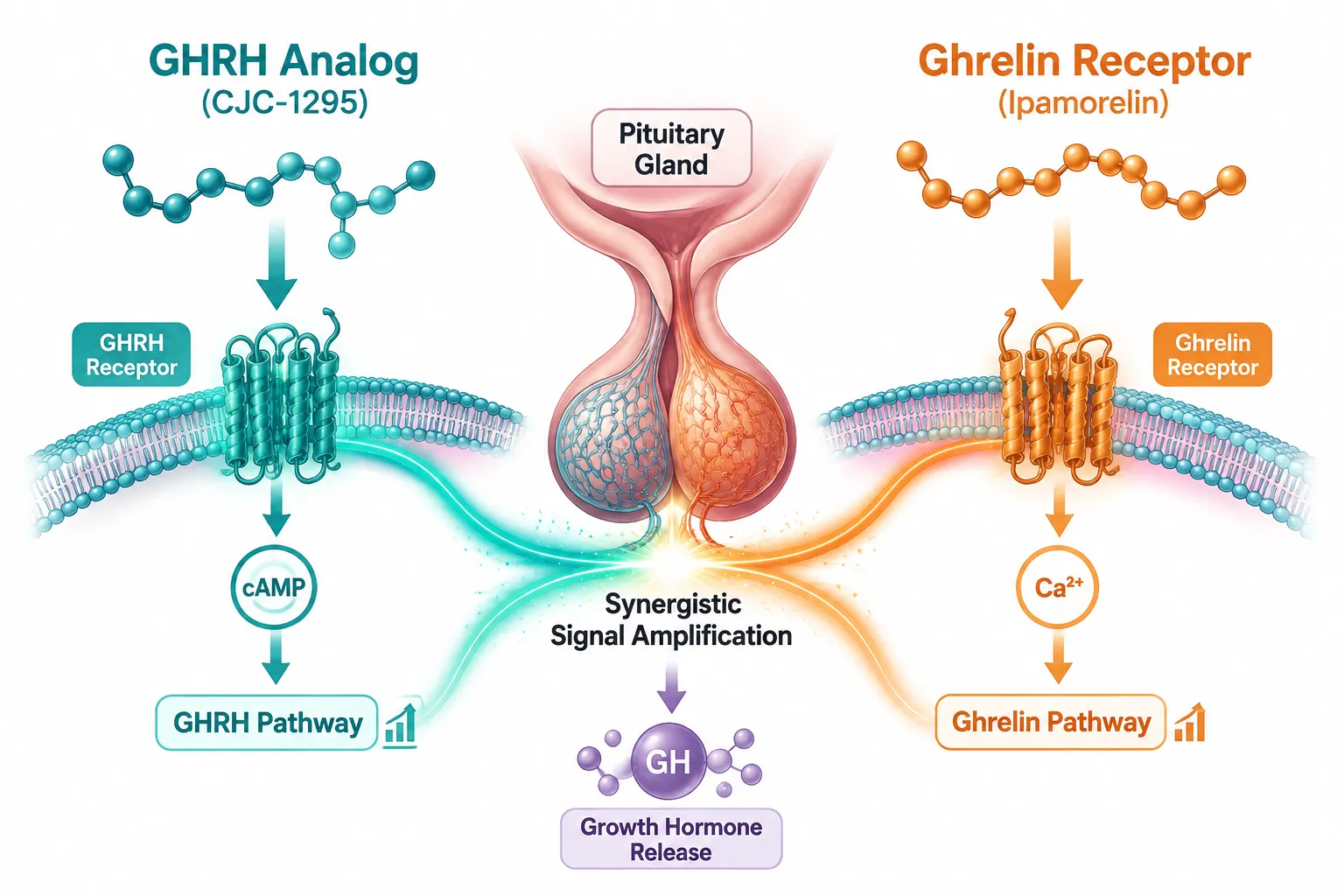
The hypothalamic-pituitary axis regulates GH through two primary stimulatory inputs: growth hormone-releasing hormone (GHRH) and ghrelin. These inputs converge on the pituitary somatotroph but bind to entirely separate receptors, the GHRH receptor and the growth hormone secretagogue receptor (GHS-R1a), respectively.

CJC-1295 is a synthetic GHRH analog. Its key structural feature is a drug affinity complex (DAC) modification that allows it to bind albumin in circulation, dramatically extending its half-life compared to native GHRH. In early human studies, single injections produced dose-dependent increases in mean GH concentrations and IGF-1 levels that persisted for several days. That sustained elevation distinguishes it from shorter-acting GHRH peptides like Sermorelin, a distinction worth noting when reviewing IPA Sermorelin stack research alongside CJC-1295 data.

Ipamorelin, by contrast, is a pentapeptide GH secretagogue. It activates GHS-R1a, the same receptor targeted by ghrelin, but with a notably selective profile. Unlike older secretagogues such as GHRP-6, Ipamorelin produces minimal cortisol or prolactin release at research-relevant doses, making it a cleaner signal in experimental models. Its GH pulses are sharp and short-lived, which is mechanistically opposite to CJC-1295's prolonged baseline elevation.

"The combination does not simply add two GH signals together, it modulates the pituitary from two independent angles, which changes the shape, amplitude, and downstream consequences of each pulse."

This receptor-level distinction is the conceptual foundation for understanding CJC-1295 with Ipamorelin: what the combination means for growth hormone research models at a mechanistic level.

GH Pulsatility, IGF-1 Signaling, and What the Combination Changes

GH Pulsatility, IGF-1 Signaling, and What the Combination Changes

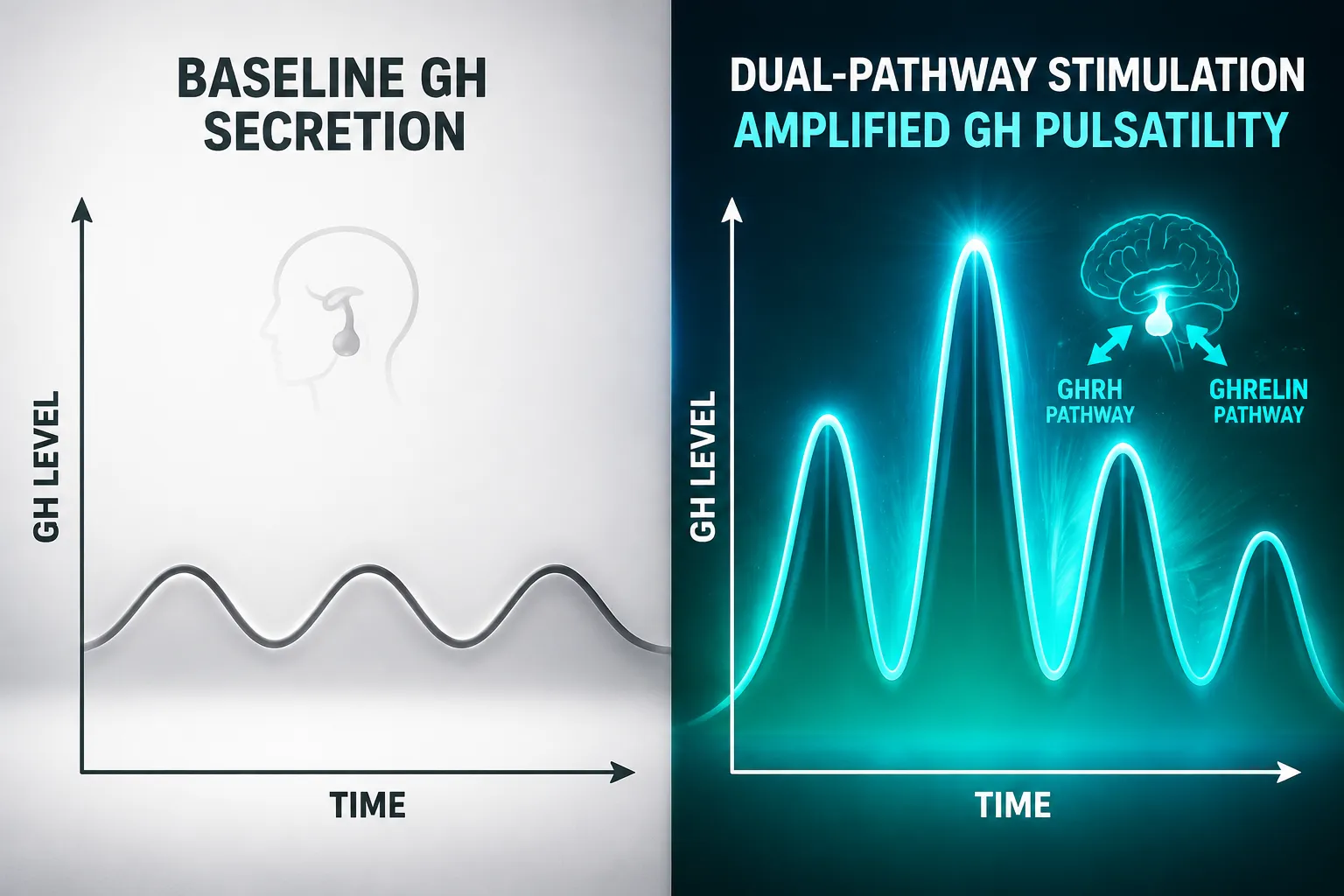
Physiological GH secretion is pulsatile. The liver and peripheral tissues respond differently to pulsatile versus continuous GH exposure, a fact with direct implications for IGF-1 production, receptor downregulation, and metabolic outcomes in research models.

When CJC-1295 alone is administered, it raises the trough GH level and sustains a higher baseline. Ipamorelin alone produces discrete, clean GH spikes. Together, the two compounds are thought to:

  • Raise the baseline GH environment (CJC-1295 effect)
  • Amplify individual pulses on top of that elevated baseline (Ipamorelin effect)
  • Preserve pulsatility rather than creating a flat supraphysiological curve

This matters for IGF-1 research. IGF-1 synthesis in the liver is sensitive to both GH pulse amplitude and cumulative exposure. A protocol that maintains pulsatility while elevating pulse height may produce more physiologically representative IGF-1 responses than continuous GH infusion models. Researchers exploring metabolic signaling themes will find this relevant alongside IPA muscle and fat research themes that examine body composition endpoints downstream of GH axis activation.

For researchers also working with Tesamorelin, another GHRH analog with an established clinical evidence base, multi-peptide blend formats have become a practical consideration. Resources covering Tesamorelin, CJC-1295, and Ipamorelin 12mg blend dosing and Tesamorelin, CJC-1295, and Ipamorelin 12mg blend reconstitution offer protocol-relevant context for multi-agent GH secretagogue studies.

Somatostatin tone is a critical confounding variable. Somatostatin inhibits GH release, and its rhythmic activity shapes natural pulse timing. Neither CJC-1295 nor Ipamorelin directly suppresses somatostatin, which means the combination works within, rather than overriding, the existing inhibitory architecture. Researchers should time dosing to coincide with periods of lower somatostatin tone (typically overnight in rodent models) to maximize signal clarity.

Study Design Considerations for the Dual-Protocol Model

Study Design Considerations for the Dual-Protocol Model

Translating the mechanistic rationale into a well-controlled study requires deliberate design choices. Several variables consistently affect outcomes in CJC-1295 with Ipamorelin research models:

Variable Research Consideration
Dosing interval CJC-1295 DAC variant allows less frequent dosing; Ipamorelin requires more frequent administration for pulse induction
Species differences Rodent GH pulse frequency differs significantly from human patterns
IGF-1 sampling timing Peak IGF-1 elevation lags GH pulse by hours; sampling windows must account for this
Endpoint selection Distinguish between GH pulse metrics, IGF-1 AUC, and downstream anabolic markers

Researchers working on broader peptide axis questions, including those examining Tesamorelin science and sourcing or Tesamorelin, AOD9604, CJC-1295, and Ipamorelin blend dosage protocols, will recognize that multi-peptide designs require particularly careful endpoint hierarchies to isolate which compound is driving which effect.

It is also worth noting the evidence gap: robust, controlled human trial data specifically on the CJC-1295 and Ipamorelin combination remains limited. Most of the mechanistic rationale is extrapolated from individual compound studies and preclinical data. This is not a reason to dismiss the combination as a research model, it is a reason to design studies that generate the controlled data currently missing from the literature.

Conclusion

The rationale for pairing CJC-1295 with Ipamorelin in growth hormone research models is mechanistically coherent: two distinct receptor pathways, complementary pharmacokinetics, and a combined effect that preserves pulsatility while amplifying GH output. For researchers, the actionable next steps are clear. First, define whether the primary endpoint is GH pulse architecture, IGF-1 elevation, or downstream metabolic or anabolic signaling, each requires a different sampling and analysis strategy. Second, account for somatostatin rhythm in dosing timing. Third, treat the combination as a dual-variable design and include single-agent control arms where possible to isolate each compound's contribution. The combination is a powerful research tool precisely because it mirrors the complexity of endogenous GH regulation, and that complexity demands equally rigorous protocol thinking.

https://www.puretestedpeptides.com/wp-content/uploads/2026/08/cjc-1295-with-ipamorelin-what-the-combination-means-for-growth-hormone-research.webp 1024 1536 https://www.puretestedpeptides.com/wp-content/uploads/2026/01/buy-peptides-online.jpg 2026-08-09 13:05:112026-08-09 13:05:11CJC-1295 with Ipamorelin: What the Combination Means for Growth Hormone Research Models
Peptide Calculators for Tesamorelin and Ipamorelin: Optimizing Reconstitution and Dosing Accuracy

Peptide Calculators for Tesamorelin and Ipamorelin: Optimizing Reconstitution and Dosing Accuracy

July 31, 2026/0 Comments/in Uncategorized/by

"

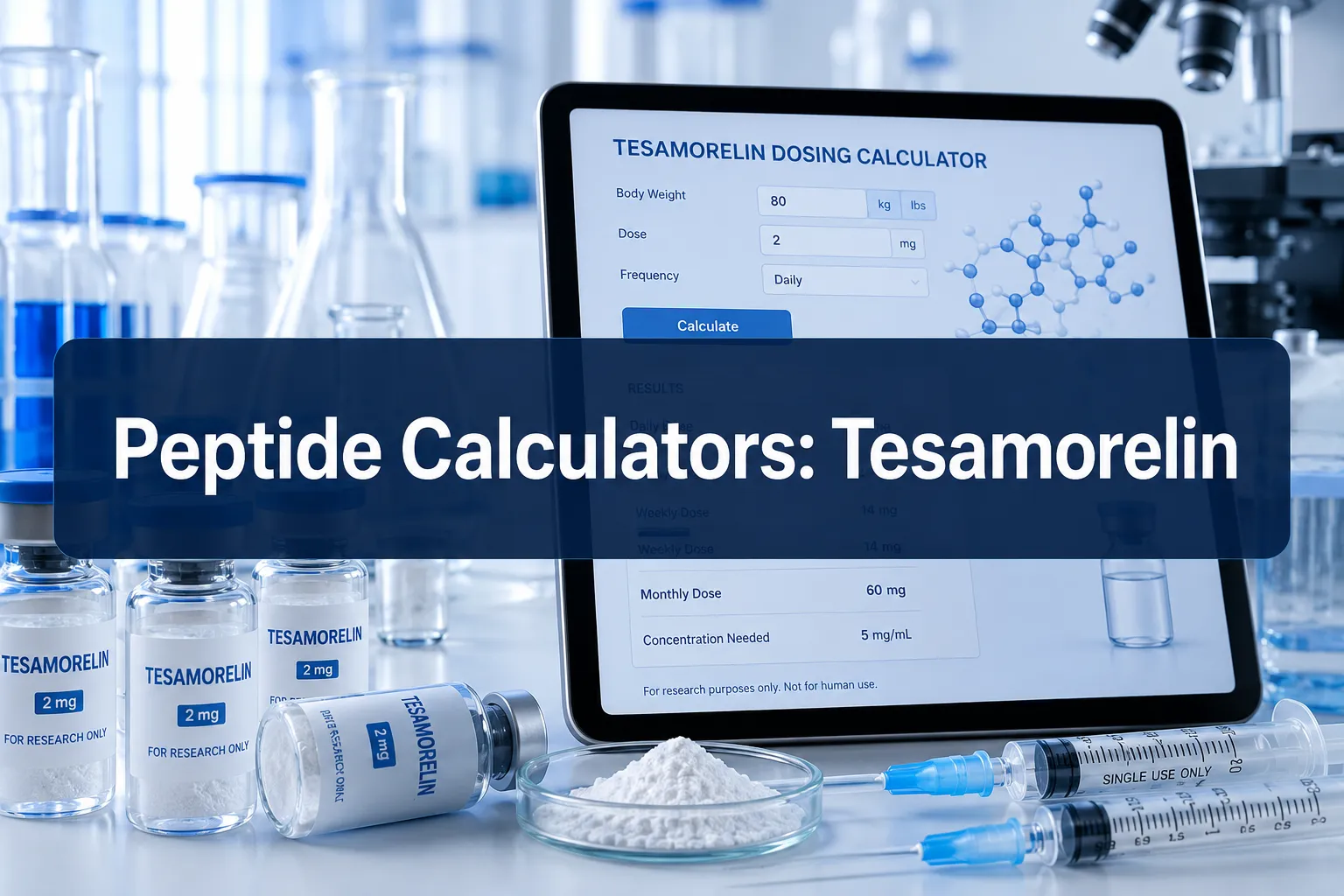
Professional () hero image with (≤42 chars): 'Peptide Calculators: Tesamorelin' in crisp white on a deep navy

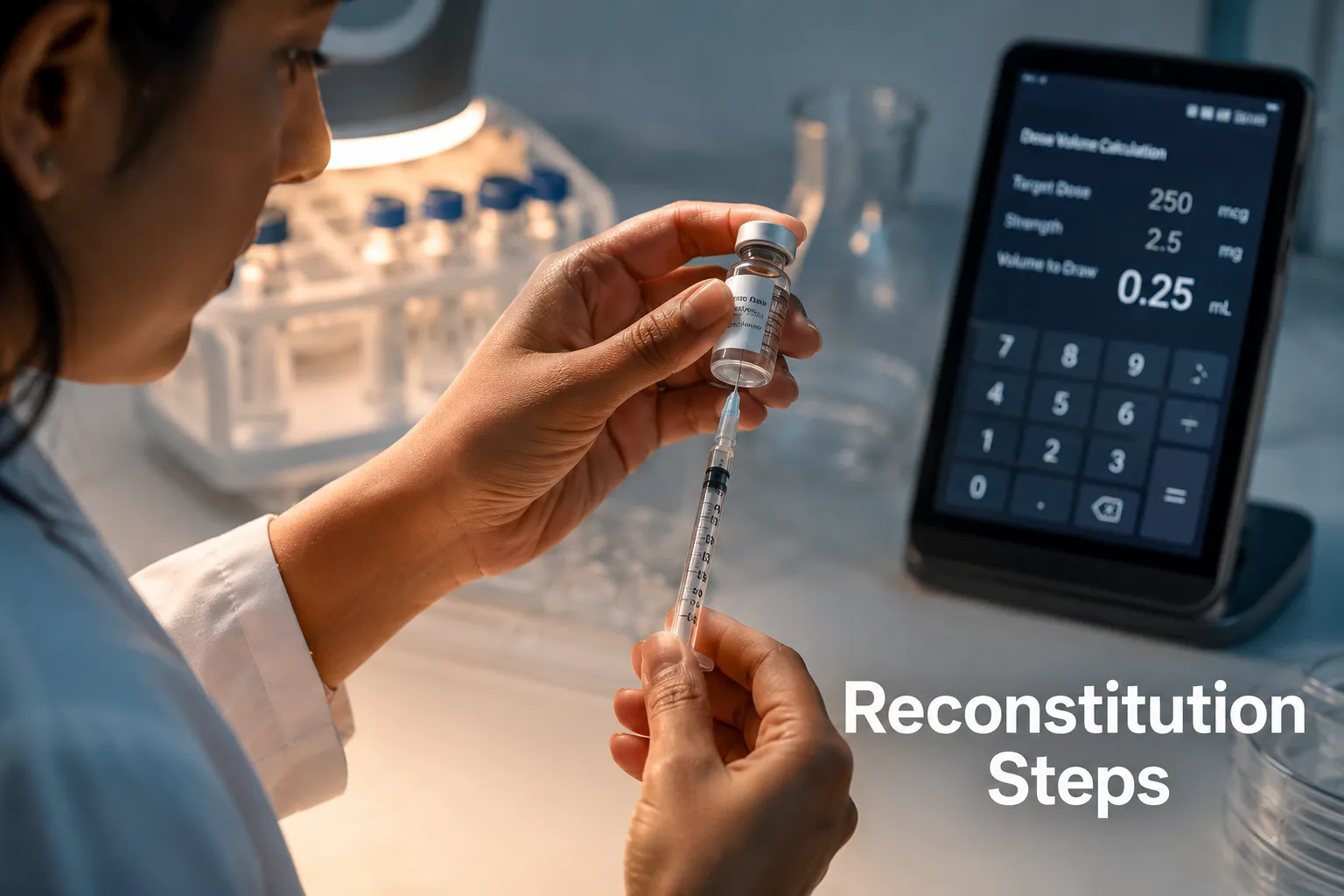
A dosing error as small as 0.1 mL can translate to a 50% deviation from the intended peptide amount, a margin that renders research data unreliable before the experiment even begins. For researchers working with growth hormone secretagogues, precision is not optional. Using peptide calculators for Tesamorelin and Ipamorelin: optimizing reconstitution and dosing accuracy is one of the most practical steps any researcher can take to eliminate preventable errors and produce consistent, reproducible outcomes.

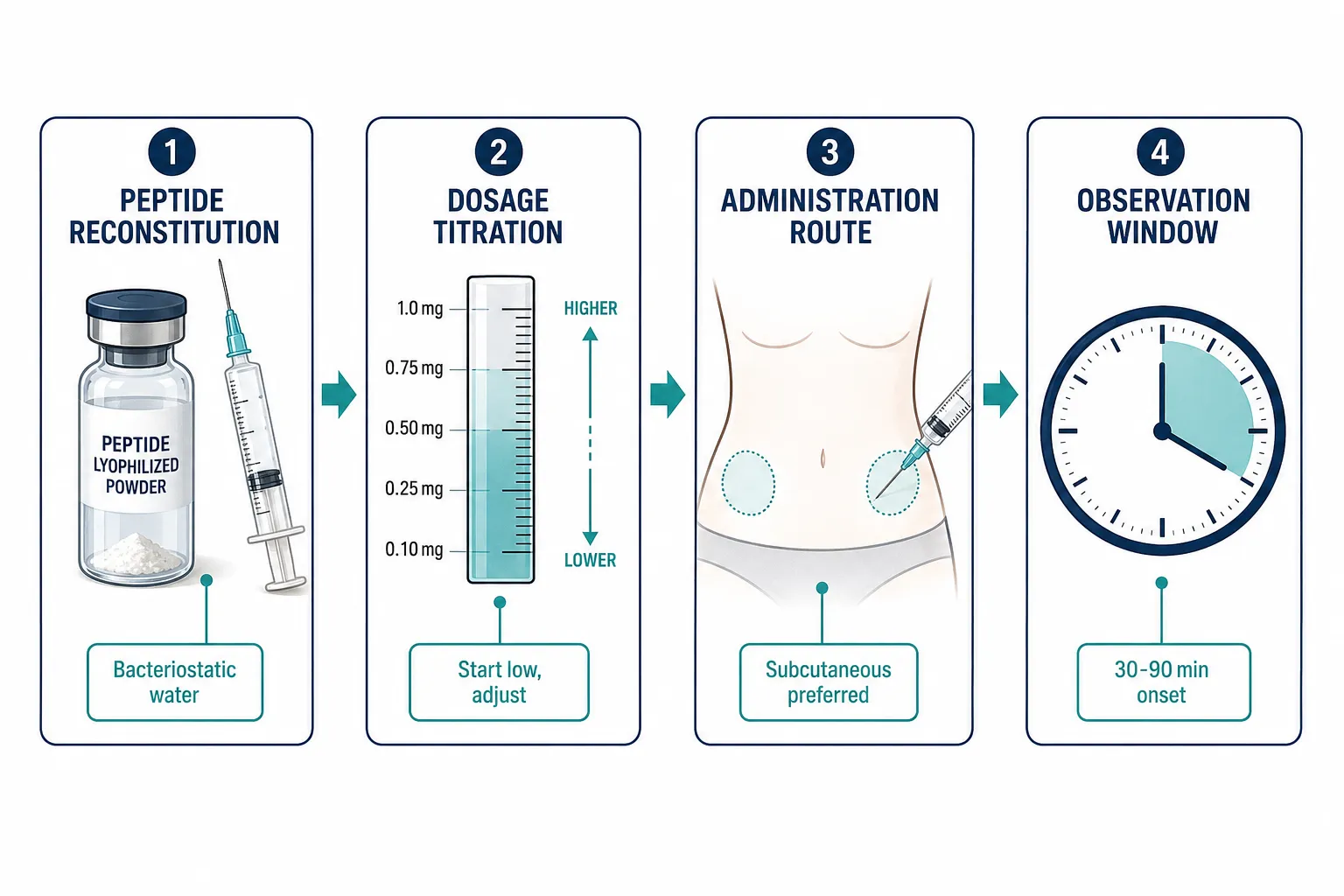
This guide walks through the mechanics of peptide calculators, explains why reconstitution ratios matter, and provides a clear framework for applying these tools to Tesamorelin and Ipamorelin research protocols.

Key Takeaways

  • Peptide calculators convert vial concentration and desired dose into exact injection volumes, removing guesswork from the process.
  • The amount of bacteriostatic water (BAC water) added during reconstitution directly determines the concentration of every subsequent dose.
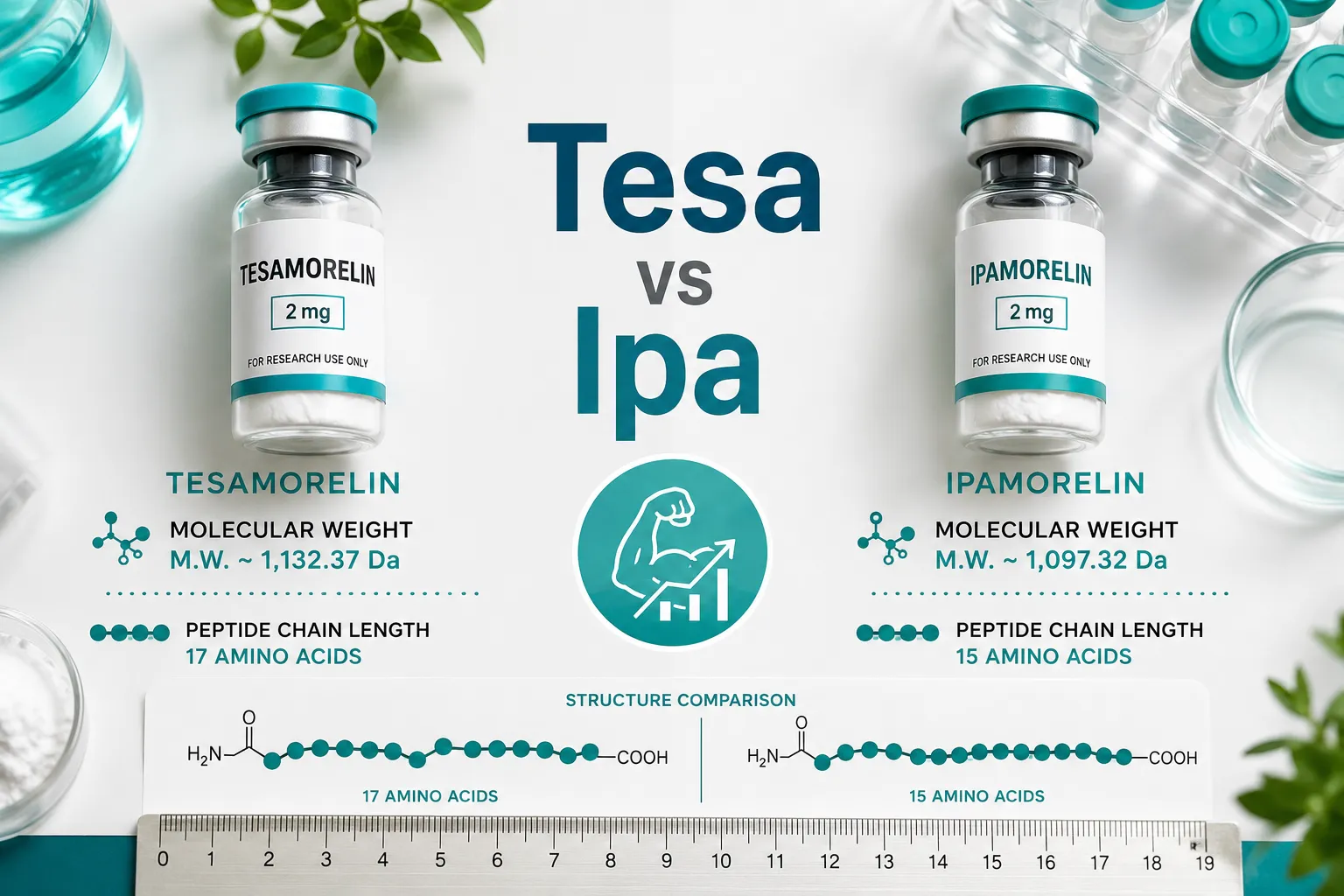
  • Tesamorelin and Ipamorelin have different molecular weights and standard research dosing ranges, requiring separate calculations.
  • Small syringe selection errors compound over time and can significantly skew cumulative dosing across a research cycle.
  • Verifying purity and peptide mass through third-party-tested sources is a prerequisite for any calculation to be meaningful.

Key Takeaways

Understanding the Core Math Behind Peptide Calculators

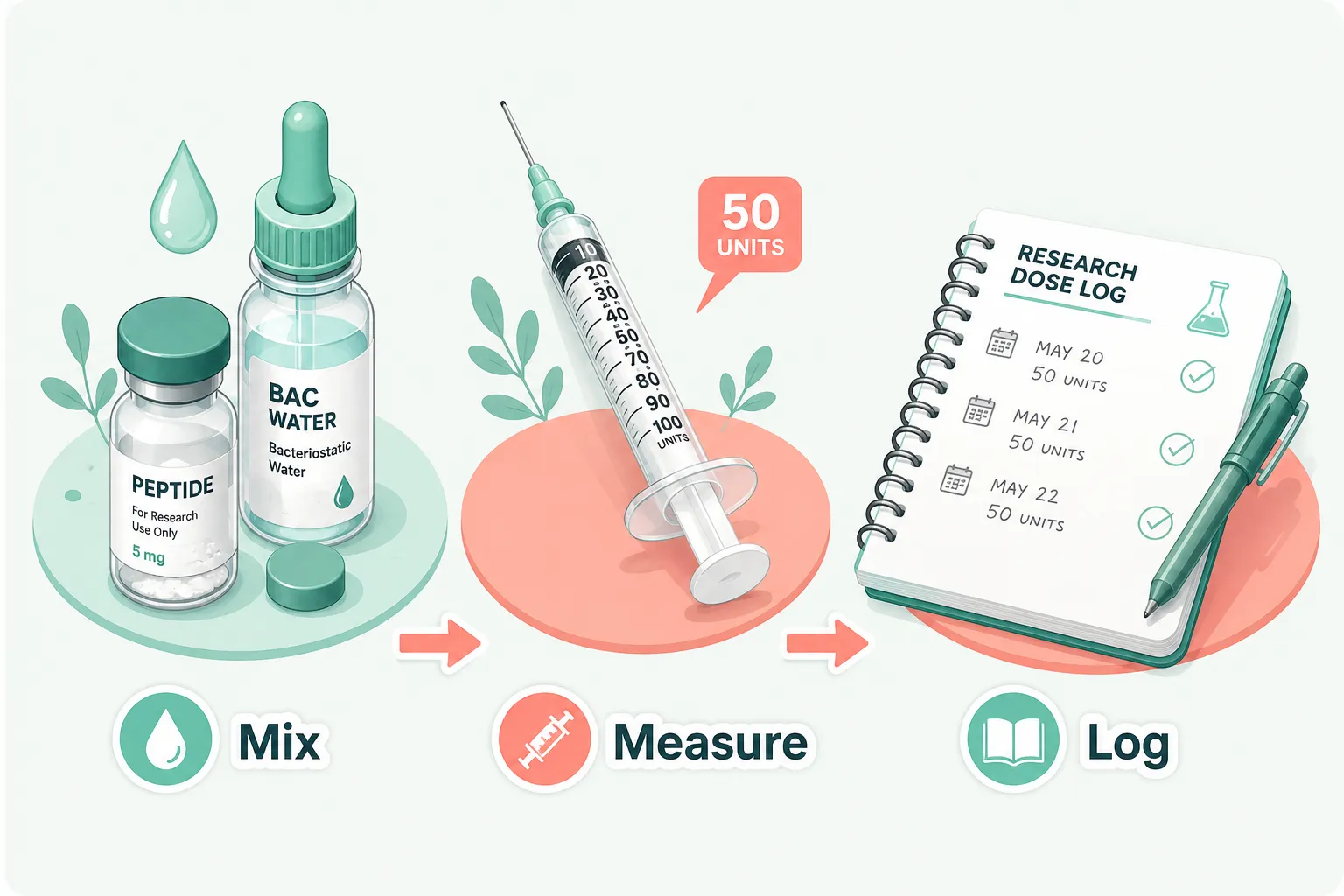
Before any syringe is filled, a researcher must establish one foundational number: concentration, expressed in micrograms per milliliter (mcg/mL). Every downstream calculation depends on it.

The formula is straightforward:

Concentration (mcg/mL) = Total peptide mass (mcg) / Volume of BAC water added (mL)

For example, a 2 mg (2,000 mcg) vial of Tesamorelin reconstituted with 2 mL of BAC water yields a concentration of 1,000 mcg/mL. If the target research dose is 500 mcg, the required injection volume is exactly 0.5 mL.

Why BAC Water Volume Is the Critical Variable

Many researchers focus on dose size but overlook that the volume of BAC water added is the variable that controls everything else. Adding more water lowers concentration and increases injection volume per dose. Adding less water raises concentration and shrinks injection volume, which can make accurate measurement on a standard insulin syringe harder.

A practical rule: aim for a reconstitution volume that places the target dose between 0.1 mL and 0.5 mL on a 1 mL insulin syringe. This range offers the best balance of measurement accuracy and manageable injection volume.

"The most common reconstitution mistake is not calculating the dose wrong, it is adding an unmeasured amount of BAC water and then trying to back-calculate afterward."

Researchers exploring Tesamorelin dosage protocols should establish their BAC water volume before reconstitution, not after.

Applying Peptide Calculators for Tesamorelin and Ipamorelin: Optimizing Reconstitution and Dosing Accuracy

Applying Peptide Calculators for Tesamorelin and Ipamorelin: Optimizing Reconstitution and Dosing Accuracy

Tesamorelin and Ipamorelin are frequently used together in research settings, but they have distinct properties that affect how calculations are performed.

Tesamorelin Calculation Example

Tesamorelin is a synthetic analogue of growth hormone-releasing hormone (GHRH). Common research vial sizes are 2 mg and 5 mg. For a Tesamorelin research peptide vial of 5 mg (5,000 mcg):

Reconstitution Volume Concentration Volume for 1,000 mcg dose
2.5 mL BAC water 2,000 mcg/mL 0.50 mL
5.0 mL BAC water 1,000 mcg/mL 1.00 mL
1.0 mL BAC water 5,000 mcg/mL 0.20 mL

The 2.5 mL option is often preferred because the 0.50 mL draw is easy to read on a standard U-100 insulin syringe.

Researchers comparing growth hormone secretagogue options may also find the Sermorelin vs Tesamorelin breakdown useful for contextualizing dosing differences.

Ipamorelin Calculation Example

Ipamorelin is a selective growth hormone secretagogue receptor agonist. Vials are commonly available at 2 mg and 5 mg. For a 2 mg (2,000 mcg) vial:

Reconstitution Volume Concentration Volume for 200 mcg dose
2.0 mL BAC water 1,000 mcg/mL 0.20 mL
1.0 mL BAC water 2,000 mcg/mL 0.10 mL

Researchers using combination products should note that blend vials, such as those in Tesamorelin/CJC-1295/Ipamorelin 12 mg blends, require the calculator to account for the total mass of all peptides combined, not just one component.

For those comparing secretagogue combinations, the Ipamorelin vs Sermorelin vs Hexarelin comparison provides relevant research context.

Avoiding Common Errors: Practical Tips for Dosing Accuracy

Avoiding Common Errors: Practical Tips for Dosing Accuracy

Even with a calculator, errors occur. The following checklist addresses the most frequent failure points in peptide reconstitution and dosing workflows.

Before Reconstitution

  • Confirm vial mass matches the label (third-party COA verification is essential, see quality peptides sourcing guidance)
  • Use a calibrated, sterile BAC water syringe for adding diluent
  • Record the exact volume of BAC water added immediately

During Dosing

  • Use a U-100 insulin syringe for doses under 1 mL
  • Read the syringe at eye level to avoid parallax error
  • Never estimate, if the dose falls between graduation marks, recalculate the reconstitution

Storage and Stability

  • Reconstituted peptides should be stored at 2-8°C and used within the manufacturer's recommended window
  • Avoid repeated freeze-thaw cycles, which degrade peptide integrity and alter effective concentration

Researchers working with multi-peptide protocols, for instance, those incorporating CJC-1295/Ipamorelin assay planning, should maintain a separate calculation log for each peptide in the stack.

For fat-loss focused research designs, the Tesamorelin dosage for fat loss resource offers protocol-specific dosing context that complements calculator outputs.

Conclusion

Accurate research outcomes with Tesamorelin and Ipamorelin depend on a simple but non-negotiable chain: verified peptide mass, precise BAC water volume, correct concentration calculation, and accurate syringe measurement. Peptide calculators for Tesamorelin and Ipamorelin: optimizing reconstitution and dosing accuracy are not a shortcut, they are the standard operating procedure for any researcher who wants data they can trust.

Actionable next steps:

  1. Before reconstituting any vial, calculate your target concentration and write it down.
  2. Select a BAC water volume that places your dose in the 0.1-0.5 mL range on a U-100 syringe.
  3. Source peptides only from suppliers with third-party purity verification to ensure the labeled mass is accurate.
  4. Keep a dosing log for every session, recording concentration, draw volume, and administration time.
  5. Revisit your calculations if you switch vial sizes, suppliers, or reconstitution volumes mid-protocol.

Precision at the preparation stage is the single highest-leverage action a researcher can take before any experiment begins.

https://www.puretestedpeptides.com/wp-content/uploads/2026/07/peptide-calculators-for-tesa-and-ipamorelin-optimizing-reconstitution-and.webp 1024 1536 https://www.puretestedpeptides.com/wp-content/uploads/2026/01/buy-peptides-online.jpg 2026-07-31 13:03:552026-07-31 13:03:55Peptide Calculators for Tesamorelin and Ipamorelin: Optimizing Reconstitution and Dosing Accuracy

Tag Archive for: peptide research protocols

GLP-3 Retatrutide Dose Escalation: Understanding Tolerability and Side Effects in Research Studies

GLP-3 Retatrutide Dose Escalation: Understanding Tolerability and Side Effects in Research Studies

July 3, 2026/0 Comments/by Pure Tested

Discontinuation rates in Retatrutide research groups reached as high as 16% due to adverse events, compared to 0% in placebo groups. That single data point frames the central challenge researchers face when designing protocols around GLP-3 Retatrutide dose escalation: understanding tolerability and side effects in research studies is not optional; it is foundational to sound experimental design.

Key Takeaways

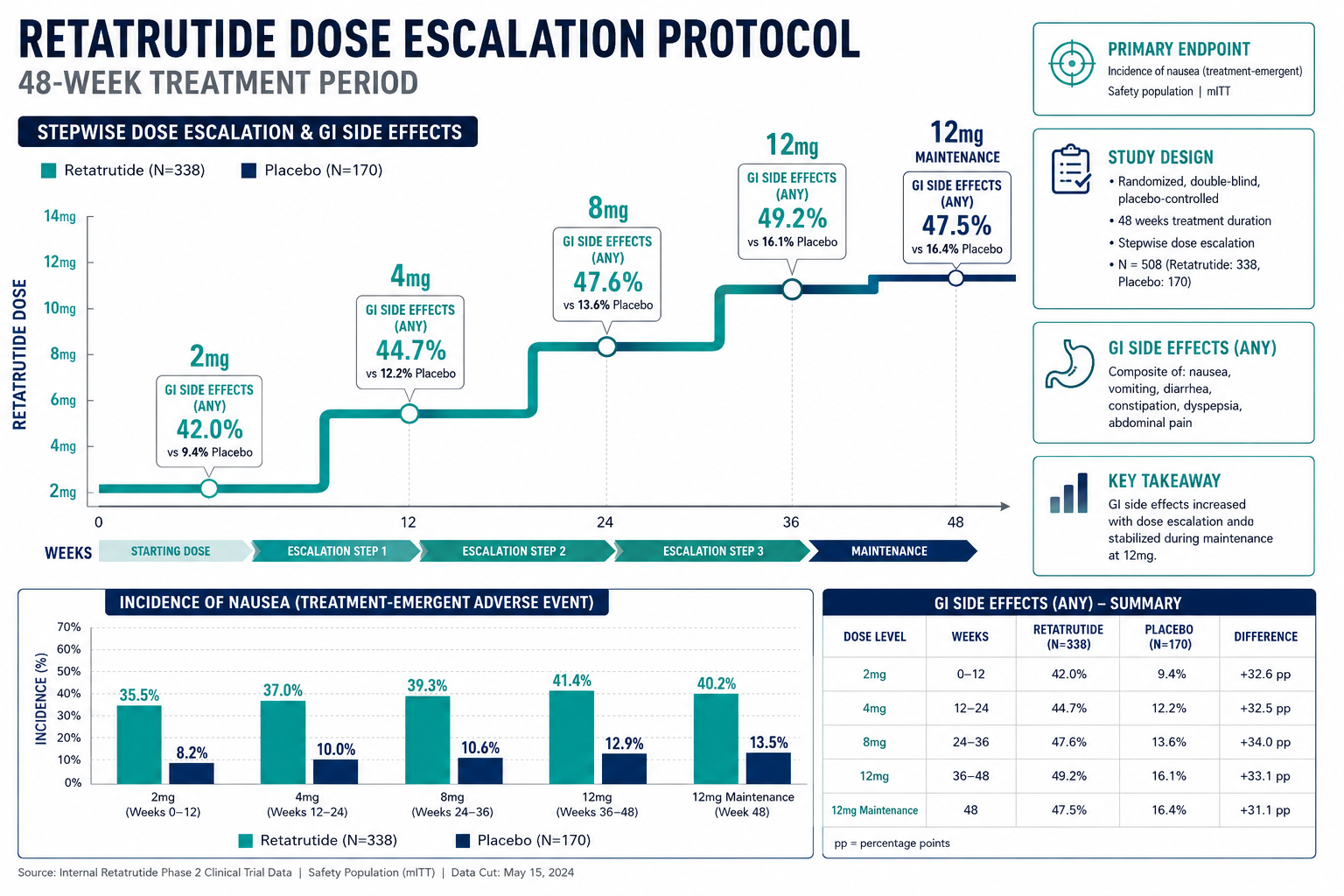
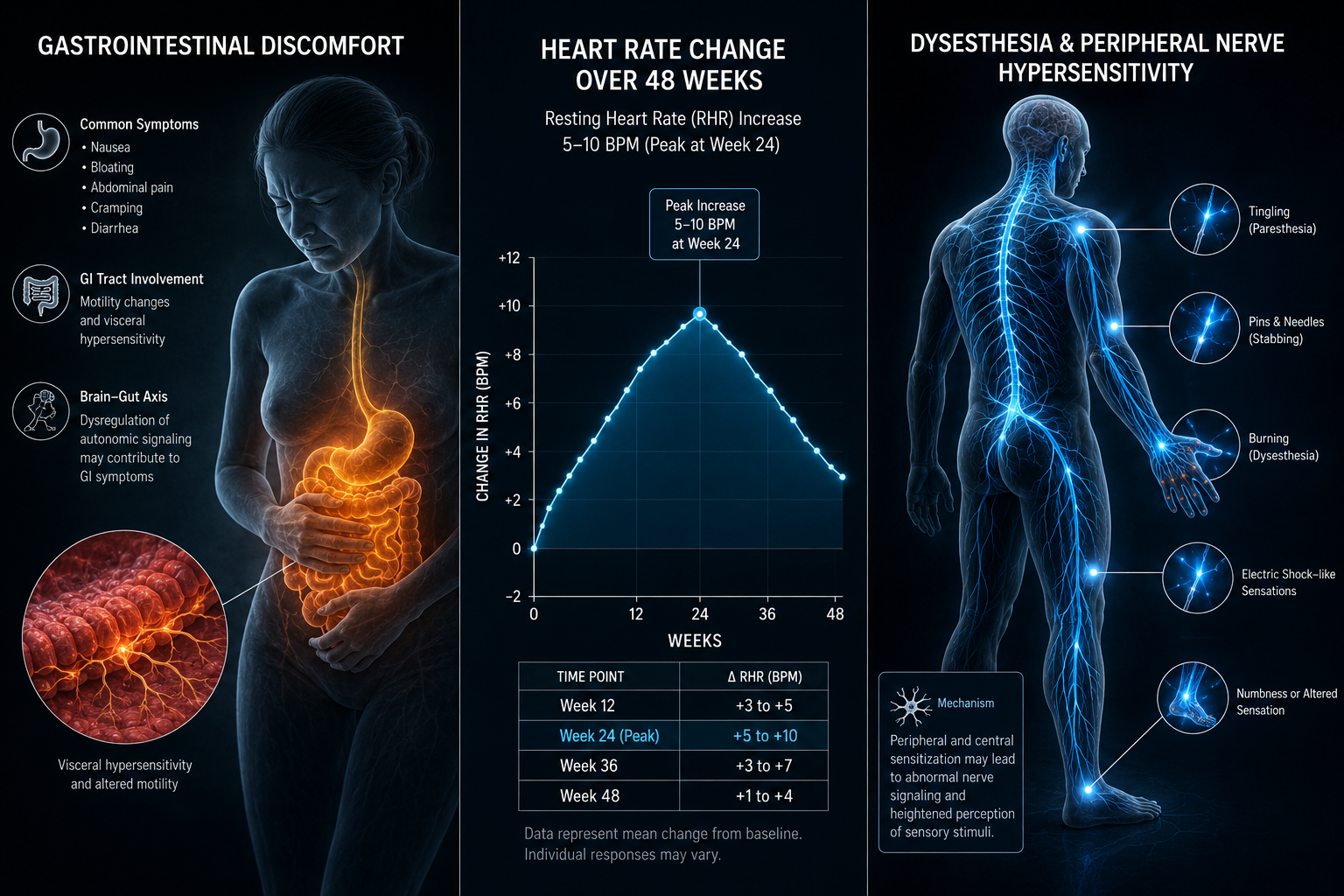
  • Gastrointestinal side effects are the most common adverse events and are strongly dose-dependent, peaking during escalation phases.
  • Gradual four-week dose escalation intervals significantly improve tolerability compared to rapid titration.
  • A unique dysesthesia signal, abnormal tingling or burning, affects up to 20.9% of participants at the highest doses.
  • Modest heart rate increases averaging 5 to 10 BPM have been observed, peaking around week 24.
  • Approximately 25 to 40% of total weight lost may come from lean mass, making resistance training and protein intake critical protocol considerations.

Key Takeaways

Dose Escalation Protocol and the Tolerability Framework

The core principle guiding GLP-3 Retatrutide dose escalation in research settings is gradual titration. Starting at 2 mg and increasing in four-week intervals allows biological systems to adapt before advancing to higher dose tiers. This approach directly reduces the frequency and intensity of adverse events.

Retatrutide is a triple agonist acting on GLP-1, GIP, and glucagon receptors simultaneously. This multi-receptor activity drives its potent metabolic effects, but it also broadens the side effect profile compared to single-target GLP-1 agents. Researchers exploring GLP-1 and incretin research themes will recognize the GI tolerability pattern, but Retatrutide introduces additional signals not seen with earlier-generation compounds.

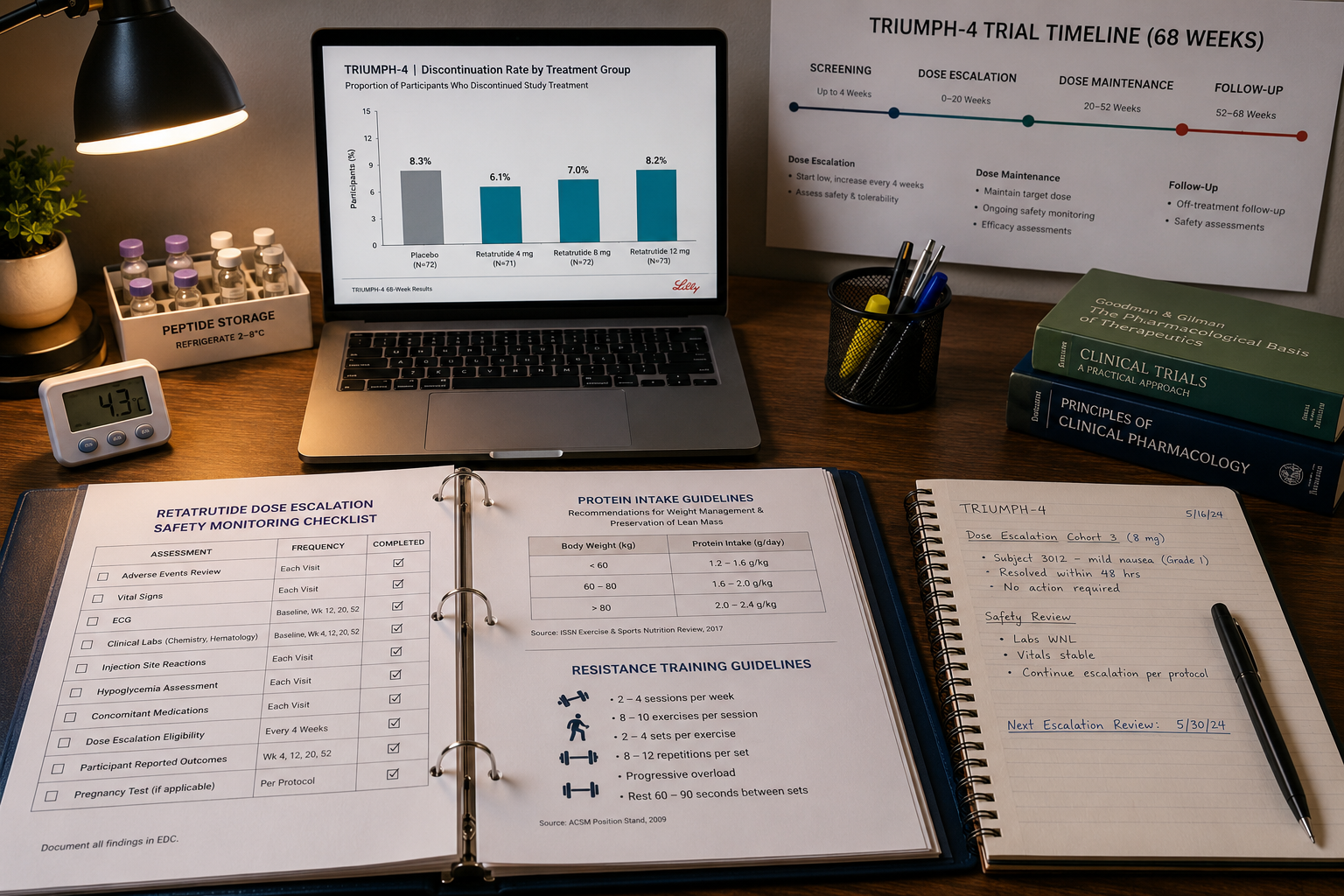
In the 48-week Phase 2 obesity trial, weight loss outcomes were clearly dose-dependent, reinforcing that higher doses carry both greater efficacy and greater tolerability burden. The 68-week TRIUMPH-4 Phase 3 trial further confirmed this relationship, with nausea rates of 38.1% at 9 mg and 43.2% at 12 mg, versus 10.7% in the placebo group.

Practical protocol guidance:

Dose Tier Approximate Duration Primary Tolerability Risk
2 mg Weeks 1-4 Minimal GI symptoms
4 mg Weeks 5-8 Mild nausea onset
8 mg Weeks 9-16 Moderate GI events peak
12 mg Weeks 17+ Highest GI and dysesthesia risk

Researchers sourcing material for metabolic studies can review the GLP-3 triple agonist research planning catalog for further context on compound availability and protocol scaffolding.


Side Effect Profile: What Research Data Reveals

Side Effect Profile: What Research Data Reveals

Understanding the full tolerability and side effects in research studies requires examining each adverse event category individually.

Gastrointestinal Events

Nausea, vomiting, diarrhea, and constipation are the dominant adverse events. These are mild to moderate in most cases and cluster heavily during the escalation window rather than persisting at maintenance doses. Comparing Retatrutide to tirzepatide, GI event rates are measurably higher, a distinction researchers should factor into study design and participant selection criteria.

The Dysesthesia Signal

"Up to 20.9% of participants at the 12 mg dose reported dysesthesia, abnormal tingling or burning sensations, compared to just 0.7% in the placebo group."

This signal is notably absent from standard GLP-1 agonist profiles. The glucagon receptor component of Retatrutide is the suspected driver. Researchers designing longer-duration studies should include dysesthesia monitoring checkpoints, particularly at higher dose tiers. This distinguishes Retatrutide's side effect map from compounds like tesa, which carries its own distinct tolerability considerations.

Cardiovascular Signal: Heart Rate

Resting heart rate increases averaging 5 to 10 BPM have been documented, peaking near week 24 before partially attenuating. While modest, this elevation warrants baseline cardiovascular assessment in research subjects and ongoing monitoring throughout the protocol. Researchers interested in broader metabolic modulation research will find this cardiovascular signal relevant to multi-compound study design.

Lean Mass Considerations

Roughly 25 to 40% of total weight lost during Retatrutide studies is lean mass, a finding consistent across the broader GLP-1 drug class. Research protocols that do not account for this risk may produce confounded body composition data. Resistance exercise protocols and elevated protein intake are the primary mitigation strategies supported by current evidence.

For researchers examining complementary compounds that may address lean mass preservation, ipamorelin muscle and fat research themes offer relevant parallel data.


Designing Safer Research Protocols Around Retatrutide

Designing Safer Research Protocols Around Retatrutide

Translating the GLP-3 Retatrutide dose escalation tolerability and side effects data into actionable protocol design requires structured decision-making.

Key protocol design checkpoints:

  • Baseline screening: Cardiovascular status, GI history, and neurological baselines before initiating escalation.
  • Escalation pacing: Strict four-week minimum intervals between dose increases; do not accelerate based on early tolerance.
  • Adverse event monitoring windows: Heightened observation during weeks 5 through 20, when GI and dysesthesia events peak.
  • Discontinuation thresholds: Pre-define stopping criteria; trial data shows 6 to 16% discontinuation rates, and researchers should plan for this range.
  • Body composition tracking: Dual-energy X-ray absorptiometry (DEXA) or equivalent methods to monitor lean mass changes.

Long-term cardiovascular, renal, and oncological safety data remain incomplete pending results from the ongoing TRIUMPH-5 multi-year trial. This gap is a meaningful limitation for researchers planning extended protocols. Researchers interested in renal-adjacent peptide safety profiles may find value in reviewing SS-31 kidney health research as a comparative reference point.

Those sourcing Retatrutide for research can explore the Reta 10mg product tag for catalog options, while researchers building broader metabolic panels may also reference GLP-1 peptide product options for complementary compounds.


Conclusion

GLP-3 Retatrutide dose escalation: understanding tolerability and side effects in research studies is not a peripheral concern, it is the operational core of any well-designed Retatrutide protocol. The data from Phase 2 and TRIUMPH-4 trials provide a clear roadmap: GI events dominate the escalation window, dysesthesia is a unique and dose-dependent signal, heart rate elevations require cardiovascular monitoring, and lean mass loss demands proactive mitigation strategies.

Actionable next steps for researchers in 2026:

  1. Build four-week escalation intervals into every protocol from the outset.
  2. Include dysesthesia and cardiovascular monitoring checkpoints at weeks 12, 24, and 48.
  3. Define discontinuation criteria before the study begins, accounting for the 6 to 16% adverse-event dropout range.
  4. Pair Retatrutide protocols with body composition tracking to capture lean mass data.
  5. Monitor TRIUMPH-5 trial publications for emerging long-term safety data before extending protocol durations.

Researchers who treat the tolerability profile as a design input, not an afterthought, will produce more reliable, reproducible, and ethically sound data from their Retatrutide studies.

https://www.puretestedpeptides.com/wp-content/uploads/2026/07/GLP-3-Retatrutide-Dose-Escalation-Understanding-Tolerability-and-Side-Effects-in-Research-Studies.png 1024 1536 Pure Tested https://www.puretestedpeptides.com/wp-content/uploads/2026/01/buy-peptides-online.jpg Pure Tested2026-07-03 13:04:132026-07-20 15:01:12GLP-3 Retatrutide Dose Escalation: Understanding Tolerability and Side Effects in Research Studies
BPC-157 and TB-500 Stack: Synergistic Mechanisms for Enhanced Tissue Repair Research

BPC-157 and TB-500 Stack: Synergistic Mechanisms for Enhanced Tissue Repair Research

June 20, 2026/0 Comments/by Pure Tested

}

Professional () hero image with : 'BPC-157 & TB-500 Stack: Synergistic Tissue Repair Research' in extra large white with

Two peptides operating through entirely different biological pathways — yet when combined, preclinical data suggests their effects on tissue repair may be greater than the sum of their parts. The BPC-157 and TB-500 stack: synergistic mechanisms for enhanced tissue repair research has become one of the most studied peptide combinations in regenerative biology, drawing attention from researchers examining musculoskeletal recovery, angiogenesis, and cellular remodeling.

Key Takeaways

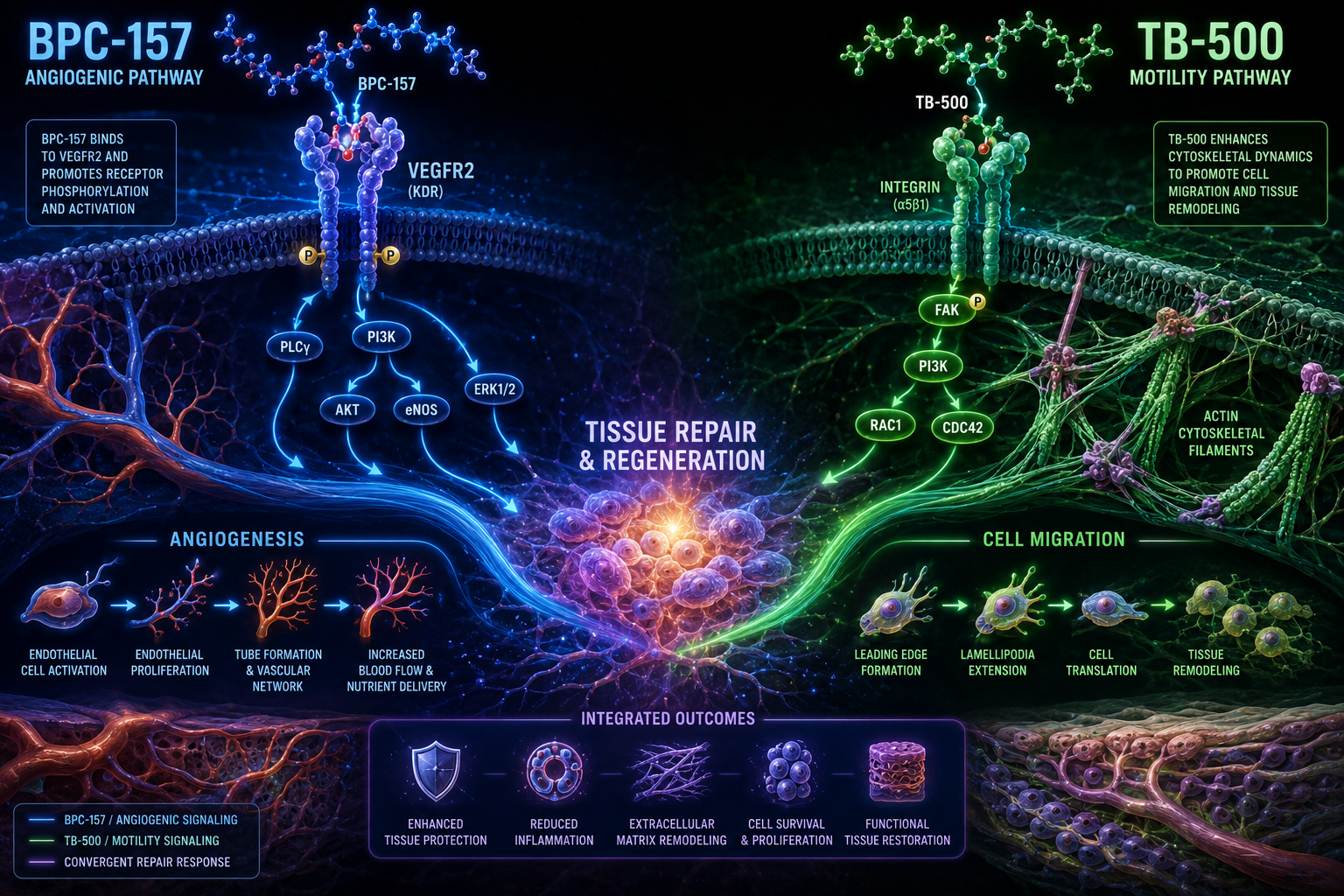
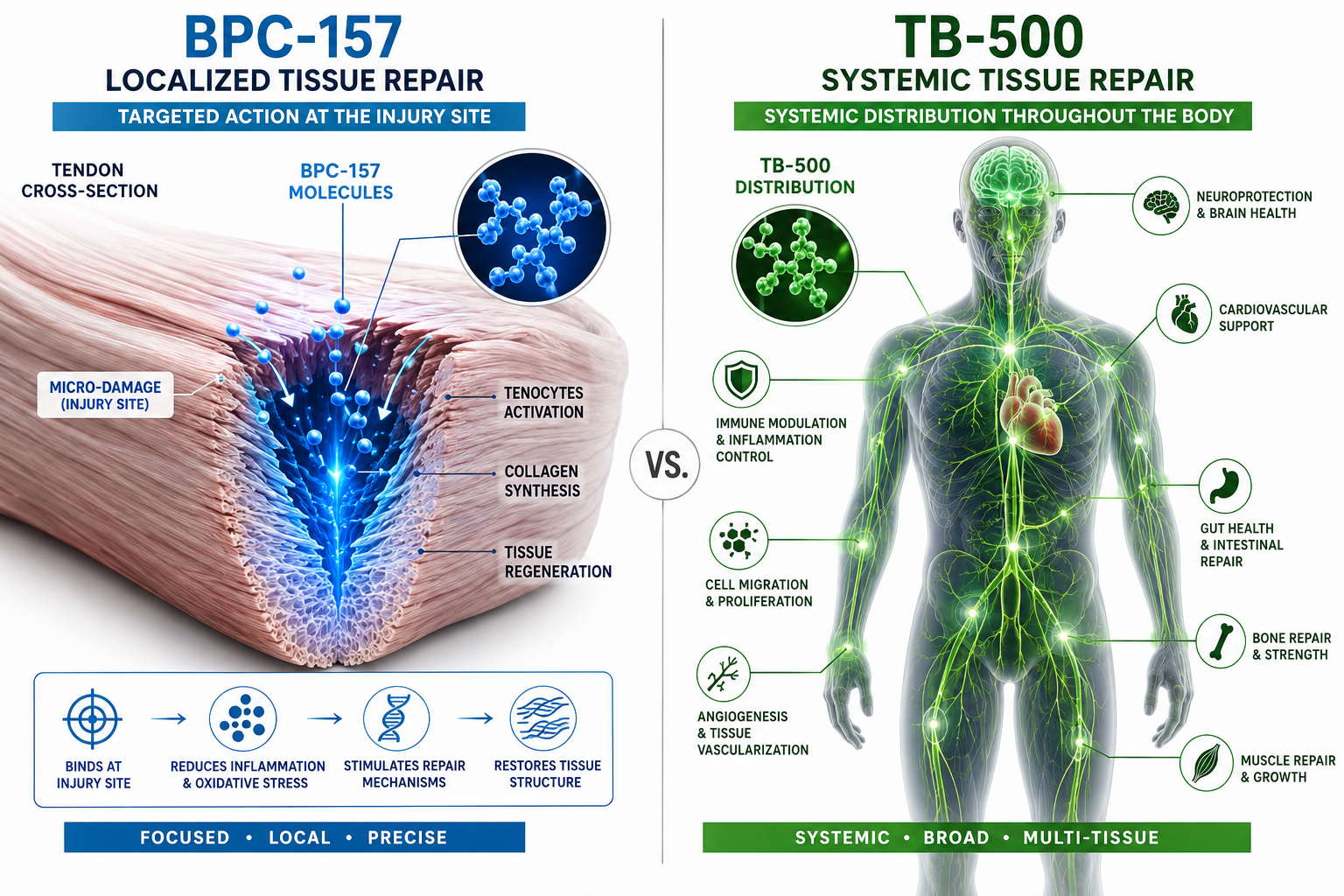
  • BPC-157 drives localized tissue repair through angiogenesis and nitric oxide signaling, while TB-500 promotes systemic cell migration via actin regulation.
  • Preclinical models show the combined stack improves tensile strength, collagen composition, and recovery speed in tendon and ligament injuries.
  • No peer-reviewed human clinical trials currently validate the combination's safety or efficacy.
  • Both peptides are classified as FDA Interim Category 2 substances and are prohibited by WADA under the S0 category.
  • Researchers should source only verified, lab-tested compounds and operate within applicable regulatory frameworks.

Key Takeaways

How BPC-157 and TB-500 Work Together

Understanding the BPC-157 and TB-500 stack: synergistic mechanisms for enhanced tissue repair research begins with each peptide's distinct mechanism.

BPC-157 (Body Protection Compound-157) is a 15-amino-acid peptide derived from a gastric protein. Its primary actions include:

  • Activating VEGFR2 to stimulate new blood vessel formation (angiogenesis)
  • Upregulating the nitric oxide system to improve blood flow to damaged tissue
  • Modulating growth factor signaling to accelerate fibroblast activity

TB-500 (Thymosin Beta-4 fragment) works through a completely separate route. It binds to actin, a key protein in the cytoskeleton, promoting cell migration, differentiation, and tissue remodeling. Its systemic reach makes it particularly effective for whole-body recovery processes.

"BPC-157 builds the vascular infrastructure; TB-500 mobilizes the cellular workforce."

Together, these mechanisms are complementary rather than redundant. BPC-157 creates the blood supply needed to deliver nutrients and immune cells, while TB-500 drives the migration and organization of repair cells into the damaged area. Researchers studying recovery and tissue biology have noted that this dual-pathway approach addresses two critical bottlenecks in natural healing simultaneously.

For a deeper foundation on BPC-157 alone, the BPC-157 core peptides documentation and first research guide provides essential background before exploring stacked protocols.

Preclinical Evidence Supporting the Combined Stack

Preclinical Evidence Supporting the Combined Stack

Animal studies provide the most detailed evidence for the BPC-157 and TB-500 stack: synergistic mechanisms for enhanced tissue repair research. Preclinical models involving Achilles tendon injuries, ligament damage, and cardiac ischemia-reperfusion have demonstrated measurable improvements across several markers:

Outcome Marker Observed Effect in Preclinical Models
Tensile strength Increased in repaired tendons
Collagen composition Improved fiber organization
Recovery timeline Reduced compared to single-peptide groups
Cardiac tissue repair Reduced ischemia-reperfusion damage

BPC-157 showed particular strength in localized tissue applications — tendons, joints, and gut lining — while TB-500 demonstrated advantages in systemic flexibility and broader tissue remodeling. Their combination appears to address both the local and systemic dimensions of complex injuries.

Researchers interested in cytoskeletal remodeling should also review TB-500 cytoskeletal remodeling research themes for mechanistic detail, and those sourcing TB-500 for controlled experiments can reference TB-500 buy: controlled experimental models and QC workflow.

It is worth noting that all current evidence is preclinical. No peer-reviewed human clinical trials have tested this combination, and existing claims rely on extrapolations from individual peptide studies.

Research Protocols, Regulatory Status, and Risk Considerations

Research Protocols, Regulatory Status, and Risk Considerations

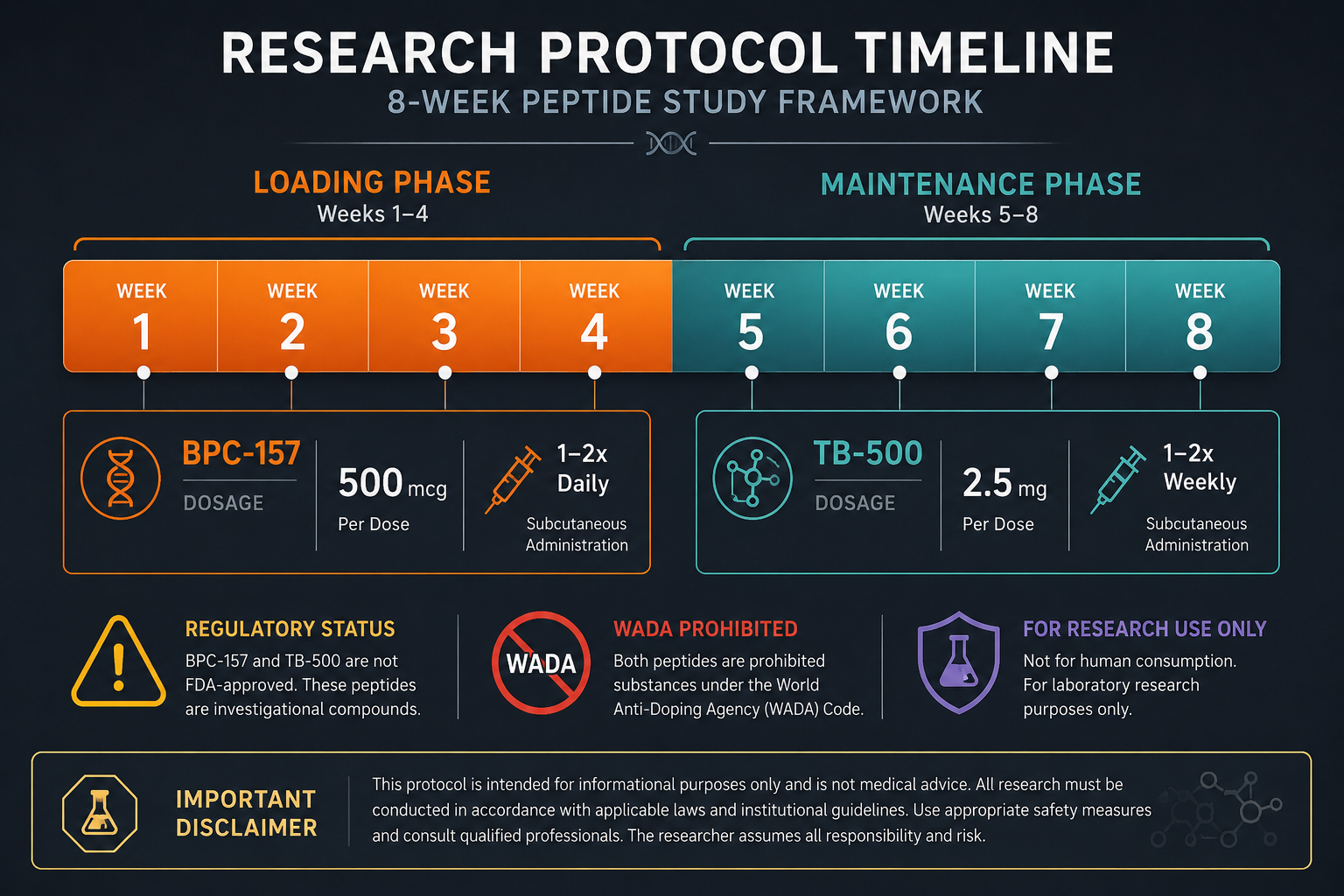
A commonly referenced preclinical research protocol involves an 8-week cycle:

  • BPC-157: 500 mcg administered twice daily, near the target tissue site
  • TB-500 Loading Phase (Weeks 1-4): 2.5 mg twice weekly
  • TB-500 Maintenance Phase (Weeks 5-8): 1.5 mg once weekly

Regulatory context is critical. As of 2026, both BPC-157 and TB-500 are classified as FDA Interim Category 2 substances — meaning they are not approved for human therapeutic use. The World Anti-Doping Agency (WADA) also prohibits both compounds under its S0 category for non-approved substances, making them ineligible for use in competitive sport.

Medical professionals caution that while preclinical data is promising, the absence of robust human trials means safety and efficacy remain unverified. Theoretical concerns include the potential for angiogenesis-promoting peptides to interact with undetected tumor microenvironments, though direct evidence for this risk remains limited.

Researchers exploring complementary peptide mechanisms may also find value in reviewing GHK-Cu longevity research themes and SS-31 mitochondrial research themes, both of which intersect with tissue repair and cellular protection pathways.

For sourcing integrity, only compounds with verified purity documentation should be used. The lab-tested peptides catalog offers a reference point for quality-controlled research compounds.

Conclusion

The BPC-157 and TB-500 stack: synergistic mechanisms for enhanced tissue repair research represents a compelling area of peptide science, with complementary mechanisms that address both vascular and cellular dimensions of tissue repair. Preclinical evidence supports the hypothesis that their combined action outperforms either peptide alone in specific injury models.

Actionable next steps for researchers:

  1. Review the existing preclinical literature on each peptide individually before designing combination protocols.
  2. Consult regulatory guidelines in your jurisdiction — both peptides carry significant legal and compliance considerations.
  3. Source only from suppliers providing third-party purity certificates and documented QC workflows.
  4. Design controlled experimental models with appropriate endpoints to generate reproducible data.
  5. Monitor ongoing clinical research, as human trials may emerge within the next several years.

The science is promising. Rigorous methodology and regulatory awareness are what will move this research forward responsibly.

https://www.puretestedpeptides.com/wp-content/uploads/2026/06/BPC-157-and-TB-500-Stack-Synergistic-Mechanisms-for-Enhanced-Tissue-Repair-Research.png 1024 1536 Pure Tested https://www.puretestedpeptides.com/wp-content/uploads/2026/01/buy-peptides-online.jpg Pure Tested2026-06-20 13:03:542026-07-20 15:02:39BPC-157 and TB-500 Stack: Synergistic Mechanisms for Enhanced Tissue Repair Research
×

Helpful Links

  • My account
  • Cart
  • Checkout
  • Refund and Returns Policy
  • Privacy Policy
  • SMS Privacy Policy
  • Login
  • My Account
  • Logout

USA Made Lab Tested Peptides

All products are sold for research, laboratory, or analytical purposes only, and are not for human consumption


Pure Tested Peptides is a chemical supplier. Pure Tested Peptides is not a compounding / chemical compounding facility as defined under 503A of the Federal Food, Drug, and Cosmetic act. Pure Tested Peptides is not an outsourcing facility as defined under 503B of the Federal Food, Drug, and Cosmetic act.

The statements made within this website have not been evaluated by the US Food and Drug Administration. The products we offer are not intended to diagnose, treat, cure or prevent any disease.

Human/Animal Consumption Prohibited. Laboratory/In-Vitro Experimental Use Only

Scroll to top Scroll to top Scroll to top