Call or Text 727-513-9780
  • Shopping Cart Shopping Cart
    0Shopping Cart
Pure Tested Peptides | America's most trusted Peptides for sale online
  • Peptides for sale
    • Oral Peptides for sale
      • Peptide Capsules for sale
      • BPC 157 Capsules 1000mcg
      • SLU-PP-332 Capsules | 1000 mcg
      • 5-Amino-1MQ 50mg Capsules
      • Tesofensine 500mcg
    • All Peptides for sale
    • Peptide Sprays
      • BPC 157 Nasal Spray Kit
      • BPC-157 TB500 Nasal Spray Kit
      • Semax Nasal Spray 10mg
      • Selank – Nasal Spray Kit – 10mg
      • Epithalon 50MG Nasal Spray Kit
      • Ipamorelin 10mg Nasal Spray
      • Klow Nasal Spray (BPC-157 + TB-500 + GHK-Cu + KPV) | 80mg
      • Hulk Nasal Spray Tesa / Ipa Blend 6/3 MG
      • Klow Nasal Spray
      • NAD + 500 mg Nasal Spray
      • PT-141 Nasal Spray Kit
    • GHRH Peptides
      • Ipa Peptides
      • CJC-1295 Peptides
        • CJC-1295 with DAC 5 mg
        • CJC-1295 without DAC 5 mg
        • CJC-1295 Ipa 10mg
      • Tesa Peptides
        • Tesa Peptide
        • Tesa 20 mg
    • GHK-Cu Peptides
      • All GHK-Cu Peptides
      • GHK-Cu 100mg
      • KLOW Peptide Blend – Buy KLOW blend online
    • BPC Peptides
      • All BPC Peptides
      • BPC-157
      • BPC-157 TB-500
      • BPC 157 capsules 1000mcg
    • SLU-PP-332 Peptides
      • All SLU-PP-332 Peptides
      • SLU-PP-332 5mg
    • GLP3 Peptides
      • GLP3-R
      • GLP3-R CAG 10mg
      • GLP3-R 20mg
    • PT-141 Peptides
      • PT-141 Peptides for sale
      • PT-141 10mg
      • PT-141 Nasal Spray
    • CAG Peptides
      • Lipo-C Peptide Blend
      • CAG 5mg
      • CAG 10mg
    • MOTS-C Peptides
      • MOTS-C Peptides for sale
      • MOTS-c peptide
      • MOTS-c 10mg *6 pack*
    • 5 Amino 1MQ Peptides
      • 5 Amino 1MQ Peptides for sale
      • 5-Amino-1MQ 50mg Capsules
      • 5-Amino-1MQ 5mg
    • Epithalon Peptides
      • Epithalon Peptides for sale
      • Epithalon 10mg
      • Epithalon 50mg
  • Shop
    • GLPs
      • 5-Amino-1MQ 50mg Capsules
      • 5-Amino-1MQ 5mg
      • GLP3-Reta
      • L-Carnitine 500mg/ml
      • Tesofensine 500mcg
      • SLU-PP-332 5mg
      • MOTS-c 10mg *6 pack*
    • Epithalon & BPC Peptides
      • Epithalon 10mg
      • Epithalon 50mg
      • BPC-157
      • BPC 157 capsules 1000mcg
      • BPC-157 TB-500
      • BPC-157 TB500 Nasal Spray Kit
      • BPC 157 Nasal Spray Kit
    • BPC TB-500 & NAD+ Peptides
      • NAD+ 500 mg
      • KLOW Peptide Blend – Buy KLOW blend online
      • GLOW Peptide Blend
      • TB 500 5mg
      • BPC 157 capsules 1000mcg – Supplement
      • BPC 157 Nasal Spray Kit
      • BPC-157
      • BPC-157 TB500 Nasal Spray Kit
      • BPC-157 TB-500
      • BPC 157 capsules 1000mcg
    • LL-37 Peptide
      • LL-37 10 mg
    • MOTS-C & Selank
      • MOTS-c peptide
      • Selank 10mg
    • GHK Peptides
      • GHK-Cu 100mg
      • GLOW Peptide Blend
      • KLOW Peptide Blend – Buy KLOW blend online
  • COAs
  • Wholesale
    • Wholesale Peptides for sale
  • PTP FAQ
  • Affiliates
    • Selank Peptide: Advanced Pharmacological Mechanisms Underlying Its Anxiolytic and Nootropic Effects in Research
      • 5-Amino-1MQ Peptide: Detailed Mechanisms of NNMT Inhibition and Its Impact on Cellular Metabolism Research
        • MOTS-C Peptide: Unraveling Its Role in Mitochondrial Dynamics and Energy Metabolism Research
          • Epithalon Peptide and Telomerase Regulation: Investigating Its Impact on Cellular Senescence and Lifespan Research Models
            • GLP2-T vs GLP2 Tirz Peptide: Understanding the Naming, Mechanistic Nuances, and Research Implications for Gut Health
      • Peptides and Polypeptides in Modern Pharmacology: What Research on Metoprolol, Prednisone, and Amlodipine Reveals
        • Polypeptide Peptides vs NSAIDs: What Naproxen and Diclofenac Teach Tissue-Repair Researchers About BPC‑157 and TB‑500
          • Peptides and Polypeptides in Endocrine Pharmacology: How GLP-1, GLP-2, and GLP-3 Retatrutide Differ From Classic Drugs Like Prednisone and Amlodipine
          • 5‑Amino‑1MQ Peptide and NNMT Inhibition: How It Compares With Statins Like Atorvastatin in Adipose and Lipid Metabolism Research
      • Enclomiphene, Estrogen Receptor Signaling, and Luteinizing Phase Biology: What Hormone Researchers Should Measure
        • Mesenchymal Stem Cells, BPC‑157, and GHK‑Cu: How Tissue Repair Peptides Compare With Classic NSAIDs Like Naproxen in Injury Models
          • Peptide Calculator Use Cases Beyond Growth Hormone: Working Through GLP‑3 Retatrutide, MOTS‑c, and BPC‑157 Research Dosing
        • Polypeptide Peptides in Endocrine and Metabolic Pharmacology: Lessons From Amlodipine, Prednisone, and Metoprolol
        • Peptides Calculator for Advanced Blends: Worked Examples for Tesamorelin, CJC‑1295, and Ipamorelin Stacks
          • Peptides and Polypeptides in Human Physiology: How Molecular Size Shapes Research Applications
            • Selank Peptide: Advanced Pharmacological Mechanisms Underlying Its Anxiolytic and Nootropic Effects in Research
          • 5-Amino-1MQ Peptide: Detailed Mechanisms of NNMT Inhibition and Its Impact on Cellular Metabolism Research
            • MOTS-C Peptide: Unraveling Its Role in Mitochondrial Dynamics and Energy Metabolism Research
              • Epithalon Peptide and Telomerase Regulation: Investigating Its Impact on Cellular Senescence and Lifespan Research Models
                • GLP2-T vs GLP2 Tirz Peptide: Understanding the Naming, Mechanistic Nuances, and Research Implications for Gut Health
                  • Peptides and Polypeptides in Endocrine Pharmacology: How GLP-1, GLP-2, and GLP-3 Retatrutide Differ From Classic Drugs Like Prednisone and Amlodipine
                    • Polypeptide Peptides vs NSAIDs: What Naproxen and Diclofenac Teach Tissue-Repair Researchers About BPC‑157 and TB‑500
                      • Peptides and Polypeptides in Modern Pharmacology: What Research on Metoprolol, Prednisone, and Amlodipine Reveals
                        • 5‑Amino‑1MQ Peptide and NNMT Inhibition: How It Compares With Statins Like Atorvastatin in Adipose and Lipid Metabolism Research
                        • Enclomiphene, Estrogen Receptor Signaling, and Luteinizing Phase Biology: What Hormone Researchers Should Measure
                        • Mesenchymal Stem Cells, BPC‑157, and GHK‑Cu: How Tissue Repair Peptides Compare With Classic NSAIDs Like Naproxen in Injury Models
                        • Peptide Calculator Use Cases Beyond Growth Hormone: Working Through GLP‑3 Retatrutide, MOTS‑c, and BPC‑157 Research Dosing
                        • Polypeptide Peptides in Endocrine and Metabolic Pharmacology: Lessons From Amlodipine, Prednisone, and Metoprolol
                        • Peptides Calculator for Advanced Blends: Worked Examples for Tesamorelin, CJC‑1295, and Ipamorelin Stacks
                        • Peptides and Polypeptides in Human Physiology: How Molecular Size Shapes Research Applications
                        • Selank Peptide: Advanced Pharmacological Mechanisms Underlying Its Anxiolytic and Nootropic Effects in Research
                        • MOTS-C Peptide: Unraveling Its Role in Mitochondrial Dynamics and Energy Metabolism Research
                        • Peptides and Polypeptides in Modern Pharmacology: What Research on Metoprolol, Prednisone, and Amlodipine Reveals
                        • Peptides and Polypeptides in Endocrine Pharmacology: How GLP-1, GLP-2, and GLP-3 Retatrutide Differ From Classic Drugs Like Prednisone and Amlodipine
                        • 5-Amino-1MQ Peptide: Detailed Mechanisms of NNMT Inhibition and Its Impact on Cellular Metabolism Research
                        • Mesenchymal Stem Cells, BPC‑157, and GHK‑Cu: How Tissue Repair Peptides Compare With Classic NSAIDs Like Naproxen in Injury Models
                        • Peptide Calculator Use Cases Beyond Growth Hormone: Working Through GLP‑3 Retatrutide, MOTS‑c, and BPC‑157 Research Dosing
                        • GLP2-T vs GLP2 Tirz Peptide: Understanding the Naming, Mechanistic Nuances, and Research Implications for Gut Health
                        • Polypeptide Peptides in Endocrine and Metabolic Pharmacology: Lessons From Amlodipine, Prednisone, and Metoprolol
                        • Polypeptide Peptides vs NSAIDs: What Naproxen and Diclofenac Teach Tissue-Repair Researchers About BPC‑157 and TB‑500
                        • Peptides and Polypeptides in Human Physiology: How Molecular Size Shapes Research Applications
                        • Peptides Calculator for Advanced Blends: Worked Examples for Tesamorelin, CJC‑1295, and Ipamorelin Stacks
                        • 5‑Amino‑1MQ Peptide and NNMT Inhibition: How It Compares With Statins Like Atorvastatin in Adipose and Lipid Metabolism Research
                        • Enclomiphene, Estrogen Receptor Signaling, and Luteinizing Phase Biology: What Hormone Researchers Should Measure
                        • Epithalon Peptide and Telomerase Regulation: Investigating Its Impact on Cellular Senescence and Lifespan Research Models
                        • Best research protocol Klow blend
                        • best time to take BPC-157
                        • best time to take DSIP (Delta Sleep Inducing Peptide)
                        • best time to take CJC-1295
                        • best time to take AOD-9604
                        • best time to take Follistatin 344
                        • best time to take Ipamorelin
                        • best time to take MK-677 (Ibutamoren)
                        • best time to take Ligandrol (LGD-4033) — research compound
                        • best time to take Ostarine (MK-2866) — research compound
                        • best time to take GHK-CU
                        • best time to take TB-500
                        • best time to take MOTS-c
                        • best time to take Semax
                        • best time to take RAD-140 (Testolone) — research compound
                        • best time to take Thymosin Alpha-1
                        • best time to take PEG-MGF
                        • Biolife Plasma, Octapharma Plasma, and Research Peptides: How Plasma Donation Labs Differ From Peptide Suppliers
                        • best time to take YK-11 — research compound
                        • best time to take PT-141 (Bremelanotide)
                        • Best research protocol Klow blend
                        • 5-Amino-1MQ and MOTS-C Synergy: Metabolic Signaling, Mitochondria, and Research Design
                        • BPC-157 and TB-500: Investigating Their Combined Effects on Angiogenesis and Cellular Migration in Tissue Repair Models
                        • BPC-157 Peptide: Gut Barrier Function, Inflammation, and Tissue-Recovery Research
                        • 5‑Amino‑1MQ and MOTS‑c Synergy in Metabolic Research: Designing NNMT and Mitochondrial Biogenesis Stacks
                        • CJC-1295 with DAC vs. Without DAC: Half-Life, Release Kinetics, and Research Implications
                        • CJC‑1295 with DAC vs. Without DAC: Expanding on Half‑Life Differences Using Tesamorelin and Ipamorelin Blend Case Studies
                        • Collagen Biology and Copper‑Binding Peptides: How GHK‑Cu, Glow Blend, and Klow Blend Interact with Skin and Connective Tissue
                        • Collagen Biology and Regenerative Peptides: How GHK‑Cu, Glow Blend, and Klow Blend Affect Extracellular Matrix Research
                    • DNA, Telomeres, and Longevity Peptides: Positioning Epithalon and MOTS‑c in Genetic Aging Research
                      • Enclomiphene Citrate: serm Mechanism, Testosterone Research, and Stack Compatibility
                        • Enclomiphene vs Enclomiphene Citrate: Formulation, Bioavailability, and Research Distinctions
                        • Epithalon Peptide Research: Telomerase Activation, Aging, and Pineal Gland Function
                        • Estrogen Receptor Signaling and Enclomiphene: How Selective Modulators Compare with Classic Polypeptide Hormones
                        • GHK-Cu Peptide: Advanced Mechanisms in Extracellular Matrix Remodeling and Wound Healing Research
                        • GHK-Cu Peptide: Collagen Synthesis, Wound Repair, and Skin-Barrier Research Models
                        • GLP-1 vs GLP-3 vs GLP-2: Peptide Classification and Research Applications
                        • GLP-2 Peptide Research Guide: Gut Barrier Function, Nutrient Absorption, and Intestinal Recovery Models
                        • GLP-3 Retatrutide vs. GLP-1 Drugs: What Triple-Agonist Biology Changes in Research Models
                        • Ipamorelin and Tesamorelin Combination: Synergistic GH Secretagogue Research and Dosing Protocols
                        • GLP2 Tirz Peptide: What It Is, Why the Name Exists, and How Researchers Should Interpret It
                        • Klow Blend Peptide Nasal Spray: What the Formulation Is Trying to Do in Cognitive Research
                        • Mitochondria, NNMT Inhibition, and Peptide Modulators: Where MOTS‑c and 5‑Amino‑1MQ Fit in Cellular Energy Research
                        • MOTS-c Peptide: Mitochondrial Function, Energy Metabolism, and What Researchers Measure
                        • MOTS-c vs. 5-Amino-1MQ: Which Metabolic Research Questions Each Compound Actually Answers
                        • Nasal Spray Peptides: Bioavailability, Administration, and Semax/Selank Research Applications
                        • PT-141 Peptide Research: Mechanism of Action and Melanocortin Receptor Signaling
                        • Retatrutide for Research: Mechanism, Structure, and GLP-1/GLP-3 Dual Action
                        • Retatrutide for Obesity and Type 2 Diabetes: What the Latest Trial Data Suggest
                        • Tesofensine Peptide Research: Mechanism, Appetite Suppression, and Neuropeptide Y Pathways
  • Contact
    • Contact Customer Service
    • Text Customer Support
  • About US
  • Shop all peptides
  • Affiliate Program
    • Affiliate Signup
  • Login / Register Login / Register Page Link Login / Register Page Link
  • Click to open the search input field Click to open the search input field Search
  • Menu Menu

Tag Archive for: enclomiphene dosing

Enclomiphene vs Enclomiphene Citrate: Differences, Research Applications, and Dosing Considerations

Enclomiphene vs Enclomiphene Citrate: Differences, Research Applications, and Dosing Considerations

August 7, 2026/0 Comments/in Uncategorized/by

Researchers sourcing selective estrogen receptor modulators (serms) for laboratory work frequently encounter two product listings that appear nearly identical: one labeled "enclomiphene" and another labeled "enclomiphene citrate." The distinction is not merely cosmetic. Understanding enclomiphene vs enclomiphene citrate: differences, research applications, and dosing considerations is essential for accurate protocol design, correct mass calculations, and reliable data interpretation in 2026.

Key Takeaways

  • Enclomiphene is the active free-base compound; enclomiphene citrate is its salt form, which includes additional molecular weight from the citrate ion.
  • The two names refer to the same pharmacologically active molecule, the trans-isomer of clomiphene, but require different dose calculations due to differing molecular weights.
  • Researchers must account for the salt conversion factor (~1.39) when comparing protocols that use one form versus the other.
  • Enclomiphene acts as a serm by blocking estrogen receptors in the hypothalamus, stimulating endogenous LH and FSH release.
  • Purity certificates and supplier transparency are critical when selecting either form for in vitro or in vivo research.

What Is Enclomiphene and How Does It Differ from Its Citrate Salt

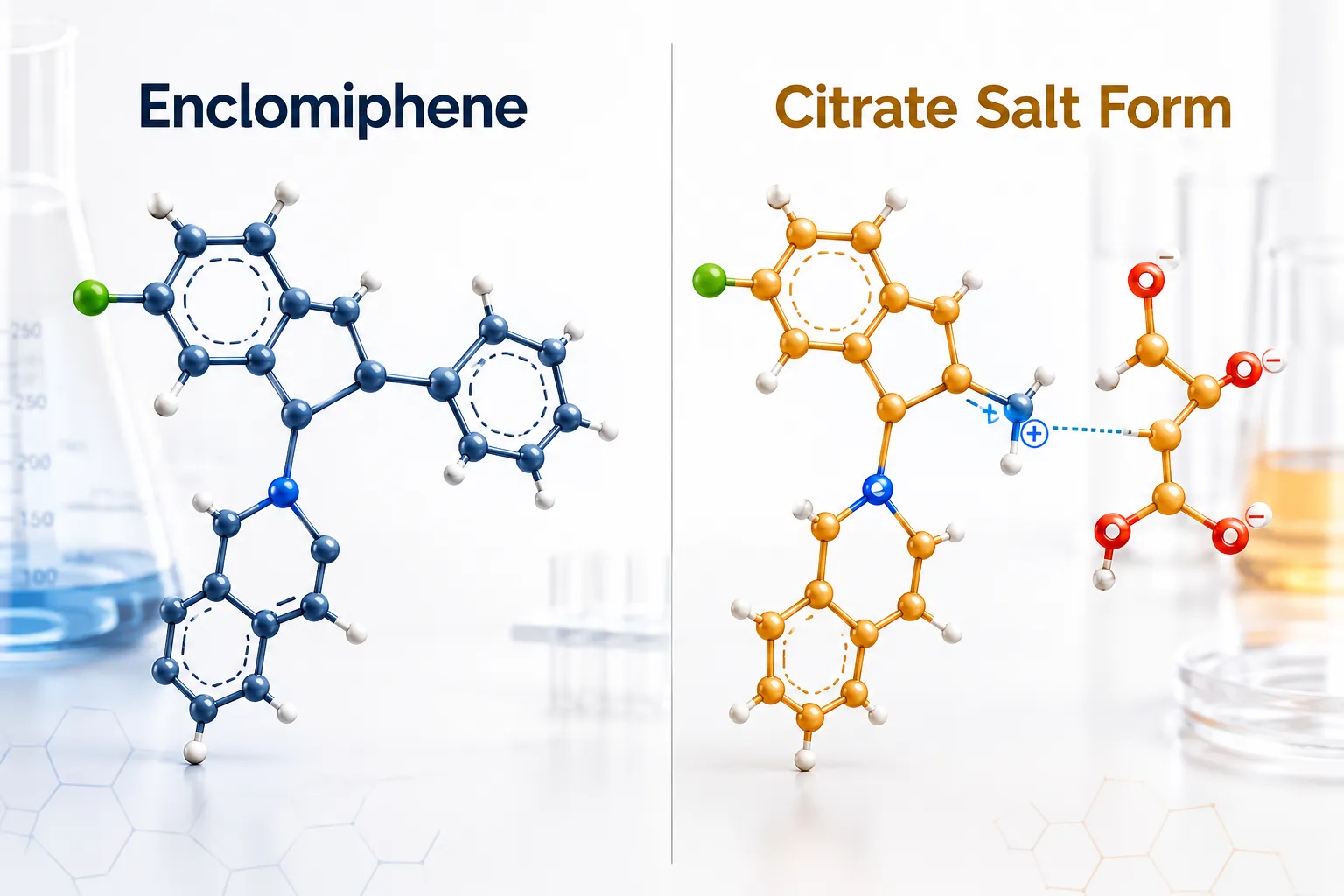
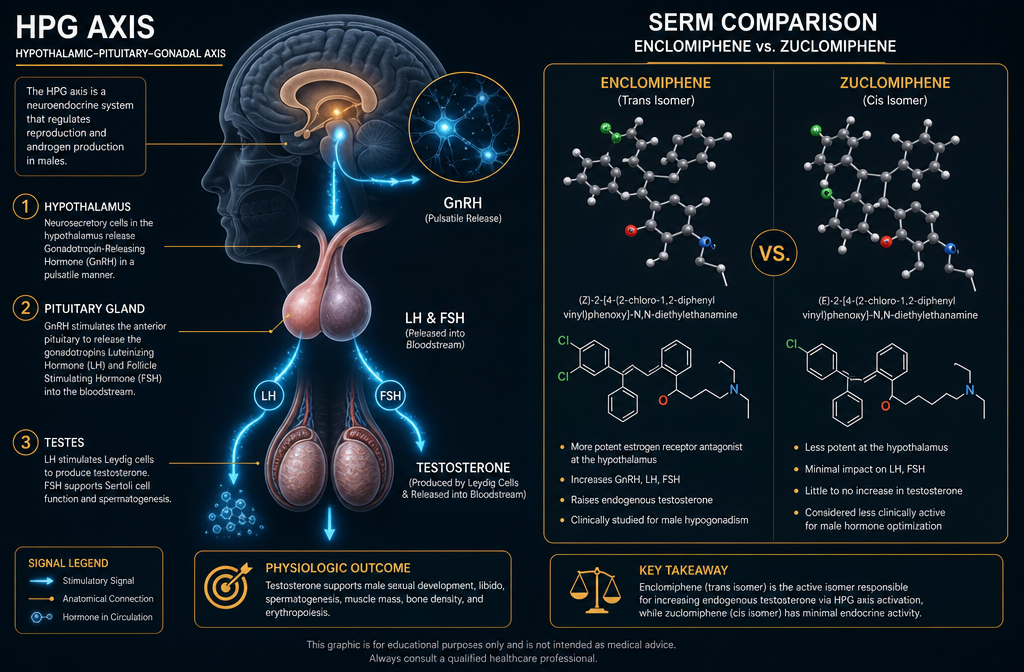
Clomiphene is a racemic mixture of two geometric isomers: zuclomiphene (cis) and enclomiphene (trans). Enclomiphene is the trans-isomer and is considered the pharmacologically dominant component responsible for stimulating gonadotropin release. When chemists convert enclomiphene into a stable, water-soluble form suitable for formulation and storage, they bind it to citric acid, producing enclomiphene citrate, a salt.

The core pharmacology does not change. Both forms deliver the same active molecule to estrogen receptors. What changes is the molecular weight:

Form Approximate Molecular Weight
Enclomiphene (free base) ~406 g/mol
Enclomiphene citrate (salt) ~566 g/mol

This difference has a direct impact on dosing. A 25 mg dose of enclomiphene citrate does not deliver 25 mg of active enclomiphene. The salt accounts for roughly 28% of the total mass. Researchers who ignore this conversion risk under-dosing or over-dosing their assays.

"The salt form adds molecular weight but not pharmacological activity, every milligram of citrate is inert mass that must be subtracted from the active fraction."

Research Applications: Why the Distinction Matters in Protocol Design
Research Applications: Why the Distinction Matters in Protocol Design

Understanding enclomiphene vs enclomiphene citrate: differences, research applications, and dosing considerations becomes especially important when designing endocrine studies. Enclomiphene's primary mechanism involves competitive antagonism at hypothalamic estrogen receptors. By blocking negative feedback, it prompts the pituitary to release more luteinizing hormone (LH) and follicle-stimulating hormone (FSH), which in turn stimulates testicular testosterone production.

Key research areas where enclomiphene is studied:

  • Male hypogonadism and testosterone restoration models
  • Fertility research focused on spermatogenesis
  • Hypothalamic-pituitary-gonadal (HPG) axis modulation
  • Comparative serm studies alongside agents like clomiphene citrate

For researchers also exploring growth hormone secretagogues, it is worth noting that serm-based protocols are sometimes combined with peptide-based approaches. Resources such as serm Ipamorelin CJC1295 dosage protocols and serm Ipamorelin CJC1295 combination research provide useful context for multi-compound assay planning.

When comparing supplier listings, the product title alone is insufficient. Researchers should always request a Certificate of Analysis (CoA) that specifies:

  1. Whether the compound is free base or salt form
  2. Purity percentage (HPLC-verified, ideally >98%)
  3. Molecular weight confirmation
  4. Batch-specific testing data

For guidance on evaluating supplier documentation, the peptide supplier comparisons guide interpreting PeptideTech and PeptideSC listings offers a practical framework applicable to small-molecule serms as well.

Dosing Considerations: Converting Between Free Base and Citrate Salt
Dosing Considerations: Converting Between Free Base and Citrate Salt

Dosing Considerations: Converting Between Free Base and Citrate Salt

Accurate dosing is where the enclomiphene vs enclomiphene citrate: differences, research applications, and dosing considerations question becomes most practical. The conversion factor between the two forms is approximately 1.39. This means:

  • To deliver an equivalent dose of 25 mg enclomiphene (free base), a researcher using enclomiphene citrate would need approximately 34.75 mg of the salt form.
  • Conversely, a protocol calling for 50 mg of enclomiphene citrate delivers roughly 36 mg of active enclomiphene.

Practical conversion formula:

Enclomiphene citrate dose = Enclomiphene free base dose x 1.39

Researchers should apply this calculation consistently across all protocols and document which form was used in every experimental record. Mixing up forms across study arms introduces a systematic error that can invalidate comparative data.

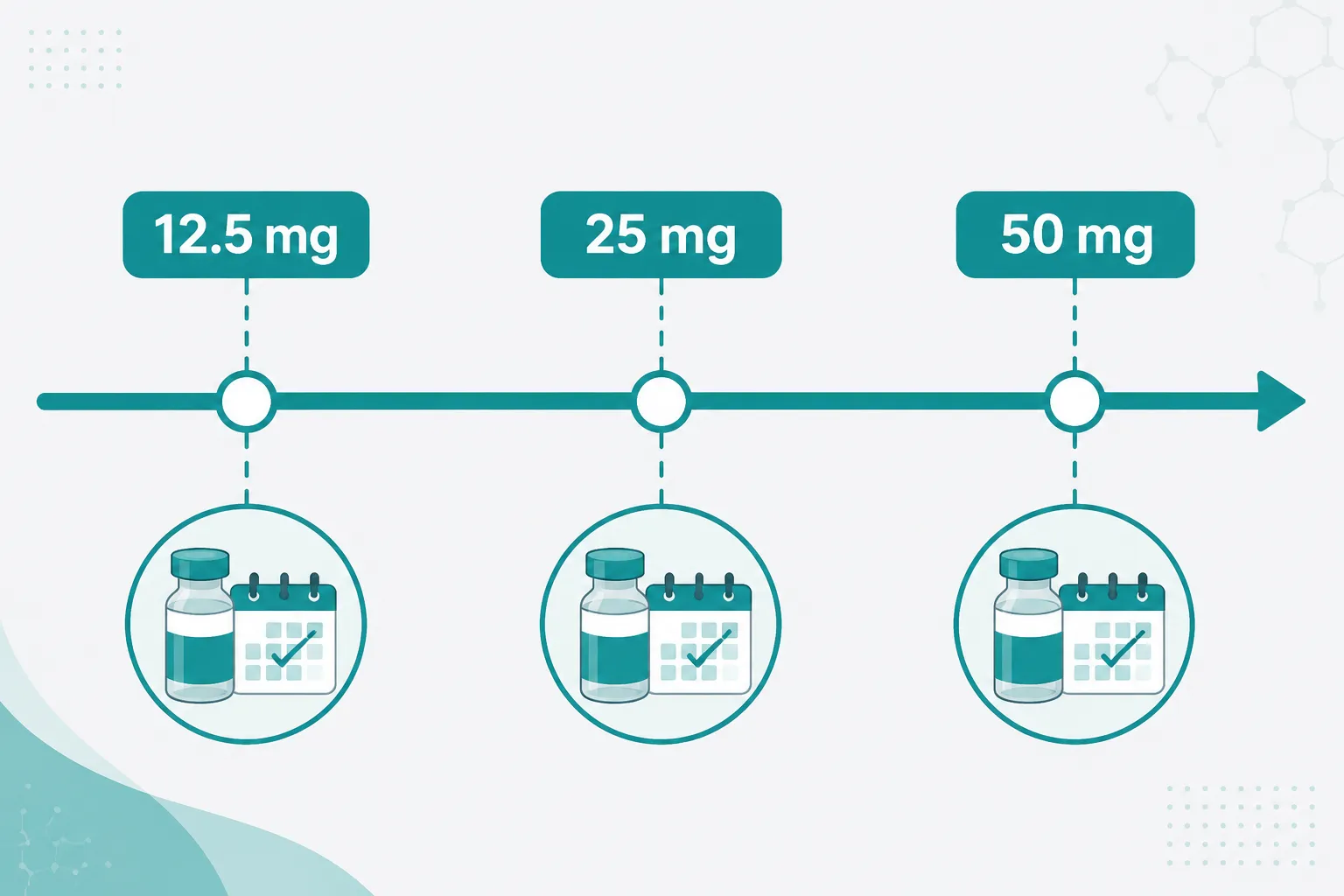
Common research dose ranges observed in published literature:

  • Low range: 12.5 mg enclomiphene equivalent per day
  • Mid range: 25 mg enclomiphene equivalent per day
  • Higher range: 50 mg enclomiphene equivalent per day (typically short-duration)

These ranges apply to the active enclomiphene content, not the total salt mass. Always recalculate when switching suppliers or forms.

For researchers also working with peptide-based hormonal modulators, understanding dosing precision is equally important in compounds such as those discussed in Tesamorelin dosage for fat loss and Tesamorelin vs Sermorelin comparisons, where small dose differences produce measurable outcome variations.

Purity also interacts with dosing accuracy. A compound listed at 95% purity versus 99% purity requires adjustment in weighed quantities to achieve the same effective dose. This is why sourcing from suppliers who provide third-party verified CoAs is non-negotiable for reproducible research. The CJC-1295 Ipamorelin assay planning and sourcing checklist outlines a sourcing verification process that translates well to serm procurement.

Conclusion

The distinction between enclomiphene and enclomiphene citrate is a matter of chemistry, not pharmacology, but that chemistry has direct consequences for every milligram weighed on a laboratory scale. Researchers comparing listings or adapting published protocols should take the following steps:

  1. Confirm the exact form (free base vs. citrate salt) on every CoA before ordering.
  2. Apply the 1.39 conversion factor whenever switching between forms within or across studies.
  3. Document the form used in all experimental records to ensure reproducibility and accurate cross-study comparisons.
  4. Request HPLC purity data and adjust weighed quantities accordingly.
  5. Cross-reference supplier documentation using established evaluation frameworks to verify compound identity.

Resolving this compound-name ambiguity upfront prevents systematic dosing errors and strengthens the integrity of any HPG-axis or serm-focused research program in 2026.

https://www.puretestedpeptides.com/wp-content/uploads/2026/08/enclomiphene-vs-enclomiphene-citrate-differences-research-applications-and-dosin.webp 1024 1536 https://www.puretestedpeptides.com/wp-content/uploads/2026/01/buy-peptides-online.jpg 2026-08-07 13:06:042026-08-07 13:06:04Enclomiphene vs Enclomiphene Citrate: Differences, Research Applications, and Dosing Considerations

Tag Archive for: enclomiphene dosing

Enclomiphene Research for Male Hormone Optimization: LH, FSH, and Testosterone Signaling Without the Clomiphene Noise

Enclomiphene Research for Male Hormone Optimization: LH, FSH, and Testosterone Signaling Without the Clomiphene Noise

June 7, 2026/0 Comments/by Pure Tested

Men with secondary hypogonadism who start standard clomiphene citrate often see testosterone numbers improve — but they also report mood swings, visual disturbances, and erratic estrogen readings that are hard to explain from the testosterone signal alone. The culprit is not the therapy concept; it is a single unwanted isomer. Enclomiphene research for male hormone optimization: LH, FSH, and testosterone signaling without the clomiphene noise is now a serious clinical conversation, and the lab data behind it deserves a clear-eyed look.

Key Takeaways

  • Enclomiphene is the active trans-isomer of clomiphene citrate; isolating it removes the estrogenic "noise" caused by zuclomiphene.
  • It stimulates LH and FSH release through the HPG axis, raising endogenous testosterone without suppressing spermatogenesis.
  • Phase II and III trials confirm meaningful increases in total and free testosterone in men with secondary hypogonadism.
  • Standard oral dosing ranges from 12.5 to 25 mg per day, with estradiol monitoring required at higher doses.
  • It is not suitable for primary hypogonadism or cases requiring highly predictable testosterone levels from injectable TRT.

Key Takeaways

The Isomer Problem: Why Clomiphene Carries Unwanted Signals

Clomiphene citrate is a 50/50 mixture of two geometric isomers: enclomiphene (trans) and zuclomiphene (cis). They behave very differently inside the body.

Enclomiphene blocks estrogen receptors in the hypothalamus. That blockade triggers increased gonadotropin-releasing hormone (GnRH) output, which tells the pituitary to release more LH and FSH. Higher LH drives Leydig cells in the testes to produce testosterone. Higher FSH supports Sertoli cell function and sperm production. The entire HPG axis stays intact and active.

Zuclomiphene, by contrast, is a weak estrogen receptor agonist with a notably long half-life. It accumulates over weeks of dosing, activating rather than blocking estrogen receptors. That activation contributes to mood disturbances, visual side effects, and confusing estradiol readings that complicate lab interpretation.

"The clinical noise attributed to clomiphene therapy in men is largely a zuclomiphene problem, not an enclomiphene problem."

Isolating enclomiphene removes that competing signal entirely, leaving a cleaner pharmacological profile for male hormone optimization.

Researchers studying multi-pathway peptide compounds face similar signal-isolation challenges. For context on how compound purity affects research outcomes, the discussion on multi-pathway research blends offers useful framing.

Reading the Lab Panel: LH, FSH, and Testosterone Under Enclomiphene

Understanding enclomiphene research for male hormone optimization: LH, FSH, and testosterone signaling without the clomiphene noise requires knowing what to look for on a hormone panel — and in what order.

Reading the Lab Panel: LH, FSH, and Testosterone Under Enclomiphene

Baseline Labs Before Starting

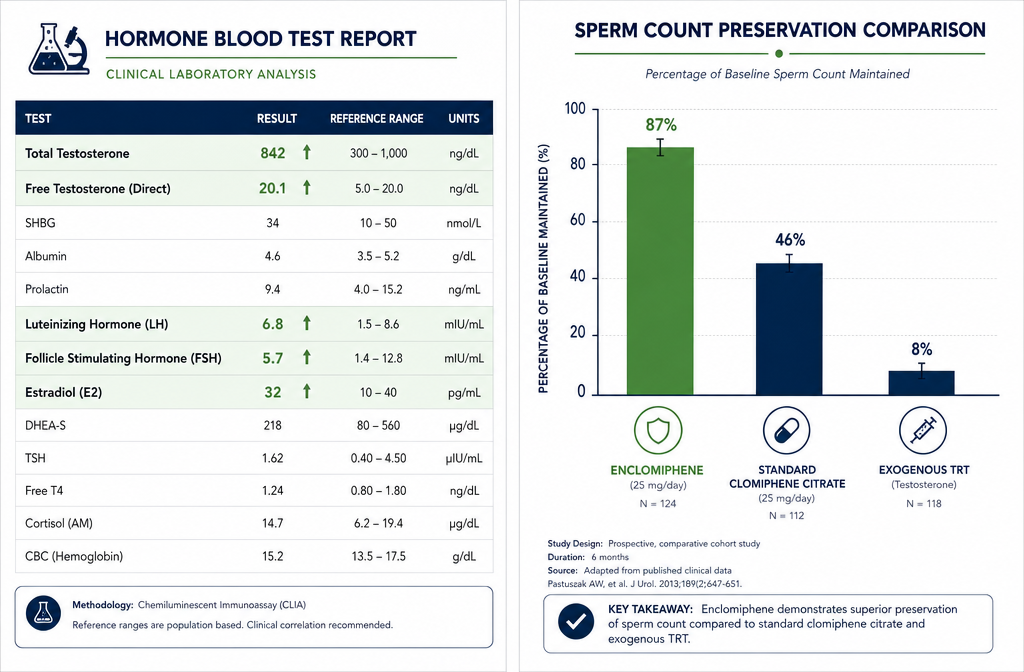
Before initiating enclomiphene, a complete baseline panel should include:

Lab Marker Why It Matters
Total Testosterone Establishes starting point
Free Testosterone Reflects bioavailable fraction
LH and FSH Confirms secondary (not primary) hypogonadism
Estradiol (E2) Monitors aromatization risk
Complete Metabolic Panel Assesses liver and kidney function
Lipid Panel Cardiovascular baseline
Complete Blood Count Rules out hematologic issues

What Changes at 4 to 6 Weeks

Phase II and III clinical trials show that enclomiphene produces statistically significant increases in both total and free testosterone in men with secondary hypogonadism. Crucially, LH and FSH rise alongside testosterone — the opposite of what happens with exogenous TRT, which suppresses both gonadotropins through negative feedback.

Sperm counts are maintained or improved, a finding that distinguishes enclomiphene sharply from injectable testosterone, which reliably reduces sperm production.

Estradiol should be rechecked at the 4-to-6-week follow-up. At doses above 25 mg daily, increased aromatization to estradiol has been observed, which may require dose adjustment or monitoring strategy changes.

For researchers exploring peptide-based growth hormone secretagogues alongside hormonal optimization protocols, the CJC-1295 with DAC deeper dive provides relevant background on pituitary-axis signaling. Similarly, those examining body composition endpoints may find the IPA muscle and fat research themes useful for comparative context.

Practical Research Considerations: Dosing, Patient Selection, and Monitoring

Enclomiphene research for male hormone optimization: LH, FSH, and testosterone signaling without the clomiphene noise is most productive when patient selection criteria are applied carefully.

Who Is a Strong Research Candidate

  • Men with confirmed secondary hypogonadism (low testosterone with low or normal LH/FSH)
  • Men who want to raise testosterone while preserving fertility
  • Younger men who may plan to have children
  • Men who prefer oral administration over injectable protocols

Who Is Not

  • Men with primary hypogonadism (testicular failure) — the testes cannot respond to LH stimulation
  • Men requiring highly predictable, high-level testosterone that only injectable TRT reliably delivers

Standard Dosing Protocol

The most studied oral dosing range is 12.5 to 25 mg per day. Lower doses reduce aromatization risk while still producing meaningful gonadotropin stimulation. Higher doses should be paired with closer estradiol monitoring.

As of 2026, enclomiphene is available via prescription under the brand name Androxal and is also accessible as a research compound. Any clinical application requires physician oversight and proper lab monitoring.

For researchers interested in related peptide compounds that intersect with metabolic and hormonal research, the tesa benefits overview and the PT-141 research context provide relevant comparative reading on endocrine-adjacent signaling pathways.

Ongoing research in 2026 continues to examine enclomiphene's long-term effects on bone density, cardiovascular markers, and broader applications in testosterone-deficiency conditions beyond secondary hypogonadism.

Conclusion

Enclomiphene research for male hormone optimization: LH, FSH, and testosterone signaling without the clomiphene noise represents one of the more clinically precise tools available for secondary hypogonadism management. By removing zuclomiphene from the equation, researchers and clinicians gain a cleaner signal — rising LH, rising FSH, rising testosterone, and preserved spermatogenesis — without the estrogenic interference that has historically complicated clomiphene therapy interpretation.

Actionable next steps for researchers and clinicians:

  1. Confirm secondary hypogonadism with a full baseline panel before initiating any protocol.
  2. Start at 12.5 mg daily and recheck total testosterone, free testosterone, LH, FSH, and estradiol at 4 to 6 weeks.
  3. Adjust dosing based on estradiol response, not testosterone alone.
  4. Exclude primary hypogonadism candidates early to avoid non-response.
  5. Track sperm parameters if fertility preservation is a stated research or clinical goal.

The endocrine signal is only as clean as the compound producing it. Enclomiphene's isomer isolation is precisely why its lab results are finally readable.

https://www.puretestedpeptides.com/wp-content/uploads/2026/06/Enclomiphene-Research-for-Male-Hormone-Optimization-LH-FSH-and-Testosterone-Signaling-Without-the-Clomiphene-Noise.png 672 1024 Pure Tested https://www.puretestedpeptides.com/wp-content/uploads/2026/01/buy-peptides-online.jpg Pure Tested2026-06-07 13:04:162026-07-20 15:03:49Enclomiphene Research for Male Hormone Optimization: LH, FSH, and Testosterone Signaling Without the Clomiphene Noise
×

Helpful Links

  • My account
  • Cart
  • Checkout
  • Refund and Returns Policy
  • Privacy Policy
  • SMS Privacy Policy
  • Login
  • My Account
  • Logout

USA Made Lab Tested Peptides

All products are sold for research, laboratory, or analytical purposes only, and are not for human consumption


Pure Tested Peptides is a chemical supplier. Pure Tested Peptides is not a compounding / chemical compounding facility as defined under 503A of the Federal Food, Drug, and Cosmetic act. Pure Tested Peptides is not an outsourcing facility as defined under 503B of the Federal Food, Drug, and Cosmetic act.

The statements made within this website have not been evaluated by the US Food and Drug Administration. The products we offer are not intended to diagnose, treat, cure or prevent any disease.

Human/Animal Consumption Prohibited. Laboratory/In-Vitro Experimental Use Only

Scroll to top Scroll to top Scroll to top