Call or Text 727-513-9780
  • Shopping Cart Shopping Cart
    0Shopping Cart
Pure Tested Peptides | America's most trusted Peptides for sale online
  • Peptides for sale
    • Oral Peptides for sale
      • Peptide Capsules for sale
      • BPC 157 Capsules 1000mcg
      • SLU-PP-332 Capsules | 1000 mcg
      • 5-Amino-1MQ 50mg Capsules
      • Tesofensine 500mcg
    • All Peptides for sale
    • Peptide Sprays
      • BPC 157 Nasal Spray Kit
      • BPC-157 TB500 Nasal Spray Kit
      • Semax Nasal Spray 10mg
      • Selank – Nasal Spray Kit – 10mg
      • Epithalon 50MG Nasal Spray Kit
      • Ipamorelin 10mg Nasal Spray
      • Klow Nasal Spray (BPC-157 + TB-500 + GHK-Cu + KPV) | 80mg
      • Hulk Nasal Spray Tesa / Ipa Blend 6/3 MG
      • Klow Nasal Spray
      • NAD + 500 mg Nasal Spray
      • PT-141 Nasal Spray Kit
    • GHRH Peptides
      • Ipa Peptides
      • CJC-1295 Peptides
        • CJC-1295 with DAC 5 mg
        • CJC-1295 without DAC 5 mg
        • CJC-1295 Ipa 10mg
      • Tesa Peptides
        • Tesa Peptide
        • Tesa 20 mg
    • GHK-Cu Peptides
      • All GHK-Cu Peptides
      • GHK-Cu 100mg
      • KLOW Peptide Blend – Buy KLOW blend online
    • BPC Peptides
      • All BPC Peptides
      • BPC-157
      • BPC-157 TB-500
      • BPC 157 capsules 1000mcg
    • SLU-PP-332 Peptides
      • All SLU-PP-332 Peptides
      • SLU-PP-332 5mg
    • GLP3 Peptides
    • PT-141 Peptides
      • PT-141 Peptides for sale
      • PT-141 10mg
      • PT-141 Nasal Spray
    • CAG Peptides
      • Lipo-C Peptide Blend
      • CAG 5mg
      • CAG 10mg
    • MOTS-C Peptides
      • MOTS-C Peptides for sale
      • MOTS-c peptide
      • MOTS-c 10mg *6 pack*
    • 5 Amino 1MQ Peptides
      • 5 Amino 1MQ Peptides for sale
      • 5-Amino-1MQ 50mg Capsules
      • 5-Amino-1MQ 5mg
    • Epithalon Peptides
      • Epithalon Peptides for sale
      • Epithalon 10mg
      • Epithalon 50mg
  • Shop
    • GLPs
      • 5-Amino-1MQ 50mg Capsules
      • 5-Amino-1MQ 5mg
      • L-Carnitine 500mg/ml
      • Tesofensine 500mcg
      • SLU-PP-332 5mg
      • MOTS-c 10mg *6 pack*
    • Epithalon & BPC Peptides
      • Epithalon 10mg
      • Epithalon 50mg
      • BPC-157
      • BPC 157 capsules 1000mcg
      • BPC-157 TB-500
      • BPC-157 TB500 Nasal Spray Kit
      • BPC 157 Nasal Spray Kit
    • BPC TB-500 & NAD+ Peptides
      • NAD+ 500 mg
      • KLOW Peptide Blend – Buy KLOW blend online
      • GLOW Peptide Blend
      • TB 500 5mg
      • BPC 157 capsules 1000mcg – Supplement
      • BPC 157 Nasal Spray Kit
      • BPC-157
      • BPC-157 TB500 Nasal Spray Kit
      • BPC-157 TB-500
      • BPC 157 capsules 1000mcg
    • LL-37 Peptide
      • LL-37 10 mg
    • MOTS-C & Selank
      • MOTS-c peptide
      • Selank 10mg
    • GHK Peptides
      • GHK-Cu 100mg
      • GLOW Peptide Blend
      • KLOW Peptide Blend – Buy KLOW blend online
  • COAs
  • Wholesale
    • Wholesale Peptides for sale
  • PTP FAQ
  • Affiliates
    • Selank Peptide: Advanced Pharmacological Mechanisms Underlying Its Anxiolytic and Nootropic Effects in Research
      • 5-Amino-1MQ Peptide: Detailed Mechanisms of NNMT Inhibition and Its Impact on Cellular Metabolism Research
        • MOTS-C Peptide: Unraveling Its Role in Mitochondrial Dynamics and Energy Metabolism Research
          • Epithalon Peptide and Telomerase Regulation: Investigating Its Impact on Cellular Senescence and Lifespan Research Models
            • GLP2-T vs GLP2 Tirz Peptide: Understanding the Naming, Mechanistic Nuances, and Research Implications for Gut Health
      • Peptides and Polypeptides in Modern Pharmacology: What Research on Metoprolol, Prednisone, and Amlodipine Reveals
        • Polypeptide Peptides vs NSAIDs: What Naproxen and Diclofenac Teach Tissue-Repair Researchers About BPC‑157 and TB‑500
          • Peptides and Polypeptides in Endocrine Pharmacology: How GLP-1, GLP-2, and GLP-3 Retatrutide Differ From Classic Drugs Like Prednisone and Amlodipine
          • 5‑Amino‑1MQ Peptide and NNMT Inhibition: How It Compares With Statins Like Atorvastatin in Adipose and Lipid Metabolism Research
      • Enclomiphene, Estrogen Receptor Signaling, and Luteinizing Phase Biology: What Hormone Researchers Should Measure
        • Mesenchymal Stem Cells, BPC‑157, and GHK‑Cu: How Tissue Repair Peptides Compare With Classic NSAIDs Like Naproxen in Injury Models
          • Peptide Calculator Use Cases Beyond Growth Hormone: Working Through GLP‑3 Retatrutide, MOTS‑c, and BPC‑157 Research Dosing
        • Polypeptide Peptides in Endocrine and Metabolic Pharmacology: Lessons From Amlodipine, Prednisone, and Metoprolol
        • Peptides Calculator for Advanced Blends: Worked Examples for Tesamorelin, CJC‑1295, and Ipamorelin Stacks
          • Peptides and Polypeptides in Human Physiology: How Molecular Size Shapes Research Applications
            • Selank Peptide: Advanced Pharmacological Mechanisms Underlying Its Anxiolytic and Nootropic Effects in Research
          • 5-Amino-1MQ Peptide: Detailed Mechanisms of NNMT Inhibition and Its Impact on Cellular Metabolism Research
            • MOTS-C Peptide: Unraveling Its Role in Mitochondrial Dynamics and Energy Metabolism Research
              • Epithalon Peptide and Telomerase Regulation: Investigating Its Impact on Cellular Senescence and Lifespan Research Models
                • GLP2-T vs GLP2 Tirz Peptide: Understanding the Naming, Mechanistic Nuances, and Research Implications for Gut Health
                  • Peptides and Polypeptides in Endocrine Pharmacology: How GLP-1, GLP-2, and GLP-3 Retatrutide Differ From Classic Drugs Like Prednisone and Amlodipine
                    • Polypeptide Peptides vs NSAIDs: What Naproxen and Diclofenac Teach Tissue-Repair Researchers About BPC‑157 and TB‑500
                      • Peptides and Polypeptides in Modern Pharmacology: What Research on Metoprolol, Prednisone, and Amlodipine Reveals
                        • 5‑Amino‑1MQ Peptide and NNMT Inhibition: How It Compares With Statins Like Atorvastatin in Adipose and Lipid Metabolism Research
                        • Enclomiphene, Estrogen Receptor Signaling, and Luteinizing Phase Biology: What Hormone Researchers Should Measure
                        • Mesenchymal Stem Cells, BPC‑157, and GHK‑Cu: How Tissue Repair Peptides Compare With Classic NSAIDs Like Naproxen in Injury Models
                        • Peptide Calculator Use Cases Beyond Growth Hormone: Working Through GLP‑3 Retatrutide, MOTS‑c, and BPC‑157 Research Dosing
                        • Polypeptide Peptides in Endocrine and Metabolic Pharmacology: Lessons From Amlodipine, Prednisone, and Metoprolol
                        • Peptides Calculator for Advanced Blends: Worked Examples for Tesamorelin, CJC‑1295, and Ipamorelin Stacks
                        • Peptides and Polypeptides in Human Physiology: How Molecular Size Shapes Research Applications
                        • Selank Peptide: Advanced Pharmacological Mechanisms Underlying Its Anxiolytic and Nootropic Effects in Research
                        • MOTS-C Peptide: Unraveling Its Role in Mitochondrial Dynamics and Energy Metabolism Research
                        • Peptides and Polypeptides in Modern Pharmacology: What Research on Metoprolol, Prednisone, and Amlodipine Reveals
                        • Peptides and Polypeptides in Endocrine Pharmacology: How GLP-1, GLP-2, and GLP-3 Retatrutide Differ From Classic Drugs Like Prednisone and Amlodipine
                        • 5-Amino-1MQ Peptide: Detailed Mechanisms of NNMT Inhibition and Its Impact on Cellular Metabolism Research
                        • Mesenchymal Stem Cells, BPC‑157, and GHK‑Cu: How Tissue Repair Peptides Compare With Classic NSAIDs Like Naproxen in Injury Models
                        • Peptide Calculator Use Cases Beyond Growth Hormone: Working Through GLP‑3 Retatrutide, MOTS‑c, and BPC‑157 Research Dosing
                        • GLP2-T vs GLP2 Tirz Peptide: Understanding the Naming, Mechanistic Nuances, and Research Implications for Gut Health
                        • Polypeptide Peptides in Endocrine and Metabolic Pharmacology: Lessons From Amlodipine, Prednisone, and Metoprolol
                        • Polypeptide Peptides vs NSAIDs: What Naproxen and Diclofenac Teach Tissue-Repair Researchers About BPC‑157 and TB‑500
                        • Peptides and Polypeptides in Human Physiology: How Molecular Size Shapes Research Applications
                        • Peptides Calculator for Advanced Blends: Worked Examples for Tesamorelin, CJC‑1295, and Ipamorelin Stacks
                        • 5‑Amino‑1MQ Peptide and NNMT Inhibition: How It Compares With Statins Like Atorvastatin in Adipose and Lipid Metabolism Research
                        • Enclomiphene, Estrogen Receptor Signaling, and Luteinizing Phase Biology: What Hormone Researchers Should Measure
                        • Epithalon Peptide and Telomerase Regulation: Investigating Its Impact on Cellular Senescence and Lifespan Research Models
                        • Best research protocol Klow blend
                        • best time to take BPC-157
                        • best time to take DSIP (Delta Sleep Inducing Peptide)
                        • best time to take CJC-1295
                        • best time to take AOD-9604
                        • best time to take Follistatin 344
                        • best time to take Ipamorelin
                        • best time to take MK-677 (Ibutamoren)
                        • best time to take Ligandrol (LGD-4033) — research compound
                        • best time to take Ostarine (MK-2866) — research compound
                        • best time to take GHK-CU
                        • best time to take TB-500
                        • best time to take MOTS-c
                        • best time to take Semax
                        • best time to take RAD-140 (Testolone) — research compound
                        • best time to take Thymosin Alpha-1
                        • best time to take PEG-MGF
                        • Biolife Plasma, Octapharma Plasma, and Research Peptides: How Plasma Donation Labs Differ From Peptide Suppliers
                        • best time to take YK-11 — research compound
                        • best time to take PT-141 (Bremelanotide)
                        • Best research protocol Klow blend
                        • 5-Amino-1MQ and MOTS-C Synergy: Metabolic Signaling, Mitochondria, and Research Design
                        • BPC-157 and TB-500: Investigating Their Combined Effects on Angiogenesis and Cellular Migration in Tissue Repair Models
                        • BPC-157 Peptide: Gut Barrier Function, Inflammation, and Tissue-Recovery Research
                        • 5‑Amino‑1MQ and MOTS‑c Synergy in Metabolic Research: Designing NNMT and Mitochondrial Biogenesis Stacks
                        • CJC-1295 with DAC vs. Without DAC: Half-Life, Release Kinetics, and Research Implications
                        • CJC‑1295 with DAC vs. Without DAC: Expanding on Half‑Life Differences Using Tesamorelin and Ipamorelin Blend Case Studies
                        • Collagen Biology and Copper‑Binding Peptides: How GHK‑Cu, Glow Blend, and Klow Blend Interact with Skin and Connective Tissue
                        • Collagen Biology and Regenerative Peptides: How GHK‑Cu, Glow Blend, and Klow Blend Affect Extracellular Matrix Research
                    • DNA, Telomeres, and Longevity Peptides: Positioning Epithalon and MOTS‑c in Genetic Aging Research
                      • Enclomiphene Citrate: serm Mechanism, Testosterone Research, and Stack Compatibility
                        • Enclomiphene vs Enclomiphene Citrate: Formulation, Bioavailability, and Research Distinctions
                        • Epithalon Peptide Research: Telomerase Activation, Aging, and Pineal Gland Function
                        • Estrogen Receptor Signaling and Enclomiphene: How Selective Modulators Compare with Classic Polypeptide Hormones
                        • GHK-Cu Peptide: Advanced Mechanisms in Extracellular Matrix Remodeling and Wound Healing Research
                        • GHK-Cu Peptide: Collagen Synthesis, Wound Repair, and Skin-Barrier Research Models
                        • GLP-1 vs GLP-3 vs GLP-2: Peptide Classification and Research Applications
                        • GLP-2 Peptide Research Guide: Gut Barrier Function, Nutrient Absorption, and Intestinal Recovery Models
                        • GLP-3 Retatrutide vs. GLP-1 Drugs: What Triple-Agonist Biology Changes in Research Models
                        • Ipamorelin and Tesamorelin Combination: Synergistic GH Secretagogue Research and Dosing Protocols
                        • GLP2 Tirz Peptide: What It Is, Why the Name Exists, and How Researchers Should Interpret It
                        • Klow Blend Peptide Nasal Spray: What the Formulation Is Trying to Do in Cognitive Research
                        • Mitochondria, NNMT Inhibition, and Peptide Modulators: Where MOTS‑c and 5‑Amino‑1MQ Fit in Cellular Energy Research
                        • MOTS-c Peptide: Mitochondrial Function, Energy Metabolism, and What Researchers Measure
                        • MOTS-c vs. 5-Amino-1MQ: Which Metabolic Research Questions Each Compound Actually Answers
                        • Nasal Spray Peptides: Bioavailability, Administration, and Semax/Selank Research Applications
                        • PT-141 Peptide Research: Mechanism of Action and Melanocortin Receptor Signaling
                        • Retatrutide for Research: Mechanism, Structure, and GLP-1/GLP-3 Dual Action
                        • Retatrutide for Obesity and Type 2 Diabetes: What the Latest Trial Data Suggest
                        • Tesofensine Peptide Research: Mechanism, Appetite Suppression, and Neuropeptide Y Pathways
  • Contact
    • Contact Customer Service
    • Text Customer Support
  • About US
  • Shop all peptides
  • Affiliate Program
    • Affiliate Signup
  • Login / Register Login / Register Page Link Login / Register Page Link
  • Click to open the search input field Click to open the search input field Search
  • Menu Menu

Tag Archive for: enclomiphene research materials

Enclomiphene Research Materials: Base, Citrate, and Analytical Identity Checks for Hormone-Model Experiments

Enclomiphene Research Materials: Base, Citrate, and Analytical Identity Checks for Hormone-Model Experiments

October 7, 2026/0 Comments/in Uncategorized/by

Fewer than one in five commercial enclomiphene lots tested by independent analytical laboratories in recent years have carried full counterion confirmation alongside standard purity data, a gap that creates real problems when researchers try to compare results across batches or institutions. For anyone sourcing Enclomiphene Research Materials: Base, Citrate, and Analytical Identity Checks for Hormone-Model Experiments, that single oversight can invalidate dosing calculations, skew receptor-binding data, and make batch-to-batch reproducibility impossible.

This guide moves beyond the basic base-versus-citrate comparison to give researchers a structured purchasing and verification checklist covering salt identity, assay method, residual solvents, counterion confirmation, and batch consistency.

Key Takeaways

  • Enclomiphene is supplied as either the free base or the citrate salt; the two forms carry different molecular weights, and failing to apply the correct salt factor corrupts dosing math in hormone-model experiments.
  • A complete Certificate of Analysis (COA) for research-grade material should include HPLC purity, NMR salt identity, ESI-MS confirmation, residual solvent data (GC headspace), and water content.
  • Counterion confirmation via NMR or ion chromatography is the most commonly missing data point in commercial COAs as of 2026.
  • Batch consistency checks, comparing COA values across at least two consecutive lots, are essential before committing to a long experimental series.
  • Enclomiphene is classified as a research-use-only compound in most jurisdictions; it is not approved for human use outside specific regulatory pathways.

Understanding the Two Chemical Forms: Base and Citrate

Enclomiphene is the trans-isomer of clomiphene, a selective estrogen receptor modulator (serm) that acts at hypothalamic estrogen receptors to reduce negative feedback on gonadotropin-releasing hormone. It reaches the market in two primary salt forms, and the distinction matters far more than many procurement workflows acknowledge.
Understanding the Two Chemical Forms: Base and Citrate

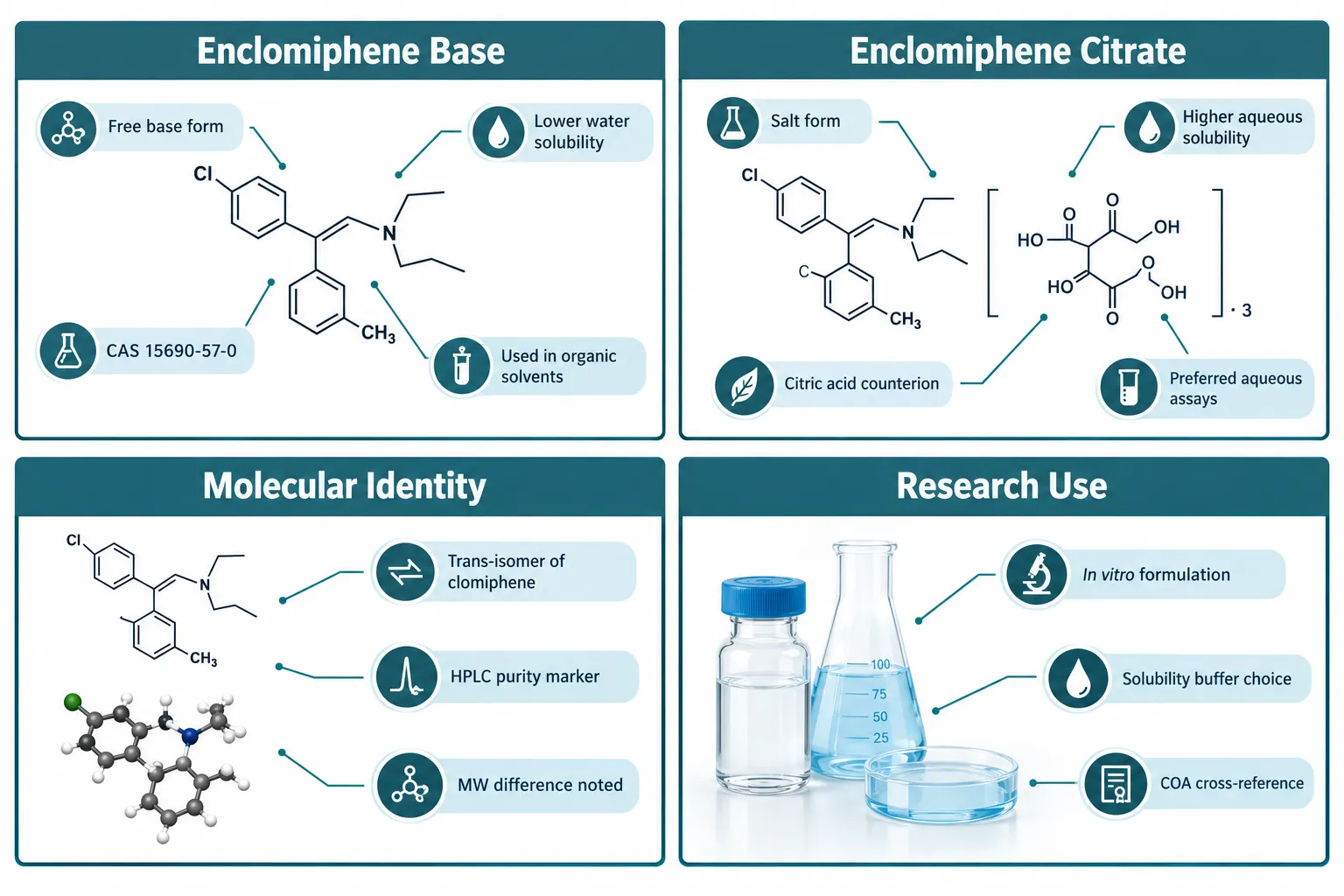
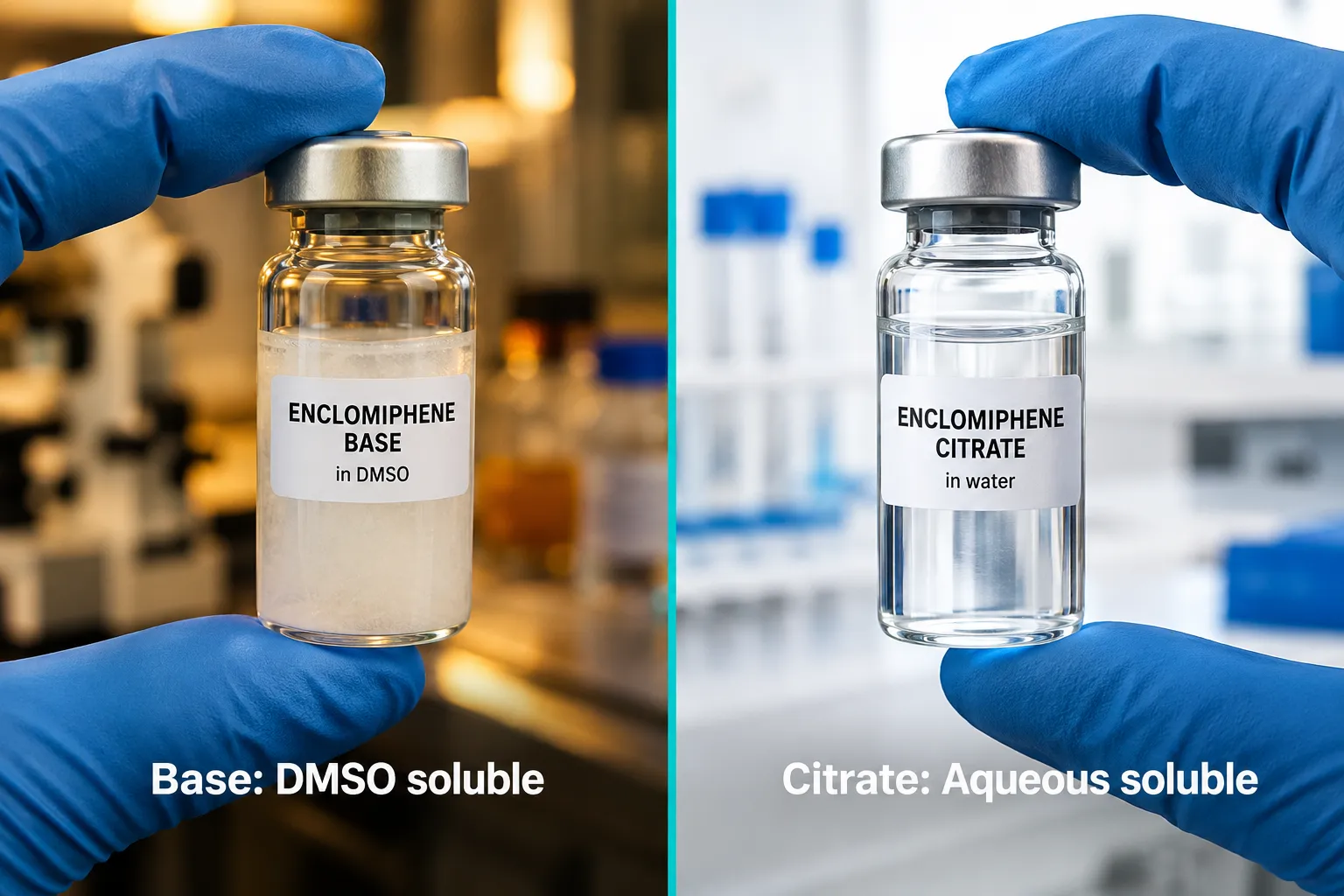
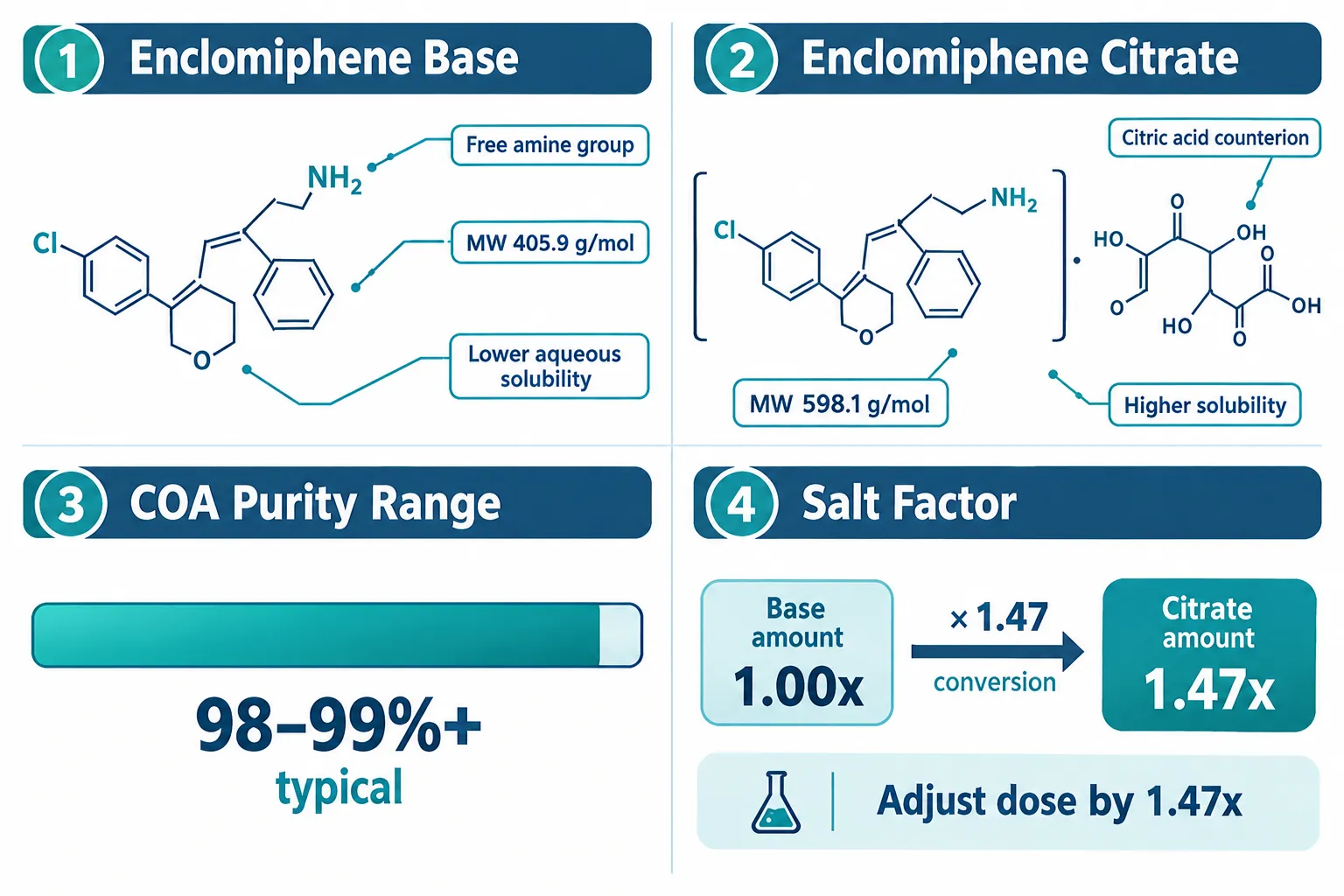
Enclomiphene free base carries a molecular weight of approximately 405.9 g/mol. It is less soluble in aqueous buffers, which makes it better suited to organic-solvent stock preparations (DMSO, ethanol) commonly used in cell-based assays. Enclomiphene citrate pairs the active molecule with citric acid as a counterion, raising the molecular weight to roughly 598.1 g/mol. The citrate form dissolves more readily in water, which is advantageous for in vitro hormone-model systems that require aqueous dosing vehicles.

The practical consequence: a researcher who assumes citrate when the material is actually the free base will underdose by approximately 32% relative to the active moiety. The conversion factor, roughly 1.47, must be applied whenever switching between forms or when a supplier's labeling is ambiguous.

Quick reference: key differences

Property Free Base Citrate Salt
Molecular weight ~405.9 g/mol ~598.1 g/mol
Aqueous solubility Low Moderate, high
Preferred vehicle DMSO / ethanol Aqueous buffer
Salt factor vs base 1.00 ~1.47
Counterion None Citric acid

Researchers building hormone-model systems, particularly hypothalamic-pituitary-gonadal (HPG) axis simulations, should document the chosen form in every experimental protocol. This is the same level of rigor applied when sourcing other structurally complex research agents; see the discussion of structural identity documentation in this overview of peptides 101 for research-use only buyers.


The Analytical Identity Checklist for Enclomiphene Research Materials

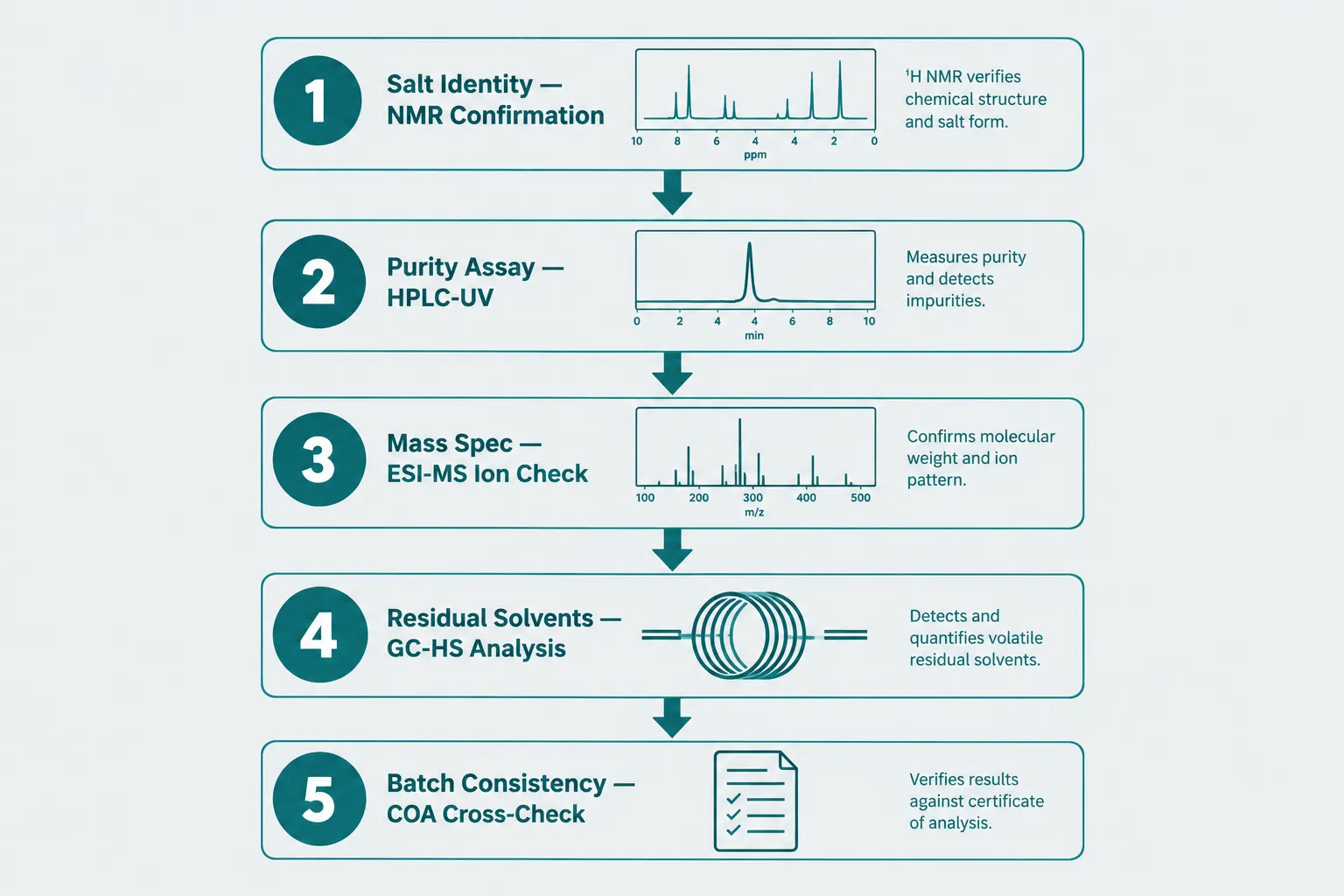
The core of responsible sourcing for Enclomiphene Research Materials: Base, Citrate, and Analytical Identity Checks for Hormone-Model Experiments is a structured verification checklist applied to every lot before it enters an experiment. The following five-point framework covers the most critical analytical dimensions.
The Analytical Identity Checklist for Enclomiphene Research Materials

1. Salt Identity via NMR

Proton NMR (1H-NMR) is the gold-standard method for confirming whether a lot is the free base or a specific salt form. For the citrate, characteristic citric acid proton signals appear in the 2.5-2.8 ppm region. A COA that reports only HPLC purity without NMR data cannot confirm salt identity. Suppliers who provide NMR spectra as part of their documentation package should be prioritized.

2. Purity Assay via HPLC-UV

High-performance liquid chromatography with UV detection (typically at 254 nm) remains the standard purity assay. Research-grade material in 2026 is expected to meet 98% or higher purity by HPLC. The COA should specify the column type, mobile phase, and integration method. A single broad purity figure without chromatographic conditions is insufficient for experimental validation.

3. Mass Spectrometry Confirmation (ESI-MS)

Electrospray ionization mass spectrometry (ESI-MS) provides molecular ion confirmation independent of chromatographic separation. For enclomiphene free base, the expected [M+H]+ ion appears at m/z 406.2; for the citrate, the spectrum should show both the enclomiphene cation and the citrate anion. ESI-MS data on a COA rules out structural analogs and degradation products that can co-elute on HPLC.

4. Residual Solvents via GC Headspace

Synthesis and recrystallization of enclomiphene typically involves chlorinated solvents or alcohols. ICH Q3C residual solvent limits apply to pharmaceutical-grade material, and research-grade suppliers increasingly adopt these thresholds as a quality benchmark. Gas chromatography headspace (GC-HS) analysis should be requested for any lot used in cell-viability or receptor-binding assays where solvent contamination could confound results.

5. Counterion Confirmation via Ion Chromatography

This is the most commonly absent data point. Ion chromatography (IC) or capillary electrophoresis can quantify the citrate counterion directly, confirming the correct stoichiometry of the salt. Without it, a lot labeled "citrate" may be a partial salt or a mixed form. Batch-to-batch counterion ratio variation is a known source of irreproducibility in serm research.

Checklist summary:

  • NMR spectrum confirming salt form
  • HPLC-UV purity (98%+ with stated conditions)
  • ESI-MS molecular ion confirmation
  • GC-HS residual solvent panel
  • IC or CE counterion quantification
  • Karl Fischer water content (relevant for hygroscopic citrate lots)

Applying Verified Materials in Hormone-Model Experiments

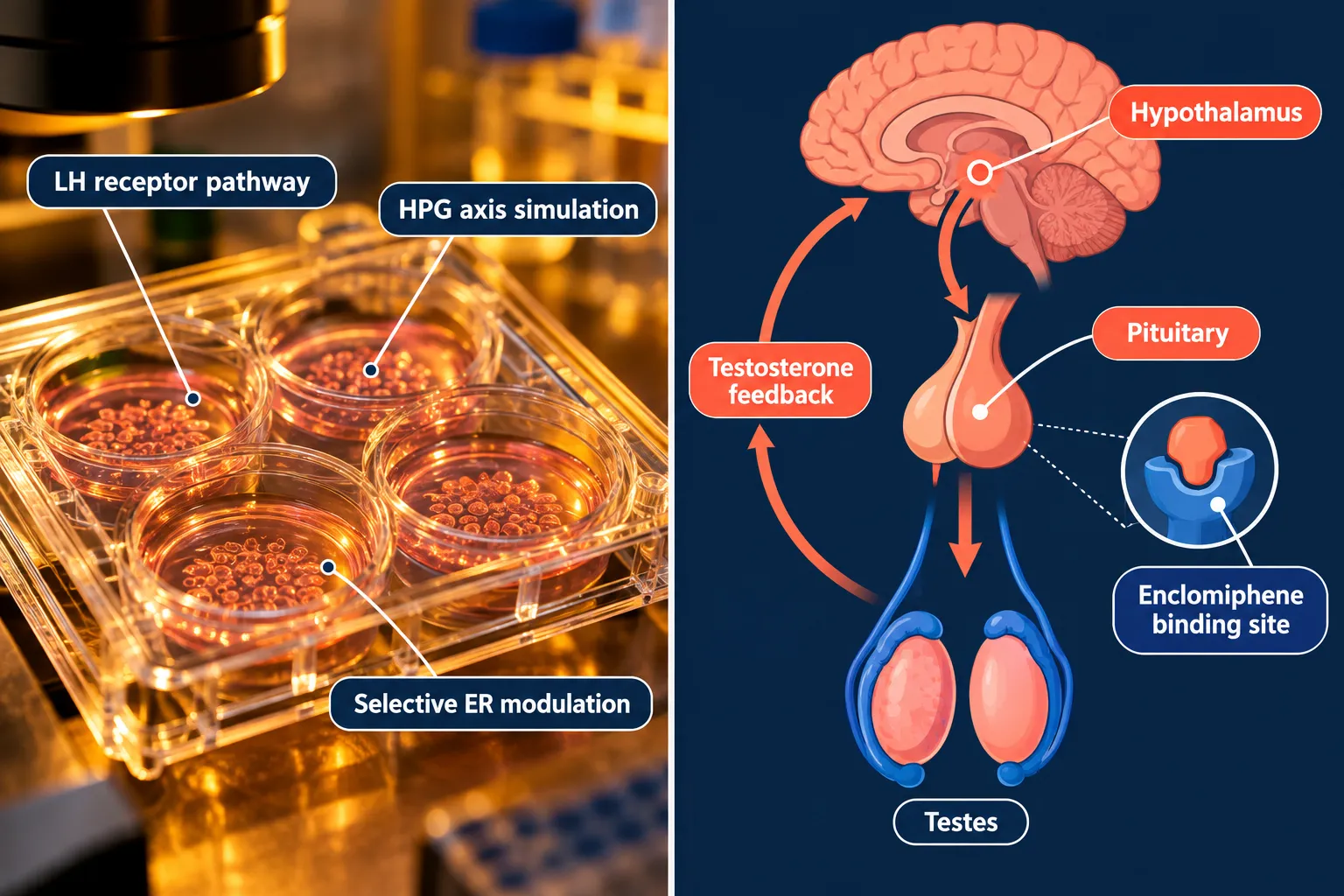
Once analytical identity is confirmed, the experimental design for HPG-axis hormone models can proceed with confidence. Enclomiphene's mechanism centers on competitive antagonism at hypothalamic estrogen receptors, which reduces estrogenic negative feedback and elevates luteinizing hormone (LH) and follicle-stimulating hormone (FSH) output. This makes it a useful tool in cell-based and ex vivo models studying gonadotropin regulation, male hypogonadism mechanisms, and fertility signaling.
Applying Verified Materials in Hormone-Model Experiments

For researchers working with aqueous dosing systems, the citrate form is generally preferred due to its superior solubility. For lipid-based or organic-vehicle assay systems, the free base dissolves more cleanly. In either case, stock solutions should be prepared fresh or stored under inert gas at -20°C to prevent oxidative degradation of the stilbene backbone.

Batch consistency across a multi-experiment series requires comparing COA values, purity, water content, and counterion ratio, across at least two consecutive lots before committing. A purity drop of even 1-2% between lots can translate to meaningful receptor-occupancy differences at low nanomolar concentrations typical of serm experiments.

The approach mirrors best practices seen in other research-grade compound categories. For example, the purity evaluation standards applied when sourcing research-grade Glow Blend Peptide materials follow the same logic: identity first, purity second, batch consistency third.

Researchers interested in broader hormone-axis modeling may also find value in reviewing growth hormone secretagogue mechanisms, such as the detailed pharmacokinetic profile covered in this CJC-1295 with and without DAC mechanism comparison, as multi-axis hormone models increasingly combine serm and GH-pathway tools.

For procurement teams evaluating supplier quality programs, the standards applied to wholesale peptides for sale at reputable suppliers, including third-party COA availability and batch traceability, provide a useful quality benchmark applicable to small-molecule research materials like enclomiphene as well.

"The counterion is not a footnote, it is half the molecule. Treating salt identity as an afterthought is one of the most preventable sources of irreproducibility in serm research."

As of mid-2026, regulatory positioning for enclomiphene remains research-use only in most jurisdictions outside specific approved clinical pathways. Researchers should confirm local regulatory status before procurement and ensure all use is confined to in vitro or appropriately approved in vivo model systems.


Conclusion

Sourcing Enclomiphene Research Materials: Base, Citrate, and Analytical Identity Checks for Hormone-Model Experiments responsibly requires more than checking a purity percentage. The five-point analytical checklist, NMR salt identity, HPLC-UV purity, ESI-MS molecular confirmation, GC-HS residual solvents, and IC counterion quantification, gives research teams the data needed to dose accurately, compare results across batches, and publish reproducible findings.

Actionable next steps for research teams in 2026:

  1. Request full COA documentation including NMR and ESI-MS before approving any new lot.
  2. Apply the 1.47 salt factor correction whenever switching between base and citrate forms.
  3. Implement a batch-consistency log comparing at least two consecutive lot COAs before starting a new experimental series.
  4. Specify the dosing vehicle (aqueous vs. organic) in the protocol and select the appropriate salt form accordingly.
  5. Confirm the regulatory classification of enclomiphene in your jurisdiction before procurement.

Analytical rigor at the purchasing stage is the cheapest insurance a research program can buy.

https://www.puretestedpeptides.com/wp-content/uploads/2026/10/enclomiphene-research-materials-base-citrate-and-analytical-identity-checks-for.webp 1024 1536 https://www.puretestedpeptides.com/wp-content/uploads/2026/01/buy-peptides-online.jpg 2026-10-07 13:04:082026-10-07 13:04:08Enclomiphene Research Materials: Base, Citrate, and Analytical Identity Checks for Hormone-Model Experiments
Enclomiphene Research Materials: Enclomiphene Base vs Citrate for Identity, Solubility, and COA Review

Enclomiphene Research Materials: Enclomiphene Base vs Citrate for Identity, Solubility, and COA Review

September 28, 2026/0 Comments/in Uncategorized/by

Fewer than a handful of small-molecule research compounds generate as much procurement confusion as enclomiphene, largely because researchers routinely receive materials labeled under two chemically distinct forms without clear guidance on how that distinction affects their assay design. Selecting the correct form from the outset, and then verifying it through proper documentation, is not a minor administrative step. For anyone sourcing enclomiphene research materials: enclomiphene base vs citrate for identity, solubility, and COA review, understanding the chemical and analytical differences between these two forms is the foundation of reproducible, well-documented laboratory work.

Key Takeaways

  • Enclomiphene base and enclomiphene citrate are chemically distinct forms with different molecular weights, solubility profiles, and documentation requirements.
  • Enclomiphene citrate offers meaningfully higher aqueous solubility, making it preferable for buffer-based in vitro assays.
  • Enclomiphene base is better suited to organic solvent systems such as DMSO or ethanol.
  • A high-quality Certificate of Analysis must explicitly state the salt form, CAS number, purity method, and solubility data, not just a percentage purity figure.
  • As of 2026, enclomiphene holds no FDA-approved indication in any form; all procurement and use remains within a research-only context.

Chemical Identity: What Separates Enclomiphene Base from Its Citrate Salt

Chemical Identity: What Separates Enclomiphene Base from Its Citrate Salt

Enclomiphene is the trans-isomer of clomiphene, a selective estrogen receptor modulator (serm) that has been studied for its effects on the hypothalamic-pituitary-gonadal axis. The base form (free base) carries CAS number 15690-57-0 and represents the compound in its uncharged, non-salt state. The citrate salt is formed when the base is combined with citric acid, producing a counterion pair that significantly alters the compound's physical and chemical behavior.

This distinction matters immediately at the procurement stage. A supplier listing "enclomiphene" without specifying salt form is providing incomplete information. Researchers should confirm:

  • Exact CAS number (base vs. citrate have different registry entries)
  • Molecular weight (the citrate salt is heavier due to the citric acid moiety)
  • IUPAC name or systematic name confirming the trans-configuration
  • Salt ratio (typically 1:1 for citrate salts, but this should be stated explicitly)

Clomiphene citrate, the racemic mixture containing both enclomiphene and zuclomiphene, has a long clinical history. Enclomiphene as an isolated isomer is a more refined research material, and its documentation standards should reflect that precision. Researchers comparing enclomiphene to other research-grade serms can find relevant context in the serm 10mg product documentation as a reference point for how salt-form labeling should appear on supplier listings.


Solubility Profiles: Matching the Form to the Assay

Solubility Profiles: Matching the Form to the Assay

Solubility is where the base-versus-citrate distinction has the most direct impact on experimental planning. The two forms behave very differently across common laboratory solvents.

Enclomiphene Base, Solubility Summary

Solvent Solubility
DMSO Moderate to good (~10-25 mg/mL typical)
Ethanol Moderate
Water Very low (practically insoluble)
Aqueous buffers Not suitable without co-solvent

Enclomiphene Citrate, Solubility Summary

Solvent Solubility
Water Measurably higher than base form
Aqueous buffers (pH 4-7) Acceptable for in vitro use
DMSO Also soluble
Ethanol Soluble

The citrate salt form improves aqueous solubility because the ionic character of the salt increases hydrophilicity. This is consistent with the broader pharmacology of clomiphene citrate, where the citrate counterion has historically been used precisely to improve handling in aqueous media. For researchers designing cell-based assays or receptor binding studies in aqueous buffer systems, enclomiphene citrate is the more practical choice. For organic solvent stock solutions intended for dilution into non-aqueous matrices, the base form is workable.

"Choosing the wrong salt form for an aqueous assay can introduce solubility artifacts that invalidate dose-response data, a problem that is entirely avoidable with upfront documentation review."

Researchers working with other peptides and small molecules that require careful solubility planning, such as those reviewing Bachem and reference standards for building robust peptide benchmarks, will recognize this as a standard quality-control consideration across compound classes.


COA Review: What a High-Quality Document Must Contain

COA Review: What a High-Quality Document Must Contain

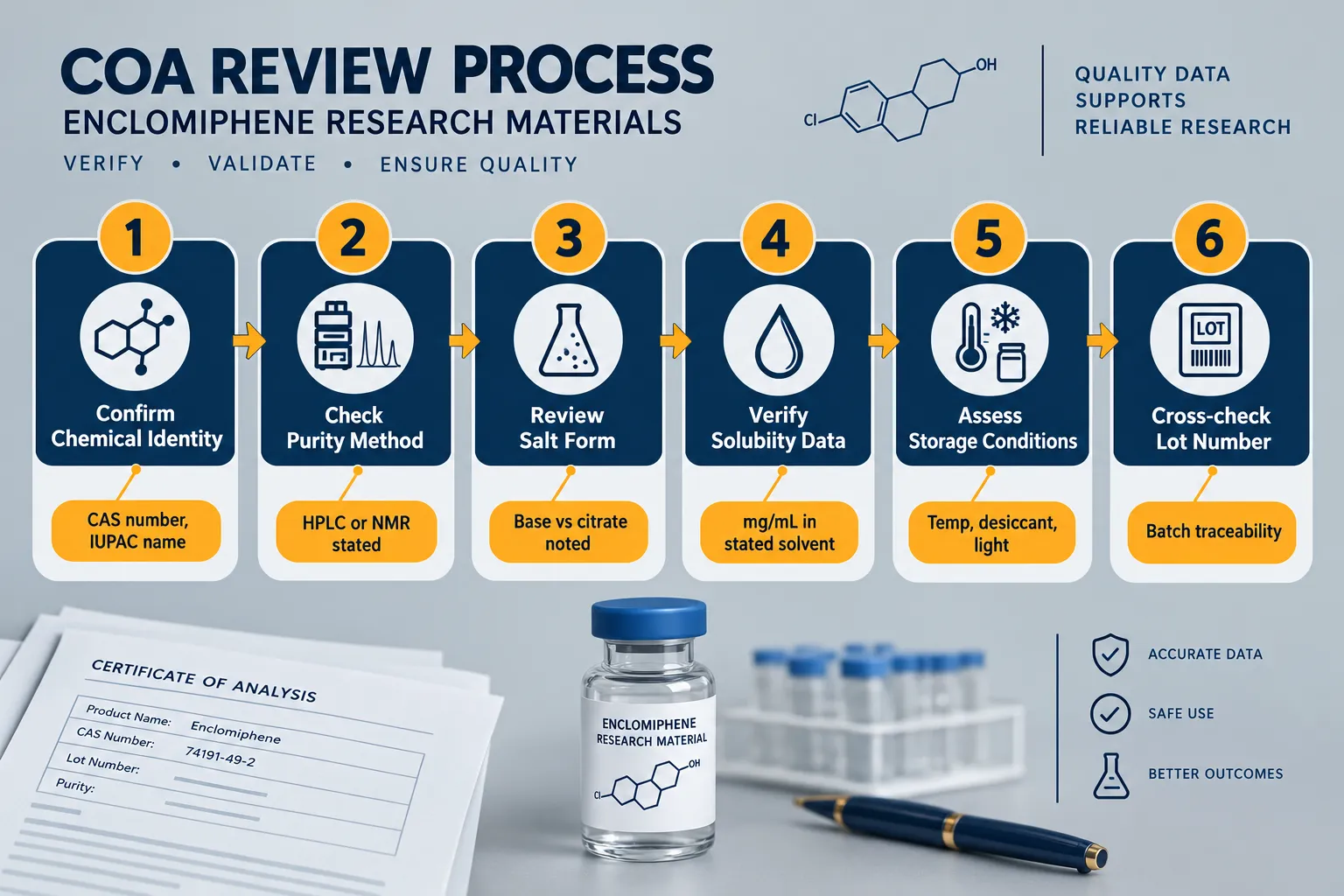
A Certificate of Analysis (COA) is not simply a purity number on a page. For enclomiphene research materials, whether base or citrate, a complete COA should contain the following elements, and researchers should decline materials where any of these are absent.

Required COA Elements for Enclomiphene Research Materials

  1. Chemical name and salt form, explicitly stating "enclomiphene citrate" or "enclomiphene free base," not just "enclomiphene"
  2. CAS number, matching the stated form
  3. Molecular formula and molecular weight, allowing the researcher to verify the correct form independently
  4. Purity method, HPLC is the standard; NMR is acceptable as a supplementary identity confirmation
  5. Purity result, expressed as area percentage from HPLC, with the method conditions (column type, mobile phase, wavelength) ideally referenced
  6. Isomeric confirmation, documentation that the material is the trans-isomer (enclomiphene), not the cis-isomer (zuclomiphene) or the racemate
  7. Solubility data, stated solvent, concentration, and whether the solution was clear or required sonication
  8. Lot or batch number, for traceability
  9. Storage conditions, temperature, desiccant requirement, light sensitivity
  10. Manufacturer or testing laboratory identity

As of 2026, enclomiphene citrate appears in some NDC (National Drug Code) listings, but this does not constitute FDA approval of any enclomiphene product. Researchers should not interpret an NDC listing as a regulatory clearance signal. All procurement of enclomiphene in any form remains strictly within research contexts, and COA documentation should be evaluated accordingly.

Researchers familiar with documentation standards for other well-characterized compounds, such as those reviewing SS-31 mechanism and research sourcing considerations, will find the same principles apply: supplier transparency, third-party testing, and explicit lot traceability are non-negotiable.


Formulation Strategies and Assay Planning Considerations

Knowing the form is only the first step. Translating that knowledge into a working formulation requires a few additional decisions.

For enclomiphene citrate in aqueous systems:

  • Prepare stock solutions in sterile water or phosphate-buffered saline
  • Confirm clarity visually and via UV absorbance baseline before use
  • Note that pH can affect solubility, acidic conditions (pH 4-5) generally favor dissolution

For enclomiphene base in organic solvent systems:

  • DMSO stocks at 10 mg/mL are a common starting point
  • Dilute into aqueous media at no more than 0.1% DMSO final concentration to avoid solvent cytotoxicity in cell assays
  • Sonication in a water bath (37°C, 15-30 minutes) can aid dissolution

Researchers sourcing other research-grade materials that require similar formulation planning, including those exploring IPA sermorelin stack research or reviewing tesa dosage considerations, will recognize that solvent compatibility and stock preparation protocols are just as important as compound identity.

For researchers also working with compounds in the aging support category, cross-referencing COA documentation practices across compound classes is a useful habit that strengthens overall laboratory quality standards.


Conclusion

Procuring enclomiphene research materials without first resolving the base-versus-citrate distinction is a preventable source of experimental error. The two forms differ in molecular weight, aqueous solubility, and the documentation that should accompany them. A COA that fails to specify salt form, purity method, or isomeric identity is insufficient for rigorous research use.

Actionable next steps for researchers in 2026:

  • Request full COA documentation before purchase, and verify that salt form and CAS number are explicitly stated
  • Match the form to the solvent system: citrate for aqueous assays, base for organic solvent stocks
  • Cross-check the stated molecular weight against published values for the specific form to catch mislabeling
  • Confirm isomeric purity (trans-enclomiphene vs. cis-zuclomiphene) through HPLC or NMR data on the COA
  • Treat any NDC listing as administrative, not as a regulatory approval signal

Rigorous identity verification and documentation review are the difference between reproducible data and ambiguous results. Applying these standards consistently, across enclomiphene and every other research compound in the laboratory, is the hallmark of credible, defensible research practice.

https://www.puretestedpeptides.com/wp-content/uploads/2026/09/enclomiphene-research-materials-enclomiphene-base-vs-citrate-for-identity-solubi.webp 1024 1536 https://www.puretestedpeptides.com/wp-content/uploads/2026/01/buy-peptides-online.jpg 2026-09-28 13:04:022026-09-28 13:04:02Enclomiphene Research Materials: Enclomiphene Base vs Citrate for Identity, Solubility, and COA Review
×

Helpful Links

  • My account
  • Cart
  • Checkout
  • Refund and Returns Policy
  • Privacy Policy
  • SMS Privacy Policy
  • Login
  • My Account
  • Logout

USA Made Lab Tested Peptides

All products are sold for research, laboratory, or analytical purposes only, and are not for human consumption


Pure Tested Peptides is a chemical supplier. Pure Tested Peptides is not a compounding / chemical compounding facility as defined under 503A of the Federal Food, Drug, and Cosmetic act. Pure Tested Peptides is not an outsourcing facility as defined under 503B of the Federal Food, Drug, and Cosmetic act.

The statements made within this website have not been evaluated by the US Food and Drug Administration. The products we offer are not intended to diagnose, treat, cure or prevent any disease.

Human/Animal Consumption Prohibited. Laboratory/In-Vitro Experimental Use Only

Scroll to top Scroll to top Scroll to top