

Glow Blend vs Klow Blend: How to Compare Injectable-Style and Intranasal Research Formulations by Endpoint
Multi-peptide blends are not additive by default. Two formulations can share several components yet produce measurably different outcomes simply because their ratios, total mass, and intended delivery routes diverge. Understanding Glow Blend vs Klow Blend: How to Compare Injectable-Style and Intranasal Research Formulations by Endpoint requires moving beyond a simple ingredient checklist and into a rigorous, endpoint-first framework.
Key Takeaways
- Glow Blend and Klow Blend differ in peptide ratios and total mass, which directly changes which assays are most appropriate.
- Route of administration, injectable-style vial versus potential intranasal use, affects bioavailability and, therefore, endpoint interpretation.
- Neither blend should be assumed to behave as the sum of its parts; synergistic and antagonistic interactions must be tested, not inferred.
- Endpoint selection should drive formulation choice, not the other way around.
- Documentation updates released in late 2026 clarify reconstitution and dosing parameters for both blends, making protocol alignment easier.
Compositional Differences That Drive Endpoint Selection
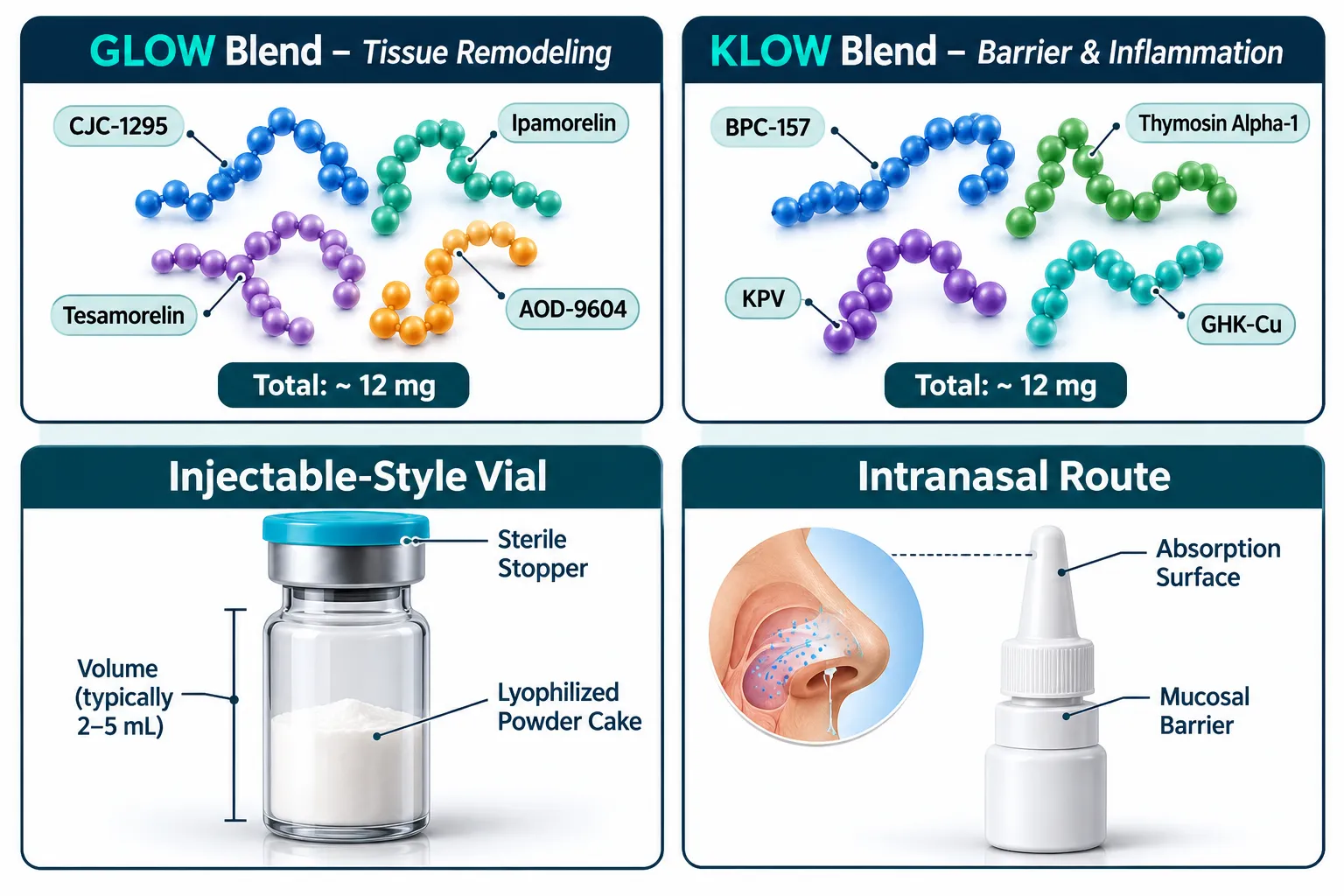
Glow Blend is a higher-mass formulation oriented toward tissue remodeling endpoints. It typically combines Tesamorelin, CJC-1295, Ipamorelin, and AOD-9604 in a configuration that emphasizes growth hormone secretagogue activity alongside lipolytic signaling. Researchers interested in collagen turnover, extracellular matrix remodeling, or adipose tissue dynamics have a clearer mechanistic rationale for selecting Glow Blend as their primary vehicle.
Klow Blend, by contrast, is engineered around inflammation modulation and gut barrier integrity. Its peptide profile shifts the ratio toward compounds with documented anti-inflammatory and epithelial-support profiles. The total mass per vial is lower than Glow Blend, which matters when designing dose-response curves, a lower ceiling concentration changes the shape of a sigmoidal curve and can obscure effects that would otherwise reach statistical significance.
A blend's label tells you what is inside. The ratio tells you what it will do.
For researchers working with Tesamorelin AOD9604 CJC1295 Ipamorelin 12mg blend dosage protocols, understanding how mass and ratio interact is foundational before any endpoint assay is run.
Key compositional contrasts at a glance:
| Feature | Glow Blend | Klow Blend |
|---|---|---|
| Primary mechanistic target | Tissue remodeling / GH axis | Inflammation / gut barrier |
| Total peptide mass | Higher | Lower |
| AOD-9604 presence | Yes | Formulation-dependent |
| Recommended primary assay | MMP activity, collagen markers | Cytokine panels, TEER assay |
Route-Dependent Exposure: Injectable-Style Vials vs Intranasal Use
Both Glow Blend and Klow Blend are supplied as lyophilized powder in injectable-style vials. This format is standard for multi-peptide research preparations because lyophilization preserves stability across the peptide stack. Reconstitution protocols for the Tesamorelin CJC1295 Ipamorelin 12mg blend provide a practical reference point for handling these vials correctly before any endpoint study begins.
Intranasal delivery of either blend remains unofficial and undocumented as of late 2026. Several research groups have explored nasal mucosal absorption as an alternative route for single-peptide compounds, Semax nasal spray formulations represent a well-documented example, but extending that logic to a complex multi-peptide blend introduces significant variables.
Specifically, intranasal delivery changes:
- First-pass metabolism bypass, nasal mucosa avoids hepatic first pass, but enzymatic degradation at the mucosal surface is not uniform across all peptides in a blend.
- Relative bioavailability per component, larger peptides such as Tesamorelin absorb less efficiently than smaller fragments, meaning the effective ratio inside the blend shifts after administration.
- Endpoint interpretation, if the absorbed ratio differs from the formulated ratio, any assay result tied to a specific mechanism becomes difficult to attribute cleanly.
For endpoint studies demanding reproducibility, the injectable-style route provides a more controlled exposure profile. Researchers considering nasal delivery for either blend should treat it as a separate experimental variable, not a substitute administration method.
Comparing Glow Blend vs Klow Blend by Specific Research Endpoints
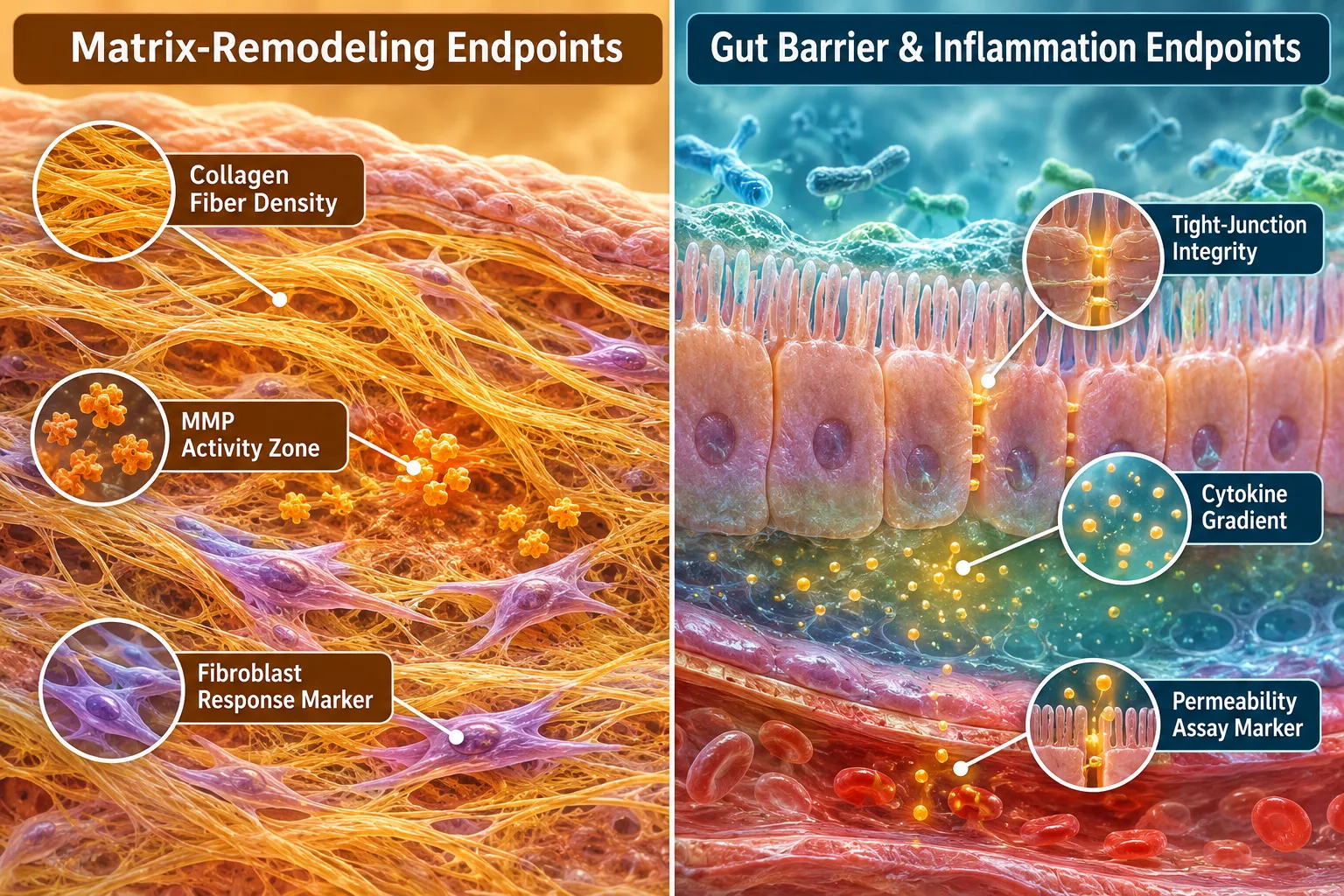
The most defensible way to approach Glow Blend vs Klow Blend: How to Compare Injectable-Style and Intranasal Research Formulations by Endpoint is to define the endpoint first, then evaluate which formulation's mechanistic profile aligns with that outcome measure.
Matrix-Remodeling Assays
For endpoints such as MMP-2/MMP-9 activity, hydroxyproline content, or fibroblast proliferation rate, Glow Blend's higher GH-secretagogue load creates a relevant signaling environment. Dose-response studies using Tesamorelin CJC1295 Ipamorelin blend dose protocols show that GH pulse amplitude correlates with downstream matrix changes in ex vivo models.
Barrier Integrity and Cytokine Endpoints
Klow Blend is more appropriate when the endpoint involves transepithelial electrical resistance (TEER), tight-junction protein expression (ZO-1, occludin), or multi-cytokine inflammatory profiling. The IPA Sermorelin stack research literature further supports the idea that ipamorelin-containing stacks with modified ratios can suppress pro-inflammatory signaling in gut epithelial models.
Oxidative Stress Endpoints
Some researchers have begun pairing either blend with mitochondrial-targeted peptides to extend endpoint panels. SS-31 mitochondrial research protocols offer a complementary framework when oxidative phosphorylation efficiency or ROS generation is a secondary endpoint.
Documentation, Regulatory Context, and Protocol Design in 2026
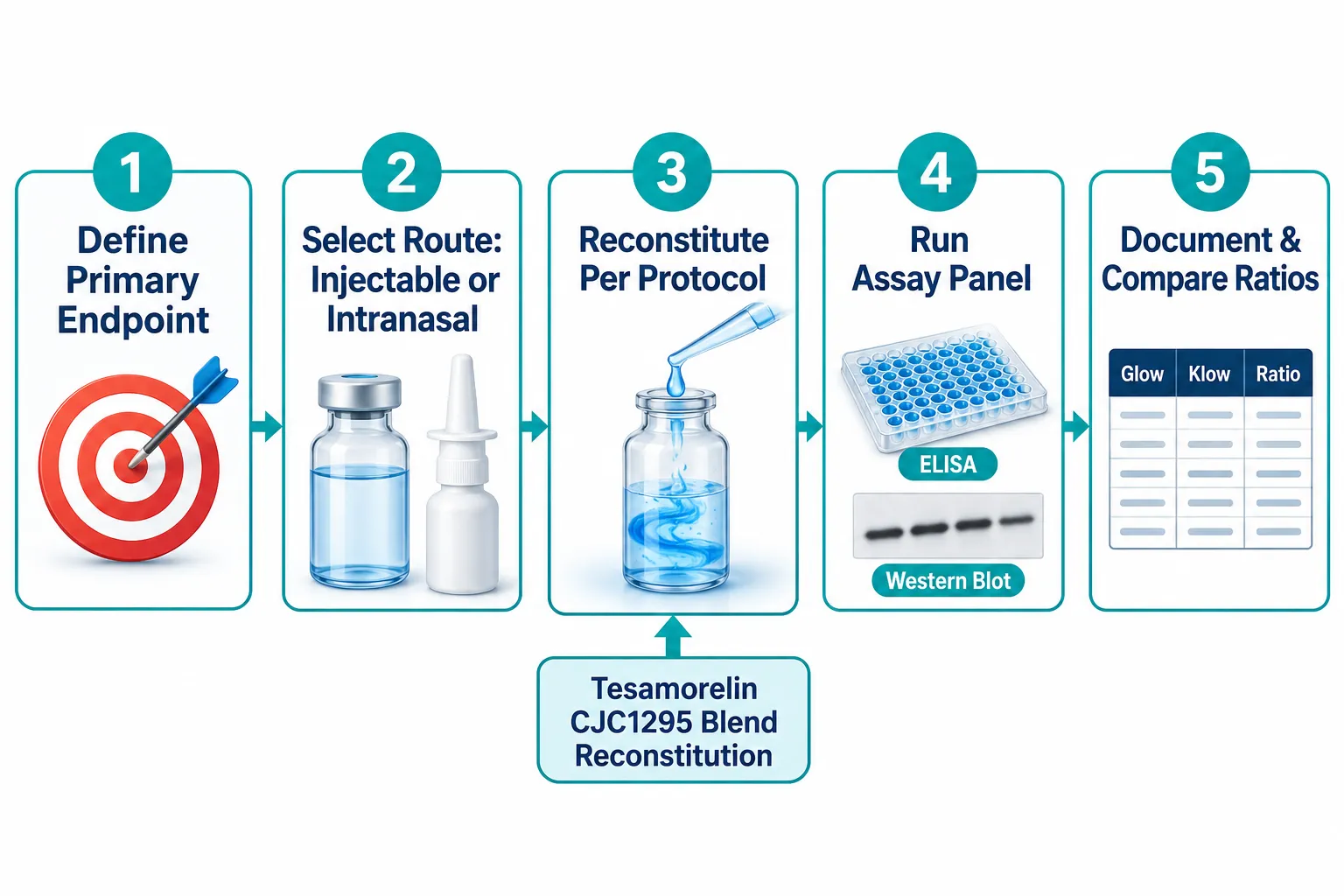
Documentation updates released in October and November 2026 have clarified two critical points for researchers comparing these formulations:
- Reconstitution volume affects concentration nonlinearly when total peptide mass differs between blends. Standardizing vehicle volume without adjusting for mass will produce non-equivalent molar concentrations.
- Endpoint labeling in study records must specify which blend, which lot, and which route was used. Regulatory guidance increasingly treats multi-peptide blends as distinct research materials, not interchangeable variants.
Both blends are research-only materials. Neither has received regulatory approval for clinical use, and all comparative endpoint work must be conducted within an appropriate institutional research framework. Researchers should also note that comparing Glow Blend vs Klow Blend across endpoints is only valid when blinded controls, vehicle-only arms, and single-compound reference arms are included, otherwise, it is impossible to determine whether a significant result reflects the blend's combined action or a dominant single component.
Conclusion
Selecting between Glow Blend and Klow Blend is fundamentally an endpoint decision. Researchers focused on tissue remodeling, GH-axis dynamics, and extracellular matrix markers have stronger mechanistic alignment with Glow Blend. Those designing gut barrier, inflammatory, or epithelial permeability studies will find Klow Blend's profile more relevant.
Actionable next steps:
- Define your primary endpoint before ordering either formulation.
- Review the 2026 documentation updates for reconstitution and concentration calculations.
- Include single-compound reference arms in every comparative study to avoid attribution errors.
- Treat intranasal delivery as an independent experimental variable, not a default alternative route.
- Cross-reference your assay panel against the blend's known mechanistic targets to ensure the endpoint you are measuring can actually be driven by the compounds present.
Rigor in formulation comparison begins with the question, not the blend.