Best Research‑Use GH Secretagogue Peptides: Comparing CJC‑1295 (With and Without DAC), Ipamorelin, and Tesamorelin
Growth hormone secretagogue research has expanded sharply since 2020, yet fewer than one in four investigators working with these compounds can clearly articulate why half-life differences between CJC-1295 variants change their assay endpoints. Choosing the wrong peptide for a given experimental design wastes reagents, distorts GH pulse data, and undermines reproducibility. This buyer's guide for research labs breaks down the Best Research-Use GH Secretagogue Peptides: Comparing CJC-1295 (With and Without DAC), Ipamorelin, and Tesamorelin across the variables that matter most: mechanism, pharmacokinetics, regulatory standing, and fit for specific study designs.
Key Takeaways
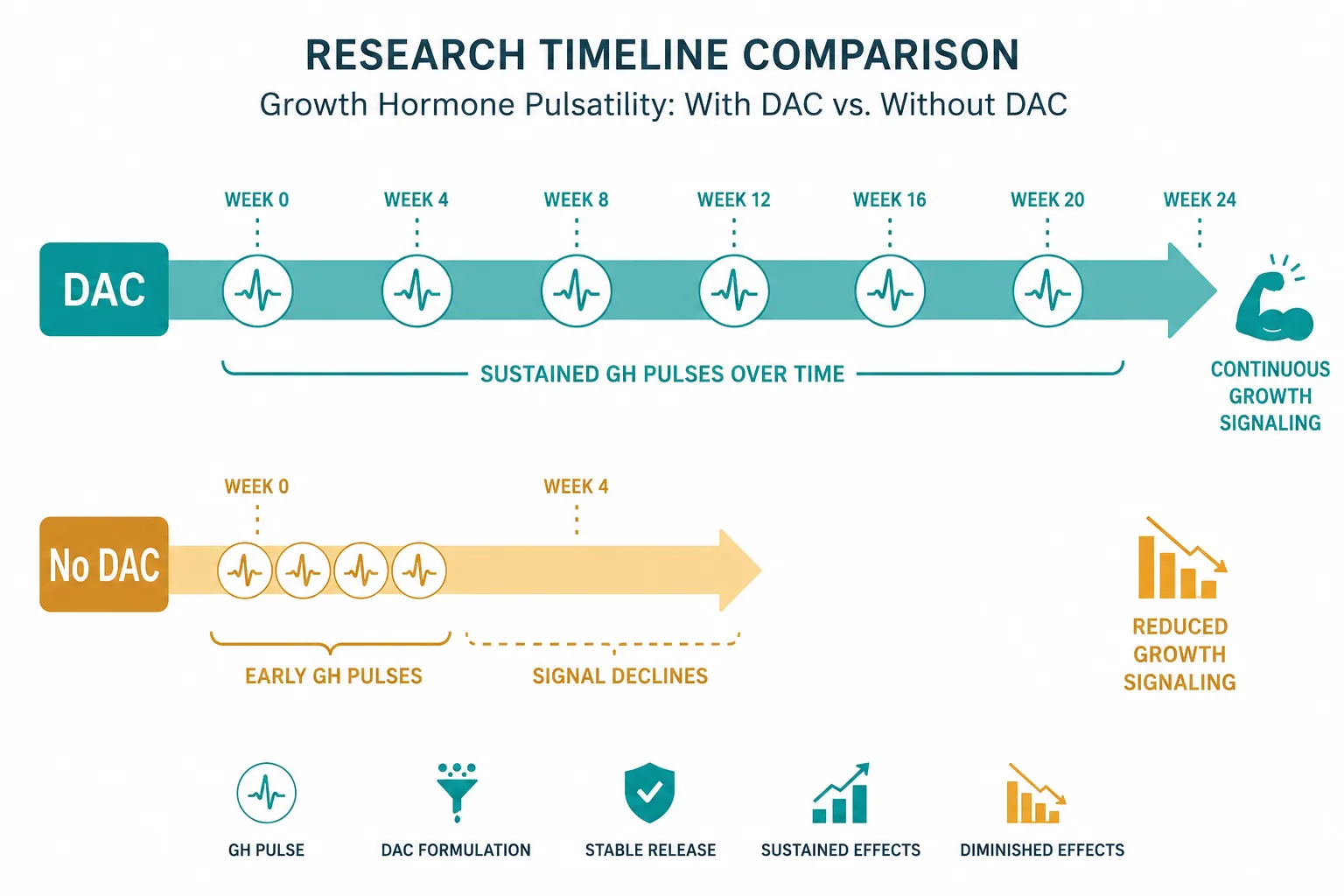
- CJC-1295 with DAC provides a prolonged, near-continuous GH elevation useful for chronic exposure models; without DAC it mimics natural pulsatile release.
- Ipamorelin is the most selective ghrelin-receptor agonist in this class, making it valuable for mechanistic studies that need to isolate GHS-R1a signaling.
- Tesamorelin is the only FDA-approved compound in this group, with the strongest clinical evidence base and a recently updated formulation (EGRIFTA WR).
- For multi-peptide stack research, synergistic GHRH-plus-GHSR designs can amplify GH output beyond what either compound achieves alone.
- Regulatory and anti-doping status differs sharply across these peptides and must be factored into any research protocol or sourcing decision.
Understanding the Pharmacological Landscape of GH Secretagogue Peptides
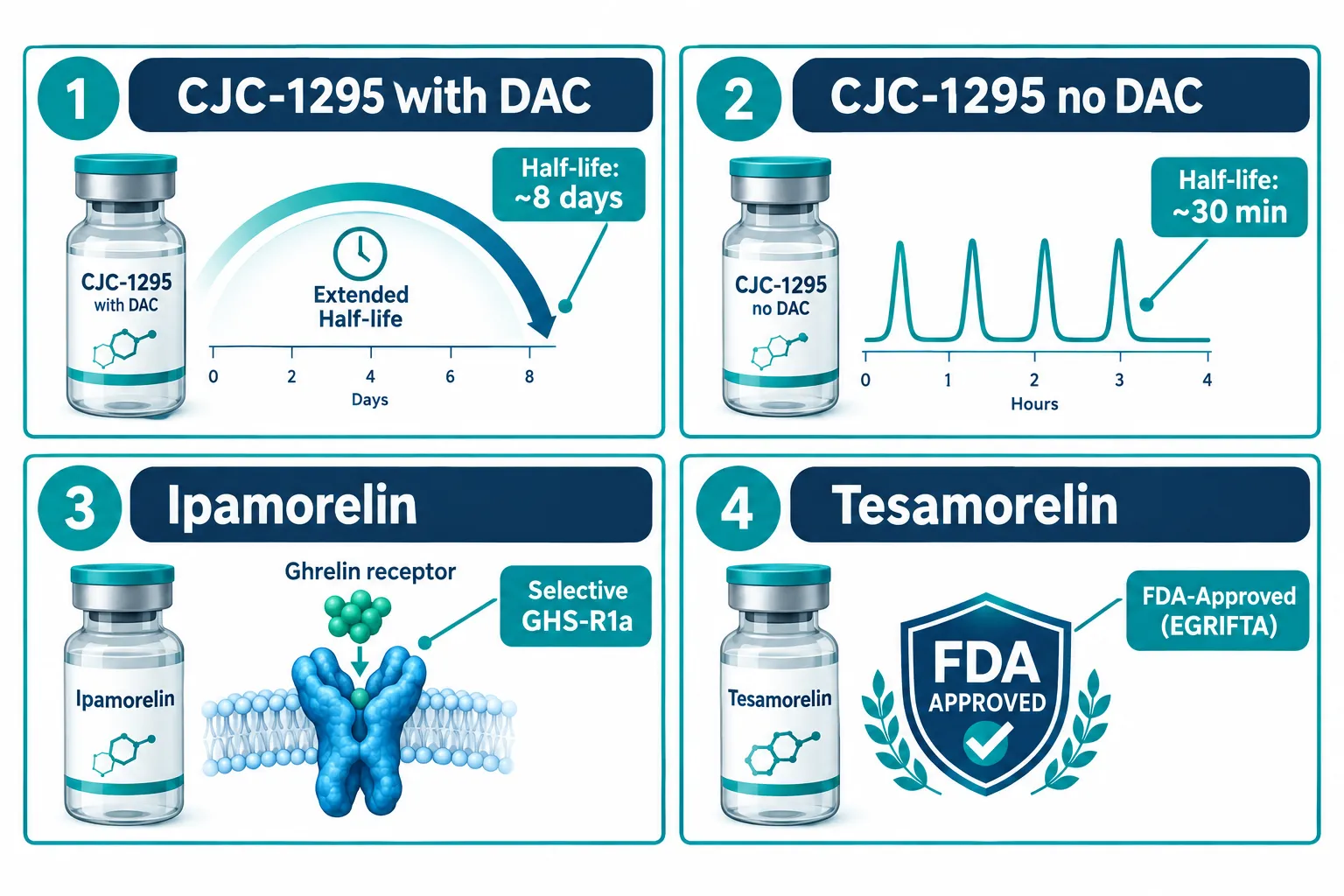
The Best Research-Use GH Secretagogue Peptides: Comparing CJC-1295 (With and Without DAC), Ipamorelin, and Tesamorelin all stimulate GH release, but they do so through distinct receptor pathways. CJC-1295 and tesa act at the GHRH receptor on pituitary somatotrophs. Ipamorelin acts at the GHS-R1a (ghrelin) receptor. This distinction is not trivial for experimental design.
GHRH-receptor agonists (CJC-1295 variants, tesa) amplify the amplitude of GH pulses. GHS-R1a agonists (ipamorelin) primarily increase pulse frequency and can act synergistically when combined with GHRH-pathway compounds. Researchers designing assays around IGF-1 AUC, pulse frequency, or receptor-specific downstream signaling need to select accordingly.
CJC-1295 With DAC vs. Without DAC: A Critical Distinction
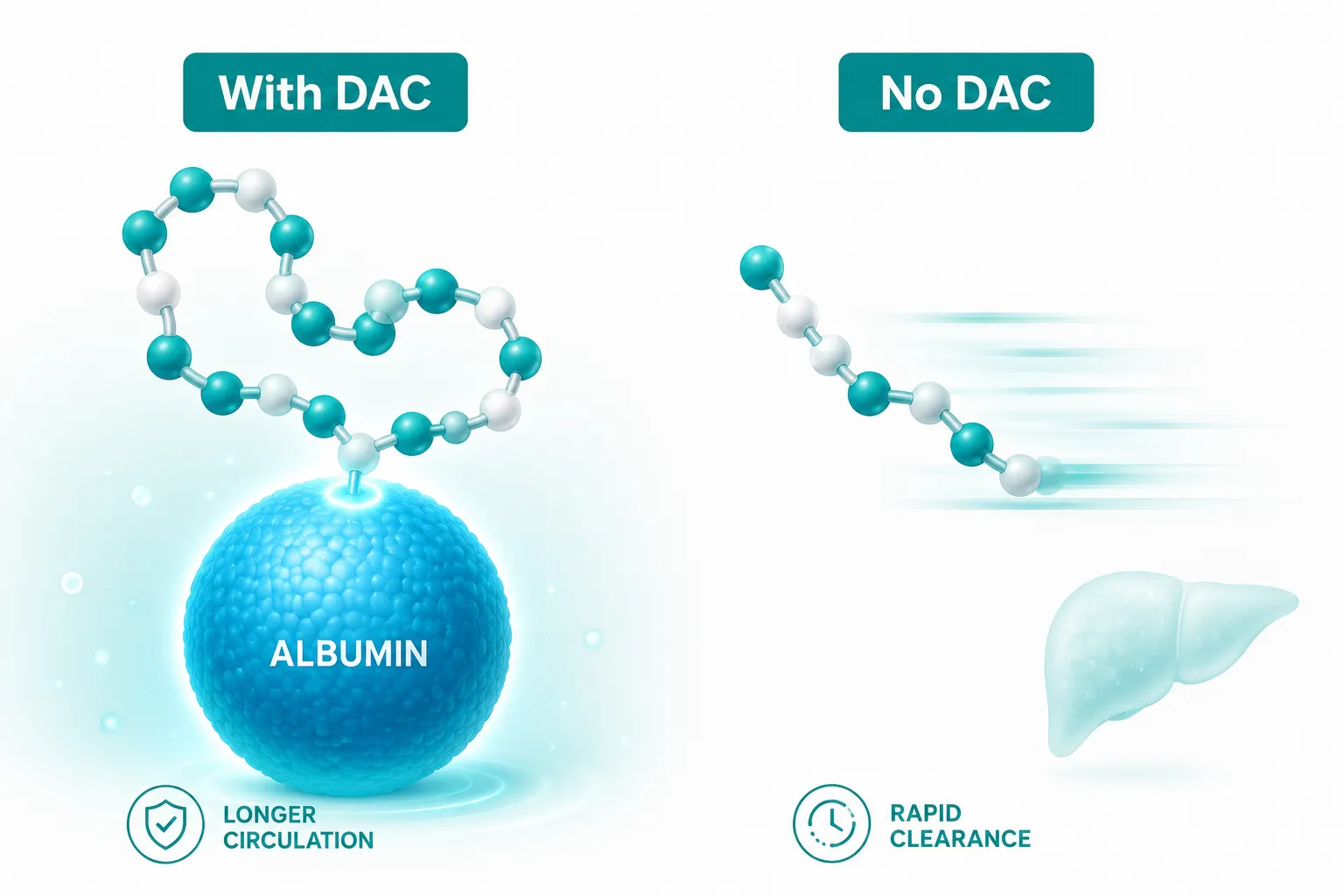
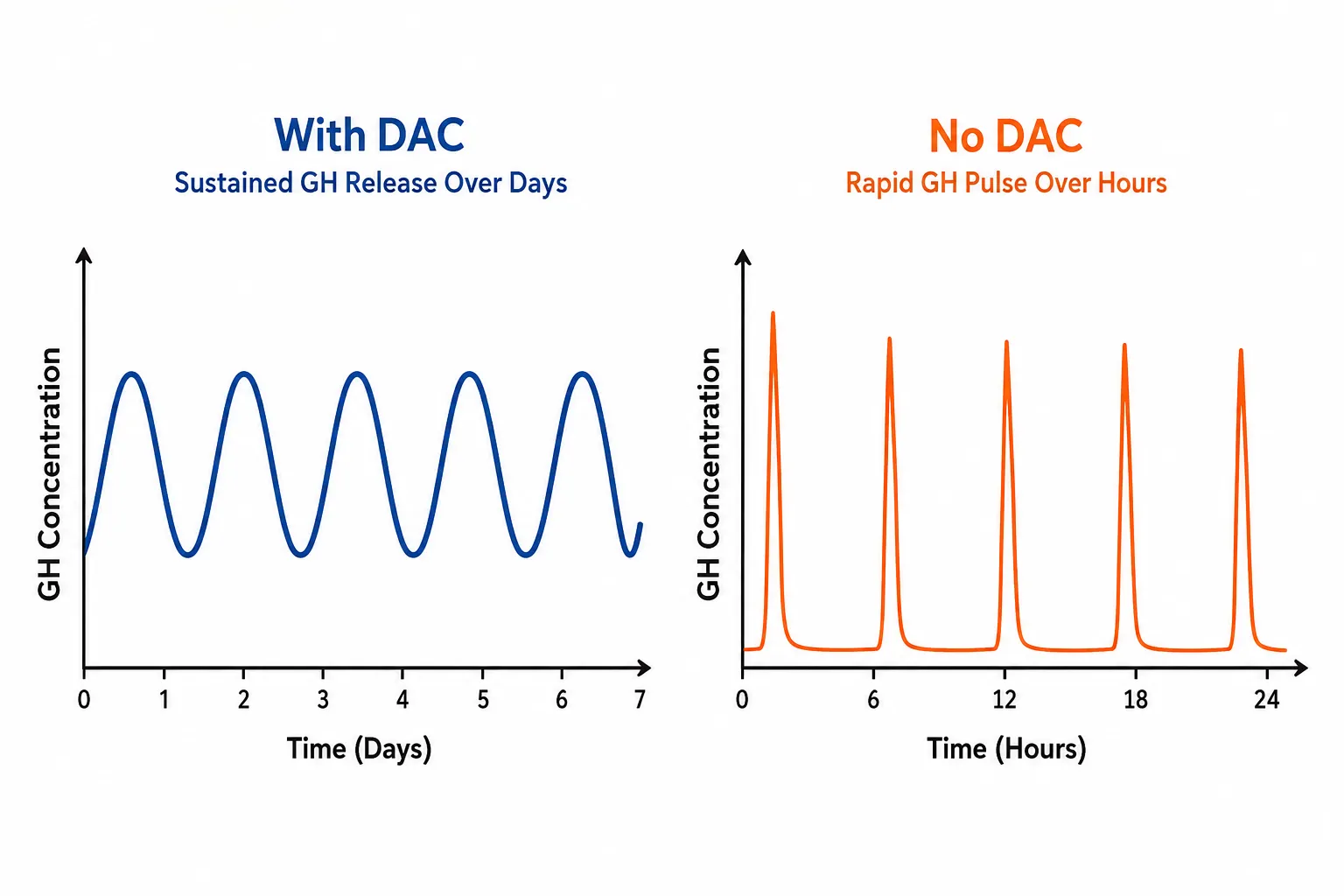
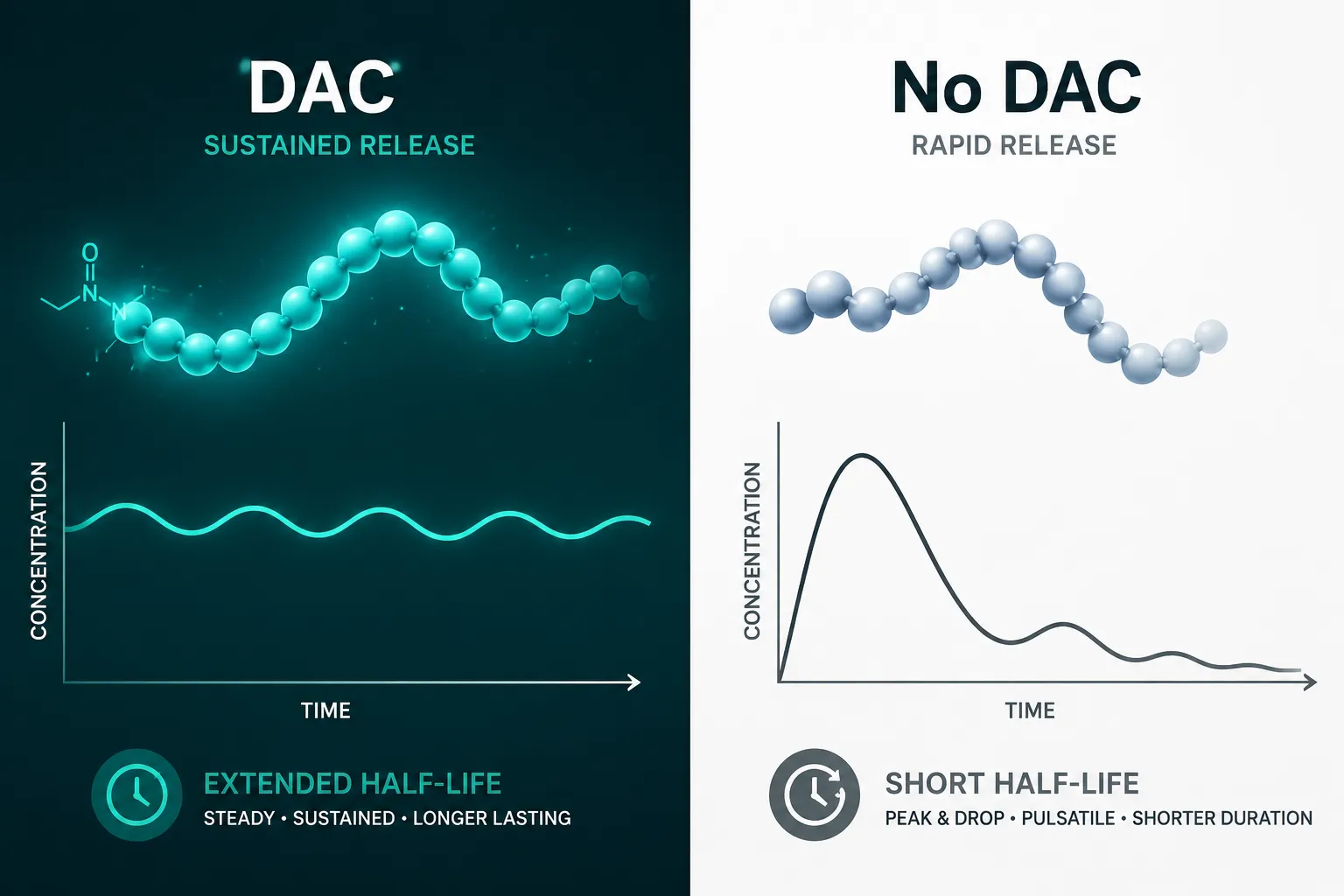
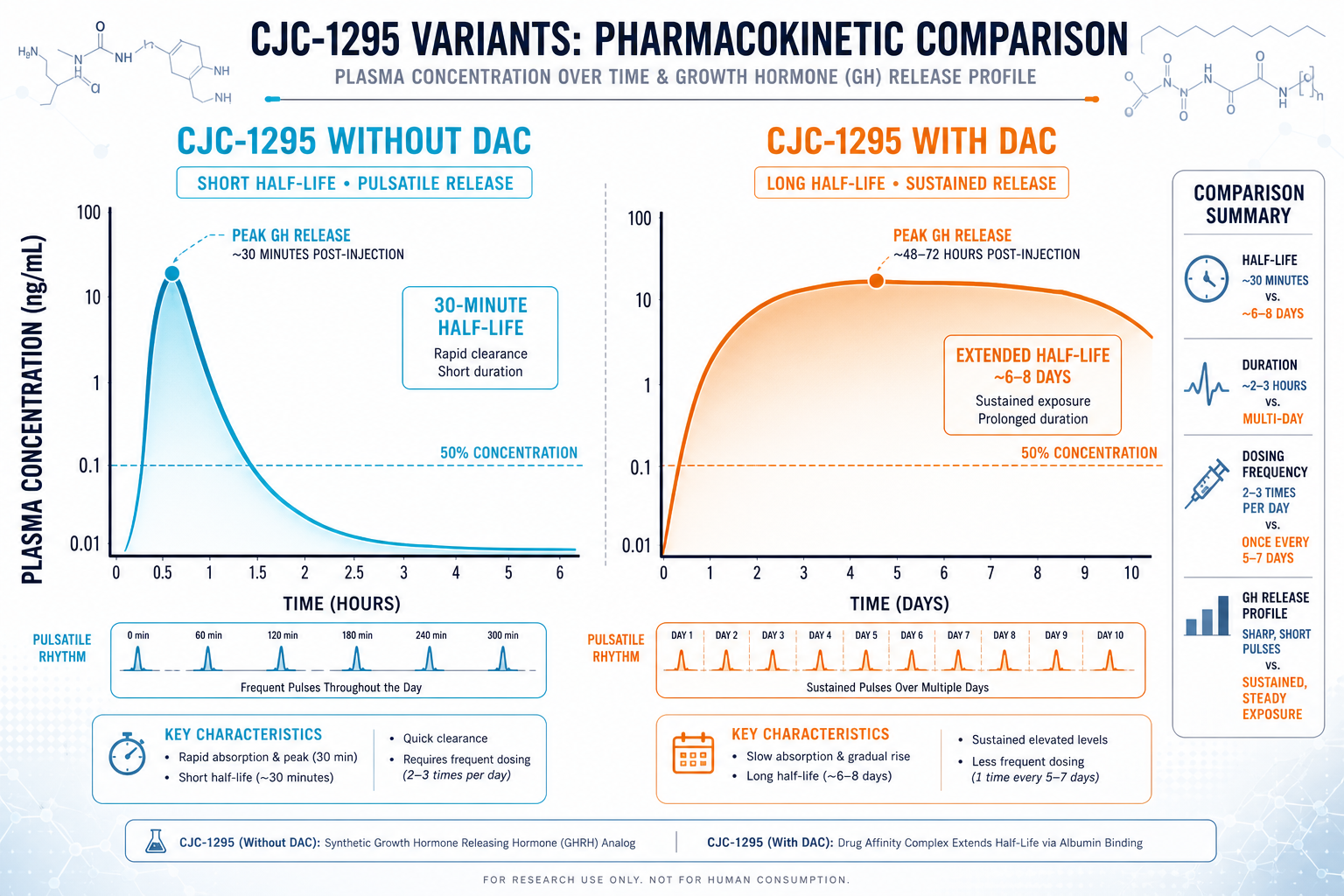
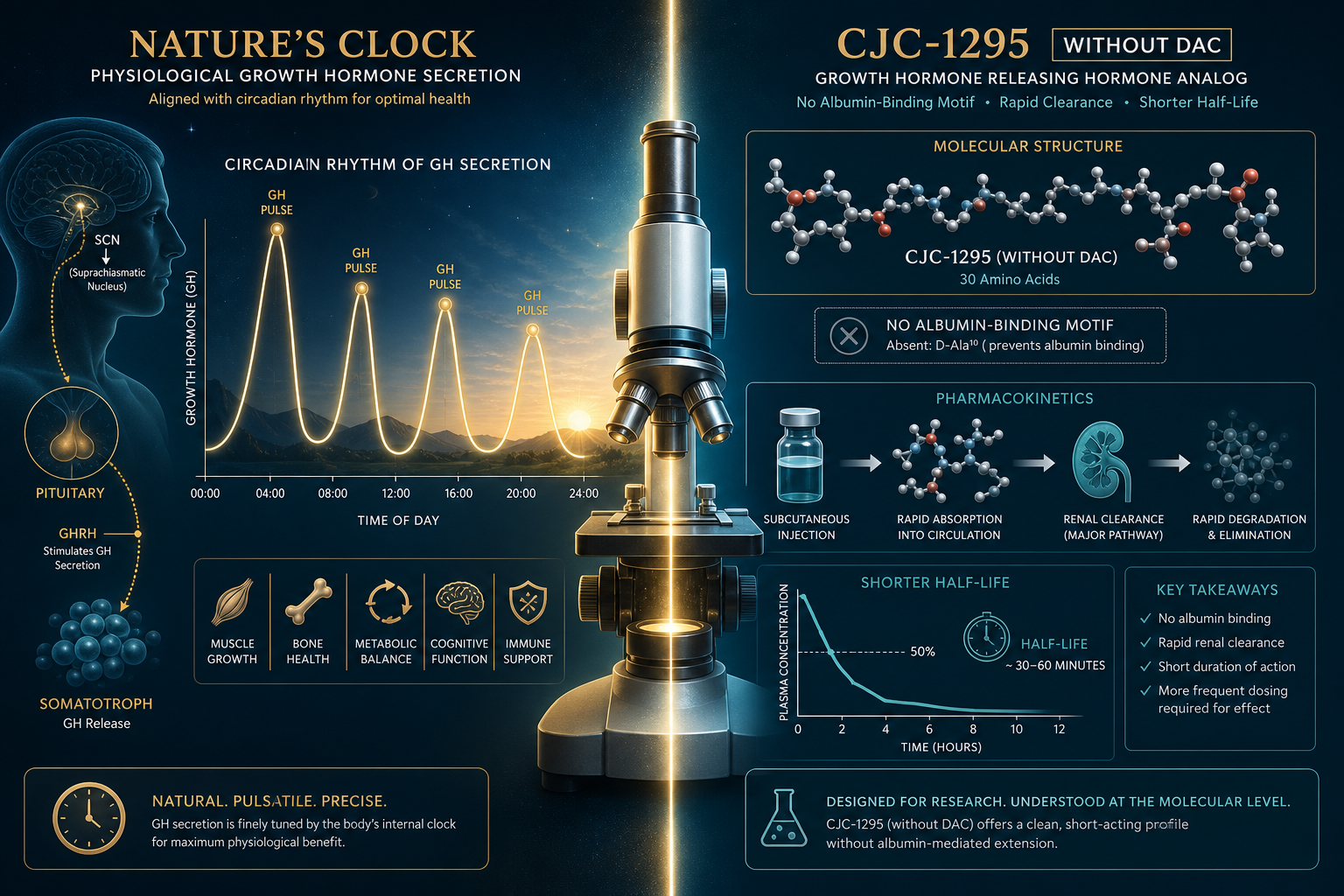
The Drug Affinity Complex (DAC) modification covalently binds CJC-1295 to circulating albumin, extending its half-life from roughly 30 minutes to approximately 8 days. The practical consequences for research are significant:
| Parameter | CJC-1295 Without DAC | CJC-1295 With DAC |
|---|---|---|
| Half-life | ~30 minutes | ~6-8 days |
| GH release pattern | Pulsatile (physiological) | Sustained, blunted pulsatility |
| Best assay fit | Pulse-frequency studies | Chronic GH-exposure models |
| Dosing frequency | Multiple daily | Once or twice weekly |
CJC-1295 without DAC is the better tool when pulsatility itself is the endpoint. It produces a sharp, short GH spike that mirrors endogenous GHRH-driven release. CJC-1295 with DAC suits chronic body-composition or metabolic models where sustained GH elevation, rather than pulse architecture, is the variable of interest. Neither compound has cleared phase III clinical trials, and both remain unapproved. They are also banned under the World Anti-Doping Agency code, a factor relevant to any research that interfaces with sport science. For labs exploring combination approaches, the Sermorelin Ipamorelin CJC-1295 dosage resource offers useful context on multi-peptide protocol considerations.
Ipamorelin: Selectivity as a Research Advantage
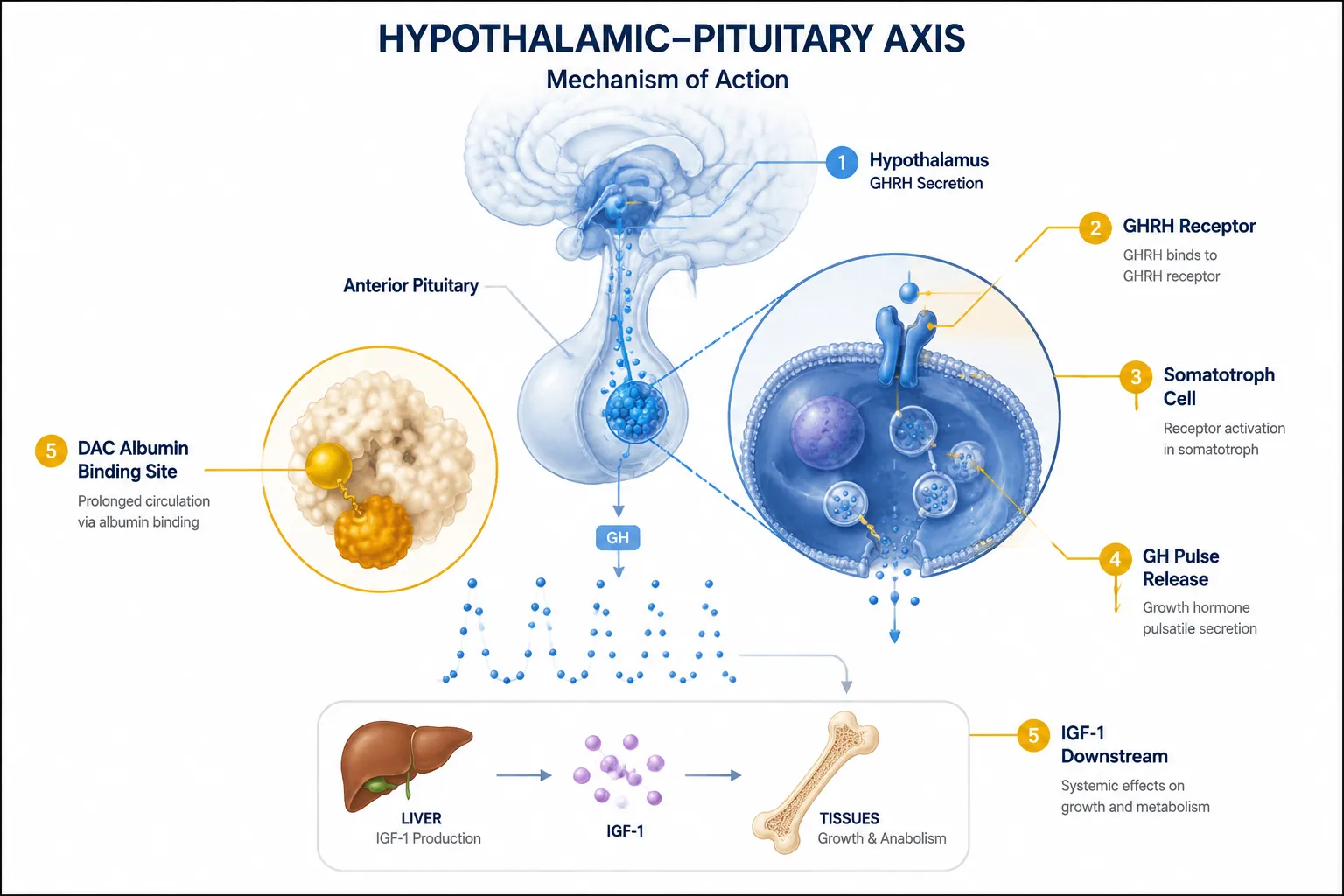
Among all GHS-R1a agonists studied in humans, ipamorelin stands out for its receptor selectivity. Unlike earlier ghrelin mimetics such as GHRP-6, ipamorelin does not meaningfully elevate cortisol, prolactin, or ACTH at research-relevant doses. This makes it a cleaner tool for isolating GH-axis effects without confounding hormonal noise.
Human safety data, while limited in volume, show a generally benign profile. The compound has not produced serious adverse signals in short-term studies. However, ipamorelin's clinical development effectively stalled after a pivotal efficacy trial failed to meet its primary endpoint, and no regulatory approval has followed. Compounding scrutiny of ipamorelin has also increased between 2024 and 2026, narrowing its availability through pharmacy channels.
For research purposes, ipamorelin's value is clearest in two scenarios:
- Mechanistic GHS-R1a studies where receptor-specific signaling must be isolated
- Stack designs pairing ipamorelin with a GHRH-pathway compound to achieve synergistic GH output
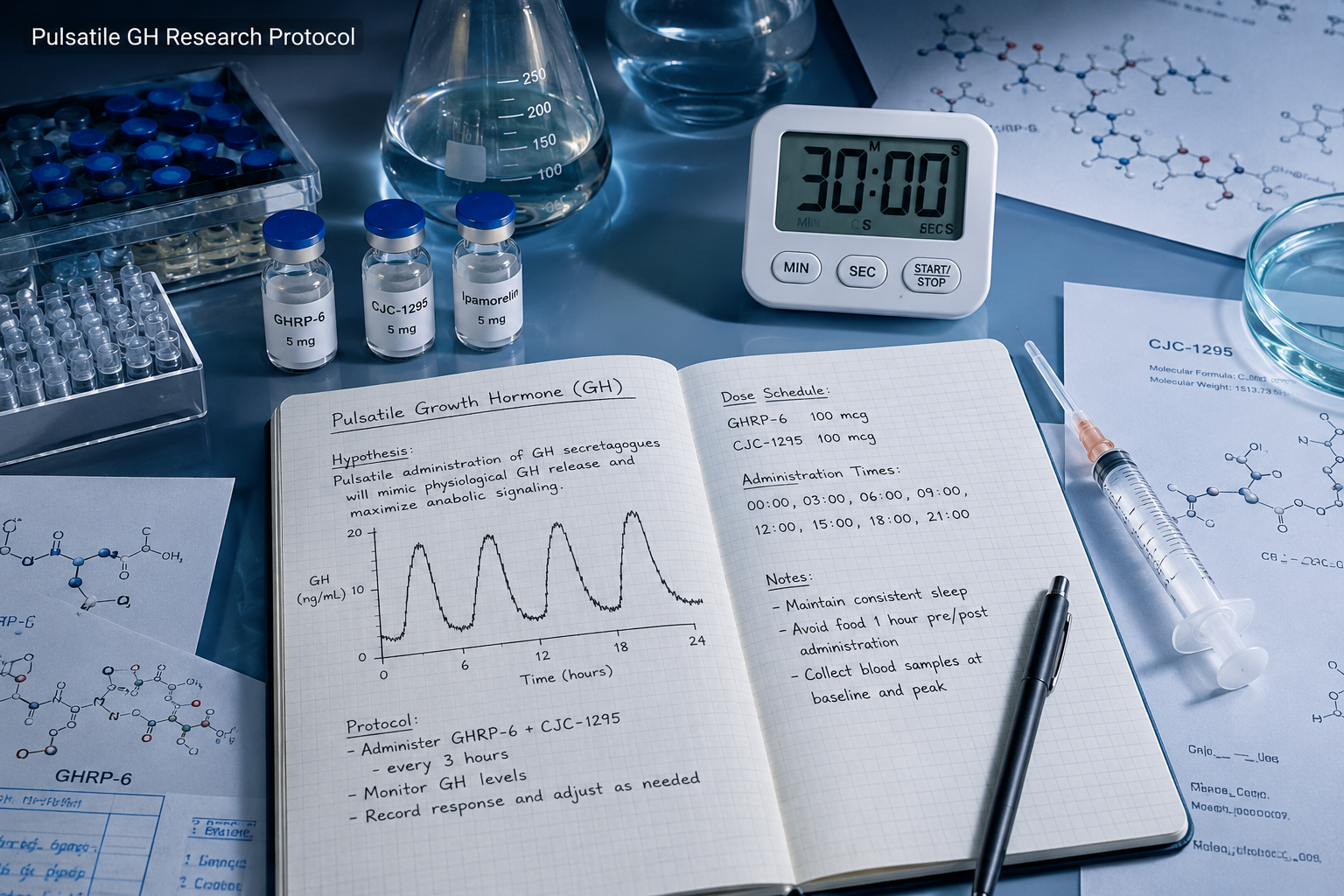
The CJC-1295 IPA 10mg combination format reflects this stack logic. Labs interested in broader systemic peptide research contexts can also review the systemic peptide research resource library for supporting literature.
Tesamorelin: The Gold Standard for Evidence-Based GH Secretagogue Research
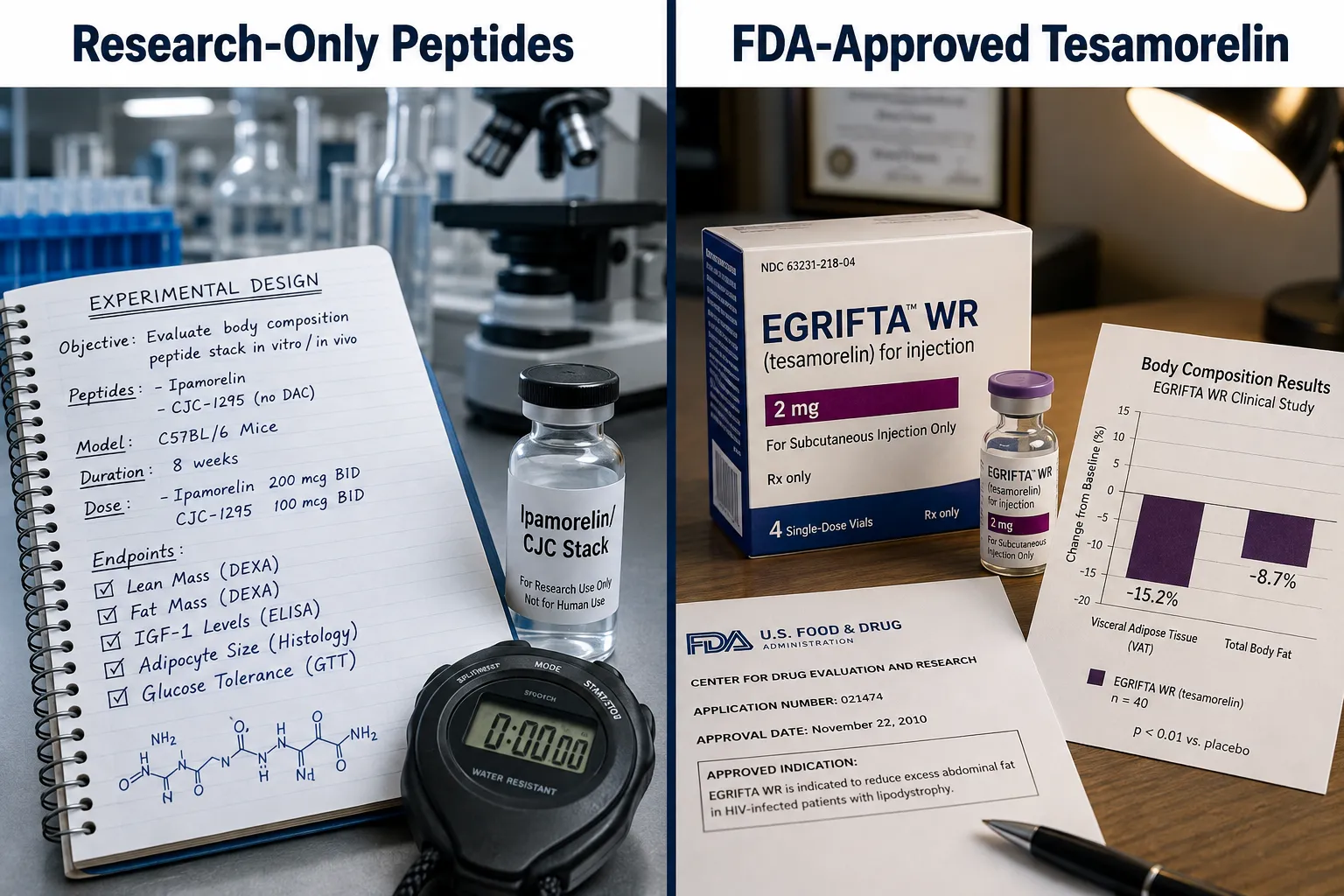
Tesamorelin occupies a different tier entirely. It is a stabilized synthetic analog of endogenous GHRH and the only compound in this comparison with FDA approval. Originally cleared for HIV-associated lipodystrophy, its label was revised in 2025-2026 to reflect the new EGRIFTA WR (F8) formulation, which offers improved stability and reconstitution characteristics relevant to both clinical and research settings.
The evidence base for tesa is substantially deeper than for either CJC-1295 variant or ipamorelin. Randomized controlled trial data confirm meaningful reductions in visceral adipose tissue in people with HIV-associated lipodystrophy. More recently, tesa has shown the strongest disease-modifying signals of any compound in this class for non-alcoholic fatty liver disease (NAFLD) in HIV-positive populations, a finding that has driven an active 2026 research pipeline focused on NAFLD extension and body-composition outcomes.
Researchers benefit from tesa's approval status in several ways:
- Published pharmacokinetic and safety data are extensive and peer-reviewed
- Regulatory-grade sourcing is available through licensed channels
- The compound can serve as a positive control in GH-secretagogue assay panels
For labs designing fat-metabolism or metabolic-syndrome models, reviewing the tesa benefits and tesa dosage for fat loss literature provides a strong foundation. Labs examining safety profiles should also consult the tesa side effects data before designing protocols. For those evaluating tesa against other GHRH-class compounds, the tesa vs. sermorelin comparison is a useful reference point.
Choosing the Right Peptide or Stack for Your Experimental Design
The decision framework below summarizes how to match compound to research objective:
Use CJC-1295 without DAC when: the study endpoint is GH pulse frequency, amplitude, or pulsatility architecture under acute stimulation conditions.
Use CJC-1295 with DAC when: the model requires sustained GH elevation over days or weeks without repeated dosing, such as chronic metabolic or tissue-remodeling studies.
Use ipamorelin when: the research question isolates GHS-R1a signaling, or when a clean GH stimulus is needed without cortisol or prolactin interference. Combining ipamorelin with a GHRH-pathway peptide amplifies GH output through complementary receptor mechanisms.
Use tesa when: the study requires an FDA-approved reference compound, when visceral adiposity or NAFLD endpoints are primary, or when the research must align with published clinical benchmarks. Multi-peptide blend formats such as the Tesamorelin CJC-1295 Ipamorelin 12mg blend are available for labs exploring combined-pathway designs.
Conclusion
Selecting among the Best Research-Use GH Secretagogue Peptides: Comparing CJC-1295 (With and Without DAC), Ipamorelin, and Tesamorelin is fundamentally an experimental-design decision, not a preference. CJC-1295 without DAC is the tool for pulsatility research; CJC-1295 with DAC suits chronic-exposure models; ipamorelin delivers receptor selectivity for mechanistic work; and tesa provides the only clinically validated, regulatory-grade option in the group.
Actionable next steps for research teams:
- Define the primary assay endpoint first (pulse architecture, IGF-1 AUC, body composition, receptor signaling) before selecting a compound.
- Review the current regulatory and anti-doping status of any unapproved compound before sourcing or publishing.
- Consider tesa as a positive control in any GH-secretagogue panel to anchor results to published clinical benchmarks.
- For stack designs, pair a GHRH-pathway compound with ipamorelin to exploit complementary receptor mechanisms and maximize GH output in the model.
- Source from suppliers that provide third-party purity testing documentation to ensure assay reproducibility.