Call or Text 727-513-9780
  • Shopping Cart Shopping Cart
    0Shopping Cart
Pure Tested Peptides | America's most trusted Peptides for sale online
  • Peptides for sale
    • Oral Peptides for sale
      • Peptide Capsules for sale
      • BPC 157 Capsules 1000mcg
      • SLU-PP-332 Capsules | 1000 mcg
      • 5-Amino-1MQ 50mg Capsules
      • Tesofensine 500mcg
    • All Peptides for sale
    • Peptide Sprays
      • BPC 157 Nasal Spray Kit
      • BPC-157 TB500 Nasal Spray Kit
      • Semax Nasal Spray 10mg
      • Selank – Nasal Spray Kit – 10mg
      • Epithalon 50MG Nasal Spray Kit
      • Ipamorelin 10mg Nasal Spray
      • Klow Nasal Spray (BPC-157 + TB-500 + GHK-Cu + KPV) | 80mg
      • Hulk Nasal Spray Tesa / Ipa Blend 6/3 MG
      • Klow Nasal Spray
      • NAD + 500 mg Nasal Spray
      • PT-141 Nasal Spray Kit
    • GHRH Peptides
      • Ipa Peptides
      • CJC-1295 Peptides
        • CJC-1295 with DAC 5 mg
        • CJC-1295 without DAC 5 mg
        • CJC-1295 Ipa 10mg
      • Tesa Peptides
        • Tesa Peptide
        • Tesa 20 mg
    • GHK-Cu Peptides
      • All GHK-Cu Peptides
      • GHK-Cu 100mg
      • KLOW Peptide Blend – Buy KLOW blend online
    • BPC Peptides
      • All BPC Peptides
      • BPC-157
      • BPC-157 TB-500
      • BPC 157 capsules 1000mcg
    • SLU-PP-332 Peptides
      • All SLU-PP-332 Peptides
      • SLU-PP-332 5mg
    • GLP3 Peptides
    • PT-141 Peptides
      • PT-141 Peptides for sale
      • PT-141 10mg
      • PT-141 Nasal Spray
    • CAG Peptides
      • Lipo-C Peptide Blend
      • CAG 5mg
      • CAG 10mg
    • MOTS-C Peptides
      • MOTS-C Peptides for sale
      • MOTS-c peptide
      • MOTS-c 10mg *6 pack*
    • 5 Amino 1MQ Peptides
      • 5 Amino 1MQ Peptides for sale
      • 5-Amino-1MQ 50mg Capsules
      • 5-Amino-1MQ 5mg
    • Epithalon Peptides
      • Epithalon Peptides for sale
      • Epithalon 10mg
      • Epithalon 50mg
  • Shop
    • GLPs
      • 5-Amino-1MQ 50mg Capsules
      • 5-Amino-1MQ 5mg
      • L-Carnitine 500mg/ml
      • Tesofensine 500mcg
      • SLU-PP-332 5mg
      • MOTS-c 10mg *6 pack*
    • Epithalon & BPC Peptides
      • Epithalon 10mg
      • Epithalon 50mg
      • BPC-157
      • BPC 157 capsules 1000mcg
      • BPC-157 TB-500
      • BPC-157 TB500 Nasal Spray Kit
      • BPC 157 Nasal Spray Kit
    • BPC TB-500 & NAD+ Peptides
      • NAD+ 500 mg
      • KLOW Peptide Blend – Buy KLOW blend online
      • GLOW Peptide Blend
      • TB 500 5mg
      • BPC 157 capsules 1000mcg – Supplement
      • BPC 157 Nasal Spray Kit
      • BPC-157
      • BPC-157 TB500 Nasal Spray Kit
      • BPC-157 TB-500
      • BPC 157 capsules 1000mcg
    • LL-37 Peptide
      • LL-37 10 mg
    • MOTS-C & Selank
      • MOTS-c peptide
      • Selank 10mg
    • GHK Peptides
      • GHK-Cu 100mg
      • GLOW Peptide Blend
      • KLOW Peptide Blend – Buy KLOW blend online
  • COAs
  • Wholesale
    • Wholesale Peptides for sale
  • PTP FAQ
  • Affiliates
    • Selank Peptide: Advanced Pharmacological Mechanisms Underlying Its Anxiolytic and Nootropic Effects in Research
      • 5-Amino-1MQ Peptide: Detailed Mechanisms of NNMT Inhibition and Its Impact on Cellular Metabolism Research
        • MOTS-C Peptide: Unraveling Its Role in Mitochondrial Dynamics and Energy Metabolism Research
          • Epithalon Peptide and Telomerase Regulation: Investigating Its Impact on Cellular Senescence and Lifespan Research Models
            • GLP2-T vs GLP2 Tirz Peptide: Understanding the Naming, Mechanistic Nuances, and Research Implications for Gut Health
      • Peptides and Polypeptides in Modern Pharmacology: What Research on Metoprolol, Prednisone, and Amlodipine Reveals
        • Polypeptide Peptides vs NSAIDs: What Naproxen and Diclofenac Teach Tissue-Repair Researchers About BPC‑157 and TB‑500
          • Peptides and Polypeptides in Endocrine Pharmacology: How GLP-1, GLP-2, and GLP-3 Retatrutide Differ From Classic Drugs Like Prednisone and Amlodipine
          • 5‑Amino‑1MQ Peptide and NNMT Inhibition: How It Compares With Statins Like Atorvastatin in Adipose and Lipid Metabolism Research
      • Enclomiphene, Estrogen Receptor Signaling, and Luteinizing Phase Biology: What Hormone Researchers Should Measure
        • Mesenchymal Stem Cells, BPC‑157, and GHK‑Cu: How Tissue Repair Peptides Compare With Classic NSAIDs Like Naproxen in Injury Models
          • Peptide Calculator Use Cases Beyond Growth Hormone: Working Through GLP‑3 Retatrutide, MOTS‑c, and BPC‑157 Research Dosing
        • Polypeptide Peptides in Endocrine and Metabolic Pharmacology: Lessons From Amlodipine, Prednisone, and Metoprolol
        • Peptides Calculator for Advanced Blends: Worked Examples for Tesamorelin, CJC‑1295, and Ipamorelin Stacks
          • Peptides and Polypeptides in Human Physiology: How Molecular Size Shapes Research Applications
            • Selank Peptide: Advanced Pharmacological Mechanisms Underlying Its Anxiolytic and Nootropic Effects in Research
          • 5-Amino-1MQ Peptide: Detailed Mechanisms of NNMT Inhibition and Its Impact on Cellular Metabolism Research
            • MOTS-C Peptide: Unraveling Its Role in Mitochondrial Dynamics and Energy Metabolism Research
              • Epithalon Peptide and Telomerase Regulation: Investigating Its Impact on Cellular Senescence and Lifespan Research Models
                • GLP2-T vs GLP2 Tirz Peptide: Understanding the Naming, Mechanistic Nuances, and Research Implications for Gut Health
                  • Peptides and Polypeptides in Endocrine Pharmacology: How GLP-1, GLP-2, and GLP-3 Retatrutide Differ From Classic Drugs Like Prednisone and Amlodipine
                    • Polypeptide Peptides vs NSAIDs: What Naproxen and Diclofenac Teach Tissue-Repair Researchers About BPC‑157 and TB‑500
                      • Peptides and Polypeptides in Modern Pharmacology: What Research on Metoprolol, Prednisone, and Amlodipine Reveals
                        • 5‑Amino‑1MQ Peptide and NNMT Inhibition: How It Compares With Statins Like Atorvastatin in Adipose and Lipid Metabolism Research
                        • Enclomiphene, Estrogen Receptor Signaling, and Luteinizing Phase Biology: What Hormone Researchers Should Measure
                        • Mesenchymal Stem Cells, BPC‑157, and GHK‑Cu: How Tissue Repair Peptides Compare With Classic NSAIDs Like Naproxen in Injury Models
                        • Peptide Calculator Use Cases Beyond Growth Hormone: Working Through GLP‑3 Retatrutide, MOTS‑c, and BPC‑157 Research Dosing
                        • Polypeptide Peptides in Endocrine and Metabolic Pharmacology: Lessons From Amlodipine, Prednisone, and Metoprolol
                        • Peptides Calculator for Advanced Blends: Worked Examples for Tesamorelin, CJC‑1295, and Ipamorelin Stacks
                        • Peptides and Polypeptides in Human Physiology: How Molecular Size Shapes Research Applications
                        • Selank Peptide: Advanced Pharmacological Mechanisms Underlying Its Anxiolytic and Nootropic Effects in Research
                        • MOTS-C Peptide: Unraveling Its Role in Mitochondrial Dynamics and Energy Metabolism Research
                        • Peptides and Polypeptides in Modern Pharmacology: What Research on Metoprolol, Prednisone, and Amlodipine Reveals
                        • Peptides and Polypeptides in Endocrine Pharmacology: How GLP-1, GLP-2, and GLP-3 Retatrutide Differ From Classic Drugs Like Prednisone and Amlodipine
                        • 5-Amino-1MQ Peptide: Detailed Mechanisms of NNMT Inhibition and Its Impact on Cellular Metabolism Research
                        • Mesenchymal Stem Cells, BPC‑157, and GHK‑Cu: How Tissue Repair Peptides Compare With Classic NSAIDs Like Naproxen in Injury Models
                        • Peptide Calculator Use Cases Beyond Growth Hormone: Working Through GLP‑3 Retatrutide, MOTS‑c, and BPC‑157 Research Dosing
                        • GLP2-T vs GLP2 Tirz Peptide: Understanding the Naming, Mechanistic Nuances, and Research Implications for Gut Health
                        • Polypeptide Peptides in Endocrine and Metabolic Pharmacology: Lessons From Amlodipine, Prednisone, and Metoprolol
                        • Polypeptide Peptides vs NSAIDs: What Naproxen and Diclofenac Teach Tissue-Repair Researchers About BPC‑157 and TB‑500
                        • Peptides and Polypeptides in Human Physiology: How Molecular Size Shapes Research Applications
                        • Peptides Calculator for Advanced Blends: Worked Examples for Tesamorelin, CJC‑1295, and Ipamorelin Stacks
                        • 5‑Amino‑1MQ Peptide and NNMT Inhibition: How It Compares With Statins Like Atorvastatin in Adipose and Lipid Metabolism Research
                        • Enclomiphene, Estrogen Receptor Signaling, and Luteinizing Phase Biology: What Hormone Researchers Should Measure
                        • Epithalon Peptide and Telomerase Regulation: Investigating Its Impact on Cellular Senescence and Lifespan Research Models
                        • Best research protocol Klow blend
                        • best time to take BPC-157
                        • best time to take DSIP (Delta Sleep Inducing Peptide)
                        • best time to take CJC-1295
                        • best time to take AOD-9604
                        • best time to take Follistatin 344
                        • best time to take Ipamorelin
                        • best time to take MK-677 (Ibutamoren)
                        • best time to take Ligandrol (LGD-4033) — research compound
                        • best time to take Ostarine (MK-2866) — research compound
                        • best time to take GHK-CU
                        • best time to take TB-500
                        • best time to take MOTS-c
                        • best time to take Semax
                        • best time to take RAD-140 (Testolone) — research compound
                        • best time to take Thymosin Alpha-1
                        • best time to take PEG-MGF
                        • Biolife Plasma, Octapharma Plasma, and Research Peptides: How Plasma Donation Labs Differ From Peptide Suppliers
                        • best time to take YK-11 — research compound
                        • best time to take PT-141 (Bremelanotide)
                        • Best research protocol Klow blend
                        • 5-Amino-1MQ and MOTS-C Synergy: Metabolic Signaling, Mitochondria, and Research Design
                        • BPC-157 and TB-500: Investigating Their Combined Effects on Angiogenesis and Cellular Migration in Tissue Repair Models
                        • BPC-157 Peptide: Gut Barrier Function, Inflammation, and Tissue-Recovery Research
                        • 5‑Amino‑1MQ and MOTS‑c Synergy in Metabolic Research: Designing NNMT and Mitochondrial Biogenesis Stacks
                        • CJC-1295 with DAC vs. Without DAC: Half-Life, Release Kinetics, and Research Implications
                        • CJC‑1295 with DAC vs. Without DAC: Expanding on Half‑Life Differences Using Tesamorelin and Ipamorelin Blend Case Studies
                        • Collagen Biology and Copper‑Binding Peptides: How GHK‑Cu, Glow Blend, and Klow Blend Interact with Skin and Connective Tissue
                        • Collagen Biology and Regenerative Peptides: How GHK‑Cu, Glow Blend, and Klow Blend Affect Extracellular Matrix Research
                    • DNA, Telomeres, and Longevity Peptides: Positioning Epithalon and MOTS‑c in Genetic Aging Research
                      • Enclomiphene Citrate: serm Mechanism, Testosterone Research, and Stack Compatibility
                        • Enclomiphene vs Enclomiphene Citrate: Formulation, Bioavailability, and Research Distinctions
                        • Epithalon Peptide Research: Telomerase Activation, Aging, and Pineal Gland Function
                        • Estrogen Receptor Signaling and Enclomiphene: How Selective Modulators Compare with Classic Polypeptide Hormones
                        • GHK-Cu Peptide: Advanced Mechanisms in Extracellular Matrix Remodeling and Wound Healing Research
                        • GHK-Cu Peptide: Collagen Synthesis, Wound Repair, and Skin-Barrier Research Models
                        • GLP-1 vs GLP-3 vs GLP-2: Peptide Classification and Research Applications
                        • GLP-2 Peptide Research Guide: Gut Barrier Function, Nutrient Absorption, and Intestinal Recovery Models
                        • GLP-3 Retatrutide vs. GLP-1 Drugs: What Triple-Agonist Biology Changes in Research Models
                        • Ipamorelin and Tesamorelin Combination: Synergistic GH Secretagogue Research and Dosing Protocols
                        • GLP2 Tirz Peptide: What It Is, Why the Name Exists, and How Researchers Should Interpret It
                        • Klow Blend Peptide Nasal Spray: What the Formulation Is Trying to Do in Cognitive Research
                        • Mitochondria, NNMT Inhibition, and Peptide Modulators: Where MOTS‑c and 5‑Amino‑1MQ Fit in Cellular Energy Research
                        • MOTS-c Peptide: Mitochondrial Function, Energy Metabolism, and What Researchers Measure
                        • MOTS-c vs. 5-Amino-1MQ: Which Metabolic Research Questions Each Compound Actually Answers
                        • Nasal Spray Peptides: Bioavailability, Administration, and Semax/Selank Research Applications
                        • PT-141 Peptide Research: Mechanism of Action and Melanocortin Receptor Signaling
                        • Retatrutide for Research: Mechanism, Structure, and GLP-1/GLP-3 Dual Action
                        • Retatrutide for Obesity and Type 2 Diabetes: What the Latest Trial Data Suggest
                        • Tesofensine Peptide Research: Mechanism, Appetite Suppression, and Neuropeptide Y Pathways
  • Contact
    • Contact Customer Service
    • Text Customer Support
  • About US
  • Shop all peptides
  • Affiliate Program
    • Affiliate Signup
  • Login / Register Login / Register Page Link Login / Register Page Link
  • Click to open the search input field Click to open the search input field Search
  • Menu Menu

Tag Archive for: glp-1 receptor agonist

Retatrutide Side Effects, Tolerability, and Dose Escalation: What the Clinical Literature Shows

Retatrutide Side Effects, Tolerability, and Dose Escalation: What the Clinical Literature Shows

June 14, 2026/0 Comments/by Pure Tested

Sixty percent of participants on the highest retatrutide dose reported nausea in Phase 2 trials. That single data point tells you more about managing this triple-receptor agonist than any headline about weight loss ever could. For clinicians, researchers, and informed readers, understanding Retatrutide Side Effects, Tolerability, and Dose Escalation: What the Clinical Literature Shows is the essential starting point before any other conversation about this compound.

Key Takeaways

  • Gastrointestinal adverse events are the most common side effects and are strongly dose-dependent.
  • Dysesthesia (abnormal skin sensation) is a unique side effect not seen with semaglutide or tirzepatide.
  • Slow, structured dose escalation is the primary strategy for improving tolerability.
  • Most adverse events are mild to moderate and tend to decrease after the titration phase.
  • Understanding the adverse-event profile helps set realistic expectations for any research or clinical context.

Key Takeaways

The Gastrointestinal Adverse Event Profile

The dominant safety signal across all retatrutide trials is gastrointestinal (GI) in nature. In the TRIUMPH-4 Phase 3 trial, participants receiving the 12 mg dose reported the following rates compared to placebo:

Adverse Event Retatrutide 12 mg Placebo
Nausea 43.2% 10.7%
Diarrhea 33.1% 13.4%
Constipation 25.0% 8.7%
Vomiting 20.9% 0.0%
Decreased appetite 18.2% 9.4%

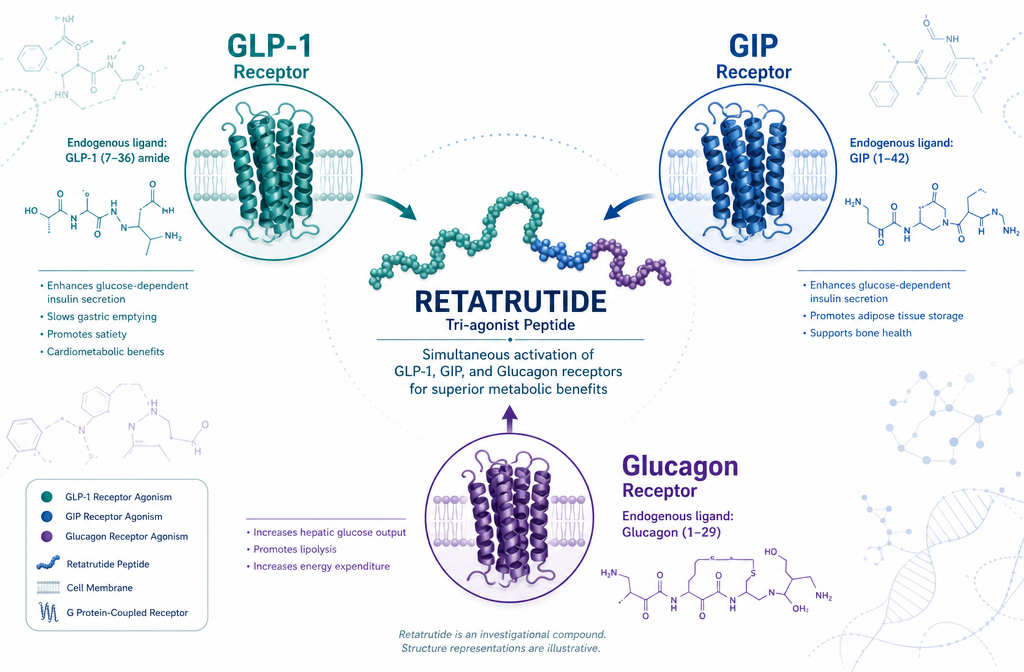
These numbers are significant but not unexpected. Retatrutide activates three receptors simultaneously: GLP-1, GIP, and glucagon. This triple-agonist mechanism, which you can explore further through the GLP-3 retatrutide research overview, amplifies both efficacy and GI burden compared to single or dual-receptor agents.

It is also worth noting how retatrutide compares within the broader evolution of incretin-based therapies. The generations of GLP-1 receptor agonists page provides useful context for how each new class has shifted the tolerability landscape.

"The GI side effect profile of retatrutide is consistent with its mechanism but is meaningfully more pronounced at higher doses than what is observed with dual agonists."


The Gastrointestinal Adverse Event Profile

Dose-Dependent Tolerability: What the Phase 2 Data Reveals

One of the clearest findings from the TRIUMPH-1 Phase 2 trial is that side effects scale with dose. The nausea data across dose groups tells a direct story:

  • 1 mg dose: 14% reported nausea
  • 4 mg dose: 36% reported nausea
  • 8 mg dose: 44% reported nausea
  • 12 mg dose: 60% reported nausea

Diarrhea followed a less linear pattern, peaking at the 4 mg and 8 mg doses (both at 20%) before dropping slightly at 12 mg (15%), which may reflect GI adaptation over time.

This dose-response relationship is the primary reason that structured titration protocols exist. Gradual escalation allows the body to adapt to receptor activation before reaching therapeutic doses. Researchers interested in how similar peptide compounds handle titration can review CJC-1295 with DAC research findings for comparative context on incremental dosing strategies.

Understanding the GIP receptor and its importance also helps explain why the GI burden of retatrutide differs from GLP-1-only agents. GIP receptor co-activation affects gastric emptying and gut motility in ways that compound the nausea signal.


Dose-Dependent Tolerability: What the Phase 2 Data Reveals

Dysesthesia and Other Notable Findings in Retatrutide Side Effects, Tolerability, and Dose Escalation

Beyond GI effects, dysesthesia stands out as a clinically distinctive finding. In TRIUMPH-4, 20.9% of participants on the 12 mg dose reported this abnormal skin sensation, compared to just 0.7% in the placebo group. This side effect has not been observed with semaglutide or tirzepatide, making it a potential marker of retatrutide's unique glucagon receptor activity.

The mechanism behind dysesthesia is not fully characterized, but it is thought to relate to the glucagon receptor's role in peripheral nervous system signaling. Most reported cases were mild and did not lead to discontinuation.

For those studying peptide compounds with overlapping metabolic and neurological effects, the metabolic modulation research lines resource offers broader context on how receptor cross-talk can produce unexpected systemic signals.

Additional findings from the clinical literature on Retatrutide Side Effects, Tolerability, and Dose Escalation: What the Clinical Literature Shows include:

  • Injection site reactions (mild, consistent with subcutaneous peptide administration)
  • Heart rate increases at higher doses, consistent with glucagon receptor activity
  • No new cardiovascular safety signals identified in Phase 2 or Phase 3 data to date

Researchers exploring synergistic incretin mechanisms may also find the cagrilintide synergy with GLP-1 article relevant, as it addresses how combination receptor strategies influence tolerability profiles.


Conclusion

The clinical picture of Retatrutide Side Effects, Tolerability, and Dose Escalation: What the Clinical Literature Shows is one of manageable but meaningful adverse events, primarily GI in nature and clearly dose-dependent. Dysesthesia remains the most pharmacologically interesting finding, given its absence in comparable drug classes.

Actionable next steps for researchers and clinicians:

  1. Prioritize slow dose escalation protocols to reduce peak GI burden.
  2. Monitor for dysesthesia specifically, as it may be under-recognized without active questioning.
  3. Assess individual GI tolerance at each dose step before advancing.
  4. Review the full product research catalog for related metabolic peptide compounds with established tolerability data.
  5. Cross-reference the metabolic modulation research lines for mechanistic context when interpreting adverse event patterns.

The efficacy data for retatrutide is compelling. But sound research and clinical decision-making begins with a clear-eyed view of the safety profile, not the weight-loss headline.


https://www.puretestedpeptides.com/wp-content/uploads/2026/06/Retatrutide-Side-Effects-Tolerability-and-Dose-Escalation-What-the-Clinical-Literature-Shows.png 1024 1536 Pure Tested https://www.puretestedpeptides.com/wp-content/uploads/2026/01/buy-peptides-online.jpg Pure Tested2026-06-14 16:48:432026-07-20 15:03:13Retatrutide Side Effects, Tolerability, and Dose Escalation: What the Clinical Literature Shows
Retatrutide Clinical Trial Landscape: How GLP-3 Obesity Studies Are Designed and Where Research Peptides Fit

Retatrutide Clinical Trial Landscape: How GLP-3 Obesity Studies Are Designed and Where Research Peptides Fit

June 14, 2026/0 Comments/by Pure Tested

{"cover":"Professional landscape format (1536×1024) hero image with bold text overlay: 'Retatrutide Clinical Trial Landscape: GLP-3 Obesity Studies & Research Peptides' in extra large 72pt white bold sans-serif font with dark semi-transparent overlay box, centered upper-third composition. Background shows a high-tech clinical research laboratory with scientists in white coats reviewing molecular structure diagrams on large screens, blue and teal lighting, peptide molecule renderings floating in background. Color scheme: deep navy blue, crisp white, electric teal accents. Magazine cover aesthetic, editorial quality, high contrast.","content":["Wide-angle editorial illustration (1536×1024) of a clinical trial design flowchart for obesity research, showing randomized double-blind study phases labeled Phase 2 and Phase 3, participant icons arranged in multicenter trial grid, endpoint metrics panels showing percentage weight loss bars and HbA1c reduction graphs, TRIUMPH program branding elements, clean medical infographic style with navy blue and white color palette, professional scientific publication aesthetic","Detailed molecular diagram (1536×1024) showing triple-receptor agonist mechanism with three distinct G-protein coupled receptor pathways labeled GLP-1R, GIPR, and GCGR, color-coded binding arrows, peptide chain illustration in center, surrounding panels showing insulin secretion and hepatic glucose regulation icons, dark background with glowing teal and gold molecular bonds, scientific visualization style, editorial medical illustration quality","Split-composition editorial image (1536×1024) showing a clear visual divide between a formal FDA-regulated clinical trial setting on the left — researchers in lab coats with official documentation and controlled drug vials — and a research laboratory setting on the right with research-use-only peptide vials, analytical testing equipment, and purity certification documents. Bold dividing line with text 'Clinical Trial vs Research Use Only', professional blue and amber color contrast, documentary photography style"}

Professional landscape hero image () with : "Retatrutide Clinical Trial Landscape: How GLP-3 Obesity Studies Are Designed

A single drug achieving 28% average body weight loss over 18 months — results previously seen only with bariatric surgery — has placed retatrutide at the center of obesity pharmacotherapy in 2026. Understanding the Retatrutide Clinical Trial Landscape: How GLP-3 Obesity Studies Are Designed and Where Research Peptides Fit requires looking closely at how these trials are structured, what endpoints they measure, and how research-use peptides relate to regulated clinical compounds.

Key Takeaways

  • Retatrutide is a triple-agonist peptide targeting GLP-1R, GIPR, and GCGR receptors simultaneously
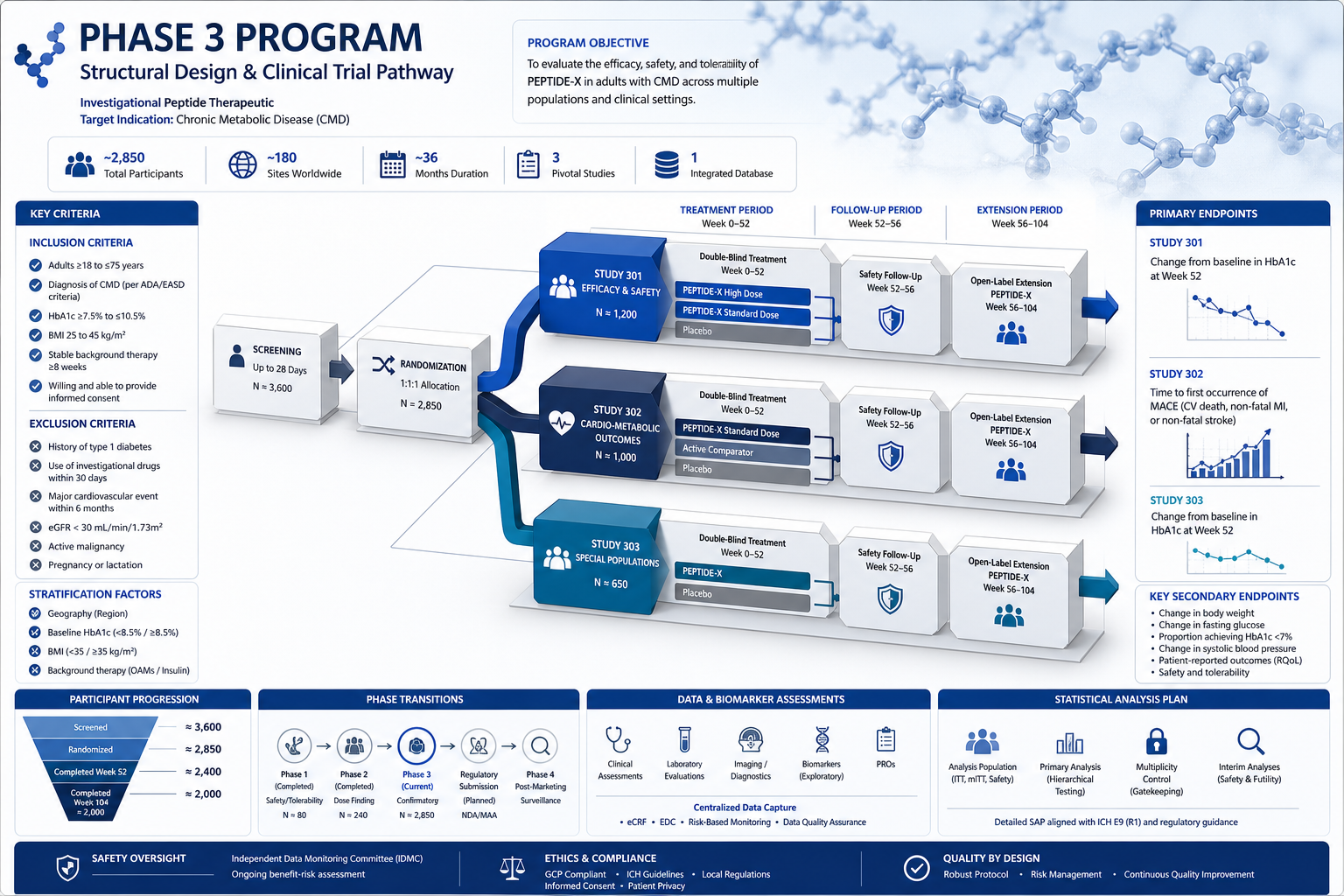
  • The TRIUMPH Phase 3 program enrolls over 5,800 participants across four multicenter, randomized, double-blind studies
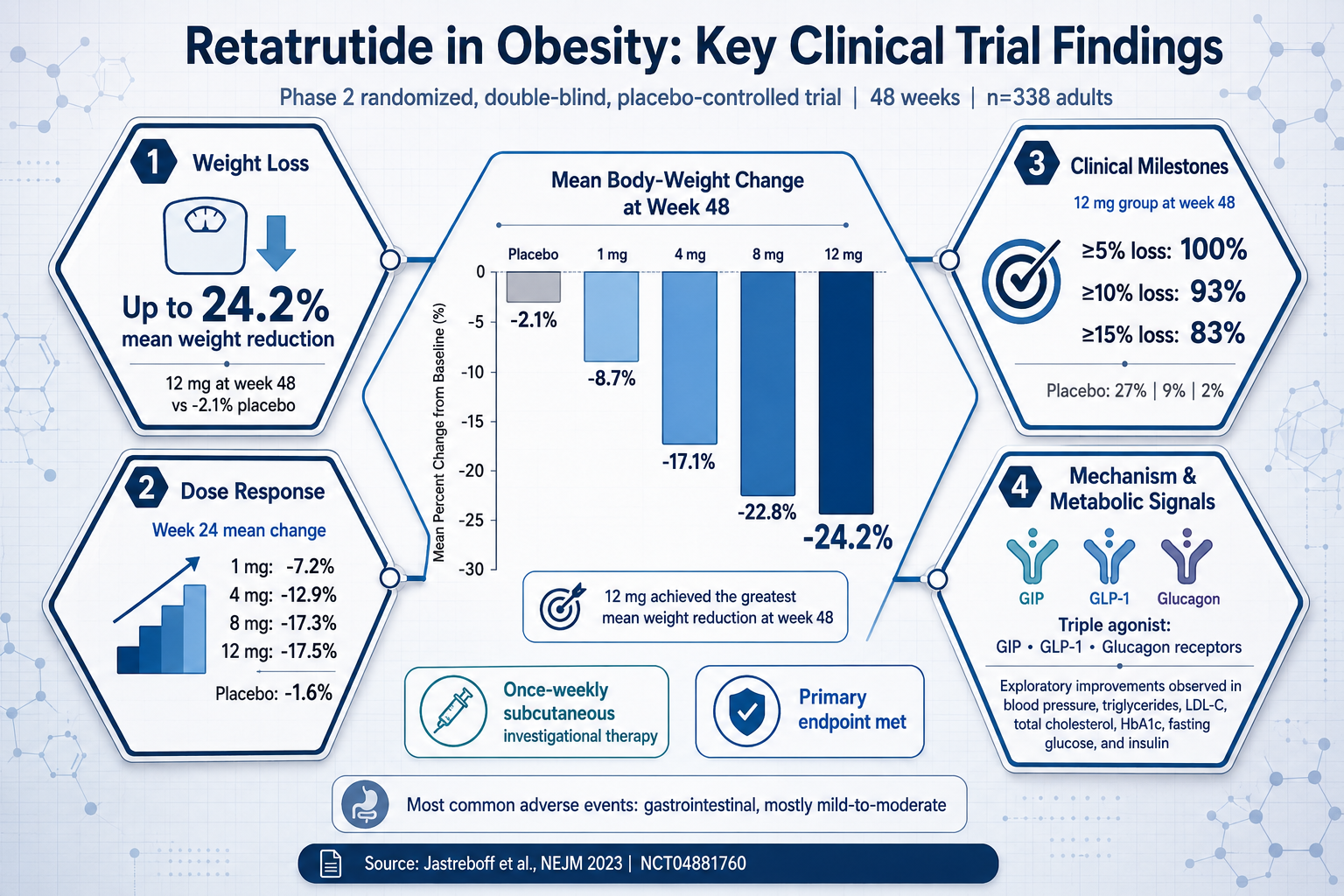
  • Phase 2 data showed up to 24.2% mean weight reduction at 48 weeks
  • Primary endpoints include percentage body weight loss, HbA1c reduction, and complication-specific outcomes
  • Research peptides and clinical-trial drugs occupy entirely separate regulatory and scientific categories

How the TRIUMPH Phase 3 Program Is Structured

How the TRIUMPH Phase 3 Program Is Structured

The TRIUMPH program is the backbone of the current Retatrutide clinical trial landscape. It consists of four multicenter, randomized, double-blind, placebo-controlled studies enrolling more than 5,800 participants. This scale places it among the largest obesity drug programs ever conducted.

What makes TRIUMPH notable is its basket trial design. Rather than studying a single condition in isolation, the program simultaneously evaluates retatrutide across multiple adiposity-related disease states:

Study Focus Primary Endpoint
General obesity Percentage body weight loss
Obstructive sleep apnea (OSA) Apnea-hypopnea index reduction
Knee osteoarthritis (OA) Pain and function scores
Cardiovascular risk Major adverse cardiac events

This design generates efficiency. Researchers can assess whether weight loss translates into measurable improvements in comorbidities — a critical question for regulatory review and real-world clinical value.

Standard endpoints tracked across studies include:

  • Percentage body weight reduction from baseline
  • HbA1c change (a marker of blood glucose control)
  • Waist circumference reduction
  • Adverse event frequency and severity grading

Phase 2 Results That Justified Phase 3 Investment

In a Phase 2 trial of 338 adults with obesity or overweight, retatrutide produced a mean weight reduction of up to 24.2% at 48 weeks. Gastrointestinal side effects were the most common adverse events, described as dose-related and mostly mild to moderate. These results gave Eli Lilly sufficient confidence to launch the full TRIUMPH program, with FDA approval potentially targeted by the end of 2026.


The Triple-Receptor Mechanism Behind the Numbers

The Triple-Receptor Mechanism Behind the Numbers

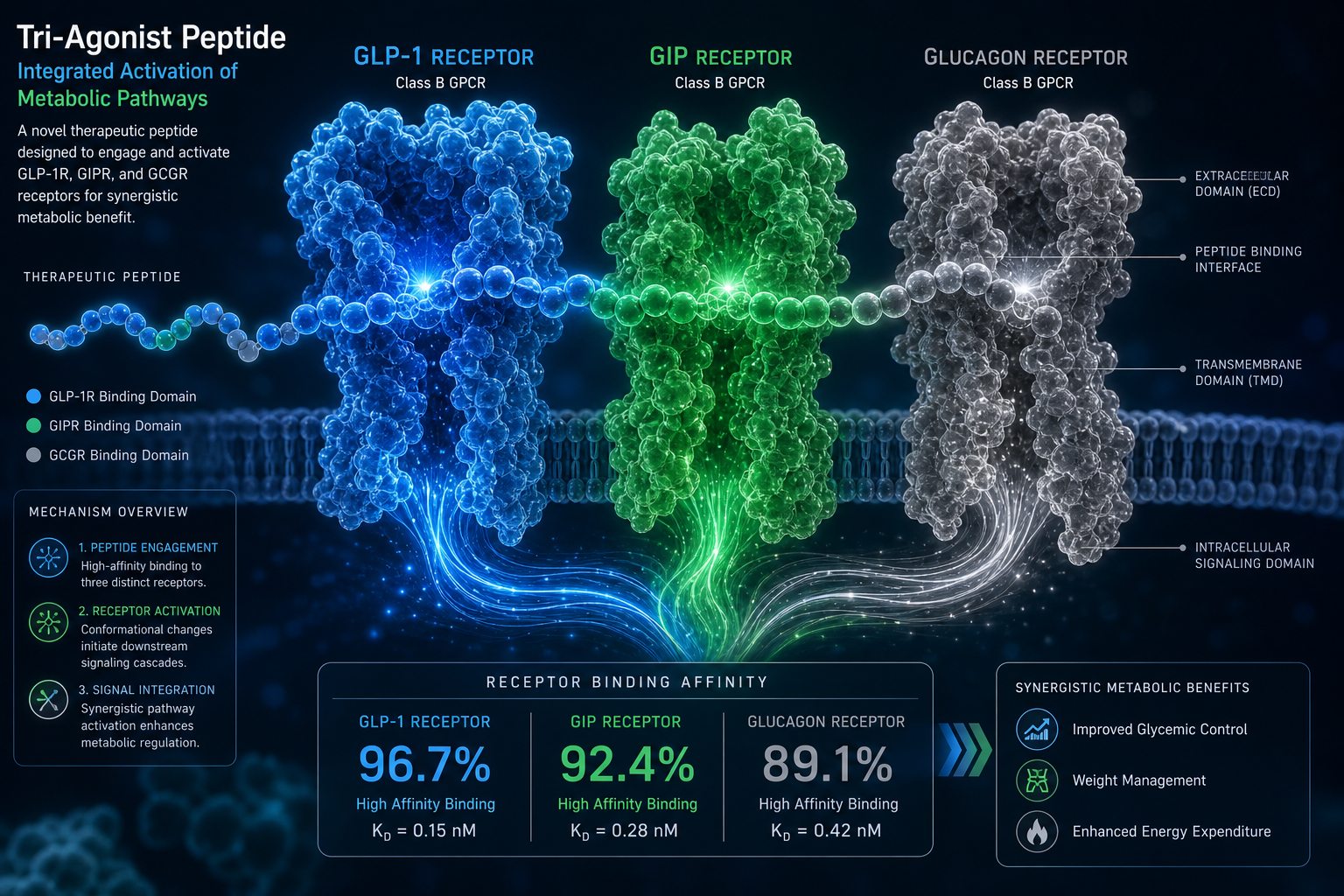
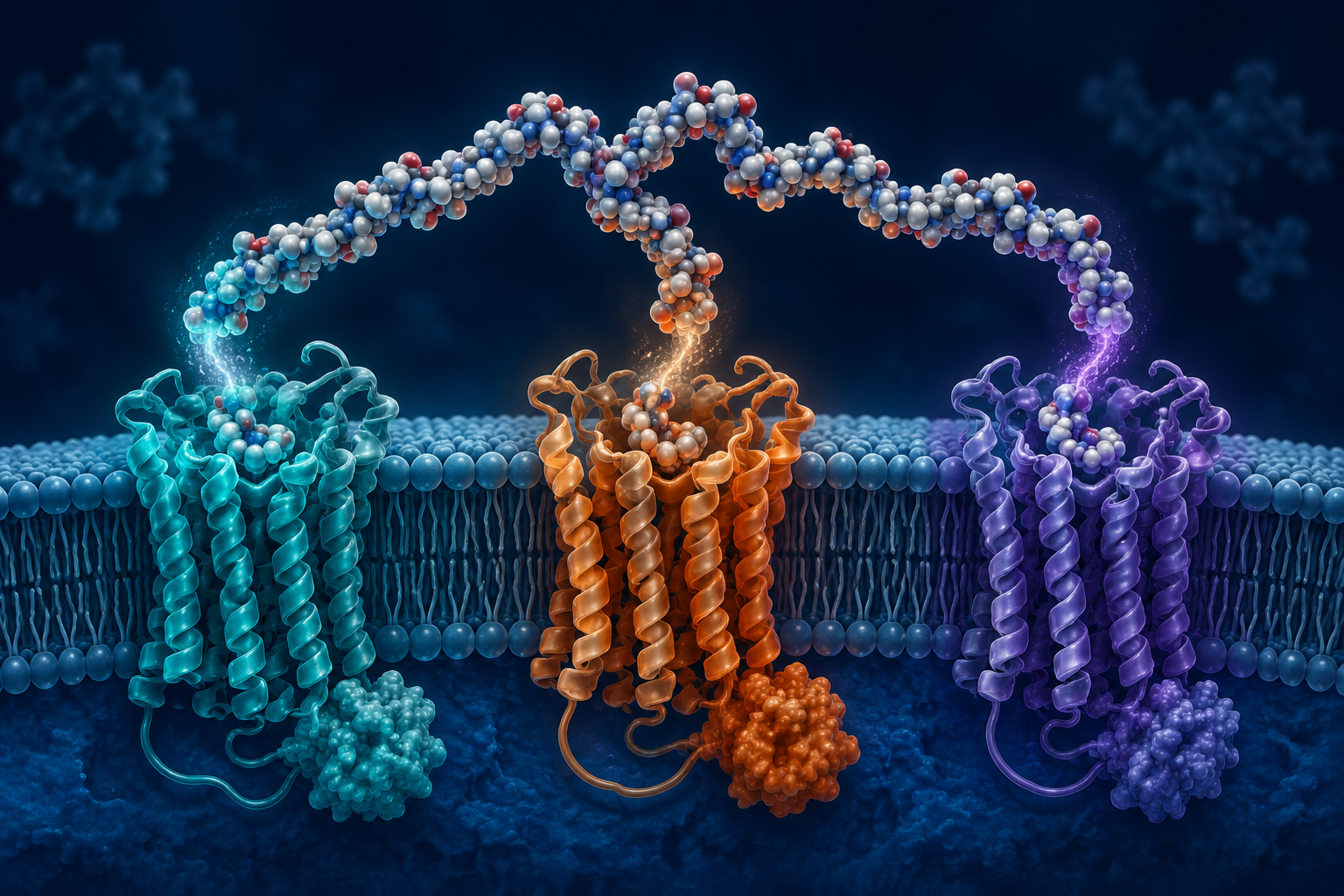
Retatrutide is often loosely called a "GLP-3" compound in popular media, but its pharmacology is more precise. It is a triple agonist binding three distinct G-protein coupled receptors:

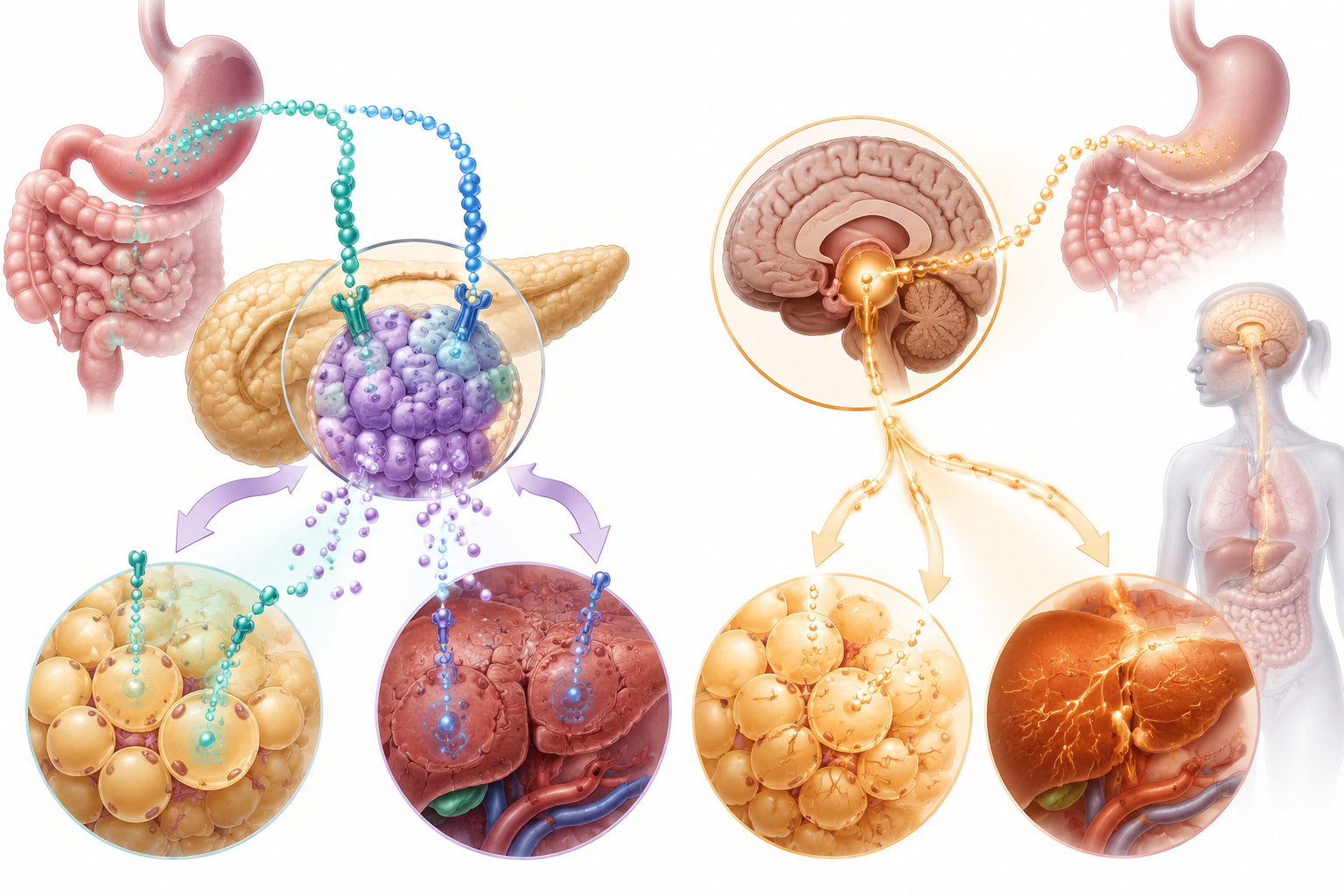
  1. GLP-1R (glucagon-like peptide-1 receptor) — stimulates insulin secretion and reduces appetite
  2. GIPR (glucose-dependent insulinotropic polypeptide receptor) — enhances insulin response and supports fat metabolism
  3. GCGR (glucagon receptor) — regulates hepatic glucose output and increases energy expenditure

The glucagon receptor component is what differentiates retatrutide from dual GLP-1/GIP agonists like tirzepatide. Industry experts suggest this third pathway may be the key driver behind the surgery-level weight loss numbers. For broader context on how incretin-based mechanisms work in obesity research, the GLP-1 and incretin research themes page provides useful background.

Researchers studying related metabolic pathways may also find value in reviewing body composition research themes involving tesa and IPA muscle and fat research themes, which explore adjacent hormonal axes in preclinical models.


Where Research Peptides Fit — and Where They Do Not

Where Research Peptides Fit — and Where They Do Not

This is the most important distinction in the Retatrutide clinical trial landscape: how GLP-3 obesity studies are designed and where research peptides fit.

Retatrutide is an investigational drug. It is not FDA-approved. It is manufactured under strict Good Manufacturing Practice (GMP) conditions, administered only within regulated trial protocols, and tracked through rigorous pharmacovigilance systems.

Research peptides occupy a completely separate category. They are synthesized compounds supplied strictly for laboratory and preclinical research purposes — not for human administration. Their value lies in enabling scientists to study receptor biology, metabolic pathways, and molecular mechanisms before and alongside clinical programs.

"The clinical trial pipeline and the research peptide ecosystem serve different scientific functions — one generates regulatory evidence, the other generates foundational knowledge."

For researchers exploring the GLP-3 and retatrutide space at the preclinical level, the dedicated GLP-3 retatrutide research page and the retatrutide compound overview offer relevant compound information. Those studying complementary metabolic pathways may also consult resources on cagrilintide synergy with GLP-1 and longevity peptide research.

Key distinctions at a glance:

Feature Clinical Trial Drug Research Peptide
Regulatory status IND/NDA pathway Research use only
Human administration Protocol-controlled Not permitted
Purity standards GMP-certified Analytical grade
Purpose Generate efficacy/safety data Preclinical mechanistic study

Conclusion

The retatrutide clinical trial landscape represents one of the most ambitious obesity drug programs in pharmaceutical history. The TRIUMPH Phase 3 program's basket design, rigorous endpoints, and triple-receptor mechanism all point toward a potential paradigm shift in how obesity and its complications are treated medically.

Actionable next steps for researchers and science-informed readers:

  • Follow TRIUMPH trial updates through ClinicalTrials.gov for endpoint data as it becomes available
  • Review Phase 2 published data in peer-reviewed journals to understand dose-response relationships
  • Clearly distinguish between FDA-regulated investigational drugs and research-use-only peptides when discussing or sourcing compounds
  • Explore adjacent metabolic research areas — such as incretin biology and body composition pathways — to build a fuller mechanistic picture

The science is advancing rapidly. Staying grounded in trial design fundamentals and regulatory boundaries is the most reliable way to engage with it responsibly.

https://www.puretestedpeptides.com/wp-content/uploads/2026/06/Retatrutide-Clinical-Trial-Landscape-How-GLP-3-Obesity-Studies-Are-Designed-and-Where-Research-Peptides-Fit.png 1024 1536 Pure Tested https://www.puretestedpeptides.com/wp-content/uploads/2026/01/buy-peptides-online.jpg Pure Tested2026-06-14 13:05:082026-07-20 15:03:15Retatrutide Clinical Trial Landscape: How GLP-3 Obesity Studies Are Designed and Where Research Peptides Fit
GLP3 Peptide vs Retatrutide: Why the Naming Confusion Matters in Obesity Research

GLP3 Peptide vs Retatrutide: Why the Naming Confusion Matters in Obesity Research

June 11, 2026/0 Comments/by Pure Tested

Over 1 billion adults worldwide live with obesity, and the race to find more effective treatments has never moved faster. Yet one of the biggest obstacles in 2026 is not a scientific one — it is a language problem. The debate around GLP3 Peptide vs Retatrutide: Why the Naming Confusion Matters in Obesity Research is more than a semantic argument. When researchers, clinicians, and consumers use the same term to mean different things, the consequences range from misread study data to misguided purchasing decisions.

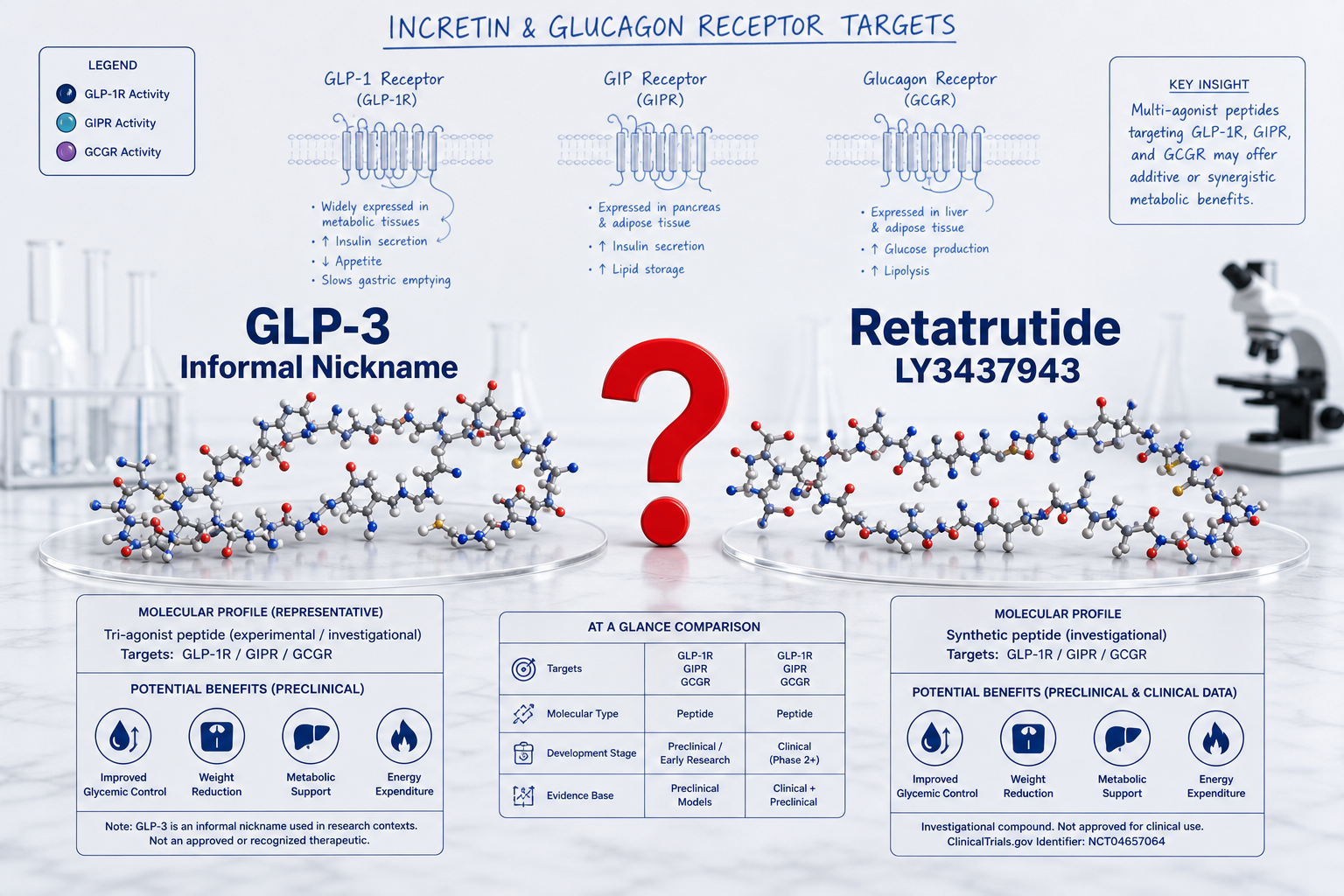
() scientific infographic-style illustration showing two labeled molecular structures side by side — one labeled 'GLP-3

Key Takeaways

  • "GLP-3" is an informal, consumer-driven nickname — not a recognized scientific classification for retatrutide.
  • Retatrutide (LY3437943) is a triple-receptor agonist targeting GLP-1, GIP, and glucagon receptors simultaneously.
  • Phase 3 trials have shown weight loss results as high as 28.7%, the highest ever recorded in an obesity drug trial.
  • Terminology confusion can distort research interpretation, marketplace trust, and regulatory understanding.
  • Researchers and buyers should verify compound identity by chemical name or CAS number, not informal labels.

What Is Retatrutide and Where Does "GLP-3" Come From

Retatrutide, developed by Eli Lilly under the code name LY3437943, is a first-in-class triple-receptor agonist. It activates three distinct hormone receptors at once:

Receptor Role in Metabolism
GLP-1 Appetite suppression, insulin secretion
GIP Fat metabolism, insulin sensitivity
Glucagon Energy expenditure, liver fat reduction

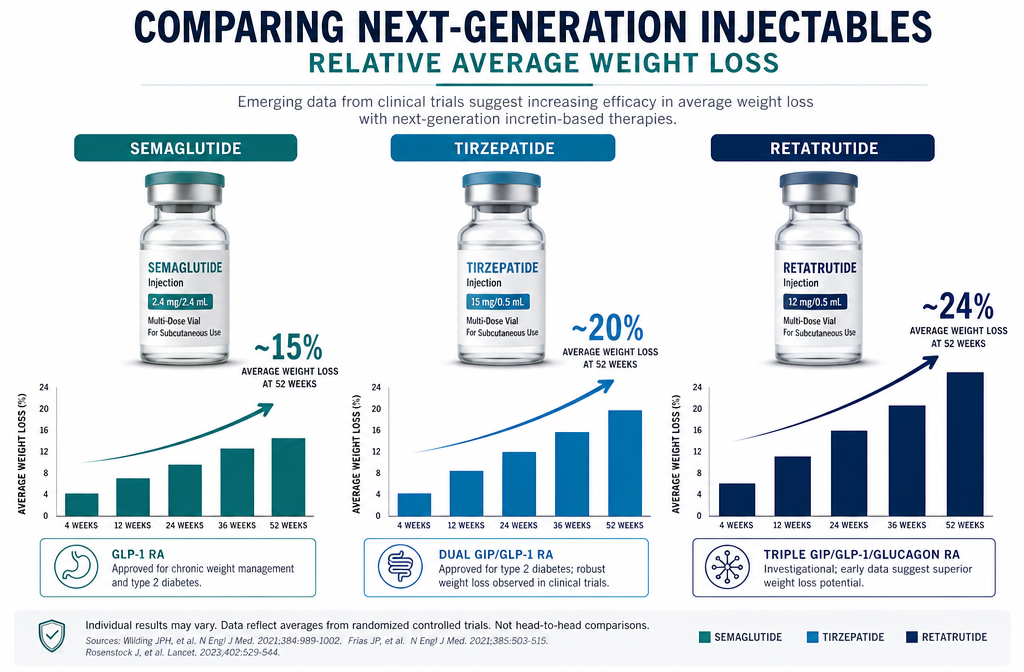
No approved drug before retatrutide has hit all three targets simultaneously. Semaglutide (Ozempic, Wegovy) targets only GLP-1. Tirzepatide (Mounjaro, Zepbound) targets GLP-1 and GIP. Retatrutide adds glucagon to the mix.

The nickname "GLP-3" emerged organically in consumer forums and social media. The logic was simple: GLP-1 targets one receptor, tirzepatide targets two, so this "third generation" drug must be GLP-3. The label stuck — but it is scientifically inaccurate.

"GLP-3" does not describe a receptor, a peptide family, or a drug class. It is marketing shorthand that has migrated into research discussions where precision is critical.

For a broader look at where peptide research is heading, the latest updates in peptide research provide useful context on how naming conventions evolve in this space.


Why the Naming Confusion Matters in Obesity Research and Clinical Trials

Why the Naming Confusion Matters in Obesity Research and Clinical Trials

The stakes of this terminology gap become clear when looking at the trial data. In the TRIUMPH-4 Phase 3 trial, retatrutide produced a mean weight loss of 28.7% at 68 weeks in adults with obesity and knee osteoarthritis — the highest figure ever recorded in any Phase 3 obesity drug trial. The TRIUMPH-3 trial, presented at the American College of Cardiology Annual Scientific Session in March 2026, reported 24.2% mean weight loss at 72 weeks in adults with elevated cardiovascular risk.

These are landmark numbers. But when a researcher searches for "GLP-3 trial results" and finds a mix of retatrutide data alongside unrelated GLP receptor biology, the confusion compounds.

Three specific risks created by the GLP-3 label:

  • Research misattribution: Studies on actual GLP receptor peptide biology get conflated with retatrutide clinical outcomes.
  • Regulatory misunderstanding: Eli Lilly plans to file a New Drug Application in late 2026 or early 2027. Informal naming can create confusion in public commentary on regulatory submissions.
  • Marketplace errors: Buyers searching for research-grade retatrutide may encounter mislabeled products. Reviewing a detailed GLP-3 and retatrutide compound overview helps clarify what is actually being sourced.

For those researching metabolic peptides more broadly, resources on AOD9604 metabolic research and tesa benefits show how naming precision matters across the entire category.


How Researchers and Buyers Can Navigate the GLP3 Peptide vs Retatrutide Naming Issue

How Researchers and Buyers Can Navigate the GLP3 Peptide vs Retatrutide Naming Issue

The clearest solution is to anchor every discussion to the compound's chemical identity, not its nickname.

Best practices for accurate identification:

  • Always reference retatrutide by its INN (International Nonproprietary Name) or Eli Lilly's code: LY3437943.
  • Cross-check any "GLP-3" product listing against verified chemical specifications.
  • Use peer-reviewed databases rather than consumer forums as primary sources.
  • When sourcing for research, prioritize suppliers with transparent quality testing protocols and third-party verification.

The GLP-3 retatrutide product page and the RETA GLP-3 research overview are examples of how suppliers can bridge the naming gap by providing both the informal label and the verified compound name together.

For researchers exploring related metabolic compounds, the 5-Amino-1MQ research overview offers a useful parallel on how novel compounds gain informal names before formal classification catches up.


Conclusion

The GLP3 Peptide vs Retatrutide naming confusion is not a trivial issue. It shapes how clinical trial data is interpreted, how regulatory conversations unfold, and how research-grade compounds are sourced. Retatrutide is a precisely defined triple-receptor agonist with Phase 3 data that sets a new benchmark for obesity pharmacology. "GLP-3" is a convenient shorthand that, when used carelessly, undermines that precision.

Actionable next steps:

  • Replace "GLP-3" with "retatrutide" or "LY3437943" in all research documentation.
  • Verify any compound labeled "GLP-3" against its full chemical specification before use.
  • Stay current with TRIUMPH trial publications and the anticipated NDA filing timeline.
  • Source research peptides only from suppliers who publish verified testing data alongside both the common and scientific names.

Precision in language is the foundation of precision in science. In obesity research, where the stakes are high and the compounds are complex, that foundation matters more than ever.

https://www.puretestedpeptides.com/wp-content/uploads/2026/06/GLP3-Peptide-vs-Retatrutide-Why-the-Naming-Confusion-Matters-in-Obesity-Research.png 1024 1536 Pure Tested https://www.puretestedpeptides.com/wp-content/uploads/2026/01/buy-peptides-online.jpg Pure Tested2026-06-11 13:06:552026-07-20 15:03:30GLP3 Peptide vs Retatrutide: Why the Naming Confusion Matters in Obesity Research
What Is the GLP3 Peptide? Research Distinctions, Naming Confusion, and How It Relates to Retatrutide

What Is the GLP3 Peptide? Research Distinctions, Naming Confusion, and How It Relates to Retatrutide

June 10, 2026/0 Comments/by Pure Tested

A single informal label is causing genuine confusion across research communities, patient forums, and peptide catalogs in 2026: "GLP-3." Researchers searching for this term are often looking for something very different from what the name implies. Understanding what the GLP-3 peptide actually refers to — and why that label is scientifically inaccurate — matters for anyone tracking the latest developments in metabolic research.

Key Takeaways

  • There is no hormone called "GLP-3." The term is an informal nickname, not a recognized scientific designation.
  • "GLP-3" almost always refers to retatrutide (LY3437943), a triple-agonist investigational compound developed by Eli Lilly.
  • Retatrutide simultaneously targets three receptors: GLP-1, GIP, and glucagon.
  • Phase 3 trial data shows approximately 28% average weight loss over 18 months — results comparable to bariatric surgery.
  • As of 2026, retatrutide is not FDA-approved and remains under active clinical investigation.

Key Takeaways

Understanding the Naming Confusion Around "GLP-3"

The phrase "GLP-3 peptide" does not correspond to any recognized hormone in human physiology. The glucagon-like peptide family includes GLP-1 and GLP-2, both derived from the proglucagon gene. GLP-1 is well-established for its role in insulin secretion and appetite regulation. GLP-2 supports intestinal growth. No GLP-3 exists in the official scientific literature.

So where does the term come from? It appears to have emerged organically from online communities and informal research discussions as shorthand for retatrutide — a compound that acts on three separate receptor pathways. The logic is loose: "triple action" became "GLP-3" in casual usage. The label stuck, even though it misrepresents the compound's actual mechanism.

This kind of naming drift is not unusual in peptide research. For a broader look at how terminology evolves in this field, the ultimate guide to peptide therapy provides useful context on how compounds are classified and discussed.


What Is the GLP3 Peptide? Research Distinctions, Naming Confusion, and How It Relates to Retatrutide — The Core Answer

Retatrutide (development code LY3437943) is the compound most commonly referenced when someone asks about the "GLP-3 peptide." It is an investigational drug developed by Eli Lilly that activates three distinct hormone receptors simultaneously:

Receptor Primary Research Function
GLP-1 Reduces appetite, slows gastric emptying
GIP Improves insulin sensitivity, supports fat distribution
Glucagon Increases energy expenditure, promotes fat breakdown via thermogenesis

This triple-agonist profile is what separates retatrutide from earlier-generation compounds. Semaglutide targets GLP-1 alone. Tirzepatide targets GLP-1 and GIP. Retatrutide adds glucagon receptor activation on top of both, creating a broader metabolic effect.

For researchers already familiar with the GLP-1 peptide research landscape, retatrutide represents a meaningful step forward in receptor-targeting strategy. Those planning research with this compound should also review GLP-3 triple agonist research planning resources before sourcing.


What Is the GLP3 Peptide? Research Distinctions, Naming Confusion, and How It Relates to Retatrutide — The Core Answer

Phase 3 Data and Regulatory Status in 2026

The clinical results for retatrutide are among the most discussed in metabolic medicine this year. In Phase 3 trials, participants achieved an average weight loss of approximately 28% over 18 months — a figure that rivals outcomes typically seen with bariatric surgery. No other injectable medication has produced comparable numbers in trial data to date.

"Retatrutide's Phase 3 results represent the highest weight loss figures recorded for any injectable medication in clinical trials."

Despite these results, retatrutide is not FDA-approved as of 2026. Eli Lilly anticipates filing for FDA approval in 2026–2027, with potential commercial availability projected for late 2027 or 2028, contingent on successful trial completion and regulatory review.

Beyond weight loss, researchers are examining retatrutide's potential influence on type 2 diabetes, cardiovascular risk factors, and metabolic liver disease. The GIP receptor and its importance in metabolic signaling provides additional background on one of the three pathways retatrutide engages.


What Is the GLP3 Peptide? Research Distinctions, Naming Confusion, and How It Relates to Retatrutide — Practical Implications for Researchers

For researchers navigating this space, the terminology distinction has real consequences. Searching for "GLP-3 peptide" may return inconsistent results across databases, catalogs, and literature because the label is not standardized. Using the correct terminology — triple agonist, GLP-1/GIP/glucagon receptor agonist, or retatrutide/LY3437943 — will yield more reliable and reproducible search results.

Retatrutide is administered as a once-weekly subcutaneous injection, a delivery format consistent with other compounds in the GLP-1 class. Researchers interested in innovative peptide delivery systems will find the subcutaneous format familiar, though the triple-receptor profile introduces unique considerations for study design.

Those tracking the broader metabolic peptide landscape may also find value in reviewing AOD-9604 metabolic research and SLU-PP-332 metabolic research themes for comparative context on fat metabolism pathways.


What Is the GLP3 Peptide? Research Distinctions, Naming Confusion, and How It Relates to Retatrutide — Practical Implications

Conclusion

The "GLP-3 peptide" is not a real hormone — it is a widely circulated misnomer for retatrutide, a triple-agonist compound targeting GLP-1, GIP, and glucagon receptors. Clarifying this distinction is essential for accurate research planning, catalog navigation, and literature review.

Actionable next steps for researchers:

  • Use "retatrutide," "LY3437943," or "triple agonist" in database and catalog searches instead of "GLP-3."
  • Review the GIP receptor pathway alongside GLP-1 mechanisms before designing studies.
  • Monitor FDA filing updates from Eli Lilly, expected in the 2026–2027 window.
  • Consult what is new in peptide research for ongoing developments in this fast-moving field.

Precise terminology is not a minor detail in peptide research — it directly affects sourcing accuracy, study reproducibility, and regulatory compliance awareness.

https://www.puretestedpeptides.com/wp-content/uploads/2026/06/What-Is-the-GLP3-Peptide-Research-Distinctions-Naming-Confusion-and-How-It-Relates-to-Retatrutide.png 672 1024 Pure Tested https://www.puretestedpeptides.com/wp-content/uploads/2026/01/buy-peptides-online.jpg Pure Tested2026-06-10 13:06:532026-07-20 15:03:32What Is the GLP3 Peptide? Research Distinctions, Naming Confusion, and How It Relates to Retatrutide
Retatrutide Safety, Side Effects, and Study Design: What Researchers Should Watch in Ongoing Obesity Trials

Retatrutide Safety, Side Effects, and Study Design: What Researchers Should Watch in Ongoing Obesity Trials

June 3, 2026/0 Comments/by Pure Tested

Ninety-two percent of participants in a 48-week Phase 2 trial achieved at least 5% body weight loss with retatrutide — a figure that immediately set this triple-receptor agonist apart from earlier obesity pharmacotherapies. For researchers tracking the evolving landscape of investigational peptides, understanding retatrutide safety, side effects, and study design in ongoing obesity trials is now essential groundwork.

Scientific infographic-style landscape image () showing a detailed cross-section diagram of three hormone receptors — GIP,

Key Takeaways

  • Retatrutide simultaneously activates GIP, GLP-1, and glucagon receptors, producing weight loss superior to earlier single or dual agonists.
  • Gastrointestinal side effects are the most common adverse events and are dose-dependent and generally mild to moderate.
  • A structured dose-escalation schedule starting at 2 mg has been shown to reduce early tolerability issues.
  • The Phase 3 TRIUMPH program enrolls over 5,800 participants across four trials, including cardiovascular and musculoskeletal subpopulations.
  • Adverse event-related discontinuation rates in Phase 2 ranged from 6% to 16%, a critical tolerability signal for Phase 3 monitoring.

How Retatrutide Works: Triple Agonism and Its Research Implications

Retatrutide is a once-weekly subcutaneous peptide that activates three hormone receptors: glucose-dependent insulinotropic polypeptide (GIP), glucagon-like peptide-1 (GLP-1), and glucagon. This triple mechanism distinguishes it from earlier agents. Researchers familiar with GLP-1 peptide sourcing and generational research concepts will recognize how each successive generation of receptor agonists has broadened metabolic targets.

The glucagon receptor component is particularly notable. It drives energy expenditure and lipolysis in ways that GLP-1 alone does not. Understanding the GIP receptor and its importance alongside GLP-1 activity helps explain why retatrutide outperformed other glucagon receptor agonists in a network meta-analysis, showing a mean weight reduction of 13.44 kg compared to placebo.

A 2024 systematic review and meta-analysis of randomized controlled trials confirmed retatrutide reduced body weight by an average of 10.66 kg versus placebo, with additional improvements in waist circumference and BMI. These metabolic marker changes matter for researchers designing endpoints that go beyond simple weight outcomes.

For context on how this compares to other investigational metabolic peptides, the SLU-PP-332 metabolic modulation research overview provides useful framing on alternative pathways under investigation.


Retatrutide Safety and Side Effects: Tolerability Signals Researchers Must Track

Retatrutide Safety and Side Effects: Tolerability Signals Researchers Must Track

The most consistent finding across retatrutide trials is that gastrointestinal adverse events dominate the safety profile. Nausea, diarrhea, vomiting, and constipation are the primary concerns. These effects are dose-related, meaning higher doses produce more frequent and more intense symptoms.

Key tolerability data from Phase 2:

Adverse Event Category Frequency
Any gastrointestinal event Most common across all dose groups
Discontinuation due to adverse events 6% to 16% in retatrutide arms
Discontinuation in placebo group 0%
Serious adverse events (SAEs) 4% overall; 0%–6% by dose group

The SAE rate of 4% in retatrutide groups matched the 4% rate in placebo groups, which is an important signal: serious events were not meaningfully elevated above background rates. However, the gap in discontinuation rates — up to 16% versus 0% in placebo — indicates that tolerability, not safety in the traditional sense, is the primary challenge.

Dose-escalation as a mitigation strategy has been central to retatrutide's development. Starting participants at 2 mg before escalating to target doses partially reduced early gastrointestinal burden. This titration logic is now embedded in Phase 3 protocols and represents a key variable researchers should monitor when interpreting trial results.

Researchers comparing tolerability across investigational peptides may also find value in reviewing selank side effects research and BPC-157 core peptide documentation for contrast in adverse event profiles across different peptide classes.

"Tolerability, not toxicity, is the primary research question in retatrutide's Phase 3 program."


Phase 3 TRIUMPH Trial Design: What Researchers Should Watch in Ongoing Obesity Trials

Phase 3 TRIUMPH Trial Design: What Researchers Should Watch in Ongoing Obesity Trials

The TRIUMPH program is the definitive test of retatrutide safety, side effects, and study design in ongoing obesity trials. Four multicenter, randomized, double-blind Phase 3 studies enroll more than 5,800 participants receiving weekly subcutaneous retatrutide. The program spans standard obesity populations and extends into clinically complex subgroups.

Trial design features researchers should monitor:

  • Cardiovascular subpopulation (TRIUMPH-3): Specifically evaluates retatrutide in participants with established cardiovascular disease. This endpoint mirrors the cardiovascular outcomes trial model used with earlier GLP-1 agents.
  • Comorbidity expansion: Trials address obstructive sleep apnea and knee osteoarthritis alongside weight outcomes, broadening the clinical relevance of findings.
  • Dose-titration schedules: How Phase 3 protocols handle dose escalation will directly affect both efficacy outcomes and adverse event rates.
  • MASLD investigation: A separate Phase 2a trial is examining retatrutide's potential in metabolic dysfunction-associated steatotic liver disease, with results still pending in 2026.

Researchers following GLP-3 triple agonist research planning and the broader RETA GLP-3 research framework will find the TRIUMPH design choices instructive for understanding how trial architects balance efficacy ambition against tolerability risk.

The generations of GLP-1 differences resource also contextualizes why TRIUMPH's multi-indication design represents a meaningful evolution from earlier single-endpoint obesity trials.


Conclusion

Retatrutide's Phase 2 data established a compelling efficacy signal. The Phase 3 TRIUMPH program now carries the burden of confirming whether that signal holds across diverse populations while maintaining an acceptable tolerability profile. For researchers in 2026, the most actionable focus areas are:

  1. Track discontinuation rates by dose group as the primary tolerability benchmark.
  2. Monitor dose-escalation protocol adherence and its effect on gastrointestinal event frequency.
  3. Watch TRIUMPH-3 cardiovascular outcomes as the highest-stakes safety dataset in the program.
  4. Follow the MASLD Phase 2a results for evidence of retatrutide's reach beyond weight management.
  5. Compare SAE rates across subpopulations to identify whether cardiovascular or musculoskeletal comorbidities alter the safety profile.

The evidence base for retatrutide is maturing rapidly. Researchers who understand both the mechanism and the methodological choices embedded in its trial design will be best positioned to interpret findings as they emerge.


https://www.puretestedpeptides.com/wp-content/uploads/2026/06/Retatrutide-Safety-Side-Effects-and-Study-Design-What-Researchers-Should-Watch-in-Ongoing-Obesity-Trials.png 1024 1536 Pure Tested https://www.puretestedpeptides.com/wp-content/uploads/2026/01/buy-peptides-online.jpg Pure Tested2026-06-03 13:06:002026-07-20 15:04:10Retatrutide Safety, Side Effects, and Study Design: What Researchers Should Watch in Ongoing Obesity Trials
Retatrutide vs Tirzepatide vs Semaglutide vs Cagrilintide: Which Metabolic Pathways Matter Most in Research Models?

Retatrutide vs Tirzepatide vs Semaglutide vs Cagrilintide: Which Metabolic Pathways Matter Most in Research Models?

June 2, 2026/0 Comments/by Pure Tested

Fewer than five years ago, GLP-1 monotherapy was considered the ceiling of pharmacological weight management. Today, the question driving preclinical research is no longer whether to target GLP-1, but how many additional metabolic pathways to engage simultaneously. The comparison of Retatrutide vs Tirzepatide vs Semaglutide vs Cagrilintide sits at the center of that debate, and understanding which metabolic pathways matter most in research models is essential for interpreting emerging data correctly.

Key Takeaways

  • Retatrutide activates three receptors (GLP-1, GIP, and glucagon), adding energy expenditure signaling absent in dual or single agonists.
  • Tirzepatide's dual GLP-1/GIP agonism outperforms semaglutide monotherapy in weight reduction across multiple trials.
  • Cagrilintide targets the amylin receptor, engaging a satiety pathway that is mechanistically distinct from incretin-based approaches.
  • The CagriSema combination (cagrilintide plus semaglutide) demonstrated 22.7% weight loss over 48 weeks in Phase 3 research.
  • For researchers, pathway breadth and receptor potency profiles determine how each compound performs across different metabolic models.

Mapping the Receptor Targets Across All Four Compounds

Before comparing outcomes, it helps to map exactly which receptors each compound engages.

Compound GLP-1R GIPR Glucagon R Amylin R
Semaglutide Yes No No No
Tirzepatide Yes Yes No No
Retatrutide Yes Yes Yes No
Cagrilintide No No No Yes

Semaglutide is a selective GLP-1 receptor agonist. It slows gastric emptying, reduces appetite through central hypothalamic signaling, and promotes insulin secretion in a glucose-dependent manner. It remains the most studied reference point for incretin-based research.

Tirzepatide adds GIP receptor co-agonism. GIP receptor activation enhances insulin secretion further and may improve adipose tissue metabolism. Research covered in this GLP-1 dual receptor agonism breakdown shows why the dual mechanism consistently outperforms semaglutide in weight reduction endpoints.

Retatrutide extends this further by incorporating glucagon receptor agonism. Its receptor potency profile is GIP-primary (EC50 = 0.064 nM), followed by GLP-1 (EC50 = 0.775 nM) and glucagon (EC50 = 5.79 nM). This hierarchy matters because GIP receptor activation dominates its anabolic and lipolytic signaling. Researchers exploring this triple agonist can find additional context in the GLP-3 Retatrutide incretin research overview.

Cagrilintide operates entirely outside the incretin axis. As a long-acting amylin analogue, it activates amylin receptors in the area postrema and hypothalamus to reduce meal size and slow gastric emptying through a pathway independent of GLP-1 signaling.


Why Glucagon Receptor Activation Changes the Research Picture

Why Glucagon Receptor Activation Changes the Research Picture

The inclusion of glucagon receptor agonism in Retatrutide is the most consequential mechanistic distinction in the Retatrutide vs Tirzepatide vs Semaglutide vs Cagrilintide comparison for research models focused on energy balance.

Glucagon receptor activation drives two processes that neither semaglutide nor tirzepatide can replicate:

  • Increased basal energy expenditure through thermogenic signaling in brown adipose tissue
  • Hepatic fat mobilization, making retatrutide particularly relevant in models of metabolic-associated steatotic liver disease

Phase 2 clinical data reported up to 24.2% mean body weight reduction at 48 weeks with retatrutide, the highest figure recorded among once-weekly injectable agents at that stage of development. For broader context on how metabolic modulation compounds are being studied, the metabolic modulation research overview provides useful framing.

"Glucagon receptor agonism shifts the mechanism from appetite suppression alone to a combined appetite-plus-expenditure model, which changes what research endpoints are most informative."

In contrast, tirzepatide's weight loss advantage over semaglutide is driven primarily by enhanced insulin secretion and improved adipose tissue insulin sensitivity through GIPR, not by meaningful increases in energy expenditure. Both are important mechanisms, but they are not interchangeable in research design.


Amylin Pathway Synergy and the CagriSema Model

Amylin Pathway Synergy and the CagriSema Model

Cagrilintide represents a fundamentally different strategy. Rather than amplifying incretin signaling, it recruits the amylin pathway, which regulates satiety through different neural circuits. This is why combining cagrilintide with semaglutide (CagriSema) produces additive effects that exceed either agent alone.

The Phase 3 REDEFINE 1 trial reported 22.7% weight loss in non-diabetic adults over 48 weeks with CagriSema, with an FDA decision anticipated later in 2026. The mechanistic rationale for this synergy is explored in depth in the cagrilintide and GLP-1 synergy research summary.

Key distinctions for research models comparing amylin-based to incretin-based strategies:

  • Amylin receptor signaling primarily reduces meal size rather than altering energy expenditure
  • GLP-1 receptor agonism reduces meal frequency and caloric intake through central satiety circuits
  • Combined, these mechanisms address appetite from two non-overlapping angles

For researchers also examining how peptide combinations interact with body composition endpoints, the IPA muscle and fat research themes page offers relevant comparative data on lean mass preservation.

Researchers investigating the newest generation of triple agonists can also review the GLP-3 triple agonist research page for additional mechanistic detail.


Conclusion

The comparison of Retatrutide vs Tirzepatide vs Semaglutide vs Cagrilintide is not simply a ranking exercise. Each compound engages a distinct receptor profile, and the metabolic pathways that matter most depend entirely on the research question being asked.

For models focused on maximum weight reduction, retatrutide's triple agonism and energy expenditure component give it a mechanistic edge. For models examining incretin synergy and insulin dynamics, tirzepatide offers a well-characterized dual receptor platform. For appetite suppression benchmarking, semaglutide remains the standard reference. For amylin pathway research or combination strategies, cagrilintide and CagriSema open a mechanistically separate avenue.

Actionable next steps for researchers:

  • Define the primary metabolic endpoint before selecting a compound for a model
  • Account for receptor potency hierarchy, not just the number of receptors targeted
  • Consider combination models when studying non-overlapping satiety pathways
  • Review the latest peptide research developments to stay current as Phase 3 data continues to emerge in 2026

https://www.puretestedpeptides.com/wp-content/uploads/2026/06/Retatrutide-vs-Tirzepatide-vs-Semaglutide-vs-Cagrilintide-Which-Metabolic-Pathways-Matter-Most-in-Research-Models.png 1024 1536 Pure Tested https://www.puretestedpeptides.com/wp-content/uploads/2026/01/buy-peptides-online.jpg Pure Tested2026-06-02 22:10:012026-07-20 15:04:14Retatrutide vs Tirzepatide vs Semaglutide vs Cagrilintide: Which Metabolic Pathways Matter Most in Research Models?
Page 3 of 3123
×

Helpful Links

  • My account
  • Cart
  • Checkout
  • Refund and Returns Policy
  • Privacy Policy
  • SMS Privacy Policy
  • Login
  • My Account
  • Logout

USA Made Lab Tested Peptides

All products are sold for research, laboratory, or analytical purposes only, and are not for human consumption


Pure Tested Peptides is a chemical supplier. Pure Tested Peptides is not a compounding / chemical compounding facility as defined under 503A of the Federal Food, Drug, and Cosmetic act. Pure Tested Peptides is not an outsourcing facility as defined under 503B of the Federal Food, Drug, and Cosmetic act.

The statements made within this website have not been evaluated by the US Food and Drug Administration. The products we offer are not intended to diagnose, treat, cure or prevent any disease.

Human/Animal Consumption Prohibited. Laboratory/In-Vitro Experimental Use Only

Scroll to top Scroll to top Scroll to top