Call or Text 727-513-9780
  • Shopping Cart Shopping Cart
    0Shopping Cart
Pure Tested Peptides | America's most trusted Peptides for sale online
  • Peptides for sale
    • Oral Peptides for sale
      • Peptide Capsules for sale
      • BPC 157 Capsules 1000mcg
      • SLU-PP-332 Capsules | 1000 mcg
      • 5-Amino-1MQ 50mg Capsules
      • Tesofensine 500mcg
    • All Peptides for sale
    • Peptide Sprays
      • BPC 157 Nasal Spray Kit
      • BPC-157 TB500 Nasal Spray Kit
      • Semax Nasal Spray 10mg
      • Selank – Nasal Spray Kit – 10mg
      • Epithalon 50MG Nasal Spray Kit
      • Ipamorelin 10mg Nasal Spray
      • Klow Nasal Spray (BPC-157 + TB-500 + GHK-Cu + KPV) | 80mg
      • Hulk Nasal Spray Tesa / Ipa Blend 6/3 MG
      • Klow Nasal Spray
      • NAD + 500 mg Nasal Spray
      • PT-141 Nasal Spray Kit
    • GHRH Peptides
      • Ipa Peptides
      • CJC-1295 Peptides
        • CJC-1295 with DAC 5 mg
        • CJC-1295 without DAC 5 mg
        • CJC-1295 Ipa 10mg
      • Tesa Peptides
        • Tesa Peptide
        • Tesa 20 mg
    • GHK-Cu Peptides
      • All GHK-Cu Peptides
      • GHK-Cu 100mg
      • KLOW Peptide Blend – Buy KLOW blend online
    • BPC Peptides
      • All BPC Peptides
      • BPC-157
      • BPC-157 TB-500
      • BPC 157 capsules 1000mcg
    • SLU-PP-332 Peptides
      • All SLU-PP-332 Peptides
      • SLU-PP-332 5mg
    • GLP3 Peptides
      • GLP3-R
      • GLP3-R CAG 10mg
      • GLP3-R 20mg
    • PT-141 Peptides
      • PT-141 Peptides for sale
      • PT-141 10mg
      • PT-141 Nasal Spray
    • CAG Peptides
      • Lipo-C Peptide Blend
      • CAG 5mg
      • CAG 10mg
    • MOTS-C Peptides
      • MOTS-C Peptides for sale
      • MOTS-c peptide
      • MOTS-c 10mg *6 pack*
    • 5 Amino 1MQ Peptides
      • 5 Amino 1MQ Peptides for sale
      • 5-Amino-1MQ 50mg Capsules
      • 5-Amino-1MQ 5mg
    • Epithalon Peptides
      • Epithalon Peptides for sale
      • Epithalon 10mg
      • Epithalon 50mg
  • Shop
    • GLPs
      • 5-Amino-1MQ 50mg Capsules
      • 5-Amino-1MQ 5mg
      • GLP3-Reta
      • L-Carnitine 500mg/ml
      • Tesofensine 500mcg
      • SLU-PP-332 5mg
      • MOTS-c 10mg *6 pack*
    • Epithalon & BPC Peptides
      • Epithalon 10mg
      • Epithalon 50mg
      • BPC-157
      • BPC 157 capsules 1000mcg
      • BPC-157 TB-500
      • BPC-157 TB500 Nasal Spray Kit
      • BPC 157 Nasal Spray Kit
    • BPC TB-500 & NAD+ Peptides
      • NAD+ 500 mg
      • KLOW Peptide Blend – Buy KLOW blend online
      • GLOW Peptide Blend
      • TB 500 5mg
      • BPC 157 capsules 1000mcg – Supplement
      • BPC 157 Nasal Spray Kit
      • BPC-157
      • BPC-157 TB500 Nasal Spray Kit
      • BPC-157 TB-500
      • BPC 157 capsules 1000mcg
    • LL-37 Peptide
      • LL-37 10 mg
    • MOTS-C & Selank
      • MOTS-c peptide
      • Selank 10mg
    • GHK Peptides
      • GHK-Cu 100mg
      • GLOW Peptide Blend
      • KLOW Peptide Blend – Buy KLOW blend online
  • COAs
  • Wholesale
    • Wholesale Peptides for sale
  • PTP FAQ
  • Affiliates
    • Selank Peptide: Advanced Pharmacological Mechanisms Underlying Its Anxiolytic and Nootropic Effects in Research
      • 5-Amino-1MQ Peptide: Detailed Mechanisms of NNMT Inhibition and Its Impact on Cellular Metabolism Research
        • MOTS-C Peptide: Unraveling Its Role in Mitochondrial Dynamics and Energy Metabolism Research
          • Epithalon Peptide and Telomerase Regulation: Investigating Its Impact on Cellular Senescence and Lifespan Research Models
            • GLP2-T vs GLP2 Tirz Peptide: Understanding the Naming, Mechanistic Nuances, and Research Implications for Gut Health
      • Peptides and Polypeptides in Modern Pharmacology: What Research on Metoprolol, Prednisone, and Amlodipine Reveals
        • Polypeptide Peptides vs NSAIDs: What Naproxen and Diclofenac Teach Tissue-Repair Researchers About BPC‑157 and TB‑500
          • Peptides and Polypeptides in Endocrine Pharmacology: How GLP-1, GLP-2, and GLP-3 Retatrutide Differ From Classic Drugs Like Prednisone and Amlodipine
          • 5‑Amino‑1MQ Peptide and NNMT Inhibition: How It Compares With Statins Like Atorvastatin in Adipose and Lipid Metabolism Research
      • Enclomiphene, Estrogen Receptor Signaling, and Luteinizing Phase Biology: What Hormone Researchers Should Measure
        • Mesenchymal Stem Cells, BPC‑157, and GHK‑Cu: How Tissue Repair Peptides Compare With Classic NSAIDs Like Naproxen in Injury Models
          • Peptide Calculator Use Cases Beyond Growth Hormone: Working Through GLP‑3 Retatrutide, MOTS‑c, and BPC‑157 Research Dosing
        • Polypeptide Peptides in Endocrine and Metabolic Pharmacology: Lessons From Amlodipine, Prednisone, and Metoprolol
        • Peptides Calculator for Advanced Blends: Worked Examples for Tesamorelin, CJC‑1295, and Ipamorelin Stacks
          • Peptides and Polypeptides in Human Physiology: How Molecular Size Shapes Research Applications
            • Selank Peptide: Advanced Pharmacological Mechanisms Underlying Its Anxiolytic and Nootropic Effects in Research
          • 5-Amino-1MQ Peptide: Detailed Mechanisms of NNMT Inhibition and Its Impact on Cellular Metabolism Research
            • MOTS-C Peptide: Unraveling Its Role in Mitochondrial Dynamics and Energy Metabolism Research
              • Epithalon Peptide and Telomerase Regulation: Investigating Its Impact on Cellular Senescence and Lifespan Research Models
                • GLP2-T vs GLP2 Tirz Peptide: Understanding the Naming, Mechanistic Nuances, and Research Implications for Gut Health
                  • Peptides and Polypeptides in Endocrine Pharmacology: How GLP-1, GLP-2, and GLP-3 Retatrutide Differ From Classic Drugs Like Prednisone and Amlodipine
                    • Polypeptide Peptides vs NSAIDs: What Naproxen and Diclofenac Teach Tissue-Repair Researchers About BPC‑157 and TB‑500
                      • Peptides and Polypeptides in Modern Pharmacology: What Research on Metoprolol, Prednisone, and Amlodipine Reveals
                        • 5‑Amino‑1MQ Peptide and NNMT Inhibition: How It Compares With Statins Like Atorvastatin in Adipose and Lipid Metabolism Research
                        • Enclomiphene, Estrogen Receptor Signaling, and Luteinizing Phase Biology: What Hormone Researchers Should Measure
                        • Mesenchymal Stem Cells, BPC‑157, and GHK‑Cu: How Tissue Repair Peptides Compare With Classic NSAIDs Like Naproxen in Injury Models
                        • Peptide Calculator Use Cases Beyond Growth Hormone: Working Through GLP‑3 Retatrutide, MOTS‑c, and BPC‑157 Research Dosing
                        • Polypeptide Peptides in Endocrine and Metabolic Pharmacology: Lessons From Amlodipine, Prednisone, and Metoprolol
                        • Peptides Calculator for Advanced Blends: Worked Examples for Tesamorelin, CJC‑1295, and Ipamorelin Stacks
                        • Peptides and Polypeptides in Human Physiology: How Molecular Size Shapes Research Applications
                        • Selank Peptide: Advanced Pharmacological Mechanisms Underlying Its Anxiolytic and Nootropic Effects in Research
                        • MOTS-C Peptide: Unraveling Its Role in Mitochondrial Dynamics and Energy Metabolism Research
                        • Peptides and Polypeptides in Modern Pharmacology: What Research on Metoprolol, Prednisone, and Amlodipine Reveals
                        • Peptides and Polypeptides in Endocrine Pharmacology: How GLP-1, GLP-2, and GLP-3 Retatrutide Differ From Classic Drugs Like Prednisone and Amlodipine
                        • 5-Amino-1MQ Peptide: Detailed Mechanisms of NNMT Inhibition and Its Impact on Cellular Metabolism Research
                        • Mesenchymal Stem Cells, BPC‑157, and GHK‑Cu: How Tissue Repair Peptides Compare With Classic NSAIDs Like Naproxen in Injury Models
                        • Peptide Calculator Use Cases Beyond Growth Hormone: Working Through GLP‑3 Retatrutide, MOTS‑c, and BPC‑157 Research Dosing
                        • GLP2-T vs GLP2 Tirz Peptide: Understanding the Naming, Mechanistic Nuances, and Research Implications for Gut Health
                        • Polypeptide Peptides in Endocrine and Metabolic Pharmacology: Lessons From Amlodipine, Prednisone, and Metoprolol
                        • Polypeptide Peptides vs NSAIDs: What Naproxen and Diclofenac Teach Tissue-Repair Researchers About BPC‑157 and TB‑500
                        • Peptides and Polypeptides in Human Physiology: How Molecular Size Shapes Research Applications
                        • Peptides Calculator for Advanced Blends: Worked Examples for Tesamorelin, CJC‑1295, and Ipamorelin Stacks
                        • 5‑Amino‑1MQ Peptide and NNMT Inhibition: How It Compares With Statins Like Atorvastatin in Adipose and Lipid Metabolism Research
                        • Enclomiphene, Estrogen Receptor Signaling, and Luteinizing Phase Biology: What Hormone Researchers Should Measure
                        • Epithalon Peptide and Telomerase Regulation: Investigating Its Impact on Cellular Senescence and Lifespan Research Models
                        • Best research protocol Klow blend
                        • best time to take BPC-157
                        • best time to take DSIP (Delta Sleep Inducing Peptide)
                        • best time to take CJC-1295
                        • best time to take AOD-9604
                        • best time to take Follistatin 344
                        • best time to take Ipamorelin
                        • best time to take MK-677 (Ibutamoren)
                        • best time to take Ligandrol (LGD-4033) — research compound
                        • best time to take Ostarine (MK-2866) — research compound
                        • best time to take GHK-CU
                        • best time to take TB-500
                        • best time to take MOTS-c
                        • best time to take Semax
                        • best time to take RAD-140 (Testolone) — research compound
                        • best time to take Thymosin Alpha-1
                        • best time to take PEG-MGF
                        • Biolife Plasma, Octapharma Plasma, and Research Peptides: How Plasma Donation Labs Differ From Peptide Suppliers
                        • best time to take YK-11 — research compound
                        • best time to take PT-141 (Bremelanotide)
                        • Best research protocol Klow blend
  • Contact
    • Contact Customer Service
    • Text Customer Support
  • About US
  • Shop all peptides
  • Affiliate Program
    • Affiliate Signup
  • Login / Register Login / Register Page Link Login / Register Page Link
  • Click to open the search input field Click to open the search input field Search
  • Menu Menu

Tag Archive for: glp-1 receptor agonist

GLP-3, GLP-1, and GLP-2 Explained: A Researcher’s Guide to the Peptide Family

GLP-3, GLP-1, and GLP-2 Explained: A Researcher’s Guide to the Peptide Family

June 28, 2026/0 Comments/by Pure Tested

The term "GLP-3" now appears in clinical trial press releases, investor calls, and research databases — yet no such peptide exists in standard biochemistry textbooks. That naming gap reveals something important: the glucagon-like peptide family is evolving faster than its own vocabulary. This guide to GLP-3, GLP-1, and GLP-2 explained as a peptide family cuts through the marketing language to focus on mechanism, receptor biology, and what the evidence actually shows.

Key Takeaways

  • GLP-1 and GLP-2 are both derived from the same precursor protein, proglucagon, through tissue-specific processing.
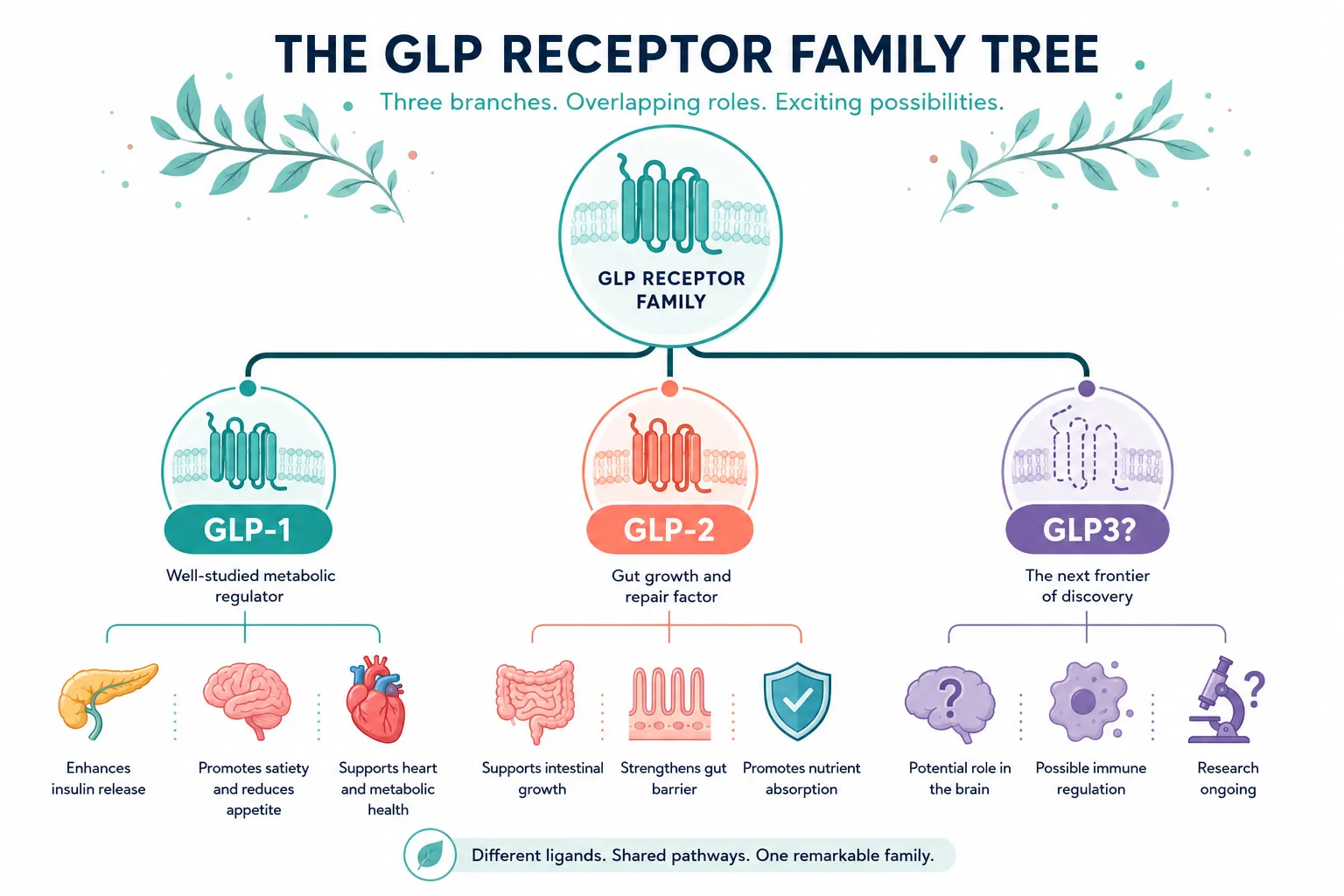
  • GLP-1 targets the GLP-1 receptor to regulate insulin secretion and appetite; GLP-2 targets a separate receptor to support intestinal growth and repair.
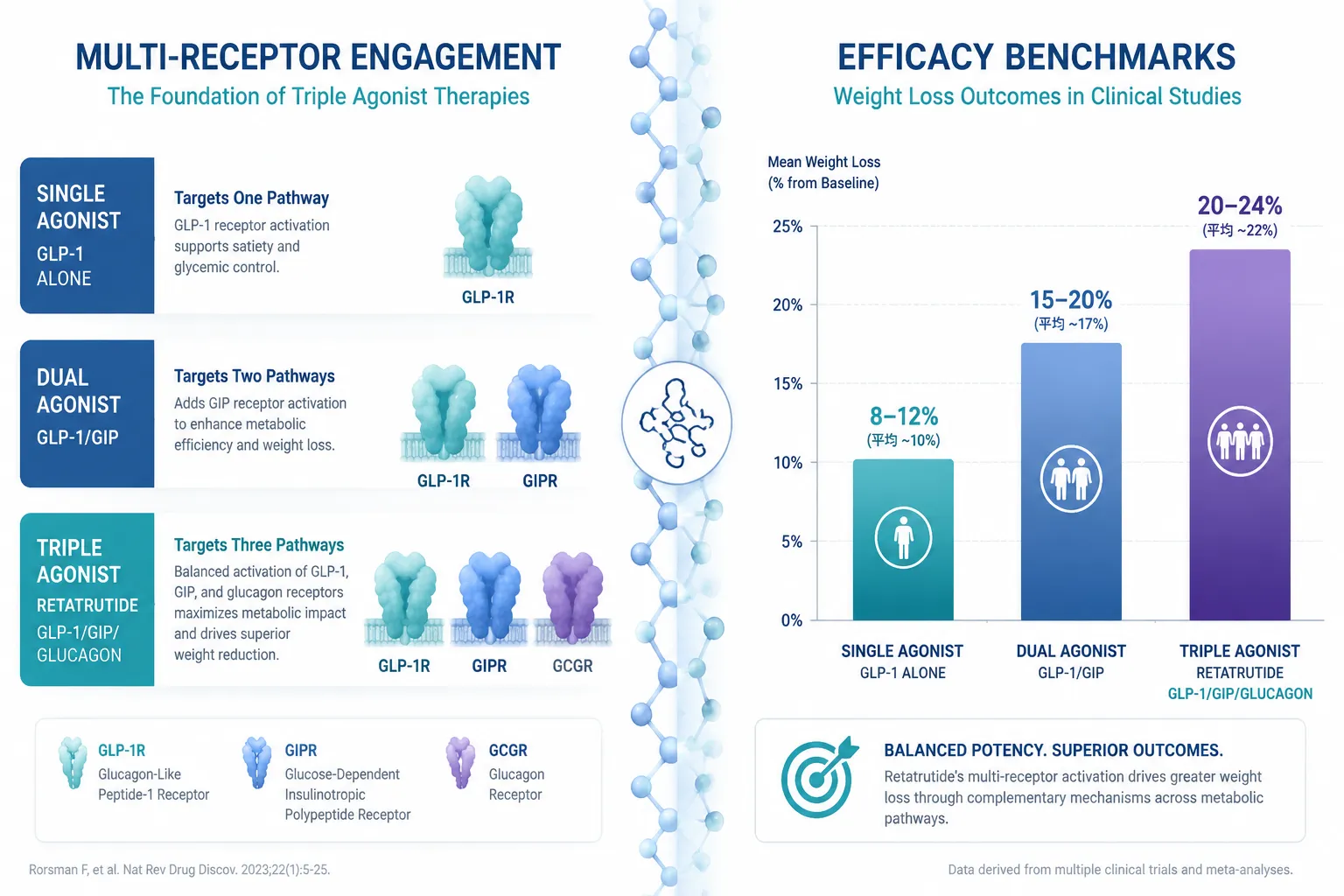
  • "GLP-3" is an informal nickname for retatrutide, a triple agonist hitting GLP-1, GIP, and glucagon receptors — not a distinct endogenous peptide.
  • Multiple next-generation agents in 2026 are blurring receptor boundaries, making precise terminology more important than ever.
  • Researchers should distinguish receptor pharmacology from peptide taxonomy to avoid conflating mechanism with marketing.

GLP-1, GLP-2, and GLP-3 peptide family molecular overview

The Proglucagon Origin: Where GLP-1 and GLP-2 Begin

Understanding GLP-3, GLP-1, and GLP-2 explained as a peptide family starts with a single precursor: proglucagon. This 160-amino-acid protein is encoded by the GCG gene and processed differently depending on the tissue.

Tissue-specific cleavage produces distinct peptides:

Tissue Primary Products
Pancreatic alpha cells Glucagon, glicentin-related peptide
Intestinal L-cells GLP-1, GLP-2, oxyntomodulin
Brain neurons GLP-1, glicentin

This differential processing is controlled by prohormone convertases — PC2 in the pancreas and PC1/3 in the gut and brain. The result is that GLP-1 and GLP-2 are co-secreted from intestinal L-cells in a roughly 1:1 molar ratio following nutrient ingestion.

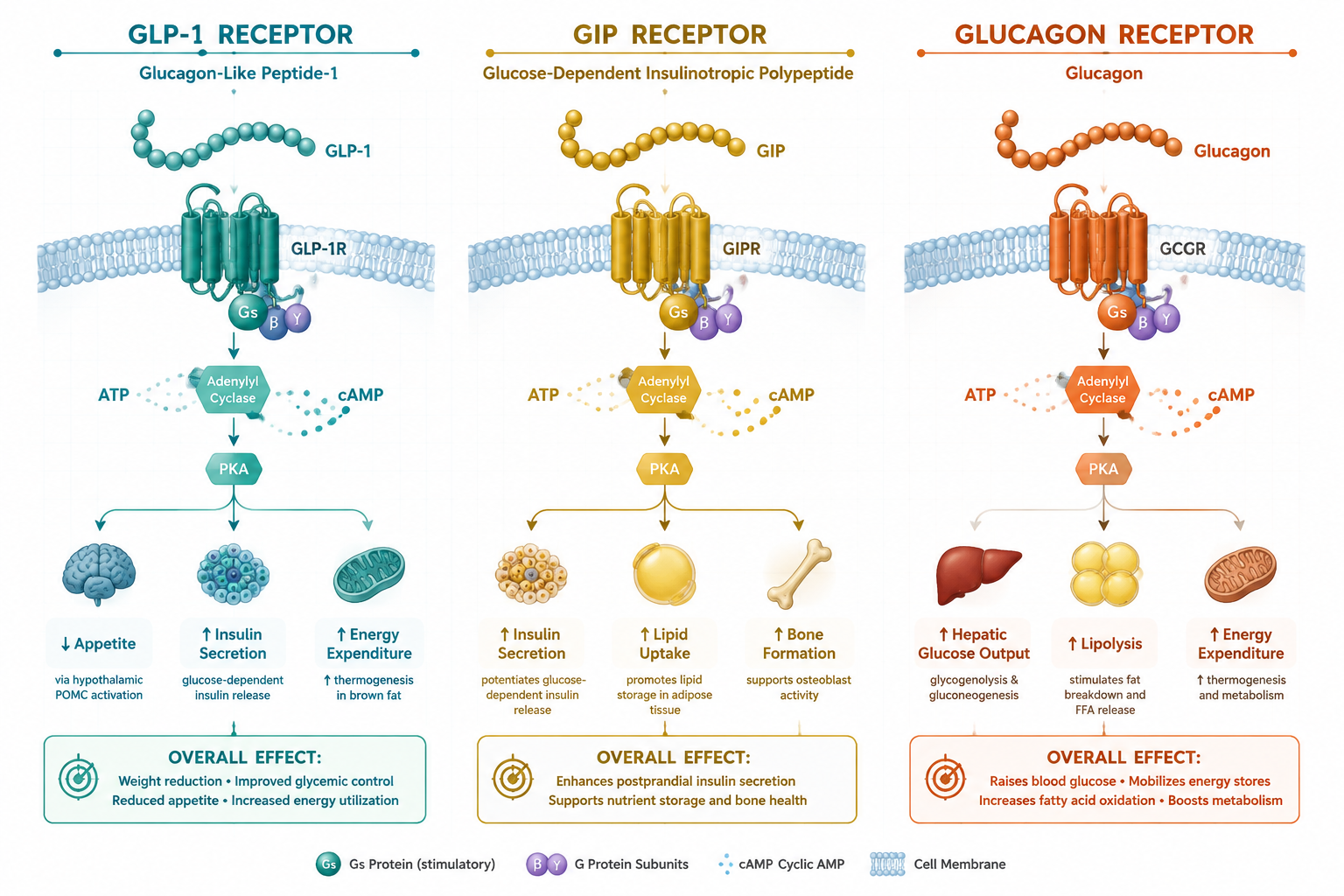
GLP-1 (glucagon-like peptide-1) is a 30-amino-acid incretin hormone. It binds the GLP-1 receptor (GLP-1R), a class B G-protein-coupled receptor expressed in pancreatic beta cells, the vagus nerve, the hypothalamus, and the heart. Activation drives glucose-dependent insulin secretion, suppresses glucagon, slows gastric emptying, and reduces appetite. Its plasma half-life is under two minutes due to rapid degradation by DPP-4 enzyme.

GLP-2 (glucagon-like peptide-2) is a 33-amino-acid peptide that binds its own distinct receptor, GLP-2R, expressed primarily in intestinal enteroendocrine cells, submucosal neurons, and the hypothalamus. Its core functions center on intestinal epithelial growth, barrier integrity, and nutrient absorption — not glucose regulation. Teduglutide (Gattex/Revestive), a GLP-2 analog, is the only approved agent in this class and generates over $800 million annually. As of 2026, at least six novel GLP-2 analog programs are in active clinical development targeting short bowel syndrome, Crohn's disease, and gut barrier dysfunction. Researchers exploring GLP-1 incretin research themes will find the GLP-2 pathway a compelling parallel.

"GLP-1 and GLP-2 are not interchangeable — they share a precursor but act on entirely different receptor systems with non-overlapping physiological roles."


What "GLP-3" Actually Means: Receptor Taxonomy vs. Peptide Naming

Researcher comparing GLP peptide vials and clinical trial data

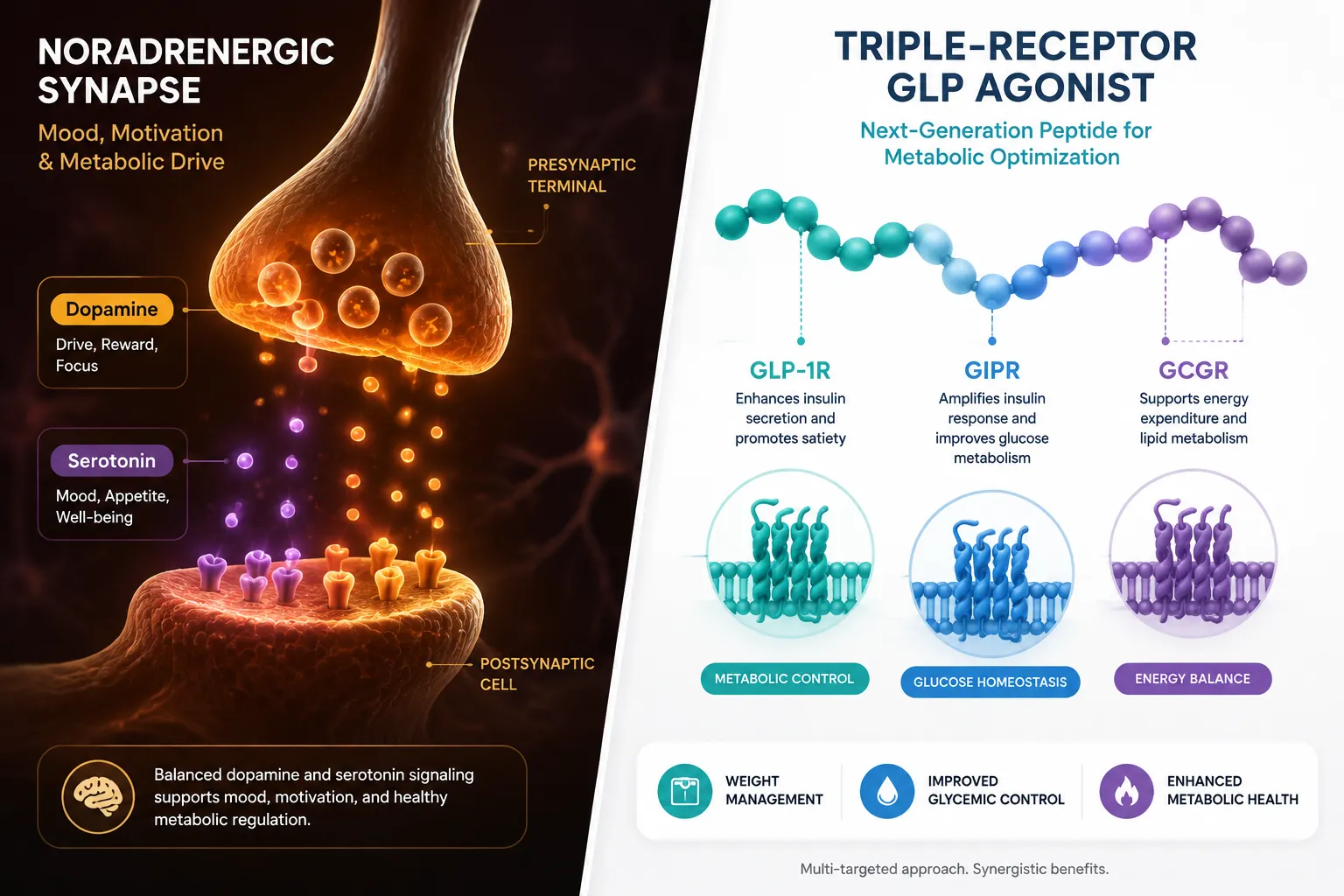
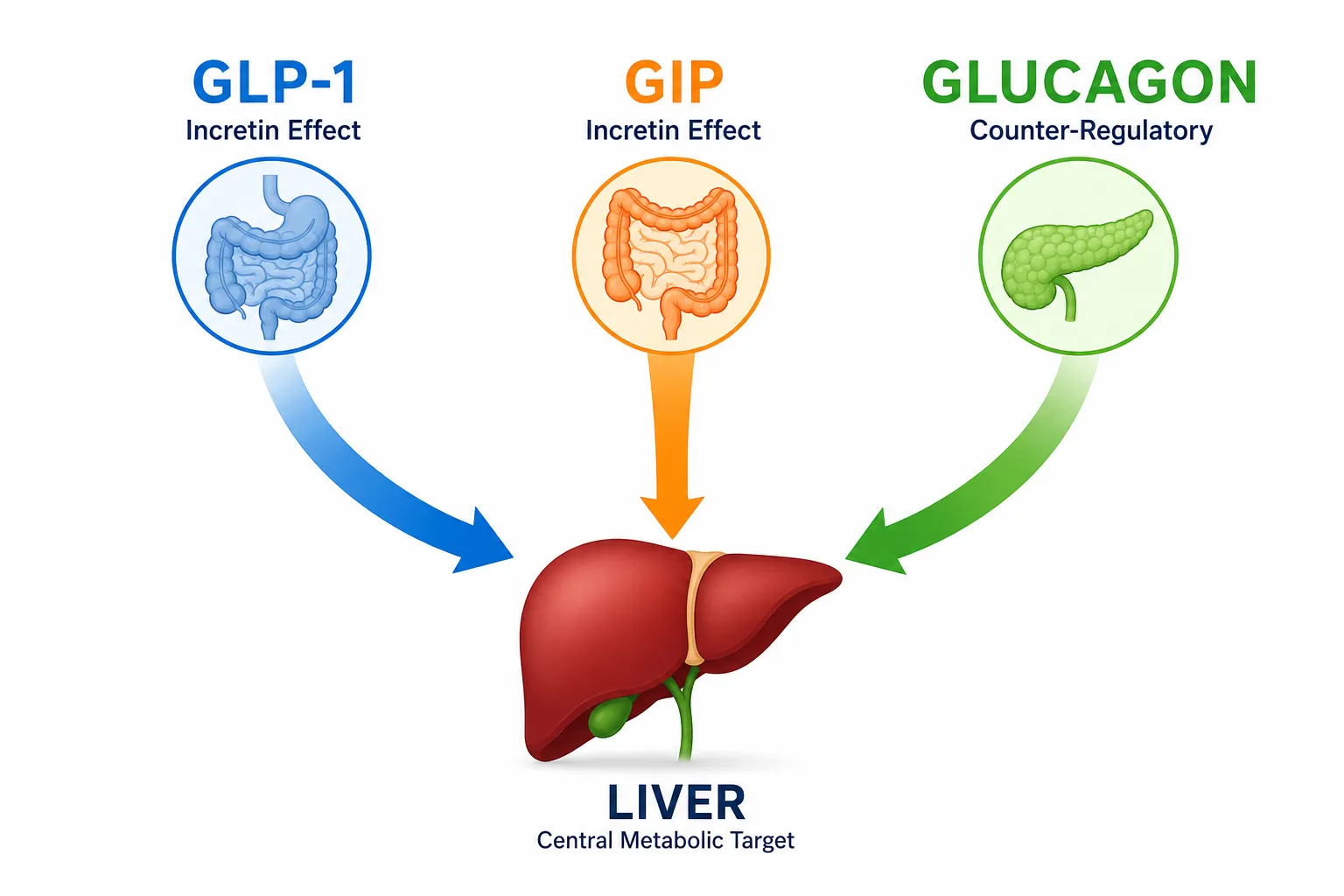
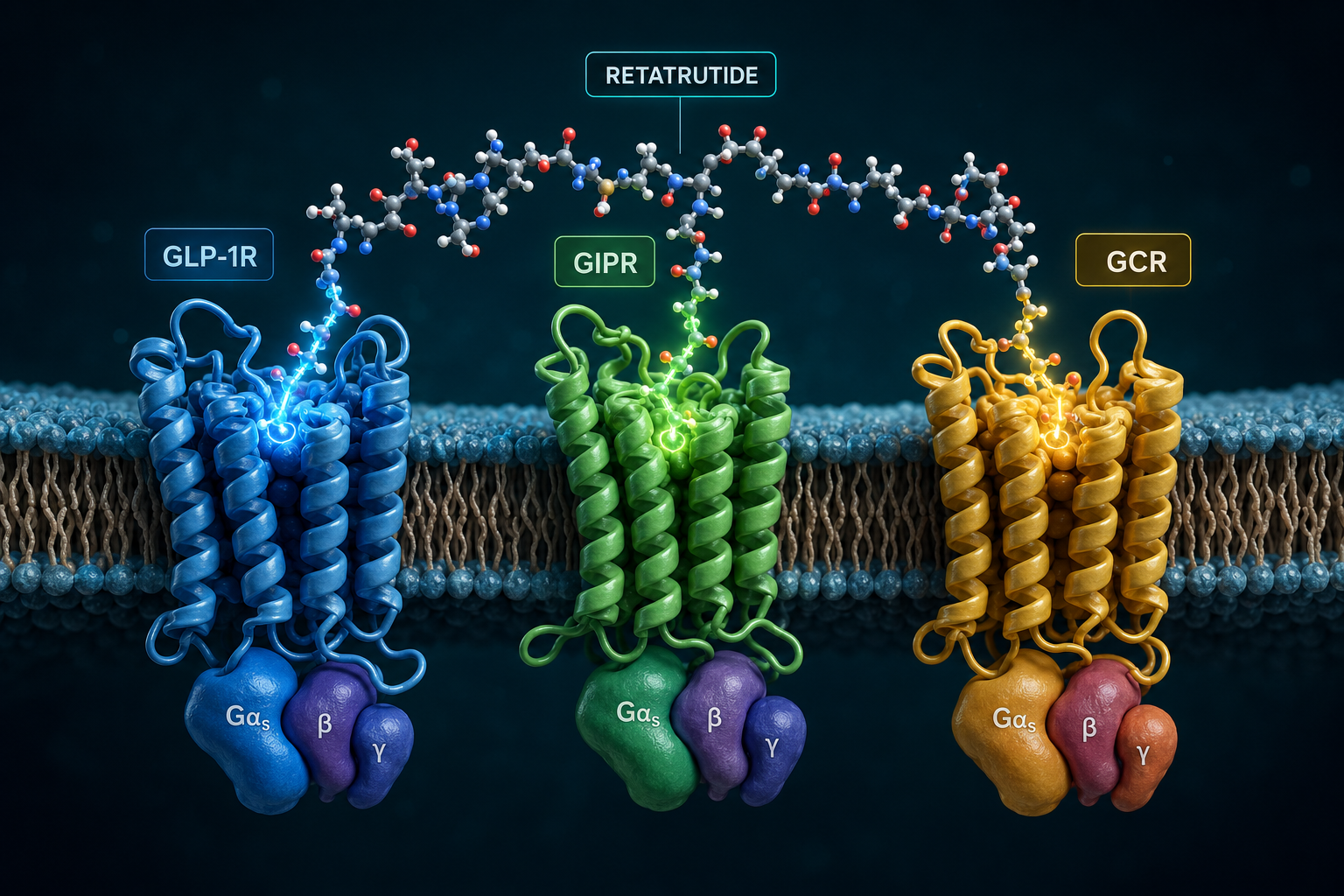
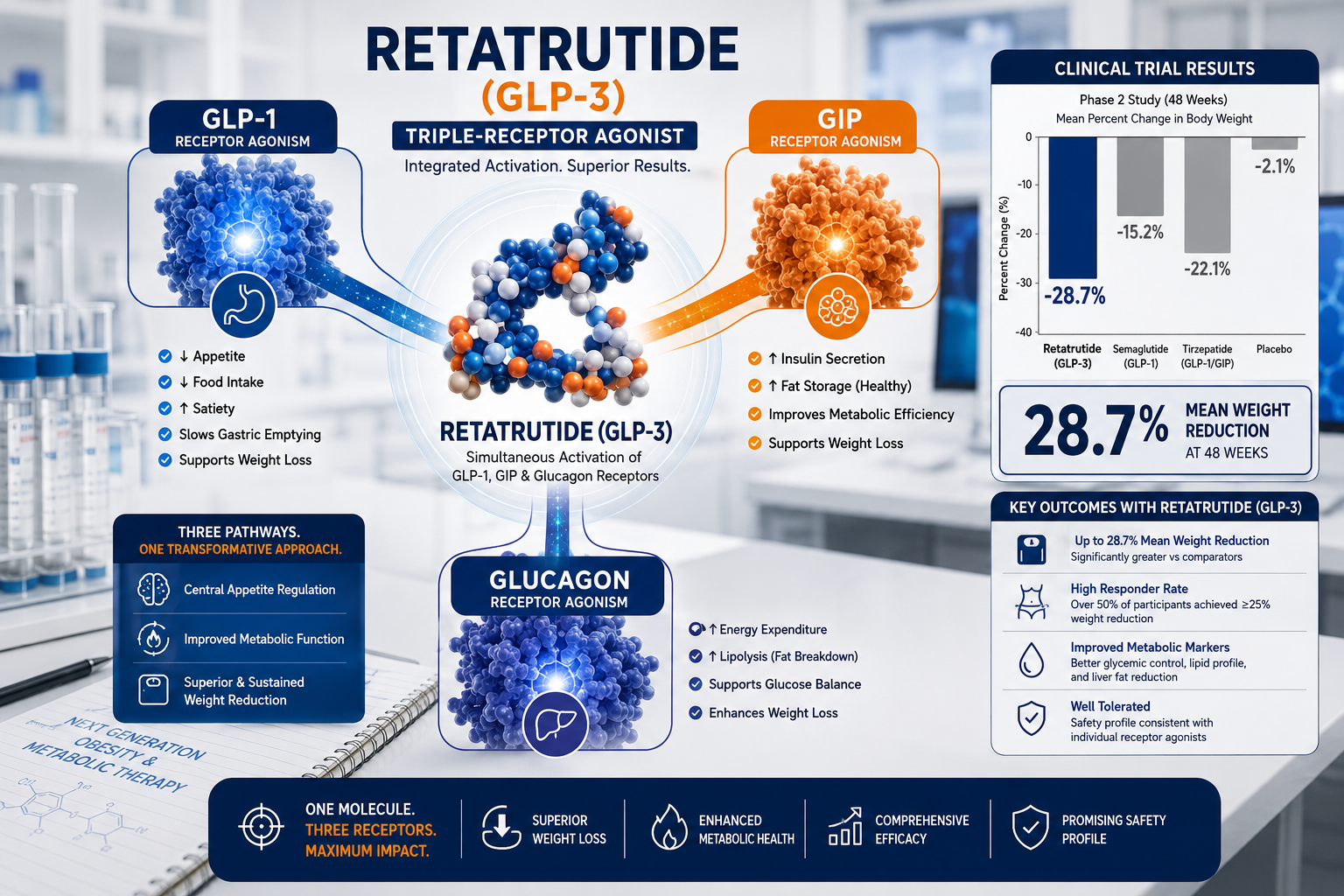
The phrase "GLP-3" does not describe a third endogenous glucagon-like peptide. It is an informal shorthand for retatrutide, a synthetic triple agonist developed by Eli Lilly that simultaneously targets three receptors: GLP-1R, GIP receptor (GIPR), and glucagon receptor (GCGR). The "3" refers to the number of receptor targets, not a peptide sequence.

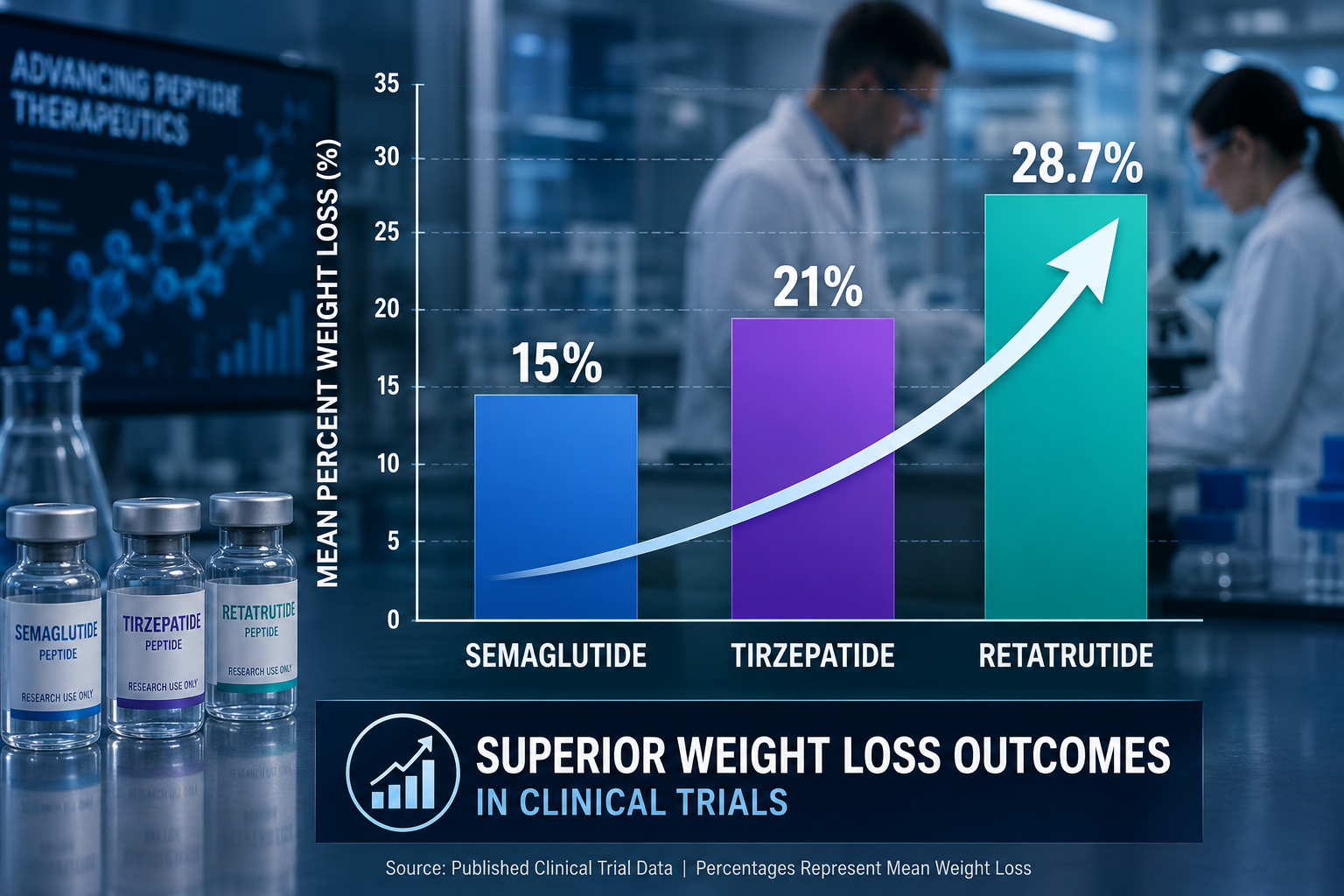
This distinction matters enormously for researchers. Calling retatrutide "GLP-3" is pharmacologically imprecise. The correct terminology is triple receptor agonist or GLP-1/GIP/glucagon tri-agonist. Retatrutide is not FDA-approved as of 2026 and remains available only through clinical trials. Phase 3 data have shown up to 28.7% weight loss, with approval anticipated no earlier than 2027. For more on this compound's research profile, see the dedicated retatrutide and GLP-3 research overview.

Why does the naming confusion persist?

  • Dual agonists like tirzepatide (GLP-1/GIP) were informally called "GLP-2" by some media outlets before that term was corrected.
  • The pharmaceutical pipeline moves faster than regulatory taxonomy.
  • Marketing teams favor simple numerical progressions.

Researchers should also note the generational differences across GLP-1 drug classes to contextualize where triple agonists sit in the therapeutic timeline.


The 2026 Pipeline: Next-Generation Agents Across the GLP Family

Next-generation GLP peptide pipeline timeline and weight-loss data chart

The peptide family landscape in 2026 is defined by receptor combination strategies rather than single-target approaches. Key agents include:

Orforglipron (Foundayo) — Eli Lilly
A once-daily oral GLP-1 receptor agonist. In the ACHIEVE-3 trial, the 17.2 mg dose produced 57.1% greater relative A1C reduction and 73.6% greater relative weight loss compared to oral semaglutide 14 mg. Lilly plans FDA submission by end of Q2 2026.

PF-08653944 — Pfizer
An ultra-long-acting injectable GLP-1 RA achieving 12.3% mean placebo-adjusted weight loss at 28 weeks in the VESPER-3 Phase 2b study, with weight loss continuing after transitioning from weekly to monthly dosing. Ten Phase 3 trials are anticipated in 2026.

Amycretin — Novo Nordisk
A single molecule activating both amylin and GLP-1 receptors, showing 22% weight loss in 36 weeks in Phase 1b/2a trials. Both oral and injectable formulations advance to Phase 3 in 2026.

Survodutide — Boehringer Ingelheim
A dual glucagon/GLP-1 agonist showing 18.7% weight loss at 46 weeks in Phase 2, with 62% of MASH patients achieving disease resolution. Phase 3 trials span 14 countries.

Researchers interested in the broader metabolic peptide landscape can explore metabolic modulation research lines and GIP receptor biology for mechanistic context. Those studying adjacent metabolic compounds may also find value in reviewing AOD9604 metabolic research and SLU-PP-332 metabolic research as comparative reference points.


Conclusion

The GLP peptide family is one of the most productive areas in current biomedical research, but imprecise language creates real confusion. GLP-1 and GLP-2 are endogenous peptides with distinct receptors and non-overlapping functions — both derived from proglucagon but acting on entirely separate physiological systems. "GLP-3" is not a peptide; it is a colloquial label for a triple-receptor agonist strategy.

Actionable next steps for researchers:

  • Anchor all literature searches to receptor nomenclature (GLP-1R, GLP-2R, GIPR, GCGR) rather than informal drug nicknames.
  • Track the orforglipron and retatrutide Phase 3 readouts expected in 2026-2027 as benchmark data for receptor combination strategies.
  • Distinguish between endogenous peptide biology and synthetic analog pharmacology when designing assay protocols.
  • Review the GLP-1 peptide product research library for current research-grade compound availability.

Precise taxonomy is not pedantry — it is the foundation of reproducible science.

https://www.puretestedpeptides.com/wp-content/uploads/2026/06/GLP-3-GLP-1-and-GLP-2-Explained-A-Researchers-Guide-to-the-Peptide-Family.png 1024 1536 Pure Tested https://www.puretestedpeptides.com/wp-content/uploads/2026/01/buy-peptides-online.jpg Pure Tested2026-06-28 13:27:512026-07-20 15:02:00GLP-3, GLP-1, and GLP-2 Explained: A Researcher’s Guide to the Peptide Family
GLP-3 Retatrutide vs. GLP-1 and GLP-2: Understanding Receptor Specificity and Research Models

GLP-3 Retatrutide vs. GLP-1 and GLP-2: Understanding Receptor Specificity and Research Models

June 21, 2026/0 Comments/by Pure Tested

A 39-amino acid peptide achieving 28.7% body weight reduction in preliminary Phase 3 data is not a minor incremental advance — it signals a fundamental shift in how researchers think about metabolic receptor targeting. At the center of this shift is retatrutide, often labeled "GLP-3" in research shorthand, and understanding GLP-3 Retatrutide vs. GLP-1 and GLP-2: Understanding Receptor Specificity and Research Models is now essential for anyone following the metabolic peptide research landscape in 2026.

Key Takeaways

  • Retatrutide simultaneously activates three receptors: GLP-1, GIP, and glucagon — unlike GLP-1 or GLP-2 single-agonist peptides.
  • Its receptor potency profile is uneven by design, with the GIP receptor showing the highest binding affinity.
  • Triple-receptor activation addresses both sides of energy balance: reducing caloric intake and increasing energy expenditure.
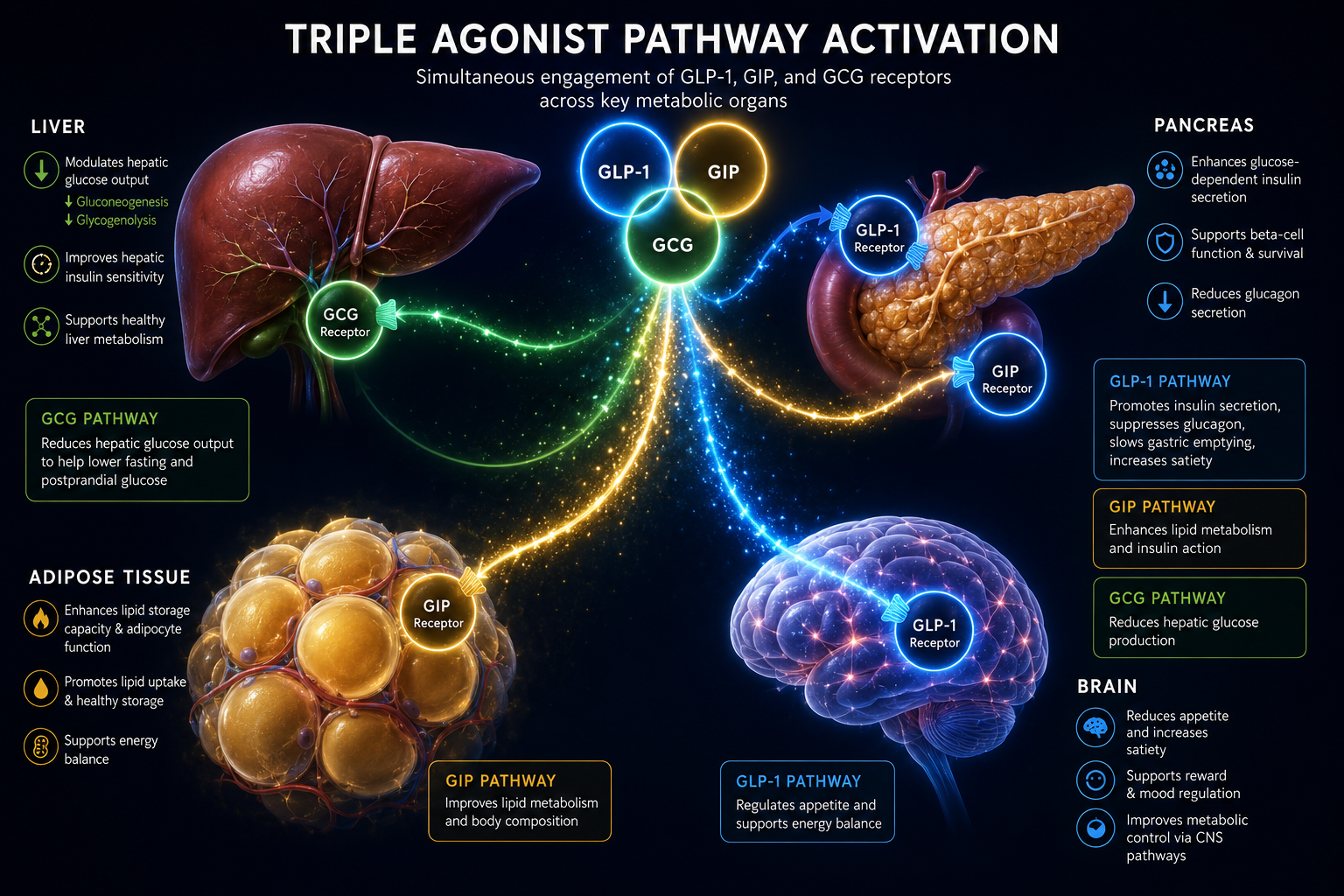
  • Retatrutide remains investigational as of 2026, with Phase 3 trials ongoing and FDA filing projected for 2026-2027.
  • Structural modifications including a C20 fatty diacid moiety enable once-weekly dosing through extended half-life.

How Receptor Specificity Defines the GLP-3 Retatrutide vs. GLP-1 and GLP-2 Distinction

How Receptor Specificity Defines the GLP-3 Retatrutide vs. GLP-1 and GLP-2 Distinction

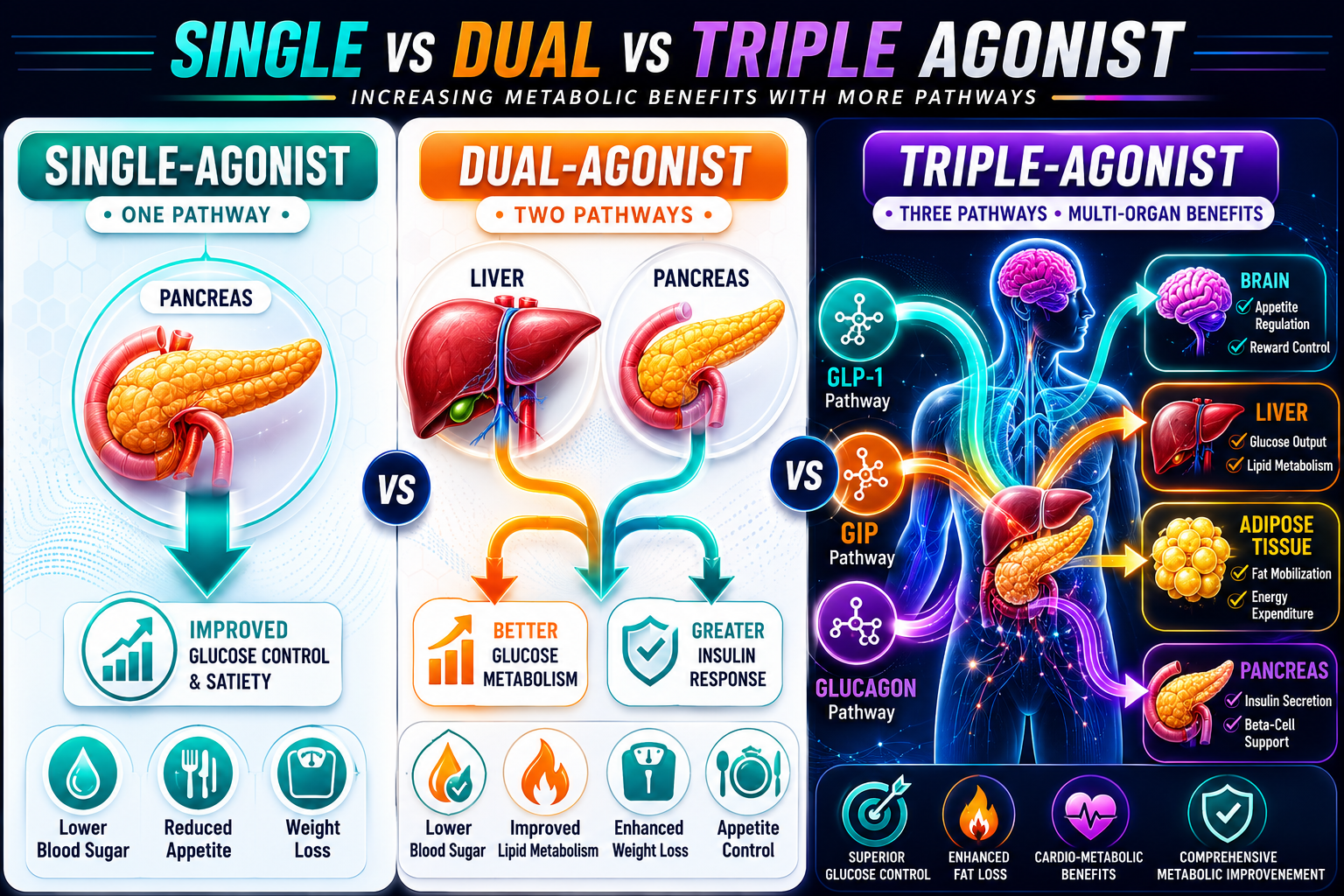
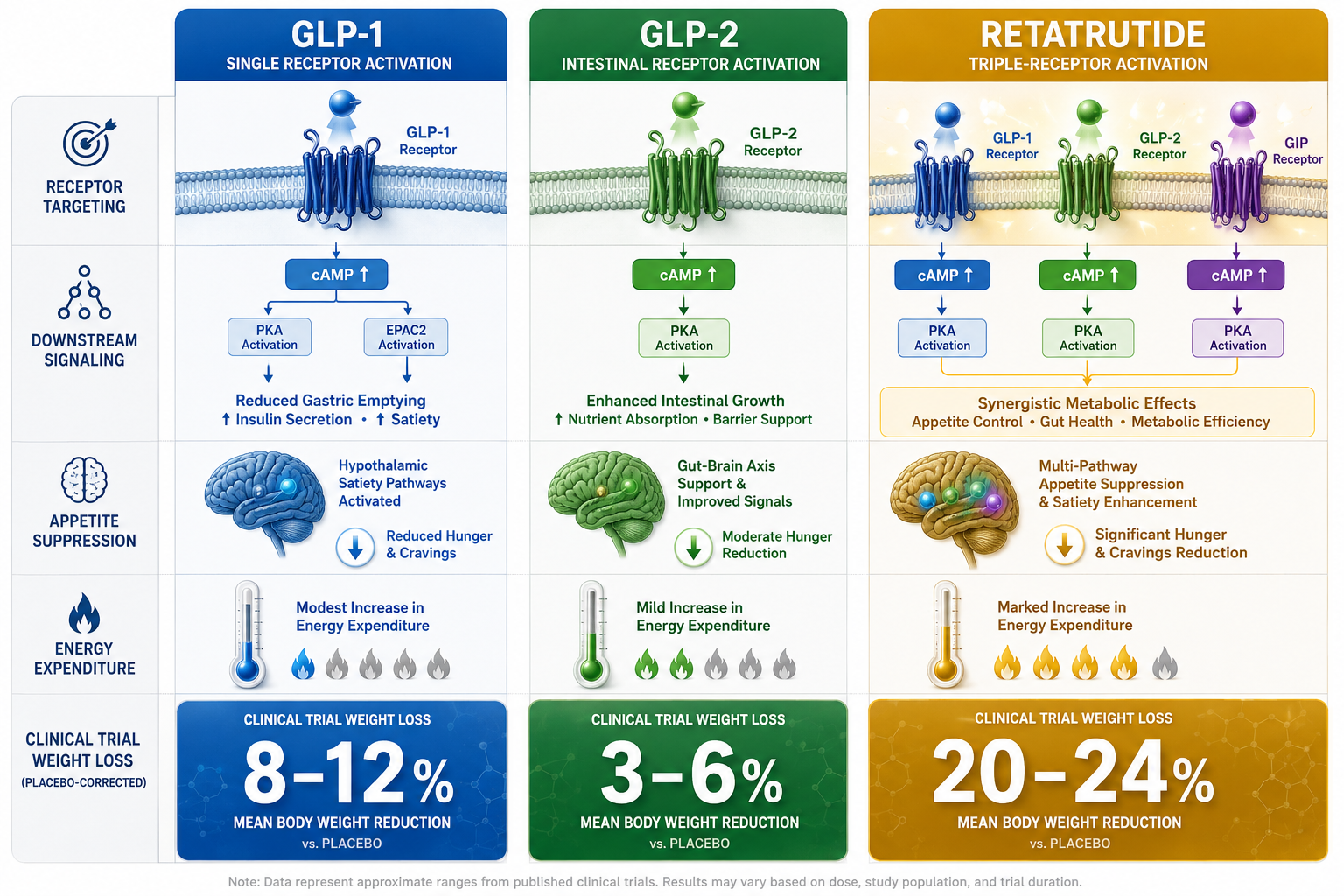
The term "GLP-3" is a colloquial label used in research communities to distinguish retatrutide from earlier incretin-based compounds. Formally, retatrutide is a triple agonist — it binds and activates the GLP-1 receptor, the GIP receptor, and the glucagon receptor. This is categorically different from GLP-1 receptor agonists like semaglutide, which target a single receptor, and from GLP-2, a peptide primarily involved in intestinal growth and repair through its own dedicated receptor.

Understanding the receptor specificity comparison requires looking at potency data:

Receptor EC50 Value Relative Potency vs. Native Peptide
GIP Receptor 0.0643 nM ~8.9x more potent than native GIP
GLP-1 Receptor 0.775 nM ~0.4x potency of native GLP-1
Glucagon Receptor 5.79 nM ~0.3x potency of native glucagon

This asymmetric potency profile is intentional. The GIP receptor is activated most strongly, while glucagon receptor engagement is kept moderate — enough to drive thermogenesis and fat mobilization without triggering hyperglycemia. GLP-1 receptor activation suppresses appetite and enhances insulin secretion, while GLP-2 operates on an entirely separate pathway focused on gut mucosal integrity, making it functionally distinct from retatrutide's mechanism.

For researchers exploring incretin biology, the GLP-3 incretin research themes page provides a useful foundation for understanding how this triple-agonist model differs from classic GLP-1 frameworks.


Downstream Signaling Pathways: Where GLP-3 Retatrutide vs. GLP-1 and GLP-2 Research Models Diverge

Downstream Signaling Pathways: Where GLP-3 Retatrutide vs. GLP-1 and GLP-2 Research Models Diverge

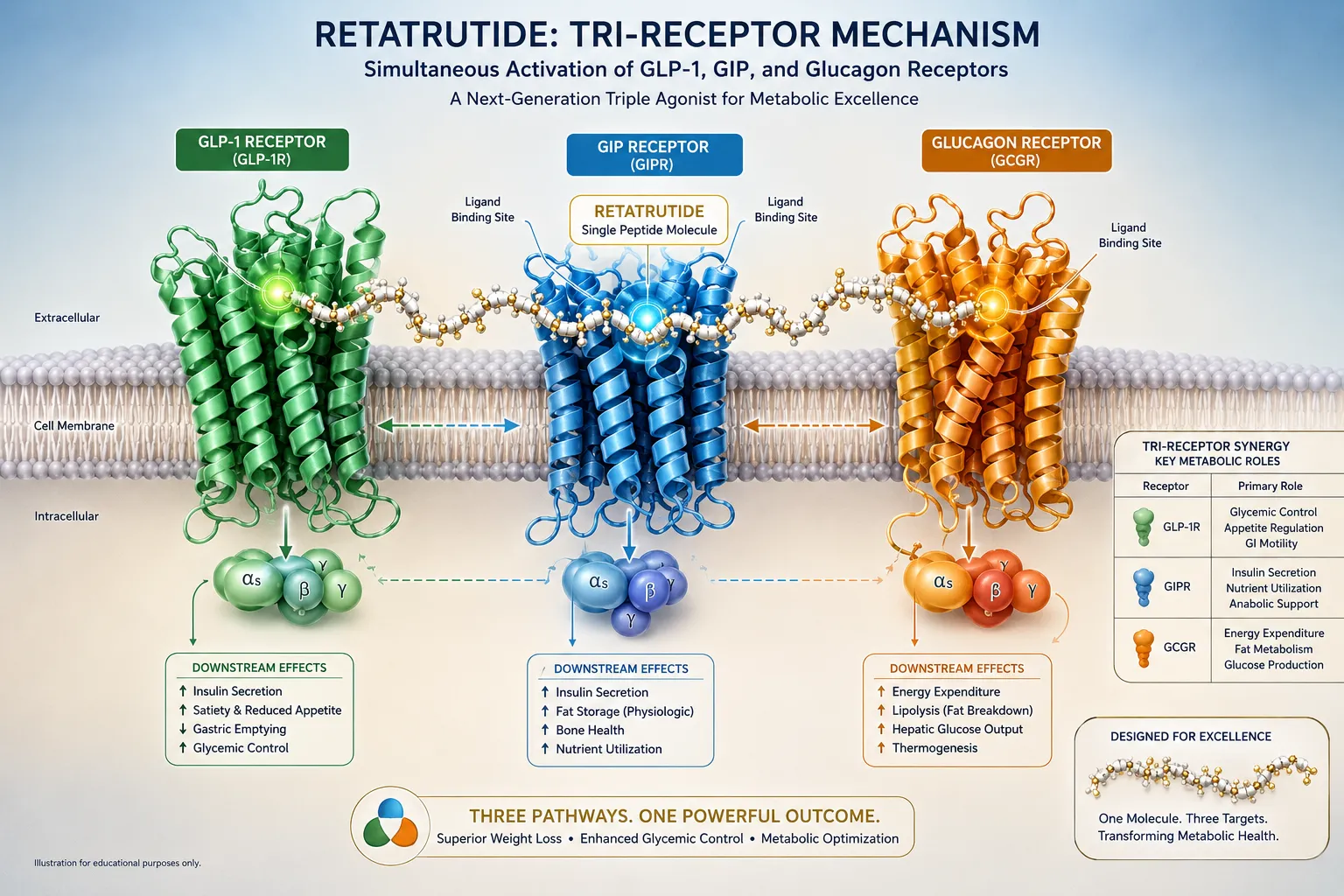
The downstream effects of receptor activation explain why retatrutide produces outcomes that single-agonist peptides cannot replicate. Each receptor pathway contributes a distinct physiological signal:

  • GLP-1 receptor activation: Slows gastric emptying, reduces appetite via central nervous system signaling, and stimulates glucose-dependent insulin release.
  • GIP receptor activation: Enhances insulin secretion, may improve insulin sensitivity, and contributes to adipose tissue regulation.
  • Glucagon receptor activation: Increases hepatic glucose output at low levels, but more critically at therapeutic doses, drives thermogenesis and promotes lipolysis.

GLP-2, by contrast, signals primarily through receptors in the intestinal epithelium, stimulating mucosal growth and nutrient absorption. Its downstream effects are largely confined to the gut, with no meaningful overlap with the metabolic energy-balance pathways that retatrutide engages.

This divergence has significant implications for research model design. Studies examining retatrutide must account for simultaneous multi-receptor crosstalk, whereas GLP-1 or GLP-2 models involve cleaner, more isolated signaling environments. Researchers interested in how GIP receptor dynamics fit into this picture can explore the GIP receptor and its importance for additional context.

Those comparing generational differences in GLP-1 compounds may also find value in reviewing generations of GLP-1 differences to place retatrutide's design within a broader evolutionary framework of incretin drug development.


Clinical Research Outcomes and the Triple-Agonist Advantage

Clinical Research Outcomes and the Triple-Agonist Advantage

The clinical data emerging from retatrutide trials reflects the compounded benefit of triple-receptor engagement. Phase 2 results showed up to 24.2% body weight reduction over 48 weeks. Preliminary Phase 3 data pushes that figure to 28.7% at 68 weeks — a result that exceeds outcomes from both semaglutide and tirzepatide in comparable timeframes.

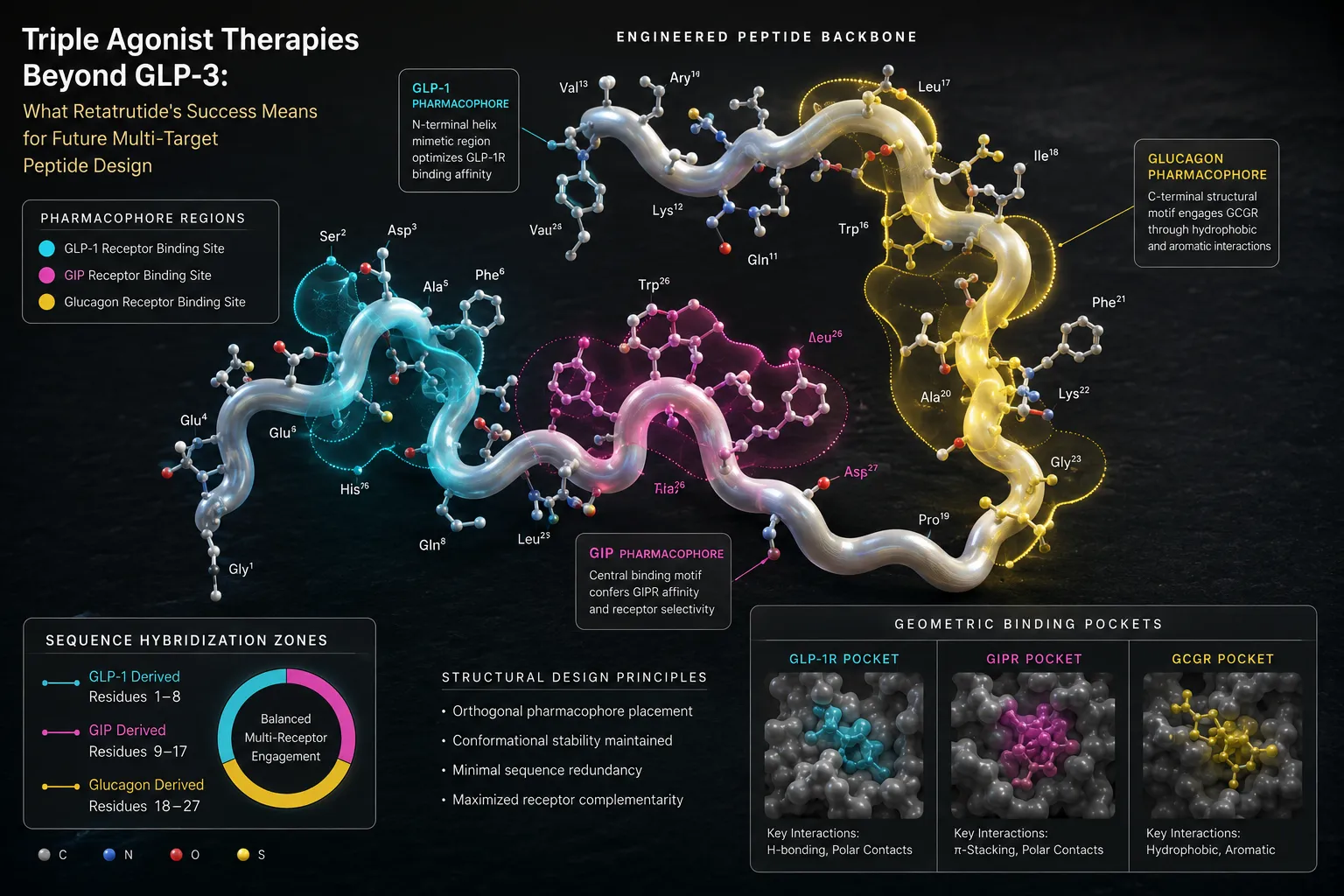
Structurally, retatrutide is built on a GIP peptide backbone, modified with 2-aminoisobutyric acid (Aib) residues and a C20 fatty diacid moiety. These modifications resist enzymatic degradation and extend the half-life to approximately six days, making once-weekly subcutaneous dosing feasible. Steady-state plasma concentrations are typically reached within four to five weeks of consistent administration.

As of 2026, retatrutide remains investigational. It has not received FDA approval and is available only in research and clinical trial contexts. An FDA filing is projected for 2026-2027 pending Phase 3 completion.

Researchers building multi-pathway metabolic models may also find it useful to examine how other compounds interact with energy regulation. The SLU-PP-332 metabolic modulation research themes page outlines complementary pathways that some researchers study alongside incretin-based models. Similarly, the GLP-1 peptide generational research concepts resource provides sourcing and conceptual context for GLP-1 receptor research.

For those specifically focused on retatrutide as a research compound, the GLP-3 triple agonist research planning page offers catalog navigation and planning guidance.


Conclusion

The comparison of GLP-3 Retatrutide vs. GLP-1 and GLP-2: Understanding Receptor Specificity and Research Models reveals a clear hierarchy of mechanistic complexity. GLP-2 operates in a gut-specific domain. GLP-1 agonists provide meaningful but single-pathway metabolic control. Retatrutide, through its calibrated triple-receptor engagement, addresses energy balance from multiple angles simultaneously — a design that its clinical outcomes appear to validate.

Actionable next steps for researchers:

  • Review published Phase 2 and Phase 3 trial protocols to understand retatrutide's dosing and endpoint design before building research models.
  • Map receptor crosstalk carefully when designing in vitro or preclinical studies involving triple agonists.
  • Compare GIP receptor potency data against GLP-1 receptor data to understand which pathway dominates at different dose levels.
  • Monitor FDA filing updates projected for 2026-2027 to track regulatory trajectory.
  • Consult the GLP-3 newest triple agonist overview for updated research framing as new data emerges.
https://www.puretestedpeptides.com/wp-content/uploads/2026/06/GLP-3-Retatrutide-vs.-GLP-1-and-GLP-2-Understanding-Receptor-Specificity-and-Research-Models.png 1024 1536 Pure Tested https://www.puretestedpeptides.com/wp-content/uploads/2026/01/buy-peptides-online.jpg Pure Tested2026-06-21 13:05:362026-07-20 15:02:37GLP-3 Retatrutide vs. GLP-1 and GLP-2: Understanding Receptor Specificity and Research Models
GLP-2 and GLP-2-Tirzepatide: Research into Intestinal Growth Factors and Gut Barrier Function

GLP-2 and GLP-2-Tirzepatide: Research into Intestinal Growth Factors and Gut Barrier Function

June 20, 2026/0 Comments/by Pure Tested

Short bowel syndrome affects roughly 3 in every million people, yet the peptide hormone at the center of emerging gut repair research — GLP-2 — was only identified in the 1980s. Today, research into GLP-2 and GLP-2-Tirzepatide: Research into Intestinal Growth Factors and Gut Barrier Function is reshaping how scientists understand the intestine as a dynamic, hormonally regulated organ.

Detailed () scientific illustration showing GLP-2 hormone molecules being secreted from enteroendocrine L-cells in the

Key Takeaways

  • GLP-2 is an intestinally derived hormone that drives mucosal growth, barrier repair, and nutrient absorption.
  • Its actions are largely indirect, mediated through IGF-1, EGF, and tight junction protein modulation.
  • Dual-receptor agonists combining GLP-1 and GLP-2 activity (such as dapiglutide) show enhanced barrier protection in preclinical models.
  • Tirzepatide's structural relationship to incretin biology opens new research questions about combined gut-metabolic signaling.
  • Age-related gut decline may be a future target for GLP-2-based interventions.

What Is GLP-2 and Why Does It Matter for Gut Health

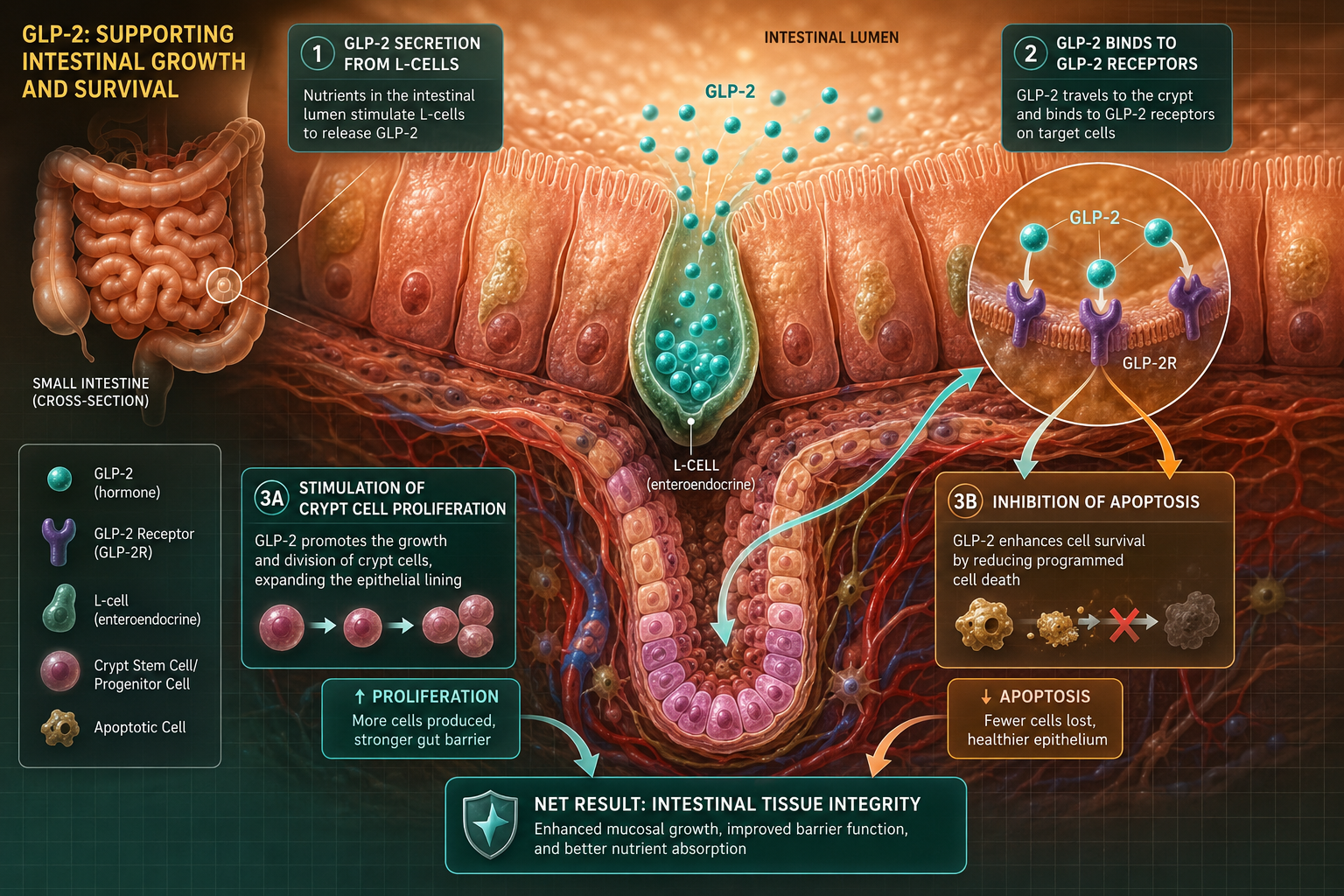
Glucagon-like peptide-2 (GLP-2) is a 33-amino acid hormone secreted by enteroendocrine L-cells lining the small and large intestine. It is released in direct response to nutrient intake, making it a key postprandial signal.

Its primary roles include:

  • Stimulating crypt cell proliferation (intestinal growth)
  • Inhibiting apoptosis and proteolysis in mucosal tissue
  • Enhancing nutrient absorption and reducing mucosal permeability
  • Regulating gastric emptying and acid secretion

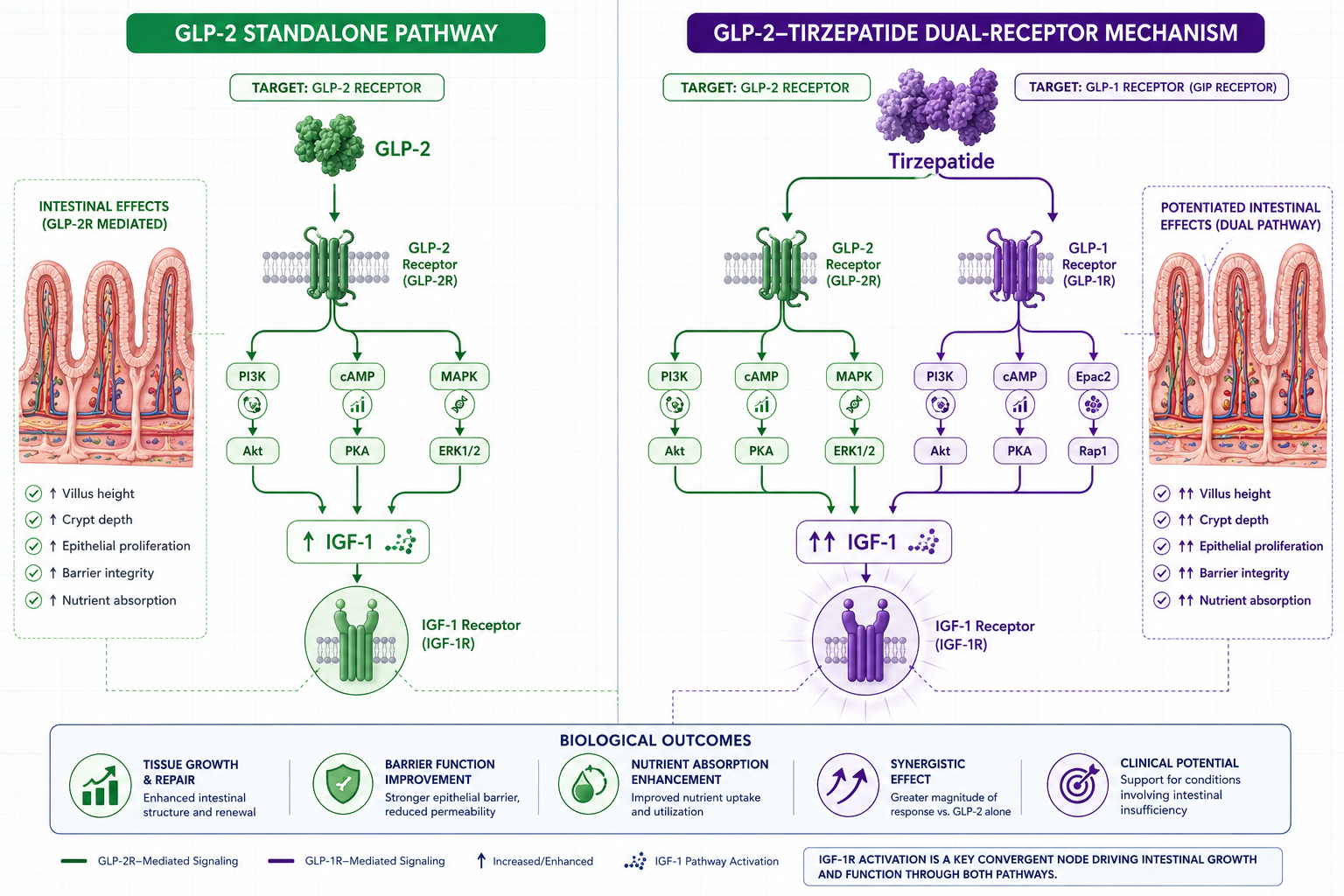
GLP-2 does not act alone. Its intestinotropic effects are mediated through a network of indirect signals, particularly insulin-like growth factor-1 (IGF-1) and epidermal growth factor (EGF). These downstream mediators drive the crypt cell proliferation that gives GLP-2 its reputation as a potent intestinal growth factor.

Researchers studying related metabolic peptides — including those exploring GLP-1 and incretin research themes — have noted that the GLP family shares structural and functional overlap worth investigating in parallel.


GLP-2 and Gut Barrier Function: The Tight Junction Connection

One of the most clinically significant findings in GLP-2 research involves its effect on the intestinal epithelial barrier. A healthy gut barrier depends on tight junction proteins — including claudin and occludin — that seal gaps between epithelial cells and prevent bacterial translocation.

GLP-2 improves both:

Pathway Mechanism
Transcellular Enhanced nutrient transport across epithelial cells
Paracellular Tight junction protein upregulation via IE-IGF-1R signaling

The intestinal epithelial IGF-1 receptor (IE-IGF-1R) appears central to this process. When GLP-2 binds its receptor on subepithelial cells, it triggers IGF-1 release, which then acts on epithelial IGF-1 receptors to reinforce tight junction integrity.

Research in aged animal models found that GLP-2 administration reversed age-associated declines in mucosal barrier function — a finding with significant implications for longevity-focused gastrointestinal research. This connects naturally to broader work on mitochondrial and longevity research themes where cellular resilience is a shared focus.

GLP-2 also appears to orchestrate gut microbiota interactions, supporting immune homeostasis and reducing inflammatory signaling at the mucosal surface.


GLP-2 and GLP-2-Tirzepatide: Research into Intestinal Growth Factors and Gut Barrier Function — The Dual-Receptor Frontier

GLP-2 and GLP-2-Tirzepatide: Research into Intestinal Growth Factors and Gut Barrier Function — The Dual-Receptor Frontier

Tirzepatide is best known as a dual GIP/GLP-1 receptor agonist with metabolic effects. However, emerging structural pharmacology research is exploring whether tirzepatide's incretin backbone can be modified or combined with GLP-2 activity to create multi-target gut-metabolic agents.

A 2022 study on dapiglutide — a dual GLP-1/GLP-2 receptor agonist — demonstrated measurable improvements in intestinal barrier function in a murine short bowel model. This proof-of-concept supports the hypothesis that combining incretin signaling with GLP-2 intestinotrophic activity could offer additive benefits.

Researchers interested in GLP-3 and retatrutide research are also examining how multi-receptor engagement affects gut architecture beyond glycemic control.

GLP-2 and GLP-2-Tirzepatide: Research into Intestinal Growth Factors and Gut Barrier Function — The Dual-Receptor Frontier

Key research questions currently being explored include:

  • Can tirzepatide-adjacent molecules be engineered to also activate GLP-2 receptors?
  • Does combined GLP-1/GLP-2 signaling reduce intestinal permeability more effectively than either alone?
  • What role does the gut microbiome play in modulating these effects?

For researchers exploring metabolic and body composition peptides, AOD9604 metabolic research and TESA body composition research themes offer relevant comparative frameworks for understanding how gut-derived hormones influence systemic metabolism.


Conclusion

Research into GLP-2 and GLP-2-Tirzepatide: Research into Intestinal Growth Factors and Gut Barrier Function represents one of the most promising frontiers in gastrointestinal biology in 2026. GLP-2 is not simply a growth signal — it is a multi-functional regulator of barrier integrity, immune balance, and nutrient homeostasis.

Actionable next steps for researchers:

  1. Review preclinical models using dual GLP-1/GLP-2 agonists to identify translatable endpoints.
  2. Examine IGF-1 receptor signaling as a measurable biomarker for GLP-2 barrier activity.
  3. Explore synergies between GLP-2 pathways and other gut-protective peptides, including those catalogued in the comprehensive peptide research catalog.
  4. Monitor emerging data on tirzepatide-derived multi-receptor molecules for intestinal applications.

The intersection of incretin pharmacology and intestinal growth factor biology is still early-stage — but the mechanistic groundwork laid by GLP-2 research makes it one of the most compelling areas to watch.

https://www.puretestedpeptides.com/wp-content/uploads/2026/06/GLP-2-and-GLP-2-Tirzepatide-Research-into-Intestinal-Growth-Factors-and-Gut-Barrier-Function.png 1024 1536 Pure Tested https://www.puretestedpeptides.com/wp-content/uploads/2026/01/buy-peptides-online.jpg Pure Tested2026-06-20 13:03:322026-07-20 15:02:40GLP-2 and GLP-2-Tirzepatide: Research into Intestinal Growth Factors and Gut Barrier Function
Retatrutide (GLP-1/GIP/GCG) Mechanism of Action: A Triple Agonist Research Guide for Metabolic Studies

Retatrutide (GLP-1/GIP/GCG) Mechanism of Action: A Triple Agonist Research Guide for Metabolic Studies

June 19, 2026/0 Comments/by Pure Tested

Obesity affects more than one billion adults worldwide as of 2026, yet most pharmacological tools target only a single metabolic receptor. Retatrutide breaks from that pattern entirely. This investigational peptide simultaneously activates three distinct receptor systems, making the Retatrutide (GLP-1/GIP/GCG) Mechanism of Action: A Triple Agonist Research Guide for Metabolic Studies one of the most pharmacologically rich subjects in current metabolic research.

Detailed () scientific diagram showing Retatrutide peptide structure as a 3D ribbon model binding simultaneously to three

Key Takeaways

  • Retatrutide is a unimolecular triple agonist that activates GLP-1, GIP, and glucagon receptors simultaneously.
  • Each receptor arm contributes a distinct and complementary metabolic effect, including insulin secretion, lipid regulation, and hepatic glucose control.
  • The compound's design allows coordinated signaling that may exceed the efficacy of single or dual agonists in preclinical metabolic models.
  • Peptide purity and sourcing quality are critical variables when using Retatrutide in controlled research settings.
  • Researchers should treat Retatrutide strictly as a laboratory research compound and not for human therapeutic use outside of clinical trials.

Understanding the Triple Agonist Architecture

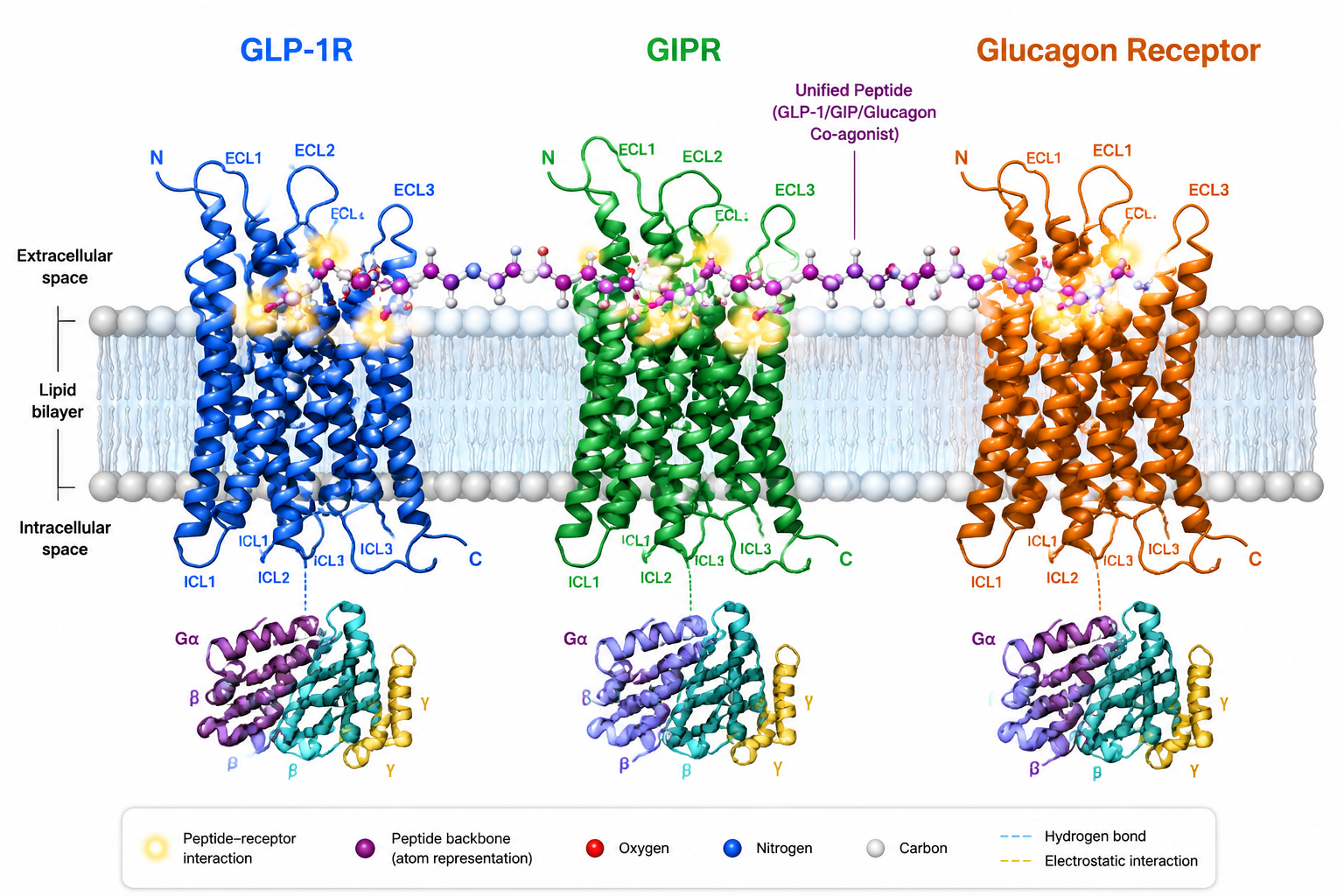
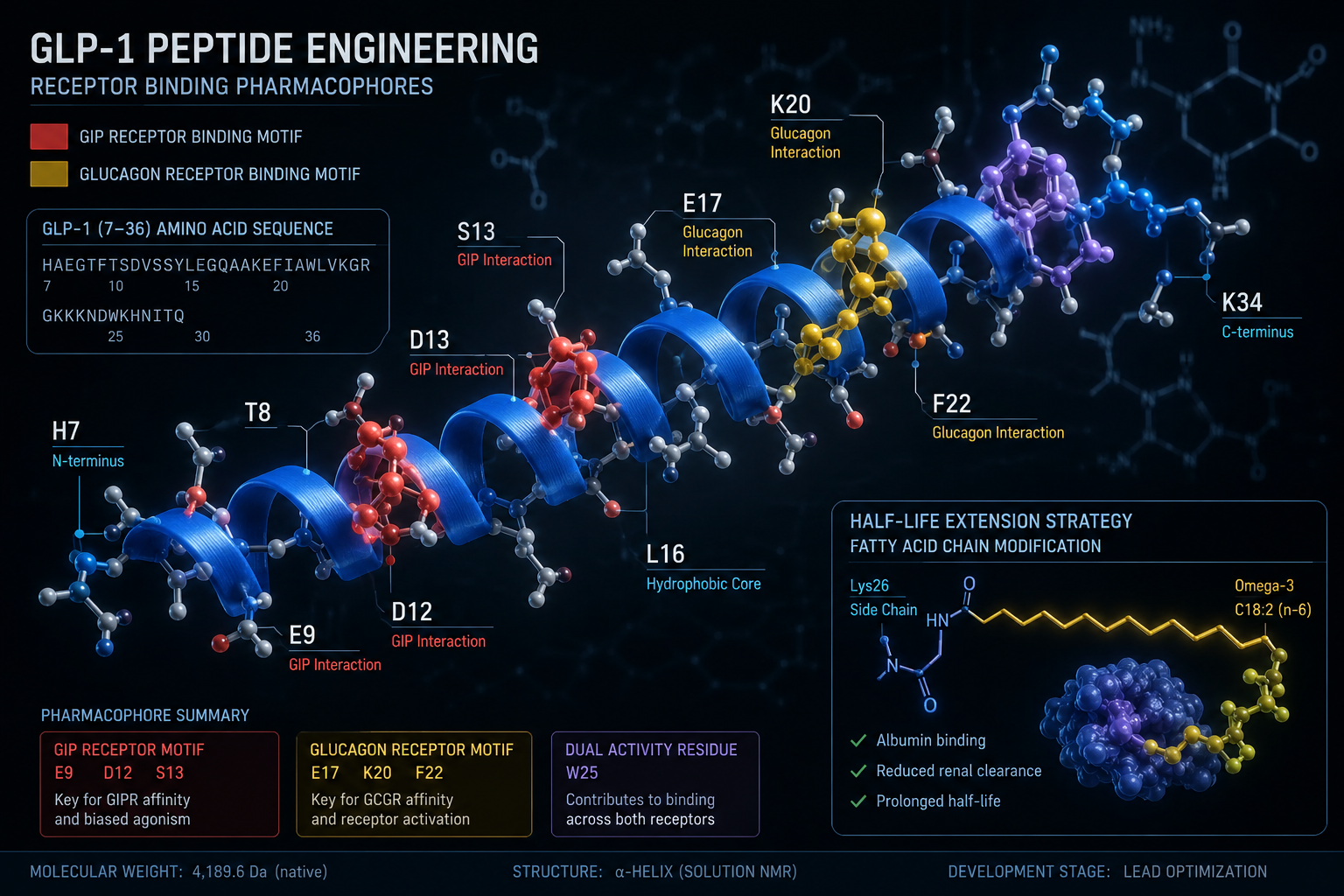
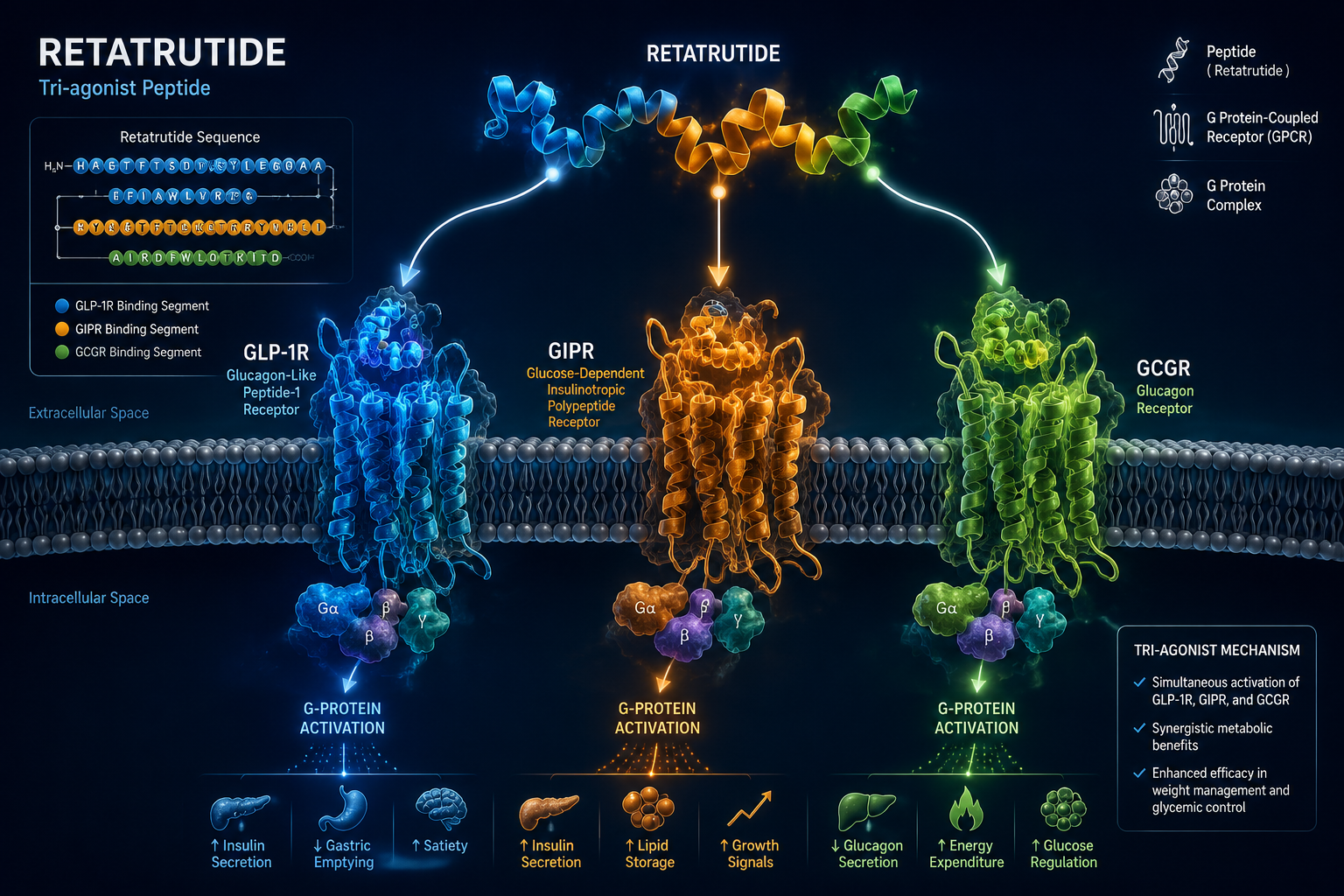
The central innovation behind Retatrutide is its unimolecular design. Rather than combining separate peptides into a mixture, Retatrutide is engineered as a single molecule capable of binding three G-protein coupled receptors: the glucagon-like peptide-1 receptor (GLP-1R), the glucose-dependent insulinotropic polypeptide receptor (GIPR), and the glucagon receptor (GCGR).

This architecture matters because each receptor sits in a different tissue and drives a different downstream effect. The molecule must balance agonist activity across all three without allowing one arm to dominate and produce undesirable off-target signaling.

GLP-1 Receptor Arm

GLP-1R activation is the most well-characterized component. When stimulated, this receptor:

  • Promotes glucose-dependent insulin secretion from pancreatic beta cells
  • Suppresses glucagon release from alpha cells
  • Slows gastric emptying, which reduces postprandial glucose spikes
  • Acts on hypothalamic satiety centers to reduce caloric intake

GIP Receptor Arm

GIPR activation adds a complementary layer. GIP works synergistically with GLP-1 to amplify insulin secretion and also plays a direct role in adipose tissue metabolism. In preclinical models, GIPR agonism has been associated with improved lipid handling and reduced lipotoxicity in peripheral tissues.

Glucagon Receptor Arm

GCGR activation is the most counterintuitive component. Glucagon is classically associated with raising blood glucose, so why include it? At calibrated activity levels, GCGR stimulation drives hepatic fat oxidation and increases energy expenditure. When balanced against GLP-1R-mediated insulin secretion, the net glycemic effect remains controlled while thermogenic output increases. This balance is the pharmacological core of the triple agonist strategy.


Receptor Interaction Table

Receptor Primary Tissue Key Research Effect
GLP-1R Pancreas, Brain Insulin secretion, satiety signaling
GIPR Pancreas, Adipose Insulin amplification, lipid regulation
GCGR Liver Hepatic fat oxidation, energy expenditure

Retatrutide (GLP-1/GIP/GCG) Mechanism of Action in Metabolic Research Contexts

Researchers studying metabolic flexibility, adiposity, and hepatic lipid accumulation find the triple agonist framework particularly useful. The compound allows simultaneous interrogation of multiple pathways within a single experimental variable, which simplifies study design compared to combining three separate agents.

Retatrutide (GLP-1/GIP/GCG) Mechanism of Action in Metabolic Research Contexts

For labs already exploring mitochondrial and energy metabolism themes, Retatrutide complements research on compounds like MOTS-c and metabolic flexibility and MOTS-c mitochondrial dynamics, where cellular energy regulation is a shared axis of investigation.

Researchers interested in the GH axis and body composition may also find value in comparing Retatrutide's lipid-mobilizing effects to those studied in tesa lipid mobilization research or AOD-9604 fat metabolism studies.

"The value of a triple agonist is not simply additive — it is architecturally synergistic, with each receptor arm modifying the physiological context in which the others operate."

For direct access to Retatrutide research material, labs can review the GLP-3 Retatrutide product page and the GLP-1 Reta research tag for sourcing context.


Research Quality and Sourcing Considerations

The complexity of a triple agonist peptide demands exceptional synthesis quality. Impurities in any segment of the molecule can distort receptor binding ratios and invalidate experimental results. Researchers should prioritize suppliers with documented quality testing protocols and verifiable purity data.

Research Quality and Sourcing Considerations

When evaluating peptide suppliers, key criteria include:

  • High-performance liquid chromatography (HPLC) purity reports above 98%
  • Mass spectrometry confirmation of molecular weight
  • Sterility and endotoxin testing for injectable-grade research use
  • Batch-specific certificates of analysis

Researchers working across multiple metabolic peptide classes can also explore GLP-1 peptides for research to contextualize Retatrutide within the broader incretin research landscape.


Conclusion

The Retatrutide (GLP-1/GIP/GCG) Mechanism of Action: A Triple Agonist Research Guide for Metabolic Studies reveals a compound that operates at the intersection of endocrinology, metabolic biology, and peptide pharmacology. Its three-receptor architecture offers researchers a powerful tool for studying coordinated metabolic signaling in ways that single or dual agonists cannot replicate.

Actionable next steps for research teams:

  1. Review published preclinical data on GLP-1R/GIPR/GCGR co-activation to establish baseline hypotheses.
  2. Source Retatrutide only from suppliers with full analytical documentation and batch-level purity verification.
  3. Design studies that isolate each receptor contribution using selective antagonists as controls.
  4. Cross-reference findings with parallel research in metabolic flexibility peptides to build a broader mechanistic picture.

Retatrutide represents a frontier in metabolic peptide research. Approaching it with rigorous methodology and verified materials will yield the most meaningful data.

https://www.puretestedpeptides.com/wp-content/uploads/2026/06/Retatrutide-GLP-1GIPGCG-Mechanism-of-Action-A-Triple-Agonist-Research-Guide-for-Metabolic-Studies.png 1024 1536 Pure Tested https://www.puretestedpeptides.com/wp-content/uploads/2026/01/buy-peptides-online.jpg Pure Tested2026-06-19 13:07:222026-07-20 15:02:42Retatrutide (GLP-1/GIP/GCG) Mechanism of Action: A Triple Agonist Research Guide for Metabolic Studies
Top Research Peptides for 2026: How GLP-3 Retatrutide, MOTS-c, GHK-Cu, and CJC-1295 Fit Into Current Lab Interest

Top Research Peptides for 2026: How GLP-3 Retatrutide, MOTS-c, GHK-Cu, and CJC-1295 Fit Into Current Lab Interest

June 18, 2026/0 Comments/by Pure Tested

Four peptides account for a disproportionate share of researcher search queries in 2026, yet their mechanisms, regulatory status, and evidence bases differ sharply from one another. Understanding why these compounds keep surfacing in lab discussions requires more than a surface-level overview. This article examines the top research peptides for 2026 — Retatrutide, MOTS-c, GHK-Cu, and CJC-1295 — and explains what makes each one relevant to current scientific interest.

Key Takeaways

  • Retatrutide is a triple receptor agonist targeting GLP-1, GIP, and glucagon pathways, with Phase III data showing up to 28.7% mean body weight reduction at 68 weeks.
  • MOTS-c is a mitochondria-derived peptide still in preclinical stages, with limited but growing human data.
  • GHK-Cu holds FDA approval for topical cosmetic use but faces restrictions on injectable applications due to safety concerns.
  • CJC-1295 has an estimated half-life of 6 to 8 days, making it one of the longer-acting growth hormone-releasing analogs under study.
  • Supply chain integrity and regulatory enforcement are shaping which vendors remain viable sources for research-grade compounds in 2026.

Key Takeaways

Why These Four Compounds Lead the Top Research Peptides for 2026 Discussion

Peptide research has expanded rapidly, but not all compounds receive equal scientific attention. Retatrutide, MOTS-c, GHK-Cu, and CJC-1295 each occupy a distinct research niche — metabolic modulation, mitochondrial biology, skin and tissue repair, and growth hormone axis stimulation, respectively. Together, they represent the breadth of where peptide science is heading.

Retatrutide (GLP-3): The Triple Agonist Reshaping Metabolic Research

Retatrutide stands apart from earlier GLP-1 drugs because it simultaneously targets three receptors: GLP-1, GIP, and glucagon. This triple agonism distinguishes it from dual agonists like tirzepatide and has made it a focal point in obesity and metabolic disease research.

Phase III clinical data published in 2026 reported a mean body weight reduction of 28.7% at a 12 mg dose over 68 weeks — a figure that has drawn significant attention from both academic and commercial research communities. An FDA New Drug Application submission is anticipated in late 2026, which would mark a major regulatory milestone.

However, supply chain integrity is a serious concern. Counterfeit batches containing no active retatrutide have been identified in the research market. FDA enforcement actions in late 2025 and early 2026 removed several low-tier vendors and required the removal of human-use claims from product listings. Researchers sourcing this compound should prioritize verified, lab-tested peptide suppliers and review available GLP-3 Retatrutide research documentation before proceeding.

For broader context on incretin-based research, the GLP-1 and incretin research themes overview provides useful background on receptor pharmacology across this class.


Retatrutide (GLP-3): The Triple Agonist Reshaping Metabolic Research

MOTS-c and GHK-Cu: Mitochondrial and Tissue-Level Research Themes

MOTS-c: A Mitochondria-Derived Peptide With Growing Preclinical Interest

MOTS-c is encoded within mitochondrial DNA, which makes it biologically unusual among peptides. It is thought to regulate metabolic stress responses and energy homeostasis at the cellular level. As of mid-2026, MOTS-c remains primarily in the preclinical research phase, with limited human data available.

Despite this early-stage status, interest in MOTS-c has grown steadily because of its potential relevance to aging biology and exercise physiology. Researchers exploring this area can find detailed MOTS-c mitochondrial research themes and related MOTS-c metabolic stress documentation to understand the current evidence base.

GHK-Cu: Topical Approval, Injectable Restrictions

GHK-Cu (copper peptide) occupies a unique regulatory position. The FDA has approved it for use in topical anti-aging cosmetics, where it is widely incorporated into skincare formulations. However, injectable forms face restrictions due to safety concerns, including potential immune reactions linked to impurities.

This regulatory split means GHK-Cu research must be carefully scoped. For sourcing guidance and mechanism documentation, the GHK-Cu copper peptide research sourcing guide outlines what researchers should verify before acquiring this compound.

Peptide Primary Research Area Current Status
Retatrutide Metabolic / Weight Phase III / NDA Pending
MOTS-c Mitochondrial Biology Preclinical
GHK-Cu Tissue Repair / Skin Topical Approved
CJC-1295 Growth Hormone Axis Phase II (Discontinued)

GHK-Cu: Topical Approval, Injectable Restrictions

CJC-1295 and the Growth Hormone Axis: Pharmacokinetics and Lab Context

Why CJC-1295 Remains a Staple in Growth Hormone Research

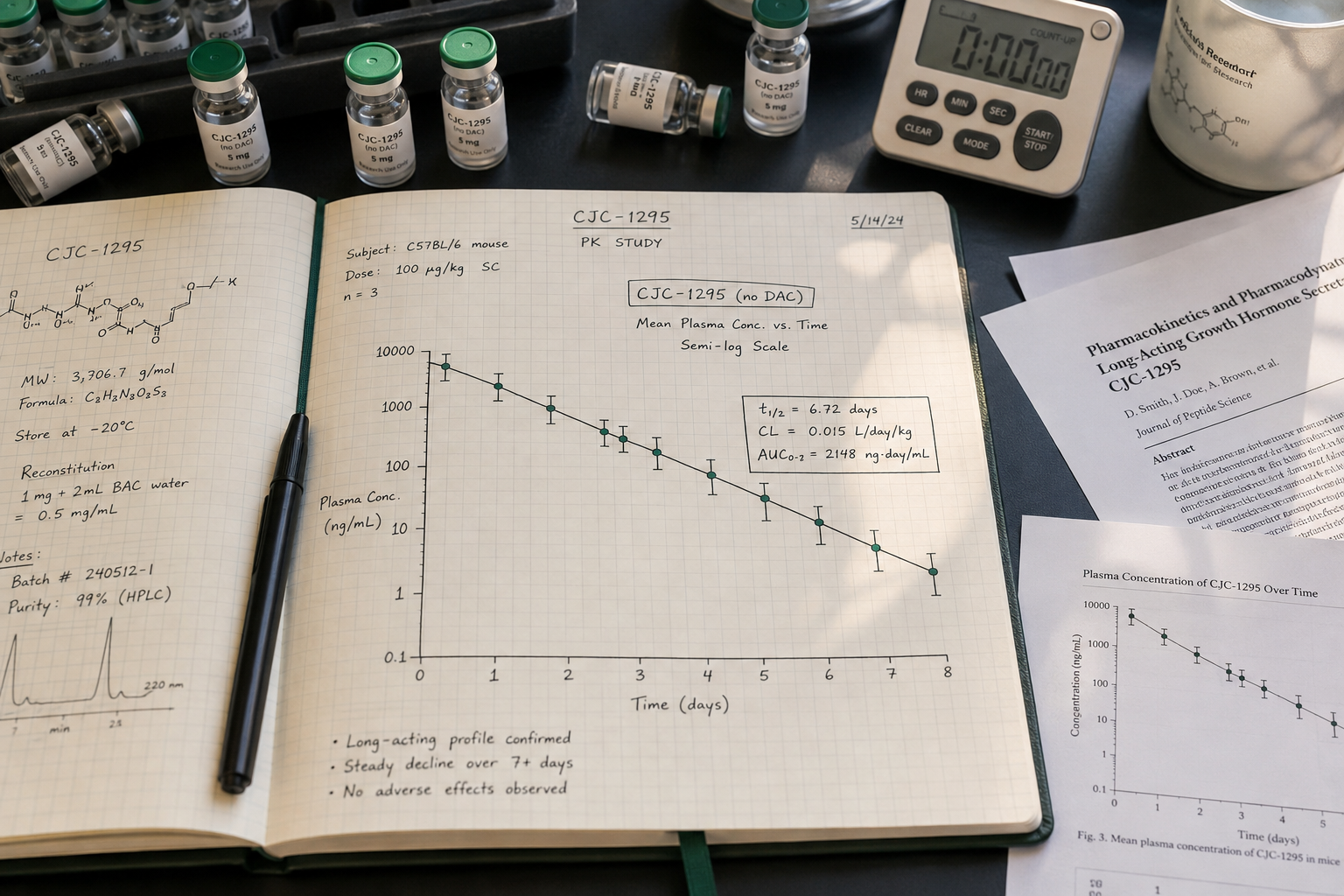
CJC-1295 is a synthetic analog of growth hormone-releasing hormone (GHRH). Its estimated half-life of 6 to 8 days in humans — confirmed in recent endocrinology research — allows for prolonged stimulation of growth hormone and IGF-1 secretion. This extended activity profile is a primary reason it continues to attract research interest compared to shorter-acting GHRH analogs.

The compound reached Phase II clinical trials but was discontinued after a participant's death, which investigators deemed unrelated to the treatment. Despite this, CJC-1295 remains one of the most studied growth hormone secretagogues in the preclinical and research peptide space.

Researchers frequently combine it with ipamorelin to target complementary points in the growth hormone axis. Relevant documentation is available for both CJC-1295 with DAC research findings and CJC-1295 without DAC research themes.

Note on stacking: Some researchers combine CJC-1295 and ipamorelin with GLP-1 class drugs to explore simultaneous fat loss and lean mass outcomes. These combinations currently lack clinical validation and should be approached with appropriate caution.

For those exploring broader longevity-focused peptide research, the longevity peptide research overview provides additional context on how these compounds fit into aging-related research frameworks.


Conclusion

The top research peptides for 2026 — Retatrutide, MOTS-c, GHK-Cu, and CJC-1295 — each represent a distinct frontier in peptide science. Retatrutide's Phase III data and pending NDA make it the most clinically advanced of the four. MOTS-c offers compelling preclinical biology but requires patience as human data accumulates. GHK-Cu demands careful attention to regulatory scope. CJC-1295 remains a pharmacokinetically distinctive tool for growth hormone axis research.

Actionable next steps for researchers:

  • Verify vendor quality and testing documentation before sourcing any of these compounds.
  • Review mechanism-specific pages for each peptide to align sourcing with research objectives.
  • Monitor FDA enforcement updates, particularly as Retatrutide moves toward NDA review.
  • Consult the what is new in peptide research resource for ongoing regulatory and scientific developments.
https://www.puretestedpeptides.com/wp-content/uploads/2026/06/Top-Research-Peptides-for-2026-How-GLP-3-Retatrutide-MOTS-c-GHK-Cu-and-CJC-1295-Fit-Into-Current-Lab-Interest.png 1024 1536 Pure Tested https://www.puretestedpeptides.com/wp-content/uploads/2026/01/buy-peptides-online.jpg Pure Tested2026-06-18 13:03:542026-07-20 15:02:53Top Research Peptides for 2026: How GLP-3 Retatrutide, MOTS-c, GHK-Cu, and CJC-1295 Fit Into Current Lab Interest
Retatrutide and GLP-3 Biology: What Makes This Triple-Agonist Different From GLP-1 and GLP-2 Research Peptides

Retatrutide and GLP-3 Biology: What Makes This Triple-Agonist Different From GLP-1 and GLP-2 Research Peptides

June 17, 2026/0 Comments/by Pure Tested

A single drug achieving nearly 28% body weight reduction over 18 months — matching bariatric surgery outcomes — is not a minor incremental advance. That is the headline finding driving intense scientific interest in retatrutide in 2026. Yet most discussions skip past the foundational biology. Understanding Retatrutide and GLP-3 Biology: What Makes This Triple-Agonist Different From GLP-1 and GLP-2 Research Peptides requires a clear look at receptor targets, metabolic pathways, and why adding a third agonist arm changes the equation entirely.

Key Takeaways

  • Retatrutide simultaneously activates three receptors: GLP-1, GIP, and glucagon — a combination no approved drug currently achieves.
  • The glucagon receptor arm drives energy expenditure and fat oxidation, which is absent in both semaglutide and tirzepatide.
  • Phase 3 data show mean weight reductions of 22–28%, placing retatrutide above existing GLP-1 therapies.
  • GLP-2 is a structurally related incretin but targets gut mucosal biology, not metabolic weight pathways — making the GLP-1 vs. GLP-2 distinction critical for researchers.
  • Eli Lilly plans an NDA submission to the FDA in late 2026, with commercial approval anticipated in 2027.

Key Takeaways

Understanding the GLP Receptor Family Before Comparing Compounds

The glucagon-like peptide (GLP) family includes GLP-1 and GLP-2, both derived from the same precursor protein, proglucagon. Despite their shared origin, they act on entirely different tissues and serve different biological roles.

GLP-1 is an incretin hormone released from intestinal L-cells after eating. It binds GLP-1 receptors in the pancreas, brain, and gut to suppress appetite, slow gastric emptying, and stimulate insulin secretion. This is the pathway targeted by semaglutide and, in part, by tirzepatide.

GLP-2, by contrast, acts primarily on intestinal epithelial cells. It promotes gut mucosal growth, reduces intestinal permeability, and supports nutrient absorption. GLP-2 analogs like teduglutide are studied in short bowel syndrome — not obesity or metabolic disease. Researchers exploring GLP-1 incretin research themes will recognize that GLP-2 occupies a separate biological lane entirely.

The term "GLP-3" does not refer to a formally classified endogenous hormone. In current research shorthand, it is used informally to describe the triple-agonist concept — a molecule that hits GLP-1, GIP (glucose-dependent insulinotropic polypeptide), and glucagon receptors simultaneously. For a deeper look at this emerging terminology, see the overview of GLP-3 as the newest triple-agonist concept.


How Retatrutide and GLP-3 Biology Redefine the Triple-Agonist Mechanism

Retatrutide's design is built around three coordinated receptor interactions:

Receptor Primary Effect Metabolic Outcome
GLP-1 Appetite suppression, slowed gastric emptying Reduced caloric intake
GIP Enhanced insulin secretion and sensitivity Improved glucose control
Glucagon Increased energy expenditure, fat oxidation Greater caloric burn

The glucagon receptor arm is what separates retatrutide from every approved therapy. Semaglutide activates only GLP-1. Tirzepatide adds GIP to GLP-1. Retatrutide adds glucagon on top of both.

"The glucagon component is not redundant — it targets a fundamentally different metabolic lever by increasing thermogenesis and hepatic fat clearance."

This third pathway matters because appetite suppression alone has a ceiling. Raising energy expenditure through glucagon receptor activation addresses the metabolic adaptation that often limits long-term weight loss. Researchers interested in how GIP receptor biology contributes to metabolic outcomes will find that the dual GLP-1/GIP axis in tirzepatide already outperforms GLP-1 monotherapy — and retatrutide extends that logic further.

The tradeoff is tolerability. The glucagon component contributes to a higher incidence of nausea and gastrointestinal side effects, requiring a slower dose titration compared to dual agonists.


How Retatrutide and GLP-3 Biology Redefine the Triple-Agonist Mechanism

Phase 3 Data and What Retatrutide and GLP-3 Biology Mean for Research in 2026

Eli Lilly's TRIUMPH Phase 3 program is evaluating retatrutide across multiple populations:

  • TRIUMPH-3: Adults with obesity, no type 2 diabetes
  • TRIUMPH-4: Adults with obesity and type 2 diabetes

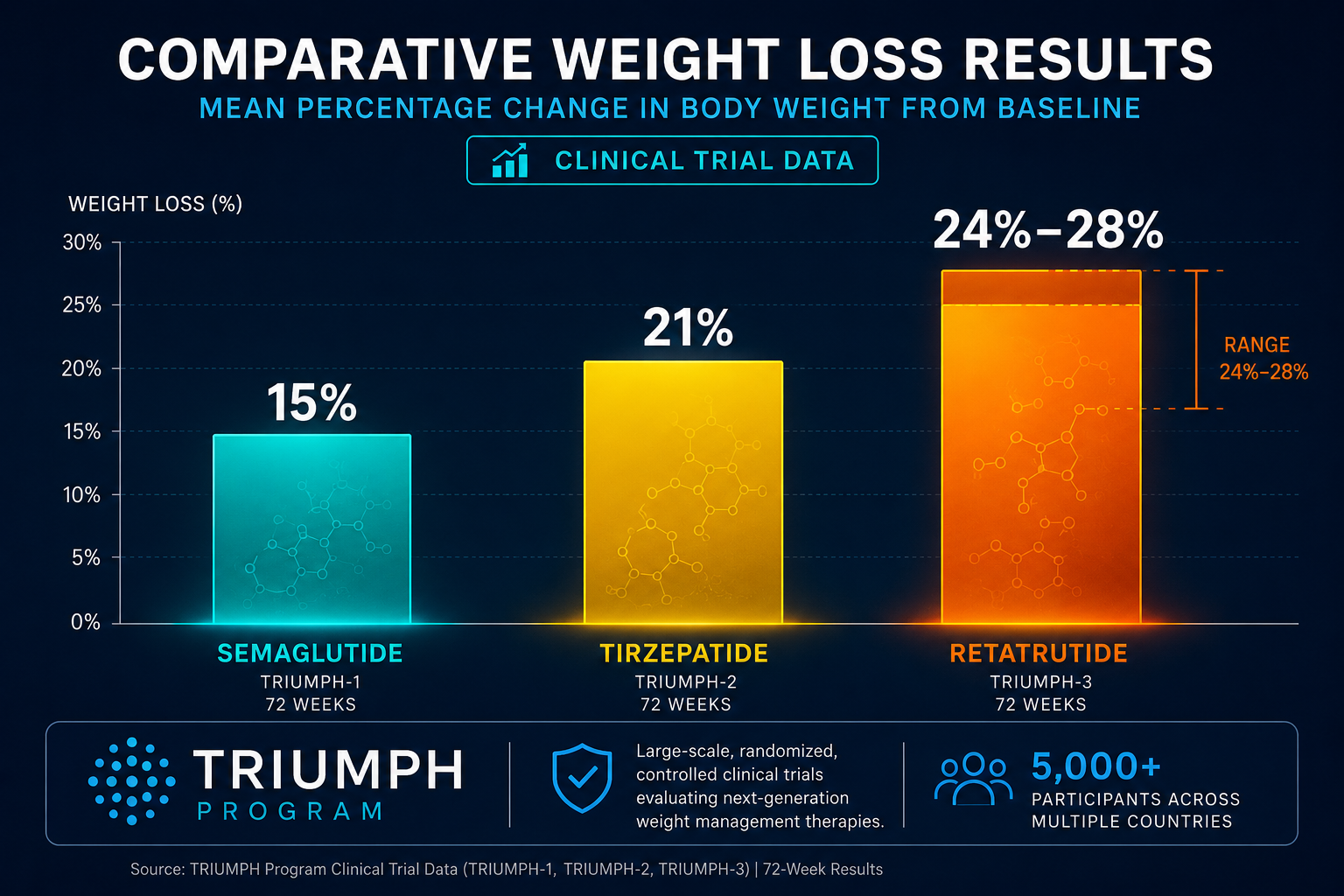
April 2026 readouts showed mean weight reductions of 22–24% at the 12 mg dose over 68 weeks. A separate 18-month trial reported approximately 28% average weight loss — a figure that overlaps with bariatric surgical outcomes. By comparison, tirzepatide at 15 mg achieved roughly 21% in the SURMOUNT-1 trial.

These numbers reflect a steeper dose-response curve, suggesting the glucagon receptor arm continues contributing at higher doses rather than plateauing. Researchers tracking what is new in peptide research will recognize this as a meaningful pharmacological distinction.

As of mid-2026, retatrutide remains unapproved and commercially unavailable. An NDA submission to the FDA is planned for late 2026, with potential approval in 2027. For researchers evaluating multi-pathway compounds in parallel, the GLP-3 and incretin research themes overview provides useful context on where this compound fits within the broader incretin landscape.

Those building structured research protocols may also benefit from reviewing peptide therapy benefits and research methodology to understand how multi-receptor compounds are evaluated systematically.


Phase 3 Data and What Retatrutide and GLP-3 Biology Mean for Research in 2026

Conclusion

The biology behind retatrutide is not complicated once the receptor targets are mapped clearly. GLP-1 reduces intake. GIP improves insulin dynamics. Glucagon raises energy output. Together, these three pathways explain why Phase 3 data consistently outperform single and dual agonist benchmarks.

Actionable next steps for researchers and informed readers in 2026:

  • Distinguish GLP-2 (gut mucosal biology) from the GLP-1/GIP/glucagon triple-agonist mechanism before comparing compounds.
  • Monitor the TRIUMPH program readouts and the anticipated FDA NDA submission timeline.
  • Review MOTS-c metabolic flexibility research as a complementary pathway for researchers studying energy regulation.
  • Use quality testing protocols as a benchmark when evaluating any research-grade peptide compound.

Retatrutide represents a genuine step-change in metabolic peptide science — not because it is newer, but because its receptor architecture addresses limitations that single and dual agonists cannot overcome.

https://www.puretestedpeptides.com/wp-content/uploads/2026/06/Retatrutide-and-GLP-3-Biology-What-Makes-This-Triple-Agonist-Different-From-GLP-1-and-GLP-2-Research-Peptides.png 1024 1536 Pure Tested https://www.puretestedpeptides.com/wp-content/uploads/2026/01/buy-peptides-online.jpg Pure Tested2026-06-17 13:04:042026-07-20 15:02:57Retatrutide and GLP-3 Biology: What Makes This Triple-Agonist Different From GLP-1 and GLP-2 Research Peptides
Retatrutide Side Effects, Tolerability, and Dose Escalation: What the Clinical Literature Shows

Retatrutide Side Effects, Tolerability, and Dose Escalation: What the Clinical Literature Shows

June 14, 2026/0 Comments/by Pure Tested

Sixty percent of participants on the highest retatrutide dose reported nausea in Phase 2 trials. That single data point tells you more about managing this triple-receptor agonist than any headline about weight loss ever could. For clinicians, researchers, and informed readers, understanding Retatrutide Side Effects, Tolerability, and Dose Escalation: What the Clinical Literature Shows is the essential starting point before any other conversation about this compound.

Key Takeaways

  • Gastrointestinal adverse events are the most common side effects and are strongly dose-dependent.
  • Dysesthesia (abnormal skin sensation) is a unique side effect not seen with semaglutide or tirzepatide.
  • Slow, structured dose escalation is the primary strategy for improving tolerability.
  • Most adverse events are mild to moderate and tend to decrease after the titration phase.
  • Understanding the adverse-event profile helps set realistic expectations for any research or clinical context.

Key Takeaways

The Gastrointestinal Adverse Event Profile

The dominant safety signal across all retatrutide trials is gastrointestinal (GI) in nature. In the TRIUMPH-4 Phase 3 trial, participants receiving the 12 mg dose reported the following rates compared to placebo:

Adverse Event Retatrutide 12 mg Placebo
Nausea 43.2% 10.7%
Diarrhea 33.1% 13.4%
Constipation 25.0% 8.7%
Vomiting 20.9% 0.0%
Decreased appetite 18.2% 9.4%

These numbers are significant but not unexpected. Retatrutide activates three receptors simultaneously: GLP-1, GIP, and glucagon. This triple-agonist mechanism, which you can explore further through the GLP-3 retatrutide research overview, amplifies both efficacy and GI burden compared to single or dual-receptor agents.

It is also worth noting how retatrutide compares within the broader evolution of incretin-based therapies. The generations of GLP-1 receptor agonists page provides useful context for how each new class has shifted the tolerability landscape.

"The GI side effect profile of retatrutide is consistent with its mechanism but is meaningfully more pronounced at higher doses than what is observed with dual agonists."


The Gastrointestinal Adverse Event Profile

Dose-Dependent Tolerability: What the Phase 2 Data Reveals

One of the clearest findings from the TRIUMPH-1 Phase 2 trial is that side effects scale with dose. The nausea data across dose groups tells a direct story:

  • 1 mg dose: 14% reported nausea
  • 4 mg dose: 36% reported nausea
  • 8 mg dose: 44% reported nausea
  • 12 mg dose: 60% reported nausea

Diarrhea followed a less linear pattern, peaking at the 4 mg and 8 mg doses (both at 20%) before dropping slightly at 12 mg (15%), which may reflect GI adaptation over time.

This dose-response relationship is the primary reason that structured titration protocols exist. Gradual escalation allows the body to adapt to receptor activation before reaching therapeutic doses. Researchers interested in how similar peptide compounds handle titration can review CJC-1295 with DAC research findings for comparative context on incremental dosing strategies.

Understanding the GIP receptor and its importance also helps explain why the GI burden of retatrutide differs from GLP-1-only agents. GIP receptor co-activation affects gastric emptying and gut motility in ways that compound the nausea signal.


Dose-Dependent Tolerability: What the Phase 2 Data Reveals

Dysesthesia and Other Notable Findings in Retatrutide Side Effects, Tolerability, and Dose Escalation

Beyond GI effects, dysesthesia stands out as a clinically distinctive finding. In TRIUMPH-4, 20.9% of participants on the 12 mg dose reported this abnormal skin sensation, compared to just 0.7% in the placebo group. This side effect has not been observed with semaglutide or tirzepatide, making it a potential marker of retatrutide's unique glucagon receptor activity.

The mechanism behind dysesthesia is not fully characterized, but it is thought to relate to the glucagon receptor's role in peripheral nervous system signaling. Most reported cases were mild and did not lead to discontinuation.

For those studying peptide compounds with overlapping metabolic and neurological effects, the metabolic modulation research lines resource offers broader context on how receptor cross-talk can produce unexpected systemic signals.

Additional findings from the clinical literature on Retatrutide Side Effects, Tolerability, and Dose Escalation: What the Clinical Literature Shows include:

  • Injection site reactions (mild, consistent with subcutaneous peptide administration)
  • Heart rate increases at higher doses, consistent with glucagon receptor activity
  • No new cardiovascular safety signals identified in Phase 2 or Phase 3 data to date

Researchers exploring synergistic incretin mechanisms may also find the cagrilintide synergy with GLP-1 article relevant, as it addresses how combination receptor strategies influence tolerability profiles.


Conclusion

The clinical picture of Retatrutide Side Effects, Tolerability, and Dose Escalation: What the Clinical Literature Shows is one of manageable but meaningful adverse events, primarily GI in nature and clearly dose-dependent. Dysesthesia remains the most pharmacologically interesting finding, given its absence in comparable drug classes.

Actionable next steps for researchers and clinicians:

  1. Prioritize slow dose escalation protocols to reduce peak GI burden.
  2. Monitor for dysesthesia specifically, as it may be under-recognized without active questioning.
  3. Assess individual GI tolerance at each dose step before advancing.
  4. Review the full product research catalog for related metabolic peptide compounds with established tolerability data.
  5. Cross-reference the metabolic modulation research lines for mechanistic context when interpreting adverse event patterns.

The efficacy data for retatrutide is compelling. But sound research and clinical decision-making begins with a clear-eyed view of the safety profile, not the weight-loss headline.

https://www.puretestedpeptides.com/wp-content/uploads/2026/06/Retatrutide-Side-Effects-Tolerability-and-Dose-Escalation-What-the-Clinical-Literature-Shows.png 1024 1536 Pure Tested https://www.puretestedpeptides.com/wp-content/uploads/2026/01/buy-peptides-online.jpg Pure Tested2026-06-14 16:48:432026-07-20 15:03:13Retatrutide Side Effects, Tolerability, and Dose Escalation: What the Clinical Literature Shows
Retatrutide Clinical Trial Landscape: How GLP-3 Obesity Studies Are Designed and Where Research Peptides Fit

Retatrutide Clinical Trial Landscape: How GLP-3 Obesity Studies Are Designed and Where Research Peptides Fit

June 14, 2026/0 Comments/by Pure Tested

{"cover":"Professional landscape format (1536×1024) hero image with bold text overlay: 'Retatrutide Clinical Trial Landscape: GLP-3 Obesity Studies & Research Peptides' in extra large 72pt white bold sans-serif font with dark semi-transparent overlay box, centered upper-third composition. Background shows a high-tech clinical research laboratory with scientists in white coats reviewing molecular structure diagrams on large screens, blue and teal lighting, peptide molecule renderings floating in background. Color scheme: deep navy blue, crisp white, electric teal accents. Magazine cover aesthetic, editorial quality, high contrast.","content":["Wide-angle editorial illustration (1536×1024) of a clinical trial design flowchart for obesity research, showing randomized double-blind study phases labeled Phase 2 and Phase 3, participant icons arranged in multicenter trial grid, endpoint metrics panels showing percentage weight loss bars and HbA1c reduction graphs, TRIUMPH program branding elements, clean medical infographic style with navy blue and white color palette, professional scientific publication aesthetic","Detailed molecular diagram (1536×1024) showing triple-receptor agonist mechanism with three distinct G-protein coupled receptor pathways labeled GLP-1R, GIPR, and GCGR, color-coded binding arrows, peptide chain illustration in center, surrounding panels showing insulin secretion and hepatic glucose regulation icons, dark background with glowing teal and gold molecular bonds, scientific visualization style, editorial medical illustration quality","Split-composition editorial image (1536×1024) showing a clear visual divide between a formal FDA-regulated clinical trial setting on the left — researchers in lab coats with official documentation and controlled drug vials — and a research laboratory setting on the right with research-use-only peptide vials, analytical testing equipment, and purity certification documents. Bold dividing line with text 'Clinical Trial vs Research Use Only', professional blue and amber color contrast, documentary photography style"}

Professional landscape hero image () with : "Retatrutide Clinical Trial Landscape: How GLP-3 Obesity Studies Are Designed

A single drug achieving 28% average body weight loss over 18 months — results previously seen only with bariatric surgery — has placed retatrutide at the center of obesity pharmacotherapy in 2026. Understanding the Retatrutide Clinical Trial Landscape: How GLP-3 Obesity Studies Are Designed and Where Research Peptides Fit requires looking closely at how these trials are structured, what endpoints they measure, and how research-use peptides relate to regulated clinical compounds.

Key Takeaways

  • Retatrutide is a triple-agonist peptide targeting GLP-1R, GIPR, and GCGR receptors simultaneously
  • The TRIUMPH Phase 3 program enrolls over 5,800 participants across four multicenter, randomized, double-blind studies
  • Phase 2 data showed up to 24.2% mean weight reduction at 48 weeks
  • Primary endpoints include percentage body weight loss, HbA1c reduction, and complication-specific outcomes
  • Research peptides and clinical-trial drugs occupy entirely separate regulatory and scientific categories

How the TRIUMPH Phase 3 Program Is Structured

How the TRIUMPH Phase 3 Program Is Structured

The TRIUMPH program is the backbone of the current Retatrutide clinical trial landscape. It consists of four multicenter, randomized, double-blind, placebo-controlled studies enrolling more than 5,800 participants. This scale places it among the largest obesity drug programs ever conducted.

What makes TRIUMPH notable is its basket trial design. Rather than studying a single condition in isolation, the program simultaneously evaluates retatrutide across multiple adiposity-related disease states:

Study Focus Primary Endpoint
General obesity Percentage body weight loss
Obstructive sleep apnea (OSA) Apnea-hypopnea index reduction
Knee osteoarthritis (OA) Pain and function scores
Cardiovascular risk Major adverse cardiac events

This design generates efficiency. Researchers can assess whether weight loss translates into measurable improvements in comorbidities — a critical question for regulatory review and real-world clinical value.

Standard endpoints tracked across studies include:

  • Percentage body weight reduction from baseline
  • HbA1c change (a marker of blood glucose control)
  • Waist circumference reduction
  • Adverse event frequency and severity grading

Phase 2 Results That Justified Phase 3 Investment

In a Phase 2 trial of 338 adults with obesity or overweight, retatrutide produced a mean weight reduction of up to 24.2% at 48 weeks. Gastrointestinal side effects were the most common adverse events, described as dose-related and mostly mild to moderate. These results gave Eli Lilly sufficient confidence to launch the full TRIUMPH program, with FDA approval potentially targeted by the end of 2026.


The Triple-Receptor Mechanism Behind the Numbers

The Triple-Receptor Mechanism Behind the Numbers

Retatrutide is often loosely called a "GLP-3" compound in popular media, but its pharmacology is more precise. It is a triple agonist binding three distinct G-protein coupled receptors:

  1. GLP-1R (glucagon-like peptide-1 receptor) — stimulates insulin secretion and reduces appetite
  2. GIPR (glucose-dependent insulinotropic polypeptide receptor) — enhances insulin response and supports fat metabolism
  3. GCGR (glucagon receptor) — regulates hepatic glucose output and increases energy expenditure

The glucagon receptor component is what differentiates retatrutide from dual GLP-1/GIP agonists like tirzepatide. Industry experts suggest this third pathway may be the key driver behind the surgery-level weight loss numbers. For broader context on how incretin-based mechanisms work in obesity research, the GLP-1 and incretin research themes page provides useful background.

Researchers studying related metabolic pathways may also find value in reviewing body composition research themes involving tesa and IPA muscle and fat research themes, which explore adjacent hormonal axes in preclinical models.


Where Research Peptides Fit — and Where They Do Not

Where Research Peptides Fit — and Where They Do Not

This is the most important distinction in the Retatrutide clinical trial landscape: how GLP-3 obesity studies are designed and where research peptides fit.

Retatrutide is an investigational drug. It is not FDA-approved. It is manufactured under strict Good Manufacturing Practice (GMP) conditions, administered only within regulated trial protocols, and tracked through rigorous pharmacovigilance systems.

Research peptides occupy a completely separate category. They are synthesized compounds supplied strictly for laboratory and preclinical research purposes — not for human administration. Their value lies in enabling scientists to study receptor biology, metabolic pathways, and molecular mechanisms before and alongside clinical programs.

"The clinical trial pipeline and the research peptide ecosystem serve different scientific functions — one generates regulatory evidence, the other generates foundational knowledge."

For researchers exploring the GLP-3 and retatrutide space at the preclinical level, the dedicated GLP-3 retatrutide research page and the retatrutide compound overview offer relevant compound information. Those studying complementary metabolic pathways may also consult resources on cagrilintide synergy with GLP-1 and longevity peptide research.

Key distinctions at a glance:

Feature Clinical Trial Drug Research Peptide
Regulatory status IND/NDA pathway Research use only
Human administration Protocol-controlled Not permitted
Purity standards GMP-certified Analytical grade
Purpose Generate efficacy/safety data Preclinical mechanistic study

Conclusion

The retatrutide clinical trial landscape represents one of the most ambitious obesity drug programs in pharmaceutical history. The TRIUMPH Phase 3 program's basket design, rigorous endpoints, and triple-receptor mechanism all point toward a potential paradigm shift in how obesity and its complications are treated medically.

Actionable next steps for researchers and science-informed readers:

  • Follow TRIUMPH trial updates through ClinicalTrials.gov for endpoint data as it becomes available
  • Review Phase 2 published data in peer-reviewed journals to understand dose-response relationships
  • Clearly distinguish between FDA-regulated investigational drugs and research-use-only peptides when discussing or sourcing compounds
  • Explore adjacent metabolic research areas — such as incretin biology and body composition pathways — to build a fuller mechanistic picture

The science is advancing rapidly. Staying grounded in trial design fundamentals and regulatory boundaries is the most reliable way to engage with it responsibly.

https://www.puretestedpeptides.com/wp-content/uploads/2026/06/Retatrutide-Clinical-Trial-Landscape-How-GLP-3-Obesity-Studies-Are-Designed-and-Where-Research-Peptides-Fit.png 1024 1536 Pure Tested https://www.puretestedpeptides.com/wp-content/uploads/2026/01/buy-peptides-online.jpg Pure Tested2026-06-14 13:05:082026-07-20 15:03:15Retatrutide Clinical Trial Landscape: How GLP-3 Obesity Studies Are Designed and Where Research Peptides Fit
GLP3 Peptide vs Retatrutide: Why the Naming Confusion Matters in Obesity Research

GLP3 Peptide vs Retatrutide: Why the Naming Confusion Matters in Obesity Research

June 11, 2026/0 Comments/by Pure Tested

Over 1 billion adults worldwide live with obesity, and the race to find more effective treatments has never moved faster. Yet one of the biggest obstacles in 2026 is not a scientific one — it is a language problem. The debate around GLP3 Peptide vs Retatrutide: Why the Naming Confusion Matters in Obesity Research is more than a semantic argument. When researchers, clinicians, and consumers use the same term to mean different things, the consequences range from misread study data to misguided purchasing decisions.

() scientific infographic-style illustration showing two labeled molecular structures side by side — one labeled 'GLP-3

Key Takeaways

  • "GLP-3" is an informal, consumer-driven nickname — not a recognized scientific classification for retatrutide.
  • Retatrutide (LY3437943) is a triple-receptor agonist targeting GLP-1, GIP, and glucagon receptors simultaneously.
  • Phase 3 trials have shown weight loss results as high as 28.7%, the highest ever recorded in an obesity drug trial.
  • Terminology confusion can distort research interpretation, marketplace trust, and regulatory understanding.
  • Researchers and buyers should verify compound identity by chemical name or CAS number, not informal labels.

What Is Retatrutide and Where Does "GLP-3" Come From

Retatrutide, developed by Eli Lilly under the code name LY3437943, is a first-in-class triple-receptor agonist. It activates three distinct hormone receptors at once:

Receptor Role in Metabolism
GLP-1 Appetite suppression, insulin secretion
GIP Fat metabolism, insulin sensitivity
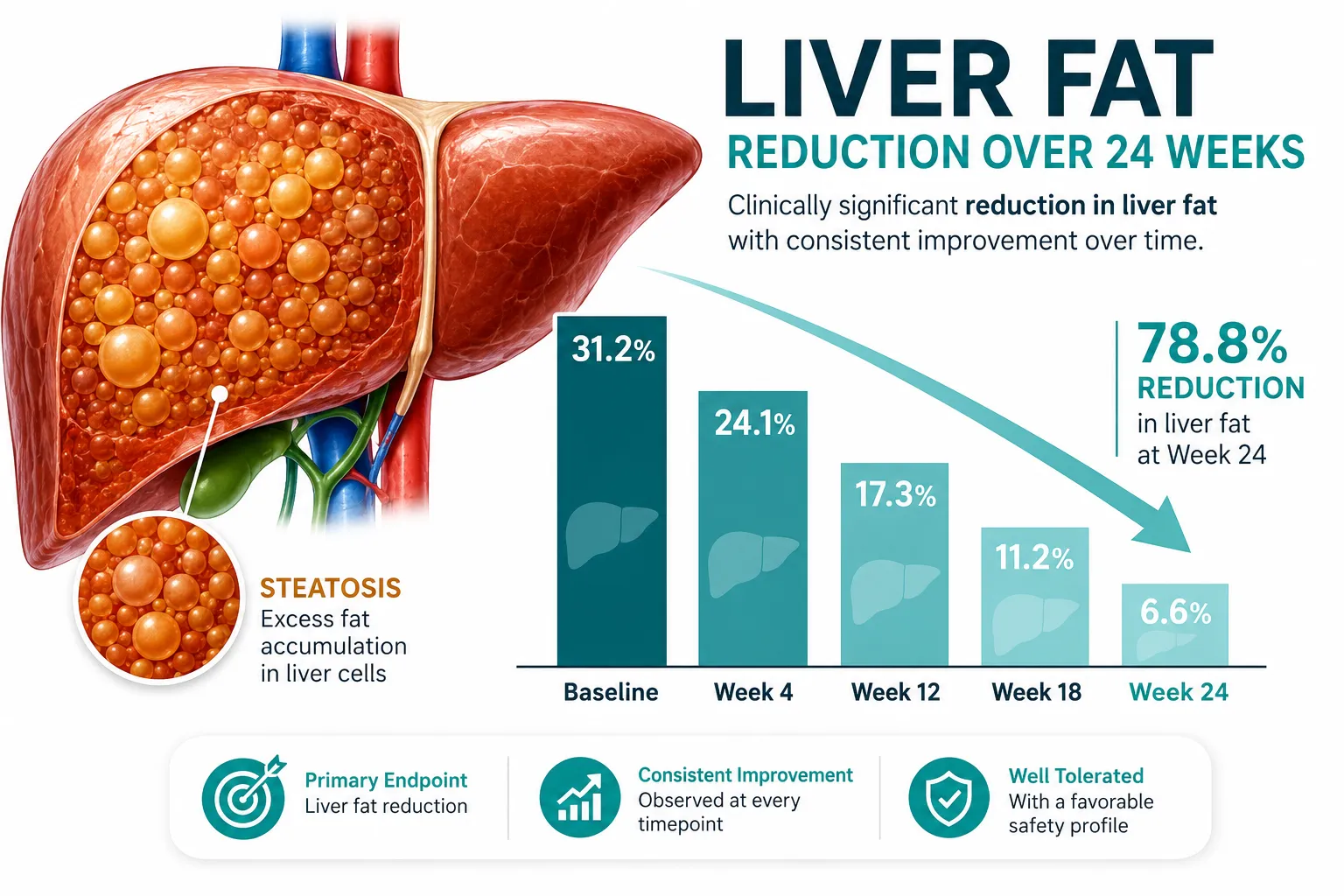
Glucagon Energy expenditure, liver fat reduction

No approved drug before retatrutide has hit all three targets simultaneously. Semaglutide (Ozempic, Wegovy) targets only GLP-1. Tirzepatide (Mounjaro, Zepbound) targets GLP-1 and GIP. Retatrutide adds glucagon to the mix.

The nickname "GLP-3" emerged organically in consumer forums and social media. The logic was simple: GLP-1 targets one receptor, tirzepatide targets two, so this "third generation" drug must be GLP-3. The label stuck — but it is scientifically inaccurate.

"GLP-3" does not describe a receptor, a peptide family, or a drug class. It is marketing shorthand that has migrated into research discussions where precision is critical.

For a broader look at where peptide research is heading, the latest updates in peptide research provide useful context on how naming conventions evolve in this space.


Why the Naming Confusion Matters in Obesity Research and Clinical Trials

Why the Naming Confusion Matters in Obesity Research and Clinical Trials

The stakes of this terminology gap become clear when looking at the trial data. In the TRIUMPH-4 Phase 3 trial, retatrutide produced a mean weight loss of 28.7% at 68 weeks in adults with obesity and knee osteoarthritis — the highest figure ever recorded in any Phase 3 obesity drug trial. The TRIUMPH-3 trial, presented at the American College of Cardiology Annual Scientific Session in March 2026, reported 24.2% mean weight loss at 72 weeks in adults with elevated cardiovascular risk.

These are landmark numbers. But when a researcher searches for "GLP-3 trial results" and finds a mix of retatrutide data alongside unrelated GLP receptor biology, the confusion compounds.

Three specific risks created by the GLP-3 label:

  • Research misattribution: Studies on actual GLP receptor peptide biology get conflated with retatrutide clinical outcomes.
  • Regulatory misunderstanding: Eli Lilly plans to file a New Drug Application in late 2026 or early 2027. Informal naming can create confusion in public commentary on regulatory submissions.
  • Marketplace errors: Buyers searching for research-grade retatrutide may encounter mislabeled products. Reviewing a detailed GLP-3 and retatrutide compound overview helps clarify what is actually being sourced.

For those researching metabolic peptides more broadly, resources on AOD9604 metabolic research and tesa benefits show how naming precision matters across the entire category.


How Researchers and Buyers Can Navigate the GLP3 Peptide vs Retatrutide Naming Issue

How Researchers and Buyers Can Navigate the GLP3 Peptide vs Retatrutide Naming Issue

The clearest solution is to anchor every discussion to the compound's chemical identity, not its nickname.

Best practices for accurate identification:

  • Always reference retatrutide by its INN (International Nonproprietary Name) or Eli Lilly's code: LY3437943.
  • Cross-check any "GLP-3" product listing against verified chemical specifications.
  • Use peer-reviewed databases rather than consumer forums as primary sources.
  • When sourcing for research, prioritize suppliers with transparent quality testing protocols and third-party verification.

The GLP-3 retatrutide product page and the RETA GLP-3 research overview are examples of how suppliers can bridge the naming gap by providing both the informal label and the verified compound name together.

For researchers exploring related metabolic compounds, the 5-Amino-1MQ research overview offers a useful parallel on how novel compounds gain informal names before formal classification catches up.


Conclusion

The GLP3 Peptide vs Retatrutide naming confusion is not a trivial issue. It shapes how clinical trial data is interpreted, how regulatory conversations unfold, and how research-grade compounds are sourced. Retatrutide is a precisely defined triple-receptor agonist with Phase 3 data that sets a new benchmark for obesity pharmacology. "GLP-3" is a convenient shorthand that, when used carelessly, undermines that precision.

Actionable next steps:

  • Replace "GLP-3" with "retatrutide" or "LY3437943" in all research documentation.
  • Verify any compound labeled "GLP-3" against its full chemical specification before use.
  • Stay current with TRIUMPH trial publications and the anticipated NDA filing timeline.
  • Source research peptides only from suppliers who publish verified testing data alongside both the common and scientific names.

Precision in language is the foundation of precision in science. In obesity research, where the stakes are high and the compounds are complex, that foundation matters more than ever.

https://www.puretestedpeptides.com/wp-content/uploads/2026/06/GLP3-Peptide-vs-Retatrutide-Why-the-Naming-Confusion-Matters-in-Obesity-Research.png 1024 1536 Pure Tested https://www.puretestedpeptides.com/wp-content/uploads/2026/01/buy-peptides-online.jpg Pure Tested2026-06-11 13:06:552026-07-20 15:03:30GLP3 Peptide vs Retatrutide: Why the Naming Confusion Matters in Obesity Research
What Is the GLP3 Peptide? Research Distinctions, Naming Confusion, and How It Relates to Retatrutide

What Is the GLP3 Peptide? Research Distinctions, Naming Confusion, and How It Relates to Retatrutide

June 10, 2026/0 Comments/by Pure Tested

A single informal label is causing genuine confusion across research communities, patient forums, and peptide catalogs in 2026: "GLP-3." Researchers searching for this term are often looking for something very different from what the name implies. Understanding what the GLP-3 peptide actually refers to — and why that label is scientifically inaccurate — matters for anyone tracking the latest developments in metabolic research.

Key Takeaways

  • There is no hormone called "GLP-3." The term is an informal nickname, not a recognized scientific designation.
  • "GLP-3" almost always refers to retatrutide (LY3437943), a triple-agonist investigational compound developed by Eli Lilly.
  • Retatrutide simultaneously targets three receptors: GLP-1, GIP, and glucagon.
  • Phase 3 trial data shows approximately 28% average weight loss over 18 months — results comparable to bariatric surgery.
  • As of 2026, retatrutide is not FDA-approved and remains under active clinical investigation.

Key Takeaways

Understanding the Naming Confusion Around "GLP-3"

The phrase "GLP-3 peptide" does not correspond to any recognized hormone in human physiology. The glucagon-like peptide family includes GLP-1 and GLP-2, both derived from the proglucagon gene. GLP-1 is well-established for its role in insulin secretion and appetite regulation. GLP-2 supports intestinal growth. No GLP-3 exists in the official scientific literature.

So where does the term come from? It appears to have emerged organically from online communities and informal research discussions as shorthand for retatrutide — a compound that acts on three separate receptor pathways. The logic is loose: "triple action" became "GLP-3" in casual usage. The label stuck, even though it misrepresents the compound's actual mechanism.

This kind of naming drift is not unusual in peptide research. For a broader look at how terminology evolves in this field, the ultimate guide to peptide therapy provides useful context on how compounds are classified and discussed.


What Is the GLP3 Peptide? Research Distinctions, Naming Confusion, and How It Relates to Retatrutide — The Core Answer

Retatrutide (development code LY3437943) is the compound most commonly referenced when someone asks about the "GLP-3 peptide." It is an investigational drug developed by Eli Lilly that activates three distinct hormone receptors simultaneously:

Receptor Primary Research Function
GLP-1 Reduces appetite, slows gastric emptying
GIP Improves insulin sensitivity, supports fat distribution
Glucagon Increases energy expenditure, promotes fat breakdown via thermogenesis

This triple-agonist profile is what separates retatrutide from earlier-generation compounds. Semaglutide targets GLP-1 alone. Tirzepatide targets GLP-1 and GIP. Retatrutide adds glucagon receptor activation on top of both, creating a broader metabolic effect.

For researchers already familiar with the GLP-1 peptide research landscape, retatrutide represents a meaningful step forward in receptor-targeting strategy. Those planning research with this compound should also review GLP-3 triple agonist research planning resources before sourcing.


What Is the GLP3 Peptide? Research Distinctions, Naming Confusion, and How It Relates to Retatrutide — The Core Answer

Phase 3 Data and Regulatory Status in 2026

The clinical results for retatrutide are among the most discussed in metabolic medicine this year. In Phase 3 trials, participants achieved an average weight loss of approximately 28% over 18 months — a figure that rivals outcomes typically seen with bariatric surgery. No other injectable medication has produced comparable numbers in trial data to date.

"Retatrutide's Phase 3 results represent the highest weight loss figures recorded for any injectable medication in clinical trials."

Despite these results, retatrutide is not FDA-approved as of 2026. Eli Lilly anticipates filing for FDA approval in 2026–2027, with potential commercial availability projected for late 2027 or 2028, contingent on successful trial completion and regulatory review.

Beyond weight loss, researchers are examining retatrutide's potential influence on type 2 diabetes, cardiovascular risk factors, and metabolic liver disease. The GIP receptor and its importance in metabolic signaling provides additional background on one of the three pathways retatrutide engages.


What Is the GLP3 Peptide? Research Distinctions, Naming Confusion, and How It Relates to Retatrutide — Practical Implications for Researchers

For researchers navigating this space, the terminology distinction has real consequences. Searching for "GLP-3 peptide" may return inconsistent results across databases, catalogs, and literature because the label is not standardized. Using the correct terminology — triple agonist, GLP-1/GIP/glucagon receptor agonist, or retatrutide/LY3437943 — will yield more reliable and reproducible search results.

Retatrutide is administered as a once-weekly subcutaneous injection, a delivery format consistent with other compounds in the GLP-1 class. Researchers interested in innovative peptide delivery systems will find the subcutaneous format familiar, though the triple-receptor profile introduces unique considerations for study design.

Those tracking the broader metabolic peptide landscape may also find value in reviewing AOD-9604 metabolic research and SLU-PP-332 metabolic research themes for comparative context on fat metabolism pathways.


What Is the GLP3 Peptide? Research Distinctions, Naming Confusion, and How It Relates to Retatrutide — Practical Implications

Conclusion

The "GLP-3 peptide" is not a real hormone — it is a widely circulated misnomer for retatrutide, a triple-agonist compound targeting GLP-1, GIP, and glucagon receptors. Clarifying this distinction is essential for accurate research planning, catalog navigation, and literature review.

Actionable next steps for researchers:

  • Use "retatrutide," "LY3437943," or "triple agonist" in database and catalog searches instead of "GLP-3."
  • Review the GIP receptor pathway alongside GLP-1 mechanisms before designing studies.
  • Monitor FDA filing updates from Eli Lilly, expected in the 2026–2027 window.
  • Consult what is new in peptide research for ongoing developments in this fast-moving field.

Precise terminology is not a minor detail in peptide research — it directly affects sourcing accuracy, study reproducibility, and regulatory compliance awareness.

https://www.puretestedpeptides.com/wp-content/uploads/2026/06/What-Is-the-GLP3-Peptide-Research-Distinctions-Naming-Confusion-and-How-It-Relates-to-Retatrutide.png 672 1024 Pure Tested https://www.puretestedpeptides.com/wp-content/uploads/2026/01/buy-peptides-online.jpg Pure Tested2026-06-10 13:06:532026-07-20 15:03:32What Is the GLP3 Peptide? Research Distinctions, Naming Confusion, and How It Relates to Retatrutide
Page 2 of 3123
×

Helpful Links

  • My account
  • Cart
  • Checkout
  • Refund and Returns Policy
  • Privacy Policy
  • SMS Privacy Policy
  • Login
  • My Account
  • Logout

USA Made Lab Tested Peptides

All products are sold for research, laboratory, or analytical purposes only, and are not for human consumption


Pure Tested Peptides is a chemical supplier. Pure Tested Peptides is not a compounding / chemical compounding facility as defined under 503A of the Federal Food, Drug, and Cosmetic act. Pure Tested Peptides is not an outsourcing facility as defined under 503B of the Federal Food, Drug, and Cosmetic act.

The statements made within this website have not been evaluated by the US Food and Drug Administration. The products we offer are not intended to diagnose, treat, cure or prevent any disease.

Human/Animal Consumption Prohibited. Laboratory/In-Vitro Experimental Use Only

Scroll to top Scroll to top Scroll to top