Call or Text 727-513-9780
  • Shopping Cart Shopping Cart
    0Shopping Cart
Pure Tested Peptides | America's most trusted Peptides for sale online
  • Peptides for sale
    • Oral Peptides for sale
      • Peptide Capsules for sale
      • BPC 157 Capsules 1000mcg
      • SLU-PP-332 Capsules | 1000 mcg
      • 5-Amino-1MQ 50mg Capsules
      • Tesofensine 500mcg
    • All Peptides for sale
    • Peptide Sprays
      • BPC 157 Nasal Spray Kit
      • BPC-157 TB500 Nasal Spray Kit
      • Semax Nasal Spray 10mg
      • Selank – Nasal Spray Kit – 10mg
      • Epithalon 50MG Nasal Spray Kit
      • Ipamorelin 10mg Nasal Spray
      • Klow Nasal Spray (BPC-157 + TB-500 + GHK-Cu + KPV) | 80mg
      • Hulk Nasal Spray Tesa / Ipa Blend 6/3 MG
      • Klow Nasal Spray
      • NAD + 500 mg Nasal Spray
      • PT-141 Nasal Spray Kit
    • GHRH Peptides
      • Ipa Peptides
      • CJC-1295 Peptides
        • CJC-1295 with DAC 5 mg
        • CJC-1295 without DAC 5 mg
        • CJC-1295 Ipa 10mg
      • Tesa Peptides
        • Tesa Peptide
        • Tesa 20 mg
    • GHK-Cu Peptides
      • All GHK-Cu Peptides
      • GHK-Cu 100mg
      • KLOW Peptide Blend – Buy KLOW blend online
    • BPC Peptides
      • All BPC Peptides
      • BPC-157
      • BPC-157 TB-500
      • BPC 157 capsules 1000mcg
    • SLU-PP-332 Peptides
      • All SLU-PP-332 Peptides
      • SLU-PP-332 5mg
    • GLP3 Peptides
      • GLP3-R
      • GLP3-R CAG 10mg
      • GLP3-R 20mg
    • PT-141 Peptides
      • PT-141 Peptides for sale
      • PT-141 10mg
      • PT-141 Nasal Spray
    • CAG Peptides
      • Lipo-C Peptide Blend
      • CAG 5mg
      • CAG 10mg
    • MOTS-C Peptides
      • MOTS-C Peptides for sale
      • MOTS-c peptide
      • MOTS-c 10mg *6 pack*
    • 5 Amino 1MQ Peptides
      • 5 Amino 1MQ Peptides for sale
      • 5-Amino-1MQ 50mg Capsules
      • 5-Amino-1MQ 5mg
    • Epithalon Peptides
      • Epithalon Peptides for sale
      • Epithalon 10mg
      • Epithalon 50mg
  • Shop
    • GLPs
      • 5-Amino-1MQ 50mg Capsules
      • 5-Amino-1MQ 5mg
      • GLP3-Reta
      • L-Carnitine 500mg/ml
      • Tesofensine 500mcg
      • SLU-PP-332 5mg
      • MOTS-c 10mg *6 pack*
    • Epithalon & BPC Peptides
      • Epithalon 10mg
      • Epithalon 50mg
      • BPC-157
      • BPC 157 capsules 1000mcg
      • BPC-157 TB-500
      • BPC-157 TB500 Nasal Spray Kit
      • BPC 157 Nasal Spray Kit
    • BPC TB-500 & NAD+ Peptides
      • NAD+ 500 mg
      • KLOW Peptide Blend – Buy KLOW blend online
      • GLOW Peptide Blend
      • TB 500 5mg
      • BPC 157 capsules 1000mcg – Supplement
      • BPC 157 Nasal Spray Kit
      • BPC-157
      • BPC-157 TB500 Nasal Spray Kit
      • BPC-157 TB-500
      • BPC 157 capsules 1000mcg
    • LL-37 Peptide
      • LL-37 10 mg
    • MOTS-C & Selank
      • MOTS-c peptide
      • Selank 10mg
    • GHK Peptides
      • GHK-Cu 100mg
      • GLOW Peptide Blend
      • KLOW Peptide Blend – Buy KLOW blend online
  • COAs
  • Wholesale
    • Wholesale Peptides for sale
  • PTP FAQ
  • Affiliates
    • Selank Peptide: Advanced Pharmacological Mechanisms Underlying Its Anxiolytic and Nootropic Effects in Research
      • 5-Amino-1MQ Peptide: Detailed Mechanisms of NNMT Inhibition and Its Impact on Cellular Metabolism Research
        • MOTS-C Peptide: Unraveling Its Role in Mitochondrial Dynamics and Energy Metabolism Research
          • Epithalon Peptide and Telomerase Regulation: Investigating Its Impact on Cellular Senescence and Lifespan Research Models
            • GLP2-T vs GLP2 Tirz Peptide: Understanding the Naming, Mechanistic Nuances, and Research Implications for Gut Health
      • Peptides and Polypeptides in Modern Pharmacology: What Research on Metoprolol, Prednisone, and Amlodipine Reveals
        • Polypeptide Peptides vs NSAIDs: What Naproxen and Diclofenac Teach Tissue-Repair Researchers About BPC‑157 and TB‑500
          • Peptides and Polypeptides in Endocrine Pharmacology: How GLP-1, GLP-2, and GLP-3 Retatrutide Differ From Classic Drugs Like Prednisone and Amlodipine
          • 5‑Amino‑1MQ Peptide and NNMT Inhibition: How It Compares With Statins Like Atorvastatin in Adipose and Lipid Metabolism Research
      • Enclomiphene, Estrogen Receptor Signaling, and Luteinizing Phase Biology: What Hormone Researchers Should Measure
        • Mesenchymal Stem Cells, BPC‑157, and GHK‑Cu: How Tissue Repair Peptides Compare With Classic NSAIDs Like Naproxen in Injury Models
          • Peptide Calculator Use Cases Beyond Growth Hormone: Working Through GLP‑3 Retatrutide, MOTS‑c, and BPC‑157 Research Dosing
        • Polypeptide Peptides in Endocrine and Metabolic Pharmacology: Lessons From Amlodipine, Prednisone, and Metoprolol
        • Peptides Calculator for Advanced Blends: Worked Examples for Tesamorelin, CJC‑1295, and Ipamorelin Stacks
          • Peptides and Polypeptides in Human Physiology: How Molecular Size Shapes Research Applications
            • Selank Peptide: Advanced Pharmacological Mechanisms Underlying Its Anxiolytic and Nootropic Effects in Research
          • 5-Amino-1MQ Peptide: Detailed Mechanisms of NNMT Inhibition and Its Impact on Cellular Metabolism Research
            • MOTS-C Peptide: Unraveling Its Role in Mitochondrial Dynamics and Energy Metabolism Research
              • Epithalon Peptide and Telomerase Regulation: Investigating Its Impact on Cellular Senescence and Lifespan Research Models
                • GLP2-T vs GLP2 Tirz Peptide: Understanding the Naming, Mechanistic Nuances, and Research Implications for Gut Health
                  • Peptides and Polypeptides in Endocrine Pharmacology: How GLP-1, GLP-2, and GLP-3 Retatrutide Differ From Classic Drugs Like Prednisone and Amlodipine
                    • Polypeptide Peptides vs NSAIDs: What Naproxen and Diclofenac Teach Tissue-Repair Researchers About BPC‑157 and TB‑500
                      • Peptides and Polypeptides in Modern Pharmacology: What Research on Metoprolol, Prednisone, and Amlodipine Reveals
                        • 5‑Amino‑1MQ Peptide and NNMT Inhibition: How It Compares With Statins Like Atorvastatin in Adipose and Lipid Metabolism Research
                        • Enclomiphene, Estrogen Receptor Signaling, and Luteinizing Phase Biology: What Hormone Researchers Should Measure
                        • Mesenchymal Stem Cells, BPC‑157, and GHK‑Cu: How Tissue Repair Peptides Compare With Classic NSAIDs Like Naproxen in Injury Models
                        • Peptide Calculator Use Cases Beyond Growth Hormone: Working Through GLP‑3 Retatrutide, MOTS‑c, and BPC‑157 Research Dosing
                        • Polypeptide Peptides in Endocrine and Metabolic Pharmacology: Lessons From Amlodipine, Prednisone, and Metoprolol
                        • Peptides Calculator for Advanced Blends: Worked Examples for Tesamorelin, CJC‑1295, and Ipamorelin Stacks
                        • Peptides and Polypeptides in Human Physiology: How Molecular Size Shapes Research Applications
                        • Selank Peptide: Advanced Pharmacological Mechanisms Underlying Its Anxiolytic and Nootropic Effects in Research
                        • MOTS-C Peptide: Unraveling Its Role in Mitochondrial Dynamics and Energy Metabolism Research
                        • Peptides and Polypeptides in Modern Pharmacology: What Research on Metoprolol, Prednisone, and Amlodipine Reveals
                        • Peptides and Polypeptides in Endocrine Pharmacology: How GLP-1, GLP-2, and GLP-3 Retatrutide Differ From Classic Drugs Like Prednisone and Amlodipine
                        • 5-Amino-1MQ Peptide: Detailed Mechanisms of NNMT Inhibition and Its Impact on Cellular Metabolism Research
                        • Mesenchymal Stem Cells, BPC‑157, and GHK‑Cu: How Tissue Repair Peptides Compare With Classic NSAIDs Like Naproxen in Injury Models
                        • Peptide Calculator Use Cases Beyond Growth Hormone: Working Through GLP‑3 Retatrutide, MOTS‑c, and BPC‑157 Research Dosing
                        • GLP2-T vs GLP2 Tirz Peptide: Understanding the Naming, Mechanistic Nuances, and Research Implications for Gut Health
                        • Polypeptide Peptides in Endocrine and Metabolic Pharmacology: Lessons From Amlodipine, Prednisone, and Metoprolol
                        • Polypeptide Peptides vs NSAIDs: What Naproxen and Diclofenac Teach Tissue-Repair Researchers About BPC‑157 and TB‑500
                        • Peptides and Polypeptides in Human Physiology: How Molecular Size Shapes Research Applications
                        • Peptides Calculator for Advanced Blends: Worked Examples for Tesamorelin, CJC‑1295, and Ipamorelin Stacks
                        • 5‑Amino‑1MQ Peptide and NNMT Inhibition: How It Compares With Statins Like Atorvastatin in Adipose and Lipid Metabolism Research
                        • Enclomiphene, Estrogen Receptor Signaling, and Luteinizing Phase Biology: What Hormone Researchers Should Measure
                        • Epithalon Peptide and Telomerase Regulation: Investigating Its Impact on Cellular Senescence and Lifespan Research Models
                        • Best research protocol Klow blend
                        • best time to take BPC-157
                        • best time to take DSIP (Delta Sleep Inducing Peptide)
                        • best time to take CJC-1295
                        • best time to take AOD-9604
                        • best time to take Follistatin 344
                        • best time to take Ipamorelin
                        • best time to take MK-677 (Ibutamoren)
                        • best time to take Ligandrol (LGD-4033) — research compound
                        • best time to take Ostarine (MK-2866) — research compound
                        • best time to take GHK-CU
                        • best time to take TB-500
                        • best time to take MOTS-c
                        • best time to take Semax
                        • best time to take RAD-140 (Testolone) — research compound
                        • best time to take Thymosin Alpha-1
                        • best time to take PEG-MGF
                        • Biolife Plasma, Octapharma Plasma, and Research Peptides: How Plasma Donation Labs Differ From Peptide Suppliers
                        • best time to take YK-11 — research compound
                        • best time to take PT-141 (Bremelanotide)
                        • Best research protocol Klow blend
                        • 5-Amino-1MQ and MOTS-C Synergy: Metabolic Signaling, Mitochondria, and Research Design
                        • BPC-157 and TB-500: Investigating Their Combined Effects on Angiogenesis and Cellular Migration in Tissue Repair Models
                        • BPC-157 Peptide: Gut Barrier Function, Inflammation, and Tissue-Recovery Research
                        • 5‑Amino‑1MQ and MOTS‑c Synergy in Metabolic Research: Designing NNMT and Mitochondrial Biogenesis Stacks
                        • CJC-1295 with DAC vs. Without DAC: Half-Life, Release Kinetics, and Research Implications
                        • CJC‑1295 with DAC vs. Without DAC: Expanding on Half‑Life Differences Using Tesamorelin and Ipamorelin Blend Case Studies
                        • Collagen Biology and Copper‑Binding Peptides: How GHK‑Cu, Glow Blend, and Klow Blend Interact with Skin and Connective Tissue
                        • Collagen Biology and Regenerative Peptides: How GHK‑Cu, Glow Blend, and Klow Blend Affect Extracellular Matrix Research
                    • DNA, Telomeres, and Longevity Peptides: Positioning Epithalon and MOTS‑c in Genetic Aging Research
                      • Enclomiphene Citrate: serm Mechanism, Testosterone Research, and Stack Compatibility
                        • Enclomiphene vs Enclomiphene Citrate: Formulation, Bioavailability, and Research Distinctions
                        • Epithalon Peptide Research: Telomerase Activation, Aging, and Pineal Gland Function
                        • Estrogen Receptor Signaling and Enclomiphene: How Selective Modulators Compare with Classic Polypeptide Hormones
                        • GHK-Cu Peptide: Advanced Mechanisms in Extracellular Matrix Remodeling and Wound Healing Research
                        • GHK-Cu Peptide: Collagen Synthesis, Wound Repair, and Skin-Barrier Research Models
                        • GLP-1 vs GLP-3 vs GLP-2: Peptide Classification and Research Applications
                        • GLP-2 Peptide Research Guide: Gut Barrier Function, Nutrient Absorption, and Intestinal Recovery Models
                        • GLP-3 Retatrutide vs. GLP-1 Drugs: What Triple-Agonist Biology Changes in Research Models
                        • Ipamorelin and Tesamorelin Combination: Synergistic GH Secretagogue Research and Dosing Protocols
                        • GLP2 Tirz Peptide: What It Is, Why the Name Exists, and How Researchers Should Interpret It
                        • Klow Blend Peptide Nasal Spray: What the Formulation Is Trying to Do in Cognitive Research
                        • Mitochondria, NNMT Inhibition, and Peptide Modulators: Where MOTS‑c and 5‑Amino‑1MQ Fit in Cellular Energy Research
                        • MOTS-c Peptide: Mitochondrial Function, Energy Metabolism, and What Researchers Measure
                        • MOTS-c vs. 5-Amino-1MQ: Which Metabolic Research Questions Each Compound Actually Answers
                        • Nasal Spray Peptides: Bioavailability, Administration, and Semax/Selank Research Applications
                        • PT-141 Peptide Research: Mechanism of Action and Melanocortin Receptor Signaling
                        • Retatrutide for Research: Mechanism, Structure, and GLP-1/GLP-3 Dual Action
                        • Retatrutide for Obesity and Type 2 Diabetes: What the Latest Trial Data Suggest
                        • Tesofensine Peptide Research: Mechanism, Appetite Suppression, and Neuropeptide Y Pathways
  • Contact
    • Contact Customer Service
    • Text Customer Support
  • About US
  • Shop all peptides
  • Affiliate Program
    • Affiliate Signup
  • Login / Register Login / Register Page Link Login / Register Page Link
  • Click to open the search input field Click to open the search input field Search
  • Menu Menu

Tag Archive for: glp-2 receptor agonist

GLP-2-T vs GLP2 Tirz Peptide: What the Naming Means and Why Researchers Confuse Them

GLP-2-T vs GLP2 Tirz Peptide: What the Naming Means and Why Researchers Confuse Them

August 11, 2026/0 Comments/in Uncategorized/by

Fewer than five letters separate two peptide labels that researchers routinely mix up, yet the underlying biology, receptor targets, and research applications are meaningfully different. The confusion around GLP-2-T vs GLP2 Tirz Peptide: What the Naming Means and Why Researchers Confuse Them is not a minor clerical issue. It shapes how studies are designed, how compounds are sourced, and how results are interpreted across metabolic and intestinal research models.

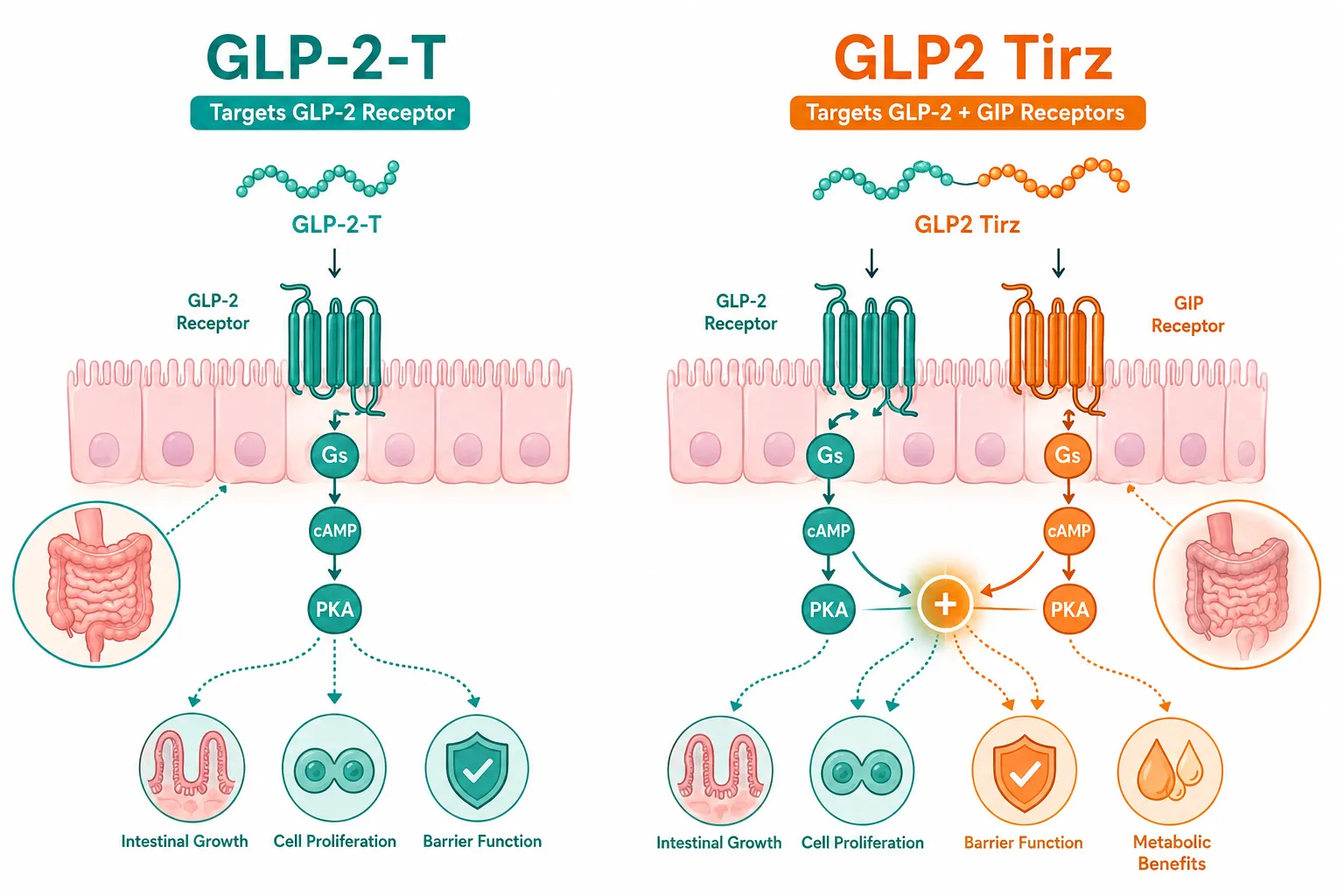
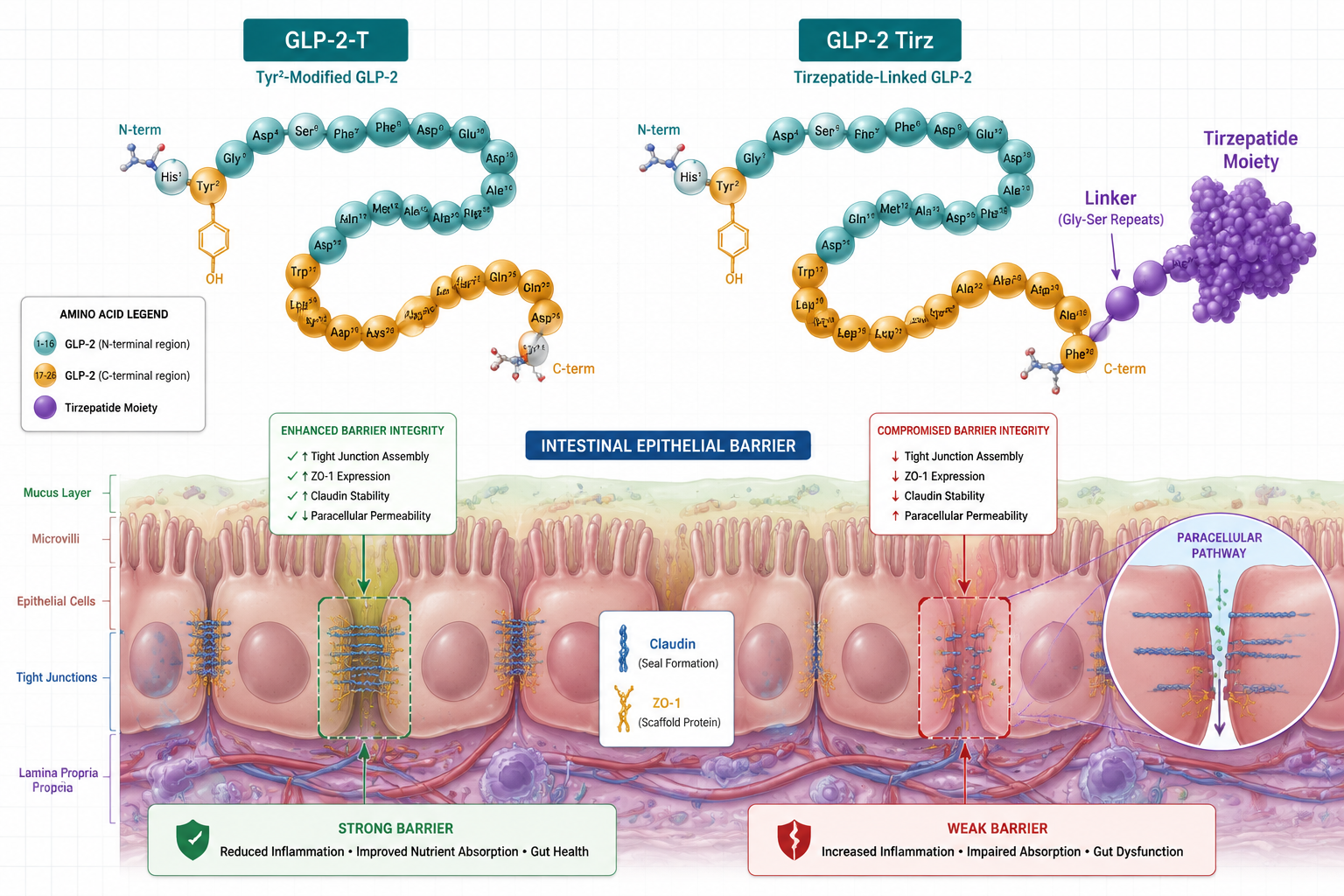
Bright editorial infographic-style illustration (): two large molecular pathway diagrams side by side on a clean white

Key Takeaways

  • GLP-2-T refers to a GLP-2 analog modified for extended half-life, primarily studied for intestinal and mucosal biology.
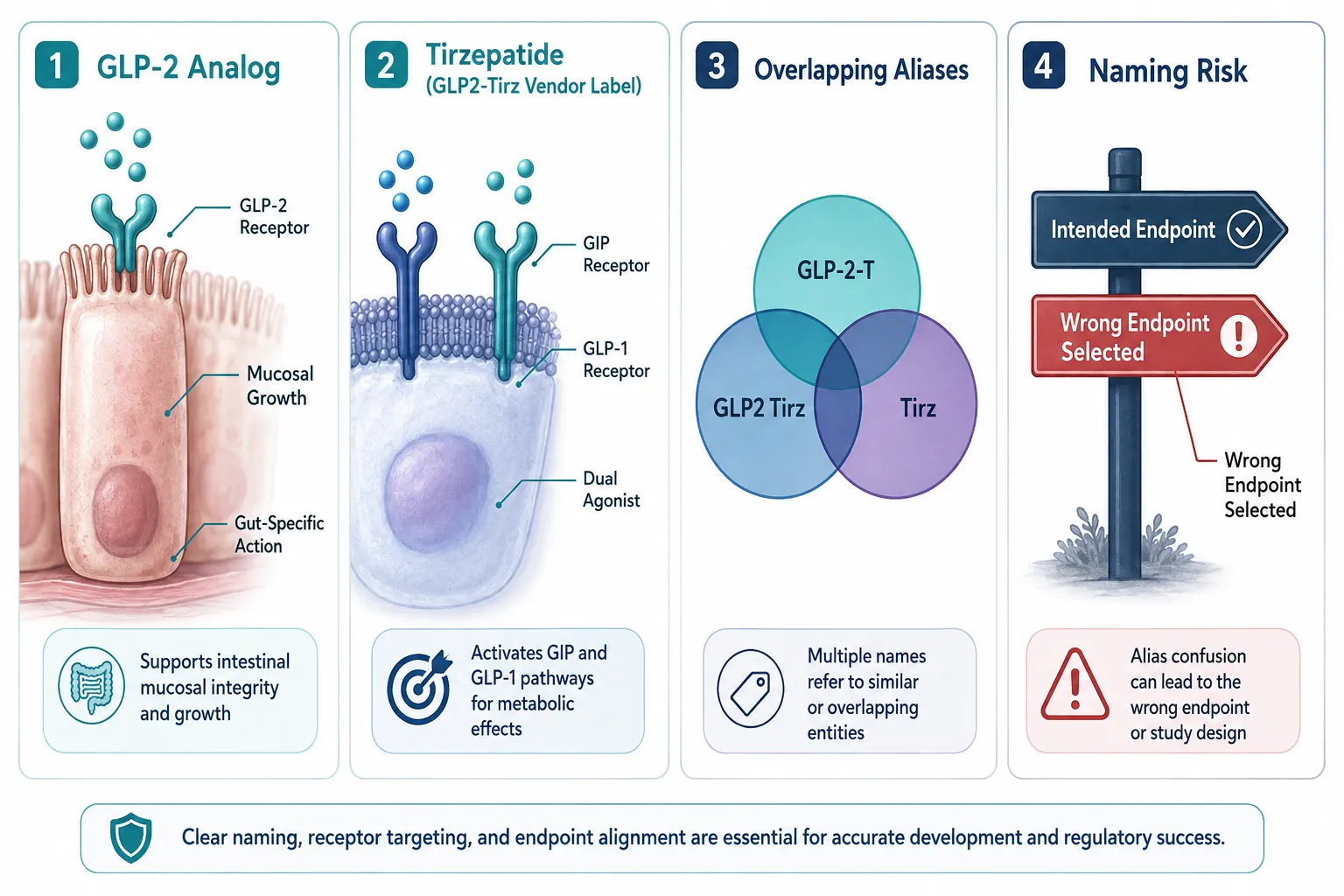
  • GLP2 Tirz is a vendor shorthand blending GLP-2 receptor activity with tirzepatide-inspired dual-agonist framing, a label that does not correspond to a single standardized compound.
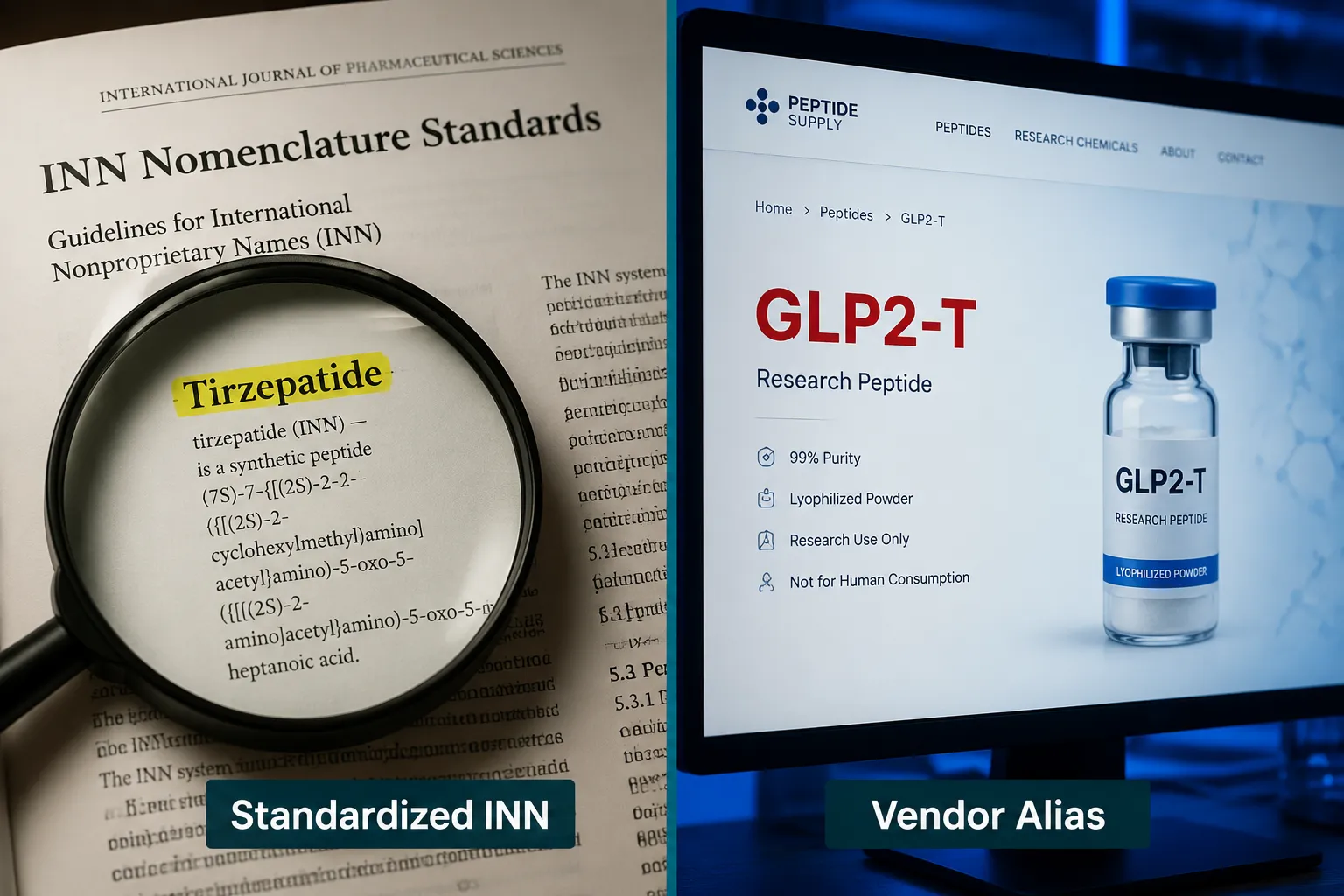
  • The two terms come from different naming traditions: one is pharmacological, the other is commercial catalog shorthand.
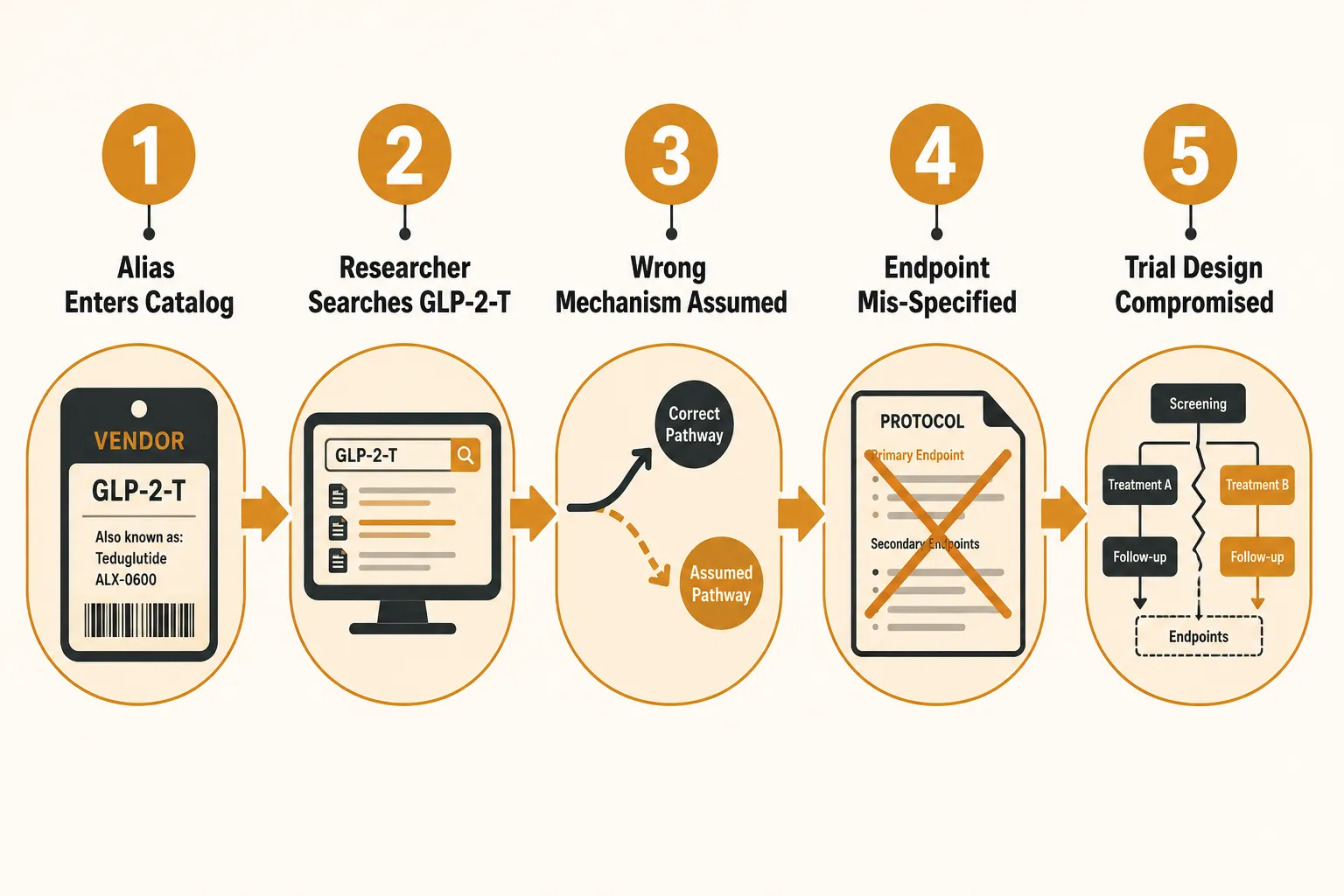
  • Mixing them up in study design can lead to sourcing the wrong compound, misreading receptor targets, or citing irrelevant literature.
  • Researchers benefit from verifying both the molecular sequence and the receptor profile before ordering or citing any GLP-2-related peptide.

What GLP-2-T Actually Refers To

GLP-2 (glucagon-like peptide-2) is a 33-amino acid peptide secreted by intestinal L-cells. Its primary receptor, GLP2R, is expressed heavily in the gut, where it promotes mucosal growth, reduces permeability, and supports nutrient absorption. GLP-2-T is a shorthand for a teduglutide-related or GLP-2 analog that has been structurally modified, most commonly by substituting alanine at position 2, to resist dipeptidyl peptidase-4 (DPP-4) degradation and extend circulating half-life.

This modification is pharmacologically significant. Native GLP-2 has a plasma half-life of roughly 7 minutes. The modified form used in research contexts can extend that window substantially, making it more practical for in vivo study designs.

Key characteristics of GLP-2-T in research:

  • Primary receptor target: GLP2R (GLP-2 receptor)
  • Main research areas: Short bowel syndrome models, intestinal barrier function, mucosal regeneration
  • Structural basis: DPP-4-resistant analog, not a multi-receptor agonist
  • Naming origin: Pharmacological literature and clinical analog development

For a broader look at how GLP-2-T fits into cardiometabolic peptide research alongside other multi-target compounds, see this comparison of polypeptide peptides in cardiometabolic models.

What "GLP2 Tirz" Means, and Why the Label Is Ambiguous

"GLP2 Tirz" does not appear in peer-reviewed pharmacological literature as a standardized compound name. It is a catalog or vendor shorthand that combines two concepts:

  1. GLP-2 receptor activity
  2. A tirzepatide-style dual-agonist framing (the "Tirz" suffix)

Tirzepatide itself is a GIP/GLP-1 dual agonist. When vendors append "Tirz" to a GLP-2 label, they are typically signaling that the compound has been formulated or marketed to suggest dual-receptor engagement, but the specific receptor pairing varies by source. Some products labeled "GLP2 Tirz" may combine GLP-2R and GLP-1R activity; others may reference GLP-2R and GIPR activity. Without a certificate of analysis and a confirmed amino acid sequence, the label alone tells a researcher very little.

Pull quote: "A peptide label is not a molecular identity. Researchers who treat vendor shorthand as a scientific classification risk designing studies around assumptions rather than data."

This naming ambiguity is explored in depth in the dedicated article on GLP2-T Peptide and GLP2 Tirz Peptide naming confusion and product labels.

GLP-2-T vs GLP2 Tirz Peptide: Where the Confusion Originates

Understanding why researchers confuse these terms requires looking at three overlapping sources of ambiguity.

GLP-2-T vs GLP2 Tirz Peptide: Where the Confusion Originates

1. Shared Abbreviation Roots

Both labels start with "GLP-2" or "GLP2," and both use a suffix to signal modification. The "T" in GLP-2-T is read by some researchers as "tirzepatide-related" rather than as a structural modifier tag. This single misread redirects the entire receptor interpretation.

2. Vendor Catalog Conventions vs. Scientific Nomenclature

Peptide vendors often create shorthand names for catalog management. These names are not peer-reviewed and do not follow IUPAC or INN naming conventions. A compound sold as "GLP2 Tirz" at one supplier may have a completely different sequence than the same label at another. Researchers accustomed to pharmaceutical-grade naming conventions may not account for this variability.

3. The Rise of Multi-Agonist Research

The success of tirzepatide and the growing interest in triple agonists like retatrutide (see triple agonist therapies beyond GLP-3) has created a market expectation that any peptide with a "Tirz" suffix must be a dual or triple agonist. This assumption bleeds into how GLP-2-related compounds are read and ordered.

Feature GLP-2-T GLP2 Tirz
Naming origin Pharmacological literature Vendor catalog shorthand
Primary receptor GLP2R Varies by source
Multi-agonist? No (single receptor) Claimed, not standardized
DPP-4 resistance Yes (structural modification) Depends on sequence
Literature citations Available Limited to none

Practical Steps to Avoid Mixing Them Up in Lab Planning

Researchers working with GLP-2-related peptides in 2026 should treat naming as a starting point, not a final answer. The following steps reduce the risk of compound misidentification.

Step 1: Request a certificate of analysis (CoA) with amino acid sequence confirmation before ordering.

Step 2: Cross-reference the vendor name against known pharmacological analogs. GLP-2-T should map to a teduglutide-class structure. If it does not, the compound may be mislabeled.

Step 3: Check receptor binding data. A genuine GLP-2-T compound should show selective GLP2R binding. A compound claiming dual agonism should provide binding affinity data for both receptors.

Step 4: Avoid citing vendor product pages as scientific sources. Literature on GLP-2 analogs exists and should be the primary reference for mechanism claims.

For researchers building broader metabolic study panels, the top 5 research peptides for metabolic health resource provides useful context on how GLP-2-related compounds fit alongside other metabolic peptides.

Researchers who are also working with GLP-1 receptor agonist compounds may find it useful to review the GLP1-T research breakdown on dual receptor agonism for comparison, since the GLP-1 naming conventions follow a similar pattern of suffix-based shorthand.

Additionally, for those exploring the broader peptide nomenclature landscape, the peptides 101 guide covering GLP-3, MOTS-c, and related compounds offers foundational context that applies directly to GLP-2-related naming decisions.

Practical Steps to Avoid Mixing Them Up in Lab Planning

Conclusion

The GLP-2-T vs GLP2 Tirz Peptide naming issue is a clear example of how informal catalog conventions can create real friction in research planning. GLP-2-T has a defined pharmacological identity rooted in DPP-4-resistant GLP-2 analog chemistry. GLP2 Tirz is a vendor-derived label with no standardized molecular definition. Treating them as interchangeable risks sourcing the wrong compound, misaligning receptor targets, and drawing conclusions from mismatched literature.

Actionable next steps for researchers:

  • Always verify compound identity through sequence data and receptor binding profiles, not label names alone.
  • When reviewing published studies, confirm that the GLP-2 analog described matches the structural characteristics of the compound being studied.
  • When ordering from any supplier, request documentation that confirms DPP-4 resistance status and receptor selectivity.
  • Flag any study design that cites "GLP2 Tirz" without a corresponding CoA or sequence reference as potentially unreliable.

Naming clarity is not a bureaucratic concern, it is a prerequisite for reproducible science.

https://www.puretestedpeptides.com/wp-content/uploads/2026/08/glp-2-t-vs-glp2-tirz-peptide-what-the-naming-means-and-why-researchers-confuse-t.webp 1024 1536 https://www.puretestedpeptides.com/wp-content/uploads/2026/01/buy-peptides-online.jpg 2026-08-11 13:04:572026-08-11 13:04:57GLP-2-T vs GLP2 Tirz Peptide: What the Naming Means and Why Researchers Confuse Them

Tag Archive for: glp-2 receptor agonist

GLP-2-T vs GLP-2 Tirz: Gut Barrier Biology, Nutrient Absorption, and Naming Confusion in Research

GLP-2-T vs GLP-2 Tirz: Gut Barrier Biology, Nutrient Absorption, and Naming Confusion in Research

June 27, 2026/0 Comments/by Pure Tested

Researchers searching for information on GLP-2 gut biology in 2026 frequently land in the wrong place — not because the science is inaccessible, but because two very different compounds share dangerously similar shorthand labels. The debate around GLP-2-T vs GLP-2 Tirz: Gut Barrier Biology, Nutrient Absorption, and Naming Confusion in Research is less about advanced pharmacology and more about a fundamental labeling problem that derails literature searches and misguides early-stage research decisions.

Key Takeaways

  • GLP-2-T most commonly refers to teduglutide, a GLP-2 analog engineered for intestinal trophic effects.
  • GLP-2 Tirz is informal shorthand sometimes applied to tirzepatide's secondary GLP-2-like activity, though tirzepatide is primarily a GIP/GLP-1 dual agonist.
  • These two compounds act through different primary receptors and serve distinct research purposes.
  • Gut barrier integrity and nutrient absorption are central to GLP-2-T research; metabolic signaling is central to tirzepatide research.
  • Naming clarity is essential before selecting peptides for any gut-focused research protocol.

Understanding the Two Compounds at the Center of the Confusion

Understanding the Two Compounds at the Center of the Confusion

The shorthand "GLP-2-T" most reliably points to teduglutide, a 33-amino-acid GLP-2 analog developed specifically for its intestinotrophic properties. It was engineered by substituting alanine at position 2 with glycine, which protects it from rapid degradation by dipeptidyl peptidase-4 (DPP-4). This modification extends its half-life and amplifies its action at the GLP-2 receptor (GLP-2R), which is expressed primarily on intestinal subepithelial myofibroblasts and enteric neurons.

"GLP-2 Tirz," by contrast, is informal community shorthand sometimes applied to tirzepatide when discussing its reported secondary effects on intestinal function. Tirzepatide is a dual GIP receptor and GLP-1 receptor agonist. It does not act primarily through the GLP-2 receptor. Any GLP-2-like intestinal effects observed in tirzepatide research are likely downstream or indirect, not receptor-mediated in the same way as teduglutide.

Feature GLP-2-T (Teduglutide) GLP-2 Tirz (Tirzepatide context)
Primary receptor target GLP-2R GIP-R / GLP-1R
Structural basis GLP-2 analog GIP/GLP-1 hybrid peptide
Primary research focus Gut barrier, intestinal growth Metabolic regulation, body weight
DPP-4 resistance Yes (engineered) Yes (fatty acid conjugation)
GLP-2R direct agonism Direct Not established

For researchers exploring multi-pathway peptide biology, the GIP receptor and its importance provides useful context on how GIP-axis signaling intersects with gut and metabolic function.


Gut Barrier Biology and Nutrient Absorption in GLP-2-T vs GLP-2 Tirz Research

Gut Barrier Biology and Nutrient Absorption in GLP-2-T vs GLP-2 Tirz Research

The gut barrier is a single-cell-thick layer of enterocytes held together by tight junction proteins including claudin, occludin, and ZO-1. When this barrier is compromised, luminal antigens and bacteria translocate into systemic circulation — a process linked to inflammatory and metabolic disease.

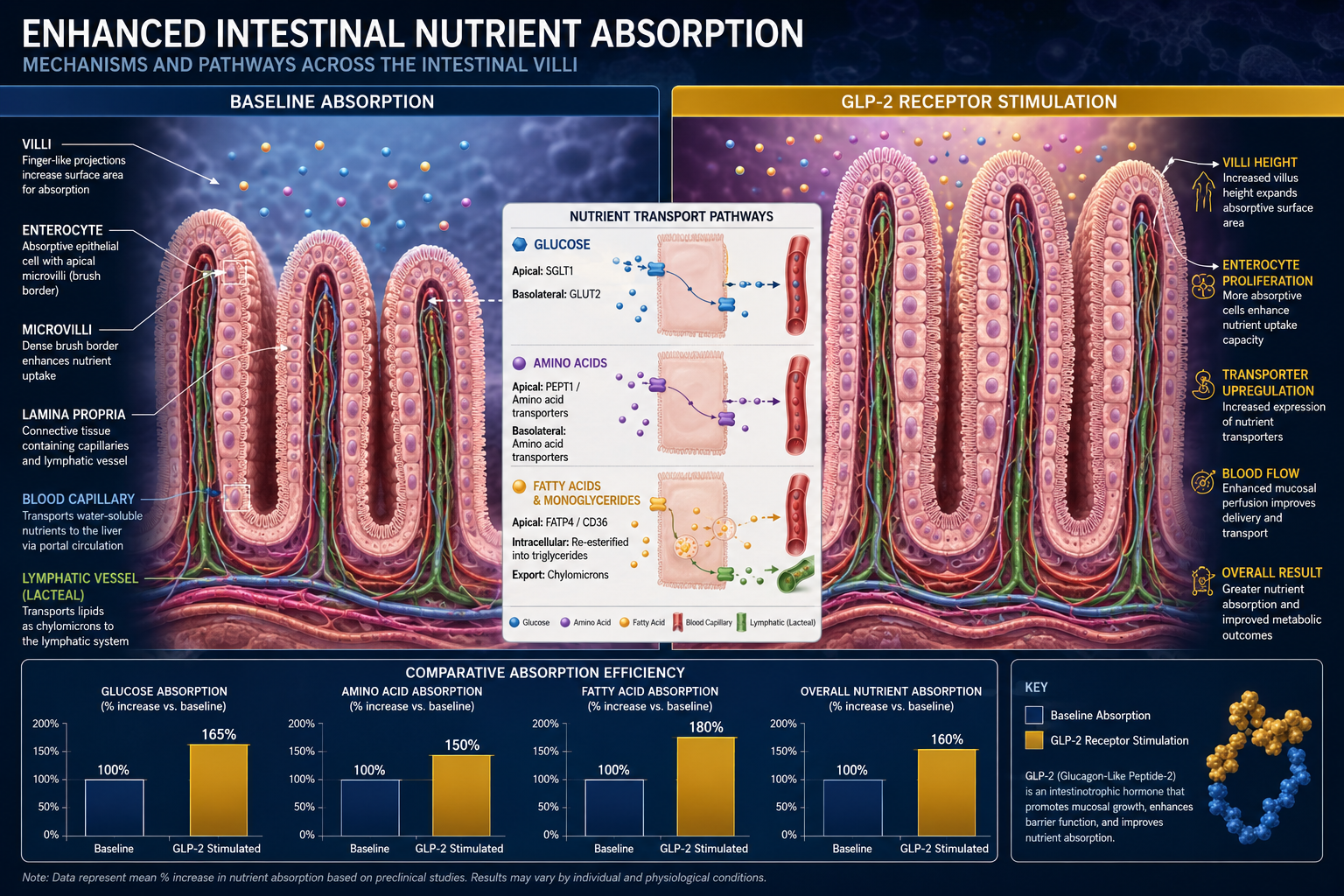
GLP-2-T (teduglutide) has a well-characterized mechanism for supporting this barrier. Activation of GLP-2R on subepithelial myofibroblasts triggers release of growth factors including keratinocyte growth factor (KGF) and insulin-like growth factor-1 (IGF-1). These promote:

  • Crypt cell proliferation and villus elongation
  • Increased tight junction protein expression
  • Enhanced mucosal blood flow
  • Reduced intestinal permeability

This makes teduglutide one of the most direct tools in gut barrier research. Its effects on nutrient absorption are a direct consequence: longer villi mean greater absorptive surface area.

Tirzepatide's relationship with gut barrier biology is less direct. GLP-1 receptor agonism is known to slow gastric emptying and modulate intestinal motility, which can influence nutrient absorption timing. Some preclinical data suggest GLP-1 signaling may have modest barrier-supportive effects, but these are not equivalent to direct GLP-2R activation.

Researchers working on gut-healing peptide combinations may also find the BPC-157 research themes relevant, as BPC-157 has been studied for its own effects on mucosal integrity through separate mechanisms. Similarly, BPC-157 and TB-500 combination research explores complementary tissue repair pathways.


Resolving the Naming Confusion in GLP-2-T vs GLP-2 Tirz Research

Resolving the Naming Confusion in GLP-2-T vs GLP-2 Tirz Research

The naming confusion in GLP-2-T vs GLP-2 Tirz: Gut Barrier Biology, Nutrient Absorption, and Naming Confusion in Research stems from three overlapping problems:

  1. Abbreviation collision — "GLP-2-T" is used for teduglutide in clinical literature but occasionally appears as shorthand for "GLP-2 component of tirzepatide" in community forums.
  2. Receptor family conflation — GLP-1, GLP-2, and GIP are all incretin-related peptides, making cross-labeling common among non-specialist readers.
  3. Secondary effects misattributed as primary mechanisms — When tirzepatide produces gut-related outcomes, some researchers incorrectly attribute this to GLP-2 receptor activity.

A practical rule: if a study is examining intestinal villus height, crypt depth, tight junction protein expression, or short bowel syndrome models, it is almost certainly using GLP-2-T (teduglutide). If the study examines insulin secretion, body weight, or lipid metabolism, the compound is more likely tirzepatide or a GLP-1/GIP agonist.

For broader context on how multi-receptor peptide compounds are categorized, the GLP-1 peptides product tag and the GLP-3 / retatrutide research page offer useful comparative framing. Researchers interested in how innovative delivery systems affect peptide receptor selectivity may also benefit from reviewing innovative peptide delivery systems.


Conclusion

The confusion surrounding GLP-2-T vs GLP-2 Tirz: Gut Barrier Biology, Nutrient Absorption, and Naming Confusion in Research is solvable with precise language. Teduglutide (GLP-2-T) is a direct GLP-2 receptor agonist with established research applications in gut barrier biology and nutrient absorption. Tirzepatide, regardless of informal "GLP-2 Tirz" labeling, is a GIP/GLP-1 dual agonist with metabolic rather than intestinotrophic primary mechanisms.

Actionable next steps for researchers:

  • Always verify the receptor target before selecting a compound for gut-focused protocols.
  • Cross-reference abbreviations against the compound's structural class, not just its name.
  • When reviewing community discussions, treat "GLP-2 Tirz" as an informal label that requires verification against primary literature.
  • Consult verified sourcing platforms that provide certificates of analysis to confirm compound identity before any research use, such as those found at quality testing protocols.

Naming precision is not a minor detail in peptide research — it is the foundation on which valid experimental design is built.


References

  • Jeppesen, P. B., et al. (2012). Teduglutide reduces need for parenteral support among patients with short bowel syndrome with intestinal failure. Gastroenterology, 143(6), 1473-1481.
  • Drucker, D. J. (2002). Biological actions and therapeutic potential of the glucagon-like peptides. Gastroenterology, 122(2), 531-544.
  • Frampton, J. E. (2012). Teduglutide: a review of its use in the management of short bowel syndrome. Drugs, 72(9), 1209-1220.
  • Frias, J. P., et al. (2021). Tirzepatide versus semaglutide once weekly in patients with type 2 diabetes. New England Journal of Medicine, 385(6), 503-515.
  • Cani, P. D., et al. (2009). Changes in gut microbiota control inflammation in obese mice through a mechanism involving GLP-2-driven improvement of gut permeability. Gut, 58(8), 1091-1103.
https://www.puretestedpeptides.com/wp-content/uploads/2026/06/GLP-2-T-vs-GLP-2-Tirz-Gut-Barrier-Biology-Nutrient-Absorption-and-Naming-Confusion-in-Research.png 1024 1536 Pure Tested https://www.puretestedpeptides.com/wp-content/uploads/2026/01/buy-peptides-online.jpg Pure Tested2026-06-27 13:04:342026-07-20 15:02:12GLP-2-T vs GLP-2 Tirz: Gut Barrier Biology, Nutrient Absorption, and Naming Confusion in Research
×

Helpful Links

  • My account
  • Cart
  • Checkout
  • Refund and Returns Policy
  • Privacy Policy
  • SMS Privacy Policy
  • Login
  • My Account
  • Logout

USA Made Lab Tested Peptides

All products are sold for research, laboratory, or analytical purposes only, and are not for human consumption


Pure Tested Peptides is a chemical supplier. Pure Tested Peptides is not a compounding / chemical compounding facility as defined under 503A of the Federal Food, Drug, and Cosmetic act. Pure Tested Peptides is not an outsourcing facility as defined under 503B of the Federal Food, Drug, and Cosmetic act.

The statements made within this website have not been evaluated by the US Food and Drug Administration. The products we offer are not intended to diagnose, treat, cure or prevent any disease.

Human/Animal Consumption Prohibited. Laboratory/In-Vitro Experimental Use Only

Scroll to top Scroll to top Scroll to top