Call or Text 727-513-9780
  • Shopping Cart Shopping Cart
    0Shopping Cart
Pure Tested Peptides | America's most trusted Peptides for sale online
  • Peptides for sale
    • Oral Peptides for sale
      • Peptide Capsules for sale
      • BPC 157 Capsules 1000mcg
      • SLU-PP-332 Capsules | 1000 mcg
      • 5-Amino-1MQ 50mg Capsules
      • Tesofensine 500mcg
    • All Peptides for sale
    • Peptide Sprays
      • BPC 157 Nasal Spray Kit
      • BPC-157 TB500 Nasal Spray Kit
      • Semax Nasal Spray 10mg
      • Selank – Nasal Spray Kit – 10mg
      • Epithalon 50MG Nasal Spray Kit
      • Ipamorelin 10mg Nasal Spray
      • Klow Nasal Spray (BPC-157 + TB-500 + GHK-Cu + KPV) | 80mg
      • Hulk Nasal Spray Tesa / Ipa Blend 6/3 MG
      • Klow Nasal Spray
      • NAD + 500 mg Nasal Spray
      • PT-141 Nasal Spray Kit
    • GHRH Peptides
      • Ipa Peptides
      • CJC-1295 Peptides
        • CJC-1295 with DAC 5 mg
        • CJC-1295 without DAC 5 mg
        • CJC-1295 Ipa 10mg
      • Tesa Peptides
        • Tesa Peptide
        • Tesa 20 mg
    • GHK-Cu Peptides
      • All GHK-Cu Peptides
      • GHK-Cu 100mg
      • KLOW Peptide Blend – Buy KLOW blend online
    • BPC Peptides
      • All BPC Peptides
      • BPC-157
      • BPC-157 TB-500
      • BPC 157 capsules 1000mcg
    • SLU-PP-332 Peptides
      • All SLU-PP-332 Peptides
      • SLU-PP-332 5mg
    • GLP3 Peptides
    • PT-141 Peptides
      • PT-141 Peptides for sale
      • PT-141 10mg
      • PT-141 Nasal Spray
    • CAG Peptides
      • Lipo-C Peptide Blend
      • CAG 5mg
      • CAG 10mg
    • MOTS-C Peptides
      • MOTS-C Peptides for sale
      • MOTS-c peptide
      • MOTS-c 10mg *6 pack*
    • 5 Amino 1MQ Peptides
      • 5 Amino 1MQ Peptides for sale
      • 5-Amino-1MQ 50mg Capsules
      • 5-Amino-1MQ 5mg
    • Epithalon Peptides
      • Epithalon Peptides for sale
      • Epithalon 10mg
      • Epithalon 50mg
  • Shop
    • GLPs
      • 5-Amino-1MQ 50mg Capsules
      • 5-Amino-1MQ 5mg
      • L-Carnitine 500mg/ml
      • Tesofensine 500mcg
      • SLU-PP-332 5mg
      • MOTS-c 10mg *6 pack*
    • Epithalon & BPC Peptides
      • Epithalon 10mg
      • Epithalon 50mg
      • BPC-157
      • BPC 157 capsules 1000mcg
      • BPC-157 TB-500
      • BPC-157 TB500 Nasal Spray Kit
      • BPC 157 Nasal Spray Kit
    • BPC TB-500 & NAD+ Peptides
      • NAD+ 500 mg
      • KLOW Peptide Blend – Buy KLOW blend online
      • GLOW Peptide Blend
      • TB 500 5mg
      • BPC 157 capsules 1000mcg – Supplement
      • BPC 157 Nasal Spray Kit
      • BPC-157
      • BPC-157 TB500 Nasal Spray Kit
      • BPC-157 TB-500
      • BPC 157 capsules 1000mcg
    • LL-37 Peptide
      • LL-37 10 mg
    • MOTS-C & Selank
      • MOTS-c peptide
      • Selank 10mg
    • GHK Peptides
      • GHK-Cu 100mg
      • GLOW Peptide Blend
      • KLOW Peptide Blend – Buy KLOW blend online
  • COAs
  • Wholesale
    • Wholesale Peptides for sale
  • PTP FAQ
  • Affiliates
    • Selank Peptide: Advanced Pharmacological Mechanisms Underlying Its Anxiolytic and Nootropic Effects in Research
      • 5-Amino-1MQ Peptide: Detailed Mechanisms of NNMT Inhibition and Its Impact on Cellular Metabolism Research
        • MOTS-C Peptide: Unraveling Its Role in Mitochondrial Dynamics and Energy Metabolism Research
          • Epithalon Peptide and Telomerase Regulation: Investigating Its Impact on Cellular Senescence and Lifespan Research Models
            • GLP2-T vs GLP2 Tirz Peptide: Understanding the Naming, Mechanistic Nuances, and Research Implications for Gut Health
      • Peptides and Polypeptides in Modern Pharmacology: What Research on Metoprolol, Prednisone, and Amlodipine Reveals
        • Polypeptide Peptides vs NSAIDs: What Naproxen and Diclofenac Teach Tissue-Repair Researchers About BPC‑157 and TB‑500
          • Peptides and Polypeptides in Endocrine Pharmacology: How GLP-1, GLP-2, and GLP-3 Retatrutide Differ From Classic Drugs Like Prednisone and Amlodipine
          • 5‑Amino‑1MQ Peptide and NNMT Inhibition: How It Compares With Statins Like Atorvastatin in Adipose and Lipid Metabolism Research
      • Enclomiphene, Estrogen Receptor Signaling, and Luteinizing Phase Biology: What Hormone Researchers Should Measure
        • Mesenchymal Stem Cells, BPC‑157, and GHK‑Cu: How Tissue Repair Peptides Compare With Classic NSAIDs Like Naproxen in Injury Models
          • Peptide Calculator Use Cases Beyond Growth Hormone: Working Through GLP‑3 Retatrutide, MOTS‑c, and BPC‑157 Research Dosing
        • Polypeptide Peptides in Endocrine and Metabolic Pharmacology: Lessons From Amlodipine, Prednisone, and Metoprolol
        • Peptides Calculator for Advanced Blends: Worked Examples for Tesamorelin, CJC‑1295, and Ipamorelin Stacks
          • Peptides and Polypeptides in Human Physiology: How Molecular Size Shapes Research Applications
            • Selank Peptide: Advanced Pharmacological Mechanisms Underlying Its Anxiolytic and Nootropic Effects in Research
          • 5-Amino-1MQ Peptide: Detailed Mechanisms of NNMT Inhibition and Its Impact on Cellular Metabolism Research
            • MOTS-C Peptide: Unraveling Its Role in Mitochondrial Dynamics and Energy Metabolism Research
              • Epithalon Peptide and Telomerase Regulation: Investigating Its Impact on Cellular Senescence and Lifespan Research Models
                • GLP2-T vs GLP2 Tirz Peptide: Understanding the Naming, Mechanistic Nuances, and Research Implications for Gut Health
                  • Peptides and Polypeptides in Endocrine Pharmacology: How GLP-1, GLP-2, and GLP-3 Retatrutide Differ From Classic Drugs Like Prednisone and Amlodipine
                    • Polypeptide Peptides vs NSAIDs: What Naproxen and Diclofenac Teach Tissue-Repair Researchers About BPC‑157 and TB‑500
                      • Peptides and Polypeptides in Modern Pharmacology: What Research on Metoprolol, Prednisone, and Amlodipine Reveals
                        • 5‑Amino‑1MQ Peptide and NNMT Inhibition: How It Compares With Statins Like Atorvastatin in Adipose and Lipid Metabolism Research
                        • Enclomiphene, Estrogen Receptor Signaling, and Luteinizing Phase Biology: What Hormone Researchers Should Measure
                        • Mesenchymal Stem Cells, BPC‑157, and GHK‑Cu: How Tissue Repair Peptides Compare With Classic NSAIDs Like Naproxen in Injury Models
                        • Peptide Calculator Use Cases Beyond Growth Hormone: Working Through GLP‑3 Retatrutide, MOTS‑c, and BPC‑157 Research Dosing
                        • Polypeptide Peptides in Endocrine and Metabolic Pharmacology: Lessons From Amlodipine, Prednisone, and Metoprolol
                        • Peptides Calculator for Advanced Blends: Worked Examples for Tesamorelin, CJC‑1295, and Ipamorelin Stacks
                        • Peptides and Polypeptides in Human Physiology: How Molecular Size Shapes Research Applications
                        • Selank Peptide: Advanced Pharmacological Mechanisms Underlying Its Anxiolytic and Nootropic Effects in Research
                        • MOTS-C Peptide: Unraveling Its Role in Mitochondrial Dynamics and Energy Metabolism Research
                        • Peptides and Polypeptides in Modern Pharmacology: What Research on Metoprolol, Prednisone, and Amlodipine Reveals
                        • Peptides and Polypeptides in Endocrine Pharmacology: How GLP-1, GLP-2, and GLP-3 Retatrutide Differ From Classic Drugs Like Prednisone and Amlodipine
                        • 5-Amino-1MQ Peptide: Detailed Mechanisms of NNMT Inhibition and Its Impact on Cellular Metabolism Research
                        • Mesenchymal Stem Cells, BPC‑157, and GHK‑Cu: How Tissue Repair Peptides Compare With Classic NSAIDs Like Naproxen in Injury Models
                        • Peptide Calculator Use Cases Beyond Growth Hormone: Working Through GLP‑3 Retatrutide, MOTS‑c, and BPC‑157 Research Dosing
                        • GLP2-T vs GLP2 Tirz Peptide: Understanding the Naming, Mechanistic Nuances, and Research Implications for Gut Health
                        • Polypeptide Peptides in Endocrine and Metabolic Pharmacology: Lessons From Amlodipine, Prednisone, and Metoprolol
                        • Polypeptide Peptides vs NSAIDs: What Naproxen and Diclofenac Teach Tissue-Repair Researchers About BPC‑157 and TB‑500
                        • Peptides and Polypeptides in Human Physiology: How Molecular Size Shapes Research Applications
                        • Peptides Calculator for Advanced Blends: Worked Examples for Tesamorelin, CJC‑1295, and Ipamorelin Stacks
                        • 5‑Amino‑1MQ Peptide and NNMT Inhibition: How It Compares With Statins Like Atorvastatin in Adipose and Lipid Metabolism Research
                        • Enclomiphene, Estrogen Receptor Signaling, and Luteinizing Phase Biology: What Hormone Researchers Should Measure
                        • Epithalon Peptide and Telomerase Regulation: Investigating Its Impact on Cellular Senescence and Lifespan Research Models
                        • Best research protocol Klow blend
                        • best time to take BPC-157
                        • best time to take DSIP (Delta Sleep Inducing Peptide)
                        • best time to take CJC-1295
                        • best time to take AOD-9604
                        • best time to take Follistatin 344
                        • best time to take Ipamorelin
                        • best time to take MK-677 (Ibutamoren)
                        • best time to take Ligandrol (LGD-4033) — research compound
                        • best time to take Ostarine (MK-2866) — research compound
                        • best time to take GHK-CU
                        • best time to take TB-500
                        • best time to take MOTS-c
                        • best time to take Semax
                        • best time to take RAD-140 (Testolone) — research compound
                        • best time to take Thymosin Alpha-1
                        • best time to take PEG-MGF
                        • Biolife Plasma, Octapharma Plasma, and Research Peptides: How Plasma Donation Labs Differ From Peptide Suppliers
                        • best time to take YK-11 — research compound
                        • best time to take PT-141 (Bremelanotide)
                        • Best research protocol Klow blend
                        • 5-Amino-1MQ and MOTS-C Synergy: Metabolic Signaling, Mitochondria, and Research Design
                        • BPC-157 and TB-500: Investigating Their Combined Effects on Angiogenesis and Cellular Migration in Tissue Repair Models
                        • BPC-157 Peptide: Gut Barrier Function, Inflammation, and Tissue-Recovery Research
                        • 5‑Amino‑1MQ and MOTS‑c Synergy in Metabolic Research: Designing NNMT and Mitochondrial Biogenesis Stacks
                        • CJC-1295 with DAC vs. Without DAC: Half-Life, Release Kinetics, and Research Implications
                        • CJC‑1295 with DAC vs. Without DAC: Expanding on Half‑Life Differences Using Tesamorelin and Ipamorelin Blend Case Studies
                        • Collagen Biology and Copper‑Binding Peptides: How GHK‑Cu, Glow Blend, and Klow Blend Interact with Skin and Connective Tissue
                        • Collagen Biology and Regenerative Peptides: How GHK‑Cu, Glow Blend, and Klow Blend Affect Extracellular Matrix Research
                    • DNA, Telomeres, and Longevity Peptides: Positioning Epithalon and MOTS‑c in Genetic Aging Research
                      • Enclomiphene Citrate: serm Mechanism, Testosterone Research, and Stack Compatibility
                        • Enclomiphene vs Enclomiphene Citrate: Formulation, Bioavailability, and Research Distinctions
                        • Epithalon Peptide Research: Telomerase Activation, Aging, and Pineal Gland Function
                        • Estrogen Receptor Signaling and Enclomiphene: How Selective Modulators Compare with Classic Polypeptide Hormones
                        • GHK-Cu Peptide: Advanced Mechanisms in Extracellular Matrix Remodeling and Wound Healing Research
                        • GHK-Cu Peptide: Collagen Synthesis, Wound Repair, and Skin-Barrier Research Models
                        • GLP-1 vs GLP-3 vs GLP-2: Peptide Classification and Research Applications
                        • GLP-2 Peptide Research Guide: Gut Barrier Function, Nutrient Absorption, and Intestinal Recovery Models
                        • GLP-3 Retatrutide vs. GLP-1 Drugs: What Triple-Agonist Biology Changes in Research Models
                        • Ipamorelin and Tesamorelin Combination: Synergistic GH Secretagogue Research and Dosing Protocols
                        • GLP2 Tirz Peptide: What It Is, Why the Name Exists, and How Researchers Should Interpret It
                        • Klow Blend Peptide Nasal Spray: What the Formulation Is Trying to Do in Cognitive Research
                        • Mitochondria, NNMT Inhibition, and Peptide Modulators: Where MOTS‑c and 5‑Amino‑1MQ Fit in Cellular Energy Research
                        • MOTS-c Peptide: Mitochondrial Function, Energy Metabolism, and What Researchers Measure
                        • MOTS-c vs. 5-Amino-1MQ: Which Metabolic Research Questions Each Compound Actually Answers
                        • Nasal Spray Peptides: Bioavailability, Administration, and Semax/Selank Research Applications
                        • PT-141 Peptide Research: Mechanism of Action and Melanocortin Receptor Signaling
                        • Retatrutide for Research: Mechanism, Structure, and GLP-1/GLP-3 Dual Action
                        • Retatrutide for Obesity and Type 2 Diabetes: What the Latest Trial Data Suggest
                        • Tesofensine Peptide Research: Mechanism, Appetite Suppression, and Neuropeptide Y Pathways
  • Contact
    • Contact Customer Service
    • Text Customer Support
  • About US
  • Shop all peptides
  • Affiliate Program
    • Affiliate Signup
  • Login / Register Login / Register Page Link Login / Register Page Link
  • Click to open the search input field Click to open the search input field Search
  • Menu Menu

Tag Archive for: gut barrier research

Famotidine Versus Omeprazole in Intestinal Peptide Models: H2-Blocker and Proton-Pump Inhibitor Controls

Famotidine Versus Omeprazole in Intestinal Peptide Models: H2-Blocker and Proton-Pump Inhibitor Controls

October 13, 2026/0 Comments/in Uncategorized/by

Acid-suppressing drugs rank among the most prescribed medications worldwide, yet the choice between an H2-receptor antagonist and a proton-pump inhibitor carries consequences that extend far beyond heartburn relief. When researchers design intestinal peptide models, systems built to study how gut hormones, barrier function, and nutrient absorption respond to pharmacologic intervention, the selection of a control drug is not a minor detail. It shapes every downstream readout. Famotidine versus omeprazole in intestinal peptide models represents a fundamental methodological decision, one that determines whether an experiment captures partial or maximal acid suppression, short-burst or sustained pH shifts, and modest or profound changes to the intestinal microenvironment.

Key Takeaways

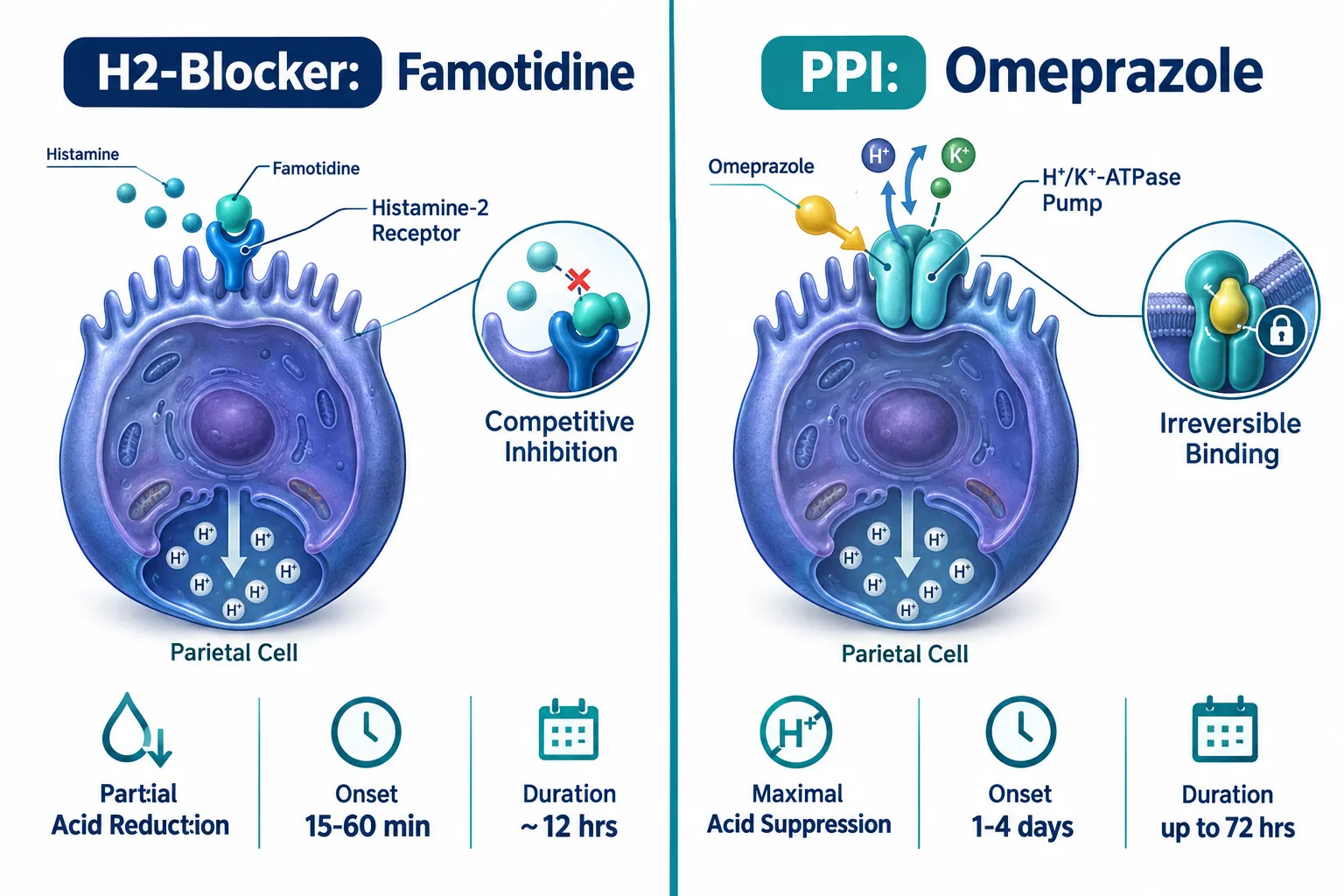
  • Famotidine (H2-blocker) competitively inhibits histamine-2 receptors for partial, shorter-duration acid suppression; omeprazole (PPI) irreversibly inactivates the gastric proton pump for deeper, longer-lasting suppression.
  • Onset and duration differ substantially: famotidine acts within 15-60 minutes with relief lasting roughly 12 hours, while omeprazole may take 1-4 days to reach full effect but sustains suppression for up to 72 hours.
  • In intestinal peptide models, these pharmacodynamic differences translate into distinct effects on mucosal barrier integrity, nutrient absorption, and inflammatory marker levels.
  • Long-term PPI use carries a broader systemic side-effect burden, including risks of bone loss, hypomagnesemia, and altered gut microbiota, which must be factored into experimental design.
  • Famotidine and omeprazole are best treated as complementary comparators, partial versus maximal suppression controls, rather than interchangeable agents in research protocols.

Mechanisms of Action: How Each Drug Suppresses Acid

Understanding famotidine versus omeprazole in intestinal peptide models begins with their distinct molecular targets.
Mechanisms of Action: How Each Drug Suppresses Acid

Famotidine works by competitively and reversibly binding histamine-2 receptors on gastric parietal cells. Because histamine is only one of three stimuli that drive acid secretion (alongside gastrin and acetylcholine), blocking its receptor produces partial suppression. Gastric juice volume falls, and basal acid output drops meaningfully, but the proton pump itself remains fully functional. This partial suppression profile makes famotidine a useful "low-ceiling" control in models where researchers need to observe how moderate pH elevation, without complete acid abolition, affects intestinal peptide release or mucosal signaling.

Omeprazole, by contrast, is a prodrug that is activated in the acidic secretory canaliculi of parietal cells. Once activated, it forms a covalent, irreversible bond with the H+/K+-ATPase proton pump, blocking the final step of acid secretion regardless of which upstream stimulus triggered it. The result is near-complete acid suppression that persists until new pump proteins are synthesized, a process taking one to three days. This makes omeprazole the reference standard for "maximal suppression" controls in experimental gastrointestinal frameworks.

Key distinction: Famotidine modulates acid; omeprazole abolishes it. That difference is the methodological fulcrum in any controlled intestinal study.


Onset, Duration, and Dosing Implications in Research Models

The pharmacokinetic profiles of these two drug classes are as important as their mechanisms when designing controlled experiments.

Parameter Famotidine (H2-Blocker) Omeprazole (PPI)
Onset of action 15-60 minutes 1-4 days (full effect)
Duration of effect Up to ~12 hours Up to 72 hours
Dosing frequency Typically twice daily Once daily
Acid suppression depth Partial Near-complete
Reversibility Reversible Irreversible (until pump renewal)

These differences carry direct consequences for intestinal peptide models. A model examining acute postprandial GLP-related signaling, such as those explored in research on GLP-3 peptide signaling pathways, requires precise control over the luminal pH environment at specific time points. Famotidine's rapid onset makes it suitable for acute-phase protocols. Omeprazole's sustained suppression is better suited to chronic-exposure or multi-day washout designs.

Researchers exploring intestinal peptide models and controlled experimental frameworks must account for the lag phase inherent in PPI therapy. Enrolling subjects or initiating measurements before omeprazole reaches steady-state suppression introduces confounding variables that can distort peptide-level readouts.


Effects on Intestinal Barrier, Absorption, and Microbiome Readouts

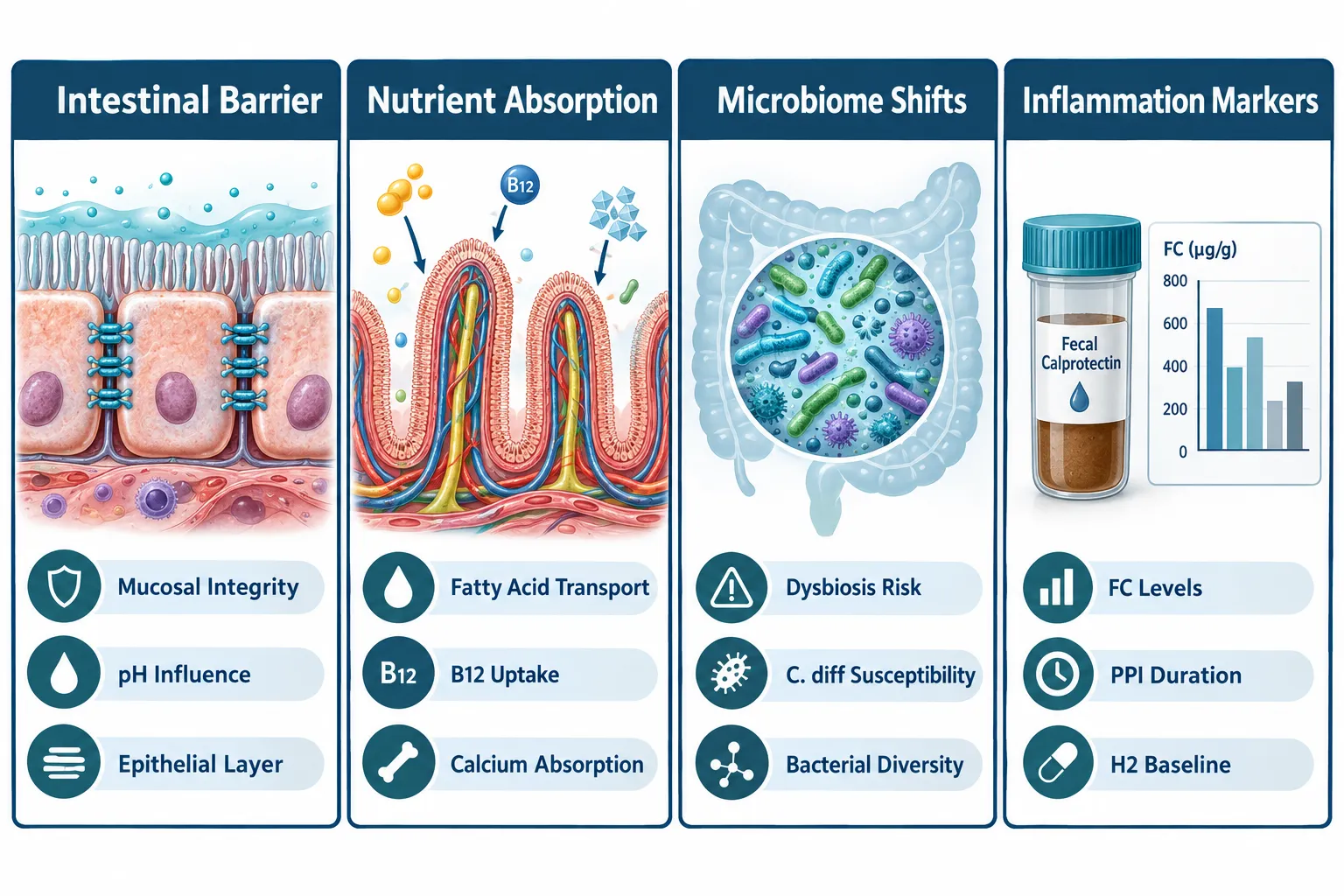
The choice of control drug in famotidine versus omeprazole in intestinal peptide models affects three major downstream systems: the mucosal barrier, nutrient absorption, and the gut microbiome.
Effects on Intestinal Barrier, Absorption, and Microbiome Readouts

Intestinal Barrier and Mucosal Integrity

PPIs are more effective than H2-blockers at preventing stress-related mucosal erosions, upper GI bleeding, and peptic ulcer disease. In critically ill patients and chronic NSAID users, omeprazole consistently outperforms famotidine in healing esophageal and gastric mucosa. A clinical trial of reflux esophagitis patients found omeprazole achieved a 75.4% symptom improvement rate at week four, compared with 41.5% for famotidine at week two. For models using mucosal integrity as a primary endpoint, omeprazole provides a more robust protective baseline.

Nutrient Absorption

Long-term PPI use introduces measurable changes to intestinal absorption. In cystic fibrosis patients, omeprazole therapy was associated with decreased plasma heptadecanoic acid absorption in 78% of subjects completing a mixed triglyceride breath test, suggesting that sustained acid suppression alters intestinal fatty acid uptake. PPIs have also been linked to reduced absorption of calcium, magnesium, and vitamin B12, all relevant variables in any model tracking nutrient-transport peptides. Famotidine, with its partial suppression profile, produces fewer documented absorption disturbances, making it a cleaner baseline for nutrient-focused protocols.

For researchers studying peptides involved in metabolic signaling, including those available as GLP-3 peptide for sale for research purposes, the absorption environment established by the control drug will influence how gut hormones respond to luminal nutrients.

Microbiome and Inflammatory Markers

Omeprazole's prolonged acid suppression raises luminal pH, which alters the composition of the gut microbiome and increases susceptibility to Clostridioides difficile overgrowth. Research tracking fecal calprotectin (FC), a validated marker of intestinal inflammation, in NSAID and PPI users found a statistically significant negative correlation between duration of PPI use and FC levels (Spearman rs = -0.270, p = 0.002). This suggests that PPI exposure progressively modulates intestinal inflammatory tone, creating a shifting baseline that must be controlled for in longitudinal peptide studies.

Famotidine does not carry the same magnitude of microbiome disruption risk, which is one reason it remains a preferred comparator in short-term or microbiome-sensitive experimental designs. Researchers working with SS-31 peptide research models or other mitochondria-targeted peptides that intersect with oxidative stress and gut inflammation should account for these microbiome-level differences when selecting a control agent.


Safety Profiles and Long-Term Experimental Considerations

Safety data directly informs how long each drug can serve as a control without introducing its own confounding effects.

Safety Profiles and Long-Term Experimental Considerations

Famotidine's side-effect profile is generally mild and transient. Headache, dizziness, and minor gastrointestinal symptoms are the most commonly reported events. Rare but serious adverse effects, including blood count changes, liver enzyme elevations, and CNS effects, occur mainly in older adults or individuals with renal impairment. For most short-to-medium-term intestinal models, famotidine presents a low systemic burden.

Omeprazole's long-term safety profile is more complex. Sustained PPI use is associated with:

  • Bone fractures due to impaired calcium absorption
  • Hypomagnesemia, which can affect smooth muscle and nerve function in the gut
  • Chronic kidney injury with prolonged exposure
  • Vitamin B12 deficiency, relevant in neurological and metabolic peptide models
  • Elevated C. difficile risk, a critical confound in microbiome studies

These risks do not disqualify omeprazole as a control agent, but they impose time limits and monitoring requirements on any protocol using it as a long-term comparator.

One additional practical constraint: combining omeprazole with famotidine is generally discouraged in clinical and research settings because H2-blockers can interfere with PPI activation, reducing the PPI's efficacy. This means the two drugs function best as alternative controls, representing different points on the acid-suppression spectrum, rather than as concurrent interventions.

For researchers sourcing research-grade compounds, understanding how control drugs interact with experimental peptides is essential. A foundational overview is available in this peptides 101 guide for research-use buyers, which covers structure, mechanisms, and experimental positioning.


Conclusion

Famotidine versus omeprazole in intestinal peptide models is not a question with a single correct answer, it is a design decision that must align with the specific hypothesis being tested. Famotidine offers rapid onset, partial suppression, a favorable short-term safety profile, and minimal disruption to absorption and microbiome baselines, making it the preferred "partial suppression" comparator. Omeprazole delivers near-complete, sustained acid abolition and superior mucosal protection, making it the standard "maximal suppression" control for chronic-exposure and barrier-integrity protocols.

Actionable next steps for researchers:

  1. Define the suppression depth required by the model before selecting a control drug.
  2. Account for omeprazole's 1-4 day onset lag in any time-sensitive protocol.
  3. Monitor absorption markers (B12, magnesium, fatty acids) in long-term PPI-controlled studies.
  4. Treat famotidine and omeprazole as distinct points on the acid-suppression continuum, not interchangeable agents.
  5. Review how the chosen control drug may interact with the specific intestinal peptide being studied, particularly for GLP-family, nutrient-transport, or inflammation-related peptides.

Researchers seeking to explore what the strongest peptides for weight loss and metabolic research look like in controlled GI environments will find that the acid-suppression baseline established by the control drug is as consequential as the peptide itself.

https://www.puretestedpeptides.com/wp-content/uploads/2026/10/famotidine-versus-omeprazole-in-intestinal-peptide-models-h2-blocker-and-proton.webp 1024 1536 https://www.puretestedpeptides.com/wp-content/uploads/2026/01/buy-peptides-online.jpg 2026-10-13 13:04:362026-10-13 13:04:36Famotidine Versus Omeprazole in Intestinal Peptide Models: H2-Blocker and Proton-Pump Inhibitor Controls

Tag Archive for: gut barrier research

GLP-2-T and GLP2 Tirz Peptides: Naming Confusion, Mechanistic Differences, and Research Use Cases

GLP-2-T and GLP2 Tirz Peptides: Naming Confusion, Mechanistic Differences, and Research Use Cases

July 13, 2026/0 Comments/by Pure Tested

GLP-2-T vs GLP2 Tirz Peptides cover image

Researchers searching for "GLP-2 Tirz" in 2026 frequently land on content about tirzepatide, a dual incretin agonist, when they actually need information about GLP-2-T, a modified analog of glucagon-like peptide-2 studied for gut barrier biology. That single naming overlap can derail an entire literature review. Understanding GLP-2-T and GLP2 Tirz Peptides: Naming Confusion, Mechanistic Differences, and Research Use Cases is therefore not just an academic exercise; it directly shapes which experimental model a researcher selects and which receptor pathways they target.

Key Takeaways

  • "GLP-2 Tirz" is an informal, technically inaccurate label for tirzepatide, a GLP-1/GIP dual agonist with no direct GLP-2 pathway activity.
  • GLP-2-T is a research-grade, stability-enhanced analog of the endogenous peptide GLP-2, focused on intestinal mucosal biology.
  • The two compounds act on completely different receptors and serve distinct research purposes.
  • Informal generational numbering (GLP-2, GLP-3) for incretin drugs creates systematic confusion in the research community.
  • Selecting the correct compound requires understanding both receptor targets and the biological systems under study.

Where the Naming Confusion Originates

Split diagram comparing GLP-2-T and Tirzepatide molecular pathways

The confusion around GLP-2-T and GLP2 Tirz Peptides stems from an informal numbering convention that circulates in research blogs, supplement forums, and even some vendor catalogs. In this system, semaglutide is called "GLP-1," tirzepatide is called "GLP-2," and retatrutide is called "GLP-3." The logic follows the number of receptor targets each drug engages.

The problem: these numbers already belong to real, endogenous peptides.

  • GLP-1 (glucagon-like peptide-1): a well-characterized incretin hormone.
  • GLP-2 (glucagon-like peptide-2): a 33-amino acid hormone secreted by intestinal L-cells, primarily involved in gut mucosal growth and barrier function.
  • GLP-3: not a recognized endogenous hormone; "retatrutide" is its informal nickname, targeting GLP-1, GIP, and glucagon receptors.

The World Health Organization's International Nonproprietary Names system designates the generic name tirzepatide, with the stem "-tirz-" signaling its dual incretin activity. Calling tirzepatide "GLP-2 Tirz" blends an endogenous peptide name with a drug suffix, producing a label that implies receptor overlap where none exists.

For researchers exploring incretin-based metabolic research, the GLP-1-T incretin research themes page provides a useful parallel on how GLP-1 analogs are properly categorized. Similarly, the GLP-3 Reta research page illustrates how the triple-agonist space is being studied without conflating it with endogenous peptide families.


Mechanistic Differences: Two Compounds, Two Entirely Different Systems

Researcher's lab bench with peptide vials and pathway research cards

The core issue in the GLP-2-T and GLP2 Tirz Peptides naming confusion is that these compounds act through fundamentally separate biological systems.

How GLP-2 and GLP-2-T Work

GLP-2 is co-released with GLP-1 from enteroendocrine L-cells after nutrient intake. Its primary roles include:

  • Promoting intestinal mucosal growth and villus elongation
  • Supporting tight junction regulation and gut barrier integrity
  • Modulating enteric nervous system signaling

Critically, the GLP-2 receptor is expressed in the enteric nervous system rather than directly on intestinal epithelial cells, which means GLP-2 acts through an indirect mechanism involving neural intermediaries.

GLP-2-T is a modified, stability-enhanced analog of this endogenous peptide. Its structural modifications extend its half-life, allowing researchers to study longer-lasting gut mucosal effects without repeated peptide dosing in experimental setups. This makes it a practical tool for intestinal barrier and villus growth models.

How Tirzepatide (Informally "GLP-2 Tirz") Works

Tirzepatide is a dual agonist at the GLP-1 receptor and the glucose-dependent insulinotropic polypeptide (GIP) receptor. Its research-relevant actions include:

  • Stimulating glucose-dependent insulin secretion
  • Suppressing appetite via central GLP-1 receptor pathways
  • Modulating fat metabolism through GIP receptor activity

Tirzepatide has no direct activity at the GLP-2 receptor. Placing it under a "GLP-2" label is therefore mechanistically misleading. Researchers interested in dual incretin signaling may also find value in reviewing cagrilintide synergy with GLP-1 to understand how complementary peptide combinations are studied in metabolic contexts.

Feature GLP-2-T Tirzepatide ("GLP-2 Tirz")
Receptor target GLP-2 receptor GLP-1 + GIP receptors
Primary system Intestinal/gut mucosal Metabolic/pancreatic
Research focus Gut barrier, villi growth Insulin secretion, appetite
Endogenous basis GLP-2 analog Synthetic dual agonist

Research Use Cases: Selecting the Right Compound

GLP-2-T research use cases infographic with four key application icons

Understanding GLP-2-T and GLP2 Tirz Peptides: Naming Confusion, Mechanistic Differences, and Research Use Cases becomes most practical when deciding which compound belongs in a specific experimental design.

GLP-2-T Research Applications

GLP-2-T is primarily examined in preclinical gut biology models for:

  1. Intestinal villi growth and maintenance, studying how mucosal architecture responds to GLP-2 receptor stimulation
  2. Gut barrier permeability models, examining tight junction proteins and paracellular transport
  3. Enteric nervous system signaling, probing how GLP-2 receptor activation translates into epithelial responses via neural intermediaries
  4. Metabolic gut hub research, because the gut functions as a metabolic signaling organ, GLP-2-T is increasingly discussed alongside metabolic peptides

Recent research directions have also explored long-acting GLP-2 analogs through lipidation strategies, which enhance half-life and gut-tropic efficacy in rodent models, a design principle that informs GLP-2-T's structural modifications.

For researchers building multi-peptide protocols, longevity peptide research and MOTS-C mechanism and research offer context on how gut-metabolic signaling intersects with broader longevity pathways.

Tirzepatide Research Applications

Tirzepatide is studied for:

  • Glucose homeostasis and beta-cell function models
  • Adipose tissue metabolism via GIP receptor pathways
  • Appetite regulation through central GLP-1 receptor mechanisms

These are entirely separate research domains from GLP-2-T's intestinal focus. Researchers who require verified, lab-tested compounds for either pathway should consult resources on peptide purity testing to ensure compound integrity before experimental use.

Key distinction: If the research question involves gut mucosal biology, tight junctions, or intestinal villi, GLP-2-T is the relevant compound. If the question involves insulin secretion, appetite, or dual incretin signaling, tirzepatide is the appropriate subject, and it should be referred to by its correct INN name.


Conclusion

The naming overlap between GLP-2-T and "GLP-2 Tirz" (tirzepatide) is not a minor stylistic issue, it represents a mechanistic mismatch that can send researchers down the wrong experimental path. GLP-2-T targets the GLP-2 receptor and serves gut mucosal biology research. Tirzepatide targets GLP-1 and GIP receptors and belongs to metabolic and incretin research. They share no receptor overlap, no shared biological system, and no interchangeable research applications.

Actionable next steps for researchers:

  • Use the WHO-designated INN name "tirzepatide" in all literature and protocols, not the informal "GLP-2 Tirz" label.
  • Confirm receptor targets before selecting a compound for any experimental model.
  • Cross-reference vendor catalogs against peer-reviewed receptor pharmacology data.
  • Explore the all peptides for sale resource for context on how research-grade peptides are classified and combined.
  • Review innovative peptide delivery systems for updates on stability-enhancing modifications relevant to GLP-2-T analog design.

Precise nomenclature is the foundation of reproducible science. Resolving this naming confusion is the first step toward cleaner experimental design and more reliable results.

https://www.puretestedpeptides.com/wp-content/uploads/2026/07/glp-2-t-and-glp2-tirz-peptides-naming-confusion-mechanistic-differences-and-rese-1.png 1024 1536 Pure Tested https://www.puretestedpeptides.com/wp-content/uploads/2026/01/buy-peptides-online.jpg Pure Tested2026-07-13 13:18:122026-07-20 15:00:12GLP-2-T and GLP2 Tirz Peptides: Naming Confusion, Mechanistic Differences, and Research Use Cases
×

Helpful Links

  • My account
  • Cart
  • Checkout
  • Refund and Returns Policy
  • Privacy Policy
  • SMS Privacy Policy
  • Login
  • My Account
  • Logout

USA Made Lab Tested Peptides

All products are sold for research, laboratory, or analytical purposes only, and are not for human consumption


Pure Tested Peptides is a chemical supplier. Pure Tested Peptides is not a compounding / chemical compounding facility as defined under 503A of the Federal Food, Drug, and Cosmetic act. Pure Tested Peptides is not an outsourcing facility as defined under 503B of the Federal Food, Drug, and Cosmetic act.

The statements made within this website have not been evaluated by the US Food and Drug Administration. The products we offer are not intended to diagnose, treat, cure or prevent any disease.

Human/Animal Consumption Prohibited. Laboratory/In-Vitro Experimental Use Only

Scroll to top Scroll to top Scroll to top