Glow Blend Peptide in Skin and Hair Research: How GHK-Cu, BPC-157, and Supporting Compounds Are Studied Together
Collagen synthesis in human fibroblasts can decline by more than 30% between the ages of 20 and 40, a fact that has driven researchers to explore multi-peptide formulations with increasing urgency. Among the most studied of these formulations is the Glow Blend Peptide in Skin and Hair Research: How GHK-Cu, BPC-157, and Supporting Compounds Are Studied Together, a compound framework that combines copper-binding tripeptides, body-protective compounds, and adjunct signaling molecules to probe skin regeneration and follicle biology at the cellular level.
Key Takeaways
- GHK-Cu and BPC-157 target distinct but complementary pathways in fibroblast, keratinocyte, and hair follicle models.
- Glow Blend formulations are studied in vitro using multi-well assays, gene expression panels, and extracellular matrix quantification.
- Supporting compounds such as TB-500 and antioxidant peptides can modulate oxidative stress and cell migration in combination experiments.
- Experimental design for blend studies requires careful controls to isolate individual peptide contributions from synergistic effects.
- Purity and reference standards are critical variables when interpreting blend research outcomes.
The Core Components: What Each Peptide Brings to the Blend
GHK-Cu: Copper Tripeptide and Fibroblast Activation
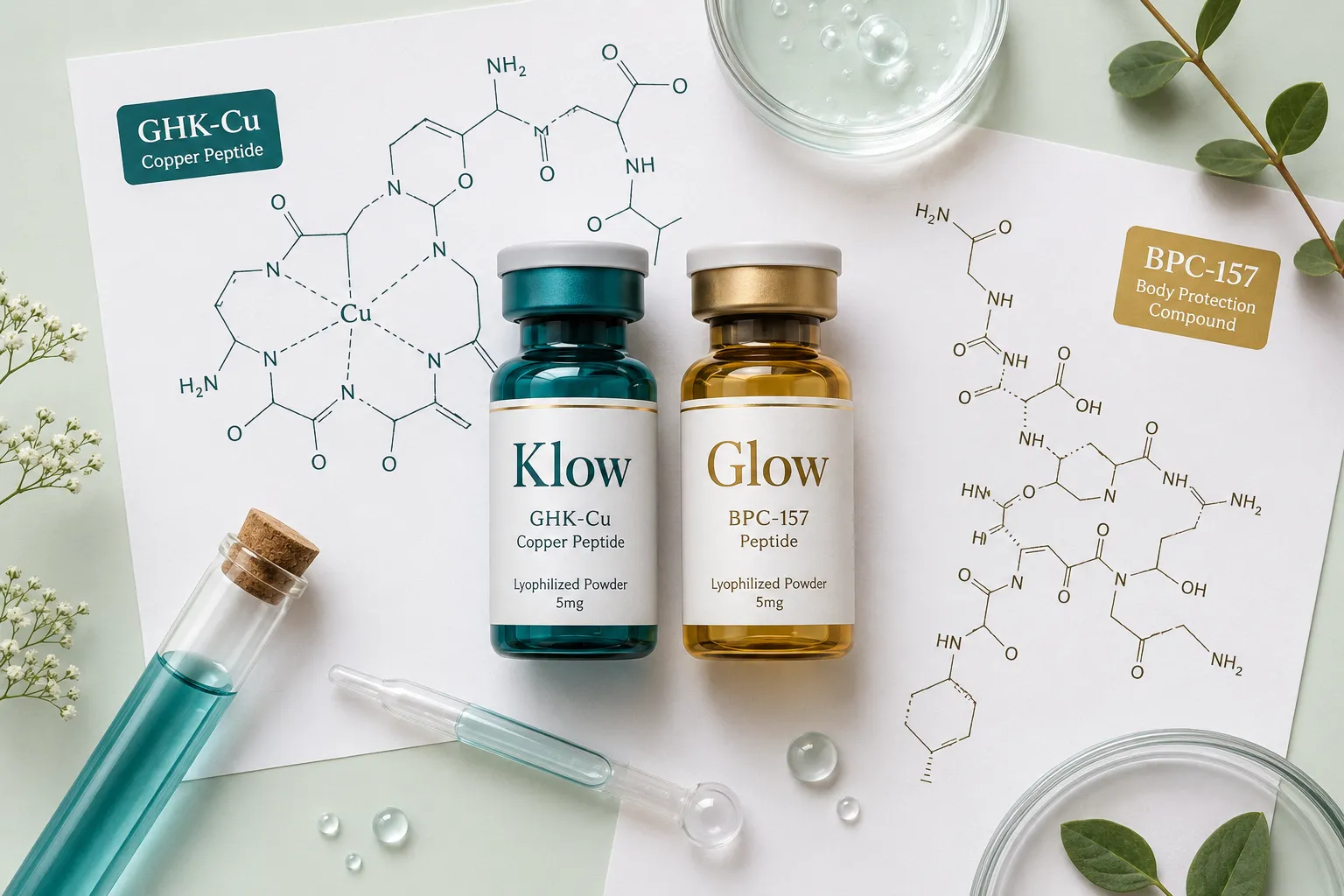
GHK-Cu (glycyl-L-histidyl-L-lysine copper complex) is a naturally occurring tripeptide that binds copper ions and has been studied extensively for its role in collagen and elastin synthesis. In fibroblast models, GHK-Cu upregulates genes associated with extracellular matrix (ECM) remodeling, including those encoding collagen types I and III, fibronectin, and metalloproteinase inhibitors. Research published in peer-reviewed dermatology journals has shown that GHK-Cu can stimulate fibroblast proliferation at nanomolar concentrations, making it a high-interest candidate for wound healing and anti-aging skin research.
In keratinocyte studies, GHK-Cu has demonstrated the ability to accelerate epidermal barrier repair. Researchers measure this through transepidermal water loss (TEWL) assays and tight-junction protein expression, including claudin and occludin quantification.
BPC-157: Tissue-Protective Signaling in Skin Models
BPC-157 (Body Protective Compound-157) is a 15-amino-acid peptide derived from a gastric protein sequence. Its relevance to skin and hair research centers on its influence over growth factor receptor signaling, particularly VEGFR2 and EGFR pathways. In vitro, BPC-157 has been shown to promote keratinocyte migration, a key step in re-epithelialization, and to modulate nitric oxide synthesis, which influences local blood flow in follicle-adjacent tissue models.
For researchers building Glow Blend experiments, the BPC-157 core peptides documentation and first research guide provides a useful foundation for understanding baseline controls and dosing ranges used in published studies.
Supporting Compounds: TB-500, Antioxidant Peptides, and Melanocyte Modulators
The "supporting compounds" layer of a Glow Blend framework typically includes:
| Compound | Primary Research Target | Cell Model Used |
|---|---|---|
| TB-500 (Thymosin Beta-4) | Actin polymerization, cell migration | Keratinocytes, fibroblasts |
| SS-31 | Mitochondrial membrane potential | Dermal fibroblasts |
| MT-1 (Melanotan-1) | Melanocyte stimulation, pigmentation | Melanocyte cultures |
| Epithalon | Telomere protection, senescence delay | Aged fibroblast lines |
The BPC-157 and TB-500 blend research context is one of the most referenced multi-compound frameworks in dermal repair studies, frequently paired with GHK-Cu in combination assays.
Research into mitochondrial function in aging skin has also incorporated SS-31 mitochondrial research themes, as oxidative stress in dermal fibroblasts is a key variable when assessing blend-mediated cytoprotection.
How Labs Design In Vitro Experiments Around Glow Blend Peptide in Skin and Hair Research
Experimental Models and Cell Selection
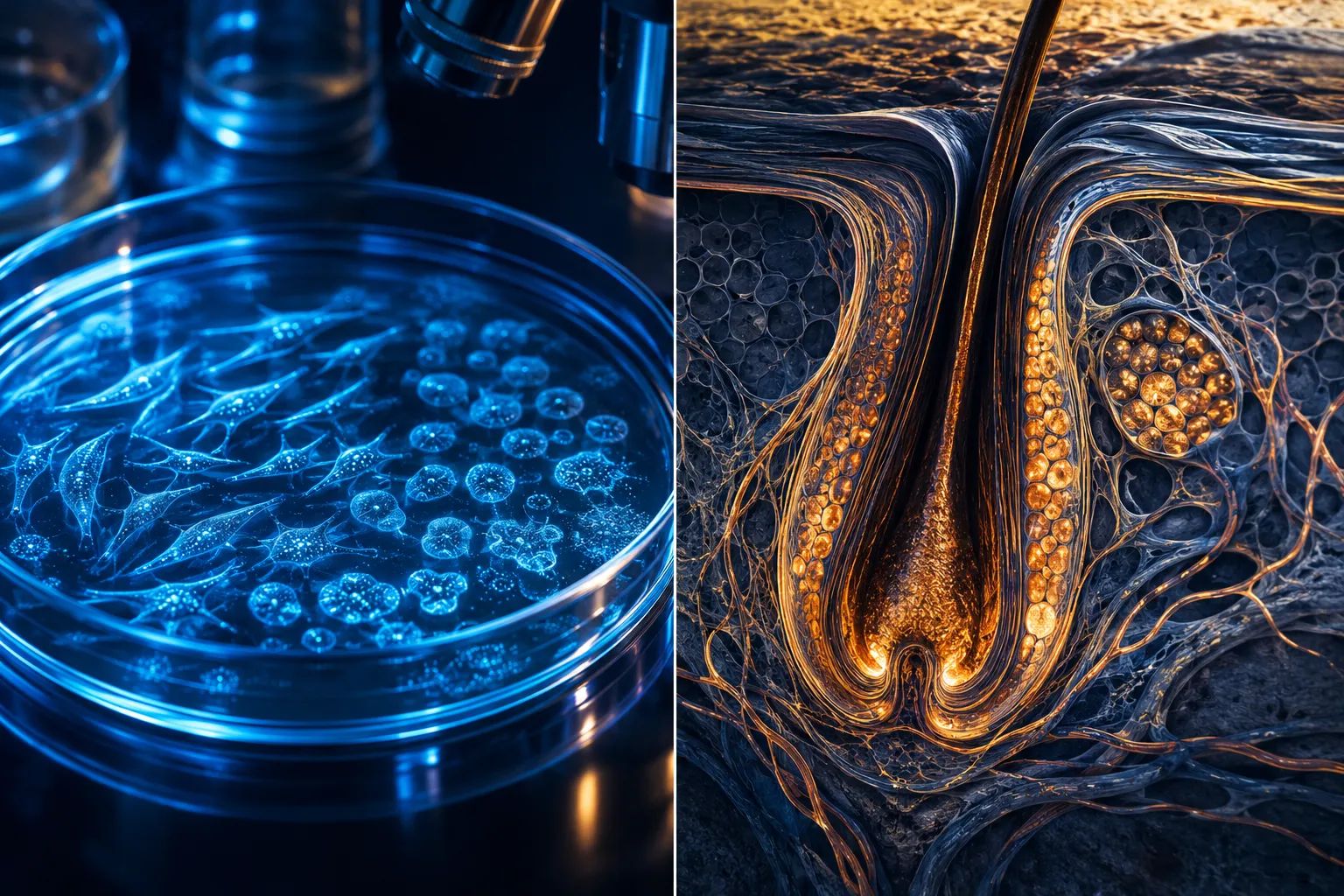
Designing a rigorous in vitro study around the Glow Blend Peptide in Skin and Hair Research: How GHK-Cu, BPC-157, and Supporting Compounds Are Studied Together requires selecting the right cell systems. The three most common models are:
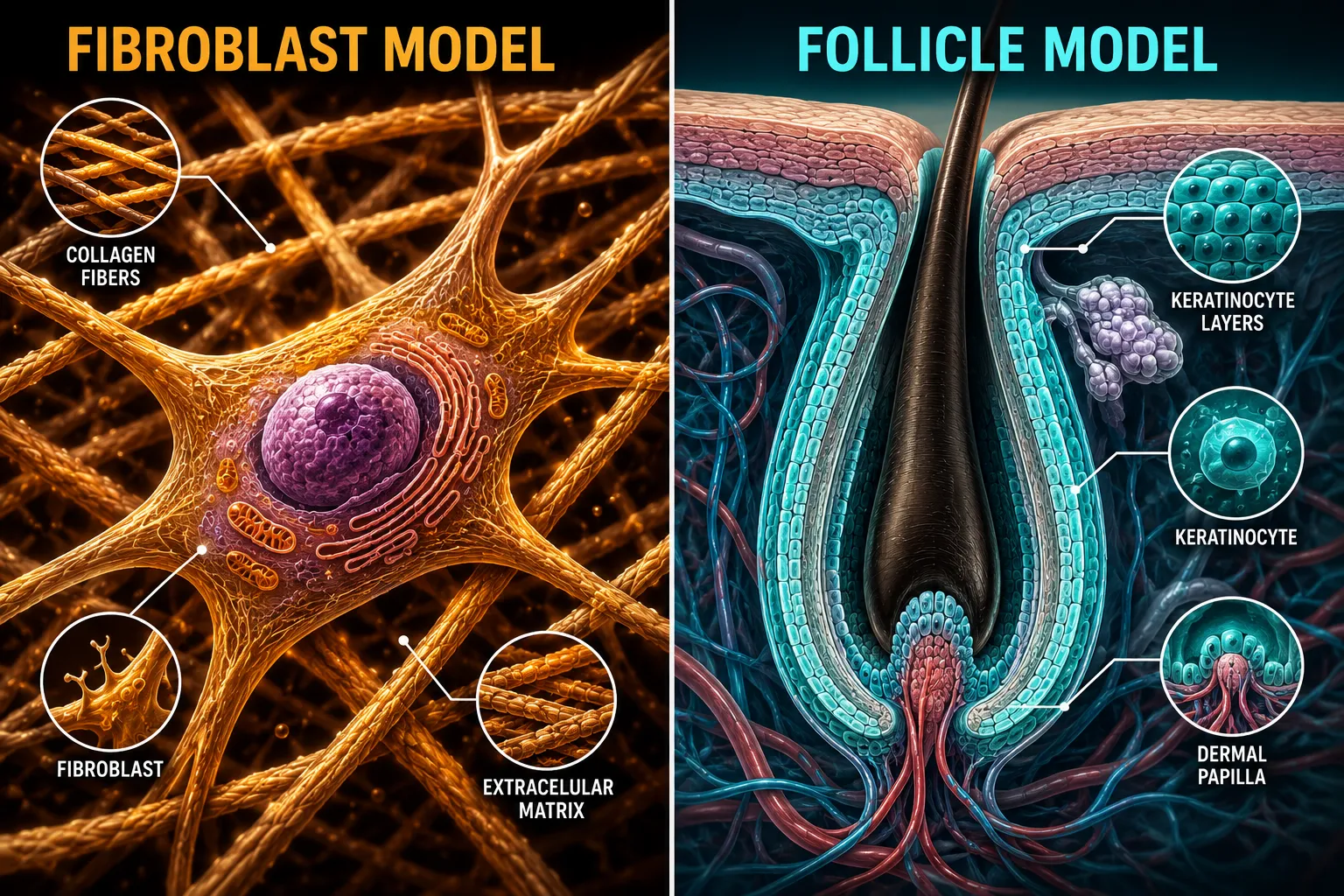
- Primary human dermal fibroblasts (HDFs), used to measure collagen synthesis, MMP activity, and proliferation rates.
- Human epidermal keratinocytes (HEKs), used for scratch-wound migration assays and barrier protein expression.
- Dermal papilla cells (DPCs), the gold standard for hair follicle research, used to measure follicle-stimulating growth factors like IGF-1 and VEGF.
"The challenge in blend research is not just measuring efficacy, it is isolating which peptide drives which outcome when multiple compounds are present simultaneously."
Assay Design and Controls
A well-constructed Glow Blend experiment typically includes:
- Vehicle controls at equivalent solvent concentrations for each peptide
- Single-peptide arms to establish individual baselines before combination testing
- Dose-response matrices covering at least three log concentrations per compound
- Time-course sampling at 24, 48, and 72 hours to capture kinetic differences
Researchers also use gene expression panels (RT-qPCR or RNA-seq) to identify synergistic vs. additive effects. When GHK-Cu and BPC-157 are combined, researchers look specifically at whether ECM gene upregulation exceeds the sum of individual compound responses.
Purity documentation is a non-negotiable variable. Studies using reference-grade peptides, as outlined in Bachem and reference standards for building robust peptide benchmarks, produce more reproducible data and are more likely to pass peer review.
Hair Follicle Models: Organ Culture and DPC Assays
In follicle research, ex vivo hair follicle organ culture (HFOC) is the preferred model for studying growth phase transitions. Researchers apply Glow Blend compounds to isolated follicles and measure:
- Follicle elongation rate (mm/day)
- Ki-67 staining in the matrix zone (proliferation marker)
- Bcl-2 expression in the dermal papilla (apoptosis resistance)
The MT-1 peptide component, studied for its role in melanocyte activation, is examined separately in melanocyte co-culture models. The MT-1 peptide research context provides background on receptor binding affinities relevant to pigmentation studies within blend frameworks.
Interpreting Results and Avoiding Common Errors in Glow Blend Peptide in Skin and Hair Research
Synergy vs. Additivity: A Critical Distinction
One of the most common errors in multi-peptide blend research is conflating additive effects with true synergy. Synergy, defined as a combined effect greater than the sum of individual effects, requires statistical modeling using methods such as the Chou-Talalay combination index or Loewe additivity analysis. Without these frameworks, researchers risk overstating blend efficacy.
Sourcing and Supplier Consistency
Batch-to-batch variability in peptide purity directly affects reproducibility. Researchers sourcing compounds for blend studies should consult peptide supplier comparisons and interpreting quality documentation to understand how certificate of analysis (CoA) data should be read before designing experiments.
For labs managing multiple compound studies, resources on where to buy peptides for research can help establish supplier qualification criteria that align with institutional review standards.
Reporting Standards
Blend studies should report:
- Individual compound purity (HPLC, minimum 98%)
- Reconstitution solvent and pH for each peptide
- Combination ratios used in each experimental arm
- Statistical model used to assess interaction effects
Conclusion
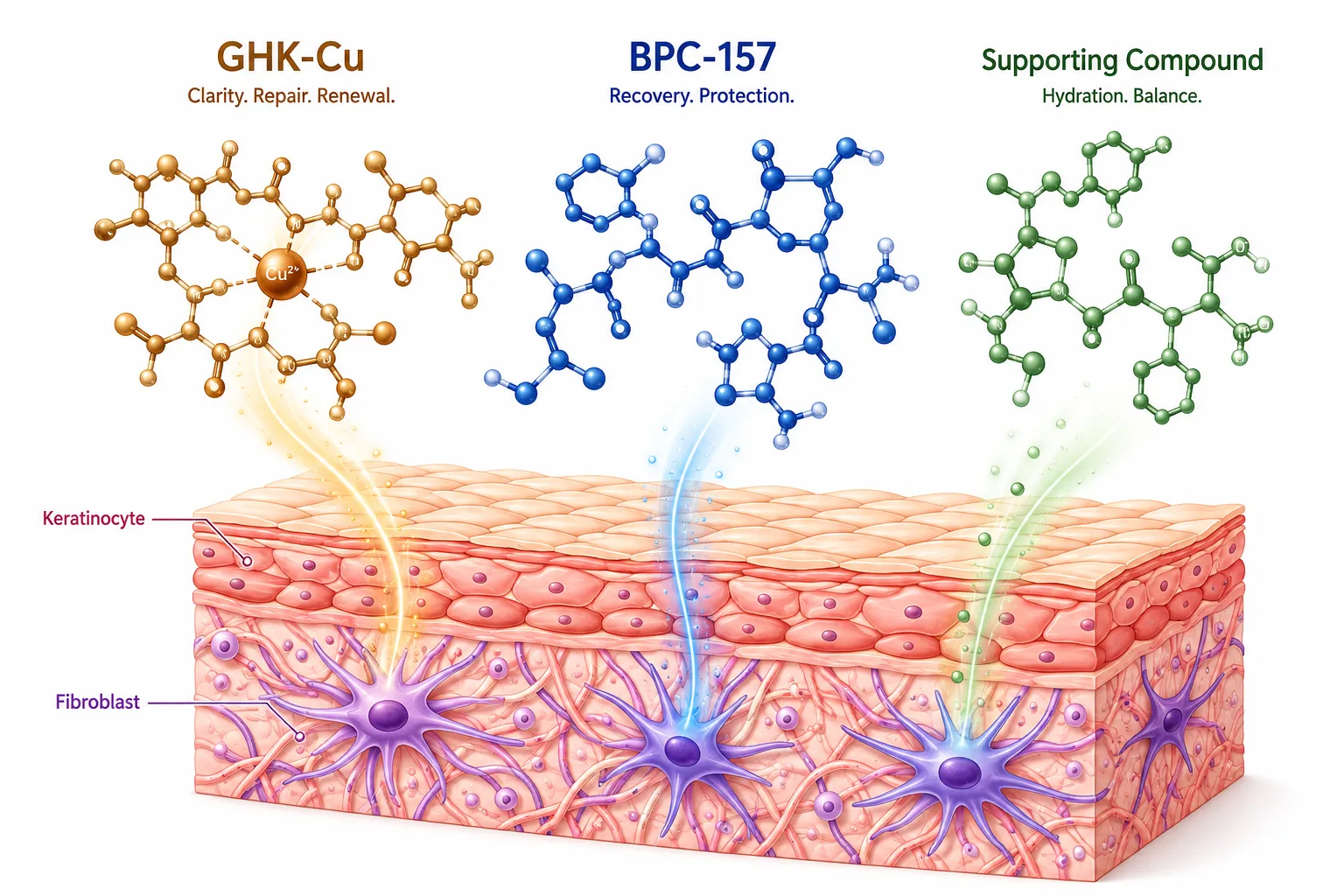
The Glow Blend Peptide in Skin and Hair Research: How GHK-Cu, BPC-157, and Supporting Compounds Are Studied Together represents one of the most mechanistically rich areas of current peptide science. GHK-Cu drives ECM remodeling and fibroblast activation, BPC-157 supports keratinocyte migration and vascular signaling, and supporting compounds like TB-500 and SS-31 address cell motility and mitochondrial resilience respectively.
Actionable next steps for research teams in 2026:
- Build single-peptide baseline arms before combining compounds in any blend assay.
- Use validated cell models, HDFs, HEKs, and DPCs, matched to the specific outcome being measured.
- Apply Chou-Talalay or Loewe additivity analysis to distinguish true synergy from additive responses.
- Source peptides with documented HPLC purity above 98% and verify CoA data against reference standards.
- Publish full reconstitution and dosing protocols to enable replication across independent laboratories.
As blend-based research frameworks mature, rigorous experimental design and transparent reporting will be the defining factors that separate high-value data from inconclusive results.