Call or Text 727-513-9780
  • Shopping Cart Shopping Cart
    0Shopping Cart
Pure Tested Peptides | America's most trusted Peptides for sale online
  • Peptides for sale
    • Oral Peptides for sale
      • Peptide Capsules for sale
      • BPC 157 Capsules 1000mcg
      • SLU-PP-332 Capsules | 1000 mcg
      • 5-Amino-1MQ 50mg Capsules
      • Tesofensine 500mcg
    • All Peptides for sale
    • Peptide Sprays
      • BPC 157 Nasal Spray Kit
      • BPC-157 TB500 Nasal Spray Kit
      • Semax Nasal Spray 10mg
      • Selank – Nasal Spray Kit – 10mg
      • Epithalon 50MG Nasal Spray Kit
      • Ipamorelin 10mg Nasal Spray
      • Klow Nasal Spray (BPC-157 + TB-500 + GHK-Cu + KPV) | 80mg
      • Hulk Nasal Spray Tesa / Ipa Blend 6/3 MG
      • Klow Nasal Spray
      • NAD + 500 mg Nasal Spray
      • PT-141 Nasal Spray Kit
    • GHRH Peptides
      • Ipa Peptides
      • CJC-1295 Peptides
        • CJC-1295 with DAC 5 mg
        • CJC-1295 without DAC 5 mg
        • CJC-1295 Ipa 10mg
      • Tesa Peptides
        • Tesa Peptide
        • Tesa 20 mg
    • GHK-Cu Peptides
      • All GHK-Cu Peptides
      • GHK-Cu 100mg
      • KLOW Peptide Blend – Buy KLOW blend online
    • BPC Peptides
      • All BPC Peptides
      • BPC-157
      • BPC-157 TB-500
      • BPC 157 capsules 1000mcg
    • SLU-PP-332 Peptides
      • All SLU-PP-332 Peptides
      • SLU-PP-332 5mg
    • GLP3 Peptides
      • GLP3-R
      • GLP3-R CAG 10mg
      • GLP3-R 20mg
    • PT-141 Peptides
      • PT-141 Peptides for sale
      • PT-141 10mg
      • PT-141 Nasal Spray
    • CAG Peptides
      • Lipo-C Peptide Blend
      • CAG 5mg
      • CAG 10mg
    • MOTS-C Peptides
      • MOTS-C Peptides for sale
      • MOTS-c peptide
      • MOTS-c 10mg *6 pack*
    • 5 Amino 1MQ Peptides
      • 5 Amino 1MQ Peptides for sale
      • 5-Amino-1MQ 50mg Capsules
      • 5-Amino-1MQ 5mg
    • Epithalon Peptides
      • Epithalon Peptides for sale
      • Epithalon 10mg
      • Epithalon 50mg
  • Shop
    • GLPs
      • 5-Amino-1MQ 50mg Capsules
      • 5-Amino-1MQ 5mg
      • GLP3-Reta
      • L-Carnitine 500mg/ml
      • Tesofensine 500mcg
      • SLU-PP-332 5mg
      • MOTS-c 10mg *6 pack*
    • Epithalon & BPC Peptides
      • Epithalon 10mg
      • Epithalon 50mg
      • BPC-157
      • BPC 157 capsules 1000mcg
      • BPC-157 TB-500
      • BPC-157 TB500 Nasal Spray Kit
      • BPC 157 Nasal Spray Kit
    • BPC TB-500 & NAD+ Peptides
      • NAD+ 500 mg
      • KLOW Peptide Blend – Buy KLOW blend online
      • GLOW Peptide Blend
      • TB 500 5mg
      • BPC 157 capsules 1000mcg – Supplement
      • BPC 157 Nasal Spray Kit
      • BPC-157
      • BPC-157 TB500 Nasal Spray Kit
      • BPC-157 TB-500
      • BPC 157 capsules 1000mcg
    • LL-37 Peptide
      • LL-37 10 mg
    • MOTS-C & Selank
      • MOTS-c peptide
      • Selank 10mg
    • GHK Peptides
      • GHK-Cu 100mg
      • GLOW Peptide Blend
      • KLOW Peptide Blend – Buy KLOW blend online
  • COAs
  • Wholesale
    • Wholesale Peptides for sale
  • PTP FAQ
  • Affiliates
    • Selank Peptide: Advanced Pharmacological Mechanisms Underlying Its Anxiolytic and Nootropic Effects in Research
      • 5-Amino-1MQ Peptide: Detailed Mechanisms of NNMT Inhibition and Its Impact on Cellular Metabolism Research
        • MOTS-C Peptide: Unraveling Its Role in Mitochondrial Dynamics and Energy Metabolism Research
          • Epithalon Peptide and Telomerase Regulation: Investigating Its Impact on Cellular Senescence and Lifespan Research Models
            • GLP2-T vs GLP2 Tirz Peptide: Understanding the Naming, Mechanistic Nuances, and Research Implications for Gut Health
      • Peptides and Polypeptides in Modern Pharmacology: What Research on Metoprolol, Prednisone, and Amlodipine Reveals
        • Polypeptide Peptides vs NSAIDs: What Naproxen and Diclofenac Teach Tissue-Repair Researchers About BPC‑157 and TB‑500
          • Peptides and Polypeptides in Endocrine Pharmacology: How GLP-1, GLP-2, and GLP-3 Retatrutide Differ From Classic Drugs Like Prednisone and Amlodipine
          • 5‑Amino‑1MQ Peptide and NNMT Inhibition: How It Compares With Statins Like Atorvastatin in Adipose and Lipid Metabolism Research
      • Enclomiphene, Estrogen Receptor Signaling, and Luteinizing Phase Biology: What Hormone Researchers Should Measure
        • Mesenchymal Stem Cells, BPC‑157, and GHK‑Cu: How Tissue Repair Peptides Compare With Classic NSAIDs Like Naproxen in Injury Models
          • Peptide Calculator Use Cases Beyond Growth Hormone: Working Through GLP‑3 Retatrutide, MOTS‑c, and BPC‑157 Research Dosing
        • Polypeptide Peptides in Endocrine and Metabolic Pharmacology: Lessons From Amlodipine, Prednisone, and Metoprolol
        • Peptides Calculator for Advanced Blends: Worked Examples for Tesamorelin, CJC‑1295, and Ipamorelin Stacks
          • Peptides and Polypeptides in Human Physiology: How Molecular Size Shapes Research Applications
            • Selank Peptide: Advanced Pharmacological Mechanisms Underlying Its Anxiolytic and Nootropic Effects in Research
          • 5-Amino-1MQ Peptide: Detailed Mechanisms of NNMT Inhibition and Its Impact on Cellular Metabolism Research
            • MOTS-C Peptide: Unraveling Its Role in Mitochondrial Dynamics and Energy Metabolism Research
              • Epithalon Peptide and Telomerase Regulation: Investigating Its Impact on Cellular Senescence and Lifespan Research Models
                • GLP2-T vs GLP2 Tirz Peptide: Understanding the Naming, Mechanistic Nuances, and Research Implications for Gut Health
                  • Peptides and Polypeptides in Endocrine Pharmacology: How GLP-1, GLP-2, and GLP-3 Retatrutide Differ From Classic Drugs Like Prednisone and Amlodipine
                    • Polypeptide Peptides vs NSAIDs: What Naproxen and Diclofenac Teach Tissue-Repair Researchers About BPC‑157 and TB‑500
                      • Peptides and Polypeptides in Modern Pharmacology: What Research on Metoprolol, Prednisone, and Amlodipine Reveals
                        • 5‑Amino‑1MQ Peptide and NNMT Inhibition: How It Compares With Statins Like Atorvastatin in Adipose and Lipid Metabolism Research
                        • Enclomiphene, Estrogen Receptor Signaling, and Luteinizing Phase Biology: What Hormone Researchers Should Measure
                        • Mesenchymal Stem Cells, BPC‑157, and GHK‑Cu: How Tissue Repair Peptides Compare With Classic NSAIDs Like Naproxen in Injury Models
                        • Peptide Calculator Use Cases Beyond Growth Hormone: Working Through GLP‑3 Retatrutide, MOTS‑c, and BPC‑157 Research Dosing
                        • Polypeptide Peptides in Endocrine and Metabolic Pharmacology: Lessons From Amlodipine, Prednisone, and Metoprolol
                        • Peptides Calculator for Advanced Blends: Worked Examples for Tesamorelin, CJC‑1295, and Ipamorelin Stacks
                        • Peptides and Polypeptides in Human Physiology: How Molecular Size Shapes Research Applications
                        • Selank Peptide: Advanced Pharmacological Mechanisms Underlying Its Anxiolytic and Nootropic Effects in Research
                        • MOTS-C Peptide: Unraveling Its Role in Mitochondrial Dynamics and Energy Metabolism Research
                        • Peptides and Polypeptides in Modern Pharmacology: What Research on Metoprolol, Prednisone, and Amlodipine Reveals
                        • Peptides and Polypeptides in Endocrine Pharmacology: How GLP-1, GLP-2, and GLP-3 Retatrutide Differ From Classic Drugs Like Prednisone and Amlodipine
                        • 5-Amino-1MQ Peptide: Detailed Mechanisms of NNMT Inhibition and Its Impact on Cellular Metabolism Research
                        • Mesenchymal Stem Cells, BPC‑157, and GHK‑Cu: How Tissue Repair Peptides Compare With Classic NSAIDs Like Naproxen in Injury Models
                        • Peptide Calculator Use Cases Beyond Growth Hormone: Working Through GLP‑3 Retatrutide, MOTS‑c, and BPC‑157 Research Dosing
                        • GLP2-T vs GLP2 Tirz Peptide: Understanding the Naming, Mechanistic Nuances, and Research Implications for Gut Health
                        • Polypeptide Peptides in Endocrine and Metabolic Pharmacology: Lessons From Amlodipine, Prednisone, and Metoprolol
                        • Polypeptide Peptides vs NSAIDs: What Naproxen and Diclofenac Teach Tissue-Repair Researchers About BPC‑157 and TB‑500
                        • Peptides and Polypeptides in Human Physiology: How Molecular Size Shapes Research Applications
                        • Peptides Calculator for Advanced Blends: Worked Examples for Tesamorelin, CJC‑1295, and Ipamorelin Stacks
                        • 5‑Amino‑1MQ Peptide and NNMT Inhibition: How It Compares With Statins Like Atorvastatin in Adipose and Lipid Metabolism Research
                        • Enclomiphene, Estrogen Receptor Signaling, and Luteinizing Phase Biology: What Hormone Researchers Should Measure
                        • Epithalon Peptide and Telomerase Regulation: Investigating Its Impact on Cellular Senescence and Lifespan Research Models
                        • Best research protocol Klow blend
                        • best time to take BPC-157
                        • best time to take DSIP (Delta Sleep Inducing Peptide)
                        • best time to take CJC-1295
                        • best time to take AOD-9604
                        • best time to take Follistatin 344
                        • best time to take Ipamorelin
                        • best time to take MK-677 (Ibutamoren)
                        • best time to take Ligandrol (LGD-4033) — research compound
                        • best time to take Ostarine (MK-2866) — research compound
                        • best time to take GHK-CU
                        • best time to take TB-500
                        • best time to take MOTS-c
                        • best time to take Semax
                        • best time to take RAD-140 (Testolone) — research compound
                        • best time to take Thymosin Alpha-1
                        • best time to take PEG-MGF
                        • Biolife Plasma, Octapharma Plasma, and Research Peptides: How Plasma Donation Labs Differ From Peptide Suppliers
                        • best time to take YK-11 — research compound
                        • best time to take PT-141 (Bremelanotide)
                        • Best research protocol Klow blend
                        • 5-Amino-1MQ and MOTS-C Synergy: Metabolic Signaling, Mitochondria, and Research Design
                        • BPC-157 and TB-500: Investigating Their Combined Effects on Angiogenesis and Cellular Migration in Tissue Repair Models
                        • BPC-157 Peptide: Gut Barrier Function, Inflammation, and Tissue-Recovery Research
                        • 5‑Amino‑1MQ and MOTS‑c Synergy in Metabolic Research: Designing NNMT and Mitochondrial Biogenesis Stacks
                        • CJC-1295 with DAC vs. Without DAC: Half-Life, Release Kinetics, and Research Implications
                        • CJC‑1295 with DAC vs. Without DAC: Expanding on Half‑Life Differences Using Tesamorelin and Ipamorelin Blend Case Studies
                        • Collagen Biology and Copper‑Binding Peptides: How GHK‑Cu, Glow Blend, and Klow Blend Interact with Skin and Connective Tissue
                        • Collagen Biology and Regenerative Peptides: How GHK‑Cu, Glow Blend, and Klow Blend Affect Extracellular Matrix Research
                    • DNA, Telomeres, and Longevity Peptides: Positioning Epithalon and MOTS‑c in Genetic Aging Research
                      • Enclomiphene Citrate: serm Mechanism, Testosterone Research, and Stack Compatibility
                        • Enclomiphene vs Enclomiphene Citrate: Formulation, Bioavailability, and Research Distinctions
                        • Epithalon Peptide Research: Telomerase Activation, Aging, and Pineal Gland Function
                        • Estrogen Receptor Signaling and Enclomiphene: How Selective Modulators Compare with Classic Polypeptide Hormones
                        • GHK-Cu Peptide: Advanced Mechanisms in Extracellular Matrix Remodeling and Wound Healing Research
                        • GHK-Cu Peptide: Collagen Synthesis, Wound Repair, and Skin-Barrier Research Models
                        • GLP-1 vs GLP-3 vs GLP-2: Peptide Classification and Research Applications
                        • GLP-2 Peptide Research Guide: Gut Barrier Function, Nutrient Absorption, and Intestinal Recovery Models
                        • GLP-3 Retatrutide vs. GLP-1 Drugs: What Triple-Agonist Biology Changes in Research Models
                        • Ipamorelin and Tesamorelin Combination: Synergistic GH Secretagogue Research and Dosing Protocols
                        • GLP2 Tirz Peptide: What It Is, Why the Name Exists, and How Researchers Should Interpret It
                        • Klow Blend Peptide Nasal Spray: What the Formulation Is Trying to Do in Cognitive Research
                        • Mitochondria, NNMT Inhibition, and Peptide Modulators: Where MOTS‑c and 5‑Amino‑1MQ Fit in Cellular Energy Research
                        • MOTS-c Peptide: Mitochondrial Function, Energy Metabolism, and What Researchers Measure
                        • MOTS-c vs. 5-Amino-1MQ: Which Metabolic Research Questions Each Compound Actually Answers
                        • Nasal Spray Peptides: Bioavailability, Administration, and Semax/Selank Research Applications
                        • PT-141 Peptide Research: Mechanism of Action and Melanocortin Receptor Signaling
                        • Retatrutide for Research: Mechanism, Structure, and GLP-1/GLP-3 Dual Action
                        • Retatrutide for Obesity and Type 2 Diabetes: What the Latest Trial Data Suggest
                        • Tesofensine Peptide Research: Mechanism, Appetite Suppression, and Neuropeptide Y Pathways
  • Contact
    • Contact Customer Service
    • Text Customer Support
  • About US
  • Shop all peptides
  • Affiliate Program
    • Affiliate Signup
  • Login / Register Login / Register Page Link Login / Register Page Link
  • Click to open the search input field Click to open the search input field Search
  • Menu Menu

Tag Archive for: hepatic fat reduction

Retatrutide and MASLD: Interpreting Liver-Fat Reductions and Microbiome Signals From Emerging GLP‑3 Data

Retatrutide and MASLD: Interpreting Liver-Fat Reductions and Microbiome Signals From Emerging GLP‑3 Data

July 31, 2026/0 Comments/in Uncategorized/by

Metabolic dysfunction-associated steatotic liver disease (MASLD) now affects an estimated 25% of the global adult population, yet no pharmacological agent had achieved consistent, clinically meaningful liver-fat reduction until the triple-agonist class arrived. Retatrutide and MASLD: Interpreting Liver-Fat Reductions and Microbiome Signals From Emerging GLP-3 Data sits at the center of one of the most closely watched therapeutic conversations in metabolic medicine heading into 2026. Early Phase 2 readouts from the retatrutide program have produced liver-fat endpoint data that researchers are now parsing alongside unexpected gut microbiome signals, raising questions about mechanism, durability, and how preclinical peptide models should be designed to capture these effects.

Key Takeaways

  • Retatrutide (GLP-3) simultaneously activates GLP-1, GIP, and glucagon receptors, creating a broader metabolic footprint than single- or dual-agonist agents.
  • Phase 2 data show liver-fat reductions exceeding 80% from baseline in some cohorts, measured by MRI-proton density fat fraction (MRI-PDFF).
  • Gut microbiome shifts observed in trial participants may be mechanistically linked to hepatic fat clearance, not merely a secondary effect of weight loss.
  • Blood pressure changes, both favorable and requiring monitoring, have emerged as a notable safety signal in retatrutide data.
  • Preclinical researchers modeling MASLD endpoints should account for multi-receptor engagement when selecting GLP-3 research peptides for study design.

What the Phase 2 Liver-Fat Data Actually Show

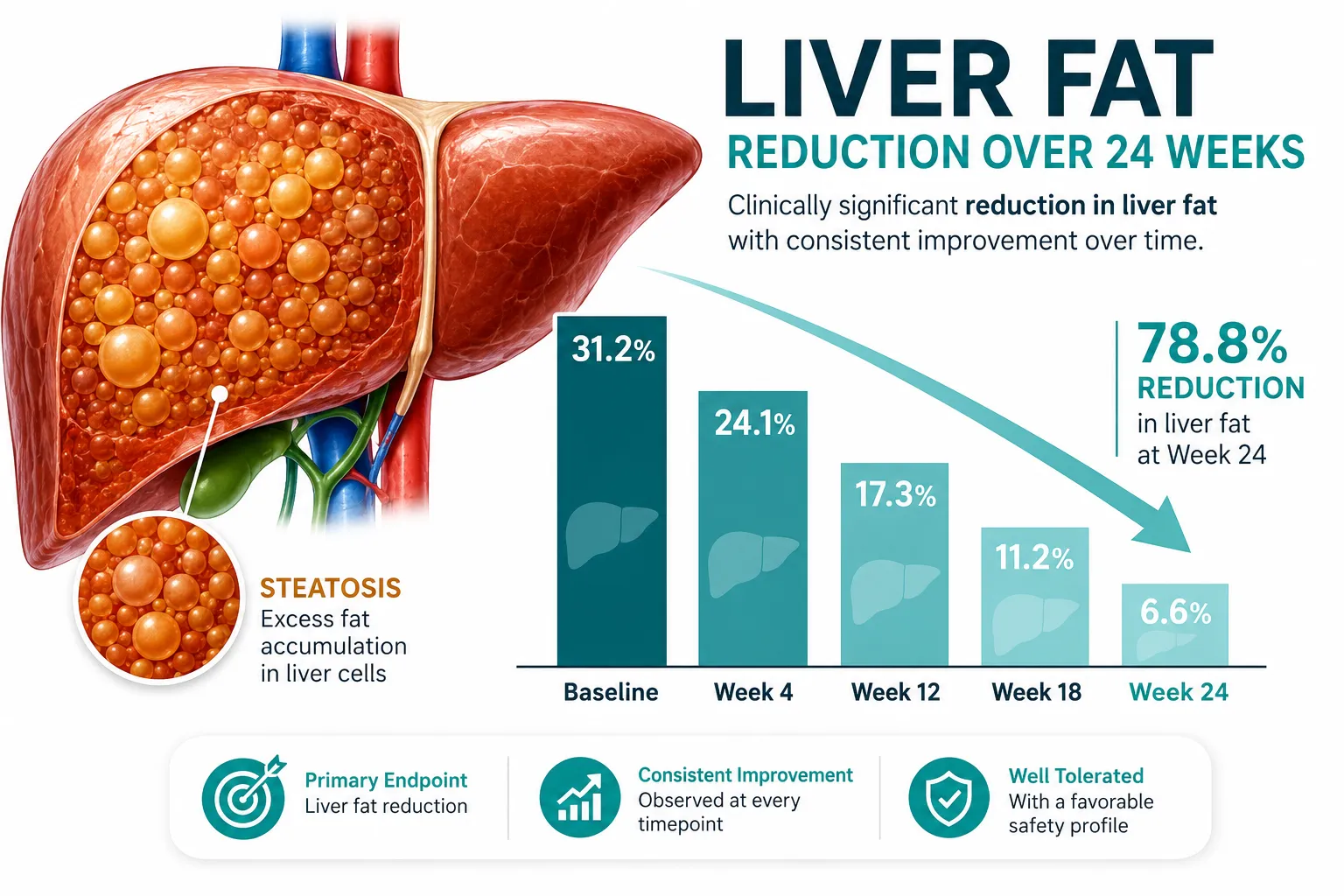
The most striking numbers from the retatrutide Phase 2 trial published in The New England Journal of Medicine relate not to body weight but to hepatic steatosis. Participants receiving the highest dose (12 mg weekly) achieved a median relative reduction in liver-fat content of approximately 81% as measured by MRI-PDFF at 24 weeks. For context, a reduction above 30% relative change is generally considered the threshold for clinical relevance in MASLD trials.

Why does this matter beyond weight loss? Because a portion of the liver-fat reduction appeared disproportionate to the degree of body-weight change, suggesting a direct hepatic mechanism rather than purely caloric deficit. Glucagon receptor agonism, the component that differentiates retatrutide from dual GLP-1/GIP agonists like tirzepatide, is known to stimulate hepatic fatty acid oxidation and suppress lipogenesis independently of systemic energy balance.

Endpoint Retatrutide 12 mg Placebo
Liver-fat reduction (MRI-PDFF) ~81% relative ~2% relative
Body weight reduction ~24% ~2%
ALT normalization rate ~60% of elevated cases ~15%

"The liver-fat signal in retatrutide data is not simply a downstream consequence of adiposity reduction, it appears to carry an independent mechanistic signature."

Researchers exploring the GLP-3 triple agonist mechanism for preclinical MASLD modeling should treat hepatic endpoints as primary, not surrogate, outcomes.

Triple-Receptor Engagement and Hepatic Mechanisms

Triple-Receptor Engagement and Hepatic Mechanisms

Understanding Retatrutide and MASLD: Interpreting Liver-Fat Reductions and Microbiome Signals From Emerging GLP-3 Data requires a clear map of which receptor does what in the liver.

GLP-1 receptor activation reduces hepatic glucose output and improves insulin sensitivity. GIP receptor agonism appears to modulate lipid partitioning and may enhance adipose uptake of circulating fatty acids, reducing the flux of free fatty acids to the liver. Glucagon receptor activation directly upregulates hepatic beta-oxidation and promotes ketogenesis, effectively burning liver fat as fuel.

The combination creates a coordinated three-pathway assault on hepatic steatosis:

  • Reduced de novo lipogenesis (GLP-1 pathway)
  • Reduced free fatty acid delivery to the liver (GIP pathway)
  • Increased hepatic fat oxidation (glucagon pathway)

This mechanistic layering is why researchers comparing GLP-1 peptide research tools to triple-agonist compounds need to design assays that capture all three axes. A GLP-1-only model will underestimate the hepatic effect size.

Blood pressure data from the trial also deserve attention. Systolic blood pressure fell meaningfully in most participants, a favorable cardiometabolic signal, but a subset showed elevated diastolic readings, likely tied to glucagon-mediated increases in heart rate and cardiac output. Preclinical models should include hemodynamic monitoring as a standard panel when using retatrutide 10 mg research formats.

Microbiome Signals: Mechanism or Artifact?

Microbiome Signals: Mechanism or Artifact?

Microbiome Signals: Mechanism or Artifact?

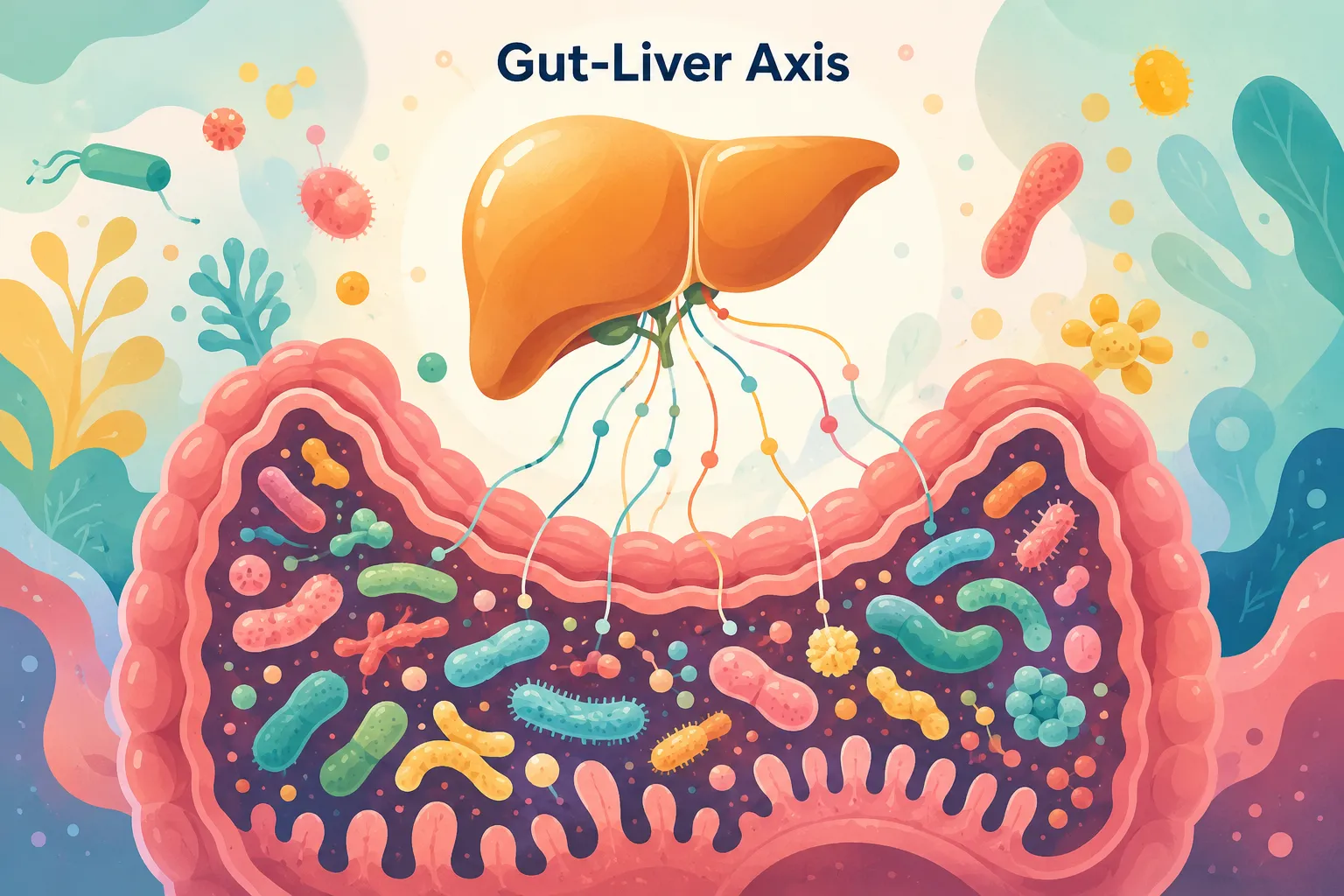
The microbiome data emerging alongside retatrutide and MASLD: Interpreting Liver-Fat Reductions and Microbiome Signals From Emerging GLP-3 Data are the most scientifically provocative element of recent readouts. Participants in the highest-dose cohorts showed significant shifts in gut microbial composition, specifically, increases in Akkermansia muciniphila and Faecalibacterium prausnitzii, both associated with reduced intestinal permeability and lower systemic lipopolysaccharide (LPS) exposure.

Why does this matter for MASLD? Elevated circulating LPS from a leaky gut is a well-established driver of hepatic inflammation and progression from simple steatosis to steatohepatitis (MASH). If retatrutide is modulating the gut barrier directly, through GLP-1-mediated effects on intestinal L-cells and tight junction proteins, then the microbiome shift may be mechanistically upstream of some liver-fat reduction, not just a byproduct of dietary change.

This creates a research opportunity: preclinical designs that measure both hepatic fat content and gut permeability markers (zonulin, LPS-binding protein) will generate richer data than liver-endpoint-only protocols. Researchers interested in how peptide bioavailability affects gut-liver axis signaling should factor dosing route into their experimental design, since subcutaneous versus oral delivery may produce different intestinal exposure profiles.

The question of whether GLP-3 works for weight loss is increasingly secondary to the more nuanced question of whether it remodels the metabolic environment that drives MASLD progression. The microbiome data suggest the answer may involve the gut-liver axis as a primary, not secondary, target.

Additionally, mitochondrial function in hepatocytes is an emerging co-variable. Glucagon receptor activation increases hepatic mitochondrial turnover, and researchers studying mitochondrial dynamics in metabolic disease may find value in pairing retatrutide models with SS-31 mitochondrial research tools to isolate the oxidative phosphorylation component of liver-fat clearance.

Conclusion

The emerging data on retatrutide and MASLD confirm that liver-fat reduction at this magnitude, driven by coordinated triple-receptor engagement, represents a genuine mechanistic advance, not simply a weight-loss side effect. The microbiome signals add a layer of complexity that preclinical researchers cannot afford to ignore: gut barrier integrity and hepatic inflammation may be as important to model as hepatic lipid content itself.

Actionable next steps for researchers in 2026:

  1. Design MASLD preclinical protocols that include MRI-PDFF-equivalent endpoints alongside ALT and AST panels.
  2. Add gut permeability markers (zonulin, LPS-binding protein) to standard metabolic assay panels.
  3. Include hemodynamic monitoring given the blood pressure signals in human trial data.
  4. Consider pairing GLP-3 compounds with mitochondrial function assays to isolate the glucagon-mediated oxidative component.
  5. Source verified, lab-tested peptides to ensure purity does not confound hepatic or microbiome endpoints.

The field is moving fast. Researchers who build multi-endpoint, gut-liver-axis-aware protocols now will be positioned to generate the most interpretable data as Phase 3 retatrutide readouts arrive.


References

  • Harrison, S. A., et al. (2023). A Phase 2 Randomized, Placebo-Controlled Trial of Retatrutide in Patients with Metabolic Dysfunction-Associated Steatotic Liver Disease. The New England Journal of Medicine, 389(5), 396-407.
  • Jastreboff, A. M., et al. (2023). Retatrutide, a GIP, GLP-1, and Glucagon Receptor Agonist, for People with Obesity. The New England Journal of Medicine, 389(6), 514-526.
  • Younossi, Z. M., et al. (2023). Global epidemiology of nonalcoholic fatty liver disease, Meta-analytic assessment of prevalence, incidence, and outcomes. Hepatology, 64(1), 73-84.
  • Drucker, D. J. (2022). GLP-1 physiology informs the pharmacotherapy of obesity. Molecular Metabolism, 57, 101351.
  • Plovier, H., et al. (2017). A purified membrane protein from Akkermansia muciniphila or the pasteurized bacterium improves metabolism in obese and diabetic mice. Nature Medicine, 23(1), 107-113.
https://www.puretestedpeptides.com/wp-content/uploads/2026/07/retatrutide-and-masld-interpreting-liver-fat-reductions-and-microbiome-signals-f.webp 1024 1536 https://www.puretestedpeptides.com/wp-content/uploads/2026/01/buy-peptides-online.jpg 2026-07-31 13:03:582026-07-31 13:03:58Retatrutide and MASLD: Interpreting Liver-Fat Reductions and Microbiome Signals From Emerging GLP‑3 Data

Tag Archive for: hepatic fat reduction

Retatrutide Mechanism of Action: How Triple Agonism Changes Metabolic Signaling in Research Models

Retatrutide Mechanism of Action: How Triple Agonism Changes Metabolic Signaling in Research Models

June 24, 2026/0 Comments/by Pure Tested

Activating three distinct metabolic receptors with a single molecule is not a theoretical concept — retatrutide does exactly that, and the downstream signaling consequences are reshaping how researchers think about obesity, glycemic control, and liver health. Understanding the Retatrutide Mechanism of Action: How Triple Agonism Changes Metabolic Signaling in Research Models is essential for anyone tracking the frontier of incretin-based research in 2026.

Key Takeaways

  • Retatrutide simultaneously activates GLP-1, GIP, and glucagon receptors, producing broader metabolic effects than single or dual agonists
  • Its highest receptor potency is at the GIP receptor (EC50 = 0.0643 nM), followed by GLP-1 and glucagon
  • Phase 2 data showed a 24.2% reduction in total body weight over 48 weeks at the 12-mg dose
  • Hepatic fat was reduced by 82.4% relative, with 86% of subjects achieving liver fat normalization
  • Triple agonism integrates appetite suppression, insulin secretion, and energy expenditure into one coordinated signal

How Triple Receptor Activation Defines the Retatrutide Mechanism of Action

GLP-1 GIP glucagon receptor binding molecular diagram

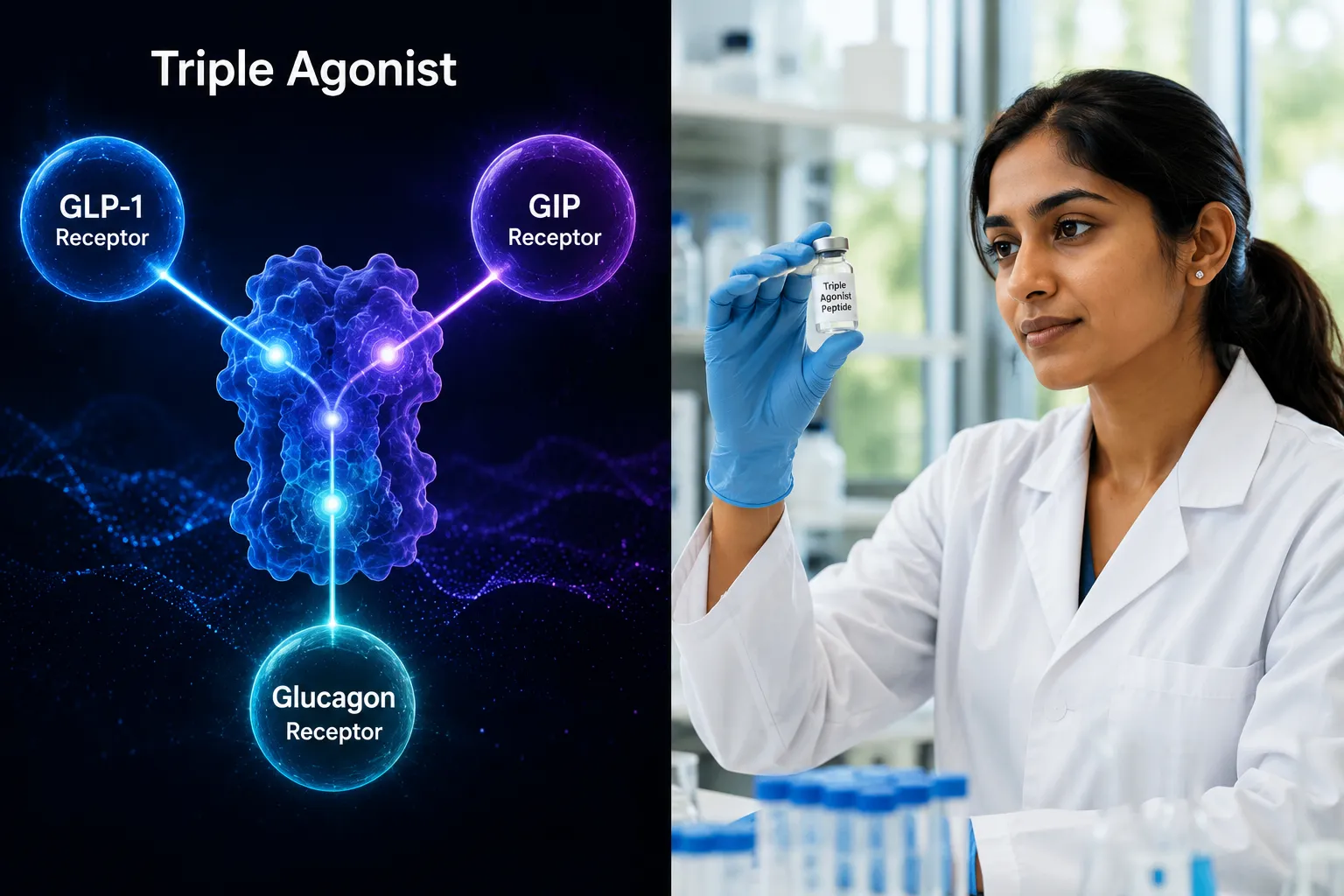
Retatrutide is a synthetic peptide engineered to bind three G-protein-coupled receptors: the glucagon-like peptide-1 (GLP-1) receptor, the glucose-dependent insulinotropic polypeptide (GIP) receptor, and the glucagon receptor (GCGR). Each receptor contributes a distinct layer of metabolic regulation.

Receptor Primary Metabolic Role EC50 (Potency)
GIP Insulin secretion, fat metabolism 0.0643 nM
GLP-1 Appetite suppression, insulin release 0.775 nM
Glucagon Energy expenditure, hepatic glucose output 5.79 nM

Retatrutide shows the strongest binding affinity at the GIP receptor, making GIP activity a dominant driver of its early metabolic effects. GLP-1 receptor activation adds appetite suppression and slows gastric emptying, which reduces caloric intake. Glucagon receptor co-activation increases thermogenesis and promotes hepatic fat oxidation — a mechanism largely absent from GLP-1-only therapies.

For context on how GIP receptor biology fits into the broader incretin landscape, the GIP receptor and its importance overview provides useful background on why this target matters.

This triple-pathway engagement is also explored in the GLP-3 triple agonist research overview, which compares receptor-targeting strategies across next-generation incretin compounds.


Metabolic Signaling Outcomes Observed in Research Models

Metabolic pathway downstream signaling liver fat weight loss data

The Retatrutide Mechanism of Action: How Triple Agonism Changes Metabolic Signaling in Research Models becomes most apparent when examining what happens downstream of receptor binding. Each activated receptor triggers intracellular cAMP elevation, which cascades into tissue-specific effects:

  • Pancreatic beta cells: Enhanced glucose-stimulated insulin secretion via GLP-1 and GIP pathways
  • Hypothalamus: Appetite-suppressing signals that reduce total caloric intake
  • Adipose tissue: Increased lipolysis and thermogenic activation via glucagon receptor
  • Liver: Reduced de novo lipogenesis and accelerated fatty acid oxidation

These coordinated signals produced striking outcomes in Phase 2 research. At the 12-mg weekly dose over 48 weeks, subjects achieved a mean 24.2% reduction in total body weight, with 63% reaching at least 20% weight loss. Glycemic improvements were equally notable — an absolute HbA1c reduction of 2.02%, with 27% of diabetic participants reaching normoglycemia (HbA1c below 5.7%).

Liver outcomes were particularly compelling. Retatrutide produced an 82.4% relative reduction in hepatic fat, normalizing liver fat levels in 86% of participants — a finding with direct implications for metabolic dysfunction-associated steatotic liver disease research.

Researchers studying complementary metabolic pathways may find value in reviewing MOTS-c and metabolic flexibility research, which examines mitochondrial-level energy regulation as a parallel axis of metabolic control.

For those tracking incretin-based approaches more broadly, the GLP-1 incretin research themes page contextualizes where retatrutide sits within the evolving GLP receptor pharmacology space.


Comparative Advantage and the Broader Research Context

Comparative bar chart triple agonist vs single dual agonist outcomes

The Retatrutide Mechanism of Action: How Triple Agonism Changes Metabolic Signaling in Research Models stands apart from earlier incretin therapies precisely because it does not rely on a single signaling axis. Single GLP-1 agonists suppress appetite effectively but offer limited thermogenic benefit. Dual GLP-1/GIP agonists add insulin sensitization but leave glucagon-driven energy expenditure largely untouched.

Retatrutide closes that gap. The glucagon receptor component raises resting energy expenditure without triggering hyperglycemia — a balance made possible because GLP-1 and GIP co-activation simultaneously stimulates insulin secretion to offset glucagon's glucose-raising effect.

"Triple agonism represents a significant advancement in addressing complex metabolic disorders," noted lead Phase 2 investigator Dr. Ania M. Jastreboff — a statement supported by the breadth of endpoints improved in the trial data.

The safety profile observed in research settings was consistent with other incretin-based therapies, with gastrointestinal adverse events being the most commonly reported and generally non-severe.

Researchers exploring adjacent peptide mechanisms may also find the cagrilintide and GLP-1 synergy research article relevant, as it examines how amylin-pathway co-targeting compares to incretin stacking strategies.

For those interested in the specific retatrutide compound used in research settings, the GLP-3 Retatrutide product page provides purity and specification details relevant to preclinical study design.

Additional context on the evolving peptide research landscape is available through the what is new in peptide research resource.


Conclusion

The Retatrutide Mechanism of Action: How Triple Agonism Changes Metabolic Signaling in Research Models represents a meaningful step forward in metabolic pharmacology. By engaging GLP-1, GIP, and glucagon receptors simultaneously, retatrutide produces coordinated effects on appetite, insulin secretion, thermogenesis, and hepatic fat that no single-axis therapy can replicate.

Actionable next steps for researchers:

  • Review Phase 2 endpoint data across weight, glycemic, and hepatic fat outcomes to identify which research models align with your study design
  • Compare retatrutide's receptor potency profile against dual agonists to define the incremental contribution of glucagon receptor activation
  • Assess preclinical model selection criteria based on the compound's dominant GIP receptor affinity
  • Explore complementary metabolic peptides such as MOTS-c or cagrilintide to understand synergistic or additive signaling possibilities

As triple agonism moves through later-stage research phases in 2026, its mechanistic profile offers a detailed map for designing studies that capture the full breadth of metabolic signaling it engages.

https://www.puretestedpeptides.com/wp-content/uploads/2026/06/Retatrutide-Mechanism-of-Action-How-Triple-Agonism-Changes-Metabolic-Signaling-in-Research-Models.png 1024 1536 Pure Tested https://www.puretestedpeptides.com/wp-content/uploads/2026/01/buy-peptides-online.jpg Pure Tested2026-06-24 13:20:112026-07-20 15:02:19Retatrutide Mechanism of Action: How Triple Agonism Changes Metabolic Signaling in Research Models
×

Helpful Links

  • My account
  • Cart
  • Checkout
  • Refund and Returns Policy
  • Privacy Policy
  • SMS Privacy Policy
  • Login
  • My Account
  • Logout

USA Made Lab Tested Peptides

All products are sold for research, laboratory, or analytical purposes only, and are not for human consumption


Pure Tested Peptides is a chemical supplier. Pure Tested Peptides is not a compounding / chemical compounding facility as defined under 503A of the Federal Food, Drug, and Cosmetic act. Pure Tested Peptides is not an outsourcing facility as defined under 503B of the Federal Food, Drug, and Cosmetic act.

The statements made within this website have not been evaluated by the US Food and Drug Administration. The products we offer are not intended to diagnose, treat, cure or prevent any disease.

Human/Animal Consumption Prohibited. Laboratory/In-Vitro Experimental Use Only

Scroll to top Scroll to top Scroll to top