

Finasteride and Enclomiphene in Hormone Research: Interpreting DHT, Testosterone, LH, and FSH Together
Two drugs. Four hormones. Entirely different mechanisms, yet both elevate circulating testosterone. That distinction is exactly why finasteride and enclomiphene in hormone research interpreting DHT, testosterone, LH, and FSH together demands a coordinated panel framework rather than a single-marker read. When researchers examine only total testosterone, they miss the mechanistic story written across the full endocrine axis.
Key Takeaways
- Enclomiphene stimulates the hypothalamic-pituitary axis, producing elevated testosterone alongside elevated LH and FSH, a classic axis-driven signature.
- Finasteride suppresses DHT by roughly 65% while leaving LH and FSH largely unchanged, indicating peripheral androgen conversion inhibition rather than axis stimulation.
- Interpreting testosterone alone is insufficient; DHT, LH, and FSH must be measured simultaneously to distinguish these two mechanisms.
- Timing matters: enclomiphene's gonadotropin effects are measurable within 4-6 weeks, while finasteride's DHT suppression occurs within 24 hours of dosing.
- The combined hormone profile also informs fertility considerations: enclomiphene preserves or improves semen parameters, while finasteride's fertility-related risks appear mediated by intratesticular pathways rather than gross gonadotropin shifts.
How Each Compound Acts on the Endocrine Axis
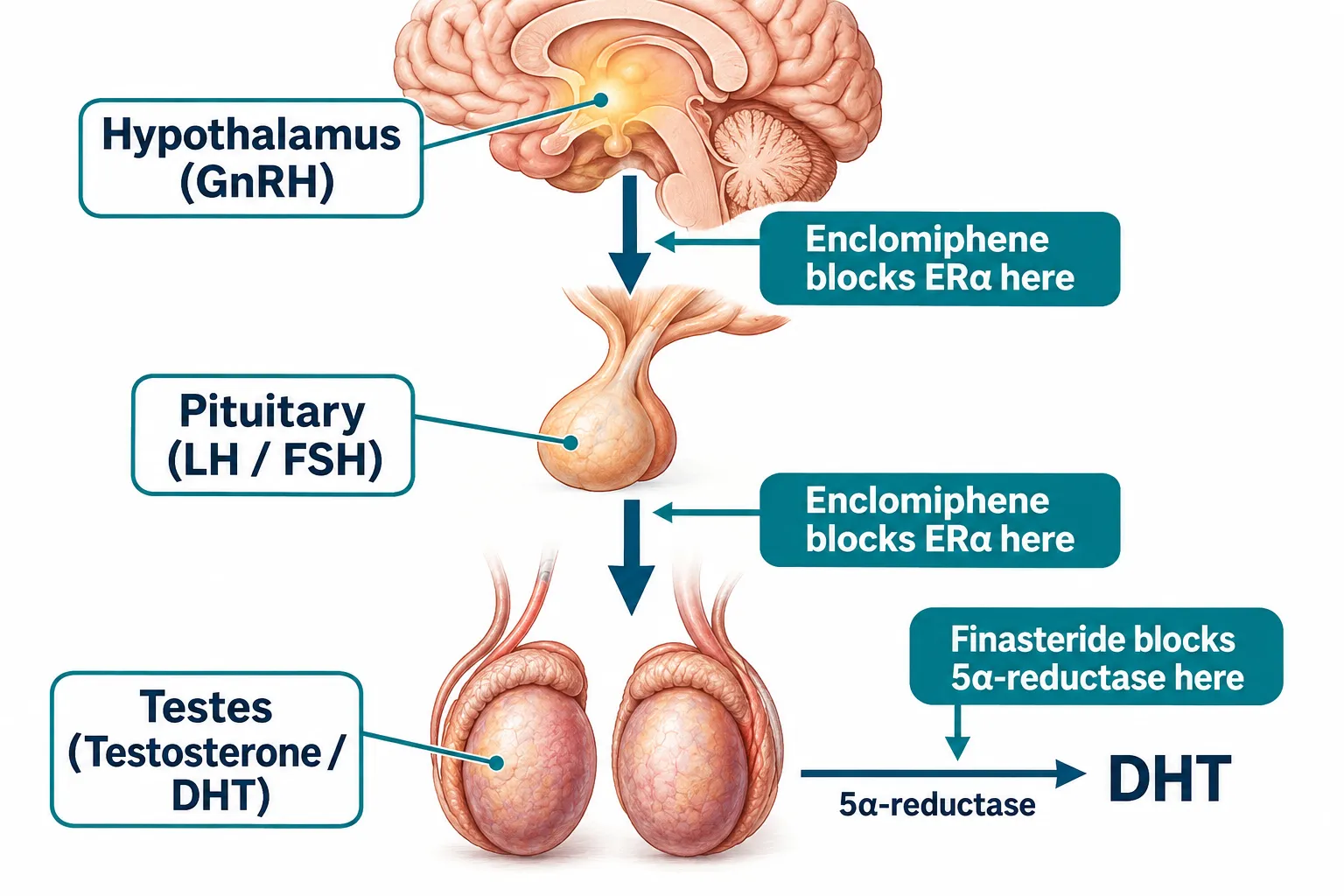
Understanding the biology behind finasteride and enclomiphene in hormone research, interpreting DHT, testosterone, LH, and FSH together, begins at the receptor level.
Enclomiphene is the trans-isomer of clomiphene. It antagonizes estrogen receptors (ERα) in hypothalamic neurons and pituitary gonadotrophs, blocking the negative-feedback signal that estrogen normally sends to suppress GnRH pulsatility. The result is a cascade: GnRH rises, stimulating the pituitary to release more LH and FSH, which in turn drive the testes to produce more testosterone and support spermatogenesis. This is axis stimulation from the top down.
Finasteride works entirely differently. It inhibits 5-alpha-reductase, the enzyme that converts testosterone into dihydrotestosterone (DHT) in peripheral tissues. It does not touch the hypothalamus or pituitary directly. DHT falls sharply; testosterone edges upward modestly as a compensatory response; the gonadotropin axis remains largely intact.
"Elevated testosterone with elevated LH and FSH points to serm-mediated axis stimulation. Elevated testosterone with suppressed DHT and stable gonadotropins points to 5-alpha-reductase inhibition. The pattern tells the story."
These contrasting mechanisms explain why a full hormone panel, not testosterone alone, is the only reliable interpretive tool in research involving either compound.
Characteristic Hormone Signatures: What the Data Show
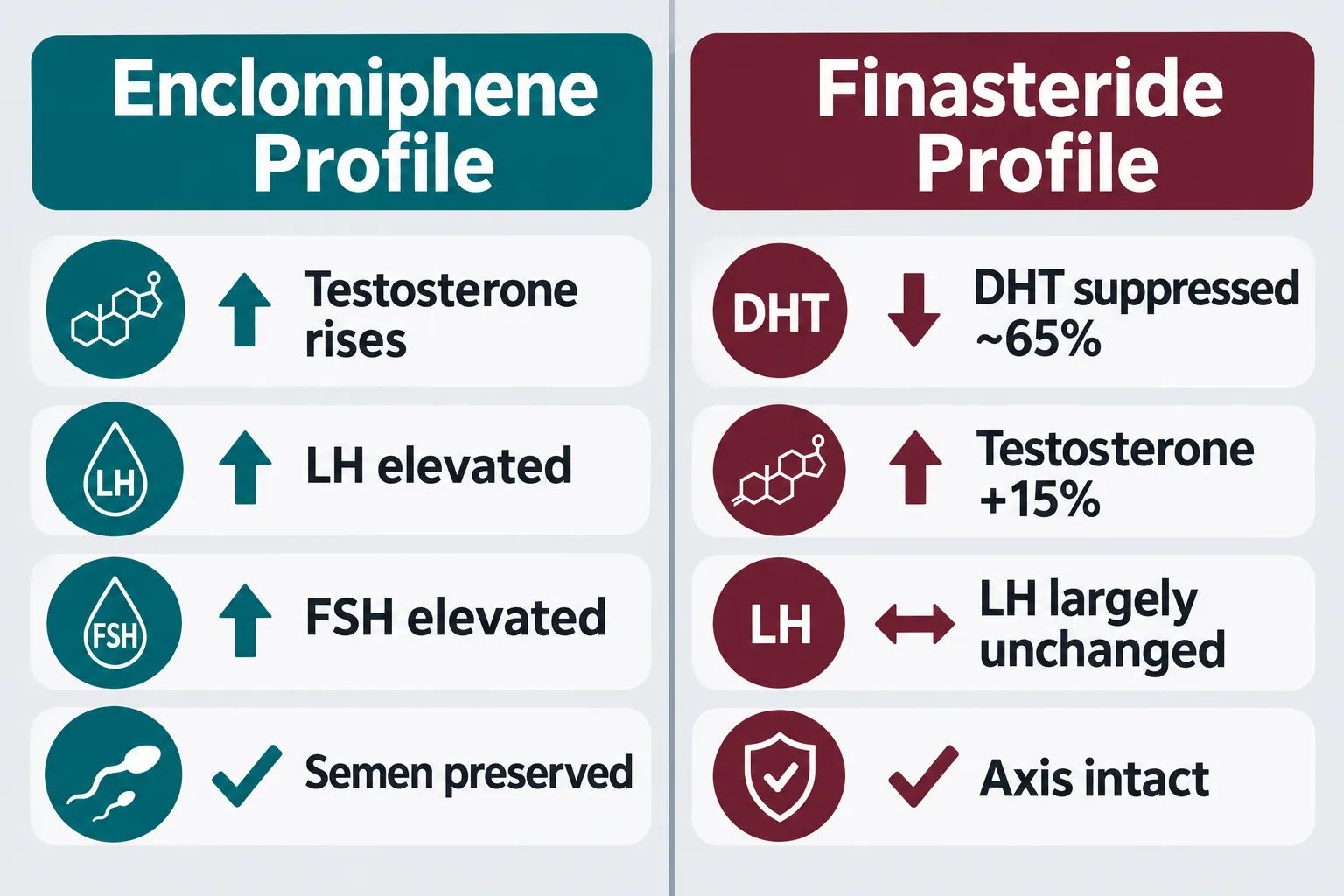
Across multiple controlled trials and systematic reviews, a consistent set of laboratory signatures has emerged for each compound.
Enclomiphene Hormone Profile
In a large meta-analysis of serm therapy in functional male hypogonadism, treatment produced a mean testosterone increase of approximately 274 ng/dL versus placebo. Crucially, LH rose by roughly 4.7 IU/L and FSH by approximately 4.6 IU/L, both statistically significant. In a direct comparison with transdermal testosterone, daily enclomiphene achieved non-inferior testosterone levels at both 24 hours and 6 weeks while maintaining physiological gonadotropin secretion rather than suppressing it.
A 2016 randomized trial illustrated the pattern precisely. Men on 25 mg enclomiphene saw LH rise from 5.3 to 11.9 mIU/mL and FSH from 9.4 to 14.9 mIU/mL. Men on exogenous testosterone saw LH fall from 3.9 to 1.4 mIU/mL and FSH from 6.0 to 2.4 mIU/mL, a textbook axis-suppression profile. Approximately 68% of hypogonadal men on enclomiphene achieved physiologic testosterone levels of 450-650 ng/dL without broad axis suppression.
Enclomiphene expected panel pattern:
| Hormone | Direction |
|---|---|
| Total Testosterone | Significantly elevated |
| LH | Significantly elevated |
| FSH | Significantly elevated |
| DHT | Unchanged or mildly reduced |
| Semen parameters | Preserved or improved |
Finasteride Hormone Profile
Finasteride presents a strikingly different signature. Serum DHT is suppressed by approximately 65% within 24 hours of a 1 mg oral dose. Testosterone increases by roughly 10-20%, remaining within the physiological range. In most healthy men, LH and FSH show little to no meaningful change; the hypothalamic-pituitary-testicular axis continues functioning normally. Classic volunteer studies using 5 mg/day finasteride confirmed no significant changes in basal or GnRH-stimulated LH and FSH despite near-complete DHT suppression.
One exception worth noting: in older men with benign prostatic hyperplasia treated for three months, FSH and LH showed modest decreases of roughly 24% and 16%, respectively. This context-dependence reinforces why interpreting hormone panels requires clinical framing, not just reference ranges.
Finasteride expected panel pattern:
| Hormone | Direction |
|---|---|
| DHT | Suppressed ~65% |
| Total Testosterone | Mildly elevated (+10-20%) |
| LH | Largely unchanged (minor increase or decrease) |
| FSH | Largely unchanged |
| Semen parameters | Systemic hormones unaffected; intratesticular risks possible |
A Practical Framework for Interpreting Combined Panels
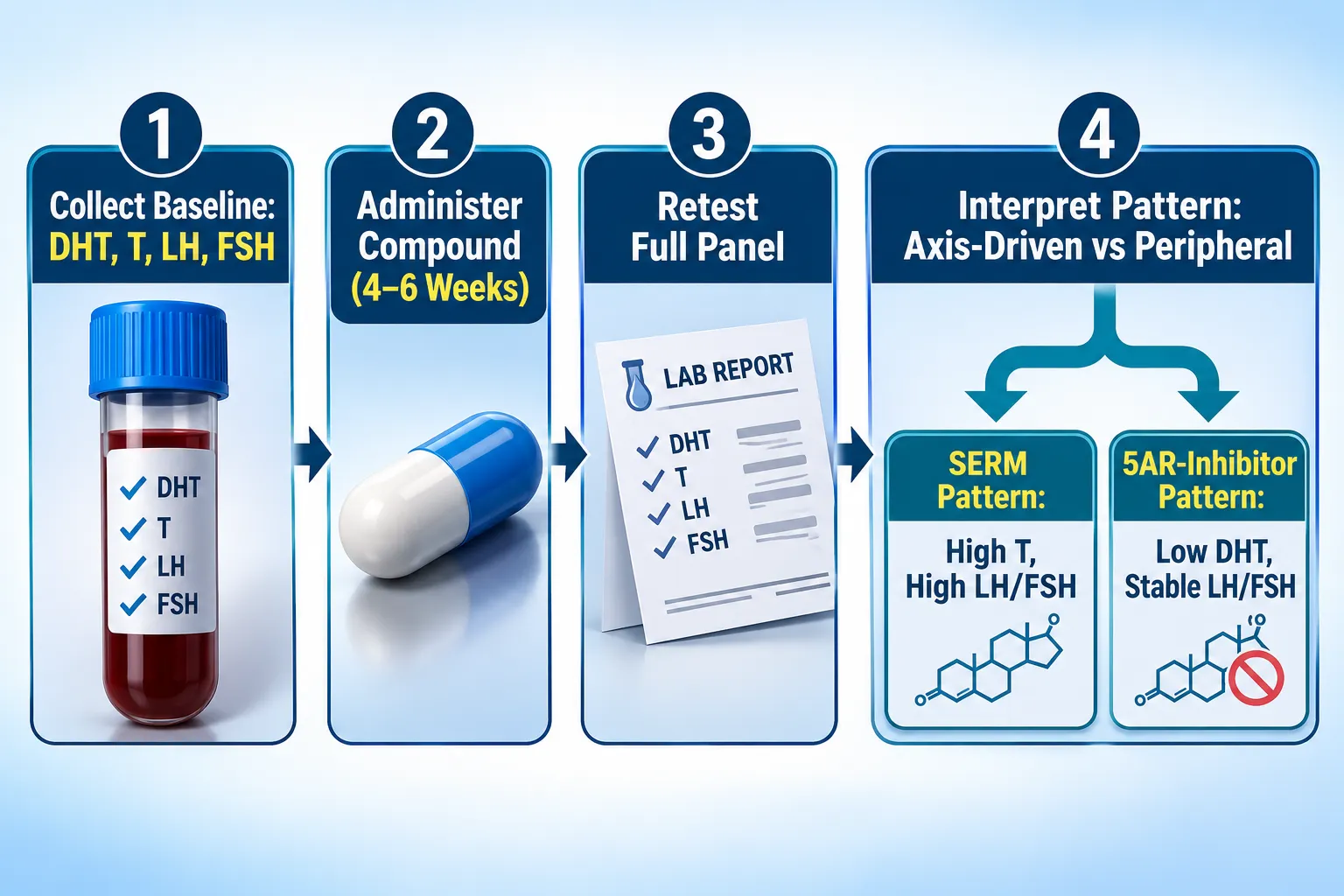
Applying the principles of finasteride and enclomiphene in hormone research, interpreting DHT, testosterone, LH, and FSH together, calls for a structured, timing-aware approach.
Step 1: Establish a True Baseline
Collect fasting morning DHT, total testosterone, free testosterone, LH, and FSH before any compound is introduced. Baseline LH and FSH stratification is especially important because it distinguishes primary hypogonadism (high LH/FSH) from secondary hypogonadism (low or normal LH/FSH), which determines whether serm therapy is appropriate.
Step 2: Apply Compound-Specific Timing Windows
- Finasteride: DHT suppression begins within 24 hours. Stable new-state DHT is typically observed by day 14-28.
- Enclomiphene: Gonadotropin elevation begins within days, but the full testosterone response generally matures over 4-6 weeks. Assess the complete panel at the 4-6 week mark for a reliable read.
Step 3: Interpret the Full Pattern, Not Individual Values
A testosterone value of 550 ng/dL carries entirely different implications depending on what accompanies it:
- 550 ng/dL T + LH 10 mIU/mL + FSH 12 mIU/mL + normal DHT = enclomiphene-type axis stimulation
- 550 ng/dL T + LH 1.5 mIU/mL + FSH 2.0 mIU/mL + normal DHT = exogenous testosterone or axis-suppressive therapy
- 550 ng/dL T + LH stable + FSH stable + DHT 0.17 ng/mL = finasteride-type peripheral conversion inhibition
Step 4: Integrate Fertility-Relevant Markers
When reproductive outcomes matter, add semen analysis. serm therapy with enclomiphene consistently maintains or improves semen parameters, a key differentiator from exogenous testosterone. Finasteride's gonadotropin profile appears essentially unchanged in healthy men, but intratesticular DHT changes may affect fertility through pathways not visible in standard serum panels.
For researchers sourcing comparison compounds, reviewing peptide supplier comparisons and interpreting catalog sources can help ensure compound integrity when building multi-arm research protocols. Those designing broader hormonal studies may also find value in reviewing GLP-1 peptide generational research concepts and sourcing notes for adjacent metabolic endpoints. Similarly, researchers examining mitochondrial and metabolic co-factors alongside hormonal readouts can reference SS-31 mitochondrial research for context on oxidative-stress markers that may interact with androgen signaling. For studies requiring precise compound storage and traceability practices, the notes in AOD-9604 sale research method notes, storage, and traceability offer transferable guidance. Researchers pairing growth-hormone secretagogues with hormonal panels may also consult can you take Ipamorelin and CJC-1295 together for multi-compound interaction considerations.
Conclusion
The core lesson from current research is straightforward: testosterone alone cannot differentiate between serm-mediated endocrine feedback and 5-alpha-reductase inhibition. The full pattern, DHT suppressed or intact, LH and FSH elevated or stable, semen parameters preserved or not, is the only reliable interpretive framework when examining finasteride and enclomiphene in hormone research interpreting DHT, testosterone, LH, and FSH together.
Actionable next steps for researchers:
- Always collect a four-hormone baseline (DHT, total T, LH, FSH) before introducing either compound.
- Apply compound-specific timing windows, 24-28 days for finasteride's DHT nadir; 4-6 weeks for enclomiphene's full gonadotropin and testosterone response.
- Read patterns, not values, the hormonal signature, not any single number, identifies the mechanism at work.
- Add semen analysis when fertility outcomes are a research endpoint.
- Stratify by baseline gonadotropin status to contextualize serm response appropriately.
Following this framework turns a standard hormone panel into a mechanistically informative research tool, one capable of distinguishing axis stimulation from peripheral androgen modulation with precision.