Call or Text 727-513-9780
  • Shopping Cart Shopping Cart
    0Shopping Cart
Pure Tested Peptides | America's most trusted Peptides for sale online
  • Peptides for sale
    • Oral Peptides for sale
      • Peptide Capsules for sale
      • BPC 157 Capsules 1000mcg
      • SLU-PP-332 Capsules | 1000 mcg
      • 5-Amino-1MQ 50mg Capsules
      • Tesofensine 500mcg
    • All Peptides for sale
    • Peptide Sprays
      • BPC 157 Nasal Spray Kit
      • BPC-157 TB500 Nasal Spray Kit
      • Semax Nasal Spray 10mg
      • Selank – Nasal Spray Kit – 10mg
      • Epithalon 50MG Nasal Spray Kit
      • Ipamorelin 10mg Nasal Spray
      • Klow Nasal Spray (BPC-157 + TB-500 + GHK-Cu + KPV) | 80mg
      • Hulk Nasal Spray Tesa / Ipa Blend 6/3 MG
      • Klow Nasal Spray
      • NAD + 500 mg Nasal Spray
      • PT-141 Nasal Spray Kit
    • GHRH Peptides
      • Ipa Peptides
      • CJC-1295 Peptides
        • CJC-1295 with DAC 5 mg
        • CJC-1295 without DAC 5 mg
        • CJC-1295 Ipa 10mg
      • Tesa Peptides
        • Tesa Peptide
        • Tesa 20 mg
    • GHK-Cu Peptides
      • All GHK-Cu Peptides
      • GHK-Cu 100mg
      • KLOW Peptide Blend – Buy KLOW blend online
    • BPC Peptides
      • All BPC Peptides
      • BPC-157
      • BPC-157 TB-500
      • BPC 157 capsules 1000mcg
    • SLU-PP-332 Peptides
      • All SLU-PP-332 Peptides
      • SLU-PP-332 5mg
    • GLP3 Peptides
      • GLP3-R
      • GLP3-R CAG 10mg
      • GLP3-R 20mg
    • PT-141 Peptides
      • PT-141 Peptides for sale
      • PT-141 10mg
      • PT-141 Nasal Spray
    • CAG Peptides
      • Lipo-C Peptide Blend
      • CAG 5mg
      • CAG 10mg
    • MOTS-C Peptides
      • MOTS-C Peptides for sale
      • MOTS-c peptide
      • MOTS-c 10mg *6 pack*
    • 5 Amino 1MQ Peptides
      • 5 Amino 1MQ Peptides for sale
      • 5-Amino-1MQ 50mg Capsules
      • 5-Amino-1MQ 5mg
    • Epithalon Peptides
      • Epithalon Peptides for sale
      • Epithalon 10mg
      • Epithalon 50mg
  • Shop
    • GLPs
      • 5-Amino-1MQ 50mg Capsules
      • 5-Amino-1MQ 5mg
      • GLP3-Reta
      • L-Carnitine 500mg/ml
      • Tesofensine 500mcg
      • SLU-PP-332 5mg
      • MOTS-c 10mg *6 pack*
    • Epithalon & BPC Peptides
      • Epithalon 10mg
      • Epithalon 50mg
      • BPC-157
      • BPC 157 capsules 1000mcg
      • BPC-157 TB-500
      • BPC-157 TB500 Nasal Spray Kit
      • BPC 157 Nasal Spray Kit
    • BPC TB-500 & NAD+ Peptides
      • NAD+ 500 mg
      • KLOW Peptide Blend – Buy KLOW blend online
      • GLOW Peptide Blend
      • TB 500 5mg
      • BPC 157 capsules 1000mcg – Supplement
      • BPC 157 Nasal Spray Kit
      • BPC-157
      • BPC-157 TB500 Nasal Spray Kit
      • BPC-157 TB-500
      • BPC 157 capsules 1000mcg
    • LL-37 Peptide
      • LL-37 10 mg
    • MOTS-C & Selank
      • MOTS-c peptide
      • Selank 10mg
    • GHK Peptides
      • GHK-Cu 100mg
      • GLOW Peptide Blend
      • KLOW Peptide Blend – Buy KLOW blend online
  • COAs
  • Wholesale
    • Wholesale Peptides for sale
  • PTP FAQ
  • Affiliates
    • Selank Peptide: Advanced Pharmacological Mechanisms Underlying Its Anxiolytic and Nootropic Effects in Research
      • 5-Amino-1MQ Peptide: Detailed Mechanisms of NNMT Inhibition and Its Impact on Cellular Metabolism Research
        • MOTS-C Peptide: Unraveling Its Role in Mitochondrial Dynamics and Energy Metabolism Research
          • Epithalon Peptide and Telomerase Regulation: Investigating Its Impact on Cellular Senescence and Lifespan Research Models
            • GLP2-T vs GLP2 Tirz Peptide: Understanding the Naming, Mechanistic Nuances, and Research Implications for Gut Health
      • Peptides and Polypeptides in Modern Pharmacology: What Research on Metoprolol, Prednisone, and Amlodipine Reveals
        • Polypeptide Peptides vs NSAIDs: What Naproxen and Diclofenac Teach Tissue-Repair Researchers About BPC‑157 and TB‑500
          • Peptides and Polypeptides in Endocrine Pharmacology: How GLP-1, GLP-2, and GLP-3 Retatrutide Differ From Classic Drugs Like Prednisone and Amlodipine
          • 5‑Amino‑1MQ Peptide and NNMT Inhibition: How It Compares With Statins Like Atorvastatin in Adipose and Lipid Metabolism Research
      • Enclomiphene, Estrogen Receptor Signaling, and Luteinizing Phase Biology: What Hormone Researchers Should Measure
        • Mesenchymal Stem Cells, BPC‑157, and GHK‑Cu: How Tissue Repair Peptides Compare With Classic NSAIDs Like Naproxen in Injury Models
          • Peptide Calculator Use Cases Beyond Growth Hormone: Working Through GLP‑3 Retatrutide, MOTS‑c, and BPC‑157 Research Dosing
        • Polypeptide Peptides in Endocrine and Metabolic Pharmacology: Lessons From Amlodipine, Prednisone, and Metoprolol
        • Peptides Calculator for Advanced Blends: Worked Examples for Tesamorelin, CJC‑1295, and Ipamorelin Stacks
          • Peptides and Polypeptides in Human Physiology: How Molecular Size Shapes Research Applications
            • Selank Peptide: Advanced Pharmacological Mechanisms Underlying Its Anxiolytic and Nootropic Effects in Research
          • 5-Amino-1MQ Peptide: Detailed Mechanisms of NNMT Inhibition and Its Impact on Cellular Metabolism Research
            • MOTS-C Peptide: Unraveling Its Role in Mitochondrial Dynamics and Energy Metabolism Research
              • Epithalon Peptide and Telomerase Regulation: Investigating Its Impact on Cellular Senescence and Lifespan Research Models
                • GLP2-T vs GLP2 Tirz Peptide: Understanding the Naming, Mechanistic Nuances, and Research Implications for Gut Health
                  • Peptides and Polypeptides in Endocrine Pharmacology: How GLP-1, GLP-2, and GLP-3 Retatrutide Differ From Classic Drugs Like Prednisone and Amlodipine
                    • Polypeptide Peptides vs NSAIDs: What Naproxen and Diclofenac Teach Tissue-Repair Researchers About BPC‑157 and TB‑500
                      • Peptides and Polypeptides in Modern Pharmacology: What Research on Metoprolol, Prednisone, and Amlodipine Reveals
                        • 5‑Amino‑1MQ Peptide and NNMT Inhibition: How It Compares With Statins Like Atorvastatin in Adipose and Lipid Metabolism Research
                        • Enclomiphene, Estrogen Receptor Signaling, and Luteinizing Phase Biology: What Hormone Researchers Should Measure
                        • Mesenchymal Stem Cells, BPC‑157, and GHK‑Cu: How Tissue Repair Peptides Compare With Classic NSAIDs Like Naproxen in Injury Models
                        • Peptide Calculator Use Cases Beyond Growth Hormone: Working Through GLP‑3 Retatrutide, MOTS‑c, and BPC‑157 Research Dosing
                        • Polypeptide Peptides in Endocrine and Metabolic Pharmacology: Lessons From Amlodipine, Prednisone, and Metoprolol
                        • Peptides Calculator for Advanced Blends: Worked Examples for Tesamorelin, CJC‑1295, and Ipamorelin Stacks
                        • Peptides and Polypeptides in Human Physiology: How Molecular Size Shapes Research Applications
                        • Selank Peptide: Advanced Pharmacological Mechanisms Underlying Its Anxiolytic and Nootropic Effects in Research
                        • MOTS-C Peptide: Unraveling Its Role in Mitochondrial Dynamics and Energy Metabolism Research
                        • Peptides and Polypeptides in Modern Pharmacology: What Research on Metoprolol, Prednisone, and Amlodipine Reveals
                        • Peptides and Polypeptides in Endocrine Pharmacology: How GLP-1, GLP-2, and GLP-3 Retatrutide Differ From Classic Drugs Like Prednisone and Amlodipine
                        • 5-Amino-1MQ Peptide: Detailed Mechanisms of NNMT Inhibition and Its Impact on Cellular Metabolism Research
                        • Mesenchymal Stem Cells, BPC‑157, and GHK‑Cu: How Tissue Repair Peptides Compare With Classic NSAIDs Like Naproxen in Injury Models
                        • Peptide Calculator Use Cases Beyond Growth Hormone: Working Through GLP‑3 Retatrutide, MOTS‑c, and BPC‑157 Research Dosing
                        • GLP2-T vs GLP2 Tirz Peptide: Understanding the Naming, Mechanistic Nuances, and Research Implications for Gut Health
                        • Polypeptide Peptides in Endocrine and Metabolic Pharmacology: Lessons From Amlodipine, Prednisone, and Metoprolol
                        • Polypeptide Peptides vs NSAIDs: What Naproxen and Diclofenac Teach Tissue-Repair Researchers About BPC‑157 and TB‑500
                        • Peptides and Polypeptides in Human Physiology: How Molecular Size Shapes Research Applications
                        • Peptides Calculator for Advanced Blends: Worked Examples for Tesamorelin, CJC‑1295, and Ipamorelin Stacks
                        • 5‑Amino‑1MQ Peptide and NNMT Inhibition: How It Compares With Statins Like Atorvastatin in Adipose and Lipid Metabolism Research
                        • Enclomiphene, Estrogen Receptor Signaling, and Luteinizing Phase Biology: What Hormone Researchers Should Measure
                        • Epithalon Peptide and Telomerase Regulation: Investigating Its Impact on Cellular Senescence and Lifespan Research Models
                        • Best research protocol Klow blend
                        • best time to take BPC-157
                        • best time to take DSIP (Delta Sleep Inducing Peptide)
                        • best time to take CJC-1295
                        • best time to take AOD-9604
                        • best time to take Follistatin 344
                        • best time to take Ipamorelin
                        • best time to take MK-677 (Ibutamoren)
                        • best time to take Ligandrol (LGD-4033) — research compound
                        • best time to take Ostarine (MK-2866) — research compound
                        • best time to take GHK-CU
                        • best time to take TB-500
                        • best time to take MOTS-c
                        • best time to take Semax
                        • best time to take RAD-140 (Testolone) — research compound
                        • best time to take Thymosin Alpha-1
                        • best time to take PEG-MGF
                        • Biolife Plasma, Octapharma Plasma, and Research Peptides: How Plasma Donation Labs Differ From Peptide Suppliers
                        • best time to take YK-11 — research compound
                        • best time to take PT-141 (Bremelanotide)
                        • Best research protocol Klow blend
                        • 5-Amino-1MQ and MOTS-C Synergy: Metabolic Signaling, Mitochondria, and Research Design
                        • BPC-157 and TB-500: Investigating Their Combined Effects on Angiogenesis and Cellular Migration in Tissue Repair Models
                        • BPC-157 Peptide: Gut Barrier Function, Inflammation, and Tissue-Recovery Research
                        • 5‑Amino‑1MQ and MOTS‑c Synergy in Metabolic Research: Designing NNMT and Mitochondrial Biogenesis Stacks
                        • CJC-1295 with DAC vs. Without DAC: Half-Life, Release Kinetics, and Research Implications
                        • CJC‑1295 with DAC vs. Without DAC: Expanding on Half‑Life Differences Using Tesamorelin and Ipamorelin Blend Case Studies
                        • Collagen Biology and Copper‑Binding Peptides: How GHK‑Cu, Glow Blend, and Klow Blend Interact with Skin and Connective Tissue
                        • Collagen Biology and Regenerative Peptides: How GHK‑Cu, Glow Blend, and Klow Blend Affect Extracellular Matrix Research
                    • DNA, Telomeres, and Longevity Peptides: Positioning Epithalon and MOTS‑c in Genetic Aging Research
                      • Enclomiphene Citrate: serm Mechanism, Testosterone Research, and Stack Compatibility
                        • Enclomiphene vs Enclomiphene Citrate: Formulation, Bioavailability, and Research Distinctions
                        • Epithalon Peptide Research: Telomerase Activation, Aging, and Pineal Gland Function
                        • Estrogen Receptor Signaling and Enclomiphene: How Selective Modulators Compare with Classic Polypeptide Hormones
                        • GHK-Cu Peptide: Advanced Mechanisms in Extracellular Matrix Remodeling and Wound Healing Research
                        • GHK-Cu Peptide: Collagen Synthesis, Wound Repair, and Skin-Barrier Research Models
                        • GLP-1 vs GLP-3 vs GLP-2: Peptide Classification and Research Applications
                        • GLP-2 Peptide Research Guide: Gut Barrier Function, Nutrient Absorption, and Intestinal Recovery Models
                        • GLP-3 Retatrutide vs. GLP-1 Drugs: What Triple-Agonist Biology Changes in Research Models
                        • Ipamorelin and Tesamorelin Combination: Synergistic GH Secretagogue Research and Dosing Protocols
                        • GLP2 Tirz Peptide: What It Is, Why the Name Exists, and How Researchers Should Interpret It
                        • Klow Blend Peptide Nasal Spray: What the Formulation Is Trying to Do in Cognitive Research
                        • Mitochondria, NNMT Inhibition, and Peptide Modulators: Where MOTS‑c and 5‑Amino‑1MQ Fit in Cellular Energy Research
                        • MOTS-c Peptide: Mitochondrial Function, Energy Metabolism, and What Researchers Measure
                        • MOTS-c vs. 5-Amino-1MQ: Which Metabolic Research Questions Each Compound Actually Answers
                        • Nasal Spray Peptides: Bioavailability, Administration, and Semax/Selank Research Applications
                        • PT-141 Peptide Research: Mechanism of Action and Melanocortin Receptor Signaling
                        • Retatrutide for Research: Mechanism, Structure, and GLP-1/GLP-3 Dual Action
                        • Retatrutide for Obesity and Type 2 Diabetes: What the Latest Trial Data Suggest
                        • Tesofensine Peptide Research: Mechanism, Appetite Suppression, and Neuropeptide Y Pathways
  • Contact
    • Contact Customer Service
    • Text Customer Support
  • About US
  • Shop all peptides
  • Affiliate Program
    • Affiliate Signup
  • Login / Register Login / Register Page Link Login / Register Page Link
  • Click to open the search input field Click to open the search input field Search
  • Menu Menu

Tag Archive for: incretin agonist

Peptides Mechanism 101: From GLP‑3 Retatrutide to CJC‑1295 and MOTS‑c in Cellular and Receptor-Level Research

Peptides Mechanism 101: From GLP‑3 Retatrutide to CJC‑1295 and MOTS‑c in Cellular and Receptor-Level Research

July 29, 2026/0 Comments/in Uncategorized/by

Fewer than a dozen amino acids can redirect an entire metabolic pathway. That single fact explains why experimental peptide research has accelerated so dramatically in 2026, with triple-receptor agonists, growth hormone secretagogues, and mitochondrial peptides each demonstrating distinct and measurable effects at the cellular level. This guide to Peptides Mechanism 101: From GLP-3 Retatrutide to CJC-1295 and MOTS-c in Cellular and Receptor-Level Research maps how these molecules work, where they act, and why receptor-level specificity matters so much to researchers.

Key Takeaways

  • Retatrutide (GLP-3) simultaneously activates GIP, GLP-1, and glucagon receptors, producing broad cardiometabolic effects beyond any single-receptor agonist.
  • CJC-1295 extends growth hormone-releasing hormone (GHRH) signaling by binding albumin, dramatically prolonging its half-life and downstream GH/IGF-1 pulse activity.
  • MOTS-c is a mitochondria-derived peptide that activates the AMPK pathway, influencing cellular energy sensing and metabolic flexibility.
  • Receptor selectivity, binding affinity, and downstream signaling cascades determine both the potency and the safety profile of any research peptide.
  • Understanding mechanism at the cellular level is the foundation for interpreting any preclinical or clinical peptide research data.
Key Takeaways

How Receptor-Level Signaling Defines Peptide Research

Every peptide exerts its effect by fitting into a receptor the way a key fits a lock. The fit triggers a conformational change in the receptor protein, which activates intracellular signaling cascades. Whether a peptide binds a G protein-coupled receptor (GPCR), a nuclear receptor, or an intracellular enzyme determines the speed, duration, and tissue specificity of its effect.

Three core concepts govern this process:

Concept What It Means Why It Matters
Binding Affinity How tightly the peptide binds its receptor Higher affinity = lower dose needed
Agonism vs. Antagonism Whether the peptide activates or blocks the receptor Determines biological direction of effect
Downstream Cascade The chain of intracellular signals triggered Sets the tissue-level outcome

In the context of Peptides Mechanism 101: From GLP-3 Retatrutide to CJC-1295 and MOTS-c in Cellular and Receptor-Level Research, each molecule represents a different strategy for exploiting these principles. For researchers interested in biochemistry fundamentals as they apply to peptide science, these distinctions are foundational.

GLP-3 Retatrutide: The Triple-Receptor Strategy

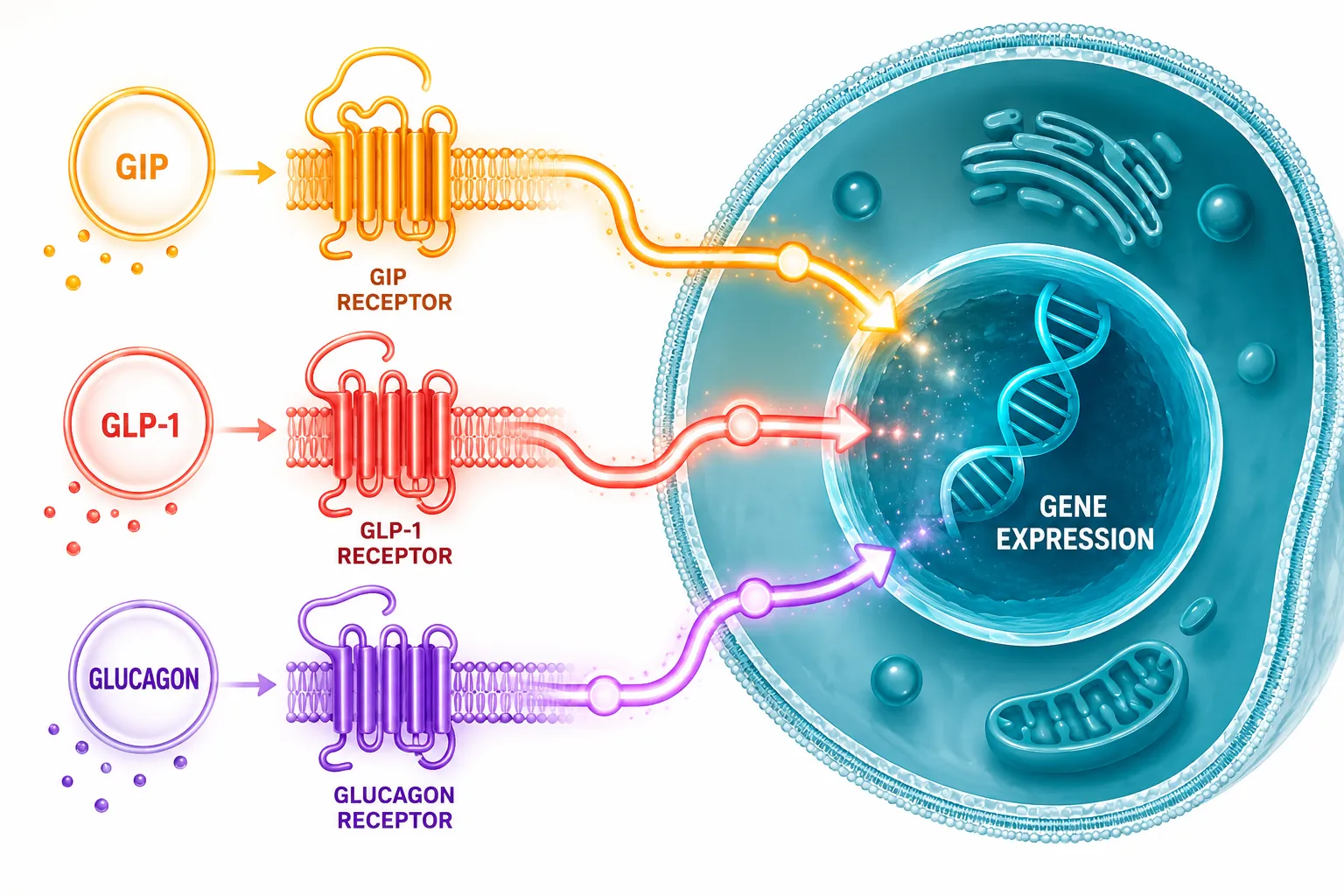
Retatrutide is classified as a triple agonist because it activates three distinct GPCRs simultaneously: the glucose-dependent insulinotropic polypeptide receptor (GIPR), the glucagon-like peptide-1 receptor (GLP-1R), and the glucagon receptor (GCGR). No approved single-agent therapy targets all three at once.

What each receptor activation contributes:

  • GLP-1R activation suppresses appetite, slows gastric emptying, and stimulates glucose-dependent insulin secretion.
  • GIPR activation amplifies the incretin response and may contribute to fat-cell lipolysis and energy expenditure.
  • GCGR activation increases hepatic glucose output and promotes fat oxidation, raising overall energy expenditure.

The combined effect is additive and, in some metabolic parameters, synergistic. Phase 2 trial data showed dose-dependent weight loss reaching 24.2% at the highest dose over 48 weeks, compared to 2.1% on placebo. A 2025 meta-analysis of retatrutide trials confirmed reductions in BMI, waist circumference, fasting plasma glucose, HbA1c, and blood pressure, with no significant increase in overall adverse events.

The ongoing TRIUMPH Phase 3 program includes more than 5,800 participants across four multicenter trials, covering weight management, type 2 diabetes with obesity, established cardiovascular disease, and osteoarthritis. Researchers looking for where to buy GLP-3 retatrutide for preclinical study should prioritize verified, lab-tested sources.

"Triple-receptor co-activation is not simply additive, the downstream metabolic reprogramming appears qualitatively different from what any single agonist produces."

GLP-3 Retatrutide: The Triple-Receptor Strategy

CJC-1295 and Growth Hormone Secretagogues: Prolonged Pulsatile Signaling
CJC-1295 and Growth Hormone Secretagogues: Prolonged Pulsatile Signaling

CJC-1295 is a synthetic analogue of growth hormone-releasing hormone (GHRH). Its defining feature is a drug affinity complex (DAC) technology that covalently binds the peptide to circulating albumin. This single modification extends its half-life from minutes to approximately 6-8 days, converting a rapidly degraded signal into a sustained one.

The receptor-level mechanism unfolds as follows:

  1. CJC-1295 binds the GHRH receptor (GHRHR) on pituitary somatotroph cells.
  2. Receptor activation stimulates adenylyl cyclase, raising intracellular cyclic AMP (cAMP).
  3. Elevated cAMP triggers protein kinase A (PKA), which phosphorylates transcription factors that upregulate growth hormone (GH) gene expression.
  4. GH is released in pulses, which then stimulate hepatic IGF-1 production.

When combined with ipamorelin, a selective ghrelin receptor agonist, the two peptides act on complementary receptor systems to amplify GH pulse amplitude without significantly elevating cortisol or prolactin. Research-grade CJC-1295 with ipamorelin blends are among the most studied growth hormone secretagogue combinations in preclinical settings.

For researchers comparing secretagogue profiles, the tesa vs. ipamorelin distinction is also worth examining, as tesa uses a different GHRH-analogue structure with its own receptor kinetics.

MOTS-c and Mitochondrial Peptides: Intracellular Signaling From the Genome

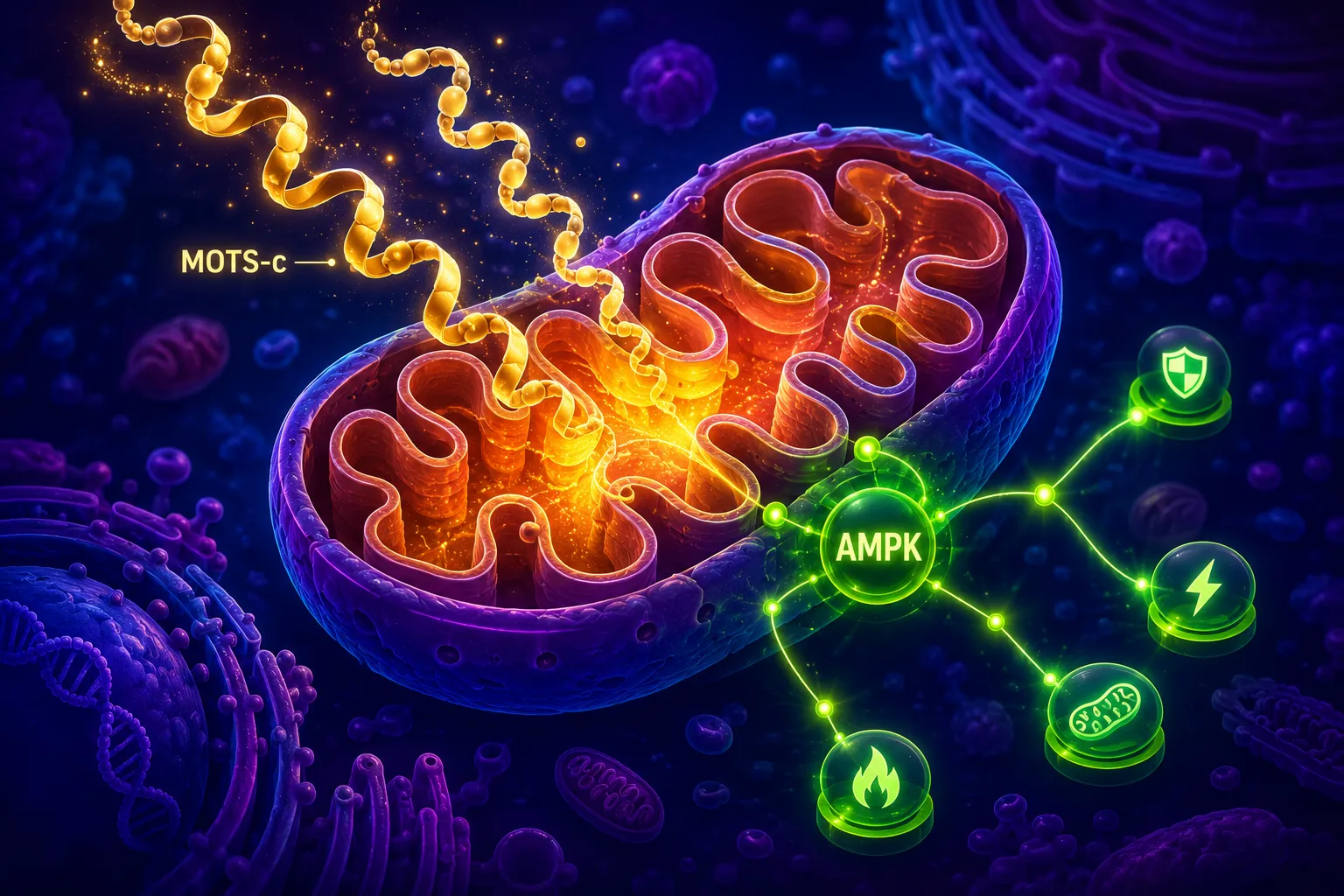
MOTS-c (Mitochondrial Open Reading Frame of the 12S rRNA-c) is encoded within mitochondrial DNA, not nuclear DNA. This makes it part of a newly recognized class called mitochondria-derived peptides (MDPs). Its mechanism operates at the intersection of mitochondrial metabolism and nuclear gene regulation.

The MOTS-c signaling pathway:

  • Under metabolic stress, MOTS-c is released from mitochondria into the cytoplasm and can translocate to the nucleus.
  • It activates AMP-activated protein kinase (AMPK), the cell's master energy sensor.
  • AMPK activation inhibits anabolic pathways (such as mTOR) and promotes catabolic pathways including fatty acid oxidation and glucose uptake.
  • In skeletal muscle cells, this translates to improved insulin sensitivity and mitochondrial biogenesis.

This mechanism is fundamentally different from receptor-level agonism. MOTS-c does not require a cell-surface receptor, it enters cells and modulates transcription factor activity directly. For those researching mitochondrial peptide science, SS-31 mitochondrial research offers a complementary perspective on how peptides can target organelle-level dysfunction.

Comparing Mechanisms Across Peptide Classes

Understanding Peptides Mechanism 101: From GLP-3 Retatrutide to CJC-1295 and MOTS-c in Cellular and Receptor-Level Research requires seeing these molecules not as isolated compounds but as representatives of broader mechanistic strategies.

Peptide Primary Target Signaling Mechanism Key Research Outcome
Retatrutide GIP/GLP-1/Glucagon receptors GPCR / cAMP cascade Weight loss, glucose control
CJC-1295 GHRHR (pituitary) cAMP / PKA / GH pulse GH/IGF-1 elevation
MOTS-c AMPK (intracellular) Mitochondrial / nuclear Energy sensing, insulin sensitivity

Researchers should also note that peptide combinations can interact at the signaling level. For guidance on what not to mix with peptides, reviewing interaction profiles before designing a research protocol is essential.

Other peptides such as BPC-157 and TB-500 operate through yet another set of mechanisms, growth factor receptor modulation and actin-binding pathways, further illustrating the mechanistic diversity within peptide research.

Conclusion

The cellular and receptor-level research reviewed here confirms that peptide mechanism is not a single topic but a spectrum of strategies. Retatrutide demonstrates that multi-receptor co-activation can produce cardiometabolic effects no single agonist achieves. CJC-1295 shows how half-life engineering transforms a fleeting pituitary signal into a sustained GH secretagogue effect. MOTS-c reveals that some peptides bypass cell-surface receptors entirely, acting as intracellular metabolic regulators.

Actionable next steps for researchers:

  • Map the specific receptor or intracellular target before selecting a peptide for study.
  • Review downstream signaling cascades, not just receptor binding, to predict tissue-level outcomes.
  • Source peptides from lab-tested, verified suppliers to ensure compound integrity in preclinical work.
  • Cross-reference mechanism data with published trial results, particularly for newer triple-agonist compounds like retatrutide.

Mechanistic clarity is the foundation of rigorous peptide research. The compounds discussed here are research tools, not approved therapies, and all use should comply with applicable regulations and institutional protocols.

https://www.puretestedpeptides.com/wp-content/uploads/2026/07/peptides-mechanism-101-from-glp-3-retatrutide-to-cjc-1295-and-mots-c-in-cellular.webp 1024 1536 https://www.puretestedpeptides.com/wp-content/uploads/2026/01/buy-peptides-online.jpg 2026-07-29 13:05:302026-07-29 13:05:30Peptides Mechanism 101: From GLP‑3 Retatrutide to CJC‑1295 and MOTS‑c in Cellular and Receptor-Level Research
×

Helpful Links

  • My account
  • Cart
  • Checkout
  • Refund and Returns Policy
  • Privacy Policy
  • SMS Privacy Policy
  • Login
  • My Account
  • Logout

USA Made Lab Tested Peptides

All products are sold for research, laboratory, or analytical purposes only, and are not for human consumption


Pure Tested Peptides is a chemical supplier. Pure Tested Peptides is not a compounding / chemical compounding facility as defined under 503A of the Federal Food, Drug, and Cosmetic act. Pure Tested Peptides is not an outsourcing facility as defined under 503B of the Federal Food, Drug, and Cosmetic act.

The statements made within this website have not been evaluated by the US Food and Drug Administration. The products we offer are not intended to diagnose, treat, cure or prevent any disease.

Human/Animal Consumption Prohibited. Laboratory/In-Vitro Experimental Use Only

Scroll to top Scroll to top Scroll to top