Best Research-Use GLP-3, GLP-2-T, and Tesofensine Stacks: How Labs Compare Metabolic Peptide Combinations for Appetite and Weight Models
}
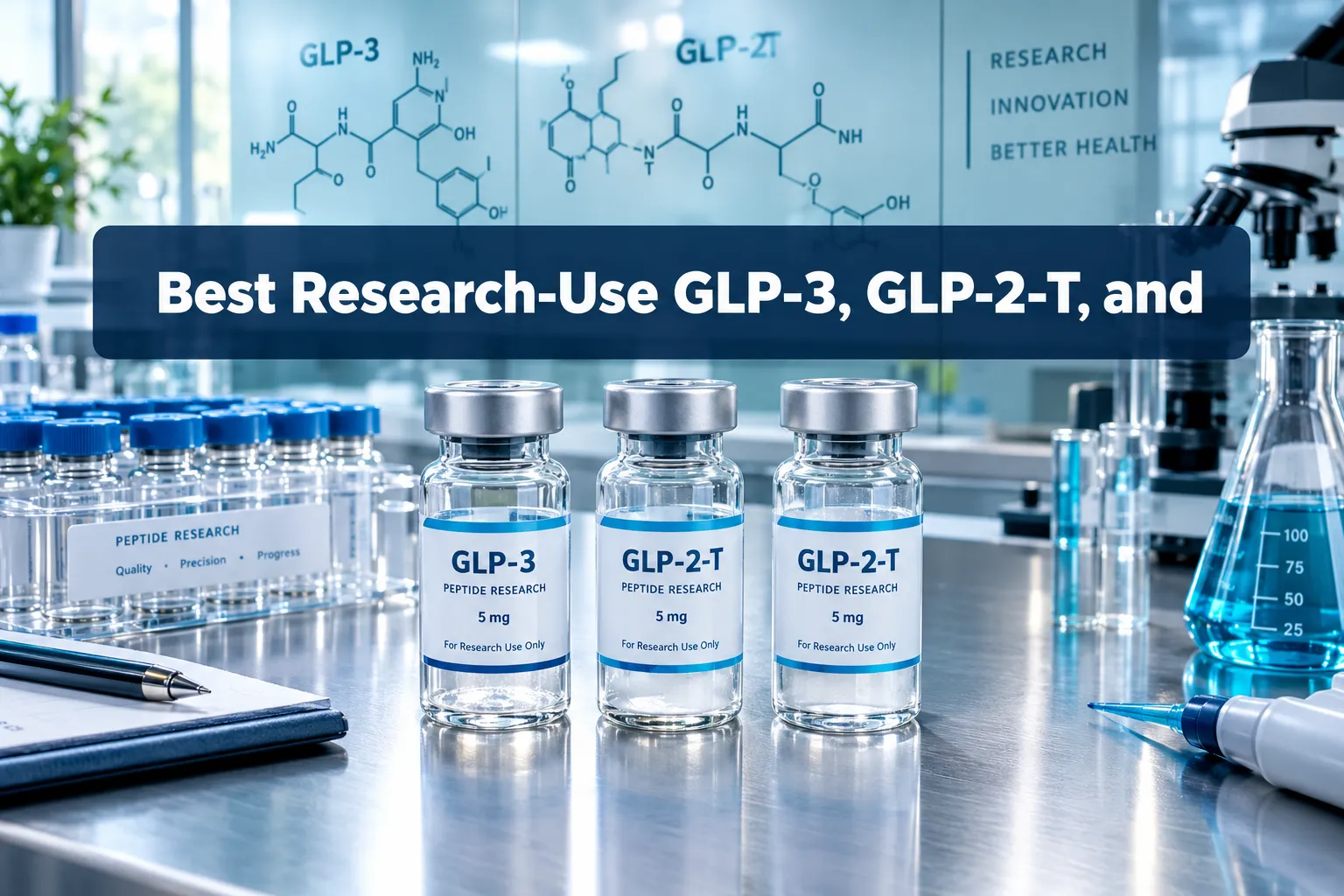
Retatrutide's Phase 3 TRIUMPH program data, released through mid-2026, now gives research labs a concrete benchmark that no single-agent peptide has matched. That benchmark is reshaping how investigators design multi-compound protocols. When labs evaluate the best research-use GLP-3, GLP-2-T, and tesofensine stacks for appetite and weight models, they are not simply mixing compounds at random. They are working backward from endpoint hierarchies, receptor biology, and the performance ceilings set by clinically tested combinations.
Key Takeaways
- Triple incretin agonism (GLP-1/GIP/glucagon), exemplified by retatrutide, is the current gold-standard reference point for any research-use metabolic stack in 2026.
- GLP-2-T peptides primarily drive gut adaptation rather than weight loss, making their role in appetite-focused stacks speculative rather than evidence-based.
- Tesofensine contributes a distinct central monoamine mechanism, complementing incretin pathways rather than duplicating them.
- Labs designing multi-compound protocols typically assign each agent to a separate mechanistic axis to avoid redundancy and isolate variables.
- No published human data yet evaluates tesofensine co-administered with GLP-1, GLP-2, or GLP-3-class peptides, so research stacks in this space remain preclinical in design.
Understanding the Agents: GLP-3, GLP-2-T, and Tesofensine in Research Context
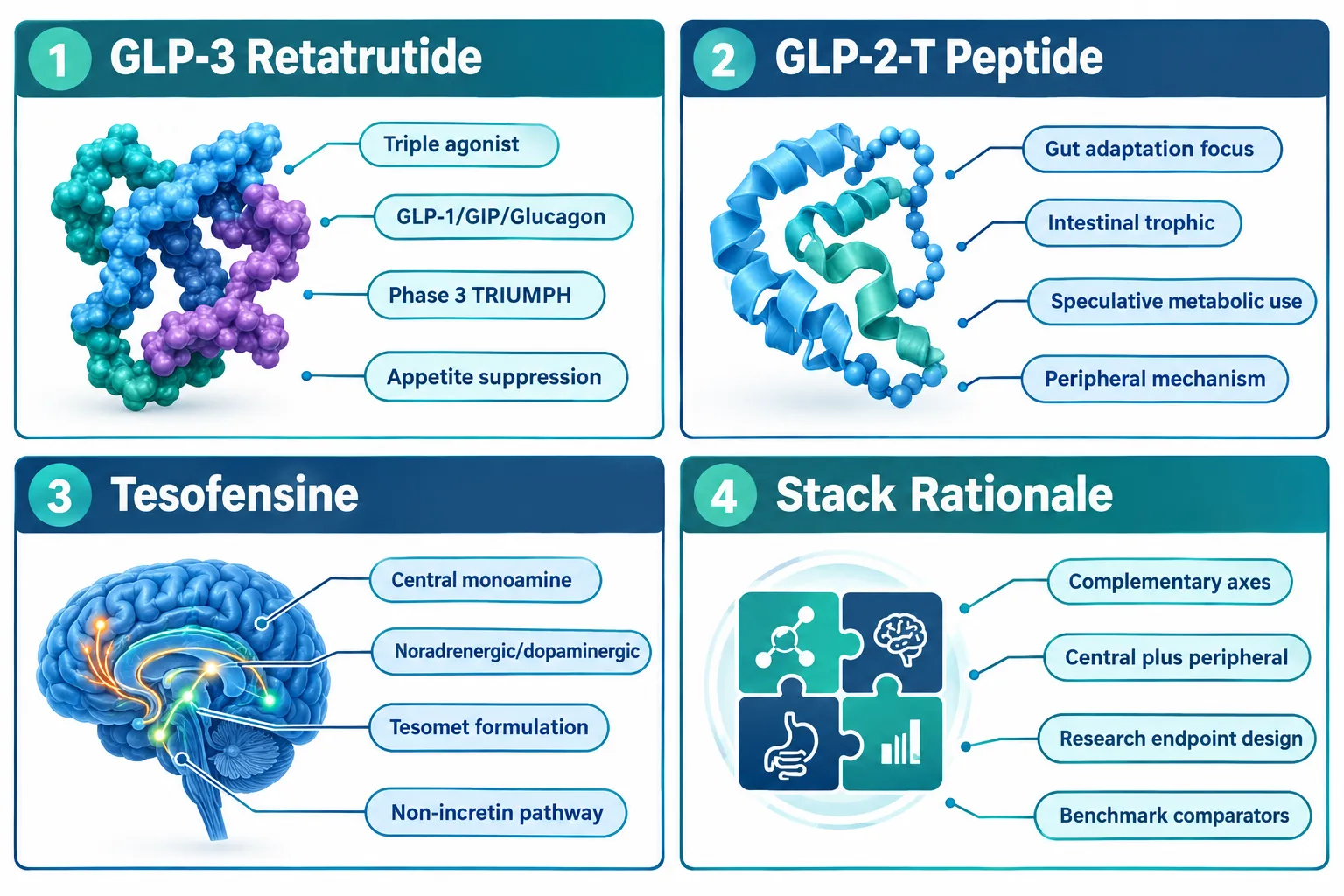
Before evaluating any combination, researchers need clarity on what each agent actually does.
GLP-3 (Retatrutide) is the informal label researchers apply to triple incretin agonists that activate GLP-1, GIP, and glucagon receptors simultaneously. Retatrutide is the leading compound in this class. Its Phase 3 TRIUMPH data confirm weight reductions that outperform all prior single or dual incretin agents. For a detailed breakdown of how retatrutide is distinguished from simpler GLP peptides, see what GLP-3 peptide means and how researchers distinguish it from retatrutide.
GLP-2-T refers to GLP-2 tirzepatide-adjacent or GLP-2 tirzepeptide formulations. This naming creates genuine confusion in research procurement. GLP-2 receptor agonism primarily promotes intestinal mucosal growth and nutrient absorption. Its mainstream clinical application targets gut adaptation syndromes, not obesity. For labs considering metabolic stacks, understanding what GLP-2-T versus GLP2 Tirz naming actually means is essential before procurement decisions are made.
Tesofensine is a triple monoamine reuptake inhibitor that blocks norepinephrine, dopamine, and serotonin transporters. Its central mechanism drives appetite suppression through pathways entirely separate from the incretin axis. The compound is not FDA-approved and is primarily studied or used clinically in Mexico as of 2026. Its most documented human combination is Tesomet, which pairs tesofensine with metoprolol as a cardiovascular buffer, not with any GLP peptide. For a full mechanistic overview, see tesofensine's noradrenergic and dopaminergic mechanisms for appetite regulation research.
How Labs Evaluate Metabolic Peptide Combinations for Appetite and Weight Models
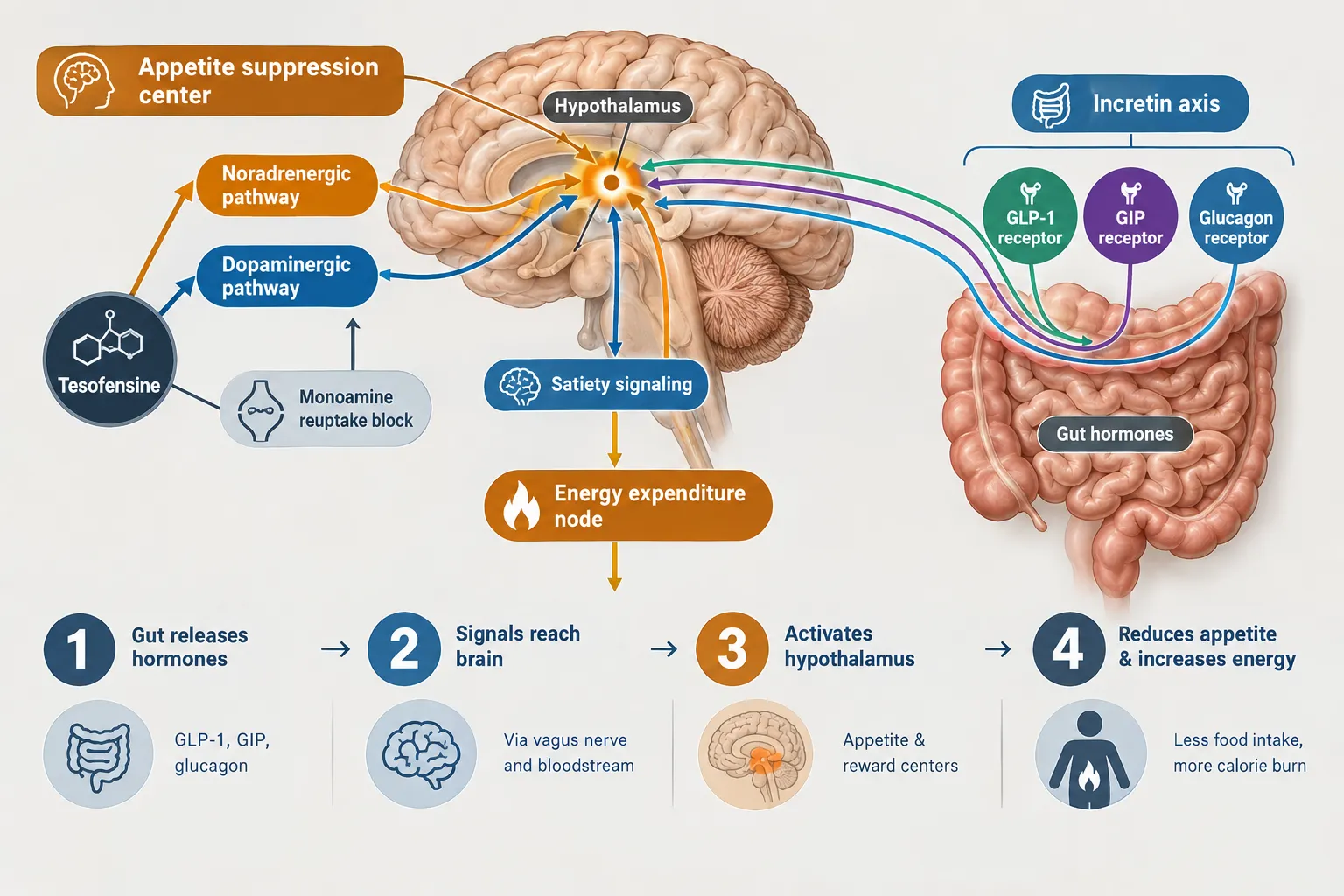
The logic behind the best research-use GLP-3, GLP-2-T, and tesofensine stacks follows a simple principle: mechanistic non-overlap. When two agents share the same receptor or downstream signaling pathway, stacking them yields diminishing returns and complicates endpoint attribution.
Mechanistic Axes Labs Assign to Each Agent
| Agent | Primary Axis | Key Endpoint in Research Models |
|---|---|---|
| GLP-3 / Retatrutide | Incretin (GLP-1, GIP, glucagon) | Body weight, glucose, appetite scores |
| GLP-2-T | Intestinal trophic / gut barrier | Gut morphology, absorption markers |
| Tesofensine | Central monoamine reuptake inhibition | Caloric intake, satiety signaling, CNS activity |
This table illustrates why GLP-2-T is peripheral to most appetite-focused stacks. Its receptor biology targets gut adaptation, not hypothalamic satiety circuits. Labs studying weight-related endpoints would need a strong mechanistic rationale before including it alongside GLP-3 agents.
Tesofensine, by contrast, addresses a completely different axis. Where retatrutide works peripherally through incretin receptors to reduce appetite and enhance energy expenditure, tesofensine works centrally by prolonging monoamine signaling in hypothalamic circuits. That non-overlap is exactly what makes the combination theoretically interesting. For a direct comparison of how these pathways diverge, tesofensine vs GLP-3 retatrutide appetite-modulating pathways provides a useful framework.
Reference Stacks That Set Performance Ceilings
Research labs do not operate in a vacuum. Clinically tested combinations function as performance benchmarks:
- Retatrutide (GLP-3-class): The current gold standard for weight-loss magnitude in any metabolic stack discussion.
- CagriSema (cagrilintide + semaglutide): A GLP-1 plus amylin combination that demonstrates what a dual-mechanism incretin stack achieves.
- Amycretin: A single-molecule GLP-1/amylin co-agonist that further defines the ceiling for incretin-based combinations.
- Tesomet: The only published human data showing tesofensine in a fixed combination, paired with metoprolol for cardiovascular safety in hypothalamic obesity models.
Preclinical triple-agonist data consistently show that balanced GLP-1/GIP/glucagon activation outperforms mono- or dual-agonist approaches, which is the scientific rationale behind the GLP-3-style stack concept. Labs reviewing GLP-3 retatrutide and triple-agonist peptide research shaping next-generation metabolic models will find this preclinical-to-clinical translation well documented.
Practical Stack Comparisons: What Research Labs Are Actually Ordering

When procurement decisions are made for appetite and weight model research, labs generally fall into three protocol categories.
Category 1: Incretin-First Protocols
These labs treat retatrutide or a GLP-1/GIP dual agonist as the primary agent and add secondary compounds only when a specific mechanistic question demands it. GLP-2-T would appear here only if gut barrier integrity or intestinal adaptation is a co-endpoint. For broader context on how incretin peptides compare across research pathways, tesofensine vs semaglutide vs retatrutide appetite research pathways is a useful reference.
Category 2: Central-Plus-Peripheral Stacks
These protocols pair a centrally acting agent (tesofensine) with a peripherally acting incretin (GLP-3/retatrutide) to study additive or synergistic effects on caloric intake and body weight. No published human data exists for this combination as of 2026, making it a preclinical design space. Labs using this approach need robust cardiovascular monitoring endpoints given tesofensine's known hemodynamic profile.
Category 3: Exploratory Multi-Axis Protocols
Some labs include all three agent classes to map interaction effects across incretin, gut trophic, and monoamine axes simultaneously. These are high-variable-count designs that require careful statistical power planning. GLP-2-T inclusion here is typically justified by intestinal permeability or microbiome co-endpoints rather than weight outcomes alone.
Key insight for procurement: The best research-use GLP-3, GLP-2-T, and tesofensine stacks are defined by endpoint specificity, not by the number of compounds included. More agents do not automatically produce better data.
For labs that also study mitochondrial or NAD+ pathways alongside metabolic peptides, how 5-Amino-1MQ and MOTS-c are studied together in metabolic research offers a parallel framework for multi-compound protocol design.
Conclusion
The hierarchy for metabolic peptide stacks in 2026 is clear: triple incretin agonists like retatrutide set the performance ceiling, GLP-1/amylin combinations occupy the second tier, and tesofensine functions as a powerful but structurally separate central-drive agent. GLP-2-T remains a peripheral player in weight-focused models unless gut adaptation is a defined endpoint.
Actionable next steps for research labs:
- Define endpoints first. Appetite suppression, body weight, gut morphology, and monoamine signaling each require different primary agents.
- Use retatrutide or CagriSema data as your benchmark before designing any novel combination protocol.
- Treat GLP-2-T inclusion as an intestinal-axis decision, not a weight-loss decision.
- Build cardiovascular monitoring into any tesofensine-containing stack, following the Tesomet precedent.
- Consult how tesofensine as a noradrenergic appetite modulator compares with GLP-3 peptides in study design before finalizing any central-plus-peripheral protocol.
Research in this space is moving fast. Labs that anchor their stack designs to published mechanistic data and clinical benchmarks will produce the most interpretable results as this field evolves.