Nasal Spray Peptides: How Delivery Route Changes Bioavailability for Semax, Selank, and Klow Blend
Oral peptide administration loses most of its active compound before it ever reaches systemic circulation, degradation by gastrointestinal enzymes and first-pass liver metabolism can strip bioavailability to single-digit percentages. That pharmacokinetic reality is precisely why researchers studying cognitive and anxiolytic peptides have turned their attention to the intranasal route. Understanding Nasal Spray Peptides: How Delivery Route Changes Bioavailability for Semax, Selank, and Klow Blend is not simply a product-format question. It is a formulation science question, one that touches mucosal transport biology, peptide stability, and the structural properties that determine whether a compound reaches its target tissue intact.
Key Takeaways
- Intranasal delivery bypasses gastrointestinal degradation and first-pass liver metabolism, dramatically improving bioavailability for short-chain peptides.
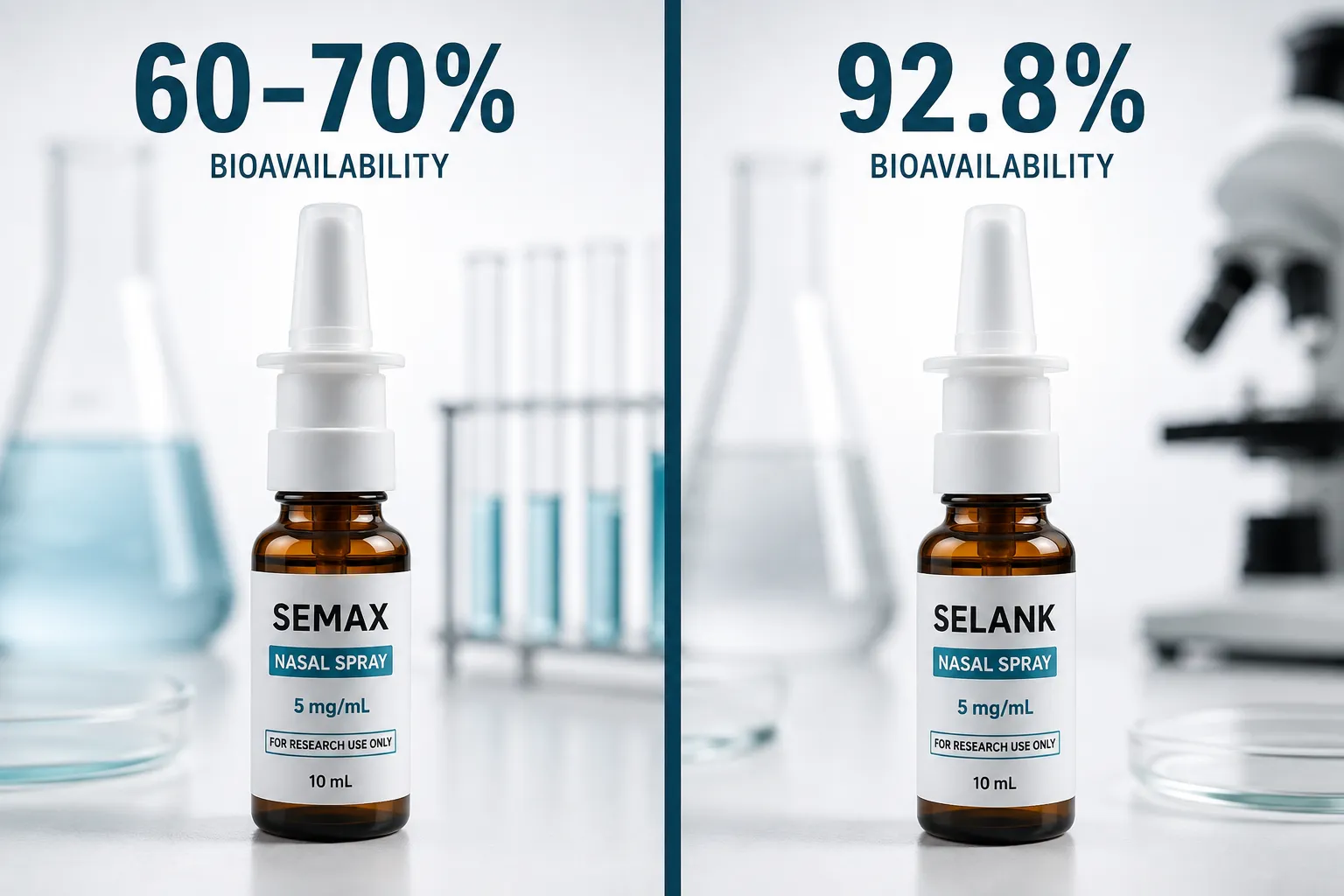
- Selank achieves approximately 92.8% intranasal bioavailability, while Semax reaches roughly 60-70%, making both strong candidates for nasal spray formulation.
- The nasal mucosa provides direct olfactory and trigeminal nerve pathways that allow certain peptides to reach the central nervous system rapidly.
- Peptide molecular weight, charge, and enzymatic stability all influence how well a compound survives mucosal transit.
- Blend formulations like Klow combine complementary peptides whose individual absorption profiles must be matched carefully to avoid delivery mismatches.
Why the Nasal Route Matters for Peptide Research
Peptides are fragile molecules. Most are chains of fewer than 50 amino acids, and their biological activity depends on maintaining that chain's precise three-dimensional shape. The gastrointestinal tract is hostile to that structure, proteases cleave peptide bonds aggressively, and even compounds that survive digestion face hepatic extraction before entering systemic blood flow.
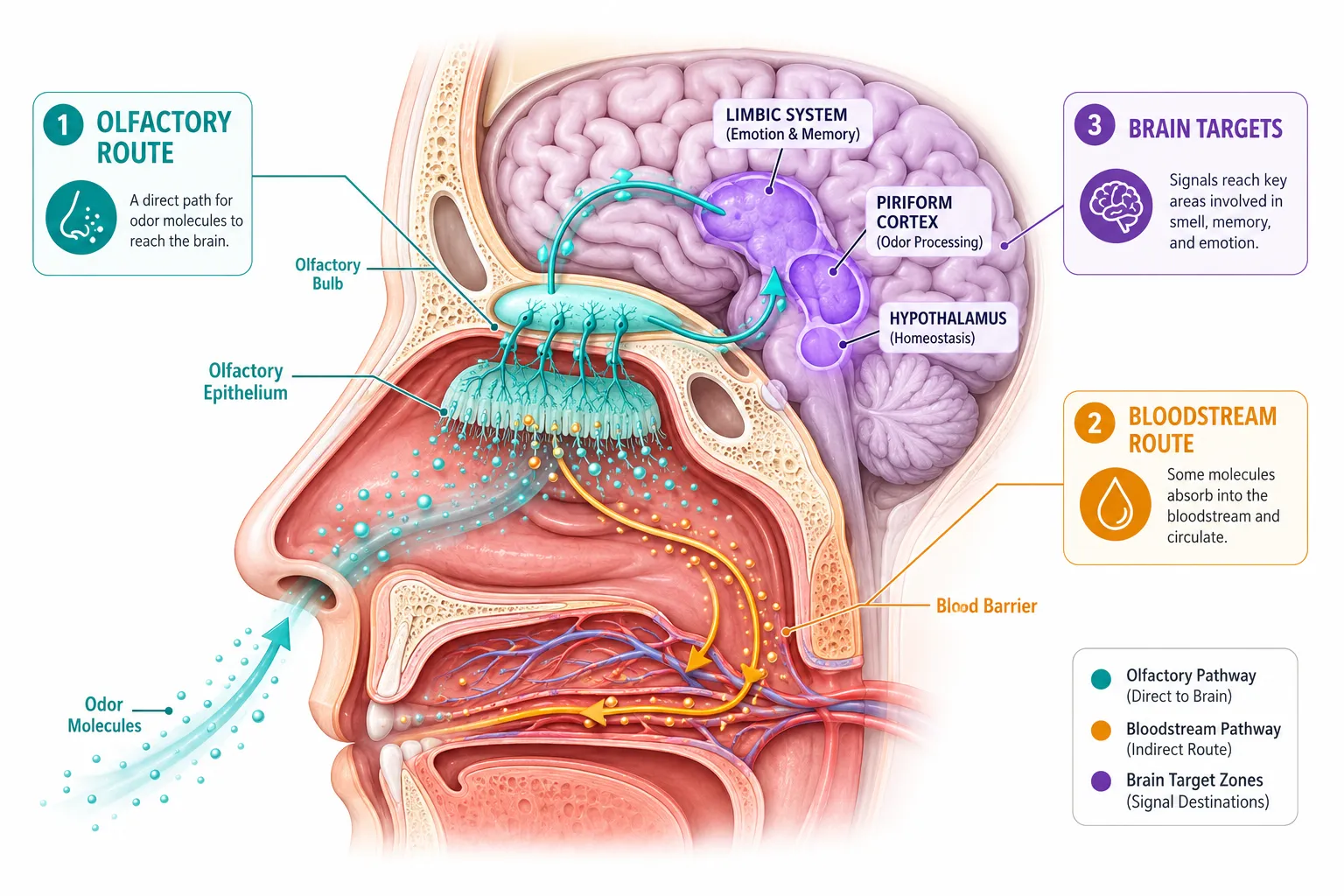
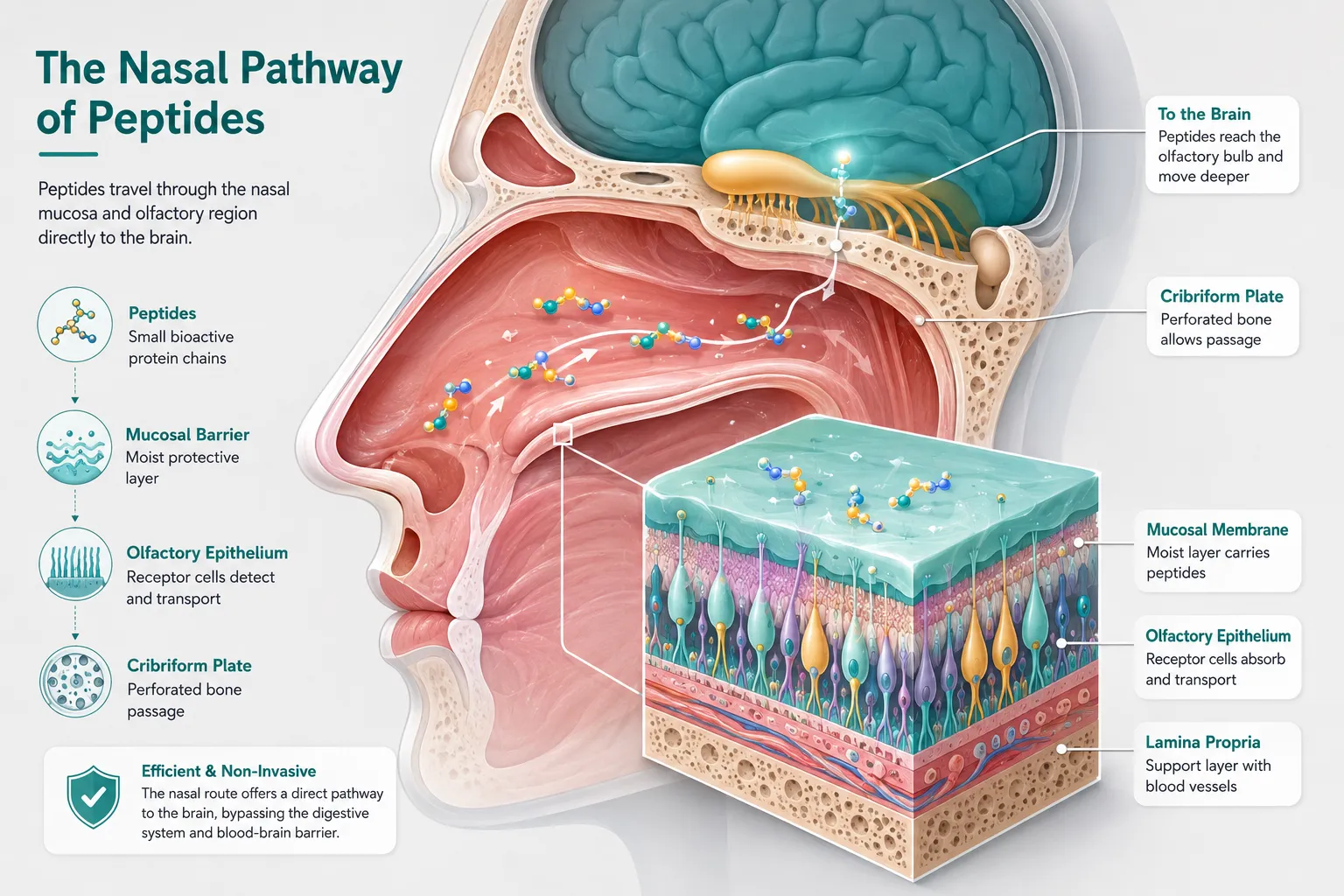
The nasal mucosa presents a fundamentally different environment. The epithelial surface of the nasal cavity is thin, highly vascularized, and equipped with transport mechanisms that favor rapid absorption of small hydrophilic molecules. For peptides in the 500-2,000 dalton molecular weight range, paracellular and transcellular transport across nasal epithelium can deliver meaningful plasma concentrations within minutes of administration.
Beyond systemic absorption, the nasal route offers a second pathway that is uniquely relevant to cognitive and anxiolytic research: direct nose-to-brain transport. The olfactory epithelium sits at the roof of the nasal cavity, separated from the brain only by the cribriform plate. Peptides deposited in this region can travel along olfactory nerve axons and trigeminal nerve branches, bypassing the blood-brain barrier and arriving in cerebrospinal fluid or brain parenchyma without first entering peripheral circulation. This pathway is particularly relevant for compounds whose targets are central nervous system receptors.
For a deeper look at how peptide structure governs these transport dynamics, the polypeptide peptides explained guide covering structure, function, and research applications provides useful foundational context.
Semax and Selank: Comparing Intranasal Bioavailability
Semax: Structure, Stability, and Absorption
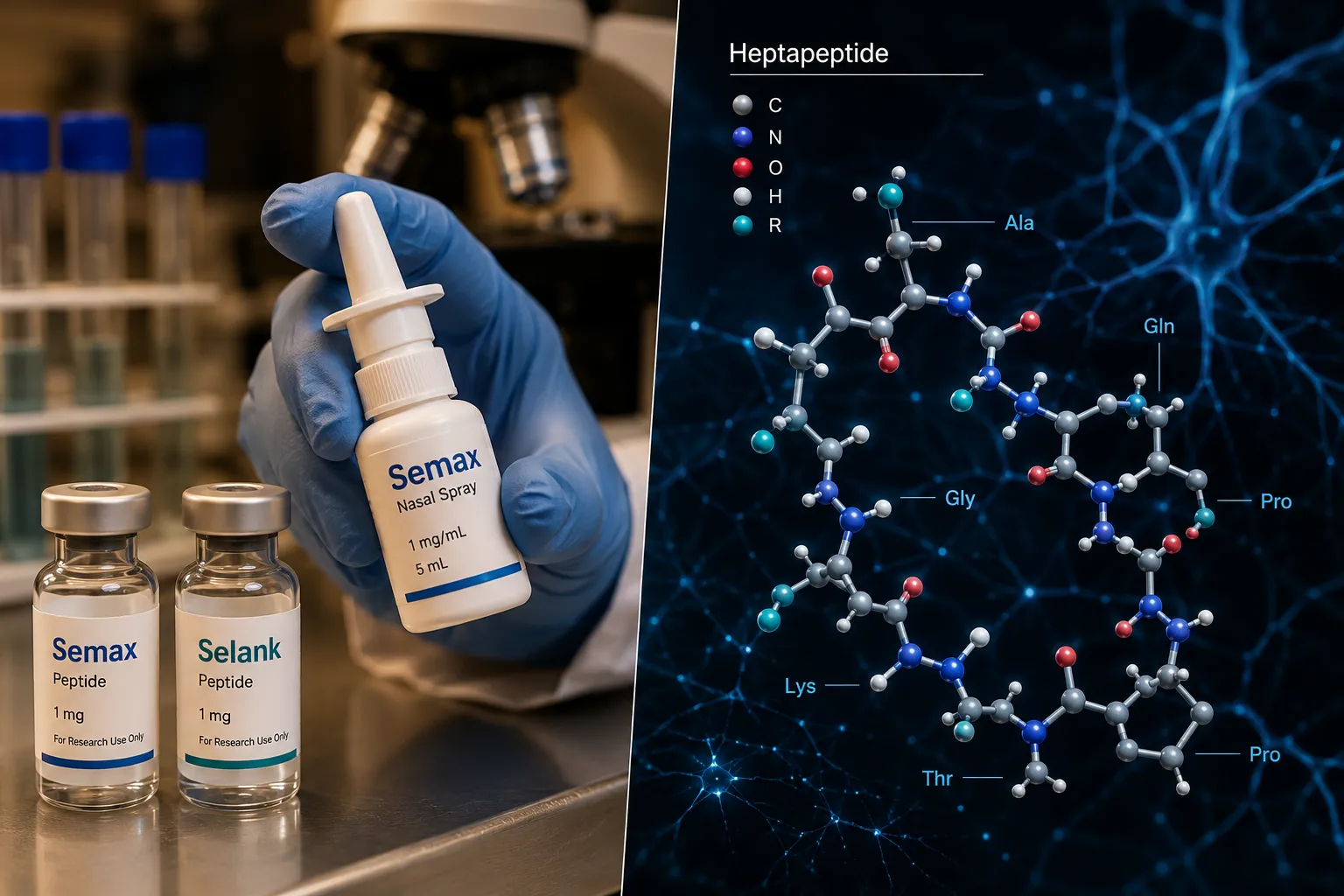
Semax is a synthetic heptapeptide derived from the adrenocorticotropic hormone (ACTH) fragment 4-7, with a Pro-Gly-Pro extension that confers resistance to enzymatic degradation. That structural modification is not incidental, it is a deliberate formulation decision that directly improves nasal mucosal survival time. Intranasal bioavailability for Semax is estimated at approximately 60-70%, a figure that reflects both its moderate lipophilicity and its relative stability against nasal mucosal peptidases.
Semax's primary research interest centers on neurotrophic and neuroprotective effects, including modulation of brain-derived neurotrophic factor (BDNF) expression. The nose-to-brain pathway is therefore not just a convenience, it is mechanistically aligned with the compound's proposed targets.
Selank: Higher Bioavailability, Anxiolytic Profile
Selank is a synthetic analog of the endogenous tetrapeptide tuftsin, extended with a stabilizing Gly-Pro-Pro sequence. This modification substantially reduces enzymatic breakdown at the nasal mucosa. A 2026 comparative review reports intranasal bioavailability for Selank at approximately 92.8%, markedly higher than Semax and among the highest reported for any peptide administered by this route.
The anxiolytic and GABAergic activity attributed to Selank in preclinical models makes central nervous system delivery particularly important. Its high mucosal bioavailability, combined with olfactory transport potential, positions intranasal administration as the most pharmacokinetically efficient route for research purposes.
| Peptide | Molecular Weight | Intranasal Bioavailability | Primary Research Focus |
|---|---|---|---|
| Semax | ~863 Da | ~60-70% | Neuroprotection, BDNF modulation |
| Selank | ~751 Da | ~92.8% | Anxiolytic, GABAergic activity |
The contrast between these two compounds illustrates a core principle: bioavailability is not a fixed property of intranasal delivery in general, it is a property of each specific peptide's interaction with nasal tissue.
For context on how peptide safety profiles relate to immunological pathways, the article on complement-dependent cytotoxicity and peptide safety covering BPC-157, GHK-Cu, and nasal spray peptides is worth reviewing alongside absorption data.
Formulating Blend Products: The Klow Challenge
What Makes a Blend Different from a Single Peptide
The Klow blend combines multiple peptide components into a single nasal spray formulation. From a formulation science standpoint, this introduces complexity that single-peptide products do not face. Each component in a blend carries its own:
- Optimal pH range for stability
- Enzymatic susceptibility profile at the nasal mucosa
- Absorption rate and peak plasma timing
- Potential for intermolecular interaction with co-formulated peptides
When two peptides with significantly different absorption rates are combined, one may reach target tissue well before the other, reducing any intended synergistic effect. Formulators must therefore consider whether the blend's components are pharmacokinetically compatible, not just chemically stable in the same solution.
Stability Considerations for Nasal Spray Formulations
Peptide stability in aqueous nasal spray solutions is governed by several variables: pH (typically 4.5-6.5 for nasal formulations), preservative choice, osmolality, and storage temperature. Lyophilized peptides reconstituted immediately before use generally show superior stability to pre-dissolved solutions stored over time.
For blend formulations, excipient selection becomes more complex. Absorption enhancers such as cyclodextrins or chitosan can improve mucosal permeation for lower-bioavailability components, but they may also alter the absorption kinetics of already high-bioavailability peptides like Selank, potentially creating a mismatch.
The Glow Peptide Blend Benefits resource offers a useful parallel example of how multi-peptide blends are approached from a formulation and research perspective.

Practical Implications for Researchers
Understanding Nasal Spray Peptides: How Delivery Route Changes Bioavailability for Semax, Selank, and Klow Blend has direct implications for experimental design. Researchers using these compounds should account for:
- Dose calculation based on bioavailability, not nominal amount, a 500 mcg nominal dose of Semax delivers a meaningfully different absorbed quantity than the same nominal dose of Selank
- Administration site within the nasal cavity, posterior, superior deposition favors olfactory transport; anterior deposition favors systemic vascular absorption
- Spray device characteristics, droplet size, spray angle, and actuation volume all affect where the compound deposits and how much reaches the mucosa versus drains to the throat
For researchers interested in how other peptide delivery mechanisms compare, the complete guide to peptide mechanisms covering GLP-1, GLP-3, and growth hormone peptides provides broader mechanistic context.
Additionally, the peptides vs classic small-molecule drugs comparison helps frame why peptide-specific delivery considerations differ fundamentally from those applied to conventional pharmaceuticals.
Conclusion
The intranasal route is not simply a convenient alternative to injection, it is a biologically distinct delivery pathway with its own absorption mechanisms, stability challenges, and CNS-access advantages. For Semax, Selank, and blend formulations like Klow, understanding how delivery route changes bioavailability is foundational to designing valid research protocols and interpreting results accurately.
Actionable next steps for researchers:
- Verify the bioavailability data specific to each peptide in your blend before calculating working doses.
- Review formulation stability data, particularly for reconstituted aqueous solutions stored beyond 24 hours.
- Standardize administration technique, spray angle, head position, and volume per actuation, to reduce inter-experiment variability.
- Consult peptide-specific pharmacokinetic literature when combining compounds with different absorption rates in a single formulation.
Delivery route is a formulation variable, not a footnote. Treating it with the same rigor applied to dose selection and purity testing will improve the reliability of any intranasal peptide research program.