Call or Text 727-513-9780
  • Shopping Cart Shopping Cart
    0Shopping Cart
Pure Tested Peptides | America's most trusted Peptides for sale online
  • Peptides for sale
    • Oral Peptides for sale
      • Peptide Capsules for sale
      • BPC 157 Capsules 1000mcg
      • SLU-PP-332 Capsules | 1000 mcg
      • 5-Amino-1MQ 50mg Capsules
      • Tesofensine 500mcg
    • All Peptides for sale
    • Peptide Sprays
      • BPC 157 Nasal Spray Kit
      • BPC-157 TB500 Nasal Spray Kit
      • Semax Nasal Spray 10mg
      • Selank – Nasal Spray Kit – 10mg
      • Epithalon 50MG Nasal Spray Kit
      • Ipamorelin 10mg Nasal Spray
      • Klow Nasal Spray (BPC-157 + TB-500 + GHK-Cu + KPV) | 80mg
      • Hulk Nasal Spray Tesa / Ipa Blend 6/3 MG
      • Klow Nasal Spray
      • NAD + 500 mg Nasal Spray
      • PT-141 Nasal Spray Kit
    • GHRH Peptides
      • Ipa Peptides
      • CJC-1295 Peptides
        • CJC-1295 with DAC 5 mg
        • CJC-1295 without DAC 5 mg
        • CJC-1295 Ipa 10mg
      • Tesa Peptides
        • Tesa Peptide
        • Tesa 20 mg
    • GHK-Cu Peptides
      • All GHK-Cu Peptides
      • GHK-Cu 100mg
      • KLOW Peptide Blend – Buy KLOW blend online
    • BPC Peptides
      • All BPC Peptides
      • BPC-157
      • BPC-157 TB-500
      • BPC 157 capsules 1000mcg
    • SLU-PP-332 Peptides
      • All SLU-PP-332 Peptides
      • SLU-PP-332 5mg
    • GLP3 Peptides
    • PT-141 Peptides
      • PT-141 Peptides for sale
      • PT-141 10mg
      • PT-141 Nasal Spray
    • CAG Peptides
      • Lipo-C Peptide Blend
      • CAG 5mg
      • CAG 10mg
    • MOTS-C Peptides
      • MOTS-C Peptides for sale
      • MOTS-c peptide
      • MOTS-c 10mg *6 pack*
    • 5 Amino 1MQ Peptides
      • 5 Amino 1MQ Peptides for sale
      • 5-Amino-1MQ 50mg Capsules
      • 5-Amino-1MQ 5mg
    • Epithalon Peptides
      • Epithalon Peptides for sale
      • Epithalon 10mg
      • Epithalon 50mg
  • Shop
    • GLPs
      • 5-Amino-1MQ 50mg Capsules
      • 5-Amino-1MQ 5mg
      • L-Carnitine 500mg/ml
      • Tesofensine 500mcg
      • SLU-PP-332 5mg
      • MOTS-c 10mg *6 pack*
    • Epithalon & BPC Peptides
      • Epithalon 10mg
      • Epithalon 50mg
      • BPC-157
      • BPC 157 capsules 1000mcg
      • BPC-157 TB-500
      • BPC-157 TB500 Nasal Spray Kit
      • BPC 157 Nasal Spray Kit
    • BPC TB-500 & NAD+ Peptides
      • NAD+ 500 mg
      • KLOW Peptide Blend – Buy KLOW blend online
      • GLOW Peptide Blend
      • TB 500 5mg
      • BPC 157 capsules 1000mcg – Supplement
      • BPC 157 Nasal Spray Kit
      • BPC-157
      • BPC-157 TB500 Nasal Spray Kit
      • BPC-157 TB-500
      • BPC 157 capsules 1000mcg
    • LL-37 Peptide
      • LL-37 10 mg
    • MOTS-C & Selank
      • MOTS-c peptide
      • Selank 10mg
    • GHK Peptides
      • GHK-Cu 100mg
      • GLOW Peptide Blend
      • KLOW Peptide Blend – Buy KLOW blend online
  • COAs
  • Wholesale
    • Wholesale Peptides for sale
  • PTP FAQ
  • Affiliates
    • Selank Peptide: Advanced Pharmacological Mechanisms Underlying Its Anxiolytic and Nootropic Effects in Research
      • 5-Amino-1MQ Peptide: Detailed Mechanisms of NNMT Inhibition and Its Impact on Cellular Metabolism Research
        • MOTS-C Peptide: Unraveling Its Role in Mitochondrial Dynamics and Energy Metabolism Research
          • Epithalon Peptide and Telomerase Regulation: Investigating Its Impact on Cellular Senescence and Lifespan Research Models
            • GLP2-T vs GLP2 Tirz Peptide: Understanding the Naming, Mechanistic Nuances, and Research Implications for Gut Health
      • Peptides and Polypeptides in Modern Pharmacology: What Research on Metoprolol, Prednisone, and Amlodipine Reveals
        • Polypeptide Peptides vs NSAIDs: What Naproxen and Diclofenac Teach Tissue-Repair Researchers About BPC‑157 and TB‑500
          • Peptides and Polypeptides in Endocrine Pharmacology: How GLP-1, GLP-2, and GLP-3 Retatrutide Differ From Classic Drugs Like Prednisone and Amlodipine
          • 5‑Amino‑1MQ Peptide and NNMT Inhibition: How It Compares With Statins Like Atorvastatin in Adipose and Lipid Metabolism Research
      • Enclomiphene, Estrogen Receptor Signaling, and Luteinizing Phase Biology: What Hormone Researchers Should Measure
        • Mesenchymal Stem Cells, BPC‑157, and GHK‑Cu: How Tissue Repair Peptides Compare With Classic NSAIDs Like Naproxen in Injury Models
          • Peptide Calculator Use Cases Beyond Growth Hormone: Working Through GLP‑3 Retatrutide, MOTS‑c, and BPC‑157 Research Dosing
        • Polypeptide Peptides in Endocrine and Metabolic Pharmacology: Lessons From Amlodipine, Prednisone, and Metoprolol
        • Peptides Calculator for Advanced Blends: Worked Examples for Tesamorelin, CJC‑1295, and Ipamorelin Stacks
          • Peptides and Polypeptides in Human Physiology: How Molecular Size Shapes Research Applications
            • Selank Peptide: Advanced Pharmacological Mechanisms Underlying Its Anxiolytic and Nootropic Effects in Research
          • 5-Amino-1MQ Peptide: Detailed Mechanisms of NNMT Inhibition and Its Impact on Cellular Metabolism Research
            • MOTS-C Peptide: Unraveling Its Role in Mitochondrial Dynamics and Energy Metabolism Research
              • Epithalon Peptide and Telomerase Regulation: Investigating Its Impact on Cellular Senescence and Lifespan Research Models
                • GLP2-T vs GLP2 Tirz Peptide: Understanding the Naming, Mechanistic Nuances, and Research Implications for Gut Health
                  • Peptides and Polypeptides in Endocrine Pharmacology: How GLP-1, GLP-2, and GLP-3 Retatrutide Differ From Classic Drugs Like Prednisone and Amlodipine
                    • Polypeptide Peptides vs NSAIDs: What Naproxen and Diclofenac Teach Tissue-Repair Researchers About BPC‑157 and TB‑500
                      • Peptides and Polypeptides in Modern Pharmacology: What Research on Metoprolol, Prednisone, and Amlodipine Reveals
                        • 5‑Amino‑1MQ Peptide and NNMT Inhibition: How It Compares With Statins Like Atorvastatin in Adipose and Lipid Metabolism Research
                        • Enclomiphene, Estrogen Receptor Signaling, and Luteinizing Phase Biology: What Hormone Researchers Should Measure
                        • Mesenchymal Stem Cells, BPC‑157, and GHK‑Cu: How Tissue Repair Peptides Compare With Classic NSAIDs Like Naproxen in Injury Models
                        • Peptide Calculator Use Cases Beyond Growth Hormone: Working Through GLP‑3 Retatrutide, MOTS‑c, and BPC‑157 Research Dosing
                        • Polypeptide Peptides in Endocrine and Metabolic Pharmacology: Lessons From Amlodipine, Prednisone, and Metoprolol
                        • Peptides Calculator for Advanced Blends: Worked Examples for Tesamorelin, CJC‑1295, and Ipamorelin Stacks
                        • Peptides and Polypeptides in Human Physiology: How Molecular Size Shapes Research Applications
                        • Selank Peptide: Advanced Pharmacological Mechanisms Underlying Its Anxiolytic and Nootropic Effects in Research
                        • MOTS-C Peptide: Unraveling Its Role in Mitochondrial Dynamics and Energy Metabolism Research
                        • Peptides and Polypeptides in Modern Pharmacology: What Research on Metoprolol, Prednisone, and Amlodipine Reveals
                        • Peptides and Polypeptides in Endocrine Pharmacology: How GLP-1, GLP-2, and GLP-3 Retatrutide Differ From Classic Drugs Like Prednisone and Amlodipine
                        • 5-Amino-1MQ Peptide: Detailed Mechanisms of NNMT Inhibition and Its Impact on Cellular Metabolism Research
                        • Mesenchymal Stem Cells, BPC‑157, and GHK‑Cu: How Tissue Repair Peptides Compare With Classic NSAIDs Like Naproxen in Injury Models
                        • Peptide Calculator Use Cases Beyond Growth Hormone: Working Through GLP‑3 Retatrutide, MOTS‑c, and BPC‑157 Research Dosing
                        • GLP2-T vs GLP2 Tirz Peptide: Understanding the Naming, Mechanistic Nuances, and Research Implications for Gut Health
                        • Polypeptide Peptides in Endocrine and Metabolic Pharmacology: Lessons From Amlodipine, Prednisone, and Metoprolol
                        • Polypeptide Peptides vs NSAIDs: What Naproxen and Diclofenac Teach Tissue-Repair Researchers About BPC‑157 and TB‑500
                        • Peptides and Polypeptides in Human Physiology: How Molecular Size Shapes Research Applications
                        • Peptides Calculator for Advanced Blends: Worked Examples for Tesamorelin, CJC‑1295, and Ipamorelin Stacks
                        • 5‑Amino‑1MQ Peptide and NNMT Inhibition: How It Compares With Statins Like Atorvastatin in Adipose and Lipid Metabolism Research
                        • Enclomiphene, Estrogen Receptor Signaling, and Luteinizing Phase Biology: What Hormone Researchers Should Measure
                        • Epithalon Peptide and Telomerase Regulation: Investigating Its Impact on Cellular Senescence and Lifespan Research Models
                        • Best research protocol Klow blend
                        • best time to take BPC-157
                        • best time to take DSIP (Delta Sleep Inducing Peptide)
                        • best time to take CJC-1295
                        • best time to take AOD-9604
                        • best time to take Follistatin 344
                        • best time to take Ipamorelin
                        • best time to take MK-677 (Ibutamoren)
                        • best time to take Ligandrol (LGD-4033) — research compound
                        • best time to take Ostarine (MK-2866) — research compound
                        • best time to take GHK-CU
                        • best time to take TB-500
                        • best time to take MOTS-c
                        • best time to take Semax
                        • best time to take RAD-140 (Testolone) — research compound
                        • best time to take Thymosin Alpha-1
                        • best time to take PEG-MGF
                        • Biolife Plasma, Octapharma Plasma, and Research Peptides: How Plasma Donation Labs Differ From Peptide Suppliers
                        • best time to take YK-11 — research compound
                        • best time to take PT-141 (Bremelanotide)
                        • Best research protocol Klow blend
                        • 5-Amino-1MQ and MOTS-C Synergy: Metabolic Signaling, Mitochondria, and Research Design
                        • BPC-157 and TB-500: Investigating Their Combined Effects on Angiogenesis and Cellular Migration in Tissue Repair Models
                        • BPC-157 Peptide: Gut Barrier Function, Inflammation, and Tissue-Recovery Research
                        • 5‑Amino‑1MQ and MOTS‑c Synergy in Metabolic Research: Designing NNMT and Mitochondrial Biogenesis Stacks
                        • CJC-1295 with DAC vs. Without DAC: Half-Life, Release Kinetics, and Research Implications
                        • CJC‑1295 with DAC vs. Without DAC: Expanding on Half‑Life Differences Using Tesamorelin and Ipamorelin Blend Case Studies
                        • Collagen Biology and Copper‑Binding Peptides: How GHK‑Cu, Glow Blend, and Klow Blend Interact with Skin and Connective Tissue
                        • Collagen Biology and Regenerative Peptides: How GHK‑Cu, Glow Blend, and Klow Blend Affect Extracellular Matrix Research
                    • DNA, Telomeres, and Longevity Peptides: Positioning Epithalon and MOTS‑c in Genetic Aging Research
                      • Enclomiphene Citrate: serm Mechanism, Testosterone Research, and Stack Compatibility
                        • Enclomiphene vs Enclomiphene Citrate: Formulation, Bioavailability, and Research Distinctions
                        • Epithalon Peptide Research: Telomerase Activation, Aging, and Pineal Gland Function
                        • Estrogen Receptor Signaling and Enclomiphene: How Selective Modulators Compare with Classic Polypeptide Hormones
                        • GHK-Cu Peptide: Advanced Mechanisms in Extracellular Matrix Remodeling and Wound Healing Research
                        • GHK-Cu Peptide: Collagen Synthesis, Wound Repair, and Skin-Barrier Research Models
                        • GLP-1 vs GLP-3 vs GLP-2: Peptide Classification and Research Applications
                        • GLP-2 Peptide Research Guide: Gut Barrier Function, Nutrient Absorption, and Intestinal Recovery Models
                        • GLP-3 Retatrutide vs. GLP-1 Drugs: What Triple-Agonist Biology Changes in Research Models
                        • Ipamorelin and Tesamorelin Combination: Synergistic GH Secretagogue Research and Dosing Protocols
                        • GLP2 Tirz Peptide: What It Is, Why the Name Exists, and How Researchers Should Interpret It
                        • Klow Blend Peptide Nasal Spray: What the Formulation Is Trying to Do in Cognitive Research
                        • Mitochondria, NNMT Inhibition, and Peptide Modulators: Where MOTS‑c and 5‑Amino‑1MQ Fit in Cellular Energy Research
                        • MOTS-c Peptide: Mitochondrial Function, Energy Metabolism, and What Researchers Measure
                        • MOTS-c vs. 5-Amino-1MQ: Which Metabolic Research Questions Each Compound Actually Answers
                        • Nasal Spray Peptides: Bioavailability, Administration, and Semax/Selank Research Applications
                        • PT-141 Peptide Research: Mechanism of Action and Melanocortin Receptor Signaling
                        • Retatrutide for Research: Mechanism, Structure, and GLP-1/GLP-3 Dual Action
                        • Retatrutide for Obesity and Type 2 Diabetes: What the Latest Trial Data Suggest
                        • Tesofensine Peptide Research: Mechanism, Appetite Suppression, and Neuropeptide Y Pathways
  • Contact
    • Contact Customer Service
    • Text Customer Support
  • About US
  • Shop all peptides
  • Affiliate Program
    • Affiliate Signup
  • Login / Register Login / Register Page Link Login / Register Page Link
  • Click to open the search input field Click to open the search input field Search
  • Menu Menu

Tag Archive for: intranasal peptide formulations

Klow Blend vs Klow Peptide Nasal Spray: How Researchers Compare Intranasal Formulations

Klow Blend vs Klow Peptide Nasal Spray: How Researchers Compare Intranasal Formulations

September 29, 2026/0 Comments/in Uncategorized/by

Naming conventions in peptide research can be deceptively consequential. When researchers search for "Klow Blend vs Klow Peptide Nasal Spray: How Researchers Compare Intranasal Formulations," they are not simply comparing two products with similar labels, they are evaluating fundamentally different delivery architectures built around overlapping but distinct peptide compositions. Understanding what separates these two formulations, and why the distinction matters in a research context, is the focus of this article.

Key Takeaways

  • The Klow Blend and Klow Peptide Nasal Spray share core peptide components but differ critically in delivery format, concentration, and intended research application.
  • The primary compositional difference between "KLOW" and "GLOW" naming conventions relates to the inclusion of KPV, a tripeptide with distinct anti-inflammatory research properties.
  • Intranasal formulations offer researchers a needle-free route of administration, but require different handling protocols compared to lyophilized vial formats.
  • Both formulations carry research-only status and have not received regulatory drug approval for human therapeutic use.
  • Purity verification through third-party Certificates of Analysis (COAs) is a critical quality-control step for both formats in 2026.

What Is the Klow Blend and How Does It Differ from the Nasal Spray Format
What Is the Klow Blend and How Does It Differ from the Nasal Spray Format

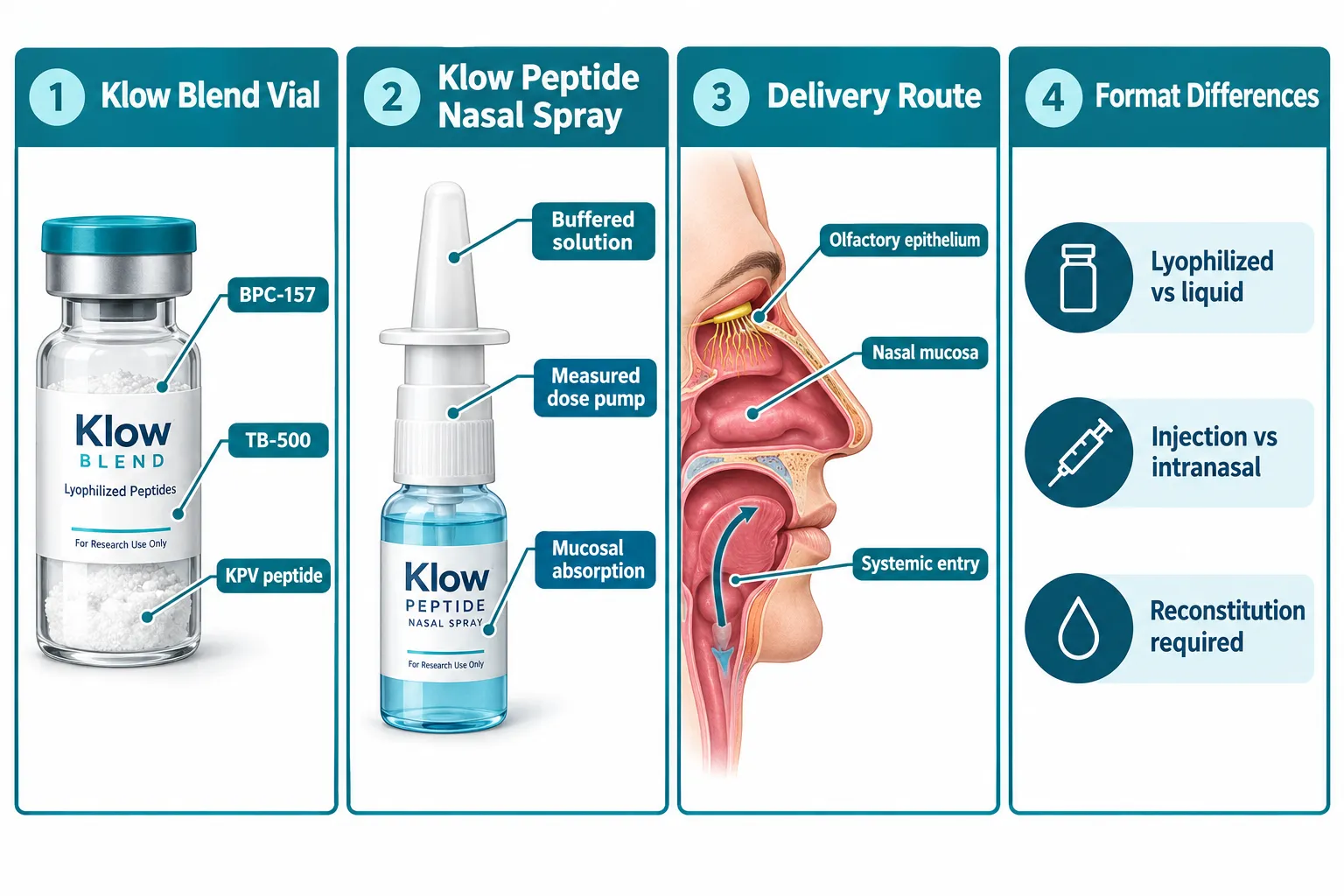
The Klow Blend is typically supplied as a lyophilized powder in a multi-peptide vial format. Standard lot specifications in 2026 include a combination of BPC-157, TB-500, and KPV, the latter being the defining component that distinguishes the "KLOW" designation from the similarly named "GLOW" blend, which omits KPV. KPV is a tripeptide fragment (Lys-Pro-Val) derived from alpha-melanocyte-stimulating hormone, and its inclusion adds a distinct anti-inflammatory research dimension to the overall blend.

In vial format, the Klow Blend requires reconstitution before use, typically with bacteriostatic water. Researchers working with this format must calculate dose volumes based on total peptide mass per vial, a process that demands precision but allows flexible dosing across a range of experimental protocols.

The Klow Peptide Nasal Spray, by contrast, arrives as a pre-buffered aqueous solution loaded into a metered-dose pump device. Dose ranges for nasal spray formulations typically fall between 100 mcg and 300 mcg per actuation, depending on the specific product lot and supplier specifications. This format eliminates the reconstitution step entirely and provides a consistent, reproducible delivery volume with each pump actuation.

"The shift from vial to intranasal format is not simply a matter of convenience, it represents a fundamentally different pharmacokinetic pathway that researchers must account for in their study designs."

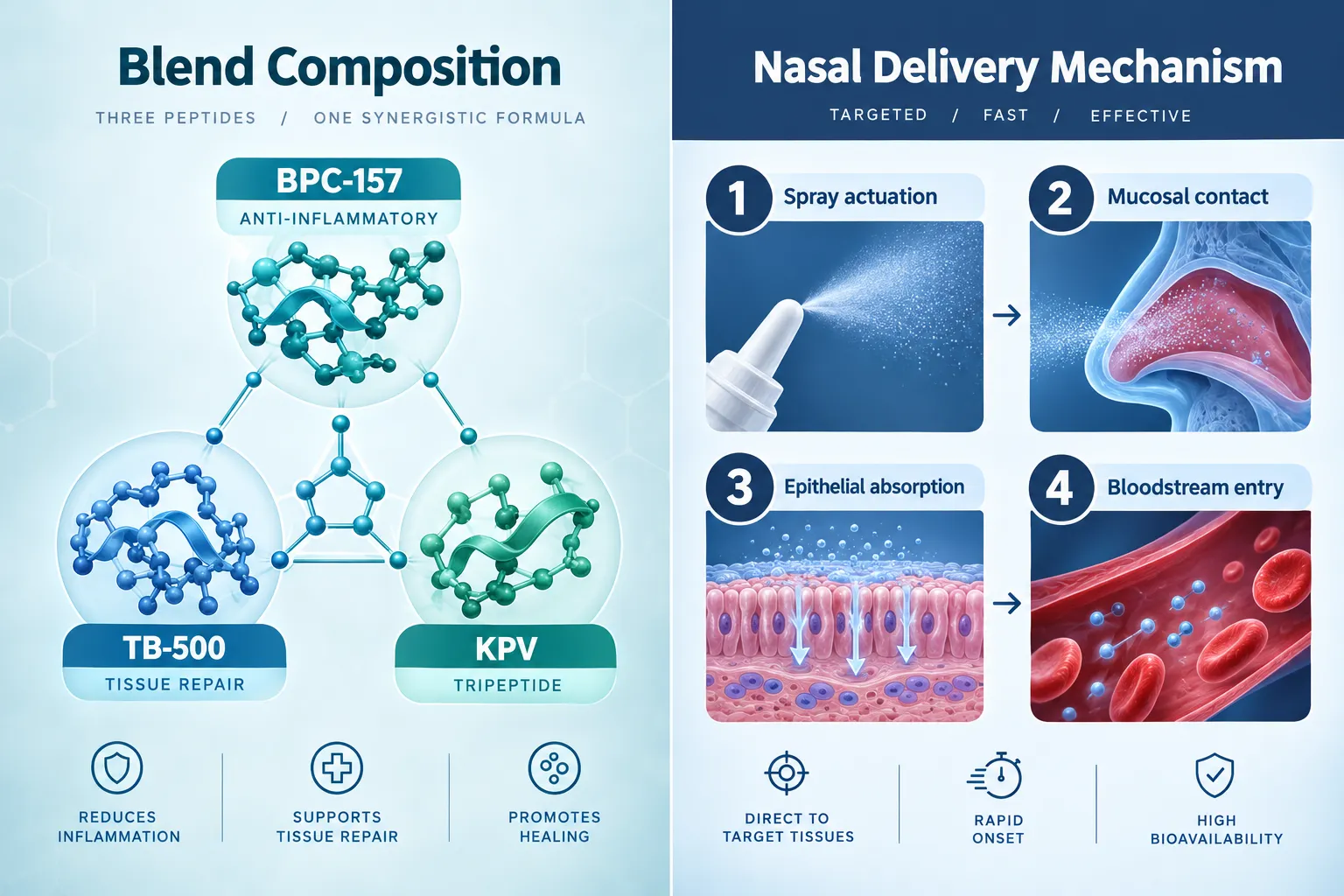
Researchers comparing intranasal formulations note that the nasal route bypasses hepatic first-pass metabolism and allows peptides to reach systemic circulation through the nasal mucosa and, in some cases, the olfactory epithelium. This makes the GLP nasal spray delivery model a point of reference when evaluating how peptide blends perform across different administration routes.


How Researchers Compare Intranasal Formulations: Key Variables
How Researchers Compare Intranasal Formulations: Key Variables

When applying a Klow Blend vs Klow Peptide Nasal Spray comparison framework, researchers typically evaluate several variables side by side:

Delivery Route and Absorption

Variable Klow Blend (Vial) Klow Peptide Nasal Spray
Administration Reconstituted injection Intranasal pump actuation
Absorption pathway Subcutaneous/systemic Nasal mucosa, olfactory epithelium
Reconstitution required Yes No
Dose precision Researcher-calculated Fixed per actuation
Stability (post-preparation) Hours to days Manufacturer-determined shelf life

Peptide Composition

Both formats contain BPC-157 and TB-500 as foundational components. BPC-157 is a synthetic pentadecapeptide studied extensively in the context of wound healing peptide research, while TB-500 (Thymosin Beta-4 fragment) is associated with tissue repair and cytoskeletal organization. The addition of KPV in both Klow formats, as opposed to GLOW variants, represents the key compositional distinction that researchers must verify when sourcing materials.

For researchers already familiar with multi-component systems such as the BPC-157 and TB-500 blend, the Klow formulation adds a third active component that broadens the research scope.

Emerging Research Themes for Intranasal Klow

Nasal spray delivery of peptide blends has attracted growing interest in 2026 for several thematic research areas:

  • Gut-brain axis signaling, given the olfactory-to-CNS proximity of the intranasal route
  • Mucosal inflammation models, where KPV's anti-inflammatory properties are particularly relevant
  • Comparative bioavailability studies contrasting nasal versus subcutaneous delivery

Researchers exploring broader peptide delivery systems may also reference GLP-1 peptides and GLP-3 nasal spray platforms as parallel models for intranasal peptide pharmacokinetics.


Quality Control, Research Status, and Sourcing Considerations
Quality Control, Research Status, and Sourcing Considerations

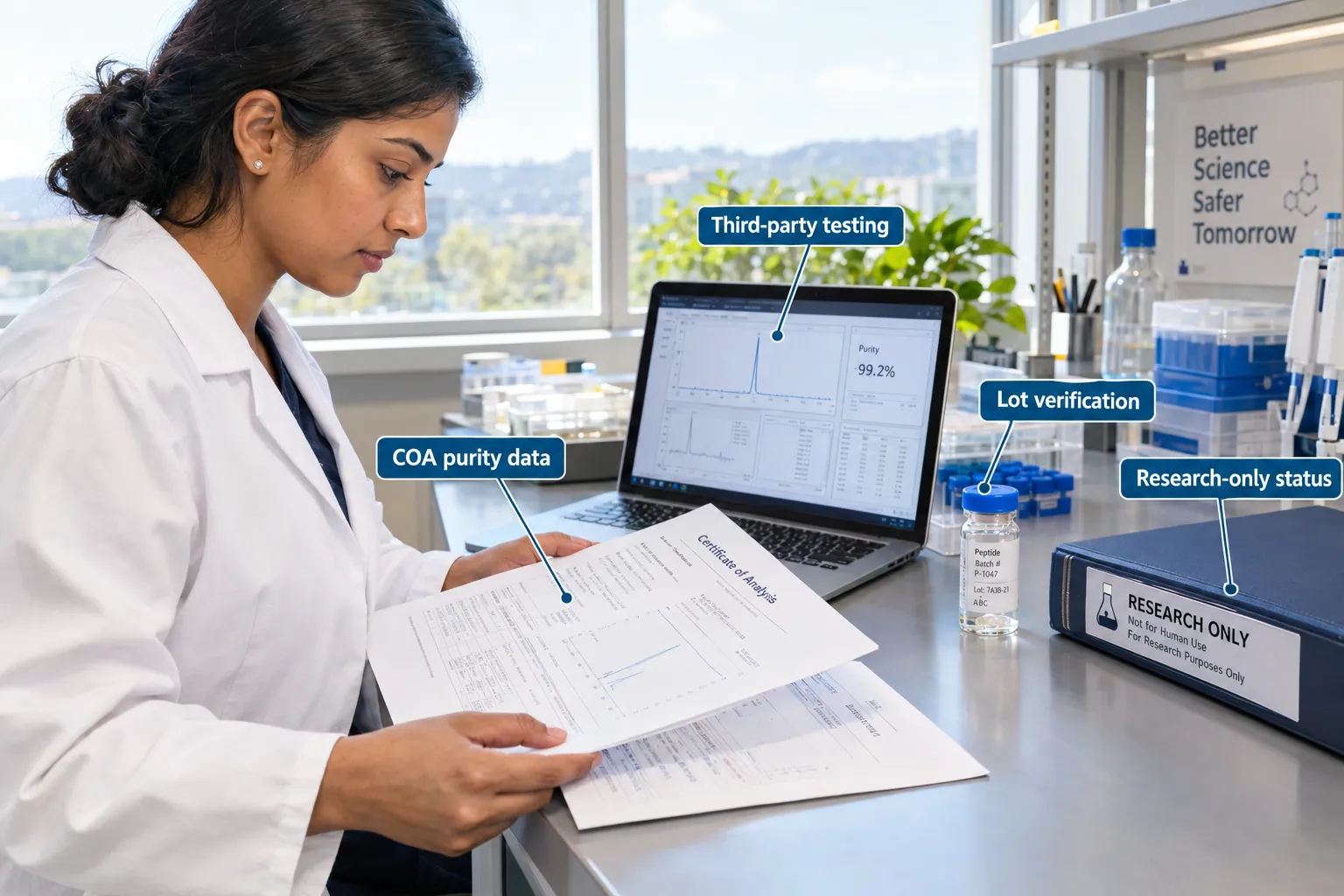
Both the Klow Blend and Klow Peptide Nasal Spray carry strict research-only status as of 2026. Neither formulation has received approval from the FDA, EMA, or equivalent regulatory bodies for therapeutic use in humans. This classification is consistent across the broader peptide research supply landscape and places responsibility on researchers to handle materials under appropriate laboratory conditions.

Certificate of Analysis (COA) Verification

Recent quality-control data for Klow Blend lots in 2026 highlights the importance of third-party COA verification. Researchers should confirm:

  • Purity levels at or above 98% by HPLC analysis
  • Correct peptide identity confirmed by mass spectrometry
  • Absence of endotoxins and microbial contamination
  • Lot-specific documentation matching the received product

For the nasal spray format, additional quality parameters include pH range verification (typically 4.5-6.5 for nasal tolerability), preservative concentration, and pump actuation consistency.

When sourcing either format, working with a best peptide supplier that provides transparent, lot-specific COA documentation is non-negotiable for credible research outcomes. Researchers can also explore wholesale peptides options for larger-scale study requirements, provided purity standards are maintained.

International Availability

As of late 2026, both Klow formats are available through specialized peptide research suppliers in North America, Europe, and select Asia-Pacific markets. Pricing varies by lot size and supplier, with nasal spray formats generally commanding a modest premium over equivalent vial-format peptide mass due to formulation and device costs.


Conclusion

The comparison between Klow Blend vs Klow Peptide Nasal Spray: How Researchers Compare Intranasal Formulations ultimately centers on three core considerations: delivery route, compositional verification, and quality documentation. The vial format offers dosing flexibility and is well-suited to researchers with established reconstitution protocols. The nasal spray format reduces handling complexity and introduces a distinct pharmacokinetic pathway that may be advantageous for specific research designs.

Actionable next steps for researchers:

  1. Confirm KPV inclusion in any sourced Klow product to distinguish it from GLOW-variant blends.
  2. Request lot-specific COAs from suppliers before initiating any study protocol.
  3. Design comparative studies that account for the different absorption kinetics of intranasal versus subcutaneous delivery.
  4. Consult the latest regulatory guidance in your jurisdiction before handling research-only peptide materials.
  5. Cross-reference findings with parallel intranasal peptide research, including GLP-class and GLP-3 peptide delivery studies, to contextualize results.

The naming distinction between these two formulations is not cosmetic, it reflects a meaningful difference in research application. Precision in product identification is the first step toward rigorous, reproducible peptide research.

https://www.puretestedpeptides.com/wp-content/uploads/2026/09/klow-blend-vs-klow-peptide-nasal-spray-how-researchers-compare-intranasal-formul.webp 1254 1254 https://www.puretestedpeptides.com/wp-content/uploads/2026/01/buy-peptides-online.jpg 2026-09-29 13:09:432026-09-29 13:09:43Klow Blend vs Klow Peptide Nasal Spray: How Researchers Compare Intranasal Formulations
×

Helpful Links

  • My account
  • Cart
  • Checkout
  • Refund and Returns Policy
  • Privacy Policy
  • SMS Privacy Policy
  • Login
  • My Account
  • Logout

USA Made Lab Tested Peptides

All products are sold for research, laboratory, or analytical purposes only, and are not for human consumption


Pure Tested Peptides is a chemical supplier. Pure Tested Peptides is not a compounding / chemical compounding facility as defined under 503A of the Federal Food, Drug, and Cosmetic act. Pure Tested Peptides is not an outsourcing facility as defined under 503B of the Federal Food, Drug, and Cosmetic act.

The statements made within this website have not been evaluated by the US Food and Drug Administration. The products we offer are not intended to diagnose, treat, cure or prevent any disease.

Human/Animal Consumption Prohibited. Laboratory/In-Vitro Experimental Use Only

Scroll to top Scroll to top Scroll to top