5-Amino-1MQ and MOTS-c in Adipose, Liver Co-Culture: Separating Lipid Flux From Mitochondrial Stress
Most metabolic research still treats fat tissue and the liver as separate problems. That is a critical design flaw. When adipocytes flood the portal circulation with free fatty acids, the liver responds within minutes, triggering oxidative stress, altering NAD+ pools, and reshaping mitochondrial dynamics. Studying either organ alone produces an incomplete picture. Research into 5-Amino-1MQ and MOTS-c in adipose, liver co-culture: separating lipid flux from mitochondrial stress directly addresses this gap by forcing both cell types to respond to each other simultaneously.
Key Takeaways
- 5-Amino-1MQ inhibits NNMT in adipose tissue, raising NAD+ and reducing fat mass in preclinical models
- MOTS-c is a mitochondria-derived peptide that modulates lipid oxidation and reduces hepatic stress signals
- Adipose, liver co-culture systems expose cross-tissue crosstalk invisible in single-organ studies
- Separating lipid flux endpoints from mitochondrial stress markers is essential for clean mechanistic data
- Neither compound has regulatory approval; all current findings are preclinical or early-stage research
How 5-Amino-1MQ Reshapes Adipose Lipid Flux
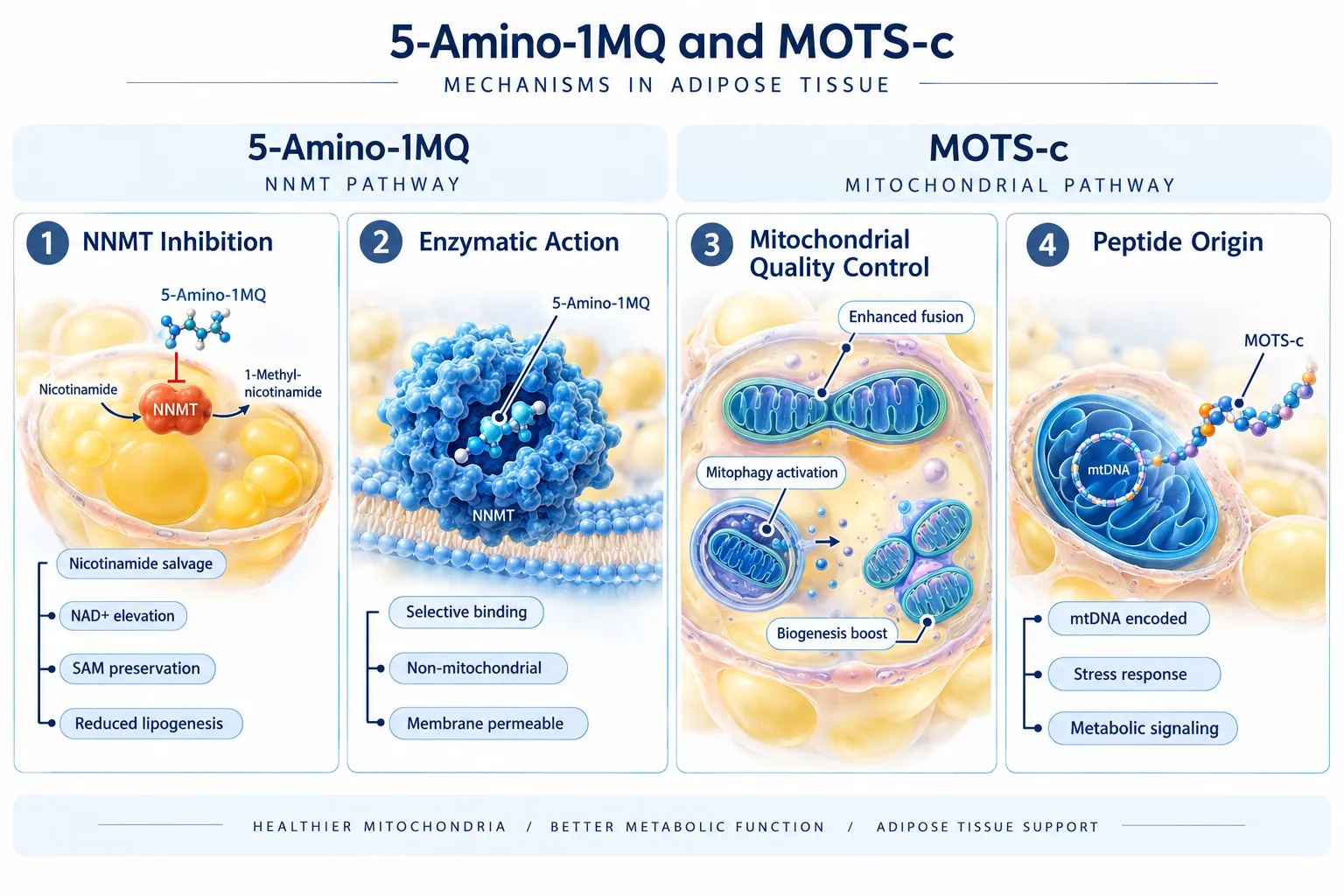
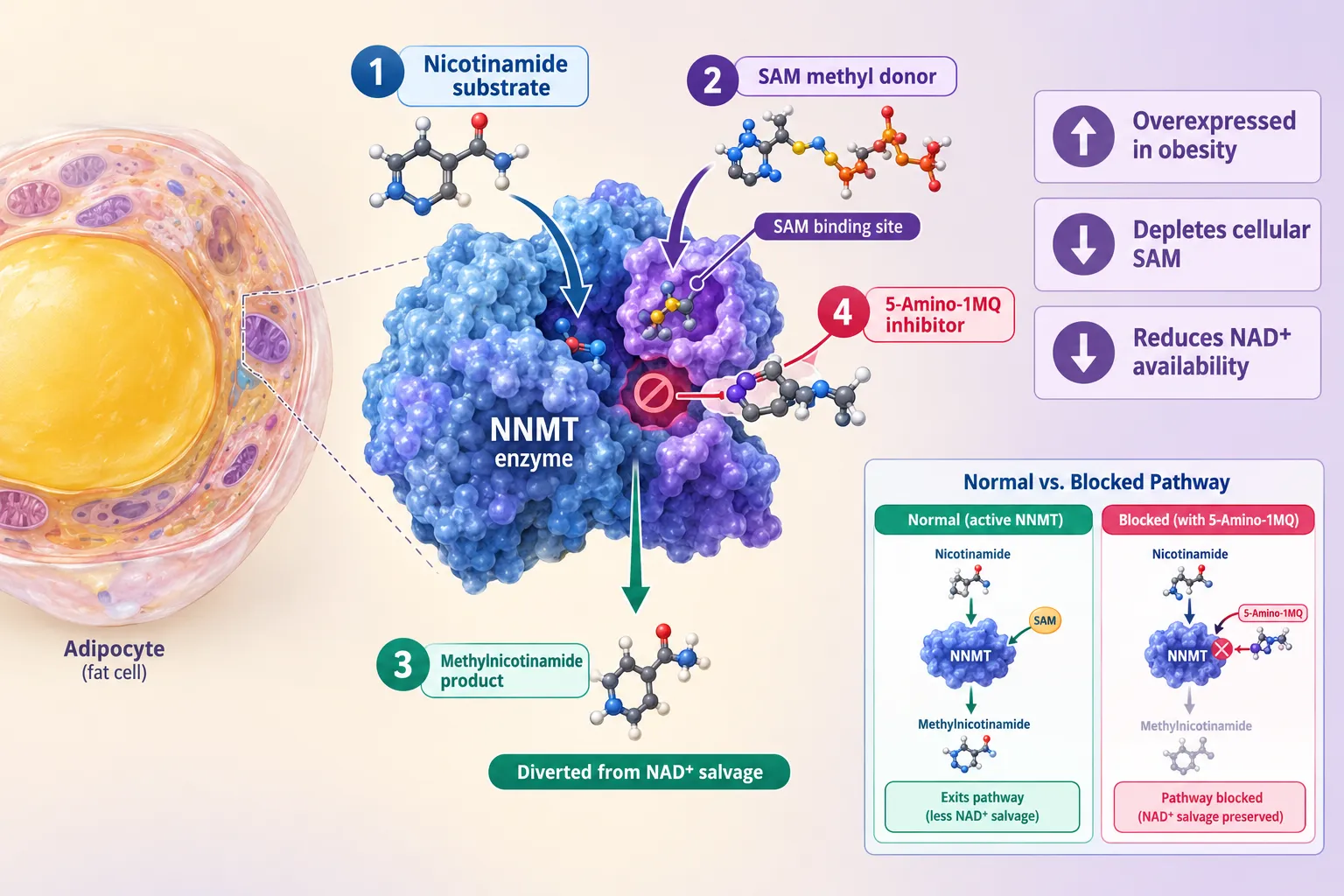
5-Amino-1MQ is a small-molecule inhibitor of nicotinamide N-methyltransferase (NNMT), an enzyme highly expressed in white adipose tissue. NNMT consumes S-adenosyl methionine and deflects nicotinamide away from the NAD+ biosynthesis pathway. By blocking NNMT, 5-Amino-1MQ restores NAD+ availability, shifts adipocytes toward higher energy expenditure, and promotes lipid mobilization.
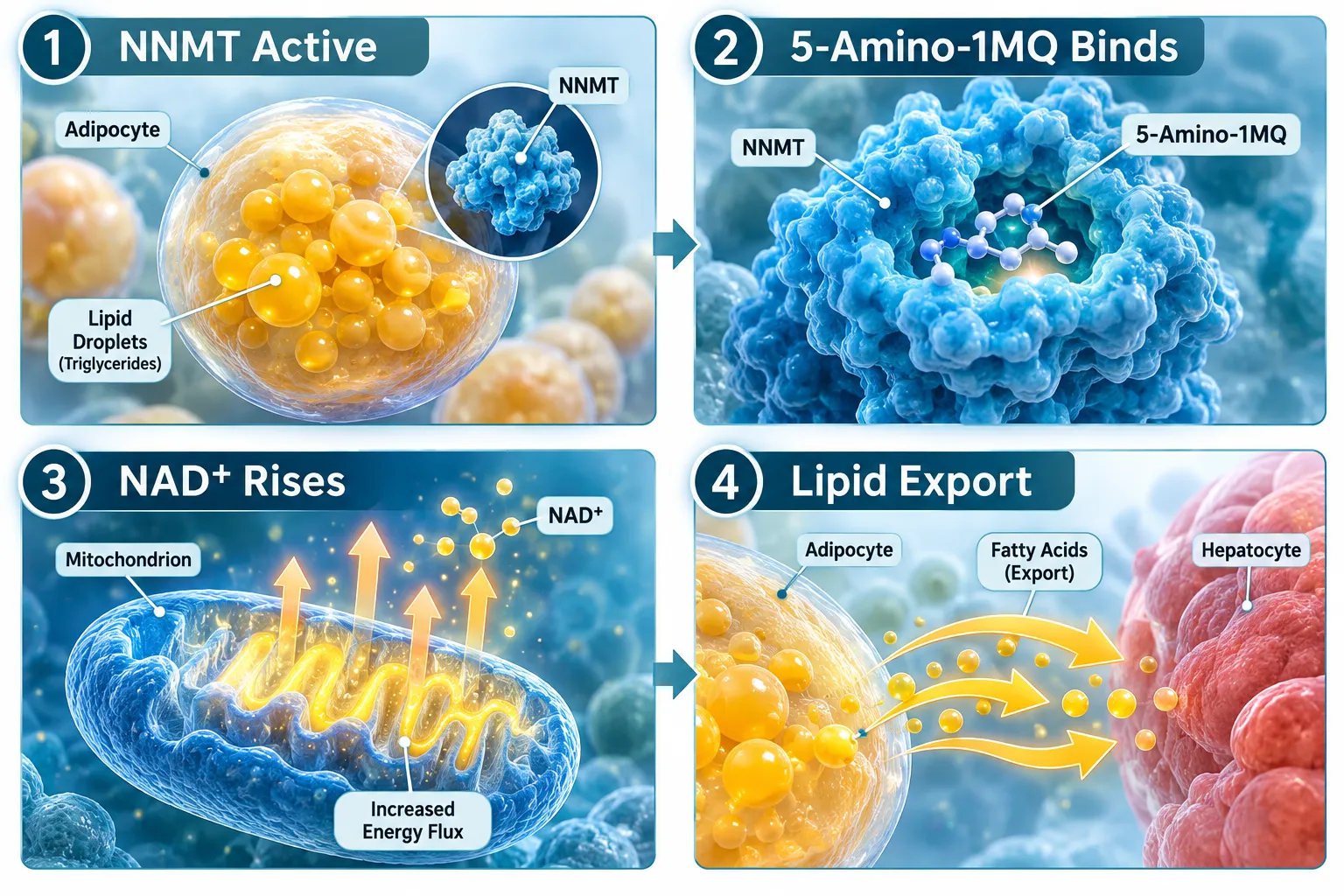
Preclinical mouse studies using high-fat diet models have reported fat mass reductions of roughly 7-9% over several weeks of treatment, without significant changes in lean body mass. Tissue distribution data suggest the compound reaches both adipose depots and hepatic tissue, meaning the liver is not a passive bystander, it receives the downstream lipid load generated when adipocytes begin exporting stored fat more aggressively.
This is precisely why co-culture design matters. When a researcher treats isolated adipocytes with 5-Amino-1MQ and measures only intracellular triglyceride, they miss what happens to the free fatty acids (FFAs) that leave those cells. In a co-culture format, those FFAs travel to co-plated hepatocytes, where they can either fuel beta-oxidation or overwhelm mitochondrial capacity and produce reactive oxygen species (ROS).
Key lipid flux readouts in adipose compartment:
- Lipolysis rate (glycerol release assay)
- Free fatty acid secretion into shared media
- ATGL and HSL enzyme activity
- Lipid droplet morphology via Oil Red O staining
Connecting these readouts to hepatocyte stress markers in real time is the core proposition of the co-culture model. Researchers interested in visceral fat research will recognize that visceral adipose tissue, in particular, drains directly into the portal vein, making the adipose-to-liver lipid relay clinically relevant.
MOTS-c: Mitochondrial Peptide, Cross-Tissue Signal
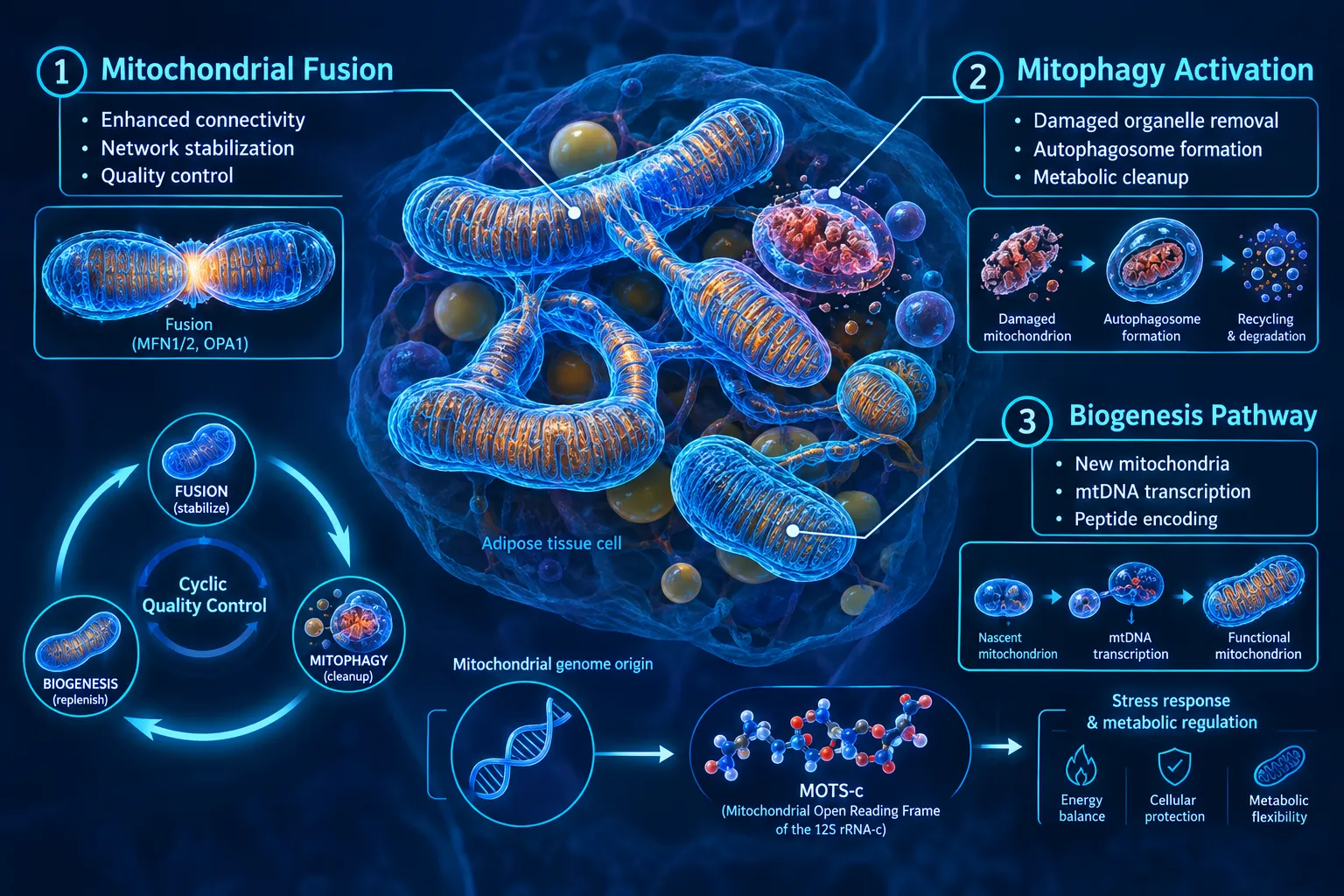
MOTS-c is a 16-amino acid peptide encoded within the 12S rRNA region of mitochondrial DNA. It is released from mitochondria in response to metabolic stress and functions as a retrograde signal that travels between tissues, including from muscle to adipose and from adipose to liver.
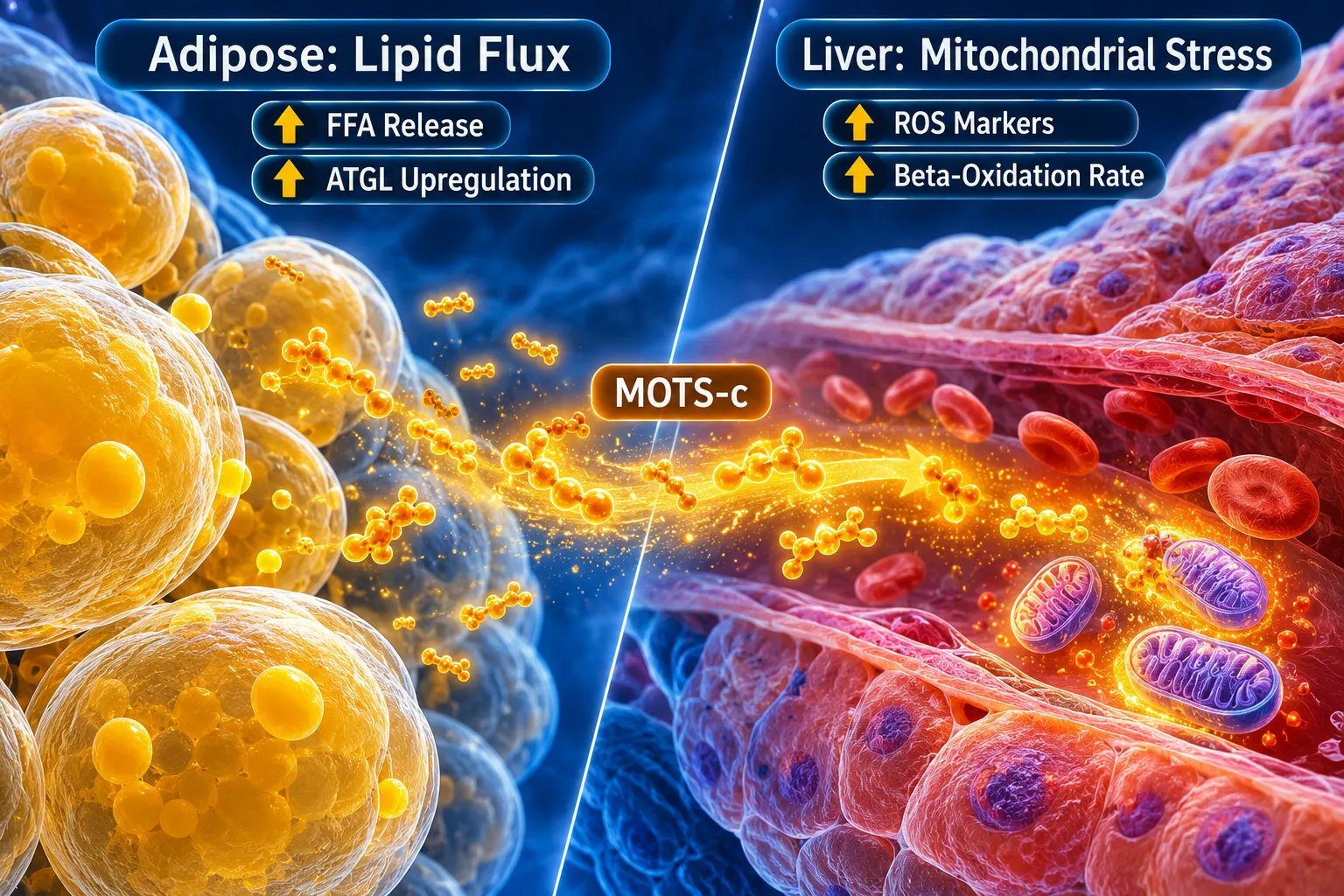
In mouse models, MOTS-c administration has been shown to:
| Outcome | Adipose Effect | Liver Effect |
|---|---|---|
| AMPK activation | Increased fatty acid oxidation | Reduced lipid accumulation |
| Mitochondrial biogenesis | Modest upregulation | Protective against steatosis |
| Inflammatory markers | Reduced IL-6, TNF-alpha | Lower NF-kB signaling |
| Insulin sensitivity | Improved | Improved glucose output |
The separation challenge in co-culture is that MOTS-c appears to act on both compartments simultaneously. When both cell types are present, a measured drop in hepatocyte ROS could reflect direct MOTS-c action on liver mitochondria, or it could reflect reduced FFA delivery from MOTS-c-treated adipocytes upstream. Without isolating each signal, the mechanism remains ambiguous.
"The value of co-culture is not simplicity, it is the ability to see the conversation between tissues that single-cell studies never overhear."
This matters enormously for translational work. Research on SS31 mitochondrial dynamics shows how mitochondria-targeted peptides can produce overlapping readouts across tissues, reinforcing the need for careful experimental design. MOTS-c shares some mechanistic territory with NAD peptides in that both influence cellular energy status, though through distinct molecular routes.
Designing the Co-Culture Readout Framework
The practical goal of studying 5-Amino-1MQ and MOTS-c in adipose, liver co-culture: separating lipid flux from mitochondrial stress is to assign each measurable outcome to a defined biological process. That requires a layered readout strategy.
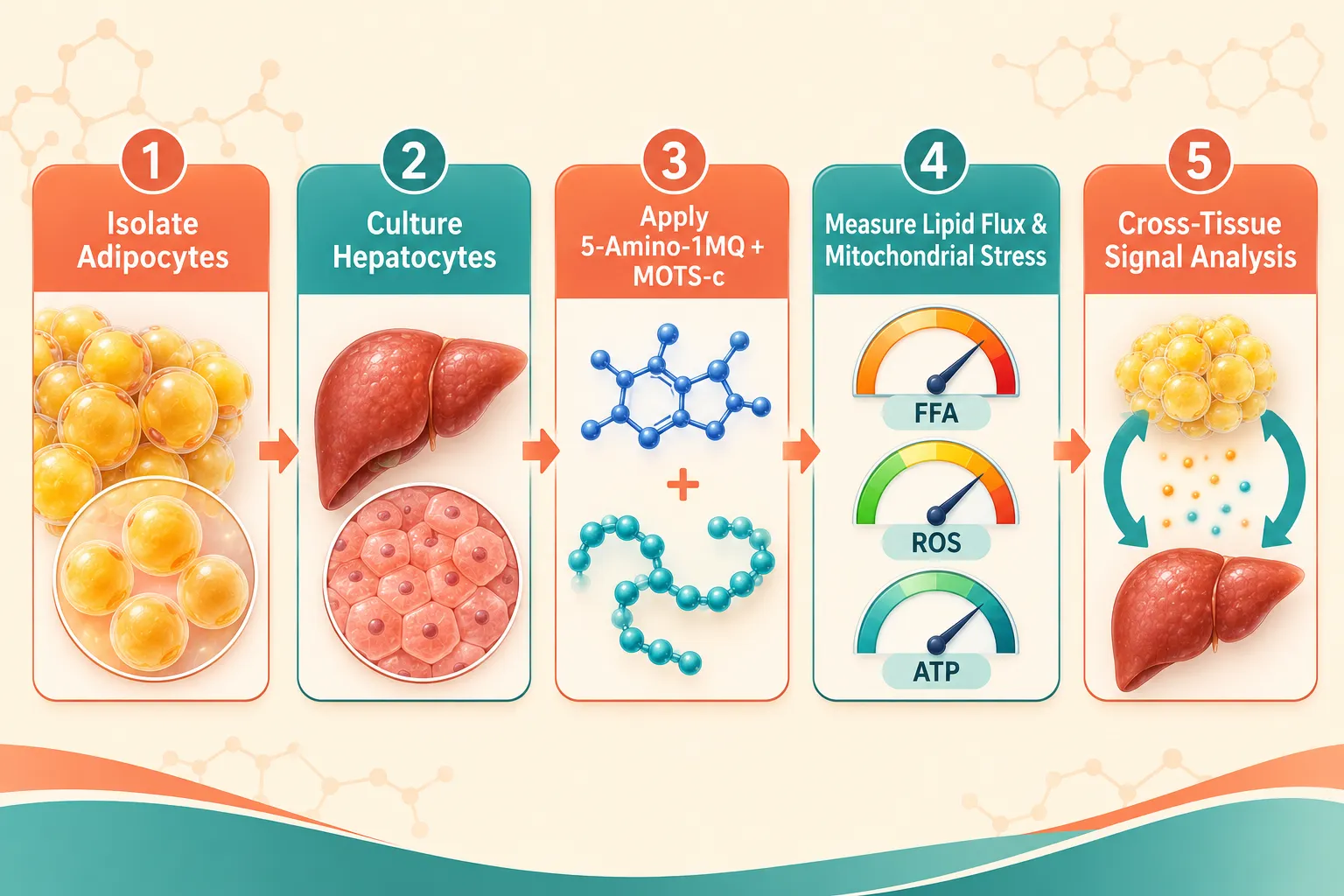
Recommended co-culture readout tiers:
- Lipid flux tier, FFA concentration in conditioned media, hepatocyte lipid droplet area, VLDL secretion rate
- Mitochondrial stress tier, Mitochondrial membrane potential (JC-1 assay), ATP/ADP ratio, MitoSOX ROS measurement
- Inflammatory tier, IL-6, MCP-1, and TNF-alpha in shared supernatant
- Viability tier, LDH release, caspase-3 activity, live/dead cell staining in both compartments
The separation strategy works by applying 5-Amino-1MQ to the adipocyte compartment only, then observing whether hepatocyte mitochondrial stress changes even before MOTS-c is added. If it does, lipid flux from the adipocyte is independently driving hepatic stress. MOTS-c can then be applied to the hepatocyte compartment to quantify direct mitochondrial rescue independent of lipid input.
Combining both agents allows researchers to test a "mitochondrial stack" concept that has gained traction in SS31 peptides research circles, the idea that NAD+-boosting and mitochondria-stabilizing agents work additively rather than redundantly.
For context on how growth hormone-related peptides affect adipose partitioning, work on tesa dosage for fat loss offers a clinically relevant comparison point, since tesa specifically targets visceral depot reduction in a population where liver health is a co-concern.
Confounds to control:
- Insulin concentration in shared media (affects both lipolysis and hepatic glucose output)
- Culture duration (acute vs. chronic FFA exposure produces different hepatocyte responses)
- Cell line vs. primary cell source (3T3-L1 adipocytes differ from primary stromal-vascular fraction)
Conclusion
The combined study of 5-Amino-1MQ and MOTS-c in adipose, liver co-culture: separating lipid flux from mitochondrial stress represents a methodological step forward that single-tissue models cannot replicate. The core insight is straightforward: adipose-driven lipid export and hepatic mitochondrial stress are not parallel processes, they are sequential, with the former often causing the latter.
Actionable next steps for researchers and informed readers:
- Prioritize co-culture models with physically separated but media-connected compartments to maintain cross-tissue signaling while enabling compartment-specific sampling
- Use tiered readouts (lipid flux, mitochondrial stress, inflammation, viability) rather than single endpoints
- Apply 5-Amino-1MQ and MOTS-c sequentially and simultaneously to distinguish additive from synergistic effects
- Consult preclinical data on related mitochondria-targeted peptides, including SS31 peptide research, to benchmark mitochondrial stress response magnitudes
- Acknowledge the current regulatory status: both compounds remain research-stage as of 2026, with no clinical approval in any jurisdiction
As co-culture methodology matures and cross-tissue lipid signaling becomes better understood, the mechanistic clarity generated by this model will directly inform how metabolic compounds are developed, dosed, and combined in future therapeutic contexts.