Call or Text 727-513-9780
  • Shopping Cart Shopping Cart
    0Shopping Cart
Pure Tested Peptides | America's most trusted Peptides for sale online
  • Peptides for sale
    • Oral Peptides for sale
      • Peptide Capsules for sale
      • BPC 157 Capsules 1000mcg
      • SLU-PP-332 Capsules | 1000 mcg
      • 5-Amino-1MQ 50mg Capsules
      • Tesofensine 500mcg
    • All Peptides for sale
    • Peptide Sprays
      • BPC 157 Nasal Spray Kit
      • BPC-157 TB500 Nasal Spray Kit
      • Semax Nasal Spray 10mg
      • Selank – Nasal Spray Kit – 10mg
      • Epithalon 50MG Nasal Spray Kit
      • Ipamorelin 10mg Nasal Spray
      • Klow Nasal Spray (BPC-157 + TB-500 + GHK-Cu + KPV) | 80mg
      • Hulk Nasal Spray Tesa / Ipa Blend 6/3 MG
      • Klow Nasal Spray
      • NAD + 500 mg Nasal Spray
      • PT-141 Nasal Spray Kit
    • GHRH Peptides
      • Ipa Peptides
      • CJC-1295 Peptides
        • CJC-1295 with DAC 5 mg
        • CJC-1295 without DAC 5 mg
        • CJC-1295 Ipa 10mg
      • Tesa Peptides
        • Tesa Peptide
        • Tesa 20 mg
    • GHK-Cu Peptides
      • All GHK-Cu Peptides
      • GHK-Cu 100mg
      • KLOW Peptide Blend – Buy KLOW blend online
    • BPC Peptides
      • All BPC Peptides
      • BPC-157
      • BPC-157 TB-500
      • BPC 157 capsules 1000mcg
    • SLU-PP-332 Peptides
      • All SLU-PP-332 Peptides
      • SLU-PP-332 5mg
    • GLP3 Peptides
    • PT-141 Peptides
      • PT-141 Peptides for sale
      • PT-141 10mg
      • PT-141 Nasal Spray
    • CAG Peptides
      • Lipo-C Peptide Blend
      • CAG 5mg
      • CAG 10mg
    • MOTS-C Peptides
      • MOTS-C Peptides for sale
      • MOTS-c peptide
      • MOTS-c 10mg *6 pack*
    • 5 Amino 1MQ Peptides
      • 5 Amino 1MQ Peptides for sale
      • 5-Amino-1MQ 50mg Capsules
      • 5-Amino-1MQ 5mg
    • Epithalon Peptides
      • Epithalon Peptides for sale
      • Epithalon 10mg
      • Epithalon 50mg
  • Shop
    • GLPs
      • 5-Amino-1MQ 50mg Capsules
      • 5-Amino-1MQ 5mg
      • L-Carnitine 500mg/ml
      • Tesofensine 500mcg
      • SLU-PP-332 5mg
      • MOTS-c 10mg *6 pack*
    • Epithalon & BPC Peptides
      • Epithalon 10mg
      • Epithalon 50mg
      • BPC-157
      • BPC 157 capsules 1000mcg
      • BPC-157 TB-500
      • BPC-157 TB500 Nasal Spray Kit
      • BPC 157 Nasal Spray Kit
    • BPC TB-500 & NAD+ Peptides
      • NAD+ 500 mg
      • KLOW Peptide Blend – Buy KLOW blend online
      • GLOW Peptide Blend
      • TB 500 5mg
      • BPC 157 capsules 1000mcg – Supplement
      • BPC 157 Nasal Spray Kit
      • BPC-157
      • BPC-157 TB500 Nasal Spray Kit
      • BPC-157 TB-500
      • BPC 157 capsules 1000mcg
    • LL-37 Peptide
      • LL-37 10 mg
    • MOTS-C & Selank
      • MOTS-c peptide
      • Selank 10mg
    • GHK Peptides
      • GHK-Cu 100mg
      • GLOW Peptide Blend
      • KLOW Peptide Blend – Buy KLOW blend online
  • COAs
  • Wholesale
    • Wholesale Peptides for sale
  • PTP FAQ
  • Affiliates
    • Selank Peptide: Advanced Pharmacological Mechanisms Underlying Its Anxiolytic and Nootropic Effects in Research
      • 5-Amino-1MQ Peptide: Detailed Mechanisms of NNMT Inhibition and Its Impact on Cellular Metabolism Research
        • MOTS-C Peptide: Unraveling Its Role in Mitochondrial Dynamics and Energy Metabolism Research
          • Epithalon Peptide and Telomerase Regulation: Investigating Its Impact on Cellular Senescence and Lifespan Research Models
            • GLP2-T vs GLP2 Tirz Peptide: Understanding the Naming, Mechanistic Nuances, and Research Implications for Gut Health
      • Peptides and Polypeptides in Modern Pharmacology: What Research on Metoprolol, Prednisone, and Amlodipine Reveals
        • Polypeptide Peptides vs NSAIDs: What Naproxen and Diclofenac Teach Tissue-Repair Researchers About BPC‑157 and TB‑500
          • Peptides and Polypeptides in Endocrine Pharmacology: How GLP-1, GLP-2, and GLP-3 Retatrutide Differ From Classic Drugs Like Prednisone and Amlodipine
          • 5‑Amino‑1MQ Peptide and NNMT Inhibition: How It Compares With Statins Like Atorvastatin in Adipose and Lipid Metabolism Research
      • Enclomiphene, Estrogen Receptor Signaling, and Luteinizing Phase Biology: What Hormone Researchers Should Measure
        • Mesenchymal Stem Cells, BPC‑157, and GHK‑Cu: How Tissue Repair Peptides Compare With Classic NSAIDs Like Naproxen in Injury Models
          • Peptide Calculator Use Cases Beyond Growth Hormone: Working Through GLP‑3 Retatrutide, MOTS‑c, and BPC‑157 Research Dosing
        • Polypeptide Peptides in Endocrine and Metabolic Pharmacology: Lessons From Amlodipine, Prednisone, and Metoprolol
        • Peptides Calculator for Advanced Blends: Worked Examples for Tesamorelin, CJC‑1295, and Ipamorelin Stacks
          • Peptides and Polypeptides in Human Physiology: How Molecular Size Shapes Research Applications
            • Selank Peptide: Advanced Pharmacological Mechanisms Underlying Its Anxiolytic and Nootropic Effects in Research
          • 5-Amino-1MQ Peptide: Detailed Mechanisms of NNMT Inhibition and Its Impact on Cellular Metabolism Research
            • MOTS-C Peptide: Unraveling Its Role in Mitochondrial Dynamics and Energy Metabolism Research
              • Epithalon Peptide and Telomerase Regulation: Investigating Its Impact on Cellular Senescence and Lifespan Research Models
                • GLP2-T vs GLP2 Tirz Peptide: Understanding the Naming, Mechanistic Nuances, and Research Implications for Gut Health
                  • Peptides and Polypeptides in Endocrine Pharmacology: How GLP-1, GLP-2, and GLP-3 Retatrutide Differ From Classic Drugs Like Prednisone and Amlodipine
                    • Polypeptide Peptides vs NSAIDs: What Naproxen and Diclofenac Teach Tissue-Repair Researchers About BPC‑157 and TB‑500
                      • Peptides and Polypeptides in Modern Pharmacology: What Research on Metoprolol, Prednisone, and Amlodipine Reveals
                        • 5‑Amino‑1MQ Peptide and NNMT Inhibition: How It Compares With Statins Like Atorvastatin in Adipose and Lipid Metabolism Research
                        • Enclomiphene, Estrogen Receptor Signaling, and Luteinizing Phase Biology: What Hormone Researchers Should Measure
                        • Mesenchymal Stem Cells, BPC‑157, and GHK‑Cu: How Tissue Repair Peptides Compare With Classic NSAIDs Like Naproxen in Injury Models
                        • Peptide Calculator Use Cases Beyond Growth Hormone: Working Through GLP‑3 Retatrutide, MOTS‑c, and BPC‑157 Research Dosing
                        • Polypeptide Peptides in Endocrine and Metabolic Pharmacology: Lessons From Amlodipine, Prednisone, and Metoprolol
                        • Peptides Calculator for Advanced Blends: Worked Examples for Tesamorelin, CJC‑1295, and Ipamorelin Stacks
                        • Peptides and Polypeptides in Human Physiology: How Molecular Size Shapes Research Applications
                        • Selank Peptide: Advanced Pharmacological Mechanisms Underlying Its Anxiolytic and Nootropic Effects in Research
                        • MOTS-C Peptide: Unraveling Its Role in Mitochondrial Dynamics and Energy Metabolism Research
                        • Peptides and Polypeptides in Modern Pharmacology: What Research on Metoprolol, Prednisone, and Amlodipine Reveals
                        • Peptides and Polypeptides in Endocrine Pharmacology: How GLP-1, GLP-2, and GLP-3 Retatrutide Differ From Classic Drugs Like Prednisone and Amlodipine
                        • 5-Amino-1MQ Peptide: Detailed Mechanisms of NNMT Inhibition and Its Impact on Cellular Metabolism Research
                        • Mesenchymal Stem Cells, BPC‑157, and GHK‑Cu: How Tissue Repair Peptides Compare With Classic NSAIDs Like Naproxen in Injury Models
                        • Peptide Calculator Use Cases Beyond Growth Hormone: Working Through GLP‑3 Retatrutide, MOTS‑c, and BPC‑157 Research Dosing
                        • GLP2-T vs GLP2 Tirz Peptide: Understanding the Naming, Mechanistic Nuances, and Research Implications for Gut Health
                        • Polypeptide Peptides in Endocrine and Metabolic Pharmacology: Lessons From Amlodipine, Prednisone, and Metoprolol
                        • Polypeptide Peptides vs NSAIDs: What Naproxen and Diclofenac Teach Tissue-Repair Researchers About BPC‑157 and TB‑500
                        • Peptides and Polypeptides in Human Physiology: How Molecular Size Shapes Research Applications
                        • Peptides Calculator for Advanced Blends: Worked Examples for Tesamorelin, CJC‑1295, and Ipamorelin Stacks
                        • 5‑Amino‑1MQ Peptide and NNMT Inhibition: How It Compares With Statins Like Atorvastatin in Adipose and Lipid Metabolism Research
                        • Enclomiphene, Estrogen Receptor Signaling, and Luteinizing Phase Biology: What Hormone Researchers Should Measure
                        • Epithalon Peptide and Telomerase Regulation: Investigating Its Impact on Cellular Senescence and Lifespan Research Models
                        • Best research protocol Klow blend
                        • best time to take BPC-157
                        • best time to take DSIP (Delta Sleep Inducing Peptide)
                        • best time to take CJC-1295
                        • best time to take AOD-9604
                        • best time to take Follistatin 344
                        • best time to take Ipamorelin
                        • best time to take MK-677 (Ibutamoren)
                        • best time to take Ligandrol (LGD-4033) — research compound
                        • best time to take Ostarine (MK-2866) — research compound
                        • best time to take GHK-CU
                        • best time to take TB-500
                        • best time to take MOTS-c
                        • best time to take Semax
                        • best time to take RAD-140 (Testolone) — research compound
                        • best time to take Thymosin Alpha-1
                        • best time to take PEG-MGF
                        • Biolife Plasma, Octapharma Plasma, and Research Peptides: How Plasma Donation Labs Differ From Peptide Suppliers
                        • best time to take YK-11 — research compound
                        • best time to take PT-141 (Bremelanotide)
                        • Best research protocol Klow blend
                        • 5-Amino-1MQ and MOTS-C Synergy: Metabolic Signaling, Mitochondria, and Research Design
                        • BPC-157 and TB-500: Investigating Their Combined Effects on Angiogenesis and Cellular Migration in Tissue Repair Models
                        • BPC-157 Peptide: Gut Barrier Function, Inflammation, and Tissue-Recovery Research
                        • 5‑Amino‑1MQ and MOTS‑c Synergy in Metabolic Research: Designing NNMT and Mitochondrial Biogenesis Stacks
                        • CJC-1295 with DAC vs. Without DAC: Half-Life, Release Kinetics, and Research Implications
                        • CJC‑1295 with DAC vs. Without DAC: Expanding on Half‑Life Differences Using Tesamorelin and Ipamorelin Blend Case Studies
                        • Collagen Biology and Copper‑Binding Peptides: How GHK‑Cu, Glow Blend, and Klow Blend Interact with Skin and Connective Tissue
                        • Collagen Biology and Regenerative Peptides: How GHK‑Cu, Glow Blend, and Klow Blend Affect Extracellular Matrix Research
                    • DNA, Telomeres, and Longevity Peptides: Positioning Epithalon and MOTS‑c in Genetic Aging Research
                      • Enclomiphene Citrate: serm Mechanism, Testosterone Research, and Stack Compatibility
                        • Enclomiphene vs Enclomiphene Citrate: Formulation, Bioavailability, and Research Distinctions
                        • Epithalon Peptide Research: Telomerase Activation, Aging, and Pineal Gland Function
                        • Estrogen Receptor Signaling and Enclomiphene: How Selective Modulators Compare with Classic Polypeptide Hormones
                        • GHK-Cu Peptide: Advanced Mechanisms in Extracellular Matrix Remodeling and Wound Healing Research
                        • GHK-Cu Peptide: Collagen Synthesis, Wound Repair, and Skin-Barrier Research Models
                        • GLP-1 vs GLP-3 vs GLP-2: Peptide Classification and Research Applications
                        • GLP-2 Peptide Research Guide: Gut Barrier Function, Nutrient Absorption, and Intestinal Recovery Models
                        • GLP-3 Retatrutide vs. GLP-1 Drugs: What Triple-Agonist Biology Changes in Research Models
                        • Ipamorelin and Tesamorelin Combination: Synergistic GH Secretagogue Research and Dosing Protocols
                        • GLP2 Tirz Peptide: What It Is, Why the Name Exists, and How Researchers Should Interpret It
                        • Klow Blend Peptide Nasal Spray: What the Formulation Is Trying to Do in Cognitive Research
                        • Mitochondria, NNMT Inhibition, and Peptide Modulators: Where MOTS‑c and 5‑Amino‑1MQ Fit in Cellular Energy Research
                        • MOTS-c Peptide: Mitochondrial Function, Energy Metabolism, and What Researchers Measure
                        • MOTS-c vs. 5-Amino-1MQ: Which Metabolic Research Questions Each Compound Actually Answers
                        • Nasal Spray Peptides: Bioavailability, Administration, and Semax/Selank Research Applications
                        • PT-141 Peptide Research: Mechanism of Action and Melanocortin Receptor Signaling
                        • Retatrutide for Research: Mechanism, Structure, and GLP-1/GLP-3 Dual Action
                        • Retatrutide for Obesity and Type 2 Diabetes: What the Latest Trial Data Suggest
                        • Tesofensine Peptide Research: Mechanism, Appetite Suppression, and Neuropeptide Y Pathways
  • Contact
    • Contact Customer Service
    • Text Customer Support
  • About US
  • Shop all peptides
  • Affiliate Program
    • Affiliate Signup
  • Login / Register Login / Register Page Link Login / Register Page Link
  • Click to open the search input field Click to open the search input field Search
  • Menu Menu

Tag Archive for: liver enzyme thresholds

Peptide Research Safety Monitoring: Hemoglobin, Hematocrit, Liver Enzymes, Glucose, and Blood-Pressure Readouts

Peptide Research Safety Monitoring: Hemoglobin, Hematocrit, Liver Enzymes, Glucose, and Blood-Pressure Readouts

September 24, 2026/0 Comments/in Uncategorized/by

{"cover":"Professional landscape format (1536×1024) hero image with bold text overlay 'Peptide Research Safety Monitoring' in crisp white sans-serif on a deep navy semi-transparent overlay panel, centered with 8% safe margins from every edge. Background: editorial close-up of a clinical laboratory setting showing glass vials of clear peptide solution, a digital blood pressure monitor, and printed lab reports with highlighted values for hemoglobin, liver enzymes, and glucose, clean, bright studio lighting with cool teal and navy color palette, magazine-cover polish, high contrast, no dark moody tones.","content":["Four-panel labelled infographic diagram (1536×1024) titled 'Core Safety Markers in Peptide Research' on a clean white background with teal-and-navy palette. Panel 1: illustrated red blood cell cluster labeled 'Hemoglobin g/dL' with callout 'Normal: 12-17 g/dL'. Panel 2: hematocrit percentage bar chart labeled 'Hematocrit %' with callout 'Watch >52% threshold'. Panel 3: liver enzyme vial labeled 'ALT / AST Units/L' with callout 'Stop rule: 3x ULN'. Panel 4: glucose meter labeled 'Fasting Glucose mg/dL' with callout 'HbA1c baseline flag'. Thin callout lines, short bullet labels 1-5 words each, editorial medical-guide style, bright studio lighting.","Annotated step-by-step numbered flow diagram (1536×1024) showing peptide research monitoring timeline on a pale blue background with charcoal typography. Step 1 card: 'Baseline Labs, Week 0' with icons for CBC and CMP. Step 2 card: 'Mid-Protocol Check, Week 4' with blood pressure cuff icon. Step 3 card: 'Post-Cycle Panel, Week 8' with liver enzyme flask icon. Step 4 card: 'Quarterly Follow-Up' with glucose meter icon. Each step connected by a bold arrow, short 2-5 word labels per card, callout lines pointing to specific marker names, clean infographic style, teal accent color, high editorial clarity.","Split-screen editorial comparison image (1536×1024): left half shows a warm-lit researcher's desk with a printed CBC report highlighting hemoglobin and hematocrit rows, a stethoscope, and handwritten stop-rule notes; right half shows a digital dashboard mockup displaying liver enzyme trend lines (ALT/AST), a fasting glucose graph, and a blood pressure reading widget in a modern dark-mode interface. Sharp dividing line down the center, short labels 'Wet Lab Markers' on left and 'Digital Monitoring Dashboard' on right, high-contrast magazine composition, cool blue and warm amber palette contrast, editorial quality."]
Professional landscape hero image () with a reading "Peptide Research Safety Monitoring". CRITICAL TYPOGRAPHY RULES: render

Fewer than 40% of researchers who work with bioactive peptides establish a formal lab-monitoring schedule before beginning a protocol, a gap that can turn subtle physiological shifts into serious, undetected problems. Rigorous peptide research safety monitoring: hemoglobin, hematocrit, liver enzymes, glucose, and blood-pressure readouts is not optional bookkeeping; it is the scientific backbone that separates responsible inquiry from guesswork. Whether the focus is tissue-repair peptides, growth-hormone secretagogues, or metabolic analogues, each compound class stresses different organ systems in different ways, and the lab panel must reflect that specificity.

Key Takeaways

  • A baseline complete blood count (CBC) and comprehensive metabolic panel (CMP) should be established before any peptide protocol begins.
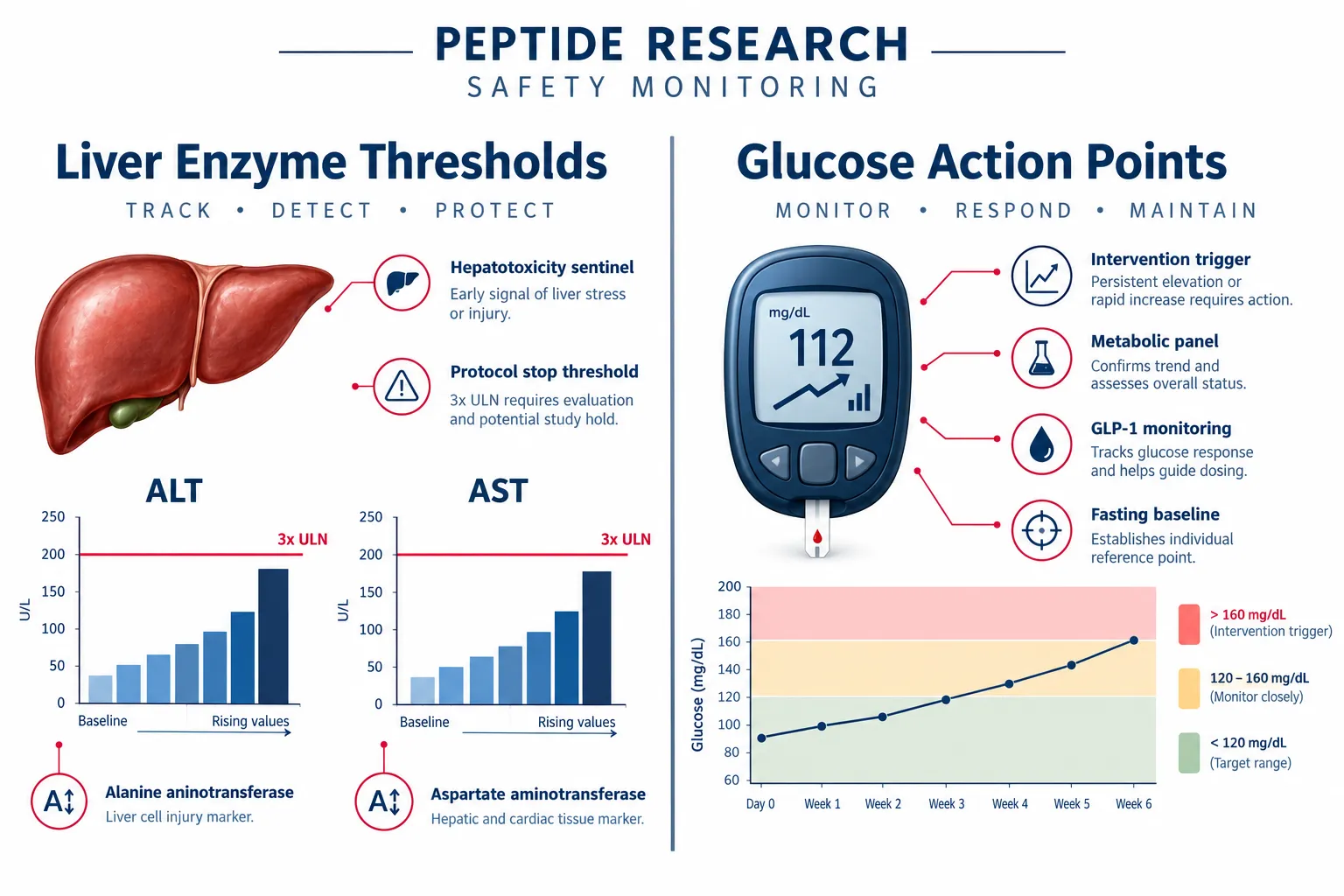
  • Hemoglobin and hematocrit are the primary red-flag markers for erythropoietic peptides and GH secretagogues; a hematocrit above 52% is a widely recognized pause threshold.
  • ALT and AST elevations above three times the upper limit of normal (3x ULN) represent a standard clinical stop rule for hepatotoxicity.
  • Fasting glucose and HbA1c are essential for GLP-1-class and metabolic peptides because baseline insulin resistance can confound interpretation.
  • Blood pressure must be tracked alongside hematocrit because rising red-cell mass directly increases cardiovascular load.

Understanding the Core Lab Panel for Peptide Safety Monitoring
Understanding the Core Lab Panel for Peptide Safety Monitoring

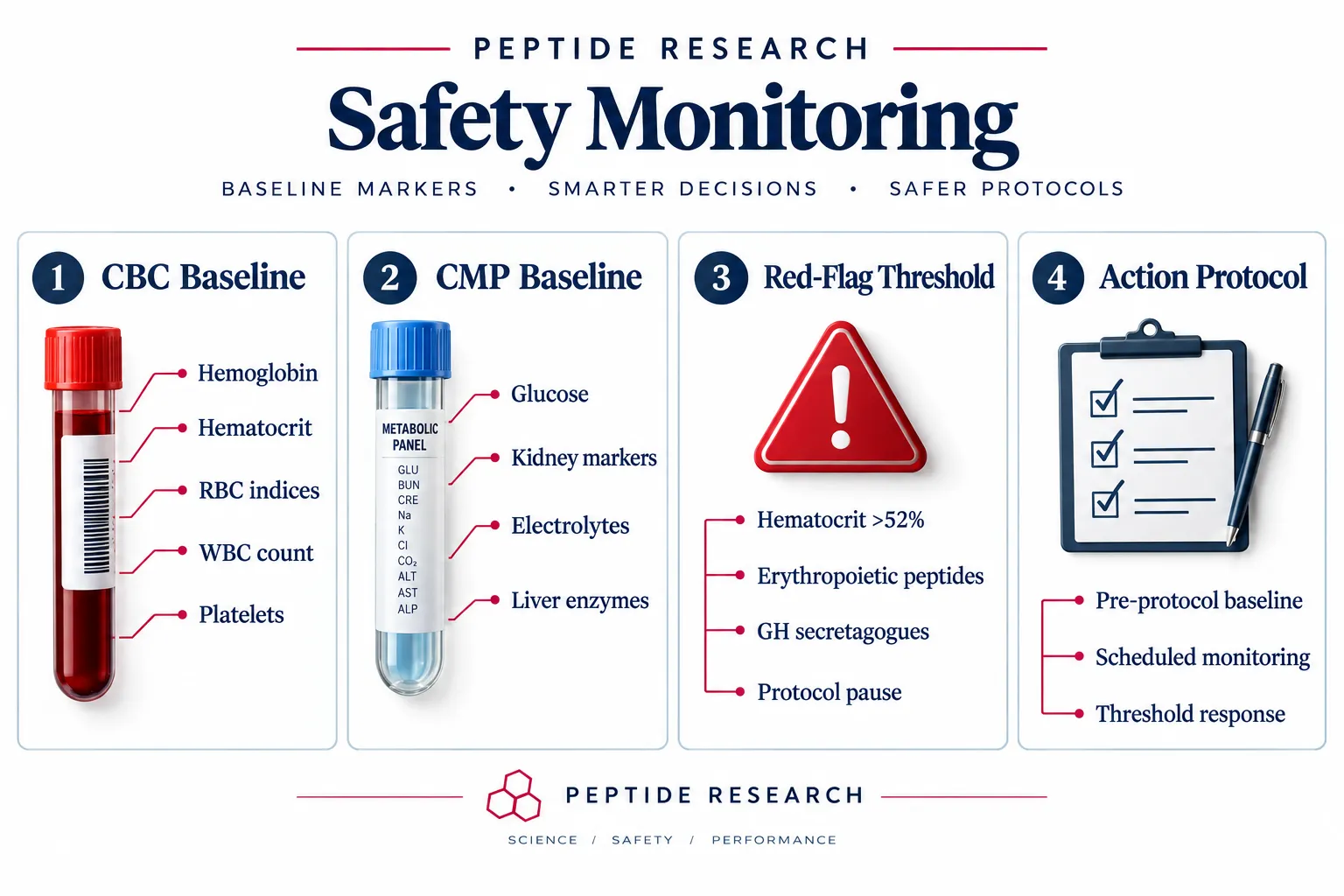
Every responsible monitoring program starts with two foundational tests: a complete blood count (CBC) and a comprehensive metabolic panel (CMP). The CBC captures hemoglobin, hematocrit, red-cell indices, white-cell count, and platelets. The CMP adds glucose, kidney function markers, and the liver enzymes ALT, AST, alkaline phosphatase, and bilirubin. Together, these two panels cover the most common adverse-effect pathways seen across peptide classes.

Hemoglobin measures the oxygen-carrying protein inside red blood cells, expressed in grams per deciliter (g/dL). Normal ranges sit roughly between 12 and 17 g/dL depending on biological sex. Hematocrit is the percentage of blood volume occupied by red cells, with a general healthy range of 36-50%. Growth-hormone secretagogues such as tesa and ipamorelin can stimulate IGF-1 production, which in turn promotes erythropoiesis. Elevated hematocrit thickens blood viscosity and raises clotting risk, which is why most clinicians treating research subjects apply a pause-and-reassess rule when hematocrit exceeds 52%.

Confounding factors matter here. Dehydration artificially inflates hematocrit. Chronic iron deficiency suppresses hemoglobin even when a peptide is actively stimulating red-cell production. Documenting hydration status and iron stores at baseline prevents misreading the data mid-protocol.

"A single out-of-range lab value means little without a baseline. Context is everything in peptide research safety monitoring."

For researchers comparing compounds, resources like the LL-37 versus SS-31 benefits of each peptide overview illustrate how two peptides in the same general category can have very different physiological footprints, reinforcing why class-specific monitoring matters.


Liver Enzymes and Glucose: Action Thresholds in Peptide Research Safety Monitoring
Liver Enzymes and Glucose: Action Thresholds in Peptide Research Safety Monitoring

Liver Enzyme Thresholds

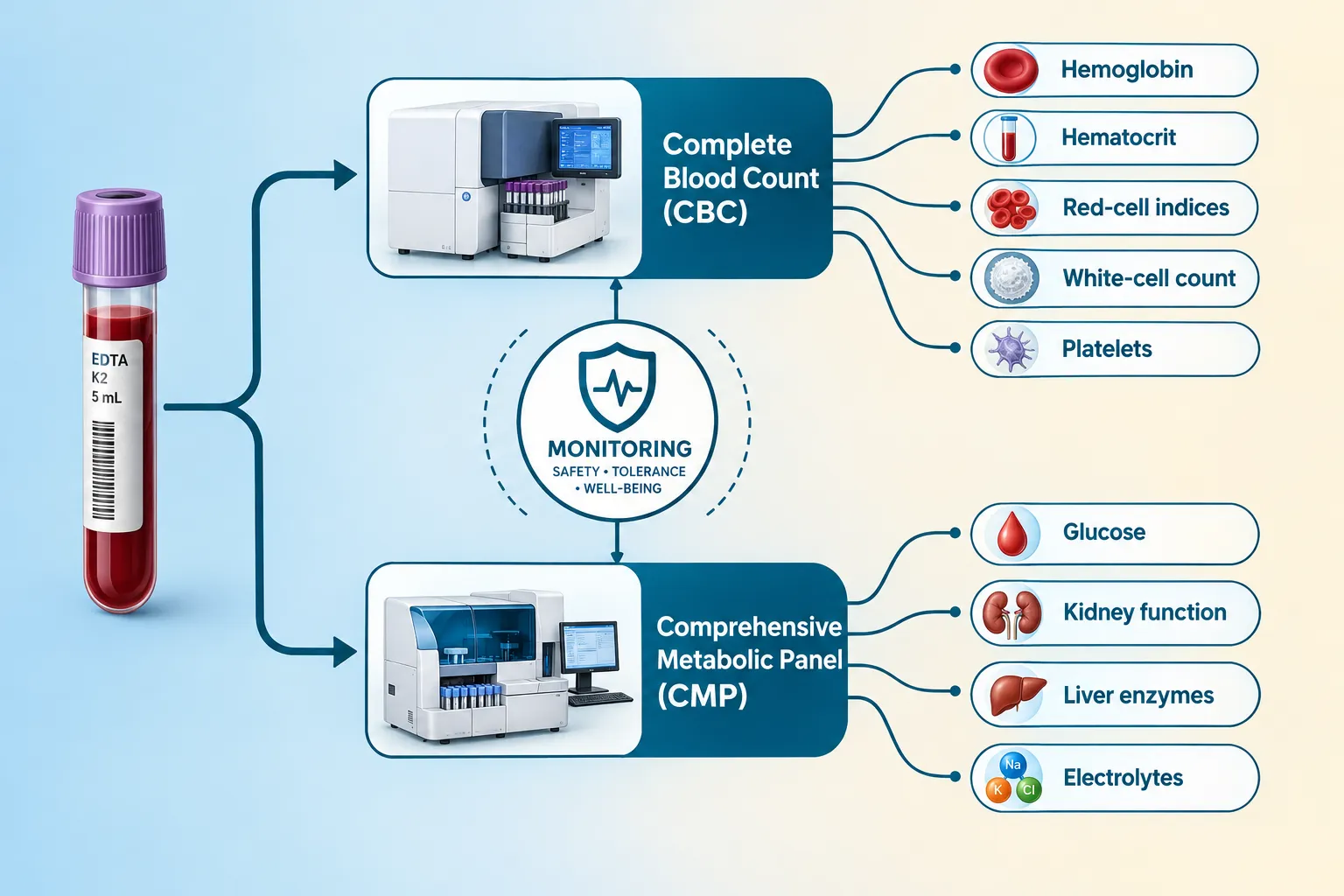
ALT (alanine aminotransferase) and AST (aspartate aminotransferase) are the primary hepatotoxicity sentinels. The 3x ULN rule is the most widely applied stop threshold: if either enzyme rises above three times the laboratory's upper limit of normal, the protocol should pause and the subject should be reassessed. At 5x ULN, most clinical frameworks call for immediate discontinuation.

Several factors can inflate baseline liver enzymes independent of any peptide:

Confounding Factor Effect on ALT/AST
Non-alcoholic fatty liver disease Chronically elevated baseline
Intense resistance training Transient AST elevation (muscle origin)
Alcohol consumption Raises both ALT and AST
Statin medications Can elevate transaminases
Thyroid dysfunction Alters enzyme clearance rates

Because intense exercise raises AST from skeletal muscle, not the liver, researchers should note training intensity in the protocol log. If AST is elevated but ALT is normal and the AST/ALT ratio is above 2:1, muscle origin is the more likely explanation.

Tissue-repair peptides such as GHK-Cu and BPC-157 have limited formal hepatotoxicity data. Researchers sourcing these compounds should prioritize verified purity, as contaminants in poorly manufactured peptides are a more common cause of enzyme elevation than the peptide itself. Evaluating purity standards, as discussed in the where to buy research-grade Glow Blend peptide: evaluating purity resource, is a direct risk-reduction step.

Glucose and HbA1c Monitoring

Fasting glucose and glycated hemoglobin (HbA1c) are non-negotiable markers for any protocol involving metabolic peptides. GLP-1 receptor agonist analogues, including newer research compounds like those in the GLP-3 R peptide GA3 category, act on insulin secretion pathways. A subject with undiagnosed pre-diabetes will respond very differently than a metabolically healthy subject, making baseline HbA1c essential for accurate interpretation.

The practical monitoring cadence for glucose markers:

  1. Baseline, fasting glucose and HbA1c before protocol initiation
  2. Week 4, fasting glucose repeat, especially for GLP-1 or GH secretagogue protocols
  3. Week 8 or end of protocol, full CMP including glucose
  4. Quarterly, HbA1c if the protocol extends beyond 12 weeks

GH-stimulating peptides can cause transient insulin resistance by elevating free fatty acids. This effect is dose-dependent and typically resolves between doses, but it can push a borderline-glucose subject into a clinically significant range without obvious symptoms.


Blood Pressure, Cardiovascular Risk, and Differentiated Monitoring by Peptide Class
Blood Pressure, Cardiovascular Risk, and Differentiated Monitoring by Peptide Class

Blood pressure is the cardiovascular bridge between hematocrit and metabolic status. Elevated hematocrit increases blood viscosity, which raises peripheral vascular resistance and systolic pressure. Simultaneously, GLP-1-class peptides can modestly reduce blood pressure through natriuretic and vasodilatory mechanisms, a benefit that can become a risk if a subject is already on antihypertensive medication.

Recommended blood pressure monitoring schedule:

  • Baseline reading (seated, after 5 minutes of rest, both arms)
  • Every 2-4 weeks during active protocol
  • At each lab draw visit

A systolic reading consistently above 140 mmHg or a diastolic above 90 mmHg warrants protocol review, particularly when hematocrit is simultaneously trending upward. The two markers together create a compounding cardiovascular risk that neither alone fully captures.

Monitoring by Peptide Class

Different peptide classes stress different systems. The table below summarizes priority markers:

Peptide Class Priority Markers Monitoring Frequency
GH secretagogues (tesa, ipamorelin) Hematocrit, fasting glucose, IGF-1 Every 4-6 weeks
GLP-1 analogues Fasting glucose, HbA1c, blood pressure Every 4 weeks
Tissue-repair peptides (BPC-157, TB-500) ALT/AST, CBC Baseline and 8-week
Mitochondrial peptides (SS-31) CBC, CMP, blood pressure Baseline and 8-week

For researchers working with mitochondrial-targeted compounds, the SS-31 mechanism and research overview provides useful context on the physiological pathways that monitoring should address. Similarly, understanding the safety profile of combined protocols, such as reviewed in is it safe to combine tesa with CJC ipamorelin, directly informs which additional markers to add when stacking compounds.

Evidence gaps remain significant. BPC-157, TB-500, and GHK-Cu lack large randomized controlled trials in humans. Regulatory status for these compounds as research chemicals means that monitoring frameworks are built from preclinical data, case series, and emerging clinical consensus rather than approved prescribing guidelines. This makes diligent lab tracking more important, not less.


Conclusion

Effective peptide research safety monitoring: hemoglobin, hematocrit, liver enzymes, glucose, and blood-pressure readouts requires a structured, class-specific approach rather than a one-size-fits-all panel. The actionable next steps are clear:

  1. Establish a full baseline, CBC, CMP, fasting glucose, HbA1c, and a resting blood pressure reading, before any protocol begins.
  2. Apply recognized stop rules, hematocrit above 52%, liver enzymes above 3x ULN, or sustained blood pressure above 140/90 mmHg each warrant immediate protocol pause.
  3. Account for confounders, document training intensity, hydration, concurrent medications, and baseline metabolic health to avoid misreading data.
  4. Match monitoring frequency to compound class, GH secretagogues and GLP-1 analogues require more frequent glucose and cardiovascular checks than tissue-repair peptides.
  5. Source verified compounds, contaminant-driven enzyme elevations are preventable; working with suppliers who provide third-party purity testing is a direct safety measure.

As the research landscape in 2026 continues to evolve, risk-stratified monitoring protocols are becoming the emerging standard. Researchers who build these habits early will generate cleaner data, protect subject welfare, and contribute more credibly to the growing body of peptide science.

https://www.puretestedpeptides.com/wp-content/uploads/2026/09/peptide-research-safety-monitoring-hemoglobin-hematocrit-liver-enzymes-glucose-a.webp 1024 1536 https://www.puretestedpeptides.com/wp-content/uploads/2026/01/buy-peptides-online.jpg 2026-09-24 13:04:592026-09-24 13:04:59Peptide Research Safety Monitoring: Hemoglobin, Hematocrit, Liver Enzymes, Glucose, and Blood-Pressure Readouts
×

Helpful Links

  • My account
  • Cart
  • Checkout
  • Refund and Returns Policy
  • Privacy Policy
  • SMS Privacy Policy
  • Login
  • My Account
  • Logout

USA Made Lab Tested Peptides

All products are sold for research, laboratory, or analytical purposes only, and are not for human consumption


Pure Tested Peptides is a chemical supplier. Pure Tested Peptides is not a compounding / chemical compounding facility as defined under 503A of the Federal Food, Drug, and Cosmetic act. Pure Tested Peptides is not an outsourcing facility as defined under 503B of the Federal Food, Drug, and Cosmetic act.

The statements made within this website have not been evaluated by the US Food and Drug Administration. The products we offer are not intended to diagnose, treat, cure or prevent any disease.

Human/Animal Consumption Prohibited. Laboratory/In-Vitro Experimental Use Only

Scroll to top Scroll to top Scroll to top