Call or Text 727-513-9780
  • Shopping Cart Shopping Cart
    0Shopping Cart
Pure Tested Peptides | America's most trusted Peptides for sale online
  • Peptides for sale
    • Oral Peptides for sale
      • Peptide Capsules for sale
      • BPC 157 Capsules 1000mcg
      • SLU-PP-332 Capsules | 1000 mcg
      • 5-Amino-1MQ 50mg Capsules
      • Tesofensine 500mcg
    • All Peptides for sale
    • Peptide Sprays
      • BPC 157 Nasal Spray Kit
      • BPC-157 TB500 Nasal Spray Kit
      • Semax Nasal Spray 10mg
      • Selank – Nasal Spray Kit – 10mg
      • Epithalon 50MG Nasal Spray Kit
      • Ipamorelin 10mg Nasal Spray
      • Klow Nasal Spray (BPC-157 + TB-500 + GHK-Cu + KPV) | 80mg
      • Hulk Nasal Spray Tesa / Ipa Blend 6/3 MG
      • Klow Nasal Spray
      • NAD + 500 mg Nasal Spray
      • PT-141 Nasal Spray Kit
    • GHRH Peptides
      • Ipa Peptides
      • CJC-1295 Peptides
        • CJC-1295 with DAC 5 mg
        • CJC-1295 without DAC 5 mg
        • CJC-1295 Ipa 10mg
      • Tesa Peptides
        • Tesa Peptide
        • Tesa 20 mg
    • GHK-Cu Peptides
      • All GHK-Cu Peptides
      • GHK-Cu 100mg
      • KLOW Peptide Blend – Buy KLOW blend online
    • BPC Peptides
      • All BPC Peptides
      • BPC-157
      • BPC-157 TB-500
      • BPC 157 capsules 1000mcg
    • SLU-PP-332 Peptides
      • All SLU-PP-332 Peptides
      • SLU-PP-332 5mg
    • GLP3 Peptides
      • GLP3-R
      • GLP3-R CAG 10mg
      • GLP3-R 20mg
    • PT-141 Peptides
      • PT-141 Peptides for sale
      • PT-141 10mg
      • PT-141 Nasal Spray
    • CAG Peptides
      • Lipo-C Peptide Blend
      • CAG 5mg
      • CAG 10mg
    • MOTS-C Peptides
      • MOTS-C Peptides for sale
      • MOTS-c peptide
      • MOTS-c 10mg *6 pack*
    • 5 Amino 1MQ Peptides
      • 5 Amino 1MQ Peptides for sale
      • 5-Amino-1MQ 50mg Capsules
      • 5-Amino-1MQ 5mg
    • Epithalon Peptides
      • Epithalon Peptides for sale
      • Epithalon 10mg
      • Epithalon 50mg
  • Shop
    • GLPs
      • 5-Amino-1MQ 50mg Capsules
      • 5-Amino-1MQ 5mg
      • GLP3-Reta
      • L-Carnitine 500mg/ml
      • Tesofensine 500mcg
      • SLU-PP-332 5mg
      • MOTS-c 10mg *6 pack*
    • Epithalon & BPC Peptides
      • Epithalon 10mg
      • Epithalon 50mg
      • BPC-157
      • BPC 157 capsules 1000mcg
      • BPC-157 TB-500
      • BPC-157 TB500 Nasal Spray Kit
      • BPC 157 Nasal Spray Kit
    • BPC TB-500 & NAD+ Peptides
      • NAD+ 500 mg
      • KLOW Peptide Blend – Buy KLOW blend online
      • GLOW Peptide Blend
      • TB 500 5mg
      • BPC 157 capsules 1000mcg – Supplement
      • BPC 157 Nasal Spray Kit
      • BPC-157
      • BPC-157 TB500 Nasal Spray Kit
      • BPC-157 TB-500
      • BPC 157 capsules 1000mcg
    • LL-37 Peptide
      • LL-37 10 mg
    • MOTS-C & Selank
      • MOTS-c peptide
      • Selank 10mg
    • GHK Peptides
      • GHK-Cu 100mg
      • GLOW Peptide Blend
      • KLOW Peptide Blend – Buy KLOW blend online
  • COAs
  • Wholesale
    • Wholesale Peptides for sale
  • PTP FAQ
  • Affiliates
    • Affiliate Program
    • Affiliate Signup
  • Contact
    • Contact Customer Service
    • Text Customer Support
  • About US
  • Shop all peptides
  • Login / Register Login / Register Page Link Login / Register Page Link
  • Click to open the search input field Click to open the search input field Search
  • Menu Menu

Tag Archive for: male hypogonadism research

Estrogen Receptor Signaling and Enclomiphene: Linking Classic Endocrine Pharmacology to Modern serm Research Models

Estrogen Receptor Signaling and Enclomiphene: Linking Classic Endocrine Pharmacology to Modern serm Research Models

July 15, 2026/0 Comments/in Uncategorized/by

Fewer than 5% of men diagnosed with secondary hypogonadism are offered alternatives to exogenous testosterone replacement, yet enclomiphene, a single stereoisomer of clomiphene, has drawn sustained attention in research circles precisely because it targets the same estrogen receptor signaling axis that endocrinologists have studied for decades. Understanding estrogen receptor signaling and enclomiphene: linking classic endocrine pharmacology to modern serm research models requires tracing a path from foundational receptor biology to today's selective estrogen receptor modulator (serm) science.

Key Takeaways

  • Enclomiphene is the trans-isomer of clomiphene and acts as an estrogen receptor antagonist at the hypothalamic-pituitary level.
  • By blocking estrogen negative feedback, enclomiphene stimulates LH and FSH release, which in turn supports endogenous testosterone production.
  • Legacy serms such as tamoxifen and raloxifene established the receptor-binding framework that modern enclomiphene research builds upon.
  • Tissue-selective receptor modulation distinguishes serms from both full agonists and pure antagonists.
  • Enclomiphene research fits within a broader landscape of endocrine-modulating compounds studied alongside peptide-based secretagogues and metabolic agents.

Key Takeaways

How Estrogen Receptor Signaling Governs the HPG Axis

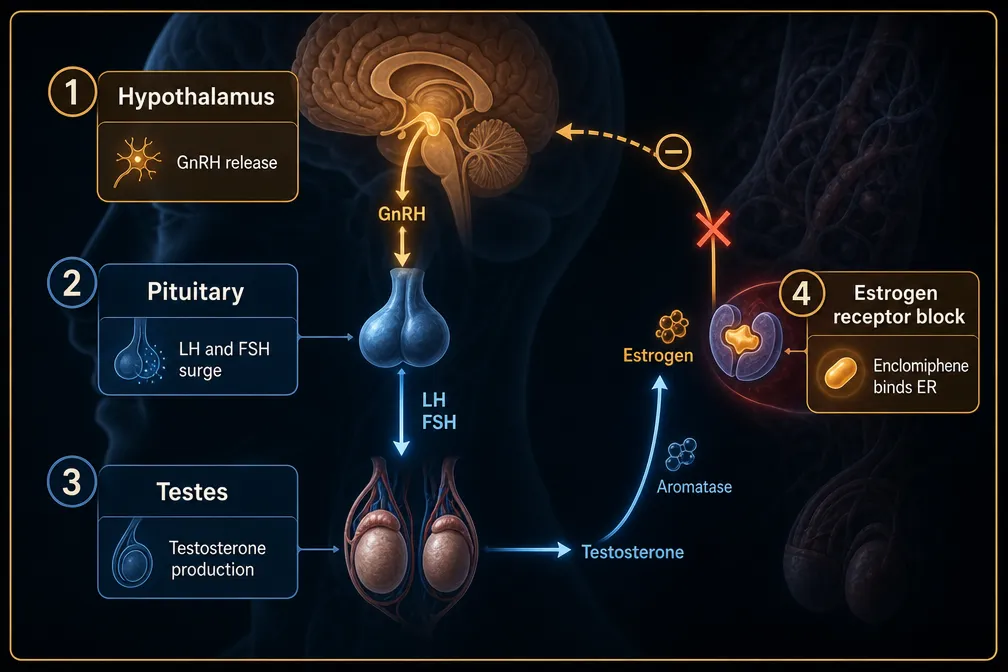
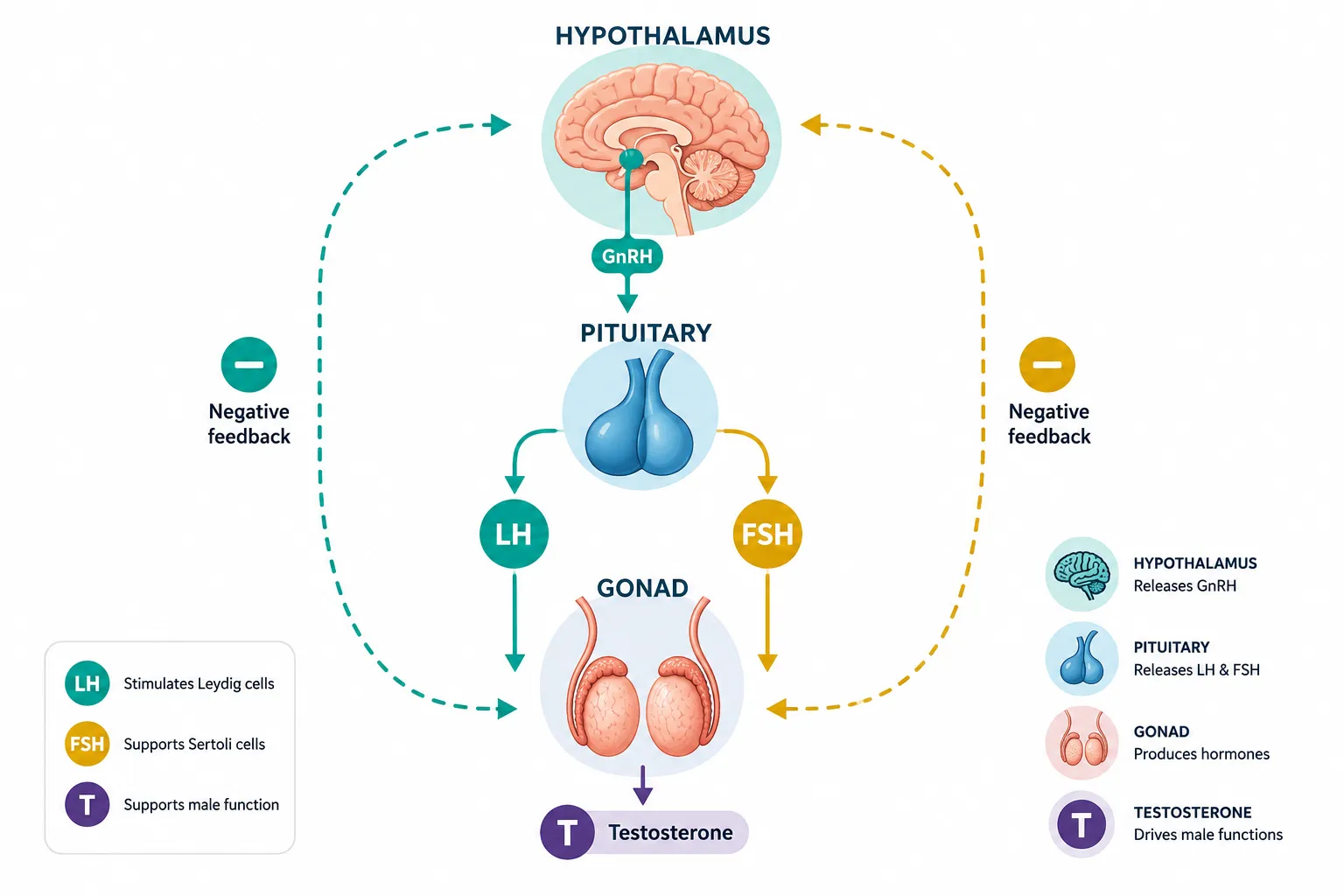
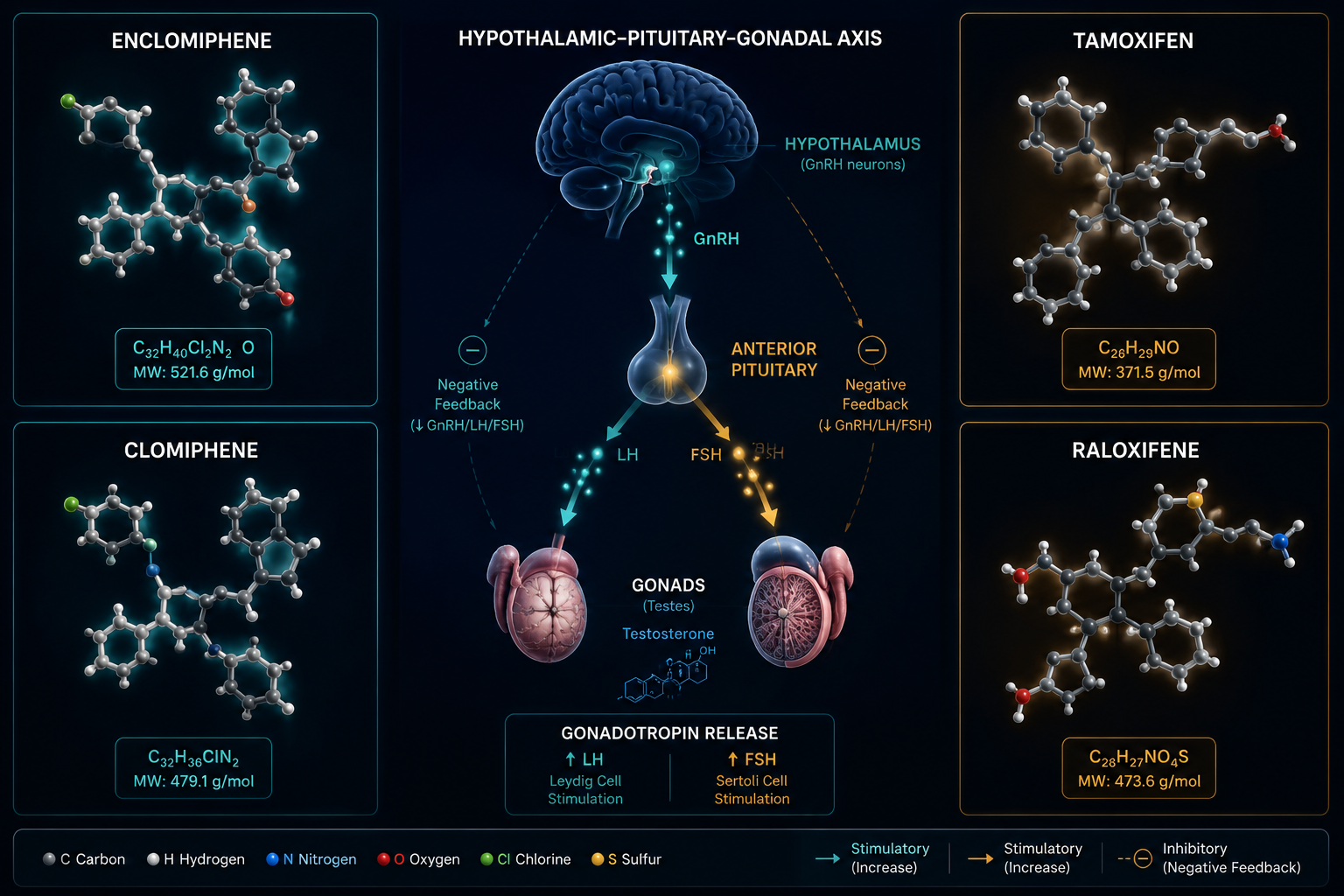
The hypothalamic-pituitary-gonadal (HPG) axis operates through a tightly regulated feedback loop. The hypothalamus releases gonadotropin-releasing hormone (GnRH), which prompts the anterior pituitary to secrete luteinizing hormone (LH) and follicle-stimulating hormone (FSH). These gonadotropins then stimulate gonadal steroidogenesis, testosterone production in males, estradiol and progesterone in females.

Estrogen receptor alpha (ERα) plays a central role in this loop. When circulating estradiol binds ERα at hypothalamic neurons, it suppresses GnRH pulse frequency, reducing downstream LH and FSH. This negative feedback is the primary target of serm pharmacology.

Key receptor-level concepts researchers track:

  • Ligand-binding domain (LBD) conformation, determines whether a compound acts as agonist or antagonist
  • Coactivator vs. corepressor recruitment, drives tissue-specific gene transcription
  • ERα vs. ERβ selectivity, explains differential effects across bone, breast, uterine, and neural tissue

This framework, established through decades of tamoxifen and raloxifene research, is the same scaffold used when evaluating enclomiphene in preclinical and clinical models. Researchers exploring related neuroendocrine and innate immunity pathways will recognize how tightly hormonal and immune signaling are intertwined at the receptor level.


Legacy serms vs. Enclomiphene: A Pharmacological Contrast

Legacy serms vs. Enclomiphene: A Pharmacological Contrast

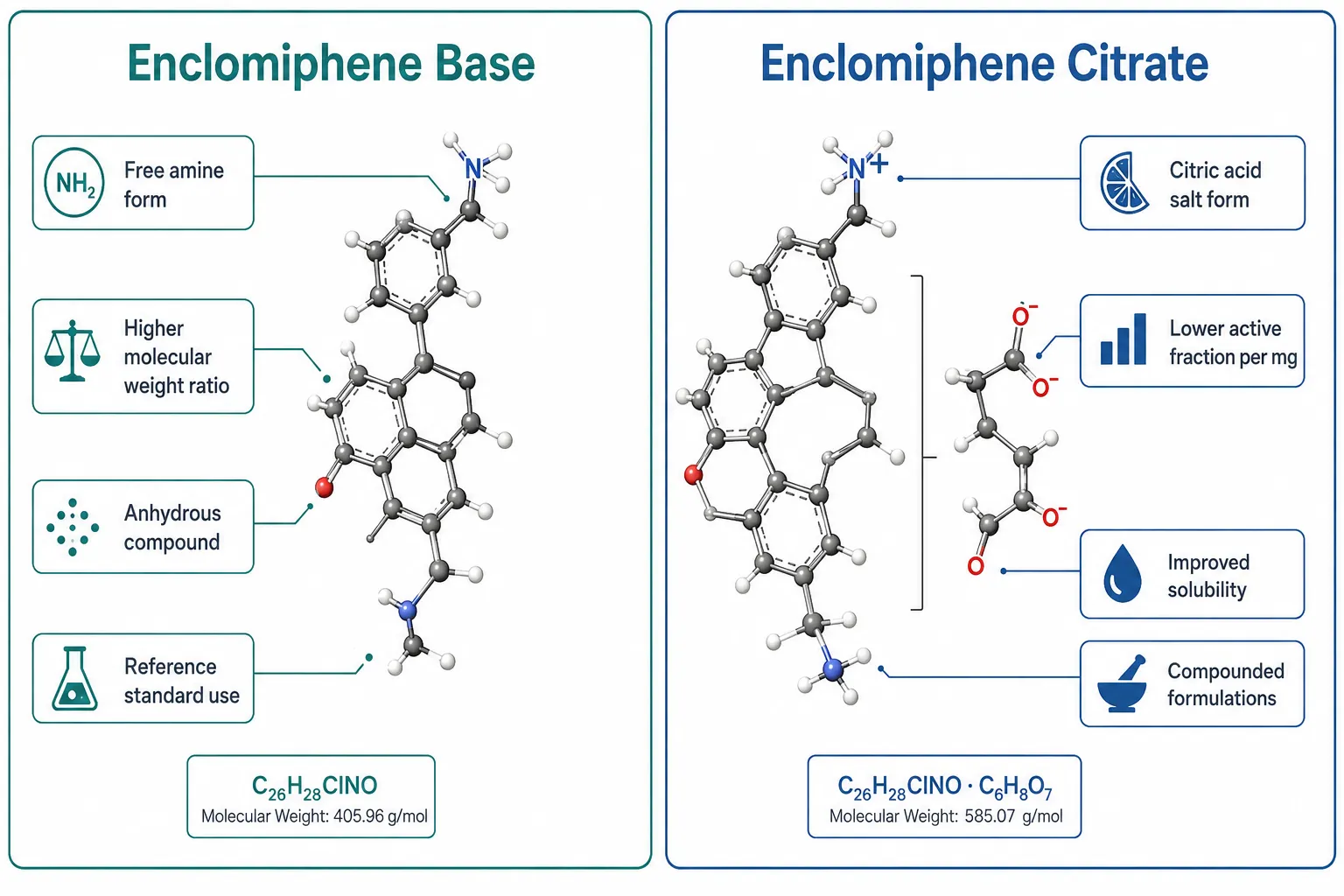
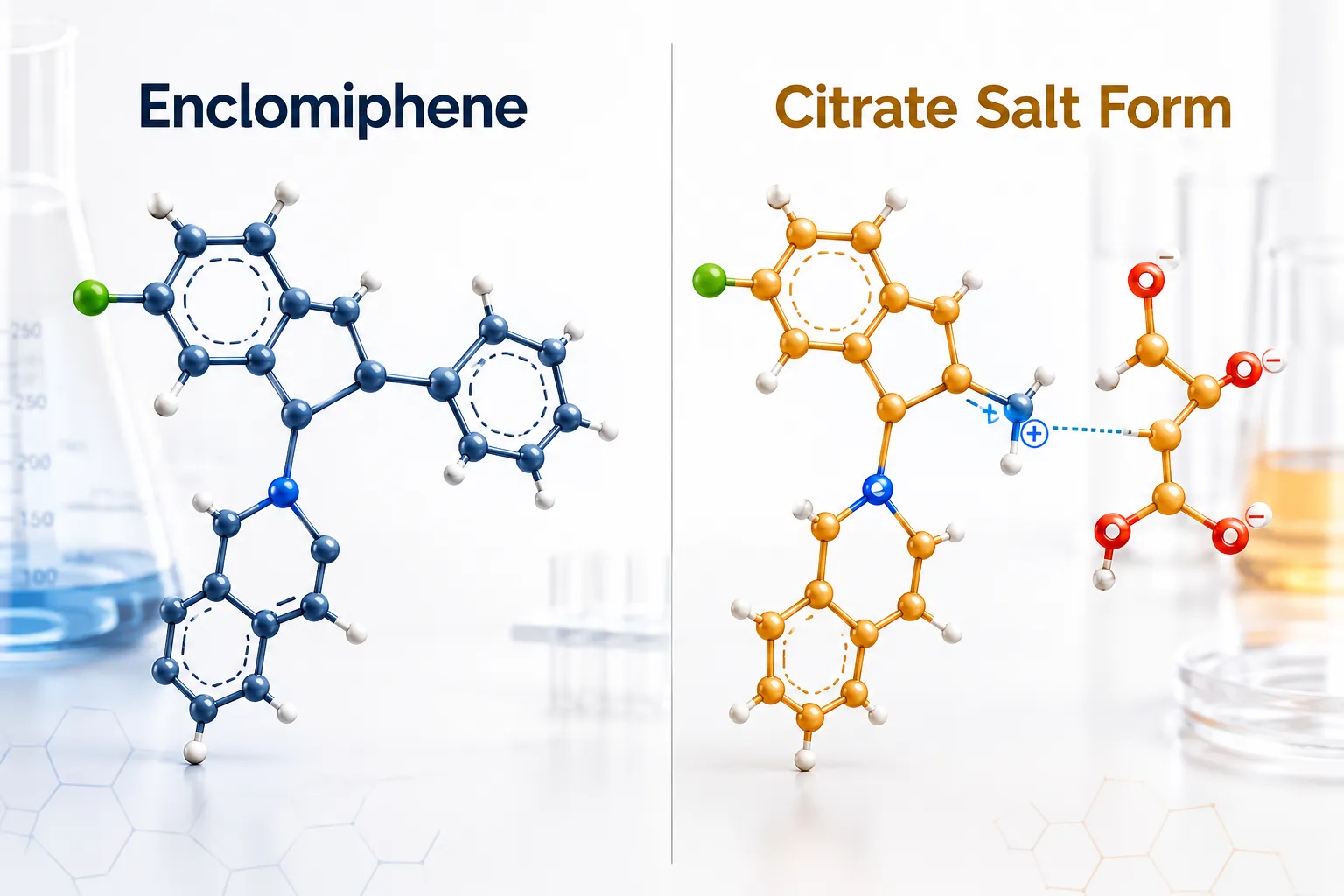
Tamoxifen, introduced in the 1970s, was the first clinically significant serm. Raloxifene followed, offering improved bone and cardiovascular profiles. Clomiphene citrate, a racemic mixture of zuclomiphene (cis) and enclomiphene (trans), became standard for ovulation induction.

"Enclomiphene's pharmacological advantage lies in its shorter half-life and cleaner receptor profile compared to the racemic parent compound."

The table below summarizes key distinctions:

Compound Primary Target Half-Life Key Research Use
Tamoxifen ERα (breast) ~5-7 days Oncology models
Raloxifene ERα/ERβ (bone) ~28 hours Osteoporosis research
Clomiphene (racemic) Hypothalamic ERα ~5-7 days Ovulation induction
Enclomiphene Hypothalamic ERα ~10 hours Male HPG axis research

Enclomiphene's shorter half-life reduces receptor occupancy duration, which researchers hypothesize may lower the risk of prolonged estrogenic side effects seen with zuclomiphene accumulation. Those studying IPA serm stack research will find this receptor-selectivity distinction directly relevant to how serms are combined with growth hormone secretagogues in research protocols.


Enclomiphene in Modern serm Research Models

Enclomiphene in Modern serm Research Models

Modern research into estrogen receptor signaling and enclomiphene: linking classic endocrine pharmacology to modern serm research models has moved beyond simple agonist/antagonist labeling. Current models examine:

  1. Pulse dynamics, how enclomiphene alters GnRH pulse frequency in ex-vivo hypothalamic preparations
  2. Receptor occupancy kinetics, binding affinity data compared to endogenous estradiol
  3. Downstream steroidogenesis, LH-driven Leydig cell testosterone output in preclinical models
  4. Metabolic co-effects, interactions with insulin sensitivity and lipid metabolism markers

This last point connects enclomiphene research to a wider metabolic research landscape. Investigators studying metabolic modulation research lines or AOD-9604 metabolic research often encounter overlapping endpoints, since testosterone and growth hormone axes share downstream metabolic effectors.

Enclomiphene is also being contrasted with small-molecule approaches, including statins, which modestly influence testosterone biosynthesis through cholesterol substrate effects, to isolate receptor-mediated from substrate-mediated hormonal changes. This distinction matters when designing clean research models.

For researchers sourcing reference-grade compounds, the serm 10mg research compound page provides purity and specification data relevant to in-vitro and preclinical study design.

Broader endocrine research often pairs serm compounds with secretagogue stacks. The IPA sermorelin stack research context illustrates how HPG-axis and GH-axis modulation are studied in parallel, since both systems converge on body composition and metabolic outcomes. Similarly, longevity peptide research increasingly incorporates hormonal axis optimization as a foundational variable.


Conclusion

Estrogen receptor signaling and enclomiphene: linking classic endocrine pharmacology to modern serm research models is not a niche academic exercise, it is a convergence point for reproductive endocrinology, metabolic biology, and precision pharmacology. Researchers in 2026 have access to a far richer mechanistic toolkit than the tamoxifen era provided.

Actionable next steps for researchers:

  • Map ERα and ERβ expression profiles in target tissues before designing serm intervention studies
  • Use enclomiphene's short half-life as a variable to study pulse-dependent vs. tonic receptor occupancy effects
  • Compare HPG-axis outcomes alongside metabolic markers to capture full-system responses
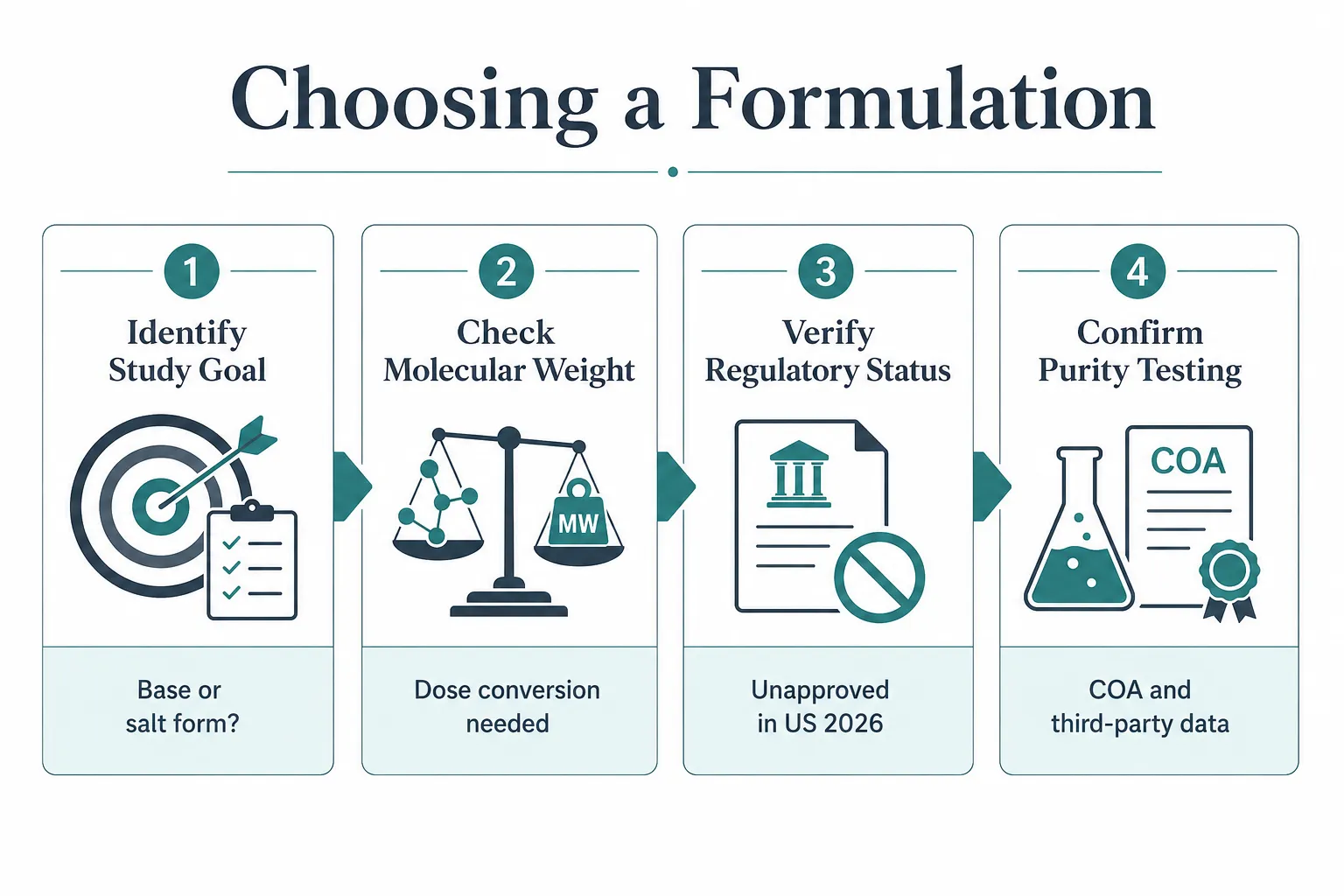
  • Review compound purity documentation carefully, as stereoisomer contamination confounds receptor-binding data
  • Consider pairing serm research with secretagogue or metabolic peptide protocols to capture cross-axis interactions

The field is moving rapidly. Grounding new enclomiphene research in the deep literature of estrogen receptor pharmacology ensures that modern findings build on, rather than repeat, the foundational work that made serm science possible.

https://www.puretestedpeptides.com/wp-content/uploads/2026/07/estrogen-receptor-signaling-and-enclomiphene-linking-classic-endocrine-pharmacol.webp 1024 1536 https://www.puretestedpeptides.com/wp-content/uploads/2026/01/buy-peptides-online.jpg 2026-07-15 13:06:082026-07-15 13:06:08Estrogen Receptor Signaling and Enclomiphene: Linking Classic Endocrine Pharmacology to Modern serm Research Models
Enclomiphene Alternatives: Comparing serms for Selective Estrogen Receptor Modulation Research

Enclomiphene Alternatives: Comparing serms for Selective Estrogen Receptor Modulation Research

July 4, 2026/0 Comments/in Uncategorized/by

Only one FDA-approved serm currently holds a dedicated indication for male hypogonadism management, and enclomiphene is not it. Despite accumulating nearly 190 indexed research citations by 2026, enclomiphene remains available only through compounding pharmacies. That regulatory gap has pushed researchers toward a broader comparison of enclomiphene alternatives: comparing serms for selective estrogen receptor modulation research to identify which compounds offer the most utility across different experimental contexts.

Key Takeaways

  • Enclomiphene is the active trans-isomer of clomiphene and works by blocking estrogen's negative feedback on the hypothalamic-pituitary-gonadal (HPG) axis.
  • Several established serms, including clomiphene, tamoxifen, and raloxifene, serve as functional research comparators with distinct tissue-selectivity profiles.
  • Enclomiphene preserves fertility markers (FSH and LH) better than exogenous testosterone therapies.
  • Cost and regulatory status vary significantly across serms, affecting research accessibility.
  • No serm is universally superior; compound selection depends on the specific receptor signaling pathway under investigation.

Key Takeaways

How serms Work: The Receptor Modulation Framework

Selective estrogen receptor modulators bind to estrogen receptors but produce different effects depending on the target tissue. This tissue-selective action is what makes them valuable both clinically and in preclinical research settings.

Enclomiphene, the trans-isomer of clomiphene citrate, acts as an estrogen receptor antagonist in the pituitary gland. By blocking estrogen's inhibitory signal on the HPG axis, it stimulates the release of luteinizing hormone (LH) and follicle-stimulating hormone (FSH), which in turn drives endogenous testosterone production. This mechanism is distinct from exogenous testosterone replacement, which suppresses the HPG axis entirely.

Researchers studying gonadotropin pulsatility and endogenous androgen production will find this mechanism particularly relevant. For those exploring related neuroendocrine pathways, the gonadorelin GnRH pulsatility research overview provides useful mechanistic context.

"The tissue-selective nature of serms means that receptor binding alone does not predict biological outcome, downstream co-activator expression and tissue context determine the functional result."

Enclomiphene Alternatives: Comparing serms for Selective Estrogen Receptor Modulation Research

When evaluating enclomiphene alternatives for selective estrogen receptor modulation research, four compounds dominate the comparative literature:

serm Primary Mechanism Fertility Preservation Approx. Monthly Cost
Enclomiphene Pituitary ER antagonist Yes $50,$150
Clomiphene Citrate Mixed agonist/antagonist (racemic) Partial $10,$30
Tamoxifen ER antagonist (breast), agonist (bone/uterus) Moderate $15,$40
Raloxifene ER antagonist (breast/uterus), agonist (bone) Limited data $20,$60

Clomiphene citrate is the most studied comparator. As a racemic mixture of enclomiphene and zuclomiphene, it produces broader estrogenic activity due to the zuclomiphene isomer. This makes it less precise for research targeting pure HPG axis modulation, but its lower cost and wider availability make it a practical starting point.

Tamoxifen has a well-characterized receptor binding profile and is frequently used in breast cancer research models. Its partial agonist activity in certain tissues introduces variables that researchers must account for when designing estrogen signaling studies.

Raloxifene offers strong bone tissue selectivity and minimal uterine stimulation, making it valuable for studies focused on bone metabolism and cardiovascular estrogen signaling. A 2019 research review highlighted the growing importance of tissue-selective estrogen complexes in reducing off-target receptor activity, a principle that raloxifene exemplifies well.

Enclomiphene Alternatives: Comparing serms for Selective Estrogen Receptor Modulation Research

Research Utility, Safety Profiles, and Compound Selection

A 2023 systematic review and meta-analysis confirmed that serms as a class effectively raise testosterone levels in men with androgen deficiency while preserving fertility, a critical advantage over exogenous testosterone replacement. This finding reinforces the value of HPG-axis-preserving compounds in male reproductive research.

Common side effects across serms include:

  • Mood changes and irritability
  • Headaches
  • Gastrointestinal upset
  • Rare visual disturbances (most associated with clomiphene)

Enclomiphene's cleaner isomer profile reduces some of these effects compared to racemic clomiphene, which is one reason researchers studying male hypogonadism models favor it despite its higher cost.

For researchers working with complementary peptide-based compounds that influence the neuroendocrine axis, the recovery and tissue biology overview and MOTS-c metabolic flexibility research offer relevant context on how downstream hormonal signaling intersects with metabolic pathways. Similarly, those studying longevity-related hormone optimization may find the longevity peptide research overview a useful companion resource.

A 2017 urology review emphasized that rigorous, controlled trials remain essential for establishing the full clinical and research utility of serms in male infertility models. That call for methodological rigor applies equally to preclinical research design in 2026.

For researchers sourcing quality-tested compounds, reviewing peptide purity testing standards and quality testing protocols ensures that experimental variables are minimized from the outset.

Research Utility, Safety Profiles, and Compound Selection

Conclusion

When evaluating enclomiphene alternatives: comparing serms for selective estrogen receptor modulation research, no single compound dominates every experimental context. Enclomiphene offers the most targeted HPG axis modulation with the fewest estrogenic confounders, but its cost and compounding-only availability create practical barriers. Clomiphene citrate remains the accessible, widely-studied benchmark. Tamoxifen and raloxifene add tissue-specific selectivity profiles that serve distinct research designs.

Actionable next steps for researchers:

  1. Define the target tissue and receptor subtype before selecting a serm, tissue context determines functional outcome.
  2. Use clomiphene as a cost-effective baseline comparator, then advance to enclomiphene for isomer-specific mechanistic studies.
  3. Cross-reference HPG axis findings with neuroendocrine peptide research to build a more complete hormonal signaling picture.
  4. Prioritize sourcing compounds with verified purity documentation to maintain experimental integrity.
  5. Monitor the regulatory landscape, enclomiphene's FDA status may evolve, which would significantly affect research accessibility and standardization.
https://www.puretestedpeptides.com/wp-content/uploads/2026/07/Enclomiphene-Alternatives-Comparing-serms-for-Selective-Estrogen-Receptor-Modulation-Research.png 1024 1536 https://www.puretestedpeptides.com/wp-content/uploads/2026/01/buy-peptides-online.jpg 2026-07-04 13:03:012026-07-04 13:03:01Enclomiphene Alternatives: Comparing serms for Selective Estrogen Receptor Modulation Research
×

Helpful Links

  • My account
  • Cart
  • Checkout
  • Refund and Returns Policy
  • Privacy Policy
  • SMS Privacy Policy
  • Login
  • My Account
  • Logout

USA Made Lab Tested Peptides

All products are sold for research, laboratory, or analytical purposes only, and are not for human consumption


Pure Tested Peptides is a chemical supplier. Pure Tested Peptides is not a compounding / chemical compounding facility as defined under 503A of the Federal Food, Drug, and Cosmetic act. Pure Tested Peptides is not an outsourcing facility as defined under 503B of the Federal Food, Drug, and Cosmetic act.

The statements made within this website have not been evaluated by the US Food and Drug Administration. The products we offer are not intended to diagnose, treat, cure or prevent any disease.

Human/Animal Consumption Prohibited. Laboratory/In-Vitro Experimental Use Only

Scroll to top Scroll to top Scroll to top