

GLP-3 Retatrutide: Exploring the Mechanism of Action and Research Potential Beyond GLP-1 and GLP-2
A single injectable peptide producing nearly 25% body weight loss in 48 weeks, that is not a headline from speculative science fiction. It is the clinical signal that placed retatrutide at the center of metabolic research conversations in 2026. Understanding why this molecule performs so differently from earlier incretin therapies requires a close look at what makes its design fundamentally new.
GLP-3 Retatrutide: Exploring the Mechanism of Action and Research Potential Beyond GLP-1 and GLP-2 is the subject of growing scientific interest precisely because it does not simply improve on the GLP-1 receptor agonist model, it expands the entire framework of incretin pharmacology. To appreciate that expansion, researchers need to understand the structural biology, the receptor targets, and the emerging evidence base that now extends well beyond obesity and type 2 diabetes.
Key Takeaways
- Retatrutide is a unimolecular triple agonist that simultaneously activates GIP, GLP-1, and glucagon receptors, setting it apart from single or dual incretin agents.
- Phase 2 trial data showed up to approximately 24% body weight reduction at 48 weeks, with the TRIUMPH-4 cohort reporting roughly 28.7% at 68 weeks.
- The molecule's mechanism goes beyond the GLP-1 and GLP-2 gut hormone paradigm by adding glucagon receptor co-activation, which amplifies energy expenditure.
- Research interest in 2026 extends to metabolic dysfunction-associated steatohepatitis (MASH), cardiovascular risk reduction, and musculoskeletal outcomes.
- Gastrointestinal adverse events remain the primary tolerability consideration, consistent with the broader incretin drug class.
The Triple-Agonist Architecture That Redefines Incretin Science
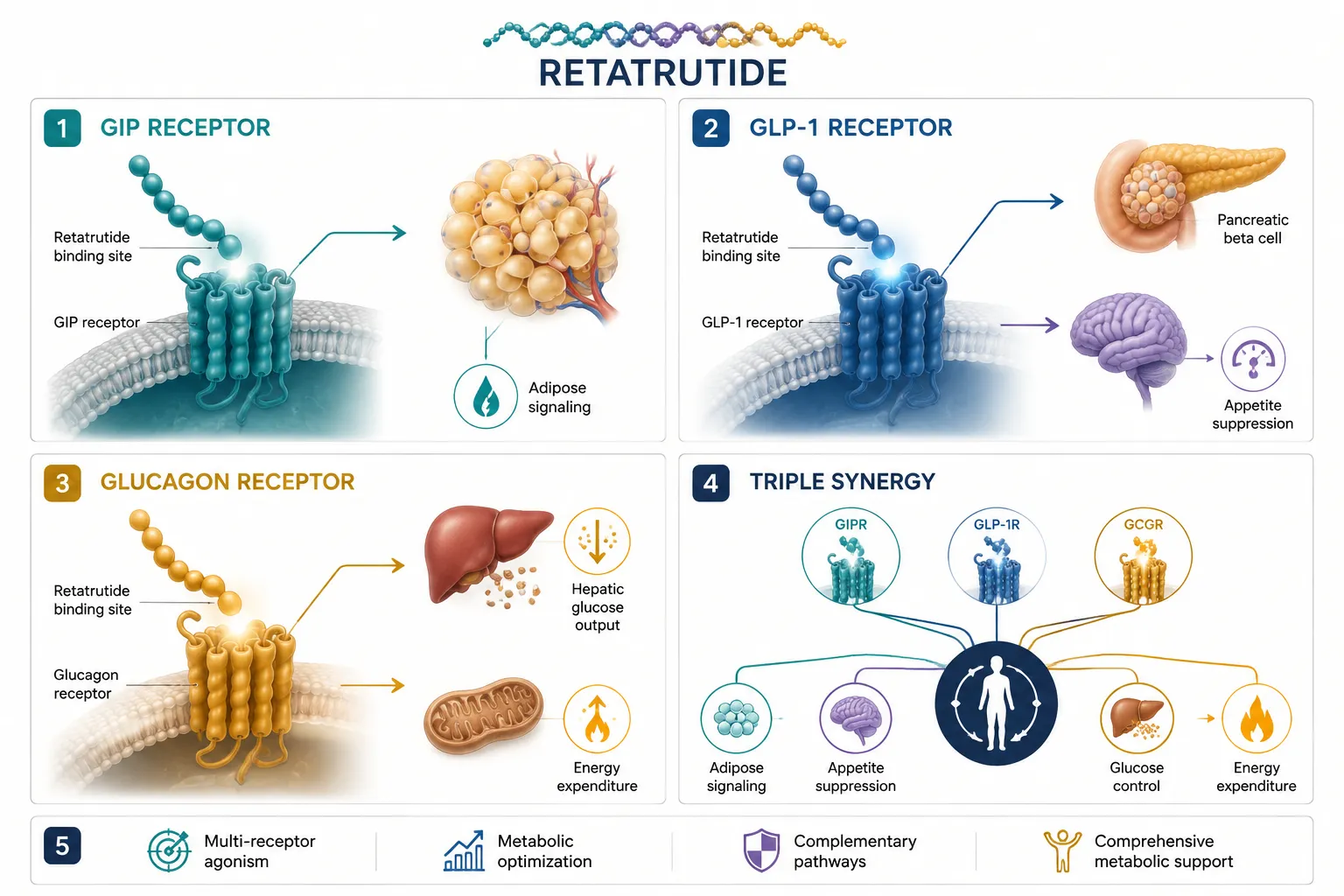
Most incretin-based therapies work by targeting a single receptor. Semaglutide, for example, is a selective GLP-1 receptor agonist. Tirzepatide added GIP receptor co-activation, producing a dual-agonist. Retatrutide takes a third step by incorporating glucagon receptor agonism into the same molecule.
This is not simply additive. The three receptors involved, GIP, GLP-1, and glucagon, each contribute distinct metabolic effects:
| Receptor | Primary Metabolic Role |
|---|---|
| GIP (Glucose-dependent Insulinotropic Polypeptide) | Enhances insulin secretion, promotes fat storage modulation |
| GLP-1 (Glucagon-like Peptide-1) | Suppresses appetite, slows gastric emptying, stimulates insulin |
| Glucagon | Increases hepatic glucose output, elevates energy expenditure |
The inclusion of glucagon receptor agonism is the key differentiator. Glucagon has historically been viewed as a hyperglycemic hormone, one that raises blood glucose. In isolation, that would be counterproductive in metabolic disease. However, when glucagon receptor activation is carefully balanced within a triple-agonist framework, it drives significant increases in energy expenditure and promotes fat oxidation in the liver, effects that complement rather than undermine the insulin-sensitizing actions of GIP and GLP-1.
For a broader look at how retatrutide fits into the evolving landscape of metabolic peptide research, the GLP-3 Retatrutide: The Future of Metabolic Research Beyond GLP-1 resource provides useful context on where the science is heading.
"Retatrutide's triple-agonist design represents a structural biology achievement, engineering one molecule to coordinate three receptor systems that evolution kept separate."
GLP-3 Retatrutide: Exploring the Mechanism of Action and Research Potential Beyond GLP-1 and GLP-2 in Clinical Evidence
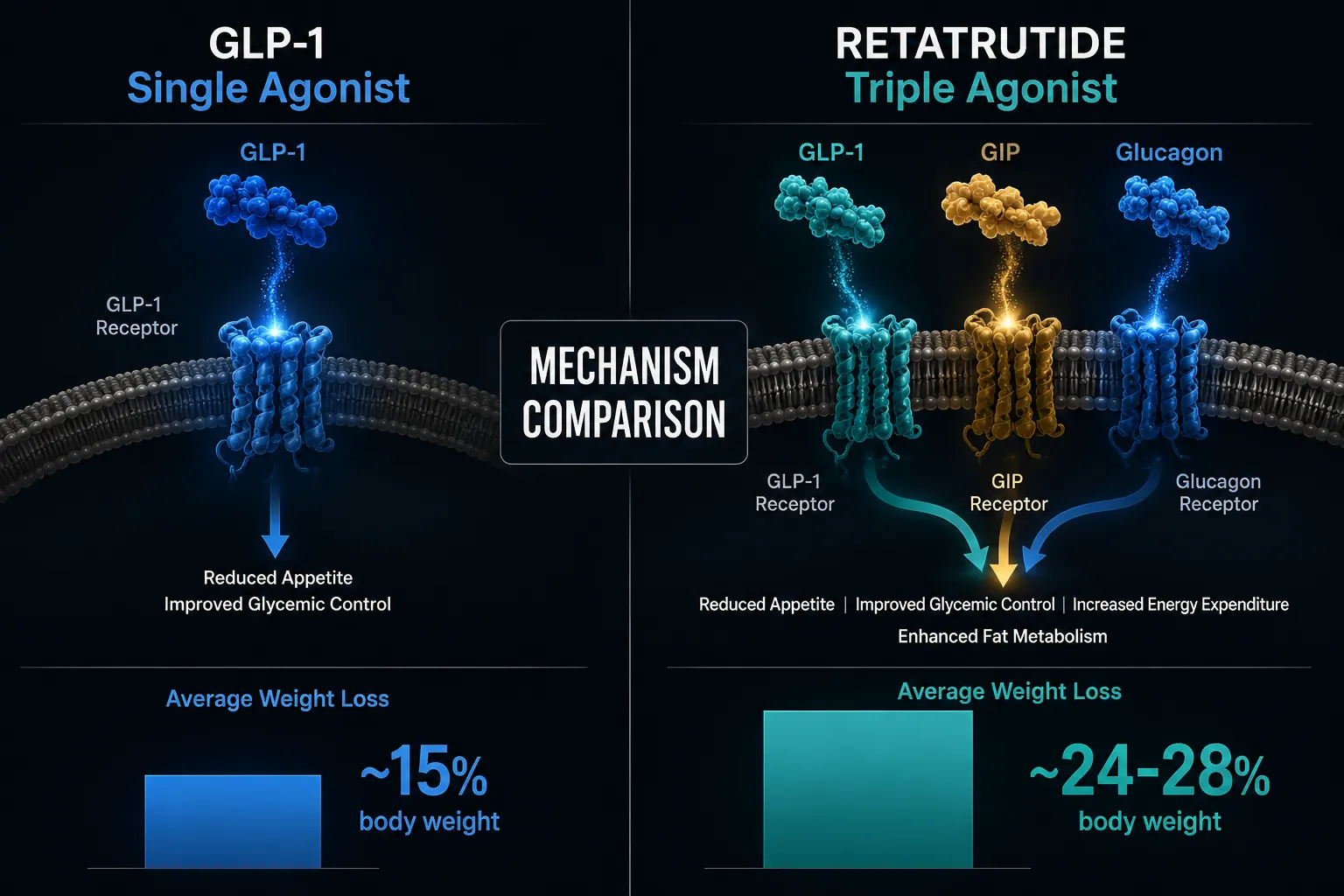
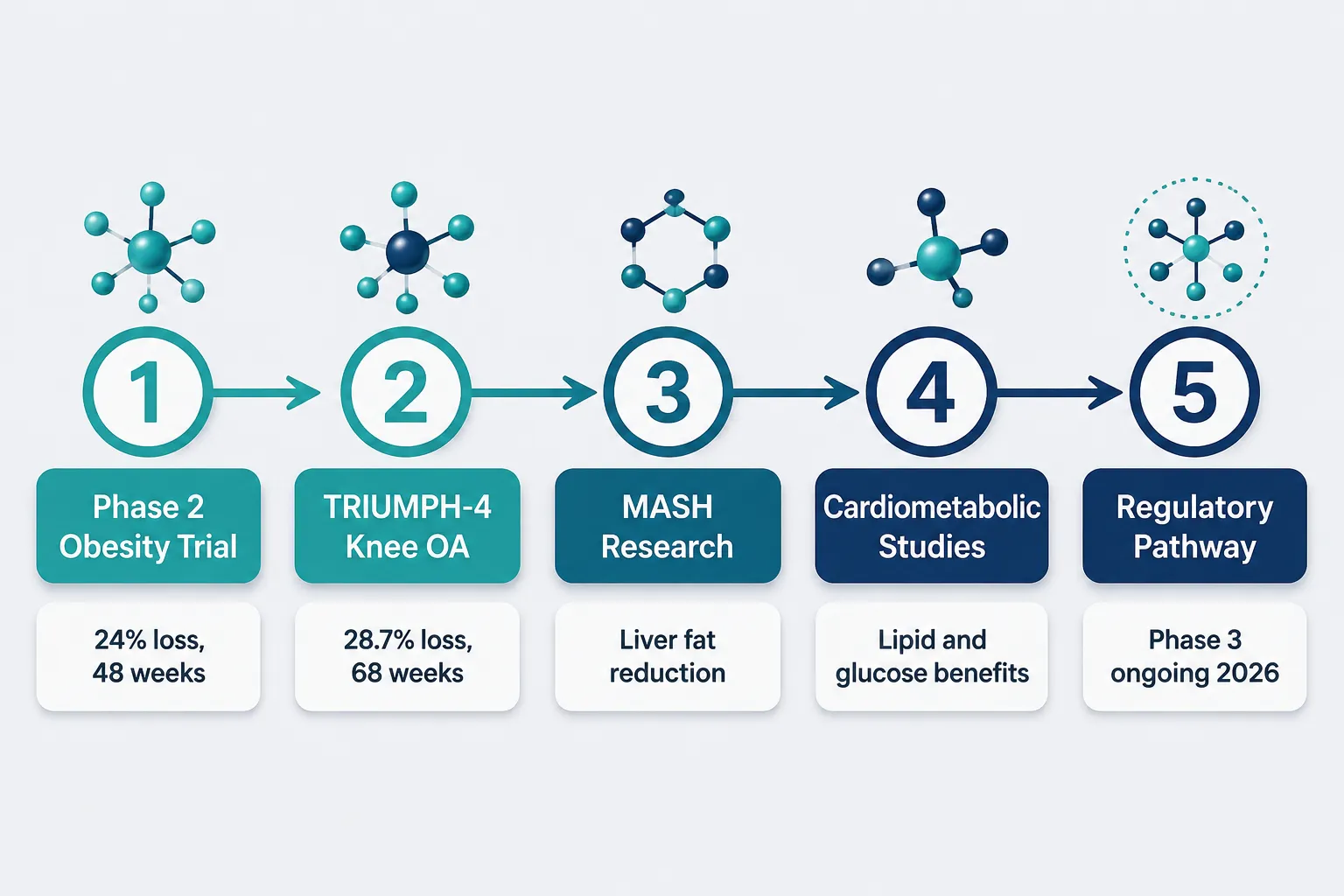
The clinical evidence for retatrutide is what converts mechanistic theory into research significance. In the pivotal Phase 2 obesity trial published in the New England Journal of Medicine, participants receiving the highest dose of retatrutide achieved approximately 24% mean body weight reduction over 48 weeks. This figure substantially exceeds what was observed with GLP-1 monotherapy in comparable timeframes.
The TRIUMPH-4 trial, which enrolled a knee osteoarthritis cohort, extended the observation window to 68 weeks and recorded approximately 28.7% weight loss, a figure that positions retatrutide as potentially the most efficacious weight-loss pharmacotherapy studied to date in a major randomized trial.
Key efficacy observations across the evidence base:
- Consistent dose-dependent weight reduction across multiple trial cohorts
- Improvements in fasting glucose, insulin sensitivity, and lipid profiles
- Reductions in liver fat content, relevant to MASH research interest
- Musculoskeletal secondary endpoints showing functional improvement in the TRIUMPH-4 population
Eli Lilly, the developer, described retatrutide in early 2026 updates as demonstrating "powerful weight loss" and positioned it as a first-in-class agent in the triple incretin receptor agonist category. Phase 3 trials are ongoing, and regulatory submission timelines remain subject to those results.
Researchers following the full trial trajectory can review the detailed breakdown in Retatrutide Phase 3 and Beyond: What Ongoing Obesity Trials Mean for Research Readers.
Safety profile summary:
- Nausea, vomiting, and diarrhea are the most frequently reported adverse events
- Gastrointestinal tolerability follows a pattern consistent with other GLP-1-based agents
- Glucagon receptor activation raises theoretical considerations around hepatic glucose management, which ongoing trials continue to monitor
- No unexpected safety signals have emerged in published Phase 2 data
Research Potential Beyond GLP-1 and GLP-2: Expanding the Metabolic Frontier
GLP-3 Retatrutide: Exploring the Mechanism of Action and Research Potential Beyond GLP-1 and GLP-2 is not a conversation limited to weight loss. The molecule's mechanism creates research opportunities across several disease areas where metabolic dysfunction plays a central role.
Emerging research domains in 2026:
- MASH (Metabolic Dysfunction-Associated Steatohepatitis): The glucagon receptor component drives hepatic fat oxidation, making retatrutide a candidate for liver-targeted metabolic intervention. Reductions in liver fat observed in Phase 2 data support this direction.
- Cardiovascular risk: Improvements in lipid panels, blood pressure, and insulin resistance create a plausible pathway for cardiovascular outcome trials, similar to the trajectory followed by GLP-1 agents.
- Musculoskeletal health: TRIUMPH-4 data in knee osteoarthritis patients suggests that the magnitude of weight reduction achievable with retatrutide may produce meaningful joint offloading and functional benefit.
- Precision incretin design: Retatrutide's success is accelerating academic interest in next-generation multi-agonist peptides that could target four or more receptor systems simultaneously.
Researchers interested in how peptide-based metabolic tools compare across the current landscape will find the Top 5 Research Peptides for Metabolic Health: An Updated Buyer's Guide a useful reference for situating retatrutide within the broader field.
It is also worth noting that naming conventions in incretin research can generate confusion. The label "GLP-3" as applied to retatrutide refers to its positioning as a third-generation GLP-based agent rather than a distinct endogenous peptide. Researchers working with GLP-2-related compounds should consult resources like GLP2-T Peptide and GLP2 Tirz Peptide: Naming Confusion, Product Labels, and Research Interpretation to avoid conflating separate receptor systems.
For those studying complementary mitochondrial and cellular energy pathways alongside incretin research, the work covered in SS-31 Mitochondrial Research Themes offers relevant mechanistic context.
Conclusion
Retatrutide's triple-agonist mechanism represents a genuine paradigm shift in how researchers approach metabolic disease pharmacology. By simultaneously engaging GIP, GLP-1, and glucagon receptors within a single molecule, it achieves weight-loss outcomes that single and dual incretin agents have not matched in head-to-head timeframes.
Actionable next steps for researchers and science communicators:
- Track Phase 3 TRIUMPH trial readouts as they become available, these will determine regulatory timelines and clarify long-term safety data.
- Monitor MASH and cardiovascular outcome substudies for signals that extend retatrutide's clinical relevance beyond obesity.
- Distinguish receptor nomenclature carefully, GLP-1, GLP-2, and the "GLP-3" label applied to retatrutide refer to distinct biological systems and should not be used interchangeably in research documentation.
- Situate retatrutide within the multi-agonist design trend, the structural biology insights from this molecule are already informing next-generation peptide candidates.
The weight of current evidence positions retatrutide as one of the most scientifically significant metabolic research compounds of the decade. The full scope of its research potential is still being mapped.