Call or Text 727-513-9780
  • Shopping Cart Shopping Cart
    0Shopping Cart
Pure Tested Peptides | America's most trusted Peptides for sale online
  • Peptides for sale
    • Oral Peptides for sale
      • Peptide Capsules for sale
      • BPC 157 Capsules 1000mcg
      • SLU-PP-332 Capsules | 1000 mcg
      • 5-Amino-1MQ 50mg Capsules
      • Tesofensine 500mcg
    • All Peptides for sale
    • Peptide Sprays
      • BPC 157 Nasal Spray Kit
      • BPC-157 TB500 Nasal Spray Kit
      • Semax Nasal Spray 10mg
      • Selank – Nasal Spray Kit – 10mg
      • Epithalon 50MG Nasal Spray Kit
      • Ipamorelin 10mg Nasal Spray
      • Klow Nasal Spray (BPC-157 + TB-500 + GHK-Cu + KPV) | 80mg
      • Hulk Nasal Spray Tesa / Ipa Blend 6/3 MG
      • Klow Nasal Spray
      • NAD + 500 mg Nasal Spray
      • PT-141 Nasal Spray Kit
    • GHRH Peptides
      • Ipa Peptides
      • CJC-1295 Peptides
        • CJC-1295 with DAC 5 mg
        • CJC-1295 without DAC 5 mg
        • CJC-1295 Ipa 10mg
      • Tesa Peptides
        • Tesa Peptide
        • Tesa 20 mg
    • GHK-Cu Peptides
      • All GHK-Cu Peptides
      • GHK-Cu 100mg
      • KLOW Peptide Blend – Buy KLOW blend online
    • BPC Peptides
      • All BPC Peptides
      • BPC-157
      • BPC-157 TB-500
      • BPC 157 capsules 1000mcg
    • SLU-PP-332 Peptides
      • All SLU-PP-332 Peptides
      • SLU-PP-332 5mg
    • GLP3 Peptides
    • PT-141 Peptides
      • PT-141 Peptides for sale
      • PT-141 10mg
      • PT-141 Nasal Spray
    • CAG Peptides
      • Lipo-C Peptide Blend
      • CAG 5mg
      • CAG 10mg
    • MOTS-C Peptides
      • MOTS-C Peptides for sale
      • MOTS-c peptide
      • MOTS-c 10mg *6 pack*
    • 5 Amino 1MQ Peptides
      • 5 Amino 1MQ Peptides for sale
      • 5-Amino-1MQ 50mg Capsules
      • 5-Amino-1MQ 5mg
    • Epithalon Peptides
      • Epithalon Peptides for sale
      • Epithalon 10mg
      • Epithalon 50mg
  • Shop
    • GLPs
      • 5-Amino-1MQ 50mg Capsules
      • 5-Amino-1MQ 5mg
      • L-Carnitine 500mg/ml
      • Tesofensine 500mcg
      • SLU-PP-332 5mg
      • MOTS-c 10mg *6 pack*
    • Epithalon & BPC Peptides
      • Epithalon 10mg
      • Epithalon 50mg
      • BPC-157
      • BPC 157 capsules 1000mcg
      • BPC-157 TB-500
      • BPC-157 TB500 Nasal Spray Kit
      • BPC 157 Nasal Spray Kit
    • BPC TB-500 & NAD+ Peptides
      • NAD+ 500 mg
      • KLOW Peptide Blend – Buy KLOW blend online
      • GLOW Peptide Blend
      • TB 500 5mg
      • BPC 157 capsules 1000mcg – Supplement
      • BPC 157 Nasal Spray Kit
      • BPC-157
      • BPC-157 TB500 Nasal Spray Kit
      • BPC-157 TB-500
      • BPC 157 capsules 1000mcg
    • LL-37 Peptide
      • LL-37 10 mg
    • MOTS-C & Selank
      • MOTS-c peptide
      • Selank 10mg
    • GHK Peptides
      • GHK-Cu 100mg
      • GLOW Peptide Blend
      • KLOW Peptide Blend – Buy KLOW blend online
  • COAs
  • Wholesale
    • Wholesale Peptides for sale
  • PTP FAQ
  • Affiliates
    • Selank Peptide: Advanced Pharmacological Mechanisms Underlying Its Anxiolytic and Nootropic Effects in Research
      • 5-Amino-1MQ Peptide: Detailed Mechanisms of NNMT Inhibition and Its Impact on Cellular Metabolism Research
        • MOTS-C Peptide: Unraveling Its Role in Mitochondrial Dynamics and Energy Metabolism Research
          • Epithalon Peptide and Telomerase Regulation: Investigating Its Impact on Cellular Senescence and Lifespan Research Models
            • GLP2-T vs GLP2 Tirz Peptide: Understanding the Naming, Mechanistic Nuances, and Research Implications for Gut Health
      • Peptides and Polypeptides in Modern Pharmacology: What Research on Metoprolol, Prednisone, and Amlodipine Reveals
        • Polypeptide Peptides vs NSAIDs: What Naproxen and Diclofenac Teach Tissue-Repair Researchers About BPC‑157 and TB‑500
          • Peptides and Polypeptides in Endocrine Pharmacology: How GLP-1, GLP-2, and GLP-3 Retatrutide Differ From Classic Drugs Like Prednisone and Amlodipine
          • 5‑Amino‑1MQ Peptide and NNMT Inhibition: How It Compares With Statins Like Atorvastatin in Adipose and Lipid Metabolism Research
      • Enclomiphene, Estrogen Receptor Signaling, and Luteinizing Phase Biology: What Hormone Researchers Should Measure
        • Mesenchymal Stem Cells, BPC‑157, and GHK‑Cu: How Tissue Repair Peptides Compare With Classic NSAIDs Like Naproxen in Injury Models
          • Peptide Calculator Use Cases Beyond Growth Hormone: Working Through GLP‑3 Retatrutide, MOTS‑c, and BPC‑157 Research Dosing
        • Polypeptide Peptides in Endocrine and Metabolic Pharmacology: Lessons From Amlodipine, Prednisone, and Metoprolol
        • Peptides Calculator for Advanced Blends: Worked Examples for Tesamorelin, CJC‑1295, and Ipamorelin Stacks
          • Peptides and Polypeptides in Human Physiology: How Molecular Size Shapes Research Applications
            • Selank Peptide: Advanced Pharmacological Mechanisms Underlying Its Anxiolytic and Nootropic Effects in Research
          • 5-Amino-1MQ Peptide: Detailed Mechanisms of NNMT Inhibition and Its Impact on Cellular Metabolism Research
            • MOTS-C Peptide: Unraveling Its Role in Mitochondrial Dynamics and Energy Metabolism Research
              • Epithalon Peptide and Telomerase Regulation: Investigating Its Impact on Cellular Senescence and Lifespan Research Models
                • GLP2-T vs GLP2 Tirz Peptide: Understanding the Naming, Mechanistic Nuances, and Research Implications for Gut Health
                  • Peptides and Polypeptides in Endocrine Pharmacology: How GLP-1, GLP-2, and GLP-3 Retatrutide Differ From Classic Drugs Like Prednisone and Amlodipine
                    • Polypeptide Peptides vs NSAIDs: What Naproxen and Diclofenac Teach Tissue-Repair Researchers About BPC‑157 and TB‑500
                      • Peptides and Polypeptides in Modern Pharmacology: What Research on Metoprolol, Prednisone, and Amlodipine Reveals
                        • 5‑Amino‑1MQ Peptide and NNMT Inhibition: How It Compares With Statins Like Atorvastatin in Adipose and Lipid Metabolism Research
                        • Enclomiphene, Estrogen Receptor Signaling, and Luteinizing Phase Biology: What Hormone Researchers Should Measure
                        • Mesenchymal Stem Cells, BPC‑157, and GHK‑Cu: How Tissue Repair Peptides Compare With Classic NSAIDs Like Naproxen in Injury Models
                        • Peptide Calculator Use Cases Beyond Growth Hormone: Working Through GLP‑3 Retatrutide, MOTS‑c, and BPC‑157 Research Dosing
                        • Polypeptide Peptides in Endocrine and Metabolic Pharmacology: Lessons From Amlodipine, Prednisone, and Metoprolol
                        • Peptides Calculator for Advanced Blends: Worked Examples for Tesamorelin, CJC‑1295, and Ipamorelin Stacks
                        • Peptides and Polypeptides in Human Physiology: How Molecular Size Shapes Research Applications
                        • Selank Peptide: Advanced Pharmacological Mechanisms Underlying Its Anxiolytic and Nootropic Effects in Research
                        • MOTS-C Peptide: Unraveling Its Role in Mitochondrial Dynamics and Energy Metabolism Research
                        • Peptides and Polypeptides in Modern Pharmacology: What Research on Metoprolol, Prednisone, and Amlodipine Reveals
                        • Peptides and Polypeptides in Endocrine Pharmacology: How GLP-1, GLP-2, and GLP-3 Retatrutide Differ From Classic Drugs Like Prednisone and Amlodipine
                        • 5-Amino-1MQ Peptide: Detailed Mechanisms of NNMT Inhibition and Its Impact on Cellular Metabolism Research
                        • Mesenchymal Stem Cells, BPC‑157, and GHK‑Cu: How Tissue Repair Peptides Compare With Classic NSAIDs Like Naproxen in Injury Models
                        • Peptide Calculator Use Cases Beyond Growth Hormone: Working Through GLP‑3 Retatrutide, MOTS‑c, and BPC‑157 Research Dosing
                        • GLP2-T vs GLP2 Tirz Peptide: Understanding the Naming, Mechanistic Nuances, and Research Implications for Gut Health
                        • Polypeptide Peptides in Endocrine and Metabolic Pharmacology: Lessons From Amlodipine, Prednisone, and Metoprolol
                        • Polypeptide Peptides vs NSAIDs: What Naproxen and Diclofenac Teach Tissue-Repair Researchers About BPC‑157 and TB‑500
                        • Peptides and Polypeptides in Human Physiology: How Molecular Size Shapes Research Applications
                        • Peptides Calculator for Advanced Blends: Worked Examples for Tesamorelin, CJC‑1295, and Ipamorelin Stacks
                        • 5‑Amino‑1MQ Peptide and NNMT Inhibition: How It Compares With Statins Like Atorvastatin in Adipose and Lipid Metabolism Research
                        • Enclomiphene, Estrogen Receptor Signaling, and Luteinizing Phase Biology: What Hormone Researchers Should Measure
                        • Epithalon Peptide and Telomerase Regulation: Investigating Its Impact on Cellular Senescence and Lifespan Research Models
                        • Best research protocol Klow blend
                        • best time to take BPC-157
                        • best time to take DSIP (Delta Sleep Inducing Peptide)
                        • best time to take CJC-1295
                        • best time to take AOD-9604
                        • best time to take Follistatin 344
                        • best time to take Ipamorelin
                        • best time to take MK-677 (Ibutamoren)
                        • best time to take Ligandrol (LGD-4033) — research compound
                        • best time to take Ostarine (MK-2866) — research compound
                        • best time to take GHK-CU
                        • best time to take TB-500
                        • best time to take MOTS-c
                        • best time to take Semax
                        • best time to take RAD-140 (Testolone) — research compound
                        • best time to take Thymosin Alpha-1
                        • best time to take PEG-MGF
                        • Biolife Plasma, Octapharma Plasma, and Research Peptides: How Plasma Donation Labs Differ From Peptide Suppliers
                        • best time to take YK-11 — research compound
                        • best time to take PT-141 (Bremelanotide)
                        • Best research protocol Klow blend
                        • 5-Amino-1MQ and MOTS-C Synergy: Metabolic Signaling, Mitochondria, and Research Design
                        • BPC-157 and TB-500: Investigating Their Combined Effects on Angiogenesis and Cellular Migration in Tissue Repair Models
                        • BPC-157 Peptide: Gut Barrier Function, Inflammation, and Tissue-Recovery Research
                        • 5‑Amino‑1MQ and MOTS‑c Synergy in Metabolic Research: Designing NNMT and Mitochondrial Biogenesis Stacks
                        • CJC-1295 with DAC vs. Without DAC: Half-Life, Release Kinetics, and Research Implications
                        • CJC‑1295 with DAC vs. Without DAC: Expanding on Half‑Life Differences Using Tesamorelin and Ipamorelin Blend Case Studies
                        • Collagen Biology and Copper‑Binding Peptides: How GHK‑Cu, Glow Blend, and Klow Blend Interact with Skin and Connective Tissue
                        • Collagen Biology and Regenerative Peptides: How GHK‑Cu, Glow Blend, and Klow Blend Affect Extracellular Matrix Research
                    • DNA, Telomeres, and Longevity Peptides: Positioning Epithalon and MOTS‑c in Genetic Aging Research
                      • Enclomiphene Citrate: serm Mechanism, Testosterone Research, and Stack Compatibility
                        • Enclomiphene vs Enclomiphene Citrate: Formulation, Bioavailability, and Research Distinctions
                        • Epithalon Peptide Research: Telomerase Activation, Aging, and Pineal Gland Function
                        • Estrogen Receptor Signaling and Enclomiphene: How Selective Modulators Compare with Classic Polypeptide Hormones
                        • GHK-Cu Peptide: Advanced Mechanisms in Extracellular Matrix Remodeling and Wound Healing Research
                        • GHK-Cu Peptide: Collagen Synthesis, Wound Repair, and Skin-Barrier Research Models
                        • GLP-1 vs GLP-3 vs GLP-2: Peptide Classification and Research Applications
                        • GLP-2 Peptide Research Guide: Gut Barrier Function, Nutrient Absorption, and Intestinal Recovery Models
                        • GLP-3 Retatrutide vs. GLP-1 Drugs: What Triple-Agonist Biology Changes in Research Models
                        • Ipamorelin and Tesamorelin Combination: Synergistic GH Secretagogue Research and Dosing Protocols
                        • GLP2 Tirz Peptide: What It Is, Why the Name Exists, and How Researchers Should Interpret It
                        • Klow Blend Peptide Nasal Spray: What the Formulation Is Trying to Do in Cognitive Research
                        • Mitochondria, NNMT Inhibition, and Peptide Modulators: Where MOTS‑c and 5‑Amino‑1MQ Fit in Cellular Energy Research
                        • MOTS-c Peptide: Mitochondrial Function, Energy Metabolism, and What Researchers Measure
                        • MOTS-c vs. 5-Amino-1MQ: Which Metabolic Research Questions Each Compound Actually Answers
                        • Nasal Spray Peptides: Bioavailability, Administration, and Semax/Selank Research Applications
                        • PT-141 Peptide Research: Mechanism of Action and Melanocortin Receptor Signaling
                        • Retatrutide for Research: Mechanism, Structure, and GLP-1/GLP-3 Dual Action
                        • Retatrutide for Obesity and Type 2 Diabetes: What the Latest Trial Data Suggest
                        • Tesofensine Peptide Research: Mechanism, Appetite Suppression, and Neuropeptide Y Pathways
  • Contact
    • Contact Customer Service
    • Text Customer Support
  • About US
  • Shop all peptides
  • Affiliate Program
    • Affiliate Signup
  • Login / Register Login / Register Page Link Login / Register Page Link
  • Click to open the search input field Click to open the search input field Search
  • Menu Menu

Tag Archive for: metabolic peptide stacks

Best Research-Use GLP-3, GLP-2-T, and Tesofensine Stacks: How Labs Compare Metabolic Peptide Combinations for Appetite and Weight Models

Best Research-Use GLP-3, GLP-2-T, and Tesofensine Stacks: How Labs Compare Metabolic Peptide Combinations for Appetite and Weight Models

September 6, 2026/0 Comments/in Uncategorized/by

}

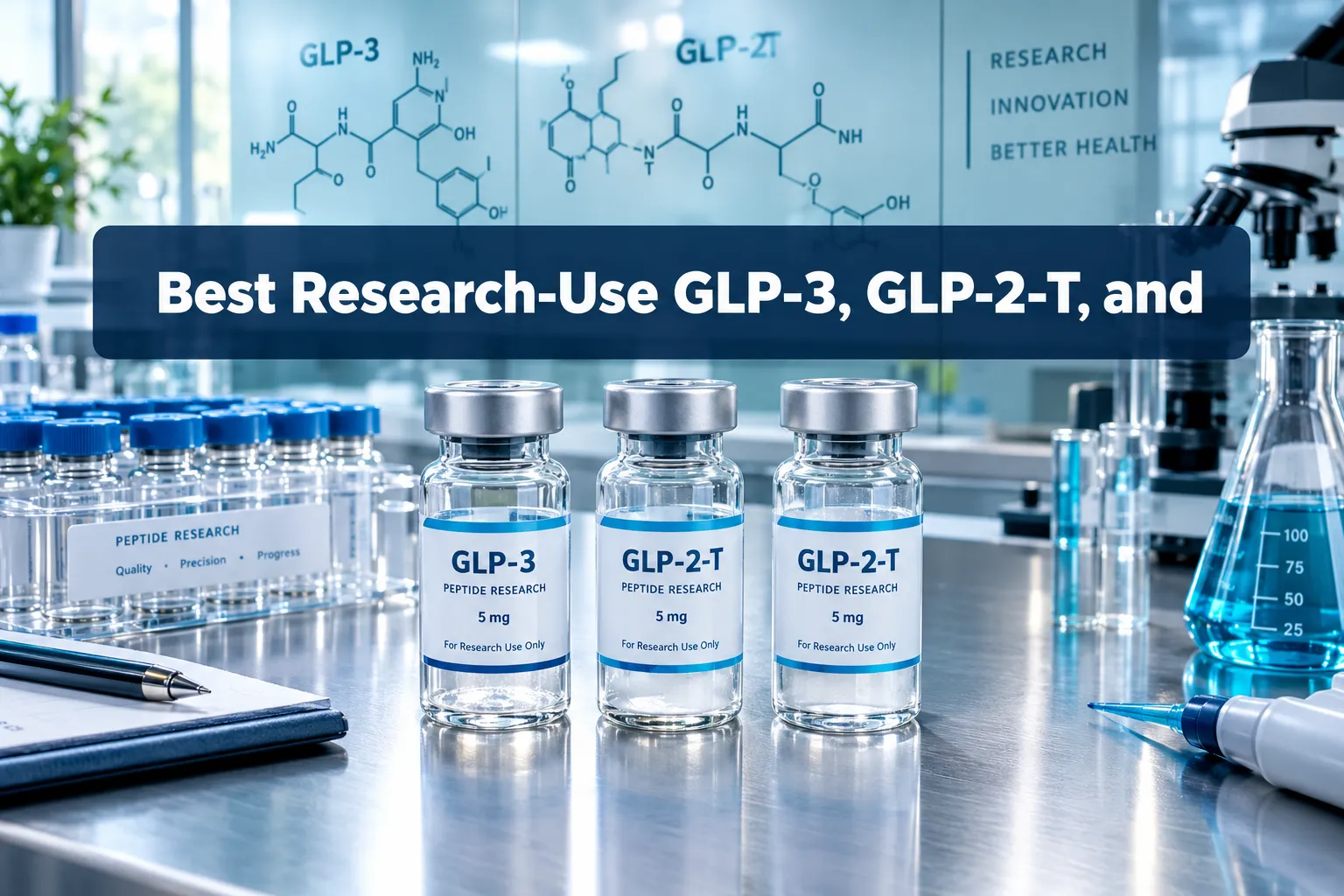
Professional () hero image with SHORT (≤42 chars): 'Best Research-Use GLP-3, GLP-2-T, and' in crisp white centered on a deep

Retatrutide's Phase 3 TRIUMPH program data, released through mid-2026, now gives research labs a concrete benchmark that no single-agent peptide has matched. That benchmark is reshaping how investigators design multi-compound protocols. When labs evaluate the best research-use GLP-3, GLP-2-T, and tesofensine stacks for appetite and weight models, they are not simply mixing compounds at random. They are working backward from endpoint hierarchies, receptor biology, and the performance ceilings set by clinically tested combinations.

Key Takeaways

  • Triple incretin agonism (GLP-1/GIP/glucagon), exemplified by retatrutide, is the current gold-standard reference point for any research-use metabolic stack in 2026.
  • GLP-2-T peptides primarily drive gut adaptation rather than weight loss, making their role in appetite-focused stacks speculative rather than evidence-based.
  • Tesofensine contributes a distinct central monoamine mechanism, complementing incretin pathways rather than duplicating them.
  • Labs designing multi-compound protocols typically assign each agent to a separate mechanistic axis to avoid redundancy and isolate variables.
  • No published human data yet evaluates tesofensine co-administered with GLP-1, GLP-2, or GLP-3-class peptides, so research stacks in this space remain preclinical in design.

Understanding the Agents: GLP-3, GLP-2-T, and Tesofensine in Research Context
Understanding the Agents: GLP-3, GLP-2-T, and Tesofensine in Research Context

Before evaluating any combination, researchers need clarity on what each agent actually does.

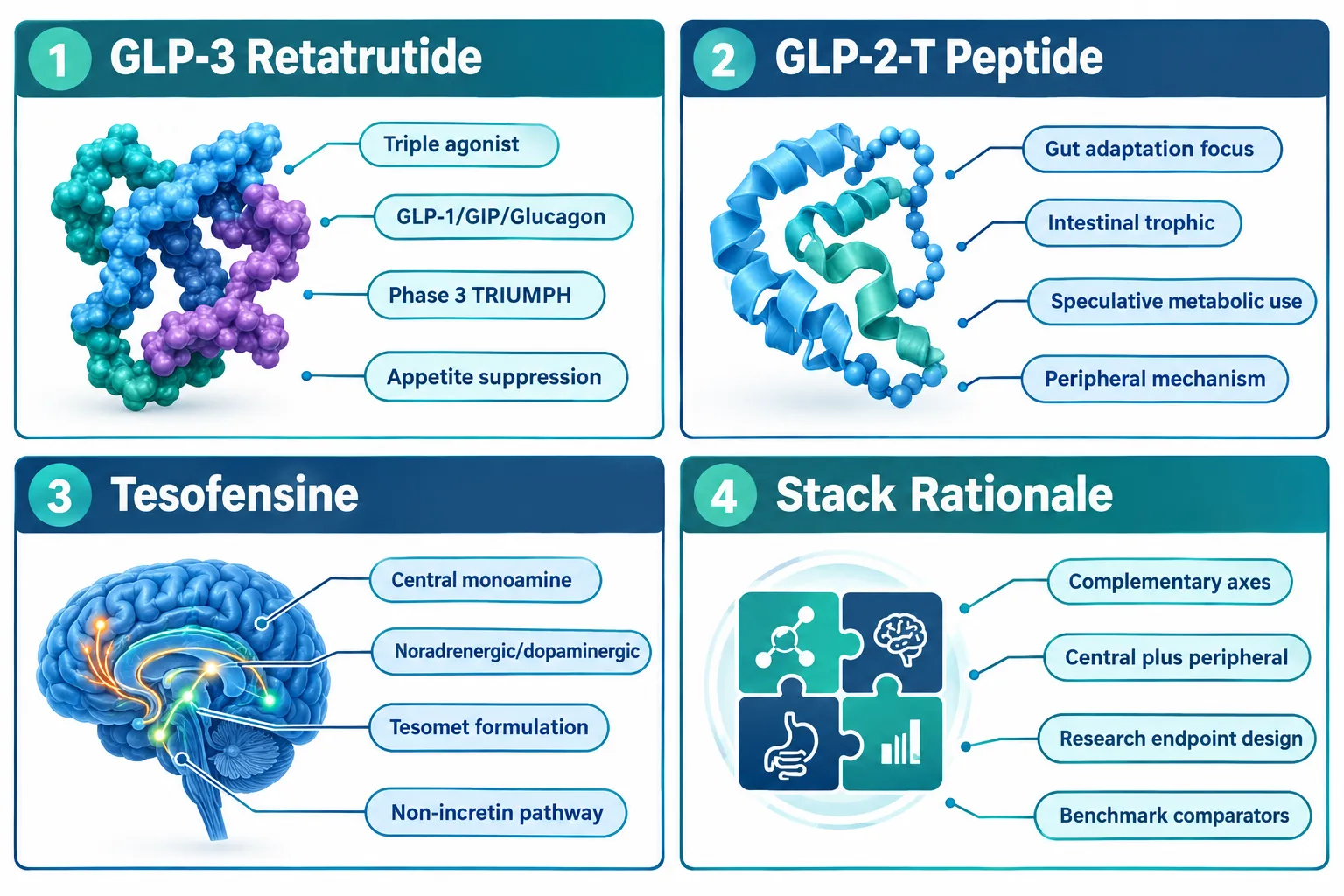
GLP-3 (Retatrutide) is the informal label researchers apply to triple incretin agonists that activate GLP-1, GIP, and glucagon receptors simultaneously. Retatrutide is the leading compound in this class. Its Phase 3 TRIUMPH data confirm weight reductions that outperform all prior single or dual incretin agents. For a detailed breakdown of how retatrutide is distinguished from simpler GLP peptides, see what GLP-3 peptide means and how researchers distinguish it from retatrutide.

GLP-2-T refers to GLP-2 tirzepatide-adjacent or GLP-2 tirzepeptide formulations. This naming creates genuine confusion in research procurement. GLP-2 receptor agonism primarily promotes intestinal mucosal growth and nutrient absorption. Its mainstream clinical application targets gut adaptation syndromes, not obesity. For labs considering metabolic stacks, understanding what GLP-2-T versus GLP2 Tirz naming actually means is essential before procurement decisions are made.

Tesofensine is a triple monoamine reuptake inhibitor that blocks norepinephrine, dopamine, and serotonin transporters. Its central mechanism drives appetite suppression through pathways entirely separate from the incretin axis. The compound is not FDA-approved and is primarily studied or used clinically in Mexico as of 2026. Its most documented human combination is Tesomet, which pairs tesofensine with metoprolol as a cardiovascular buffer, not with any GLP peptide. For a full mechanistic overview, see tesofensine's noradrenergic and dopaminergic mechanisms for appetite regulation research.

How Labs Evaluate Metabolic Peptide Combinations for Appetite and Weight Models
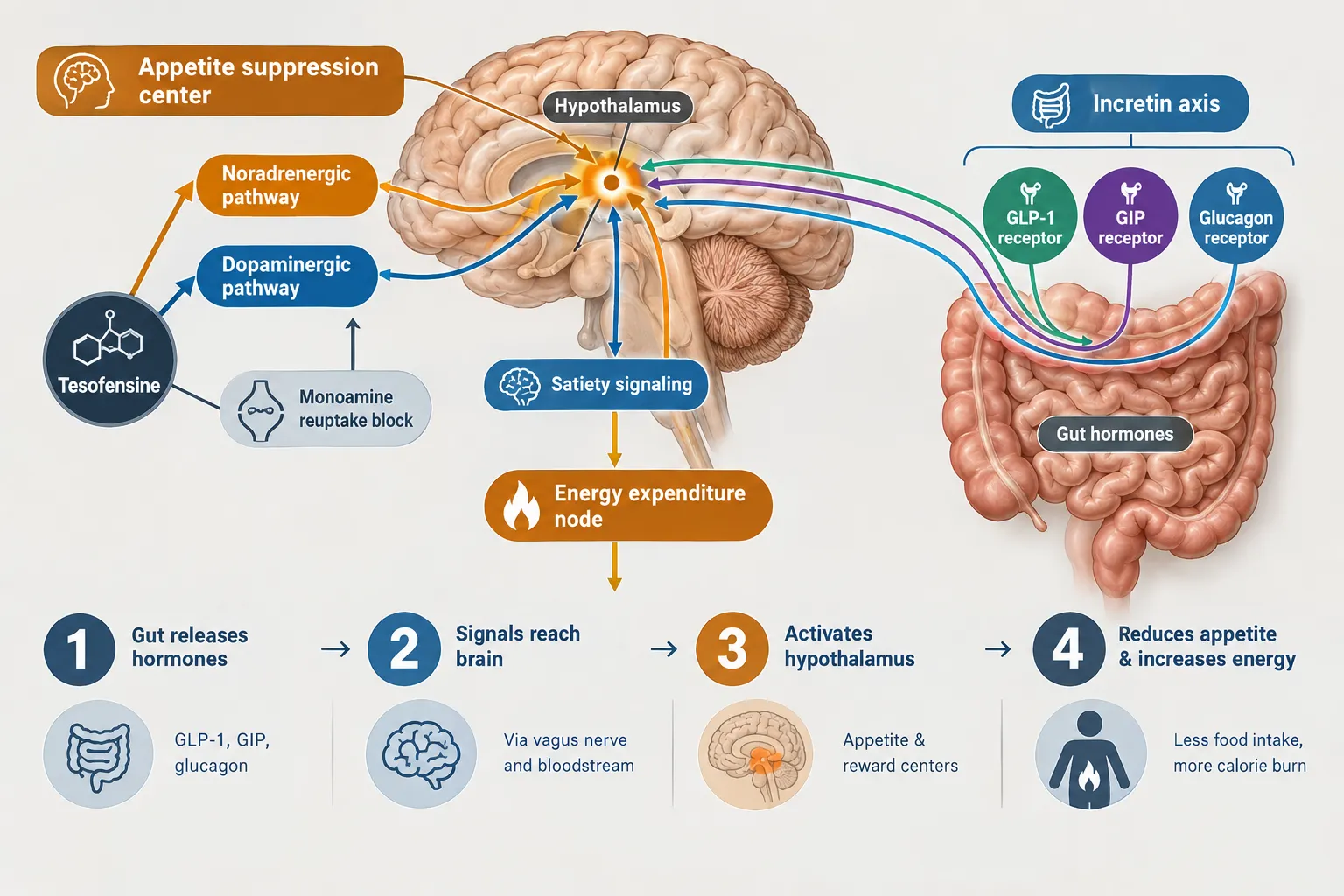
How Labs Evaluate Metabolic Peptide Combinations for Appetite and Weight Models

The logic behind the best research-use GLP-3, GLP-2-T, and tesofensine stacks follows a simple principle: mechanistic non-overlap. When two agents share the same receptor or downstream signaling pathway, stacking them yields diminishing returns and complicates endpoint attribution.

Mechanistic Axes Labs Assign to Each Agent

Agent Primary Axis Key Endpoint in Research Models
GLP-3 / Retatrutide Incretin (GLP-1, GIP, glucagon) Body weight, glucose, appetite scores
GLP-2-T Intestinal trophic / gut barrier Gut morphology, absorption markers
Tesofensine Central monoamine reuptake inhibition Caloric intake, satiety signaling, CNS activity

This table illustrates why GLP-2-T is peripheral to most appetite-focused stacks. Its receptor biology targets gut adaptation, not hypothalamic satiety circuits. Labs studying weight-related endpoints would need a strong mechanistic rationale before including it alongside GLP-3 agents.

Tesofensine, by contrast, addresses a completely different axis. Where retatrutide works peripherally through incretin receptors to reduce appetite and enhance energy expenditure, tesofensine works centrally by prolonging monoamine signaling in hypothalamic circuits. That non-overlap is exactly what makes the combination theoretically interesting. For a direct comparison of how these pathways diverge, tesofensine vs GLP-3 retatrutide appetite-modulating pathways provides a useful framework.

Reference Stacks That Set Performance Ceilings

Research labs do not operate in a vacuum. Clinically tested combinations function as performance benchmarks:

  • Retatrutide (GLP-3-class): The current gold standard for weight-loss magnitude in any metabolic stack discussion.
  • CagriSema (cagrilintide + semaglutide): A GLP-1 plus amylin combination that demonstrates what a dual-mechanism incretin stack achieves.
  • Amycretin: A single-molecule GLP-1/amylin co-agonist that further defines the ceiling for incretin-based combinations.
  • Tesomet: The only published human data showing tesofensine in a fixed combination, paired with metoprolol for cardiovascular safety in hypothalamic obesity models.

Preclinical triple-agonist data consistently show that balanced GLP-1/GIP/glucagon activation outperforms mono- or dual-agonist approaches, which is the scientific rationale behind the GLP-3-style stack concept. Labs reviewing GLP-3 retatrutide and triple-agonist peptide research shaping next-generation metabolic models will find this preclinical-to-clinical translation well documented.

Practical Stack Comparisons: What Research Labs Are Actually Ordering

Practical Stack Comparisons: What Research Labs Are Actually Ordering

When procurement decisions are made for appetite and weight model research, labs generally fall into three protocol categories.

Category 1: Incretin-First Protocols

These labs treat retatrutide or a GLP-1/GIP dual agonist as the primary agent and add secondary compounds only when a specific mechanistic question demands it. GLP-2-T would appear here only if gut barrier integrity or intestinal adaptation is a co-endpoint. For broader context on how incretin peptides compare across research pathways, tesofensine vs semaglutide vs retatrutide appetite research pathways is a useful reference.

Category 2: Central-Plus-Peripheral Stacks

These protocols pair a centrally acting agent (tesofensine) with a peripherally acting incretin (GLP-3/retatrutide) to study additive or synergistic effects on caloric intake and body weight. No published human data exists for this combination as of 2026, making it a preclinical design space. Labs using this approach need robust cardiovascular monitoring endpoints given tesofensine's known hemodynamic profile.

Category 3: Exploratory Multi-Axis Protocols

Some labs include all three agent classes to map interaction effects across incretin, gut trophic, and monoamine axes simultaneously. These are high-variable-count designs that require careful statistical power planning. GLP-2-T inclusion here is typically justified by intestinal permeability or microbiome co-endpoints rather than weight outcomes alone.

Key insight for procurement: The best research-use GLP-3, GLP-2-T, and tesofensine stacks are defined by endpoint specificity, not by the number of compounds included. More agents do not automatically produce better data.

For labs that also study mitochondrial or NAD+ pathways alongside metabolic peptides, how 5-Amino-1MQ and MOTS-c are studied together in metabolic research offers a parallel framework for multi-compound protocol design.

Conclusion

The hierarchy for metabolic peptide stacks in 2026 is clear: triple incretin agonists like retatrutide set the performance ceiling, GLP-1/amylin combinations occupy the second tier, and tesofensine functions as a powerful but structurally separate central-drive agent. GLP-2-T remains a peripheral player in weight-focused models unless gut adaptation is a defined endpoint.

Actionable next steps for research labs:

  1. Define endpoints first. Appetite suppression, body weight, gut morphology, and monoamine signaling each require different primary agents.
  2. Use retatrutide or CagriSema data as your benchmark before designing any novel combination protocol.
  3. Treat GLP-2-T inclusion as an intestinal-axis decision, not a weight-loss decision.
  4. Build cardiovascular monitoring into any tesofensine-containing stack, following the Tesomet precedent.
  5. Consult how tesofensine as a noradrenergic appetite modulator compares with GLP-3 peptides in study design before finalizing any central-plus-peripheral protocol.

Research in this space is moving fast. Labs that anchor their stack designs to published mechanistic data and clinical benchmarks will produce the most interpretable results as this field evolves.

https://www.puretestedpeptides.com/wp-content/uploads/2026/09/best-research-use-glp-3-glp-2-t-and-tesofensine-stacks-how-labs-compare-metaboli.webp 1024 1536 https://www.puretestedpeptides.com/wp-content/uploads/2026/01/buy-peptides-online.jpg 2026-09-06 13:04:262026-09-06 13:04:26Best Research-Use GLP-3, GLP-2-T, and Tesofensine Stacks: How Labs Compare Metabolic Peptide Combinations for Appetite and Weight Models

Tag Archive for: metabolic peptide stacks

5-Amino-1MQ Peptide Research: NNMT Inhibition, Fat Metabolism, and Why It Is Often Paired With Mitochondrial Stacks

5-Amino-1MQ Peptide Research: NNMT Inhibition, Fat Metabolism, and Why It Is Often Paired With Mitochondrial Stacks

June 4, 2026/0 Comments/by Pure Tested

Nicotinamide N-methyltransferase, or NNMT, is overexpressed in the adipose tissue of individuals with obesity at rates roughly two to four times higher than in lean controls — a biochemical pattern that has made it one of the more compelling metabolic targets in current research. At the center of that research sits 5-Amino-1MQ, a small-molecule NNMT inhibitor that has attracted growing interest for its role in fat metabolism and energy regulation. This article breaks down 5-Amino-1MQ peptide research: NNMT inhibition, fat metabolism, and why it is often paired with mitochondrial stacks — covering the core biology, the metabolic rationale, and how researchers are thinking about combination protocols.

Key Takeaways

  • 5-Amino-1MQ is a selective NNMT inhibitor, not a true peptide, though it is commonly grouped with peptide-based metabolic compounds in research contexts.
  • NNMT regulates the methyl economy of cells; inhibiting it raises SAM levels and shifts adipose tissue toward greater energy expenditure.
  • Preclinical data suggest NNMT inhibition can reduce fat mass, improve insulin sensitivity, and support a shift from white to beige adipose phenotype.
  • Mitochondrial peptides such as SS-31 and MOTS-c are frequently studied alongside 5-Amino-1MQ because they address complementary steps in the same metabolic pathway.
  • Research into this compound remains at the preclinical stage; no approved clinical applications exist as of 2026.

Key Takeaways

Understanding NNMT and What 5-Amino-1MQ Actually Does

Despite being called a peptide in many research discussions, 5-Amino-1MQ is technically a small-molecule compound — a methylquinolinium derivative. The distinction matters because its mechanism is enzymatic inhibition rather than receptor binding in the conventional peptide sense. However, it is routinely grouped with peptide-based metabolic stacks because it targets overlapping biological pathways.

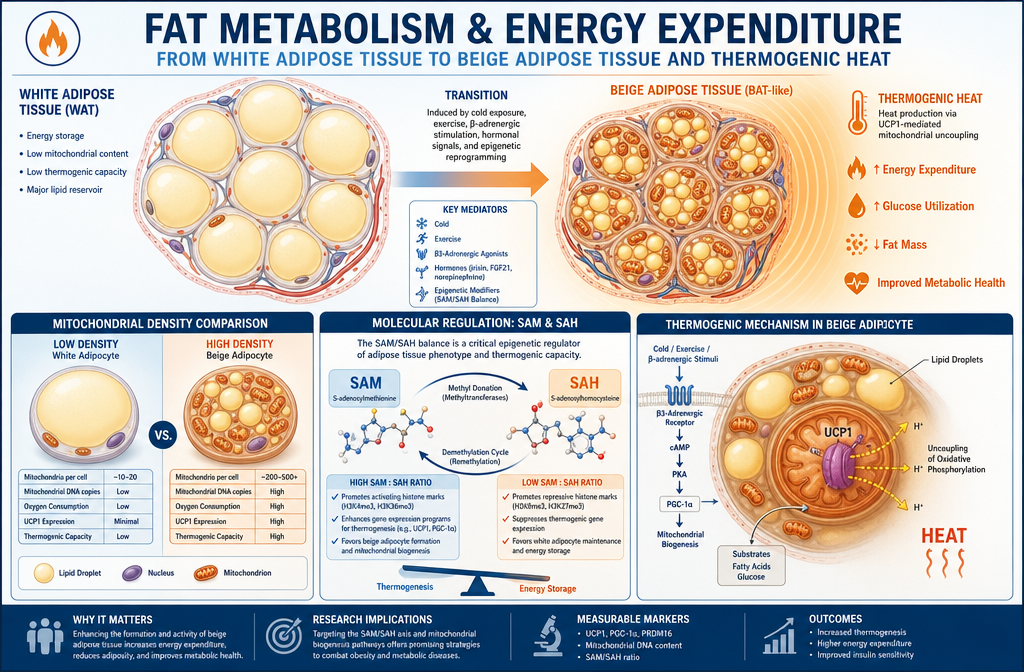
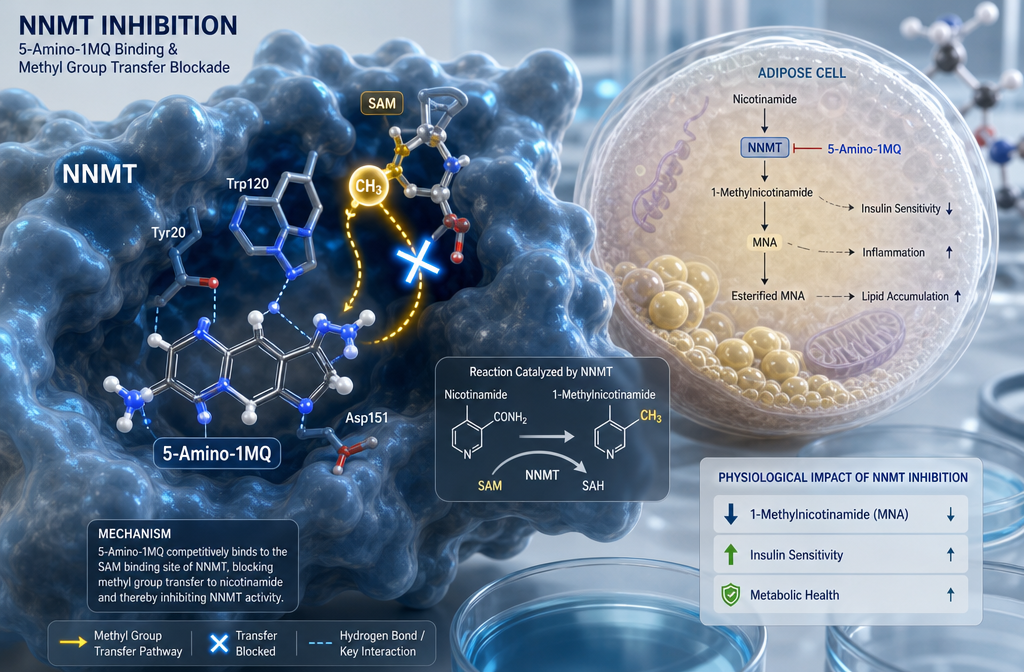
NNMT's core function is to transfer methyl groups from S-adenosylmethionine (SAM) to nicotinamide, producing S-adenosylhomocysteine (SAH) and 1-methylnicotinamide. This process consumes methyl groups that would otherwise support epigenetic regulation, NAD+ recycling, and mitochondrial signaling. When NNMT activity is high — as it tends to be in obese adipose tissue — the methyl pool is depleted, and cellular energy metabolism slows.

By selectively blocking NNMT, 5-Amino-1MQ preserves SAM availability. The downstream effects observed in preclinical models include:

  • Increased NAD+ and NADH cycling
  • Upregulation of thermogenic gene expression in adipose tissue
  • Reduced lipid accumulation in fat cells
  • Improved insulin sensitivity markers

"NNMT sits at a metabolic crossroads — its inhibition does not simply block one pathway but redistributes methyl currency across multiple energy-sensing systems."

This broad upstream influence is precisely why 5-Amino-1MQ peptide research has attracted attention beyond simple fat-loss applications.


Understanding NNMT and What 5-Amino-1MQ Actually Does

NNMT Inhibition, Fat Metabolism, and the Adipose Tissue Connection

The adipose tissue findings from 5-Amino-1MQ research are among its most discussed features. In mouse models, NNMT inhibition has been associated with a shift in white adipose tissue toward a beige or brown-like phenotype — a process sometimes called "beiging." Beige adipocytes express higher levels of uncoupling protein 1 (UCP1), which dissipates energy as heat rather than storing it as fat.

Key metabolic outcomes observed in preclinical studies:

Outcome Direction
Body fat mass Decreased
Lean mass Preserved or increased
Insulin sensitivity Improved
SAM/SAH ratio Increased
UCP1 expression Upregulated

This metabolic profile makes 5-Amino-1MQ relevant to researchers studying AOD-9604 metabolic research and other compounds targeting adipose function. It also connects naturally to GLP-1 and incretin research themes, since both pathways converge on insulin sensitivity and energy partitioning.

Researchers studying MOTS-c and metabolic flexibility have noted similar adipose remodeling effects, which has prompted interest in whether combining these compounds produces additive or synergistic outcomes.


NNMT Inhibition, Fat Metabolism, and the Adipose Tissue Connection

Why 5-Amino-1MQ Is Often Paired With Mitochondrial Stacks

The pairing of 5-Amino-1MQ with mitochondrial peptides is not arbitrary. It reflects a layered approach to metabolic research where each compound addresses a distinct step in the same energy-production hierarchy.

The rationale works like this:

  1. 5-Amino-1MQ preserves the methyl pool and raises NAD+ availability — setting the biochemical conditions for efficient mitochondrial function.
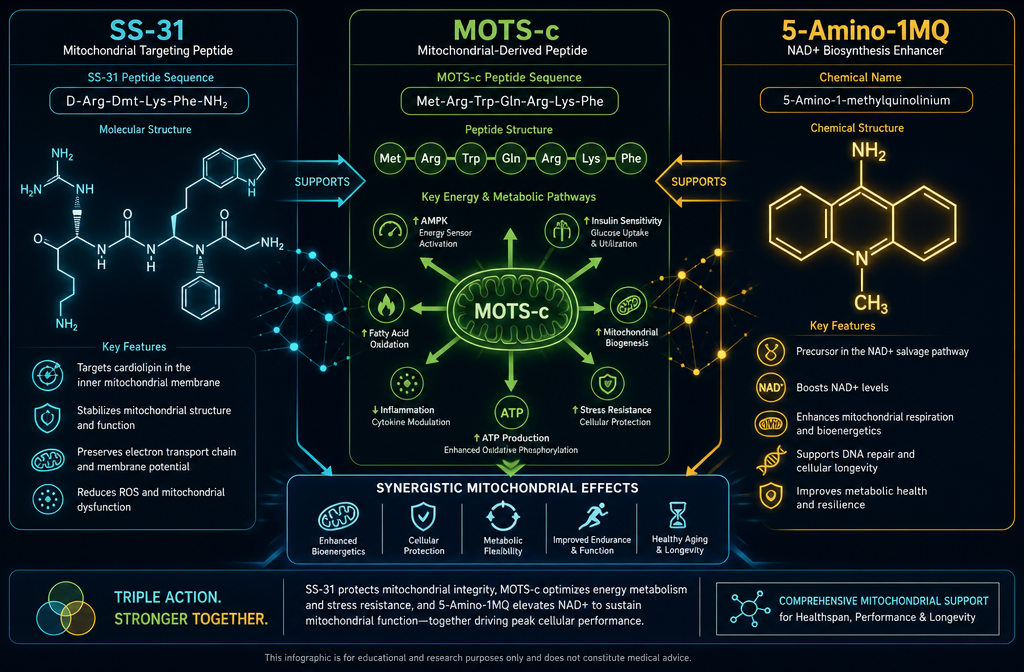
  2. SS-31 (Elamipretide) targets cardiolipin on the inner mitochondrial membrane, stabilizing electron transport chain efficiency. Research on SS-31 mitochondrial research themes highlights its role in reducing oxidative stress at the mitochondrial level.
  3. MOTS-c is a mitochondria-derived peptide that activates AMPK and supports glucose uptake in skeletal muscle — complementing the insulin-sensitizing effects of NNMT inhibition.

The combination of MOTS-c and SS-31 (Elamipretide) has already been explored in preclinical contexts, and 5-Amino-1MQ is increasingly discussed as a third layer in such stacks.

Researchers also note that NAD+ availability — which NNMT inhibition supports — is directly relevant to NAD+ scientific evidence and the broader sirtuin/AMPK signaling network that mitochondrial peptides also engage.

For those reviewing broader metabolic peptide combinations, IPA muscle and fat research themes offer additional context on how growth hormone secretagogues interact with fat oxidation pathways that 5-Amino-1MQ may also influence.


Conclusion

5-Amino-1MQ occupies a unique position in metabolic research: it acts upstream of both fat storage and mitochondrial efficiency by preserving the methyl economy that both systems depend on. The preclinical evidence for NNMT inhibition — reduced fat mass, beige adipose conversion, improved insulin sensitivity, and elevated NAD+ cycling — provides a mechanistic basis for why researchers pair it with mitochondrial peptides like SS-31 and MOTS-c.

Actionable next steps for researchers:

  • Review the preclinical NNMT inhibition literature before designing any combination protocol.
  • Examine SS-31 and MOTS-c data independently to understand where their mechanisms overlap with and differ from 5-Amino-1MQ.
  • Source compounds only from verified, third-party-tested suppliers to ensure research-grade purity.
  • Treat all findings as preclinical; no human clinical approvals exist for 5-Amino-1MQ as of 2026.

The mechanistic logic behind 5-Amino-1MQ peptide research — NNMT inhibition, fat metabolism, and mitochondrial stack pairing — is coherent and well-grounded in cell biology. As research matures, this compound is likely to remain a central figure in metabolic and longevity-focused peptide discussions.


https://www.puretestedpeptides.com/wp-content/uploads/2026/06/5-Amino-1MQ-Peptide-Research-NNMT-Inhibition-Fat-Metabolism-and-Why-It-Is-Often-Paired-With-Mitochondrial-Stacks.png 672 1024 Pure Tested https://www.puretestedpeptides.com/wp-content/uploads/2026/01/buy-peptides-online.jpg Pure Tested2026-06-04 13:04:412026-07-20 15:04:095-Amino-1MQ Peptide Research: NNMT Inhibition, Fat Metabolism, and Why It Is Often Paired With Mitochondrial Stacks
×

Helpful Links

  • My account
  • Cart
  • Checkout
  • Refund and Returns Policy
  • Privacy Policy
  • SMS Privacy Policy
  • Login
  • My Account
  • Logout

USA Made Lab Tested Peptides

All products are sold for research, laboratory, or analytical purposes only, and are not for human consumption


Pure Tested Peptides is a chemical supplier. Pure Tested Peptides is not a compounding / chemical compounding facility as defined under 503A of the Federal Food, Drug, and Cosmetic act. Pure Tested Peptides is not an outsourcing facility as defined under 503B of the Federal Food, Drug, and Cosmetic act.

The statements made within this website have not been evaluated by the US Food and Drug Administration. The products we offer are not intended to diagnose, treat, cure or prevent any disease.

Human/Animal Consumption Prohibited. Laboratory/In-Vitro Experimental Use Only

Scroll to top Scroll to top Scroll to top