Call or Text 727-513-9780
  • Shopping Cart Shopping Cart
    0Shopping Cart
Pure Tested Peptides | America's most trusted Peptides for sale online
  • Peptides for sale
    • Oral Peptides for sale
      • Peptide Capsules for sale
      • BPC 157 Capsules 1000mcg
      • SLU-PP-332 Capsules | 1000 mcg
      • 5-Amino-1MQ 50mg Capsules
      • Tesofensine 500mcg
    • All Peptides for sale
    • Peptide Sprays
      • BPC 157 Nasal Spray Kit
      • BPC-157 TB500 Nasal Spray Kit
      • Semax Nasal Spray 10mg
      • Selank – Nasal Spray Kit – 10mg
      • Epithalon 50MG Nasal Spray Kit
      • Ipamorelin 10mg Nasal Spray
      • Klow Nasal Spray (BPC-157 + TB-500 + GHK-Cu + KPV) | 80mg
      • Hulk Nasal Spray Tesa / Ipa Blend 6/3 MG
      • Klow Nasal Spray
      • NAD + 500 mg Nasal Spray
      • PT-141 Nasal Spray Kit
    • GHRH Peptides
      • Ipa Peptides
      • CJC-1295 Peptides
        • CJC-1295 with DAC 5 mg
        • CJC-1295 without DAC 5 mg
        • CJC-1295 Ipa 10mg
      • Tesa Peptides
        • Tesa Peptide
        • Tesa 20 mg
    • GHK-Cu Peptides
      • All GHK-Cu Peptides
      • GHK-Cu 100mg
      • KLOW Peptide Blend – Buy KLOW blend online
    • BPC Peptides
      • All BPC Peptides
      • BPC-157
      • BPC-157 TB-500
      • BPC 157 capsules 1000mcg
    • SLU-PP-332 Peptides
      • All SLU-PP-332 Peptides
      • SLU-PP-332 5mg
    • GLP3 Peptides
    • PT-141 Peptides
      • PT-141 Peptides for sale
      • PT-141 10mg
      • PT-141 Nasal Spray
    • CAG Peptides
      • Lipo-C Peptide Blend
      • CAG 5mg
      • CAG 10mg
    • MOTS-C Peptides
      • MOTS-C Peptides for sale
      • MOTS-c peptide
      • MOTS-c 10mg *6 pack*
    • 5 Amino 1MQ Peptides
      • 5 Amino 1MQ Peptides for sale
      • 5-Amino-1MQ 50mg Capsules
      • 5-Amino-1MQ 5mg
    • Epithalon Peptides
      • Epithalon Peptides for sale
      • Epithalon 10mg
      • Epithalon 50mg
  • Shop
    • GLPs
      • 5-Amino-1MQ 50mg Capsules
      • 5-Amino-1MQ 5mg
      • L-Carnitine 500mg/ml
      • Tesofensine 500mcg
      • SLU-PP-332 5mg
      • MOTS-c 10mg *6 pack*
    • Epithalon & BPC Peptides
      • Epithalon 10mg
      • Epithalon 50mg
      • BPC-157
      • BPC 157 capsules 1000mcg
      • BPC-157 TB-500
      • BPC-157 TB500 Nasal Spray Kit
      • BPC 157 Nasal Spray Kit
    • BPC TB-500 & NAD+ Peptides
      • NAD+ 500 mg
      • KLOW Peptide Blend – Buy KLOW blend online
      • GLOW Peptide Blend
      • TB 500 5mg
      • BPC 157 capsules 1000mcg – Supplement
      • BPC 157 Nasal Spray Kit
      • BPC-157
      • BPC-157 TB500 Nasal Spray Kit
      • BPC-157 TB-500
      • BPC 157 capsules 1000mcg
    • LL-37 Peptide
      • LL-37 10 mg
    • MOTS-C & Selank
      • MOTS-c peptide
      • Selank 10mg
    • GHK Peptides
      • GHK-Cu 100mg
      • GLOW Peptide Blend
      • KLOW Peptide Blend – Buy KLOW blend online
  • COAs
  • Wholesale
    • Wholesale Peptides for sale
  • PTP FAQ
  • Affiliates
    • Selank Peptide: Advanced Pharmacological Mechanisms Underlying Its Anxiolytic and Nootropic Effects in Research
      • 5-Amino-1MQ Peptide: Detailed Mechanisms of NNMT Inhibition and Its Impact on Cellular Metabolism Research
        • MOTS-C Peptide: Unraveling Its Role in Mitochondrial Dynamics and Energy Metabolism Research
          • Epithalon Peptide and Telomerase Regulation: Investigating Its Impact on Cellular Senescence and Lifespan Research Models
            • GLP2-T vs GLP2 Tirz Peptide: Understanding the Naming, Mechanistic Nuances, and Research Implications for Gut Health
      • Peptides and Polypeptides in Modern Pharmacology: What Research on Metoprolol, Prednisone, and Amlodipine Reveals
        • Polypeptide Peptides vs NSAIDs: What Naproxen and Diclofenac Teach Tissue-Repair Researchers About BPC‑157 and TB‑500
          • Peptides and Polypeptides in Endocrine Pharmacology: How GLP-1, GLP-2, and GLP-3 Retatrutide Differ From Classic Drugs Like Prednisone and Amlodipine
          • 5‑Amino‑1MQ Peptide and NNMT Inhibition: How It Compares With Statins Like Atorvastatin in Adipose and Lipid Metabolism Research
      • Enclomiphene, Estrogen Receptor Signaling, and Luteinizing Phase Biology: What Hormone Researchers Should Measure
        • Mesenchymal Stem Cells, BPC‑157, and GHK‑Cu: How Tissue Repair Peptides Compare With Classic NSAIDs Like Naproxen in Injury Models
          • Peptide Calculator Use Cases Beyond Growth Hormone: Working Through GLP‑3 Retatrutide, MOTS‑c, and BPC‑157 Research Dosing
        • Polypeptide Peptides in Endocrine and Metabolic Pharmacology: Lessons From Amlodipine, Prednisone, and Metoprolol
        • Peptides Calculator for Advanced Blends: Worked Examples for Tesamorelin, CJC‑1295, and Ipamorelin Stacks
          • Peptides and Polypeptides in Human Physiology: How Molecular Size Shapes Research Applications
            • Selank Peptide: Advanced Pharmacological Mechanisms Underlying Its Anxiolytic and Nootropic Effects in Research
          • 5-Amino-1MQ Peptide: Detailed Mechanisms of NNMT Inhibition and Its Impact on Cellular Metabolism Research
            • MOTS-C Peptide: Unraveling Its Role in Mitochondrial Dynamics and Energy Metabolism Research
              • Epithalon Peptide and Telomerase Regulation: Investigating Its Impact on Cellular Senescence and Lifespan Research Models
                • GLP2-T vs GLP2 Tirz Peptide: Understanding the Naming, Mechanistic Nuances, and Research Implications for Gut Health
                  • Peptides and Polypeptides in Endocrine Pharmacology: How GLP-1, GLP-2, and GLP-3 Retatrutide Differ From Classic Drugs Like Prednisone and Amlodipine
                    • Polypeptide Peptides vs NSAIDs: What Naproxen and Diclofenac Teach Tissue-Repair Researchers About BPC‑157 and TB‑500
                      • Peptides and Polypeptides in Modern Pharmacology: What Research on Metoprolol, Prednisone, and Amlodipine Reveals
                        • 5‑Amino‑1MQ Peptide and NNMT Inhibition: How It Compares With Statins Like Atorvastatin in Adipose and Lipid Metabolism Research
                        • Enclomiphene, Estrogen Receptor Signaling, and Luteinizing Phase Biology: What Hormone Researchers Should Measure
                        • Mesenchymal Stem Cells, BPC‑157, and GHK‑Cu: How Tissue Repair Peptides Compare With Classic NSAIDs Like Naproxen in Injury Models
                        • Peptide Calculator Use Cases Beyond Growth Hormone: Working Through GLP‑3 Retatrutide, MOTS‑c, and BPC‑157 Research Dosing
                        • Polypeptide Peptides in Endocrine and Metabolic Pharmacology: Lessons From Amlodipine, Prednisone, and Metoprolol
                        • Peptides Calculator for Advanced Blends: Worked Examples for Tesamorelin, CJC‑1295, and Ipamorelin Stacks
                        • Peptides and Polypeptides in Human Physiology: How Molecular Size Shapes Research Applications
                        • Selank Peptide: Advanced Pharmacological Mechanisms Underlying Its Anxiolytic and Nootropic Effects in Research
                        • MOTS-C Peptide: Unraveling Its Role in Mitochondrial Dynamics and Energy Metabolism Research
                        • Peptides and Polypeptides in Modern Pharmacology: What Research on Metoprolol, Prednisone, and Amlodipine Reveals
                        • Peptides and Polypeptides in Endocrine Pharmacology: How GLP-1, GLP-2, and GLP-3 Retatrutide Differ From Classic Drugs Like Prednisone and Amlodipine
                        • 5-Amino-1MQ Peptide: Detailed Mechanisms of NNMT Inhibition and Its Impact on Cellular Metabolism Research
                        • Mesenchymal Stem Cells, BPC‑157, and GHK‑Cu: How Tissue Repair Peptides Compare With Classic NSAIDs Like Naproxen in Injury Models
                        • Peptide Calculator Use Cases Beyond Growth Hormone: Working Through GLP‑3 Retatrutide, MOTS‑c, and BPC‑157 Research Dosing
                        • GLP2-T vs GLP2 Tirz Peptide: Understanding the Naming, Mechanistic Nuances, and Research Implications for Gut Health
                        • Polypeptide Peptides in Endocrine and Metabolic Pharmacology: Lessons From Amlodipine, Prednisone, and Metoprolol
                        • Polypeptide Peptides vs NSAIDs: What Naproxen and Diclofenac Teach Tissue-Repair Researchers About BPC‑157 and TB‑500
                        • Peptides and Polypeptides in Human Physiology: How Molecular Size Shapes Research Applications
                        • Peptides Calculator for Advanced Blends: Worked Examples for Tesamorelin, CJC‑1295, and Ipamorelin Stacks
                        • 5‑Amino‑1MQ Peptide and NNMT Inhibition: How It Compares With Statins Like Atorvastatin in Adipose and Lipid Metabolism Research
                        • Enclomiphene, Estrogen Receptor Signaling, and Luteinizing Phase Biology: What Hormone Researchers Should Measure
                        • Epithalon Peptide and Telomerase Regulation: Investigating Its Impact on Cellular Senescence and Lifespan Research Models
                        • Best research protocol Klow blend
                        • best time to take BPC-157
                        • best time to take DSIP (Delta Sleep Inducing Peptide)
                        • best time to take CJC-1295
                        • best time to take AOD-9604
                        • best time to take Follistatin 344
                        • best time to take Ipamorelin
                        • best time to take MK-677 (Ibutamoren)
                        • best time to take Ligandrol (LGD-4033) — research compound
                        • best time to take Ostarine (MK-2866) — research compound
                        • best time to take GHK-CU
                        • best time to take TB-500
                        • best time to take MOTS-c
                        • best time to take Semax
                        • best time to take RAD-140 (Testolone) — research compound
                        • best time to take Thymosin Alpha-1
                        • best time to take PEG-MGF
                        • Biolife Plasma, Octapharma Plasma, and Research Peptides: How Plasma Donation Labs Differ From Peptide Suppliers
                        • best time to take YK-11 — research compound
                        • best time to take PT-141 (Bremelanotide)
                        • Best research protocol Klow blend
                        • 5-Amino-1MQ and MOTS-C Synergy: Metabolic Signaling, Mitochondria, and Research Design
                        • BPC-157 and TB-500: Investigating Their Combined Effects on Angiogenesis and Cellular Migration in Tissue Repair Models
                        • BPC-157 Peptide: Gut Barrier Function, Inflammation, and Tissue-Recovery Research
                        • 5‑Amino‑1MQ and MOTS‑c Synergy in Metabolic Research: Designing NNMT and Mitochondrial Biogenesis Stacks
                        • CJC-1295 with DAC vs. Without DAC: Half-Life, Release Kinetics, and Research Implications
                        • CJC‑1295 with DAC vs. Without DAC: Expanding on Half‑Life Differences Using Tesamorelin and Ipamorelin Blend Case Studies
                        • Collagen Biology and Copper‑Binding Peptides: How GHK‑Cu, Glow Blend, and Klow Blend Interact with Skin and Connective Tissue
                        • Collagen Biology and Regenerative Peptides: How GHK‑Cu, Glow Blend, and Klow Blend Affect Extracellular Matrix Research
                    • DNA, Telomeres, and Longevity Peptides: Positioning Epithalon and MOTS‑c in Genetic Aging Research
                      • Enclomiphene Citrate: serm Mechanism, Testosterone Research, and Stack Compatibility
                        • Enclomiphene vs Enclomiphene Citrate: Formulation, Bioavailability, and Research Distinctions
                        • Epithalon Peptide Research: Telomerase Activation, Aging, and Pineal Gland Function
                        • Estrogen Receptor Signaling and Enclomiphene: How Selective Modulators Compare with Classic Polypeptide Hormones
                        • GHK-Cu Peptide: Advanced Mechanisms in Extracellular Matrix Remodeling and Wound Healing Research
                        • GHK-Cu Peptide: Collagen Synthesis, Wound Repair, and Skin-Barrier Research Models
                        • GLP-1 vs GLP-3 vs GLP-2: Peptide Classification and Research Applications
                        • GLP-2 Peptide Research Guide: Gut Barrier Function, Nutrient Absorption, and Intestinal Recovery Models
                        • GLP-3 Retatrutide vs. GLP-1 Drugs: What Triple-Agonist Biology Changes in Research Models
                        • Ipamorelin and Tesamorelin Combination: Synergistic GH Secretagogue Research and Dosing Protocols
                        • GLP2 Tirz Peptide: What It Is, Why the Name Exists, and How Researchers Should Interpret It
                        • Klow Blend Peptide Nasal Spray: What the Formulation Is Trying to Do in Cognitive Research
                        • Mitochondria, NNMT Inhibition, and Peptide Modulators: Where MOTS‑c and 5‑Amino‑1MQ Fit in Cellular Energy Research
                        • MOTS-c Peptide: Mitochondrial Function, Energy Metabolism, and What Researchers Measure
                        • MOTS-c vs. 5-Amino-1MQ: Which Metabolic Research Questions Each Compound Actually Answers
                        • Nasal Spray Peptides: Bioavailability, Administration, and Semax/Selank Research Applications
                        • PT-141 Peptide Research: Mechanism of Action and Melanocortin Receptor Signaling
                        • Retatrutide for Research: Mechanism, Structure, and GLP-1/GLP-3 Dual Action
                        • Retatrutide for Obesity and Type 2 Diabetes: What the Latest Trial Data Suggest
                        • Tesofensine Peptide Research: Mechanism, Appetite Suppression, and Neuropeptide Y Pathways
  • Contact
    • Contact Customer Service
    • Text Customer Support
  • About US
  • Shop all peptides
  • Affiliate Program
    • Affiliate Signup
  • Login / Register Login / Register Page Link Login / Register Page Link
  • Click to open the search input field Click to open the search input field Search
  • Menu Menu

Tag Archive for: metabolic research protocols

Dual Mitochondrial Targeted Research: Real-Time Insights into MOTS-c and 5-Amino-1MQ Simultaneous Protocols

Dual Mitochondrial Targeted Research: Real-Time Insights into MOTS-c and 5-Amino-1MQ Simultaneous Protocols

September 18, 2026/0 Comments/in Uncategorized/by

Cellular ATP production drops measurably with age, and two of the most discussed compounds in 2026 metabolic research, MOTS-c and 5-Amino-1MQ, target that decline through entirely different but potentially complementary pathways. Dual mitochondrial targeted research exploring real-time insights into MOTS-c and 5-Amino-1MQ simultaneous protocols has moved from theoretical discussion into active preclinical investigation, drawing significant attention from researchers focused on metabolic dysfunction, body composition, and mitochondrial resilience.

This article examines what current science says about each compound individually, the mechanistic rationale for combining them, and the critical caveats every researcher must understand before designing any dual-agent protocol.

Key Takeaways

  • MOTS-c activates AMPK to improve mitochondrial energy output; 5-Amino-1MQ inhibits NNMT to spare NAD+ and stimulate lipolysis
  • No clinical trials have evaluated MOTS-c and 5-Amino-1MQ in combination; all dual-protocol use remains non-clinical and experimental
  • A single Phase 2a trial has examined MOTS-c monotherapy in prediabetes and obesity, combination research is far behind
  • Real-time sequencing protocols suggest administering 5-Amino-1MQ first to prime NAD+ availability before MOTS-c introduction
  • Researchers should treat all dual-agent stacks as hypothesis-generating tools, not validated interventions

Understanding the Two Compounds: Distinct Mechanisms, Shared Target
Understanding the Two Compounds: Distinct Mechanisms, Shared Target

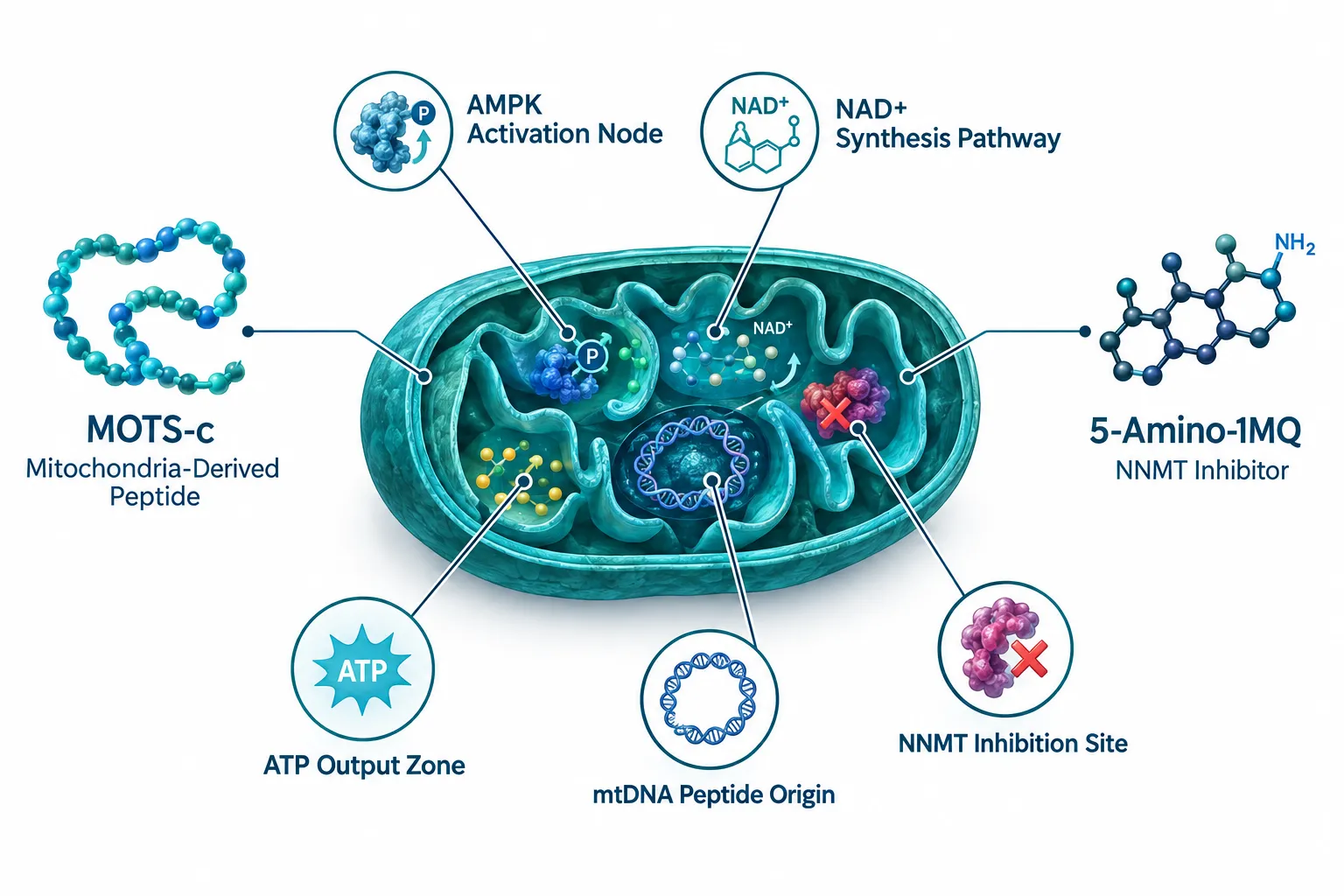
MOTS-c (Mitochondrial Open Reading Frame of the 12S rRNA type-c) is a mitochondria-derived peptide encoded within mitochondrial DNA. Its primary action involves activating AMP-activated protein kinase (AMPK), a master regulator of cellular energy homeostasis. When AMPK is activated, cells shift toward more efficient fuel utilization, improve glucose uptake, and enhance fatty acid oxidation. Peer-reviewed data support MOTS-c's cardiometabolic effects in monotherapy settings, including improvements in insulin sensitivity and endurance-related markers.

5-Amino-1MQ operates through a fundamentally different mechanism. It inhibits nicotinamide N-methyltransferase (NNMT), an enzyme that consumes S-adenosylmethionine and depletes NAD+ precursors. By blocking NNMT, 5-Amino-1MQ effectively spares NAD+ availability within the cell, supports methyl donor metabolism, and promotes lipolysis in adipose tissue. The result is a metabolic environment with higher energy currency and reduced fat storage signals.

"The mechanistic logic for combining these two compounds rests on a simple premise: if 5-Amino-1MQ raises the NAD+ ceiling, MOTS-c has more substrate to work with when it activates AMPK."

Together, these two pathways create a theoretical framework for maximizing cellular ATP production, one compound elevating the raw metabolic inputs, the other directing how those inputs are used. This is the core rationale driving dual mitochondrial targeted research.

For researchers also exploring related mitochondrial peptide work, the SS31 and MOTS-c research category provides useful comparative context.

Real-Time Sequencing: How Dual Protocol Design Works in Practice
Real-Time Sequencing: How Dual Protocol Design Works in Practice

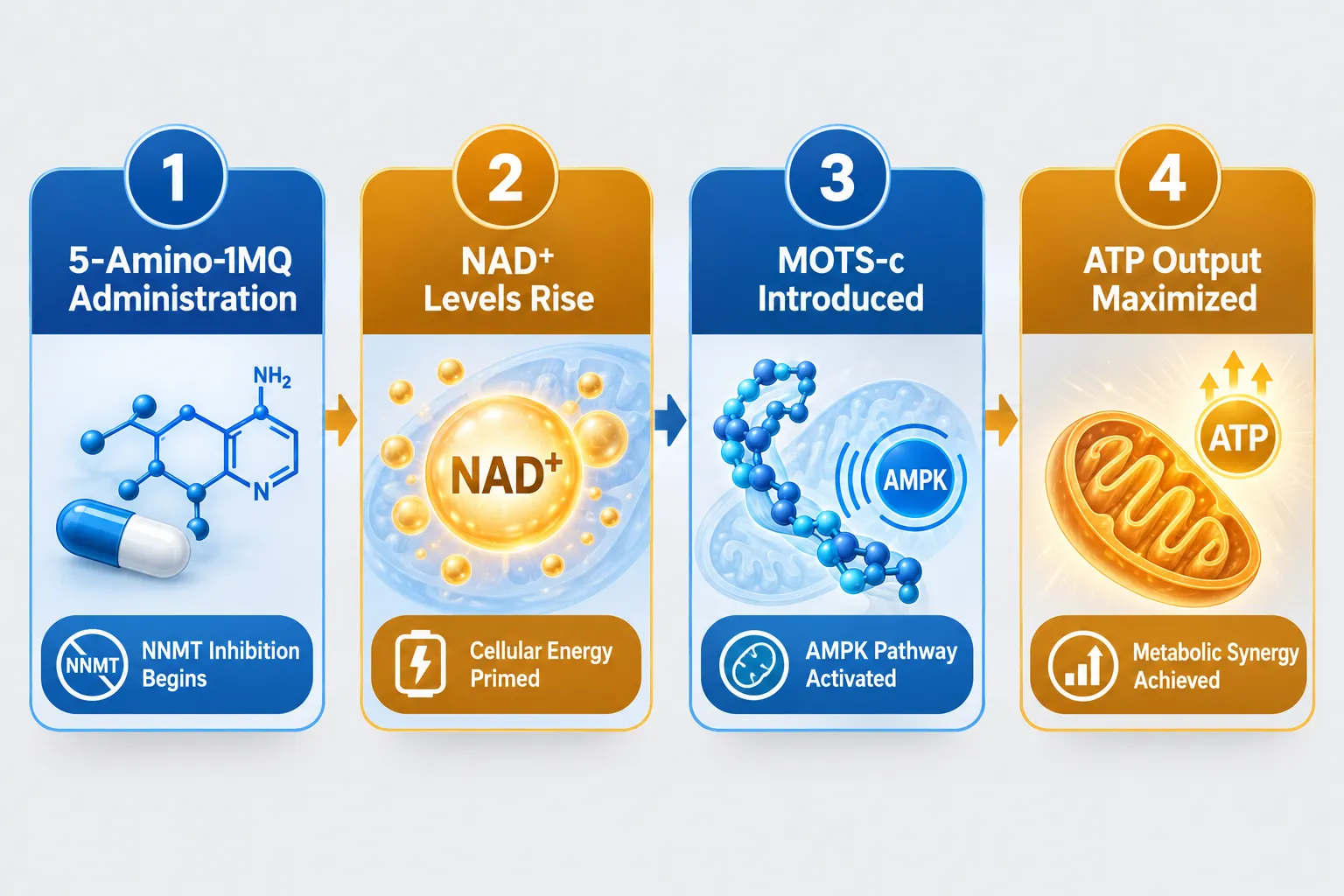
The most discussed approach in 2026 dual mitochondrial targeted research involves a deliberate sequencing strategy rather than simultaneous administration. The rationale is straightforward: NAD+ dynamics take time to shift.

Proposed research sequencing framework:

Step Compound Timing Mechanistic Goal
1 5-Amino-1MQ First administration window NNMT inhibition, NAD+ elevation begins
2 Metabolic priming period 30-60 minutes Cellular NAD+ levels stabilize upward
3 MOTS-c Second administration window AMPK activation with elevated NAD+ substrate
4 Post-protocol monitoring Ongoing ATP output, metabolic marker tracking

This sequencing approach reflects the hypothesis that MOTS-c's AMPK-driven effects will be amplified when NAD+ availability is already elevated by prior NNMT inhibition. Researchers in the "bio-recomp" space, those studying simultaneous fat reduction and lean mass preservation, have shown particular interest in this model.

Typical research dosing ranges discussed in 2026 literature:

  • MOTS-c: 5-10 mg per research session, subcutaneous administration
  • 5-Amino-1MQ: 50-200 mg oral, administered prior to MOTS-c

These figures are drawn from non-clinical research discussions and carry no clinical validation. Researchers sourcing MOTS-c for study should review MOTS-c from PeptideSciences for purity and specification details.

Additional context on related mitochondrial peptide dynamics is available through SS31 mitochondrial dynamics research and the broader SS-31 mitochondrial research literature.

Critical Limitations and the Regulatory Landscape in 2026
Critical Limitations and the Regulatory Landscape in 2026

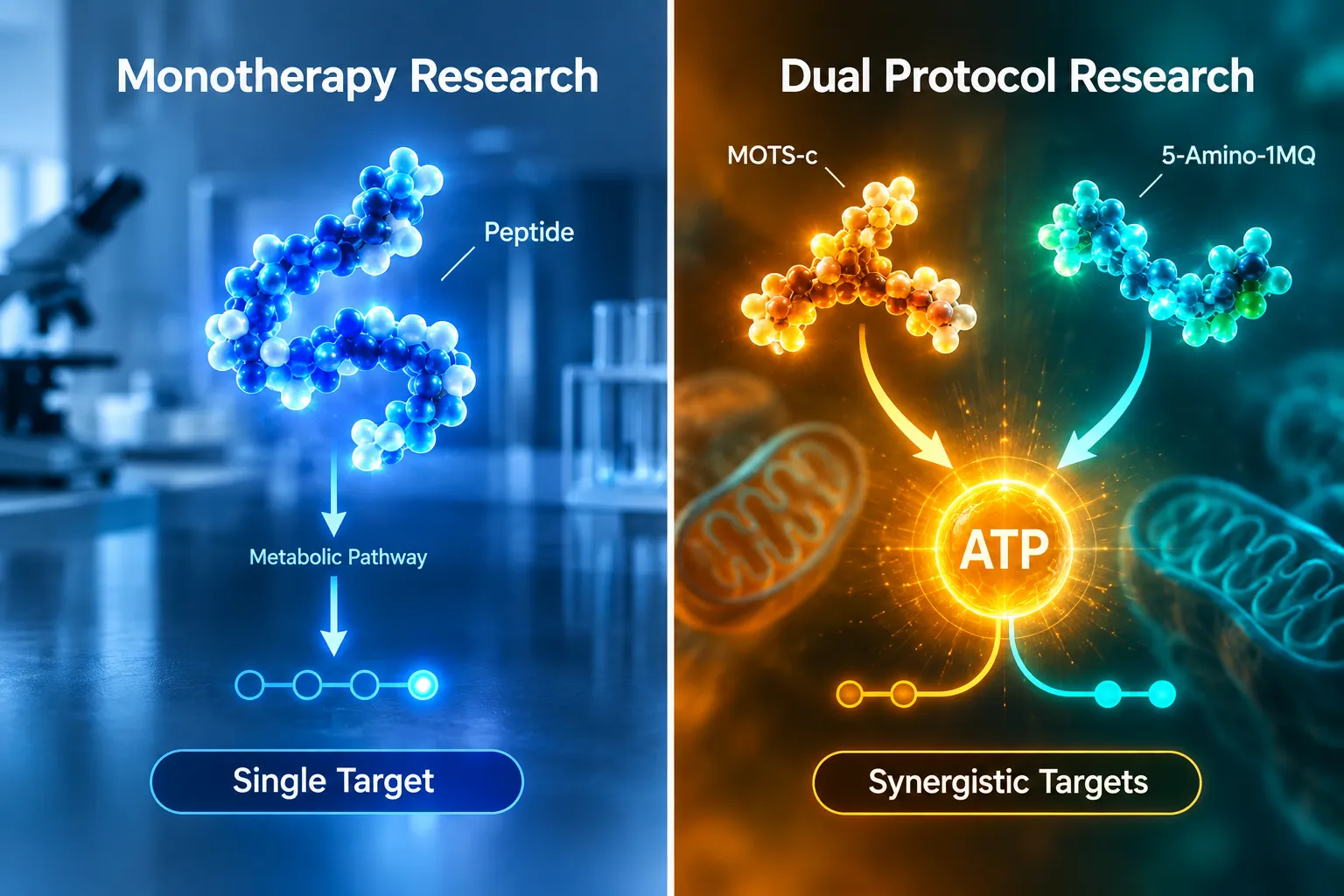
Any serious discussion of dual mitochondrial targeted research: real-time insights into MOTS-c and 5-Amino-1MQ simultaneous protocols must confront a significant evidentiary gap. As of 2026, no published clinical trial has evaluated these two compounds in combination. The most advanced human data for MOTS-c remains a single Phase 2a monotherapy trial in subjects with prediabetes and obesity. Authoritative reviews consistently note that MOTS-c human trials are limited, reinforcing the early-stage status of this entire research area.

Key limitations researchers must acknowledge:

  • No dual-agent clinical trial exists for MOTS-c plus 5-Amino-1MQ
  • Combined use is explicitly non-validated and experimental
  • More complex stacks incorporating NAD+ precursors alongside both compounds are actively marketed but lack any validation
  • Safety profiles for the combination are unknown
  • Neither compound holds regulatory approval for any therapeutic indication

The trial registry picture remains similarly sparse. While MOTS-c analog research is progressing and monotherapy studies are expanding, no dual-agent protocol has entered formal clinical investigation. Researchers should treat current dual-protocol frameworks as hypothesis-generating tools designed to inform future controlled study design.

For researchers comparing peptide delivery considerations, SS-31 10mg research peptide considerations offers relevant methodological context. Those examining the MOTS-c and elamipretide relationship may also find the MOTS-c elamipretide resource informative for understanding mechanistic overlap.

Conclusion

Dual mitochondrial targeted research combining MOTS-c and 5-Amino-1MQ represents one of the more scientifically coherent stacking hypotheses in 2026 metabolic research. The mechanistic logic, pairing AMPK activation with NNMT inhibition to maximize NAD+ availability and ATP output, is grounded in well-characterized individual pathways. However, the absence of any combination clinical data means every dual-protocol design remains firmly in the experimental domain.

Actionable next steps for researchers:

  1. Build protocols around established monotherapy data first; treat dual-agent designs as exploratory
  2. Apply rigorous sequencing logic, administer 5-Amino-1MQ before MOTS-c to leverage NAD+ priming
  3. Document all parameters meticulously to contribute to the emerging evidence base
  4. Monitor the trial registry actively; near-term analog and monotherapy trials may generate data relevant to combination hypotheses
  5. Source compounds only from verified, high-purity suppliers and maintain full compliance with applicable research regulations

The science is promising. The evidence base is early. Responsible dual mitochondrial targeted research means holding both of those truths simultaneously.

https://www.puretestedpeptides.com/wp-content/uploads/2026/09/dual-mitochondrial-targeted-research-real-time-insights-into-mots-c-and-5-amino.webp 1024 1536 https://www.puretestedpeptides.com/wp-content/uploads/2026/01/buy-peptides-online.jpg 2026-09-18 13:04:452026-09-18 13:04:45Dual Mitochondrial Targeted Research: Real-Time Insights into MOTS-c and 5-Amino-1MQ Simultaneous Protocols
×

Helpful Links

  • My account
  • Cart
  • Checkout
  • Refund and Returns Policy
  • Privacy Policy
  • SMS Privacy Policy
  • Login
  • My Account
  • Logout

USA Made Lab Tested Peptides

All products are sold for research, laboratory, or analytical purposes only, and are not for human consumption


Pure Tested Peptides is a chemical supplier. Pure Tested Peptides is not a compounding / chemical compounding facility as defined under 503A of the Federal Food, Drug, and Cosmetic act. Pure Tested Peptides is not an outsourcing facility as defined under 503B of the Federal Food, Drug, and Cosmetic act.

The statements made within this website have not been evaluated by the US Food and Drug Administration. The products we offer are not intended to diagnose, treat, cure or prevent any disease.

Human/Animal Consumption Prohibited. Laboratory/In-Vitro Experimental Use Only

Scroll to top Scroll to top Scroll to top