Call or Text 727-513-9780
  • Shopping Cart Shopping Cart
    0Shopping Cart
Pure Tested Peptides | America's most trusted Peptides for sale online
  • Peptides for sale
    • Oral Peptides for sale
      • Peptide Capsules for sale
      • BPC 157 Capsules 1000mcg
      • SLU-PP-332 Capsules | 1000 mcg
      • 5-Amino-1MQ 50mg Capsules
      • Tesofensine 500mcg
    • All Peptides for sale
    • Peptide Sprays
      • BPC 157 Nasal Spray Kit
      • BPC-157 TB500 Nasal Spray Kit
      • Semax Nasal Spray 10mg
      • Selank – Nasal Spray Kit – 10mg
      • Epithalon 50MG Nasal Spray Kit
      • Ipamorelin 10mg Nasal Spray
      • Klow Nasal Spray (BPC-157 + TB-500 + GHK-Cu + KPV) | 80mg
      • Hulk Nasal Spray Tesa / Ipa Blend 6/3 MG
      • Klow Nasal Spray
      • NAD + 500 mg Nasal Spray
      • PT-141 Nasal Spray Kit
    • GHRH Peptides
      • Ipa Peptides
      • CJC-1295 Peptides
        • CJC-1295 with DAC 5 mg
        • CJC-1295 without DAC 5 mg
        • CJC-1295 Ipa 10mg
      • Tesa Peptides
        • Tesa Peptide
        • Tesa 20 mg
    • GHK-Cu Peptides
      • All GHK-Cu Peptides
      • GHK-Cu 100mg
      • KLOW Peptide Blend – Buy KLOW blend online
    • BPC Peptides
      • All BPC Peptides
      • BPC-157
      • BPC-157 TB-500
      • BPC 157 capsules 1000mcg
    • SLU-PP-332 Peptides
      • All SLU-PP-332 Peptides
      • SLU-PP-332 5mg
    • GLP3 Peptides
      • GLP3-R
      • GLP3-R CAG 10mg
      • GLP3-R 20mg
    • PT-141 Peptides
      • PT-141 Peptides for sale
      • PT-141 10mg
      • PT-141 Nasal Spray
    • CAG Peptides
      • Lipo-C Peptide Blend
      • CAG 5mg
      • CAG 10mg
    • MOTS-C Peptides
      • MOTS-C Peptides for sale
      • MOTS-c peptide
      • MOTS-c 10mg *6 pack*
    • 5 Amino 1MQ Peptides
      • 5 Amino 1MQ Peptides for sale
      • 5-Amino-1MQ 50mg Capsules
      • 5-Amino-1MQ 5mg
    • Epithalon Peptides
      • Epithalon Peptides for sale
      • Epithalon 10mg
      • Epithalon 50mg
  • Shop
    • GLPs
      • 5-Amino-1MQ 50mg Capsules
      • 5-Amino-1MQ 5mg
      • GLP3-Reta
      • L-Carnitine 500mg/ml
      • Tesofensine 500mcg
      • SLU-PP-332 5mg
      • MOTS-c 10mg *6 pack*
    • Epithalon & BPC Peptides
      • Epithalon 10mg
      • Epithalon 50mg
      • BPC-157
      • BPC 157 capsules 1000mcg
      • BPC-157 TB-500
      • BPC-157 TB500 Nasal Spray Kit
      • BPC 157 Nasal Spray Kit
    • BPC TB-500 & NAD+ Peptides
      • NAD+ 500 mg
      • KLOW Peptide Blend – Buy KLOW blend online
      • GLOW Peptide Blend
      • TB 500 5mg
      • BPC 157 capsules 1000mcg – Supplement
      • BPC 157 Nasal Spray Kit
      • BPC-157
      • BPC-157 TB500 Nasal Spray Kit
      • BPC-157 TB-500
      • BPC 157 capsules 1000mcg
    • LL-37 Peptide
      • LL-37 10 mg
    • MOTS-C & Selank
      • MOTS-c peptide
      • Selank 10mg
    • GHK Peptides
      • GHK-Cu 100mg
      • GLOW Peptide Blend
      • KLOW Peptide Blend – Buy KLOW blend online
  • COAs
  • Wholesale
    • Wholesale Peptides for sale
  • PTP FAQ
  • Affiliates
    • Affiliate Program
    • Affiliate Signup
  • Contact
    • Contact Customer Service
    • Text Customer Support
  • About US
  • Shop all peptides
  • Login / Register Login / Register Page Link Login / Register Page Link
  • Click to open the search input field Click to open the search input field Search
  • Menu Menu

Tag Archive for: mitochondrial biology

Mitochondria, MOTS-c, and 5-Amino-1MQ: How Peptides Reframe Classic Mitochondrial Biology in Metabolic Research

Mitochondria, MOTS-c, and 5-Amino-1MQ: How Peptides Reframe Classic Mitochondrial Biology in Metabolic Research

June 23, 2026/0 Comments/in Uncategorized/by

Metabolic disease affects more than one billion people globally, yet the signaling machinery inside the mitochondrion itself remains one of the least-exploited therapeutic territories in preclinical research. The intersection of Mitochondria, MOTS-c, and 5-Amino-1MQ: How Peptides Reframe Classic Mitochondrial Biology in Metabolic Research is precisely where that gap is beginning to close. Two molecules — the mitochondria-derived peptide MOTS-c and the small-molecule NNMT inhibitor 5-Amino-1MQ — are forcing researchers to reconsider how energy sensing, nuclear gene regulation, and NAD+ metabolism are coordinated at the organelle level.

Key Takeaways

  • MOTS-c is a 16-amino-acid peptide encoded in mitochondrial DNA that translocates to the nucleus under metabolic stress to regulate gene expression.
  • MOTS-c activates AMPK by inhibiting the folate cycle and accumulating AICAR, a natural AMPK agonist.
  • 5-Amino-1MQ selectively inhibits NNMT, raising cellular NAD+ by approximately 34% within 48 hours in laboratory models.
  • NNMT expression in white adipose tissue is up to 15-fold higher in obese versus lean tissue, making it a high-value metabolic target.
  • Combining MOTS-c and 5-Amino-1MQ in metabolic models creates overlapping but mechanistically distinct interventions on the same energy-sensing network.

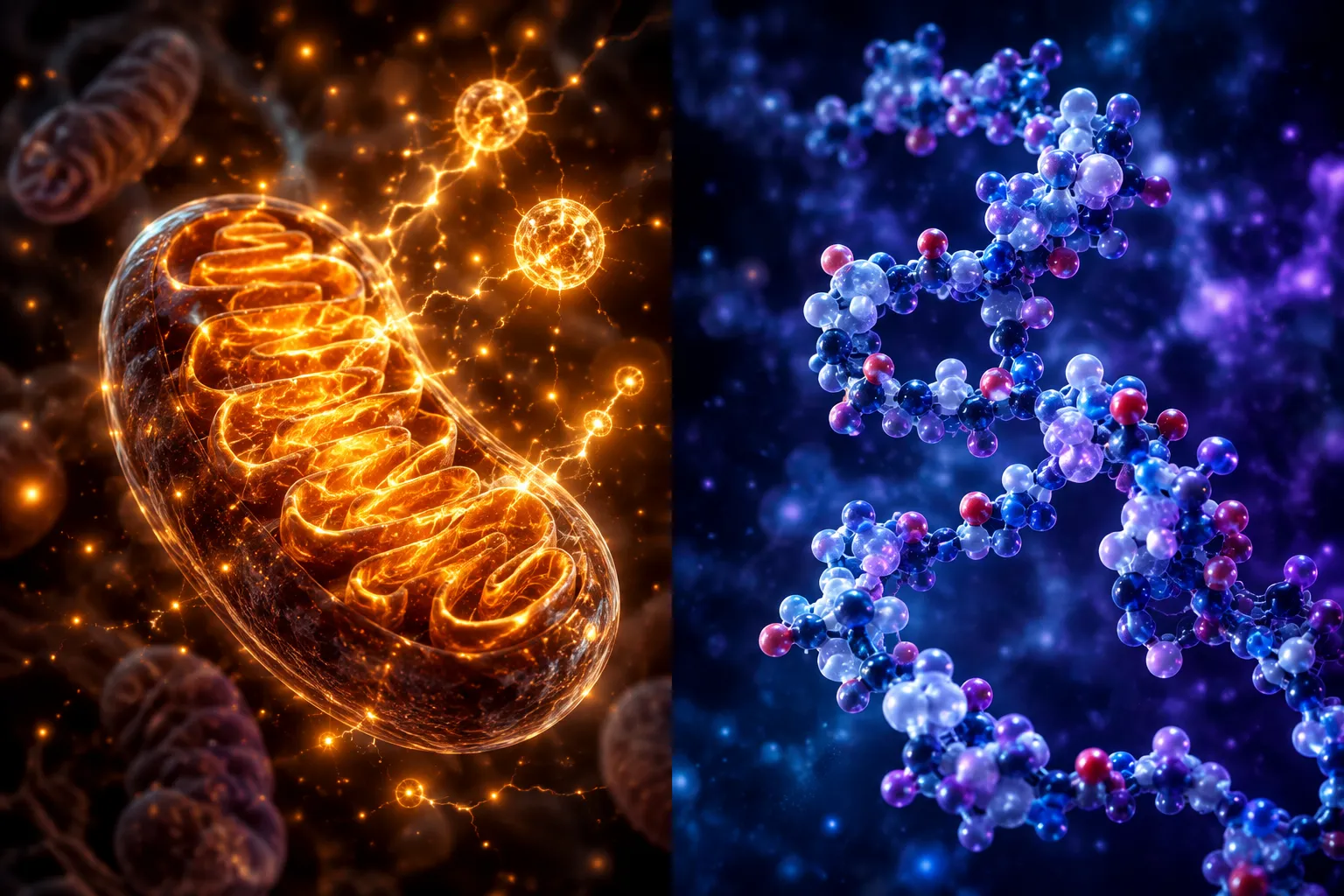
Mitochondrial cross-section with MOTS-c translocation pathway diagram

MOTS-c: A Mitochondrial Peptide That Speaks Directly to the Nucleus

MOTS-c is a 16-amino-acid peptide encoded within the 12S ribosomal RNA region of the mitochondrial genome. Unlike nuclear-encoded proteins that travel into mitochondria, MOTS-c moves in the opposite direction. Under conditions of metabolic stress — elevated glucose, oxidative load, or caloric excess — MOTS-c translocates from the mitochondrial matrix to the nucleus, where it binds stress-responsive transcription factors including NRF2 to modulate gene expression. This retrograde signaling pathway represents a direct communication channel between mitochondrial status and nuclear transcriptional output.

The metabolic effects of MOTS-c are largely mediated through AMPK activation. Mechanistically, MOTS-c inhibits the folate cycle, causing accumulation of AICAR (5-aminoimidazole-4-carboxamide ribonucleotide), a well-characterized endogenous AMPK activator. Downstream consequences include enhanced glucose uptake, improved lipid oxidation, and restoration of metabolic homeostasis in muscle and adipose tissue. In rodent models of type 2 diabetes, MOTS-c therapy improved mitochondrial respiration in cardiac tissue, suggesting organ-level restoration of energy metabolism beyond skeletal muscle.

Critically for lab scientists, exercise itself induces MOTS-c expression in human skeletal muscle and circulation. Research published in Nature Communications demonstrated that MOTS-c administration improved physical performance across young, middle-aged, and old mice, while also regulating nuclear genes tied to proteostasis. This positions MOTS-c as both an exercise mimetic and a longevity-relevant signal worth modeling in metabolic assay systems.

For researchers building mitochondrial signaling models, the MOTS-c mitochondrial peptide research overview provides a useful starting framework. Those studying combined pathway interventions may also find the MOTS-c and SLU-PP-332 combination research relevant to multi-target experimental design.


5-Amino-1MQ NNMT inhibition and NAD+ increase bar graph

5-Amino-1MQ: NNMT Inhibition as a Mitochondrial Energy Lever

Where MOTS-c operates through mitochondrial DNA and retrograde nuclear signaling, 5-Amino-1MQ takes a complementary route: it blocks nicotinamide N-methyltransferase (NNMT), an enzyme that consumes S-adenosylmethionine (SAM) and methyl-pool substrates while degrading nicotinamide — a direct NAD+ precursor. In obese tissue models, NNMT expression in white adipose tissue runs up to 15-fold higher than in lean controls, correlating tightly with markers of metabolic dysfunction.

5-Amino-1MQ exhibits an IC50 of approximately 1.2 μM in cell-free assays, demonstrating high selectivity for NNMT over other methyltransferases. In laboratory models, a single treatment achieved a 47% reduction in NNMT activity within 30 minutes. Over 48 hours, cellular NAD+ concentrations rose by approximately 34%, accompanied by measurable increases in SIRT1 deacetylase activity. Since SIRT1 is a direct NAD+-dependent regulator of mitochondrial biogenesis via PGC-1 alpha, the downstream effect of 5-Amino-1MQ is an enhancement of the very mitochondrial machinery that produces MOTS-c.

Parameter 5-Amino-1MQ Effect
NNMT IC50 ~1.2 μM (cell-free)
NNMT activity reduction 47% within 30 minutes
NAD+ increase ~34% within 48 hours
SIRT1 activity Elevated alongside NAD+
NNMT in obese adipose 15-fold higher vs. lean

This creates a reinforcing loop relevant to metabolic model design: higher NAD+ supports mitochondrial function, which in turn supports MOTS-c production and release.

Researchers sourcing compounds for these assays can review lab-tested peptides for metabolic research or explore the broader peptides for sale catalog for combination-ready compounds.


Metabolic research lab bench with MOTS-c and 5-Amino-1MQ vials and pathway diagrams

How Mitochondria, MOTS-c, and 5-Amino-1MQ Intersect in Metabolic Research Models

Understanding Mitochondria, MOTS-c, and 5-Amino-1MQ: How Peptides Reframe Classic Mitochondrial Biology in Metabolic Research requires mapping where these two agents converge on shared pathway nodes.

Shared targets and convergence points:

  • AMPK node: MOTS-c activates AMPK via AICAR accumulation; elevated NAD+ from 5-Amino-1MQ activates SIRT1, which deacetylates and activates LKB1, an upstream AMPK kinase.
  • NAD+ pool: MOTS-c's metabolic stress response is partly governed by NAD+ availability; 5-Amino-1MQ directly expands this pool.
  • Mitochondrial biogenesis: Both agents, through separate routes, converge on PGC-1 alpha activation, the master regulator of mitochondrial number and function.
  • Adipose tissue remodeling: MOTS-c promotes lipid utilization via AMPK; 5-Amino-1MQ reduces NNMT-driven metabolic suppression in adipocytes.

For lab scientists designing metabolic stress models, the practical implication is that these two compounds offer mechanistically non-redundant but synergistic interventions. MOTS-c addresses the mitochondrial signaling deficit from the organelle outward; 5-Amino-1MQ addresses the NAD+ depletion that limits mitochondrial output from the enzymatic level inward.

Researchers interested in related mitochondrial-targeting peptides should also review SS-31 mitochondrial research themes and SS-31 mitochondrial dynamics, which address membrane-targeted cardiolipin protection as a third axis of mitochondrial intervention. For metabolic modulation models involving exercise-mimetic compounds, SLU-PP-332 metabolic modulation research offers a complementary ERR-alpha agonist perspective.

"The mitochondrion is no longer just a power plant. It is an active signaling organelle whose peptide output directly governs nuclear gene programs — and 5-Amino-1MQ's effect on NAD+ feeds directly back into that output capacity."


Conclusion

The convergence of Mitochondria, MOTS-c, and 5-Amino-1MQ: How Peptides Reframe Classic Mitochondrial Biology in Metabolic Research offers lab scientists a more complete picture of how energy homeostasis is regulated at the organelle-to-nucleus axis. MOTS-c provides a direct readout of mitochondrial metabolic status and an intervention point at AMPK and nuclear stress-response pathways. 5-Amino-1MQ addresses NNMT-driven NAD+ depletion, restoring the substrate availability that mitochondrial signaling depends on.

Actionable next steps for researchers:

  • Design dual-intervention assays pairing MOTS-c and 5-Amino-1MQ to assess additive versus synergistic effects on AMPK phosphorylation and PGC-1 alpha expression.
  • Use NNMT activity as a baseline stratification variable in metabolic model selection — particularly in adipocyte or cardiac cell lines where NNMT overexpression is documented.
  • Incorporate NAD+/NADH ratio measurements as a primary readout when evaluating 5-Amino-1MQ alongside mitochondrial respiration assays.
  • Cross-reference MOTS-c nuclear translocation data with NRF2 binding assays to map the stress-response transcriptional network more precisely.

Sourcing verified, high-purity compounds is a prerequisite for reproducible metabolic research. Reviewing available MOTS-c peptides for research from suppliers with documented purity testing is an essential first step before experimental design is finalized.

https://www.puretestedpeptides.com/wp-content/uploads/2026/06/Mitochondria-MOTS-c-and-5-Amino-1MQ-How-Peptides-Reframe-Classic-Mitochondrial-Biology-in-Metabolic-Research.png 1024 1536 https://www.puretestedpeptides.com/wp-content/uploads/2026/01/buy-peptides-online.jpg 2026-06-23 13:19:082026-06-23 13:19:08Mitochondria, MOTS-c, and 5-Amino-1MQ: How Peptides Reframe Classic Mitochondrial Biology in Metabolic Research
Mitochondria, MOTS-c, and 5-Amino-1MQ: How Peptides Reframe Classic Mitochondrial Biology in Metabolic Research

Mitochondria, MOTS-c, and 5-Amino-1MQ: How Peptides Reframe Classic Mitochondrial Biology in Metabolic Research

June 23, 2026/0 Comments/in Uncategorized/by

Metabolic disease affects more than one billion people globally, yet the signaling machinery inside the mitochondrion itself remains one of the least-exploited therapeutic territories in preclinical research. The intersection of Mitochondria, MOTS-c, and 5-Amino-1MQ: How Peptides Reframe Classic Mitochondrial Biology in Metabolic Research is precisely where that gap is beginning to close. Two molecules — the mitochondria-derived peptide MOTS-c and the small-molecule NNMT inhibitor 5-Amino-1MQ — are forcing researchers to reconsider how energy sensing, nuclear gene regulation, and NAD+ metabolism are coordinated at the organelle level.

Key Takeaways

  • MOTS-c is a 16-amino-acid peptide encoded in mitochondrial DNA that translocates to the nucleus under metabolic stress to regulate gene expression.
  • MOTS-c activates AMPK by inhibiting the folate cycle and accumulating AICAR, a natural AMPK agonist.
  • 5-Amino-1MQ selectively inhibits NNMT, raising cellular NAD+ by approximately 34% within 48 hours in laboratory models.
  • NNMT expression in white adipose tissue is up to 15-fold higher in obese versus lean tissue, making it a high-value metabolic target.
  • Combining MOTS-c and 5-Amino-1MQ in metabolic models creates overlapping but mechanistically distinct interventions on the same energy-sensing network.

Mitochondrial cross-section with MOTS-c translocation pathway diagram

MOTS-c: A Mitochondrial Peptide That Speaks Directly to the Nucleus

MOTS-c is a 16-amino-acid peptide encoded within the 12S ribosomal RNA region of the mitochondrial genome. Unlike nuclear-encoded proteins that travel into mitochondria, MOTS-c moves in the opposite direction. Under conditions of metabolic stress — elevated glucose, oxidative load, or caloric excess — MOTS-c translocates from the mitochondrial matrix to the nucleus, where it binds stress-responsive transcription factors including NRF2 to modulate gene expression. This retrograde signaling pathway represents a direct communication channel between mitochondrial status and nuclear transcriptional output.

The metabolic effects of MOTS-c are largely mediated through AMPK activation. Mechanistically, MOTS-c inhibits the folate cycle, causing accumulation of AICAR (5-aminoimidazole-4-carboxamide ribonucleotide), a well-characterized endogenous AMPK activator. Downstream consequences include enhanced glucose uptake, improved lipid oxidation, and restoration of metabolic homeostasis in muscle and adipose tissue. In rodent models of type 2 diabetes, MOTS-c therapy improved mitochondrial respiration in cardiac tissue, suggesting organ-level restoration of energy metabolism beyond skeletal muscle.

Critically for lab scientists, exercise itself induces MOTS-c expression in human skeletal muscle and circulation. Research published in Nature Communications demonstrated that MOTS-c administration improved physical performance across young, middle-aged, and old mice, while also regulating nuclear genes tied to proteostasis. This positions MOTS-c as both an exercise mimetic and a longevity-relevant signal worth modeling in metabolic assay systems.

For researchers building mitochondrial signaling models, the MOTS-c mitochondrial peptide research overview provides a useful starting framework. Those studying combined pathway interventions may also find the MOTS-c and SLU-PP-332 combination research relevant to multi-target experimental design.


5-Amino-1MQ NNMT inhibition and NAD+ increase bar graph

5-Amino-1MQ: NNMT Inhibition as a Mitochondrial Energy Lever

Where MOTS-c operates through mitochondrial DNA and retrograde nuclear signaling, 5-Amino-1MQ takes a complementary route: it blocks nicotinamide N-methyltransferase (NNMT), an enzyme that consumes S-adenosylmethionine (SAM) and methyl-pool substrates while degrading nicotinamide — a direct NAD+ precursor. In obese tissue models, NNMT expression in white adipose tissue runs up to 15-fold higher than in lean controls, correlating tightly with markers of metabolic dysfunction.

5-Amino-1MQ exhibits an IC50 of approximately 1.2 μM in cell-free assays, demonstrating high selectivity for NNMT over other methyltransferases. In laboratory models, a single treatment achieved a 47% reduction in NNMT activity within 30 minutes. Over 48 hours, cellular NAD+ concentrations rose by approximately 34%, accompanied by measurable increases in SIRT1 deacetylase activity. Since SIRT1 is a direct NAD+-dependent regulator of mitochondrial biogenesis via PGC-1 alpha, the downstream effect of 5-Amino-1MQ is an enhancement of the very mitochondrial machinery that produces MOTS-c.

Parameter 5-Amino-1MQ Effect
NNMT IC50 ~1.2 μM (cell-free)
NNMT activity reduction 47% within 30 minutes
NAD+ increase ~34% within 48 hours
SIRT1 activity Elevated alongside NAD+
NNMT in obese adipose 15-fold higher vs. lean

This creates a reinforcing loop relevant to metabolic model design: higher NAD+ supports mitochondrial function, which in turn supports MOTS-c production and release.

Researchers sourcing compounds for these assays can review lab-tested peptides for metabolic research or explore the broader peptides for sale catalog for combination-ready compounds.


Metabolic research lab bench with MOTS-c and 5-Amino-1MQ vials and pathway diagrams

How Mitochondria, MOTS-c, and 5-Amino-1MQ Intersect in Metabolic Research Models

Understanding Mitochondria, MOTS-c, and 5-Amino-1MQ: How Peptides Reframe Classic Mitochondrial Biology in Metabolic Research requires mapping where these two agents converge on shared pathway nodes.

Shared targets and convergence points:

  • AMPK node: MOTS-c activates AMPK via AICAR accumulation; elevated NAD+ from 5-Amino-1MQ activates SIRT1, which deacetylates and activates LKB1, an upstream AMPK kinase.
  • NAD+ pool: MOTS-c's metabolic stress response is partly governed by NAD+ availability; 5-Amino-1MQ directly expands this pool.
  • Mitochondrial biogenesis: Both agents, through separate routes, converge on PGC-1 alpha activation, the master regulator of mitochondrial number and function.
  • Adipose tissue remodeling: MOTS-c promotes lipid utilization via AMPK; 5-Amino-1MQ reduces NNMT-driven metabolic suppression in adipocytes.

For lab scientists designing metabolic stress models, the practical implication is that these two compounds offer mechanistically non-redundant but synergistic interventions. MOTS-c addresses the mitochondrial signaling deficit from the organelle outward; 5-Amino-1MQ addresses the NAD+ depletion that limits mitochondrial output from the enzymatic level inward.

Researchers interested in related mitochondrial-targeting peptides should also review SS-31 mitochondrial research themes and SS-31 mitochondrial dynamics, which address membrane-targeted cardiolipin protection as a third axis of mitochondrial intervention. For metabolic modulation models involving exercise-mimetic compounds, SLU-PP-332 metabolic modulation research offers a complementary ERR-alpha agonist perspective.

"The mitochondrion is no longer just a power plant. It is an active signaling organelle whose peptide output directly governs nuclear gene programs — and 5-Amino-1MQ's effect on NAD+ feeds directly back into that output capacity."


Conclusion

The convergence of Mitochondria, MOTS-c, and 5-Amino-1MQ: How Peptides Reframe Classic Mitochondrial Biology in Metabolic Research offers lab scientists a more complete picture of how energy homeostasis is regulated at the organelle-to-nucleus axis. MOTS-c provides a direct readout of mitochondrial metabolic status and an intervention point at AMPK and nuclear stress-response pathways. 5-Amino-1MQ addresses NNMT-driven NAD+ depletion, restoring the substrate availability that mitochondrial signaling depends on.

Actionable next steps for researchers:

  • Design dual-intervention assays pairing MOTS-c and 5-Amino-1MQ to assess additive versus synergistic effects on AMPK phosphorylation and PGC-1 alpha expression.
  • Use NNMT activity as a baseline stratification variable in metabolic model selection — particularly in adipocyte or cardiac cell lines where NNMT overexpression is documented.
  • Incorporate NAD+/NADH ratio measurements as a primary readout when evaluating 5-Amino-1MQ alongside mitochondrial respiration assays.
  • Cross-reference MOTS-c nuclear translocation data with NRF2 binding assays to map the stress-response transcriptional network more precisely.

Sourcing verified, high-purity compounds is a prerequisite for reproducible metabolic research. Reviewing available MOTS-c peptides for research from suppliers with documented purity testing is an essential first step before experimental design is finalized.

https://www.puretestedpeptides.com/wp-content/uploads/2026/06/Mitochondria-MOTS-c-and-5-Amino-1MQ-How-Peptides-Reframe-Classic-Mitochondrial-Biology-in-Metabolic-Research.png 1024 1536 https://www.puretestedpeptides.com/wp-content/uploads/2026/01/buy-peptides-online.jpg 2026-06-23 13:19:072026-06-23 13:19:07Mitochondria, MOTS-c, and 5-Amino-1MQ: How Peptides Reframe Classic Mitochondrial Biology in Metabolic Research
×

Helpful Links

  • My account
  • Cart
  • Checkout
  • Refund and Returns Policy
  • Privacy Policy
  • SMS Privacy Policy
  • Login
  • My Account
  • Logout

USA Made Lab Tested Peptides

All products are sold for research, laboratory, or analytical purposes only, and are not for human consumption


Pure Tested Peptides is a chemical supplier. Pure Tested Peptides is not a compounding / chemical compounding facility as defined under 503A of the Federal Food, Drug, and Cosmetic act. Pure Tested Peptides is not an outsourcing facility as defined under 503B of the Federal Food, Drug, and Cosmetic act.

The statements made within this website have not been evaluated by the US Food and Drug Administration. The products we offer are not intended to diagnose, treat, cure or prevent any disease.

Human/Animal Consumption Prohibited. Laboratory/In-Vitro Experimental Use Only

Scroll to top Scroll to top Scroll to top