

MOTS-c and 5-Amino-1MQ in Skeletal-Muscle Models: Mitochondrial Flux, NNMT, and Insulin-Signaling Controls
Skeletal-muscle MOTS-c levels rise approximately 11.9-fold in young men following a single acute exercise session, a magnitude that places this mitochondrial-derived peptide in a category of its own among exercise-induced metabolic signals. Yet combining that finding with data on 5-Amino-1MQ, a selective NNMT inhibitor, requires careful separation of muscle-specific endpoints from whole-body metabolic readouts. This article unpacks how MOTS-c and 5-Amino-1MQ in skeletal-muscle models operate through distinct but potentially complementary mechanisms, covering mitochondrial flux, NNMT biology, and insulin-signaling controls, while keeping tissue-specific effects clearly distinguished.
Key Takeaways
- MOTS-c is a 16-amino-acid mitochondrial-derived peptide that activates AMPK through the folate-AICAR axis, driving GLUT4 translocation and mitochondrial biogenesis primarily in muscle fibers.
- 5-Amino-1MQ inhibits NNMT with an IC50 of approximately 1.2 µM, raising intracellular NAD+ and SAM levels to support mitochondrial electron-transport efficiency, mainly through an indirect redox mechanism.
- These compounds operate on different primary compartments: MOTS-c on muscle and liver via AMPK/PGC-1a; 5-Amino-1MQ on adipose and aged muscle stem cells via the NNMT/NAD+ axis.
- Conflating systemic metabolic improvements with direct muscle-fiber effects is a common error; glucose uptake, respiration, methylation markers, and cytotoxicity must each be measured independently.
- Both compounds remain research-only tools in 2026, with no approved therapeutic indications or large controlled human trials.
How MOTS-c Drives Mitochondrial Flux in Muscle Fibers
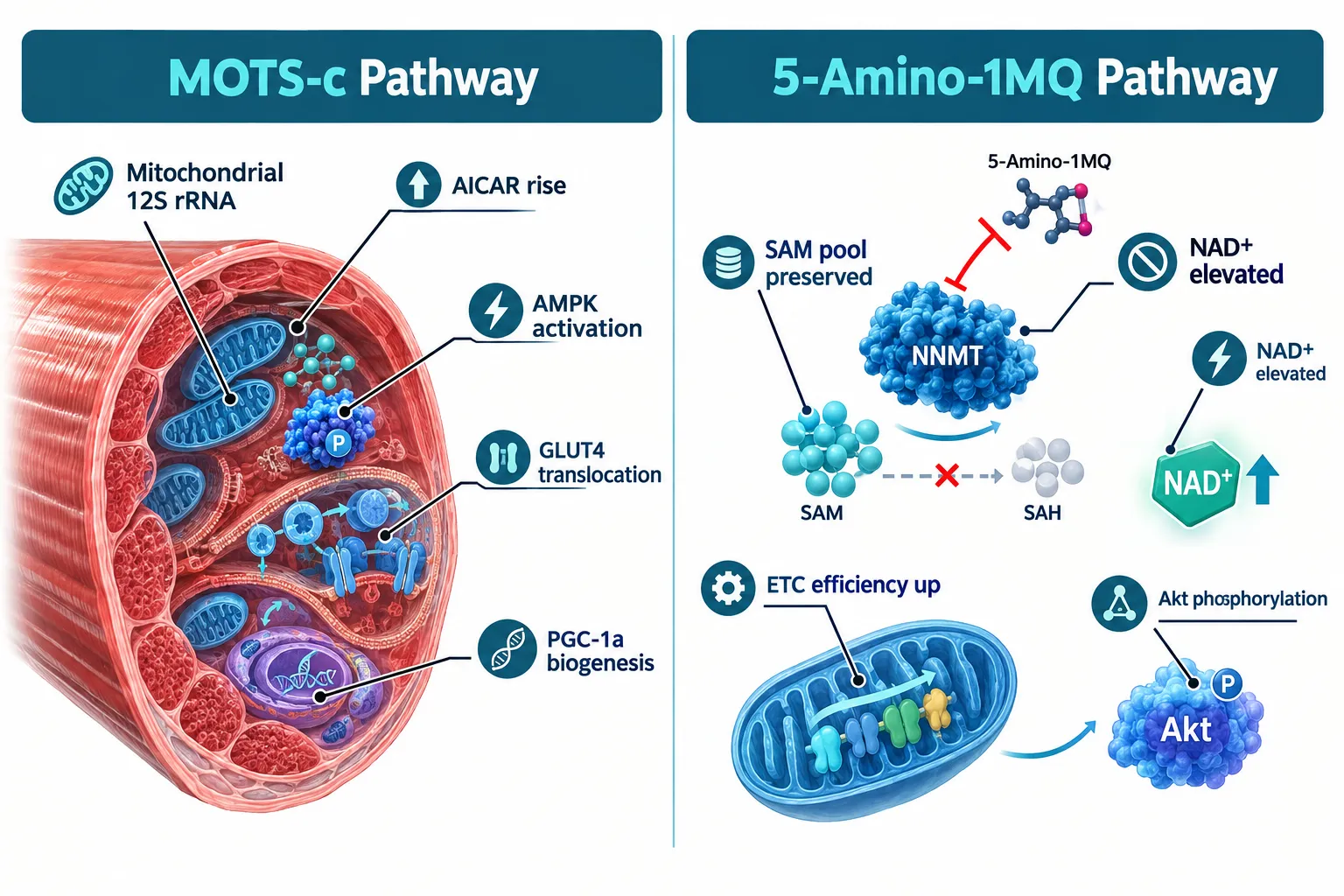
MOTS-c is encoded within the mitochondrial 12S rRNA gene and released as a 16-amino-acid peptide that translocates to the nucleus under metabolic stress. Its primary signaling route runs through the folate cycle: MOTS-c disrupts one-carbon metabolism, causing AICAR (an AMPK activator) to accumulate. The resulting AMPK activation triggers downstream effects that are well-documented in skeletal-muscle models.
Muscle-specific readouts linked to MOTS-c include:
- Increased mitochondrial oxygen consumption and bioenergetic efficiency
- Greater fatty-acid oxidation relative to glucose oxidation
- Reduced mitochondrial reactive oxygen species (ROS) emission
- Lower oxidative protein damage markers within muscle tissue
- GLUT4 vesicle translocation to the sarcolemma, enhancing glucose uptake
Crucially, PGC-1a upregulation downstream of AMPK links MOTS-c directly to mitochondrial biogenesis, new mitochondria, not just better-functioning existing ones. This explains why researchers describe the peptide as an exercise-mimetic rather than simply an insulin sensitizer.
For broader context on mitochondrial peptide research themes, the MOTS-c and elamipretide comparison resource offers useful parallel reading, as does the SS-31 mitochondrial research themes overview.
One important distinction worth emphasizing: human evidence is currently correlational. Endurance training increases both skeletal-muscle mitochondrial respiration and endogenous MOTS-c secretion together, but exogenous MOTS-c administration has not yet been shown to fully reproduce exercise-derived benefits in controlled human trials. Treating the correlation as proof of causation in muscle models is a methodological hazard researchers should actively avoid.
5-Amino-1MQ, NNMT Inhibition, and the NAD+ Axis: Separating Muscle from Adipose Effects
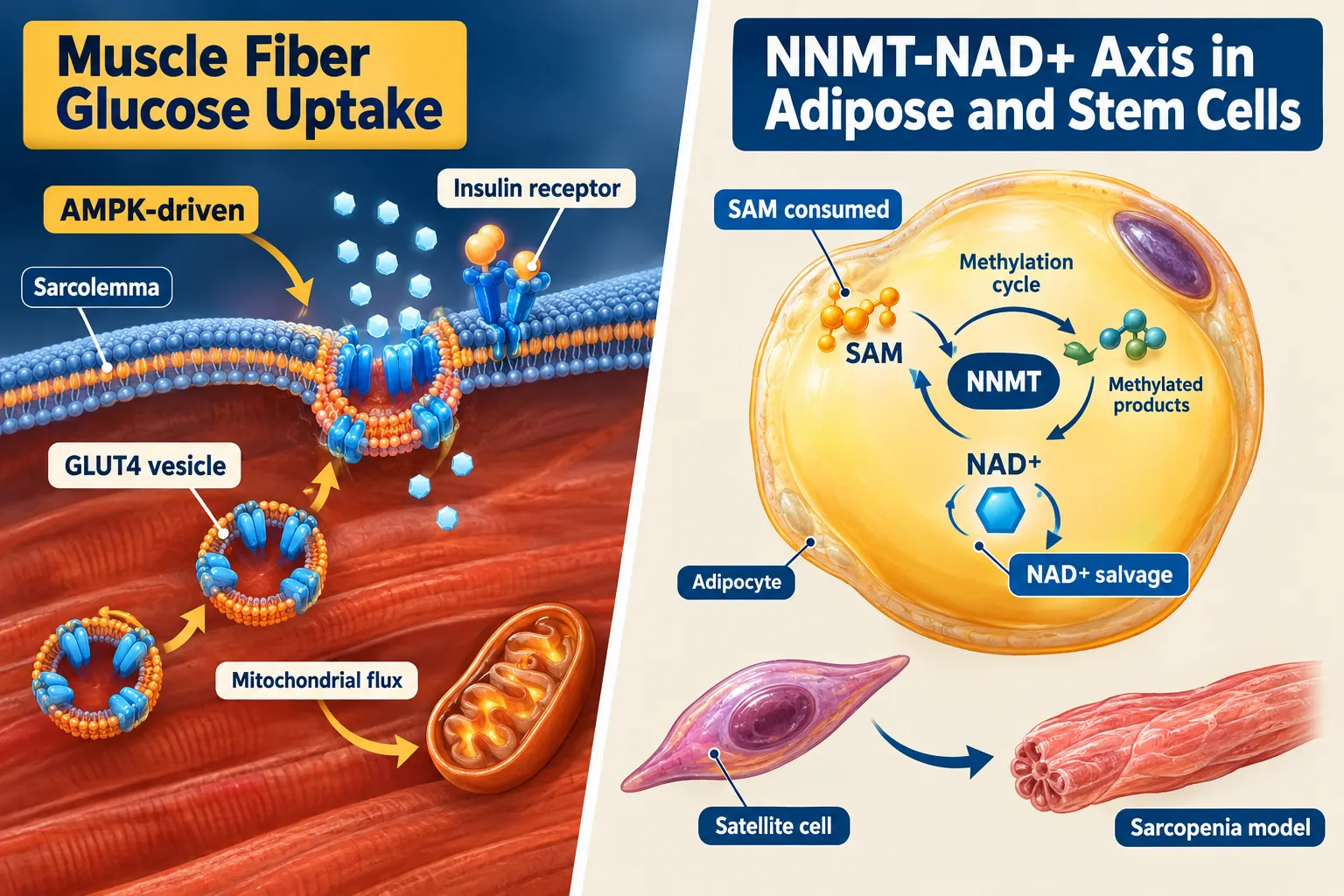
Nicotinamide N-methyltransferase (NNMT) consumes S-adenosylmethionine (SAM) while converting nicotinamide to 1-methylnicotinamide. When NNMT is overactive, a feature of obese adipose tissue, it depletes both SAM and NAD+ precursors, suppressing mitochondrial electron-transport-chain (ETC) efficiency and cellular energy expenditure. 5-Amino-1MQ blocks NNMT selectively, sparing related SAM-dependent methyltransferases and NAD+ salvage enzymes.
What inhibiting NNMT does at the cellular level:
| Readout | Direction with 5-Amino-1MQ |
|---|---|
| Intracellular NAD+ | Increases |
| SAM pool | Preserved / elevated |
| ETC efficiency | Improved (indirect) |
| Akt phosphorylation (insulin-stimulated) | Enhanced in adipocytes |
| Glucose uptake (adipocytes) | Improved |
The IC50 for NNMT inhibition sits at approximately 1.2 ± 0.1 µM, a potency figure that grounds its use in in vitro and preclinical muscle and adipose models.
A common error in summarizing 5-Amino-1MQ data is treating adipocyte insulin-signaling improvements as direct skeletal-muscle fiber effects. NNMT knockdown and pharmacologic inhibition consistently enhance insulin-stimulated Akt phosphorylation and glucose uptake in adipocytes, but this does not automatically translate to the same magnitude of effect in differentiated muscle fibers. The primary tissue target is white adipose, with secondary applications in aged muscle stem cells, specifically satellite-cell biology in sarcopenia models, where NAD+ preservation supports regenerative capacity.
For those exploring mitochondrial-targeted compounds alongside NNMT inhibitors, the MOTS-c peptide research page and the SS-31 peptide category provide relevant reference material on complementary mitochondrial tools.
Integrating Both Compounds: Pathway Complementarity and Experimental Design Considerations
The conceptual appeal of studying MOTS-c and 5-Amino-1MQ in skeletal-muscle models together rests on pathway complementarity. MOTS-c drives AMPK-mediated mitochondrial biogenesis and GLUT4-dependent glucose uptake in muscle fibers. 5-Amino-1MQ modulates the NNMT/NAD+/SAM axis, primarily in adipose and aged muscle stem cells, with indirect effects on ETC redox balance. Combining AMPK activation with NNMT inhibition could theoretically broaden coverage of mitochondrial flux and insulin-signaling control points across both muscle and adipose compartments.
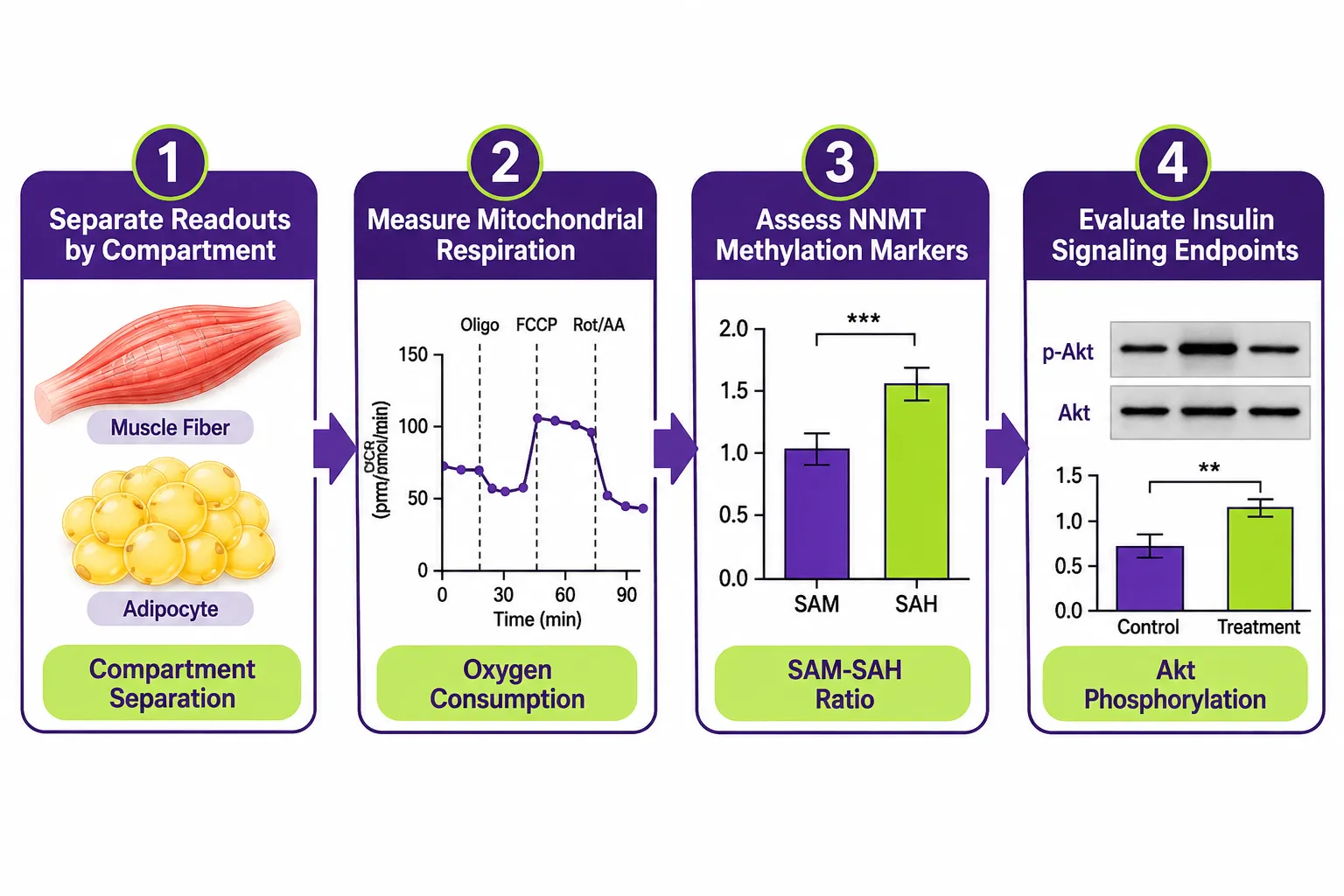
However, rigorous experimental design must separate four distinct readout categories:
- Muscle-specific glucose uptake, measure GLUT4 translocation and 2-deoxyglucose uptake directly in myotubes, not inferred from systemic glycemia.
- Mitochondrial respiration, use Seahorse XF or equivalent to assess oxygen consumption rate (OCR) and extracellular acidification rate (ECAR) in isolated muscle preparations.
- Methylation-related readouts, quantify SAM/SAH ratios and 1-methylnicotinamide levels as direct NNMT-activity markers, separating them from general metabolic changes.
- Cytotoxicity screening, run parallel LDH release or MTT assays at experimental concentrations to confirm effects are not confounded by cellular stress or death.
Treating systemic improvements in obese animal models as evidence of direct muscle-fiber effects for either compound is a recurring limitation in preclinical literature. Tissue-specific protein analysis, p-Akt/Akt in muscle versus adipose fractions, muscle-specific PGC-1a protein, and AMPK phosphorylation status, should be reported separately for each compartment.
"Combining AMPK activation with NNMT inhibition could yield broader modulation of mitochondrial flux and insulin signaling, but only if tissue-specific endpoints are tracked independently."
As of 2026, MOTS-c is more directly relevant to exercise-mimetic and mitochondrial-flux research in muscle fibers, while 5-Amino-1MQ is more directly relevant to aged muscle stem-cell biology and adipose energy expenditure. Future research directions likely include MOTS-c analogs in age-related metabolic decline and type 2 diabetes, and NNMT inhibitors in muscle-regeneration indications, but these remain speculative frameworks, not established clinical pipelines.
For researchers interested in the broader mitochondrial peptide landscape, the SS-31 mitochondrial research resource and the SS-31 kidney health research page illustrate how tissue-specific readouts are handled in adjacent mitochondrial-peptide programs.
Conclusion
The intersection of MOTS-c and 5-Amino-1MQ in skeletal-muscle models: mitochondrial flux, NNMT, and insulin-signaling controls is a productive but precision-demanding research space. The actionable steps for investigators in 2026 are clear:
- Distinguish muscle-fiber endpoints from adipose and systemic endpoints in every experimental design.
- Measure NNMT activity and NAD+/SAM pools as primary readouts for 5-Amino-1MQ, not just downstream glucose tolerance.
- Use direct mitochondrial respiration assays rather than proxy metabolic markers for MOTS-c.
- Include cytotoxicity controls at all tested concentrations.
- Avoid extrapolating correlational human exercise data to exogenous MOTS-c efficacy claims.
Both compounds are research-only tools. Investigators should source materials from suppliers that provide third-party purity verification, such as lab-tested peptides with documented quality control, to ensure that experimental variability reflects biology rather than compound quality.