Call or Text 727-513-9780
  • Shopping Cart Shopping Cart
    0Shopping Cart
Pure Tested Peptides | America's most trusted Peptides for sale online
  • Peptides for sale
    • Oral Peptides for sale
      • Peptide Capsules for sale
      • BPC 157 Capsules 1000mcg
      • SLU-PP-332 Capsules | 1000 mcg
      • 5-Amino-1MQ 50mg Capsules
      • Tesofensine 500mcg
    • All Peptides for sale
    • Peptide Sprays
      • BPC 157 Nasal Spray Kit
      • BPC-157 TB500 Nasal Spray Kit
      • Semax Nasal Spray 10mg
      • Selank – Nasal Spray Kit – 10mg
      • Epithalon 50MG Nasal Spray Kit
      • Ipamorelin 10mg Nasal Spray
      • Klow Nasal Spray (BPC-157 + TB-500 + GHK-Cu + KPV) | 80mg
      • Hulk Nasal Spray Tesa / Ipa Blend 6/3 MG
      • Klow Nasal Spray
      • NAD + 500 mg Nasal Spray
      • PT-141 Nasal Spray Kit
    • GHRH Peptides
      • Ipa Peptides
      • CJC-1295 Peptides
        • CJC-1295 with DAC 5 mg
        • CJC-1295 without DAC 5 mg
        • CJC-1295 Ipa 10mg
      • Tesa Peptides
        • Tesa Peptide
        • Tesa 20 mg
    • GHK-Cu Peptides
      • All GHK-Cu Peptides
      • GHK-Cu 100mg
      • KLOW Peptide Blend – Buy KLOW blend online
    • BPC Peptides
      • All BPC Peptides
      • BPC-157
      • BPC-157 TB-500
      • BPC 157 capsules 1000mcg
    • SLU-PP-332 Peptides
      • All SLU-PP-332 Peptides
      • SLU-PP-332 5mg
    • GLP3 Peptides
      • GLP3-R
      • GLP3-R CAG 10mg
      • GLP3-R 20mg
    • PT-141 Peptides
      • PT-141 Peptides for sale
      • PT-141 10mg
      • PT-141 Nasal Spray
    • CAG Peptides
      • Lipo-C Peptide Blend
      • CAG 5mg
      • CAG 10mg
    • MOTS-C Peptides
      • MOTS-C Peptides for sale
      • MOTS-c peptide
      • MOTS-c 10mg *6 pack*
    • 5 Amino 1MQ Peptides
      • 5 Amino 1MQ Peptides for sale
      • 5-Amino-1MQ 50mg Capsules
      • 5-Amino-1MQ 5mg
    • Epithalon Peptides
      • Epithalon Peptides for sale
      • Epithalon 10mg
      • Epithalon 50mg
  • Shop
    • GLPs
      • 5-Amino-1MQ 50mg Capsules
      • 5-Amino-1MQ 5mg
      • GLP3-Reta
      • L-Carnitine 500mg/ml
      • Tesofensine 500mcg
      • SLU-PP-332 5mg
      • MOTS-c 10mg *6 pack*
    • Epithalon & BPC Peptides
      • Epithalon 10mg
      • Epithalon 50mg
      • BPC-157
      • BPC 157 capsules 1000mcg
      • BPC-157 TB-500
      • BPC-157 TB500 Nasal Spray Kit
      • BPC 157 Nasal Spray Kit
    • BPC TB-500 & NAD+ Peptides
      • NAD+ 500 mg
      • KLOW Peptide Blend – Buy KLOW blend online
      • GLOW Peptide Blend
      • TB 500 5mg
      • BPC 157 capsules 1000mcg – Supplement
      • BPC 157 Nasal Spray Kit
      • BPC-157
      • BPC-157 TB500 Nasal Spray Kit
      • BPC-157 TB-500
      • BPC 157 capsules 1000mcg
    • LL-37 Peptide
      • LL-37 10 mg
    • MOTS-C & Selank
      • MOTS-c peptide
      • Selank 10mg
    • GHK Peptides
      • GHK-Cu 100mg
      • GLOW Peptide Blend
      • KLOW Peptide Blend – Buy KLOW blend online
  • COAs
  • Wholesale
    • Wholesale Peptides for sale
  • PTP FAQ
  • Affiliates
    • Selank Peptide: Advanced Pharmacological Mechanisms Underlying Its Anxiolytic and Nootropic Effects in Research
      • 5-Amino-1MQ Peptide: Detailed Mechanisms of NNMT Inhibition and Its Impact on Cellular Metabolism Research
        • MOTS-C Peptide: Unraveling Its Role in Mitochondrial Dynamics and Energy Metabolism Research
          • Epithalon Peptide and Telomerase Regulation: Investigating Its Impact on Cellular Senescence and Lifespan Research Models
            • GLP2-T vs GLP2 Tirz Peptide: Understanding the Naming, Mechanistic Nuances, and Research Implications for Gut Health
      • Peptides and Polypeptides in Modern Pharmacology: What Research on Metoprolol, Prednisone, and Amlodipine Reveals
        • Polypeptide Peptides vs NSAIDs: What Naproxen and Diclofenac Teach Tissue-Repair Researchers About BPC‑157 and TB‑500
          • Peptides and Polypeptides in Endocrine Pharmacology: How GLP-1, GLP-2, and GLP-3 Retatrutide Differ From Classic Drugs Like Prednisone and Amlodipine
          • 5‑Amino‑1MQ Peptide and NNMT Inhibition: How It Compares With Statins Like Atorvastatin in Adipose and Lipid Metabolism Research
      • Enclomiphene, Estrogen Receptor Signaling, and Luteinizing Phase Biology: What Hormone Researchers Should Measure
        • Mesenchymal Stem Cells, BPC‑157, and GHK‑Cu: How Tissue Repair Peptides Compare With Classic NSAIDs Like Naproxen in Injury Models
          • Peptide Calculator Use Cases Beyond Growth Hormone: Working Through GLP‑3 Retatrutide, MOTS‑c, and BPC‑157 Research Dosing
        • Polypeptide Peptides in Endocrine and Metabolic Pharmacology: Lessons From Amlodipine, Prednisone, and Metoprolol
        • Peptides Calculator for Advanced Blends: Worked Examples for Tesamorelin, CJC‑1295, and Ipamorelin Stacks
          • Peptides and Polypeptides in Human Physiology: How Molecular Size Shapes Research Applications
            • Selank Peptide: Advanced Pharmacological Mechanisms Underlying Its Anxiolytic and Nootropic Effects in Research
          • 5-Amino-1MQ Peptide: Detailed Mechanisms of NNMT Inhibition and Its Impact on Cellular Metabolism Research
            • MOTS-C Peptide: Unraveling Its Role in Mitochondrial Dynamics and Energy Metabolism Research
              • Epithalon Peptide and Telomerase Regulation: Investigating Its Impact on Cellular Senescence and Lifespan Research Models
                • GLP2-T vs GLP2 Tirz Peptide: Understanding the Naming, Mechanistic Nuances, and Research Implications for Gut Health
                  • Peptides and Polypeptides in Endocrine Pharmacology: How GLP-1, GLP-2, and GLP-3 Retatrutide Differ From Classic Drugs Like Prednisone and Amlodipine
                    • Polypeptide Peptides vs NSAIDs: What Naproxen and Diclofenac Teach Tissue-Repair Researchers About BPC‑157 and TB‑500
                      • Peptides and Polypeptides in Modern Pharmacology: What Research on Metoprolol, Prednisone, and Amlodipine Reveals
                        • 5‑Amino‑1MQ Peptide and NNMT Inhibition: How It Compares With Statins Like Atorvastatin in Adipose and Lipid Metabolism Research
                        • Enclomiphene, Estrogen Receptor Signaling, and Luteinizing Phase Biology: What Hormone Researchers Should Measure
                        • Mesenchymal Stem Cells, BPC‑157, and GHK‑Cu: How Tissue Repair Peptides Compare With Classic NSAIDs Like Naproxen in Injury Models
                        • Peptide Calculator Use Cases Beyond Growth Hormone: Working Through GLP‑3 Retatrutide, MOTS‑c, and BPC‑157 Research Dosing
                        • Polypeptide Peptides in Endocrine and Metabolic Pharmacology: Lessons From Amlodipine, Prednisone, and Metoprolol
                        • Peptides Calculator for Advanced Blends: Worked Examples for Tesamorelin, CJC‑1295, and Ipamorelin Stacks
                        • Peptides and Polypeptides in Human Physiology: How Molecular Size Shapes Research Applications
                        • Selank Peptide: Advanced Pharmacological Mechanisms Underlying Its Anxiolytic and Nootropic Effects in Research
                        • MOTS-C Peptide: Unraveling Its Role in Mitochondrial Dynamics and Energy Metabolism Research
                        • Peptides and Polypeptides in Modern Pharmacology: What Research on Metoprolol, Prednisone, and Amlodipine Reveals
                        • Peptides and Polypeptides in Endocrine Pharmacology: How GLP-1, GLP-2, and GLP-3 Retatrutide Differ From Classic Drugs Like Prednisone and Amlodipine
                        • 5-Amino-1MQ Peptide: Detailed Mechanisms of NNMT Inhibition and Its Impact on Cellular Metabolism Research
                        • Mesenchymal Stem Cells, BPC‑157, and GHK‑Cu: How Tissue Repair Peptides Compare With Classic NSAIDs Like Naproxen in Injury Models
                        • Peptide Calculator Use Cases Beyond Growth Hormone: Working Through GLP‑3 Retatrutide, MOTS‑c, and BPC‑157 Research Dosing
                        • GLP2-T vs GLP2 Tirz Peptide: Understanding the Naming, Mechanistic Nuances, and Research Implications for Gut Health
                        • Polypeptide Peptides in Endocrine and Metabolic Pharmacology: Lessons From Amlodipine, Prednisone, and Metoprolol
                        • Polypeptide Peptides vs NSAIDs: What Naproxen and Diclofenac Teach Tissue-Repair Researchers About BPC‑157 and TB‑500
                        • Peptides and Polypeptides in Human Physiology: How Molecular Size Shapes Research Applications
                        • Peptides Calculator for Advanced Blends: Worked Examples for Tesamorelin, CJC‑1295, and Ipamorelin Stacks
                        • 5‑Amino‑1MQ Peptide and NNMT Inhibition: How It Compares With Statins Like Atorvastatin in Adipose and Lipid Metabolism Research
                        • Enclomiphene, Estrogen Receptor Signaling, and Luteinizing Phase Biology: What Hormone Researchers Should Measure
                        • Epithalon Peptide and Telomerase Regulation: Investigating Its Impact on Cellular Senescence and Lifespan Research Models
                        • Best research protocol Klow blend
                        • best time to take BPC-157
                        • best time to take DSIP (Delta Sleep Inducing Peptide)
                        • best time to take CJC-1295
                        • best time to take AOD-9604
                        • best time to take Follistatin 344
                        • best time to take Ipamorelin
                        • best time to take MK-677 (Ibutamoren)
                        • best time to take Ligandrol (LGD-4033) — research compound
                        • best time to take Ostarine (MK-2866) — research compound
                        • best time to take GHK-CU
                        • best time to take TB-500
                        • best time to take MOTS-c
                        • best time to take Semax
                        • best time to take RAD-140 (Testolone) — research compound
                        • best time to take Thymosin Alpha-1
                        • best time to take PEG-MGF
                        • Biolife Plasma, Octapharma Plasma, and Research Peptides: How Plasma Donation Labs Differ From Peptide Suppliers
                        • best time to take YK-11 — research compound
                        • best time to take PT-141 (Bremelanotide)
                        • Best research protocol Klow blend
                        • 5-Amino-1MQ and MOTS-C Synergy: Metabolic Signaling, Mitochondria, and Research Design
                        • BPC-157 and TB-500: Investigating Their Combined Effects on Angiogenesis and Cellular Migration in Tissue Repair Models
                        • BPC-157 Peptide: Gut Barrier Function, Inflammation, and Tissue-Recovery Research
                        • 5‑Amino‑1MQ and MOTS‑c Synergy in Metabolic Research: Designing NNMT and Mitochondrial Biogenesis Stacks
                        • CJC-1295 with DAC vs. Without DAC: Half-Life, Release Kinetics, and Research Implications
                        • CJC‑1295 with DAC vs. Without DAC: Expanding on Half‑Life Differences Using Tesamorelin and Ipamorelin Blend Case Studies
                        • Collagen Biology and Copper‑Binding Peptides: How GHK‑Cu, Glow Blend, and Klow Blend Interact with Skin and Connective Tissue
                        • Collagen Biology and Regenerative Peptides: How GHK‑Cu, Glow Blend, and Klow Blend Affect Extracellular Matrix Research
                    • DNA, Telomeres, and Longevity Peptides: Positioning Epithalon and MOTS‑c in Genetic Aging Research
                      • Enclomiphene Citrate: serm Mechanism, Testosterone Research, and Stack Compatibility
                        • Enclomiphene vs Enclomiphene Citrate: Formulation, Bioavailability, and Research Distinctions
                        • Epithalon Peptide Research: Telomerase Activation, Aging, and Pineal Gland Function
                        • Estrogen Receptor Signaling and Enclomiphene: How Selective Modulators Compare with Classic Polypeptide Hormones
                        • GHK-Cu Peptide: Advanced Mechanisms in Extracellular Matrix Remodeling and Wound Healing Research
                        • GHK-Cu Peptide: Collagen Synthesis, Wound Repair, and Skin-Barrier Research Models
                        • GLP-1 vs GLP-3 vs GLP-2: Peptide Classification and Research Applications
                        • GLP-2 Peptide Research Guide: Gut Barrier Function, Nutrient Absorption, and Intestinal Recovery Models
                        • GLP-3 Retatrutide vs. GLP-1 Drugs: What Triple-Agonist Biology Changes in Research Models
                        • Ipamorelin and Tesamorelin Combination: Synergistic GH Secretagogue Research and Dosing Protocols
                        • GLP2 Tirz Peptide: What It Is, Why the Name Exists, and How Researchers Should Interpret It
                        • Klow Blend Peptide Nasal Spray: What the Formulation Is Trying to Do in Cognitive Research
                        • Mitochondria, NNMT Inhibition, and Peptide Modulators: Where MOTS‑c and 5‑Amino‑1MQ Fit in Cellular Energy Research
                        • MOTS-c Peptide: Mitochondrial Function, Energy Metabolism, and What Researchers Measure
                        • MOTS-c vs. 5-Amino-1MQ: Which Metabolic Research Questions Each Compound Actually Answers
                        • Nasal Spray Peptides: Bioavailability, Administration, and Semax/Selank Research Applications
                        • PT-141 Peptide Research: Mechanism of Action and Melanocortin Receptor Signaling
                        • Retatrutide for Research: Mechanism, Structure, and GLP-1/GLP-3 Dual Action
                        • Retatrutide for Obesity and Type 2 Diabetes: What the Latest Trial Data Suggest
                        • Tesofensine Peptide Research: Mechanism, Appetite Suppression, and Neuropeptide Y Pathways
  • Contact
    • Contact Customer Service
    • Text Customer Support
  • About US
  • Shop all peptides
  • Affiliate Program
    • Affiliate Signup
  • Login / Register Login / Register Page Link Login / Register Page Link
  • Click to open the search input field Click to open the search input field Search
  • Menu Menu

Tag Archive for: mitochondrial synergy

5-Amino-1MQ and MOTS-c Synergy: How Mitochondrial Pathways Are Studied Together

5-Amino-1MQ and MOTS-c Synergy: How Mitochondrial Pathways Are Studied Together

August 7, 2026/0 Comments/in Uncategorized/by

Mitochondrial dysfunction now appears in the pathophysiology of more than 150 human diseases, yet most research still examines metabolic compounds one at a time. That single-compound approach misses something important: inside living cells, energy-regulating molecules rarely act alone. The growing body of research around 5-Amino-1MQ and MOTS-c synergy: how mitochondrial pathways are studied together reflects a deliberate shift toward multi-target experimental frameworks, and the early data explain why.
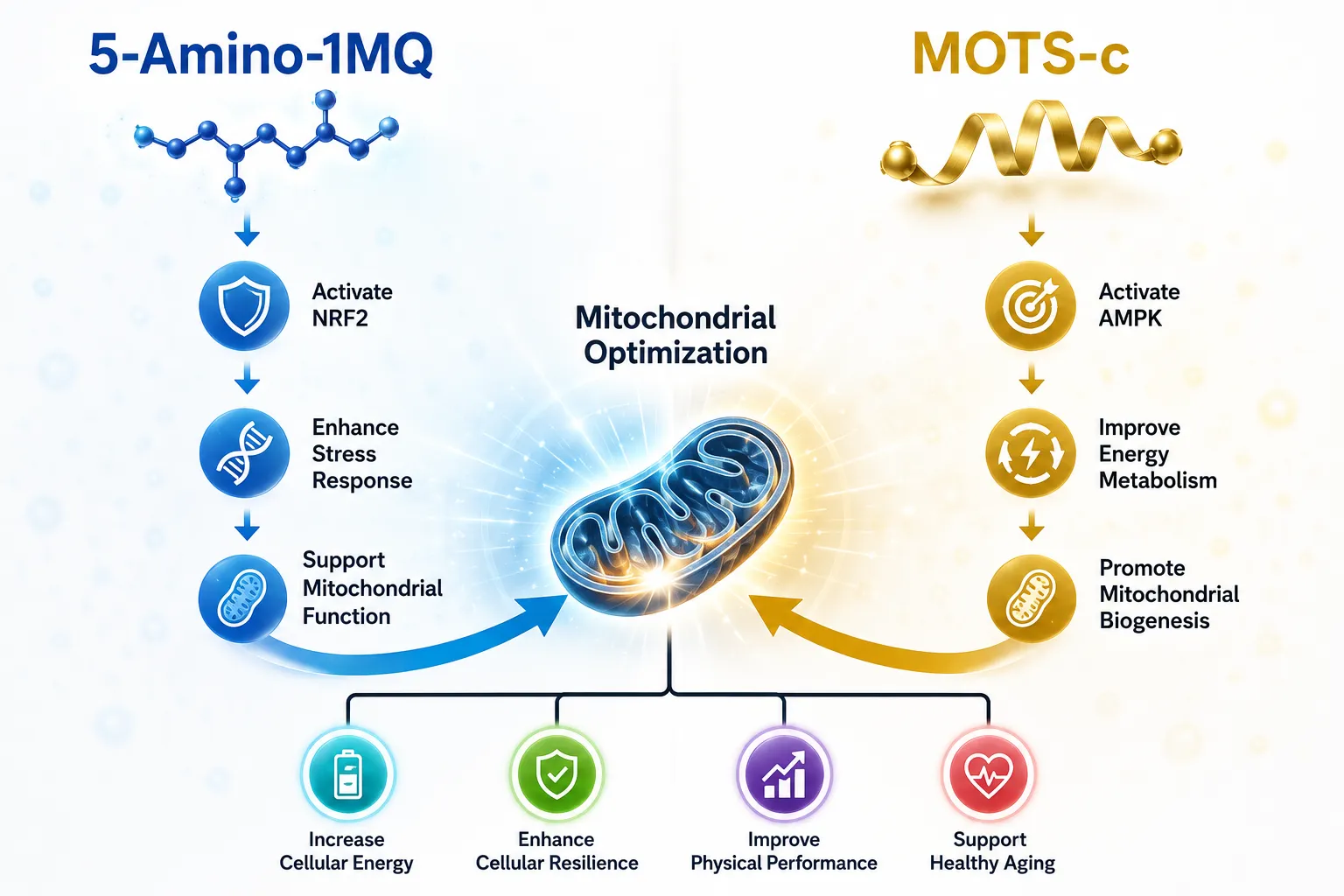
Bright editorial infographic-style landscape (): a split-panel scientific diagram showing two molecular pathway arrows — one

Key Takeaways

  • 5-Amino-1MQ inhibits NNMT, raising cellular NAD+ and SAM levels, while MOTS-c activates AMPK and regulates mitochondrial gene expression.
  • Researchers pair these two compounds because their mechanisms are complementary rather than redundant.
  • Adiposity models and metabolic disease frameworks are the most common contexts for studying this combination.
  • Translational questions about aging, obesity, and insulin sensitivity drive much of the current experimental design.
  • Purity and sourcing quality are critical variables when designing reproducible multi-compound studies.

What Is 5-Amino-1MQ and Why Does It Matter for Mitochondrial Research

5-Amino-1MQ (5-amino-1-methylquinolinium) is a small-molecule inhibitor of nicotinamide N-methyltransferase (NNMT). NNMT is an enzyme found in high concentrations in adipose tissue. When NNMT is overactive, it consumes S-adenosyl methionine (SAM) and reduces cellular NAD+ availability, two outcomes that suppress mitochondrial efficiency.

By blocking NNMT, 5-Amino-1MQ effectively raises the intracellular pool of both NAD+ and SAM. Higher NAD+ levels feed into sirtuin pathways (particularly SIRT1 and SIRT3), which regulate mitochondrial biogenesis, fatty acid oxidation, and cellular stress responses.

Key mechanisms under study:

  • NNMT inhibition and NAD+ restoration
  • Sirtuin pathway activation downstream of elevated NAD+
  • Reduction of adipocyte hypertrophy in white adipose tissue
  • Potential effects on beige adipose tissue phenotype conversion

In preclinical models, 5-Amino-1MQ has shown measurable reductions in fat mass without caloric restriction, which makes it particularly relevant for obesity and metabolic syndrome research frameworks.

What Is MOTS-c and How Does It Interact With Cellular Energy Systems

MOTS-c is a mitochondria-derived peptide (MDP) encoded within the 12S rRNA region of mitochondrial DNA. Unlike most peptides, it is not encoded by nuclear DNA, it originates inside the mitochondria themselves. This origin makes MOTS-c a direct signal of mitochondrial status.

MOTS-c activates AMP-activated protein kinase (AMPK), the master energy sensor of the cell. AMPK activation triggers a cascade that includes:

  • Increased glucose uptake in skeletal muscle
  • Suppression of de novo lipogenesis
  • Enhanced mitochondrial fatty acid oxidation
  • Regulation of the folate cycle and methionine metabolism

Researchers studying MOTS-c alongside elamipretide have noted that mitochondria-targeted compounds can produce additive effects when their mechanisms address different nodes of the same pathway network.

MOTS-c levels decline with age and in states of metabolic stress, which positions it as both a biomarker and a potential research tool in aging and obesity models.

Studying 5-Amino-1MQ and MOTS-c Synergy: How Mitochondrial Pathways Are Studied Together

The central question researchers ask when designing co-administration experiments is: do these compounds address the same bottleneck, or different ones? If two compounds share a single mechanism, combining them offers little additional insight. If they act at distinct but connected nodes, the combination reveals pathway architecture that single-compound studies cannot.
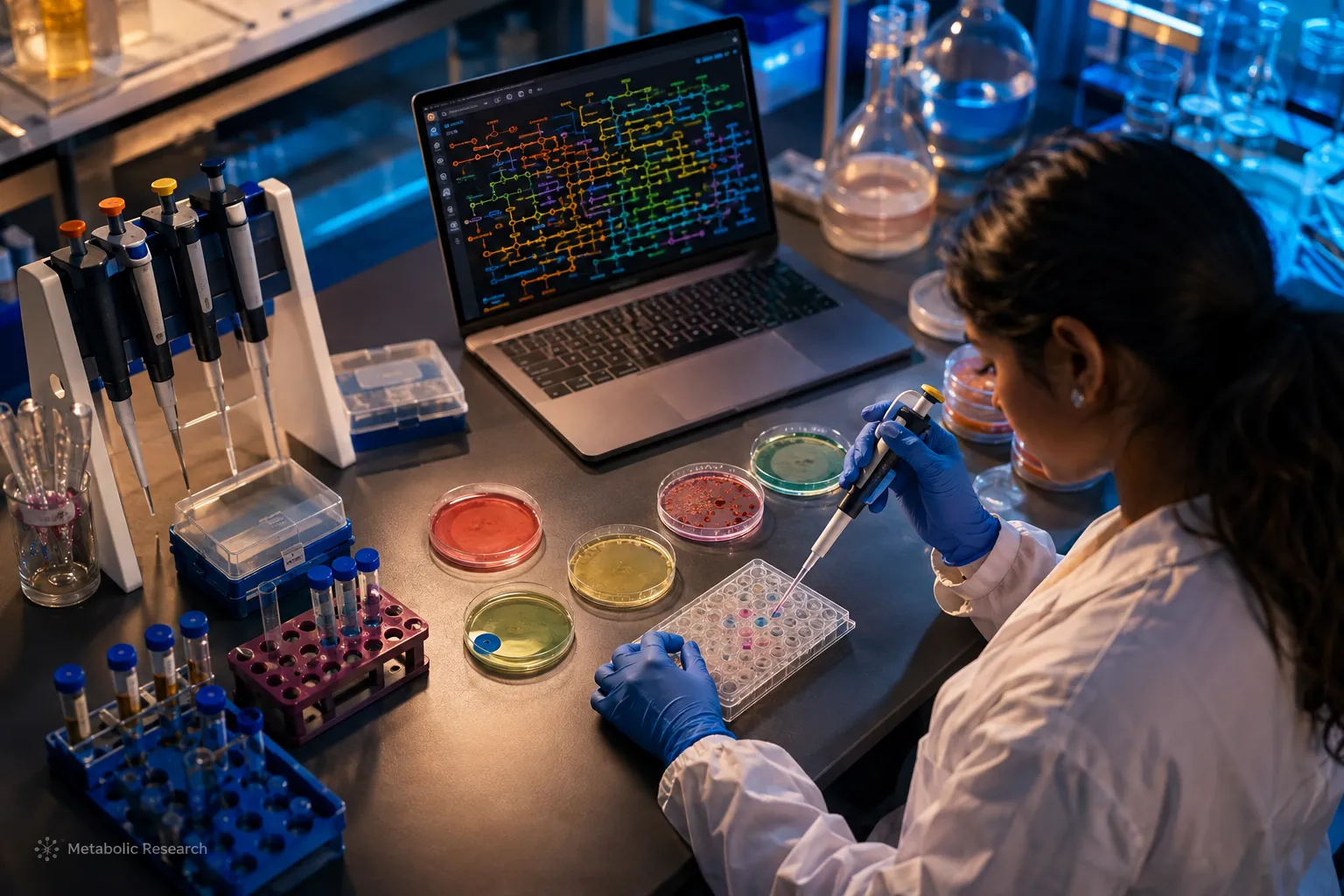
Studying 5-Amino-1MQ and MOTS-c Synergy: How Mitochondrial Pathways Are Studied Together

5-Amino-1MQ and MOTS-c address different nodes:

Compound Primary Target Downstream Effect
5-Amino-1MQ NNMT enzyme inhibition Raises NAD+, activates sirtuins
MOTS-c AMPK activation Improves glucose uptake, reduces lipogenesis

Because NAD+-sirtuin signaling and AMPK signaling both converge on mitochondrial biogenesis and fatty acid oxidation, the two pathways are complementary, not redundant. This is the core rationale for studying them together.

"Combining compounds with distinct but convergent mechanisms allows researchers to map the actual topology of metabolic networks rather than just confirming that a single node matters."

Experimental Models Used in Synergy Research

Researchers typically use three types of models to study this combination:

  1. Adiposity and obesity models, High-fat diet rodent models where both fat mass reduction and insulin sensitivity can be measured simultaneously.
  2. Aging models, Aged cell cultures or animal models where declining NAD+ and MOTS-c levels can be artificially restored.
  3. Skeletal muscle energy models, Focused on glucose uptake efficiency and mitochondrial respiration rates.

In adiposity models specifically, the combination of NNMT inhibition (raising NAD+) and AMPK activation (suppressing fat synthesis) creates a dual pressure on adipocyte metabolism. This is why the SS-31 elamipretide research community, which also focuses on mitochondrial membrane integrity, has begun watching MOTS-c co-administration data closely.

Translational Questions Driving the Research

The translational questions are direct:

  • Can restoring both NAD+ availability and AMPK activity simultaneously produce greater metabolic correction than either alone?
  • Does the combination affect insulin sensitivity additively or synergistically?
  • Are there tissue-specific differences in how the two pathways interact in muscle versus adipose tissue?

These questions are not yet fully answered. Most current data come from preclinical models, and rigorous dose-response mapping for the combination remains an active area. Researchers sourcing compounds for these studies consistently prioritize verified purity, a variable that becomes even more critical when interpreting multi-compound results. Sourcing from a best peptide manufacturer with documented testing reduces confounding variables in experimental design.

Methodological Considerations for Multi-Compound Mitochondrial Studies

Designing a valid co-administration study requires more than simply administering both compounds. Several methodological factors determine whether the data will be interpretable.
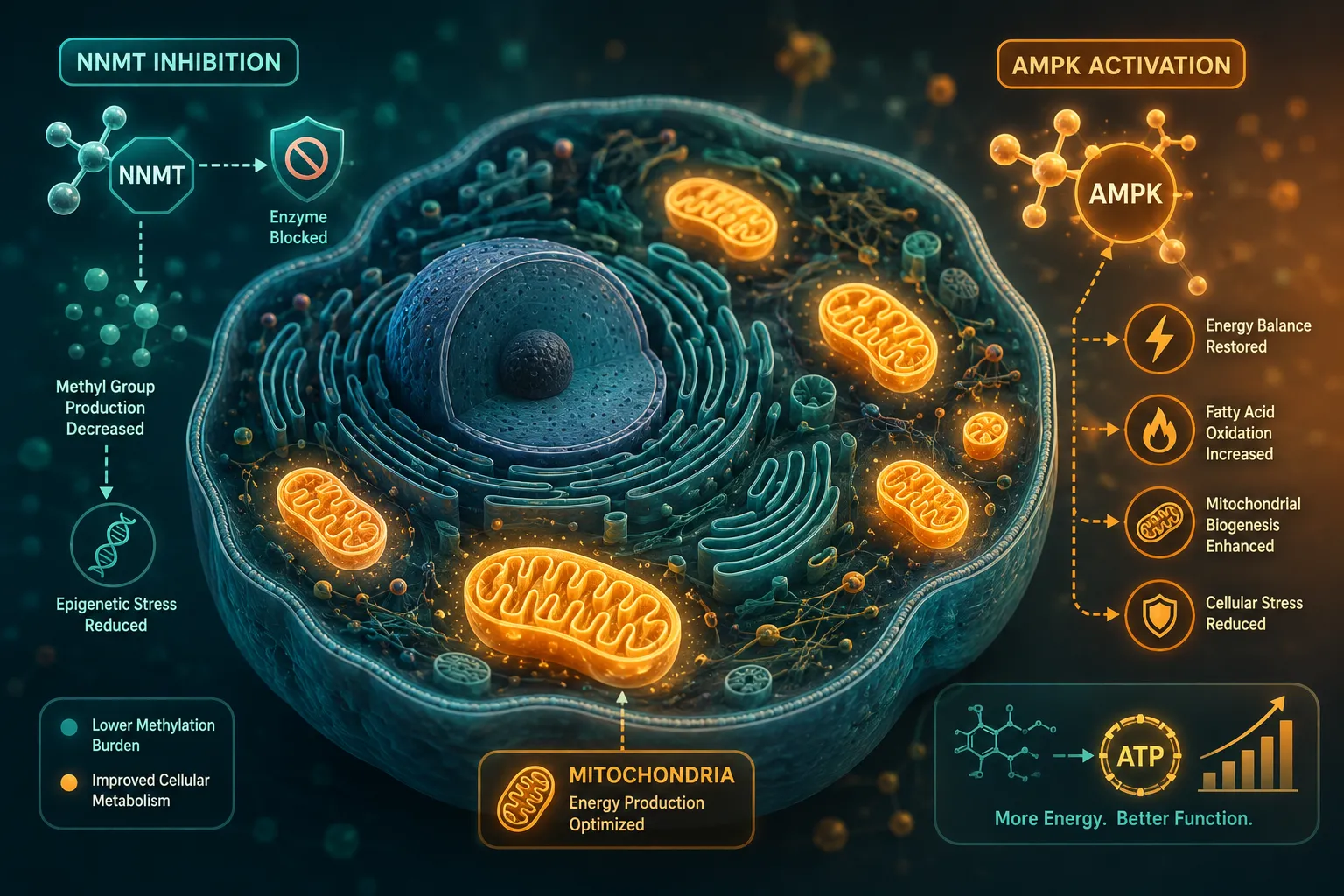
Methodological Considerations for Multi-Compound Mitochondrial Studies

Critical design variables include:

  • Dosing sequence and timing, Whether compounds are administered simultaneously or in sequence affects which pathway activates first and whether downstream signals interfere.
  • Readout selection, Measuring only body weight misses mechanistic data. Researchers typically track NAD+/NADH ratios, AMPK phosphorylation status, oxygen consumption rates (OCR), and adipocyte morphology.
  • Compound purity, Impurities in either compound introduce confounding signals. Researchers also examining SS-31 kidney health research have documented how trace contaminants skew mitochondrial respiration readings.
  • Model selection, In vitro models confirm mechanism but cannot capture systemic metabolic feedback loops that appear in vivo.

A related consideration is how findings from MOTS-c and 5-Amino-1MQ studies connect to broader peptide combination research. Work on compounds like TB-500 and BPC-157 has established methodological templates for multi-peptide experimental designs that the mitochondrial research community is now adapting.

Researchers also note that the wholesale peptides for sale market varies significantly in quality, and batch-to-batch consistency is a non-negotiable requirement when designing longitudinal studies.

Conclusion

The research framework around 5-Amino-1MQ and MOTS-c synergy: how mitochondrial pathways are studied together represents a meaningful evolution in metabolic science. Rather than asking whether a single compound affects mitochondrial function, researchers are now mapping how complementary mechanisms interact across the NAD+-sirtuin and AMPK networks simultaneously.

Actionable next steps for researchers and informed readers:

  • Review published preclinical data on NNMT inhibition and AMPK activation in adiposity models before designing new experiments.
  • Prioritize sourcing compounds from manufacturers with third-party purity documentation to ensure reproducible results.
  • Design readout panels that capture both sirtuin pathway markers and AMPK phosphorylation status to detect true synergy rather than simple additive effects.
  • Monitor translational literature closely, human-relevant data on this combination is emerging in 2026 and will likely reshape experimental protocols.

Understanding how these two mitochondrial pathways interact is not just a mechanistic question. It is the foundation for developing more precise interventions in metabolic disease, aging, and obesity research.

https://www.puretestedpeptides.com/wp-content/uploads/2026/08/5-amino-1mq-and-mots-c-synergy-how-mitochondrial-pathways-are-studied-together.webp 1024 1536 https://www.puretestedpeptides.com/wp-content/uploads/2026/01/buy-peptides-online.jpg 2026-08-07 13:07:402026-08-07 13:07:405-Amino-1MQ and MOTS-c Synergy: How Mitochondrial Pathways Are Studied Together
×

Helpful Links

  • My account
  • Cart
  • Checkout
  • Refund and Returns Policy
  • Privacy Policy
  • SMS Privacy Policy
  • Login
  • My Account
  • Logout

USA Made Lab Tested Peptides

All products are sold for research, laboratory, or analytical purposes only, and are not for human consumption


Pure Tested Peptides is a chemical supplier. Pure Tested Peptides is not a compounding / chemical compounding facility as defined under 503A of the Federal Food, Drug, and Cosmetic act. Pure Tested Peptides is not an outsourcing facility as defined under 503B of the Federal Food, Drug, and Cosmetic act.

The statements made within this website have not been evaluated by the US Food and Drug Administration. The products we offer are not intended to diagnose, treat, cure or prevent any disease.

Human/Animal Consumption Prohibited. Laboratory/In-Vitro Experimental Use Only

Scroll to top Scroll to top Scroll to top