Call or Text 727-513-9780
  • Shopping Cart Shopping Cart
    0Shopping Cart
Pure Tested Peptides | America's most trusted Peptides for sale online
  • Peptides for sale
    • Oral Peptides for sale
      • Peptide Capsules for sale
      • BPC 157 Capsules 1000mcg
      • SLU-PP-332 Capsules | 1000 mcg
      • 5-Amino-1MQ 50mg Capsules
      • Tesofensine 500mcg
    • All Peptides for sale
    • Peptide Sprays
      • BPC 157 Nasal Spray Kit
      • BPC-157 TB500 Nasal Spray Kit
      • Semax Nasal Spray 10mg
      • Selank – Nasal Spray Kit – 10mg
      • Epithalon 50MG Nasal Spray Kit
      • Ipamorelin 10mg Nasal Spray
      • Klow Nasal Spray (BPC-157 + TB-500 + GHK-Cu + KPV) | 80mg
      • Hulk Nasal Spray Tesa / Ipa Blend 6/3 MG
      • Klow Nasal Spray
      • NAD + 500 mg Nasal Spray
      • PT-141 Nasal Spray Kit
    • GHRH Peptides
      • Ipa Peptides
      • CJC-1295 Peptides
        • CJC-1295 with DAC 5 mg
        • CJC-1295 without DAC 5 mg
        • CJC-1295 Ipa 10mg
      • Tesa Peptides
        • Tesa Peptide
        • Tesa 20 mg
    • GHK-Cu Peptides
      • All GHK-Cu Peptides
      • GHK-Cu 100mg
      • KLOW Peptide Blend – Buy KLOW blend online
    • BPC Peptides
      • All BPC Peptides
      • BPC-157
      • BPC-157 TB-500
      • BPC 157 capsules 1000mcg
    • SLU-PP-332 Peptides
      • All SLU-PP-332 Peptides
      • SLU-PP-332 5mg
    • GLP3 Peptides
    • PT-141 Peptides
      • PT-141 Peptides for sale
      • PT-141 10mg
      • PT-141 Nasal Spray
    • CAG Peptides
      • Lipo-C Peptide Blend
      • CAG 5mg
      • CAG 10mg
    • MOTS-C Peptides
      • MOTS-C Peptides for sale
      • MOTS-c peptide
      • MOTS-c 10mg *6 pack*
    • 5 Amino 1MQ Peptides
      • 5 Amino 1MQ Peptides for sale
      • 5-Amino-1MQ 50mg Capsules
      • 5-Amino-1MQ 5mg
    • Epithalon Peptides
      • Epithalon Peptides for sale
      • Epithalon 10mg
      • Epithalon 50mg
  • Shop
    • GLPs
      • 5-Amino-1MQ 50mg Capsules
      • 5-Amino-1MQ 5mg
      • L-Carnitine 500mg/ml
      • Tesofensine 500mcg
      • SLU-PP-332 5mg
      • MOTS-c 10mg *6 pack*
    • Epithalon & BPC Peptides
      • Epithalon 10mg
      • Epithalon 50mg
      • BPC-157
      • BPC 157 capsules 1000mcg
      • BPC-157 TB-500
      • BPC-157 TB500 Nasal Spray Kit
      • BPC 157 Nasal Spray Kit
    • BPC TB-500 & NAD+ Peptides
      • NAD+ 500 mg
      • KLOW Peptide Blend – Buy KLOW blend online
      • GLOW Peptide Blend
      • TB 500 5mg
      • BPC 157 capsules 1000mcg – Supplement
      • BPC 157 Nasal Spray Kit
      • BPC-157
      • BPC-157 TB500 Nasal Spray Kit
      • BPC-157 TB-500
      • BPC 157 capsules 1000mcg
    • LL-37 Peptide
      • LL-37 10 mg
    • MOTS-C & Selank
      • MOTS-c peptide
      • Selank 10mg
    • GHK Peptides
      • GHK-Cu 100mg
      • GLOW Peptide Blend
      • KLOW Peptide Blend – Buy KLOW blend online
  • COAs
  • Wholesale
    • Wholesale Peptides for sale
  • PTP FAQ
  • Affiliates
    • Selank Peptide: Advanced Pharmacological Mechanisms Underlying Its Anxiolytic and Nootropic Effects in Research
      • 5-Amino-1MQ Peptide: Detailed Mechanisms of NNMT Inhibition and Its Impact on Cellular Metabolism Research
        • MOTS-C Peptide: Unraveling Its Role in Mitochondrial Dynamics and Energy Metabolism Research
          • Epithalon Peptide and Telomerase Regulation: Investigating Its Impact on Cellular Senescence and Lifespan Research Models
            • GLP2-T vs GLP2 Tirz Peptide: Understanding the Naming, Mechanistic Nuances, and Research Implications for Gut Health
      • Peptides and Polypeptides in Modern Pharmacology: What Research on Metoprolol, Prednisone, and Amlodipine Reveals
        • Polypeptide Peptides vs NSAIDs: What Naproxen and Diclofenac Teach Tissue-Repair Researchers About BPC‑157 and TB‑500
          • Peptides and Polypeptides in Endocrine Pharmacology: How GLP-1, GLP-2, and GLP-3 Retatrutide Differ From Classic Drugs Like Prednisone and Amlodipine
          • 5‑Amino‑1MQ Peptide and NNMT Inhibition: How It Compares With Statins Like Atorvastatin in Adipose and Lipid Metabolism Research
      • Enclomiphene, Estrogen Receptor Signaling, and Luteinizing Phase Biology: What Hormone Researchers Should Measure
        • Mesenchymal Stem Cells, BPC‑157, and GHK‑Cu: How Tissue Repair Peptides Compare With Classic NSAIDs Like Naproxen in Injury Models
          • Peptide Calculator Use Cases Beyond Growth Hormone: Working Through GLP‑3 Retatrutide, MOTS‑c, and BPC‑157 Research Dosing
        • Polypeptide Peptides in Endocrine and Metabolic Pharmacology: Lessons From Amlodipine, Prednisone, and Metoprolol
        • Peptides Calculator for Advanced Blends: Worked Examples for Tesamorelin, CJC‑1295, and Ipamorelin Stacks
          • Peptides and Polypeptides in Human Physiology: How Molecular Size Shapes Research Applications
            • Selank Peptide: Advanced Pharmacological Mechanisms Underlying Its Anxiolytic and Nootropic Effects in Research
          • 5-Amino-1MQ Peptide: Detailed Mechanisms of NNMT Inhibition and Its Impact on Cellular Metabolism Research
            • MOTS-C Peptide: Unraveling Its Role in Mitochondrial Dynamics and Energy Metabolism Research
              • Epithalon Peptide and Telomerase Regulation: Investigating Its Impact on Cellular Senescence and Lifespan Research Models
                • GLP2-T vs GLP2 Tirz Peptide: Understanding the Naming, Mechanistic Nuances, and Research Implications for Gut Health
                  • Peptides and Polypeptides in Endocrine Pharmacology: How GLP-1, GLP-2, and GLP-3 Retatrutide Differ From Classic Drugs Like Prednisone and Amlodipine
                    • Polypeptide Peptides vs NSAIDs: What Naproxen and Diclofenac Teach Tissue-Repair Researchers About BPC‑157 and TB‑500
                      • Peptides and Polypeptides in Modern Pharmacology: What Research on Metoprolol, Prednisone, and Amlodipine Reveals
                        • 5‑Amino‑1MQ Peptide and NNMT Inhibition: How It Compares With Statins Like Atorvastatin in Adipose and Lipid Metabolism Research
                        • Enclomiphene, Estrogen Receptor Signaling, and Luteinizing Phase Biology: What Hormone Researchers Should Measure
                        • Mesenchymal Stem Cells, BPC‑157, and GHK‑Cu: How Tissue Repair Peptides Compare With Classic NSAIDs Like Naproxen in Injury Models
                        • Peptide Calculator Use Cases Beyond Growth Hormone: Working Through GLP‑3 Retatrutide, MOTS‑c, and BPC‑157 Research Dosing
                        • Polypeptide Peptides in Endocrine and Metabolic Pharmacology: Lessons From Amlodipine, Prednisone, and Metoprolol
                        • Peptides Calculator for Advanced Blends: Worked Examples for Tesamorelin, CJC‑1295, and Ipamorelin Stacks
                        • Peptides and Polypeptides in Human Physiology: How Molecular Size Shapes Research Applications
                        • Selank Peptide: Advanced Pharmacological Mechanisms Underlying Its Anxiolytic and Nootropic Effects in Research
                        • MOTS-C Peptide: Unraveling Its Role in Mitochondrial Dynamics and Energy Metabolism Research
                        • Peptides and Polypeptides in Modern Pharmacology: What Research on Metoprolol, Prednisone, and Amlodipine Reveals
                        • Peptides and Polypeptides in Endocrine Pharmacology: How GLP-1, GLP-2, and GLP-3 Retatrutide Differ From Classic Drugs Like Prednisone and Amlodipine
                        • 5-Amino-1MQ Peptide: Detailed Mechanisms of NNMT Inhibition and Its Impact on Cellular Metabolism Research
                        • Mesenchymal Stem Cells, BPC‑157, and GHK‑Cu: How Tissue Repair Peptides Compare With Classic NSAIDs Like Naproxen in Injury Models
                        • Peptide Calculator Use Cases Beyond Growth Hormone: Working Through GLP‑3 Retatrutide, MOTS‑c, and BPC‑157 Research Dosing
                        • GLP2-T vs GLP2 Tirz Peptide: Understanding the Naming, Mechanistic Nuances, and Research Implications for Gut Health
                        • Polypeptide Peptides in Endocrine and Metabolic Pharmacology: Lessons From Amlodipine, Prednisone, and Metoprolol
                        • Polypeptide Peptides vs NSAIDs: What Naproxen and Diclofenac Teach Tissue-Repair Researchers About BPC‑157 and TB‑500
                        • Peptides and Polypeptides in Human Physiology: How Molecular Size Shapes Research Applications
                        • Peptides Calculator for Advanced Blends: Worked Examples for Tesamorelin, CJC‑1295, and Ipamorelin Stacks
                        • 5‑Amino‑1MQ Peptide and NNMT Inhibition: How It Compares With Statins Like Atorvastatin in Adipose and Lipid Metabolism Research
                        • Enclomiphene, Estrogen Receptor Signaling, and Luteinizing Phase Biology: What Hormone Researchers Should Measure
                        • Epithalon Peptide and Telomerase Regulation: Investigating Its Impact on Cellular Senescence and Lifespan Research Models
                        • Best research protocol Klow blend
                        • best time to take BPC-157
                        • best time to take DSIP (Delta Sleep Inducing Peptide)
                        • best time to take CJC-1295
                        • best time to take AOD-9604
                        • best time to take Follistatin 344
                        • best time to take Ipamorelin
                        • best time to take MK-677 (Ibutamoren)
                        • best time to take Ligandrol (LGD-4033) — research compound
                        • best time to take Ostarine (MK-2866) — research compound
                        • best time to take GHK-CU
                        • best time to take TB-500
                        • best time to take MOTS-c
                        • best time to take Semax
                        • best time to take RAD-140 (Testolone) — research compound
                        • best time to take Thymosin Alpha-1
                        • best time to take PEG-MGF
                        • Biolife Plasma, Octapharma Plasma, and Research Peptides: How Plasma Donation Labs Differ From Peptide Suppliers
                        • best time to take YK-11 — research compound
                        • best time to take PT-141 (Bremelanotide)
                        • Best research protocol Klow blend
                        • 5-Amino-1MQ and MOTS-C Synergy: Metabolic Signaling, Mitochondria, and Research Design
                        • BPC-157 and TB-500: Investigating Their Combined Effects on Angiogenesis and Cellular Migration in Tissue Repair Models
                        • BPC-157 Peptide: Gut Barrier Function, Inflammation, and Tissue-Recovery Research
                        • 5‑Amino‑1MQ and MOTS‑c Synergy in Metabolic Research: Designing NNMT and Mitochondrial Biogenesis Stacks
                        • CJC-1295 with DAC vs. Without DAC: Half-Life, Release Kinetics, and Research Implications
                        • CJC‑1295 with DAC vs. Without DAC: Expanding on Half‑Life Differences Using Tesamorelin and Ipamorelin Blend Case Studies
                        • Collagen Biology and Copper‑Binding Peptides: How GHK‑Cu, Glow Blend, and Klow Blend Interact with Skin and Connective Tissue
                        • Collagen Biology and Regenerative Peptides: How GHK‑Cu, Glow Blend, and Klow Blend Affect Extracellular Matrix Research
                    • DNA, Telomeres, and Longevity Peptides: Positioning Epithalon and MOTS‑c in Genetic Aging Research
                      • Enclomiphene Citrate: serm Mechanism, Testosterone Research, and Stack Compatibility
                        • Enclomiphene vs Enclomiphene Citrate: Formulation, Bioavailability, and Research Distinctions
                        • Epithalon Peptide Research: Telomerase Activation, Aging, and Pineal Gland Function
                        • Estrogen Receptor Signaling and Enclomiphene: How Selective Modulators Compare with Classic Polypeptide Hormones
                        • GHK-Cu Peptide: Advanced Mechanisms in Extracellular Matrix Remodeling and Wound Healing Research
                        • GHK-Cu Peptide: Collagen Synthesis, Wound Repair, and Skin-Barrier Research Models
                        • GLP-1 vs GLP-3 vs GLP-2: Peptide Classification and Research Applications
                        • GLP-2 Peptide Research Guide: Gut Barrier Function, Nutrient Absorption, and Intestinal Recovery Models
                        • GLP-3 Retatrutide vs. GLP-1 Drugs: What Triple-Agonist Biology Changes in Research Models
                        • Ipamorelin and Tesamorelin Combination: Synergistic GH Secretagogue Research and Dosing Protocols
                        • GLP2 Tirz Peptide: What It Is, Why the Name Exists, and How Researchers Should Interpret It
                        • Klow Blend Peptide Nasal Spray: What the Formulation Is Trying to Do in Cognitive Research
                        • Mitochondria, NNMT Inhibition, and Peptide Modulators: Where MOTS‑c and 5‑Amino‑1MQ Fit in Cellular Energy Research
                        • MOTS-c Peptide: Mitochondrial Function, Energy Metabolism, and What Researchers Measure
                        • MOTS-c vs. 5-Amino-1MQ: Which Metabolic Research Questions Each Compound Actually Answers
                        • Nasal Spray Peptides: Bioavailability, Administration, and Semax/Selank Research Applications
                        • PT-141 Peptide Research: Mechanism of Action and Melanocortin Receptor Signaling
                        • Retatrutide for Research: Mechanism, Structure, and GLP-1/GLP-3 Dual Action
                        • Retatrutide for Obesity and Type 2 Diabetes: What the Latest Trial Data Suggest
                        • Tesofensine Peptide Research: Mechanism, Appetite Suppression, and Neuropeptide Y Pathways
  • Contact
    • Contact Customer Service
    • Text Customer Support
  • About US
  • Shop all peptides
  • Affiliate Program
    • Affiliate Signup
  • Login / Register Login / Register Page Link Login / Register Page Link
  • Click to open the search input field Click to open the search input field Search
  • Menu Menu

Tag Archive for: mk-677 ibutamoren

Lisinopril, ACE Pathways, and Growth Hormone Secretagogues: Designing Safe Peptide Research With Cardiovascular Readouts

Lisinopril, ACE Pathways, and Growth Hormone Secretagogues: Designing Safe Peptide Research With Cardiovascular Readouts

September 20, 2026/0 Comments/in Uncategorized/by

Roughly 47% of adults in the United States carry a diagnosis of hypertension, making ACE inhibitors like lisinopril among the most prescribed drugs in modern medicine. That same cardiovascular biology sits at the center of a growing challenge in peptide research: how do labs safely study growth hormone secretagogues (GHS), compounds that measurably alter blood pressure, heart rate, and fluid balance, without losing control of their cardiovascular readouts? Understanding Lisinopril, ACE Pathways, and Growth Hormone Secretagogues: Designing Safe Peptide Research With Cardiovascular Readouts is now a practical necessity for any team working with GHRH analogues, ghrelin mimetics, or related compounds in a controlled setting.

Key Takeaways

  • Lisinopril inhibits ACE, reducing angiotensin II production and lowering blood pressure, a mechanism directly relevant when GH secretagogues cause fluid shifts or BP changes.
  • Growth hormone secretagogues like CJC-1295, Ipamorelin, and MK-677 each carry distinct cardiovascular risk profiles that must be tracked with specific readouts.
  • MK-677 (ibutamoren) has been linked to blood pressure increases and heart failure events in long-term use, prompting FDA warning letters in late 2025.
  • A structured monitoring protocol, baseline BP, ACE activity assay, serial cardiac markers, is essential before and during GHS peptide research.
  • Mitochondrial-targeted peptides such as SS-31 offer a complementary research angle with a favorable cardiovascular safety profile.

ACE Biology and Lisinopril: The Cardiovascular Foundation
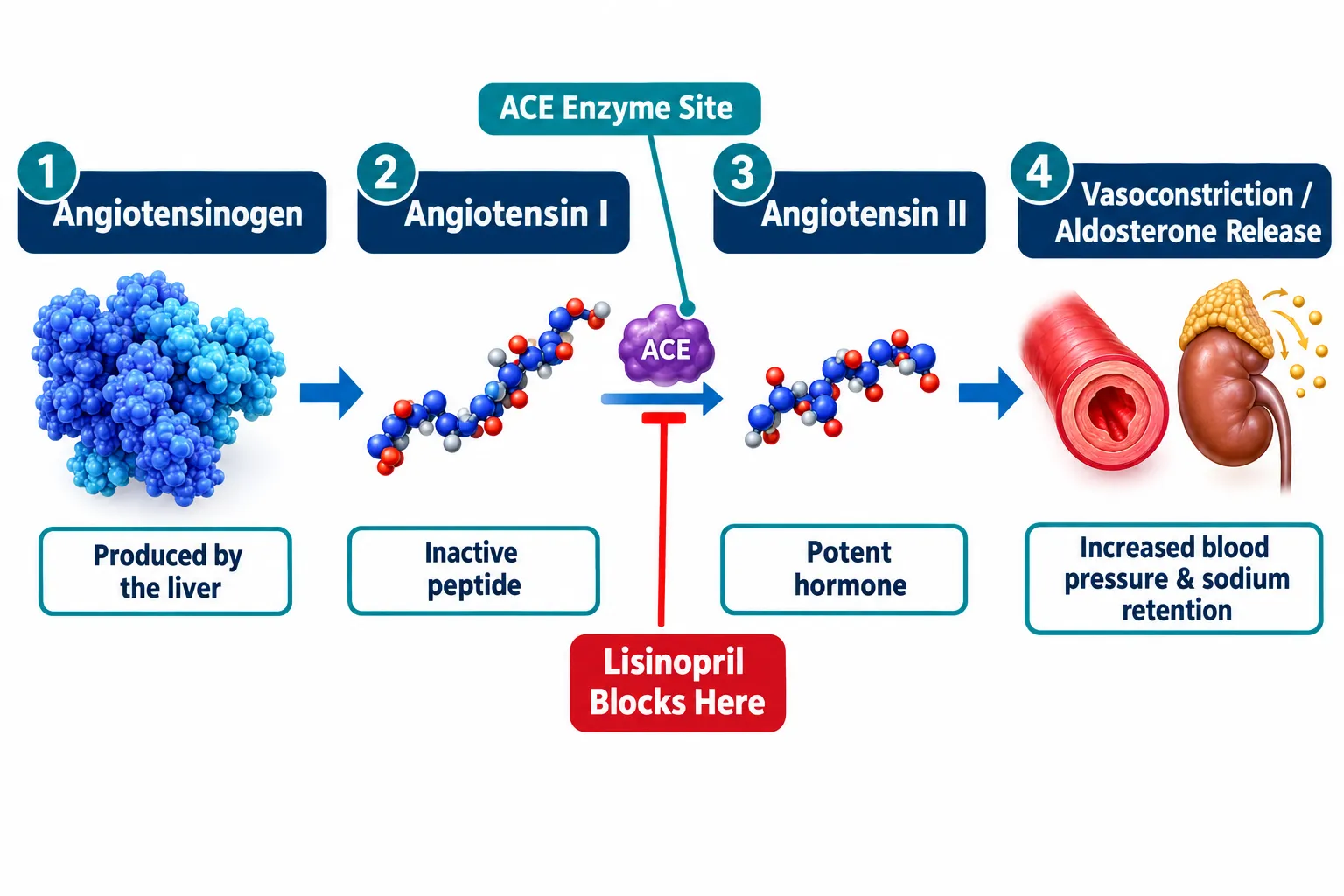
ACE Biology and Lisinopril: The Cardiovascular Foundation

The renin-angiotensin-aldosterone system (RAAS) governs blood pressure, fluid volume, and electrolyte balance. At its core sits angiotensin-converting enzyme (ACE), which converts inactive angiotensin I into angiotensin II, a potent vasoconstrictor that also stimulates aldosterone release. Lisinopril binds competitively to the ACE active site, blocking this conversion and producing a cascade of cardiovascular benefits: reduced peripheral resistance, lower blood pressure, and decreased cardiac workload.

In research settings, this mechanism matters for two reasons. First, any peptide compound that independently shifts fluid balance or vascular tone will interact, directly or indirectly, with the same RAAS axis that lisinopril targets. Second, lisinopril itself accumulates bradykinin, which can cause angioedema; this safety signal must be tracked as a background variable in any multi-compound protocol.

Key ACE pathway markers to monitor in research designs:

Readout Why It Matters
Plasma ACE activity Confirms degree of enzymatic inhibition
Angiotensin II levels Tracks downstream vasoconstrictor load
Aldosterone Reflects fluid retention risk
Serum potassium Hyperkalemia risk with ACE inhibition
Bradykinin metabolites Angioedema safety signal

For researchers new to peptide biology, the Peptides 101 for Research-Use Only Buyers: Structure, Mechanisms, and resource provides a useful primer on how different compound classes interact with physiological systems.

Growth Hormone Secretagogues and Cardiovascular Risk: What the Data Show
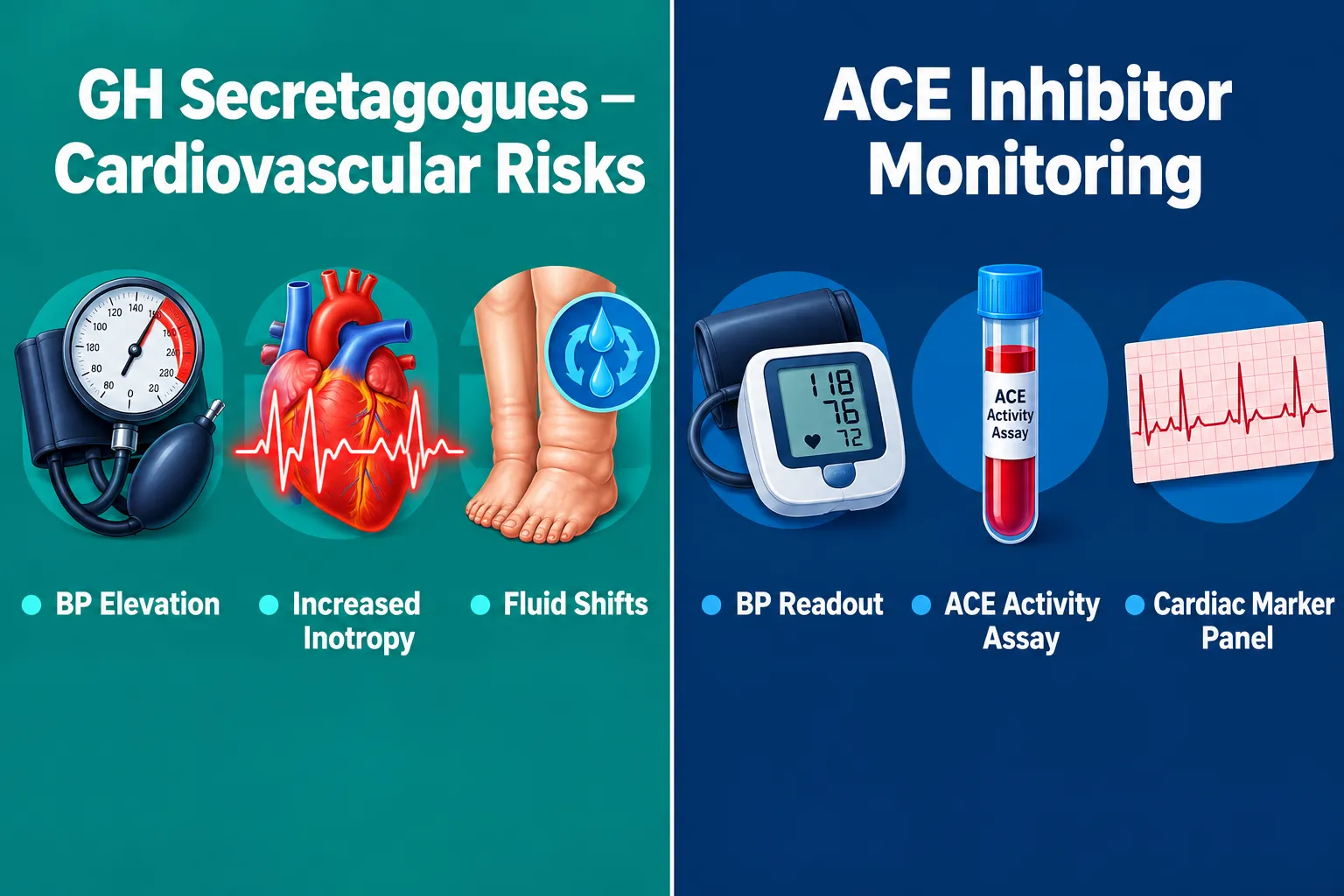
Growth Hormone Secretagogues and Cardiovascular Risk: What the Data Show

Designing safe peptide research with cardiovascular readouts requires a clear-eyed look at how individual GHS compounds behave in the cardiovascular system. The class is not monolithic, risk profiles differ substantially across agents.

CJC-1295 and GHRH Analogues

CJC-1295 stimulates pulsatile GH release by acting on pituitary GHRH receptors. Elevated GH drives IGF-1 production, and sustained IGF-1 elevation is associated with cardiac hypertrophy and changes in left ventricular geometry in long-term animal studies. Short-term cardiovascular dynamics include modest increases in heart rate and positive inotropic effects. These changes are generally transient but require serial ECG and echocardiographic monitoring in rigorous research designs. A detailed breakdown of pharmacokinetics is available in the CJC-1295 With and Without DAC: A Detailed Mechanism and comparison guide.

Ipamorelin and Ghrelin Mimetics

Ipamorelin is a selective ghrelin receptor agonist with a cleaner selectivity profile than older GHS compounds. Ghrelin itself has demonstrated cardioprotective properties in preclinical models, improving cardiac output and reducing sympathetic tone. However, outcomes data in long-term research remain limited, and the vasodilatory effects of ghrelin-pathway activation can interact unpredictably with ACE inhibitor-induced BP lowering.

MK-677 (Ibutamoren): The Highest-Risk Profile

MK-677 presents the most significant cardiovascular concern in this class. Long-term use has been associated with measurable blood pressure increases, peripheral edema from fluid retention, and, in older research subjects, a higher incidence of heart failure events. FDA warning letters issued in December 2025 specifically flagged ibutamoren-containing products, and 2026 updates reinforced restrictions on its research use. Any protocol using MK-677 alongside an ACE inhibitor must include frequent BP monitoring and renal function panels.

"The interaction between MK-677-driven fluid retention and ACE inhibitor-mediated natriuresis creates a physiologically contested environment that demands close cardiovascular surveillance."

Designing the Protocol: Cardiovascular Readouts for Lisinopril, ACE Pathways, and Growth Hormone Secretagogues Research
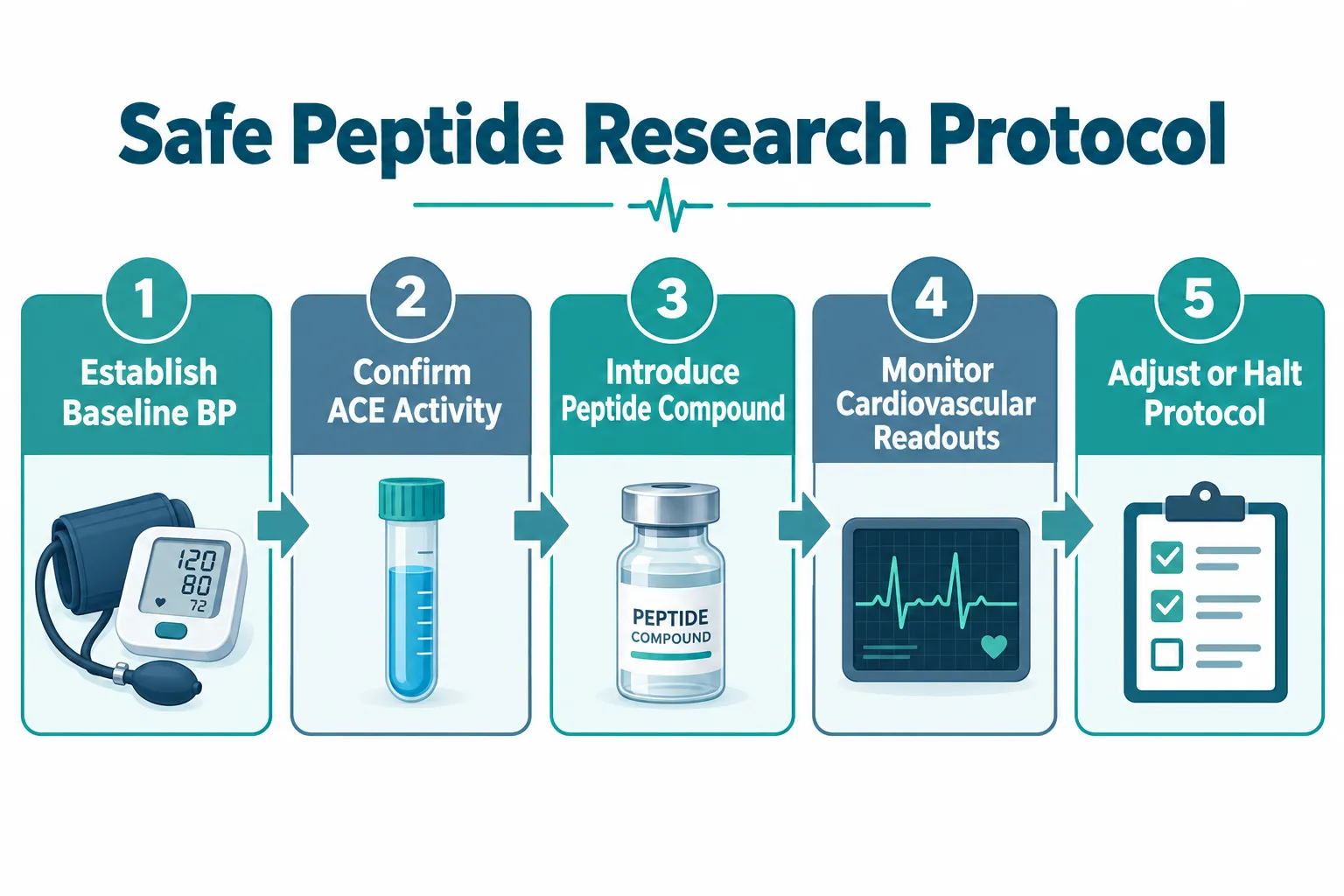
Designing the Protocol: Cardiovascular Readouts for Lisinopril, ACE Pathways, and Growth Hormone Secretagogues Research

A rigorous approach to Lisinopril, ACE Pathways, and Growth Hormone Secretagogues: Designing Safe Peptide Research With Cardiovascular Readouts starts before the first compound is introduced. The following framework reflects current best practices for preclinical and in-vitro research designs.

Step 1, Establish Cardiovascular Baseline
Record resting blood pressure, heart rate, and weight. Draw baseline panels: ACE activity, angiotensin II, aldosterone, BNP or NT-proBNP, and a complete metabolic panel. This baseline anchors all subsequent comparisons.

Step 2, Confirm ACE Inhibition Status
If lisinopril is part of the background protocol, verify plasma ACE activity is suppressed to target range before introducing any GHS compound. Residual ACE activity confounds interpretation of peptide-driven BP changes.

Step 3, Introduce GHS Compound With Staged Dosing
Begin at the lowest effective research dose. Refer to established peptide dosing frameworks for compound-specific guidance. Avoid simultaneous introduction of multiple new agents.

Step 4, Serial Cardiovascular Monitoring

  • Blood pressure: every 24-48 hours during acute phase
  • Heart rate and rhythm: ECG at baseline, 72 hours, and weekly
  • IGF-1 levels: weekly, to track GH axis activation
  • BNP/NT-proBNP: bi-weekly as a cardiac stress marker
  • Renal function and electrolytes: weekly (critical with ACE inhibitor co-administration)

Step 5, Integrate Mitochondrial Peptide Data Where Relevant
SS-31, a mitochondria-targeted antioxidant peptide, has shown cardioprotective properties in ischemia-reperfusion models without the BP or fluid-retention liabilities of GHS compounds. Researchers exploring SS-31 mitochondrial research themes may find it a useful comparator arm in cardiovascular peptide studies. Additional mechanistic background is available in the SS-31 mechanism and research overview.

Compounds to avoid combining without extensive monitoring:

  • MK-677 + lisinopril (competing fluid dynamics, hyperkalemia risk)
  • High-dose CJC-1295 + any ACE inhibitor (IGF-1-driven cardiac remodeling risk)
  • Multiple GHS agents simultaneously (additive BP and heart rate effects)

Conclusion

The intersection of lisinopril, ACE pathways, and growth hormone secretagogues is not merely pharmacological, it is a research design challenge with direct safety implications. Labs that approach this space without structured cardiovascular readouts risk misinterpreting compound effects or, worse, missing early signals of cardiac stress.

Actionable next steps for research teams:

  1. Build a standardized cardiovascular baseline panel into every GHS protocol before dosing begins.
  2. Confirm ACE inhibition status when lisinopril is a background agent, and track ACE activity throughout the study.
  3. Treat MK-677 as the highest-risk GHS compound and apply the most rigorous monitoring schedule to any protocol that includes it.
  4. Consider SS-31 as a mechanistically distinct comparator with a favorable cardiovascular profile for studies focused on cardiac or mitochondrial endpoints.
  5. Review the latest FDA guidance from late 2025 and 2026 updates on ibutamoren before finalizing any research involving that compound.

Careful protocol architecture, anchored in ACE biology and supported by serial cardiovascular readouts, is what separates rigorous peptide research from guesswork.

https://www.puretestedpeptides.com/wp-content/uploads/2026/09/lisinopril-ace-pathways-and-growth-hormone-secretagogues-designing-safe-peptide.webp 1024 1536 https://www.puretestedpeptides.com/wp-content/uploads/2026/01/buy-peptides-online.jpg 2026-09-20 13:06:092026-09-20 13:06:09Lisinopril, ACE Pathways, and Growth Hormone Secretagogues: Designing Safe Peptide Research With Cardiovascular Readouts
×

Helpful Links

  • My account
  • Cart
  • Checkout
  • Refund and Returns Policy
  • Privacy Policy
  • SMS Privacy Policy
  • Login
  • My Account
  • Logout

USA Made Lab Tested Peptides

All products are sold for research, laboratory, or analytical purposes only, and are not for human consumption


Pure Tested Peptides is a chemical supplier. Pure Tested Peptides is not a compounding / chemical compounding facility as defined under 503A of the Federal Food, Drug, and Cosmetic act. Pure Tested Peptides is not an outsourcing facility as defined under 503B of the Federal Food, Drug, and Cosmetic act.

The statements made within this website have not been evaluated by the US Food and Drug Administration. The products we offer are not intended to diagnose, treat, cure or prevent any disease.

Human/Animal Consumption Prohibited. Laboratory/In-Vitro Experimental Use Only

Scroll to top Scroll to top Scroll to top