Call or Text 727-513-9780
  • Shopping Cart Shopping Cart
    0Shopping Cart
Pure Tested Peptides | America's most trusted Peptides for sale online
  • Peptides for sale
    • Oral Peptides for sale
      • Peptide Capsules for sale
      • BPC 157 Capsules 1000mcg
      • SLU-PP-332 Capsules | 1000 mcg
      • 5-Amino-1MQ 50mg Capsules
      • Tesofensine 500mcg
    • All Peptides for sale
    • Peptide Sprays
      • BPC 157 Nasal Spray Kit
      • BPC-157 TB500 Nasal Spray Kit
      • Semax Nasal Spray 10mg
      • Selank – Nasal Spray Kit – 10mg
      • Epithalon 50MG Nasal Spray Kit
      • Ipamorelin 10mg Nasal Spray
      • Klow Nasal Spray (BPC-157 + TB-500 + GHK-Cu + KPV) | 80mg
      • Hulk Nasal Spray Tesa / Ipa Blend 6/3 MG
      • Klow Nasal Spray
      • NAD + 500 mg Nasal Spray
      • PT-141 Nasal Spray Kit
    • GHRH Peptides
      • Ipa Peptides
      • CJC-1295 Peptides
        • CJC-1295 with DAC 5 mg
        • CJC-1295 without DAC 5 mg
        • CJC-1295 Ipa 10mg
      • Tesa Peptides
        • Tesa Peptide
        • Tesa 20 mg
    • GHK-Cu Peptides
      • All GHK-Cu Peptides
      • GHK-Cu 100mg
      • KLOW Peptide Blend – Buy KLOW blend online
    • BPC Peptides
      • All BPC Peptides
      • BPC-157
      • BPC-157 TB-500
      • BPC 157 capsules 1000mcg
    • SLU-PP-332 Peptides
      • All SLU-PP-332 Peptides
      • SLU-PP-332 5mg
    • GLP3 Peptides
    • PT-141 Peptides
      • PT-141 Peptides for sale
      • PT-141 10mg
      • PT-141 Nasal Spray
    • CAG Peptides
      • Lipo-C Peptide Blend
      • CAG 5mg
      • CAG 10mg
    • MOTS-C Peptides
      • MOTS-C Peptides for sale
      • MOTS-c peptide
      • MOTS-c 10mg *6 pack*
    • 5 Amino 1MQ Peptides
      • 5 Amino 1MQ Peptides for sale
      • 5-Amino-1MQ 50mg Capsules
      • 5-Amino-1MQ 5mg
    • Epithalon Peptides
      • Epithalon Peptides for sale
      • Epithalon 10mg
      • Epithalon 50mg
  • Shop
    • GLPs
      • 5-Amino-1MQ 50mg Capsules
      • 5-Amino-1MQ 5mg
      • L-Carnitine 500mg/ml
      • Tesofensine 500mcg
      • SLU-PP-332 5mg
      • MOTS-c 10mg *6 pack*
    • Epithalon & BPC Peptides
      • Epithalon 10mg
      • Epithalon 50mg
      • BPC-157
      • BPC 157 capsules 1000mcg
      • BPC-157 TB-500
      • BPC-157 TB500 Nasal Spray Kit
      • BPC 157 Nasal Spray Kit
    • BPC TB-500 & NAD+ Peptides
      • NAD+ 500 mg
      • KLOW Peptide Blend – Buy KLOW blend online
      • GLOW Peptide Blend
      • TB 500 5mg
      • BPC 157 capsules 1000mcg – Supplement
      • BPC 157 Nasal Spray Kit
      • BPC-157
      • BPC-157 TB500 Nasal Spray Kit
      • BPC-157 TB-500
      • BPC 157 capsules 1000mcg
    • LL-37 Peptide
      • LL-37 10 mg
    • MOTS-C & Selank
      • MOTS-c peptide
      • Selank 10mg
    • GHK Peptides
      • GHK-Cu 100mg
      • GLOW Peptide Blend
      • KLOW Peptide Blend – Buy KLOW blend online
  • COAs
  • Wholesale
    • Wholesale Peptides for sale
  • PTP FAQ
  • Affiliates
    • Selank Peptide: Advanced Pharmacological Mechanisms Underlying Its Anxiolytic and Nootropic Effects in Research
      • 5-Amino-1MQ Peptide: Detailed Mechanisms of NNMT Inhibition and Its Impact on Cellular Metabolism Research
        • MOTS-C Peptide: Unraveling Its Role in Mitochondrial Dynamics and Energy Metabolism Research
          • Epithalon Peptide and Telomerase Regulation: Investigating Its Impact on Cellular Senescence and Lifespan Research Models
            • GLP2-T vs GLP2 Tirz Peptide: Understanding the Naming, Mechanistic Nuances, and Research Implications for Gut Health
      • Peptides and Polypeptides in Modern Pharmacology: What Research on Metoprolol, Prednisone, and Amlodipine Reveals
        • Polypeptide Peptides vs NSAIDs: What Naproxen and Diclofenac Teach Tissue-Repair Researchers About BPC‑157 and TB‑500
          • Peptides and Polypeptides in Endocrine Pharmacology: How GLP-1, GLP-2, and GLP-3 Retatrutide Differ From Classic Drugs Like Prednisone and Amlodipine
          • 5‑Amino‑1MQ Peptide and NNMT Inhibition: How It Compares With Statins Like Atorvastatin in Adipose and Lipid Metabolism Research
      • Enclomiphene, Estrogen Receptor Signaling, and Luteinizing Phase Biology: What Hormone Researchers Should Measure
        • Mesenchymal Stem Cells, BPC‑157, and GHK‑Cu: How Tissue Repair Peptides Compare With Classic NSAIDs Like Naproxen in Injury Models
          • Peptide Calculator Use Cases Beyond Growth Hormone: Working Through GLP‑3 Retatrutide, MOTS‑c, and BPC‑157 Research Dosing
        • Polypeptide Peptides in Endocrine and Metabolic Pharmacology: Lessons From Amlodipine, Prednisone, and Metoprolol
        • Peptides Calculator for Advanced Blends: Worked Examples for Tesamorelin, CJC‑1295, and Ipamorelin Stacks
          • Peptides and Polypeptides in Human Physiology: How Molecular Size Shapes Research Applications
            • Selank Peptide: Advanced Pharmacological Mechanisms Underlying Its Anxiolytic and Nootropic Effects in Research
          • 5-Amino-1MQ Peptide: Detailed Mechanisms of NNMT Inhibition and Its Impact on Cellular Metabolism Research
            • MOTS-C Peptide: Unraveling Its Role in Mitochondrial Dynamics and Energy Metabolism Research
              • Epithalon Peptide and Telomerase Regulation: Investigating Its Impact on Cellular Senescence and Lifespan Research Models
                • GLP2-T vs GLP2 Tirz Peptide: Understanding the Naming, Mechanistic Nuances, and Research Implications for Gut Health
                  • Peptides and Polypeptides in Endocrine Pharmacology: How GLP-1, GLP-2, and GLP-3 Retatrutide Differ From Classic Drugs Like Prednisone and Amlodipine
                    • Polypeptide Peptides vs NSAIDs: What Naproxen and Diclofenac Teach Tissue-Repair Researchers About BPC‑157 and TB‑500
                      • Peptides and Polypeptides in Modern Pharmacology: What Research on Metoprolol, Prednisone, and Amlodipine Reveals
                        • 5‑Amino‑1MQ Peptide and NNMT Inhibition: How It Compares With Statins Like Atorvastatin in Adipose and Lipid Metabolism Research
                        • Enclomiphene, Estrogen Receptor Signaling, and Luteinizing Phase Biology: What Hormone Researchers Should Measure
                        • Mesenchymal Stem Cells, BPC‑157, and GHK‑Cu: How Tissue Repair Peptides Compare With Classic NSAIDs Like Naproxen in Injury Models
                        • Peptide Calculator Use Cases Beyond Growth Hormone: Working Through GLP‑3 Retatrutide, MOTS‑c, and BPC‑157 Research Dosing
                        • Polypeptide Peptides in Endocrine and Metabolic Pharmacology: Lessons From Amlodipine, Prednisone, and Metoprolol
                        • Peptides Calculator for Advanced Blends: Worked Examples for Tesamorelin, CJC‑1295, and Ipamorelin Stacks
                        • Peptides and Polypeptides in Human Physiology: How Molecular Size Shapes Research Applications
                        • Selank Peptide: Advanced Pharmacological Mechanisms Underlying Its Anxiolytic and Nootropic Effects in Research
                        • MOTS-C Peptide: Unraveling Its Role in Mitochondrial Dynamics and Energy Metabolism Research
                        • Peptides and Polypeptides in Modern Pharmacology: What Research on Metoprolol, Prednisone, and Amlodipine Reveals
                        • Peptides and Polypeptides in Endocrine Pharmacology: How GLP-1, GLP-2, and GLP-3 Retatrutide Differ From Classic Drugs Like Prednisone and Amlodipine
                        • 5-Amino-1MQ Peptide: Detailed Mechanisms of NNMT Inhibition and Its Impact on Cellular Metabolism Research
                        • Mesenchymal Stem Cells, BPC‑157, and GHK‑Cu: How Tissue Repair Peptides Compare With Classic NSAIDs Like Naproxen in Injury Models
                        • Peptide Calculator Use Cases Beyond Growth Hormone: Working Through GLP‑3 Retatrutide, MOTS‑c, and BPC‑157 Research Dosing
                        • GLP2-T vs GLP2 Tirz Peptide: Understanding the Naming, Mechanistic Nuances, and Research Implications for Gut Health
                        • Polypeptide Peptides in Endocrine and Metabolic Pharmacology: Lessons From Amlodipine, Prednisone, and Metoprolol
                        • Polypeptide Peptides vs NSAIDs: What Naproxen and Diclofenac Teach Tissue-Repair Researchers About BPC‑157 and TB‑500
                        • Peptides and Polypeptides in Human Physiology: How Molecular Size Shapes Research Applications
                        • Peptides Calculator for Advanced Blends: Worked Examples for Tesamorelin, CJC‑1295, and Ipamorelin Stacks
                        • 5‑Amino‑1MQ Peptide and NNMT Inhibition: How It Compares With Statins Like Atorvastatin in Adipose and Lipid Metabolism Research
                        • Enclomiphene, Estrogen Receptor Signaling, and Luteinizing Phase Biology: What Hormone Researchers Should Measure
                        • Epithalon Peptide and Telomerase Regulation: Investigating Its Impact on Cellular Senescence and Lifespan Research Models
                        • Best research protocol Klow blend
                        • best time to take BPC-157
                        • best time to take DSIP (Delta Sleep Inducing Peptide)
                        • best time to take CJC-1295
                        • best time to take AOD-9604
                        • best time to take Follistatin 344
                        • best time to take Ipamorelin
                        • best time to take MK-677 (Ibutamoren)
                        • best time to take Ligandrol (LGD-4033) — research compound
                        • best time to take Ostarine (MK-2866) — research compound
                        • best time to take GHK-CU
                        • best time to take TB-500
                        • best time to take MOTS-c
                        • best time to take Semax
                        • best time to take RAD-140 (Testolone) — research compound
                        • best time to take Thymosin Alpha-1
                        • best time to take PEG-MGF
                        • Biolife Plasma, Octapharma Plasma, and Research Peptides: How Plasma Donation Labs Differ From Peptide Suppliers
                        • best time to take YK-11 — research compound
                        • best time to take PT-141 (Bremelanotide)
                        • Best research protocol Klow blend
                        • 5-Amino-1MQ and MOTS-C Synergy: Metabolic Signaling, Mitochondria, and Research Design
                        • BPC-157 and TB-500: Investigating Their Combined Effects on Angiogenesis and Cellular Migration in Tissue Repair Models
                        • BPC-157 Peptide: Gut Barrier Function, Inflammation, and Tissue-Recovery Research
                        • 5‑Amino‑1MQ and MOTS‑c Synergy in Metabolic Research: Designing NNMT and Mitochondrial Biogenesis Stacks
                        • CJC-1295 with DAC vs. Without DAC: Half-Life, Release Kinetics, and Research Implications
                        • CJC‑1295 with DAC vs. Without DAC: Expanding on Half‑Life Differences Using Tesamorelin and Ipamorelin Blend Case Studies
                        • Collagen Biology and Copper‑Binding Peptides: How GHK‑Cu, Glow Blend, and Klow Blend Interact with Skin and Connective Tissue
                        • Collagen Biology and Regenerative Peptides: How GHK‑Cu, Glow Blend, and Klow Blend Affect Extracellular Matrix Research
                    • DNA, Telomeres, and Longevity Peptides: Positioning Epithalon and MOTS‑c in Genetic Aging Research
                      • Enclomiphene Citrate: serm Mechanism, Testosterone Research, and Stack Compatibility
                        • Enclomiphene vs Enclomiphene Citrate: Formulation, Bioavailability, and Research Distinctions
                        • Epithalon Peptide Research: Telomerase Activation, Aging, and Pineal Gland Function
                        • Estrogen Receptor Signaling and Enclomiphene: How Selective Modulators Compare with Classic Polypeptide Hormones
                        • GHK-Cu Peptide: Advanced Mechanisms in Extracellular Matrix Remodeling and Wound Healing Research
                        • GHK-Cu Peptide: Collagen Synthesis, Wound Repair, and Skin-Barrier Research Models
                        • GLP-1 vs GLP-3 vs GLP-2: Peptide Classification and Research Applications
                        • GLP-2 Peptide Research Guide: Gut Barrier Function, Nutrient Absorption, and Intestinal Recovery Models
                        • GLP-3 Retatrutide vs. GLP-1 Drugs: What Triple-Agonist Biology Changes in Research Models
                        • Ipamorelin and Tesamorelin Combination: Synergistic GH Secretagogue Research and Dosing Protocols
                        • GLP2 Tirz Peptide: What It Is, Why the Name Exists, and How Researchers Should Interpret It
                        • Klow Blend Peptide Nasal Spray: What the Formulation Is Trying to Do in Cognitive Research
                        • Mitochondria, NNMT Inhibition, and Peptide Modulators: Where MOTS‑c and 5‑Amino‑1MQ Fit in Cellular Energy Research
                        • MOTS-c Peptide: Mitochondrial Function, Energy Metabolism, and What Researchers Measure
                        • MOTS-c vs. 5-Amino-1MQ: Which Metabolic Research Questions Each Compound Actually Answers
                        • Nasal Spray Peptides: Bioavailability, Administration, and Semax/Selank Research Applications
                        • PT-141 Peptide Research: Mechanism of Action and Melanocortin Receptor Signaling
                        • Retatrutide for Research: Mechanism, Structure, and GLP-1/GLP-3 Dual Action
                        • Retatrutide for Obesity and Type 2 Diabetes: What the Latest Trial Data Suggest
                        • Tesofensine Peptide Research: Mechanism, Appetite Suppression, and Neuropeptide Y Pathways
  • Contact
    • Contact Customer Service
    • Text Customer Support
  • About US
  • Shop all peptides
  • Affiliate Program
    • Affiliate Signup
  • Login / Register Login / Register Page Link Login / Register Page Link
  • Click to open the search input field Click to open the search input field Search
  • Menu Menu

Tag Archive for: musculoskeletal repair

BPC-157 and TB-500 Synergy: What Researchers Should Know About Combined Tissue Repair Models

BPC-157 and TB-500 Synergy: What Researchers Should Know About Combined Tissue Repair Models

September 15, 2026/0 Comments/in Uncategorized/by

A 2026 Phase 2 clinical trial launched to evaluate BPC-157 as a standalone agent for hamstring repair, with no TB-500 arm included. That design choice speaks volumes about where the science actually stands on combined peptide protocols.

Researchers and clinicians increasingly ask whether pairing BPC-157 and TB-500 produces better tissue repair outcomes than either peptide alone. The concept of BPC-157 and TB-500 synergy in combined tissue repair models is compelling on paper, but the evidence base demands careful reading before any research protocol is designed around it.

Key Takeaways

  • No peer-reviewed human trial has tested BPC-157 and TB-500 together; all synergy claims remain mechanistic extrapolations.
  • A 2026 rat Achilles tendon study found the combination did not outperform either single agent on any measured endpoint.
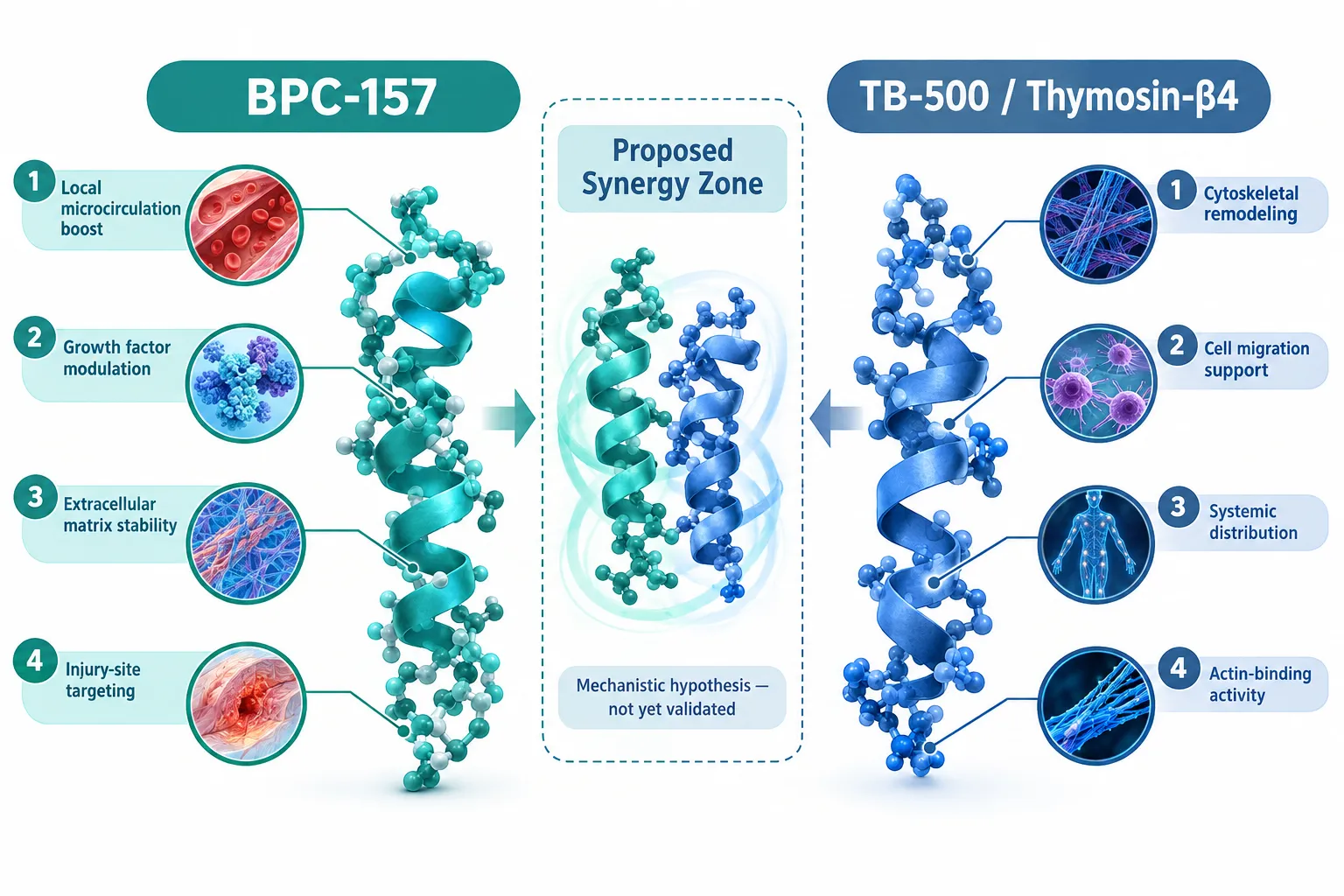
  • BPC-157 is proposed to act locally on microcirculation and matrix stability; TB-500 is proposed to support broader cytoskeletal remodeling, complementary roles, but unvalidated as a pair.
  • Neither peptide has FDA approval for any indication, and no reference dose or ratio exists for the combination.
  • Researchers designing combination studies should treat the "synergy" framing as a hypothesis requiring controlled testing, not an established outcome.

What the Research Actually Says About BPC-157 and TB-500 Synergy

The term "synergy" implies that two agents together produce a measurably greater effect than the sum of their individual contributions. For BPC-157 and TB-500 synergy in combined tissue repair models, that bar has not been cleared in any controlled study as of 2026.

A systematic review covering 36 BPC-157 studies found only one human trial, and none involving TB-500 co-administration. A parallel scoping review of thymosin-β4 and its synthetic fragment TB-500 confirmed that direct human evidence for TB-500 is limited to a single study in a corneal or wound context. Musculoskeletal and tendon repair claims for TB-500 remain extrapolations from animal work.
What the Research Actually Says About BPC-157 and TB-500 Synergy

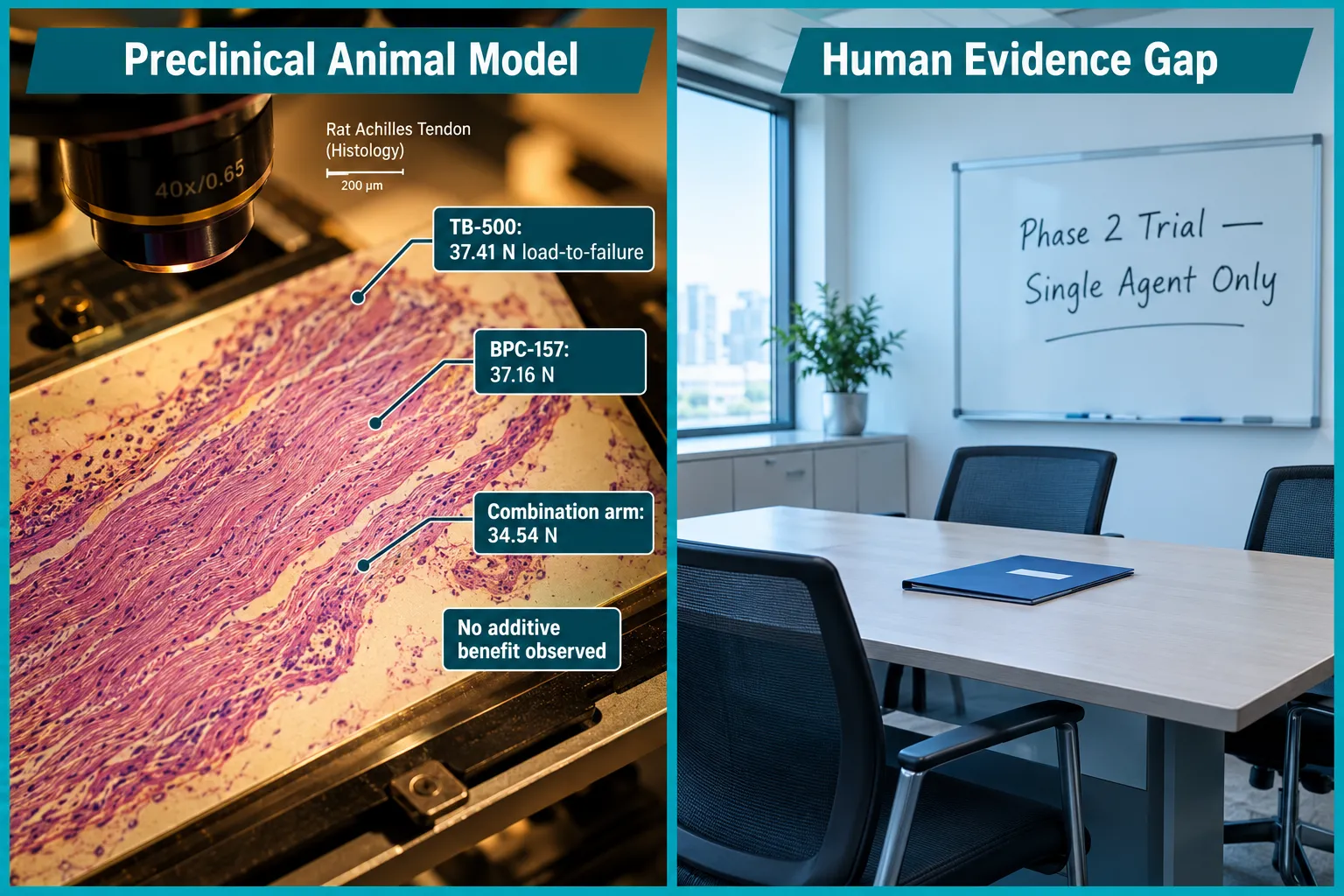
The most direct test of the combination to date comes from a 2026 exploratory rat Achilles tendon model. Results were instructive, and sobering:

Group Median Load-to-Failure Statistical Significance vs. Control
Control 26.91 N ,
TB-500 (60 µg/kg/day) 37.41 N p = 0.041
BPC-157 37.16 N Not significant
Combination 34.54 N Not significant vs. any group

Both single-agent arms improved histopathology and extracellular matrix organization. The combination arm did not outperform either peptide alone on any measured endpoint, biomechanical or histological. This does not prove antagonism, but it does refute additive benefit in this model.

"Synergistic, neutral, or antagonistic outcomes are all plausible and currently indistinguishable given the available data."

Researchers exploring wound repair peptides in preclinical settings should treat this finding as a design signal: the combination arm needs its own hypothesis and endpoints, not borrowed assumptions.

The Mechanistic Rationale, and Its Limits

The theoretical case for combining BPC-157 and TB-500 rests on their proposed complementary mechanisms:

BPC-157 (Body Protection Compound-157)

  • Enhances local microcirculation at the injury site
  • Modulates growth factor balance, including VEGF and EGF pathways
  • Supports extracellular matrix stability and collagen organization
  • Primarily acts at or near the site of administration

TB-500 (Thymosin-Beta 4 fragment)

  • Binds actin and regulates cytoskeletal dynamics
  • Promotes cell migration and tissue remodeling systemically
  • Supports broader structural repair beyond the local injury zone
  • Proposed to complement BPC-157's local action with systemic reach

This complementary framing is mechanistically plausible. However, there is no pharmacokinetic data on how the two peptides interact when co-administered, no dose-response or ratio-finding study for the blend, and no validated interaction endpoint in any model system.
The Mechanistic Rationale, and Its Limits

Researchers studying other peptide combinations, such as those examining the synergy of LL-37 and SS-31, will recognize this pattern: mechanistic complementarity is a starting point, not a conclusion. The same standard applies here.

For context on how wound models are typically structured to test such hypotheses, established preclinical frameworks require defined endpoints, dose-ranging arms, and controls for each agent alone before a combination arm can be interpreted.

What Researchers Should Know About Designing Combined Tissue Repair Models

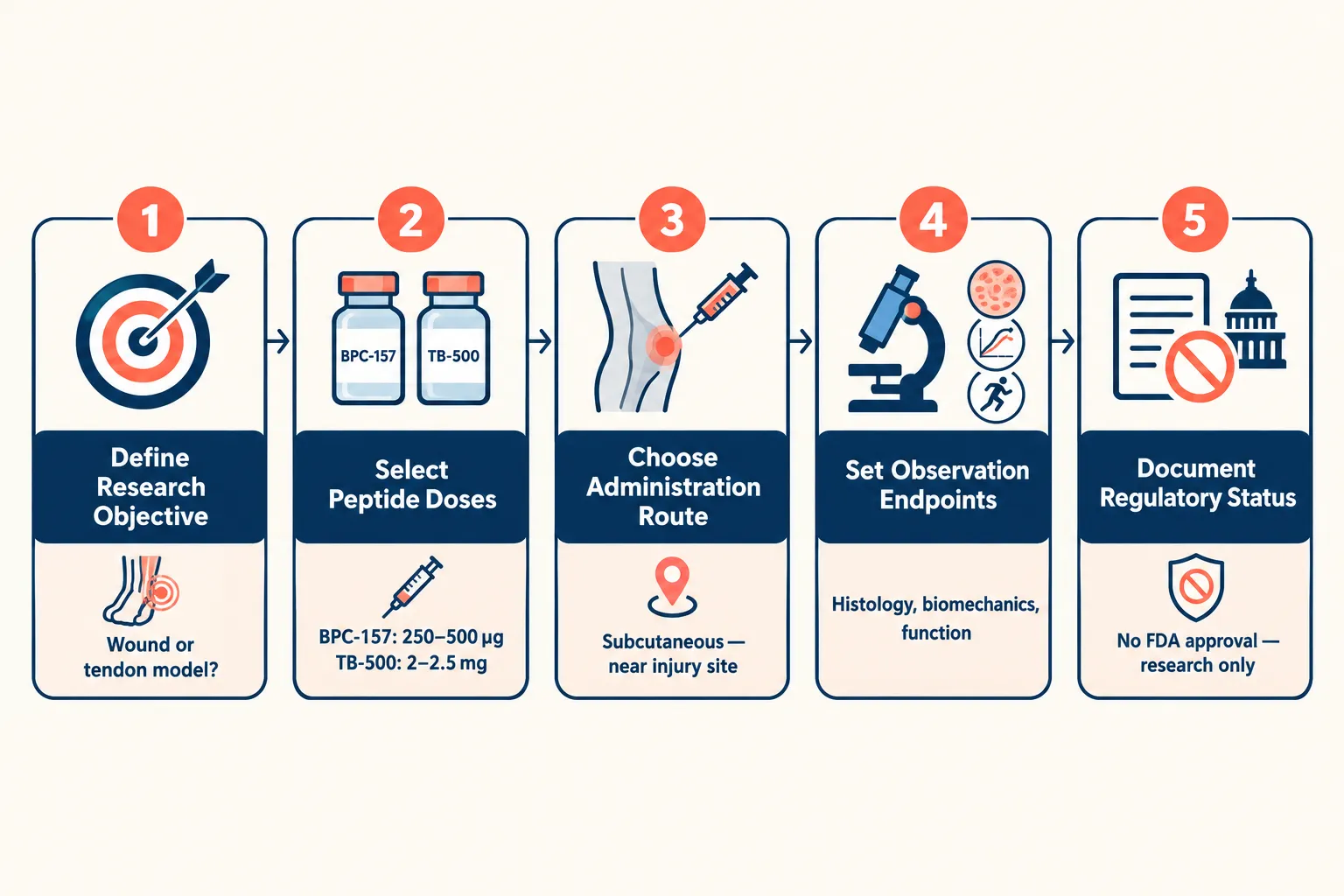
Given the evidence gaps, researchers approaching BPC-157 and TB-500 synergy in combined tissue repair models need a structured framework. The following considerations are essential:
What Researchers Should Know About Designing Combined Tissue Repair Models

1. Regulatory and Approval Status
Neither BPC-157 nor TB-500 holds FDA approval for any indication. There is no established reference dose, approved ratio, or standardized clinical use for either peptide alone, let alone the combination. All research use must account for applicable institutional and regulatory requirements.

2. Dosing Protocols in Research Literature
Clinician-reviewed protocol guides describe a commonly referenced research dosing framework, sometimes called the "Wolverine stack", as follows:

  • BPC-157: 250-500 µg subcutaneously per day, administered near the injury site
  • TB-500: 2-2.5 mg subcutaneously twice weekly
  • Loading phase: 4-6 weeks
  • Maintenance phase: reduced frequency for an additional 4-8 weeks

These regimens are not supported by controlled trials. They are observational and protocol-style frameworks, not validated clinical schedules.

3. Endpoint Selection
The 2026 Achilles tendon study demonstrated that histological improvement and biomechanical improvement do not always move together. Researchers should pre-specify both types of endpoints and include single-agent control arms to allow meaningful interpretation of any combination result.

4. The Human Evidence Gap
The most advanced formal BPC-157 program as of 2026 is a randomized, double-blind, placebo-controlled Phase 2 trial (NCT07437547) evaluating BPC-157 alone for acute grade II hamstring strain. This trial does not include TB-500. It signals institutional interest in BPC-157 as a regulated agent but cannot inform synergy questions.

TB-500's human evidence base is similarly thin, concentrated in corneal and wound healing contexts, with no controlled musculoskeletal trial completed. Researchers reviewing other peptide science programs, such as Semax research protocols, will note that even well-studied peptides face significant translational gaps from animal to human data.

5. Long-Term Safety
No long-term safety dataset exists for either peptide, individually or in combination. Researchers should not assume that tolerability in short-duration animal studies translates to human safety profiles.

Conclusion

The concept of BPC-157 and TB-500 synergy in combined tissue repair models is scientifically interesting and mechanistically coherent, but it remains a hypothesis in 2026, not a validated outcome. The most recent animal data suggests the combination may not add benefit over either agent alone, at least in tendon repair models. No human combination trial exists, no reference dosing ratio has been established, and no pharmacokinetic interaction data is available.

Actionable next steps for researchers:

  • Design combination studies with single-agent control arms and pre-specified endpoints for both histological and biomechanical outcomes.
  • Treat published protocol dosing frameworks as starting hypotheses, not validated regimens.
  • Monitor the Phase 2 BPC-157 trial (NCT07437547) for safety, tolerability, and endpoint data that may inform future combination study design.
  • Review the broader wound repair peptides literature to contextualize BPC-157 and TB-500 findings within established tissue repair frameworks.
  • Document regulatory status clearly in all research materials, neither peptide is approved for any clinical indication.

The combination question is worth investigating rigorously. The current evidence simply has not answered it yet.

https://www.puretestedpeptides.com/wp-content/uploads/2026/09/bpc-157-and-tb-500-synergy-what-researchers-should-know-about-combined-tissue-re.webp 1024 1536 https://www.puretestedpeptides.com/wp-content/uploads/2026/01/buy-peptides-online.jpg 2026-09-15 13:04:352026-09-15 13:04:35BPC-157 and TB-500 Synergy: What Researchers Should Know About Combined Tissue Repair Models
×

Helpful Links

  • My account
  • Cart
  • Checkout
  • Refund and Returns Policy
  • Privacy Policy
  • SMS Privacy Policy
  • Login
  • My Account
  • Logout

USA Made Lab Tested Peptides

All products are sold for research, laboratory, or analytical purposes only, and are not for human consumption


Pure Tested Peptides is a chemical supplier. Pure Tested Peptides is not a compounding / chemical compounding facility as defined under 503A of the Federal Food, Drug, and Cosmetic act. Pure Tested Peptides is not an outsourcing facility as defined under 503B of the Federal Food, Drug, and Cosmetic act.

The statements made within this website have not been evaluated by the US Food and Drug Administration. The products we offer are not intended to diagnose, treat, cure or prevent any disease.

Human/Animal Consumption Prohibited. Laboratory/In-Vitro Experimental Use Only

Scroll to top Scroll to top Scroll to top