

Famotidine Versus Omeprazole in Intestinal Peptide Models: H2-Blocker and Proton-Pump Inhibitor Controls
Acid-suppressing drugs rank among the most prescribed medications worldwide, yet the choice between an H2-receptor antagonist and a proton-pump inhibitor carries consequences that extend far beyond heartburn relief. When researchers design intestinal peptide models, systems built to study how gut hormones, barrier function, and nutrient absorption respond to pharmacologic intervention, the selection of a control drug is not a minor detail. It shapes every downstream readout. Famotidine versus omeprazole in intestinal peptide models represents a fundamental methodological decision, one that determines whether an experiment captures partial or maximal acid suppression, short-burst or sustained pH shifts, and modest or profound changes to the intestinal microenvironment.
Key Takeaways
- Famotidine (H2-blocker) competitively inhibits histamine-2 receptors for partial, shorter-duration acid suppression; omeprazole (PPI) irreversibly inactivates the gastric proton pump for deeper, longer-lasting suppression.
- Onset and duration differ substantially: famotidine acts within 15-60 minutes with relief lasting roughly 12 hours, while omeprazole may take 1-4 days to reach full effect but sustains suppression for up to 72 hours.
- In intestinal peptide models, these pharmacodynamic differences translate into distinct effects on mucosal barrier integrity, nutrient absorption, and inflammatory marker levels.
- Long-term PPI use carries a broader systemic side-effect burden, including risks of bone loss, hypomagnesemia, and altered gut microbiota, which must be factored into experimental design.
- Famotidine and omeprazole are best treated as complementary comparators, partial versus maximal suppression controls, rather than interchangeable agents in research protocols.
Mechanisms of Action: How Each Drug Suppresses Acid
Understanding famotidine versus omeprazole in intestinal peptide models begins with their distinct molecular targets.
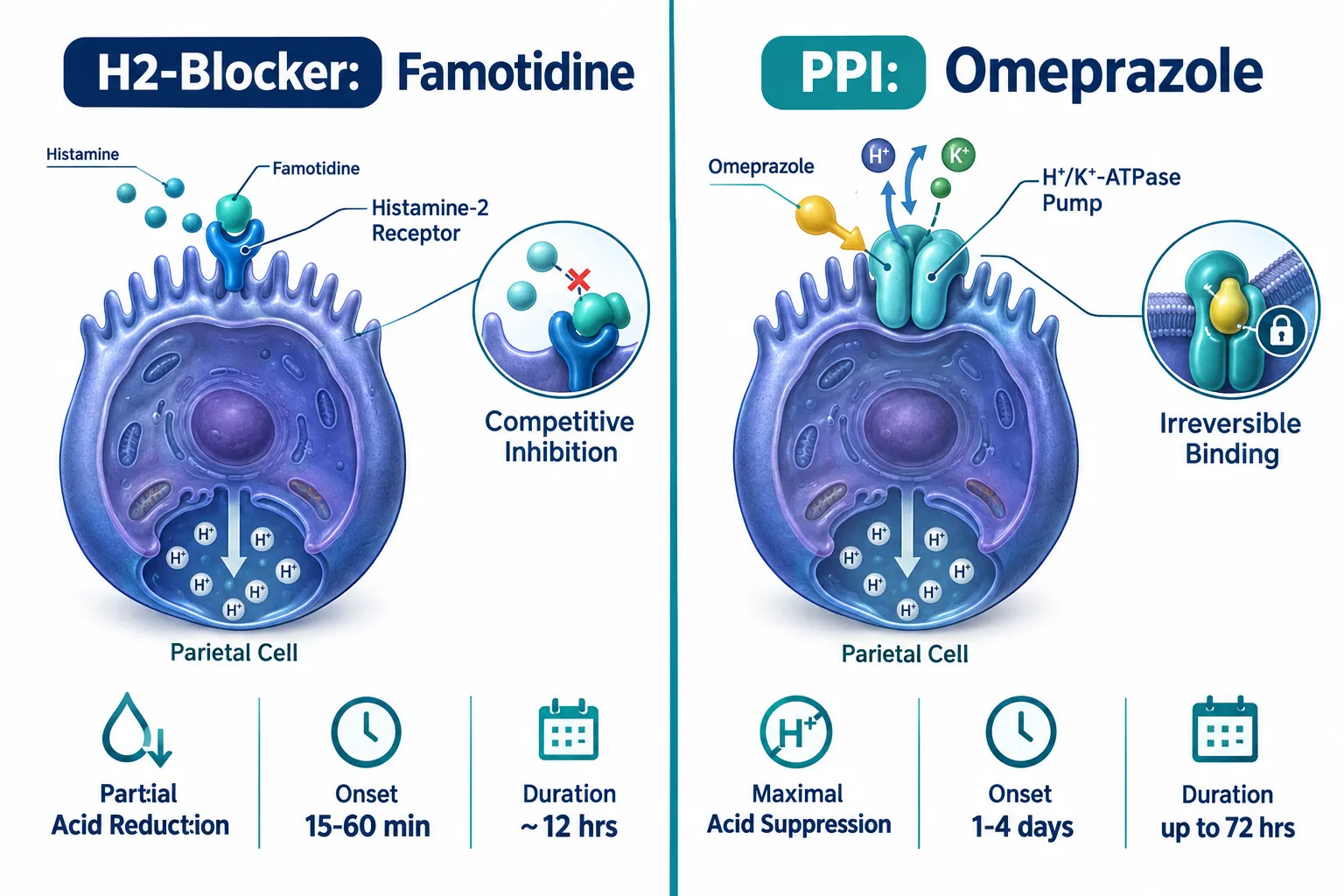
Famotidine works by competitively and reversibly binding histamine-2 receptors on gastric parietal cells. Because histamine is only one of three stimuli that drive acid secretion (alongside gastrin and acetylcholine), blocking its receptor produces partial suppression. Gastric juice volume falls, and basal acid output drops meaningfully, but the proton pump itself remains fully functional. This partial suppression profile makes famotidine a useful "low-ceiling" control in models where researchers need to observe how moderate pH elevation, without complete acid abolition, affects intestinal peptide release or mucosal signaling.
Omeprazole, by contrast, is a prodrug that is activated in the acidic secretory canaliculi of parietal cells. Once activated, it forms a covalent, irreversible bond with the H+/K+-ATPase proton pump, blocking the final step of acid secretion regardless of which upstream stimulus triggered it. The result is near-complete acid suppression that persists until new pump proteins are synthesized, a process taking one to three days. This makes omeprazole the reference standard for "maximal suppression" controls in experimental gastrointestinal frameworks.
Key distinction: Famotidine modulates acid; omeprazole abolishes it. That difference is the methodological fulcrum in any controlled intestinal study.
Onset, Duration, and Dosing Implications in Research Models
The pharmacokinetic profiles of these two drug classes are as important as their mechanisms when designing controlled experiments.
| Parameter | Famotidine (H2-Blocker) | Omeprazole (PPI) |
|---|---|---|
| Onset of action | 15-60 minutes | 1-4 days (full effect) |
| Duration of effect | Up to ~12 hours | Up to 72 hours |
| Dosing frequency | Typically twice daily | Once daily |
| Acid suppression depth | Partial | Near-complete |
| Reversibility | Reversible | Irreversible (until pump renewal) |
These differences carry direct consequences for intestinal peptide models. A model examining acute postprandial GLP-related signaling, such as those explored in research on GLP-3 peptide signaling pathways, requires precise control over the luminal pH environment at specific time points. Famotidine's rapid onset makes it suitable for acute-phase protocols. Omeprazole's sustained suppression is better suited to chronic-exposure or multi-day washout designs.
Researchers exploring intestinal peptide models and controlled experimental frameworks must account for the lag phase inherent in PPI therapy. Enrolling subjects or initiating measurements before omeprazole reaches steady-state suppression introduces confounding variables that can distort peptide-level readouts.
Effects on Intestinal Barrier, Absorption, and Microbiome Readouts
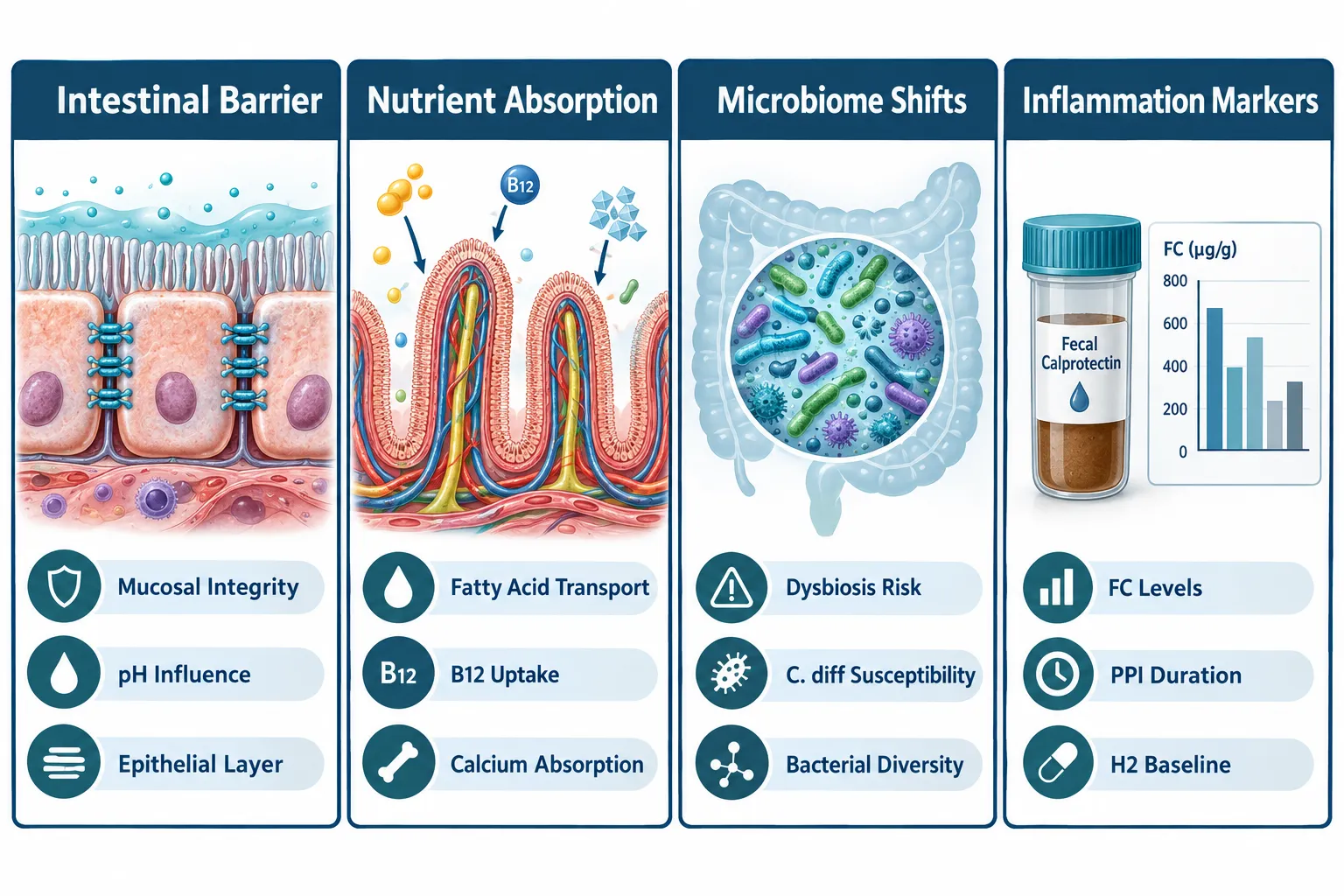
The choice of control drug in famotidine versus omeprazole in intestinal peptide models affects three major downstream systems: the mucosal barrier, nutrient absorption, and the gut microbiome.
Intestinal Barrier and Mucosal Integrity
PPIs are more effective than H2-blockers at preventing stress-related mucosal erosions, upper GI bleeding, and peptic ulcer disease. In critically ill patients and chronic NSAID users, omeprazole consistently outperforms famotidine in healing esophageal and gastric mucosa. A clinical trial of reflux esophagitis patients found omeprazole achieved a 75.4% symptom improvement rate at week four, compared with 41.5% for famotidine at week two. For models using mucosal integrity as a primary endpoint, omeprazole provides a more robust protective baseline.
Nutrient Absorption
Long-term PPI use introduces measurable changes to intestinal absorption. In cystic fibrosis patients, omeprazole therapy was associated with decreased plasma heptadecanoic acid absorption in 78% of subjects completing a mixed triglyceride breath test, suggesting that sustained acid suppression alters intestinal fatty acid uptake. PPIs have also been linked to reduced absorption of calcium, magnesium, and vitamin B12, all relevant variables in any model tracking nutrient-transport peptides. Famotidine, with its partial suppression profile, produces fewer documented absorption disturbances, making it a cleaner baseline for nutrient-focused protocols.
For researchers studying peptides involved in metabolic signaling, including those available as GLP-3 peptide for sale for research purposes, the absorption environment established by the control drug will influence how gut hormones respond to luminal nutrients.
Microbiome and Inflammatory Markers
Omeprazole's prolonged acid suppression raises luminal pH, which alters the composition of the gut microbiome and increases susceptibility to Clostridioides difficile overgrowth. Research tracking fecal calprotectin (FC), a validated marker of intestinal inflammation, in NSAID and PPI users found a statistically significant negative correlation between duration of PPI use and FC levels (Spearman rs = -0.270, p = 0.002). This suggests that PPI exposure progressively modulates intestinal inflammatory tone, creating a shifting baseline that must be controlled for in longitudinal peptide studies.
Famotidine does not carry the same magnitude of microbiome disruption risk, which is one reason it remains a preferred comparator in short-term or microbiome-sensitive experimental designs. Researchers working with SS-31 peptide research models or other mitochondria-targeted peptides that intersect with oxidative stress and gut inflammation should account for these microbiome-level differences when selecting a control agent.
Safety Profiles and Long-Term Experimental Considerations
Safety data directly informs how long each drug can serve as a control without introducing its own confounding effects.
Famotidine's side-effect profile is generally mild and transient. Headache, dizziness, and minor gastrointestinal symptoms are the most commonly reported events. Rare but serious adverse effects, including blood count changes, liver enzyme elevations, and CNS effects, occur mainly in older adults or individuals with renal impairment. For most short-to-medium-term intestinal models, famotidine presents a low systemic burden.
Omeprazole's long-term safety profile is more complex. Sustained PPI use is associated with:
- Bone fractures due to impaired calcium absorption
- Hypomagnesemia, which can affect smooth muscle and nerve function in the gut
- Chronic kidney injury with prolonged exposure
- Vitamin B12 deficiency, relevant in neurological and metabolic peptide models
- Elevated C. difficile risk, a critical confound in microbiome studies
These risks do not disqualify omeprazole as a control agent, but they impose time limits and monitoring requirements on any protocol using it as a long-term comparator.
One additional practical constraint: combining omeprazole with famotidine is generally discouraged in clinical and research settings because H2-blockers can interfere with PPI activation, reducing the PPI's efficacy. This means the two drugs function best as alternative controls, representing different points on the acid-suppression spectrum, rather than as concurrent interventions.
For researchers sourcing research-grade compounds, understanding how control drugs interact with experimental peptides is essential. A foundational overview is available in this peptides 101 guide for research-use buyers, which covers structure, mechanisms, and experimental positioning.
Conclusion
Famotidine versus omeprazole in intestinal peptide models is not a question with a single correct answer, it is a design decision that must align with the specific hypothesis being tested. Famotidine offers rapid onset, partial suppression, a favorable short-term safety profile, and minimal disruption to absorption and microbiome baselines, making it the preferred "partial suppression" comparator. Omeprazole delivers near-complete, sustained acid abolition and superior mucosal protection, making it the standard "maximal suppression" control for chronic-exposure and barrier-integrity protocols.
Actionable next steps for researchers:
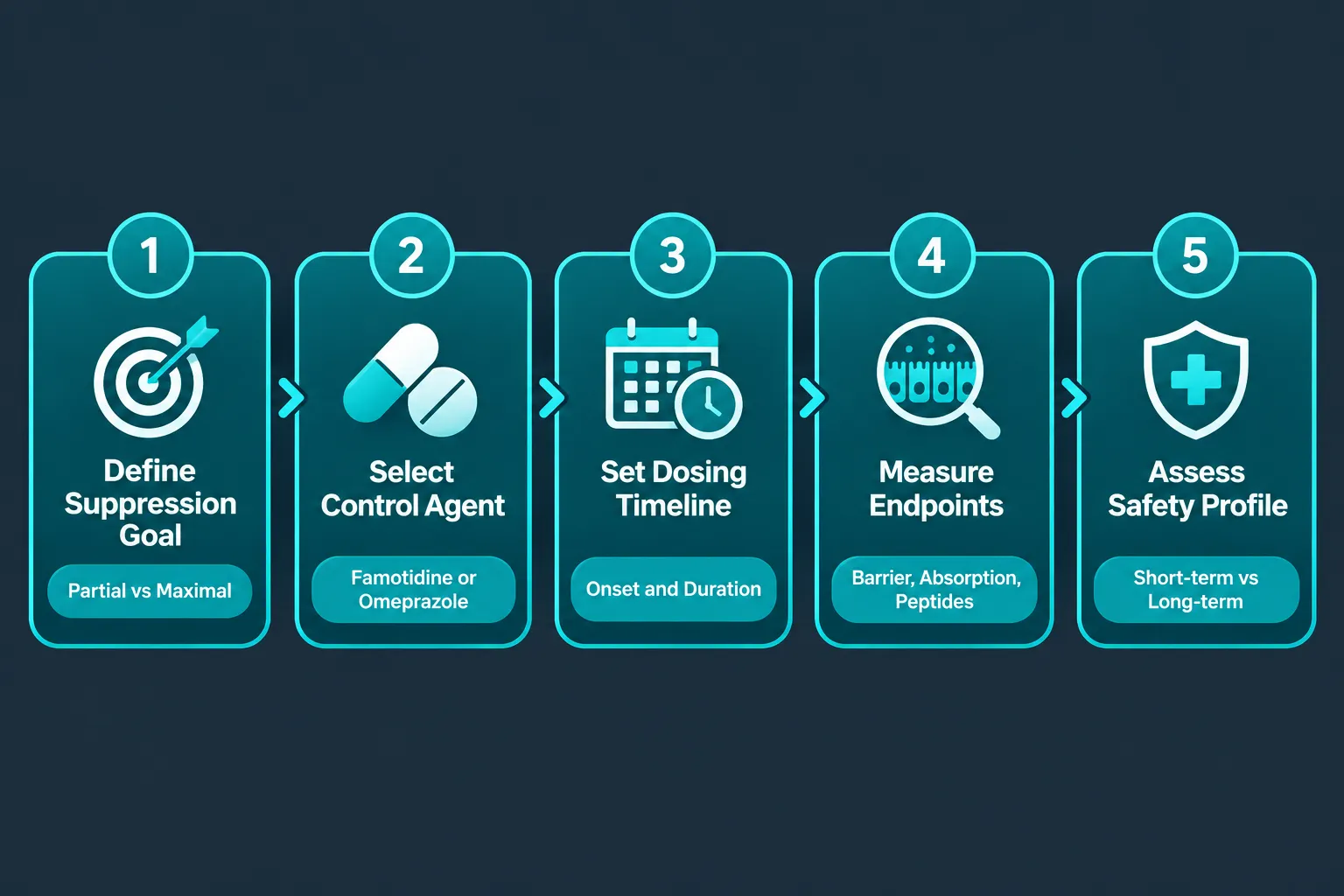
- Define the suppression depth required by the model before selecting a control drug.
- Account for omeprazole's 1-4 day onset lag in any time-sensitive protocol.
- Monitor absorption markers (B12, magnesium, fatty acids) in long-term PPI-controlled studies.
- Treat famotidine and omeprazole as distinct points on the acid-suppression continuum, not interchangeable agents.
- Review how the chosen control drug may interact with the specific intestinal peptide being studied, particularly for GLP-family, nutrient-transport, or inflammation-related peptides.
Researchers seeking to explore what the strongest peptides for weight loss and metabolic research look like in controlled GI environments will find that the acid-suppression baseline established by the control drug is as consequential as the peptide itself.