Call or Text 727-513-9780
  • Shopping Cart Shopping Cart
    0Shopping Cart
Pure Tested Peptides | America's most trusted Peptides for sale online
  • Peptides for sale
    • Oral Peptides for sale
      • Peptide Capsules for sale
      • BPC 157 Capsules 1000mcg
      • SLU-PP-332 Capsules | 1000 mcg
      • 5-Amino-1MQ 50mg Capsules
      • Tesofensine 500mcg
    • All Peptides for sale
    • Peptide Sprays
      • BPC 157 Nasal Spray Kit
      • BPC-157 TB500 Nasal Spray Kit
      • Semax Nasal Spray 10mg
      • Selank – Nasal Spray Kit – 10mg
      • Epithalon 50MG Nasal Spray Kit
      • Ipamorelin 10mg Nasal Spray
      • Klow Nasal Spray (BPC-157 + TB-500 + GHK-Cu + KPV) | 80mg
      • Hulk Nasal Spray Tesa / Ipa Blend 6/3 MG
      • Klow Nasal Spray
      • NAD + 500 mg Nasal Spray
      • PT-141 Nasal Spray Kit
    • GHRH Peptides
      • Ipa Peptides
      • CJC-1295 Peptides
        • CJC-1295 with DAC 5 mg
        • CJC-1295 without DAC 5 mg
        • CJC-1295 Ipa 10mg
      • Tesa Peptides
        • Tesa Peptide
        • Tesa 20 mg
    • GHK-Cu Peptides
      • All GHK-Cu Peptides
      • GHK-Cu 100mg
      • KLOW Peptide Blend – Buy KLOW blend online
    • BPC Peptides
      • All BPC Peptides
      • BPC-157
      • BPC-157 TB-500
      • BPC 157 capsules 1000mcg
    • SLU-PP-332 Peptides
      • All SLU-PP-332 Peptides
      • SLU-PP-332 5mg
    • GLP3 Peptides
      • GLP3-R
      • GLP3-R CAG 10mg
      • GLP3-R 20mg
    • PT-141 Peptides
      • PT-141 Peptides for sale
      • PT-141 10mg
      • PT-141 Nasal Spray
    • CAG Peptides
      • Lipo-C Peptide Blend
      • CAG 5mg
      • CAG 10mg
    • MOTS-C Peptides
      • MOTS-C Peptides for sale
      • MOTS-c peptide
      • MOTS-c 10mg *6 pack*
    • 5 Amino 1MQ Peptides
      • 5 Amino 1MQ Peptides for sale
      • 5-Amino-1MQ 50mg Capsules
      • 5-Amino-1MQ 5mg
    • Epithalon Peptides
      • Epithalon Peptides for sale
      • Epithalon 10mg
      • Epithalon 50mg
  • Shop
    • GLPs
      • 5-Amino-1MQ 50mg Capsules
      • 5-Amino-1MQ 5mg
      • GLP3-Reta
      • L-Carnitine 500mg/ml
      • Tesofensine 500mcg
      • SLU-PP-332 5mg
      • MOTS-c 10mg *6 pack*
    • Epithalon & BPC Peptides
      • Epithalon 10mg
      • Epithalon 50mg
      • BPC-157
      • BPC 157 capsules 1000mcg
      • BPC-157 TB-500
      • BPC-157 TB500 Nasal Spray Kit
      • BPC 157 Nasal Spray Kit
    • BPC TB-500 & NAD+ Peptides
      • NAD+ 500 mg
      • KLOW Peptide Blend – Buy KLOW blend online
      • GLOW Peptide Blend
      • TB 500 5mg
      • BPC 157 capsules 1000mcg – Supplement
      • BPC 157 Nasal Spray Kit
      • BPC-157
      • BPC-157 TB500 Nasal Spray Kit
      • BPC-157 TB-500
      • BPC 157 capsules 1000mcg
    • LL-37 Peptide
      • LL-37 10 mg
    • MOTS-C & Selank
      • MOTS-c peptide
      • Selank 10mg
    • GHK Peptides
      • GHK-Cu 100mg
      • GLOW Peptide Blend
      • KLOW Peptide Blend – Buy KLOW blend online
  • COAs
  • Wholesale
    • Wholesale Peptides for sale
  • PTP FAQ
  • Affiliates
    • Selank Peptide: Advanced Pharmacological Mechanisms Underlying Its Anxiolytic and Nootropic Effects in Research
      • 5-Amino-1MQ Peptide: Detailed Mechanisms of NNMT Inhibition and Its Impact on Cellular Metabolism Research
        • MOTS-C Peptide: Unraveling Its Role in Mitochondrial Dynamics and Energy Metabolism Research
          • Epithalon Peptide and Telomerase Regulation: Investigating Its Impact on Cellular Senescence and Lifespan Research Models
            • GLP2-T vs GLP2 Tirz Peptide: Understanding the Naming, Mechanistic Nuances, and Research Implications for Gut Health
      • Peptides and Polypeptides in Modern Pharmacology: What Research on Metoprolol, Prednisone, and Amlodipine Reveals
        • Polypeptide Peptides vs NSAIDs: What Naproxen and Diclofenac Teach Tissue-Repair Researchers About BPC‑157 and TB‑500
          • Peptides and Polypeptides in Endocrine Pharmacology: How GLP-1, GLP-2, and GLP-3 Retatrutide Differ From Classic Drugs Like Prednisone and Amlodipine
          • 5‑Amino‑1MQ Peptide and NNMT Inhibition: How It Compares With Statins Like Atorvastatin in Adipose and Lipid Metabolism Research
      • Enclomiphene, Estrogen Receptor Signaling, and Luteinizing Phase Biology: What Hormone Researchers Should Measure
        • Mesenchymal Stem Cells, BPC‑157, and GHK‑Cu: How Tissue Repair Peptides Compare With Classic NSAIDs Like Naproxen in Injury Models
          • Peptide Calculator Use Cases Beyond Growth Hormone: Working Through GLP‑3 Retatrutide, MOTS‑c, and BPC‑157 Research Dosing
        • Polypeptide Peptides in Endocrine and Metabolic Pharmacology: Lessons From Amlodipine, Prednisone, and Metoprolol
        • Peptides Calculator for Advanced Blends: Worked Examples for Tesamorelin, CJC‑1295, and Ipamorelin Stacks
          • Peptides and Polypeptides in Human Physiology: How Molecular Size Shapes Research Applications
            • Selank Peptide: Advanced Pharmacological Mechanisms Underlying Its Anxiolytic and Nootropic Effects in Research
          • 5-Amino-1MQ Peptide: Detailed Mechanisms of NNMT Inhibition and Its Impact on Cellular Metabolism Research
            • MOTS-C Peptide: Unraveling Its Role in Mitochondrial Dynamics and Energy Metabolism Research
              • Epithalon Peptide and Telomerase Regulation: Investigating Its Impact on Cellular Senescence and Lifespan Research Models
                • GLP2-T vs GLP2 Tirz Peptide: Understanding the Naming, Mechanistic Nuances, and Research Implications for Gut Health
                  • Peptides and Polypeptides in Endocrine Pharmacology: How GLP-1, GLP-2, and GLP-3 Retatrutide Differ From Classic Drugs Like Prednisone and Amlodipine
                    • Polypeptide Peptides vs NSAIDs: What Naproxen and Diclofenac Teach Tissue-Repair Researchers About BPC‑157 and TB‑500
                      • Peptides and Polypeptides in Modern Pharmacology: What Research on Metoprolol, Prednisone, and Amlodipine Reveals
                        • 5‑Amino‑1MQ Peptide and NNMT Inhibition: How It Compares With Statins Like Atorvastatin in Adipose and Lipid Metabolism Research
                        • Enclomiphene, Estrogen Receptor Signaling, and Luteinizing Phase Biology: What Hormone Researchers Should Measure
                        • Mesenchymal Stem Cells, BPC‑157, and GHK‑Cu: How Tissue Repair Peptides Compare With Classic NSAIDs Like Naproxen in Injury Models
                        • Peptide Calculator Use Cases Beyond Growth Hormone: Working Through GLP‑3 Retatrutide, MOTS‑c, and BPC‑157 Research Dosing
                        • Polypeptide Peptides in Endocrine and Metabolic Pharmacology: Lessons From Amlodipine, Prednisone, and Metoprolol
                        • Peptides Calculator for Advanced Blends: Worked Examples for Tesamorelin, CJC‑1295, and Ipamorelin Stacks
                        • Peptides and Polypeptides in Human Physiology: How Molecular Size Shapes Research Applications
                        • Selank Peptide: Advanced Pharmacological Mechanisms Underlying Its Anxiolytic and Nootropic Effects in Research
                        • MOTS-C Peptide: Unraveling Its Role in Mitochondrial Dynamics and Energy Metabolism Research
                        • Peptides and Polypeptides in Modern Pharmacology: What Research on Metoprolol, Prednisone, and Amlodipine Reveals
                        • Peptides and Polypeptides in Endocrine Pharmacology: How GLP-1, GLP-2, and GLP-3 Retatrutide Differ From Classic Drugs Like Prednisone and Amlodipine
                        • 5-Amino-1MQ Peptide: Detailed Mechanisms of NNMT Inhibition and Its Impact on Cellular Metabolism Research
                        • Mesenchymal Stem Cells, BPC‑157, and GHK‑Cu: How Tissue Repair Peptides Compare With Classic NSAIDs Like Naproxen in Injury Models
                        • Peptide Calculator Use Cases Beyond Growth Hormone: Working Through GLP‑3 Retatrutide, MOTS‑c, and BPC‑157 Research Dosing
                        • GLP2-T vs GLP2 Tirz Peptide: Understanding the Naming, Mechanistic Nuances, and Research Implications for Gut Health
                        • Polypeptide Peptides in Endocrine and Metabolic Pharmacology: Lessons From Amlodipine, Prednisone, and Metoprolol
                        • Polypeptide Peptides vs NSAIDs: What Naproxen and Diclofenac Teach Tissue-Repair Researchers About BPC‑157 and TB‑500
                        • Peptides and Polypeptides in Human Physiology: How Molecular Size Shapes Research Applications
                        • Peptides Calculator for Advanced Blends: Worked Examples for Tesamorelin, CJC‑1295, and Ipamorelin Stacks
                        • 5‑Amino‑1MQ Peptide and NNMT Inhibition: How It Compares With Statins Like Atorvastatin in Adipose and Lipid Metabolism Research
                        • Enclomiphene, Estrogen Receptor Signaling, and Luteinizing Phase Biology: What Hormone Researchers Should Measure
                        • Epithalon Peptide and Telomerase Regulation: Investigating Its Impact on Cellular Senescence and Lifespan Research Models
                        • Best research protocol Klow blend
                        • best time to take BPC-157
                        • best time to take DSIP (Delta Sleep Inducing Peptide)
                        • best time to take CJC-1295
                        • best time to take AOD-9604
                        • best time to take Follistatin 344
                        • best time to take Ipamorelin
                        • best time to take MK-677 (Ibutamoren)
                        • best time to take Ligandrol (LGD-4033) — research compound
                        • best time to take Ostarine (MK-2866) — research compound
                        • best time to take GHK-CU
                        • best time to take TB-500
                        • best time to take MOTS-c
                        • best time to take Semax
                        • best time to take RAD-140 (Testolone) — research compound
                        • best time to take Thymosin Alpha-1
                        • best time to take PEG-MGF
                        • Biolife Plasma, Octapharma Plasma, and Research Peptides: How Plasma Donation Labs Differ From Peptide Suppliers
                        • best time to take YK-11 — research compound
                        • best time to take PT-141 (Bremelanotide)
                        • Best research protocol Klow blend
                        • 5-Amino-1MQ and MOTS-C Synergy: Metabolic Signaling, Mitochondria, and Research Design
                        • BPC-157 and TB-500: Investigating Their Combined Effects on Angiogenesis and Cellular Migration in Tissue Repair Models
                        • BPC-157 Peptide: Gut Barrier Function, Inflammation, and Tissue-Recovery Research
                        • 5‑Amino‑1MQ and MOTS‑c Synergy in Metabolic Research: Designing NNMT and Mitochondrial Biogenesis Stacks
                        • CJC-1295 with DAC vs. Without DAC: Half-Life, Release Kinetics, and Research Implications
                        • CJC‑1295 with DAC vs. Without DAC: Expanding on Half‑Life Differences Using Tesamorelin and Ipamorelin Blend Case Studies
                        • Collagen Biology and Copper‑Binding Peptides: How GHK‑Cu, Glow Blend, and Klow Blend Interact with Skin and Connective Tissue
                        • Collagen Biology and Regenerative Peptides: How GHK‑Cu, Glow Blend, and Klow Blend Affect Extracellular Matrix Research
                    • DNA, Telomeres, and Longevity Peptides: Positioning Epithalon and MOTS‑c in Genetic Aging Research
                      • Enclomiphene Citrate: serm Mechanism, Testosterone Research, and Stack Compatibility
                        • Enclomiphene vs Enclomiphene Citrate: Formulation, Bioavailability, and Research Distinctions
                        • Epithalon Peptide Research: Telomerase Activation, Aging, and Pineal Gland Function
                        • Estrogen Receptor Signaling and Enclomiphene: How Selective Modulators Compare with Classic Polypeptide Hormones
                        • GHK-Cu Peptide: Advanced Mechanisms in Extracellular Matrix Remodeling and Wound Healing Research
                        • GHK-Cu Peptide: Collagen Synthesis, Wound Repair, and Skin-Barrier Research Models
                        • GLP-1 vs GLP-3 vs GLP-2: Peptide Classification and Research Applications
                        • GLP-2 Peptide Research Guide: Gut Barrier Function, Nutrient Absorption, and Intestinal Recovery Models
                        • GLP-3 Retatrutide vs. GLP-1 Drugs: What Triple-Agonist Biology Changes in Research Models
                        • Ipamorelin and Tesamorelin Combination: Synergistic GH Secretagogue Research and Dosing Protocols
                        • GLP2 Tirz Peptide: What It Is, Why the Name Exists, and How Researchers Should Interpret It
                        • Klow Blend Peptide Nasal Spray: What the Formulation Is Trying to Do in Cognitive Research
                        • Mitochondria, NNMT Inhibition, and Peptide Modulators: Where MOTS‑c and 5‑Amino‑1MQ Fit in Cellular Energy Research
                        • MOTS-c Peptide: Mitochondrial Function, Energy Metabolism, and What Researchers Measure
                        • MOTS-c vs. 5-Amino-1MQ: Which Metabolic Research Questions Each Compound Actually Answers
                        • Nasal Spray Peptides: Bioavailability, Administration, and Semax/Selank Research Applications
                        • PT-141 Peptide Research: Mechanism of Action and Melanocortin Receptor Signaling
                        • Retatrutide for Research: Mechanism, Structure, and GLP-1/GLP-3 Dual Action
                        • Retatrutide for Obesity and Type 2 Diabetes: What the Latest Trial Data Suggest
                        • Tesofensine Peptide Research: Mechanism, Appetite Suppression, and Neuropeptide Y Pathways
  • Contact
    • Contact Customer Service
    • Text Customer Support
  • About US
  • Shop all peptides
  • Affiliate Program
    • Affiliate Signup
  • Login / Register Login / Register Page Link Login / Register Page Link
  • Click to open the search input field Click to open the search input field Search
  • Menu Menu

Tag Archive for: peptides vs small-molecule drugs

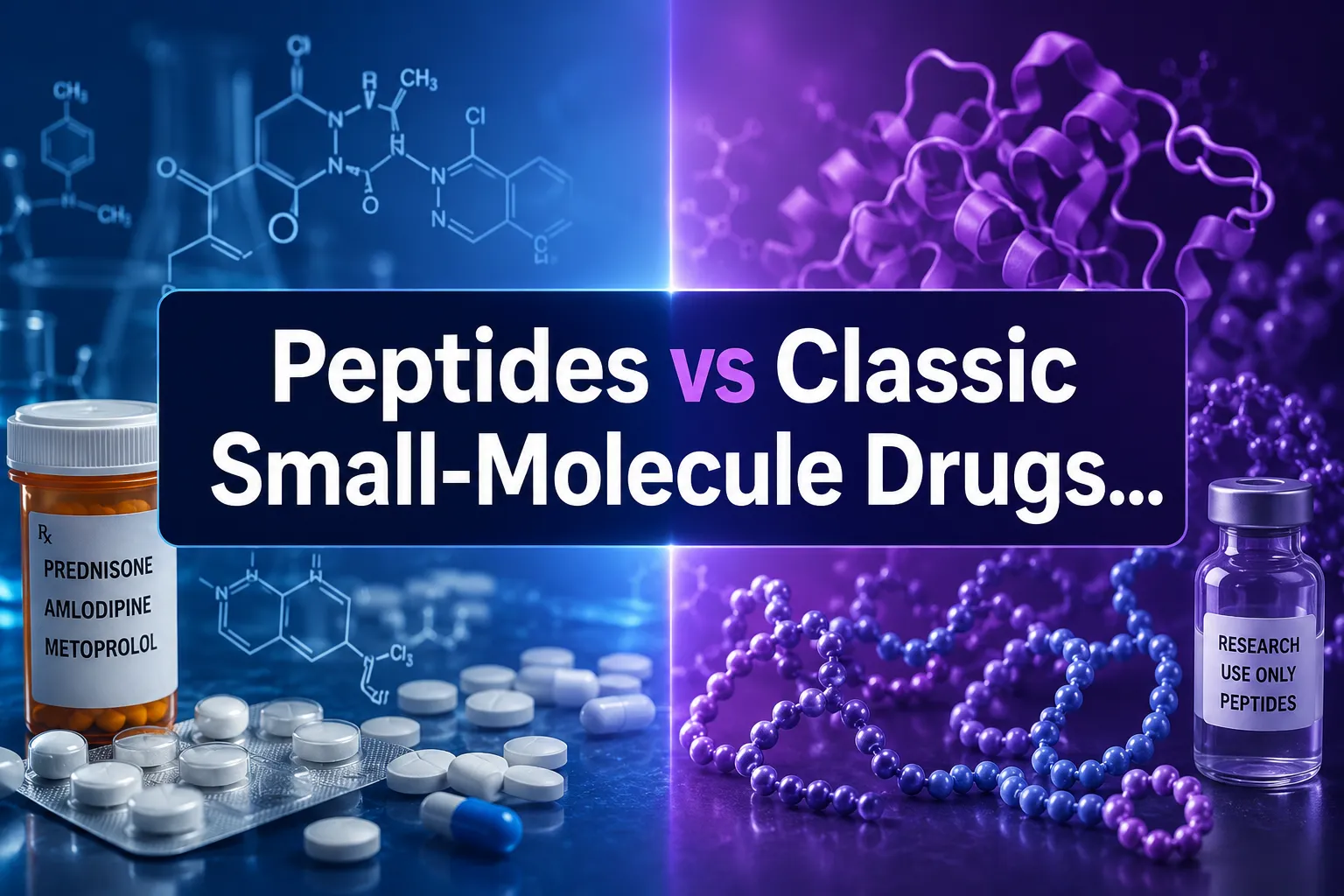
Peptides vs Classic Small-Molecule Drugs: How Compounds Like Prednisone, Amlodipine, and Metoprolol Differ From Modern Research-Use Peptides

Peptides vs Classic Small-Molecule Drugs: How Compounds Like Prednisone, Amlodipine, and Metoprolol Differ From Modern Research-Use Peptides

August 4, 2026/0 Comments/in Uncategorized/by

{"cover":"Professional landscape format (1536×1024) hero image with bold text overlay (≤42 chars): 'Peptides vs Classic Small-Molecule Drugs' in crisp white bold sans-serif centered on a deep navy semi-transparent panel, 8% safe margins from every edge, no text touching edges. Background: split editorial scene, left side shows a clinical pharmacy shelf with amber pill bottles (prednisone, amlodipine labels), right side shows a modern research lab with peptide vials on ice and molecular chain diagrams on a lightboard. Cool blue and white color palette, magazine-quality editorial lighting, high contrast, pharmaceutical science aesthetic.","content":["Bright editorial infographic-style landscape (1536×1024): two large molecular structure illustrations side by side, left shows a compact steroid ring structure labeled 'Small Molecule' in bold 4-word label, right shows an elongated amino acid chain labeled 'Peptide Chain', both rendered as glowing 3D models on a clean white laboratory background with soft blue accent lighting. Scientific diagram aesthetic, vivid teal and orange contrast palette, no tables, no pricing grids, save-worthy Pinterest science illustration style.","Split-screen editorial photograph landscape (1536×1024): left half shows a close-up of white prednisone tablets and amlodipine capsules arranged on a stainless steel lab tray under bright clinical white lighting; right half shows research-use peptide vials (BPC-157, MOTS-c labeled in 3-word max text) on crushed ice in a modern biochemistry lab with blue LED ambient lighting. High-contrast pharmaceutical editorial photography, cool clinical palette of white, steel-blue, and amber, sharp product focus, magazine quality.","Symbolic conceptual illustration landscape (1536×1024): isometric flat-vector scene of a research laboratory interior, a female South Asian scientist in a white coat examines a glowing peptide chain hologram floating above a lab bench, while in the background a wall display shows simplified receptor-binding diagrams with short labels 'Receptor Target' and 'Signal Path'. Bright daylight through large windows, clean pastel palette of mint green, soft yellow, and white, modern scientific illustration style, no tables, no grids, Pinterest-quality editorial."]

Professional landscape hero image () with a reading "Peptides vs Classic Small-Molecule Drugs…". CRITICAL TYPOGRAPHY RULES:

More than 90% of all approved drugs on the market today are small molecules, yet the fastest-growing segment of pharmaceutical research now centers on peptides. This shift is not accidental. As researchers probe the limits of traditional pharmacology, the structural and mechanistic gap between classic drugs like prednisone, amlodipine, and metoprolol and modern research-use peptides has become one of the most important distinctions in biochemistry. Understanding peptides vs classic small-molecule drugs clarifies why compounds like BPC-157, MOTS-c, and GLP-3 occupy a fundamentally different category from the drugs most people take daily.

Key Takeaways

  • Small-molecule drugs are compact, chemically synthesized compounds that typically act on a single receptor or enzyme target.
  • Peptides are short chains of amino acids that mimic or modulate the body's own signaling molecules, enabling more targeted biological interactions.
  • Classic drugs like prednisone, amlodipine, and metoprolol have well-established clinical profiles; research-use peptides are studied under controlled laboratory conditions and are not approved for human therapeutic use.
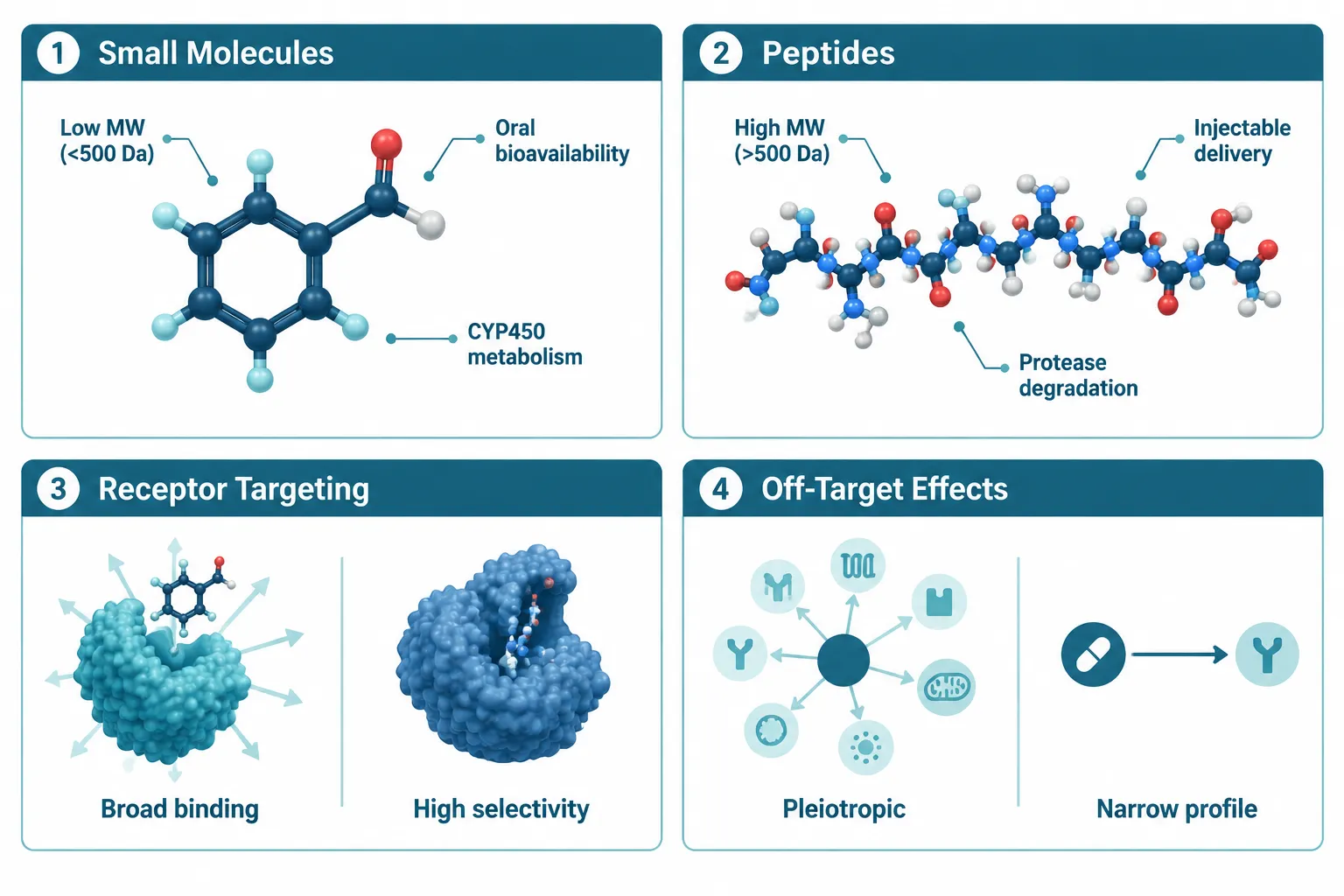
  • Peptides generally have higher target specificity but lower oral bioavailability than small molecules.
  • The regulatory and research frameworks governing peptides differ substantially from those governing licensed pharmaceuticals.

Key Takeaways

Structural Foundations: What Separates Small Molecules From Peptides

The most fundamental difference in peptides vs classic small-molecule drugs is molecular architecture.

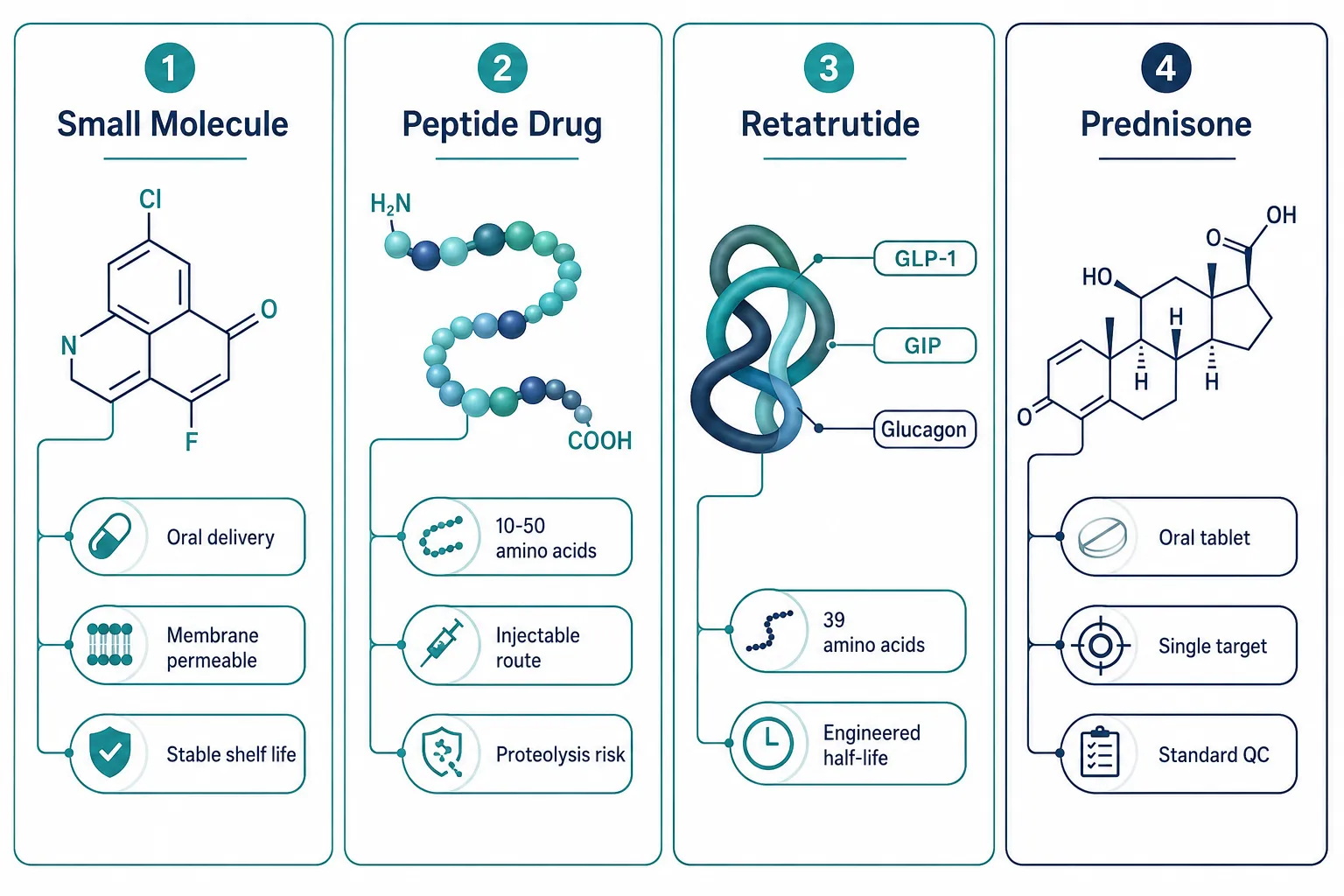
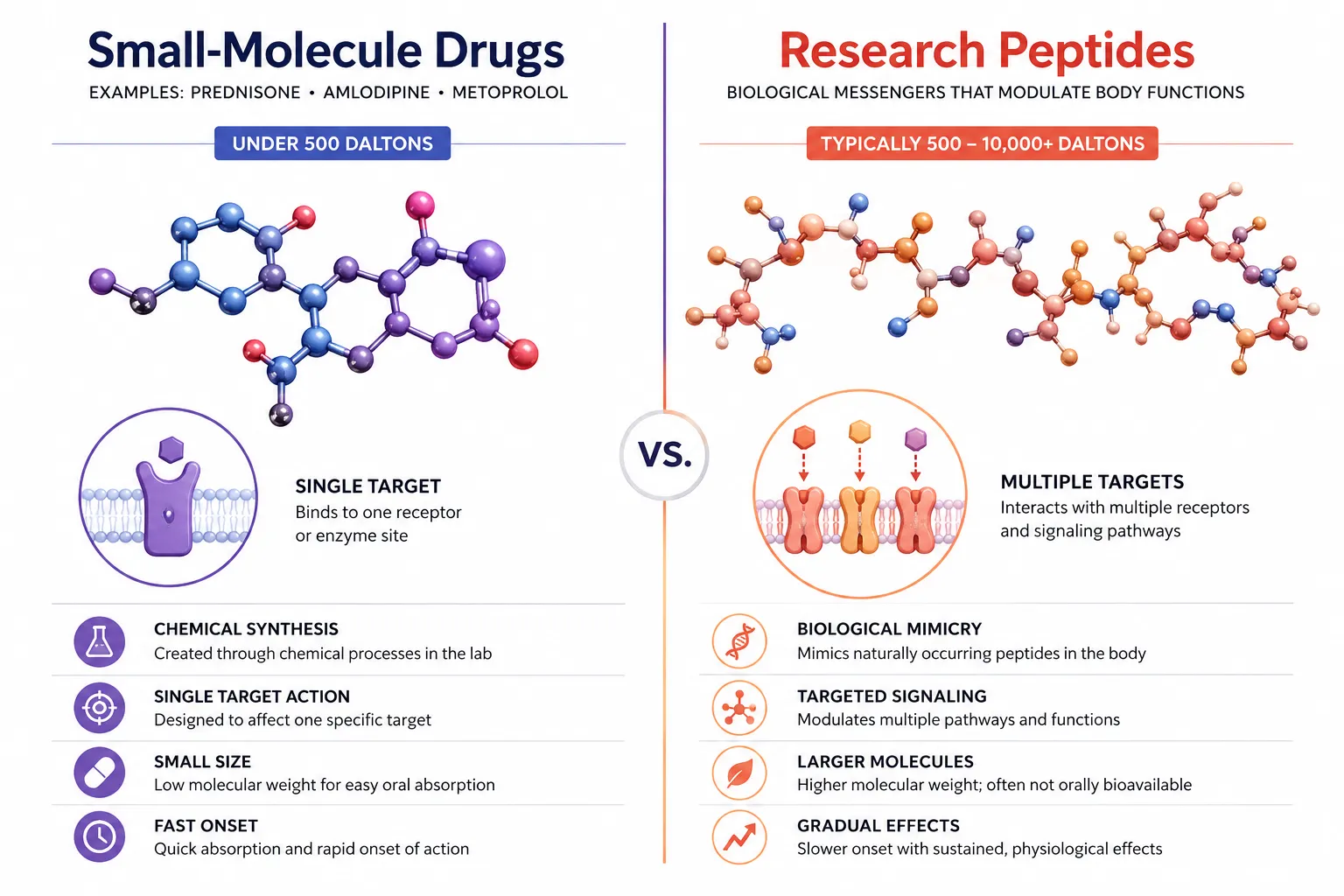
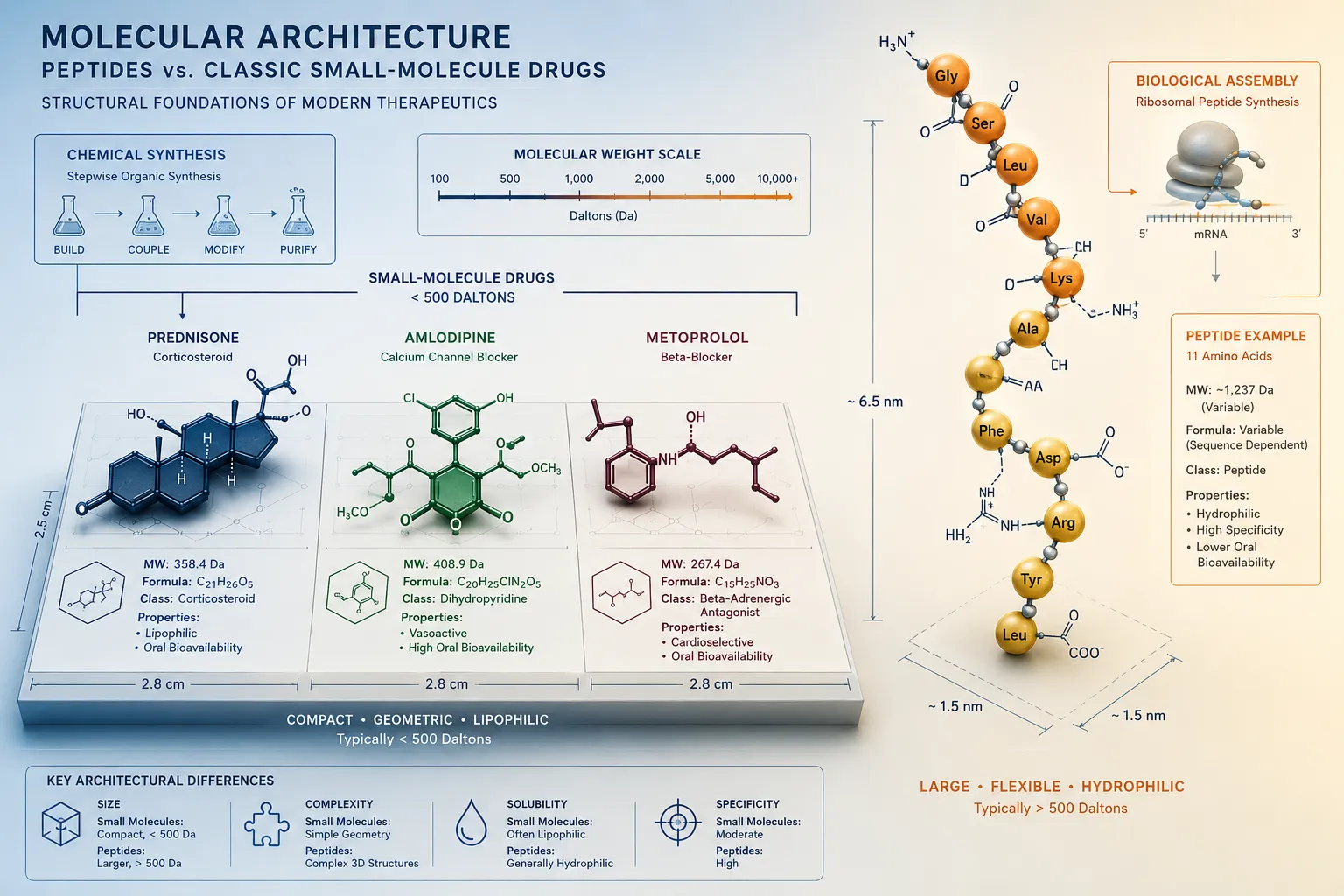
Small molecules, including prednisone, amlodipine, and metoprolol, are low-molecular-weight organic compounds, typically under 500 daltons. They are built through chemical synthesis, not biological processes, and their compact size allows them to cross cell membranes, enter the bloodstream via oral administration, and bind to specific receptor pockets.

Feature Small-Molecule Drugs Research-Use Peptides
Molecular weight Under 500 Da 500-5,000+ Da
Composition Synthetic organic chemistry Amino acid chains
Oral bioavailability Generally high Generally low
Synthesis route Chemical Chemical or biosynthetic
Target specificity Moderate to high High

Peptides, by contrast, are short chains of amino acids, typically 2 to 50 residues, that mimic or modulate the body's endogenous signaling molecules. Their larger size and more complex three-dimensional shape allow them to interact with biological targets in ways small molecules cannot, but this same size makes them vulnerable to digestive enzymes, which is why many research-use peptides require parenteral administration.

"The structural complexity of a peptide is both its greatest advantage and its primary delivery challenge."

Compounds like TB-500 or the BPC-157 and TB-500 combination illustrate this point well, their amino acid sequences enable highly specific tissue interactions that a small steroid molecule like prednisone simply cannot replicate.

Mechanisms of Action: How Prednisone, Amlodipine, and Metoprolol Work vs Research Peptides

Mechanisms of Action: How Prednisone, Amlodipine, and Metoprolol Work vs Research Peptides

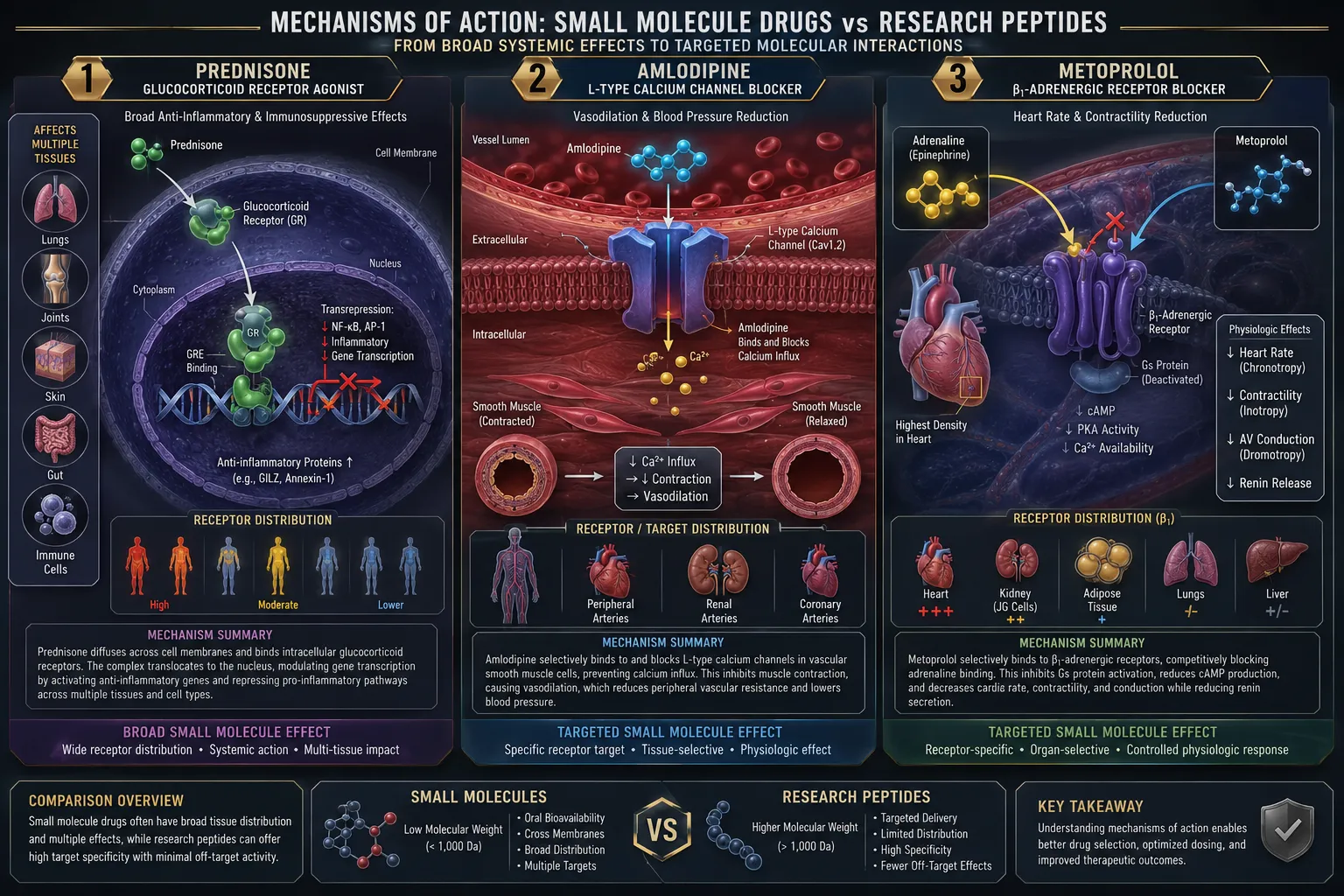
Classic small-molecule drugs each act through well-characterized, narrow mechanisms:

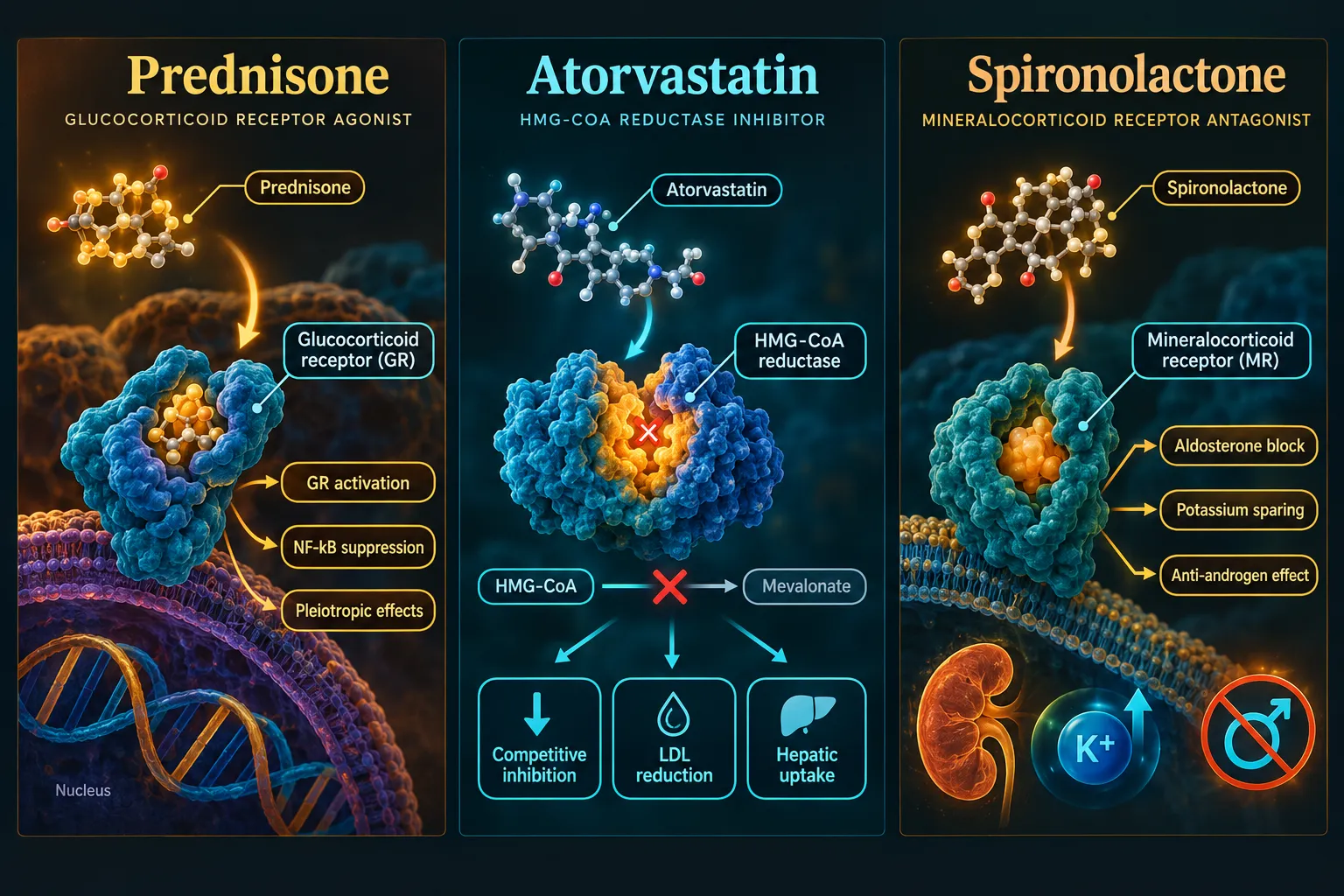
  • Prednisone is a synthetic corticosteroid. It binds glucocorticoid receptors inside cells, suppressing inflammatory gene transcription broadly across multiple tissue types. Its wide receptor distribution explains both its therapeutic power and its side-effect profile (blood sugar changes, bone density loss, immune suppression).
  • Amlodipine is a calcium channel blocker. It binds L-type calcium channels in vascular smooth muscle, reducing calcium influx and causing vasodilation. The mechanism is highly localized to one channel subtype.
  • Metoprolol is a beta-1 selective adrenergic blocker. It competes with catecholamines at beta-1 receptors in cardiac tissue, slowing heart rate and reducing myocardial oxygen demand.

Each of these drugs acts on a defined, single-class receptor. Their mechanisms are predictable, well-studied, and the basis for decades of clinical data.

Research-use peptides operate differently. Rather than blocking or activating a single receptor, many peptides act as signaling modulators, they interact with receptor complexes, growth factor pathways, or intracellular signaling cascades in a more context-dependent way.

For example:

  • BPC-157 is studied for its interactions with growth hormone receptor pathways and nitric oxide systems, with research endpoints focused on tissue repair models.
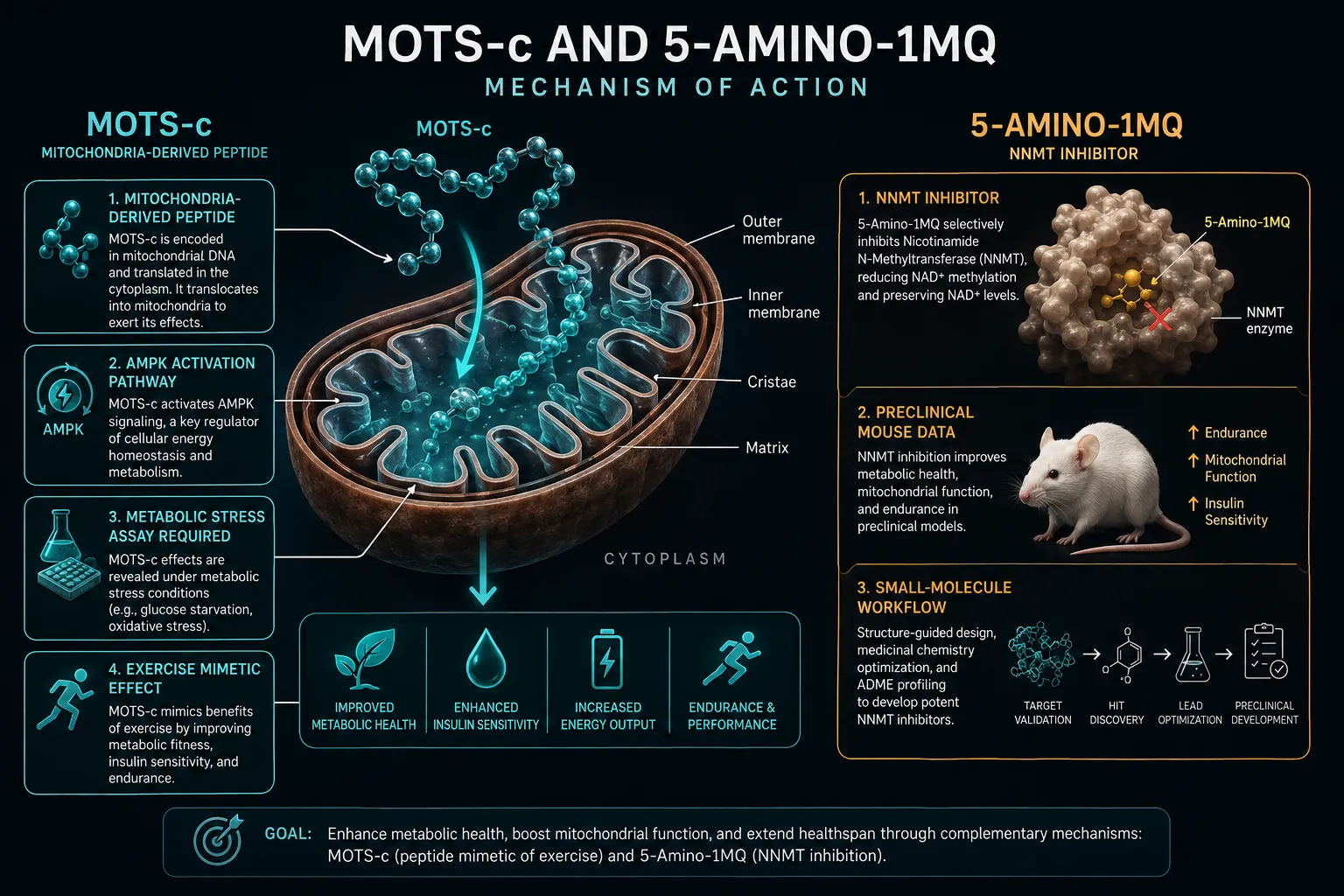
  • MOTS-c is a mitochondria-derived peptide investigated for its role in metabolic regulation and cellular stress responses. Research on MOTS-c and mitochondrial function explores mechanisms that have no equivalent in classic pharmacology.
  • GLP-1 and GLP-3 class peptides act on incretin receptors involved in insulin secretion and gut motility, a mechanism that bridges peptide biology and metabolic research.

The SS-31 peptide's mitochondrial research themes demonstrate another dimension: peptides can localize to specific organelles, something small molecules rarely achieve with the same precision.

Research Context, Regulatory Status, and Practical Differences

Research Context, Regulatory Status, and Practical Differences

Understanding peptides vs classic small-molecule drugs also requires clarity on their regulatory and research contexts.

Prednisone, amlodipine, and metoprolol are FDA-approved pharmaceuticals. They have completed clinical trials, carry established dosing guidelines, and are prescribed by licensed clinicians for defined indications. Their safety and efficacy data span millions of patient-years.

Research-use peptides occupy a different category entirely. Compounds like AOD-9604 or Epithalon are sold strictly for laboratory and preclinical research purposes. They are not approved for human therapeutic use, and their research endpoints are studied in controlled in vitro and animal model settings.

Key practical distinctions include:

  • Stability: Small molecules are generally shelf-stable at room temperature. Most research peptides require refrigeration or lyophilization to maintain structural integrity.
  • Administration route: Classic drugs are predominantly oral. Research peptides are typically reconstituted and administered via injection in research settings.
  • Selectivity: Peptides often show higher target selectivity, which is why combinations like LL-37 and SS-31 are studied for their complementary, non-overlapping mechanisms.
  • Research endpoints: Small-molecule research focuses on receptor occupancy and clinical outcomes. Peptide research often examines upstream signaling, gene expression changes, and cellular repair processes.

Researchers exploring BDNF-related peptide pathways or Selank's neurological research profile encounter a level of mechanistic specificity that classic pharmacology rarely achieves.

Conclusion

The comparison of peptides vs classic small-molecule drugs is not a question of which category is superior, it is a question of purpose, mechanism, and context. Prednisone, amlodipine, and metoprolol are proven therapeutic tools with decades of clinical validation. Research-use peptides like BPC-157, MOTS-c, and GLP-3 represent a different scientific frontier: larger, more structurally complex molecules that interact with biological systems in ways that mirror the body's own signaling language.

Actionable next steps for researchers and informed readers:

  1. Review primary literature on specific peptide mechanisms before drawing comparisons to approved drugs.
  2. Source research-use peptides only from verified suppliers with documented purity testing.
  3. Consult the growing body of preclinical data on mitochondrial peptides, incretin analogs, and tissue-repair compounds to understand where the science currently stands.
  4. Recognize that regulatory status is not a proxy for scientific interest, many of the most actively studied peptides are pre-clinical compounds with significant research momentum.

The structural and mechanistic divide between small molecules and peptides will continue to shape pharmacology research well into the future.

https://www.puretestedpeptides.com/wp-content/uploads/2026/08/peptides-vs-classic-small-molecule-drugs-how-compounds-like-prednisone-amlodipin.webp 1024 1536 https://www.puretestedpeptides.com/wp-content/uploads/2026/01/buy-peptides-online.jpg 2026-08-04 13:06:152026-08-04 13:06:15Peptides vs Classic Small-Molecule Drugs: How Compounds Like Prednisone, Amlodipine, and Metoprolol Differ From Modern Research-Use Peptides
×

Helpful Links

  • My account
  • Cart
  • Checkout
  • Refund and Returns Policy
  • Privacy Policy
  • SMS Privacy Policy
  • Login
  • My Account
  • Logout

USA Made Lab Tested Peptides

All products are sold for research, laboratory, or analytical purposes only, and are not for human consumption


Pure Tested Peptides is a chemical supplier. Pure Tested Peptides is not a compounding / chemical compounding facility as defined under 503A of the Federal Food, Drug, and Cosmetic act. Pure Tested Peptides is not an outsourcing facility as defined under 503B of the Federal Food, Drug, and Cosmetic act.

The statements made within this website have not been evaluated by the US Food and Drug Administration. The products we offer are not intended to diagnose, treat, cure or prevent any disease.

Human/Animal Consumption Prohibited. Laboratory/In-Vitro Experimental Use Only

Scroll to top Scroll to top Scroll to top