

Mesenchymal Stem Cells, Collagen, and Copper Peptides: How GHK-Cu and Glow Blend Are Used in Regenerative Skin and Tissue Research
Collagen accounts for roughly 30% of all protein in the human body, yet the signaling machinery that controls its synthesis, crosslinking, and degradation remains one of the most actively studied targets in regenerative medicine. That demand for deeper understanding is exactly why researchers are pairing classical collagen biology with copper peptides like GHK-Cu and multi-compound formulations like Glow Blend, and why mesenchymal stem cells (MSCs) sit at the center of so many tissue-repair models in 2026. This article examines how mesenchymal stem cells, collagen, and copper peptides intersect in current regenerative skin and tissue research, what Glow Blend brings to that picture, and where the science is heading.
Key Takeaways
- MSCs drive tissue repair primarily through paracrine effects, releasing exosomes, growth factors, and cytokines, rather than by directly replacing damaged cells.
- GHK-Cu activates lysyl oxidase to crosslink collagen, reduces oxidative stress, and upregulates key extracellular matrix (ECM) genes in fibroblast models.
- Glow Blend combines GHK-Cu, BPC-157, and TB-500 to target three complementary repair phases: ECM remodeling, angiogenic signaling, and actin-driven cell migration.
- Advanced biomaterial formats, including dimeric GHK hydrogels and self-assembling peptide nanotapes, are improving stability and biological activity in wound models.
- Controlled clinical outcome data for multi-peptide combinations like Glow Blend are still limited; most evidence comes from preclinical and early-phase studies.
How Mesenchymal Stem Cells Influence Collagen and Skin Repair
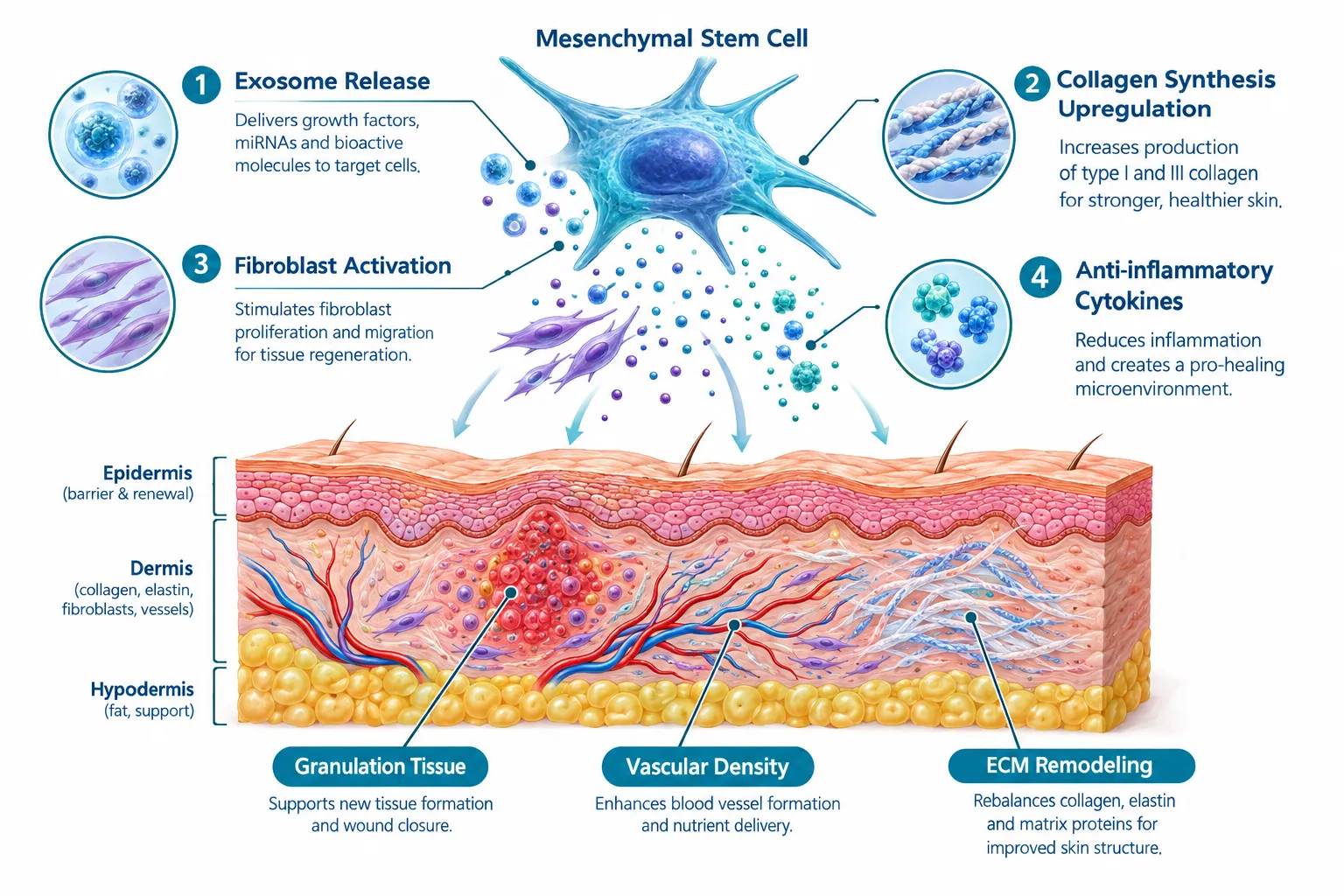
MSCs are multipotent stromal cells found in bone marrow, adipose tissue, umbilical cord, and other sources. For years, researchers assumed their therapeutic value came from differentiating into replacement cells. Current evidence points in a different direction: paracrine signaling, the release of soluble factors, extracellular vesicles, and exosomes, appears to be the primary driver of repair.
A 2025 review in Current Stem Cell Reports synthesized preclinical and early clinical data showing that MSC-based therapies can enhance skin elasticity, reduce oxidative stress, regulate inflammatory responses, and improve collagen-related parameters such as dermal thickness. The key agents are growth factors, cytokines, and extracellular vesicles rather than cell engraftment itself.
Umbilical cord MSC-derived exosomes (hUCMSC-Exos) have drawn particular attention. A 2025 Frontiers in Bioengineering and Biotechnology study reported that these exosomes significantly accelerated wound healing by reducing inflammation, stimulating angiogenesis, and promoting ECM formation. Histological analyses confirmed improved granulation tissue, vascular density, and collagen organization, all driven by exosome-mediated paracrine control.
Human induced pluripotent stem cell, derived MSCs (iMSCs) are also gaining traction as a potential autologous source. A 2025 study found that iMSC-treated burn wounds showed faster closure, better epithelialization, and improved expression of healing markers, with benefits attributed to both differentiation capacity and trophic factor secretion that directly influences collagen and ECM repair.
Adipose-derived MSCs (ADMSCs) add another dimension. A 2025 Frontiers in Immunology review described ADMSCs and their small extracellular vesicles as promising candidates for immune-mediated inflammatory skin diseases such as psoriasis and atopic dermatitis. By dampening T-cell responses and normalizing cytokine profiles, ADMSCs indirectly support healthier collagen turnover and tissue integrity.
For a broader look at how peptide signaling intersects with MSC biology, see Mesenchymal Stem Cells and Peptide Signaling: Where MOTS-c, BPC-157, and GHK-Cu Fit in Regenerative Research.
"MSC paracrine effects, growth factors, cytokines, and extracellular vesicles, are the key drivers of collagen synthesis and matrix remodeling, not simple cell replacement."
GHK-Cu: Copper Peptide Mechanisms in Collagen and Tissue Research
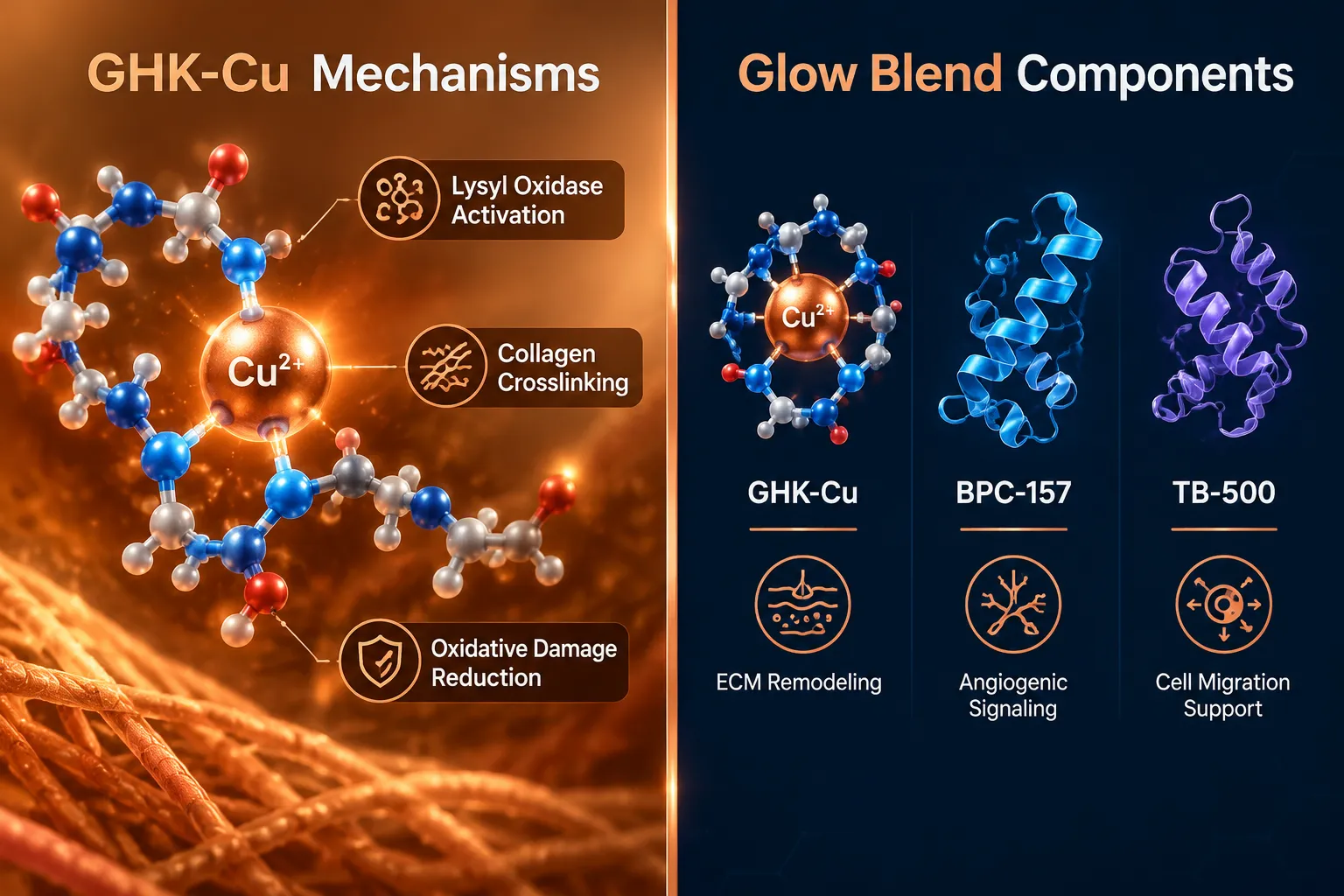
GHK-Cu (glycine-histidine-lysine copper complex) is a naturally occurring tripeptide-copper complex with a well-documented role in skin biology. Its primary mechanism centers on lysyl oxidase activation, the enzyme responsible for crosslinking collagen and elastin fibers to give skin its tensile strength and resilience.
A widely cited foundational review established that GHK-Cu:
- Enhances dermal wound healing and skin renewal
- Upregulates collagen and decorin expression in fibroblasts
- Stimulates integrin and matrix metalloproteinase (MMP) gene expression
- Reduces oxidative damage at the cellular level
These mechanisms make GHK-Cu a logical probe for researchers studying collagen signaling and ECM architecture. For a detailed breakdown of how researchers measure these endpoints, see Collagen Signaling and Copper Peptides: What Researchers Measure with GHK-Cu and Related Skin Models.
Advanced biomaterial formats are pushing the science further. A 2025 technical report described dimeric GHK incorporated into hydrogel dressings that improved all three wound-healing phases, inflammation, proliferation, and remodeling, in diabetic wound models, outperforming monomeric GHK-Cu. The same work introduced self-assembling GHK-bearing peptides that form supramolecular "nanotapes," offering superior copper coordination, resistance to proteolytic degradation, and retained biological activity, all important properties for stable dermal delivery.
Beyond skin, a 2025 Frontiers in Pharmacology study demonstrated GHK-Cu's systemic anti-inflammatory and barrier-repair effects in a colitis model, reducing TNF-alpha, IL-6, and IL-1beta via the SIRT1/STAT3 pathway. While the focus was intestinal mucosa, the findings reinforce GHK-Cu's broader role in promoting epithelial integrity, a mechanism directly relevant to skin barrier research.
A phase 2, randomized, double-blind, vehicle-controlled trial launched in February 2026 in Shenzhen, China is now testing a topical GHK-Cu gel (CuHeal) for standardized acute skin wounds in 60 healthy adults. Primary completion is planned for February 2027, with outcomes including time to re-epithelialization, wound area reduction, pain and itch scores, infection rate, and scar quality at 12 weeks, the most rigorous human-use data for GHK-Cu in wound healing to date.
For more on how GHK-Cu fits within the broader collagen research peptide landscape, see GHK-Cu Peptide Collagen Synthesis and Skin Matrix Biology Research and Collagen Research Peptides: Where GHK-Cu, Glow Blend, and Skin-Focused Formulas Fit in Laboratory Models.
Glow Blend and Multi-Peptide Approaches in Regenerative Research
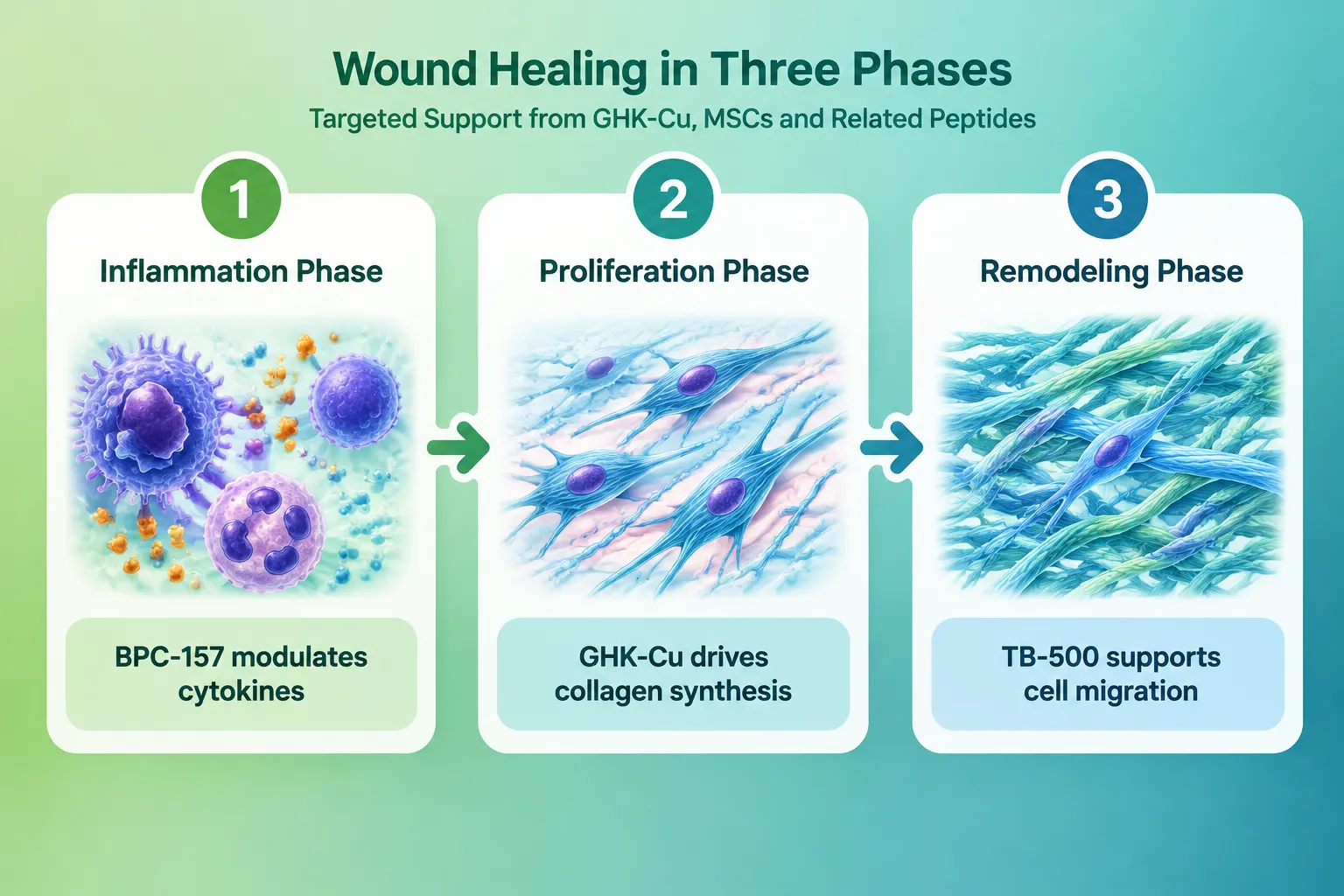
Glow Blend is a research-grade co-lyophilized formulation released in 2026. Each 70 mg vial contains:
| Component | Amount | Primary Research Target |
|---|---|---|
| GHK-Cu | 50 mg | ECM remodeling, collagen crosslinking |
| BPC-157 | 10 mg | Angiogenic and growth-factor pathways |
| TB-500 | 10 mg | Actin-driven cell migration |
The rationale is to cover complementary phases of tissue repair within a single formulation. BPC-157 modulates angiogenic signaling and growth-factor pathways; TB-500 (acetylated thymosin beta-4) supports actin polymerization and cell migration; GHK-Cu targets copper-mediated ECM and collagen architecture. Together, they map onto the three classical wound-healing phases: inflammation, proliferation, and remodeling.
Glow Blend extends the established "Wolverine" combination (BPC-157 + TB-500) by adding GHK-Cu specifically to introduce ECM remodeling capabilities that the original two-peptide formulation did not address. It is important to note that controlled clinical outcome data for the three-peptide combination itself are not yet available. Current evidence for each component is drawn from separate preclinical and early-phase studies.
For a detailed ingredient-level analysis, see Glow Blend Peptide: Examining Its Ingredients and Research Potential for Skin Health and Collagen Synthesis and Glow Blend Peptide in Skin and Hair Research: How GHK-Cu, BPC-157, and Supporting Compounds Are Studied Together.
Speculative outlook (2026-2030): It is plausible that MSC-derived exosomes will be combined with bioactive peptides such as GHK-Cu in advanced topical wound dressings, leveraging exosome-mediated angiogenesis and immune modulation alongside peptide-driven collagen remodeling. Research-only multi-peptide formulations like Glow Blend are likely to inform future cosmeceutical or medical device concepts. Regulatory approval pathways will probably favor non-injectable, topical formats first, given safety and manufacturing constraints.
Conclusion
Mesenchymal stem cells, collagen, and copper peptides represent three converging research threads that are reshaping how scientists model skin and tissue repair in 2026. MSCs contribute through paracrine signaling, exosomes, cytokines, and growth factors, rather than direct cell replacement. GHK-Cu acts at the molecular level to activate lysyl oxidase, crosslink collagen, and reduce oxidative stress, with a live phase 2 clinical trial now generating the first rigorous human wound-healing data. Glow Blend packages GHK-Cu with BPC-157 and TB-500 to probe all three repair phases simultaneously, though multi-peptide combination data remain preclinical.
Actionable next steps for researchers:
- Review the current phase 2 CuHeal trial protocol to understand primary and secondary endpoints before designing parallel in vitro studies.
- Use validated collagen and ECM assays, hydroxyproline quantification, MMP activity panels, and histological scoring, when evaluating GHK-Cu or Glow Blend in skin models.
- Consider exosome co-treatment designs to probe whether MSC-derived vesicles and copper peptides produce additive or synergistic effects on collagen organization.
- Consult Collagen, GHK-Cu, and Glow Blend: How Classic Collagen Biology Intersects with Copper Peptide Research for a foundational framework before designing new protocols.
The intersection of stem cell biology, collagen signaling, and peptide chemistry is producing some of the most actionable regenerative research of the decade. Rigorous experimental design and careful interpretation of preclinical data will determine how quickly these tools translate into validated therapeutic strategies.