

Spironolactone and Peptide Research: Interpreting Potassium, Renal, Hormonal, and Fluid-Balance Variables
Aldosterone blockade does not simply pull water out of the body, it reshapes the entire hormonal landscape that peptide researchers depend on for clean endpoint interpretation. Understanding Spironolactone and Peptide Research: Interpreting Potassium, Renal, Hormonal, and Fluid-Balance Variables is therefore essential for anyone designing or analyzing studies where mineralocorticoid receptor (MR) antagonism intersects with natriuretic peptides, renal biomarkers, and fluid status. As of 2026, updated pharmacovigilance datasets confirm that hyperkalaemia and renal function shifts remain the most clinically significant safety signals with spironolactone, yet the drug's disease-modifying effects on hormonal and peptide endpoints make it indispensable in cardiovascular and renal research.
Key Takeaways
- Spironolactone blocks aldosterone at the mineralocorticoid receptor, causing predictable potassium retention and modest sodium excretion that must be tracked as confounders in peptide studies.
- Natriuretic peptide levels, including BNP and NT-proBNP, fall with spironolactone use even as RAAS feedback drives aldosterone and angiotensin II upward.
- Creatinine and eGFR shifts are small but consistent; monitoring thresholds in 2026 guidance remain strict, especially in CKD stages 3b, 5.
- Fluid-balance and volume metrics improve alongside natriuretic peptide normalization in resistant hypertension cohorts.
- Accurate interpretation of peptide research data requires separating spironolactone's direct MR-antagonist effects from secondary hormonal feedback loops.
How Mineralocorticoid Receptor Antagonism Shapes Peptide Research Variables
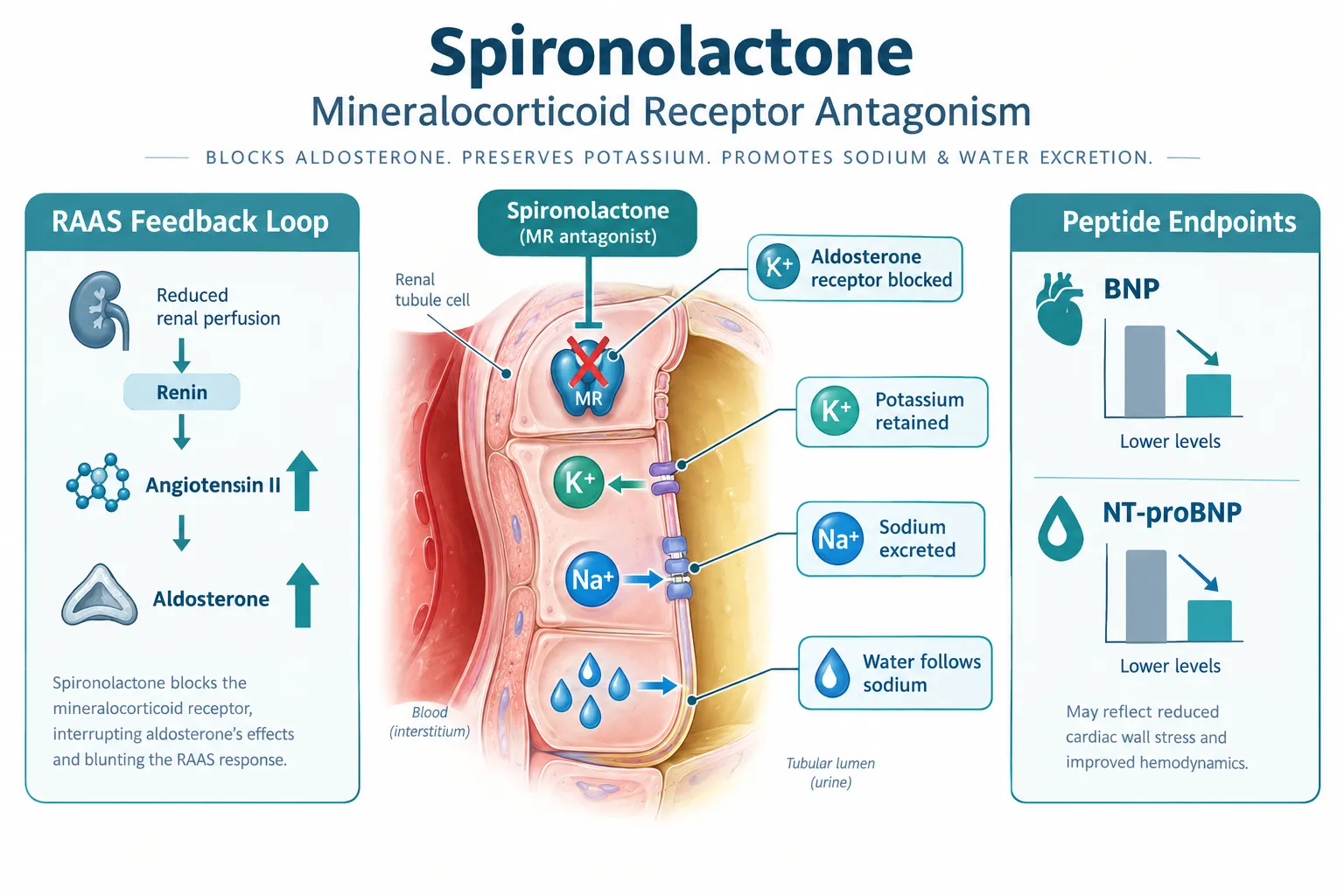
Spironolactone competitively binds the mineralocorticoid receptor in the distal nephron, blocking aldosterone's instruction to retain sodium and excrete potassium. The downstream consequences are not limited to electrolytes. When aldosterone signaling is suppressed at the receptor level, the body compensates through RAAS feedback, aldosterone and angiotensin II levels rise in plasma even as their end-organ effects are blunted. This dual signal creates a confounding environment for any peptide assay that uses aldosterone or angiotensin-related markers as primary endpoints.
Three core variables shift predictably with spironolactone:
| Variable | Direction of Change | Research Implication |
|---|---|---|
| Serum potassium | Increases | Risk of hyperkalaemia; confounds cardiac peptide safety data |
| Serum creatinine | Modest increase | Apparent renal function decline; not always true GFR loss |
| Natriuretic peptides (BNP/NT-proBNP) | Decreases | Reflects reduced cardiac wall stress, not peptide catabolism |
For researchers working with SS-31 peptide or other mitochondria-targeted compounds that influence renal tubular function, spironolactone's effect on tubular sodium transport is a critical baseline variable. Any study failing to account for concurrent MR antagonism risks misattributing renal transporter changes to the investigational peptide.
"Spironolactone is disease-modifying beyond simple diuresis, but potassium and renal markers remain the critical guardrails for peptide-driven research.", 2026 expert consensus
Potassium and Renal Thresholds: The Non-Negotiable Guardrails
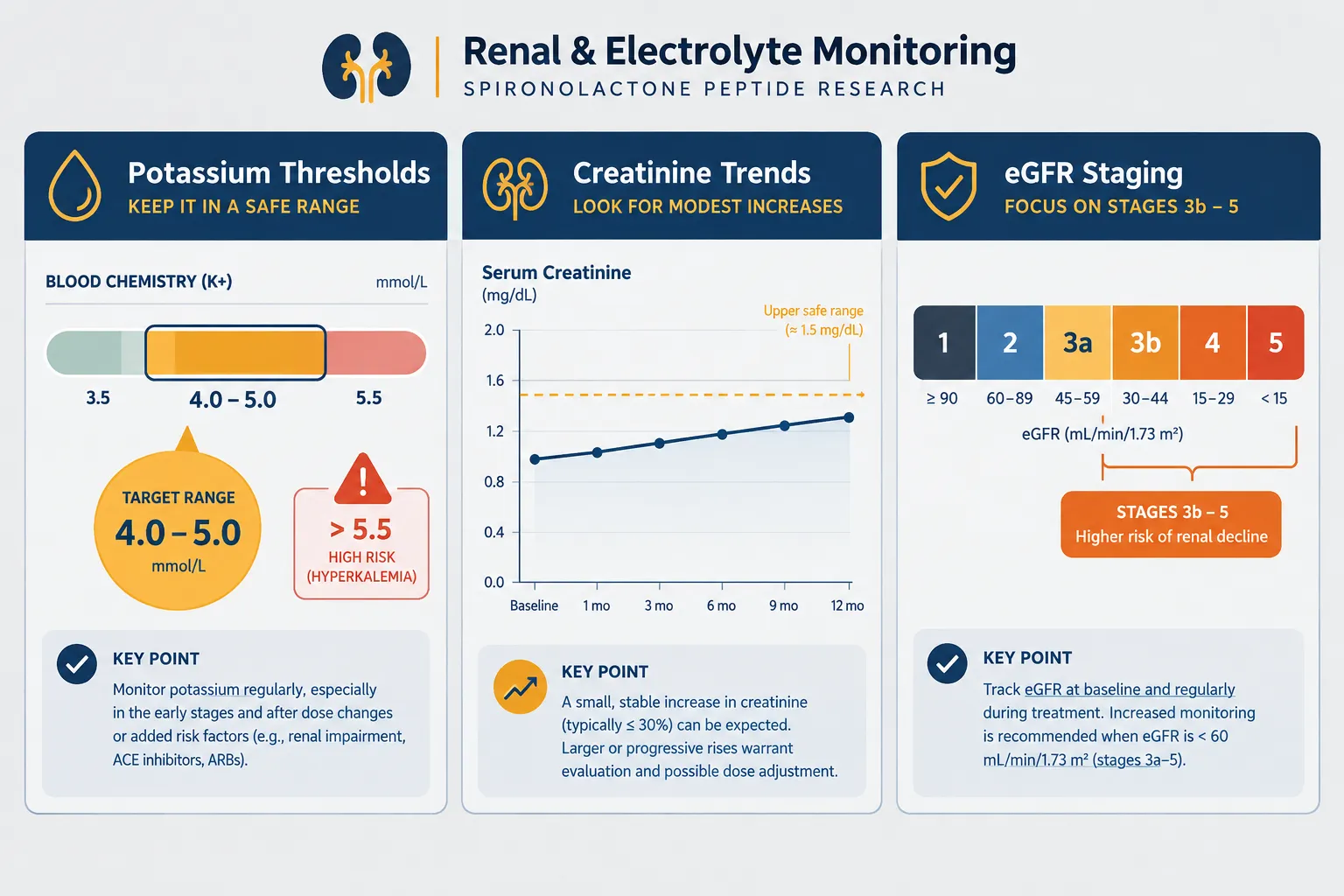
Current 2026 clinical guidance maintains strict thresholds for spironolactone initiation and continuation. Serum potassium above 5.0 mEq/L typically triggers dose reduction or discontinuation, and eGFR below 30 mL/min/1.73m² generally contraindicates use in standard clinical settings. However, emerging 2025 data from advanced CKD cohorts (stages 3b, 5) show that low-dose spironolactone combined with ACE inhibitor or ARB therapy can deliver cardiovascular benefit without excess hyperkalaemia or accelerated renal failure when monitoring is rigorous.
For peptide researchers, these thresholds matter because:
- Potassium elevation can independently alter cardiac electrophysiology, confounding any peptide study with cardiac safety endpoints.
- Creatinine rise within the first 2-4 weeks of spironolactone use reflects haemodynamic adjustment, not structural nephron loss, a distinction critical when interpreting renal peptide biomarkers.
- eGFR staging determines which renal transporter pathways are active, directly affecting the pharmacokinetics of co-administered peptides.
Researchers exploring peptide dosing protocols alongside mineralocorticoid antagonists must pre-specify potassium and creatinine monitoring windows. Multi-year heart failure cohort data confirm that renal and electrolyte shifts with spironolactone are small but consistent, meaning cumulative drift can cross safety thresholds over extended study periods.
Recommended monitoring intervals in research settings:
- Baseline potassium and creatinine before spironolactone introduction
- Repeat at 1 week and 4 weeks post-initiation
- Every 3 months during stable dosing phases
- Immediately after any dose change or addition of RAAS-active co-therapy
Hormonal and Fluid-Balance Endpoints in Spironolactone and Peptide Research
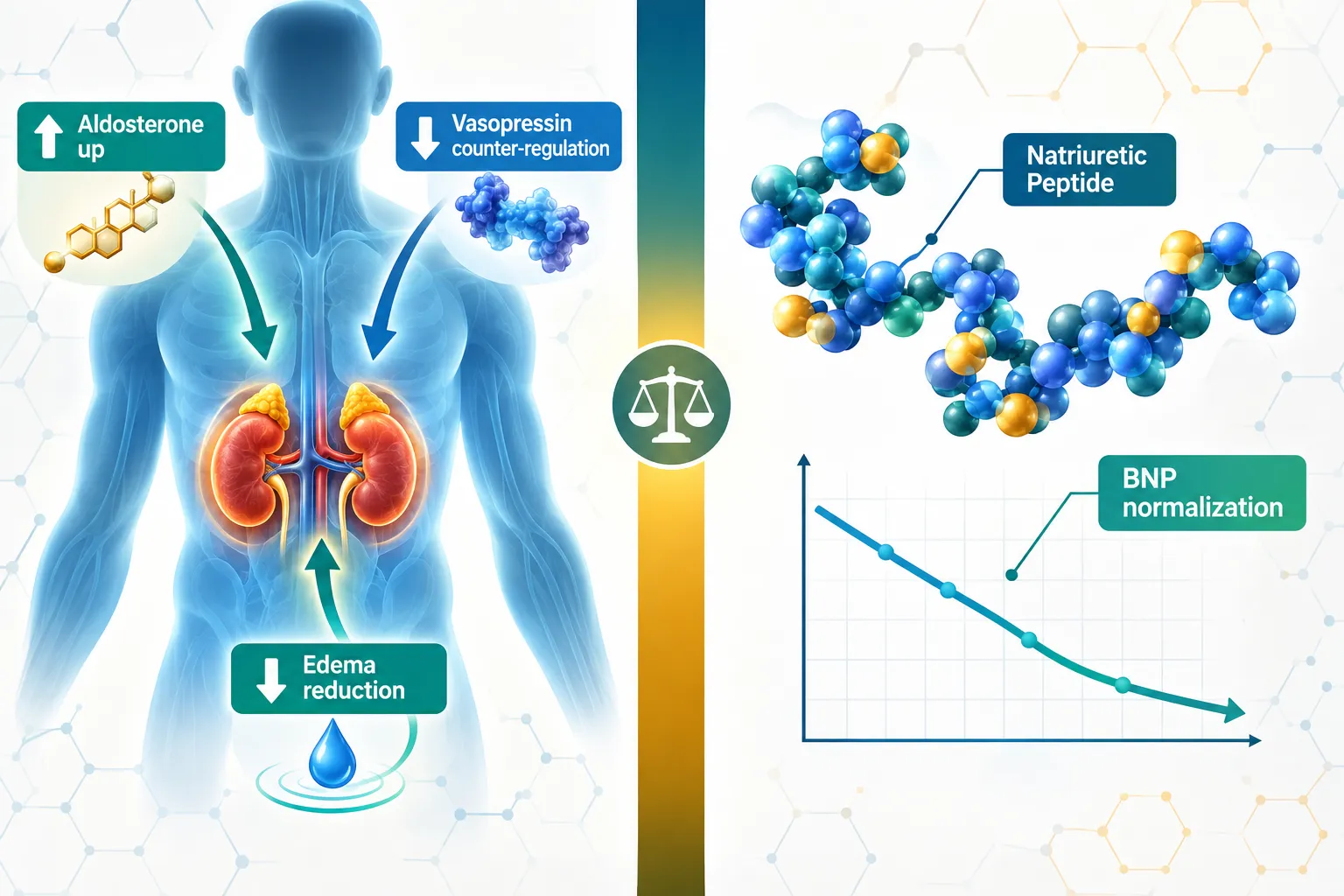
The hormonal picture in Spironolactone and Peptide Research: Interpreting Potassium, Renal, Hormonal, and Fluid-Balance Variables is layered. Aldosterone and vasopressin are the primary counter-regulators of water and sodium balance, and both respond to MR antagonism in ways that directly affect peptide endpoint interpretation.
Natriuretic peptide dynamics are particularly instructive. Spironolactone lowers BNP and NT-proBNP levels in heart failure and resistant hypertension cohorts, reflecting reduced ventricular wall stress as volume overload resolves. This reduction is not caused by peptide degradation or receptor downregulation, it is a genuine haemodynamic improvement. Researchers studying GLP-3 peptide compounds or other metabolic peptides that influence fluid retention must therefore distinguish spironolactone-driven natriuretic peptide changes from those attributable to the investigational agent.
Vasopressin remains an underappreciated variable. As spironolactone reduces volume overload, vasopressin secretion adjusts, altering free water clearance. Studies on peptides with antidiuretic properties, including vasoactive intestinal peptide analogs such as those found in VIP-5 peptide research, need to account for this vasopressin modulation as a confounder.
In primary aldosteronism, meta-analyses position spironolactone as first-line medical therapy, with potassium outcomes comparable to newer selective MRAs. This makes it a relevant background medication in any hormonal peptide study where aldosterone excess is a design variable. Researchers examining peptides and polypeptides in endocrine pharmacology will recognize that RAAS-peptide crosstalk extends well beyond simple sodium balance.
Ongoing trials in 2026 are titrating spironolactone to renin and blood pressure responses in low-renin hypertension, with integrated hormonal endpoints that include natriuretic peptides, aldosterone-to-renin ratios, and plasma angiotensin II. These trials provide a methodological template for any peptide study that incorporates MR antagonism as a background or co-intervention variable.
For researchers also examining mitochondrial or cytoprotective peptides, the SS-31 peptide benefits literature offers a useful parallel: renal tubular protection endpoints in that body of work face similar confounding from background diuretic and RAAS-active therapies.
Conclusion
Spironolactone and Peptide Research: Interpreting Potassium, Renal, Hormonal, and Fluid-Balance Variables demands a structured, mechanistically grounded approach. The drug's MR-antagonist action creates predictable shifts in potassium, creatinine, natriuretic peptides, aldosterone feedback, and vasopressin tone, each of which can masquerade as a peptide-specific effect if not properly controlled.
Actionable next steps for researchers:
- Pre-specify potassium and eGFR thresholds as stopping rules in any protocol that includes spironolactone.
- Separate haemodynamic natriuretic peptide changes from direct peptide-receptor effects using time-matched biomarker panels.
- Account for RAAS feedback elevation (aldosterone, angiotensin II) when interpreting hormonal peptide endpoints.
- Apply 2026 monitoring intervals, baseline, week 1, week 4, then quarterly, as the minimum standard for renal and electrolyte safety.
- Cross-reference fluid-balance metrics with vasopressin and osmolality data to isolate volume effects from peptide-specific actions.
Rigorous variable interpretation is what separates publishable peptide research from ambiguous data. Spironolactone's hormonal reach is wide; accounting for it fully is the foundation of credible results.