Call or Text 727-513-9780
  • Shopping Cart Shopping Cart
    0Shopping Cart
Pure Tested Peptides | America's most trusted Peptides for sale online
  • Peptides for sale
    • Oral Peptides for sale
      • Peptide Capsules for sale
      • BPC 157 Capsules 1000mcg
      • SLU-PP-332 Capsules | 1000 mcg
      • 5-Amino-1MQ 50mg Capsules
      • Tesofensine 500mcg
    • All Peptides for sale
    • Peptide Sprays
      • BPC 157 Nasal Spray Kit
      • BPC-157 TB500 Nasal Spray Kit
      • Semax Nasal Spray 10mg
      • Selank – Nasal Spray Kit – 10mg
      • Epithalon 50MG Nasal Spray Kit
      • Ipamorelin 10mg Nasal Spray
      • Klow Nasal Spray (BPC-157 + TB-500 + GHK-Cu + KPV) | 80mg
      • Hulk Nasal Spray Tesa / Ipa Blend 6/3 MG
      • Klow Nasal Spray
      • NAD + 500 mg Nasal Spray
      • PT-141 Nasal Spray Kit
    • GHRH Peptides
      • Ipa Peptides
      • CJC-1295 Peptides
        • CJC-1295 with DAC 5 mg
        • CJC-1295 without DAC 5 mg
        • CJC-1295 Ipa 10mg
      • Tesa Peptides
        • Tesa Peptide
        • Tesa 20 mg
    • GHK-Cu Peptides
      • All GHK-Cu Peptides
      • GHK-Cu 100mg
      • KLOW Peptide Blend – Buy KLOW blend online
    • BPC Peptides
      • All BPC Peptides
      • BPC-157
      • BPC-157 TB-500
      • BPC 157 capsules 1000mcg
    • SLU-PP-332 Peptides
      • All SLU-PP-332 Peptides
      • SLU-PP-332 5mg
    • GLP3 Peptides
    • PT-141 Peptides
      • PT-141 Peptides for sale
      • PT-141 10mg
      • PT-141 Nasal Spray
    • CAG Peptides
      • Lipo-C Peptide Blend
      • CAG 5mg
      • CAG 10mg
    • MOTS-C Peptides
      • MOTS-C Peptides for sale
      • MOTS-c peptide
      • MOTS-c 10mg *6 pack*
    • 5 Amino 1MQ Peptides
      • 5 Amino 1MQ Peptides for sale
      • 5-Amino-1MQ 50mg Capsules
      • 5-Amino-1MQ 5mg
    • Epithalon Peptides
      • Epithalon Peptides for sale
      • Epithalon 10mg
      • Epithalon 50mg
  • Shop
    • GLPs
      • 5-Amino-1MQ 50mg Capsules
      • 5-Amino-1MQ 5mg
      • L-Carnitine 500mg/ml
      • Tesofensine 500mcg
      • SLU-PP-332 5mg
      • MOTS-c 10mg *6 pack*
    • Epithalon & BPC Peptides
      • Epithalon 10mg
      • Epithalon 50mg
      • BPC-157
      • BPC 157 capsules 1000mcg
      • BPC-157 TB-500
      • BPC-157 TB500 Nasal Spray Kit
      • BPC 157 Nasal Spray Kit
    • BPC TB-500 & NAD+ Peptides
      • NAD+ 500 mg
      • KLOW Peptide Blend – Buy KLOW blend online
      • GLOW Peptide Blend
      • TB 500 5mg
      • BPC 157 capsules 1000mcg – Supplement
      • BPC 157 Nasal Spray Kit
      • BPC-157
      • BPC-157 TB500 Nasal Spray Kit
      • BPC-157 TB-500
      • BPC 157 capsules 1000mcg
    • LL-37 Peptide
      • LL-37 10 mg
    • MOTS-C & Selank
      • MOTS-c peptide
      • Selank 10mg
    • GHK Peptides
      • GHK-Cu 100mg
      • GLOW Peptide Blend
      • KLOW Peptide Blend – Buy KLOW blend online
  • COAs
  • Wholesale
    • Wholesale Peptides for sale
  • PTP FAQ
  • Affiliates
    • Selank Peptide: Advanced Pharmacological Mechanisms Underlying Its Anxiolytic and Nootropic Effects in Research
      • 5-Amino-1MQ Peptide: Detailed Mechanisms of NNMT Inhibition and Its Impact on Cellular Metabolism Research
        • MOTS-C Peptide: Unraveling Its Role in Mitochondrial Dynamics and Energy Metabolism Research
          • Epithalon Peptide and Telomerase Regulation: Investigating Its Impact on Cellular Senescence and Lifespan Research Models
            • GLP2-T vs GLP2 Tirz Peptide: Understanding the Naming, Mechanistic Nuances, and Research Implications for Gut Health
      • Peptides and Polypeptides in Modern Pharmacology: What Research on Metoprolol, Prednisone, and Amlodipine Reveals
        • Polypeptide Peptides vs NSAIDs: What Naproxen and Diclofenac Teach Tissue-Repair Researchers About BPC‑157 and TB‑500
          • Peptides and Polypeptides in Endocrine Pharmacology: How GLP-1, GLP-2, and GLP-3 Retatrutide Differ From Classic Drugs Like Prednisone and Amlodipine
          • 5‑Amino‑1MQ Peptide and NNMT Inhibition: How It Compares With Statins Like Atorvastatin in Adipose and Lipid Metabolism Research
      • Enclomiphene, Estrogen Receptor Signaling, and Luteinizing Phase Biology: What Hormone Researchers Should Measure
        • Mesenchymal Stem Cells, BPC‑157, and GHK‑Cu: How Tissue Repair Peptides Compare With Classic NSAIDs Like Naproxen in Injury Models
          • Peptide Calculator Use Cases Beyond Growth Hormone: Working Through GLP‑3 Retatrutide, MOTS‑c, and BPC‑157 Research Dosing
        • Polypeptide Peptides in Endocrine and Metabolic Pharmacology: Lessons From Amlodipine, Prednisone, and Metoprolol
        • Peptides Calculator for Advanced Blends: Worked Examples for Tesamorelin, CJC‑1295, and Ipamorelin Stacks
          • Peptides and Polypeptides in Human Physiology: How Molecular Size Shapes Research Applications
            • Selank Peptide: Advanced Pharmacological Mechanisms Underlying Its Anxiolytic and Nootropic Effects in Research
          • 5-Amino-1MQ Peptide: Detailed Mechanisms of NNMT Inhibition and Its Impact on Cellular Metabolism Research
            • MOTS-C Peptide: Unraveling Its Role in Mitochondrial Dynamics and Energy Metabolism Research
              • Epithalon Peptide and Telomerase Regulation: Investigating Its Impact on Cellular Senescence and Lifespan Research Models
                • GLP2-T vs GLP2 Tirz Peptide: Understanding the Naming, Mechanistic Nuances, and Research Implications for Gut Health
                  • Peptides and Polypeptides in Endocrine Pharmacology: How GLP-1, GLP-2, and GLP-3 Retatrutide Differ From Classic Drugs Like Prednisone and Amlodipine
                    • Polypeptide Peptides vs NSAIDs: What Naproxen and Diclofenac Teach Tissue-Repair Researchers About BPC‑157 and TB‑500
                      • Peptides and Polypeptides in Modern Pharmacology: What Research on Metoprolol, Prednisone, and Amlodipine Reveals
                        • 5‑Amino‑1MQ Peptide and NNMT Inhibition: How It Compares With Statins Like Atorvastatin in Adipose and Lipid Metabolism Research
                        • Enclomiphene, Estrogen Receptor Signaling, and Luteinizing Phase Biology: What Hormone Researchers Should Measure
                        • Mesenchymal Stem Cells, BPC‑157, and GHK‑Cu: How Tissue Repair Peptides Compare With Classic NSAIDs Like Naproxen in Injury Models
                        • Peptide Calculator Use Cases Beyond Growth Hormone: Working Through GLP‑3 Retatrutide, MOTS‑c, and BPC‑157 Research Dosing
                        • Polypeptide Peptides in Endocrine and Metabolic Pharmacology: Lessons From Amlodipine, Prednisone, and Metoprolol
                        • Peptides Calculator for Advanced Blends: Worked Examples for Tesamorelin, CJC‑1295, and Ipamorelin Stacks
                        • Peptides and Polypeptides in Human Physiology: How Molecular Size Shapes Research Applications
                        • Selank Peptide: Advanced Pharmacological Mechanisms Underlying Its Anxiolytic and Nootropic Effects in Research
                        • MOTS-C Peptide: Unraveling Its Role in Mitochondrial Dynamics and Energy Metabolism Research
                        • Peptides and Polypeptides in Modern Pharmacology: What Research on Metoprolol, Prednisone, and Amlodipine Reveals
                        • Peptides and Polypeptides in Endocrine Pharmacology: How GLP-1, GLP-2, and GLP-3 Retatrutide Differ From Classic Drugs Like Prednisone and Amlodipine
                        • 5-Amino-1MQ Peptide: Detailed Mechanisms of NNMT Inhibition and Its Impact on Cellular Metabolism Research
                        • Mesenchymal Stem Cells, BPC‑157, and GHK‑Cu: How Tissue Repair Peptides Compare With Classic NSAIDs Like Naproxen in Injury Models
                        • Peptide Calculator Use Cases Beyond Growth Hormone: Working Through GLP‑3 Retatrutide, MOTS‑c, and BPC‑157 Research Dosing
                        • GLP2-T vs GLP2 Tirz Peptide: Understanding the Naming, Mechanistic Nuances, and Research Implications for Gut Health
                        • Polypeptide Peptides in Endocrine and Metabolic Pharmacology: Lessons From Amlodipine, Prednisone, and Metoprolol
                        • Polypeptide Peptides vs NSAIDs: What Naproxen and Diclofenac Teach Tissue-Repair Researchers About BPC‑157 and TB‑500
                        • Peptides and Polypeptides in Human Physiology: How Molecular Size Shapes Research Applications
                        • Peptides Calculator for Advanced Blends: Worked Examples for Tesamorelin, CJC‑1295, and Ipamorelin Stacks
                        • 5‑Amino‑1MQ Peptide and NNMT Inhibition: How It Compares With Statins Like Atorvastatin in Adipose and Lipid Metabolism Research
                        • Enclomiphene, Estrogen Receptor Signaling, and Luteinizing Phase Biology: What Hormone Researchers Should Measure
                        • Epithalon Peptide and Telomerase Regulation: Investigating Its Impact on Cellular Senescence and Lifespan Research Models
                        • Best research protocol Klow blend
                        • best time to take BPC-157
                        • best time to take DSIP (Delta Sleep Inducing Peptide)
                        • best time to take CJC-1295
                        • best time to take AOD-9604
                        • best time to take Follistatin 344
                        • best time to take Ipamorelin
                        • best time to take MK-677 (Ibutamoren)
                        • best time to take Ligandrol (LGD-4033) — research compound
                        • best time to take Ostarine (MK-2866) — research compound
                        • best time to take GHK-CU
                        • best time to take TB-500
                        • best time to take MOTS-c
                        • best time to take Semax
                        • best time to take RAD-140 (Testolone) — research compound
                        • best time to take Thymosin Alpha-1
                        • best time to take PEG-MGF
                        • Biolife Plasma, Octapharma Plasma, and Research Peptides: How Plasma Donation Labs Differ From Peptide Suppliers
                        • best time to take YK-11 — research compound
                        • best time to take PT-141 (Bremelanotide)
                        • Best research protocol Klow blend
                        • 5-Amino-1MQ and MOTS-C Synergy: Metabolic Signaling, Mitochondria, and Research Design
                        • BPC-157 and TB-500: Investigating Their Combined Effects on Angiogenesis and Cellular Migration in Tissue Repair Models
                        • BPC-157 Peptide: Gut Barrier Function, Inflammation, and Tissue-Recovery Research
                        • 5‑Amino‑1MQ and MOTS‑c Synergy in Metabolic Research: Designing NNMT and Mitochondrial Biogenesis Stacks
                        • CJC-1295 with DAC vs. Without DAC: Half-Life, Release Kinetics, and Research Implications
                        • CJC‑1295 with DAC vs. Without DAC: Expanding on Half‑Life Differences Using Tesamorelin and Ipamorelin Blend Case Studies
                        • Collagen Biology and Copper‑Binding Peptides: How GHK‑Cu, Glow Blend, and Klow Blend Interact with Skin and Connective Tissue
                        • Collagen Biology and Regenerative Peptides: How GHK‑Cu, Glow Blend, and Klow Blend Affect Extracellular Matrix Research
                    • DNA, Telomeres, and Longevity Peptides: Positioning Epithalon and MOTS‑c in Genetic Aging Research
                      • Enclomiphene Citrate: serm Mechanism, Testosterone Research, and Stack Compatibility
                        • Enclomiphene vs Enclomiphene Citrate: Formulation, Bioavailability, and Research Distinctions
                        • Epithalon Peptide Research: Telomerase Activation, Aging, and Pineal Gland Function
                        • Estrogen Receptor Signaling and Enclomiphene: How Selective Modulators Compare with Classic Polypeptide Hormones
                        • GHK-Cu Peptide: Advanced Mechanisms in Extracellular Matrix Remodeling and Wound Healing Research
                        • GHK-Cu Peptide: Collagen Synthesis, Wound Repair, and Skin-Barrier Research Models
                        • GLP-1 vs GLP-3 vs GLP-2: Peptide Classification and Research Applications
                        • GLP-2 Peptide Research Guide: Gut Barrier Function, Nutrient Absorption, and Intestinal Recovery Models
                        • GLP-3 Retatrutide vs. GLP-1 Drugs: What Triple-Agonist Biology Changes in Research Models
                        • Ipamorelin and Tesamorelin Combination: Synergistic GH Secretagogue Research and Dosing Protocols
                        • GLP2 Tirz Peptide: What It Is, Why the Name Exists, and How Researchers Should Interpret It
                        • Klow Blend Peptide Nasal Spray: What the Formulation Is Trying to Do in Cognitive Research
                        • Mitochondria, NNMT Inhibition, and Peptide Modulators: Where MOTS‑c and 5‑Amino‑1MQ Fit in Cellular Energy Research
                        • MOTS-c Peptide: Mitochondrial Function, Energy Metabolism, and What Researchers Measure
                        • MOTS-c vs. 5-Amino-1MQ: Which Metabolic Research Questions Each Compound Actually Answers
                        • Nasal Spray Peptides: Bioavailability, Administration, and Semax/Selank Research Applications
                        • PT-141 Peptide Research: Mechanism of Action and Melanocortin Receptor Signaling
                        • Retatrutide for Research: Mechanism, Structure, and GLP-1/GLP-3 Dual Action
                        • Retatrutide for Obesity and Type 2 Diabetes: What the Latest Trial Data Suggest
                        • Tesofensine Peptide Research: Mechanism, Appetite Suppression, and Neuropeptide Y Pathways
  • Contact
    • Contact Customer Service
    • Text Customer Support
  • About US
  • Shop all peptides
  • Affiliate Program
    • Affiliate Signup
  • Login / Register Login / Register Page Link Login / Register Page Link
  • Click to open the search input field Click to open the search input field Search
  • Menu Menu

Tag Archive for: research grade peptides

Where to Buy Research-Grade MOTS‑c and 5‑Amino‑1MQ: Quality Criteria for Mitochondrial Peptide Studies

Where to Buy Research-Grade MOTS‑c and 5‑Amino‑1MQ: Quality Criteria for Mitochondrial Peptide Studies

July 30, 2026/0 Comments/in Uncategorized/by

Fewer than 30% of peptide products sold online meet the purity thresholds required for reproducible preclinical research, a sobering figure for any investigator designing mitochondrial biogenesis experiments. Knowing where to buy research-grade MOTS-c and 5-Amino-1MQ, and understanding the quality criteria for mitochondrial peptide studies, is not a minor administrative detail. It is a foundational decision that determines whether experimental data will hold up to scrutiny.

Key Takeaways

  • Research-grade MOTS-c and 5-Amino-1MQ require a minimum purity of 98%, confirmed by HPLC and mass spectrometry.
  • A valid Certificate of Analysis (COA) from an independent third-party laboratory is the single most important vendor document to request.
  • Mitochondrial peptide studies are especially sensitive to impurities because contaminants can independently alter cellular energy metabolism.
  • Vendor transparency, including batch-specific testing, storage protocols, and synthesis documentation, is a reliable proxy for product quality.
  • Price alone is a poor quality indicator; the cheapest option often carries the highest experimental risk.
Key Takeaways

Understanding MOTS-c and 5-Amino-1MQ in Mitochondrial Research

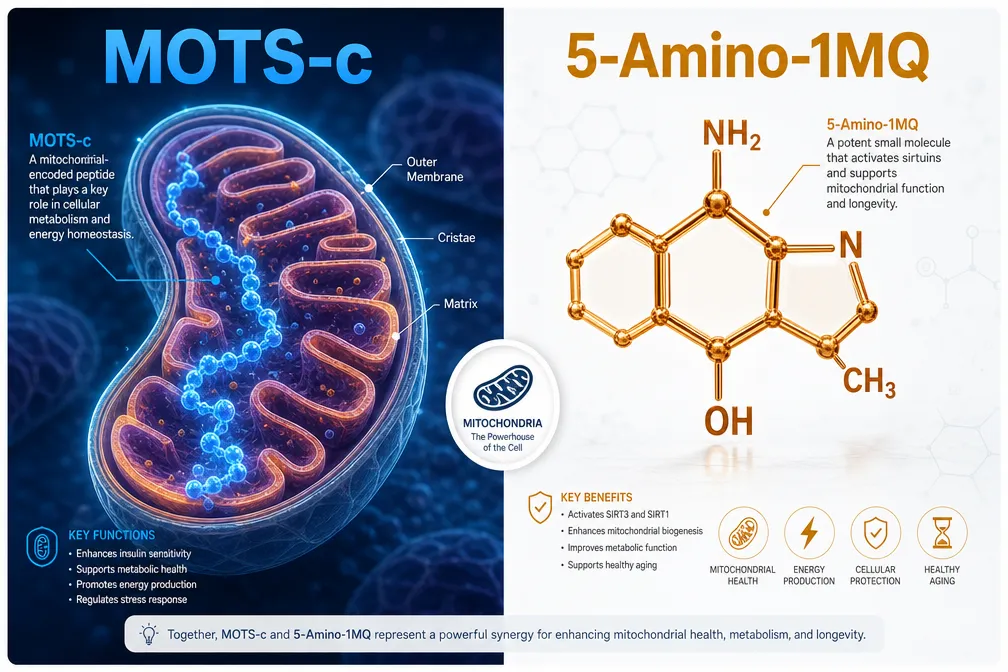
MOTS-c is a 16-amino-acid peptide encoded within the mitochondrial genome. Research published since its identification has linked it to insulin sensitivity, AMPK pathway activation, and cellular stress responses. It is one of a small class of mitochondria-derived peptides (MDPs) that operate as systemic metabolic regulators.

5-Amino-1MQ (5-amino-1-methylquinolinium) is a small-molecule NNMT inhibitor. By blocking nicotinamide N-methyltransferase, it influences the NAD+ salvage pathway, which is tightly coupled to mitochondrial function and energy homeostasis. Researchers investigating metabolic disease, adipogenesis, and mitochondrial biogenesis increasingly combine these two compounds to probe complementary mechanisms.

Both compounds are sold exclusively for in vitro and in vivo research purposes. Neither is approved for human therapeutic use. Investigators should review the research-only peptides guidelines before designing any protocol.

Because mitochondrial assays, including oxygen consumption rate (OCR) measurements, ATP quantification, and membrane potential assays, are highly sensitive to trace contaminants, the sourcing decision carries more weight here than in many other peptide research contexts. Even sub-percent impurities can independently modulate mitochondrial membrane potential, producing artifacts that mimic or mask the compound's true effect.

Core Quality Criteria for Mitochondrial Peptide Studies
Core Quality Criteria for Mitochondrial Peptide Studies

When evaluating where to buy research-grade MOTS-c and 5-Amino-1MQ, quality criteria for mitochondrial peptide studies come down to five verifiable standards.

Purity Threshold

Minimum acceptable purity: 98% by HPLC. For mitochondrial assays, many research groups set an internal standard of 99% or higher. Any vendor unable to provide batch-specific HPLC chromatograms should be disqualified immediately.

Mass Spectrometry Confirmation

HPLC alone confirms purity but not identity. Mass spectrometry (MS) verification confirms the molecular weight matches the target compound. For MOTS-c, the expected molecular weight is approximately 2174 Da. For 5-Amino-1MQ, it is approximately 174.2 Da. A COA that lacks MS data is incomplete.

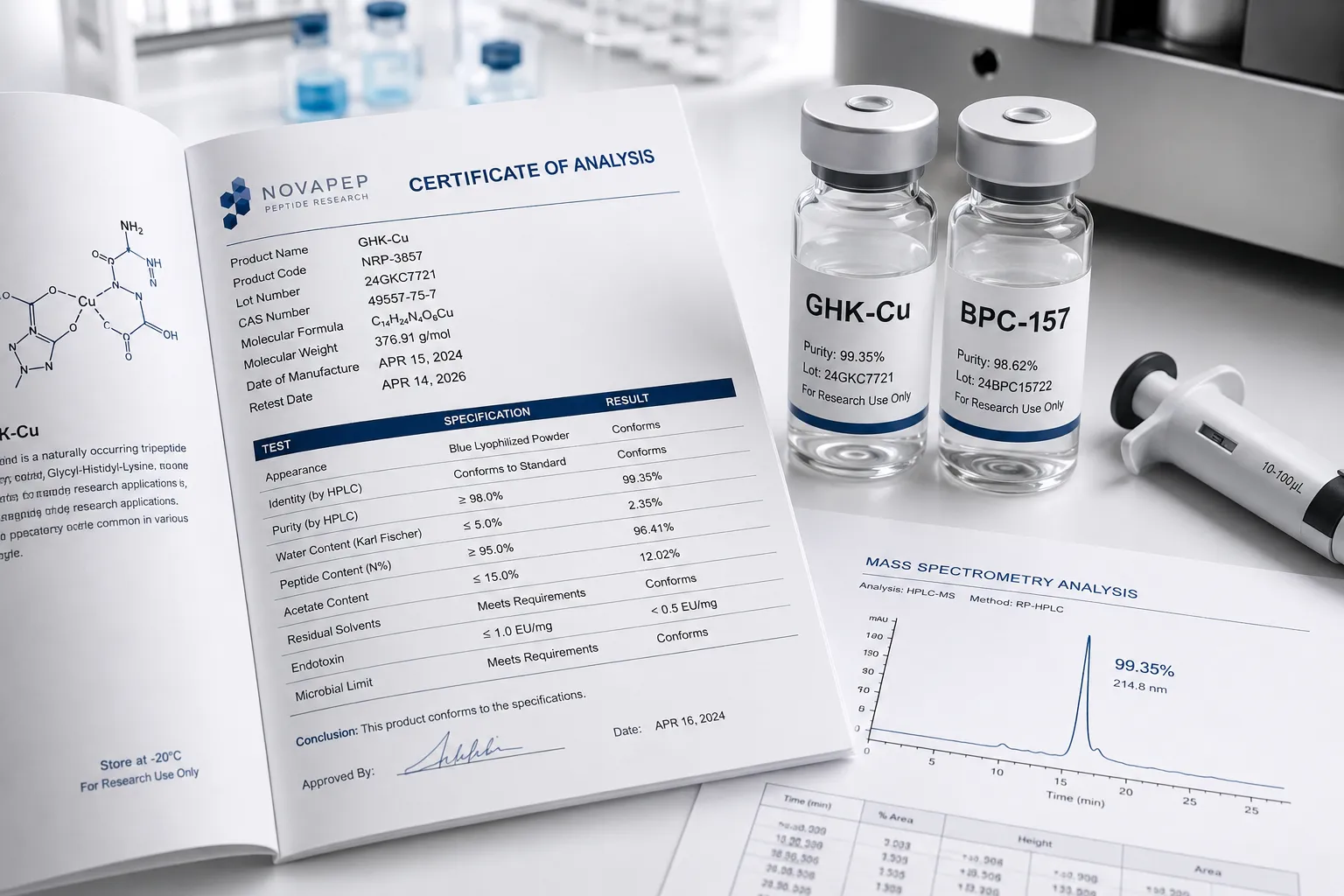
Certificate of Analysis, What to Look For

A valid COA should include:

  • Compound name and CAS number
  • Lot or batch number
  • Synthesis date and expiration date
  • HPLC purity percentage with a chromatogram
  • MS data confirming molecular weight
  • Residual solvent testing results
  • Sterility or endotoxin data (for in vivo studies)

The COA must be batch-specific, not a generic document reused across multiple lots. Vendors who provide only a single undated COA for all stock are a red flag. For a broader discussion of how reference standards underpin peptide benchmarking, see this resource on Bachem and reference standards for peptide benchmarks.

Third-Party vs. In-House Testing

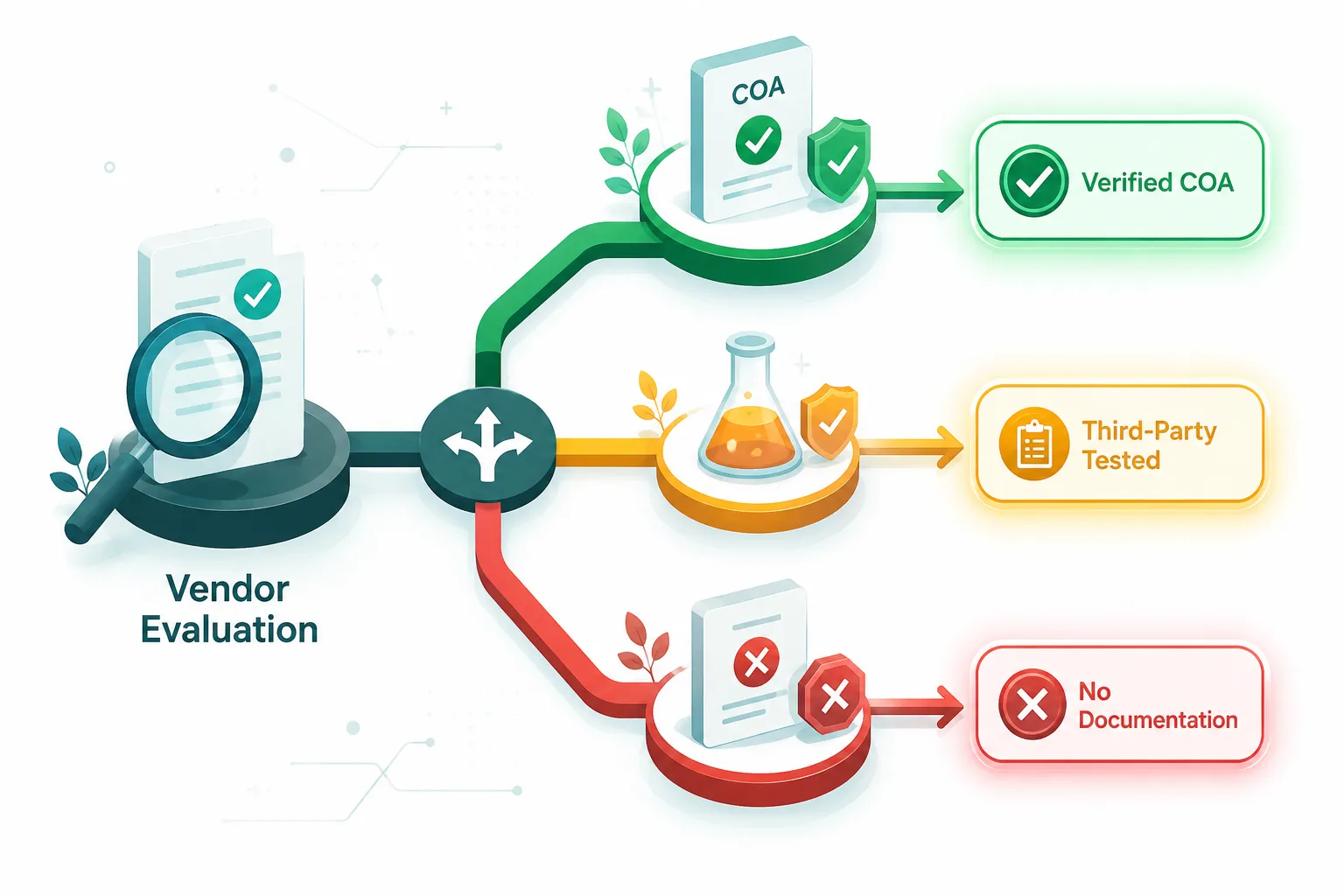
Third-party laboratory testing carries significantly more credibility than in-house testing. Independent labs have no financial incentive to pass a failing batch. Reputable vendors will name the testing laboratory on the COA or provide a direct link to the lab's report.

Storage and Shipping Conditions

MOTS-c is a peptide and degrades under heat and moisture. 5-Amino-1MQ is more stable but still benefits from controlled storage. Vendors should ship with desiccant, cold packs where appropriate, and provide clear reconstitution and storage instructions. Lyophilized peptides stored at -20°C retain potency significantly longer than those stored at room temperature.

Evaluating Vendors: A Practical Framework
Evaluating Vendors: A Practical Framework

Knowing where to buy research-grade MOTS-c and 5-Amino-1MQ requires a structured vendor evaluation process. The following framework applies quality criteria for mitochondrial peptide studies in a practical, repeatable way.

Step 1, Request Documentation Before Purchase

Contact the vendor directly and request:

  1. A batch-specific COA for the current lot
  2. The name of the third-party testing laboratory
  3. Confirmation of synthesis method (solid-phase peptide synthesis is standard for MOTS-c)
  4. Storage and stability data

A vendor that responds promptly with complete documentation is demonstrating operational transparency. A vendor that deflects, provides generic documents, or cannot name their testing lab warrants immediate disqualification.

Step 2, Cross-Reference Molecular Data

Use publicly available databases (PubChem, UniProt) to verify that the molecular weight and sequence data on the COA match the known reference values for MOTS-c and 5-Amino-1MQ. This takes under five minutes and catches a surprising number of mislabeled products.

Step 3, Assess Vendor Transparency

Reputable suppliers of quality peptides publish their testing methodology, maintain updated product pages with current lot information, and respond to technical inquiries with substantive answers, not sales language.

Researchers sourcing MOTS-c specifically can review detailed product documentation at the MOTS-c peptide product page, which provides synthesis and purity information relevant to study design.

For comparative context on mitochondria-targeting peptides, the MOTS-c and elamipretide research overview is a useful reference when designing multi-compound protocols.

Step 4, Evaluate the Product Catalog Context

A vendor specializing in research peptides with a broad, documented catalog, including compounds like SS-31 (elamipretide), GHK-Cu, and other mitochondrial or metabolic peptides, is more likely to maintain consistent quality standards than a generalist supplement retailer adding peptides as an afterthought. The SS-31 elamipretide product category is a useful benchmark: vendors who carry it with proper documentation tend to apply the same rigor across their catalog.

For researchers working with copper peptides in parallel studies, the GHK-Cu peptide sourcing guide applies many of the same COA evaluation principles discussed here.

Common Sourcing Pitfalls

Pitfall Why It Matters
No batch-specific COA Cannot verify lot-to-lot consistency
HPLC purity below 98% Contaminants may alter mitochondrial assay results
No MS identity confirmation Product may be a structural analog, not the target compound
Ambient-temperature shipping Peptide degradation before arrival
Unusually low price Often correlates with reduced testing rigor

Researchers tempted by low-cost options should review the risks outlined in this analysis of cheapest peptides online before making a sourcing decision based primarily on price.

Conclusion

The integrity of mitochondrial peptide research depends directly on the quality of the compounds used. For investigators focused on MOTS-c and 5-Amino-1MQ, the sourcing decision is inseparable from the scientific decision. Applying rigorous quality criteria, batch-specific COAs, third-party HPLC and MS verification, proper cold-chain logistics, and vendor transparency, is not optional; it is the baseline for producing reproducible data.

Actionable next steps for researchers in 2026:

  1. Build a vendor evaluation checklist using the five quality criteria outlined above.
  2. Request COA documentation before placing any order, and verify molecular data against reference databases.
  3. Prioritize suppliers who name their third-party testing laboratory and provide batch-specific documentation.
  4. Store lyophilized MOTS-c at -20°C and follow vendor-specific reconstitution protocols to preserve activity.
  5. Cross-reference sourcing decisions with peer-reviewed protocols to ensure compound specifications meet the demands of the specific assay being used.

Reproducible science starts with verified compounds. The time invested in evaluating a vendor before purchase is always less than the time lost to ambiguous experimental results caused by substandard materials.

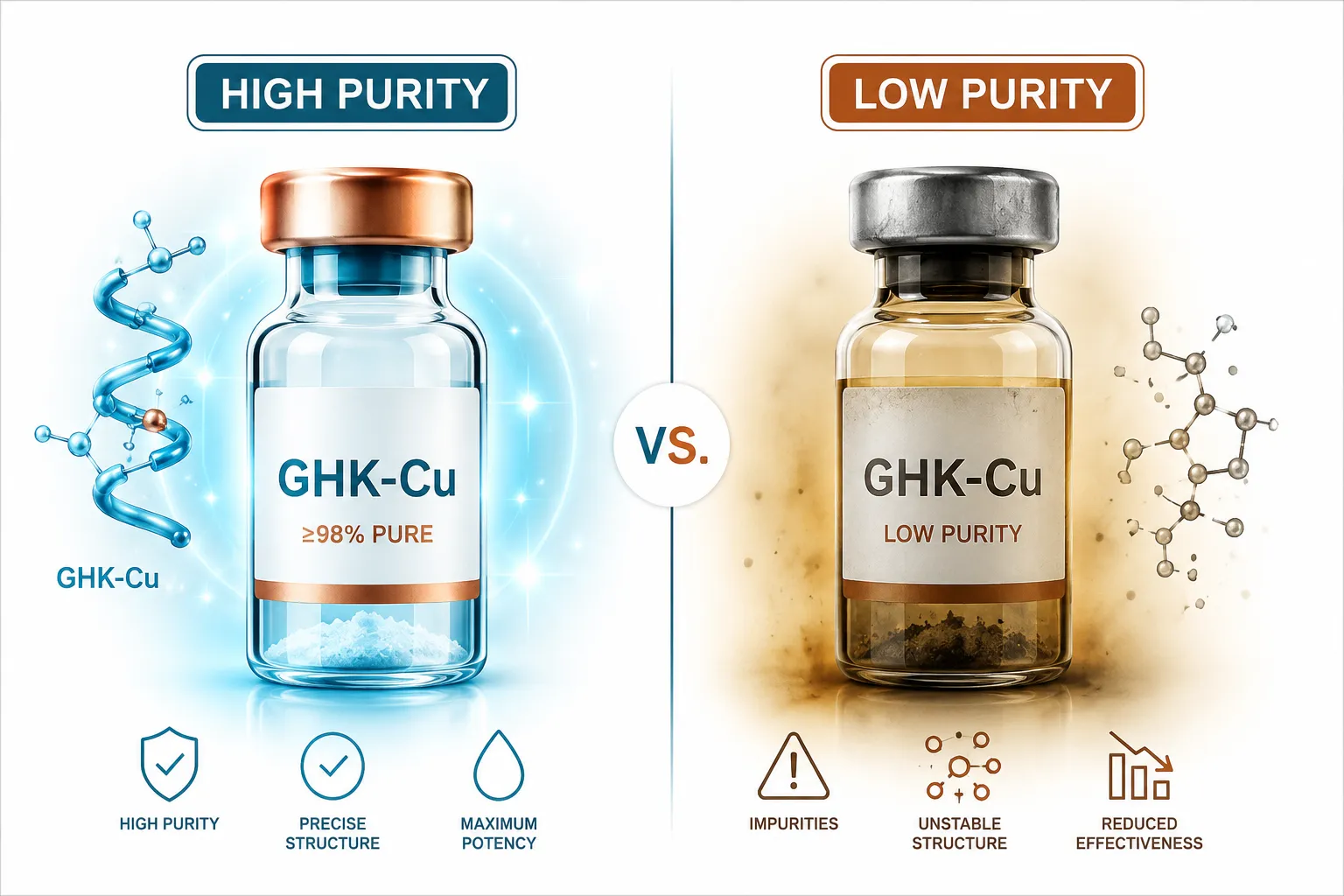
https://www.puretestedpeptides.com/wp-content/uploads/2026/07/where-to-buy-research-grade-mots-c-and-5-amino-1mq-quality-criteria-for-mitochon.webp 1024 1536 https://www.puretestedpeptides.com/wp-content/uploads/2026/01/buy-peptides-online.jpg 2026-07-30 13:04:592026-07-30 13:04:59Where to Buy Research-Grade MOTS‑c and 5‑Amino‑1MQ: Quality Criteria for Mitochondrial Peptide Studies
Where to Buy Research-Grade Glow Blend Peptide: Evaluating Purity, Copper Complexes, and Skin-Model Compatibility

Where to Buy Research-Grade Glow Blend Peptide: Evaluating Purity, Copper Complexes, and Skin-Model Compatibility

July 30, 2026/0 Comments/in Uncategorized/by

Fewer than 30% of peptide products sold online carry independent third-party purity certificates, a sobering figure for researchers who depend on consistent compound quality to generate reproducible data. For anyone navigating where to buy research-grade Glow Blend peptide while evaluating purity, copper complexes, and skin-model compatibility, that statistic is the right place to start. Sourcing decisions made at the catalog stage directly shape the reliability of every downstream assay.

Key Takeaways

  • Research-grade Glow Blend peptide must meet strict purity thresholds (typically 98%+) verified by HPLC and mass spectrometry before use in skin models.
  • GHK-Cu (copper tripeptide-1) is the anchor active in most Glow Blend formulations; its copper coordination chemistry must remain intact through lyophilization and reconstitution.
  • Excipient profiles, including carrier solvents, stabilizers, and pH buffers, directly affect compatibility with in vitro keratinocyte and fibroblast assays.
  • Supplier vetting should include certificate of analysis review, batch-specific testing, and confirmed cold-chain logistics.
  • Regulatory context matters: research peptides are sold strictly for laboratory use, not for human application.

Key Takeaways

Understanding What Glow Blend Peptide Contains

Before evaluating where to buy research-grade Glow Blend peptide and assessing purity, copper complexes, and skin-model compatibility, researchers need a clear picture of the compound's composition.

Glow Blend peptide is a multi-component formulation typically anchored by GHK-Cu (glycyl-L-histidyl-L-lysine copper(II)), often combined with supporting peptides such as Palmitoyl Tripeptide-1, Acetyl Hexapeptide-3, or similar signal peptides. Each component targets a distinct pathway in skin biology:

Component Primary Research Target
GHK-Cu Collagen synthesis, wound signaling, antioxidant activity
Palmitoyl Tripeptide-1 Extracellular matrix remodeling
Acetyl Hexapeptide-3 Neuromuscular junction signaling in vitro

For a deeper background on GHK-Cu sourcing and its coordination chemistry, the GHK-Cu peptide purchase and copper peptide research sourcing guide provides a thorough overview of what to look for in a copper-chelated peptide product.

Understanding what the Glow peptide does at the receptor and signaling level is equally important before designing any in vitro protocol.

Purity Standards and Copper Complex Integrity

Purity Standards and Copper Complex Integrity

Why Purity Thresholds Matter

For skin-model research, including reconstructed epidermis assays and primary keratinocyte cultures, peptide purity below 98% introduces uncontrolled variables. Impurities such as residual solvents, truncated sequences, or oxidized copper species can trigger cytotoxic responses that confound results.

Minimum documentation to request from any supplier:

  • HPLC chromatogram with area-under-curve purity percentage
  • Mass spectrometry confirmation of molecular weight
  • Endotoxin testing (LAL assay), especially for cell-culture applications
  • Certificate of Analysis (CoA) tied to the specific batch number on the vial

Copper Complex Stability

GHK-Cu's biological activity depends entirely on intact copper(II) coordination. During lyophilization (freeze-drying), improper buffer conditions or temperature excursions can cause copper dissociation, yielding free GHK peptide with no metal center. This renders the compound functionally different from what the research literature describes.

"A copper peptide that has lost its metal coordination is not the same molecule, it is a different research variable entirely."

When reviewing a supplier's CoA, look specifically for confirmation that the copper:peptide molar ratio meets the 1:1 stoichiometry expected for GHK-Cu. Suppliers who cannot provide this data should be disqualified from consideration.

Excipient Compatibility

Many Glow Blend formulations include excipients such as mannitol (a lyoprotectant), acetate or phosphate buffers, or trace DMSO as a carrier. Each of these can interfere with specific assay types:

  • Mannitol is generally inert in keratinocyte cultures at low concentrations.
  • DMSO above 0.1% v/v is cytotoxic to most skin-model systems.
  • Acetate buffers can shift well-plate pH if reconstitution volume is miscalculated.

Requesting a full excipient disclosure is a non-negotiable step before committing to a supplier for skin-model work.

How to Vet Suppliers for Research-Grade Glow Blend Peptide

How to Vet Suppliers for Research-Grade Glow Blend Peptide

Evaluating Where to Buy Research-Grade Glow Blend Peptide: Key Supplier Criteria

The question of where to buy research-grade Glow Blend peptide while evaluating purity, copper complexes, and skin-model compatibility ultimately comes down to a structured vetting process. The following criteria separate credible research-grade suppliers from commodity vendors:

1. Independent Third-Party Testing
Reputable suppliers use external ISO-accredited laboratories rather than in-house testing alone. Batch-specific CoAs should be publicly accessible or available on request.

2. Cold-Chain Logistics
Lyophilized peptides tolerate ambient shipping better than reconstituted solutions, but GHK-Cu is still sensitive to heat and humidity. Suppliers should ship with desiccant packs and clearly state storage conditions (typically -20°C for long-term storage).

3. Transparent Formulation Disclosure
A research-grade supplier will disclose the full peptide sequence, molecular weight, and excipient list. Vague product descriptions are a red flag.

4. Research-Only Sales Policy
Legitimate suppliers sell peptides exclusively for laboratory research purposes, not for human use. This is a compliance marker that signals a professionally operated business.

For researchers also sourcing related compounds, reviewing quality peptide sourcing standards offers a useful benchmark framework applicable across peptide categories.

Those working in Canada should also consult the peptides in Canada sourcing guide for region-specific regulatory context.

Skin-Model Compatibility Checklist

Before ordering, confirm the following with the supplier:

  • Sterile filtration (0.22 micron) available or specified
  • Endotoxin levels below 1 EU/mg for cell-culture applications
  • Peptide solubility data in aqueous buffers relevant to your assay system
  • Stability data under your expected storage conditions

Researchers running parallel studies with other peptide compounds can find additional sourcing guidance in the research blog covering multi-peptide experimental design.

For those evaluating blend formulations more broadly, the Glow Blend peptide product page provides current catalog specifications and documentation availability.

It is also worth reviewing what not to mix with peptides before designing multi-compound assay protocols, as certain co-solvents and buffer combinations can degrade copper complexes rapidly.

Conclusion

Sourcing research-grade Glow Blend peptide is not a passive catalog decision, it is an active quality-control process. Researchers should require HPLC and mass spectrometry documentation, verify copper(II) coordination integrity in GHK-Cu-containing blends, and audit excipient profiles against their specific skin-model assay requirements before placing any order.

Actionable next steps:

  1. Request batch-specific CoAs from at least two suppliers and compare purity percentages and endotoxin data side by side.
  2. Confirm copper:peptide stoichiometry is documented at 1:1 for GHK-Cu components.
  3. Cross-reference excipient lists against your cell-culture system's solvent tolerance thresholds.
  4. Verify the supplier operates under a research-only sales policy with transparent third-party testing.
  5. Store lyophilized product at -20°C and document reconstitution conditions in your lab notebook before beginning any skin-model experiment.

Rigorous sourcing is the foundation of reproducible skin-biology research. The time invested in vetting a supplier before the first order protects the integrity of every experiment that follows.

https://www.puretestedpeptides.com/wp-content/uploads/2026/07/where-to-buy-research-grade-glow-blend-peptide-evaluating-purity-copper-complexe.webp 1024 1536 https://www.puretestedpeptides.com/wp-content/uploads/2026/01/buy-peptides-online.jpg 2026-07-30 13:04:122026-07-30 13:04:12Where to Buy Research-Grade Glow Blend Peptide: Evaluating Purity, Copper Complexes, and Skin-Model Compatibility
Page 2 of 212

Tag Archive for: research grade peptides

Nothing Found

Sorry, no posts matched your criteria

×

Helpful Links

  • My account
  • Cart
  • Checkout
  • Refund and Returns Policy
  • Privacy Policy
  • SMS Privacy Policy
  • Login
  • My Account
  • Logout

USA Made Lab Tested Peptides

All products are sold for research, laboratory, or analytical purposes only, and are not for human consumption


Pure Tested Peptides is a chemical supplier. Pure Tested Peptides is not a compounding / chemical compounding facility as defined under 503A of the Federal Food, Drug, and Cosmetic act. Pure Tested Peptides is not an outsourcing facility as defined under 503B of the Federal Food, Drug, and Cosmetic act.

The statements made within this website have not been evaluated by the US Food and Drug Administration. The products we offer are not intended to diagnose, treat, cure or prevent any disease.

Human/Animal Consumption Prohibited. Laboratory/In-Vitro Experimental Use Only

Scroll to top Scroll to top Scroll to top