Call or Text 727-513-9780
  • Shopping Cart Shopping Cart
    0Shopping Cart
Pure Tested Peptides | America's most trusted Peptides for sale online
  • Peptides for sale
    • Oral Peptides for sale
      • Peptide Capsules for sale
      • BPC 157 Capsules 1000mcg
      • SLU-PP-332 Capsules | 1000 mcg
      • 5-Amino-1MQ 50mg Capsules
      • Tesofensine 500mcg
    • All Peptides for sale
    • Peptide Sprays
      • BPC 157 Nasal Spray Kit
      • BPC-157 TB500 Nasal Spray Kit
      • Semax Nasal Spray 10mg
      • Selank – Nasal Spray Kit – 10mg
      • Epithalon 50MG Nasal Spray Kit
      • Ipamorelin 10mg Nasal Spray
      • Klow Nasal Spray (BPC-157 + TB-500 + GHK-Cu + KPV) | 80mg
      • Hulk Nasal Spray Tesa / Ipa Blend 6/3 MG
      • Klow Nasal Spray
      • NAD + 500 mg Nasal Spray
      • PT-141 Nasal Spray Kit
    • GHRH Peptides
      • Ipa Peptides
      • CJC-1295 Peptides
        • CJC-1295 with DAC 5 mg
        • CJC-1295 without DAC 5 mg
        • CJC-1295 Ipa 10mg
      • Tesa Peptides
        • Tesa Peptide
        • Tesa 20 mg
    • GHK-Cu Peptides
      • All GHK-Cu Peptides
      • GHK-Cu 100mg
      • KLOW Peptide Blend – Buy KLOW blend online
    • BPC Peptides
      • All BPC Peptides
      • BPC-157
      • BPC-157 TB-500
      • BPC 157 capsules 1000mcg
    • SLU-PP-332 Peptides
      • All SLU-PP-332 Peptides
      • SLU-PP-332 5mg
    • GLP3 Peptides
      • GLP3-R
      • GLP3-R CAG 10mg
      • GLP3-R 20mg
    • PT-141 Peptides
      • PT-141 Peptides for sale
      • PT-141 10mg
      • PT-141 Nasal Spray
    • CAG Peptides
      • Lipo-C Peptide Blend
      • CAG 5mg
      • CAG 10mg
    • MOTS-C Peptides
      • MOTS-C Peptides for sale
      • MOTS-c peptide
      • MOTS-c 10mg *6 pack*
    • 5 Amino 1MQ Peptides
      • 5 Amino 1MQ Peptides for sale
      • 5-Amino-1MQ 50mg Capsules
      • 5-Amino-1MQ 5mg
    • Epithalon Peptides
      • Epithalon Peptides for sale
      • Epithalon 10mg
      • Epithalon 50mg
  • Shop
    • GLPs
      • 5-Amino-1MQ 50mg Capsules
      • 5-Amino-1MQ 5mg
      • GLP3-Reta
      • L-Carnitine 500mg/ml
      • Tesofensine 500mcg
      • SLU-PP-332 5mg
      • MOTS-c 10mg *6 pack*
    • Epithalon & BPC Peptides
      • Epithalon 10mg
      • Epithalon 50mg
      • BPC-157
      • BPC 157 capsules 1000mcg
      • BPC-157 TB-500
      • BPC-157 TB500 Nasal Spray Kit
      • BPC 157 Nasal Spray Kit
    • BPC TB-500 & NAD+ Peptides
      • NAD+ 500 mg
      • KLOW Peptide Blend – Buy KLOW blend online
      • GLOW Peptide Blend
      • TB 500 5mg
      • BPC 157 capsules 1000mcg – Supplement
      • BPC 157 Nasal Spray Kit
      • BPC-157
      • BPC-157 TB500 Nasal Spray Kit
      • BPC-157 TB-500
      • BPC 157 capsules 1000mcg
    • LL-37 Peptide
      • LL-37 10 mg
    • MOTS-C & Selank
      • MOTS-c peptide
      • Selank 10mg
    • GHK Peptides
      • GHK-Cu 100mg
      • GLOW Peptide Blend
      • KLOW Peptide Blend – Buy KLOW blend online
  • COAs
  • Wholesale
    • Wholesale Peptides for sale
  • PTP FAQ
  • Affiliates
    • Selank Peptide: Advanced Pharmacological Mechanisms Underlying Its Anxiolytic and Nootropic Effects in Research
      • 5-Amino-1MQ Peptide: Detailed Mechanisms of NNMT Inhibition and Its Impact on Cellular Metabolism Research
        • MOTS-C Peptide: Unraveling Its Role in Mitochondrial Dynamics and Energy Metabolism Research
          • Epithalon Peptide and Telomerase Regulation: Investigating Its Impact on Cellular Senescence and Lifespan Research Models
            • GLP2-T vs GLP2 Tirz Peptide: Understanding the Naming, Mechanistic Nuances, and Research Implications for Gut Health
      • Peptides and Polypeptides in Modern Pharmacology: What Research on Metoprolol, Prednisone, and Amlodipine Reveals
        • Polypeptide Peptides vs NSAIDs: What Naproxen and Diclofenac Teach Tissue-Repair Researchers About BPC‑157 and TB‑500
          • Peptides and Polypeptides in Endocrine Pharmacology: How GLP-1, GLP-2, and GLP-3 Retatrutide Differ From Classic Drugs Like Prednisone and Amlodipine
          • 5‑Amino‑1MQ Peptide and NNMT Inhibition: How It Compares With Statins Like Atorvastatin in Adipose and Lipid Metabolism Research
      • Enclomiphene, Estrogen Receptor Signaling, and Luteinizing Phase Biology: What Hormone Researchers Should Measure
        • Mesenchymal Stem Cells, BPC‑157, and GHK‑Cu: How Tissue Repair Peptides Compare With Classic NSAIDs Like Naproxen in Injury Models
          • Peptide Calculator Use Cases Beyond Growth Hormone: Working Through GLP‑3 Retatrutide, MOTS‑c, and BPC‑157 Research Dosing
        • Polypeptide Peptides in Endocrine and Metabolic Pharmacology: Lessons From Amlodipine, Prednisone, and Metoprolol
        • Peptides Calculator for Advanced Blends: Worked Examples for Tesamorelin, CJC‑1295, and Ipamorelin Stacks
          • Peptides and Polypeptides in Human Physiology: How Molecular Size Shapes Research Applications
            • Selank Peptide: Advanced Pharmacological Mechanisms Underlying Its Anxiolytic and Nootropic Effects in Research
          • 5-Amino-1MQ Peptide: Detailed Mechanisms of NNMT Inhibition and Its Impact on Cellular Metabolism Research
            • MOTS-C Peptide: Unraveling Its Role in Mitochondrial Dynamics and Energy Metabolism Research
              • Epithalon Peptide and Telomerase Regulation: Investigating Its Impact on Cellular Senescence and Lifespan Research Models
                • GLP2-T vs GLP2 Tirz Peptide: Understanding the Naming, Mechanistic Nuances, and Research Implications for Gut Health
                  • Peptides and Polypeptides in Endocrine Pharmacology: How GLP-1, GLP-2, and GLP-3 Retatrutide Differ From Classic Drugs Like Prednisone and Amlodipine
                    • Polypeptide Peptides vs NSAIDs: What Naproxen and Diclofenac Teach Tissue-Repair Researchers About BPC‑157 and TB‑500
                      • Peptides and Polypeptides in Modern Pharmacology: What Research on Metoprolol, Prednisone, and Amlodipine Reveals
                        • 5‑Amino‑1MQ Peptide and NNMT Inhibition: How It Compares With Statins Like Atorvastatin in Adipose and Lipid Metabolism Research
                        • Enclomiphene, Estrogen Receptor Signaling, and Luteinizing Phase Biology: What Hormone Researchers Should Measure
                        • Mesenchymal Stem Cells, BPC‑157, and GHK‑Cu: How Tissue Repair Peptides Compare With Classic NSAIDs Like Naproxen in Injury Models
                        • Peptide Calculator Use Cases Beyond Growth Hormone: Working Through GLP‑3 Retatrutide, MOTS‑c, and BPC‑157 Research Dosing
                        • Polypeptide Peptides in Endocrine and Metabolic Pharmacology: Lessons From Amlodipine, Prednisone, and Metoprolol
                        • Peptides Calculator for Advanced Blends: Worked Examples for Tesamorelin, CJC‑1295, and Ipamorelin Stacks
                        • Peptides and Polypeptides in Human Physiology: How Molecular Size Shapes Research Applications
                        • Selank Peptide: Advanced Pharmacological Mechanisms Underlying Its Anxiolytic and Nootropic Effects in Research
                        • MOTS-C Peptide: Unraveling Its Role in Mitochondrial Dynamics and Energy Metabolism Research
                        • Peptides and Polypeptides in Modern Pharmacology: What Research on Metoprolol, Prednisone, and Amlodipine Reveals
                        • Peptides and Polypeptides in Endocrine Pharmacology: How GLP-1, GLP-2, and GLP-3 Retatrutide Differ From Classic Drugs Like Prednisone and Amlodipine
                        • 5-Amino-1MQ Peptide: Detailed Mechanisms of NNMT Inhibition and Its Impact on Cellular Metabolism Research
                        • Mesenchymal Stem Cells, BPC‑157, and GHK‑Cu: How Tissue Repair Peptides Compare With Classic NSAIDs Like Naproxen in Injury Models
                        • Peptide Calculator Use Cases Beyond Growth Hormone: Working Through GLP‑3 Retatrutide, MOTS‑c, and BPC‑157 Research Dosing
                        • GLP2-T vs GLP2 Tirz Peptide: Understanding the Naming, Mechanistic Nuances, and Research Implications for Gut Health
                        • Polypeptide Peptides in Endocrine and Metabolic Pharmacology: Lessons From Amlodipine, Prednisone, and Metoprolol
                        • Polypeptide Peptides vs NSAIDs: What Naproxen and Diclofenac Teach Tissue-Repair Researchers About BPC‑157 and TB‑500
                        • Peptides and Polypeptides in Human Physiology: How Molecular Size Shapes Research Applications
                        • Peptides Calculator for Advanced Blends: Worked Examples for Tesamorelin, CJC‑1295, and Ipamorelin Stacks
                        • 5‑Amino‑1MQ Peptide and NNMT Inhibition: How It Compares With Statins Like Atorvastatin in Adipose and Lipid Metabolism Research
                        • Enclomiphene, Estrogen Receptor Signaling, and Luteinizing Phase Biology: What Hormone Researchers Should Measure
                        • Epithalon Peptide and Telomerase Regulation: Investigating Its Impact on Cellular Senescence and Lifespan Research Models
                        • Best research protocol Klow blend
                        • best time to take BPC-157
                        • best time to take DSIP (Delta Sleep Inducing Peptide)
                        • best time to take CJC-1295
                        • best time to take AOD-9604
                        • best time to take Follistatin 344
                        • best time to take Ipamorelin
                        • best time to take MK-677 (Ibutamoren)
                        • best time to take Ligandrol (LGD-4033) — research compound
                        • best time to take Ostarine (MK-2866) — research compound
                        • best time to take GHK-CU
                        • best time to take TB-500
                        • best time to take MOTS-c
                        • best time to take Semax
                        • best time to take RAD-140 (Testolone) — research compound
                        • best time to take Thymosin Alpha-1
                        • best time to take PEG-MGF
                        • Biolife Plasma, Octapharma Plasma, and Research Peptides: How Plasma Donation Labs Differ From Peptide Suppliers
                        • best time to take YK-11 — research compound
                        • best time to take PT-141 (Bremelanotide)
                        • Best research protocol Klow blend
                        • 5-Amino-1MQ and MOTS-C Synergy: Metabolic Signaling, Mitochondria, and Research Design
                        • BPC-157 and TB-500: Investigating Their Combined Effects on Angiogenesis and Cellular Migration in Tissue Repair Models
                        • BPC-157 Peptide: Gut Barrier Function, Inflammation, and Tissue-Recovery Research
                        • 5‑Amino‑1MQ and MOTS‑c Synergy in Metabolic Research: Designing NNMT and Mitochondrial Biogenesis Stacks
                        • CJC-1295 with DAC vs. Without DAC: Half-Life, Release Kinetics, and Research Implications
                        • CJC‑1295 with DAC vs. Without DAC: Expanding on Half‑Life Differences Using Tesamorelin and Ipamorelin Blend Case Studies
                        • Collagen Biology and Copper‑Binding Peptides: How GHK‑Cu, Glow Blend, and Klow Blend Interact with Skin and Connective Tissue
                        • Collagen Biology and Regenerative Peptides: How GHK‑Cu, Glow Blend, and Klow Blend Affect Extracellular Matrix Research
                    • DNA, Telomeres, and Longevity Peptides: Positioning Epithalon and MOTS‑c in Genetic Aging Research
                      • Enclomiphene Citrate: serm Mechanism, Testosterone Research, and Stack Compatibility
                        • Enclomiphene vs Enclomiphene Citrate: Formulation, Bioavailability, and Research Distinctions
                        • Epithalon Peptide Research: Telomerase Activation, Aging, and Pineal Gland Function
                        • Estrogen Receptor Signaling and Enclomiphene: How Selective Modulators Compare with Classic Polypeptide Hormones
                        • GHK-Cu Peptide: Advanced Mechanisms in Extracellular Matrix Remodeling and Wound Healing Research
                        • GHK-Cu Peptide: Collagen Synthesis, Wound Repair, and Skin-Barrier Research Models
                        • GLP-1 vs GLP-3 vs GLP-2: Peptide Classification and Research Applications
                        • GLP-2 Peptide Research Guide: Gut Barrier Function, Nutrient Absorption, and Intestinal Recovery Models
                        • GLP-3 Retatrutide vs. GLP-1 Drugs: What Triple-Agonist Biology Changes in Research Models
                        • Ipamorelin and Tesamorelin Combination: Synergistic GH Secretagogue Research and Dosing Protocols
                        • GLP2 Tirz Peptide: What It Is, Why the Name Exists, and How Researchers Should Interpret It
                        • Klow Blend Peptide Nasal Spray: What the Formulation Is Trying to Do in Cognitive Research
                        • Mitochondria, NNMT Inhibition, and Peptide Modulators: Where MOTS‑c and 5‑Amino‑1MQ Fit in Cellular Energy Research
                        • MOTS-c Peptide: Mitochondrial Function, Energy Metabolism, and What Researchers Measure
                        • MOTS-c vs. 5-Amino-1MQ: Which Metabolic Research Questions Each Compound Actually Answers
                        • Nasal Spray Peptides: Bioavailability, Administration, and Semax/Selank Research Applications
                        • PT-141 Peptide Research: Mechanism of Action and Melanocortin Receptor Signaling
                        • Retatrutide for Research: Mechanism, Structure, and GLP-1/GLP-3 Dual Action
                        • Retatrutide for Obesity and Type 2 Diabetes: What the Latest Trial Data Suggest
                        • Tesofensine Peptide Research: Mechanism, Appetite Suppression, and Neuropeptide Y Pathways
  • Contact
    • Contact Customer Service
    • Text Customer Support
  • About US
  • Shop all peptides
  • Affiliate Program
    • Affiliate Signup
  • Login / Register Login / Register Page Link Login / Register Page Link
  • Click to open the search input field Click to open the search input field Search
  • Menu Menu

Tag Archive for: research peptide buying guide

Research-Use Only Nasal Spray Peptides: What Labs Should Know Before Buying Semax, Selank, and Klow Nasal Formulations

Research-Use Only Nasal Spray Peptides: What Labs Should Know Before Buying Semax, Selank, and Klow Nasal Formulations

August 2, 2026/0 Comments/in Uncategorized/by

Fewer than 30% of peptide researchers who order intranasal formulations verify solvent pH before running their first assay, yet pH drift alone can degrade Semax by up to 40% within 72 hours of preparation. For any laboratory sourcing research-use only nasal spray peptides, that single oversight can invalidate weeks of data.

This guide addresses the practical procurement and formulation questions that matter most when working with Semax, Selank, and Klow nasal preparations in 2026, covering solvents, sterility, bioavailability, and supplier verification.
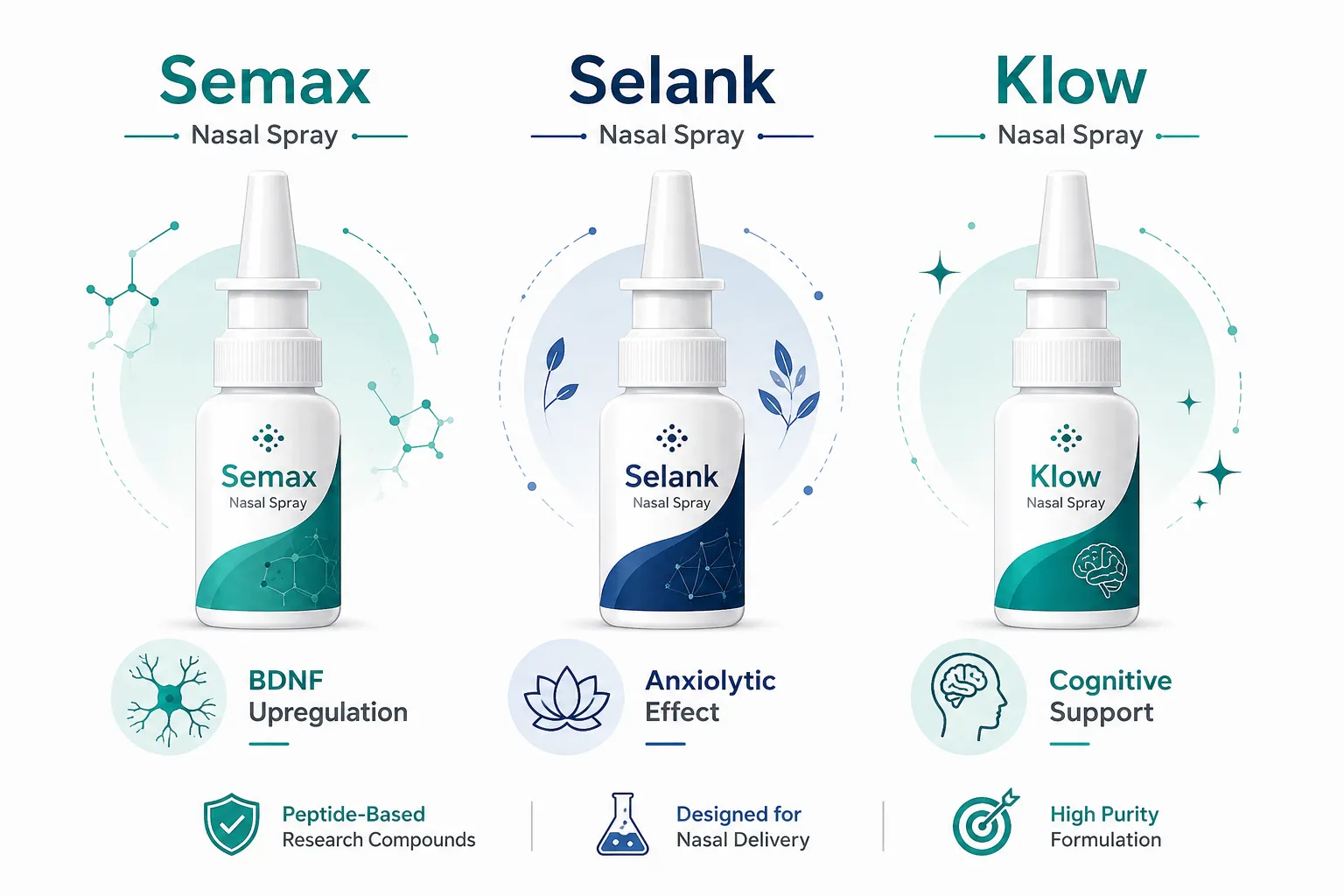
Flat-vector infographic landscape () showing three labeled nasal spray bottles — Semax, Selank, Klow — arranged left to

Key Takeaways

  • Semax, Selank, and Klow are strictly research-use only nasal spray peptides and must not be used in human clinical treatment outside approved trials.
  • Solvent selection, pH range, and preservative choice directly affect peptide stability and transmucosal bioavailability in both rodent and human experimental models.
  • Sterility testing and third-party Certificates of Analysis (CoA) are non-negotiable procurement requirements.
  • Nasal formulations bypass first-pass metabolism, making dose accuracy more critical than with injectable peptides.
  • Supplier transparency, including HPLC purity data and endotoxin testing, is the clearest indicator of formulation quality.

Understanding the Three Peptides: Semax, Selank, and Klow

Before addressing procurement, labs need a clear picture of what each compound is and why nasal delivery is the preferred route in research settings.

Semax (ACTH(4-7)PGP) is a synthetic heptapeptide derived from adrenocorticotropic hormone. Research interest centers on its role in BDNF upregulation and neuroprotective signaling. You can explore related BDNF upregulation research themes for broader context on neurotrophin pathways.

Selank is a synthetic analog of tuftsin (Thr-Lys-Pro-Arg) combined with a stabilizing peptide sequence. Studies in rodent models have examined its anxiolytic and nootropic properties, particularly its interaction with GABAergic and serotonergic systems.

Klow is a newer nasal formulation blend that has attracted attention in 2026 for its proposed role in supporting cognitive and metabolic signaling pathways. Labs interested in related peptide blend research may also find value in reviewing what the Glow peptide does as a comparable blend-formulation reference.

All three are sold exclusively as research-use only compounds. They are not approved for human therapeutic use in most jurisdictions, and procurement must reflect that classification in documentation, storage, and handling protocols.

Formulation Science Behind Research-Use Only Nasal Spray Peptides

The nasal route offers a compelling advantage for peptide research: direct access to the olfactory epithelium and trigeminal nerve pathways, which allows compounds to bypass the blood-brain barrier and first-pass hepatic metabolism. However, this advantage depends entirely on formulation quality.
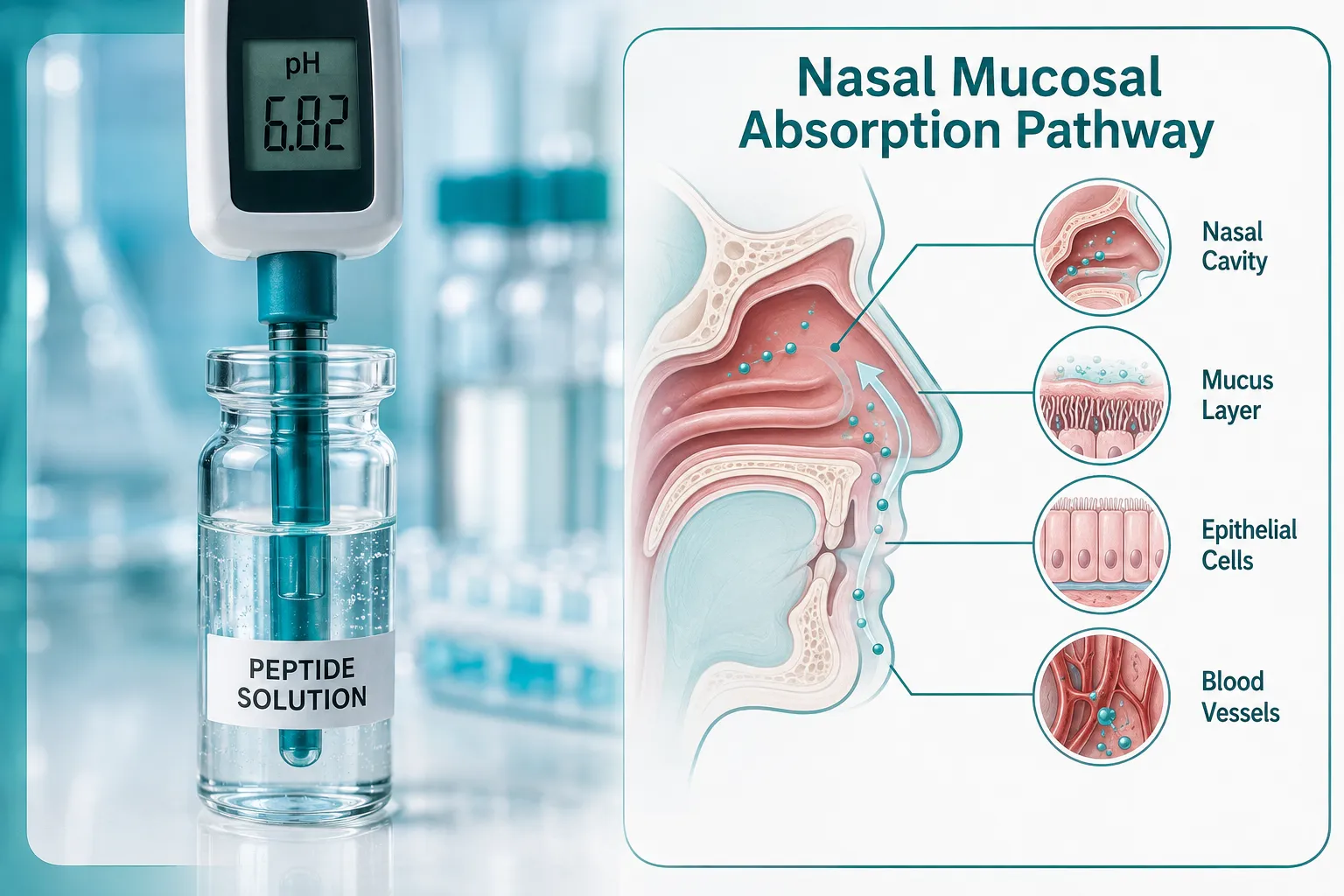
Formulation Science Behind Research-Use Only Nasal Spray Peptides

Solvent Selection and pH

The nasal mucosa maintains a physiological pH between 5.5 and 6.5. Formulations outside this range cause mucosal irritation in rodent models and can reduce absorption by disrupting tight junction permeability. For Semax and Selank specifically:

Parameter Recommended Range Risk if Out of Range
pH 5.5-6.5 Degradation, reduced absorption
Osmolality 285-310 mOsm/kg Mucosal damage in rodent models
Preservative (benzalkonium chloride) 0.01-0.02% Ciliotoxicity above 0.02%

Saline-based vehicles (0.9% NaCl) remain the most common solvent for both Semax and Selank. Some suppliers use phosphate-buffered saline (PBS) to stabilize pH, which is acceptable provided the buffer concentration does not exceed 10 mM.

Preservatives and Sterility

Multi-dose nasal spray vials require antimicrobial preservation. Benzalkonium chloride (BAK) is standard but must be kept below 0.02% to avoid ciliotoxic effects documented in murine nasal epithelium studies. Phenylethanol is an alternative worth specifying when ordering from suppliers.

Sterility is non-negotiable. Labs should require:

  • USP <71> sterility test results or equivalent
  • Endotoxin testing (LAL assay) with results below 1 EU/mL
  • Particulate matter testing per USP <788>

When sourcing from a lab-tested peptide supplier, always request documentation for all three tests before accepting a shipment.

Peptide Stability in Nasal Vehicles

Semax is notably susceptible to enzymatic degradation by nasal mucosal aminopeptidases. Research formulations that include cyclodextrin complexation (particularly hydroxypropyl-beta-cyclodextrin at 5-10%) have shown improved stability in in vitro nasal tissue models. Selank is comparatively more stable but should still be stored at 2-8°C and protected from light.

Procurement Standards: What Labs Should Know Before Buying

Sourcing research-use only nasal spray peptides requires more rigor than ordering standard lyophilized peptides, because the formulation itself introduces additional variables, solvent purity, fill volume accuracy, and container integrity.

Procurement Standards: What Labs Should Know Before Buying

Certificate of Analysis Checklist

A credible CoA for nasal peptide formulations should include:

  • HPLC purity (minimum 98% for research-grade)
  • Mass spectrometry confirmation of molecular weight
  • Endotoxin test result (LAL method)
  • Sterility test result
  • pH at time of manufacture
  • Batch number and manufacture date

Labs reviewing suppliers should also assess whether the vendor offers wholesale peptides for research with consistent batch documentation, which is critical for longitudinal studies requiring reproducibility.

Regulatory and Documentation Requirements

In the United States, research-use only peptides must be purchased by verified research institutions. Labs should maintain purchase records, intended-use declarations, and storage logs. The "not for human use" designation must appear on all internal labels.

For labs also working with injectable peptide research, understanding how nasal bioavailability compares to subcutaneous delivery is valuable. Researchers exploring dual-route protocols may find the TB-500 peptide research overview and BPC-157 and TB-500 combination data useful for cross-route comparison context.

Red Flags When Evaluating Suppliers

Avoid suppliers who:

  • Cannot provide batch-specific CoA (only generic documents)
  • List pH or osmolality as "N/A"
  • Offer no endotoxin testing data
  • Ship nasal formulations without cold-chain packaging

Reputable sources will also direct researchers to broader peptide buying resources that outline quality benchmarks across compound categories.

Conclusion

Research-use only nasal spray peptides, including Semax, Selank, and Klow nasal formulations, offer genuine scientific value when procured and handled correctly. The formulation variables that determine research validity are not abstract: pH, osmolality, preservative concentration, and sterility testing are concrete, measurable, and verifiable before a single assay begins.

Actionable next steps for labs in 2026:

  1. Request batch-specific CoA documents before placing any order, and reject suppliers who cannot provide HPLC purity above 98% with endotoxin results.
  2. Verify solvent pH falls within 5.5-6.5 and confirm osmolality data is included in supplier documentation.
  3. Establish internal cold-chain storage protocols (2-8°C) and log opening dates for all multi-dose vials.
  4. Maintain purchase records and intended-use declarations to satisfy institutional and regulatory requirements.
  5. Cross-reference nasal bioavailability data against injectable route studies where applicable to strengthen experimental design.

Sourcing from a verified peptide store that publishes transparent testing documentation is the single most reliable way to protect both research integrity and institutional compliance.

https://www.puretestedpeptides.com/wp-content/uploads/2026/08/research-use-only-nasal-spray-peptides-what-labs-should-know-before-buying-semax.webp 1024 1536 https://www.puretestedpeptides.com/wp-content/uploads/2026/01/buy-peptides-online.jpg 2026-08-02 13:03:422026-08-02 13:03:42Research-Use Only Nasal Spray Peptides: What Labs Should Know Before Buying Semax, Selank, and Klow Nasal Formulations
×

Helpful Links

  • My account
  • Cart
  • Checkout
  • Refund and Returns Policy
  • Privacy Policy
  • SMS Privacy Policy
  • Login
  • My Account
  • Logout

USA Made Lab Tested Peptides

All products are sold for research, laboratory, or analytical purposes only, and are not for human consumption


Pure Tested Peptides is a chemical supplier. Pure Tested Peptides is not a compounding / chemical compounding facility as defined under 503A of the Federal Food, Drug, and Cosmetic act. Pure Tested Peptides is not an outsourcing facility as defined under 503B of the Federal Food, Drug, and Cosmetic act.

The statements made within this website have not been evaluated by the US Food and Drug Administration. The products we offer are not intended to diagnose, treat, cure or prevent any disease.

Human/Animal Consumption Prohibited. Laboratory/In-Vitro Experimental Use Only

Scroll to top Scroll to top Scroll to top